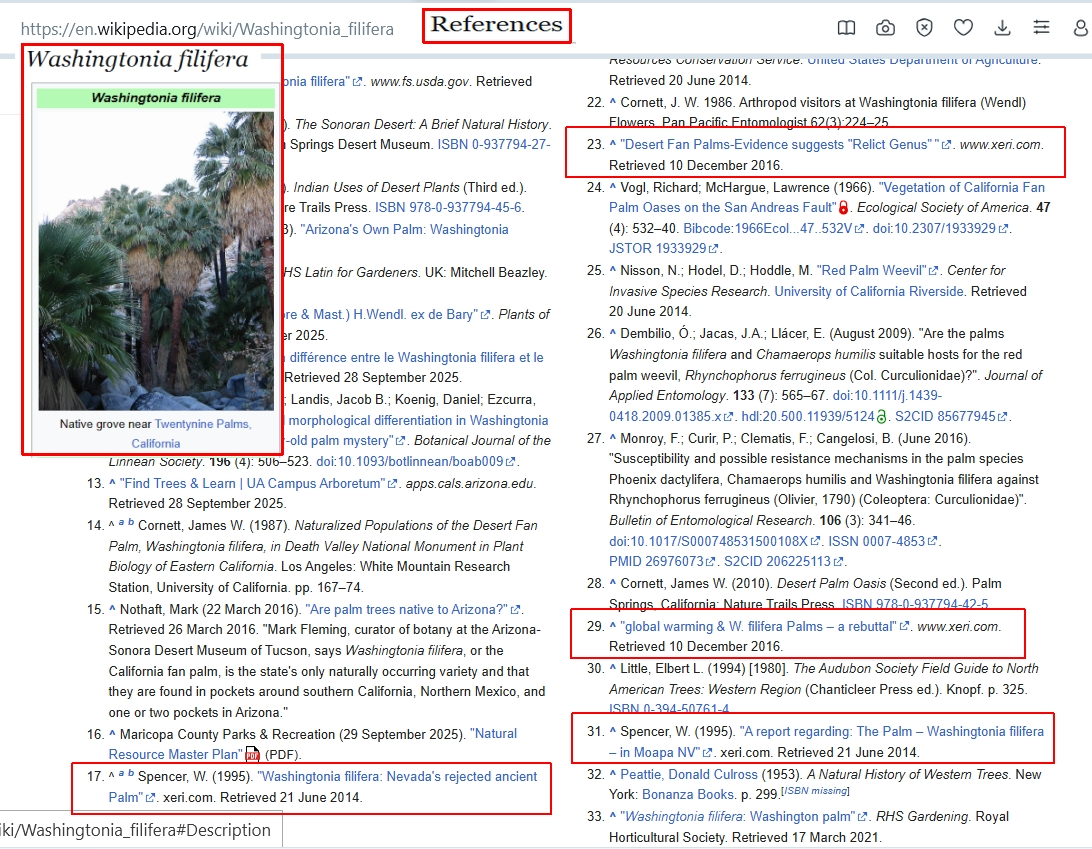
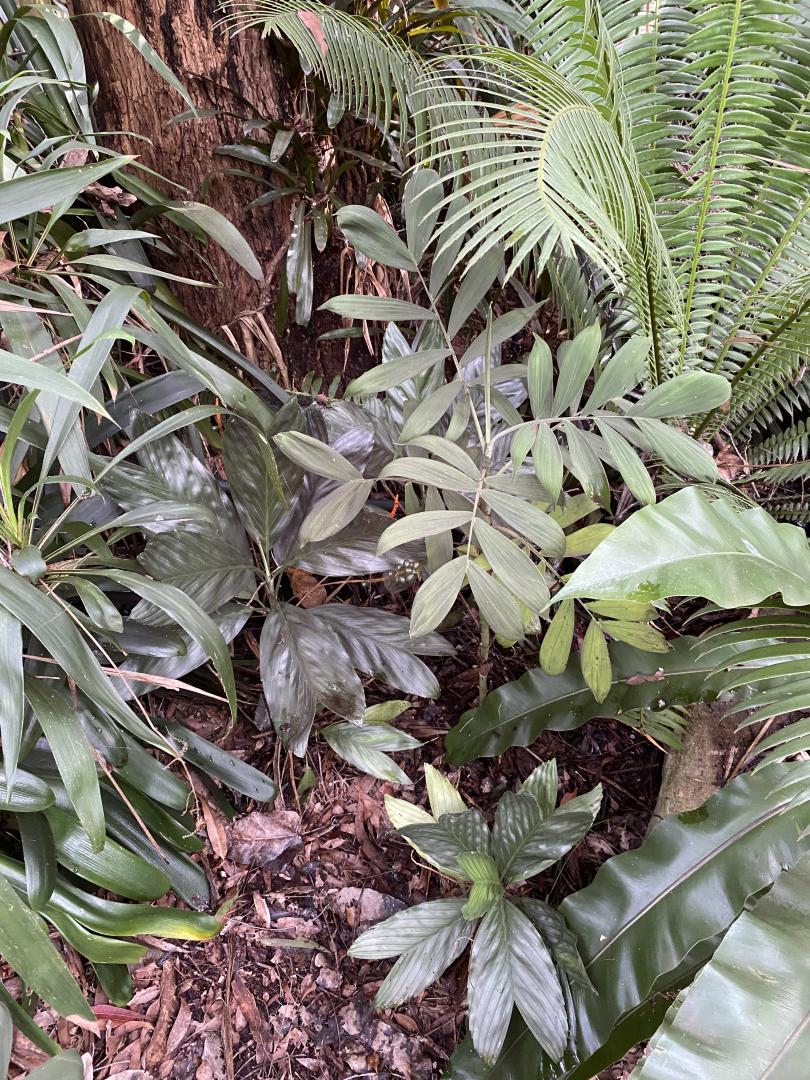
Hellow SteveTheGator (and all) I may or may not get any reply to this however -- Just here to say I am the one who WROTE that research at https://www.xeri.com/Moapa/wf-hr-part1.htm and the 6 parts of the paper. As well as collected the Verbal memories (Testimonies) of the Native local Moapa Elders who had stories of their grandparents who had always remembered the Palms long before the Mormon Settlers came to the region. There are hidden groves very remote as well that They knew about (and i knew about) but never revealed Because of fear they would also be wiped out. I lived in the area in 1979 and family has been in the area since that time nearby. Also distant relatives were responsible for the anachronistic stories crediting a White man (Mendis Cooper) for palm introduction. (but he actually only planted the large trees in front of his home on Cooper street 40 miles distant which still stand to this day) A Moapa Elder put her hands on me and prayed in her Uto-Aztecan language at one of the main groves - before they bulldozed nearly 25,000 trees back in the 1990s. The Plummer Resort there at the time had a Welcome card which stated: The Palms are native and have always been here according to the local Indians (Moapa) He refused to sell to the Nature Conservancy. They hounded the man for years but he refused. I was with my father and two others on a hill overlooking the Moapa Warm Springs when the full glory of a minimum of 25,000 palms graced the area. We were attempting to count the area by blocking off the heads in our line of vision one square at a time when we saw a person on the LOCKED Wildlife area portion where NV fish and game had a small relatively NEW refuge they had purchased from a local resident (It abutted the Plummer resort) They had an ugly tall cyclone fence around the area topped with barbed wire. The "Dace" (Coriaceae) refuge did not yet exist. It was understaffed and there were very tall dead dry weeds all over the refuge portion. The Plummer resort was pristine and kept in beautiful perfect shape. The skirts were kept pretty High -- like 10 feet or higher on the 90 foot + old palms. We (all four of us (two are now dead) saw a man on the refuge side light a cigarette. He did not see us. We saw a fire begin. We didn't stick around but we "assumed" he would take care of it. We heard the next day: the entire area burned. Even a fire truck was destroyed. The resort was utterly destroyed. Plummer sold to the Nature conservancy after that (was my understanding) and they in turn - turned it over to the newly forming Moapa Coriaceae refuge under NV fish and game. Despite a mammilian wildlife Biologist finding Western Yellow bellied Bats in the Palm skirts (which is their preferred habitat) -- they used very cursory observations by James Cornett from years earlier (from Palm Springs) to condemn the Palms as nuisance plants and as a threat to the endemic fish. (which has never been demonstrated.) The people who like to say the palms were brought in by Spaniards fail to explain the existence of WHOLE palmate Fossil leaves (I've personally seen some over 5 feet across) and fossilized roots which show that costapalmate Palms have existed from As far north as Wyoming to the Southern US borders. I personally believe there is also no such thing as a Filibusta (cross or hybrid palm between the two varieties filifera and robusta) since the large chaffy perianths would preclude pollen from another tree from pollenating BEFORE it self pollinated. So I think it's a very ancient very stable Genus... and any outlier unstable variations split off eons ago to become accoelorraphe, serenoa, brahea etc possibly? Some of which seem less genetically Stable /prone to branching into new species over the previous eons. Another clue to it's ancient roots... Since Phoenix seems to be the only induplicate pinnate leaf form (and is related being a Coryphoideae itself) and since there was a fossil of an induplicate pinnate (Phoenix) leaf form from Texas Fossil beds.... I would wonder if Washingtonia (being possibly 50 million years old?) might not be the proto-palm of all palms. (there are scan tropical palms in the fossil records) And Ice age movements pushing the palms southward appears to support the idea that in its disjunct populations scattered all over high desert and desert areas where they either don't flood but also have access to moisture and protection argues for it as a Relict genus. ALL of the Native Elders who testified have since died. Irene Benn, Juanita Kinlichinie, Evelynn Samalar etc. But they said their grandparents said "The palms have always been here" and they remembered using it for food during famines. It was very hard (the seeds) So hard that rodents wouldn't even eat them. I have seen some of the manifests of the nearby Lost City archaeological digs from the early part of 1900s when (a distant relative) acted as an amateur but very important preserver of the archaeology of that 30 mile long ancient inhabited area. Numerous times Small reddish ovoid unknown "seeds" were described from old Neotoma middens dating back before white man arrived. The Spanish by the way (the Spanish trail is still visible in portions of the Great Mesa nearby) passed at least 10 miles south of the area where the palms are hidden down in a valley. Fremont also went through the area and completely missed the Warm Springs staying on the Spanish Trail. Early Settlers logs and diarys / journals complain about the palms cutting them and being a nuisance so they burned or chopped them down whenever they could.... and instead Brought Whips of Cottonwood from Utah and started planting them for shade. Areas that (according to settlers along the muddy river which used to have palms remained palm free when ever Farmers were in the area.) I was actually invited to a meeting of the Moapa Tribe and the Chairperson approved my writing. However at the same time, the newly founded Moapa Dace refuge was hiring Moapa men to operate bulldozers and they quickly started piling up thousands of bulldozed BURNED Palms (immediately following the fire) Never mind that these palms are very resistant to dying from Fire. They would have all likely survived. So the Groves one sees in the area today look like a tiny remnant of what it used to be. It was shocking actually. The Nevada Archaeo-Nevada society voted 100% of it's membership to support what I had written and it included some of the rangers at the Valley of Fire State Park. The Lake Mead National Recreation area got a hard bound copy of all 6 chapters of my report. They never once responded. They did appear (to me) to WAIT until the Elders at the Moapa tribe had died before they started removing the palms aggressively from LMNRA. Meanwhile they surround all their ranger homes, the visitors center near Bullhead City and Headquarters with Phoenix Dactylifera or robusta. The Las Vegas Life magazine did a full several page write up about the entire thing years ago. There is a copy of the report (in a binder) at the local Overton Library. I did plant community comparisons, Climate comparisons, Ethnographical comparisons (the Moapa Southern Paiute are Uto-Aztecan and therefore cousins of the Cahuilla, the Chemehuevi, The Hopi, The Ute, Goshiute, Paiute, and the Wahirio and the Tohono O'odham (papago) and Pima (Tohono A'kimel) The Tohono, Cahuilla, Wahirio, all used palms. The Cahuilla in Palm Springs being the most well known. By the time the Moapa were encountered by White Mormon settlers they had undergone a couple hundred years of constant MOURNING.... Why? Because the Navajo (Dine' - Athebascan like the Apache) had been taking women and children as slaves and taking them south to sell to the Spanish in New Mexico for profit. So by the time the White settlers got to the area the last Tribal Historian (a verbal history) named Peg-leg Joe tried his best to get someone to record his words before they died forever. He unfortunately died and no one ever recorded his words. Unlike Father Patencio of the Palm Springs Cahuilla who recorded that the First Cahuilla stretched out his arms and became a PALM TREE..... The Moapa would have definitely met and intermingled with the Cahuilla at one time. Yet this still does not explain the presence of Fossil Palm leaves and fossil Palm roots. .... and the ONLY Extant palms are Washingtonia filfera. There are even local petroglyphs (in my writing) found in the Valley of Fire on Atl Atl rock (note: They even use an ATL ATL in the petroglyphs -- a hunting instrument which is found among the Aztec far to the south! -- which also implies contact in addition to the language roots) and some of the Petroglyphs are suspiciously like Palms with the Fruiting spadices pictured. I was told by the Moapa Elders that the Famine food they were told about was called "chum" by the grandparents and that they also used the leaves to make sweatlodges. They said they had to soak the seed a long time before they could smash it into a gruel. I found deep Mortar beds (with pictures) near several groves. In addition to this... the palms in front of Mendis Cooper's house (the White man from the early 1900s credited with planting palms by the LMNRA and Wildlife people who ignore everything that was written --most likely because I do not have a DEGREE or PEDIGREE.... ???) are not even close to the height that the tallest palms in Moapa used to be -- before they bulldozed them making certain that would never ever be an issue again. Okay. This will probably get removed by moderation for being too long. Sorry -- if so. I no longer have any fight in me. Links to all Reports: Articles about the Moapa Palms and Related articles: the 100 PAGE FULL REPORT HERE [ please note: The full report does not include recently discovered information regarding the Bats or Counts ] Links to all Reports: Articles about the Moapa Palms and Related articles: 11 QUICK CONDENSED FACTS may be found HERE. A FIVE PAGE INTRODUCTION is HERE. A MORE in depth EIGHT PAGE INTRODUCTION is HERE. A TEN PAGE PREFACE TO THE FULL REPORT is HERE. the 100 PAGE FULL REPORT HERE Rebuttals to existing Articles re: W. filifera: | GLOBAL WARMING, NOT RESPONSIBLE FOR PALMS SPREAD! | | W.FILIFERA: EVIDENCE POINTS TO A RELICT SPECIES!' | ==================== As seen below in the photo screen grab (before it disappeared) I noticed long ago that someone (not me) had put my reports on Wikipedia as references. (I did not do that) (I have no idea who did) However I did Notice that a few months ago ALL REFERNCES to the above were removed. No explanation. Most likely because I have zero Pedigree. so It's simply very "unscientific" ---- I guess, how presumptuous of me to assume it could be helpful? I or my family have either lived in the area of Overton (have business there) since 1979 - I did climate comparisons for many years. You are correct in that it is hotter than Vegas (It's also almost 800 feet lower in elevation) It is zone 9a in places (Echo Bay is 9b) and Logandale (Same valley) is probably somewhere between 8b and 9a) -temps of 120 F are common but 115 is common. It's not as hot as Yuma (10a) or Bullhead city 10a -- but those are even lower elevation. I have never heard of temps at 0 degrees. But Logandale (the cold sink of the area) has been as low as 12 or 14 degrees in short snaps Going back to 1939 when they started recording such things.... It has never been below 8 degrees f. But that was probably in a cold sink for a limited time and in LoganDale. Either way there is an enormous Orange Tree which has been in Logandale (and Washingtonia Palms) which have never suffered frost bite since 1979. So while I don't know where the 0 degree info may come from - all I can say is, since 1979 I've never heard of anything that low. I have seen it get into the upper teens briefly... but as a rule 19 degrees would be the lowest for the areas in 9a (30-35 for a lowest low range - is considered 9a)



 pj_orlando_z9b replied to palmsOrl's topic in DISCUSSING PALM TREES WORLDWIDEThe I-drive coconut was removed in Mar or April. Arborist on FB page said he was the one who removed it and added it never had a chance long term. Lol, had been there over 15 years. Disappointing. I grabbed these at the Doubletree Sea World a few weeks ago. Looking good.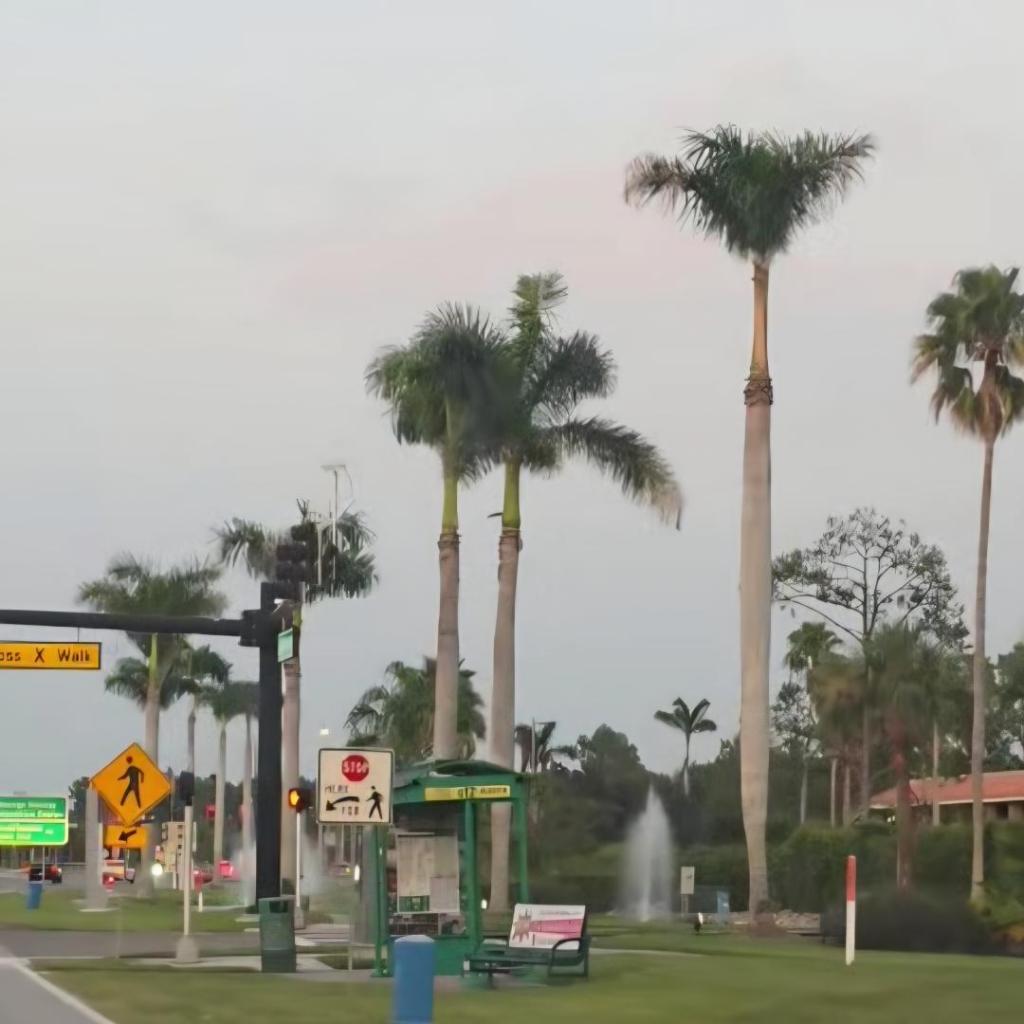
 DoomsDave posted a topic in DISCUSSING PALM TREES WORLDWIDEDug a Hedyscepe and stuck in a 15 gallon pot, big drink, in the shade. @happypalms what’s your fave transplant fert? @Harry’s Palms said you had a recommendation.
 LonghardRoad replied to stevethegator's topic in DISCUSSING PALM TREES WORLDWIDEHellow SteveTheGator (and all) I may or may not get any reply to this however -- Just here to say I am the one who WROTE that research at https://www.xeri.com/Moapa/wf-hr-part1.htm and the 6 parts of the paper. As well as collected the Verbal memories (Testimonies) of the Native local Moapa Elders who had stories of their grandparents who had always remembered the Palms long before the Mormon Settlers came to the region. There are hidden groves very remote as well that They knew about (and i knew about) but never revealed Because of fear they would also be wiped out. I lived in the area in 1979 and family has been in the area since that time nearby. Also distant relatives were responsible for the anachronistic stories crediting a White man (Mendis Cooper) for palm introduction. (but he actually only planted the large trees in front of his home on Cooper street 40 miles distant which still stand to this day) A Moapa Elder put her hands on me and prayed in her Uto-Aztecan language at one of the main groves - before they bulldozed nearly 25,000 trees back in the 1990s. The Plummer Resort there at the time had a Welcome card which stated: The Palms are native and have always been here according to the local Indians (Moapa) He refused to sell to the Nature Conservancy. They hounded the man for years but he refused. I was with my father and two others on a hill overlooking the Moapa Warm Springs when the full glory of a minimum of 25,000 palms graced the area. We were attempting to count the area by blocking off the heads in our line of vision one square at a time when we saw a person on the LOCKED Wildlife area portion where NV fish and game had a small relatively NEW refuge they had purchased from a local resident (It abutted the Plummer resort) They had an ugly tall cyclone fence around the area topped with barbed wire. The "Dace" (Coriaceae) refuge did not yet exist. It was understaffed and there were very tall dead dry weeds all over the refuge portion. The Plummer resort was pristine and kept in beautiful perfect shape. The skirts were kept pretty High -- like 10 feet or higher on the 90 foot + old palms. We (all four of us (two are now dead) saw a man on the refuge side light a cigarette. He did not see us. We saw a fire begin. We didn't stick around but we "assumed" he would take care of it. We heard the next day: the entire area burned. Even a fire truck was destroyed. The resort was utterly destroyed. Plummer sold to the Nature conservancy after that (was my understanding) and they in turn - turned it over to the newly forming Moapa Coriaceae refuge under NV fish and game. Despite a mammilian wildlife Biologist finding Western Yellow bellied Bats in the Palm skirts (which is their preferred habitat) -- they used very cursory observations by James Cornett from years earlier (from Palm Springs) to condemn the Palms as nuisance plants and as a threat to the endemic fish. (which has never been demonstrated.) The people who like to say the palms were brought in by Spaniards fail to explain the existence of WHOLE palmate Fossil leaves (I've personally seen some over 5 feet across) and fossilized roots which show that costapalmate Palms have existed from As far north as Wyoming to the Southern US borders. I personally believe there is also no such thing as a Filibusta (cross or hybrid palm between the two varieties filifera and robusta) since the large chaffy perianths would preclude pollen from another tree from pollenating BEFORE it self pollinated. So I think it's a very ancient very stable Genus... and any outlier unstable variations split off eons ago to become accoelorraphe, serenoa, brahea etc possibly? Some of which seem less genetically Stable /prone to branching into new species over the previous eons. Another clue to it's ancient roots... Since Phoenix seems to be the only induplicate pinnate leaf form (and is related being a Coryphoideae itself) and since there was a fossil of an induplicate pinnate (Phoenix) leaf form from Texas Fossil beds.... I would wonder if Washingtonia (being possibly 50 million years old?) might not be the proto-palm of all palms. (there are scan tropical palms in the fossil records) And Ice age movements pushing the palms southward appears to support the idea that in its disjunct populations scattered all over high desert and desert areas where they either don't flood but also have access to moisture and protection argues for it as a Relict genus. ALL of the Native Elders who testified have since died. Irene Benn, Juanita Kinlichinie, Evelynn Samalar etc. But they said their grandparents said "The palms have always been here" and they remembered using it for food during famines. It was very hard (the seeds) So hard that rodents wouldn't even eat them. I have seen some of the manifests of the nearby Lost City archaeological digs from the early part of 1900s when (a distant relative) acted as an amateur but very important preserver of the archaeology of that 30 mile long ancient inhabited area. Numerous times Small reddish ovoid unknown "seeds" were described from old Neotoma middens dating back before white man arrived. The Spanish by the way (the Spanish trail is still visible in portions of the Great Mesa nearby) passed at least 10 miles south of the area where the palms are hidden down in a valley. Fremont also went through the area and completely missed the Warm Springs staying on the Spanish Trail. Early Settlers logs and diarys / journals complain about the palms cutting them and being a nuisance so they burned or chopped them down whenever they could.... and instead Brought Whips of Cottonwood from Utah and started planting them for shade. Areas that (according to settlers along the muddy river which used to have palms remained palm free when ever Farmers were in the area.) I was actually invited to a meeting of the Moapa Tribe and the Chairperson approved my writing. However at the same time, the newly founded Moapa Dace refuge was hiring Moapa men to operate bulldozers and they quickly started piling up thousands of bulldozed BURNED Palms (immediately following the fire) Never mind that these palms are very resistant to dying from Fire. They would have all likely survived. So the Groves one sees in the area today look like a tiny remnant of what it used to be. It was shocking actually. The Nevada Archaeo-Nevada society voted 100% of it's membership to support what I had written and it included some of the rangers at the Valley of Fire State Park. The Lake Mead National Recreation area got a hard bound copy of all 6 chapters of my report. They never once responded. They did appear (to me) to WAIT until the Elders at the Moapa tribe had died before they started removing the palms aggressively from LMNRA. Meanwhile they surround all their ranger homes, the visitors center near Bullhead City and Headquarters with Phoenix Dactylifera or robusta. The Las Vegas Life magazine did a full several page write up about the entire thing years ago. There is a copy of the report (in a binder) at the local Overton Library. I did plant community comparisons, Climate comparisons, Ethnographical comparisons (the Moapa Southern Paiute are Uto-Aztecan and therefore cousins of the Cahuilla, the Chemehuevi, The Hopi, The Ute, Goshiute, Paiute, and the Wahirio and the Tohono O'odham (papago) and Pima (Tohono A'kimel) The Tohono, Cahuilla, Wahirio, all used palms. The Cahuilla in Palm Springs being the most well known. By the time the Moapa were encountered by White Mormon settlers they had undergone a couple hundred years of constant MOURNING.... Why? Because the Navajo (Dine' - Athebascan like the Apache) had been taking women and children as slaves and taking them south to sell to the Spanish in New Mexico for profit. So by the time the White settlers got to the area the last Tribal Historian (a verbal history) named Peg-leg Joe tried his best to get someone to record his words before they died forever. He unfortunately died and no one ever recorded his words. Unlike Father Patencio of the Palm Springs Cahuilla who recorded that the First Cahuilla stretched out his arms and became a PALM TREE..... The Moapa would have definitely met and intermingled with the Cahuilla at one time. Yet this still does not explain the presence of Fossil Palm leaves and fossil Palm roots. .... and the ONLY Extant palms are Washingtonia filfera. There are even local petroglyphs (in my writing) found in the Valley of Fire on Atl Atl rock (note: They even use an ATL ATL in the petroglyphs -- a hunting instrument which is found among the Aztec far to the south! -- which also implies contact in addition to the language roots) and some of the Petroglyphs are suspiciously like Palms with the Fruiting spadices pictured. I was told by the Moapa Elders that the Famine food they were told about was called "chum" by the grandparents and that they also used the leaves to make sweatlodges. They said they had to soak the seed a long time before they could smash it into a gruel. I found deep Mortar beds (with pictures) near several groves. In addition to this... the palms in front of Mendis Cooper's house (the White man from the early 1900s credited with planting palms by the LMNRA and Wildlife people who ignore everything that was written --most likely because I do not have a DEGREE or PEDIGREE.... ???) are not even close to the height that the tallest palms in Moapa used to be -- before they bulldozed them making certain that would never ever be an issue again. Okay. This will probably get removed by moderation for being too long. Sorry -- if so. I no longer have any fight in me. Links to all Reports: Articles about the Moapa Palms and Related articles: the 100 PAGE FULL REPORT HERE [ please note: The full report does not include recently discovered information regarding the Bats or Counts ] Links to all Reports: Articles about the Moapa Palms and Related articles: 11 QUICK CONDENSED FACTS may be found HERE. A FIVE PAGE INTRODUCTION is HERE. A MORE in depth EIGHT PAGE INTRODUCTION is HERE. A TEN PAGE PREFACE TO THE FULL REPORT is HERE. the 100 PAGE FULL REPORT HERE Rebuttals to existing Articles re: W. filifera: | GLOBAL WARMING, NOT RESPONSIBLE FOR PALMS SPREAD! | | W.FILIFERA: EVIDENCE POINTS TO A RELICT SPECIES!' | ==================== As seen below in the photo screen grab (before it disappeared) I noticed long ago that someone (not me) had put my reports on Wikipedia as references. (I did not do that) (I have no idea who did) However I did Notice that a few months ago ALL REFERNCES to the above were removed. No explanation. Most likely because I have zero Pedigree. so It's simply very "unscientific" ---- I guess, how presumptuous of me to assume it could be helpful? I or my family have either lived in the area of Overton (have business there) since 1979 - I did climate comparisons for many years. You are correct in that it is hotter than Vegas (It's also almost 800 feet lower in elevation) It is zone 9a in places (Echo Bay is 9b) and Logandale (Same valley) is probably somewhere between 8b and 9a) -temps of 120 F are common but 115 is common. It's not as hot as Yuma (10a) or Bullhead city 10a -- but those are even lower elevation. I have never heard of temps at 0 degrees. But Logandale (the cold sink of the area) has been as low as 12 or 14 degrees in short snaps Going back to 1939 when they started recording such things.... It has never been below 8 degrees f. But that was probably in a cold sink for a limited time and in LoganDale. Either way there is an enormous Orange Tree which has been in Logandale (and Washingtonia Palms) which have never suffered frost bite since 1979. So while I don't know where the 0 degree info may come from - all I can say is, since 1979 I've never heard of anything that low. I have seen it get into the upper teens briefly... but as a rule 19 degrees would be the lowest for the areas in 9a (30-35 for a lowest low range - is considered 9a)
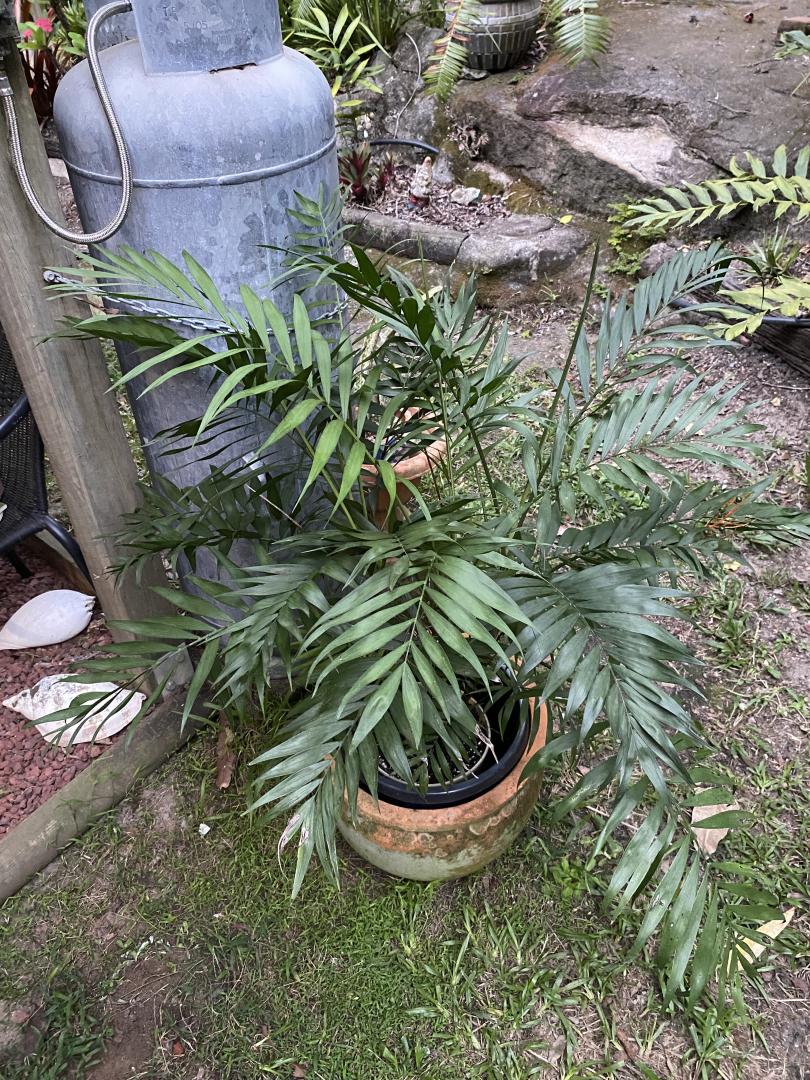
 happypalms replied to happypalms's topic in PALMS IN POTSWe don’t muck around down under, we build em tough like us Aussies. Go Big or go home they say! 🪴 Richard
 Harry’s Palms replied to happypalms's topic in PALMS IN POTSJoey’s are a specialty at @happypalms ! If they don’t make it , it was not meant to be. Harry
 Bob Dunson joined the community
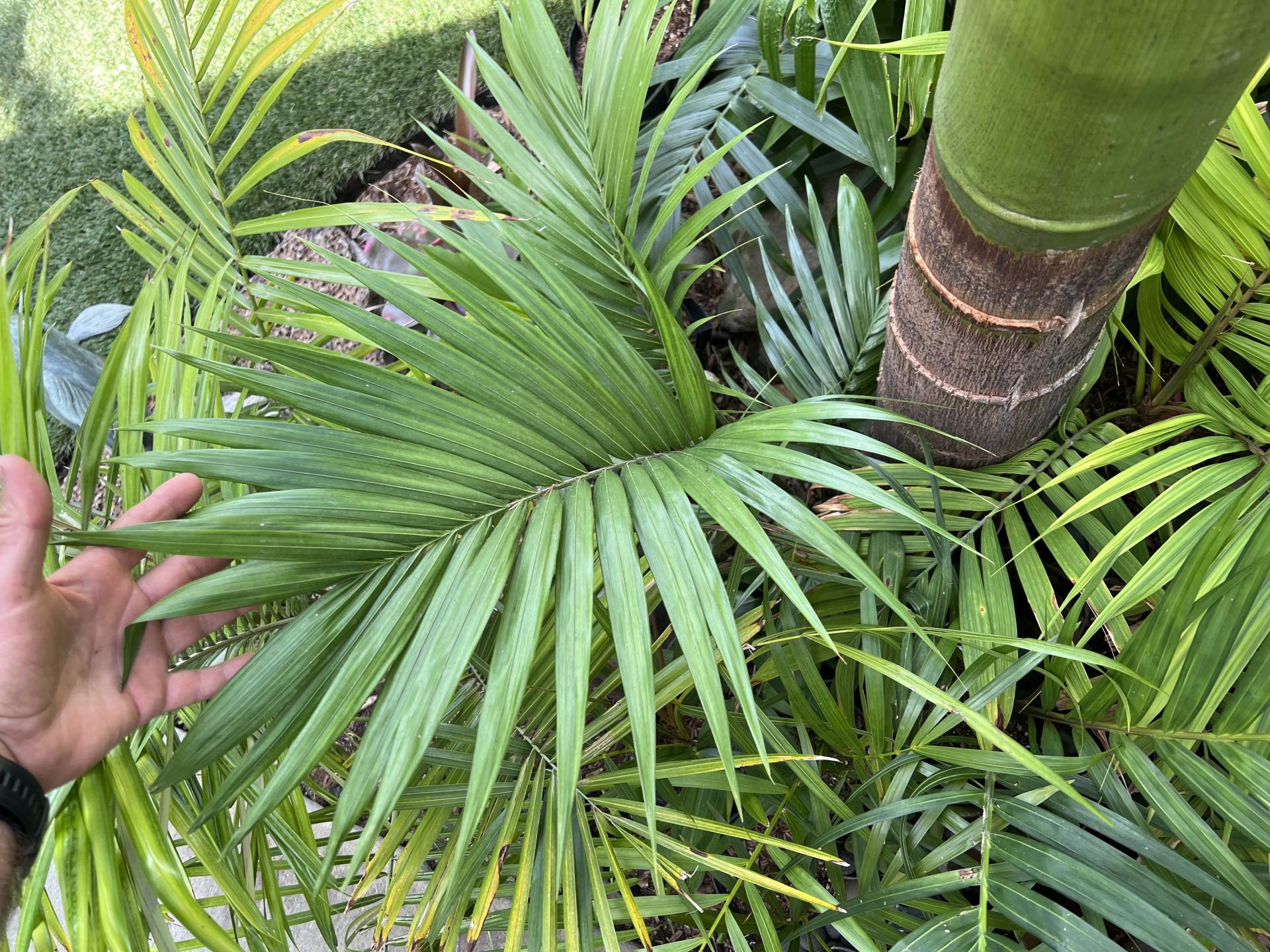
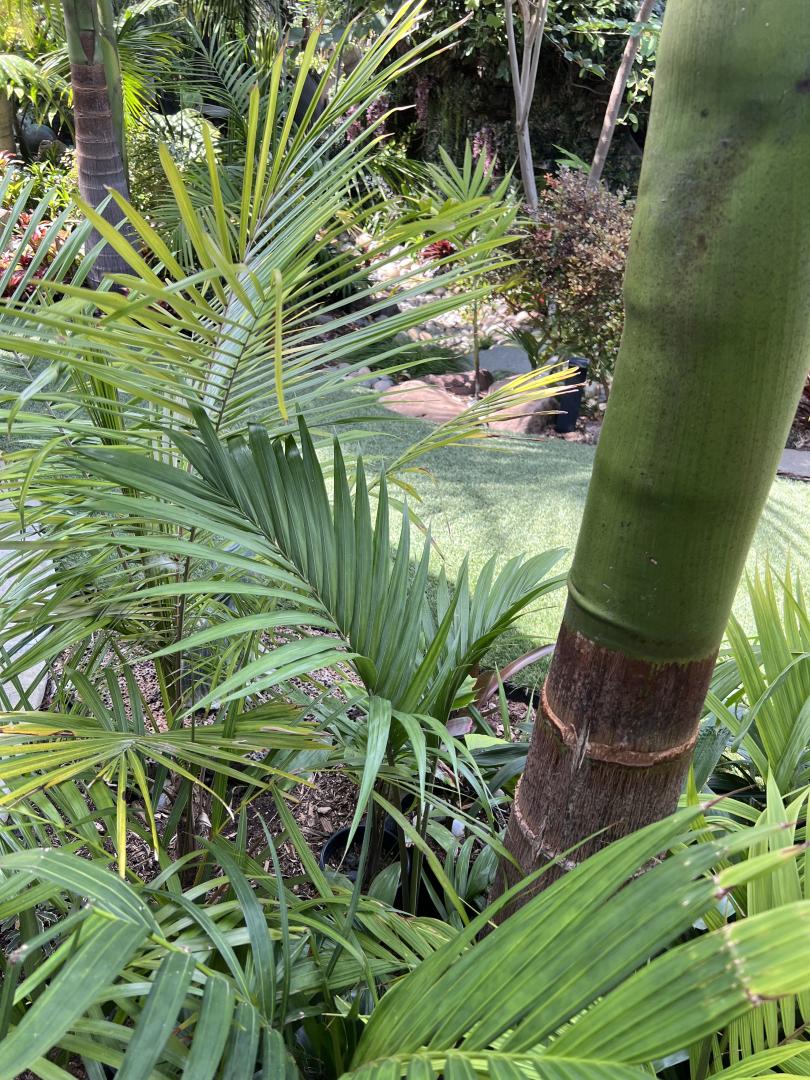
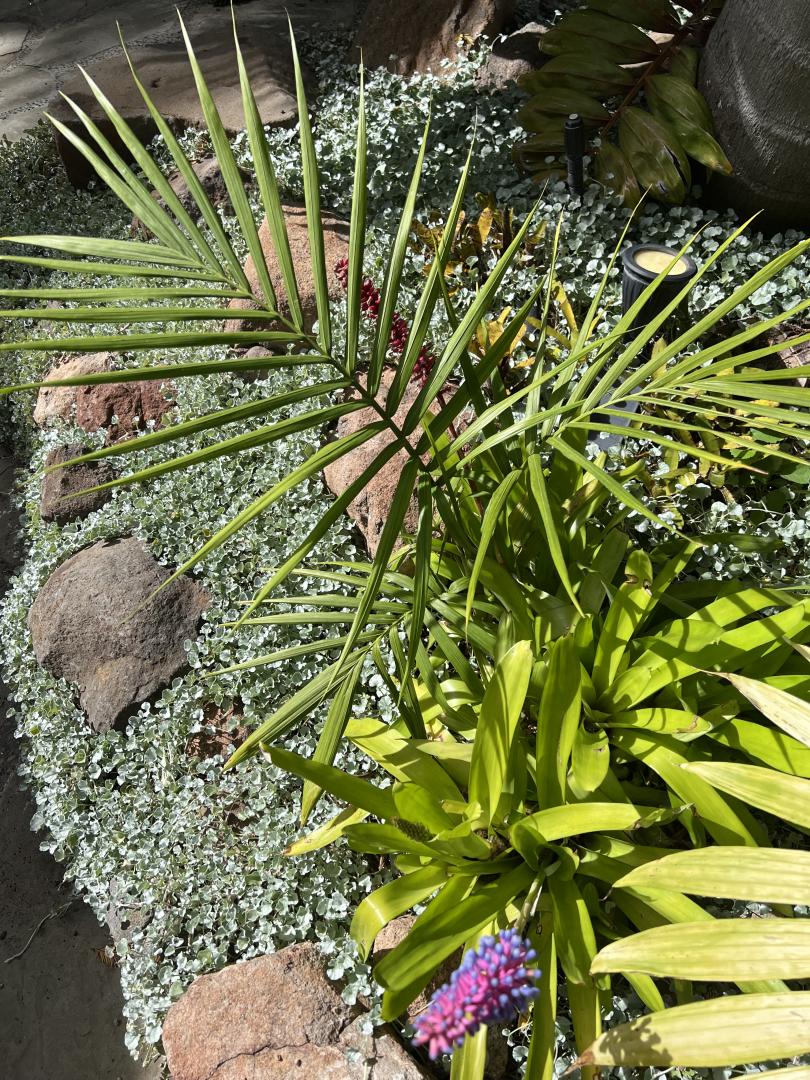
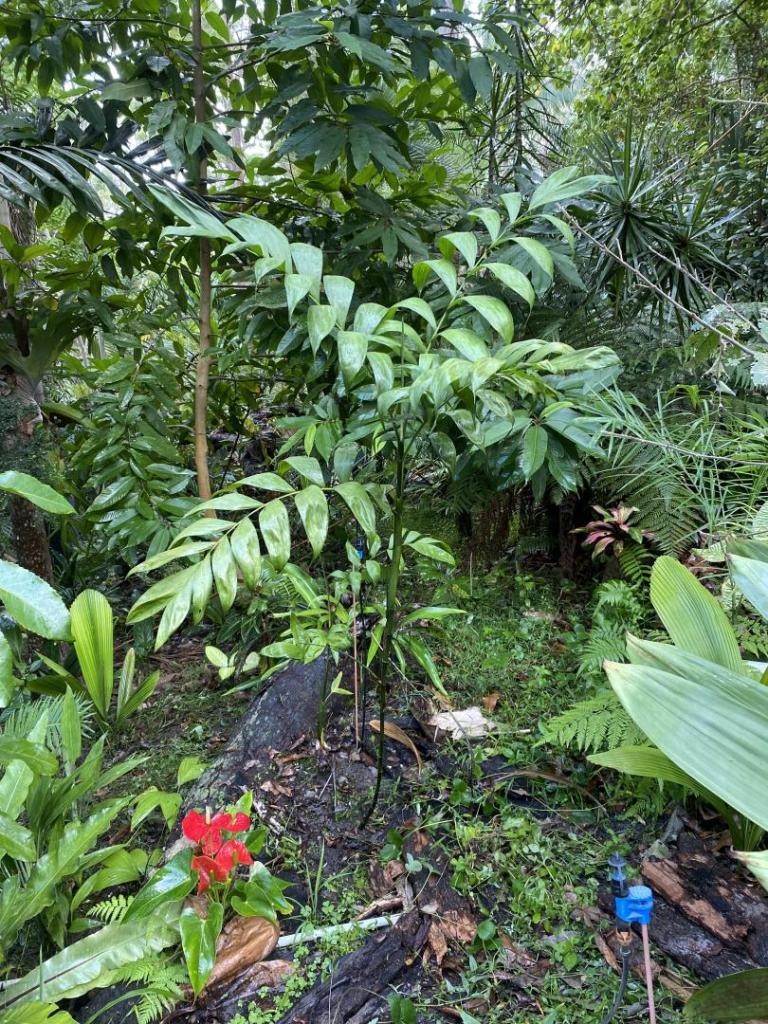
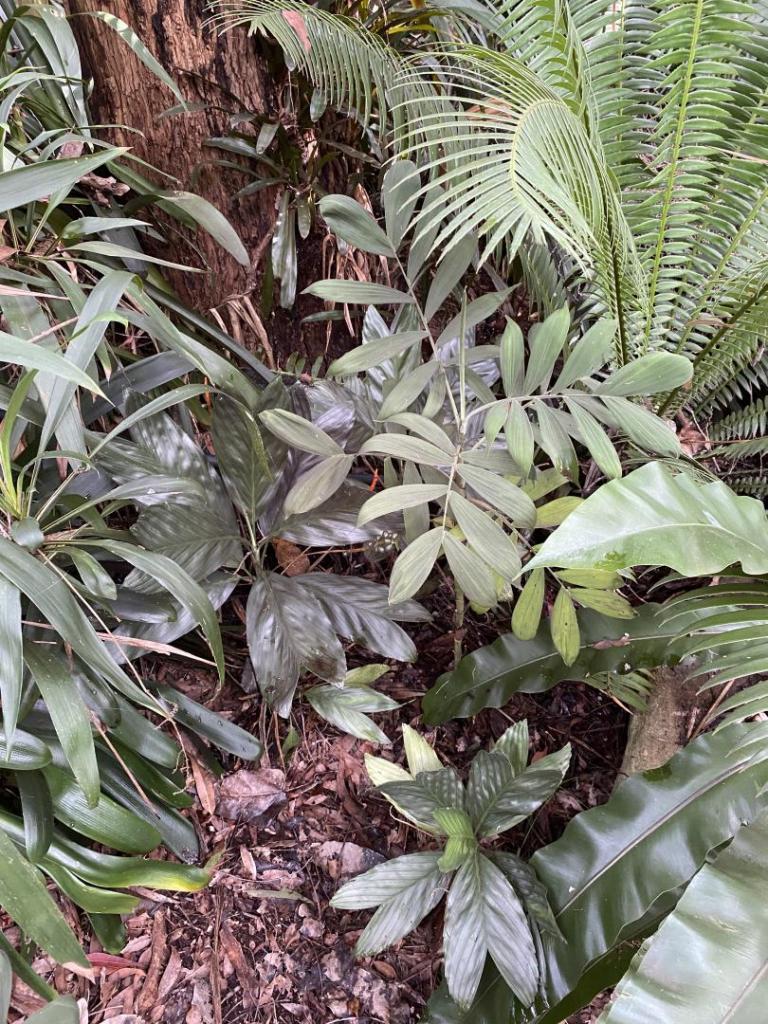
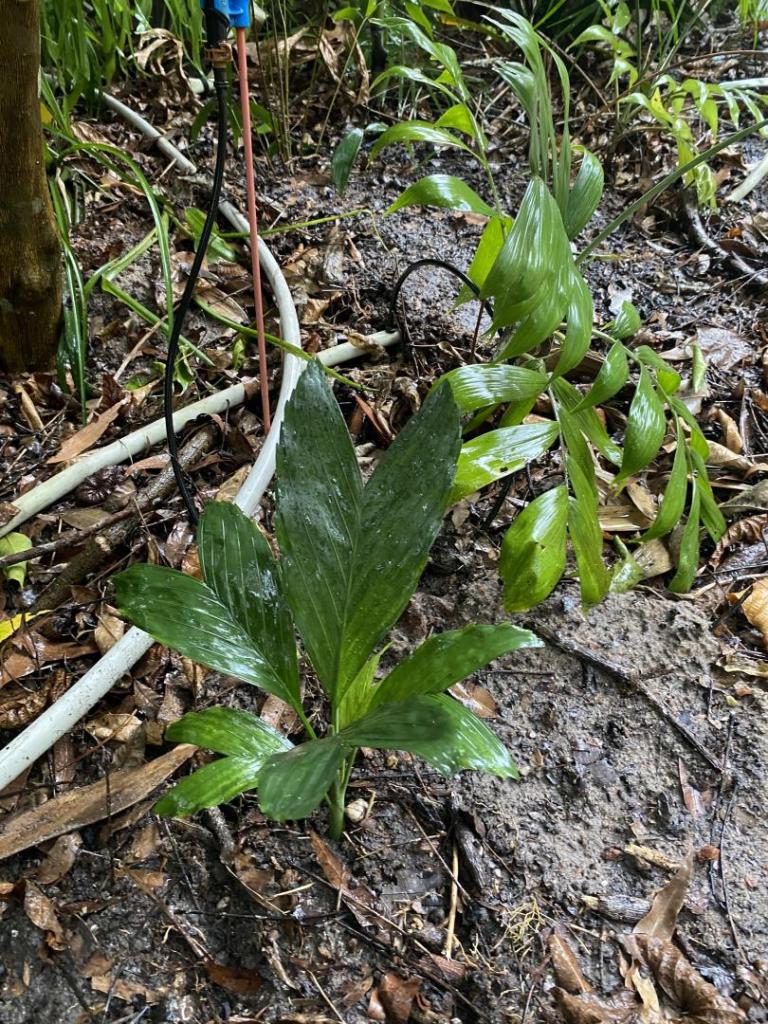
 Jim in Los Altos posted a topic in DISCUSSING PALM TREES WORLDWIDEEver notice how volunteer palm seedlings grow super fast sometimes. This Rhopalostylis baueri volunteer sprouted less than a year ago at the base of an Archontophoenix in full shade and you can almost see it growing in real time. It’s 2 1/2 feet tall (76 centimeters). The one in the last photo sprouted in full all day sun about the same time. Never a burnt leaf no matter how hot it gets. Not even my 20 year old adults will tolerate direct sun here. There are ten year old A. cunnnghamiana volunteers taller than twenty year old ones that were planted as five gallon plants. Anyone else notice this kind of growth with volunteers allowed to grow where they sprouted? First three pics are same palm. Last one is the full sun one.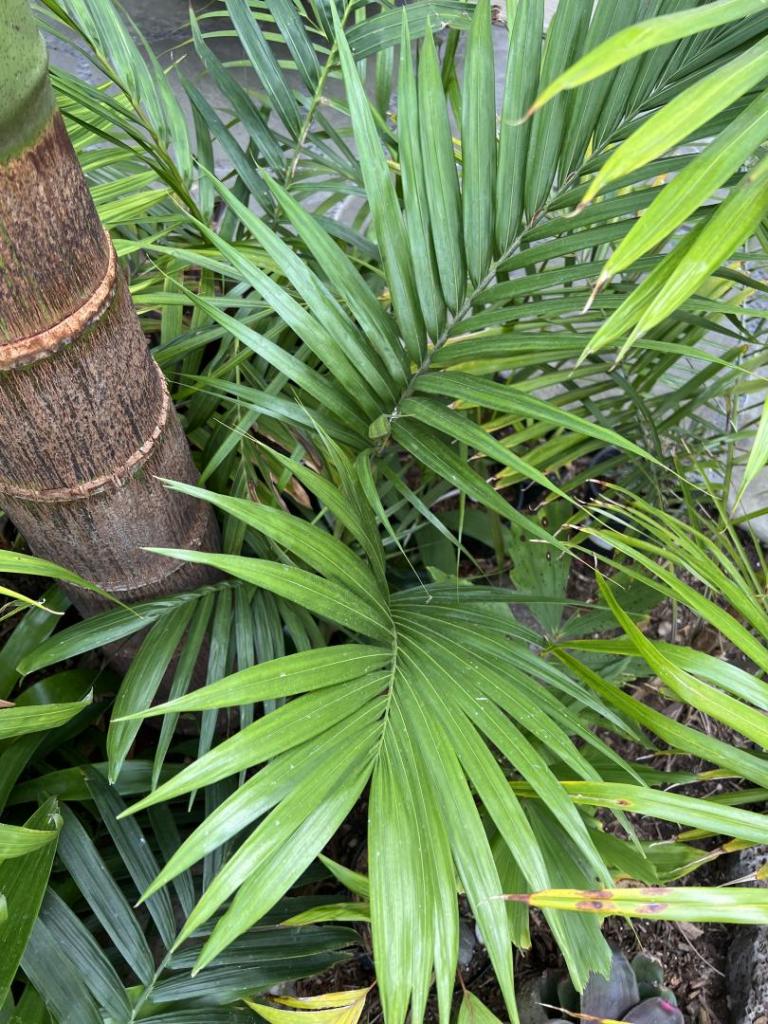


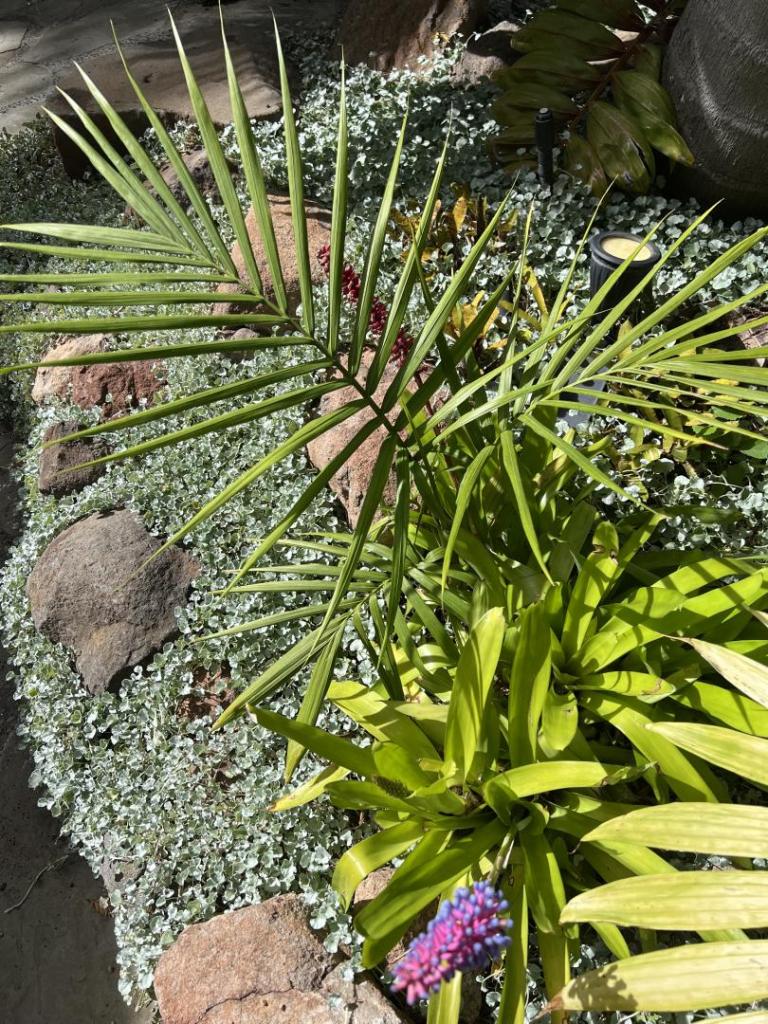
 Sabal Steve replied to Sabal Steve's topic in OHANA NUI - OFF TOPIC SUB-FORUMThanks guys. I just have no idea what else could have caused this. We haven’t had rain since they were installed. They’re also made out of aluminum, and while I realize that can too corrode, I don’t think it’s normal that this happened already. The roofer said he will fix the spot and report to the manufacturer.
 GeneAZ replied to Tracy's topic in TROPICAL LOOKING PLANTS - Other Than PalmsInopinus is taking on very nice mature character!!
 Tyrone replied to cbmnz's topic in WEATHER / CLIMATEI’m envious of your climate. Clinostigma samoense I think has no cold to cool tolerance but you gotta try hey. Or it could be just that one individual. What’s the coldest you’ve gone down too and what are your average max and mins at the moment. Something positive - Spring is 2 weeks away everybody!!!!!!!!! Then it’s all on like donkey kong. 😁🌴🌴🌴🌴🌴🌴🌴🌴🌴🌴🌴🌴🌴🌴🌴🌴🌴🌴🌴🌴🌴🌴🌴🌴🌴🌴🌴🌴🌴🌴🌴🌴🌴🌴🌴
 96720 replied to Neel's topic in DISCUSSING PALM TREES WORLDWIDEThey grow great in Phoenix you can’t get much hotter and drier than that!!! Hard to get a picture in the jungle!!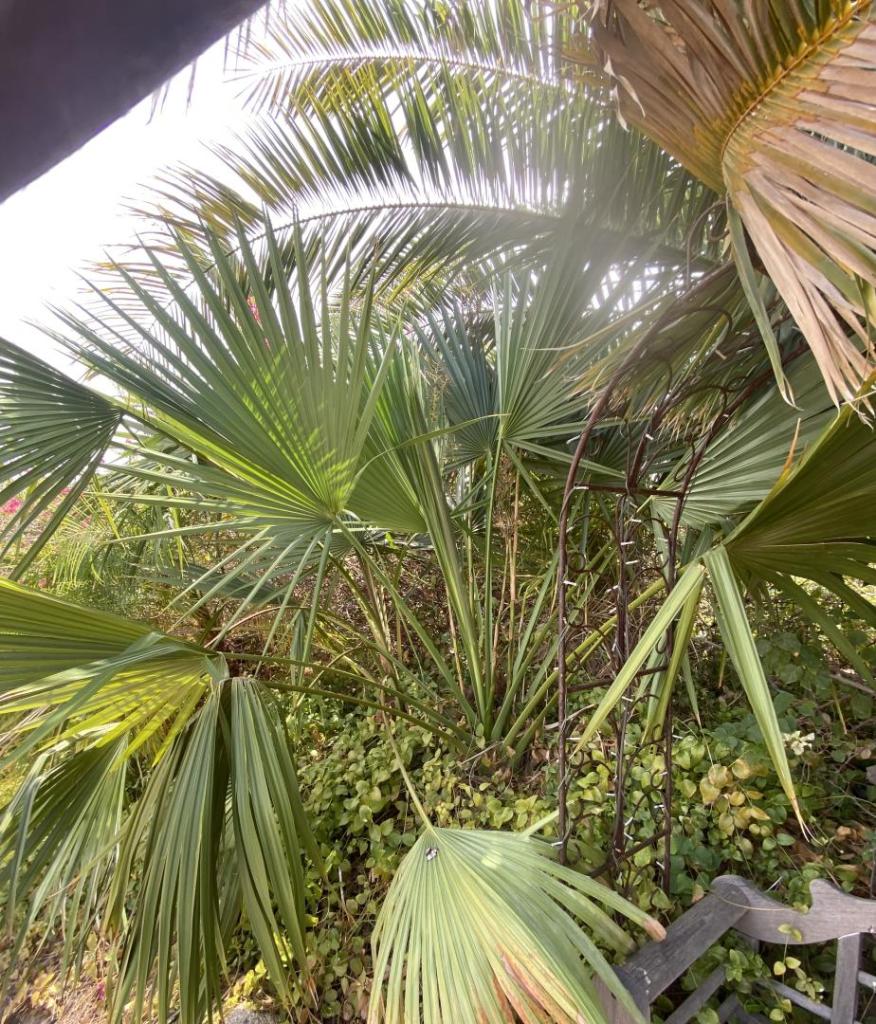


.jpg.f94858f00b74e823d80ea4a73b77c2d4.thumb.jpg.4af2ad7203105d5f800990788a16980a.jpg) Josh76 replied to LaTruffe's topic in TROPICAL LOOKING PLANTS - Other Than PalmsOui, mais importer au Royaume-Uni est devenu tellement difficile à cause de ce fichu Brexit 🤬
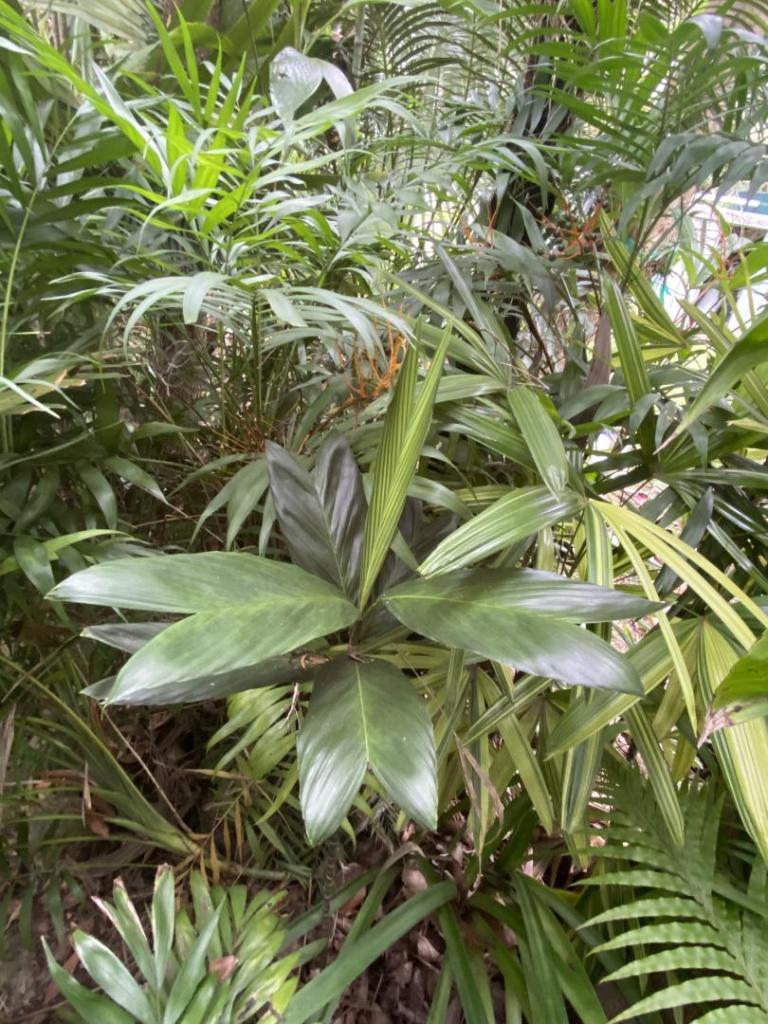
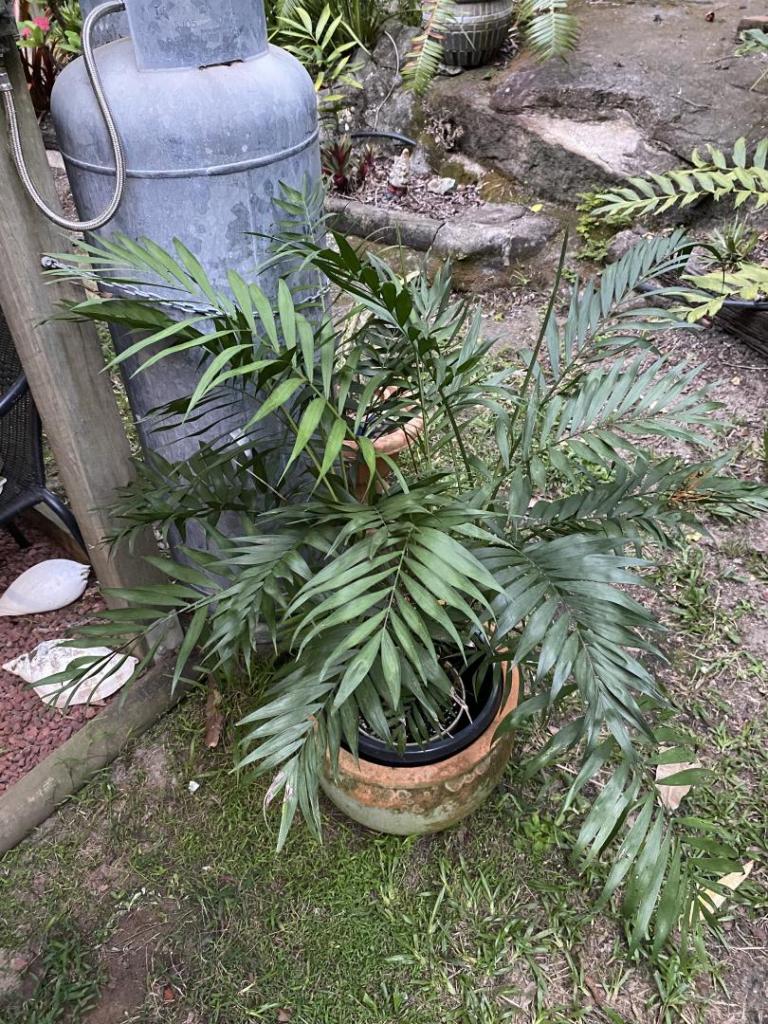
Josh76 replied to LaTruffe's topic in TROPICAL LOOKING PLANTS - Other Than PalmsOui, mais importer au Royaume-Uni est devenu tellement difficile à cause de ce fichu Brexit 🤬 sbpalms replied to happypalms's topic in TROPICAL LOOKING PLANTS - Other Than PalmsYeah, I bought them from bellamytrees.com about 2 years ago. I don't think they sell them anymore. They do seem pretty adaptable. Mine have done well indoors although they do appreciate a lot of water. I want to plant them outside eventually but I don't know if I have enough space. Here's the larger of the two plants I have. The leaves are about a foot long and deeply corrugated and spiny. Attractive bark as well, it's light brown with papery reddish bronze strips.
 Johnny Palmseed replied to SubTropicRay's topic in DISCUSSING PALM TREES WORLDWIDEI must be a masochist because I saved several seedlings. My 3 single Roebeleniis are almost too tall to manage. I figured that I would just grow replacements. Now I’m not sure if I will even keep them.
.thumb.jpg.71208dbec60c3543cfa7ca57ae5a6a92.jpg) GoSpursGo1 replied to MarcusH's topic in COLD HARDY PALMSThey really oughta stop planting Queens in SA. I hate seeing them die.
GoSpursGo1 replied to MarcusH's topic in COLD HARDY PALMSThey really oughta stop planting Queens in SA. I hate seeing them die. John2468 replied to John2468's topic in Palms/Plants/Seeds WantedThanks!
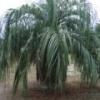 VA Jeff replied to Neel's topic in DISCUSSING PALM TREES WORLDWIDEWhy would you want to grow sabal minor? Most of the people who grow it have few other hardy options. You could also choose a small brahea that loves your climate.
(173x200).thumb.jpg.87642ce613f801fde119db608b8aeb96.jpg) Silas_Sancona replied to Sabal Steve's topic in OHANA NUI - OFF TOPIC SUB-FORUM😂 Not sure which would be worse.. That experience, or being randomly smacked in the face by them while driving w/ the window down.
Silas_Sancona replied to Sabal Steve's topic in OHANA NUI - OFF TOPIC SUB-FORUM😂 Not sure which would be worse.. That experience, or being randomly smacked in the face by them while driving w/ the window down. 5crackers joined the community
 PalmMom007 replied to John2468's topic in Palms/Plants/Seeds WantedHi, I do. When I get back to the farm later today I will send you a message with pics. I may have a couple rooted in pots, but definitely have cuttings. Thanks, Shelby (239) 318-0460