All Activity
- Past hour
-
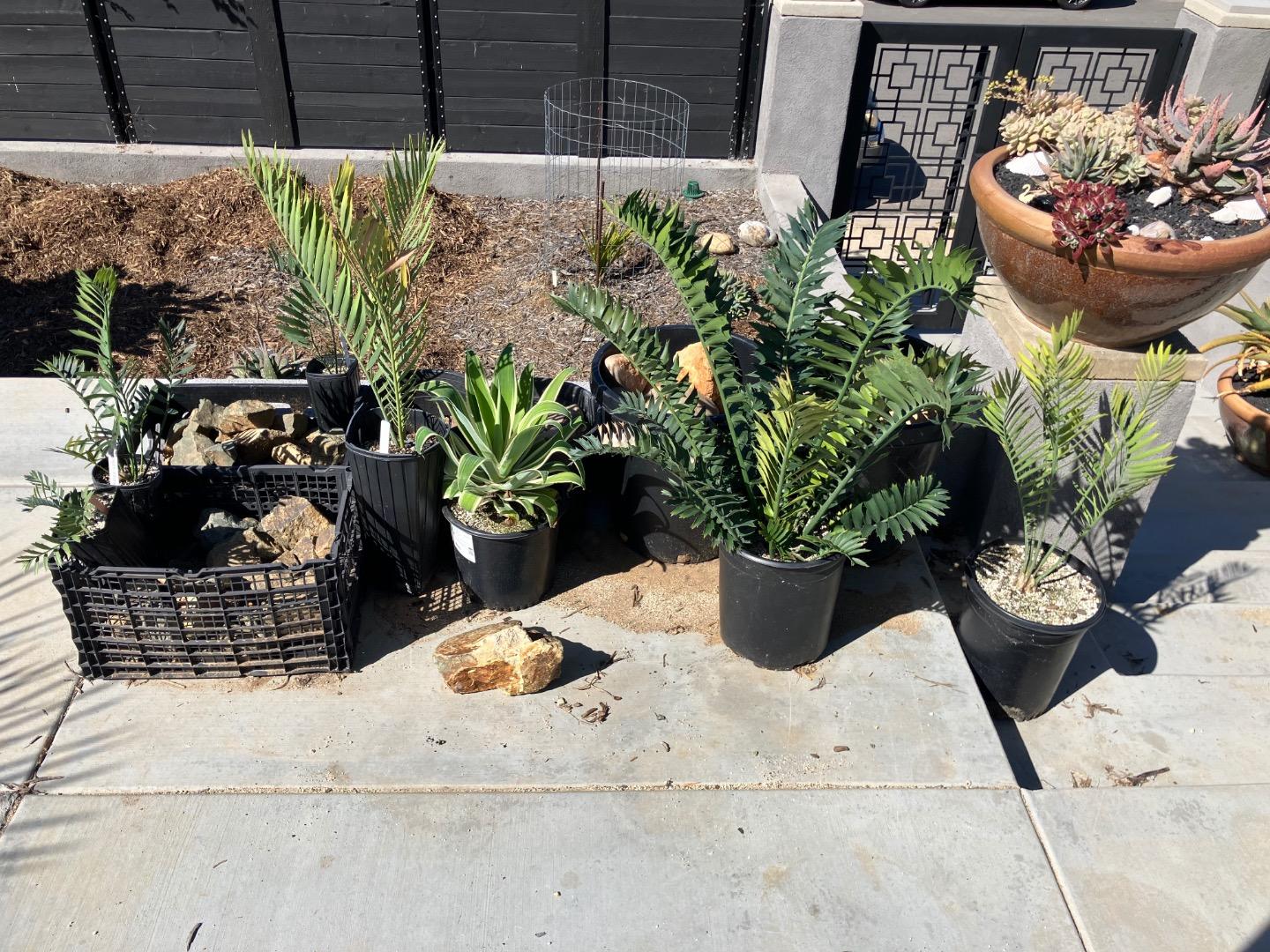
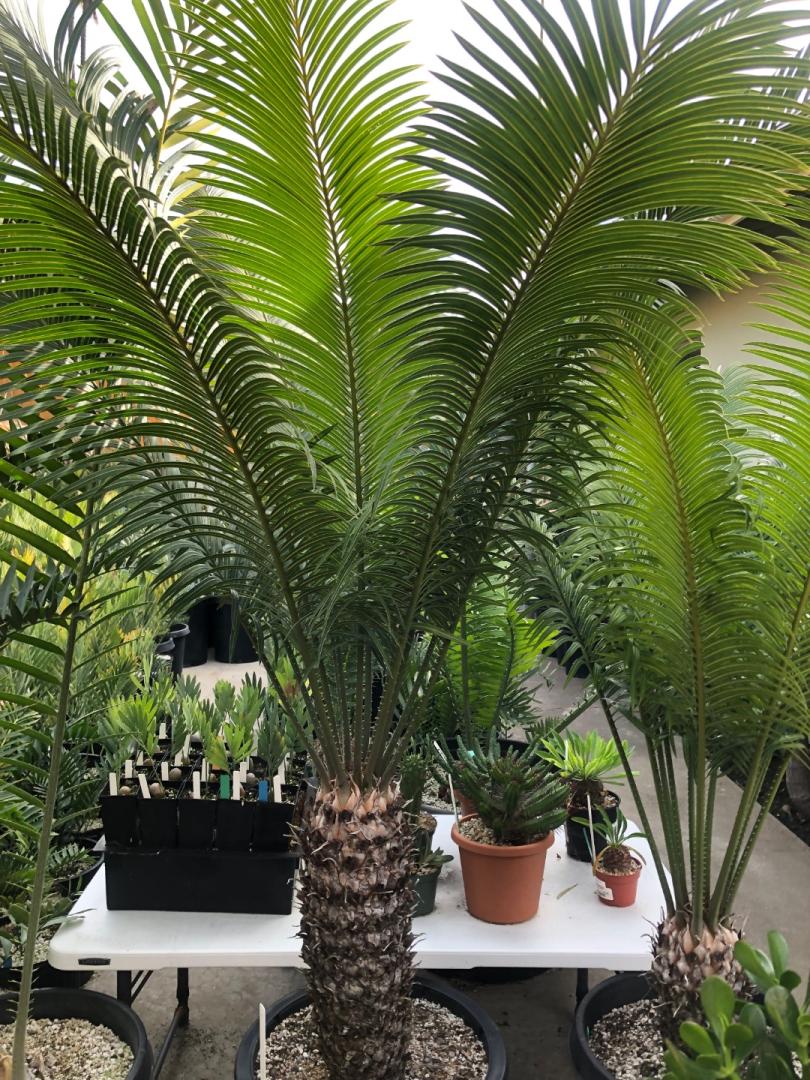
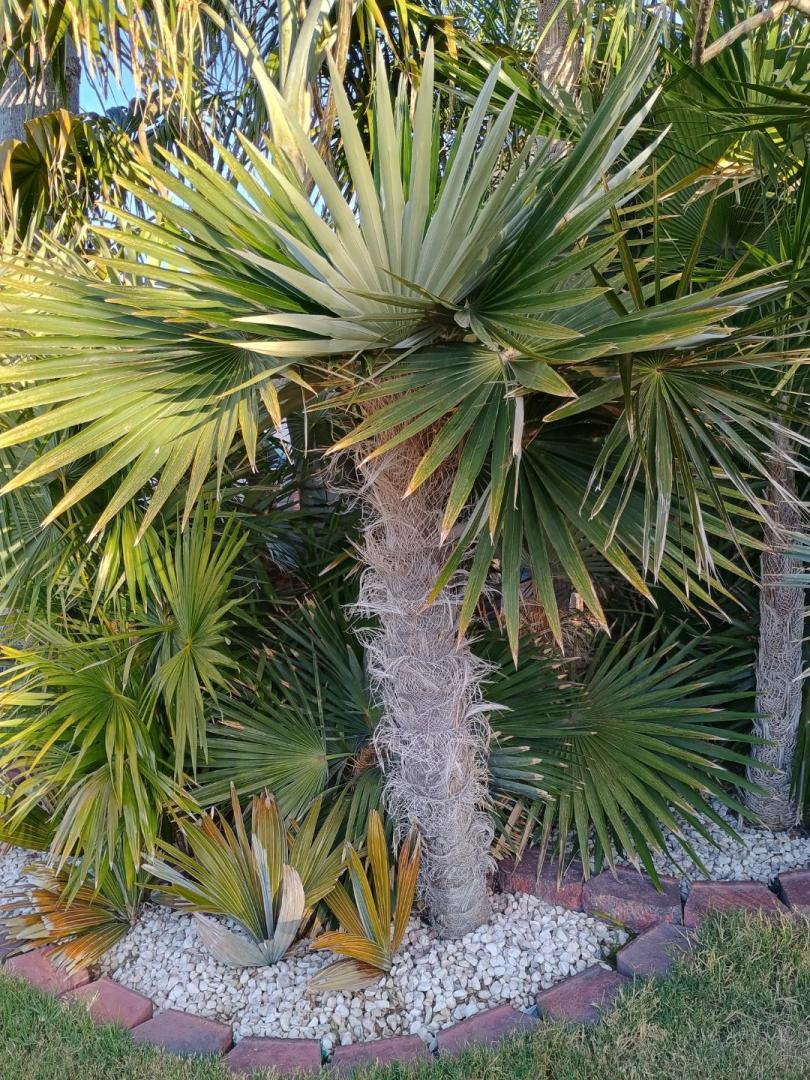
These are great palms for South Florida. Not too big, not too fast, tolerate our dry and wet conditions, tolerate sun and heat, but also get a very nice deep green in the shade.
-
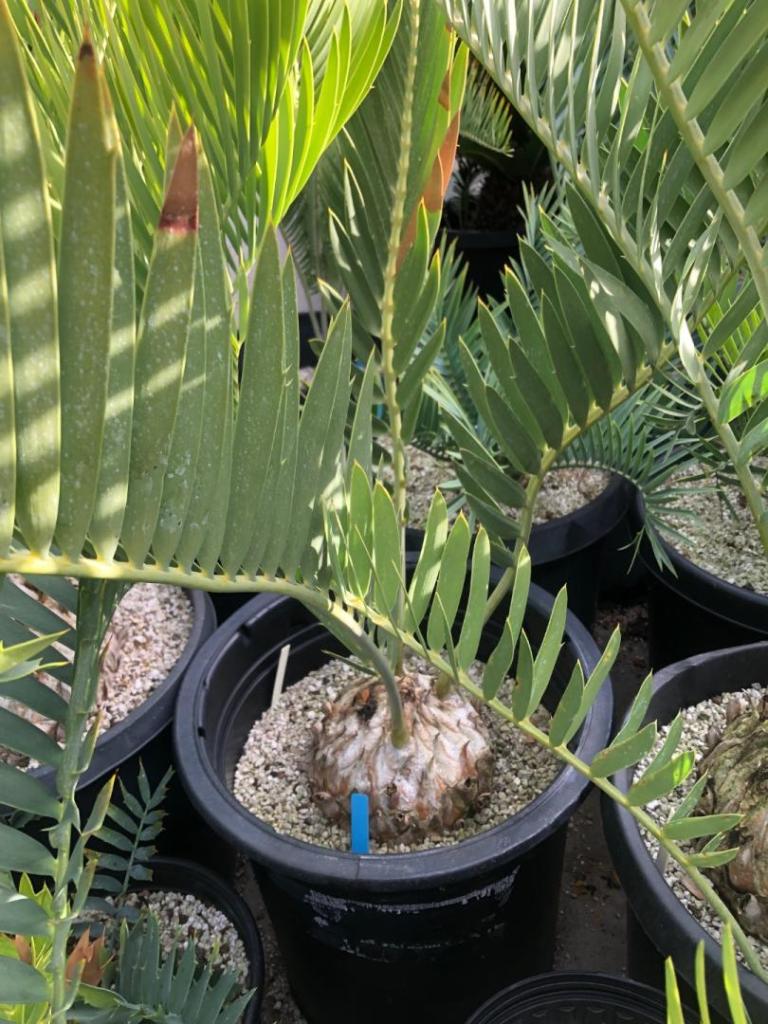
Eugene Maraisii 6” caudex old plant $500!
-
Still finding a few plants that were hiding 15 gal E Longifolious Joubertina blue $100! Not very blue yet but probably with time it will be.

-

Preliminary cold damage to my palms after 23F, Central Florida
Johnny Palmseed replied to Eric in Orlando's topic in FREEZE DAMAGE DATA
Forgot about my C. Leptocheilos-Severe -
Dictyosperma album var. conjugatum aztropic Mesa, Arizona
-
Old Man Palm Up for Grabs
aztropic replied to Looking Glass's topic in DISCUSSING PALM TREES WORLDWIDE
It obviously was a good idea to get more than 1 to 'hedge your bet' so that you would at least have an example to plant in your garden. I only bought 1, but enjoyed it very much before it died after a couple months. I believe the shipment had been exposed to freezing temperatures in the early February transport from Florida to Arizona as I know of a few buyers that had their trees get crown infections and succumb. I ended up replacing mine in that prime location with a Coccothrinax miraguama that I grew from seed that has performed wonderfully for the last 3 years. Nowheres near as large yet, but someday...😄 aztropic Mesa, Arizona

- Today
-
How bad was the freeze in Florida?
edbrown_III replied to rprimbs's topic in DISCUSSING PALM TREES WORLDWIDE
just a typical zone 9A winter ---- havent had one in over 10 years ------ these winters occurred regularly in the 1990's -
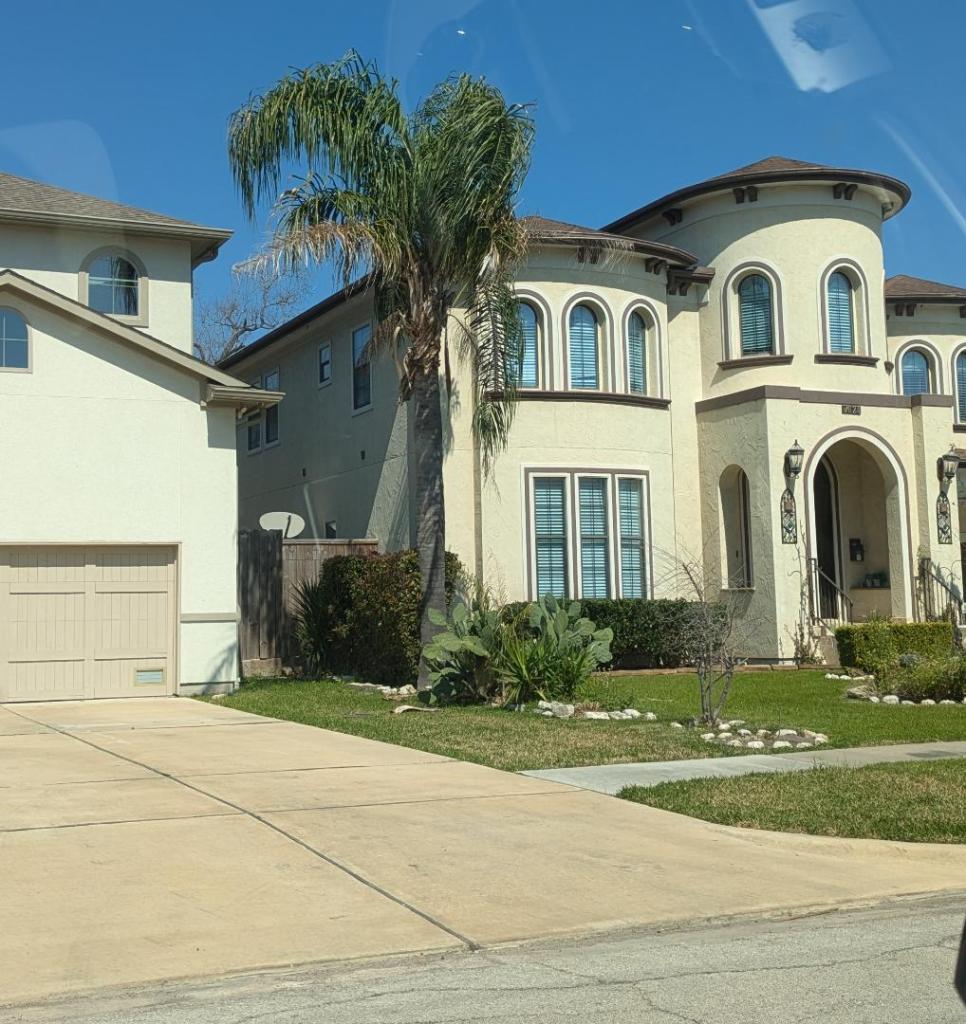
Can barely tell we had a freeze.
-

What is your current yard temperature?
PAPalmtrees replied to GottmitAlex's topic in WEATHER / CLIMATE
Right now it's 72 degrees I'm so glad we're done with winter. Next week is going to be even nicer
-
(154x200).thumb.jpg.8e1ced887bd4cd81bb781abf014e30e3.jpg)
Hints of Spring ..Part 2?..
Silas_Sancona replied to Silas_Sancona's topic in TROPICAL LOOKING PLANTS - Other Than Palms
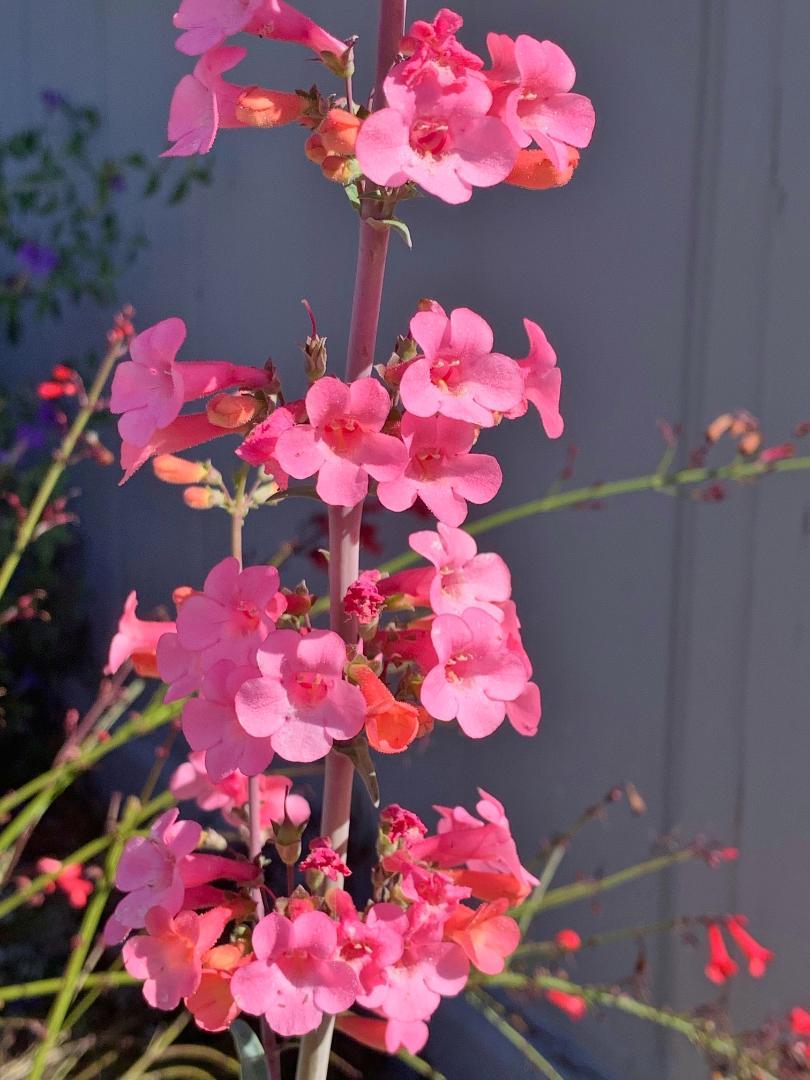
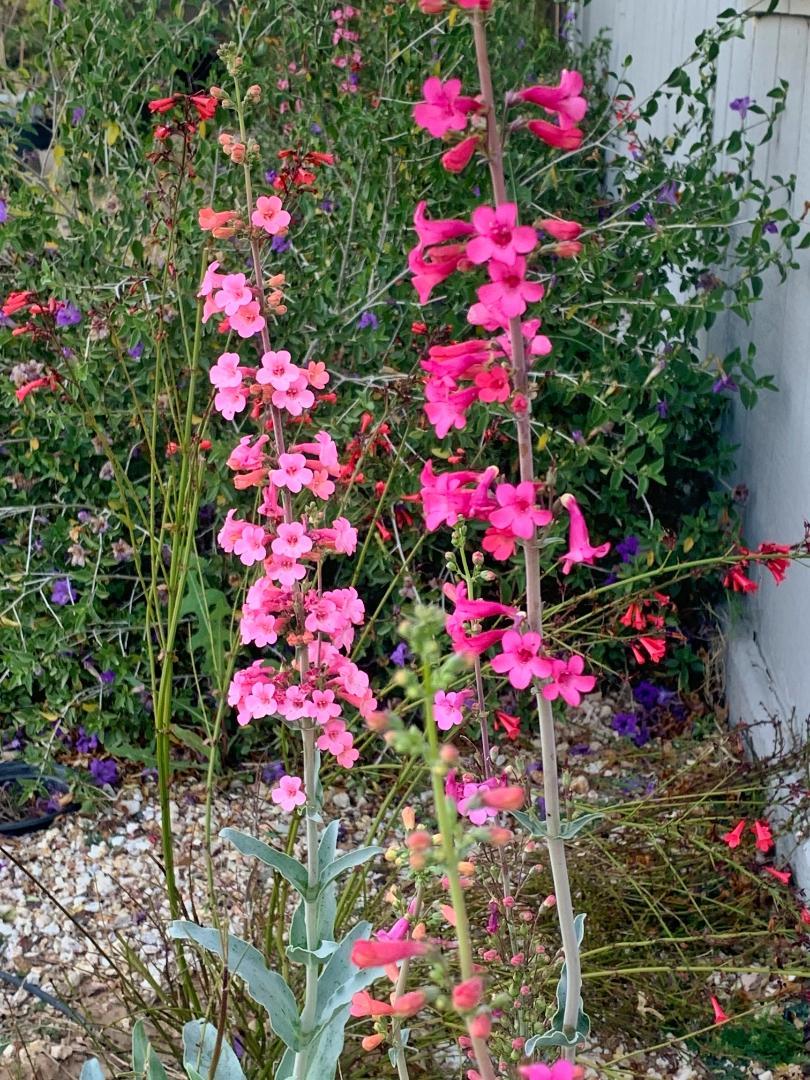
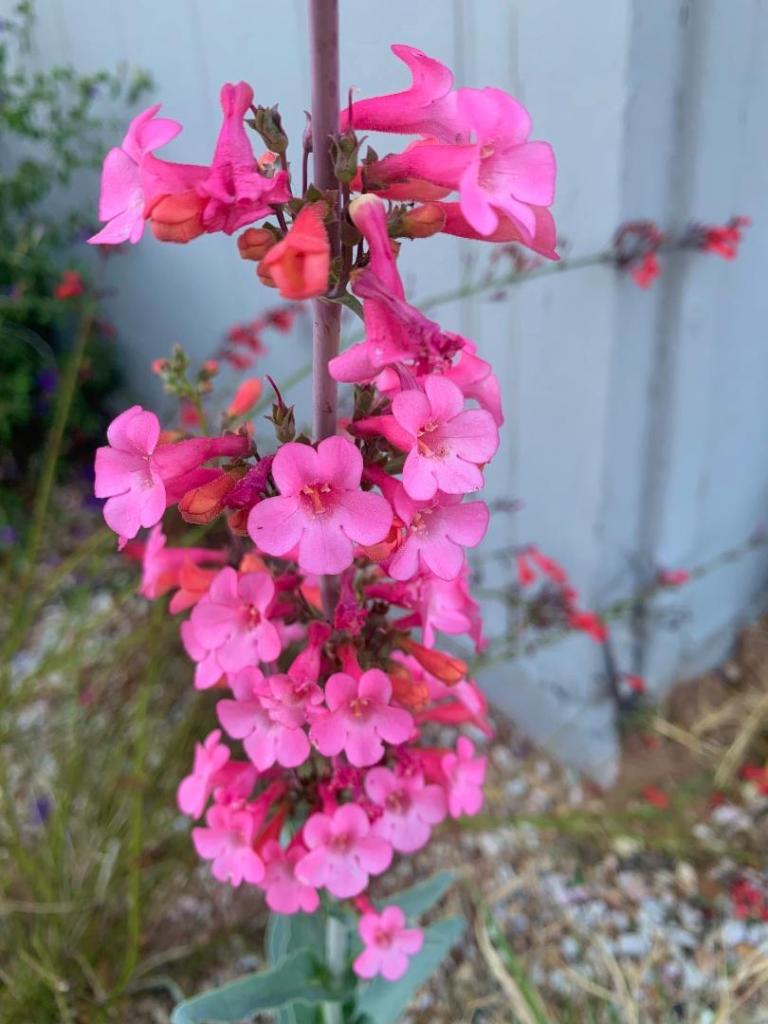
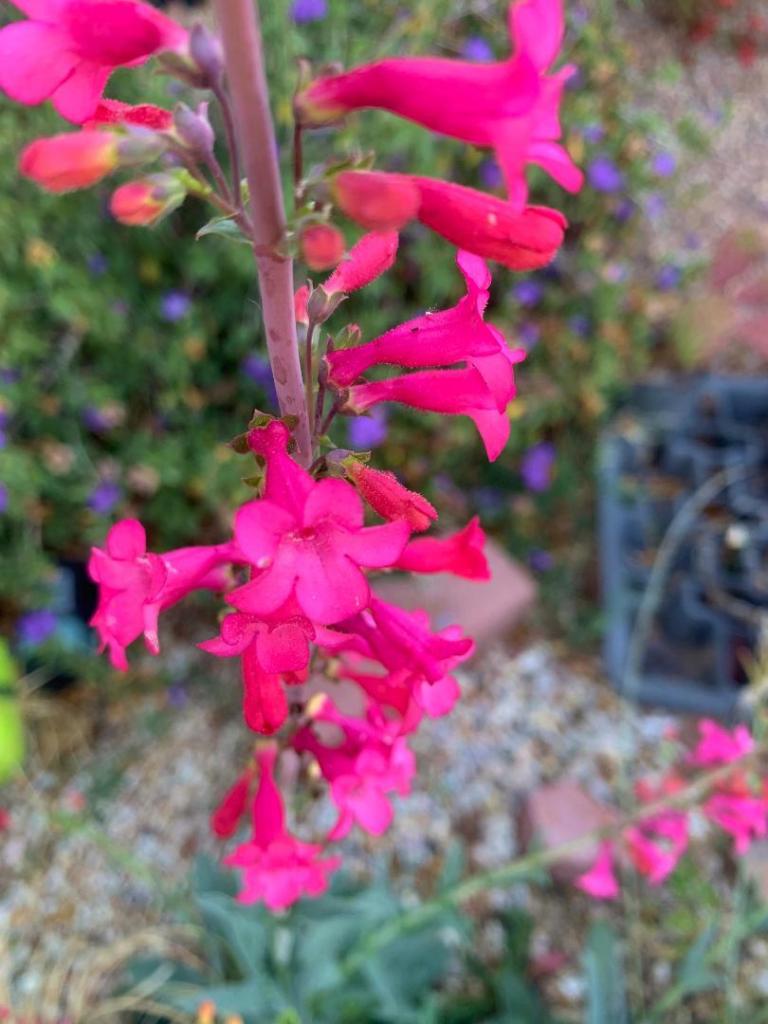
Chris.. Glad to re-hash a few good memories.. Will say that if you haven't been out here / visited either PHX or Tucson at all since you left, ..You're in for a pretty big shock, esp. up this way.. Would never know it now but, from what everyone who has lived here for decades has told me, Chandler itself was nothing but pasture and Ag fields up until sometime in the early 2ks.. Even within the time i've been here, what patches of remaining Ag and pasture land was left is pretty much gone. While passing through it not too long ago, hardly recognized a section of Queen Creek i'd pass through daily when i worked out there. Used to seeing an area grow rapidly development - wise but, pretty eye opening how quickly that occurs here. Agree, 100%, ..if one's idea of the state's habitats is narrowly confined to the single, general assumption of the area, they're missing out on a lot of incredible scenery and plant / animal diversity, esp. the further south you travel. While a lot of folks would pick areas north / northeast of PHX, up on the Rim as their favorite parts of the state, mine would encompass an area that essentially sits south of the 60 from South Mountain to Globe, then follows the San Pedro River, down to Sierra Vista and into Mexico. Everything between Tucson, Nogales and Sierra Vista is unforgettable, esp. when taken in during a wet summer when everything is lush and very green.. Madera Canyon / Huachucas don't seem like they belong in a " desert " state. Regarding Blue flowered things here, .. Agree, definitely interesting that, majority -wise, seems many of the plants you'll see here possess flower colors centered somewhere within the warm end of the spectrum, vs. those that are blue / purple. That said, overall, legit, blue flowered things are a rarity ..compared to other flower colors. That said, Look around enough and you'll still find a good amount of native stuff that has Blue / Purple flowers though.. Majority of your Lupinus, Phacelia, & Eriastrum, ..most of the Mirablis, What Day Flower / Spiderwort ( Commelina ) sps occur in the state, Dalea and Psorothamnus, Evolvulus, Solanum, Quincula, and Ipomoea, Amsonia, locally native things in the Verbena fam / other stuff in that family from Sonora / Silaloa and Baja ( specifically Citharexylum flabellum and affine ) Ruellia, and Salvia, a few Pentemon sps that extend north across the border from Mexico, ..2 or 3 sps of Ipomopsis, and our highly uncommon Pleat-Leaf sp, Nemastylis tenuis. No doubt i'm probably forgetting other stuff that grows up on... ..or North / east... of the Rim / White Mtns. Add in stuff like Vitex mollis, Guiacum coulteri, Tropical Royalblue Water Lily ( Nymphaea elegans ) and Lonchocarpus hermanii .. just to name a few.. from just south of us, + other stuff native to areas east of the Sierra Madre Occidental that will grow here and ..that's a pretty decent list of choices of locally / regionally native plants that produce flower colors at the cooler end of the spectrum, all year, or during specific seasons ..depending on where one lives / what kind of landscape they set up of course. As far as Phacelia is concerned, i myself find their little " gift " more of a minor detail than a big deal.. Poison Oak -esque effect doesn't last long ..personal tolerance to it of course.. and the wildlife benefits out weigh the " not so great " cons. As you mention, bold, Blue colored things aren't exactly a common sight out here either so, ..worth it, as long as you know what can come with growing them. As long as you keep them out of areas where kids /pets, ..or anyone highly sensitive to the effects can easily access them, there's no reason not to include them in with the spring flowering annual stuff. Let them dry out before raking their dead bodies out of a bed and the oils that can cause the rash are less present. ..what i've noticed anyway. Agree, ..Parry's Penstemon is our #1 ..the #1 Penstemon choice for hot / dry areas, mo of course.. Can't really ask for an easier spring flowering perennial that laughs off our heat ..Most of the time.. and puts on such a show. Irresistible to both Hummingbirds and Sphinx Moths.. Literally watched one of our neighborhood Hummingbirds swoop in and harass / chase off a Sphinx i was getting shots of that was zipping between flowers on one of the patches of P. parryi and Baja Ruellia nearby.. Poor Moth, lol.. Kind of funny watching the hummingbird chirping at the moth before charging at it though. Un-confirmed but thinking i have crosses between parryi and superbus in the bigger group of plants out back as well.. From what iv'e seen, parryi is typically some deg. of Magenta end Pink.. P. superbus tends to lean Red or Orange -ish. Individual flowers are held differently between the two as well w/ parryi being more " lazy " / less arranged in defined tiers compared to superbus. I'd grown plenty of parry out front, some popping up near the superbus i had out there so.. What i believe is a cross w/ superbus, compared to what looks like the typical parryi.. Note the larger flower size, lighter overall color / orange - toned buds / tighter flower whorls. Poss. cross.. typical parryi.. i believe.. Two side by side.. Some other inflos in this group but hard to get them al in for a shot. Aside from the two mentioned, big fan of P. palmeri, barbatus ( Beard lip ) thurberi, ambiguus, dasyphyllus, and spectabilis, and some of the Mex. sps ( P amphorellae, gentainoides, and campanulatus ) Some great, blue flowered sps from the Rockies / Sierras and Great Basin but don't think they'd last all that long in hotter / drier areas.


-
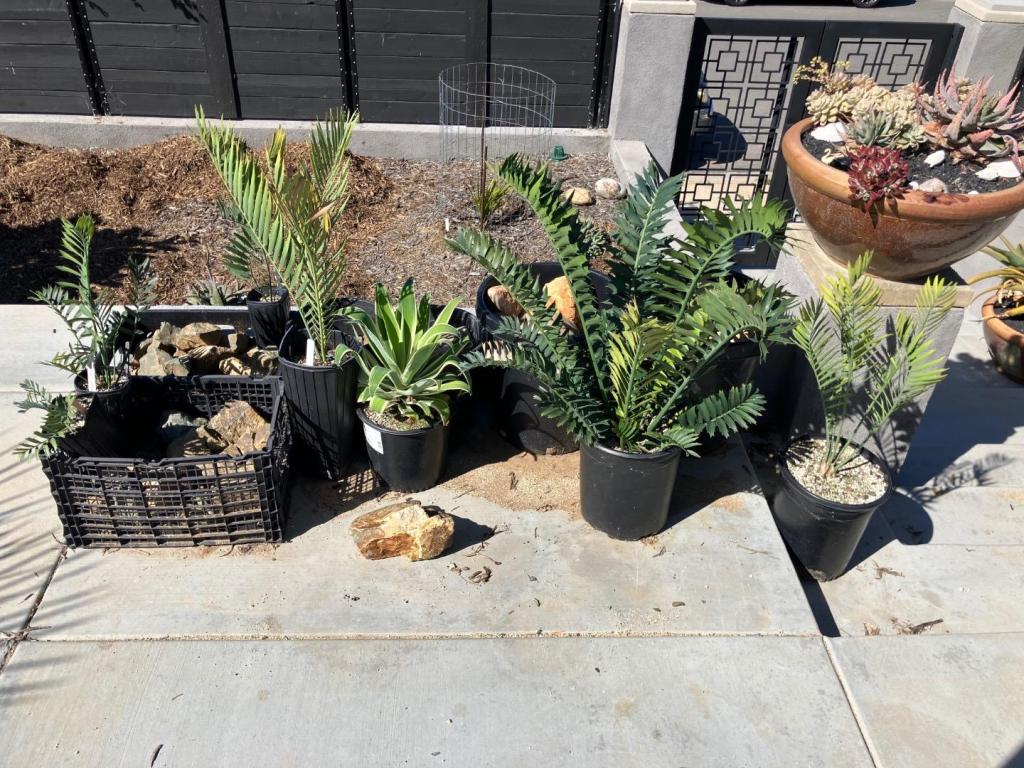
Thanks Steve! It was a pleasure meeting you and good luck with your new plants🤙
-
Had the pleasure of meeting Steve, and buying a few plants. Great guy with Killer deals! Don’t miss out!
-

Historic East Florida Freeze, Feb 2026 Screen Shots
bubba replied to Jimbean's topic in WEATHER / CLIMATE
One thing lost in this discussion about tropical palms and foliage in cold events is the amount of heat in the particular climate. Notwithstanding this February 2026 cold event, the average February temperature at PBIA was 64.82 degrees Fahrenheit for this admittedly cold event. Of course, the Koppen/Trewartha classification for tropical is an average temperature during the entire year of not less than 64.4°F. This is the PBIA weather underground site for the month of February: https://www.wunderground.com/history/monthly/us/fl/west-palm-beach/KPBI/date/2026-2 The average temperatures for the months of January 2026 and December 2025 were 67.01°F and 71°.84°F, respectively on the weather underground site for PBIA. The average temperature in the month of December 1989 at PBIA on the weather underground site during that cataclysmic event was 57° 48. F. The following months in January and February 1990 averaged 66.37°F and 70.04°F, respectively. It warmed up quickly after the devastating 1989 event. https://www.wunderground.com/history/monthly/us/fl/west-palm-beach/KPBI/date/1989-12 The closest and most reliable weather underground station in Palm Beach is Device One-KFLPALMB 251. During February 2026, it registered an average temperature of 67.8 F. with an ultimate low of 38°.3 F for the month of February 2026. https://www.wunderground.com/dashboard/pws/KFLPALMB251/table/2026-02-28/2026-02-28/monthly -

Help planting a Coccothrinax borhidiana
Jim in Los Altos replied to Kim B's topic in DISCUSSING PALM TREES WORLDWIDE
I planted mine (one gallon) a couple years ago here in Northern CA and it’s in a particularly wet area of my front yard in partial shade. Soil is neutral to slightly acid. It’s done well. A slow grower especially up here but nonetheless a healthy happy palm. -
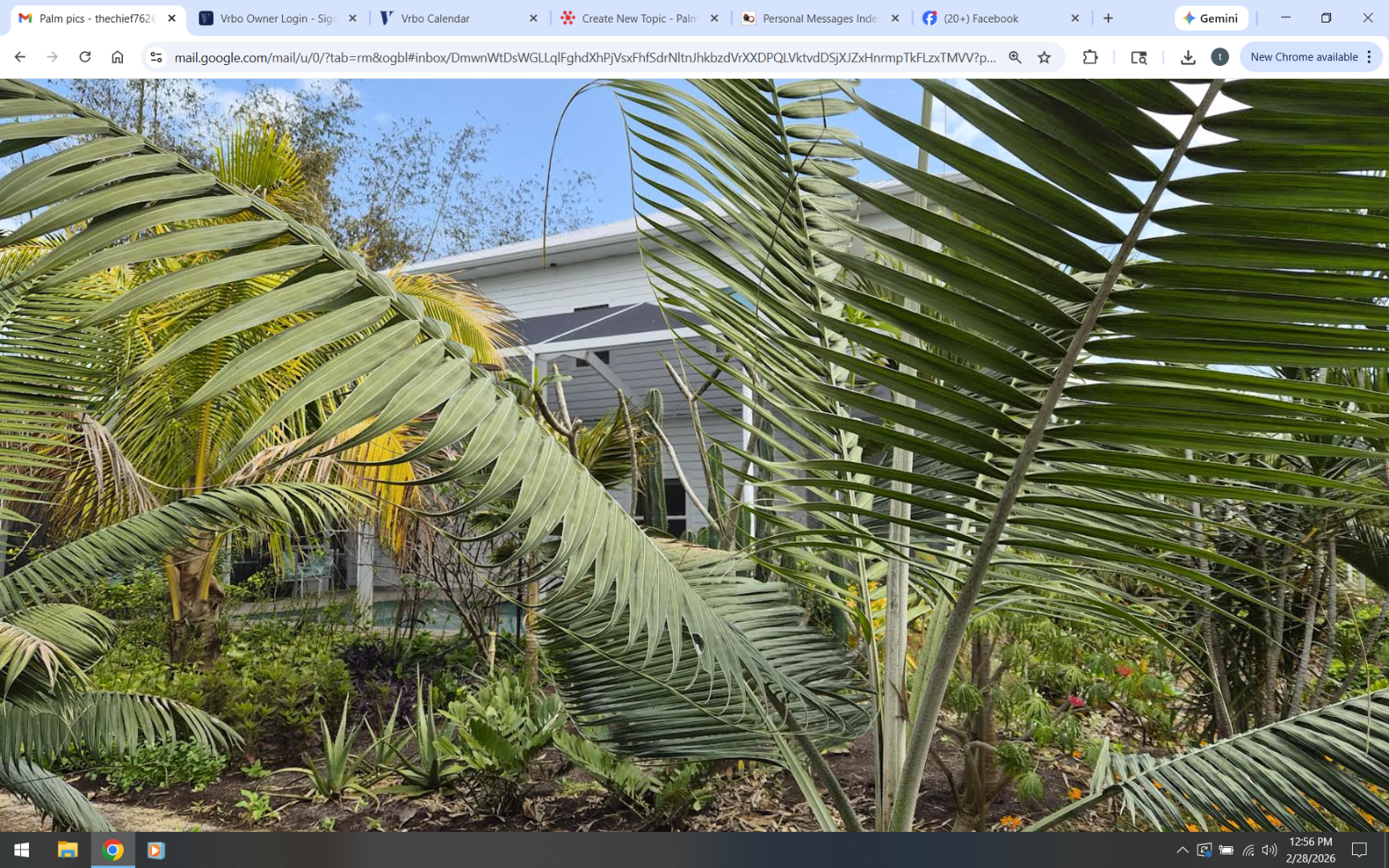
These palms were given to me but I've forgotten the name, hoping someone can help ID. Southwest Florida. The tips along the edge of each frond tend to stay connected making a nice curve. About 5 years in the ground.


-
How bad was the freeze in Florida?
Johnny Palmseed replied to rprimbs's topic in DISCUSSING PALM TREES WORLDWIDE
Anecdotally, I would say that this event was the worst I have seen since 1989 mainly due to the wind. The temperatures were bad enough to cause some damage but the wind took it to a whole other level. It was blowing 20-30mph while only at 25-30 degrees. A bad combination for sure. Also, the “protection” of living by the water did nothing as did being in Central Florida. Our lows were not much different than North Florida - 25ish vs 23ish. Pretty much everything with exposure is brown except for Queens, most Phoenix and of course Sabals. -

-
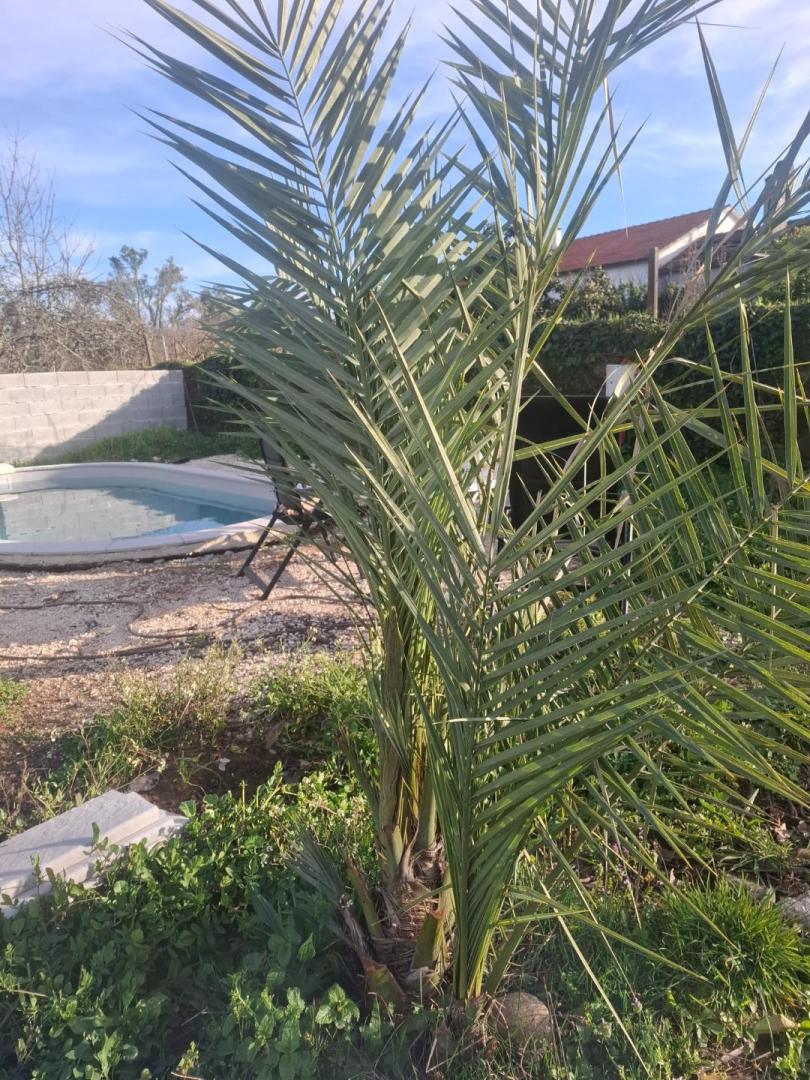
I bought this house in Central Portugal and this Phoenix was already in it. My opinion it is a Phoenix Dactlylifera because of its more grayish color of leaves, can someone tell me if I'm right or is it a other Phoenix ?

-
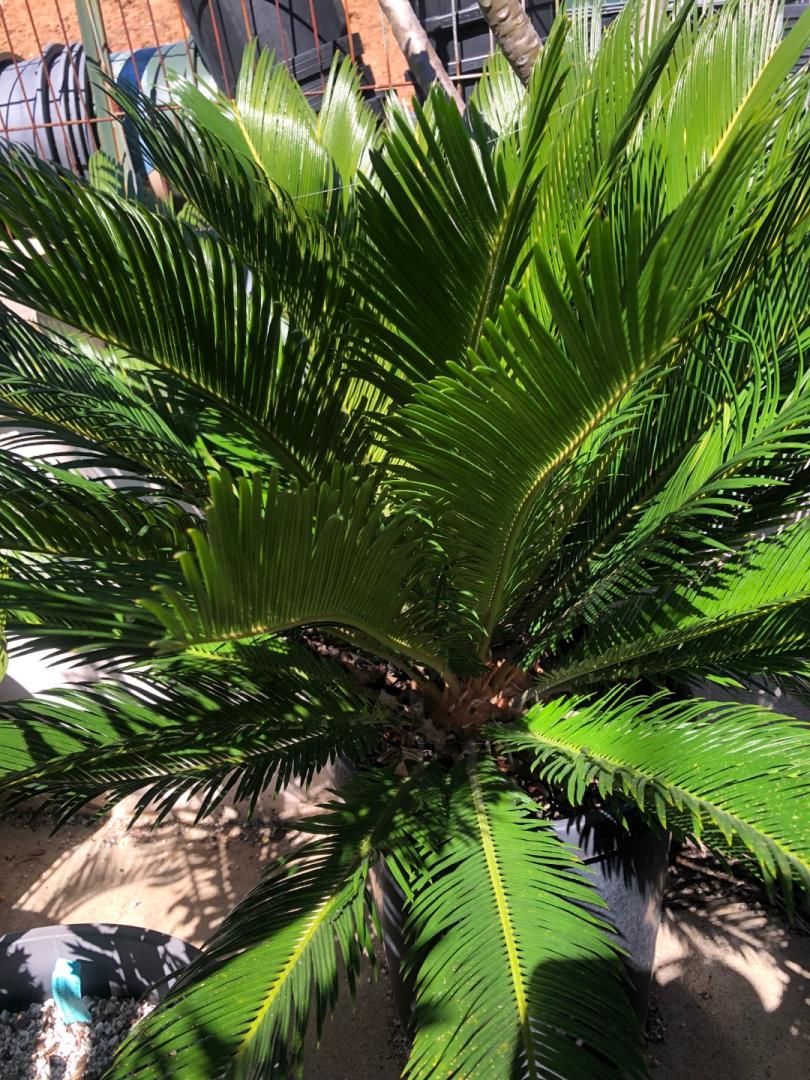
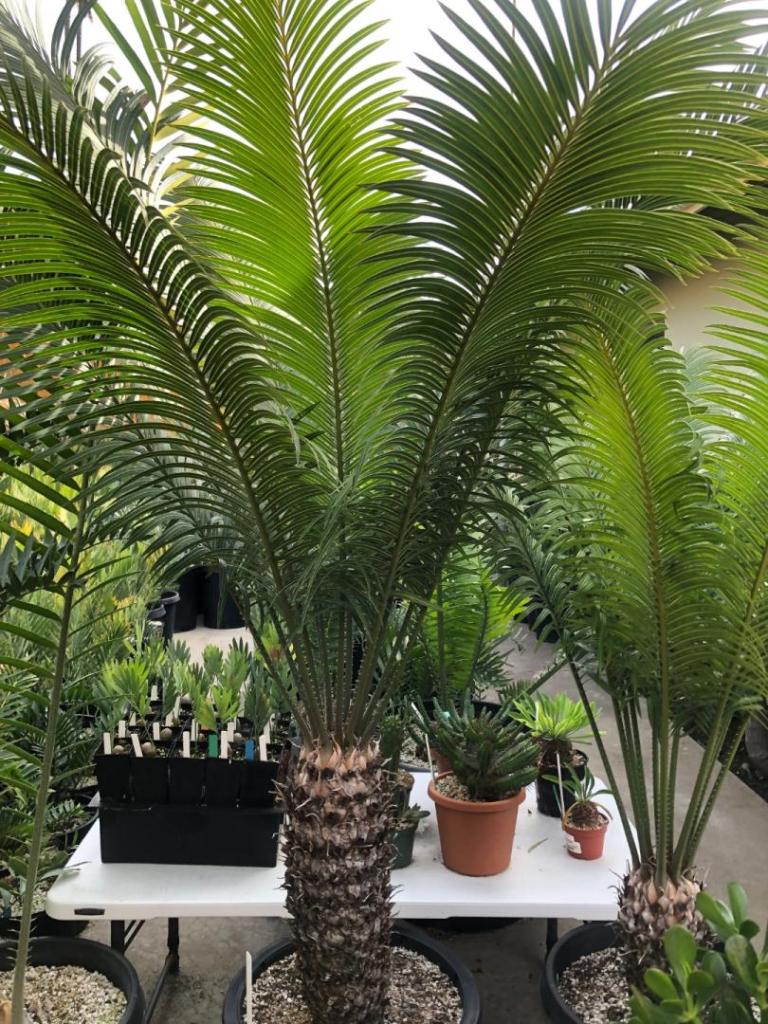
Very large 15 gal female Cycas Revoluta (Sago) $20 Come and get it🙏
-
Just added very large 15 gal. Cycas Thouarsii $300
-
 Cstapleton joined the community
 -

South Florida Palm Society Spring 2026 Palm Sale
Dave from Miami replied to Dave from Miami's topic in AFFILIATE NEWS AND MEETING DATES
Please check the website as I have just added the Palm Report which lists all the palm and cycad species available from seven growers. Many are very uncommon except at our palm sales. See: www.southfloridapalmsociety.org/palm-sale See you there! Dave Lord -
 jasonriley6062 joined the community
 -
Going to take a day trip down to Jacksonville soon.
Laaz replied to Laaz's topic in COLD HARDY PALMS
I sent you a message Ed. -
South Florida Palm Society Spring 2026 Palm Sale
Dave from Miami replied to Dave from Miami's topic in AFFILIATE NEWS AND MEETING DATES
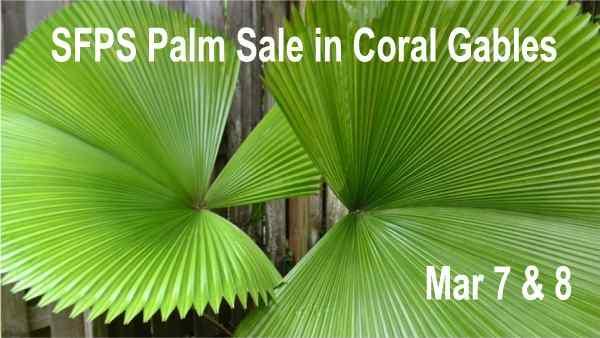
-
Why my photos doesn' t appear?
-
Help planting a Coccothrinax borhidiana
aztropic replied to Kim B's topic in DISCUSSING PALM TREES WORLDWIDE
You won't have any trouble with a borhidiana,no matter how you plant it! The purebred and it's hybrids are some of the hardiest of the Coccothrinax species. While the purebred is slower growing, both literally grow like weeds, slow but steady, even in the harsh conditions of the Arizona desert. First pic is a purebred, second pic is a hybrid. aztropic Mesa, Arizona