All Activity
- Past hour
-
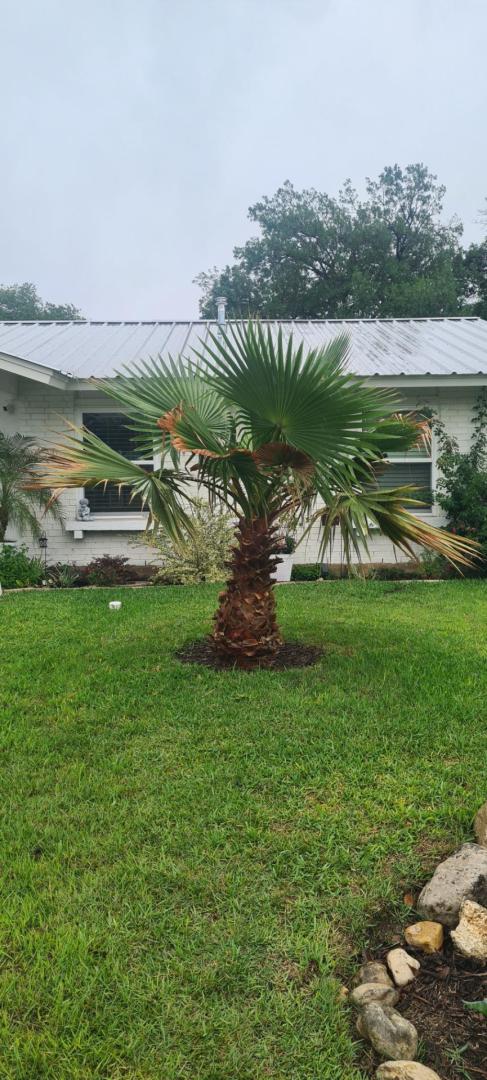
Sabal Causarium inflorescence
Walden D replied to Walden D's topic in DISCUSSING PALM TREES WORLDWIDE
Uh oh. Thats not promising. Thanks for the info though.. -
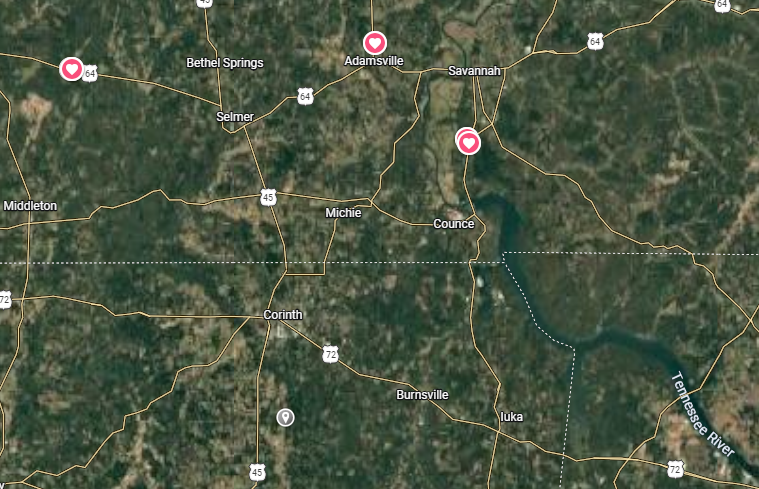
I still believe there is a population in both. They are literally native all the way up to the TN border, They may not be native in the areas that people have seen some populations but I do believe there is most likely a population in a part of the woods on the border that many people don't know about. I really do believe they are native to Virginia, This is something I have done a lot of research in there's not a lot but I have, so apparently from what I have heard on facebook there's a Hunting cabin on Cedar Island VA that has them planted all around it, But the thing was this cabin was probably built in the 40s or 50s? (I'm not really sure), and Sabal Minor was not really a popular thing in Virginia at this time, Also S minor really didn't become a widely available plant until the 80s (from what I have heard). Apparently there's a island in Back Bay VA That has a population of Sabal Minor I don't really know about this I asked this guy for an update But he said he hasn't heard anything since, and this was from about ten years ago. facebook post https://www.facebook.com/groups/695612837190143/permalink/1449550951796324/?rdid=KnKyWsLeyQMNBetO# https://www.facebook.com/groups/695612837190143/permalink/6458244154260287/?rdid=KKglZMl6JT6PGMvj#
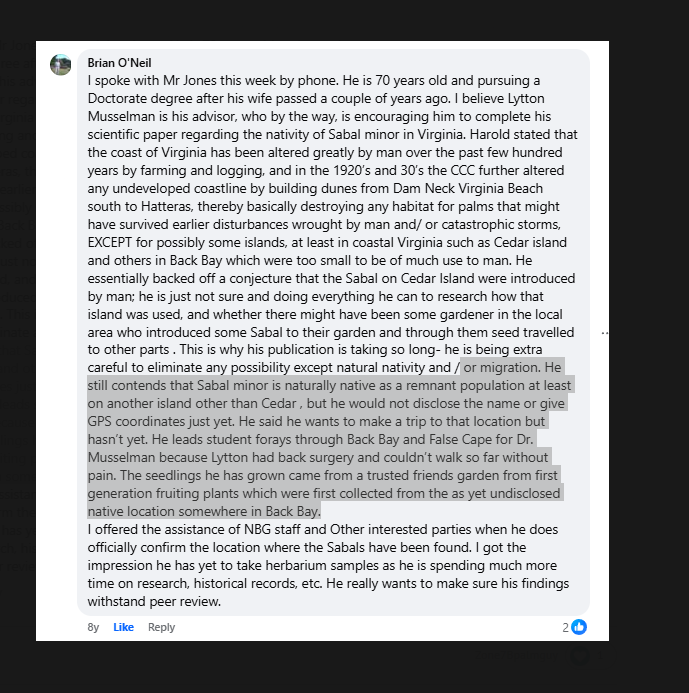
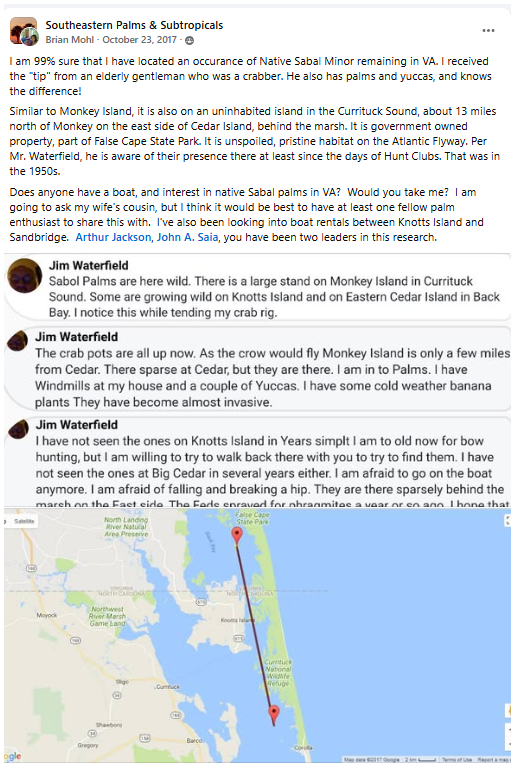

-
 I will sidestep the palm question and opine on the house. A paid-off mortgage is more valuable than a palm garden.
 -
This straddles the line. If birds spread seed from native AL populations into TN, wouldn't the TN populations be native? However, if birds spread seed from a cultivated landscape from AL into TN, then neither is native.
-

Welp…. I “saved” my Orlando-planted coconut by almost cooking it to death. But can it realistically survive being dug up and potted now?
tt68camaro replied to chad2468emr's topic in DISCUSSING PALM TREES WORLDWIDE
Save yourself lots of time and hassle and buy a new one when you move. You can buy one that size for 50-75$ if you look around on Facebook marketplace. Be very weary of where you move in Port Charlotte though if you are not near the Peace river of Charlotte Harbor it will get just as cold as Central Florida in a cold snap. Saw multiple mid to upper 20 degree days in the area over the last few years. -
Tennessee Sabal Minor Population
Colin1110082 replied to Tennessee Palms's topic in COLD HARDY PALMS
I think that truly native sabal minor to Tennessee is unlikely. These, in my opinion are most likely spread via birds either from neighboring Alabama or from planting in nearby houses, though a truly native population isn’t out of the question. I just think this is too far north. Same goes for the possible Virginia population, colonial records show they existed up the Chesapeake at one point but have been wiped out either from cold or habitat loss. To me a population in VA seems more likely than Tennessee - Today
-
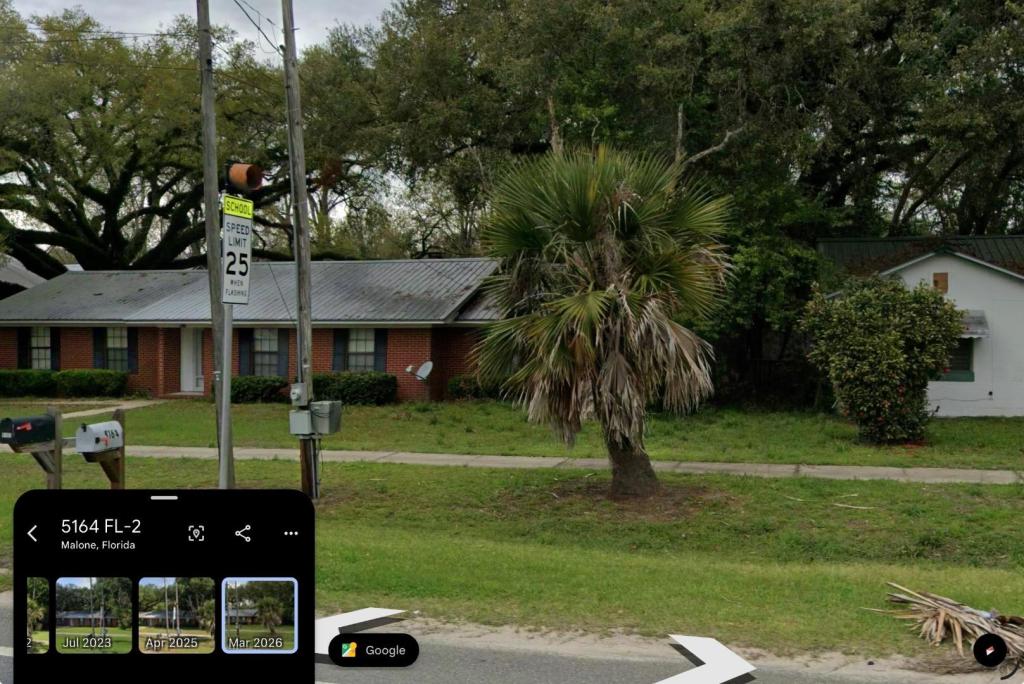
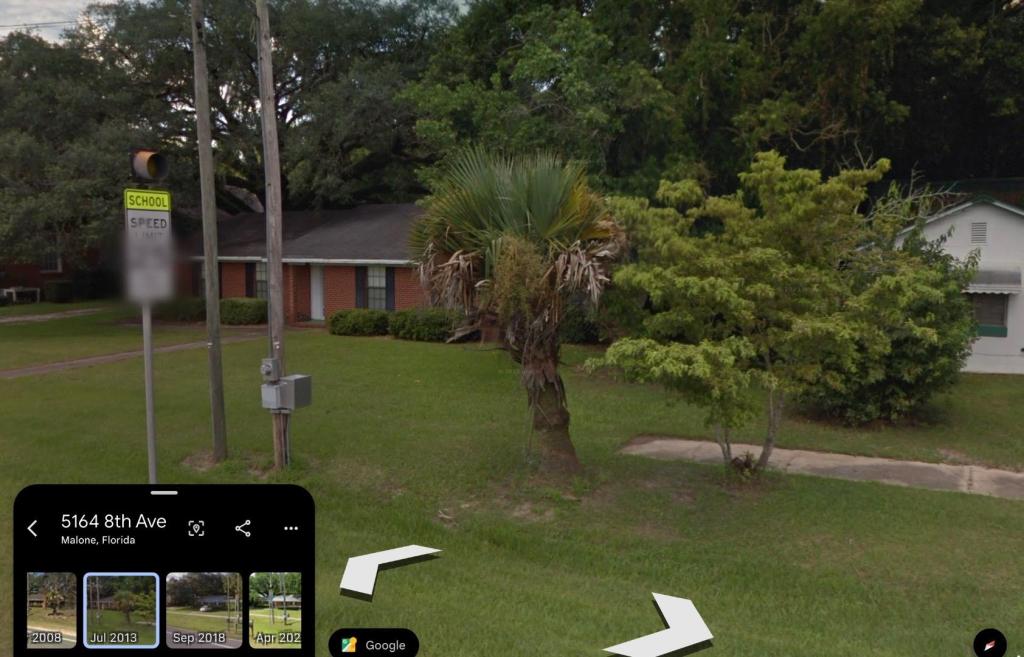
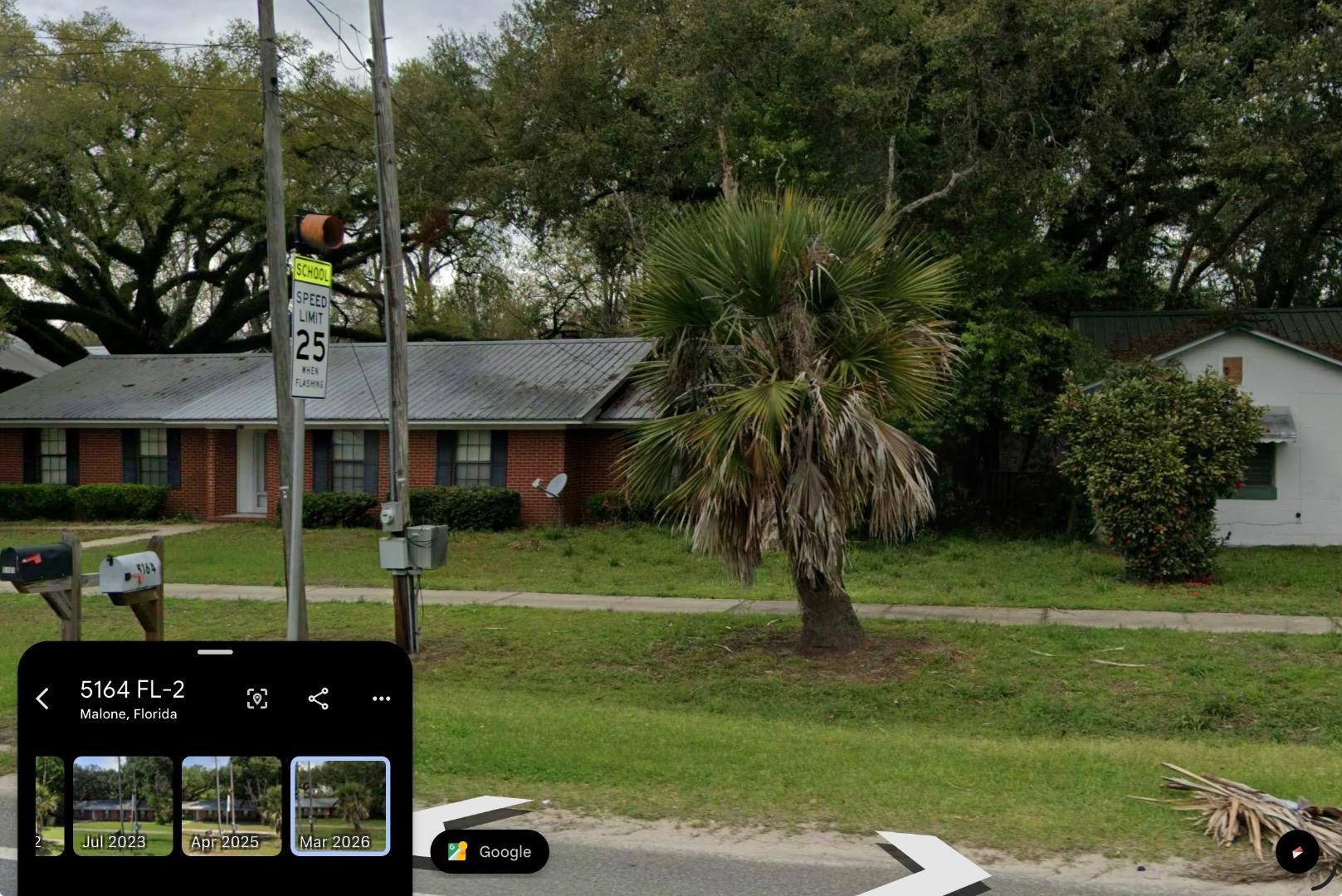
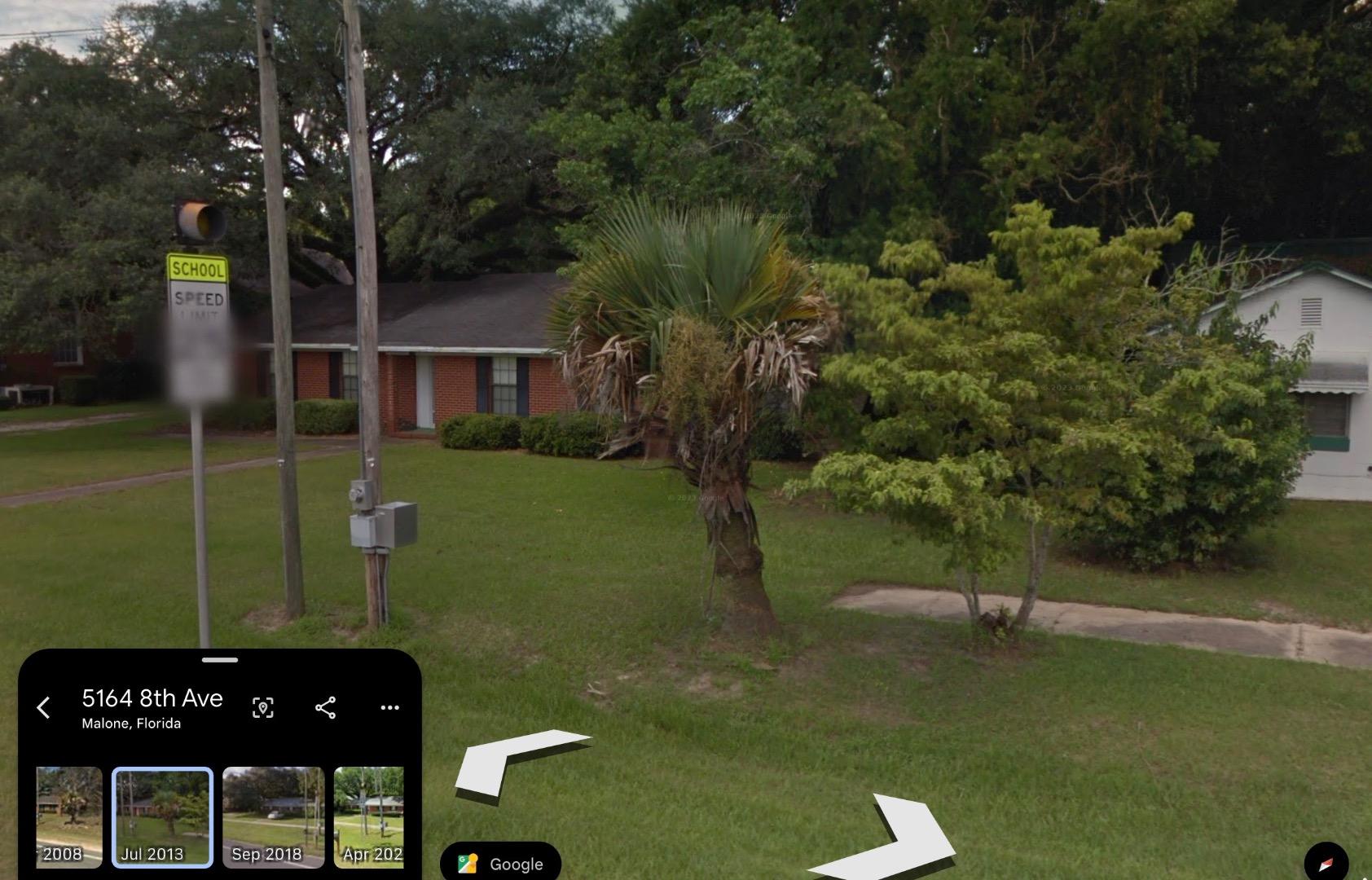
Outside of the Malone United Methodist Church there is another DeFuniak or Brazoria looking palmetto. Malone is about 60 miles from DeFuniak springs. It definitely isn’t a palmetto. Most likely a sabal minor and palmetto hybrid. It could be the same as the DeFuniak palm or a brazoriensis or some other hybrid brought in and planted there.
-

-
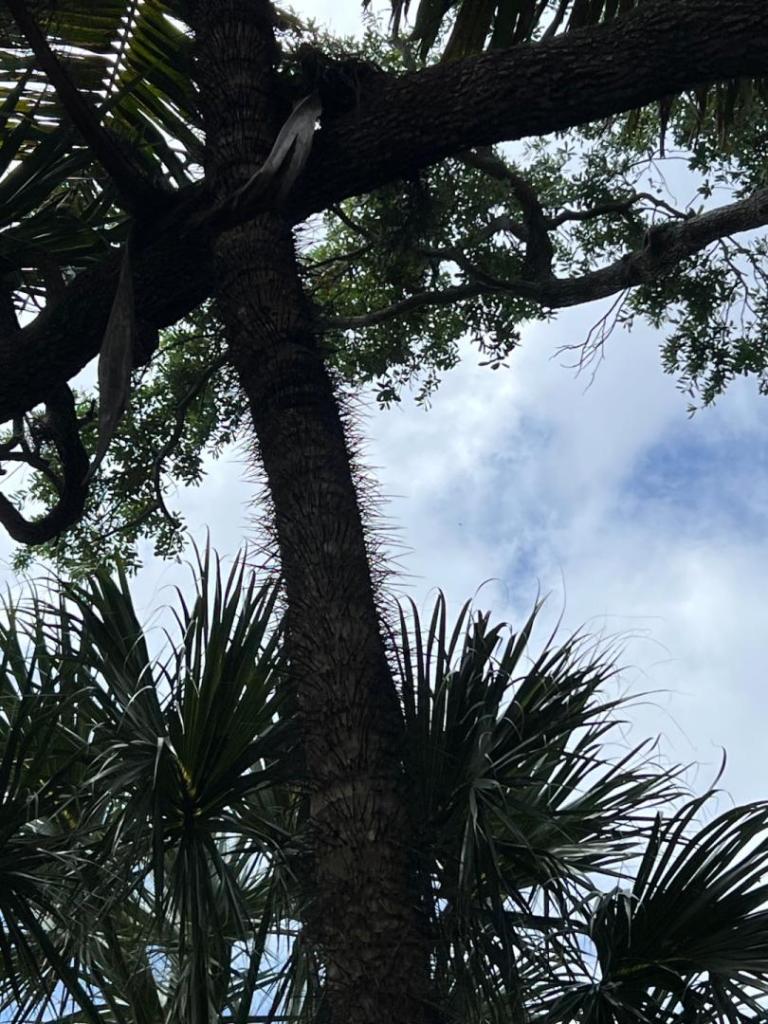
Unlabeled large and spiny Aiphanes horrida:
- Yesterday
-
(150x200).thumb.jpg.e1fafdd246043e79fc7371cf6efade3f.jpg)
Do Coconut Trees Grow in North and Central Baja/Sonora Mexico?
Silas_Sancona replied to veeman55's topic in DISCUSSING PALM TREES WORLDWIDE
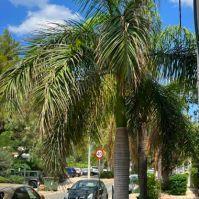
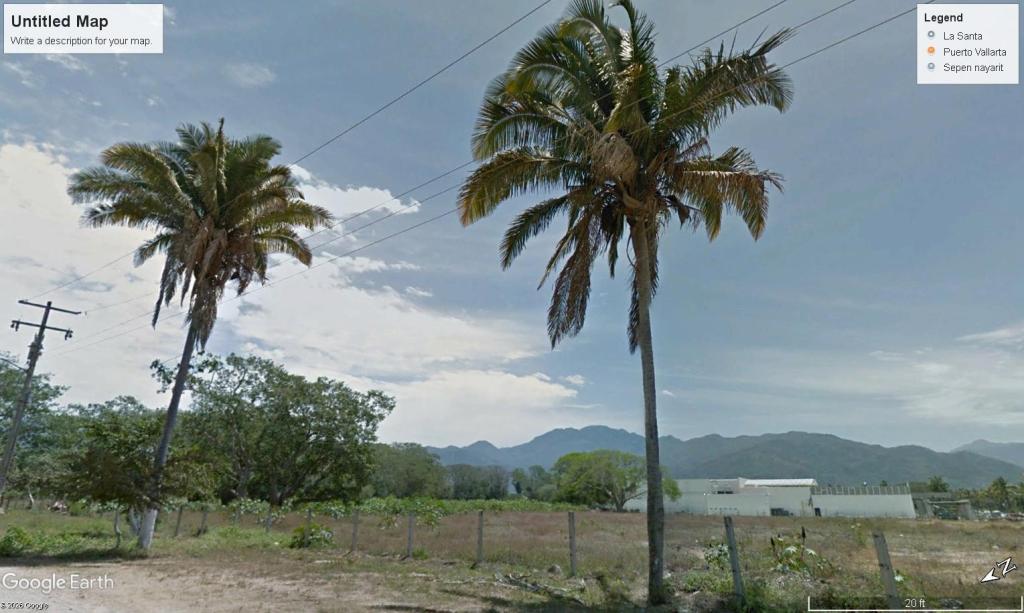
...I'll let those more versed in telling them apart debate the " Which one is which " but, A couple nice Attalea ..guacuyule??.. near the Venetian in P.V. One next to the entrance.. ** Street view imagery captured May of last year ** Couple others along a nearby trail on the south side of the river, literally a handful of steps east of the road in front of the Venetian down there.. Not a bad stand - in, for a non - coconut. If that sp., don't recall much discussion about it here compared to the other sps.. Some Macaws ( Acrocomia aculeata ) further up the same trail.. ( Same side of the River, btw. ) Images from the trail may be dated < ..2014.. > but all palms are still where spotted today. Some iNat observations of the same Macaws as well.

.thumb.png.b90200d6d5497f20040235adaf551aff.png)
-

Progression of Washingtonias throughout Augusta,GA winter
NC-Key-Bar replied to palmofmyhand's topic in COLD HARDY PALMS
How did they do? I wrapped my robustas, and they have sprung back to life quick. But lost some young filiferas. -

Identify my late grandpas palm
96720 replied to HouseMouse's topic in DISCUSSING PALM TREES WORLDWIDE
The one picture looks like it is costapalmate if that is true not nannrops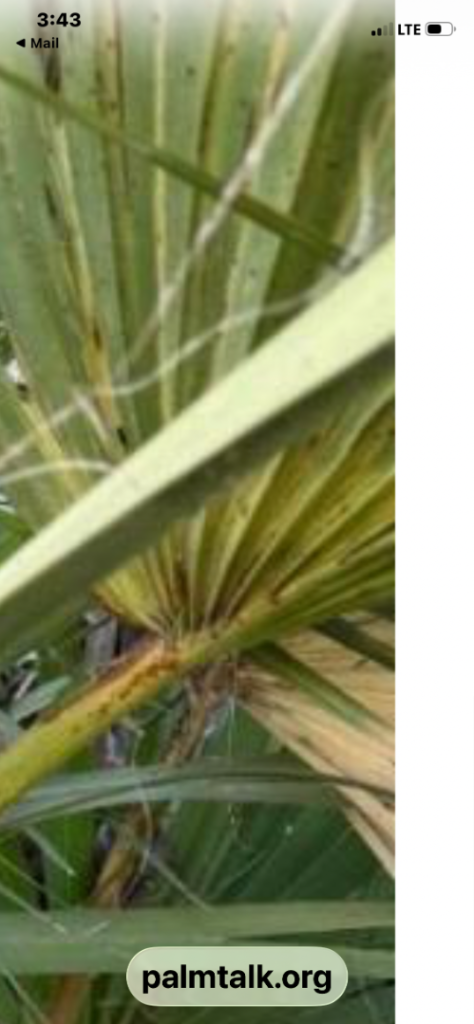
-
squashed queen palm
idontknowhatnametuse replied to philinsydney's topic in DISCUSSING PALM TREES WORLDWIDE
They will have to cope with it because in 2016 they destroyed my house's wall without our permission and put their natural gas and water pipes in there. And they even got mad about us showing them that that sidewalk and wall was part of our house, they never removed them. I would gladly plant a second Acrocomia. -

Why are sabals not popular in California
Sabal Steve replied to SCVpalmenthusiast's topic in DISCUSSING PALM TREES WORLDWIDE
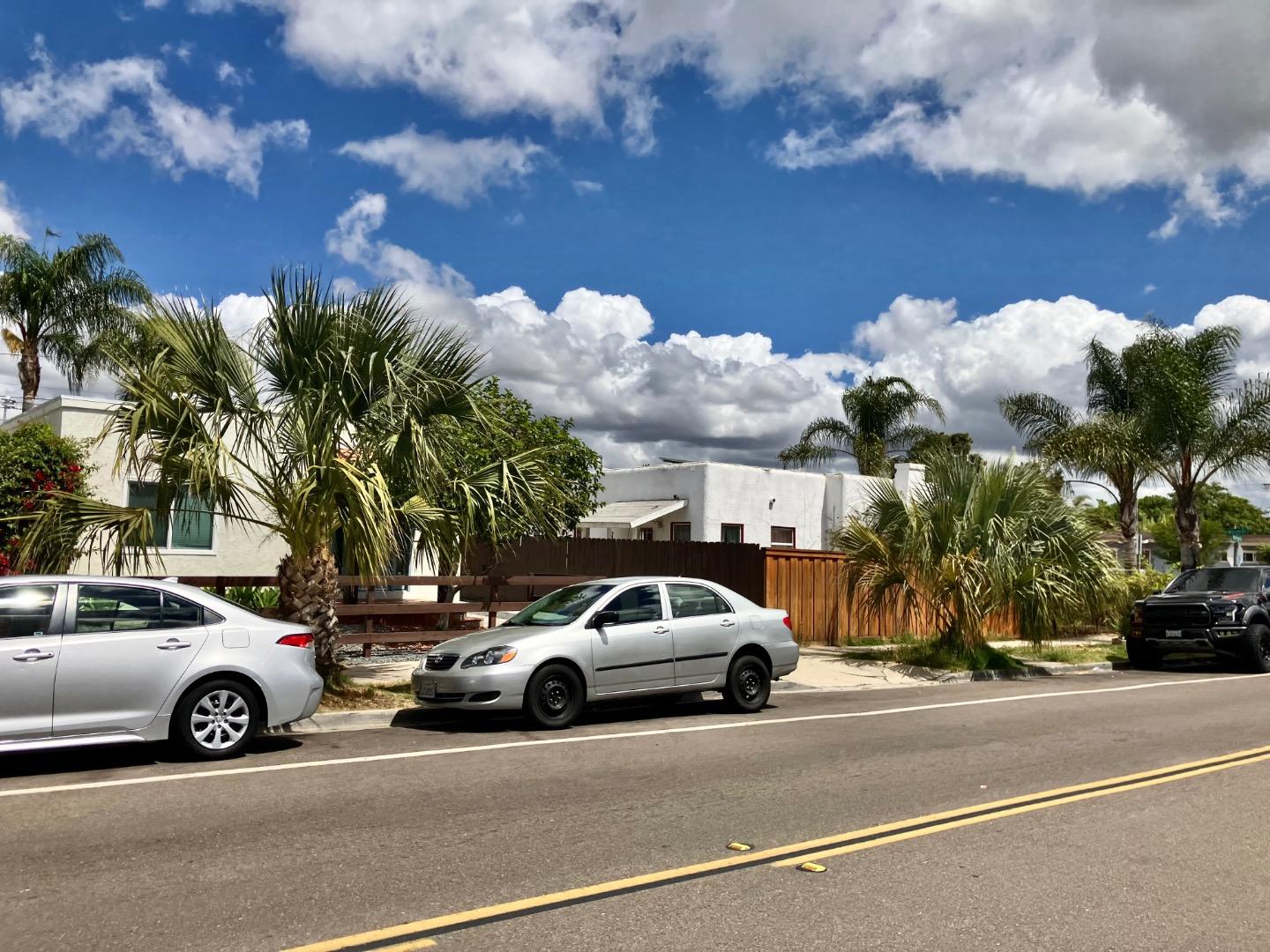
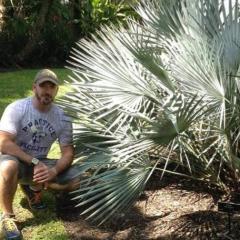
You’ll see them around in Southern California, though they’re a lot less prevalent than most other fan palms. i used to think that they were slow and that’s not entirely true - though slow is a relative term. They’re definitely sturdy, in Sam Diego, and worth the wait (in my opinion). Shoot me a DM if you’re having trouble finding any. Here’s a link to a thread which documents a lot of my experiences: Not the best picture, but here’s a S. Uresana and a S. Mexicana type, from the other day. I’d estimate that they are around 10years old, from a 5 gallon. They’ve been on their own, without any care, and are self sufficient where I’m at 10a (maybe even 10b). 92104 zip code. There’s also a S. Bermudana (maybe) and a S. Causarium further to the right, which can’t be seen. Those are also living on their own, with no help. These are growing with a lot of other palms in the 3500-3600 block of Wightman St, and there’s a Livistona Chinensis, Arenga Engleri, and a big Sabal Mauritiiformis two houses south, on Wilson Ave, if you were in the area.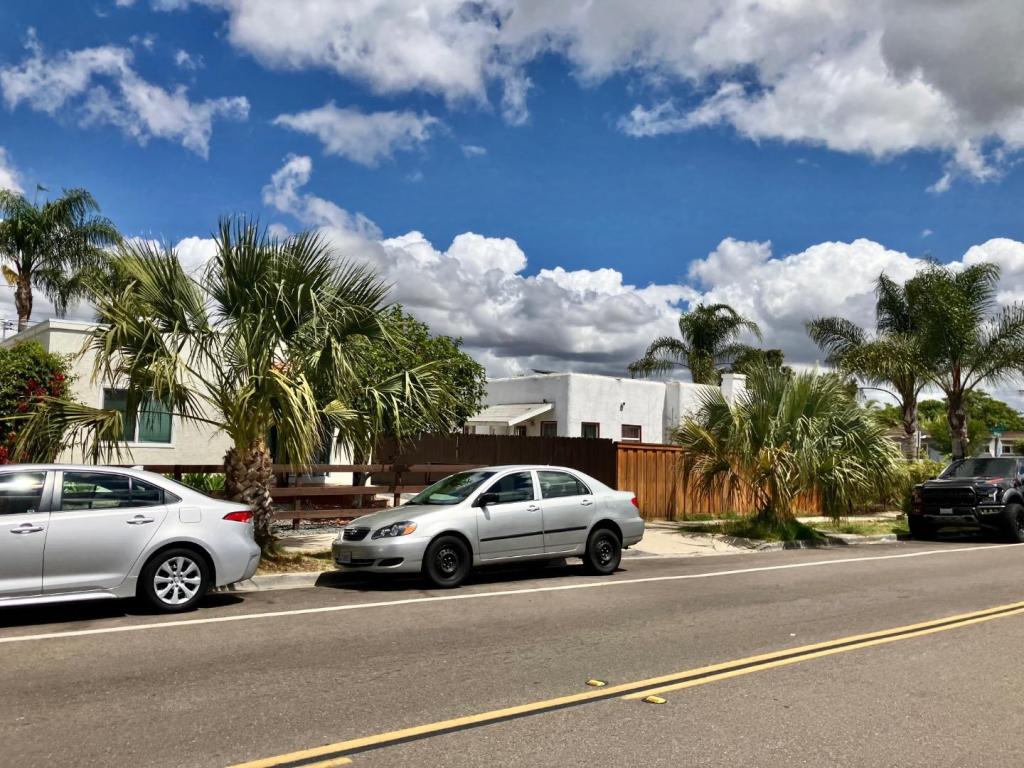
-
 Kathy Wiebe joined the community
 -
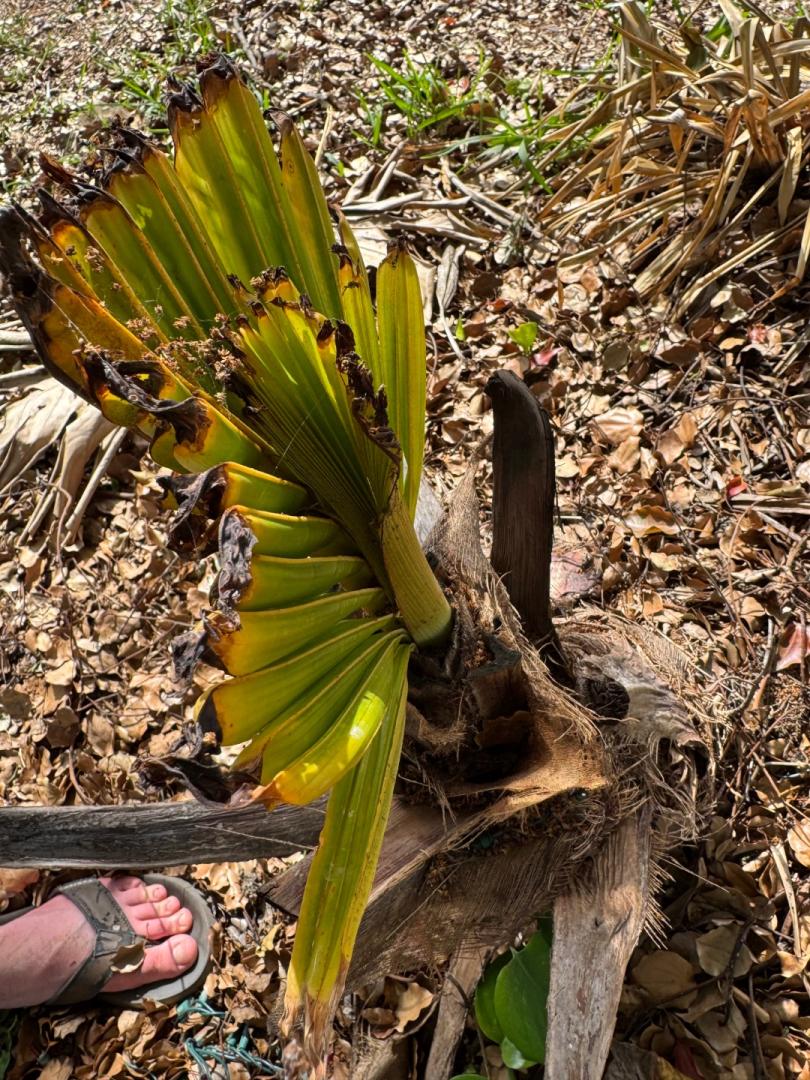
 Hey guys! Been a while. Does anyone have any experience moving an in-ground coconut that’s already stressed? How likely am I to be successful, and are there any tips you could share? My partner and I are relocating from Orlando to Port Charlotte this summer. I won’t lie and say the cold spell here that killed about $7k (on the conservative end…) worth of palms and other tropicals in my yard (that I admittedly knew wouldn’t live longer than 7-10 years in this area, to be fair) wasn’t a contributing factor. I’ve been hesitant to willingly increase our COVID-era mortgage rate to the low 6% range, but this was definitely the straw that broke the camel’s back. I digress! I managed to save my coconut by using WAY more rope lights and insulation than I had any business using, and I’d originally thought I cooked it. The morning after I’d first wrapped it, it got so hot in there that the crown actually cooked and it bent over at a sharp 90° angle. Following the cold snap, I removed all the lights and lobbed off the crown with a pair of sheers right at the bend it made. To my surprise, it’s been pushing out new growth over the last few months. That said, now that I’m moving, I want to try and dig it up to bring it with me. I’ve had this palm for 6 years now; It’s been with me through 3 homes, (the next will make 4!) 3 cities across FL, and a divorce. It’d feel great to plant it somewhere that I can watch it actually thrive and grow into maturity. I have ZERO experience digging up in-ground palms and transplanting them elsewhere, though. My existing knowledge tells me to use a very airy potting soil, (I’m thinking at least half perlite for the sake of keeping it easy + cheap since this will be temporary) while keeping it out of direct sun and watering it daily since it’ll struggle to uptake enough water to handle high heat given the root loss I’m expecting. I’m thinking this overly-airy potting medium will help prevent root rot despite daily watering and dying roots from dig-up-associated trauma since it’ll give it plenty of oxygen. Once it’s put out 4-5 fronds and the pot begins to get tight with roots, I’ll plant it at the new home. Obviously compounding the issue is the immense amount of stress the plant is already under, but I’m willing to give it a shot since this past winter clearly demonstrated that it cannot live here long term. Be it 5 years, 10 years, or 15 years from now, it’ll eventually get cooked and I’d love to save it even if it’s a slim chance. So what do you guys think? Is this a fools errand? Got any tips or insight you could share?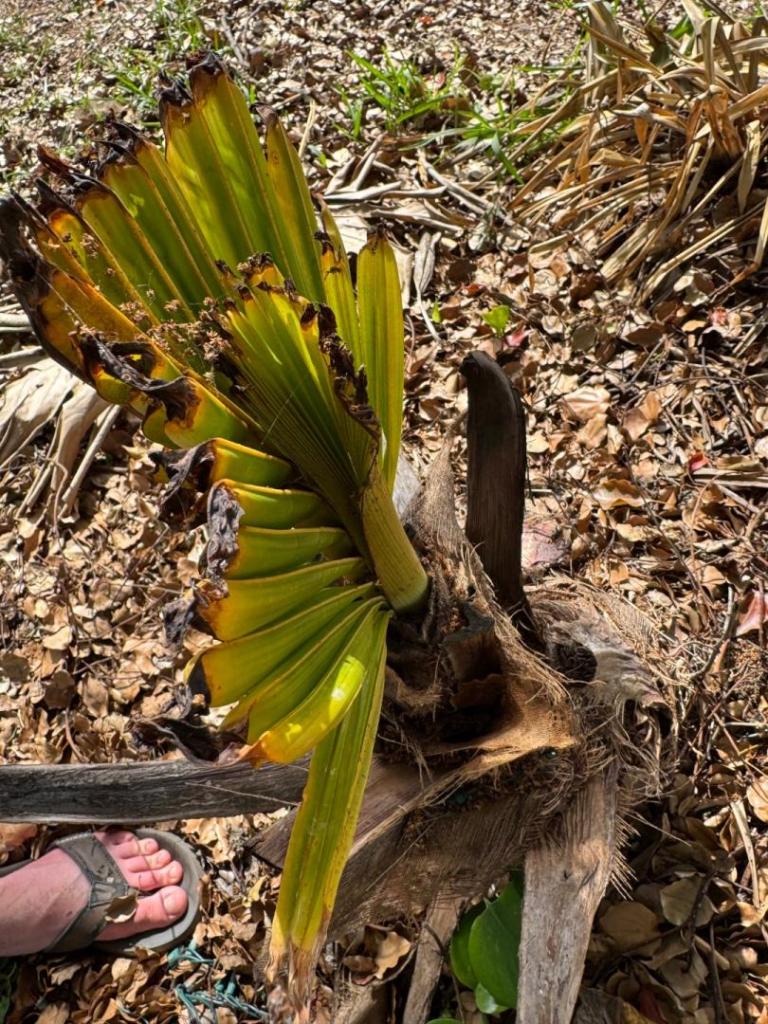

-
Not Palms But… Passiflora Edulis Survives One of The Worst Winters In Washington, DC In 40 Years (2025-2026)
jwf1983 replied to jwf1983's topic in TROPICAL LOOKING PLANTS - Other Than Palms
You know, I think you just hit on one of the "theories" I've had for a while not. Of course plants seem to adapt to their environment, soils, pests, and climate. I have a bunch of what I consider "near-native" and zone-proximate species: Spanish Moss, Ball Moss, Sabal minor, palmetto, Cycas revoluta--these are all pretty much bullet proof to the point that I don't worry much about them, or so much as look at them most of the winter. I was surprised by the Tillandsia thriving here, because our winter winds is absolutely brutal, and, at 25 degrees and windy, dry... I don't know, I thought it would turn brown, stiff and blow away at some point. But the clumps are so thick and long (and now dispersed in a few areas outside of our home, however it got there, completely exposed, that you'd have no idea that you were just 6 blocks from the Capitol, and not somewhere along the Pamlico Sound in North Carolina, or something. My notion is that part of the adaptation of plants includes whatever adjustments they make seasonally, wherever they are. Obviously, anything native to the East Coast, or Southeastern coast of the US, is going to inherently have some resistance to wild swings or fluctuations of temperatures in the winter. While you guys in Florida are typically lucky enough to have middle 70's for highs throughout lots of your winter, my neighborhood average about 50 in January (this winter was much worse, however). Despite seeing-sawing of temps in between cold fronts, we are just lucky to get to 48-54 degrees on any winter day. That said, our location really stalls out around 20 degrees during even the most significant polar vortexes. Maybe once or twice every winter, we will spend an hour or less blow, like this year 17.6 degrees--it happened 2 times for a total of 1 hour and 40 minutes or so. Those same severe cold outbreaks are much more devastating for you folks in the Deep South, Florida, and Texas, I'd imagine many of your plants, though maybe slower, growth continue to grow at times through winter, while our seem to go into a semi, or perhaps complete state of dormancy? Us going from 50 or 38 degrees down to 19-20, while our outer suburbs will drift on down to 0 degrees or lower, and places much farther to the south, like Richmond, VA, Atlanta, Charlotte will often fall significantly lower than us, at 25ft above sea level, wedged between the two tidewater rivers, and fortified by endless new high rise condos, industrial sites, Metro stations, bumper to bumper traffic and endless row homes stacked upon one another. It's also why, at least from Mid-May through Mid-September, if you sat in our back yard or walked around our neighborhood, you'd probably not notice much of a change from where you are in Florida--93-97 degrees + with Dew Points always in the 70's, with stretches over 80 during that period. The city retains so much heat that in our neighborhood we typically have 3-4 weeks worth of nighttime lows from 80-85. Unlike winter, summer you can't find a breeze--and it's primarily a walking city, so that does suck. BUT, unlike you guys in FL or Houston or New Orleans, that window is only about 3.5 months. I'm grateful for it though, because without it, I'm not sure how well the passionflowers (as well as some of the other plants) would progress. I was just in Orlando for work 2 weeks ago. The complete devastation of so many of the exotic palms and plants, really blew my mind. Talking to one of my Uber drivers, he mentioned losing a Mango tree, Avacado, a Guava, and Pineapple Guava (Feijoa). He seemed really bummed out, and said in 30 years he never saw anything like it--and looking around, I certainly can imagine. We too have a pineapple guava in the ground (in a very poor spot without much winter sunlight, because I ran out of space ha). It took some damage, but is exploding with growth as well. I just think that many of our near-native or native southeastern coastal plants are "built" for wildness, and wicked temperature changes--within reason. I also believe they adapt to their new or current environment, and they ultimately do what they need to to maintain, stay alive, and continue to flourish. Even if that means going into a state of dormancy. I'm sure a lot of your native plants are also built for, and, within reason, handle wild swings in temperatures from nasty cold fronts, but they just might not be able to take the consistent or prolongs cold that they seems to handle here, as they simply just are not used to it like they are used to it here. This is what I love most about growing these plants and palms. There's an inherent survivor's instinct in their DNA, and they do whatever it takes, sometimes with a little help from us, to keep on going. To your point: I do love the flowers, their unique scent, all the bees they bring into our back yard, know that that particular flower will likely turn into a delicious fruit that I will be hopefully eating in a few months. Nice to have something still producing just before the holidays as well. They are majestic, it really catches visitors off guard when they walk outside of our house and see how it's essentially the backdrop for our whole yard. I will say though, even though I love the medicinal properties, and the fruit isn't terrible, Passiflora incarnata could be a HUGE mistake if you don't love them or have the space for them--they will consume EVERYTHING if you don't diligently weed out the shoots that appear just about everywhere. -
Identify my late grandpas palm
quaman58 replied to HouseMouse's topic in DISCUSSING PALM TREES WORLDWIDE
It's a bit hard to tell for sure, but my first thought due to leaf shape, structure & clumping habit was Accoleraphi wrightii. Which I was keeping to myself until you mentioned the palms came from Florida. -
Why are sabals not popular in California
Silas_Sancona replied to SCVpalmenthusiast's topic in DISCUSSING PALM TREES WORLDWIDE
No need to " think again " Slaying this old Dinosaur is already happening, ..as forward - thinking ..often younger.. people expose the truth about the " old ways " nursery / worn out hort. trade thinking and initiate change.. That said, rutting out the old ways, does takes time.. As much as most of it is mindless trash, ability to get this wheel turning a bit faster than say ..25.. 30? years ago... is at lest one ..of the few.. brighter spots within we can thank the internet for. Definitely true.. For now at least ..See post 1. This? = 100% true.. Weird, .. Not constantly stuffed to the gills on the shelves like queens, but see plenty around in most nurseries locally. Agree, ..though everything in life entails " risk " Plants are pretty risk -less in that respect. Regardless, Backyard and extra - Specialty nurseries should be on EVERYONES radar for the " go to " places for the good stuff.. Don't care if they are next door, 20mi away ..or a few states away, want interesting stuff? don't grumble about proximity, visit them, first ..and /or as often as you can.. This is how you deal fatal blows to the mind draining " Home Despot " and " Scam " Valley tumors. As a grower? don't throw on the knee pads when corporate dazzlers start waving green paper with numbers on it in your face. As a client? Know what equals a good buy, vs. being oblivious to what is obvious hoodwinking. Bigger, isn't always better. It's a means to bleed $$$ from people with impatience issues. -

Identify my late grandpas palm
HouseMouse replied to HouseMouse's topic in DISCUSSING PALM TREES WORLDWIDE
Wonderful thank you! I don’t know what I’d do if we lost more of his plants at this point but I feel rather pitifully uneducated with the plants he left us. We have a few palm books left behind from him but was overwhelmed trying to figure things out from that -

squashed queen palm
TropicsEnjoyer replied to philinsydney's topic in DISCUSSING PALM TREES WORLDWIDE
hope your neighbors like you. Crazy story unrelated to palms but maybe like 10 years ago my grandmas neighbor got annoyed about leaves falling into his pool from the wind and tried dumping herbicide over the fence when nobody was around to try to kill a huge ficus tree. Of course it didn’t work but it was concerning behavior. -

Why are sabals not popular in California
SCVpalmenthusiast replied to SCVpalmenthusiast's topic in DISCUSSING PALM TREES WORLDWIDE
Im definitely not trying to transform anything. I am just overall inquiring about the reasons. It probably does boil down to money. But I genuinely don’t think that it’s ever been attempted. But there’s probably little to no incentive for a nursery to try. -
.thumb.jpg.304b32ca4398a111edf4ac525048111e.jpg)
Progression of Washingtonias throughout Augusta,GA winter
MarcusH replied to palmofmyhand's topic in COLD HARDY PALMS
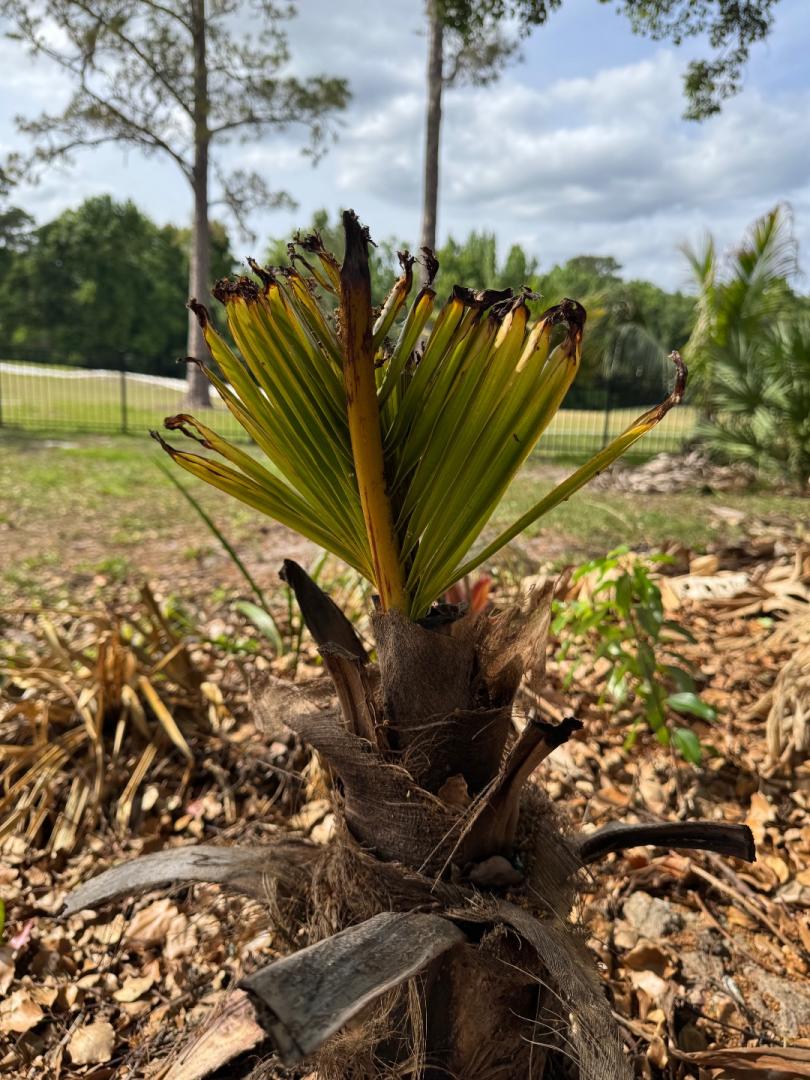
Update. It's been a little over two months since my palm was completely defoliated. Spear was damaged on top only. This picture is from today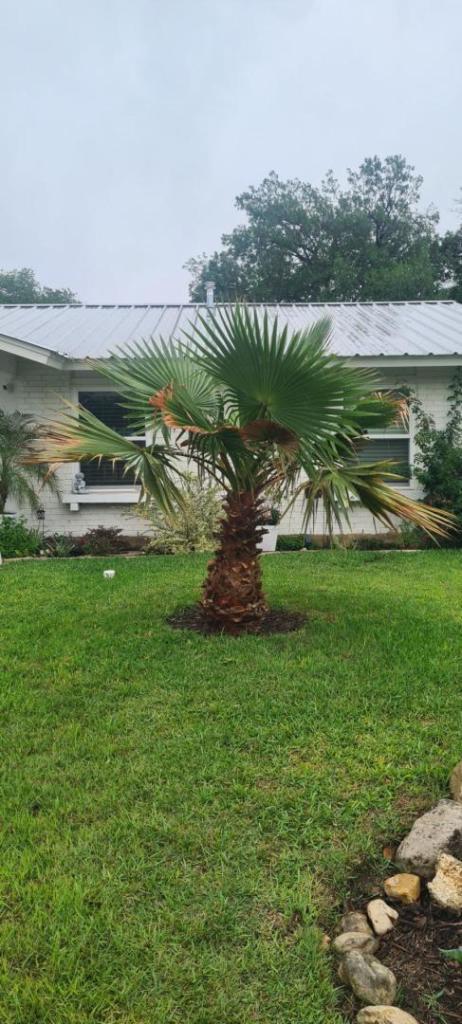

-
Hello Gringo! Χαιρετίσματα στην πανέμορφη Πάφο! You hit the nail on the head, and since you brought up the "second desert in Europe" hypothesis, let's look at the hard numbers. The comparison with southeastern Spain (Almería and Cabo de Gata) is inevitable, and mathematically, they are almost twins. Let's do a deep dive into the actual data: Almería and Cabo de Gata are famous for being Europe's reference points for desert climates. Cabo de Gata is historically cited as the driest spot in the Iberian Peninsula, with an average annual precipitation of roughly 150 mm to 170 mm. Almería Airport officially hovers right around 200 mm. With a mean annual temperature of roughly 19°C, their Köppen Hot Desert (BWh) threshold is 190 mm. This means Cabo de Gata is BWh, while Almería city dances right on the BSh/BWh line. However, there is a massive catch with Spain: the official meteorological time series for Cabo de Gata is notoriously plagued with missing data and huge chronological gaps, making absolute long-term climatological normalizations a massive headache. Now look at Xerokampos. Τhe in-situ Davis station (2020–2026) recorded 219.5 mm. But Xerokampos is significantly hotter, with a blistering mean annual temperature of 20.9°C. This pushes its BWh desert threshold up to 209.0 mm. That means Xerokampos is hovering a mere 10 mm above the strict absolute desert line! Basically Xerokampos is at the exact same proportional distance from the BWh climate as Almería, just with a much hotter baseline. We just updated the research with deep ERA5 satellite data, and the findings are absolutely mind-blowing. Here is the exact breakdown of why this place is a structural anomaly: 1. We ran the historical reanalysis (1940–2026), and Xerokampos has seen a 9.5% precipitation drop in the last 30 years. But it gets crazier. For a continuous 15-year period (Feb 2004 to Dec 2018), the Mean Annual Precipitation locked in at exactly 208.02 mm. That means for 15 straight years, Xerokampos operated strictly as a BWh Hot Desert! 2. We finally proved why global models usually miss this micro-desert. Models like ERA5-Land use 9x9 km grid cells. Because the coastal strip is so narrow, the model accidentally averages the beach with the adjacent 753-meter high Ziros mountain, predicting a false 354.3 mm. But when we isolated the pure, undisturbed offshore marine cell right on the coastline (0m elevation), the model returned 212.0 mm! That is a less than 4% deviation from the station (219.5 mm). The coast literally behaves like the open sea. 3. The rain shadow here is brutal. As the air descends the Ziros mountain, it heats up rapidly (dry adiabatic lapse rate of ~9.8°C/km). We calculated that roughly 140.6 mm of rain per year evaporates in mid-air (virga) before it even hits the ground at Xerokampos. 4. To prove the orographic shield, we looked at extreme weather. During the catastrophic Storm Daniel in Sept 2023, the windward Toplou monastery recorded 64.6 mm. Xerokampos? A measly 3.6 mm. It received barely 5.5% of the regional rainfall because the mountain completely cut it off. When you look at these numbers, the conclusion is unavoidable. Xerokampos isn't just dry; it is a topographically isolated, borderline desert microclimate. And it's not just the Ziziphus lotus telling us this. The ecosystem is uniquely adapted, hosting a suite of North African and Saharo-Arabian thermophilic flora, including the desert grass Lygeum spartum and the drought-resistant Periploca Angustifolia. The harsh sandy and saline soils of the local Alatsolimni (salt lake) complete this extreme xerothermic picture. Not to mention the sand dunes immediately west of Xerokampos or the fact that the Sitia UNESCO geopark officially characterizes the climate in Xerokampos as ''semi-desert''. You are totally right, we might get a second hot desert in Europe provided the numbers hold up as the Davis station in Xerokampos expands its operation. Here is the updated paper in English and Greek (I kinda helped methodologically but I chose not to be listed as an author): Xerokampos desert EN.pdf Xerokampos desert GR.pdf
-

Growth potential and pot size for Archontophoenix alexandrae in Calafell, Spain
mcfly01 replied to mcfly01's topic in PALMS IN POTS
Thanks for the advice! I’m really considering putting it in the ground now that the soil is warming up, but I’m a bit worried about the space. My garden is quite small, only 4x4 meters (13.1 x 13.1 ft), so I’d have to plant it very close to a new 1.7 meter (5.6 ft) fence I’m installing next month. Since the palm isn't tall enough yet, the leaves will definitely be rubbing against the fence for a while. Do you think the faster growth from being in the ground is worth the risk of some leaf damage? I’m afraid that if I keep it in the pot, it’ll take way too long to finally clear that height. By the way, since my garden is only 4 meters (13.1 ft) wide, I’m worried that if I plant it in the center, the canopy or some fronds might eventually reach the neighbors... or no... -
.thumb.jpg.a2fa04a61a4980e663c424f5c0b9b6af.jpg)
Growth potential and pot size for Archontophoenix alexandrae in Calafell, Spain
RichardHemsley replied to mcfly01's topic in PALMS IN POTS
I would personally plant it now. This species need a lot of water, and it will dry out quicker in a pot than it will in the ground. I cant comment on growth rate and how long it will take to the height you want






.png.f5c05fe41109d554298fe4cdb77bbba7.png)