


Leaderboard
-

happypalms
IPS MEMBER40Points13,266Posts -


DoomsDave
IPS MEMBER13Points34,649Posts -


bubba
IPS MEMBER8Points8,618Posts -
quaman58
IPS MEMBER8Points3,954Posts
Popular Content
Showing content with the highest reputation on 04/16/2026 in all areas
-
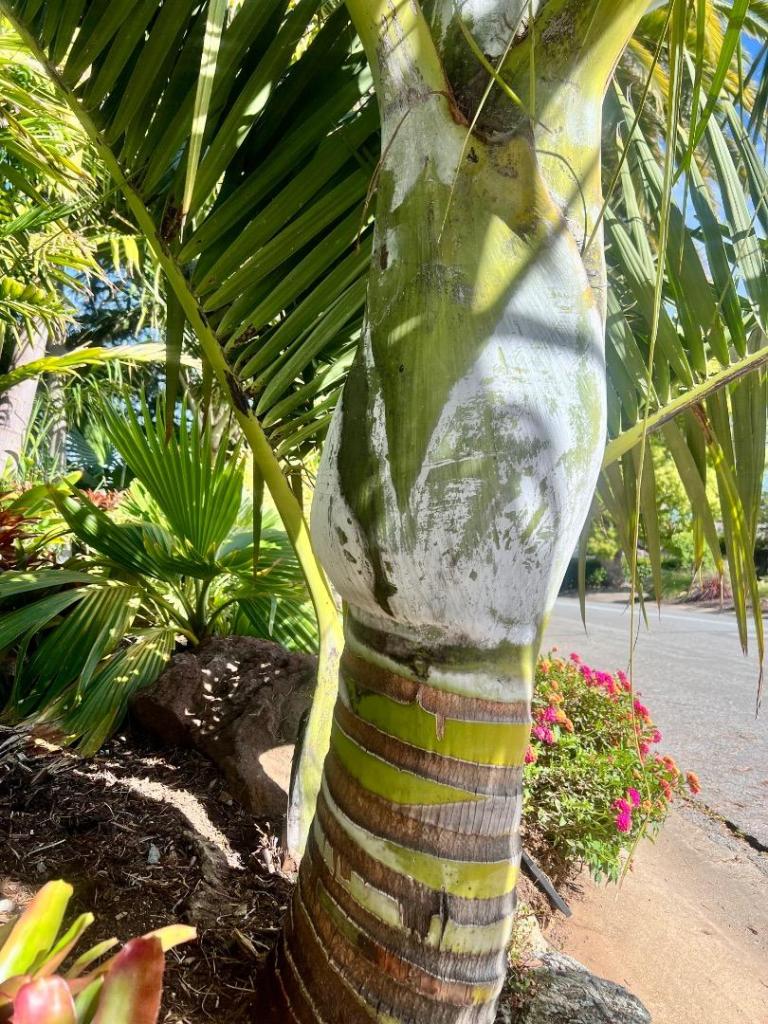
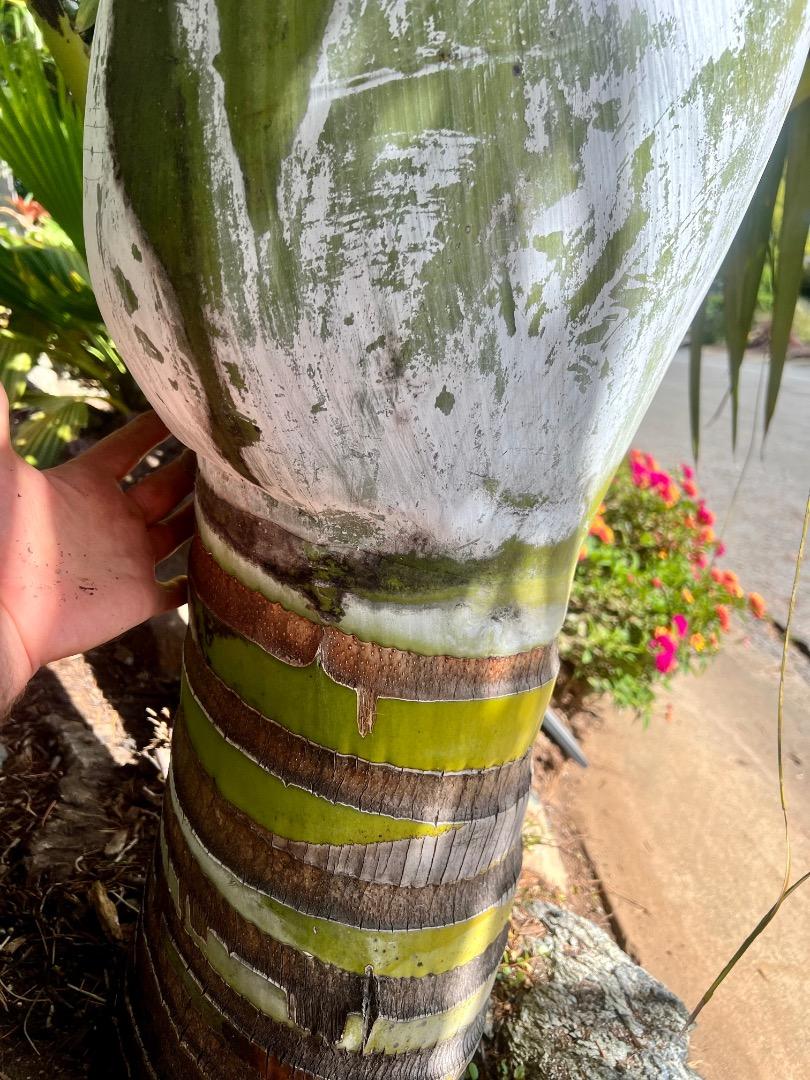
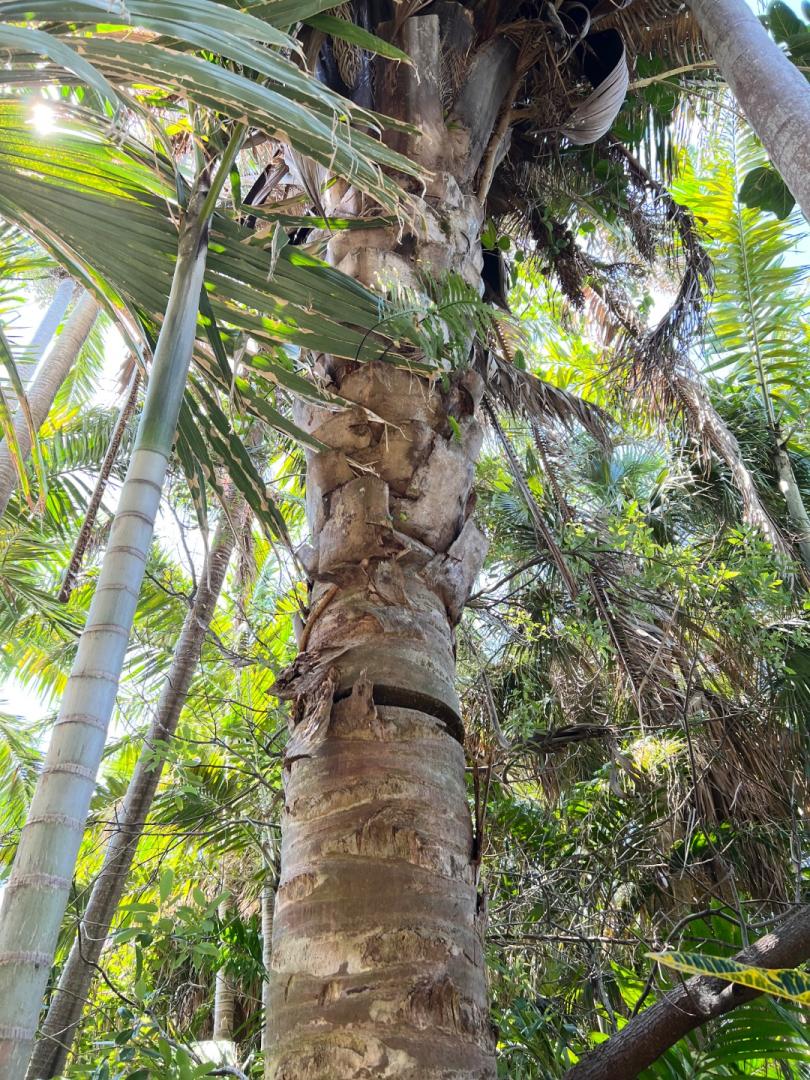
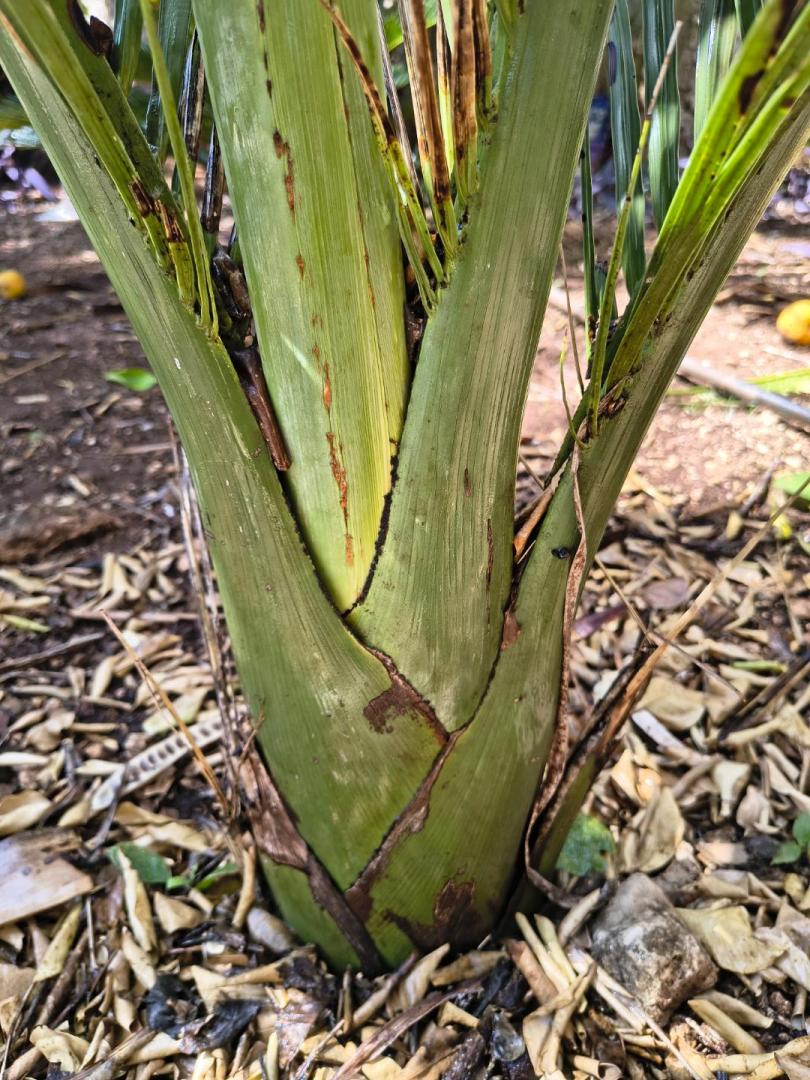
 My twenty+ year old C. Decipiens (formerly known as Dypsis decipiens) is bulging in its crown shaft. It’s never flowered before and, for those in the know, do you think an inflorescence is hiding in there?
 6 points
 -
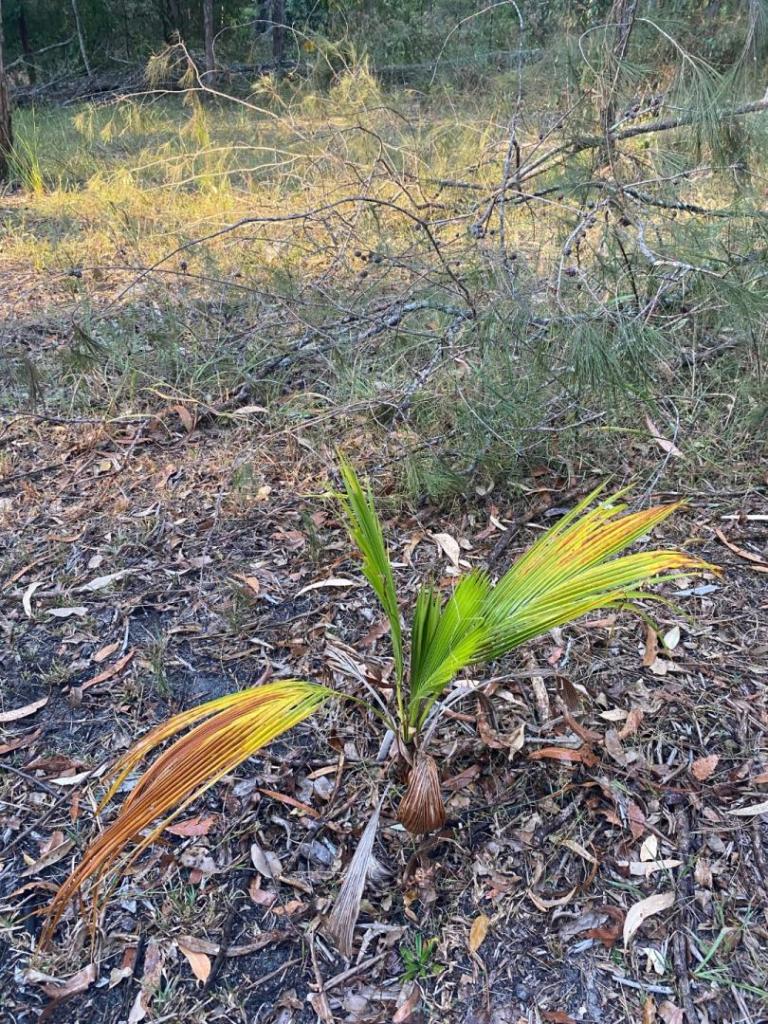
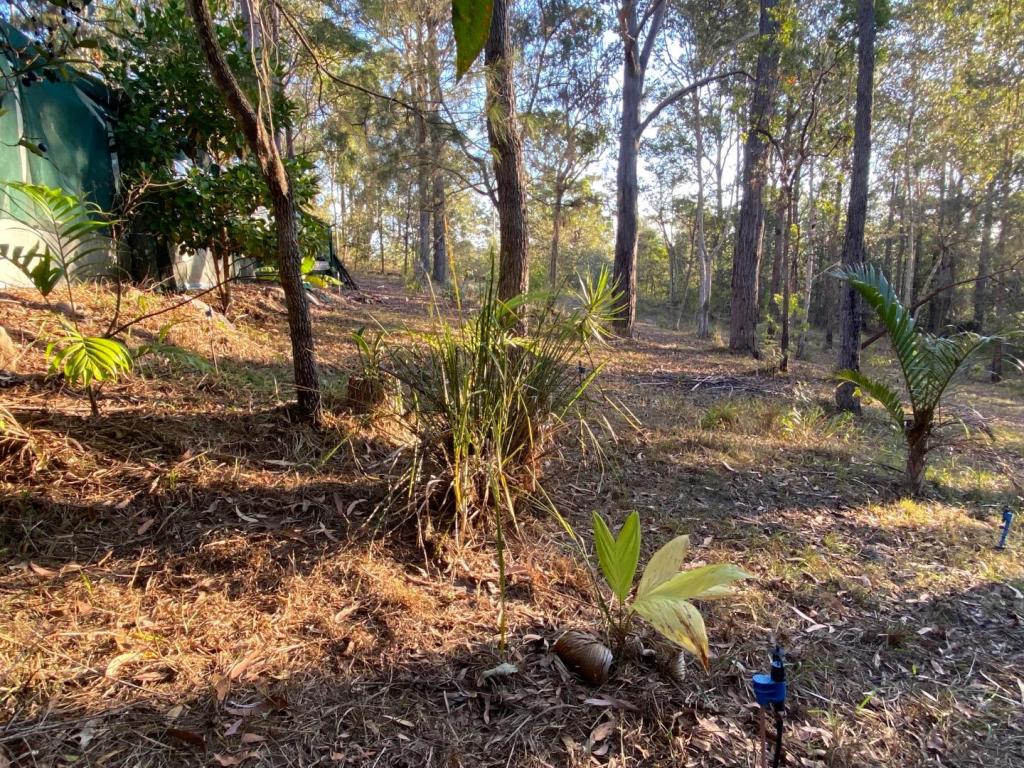
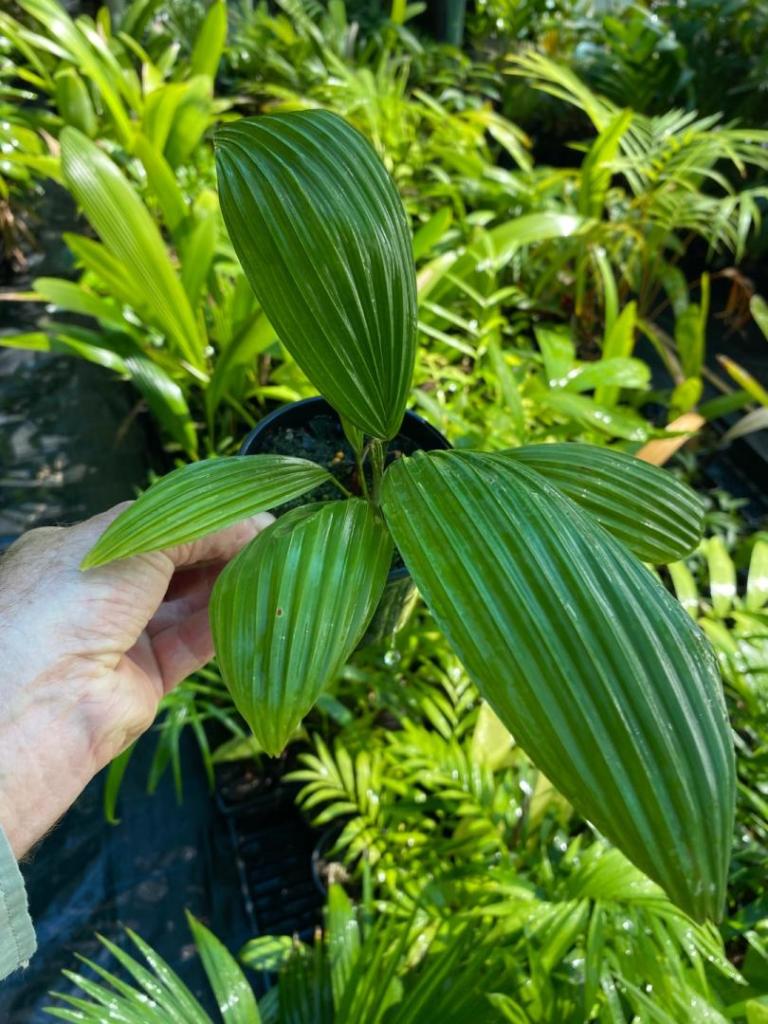
 6 pointsI haven’t found them to be hugely different in growth rate to Howea forsteriana which is of course among the most common palms on the planet. I haven’t grown enough to know, but is their typical germination rate lower than H forsteriana? I feel like there must be something more to it. Aesthetic appeal of H forsteriana with drooping leaflets more attractive to your average non palm person? Looking back over photos, mine has been in the ground for 4.5 years now. It has grown from quite a small juvenile to a good sized plant in that time. These photos are a bit over 4 years apart.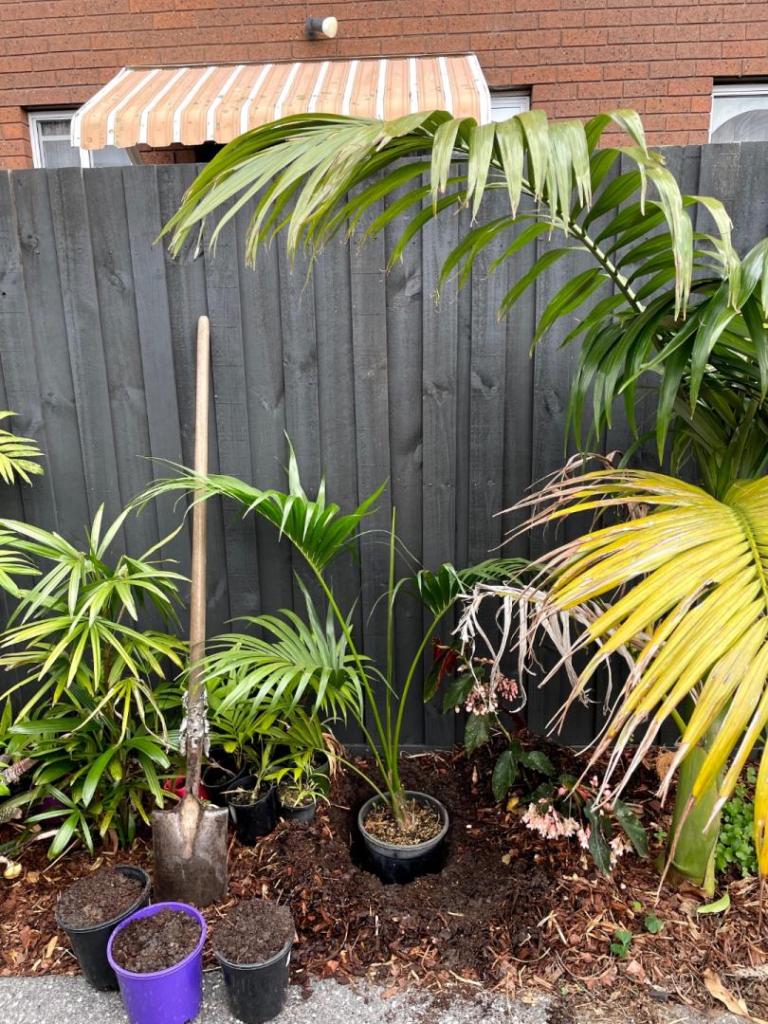
 6 points
 -
 5 points
 -
You won’t really know until she flowers for sure, but she does look pregnant, never tell a lady she looks fat or ask are pregnant if she’s really not. So for now Jim just tell she looks good!5 points
-
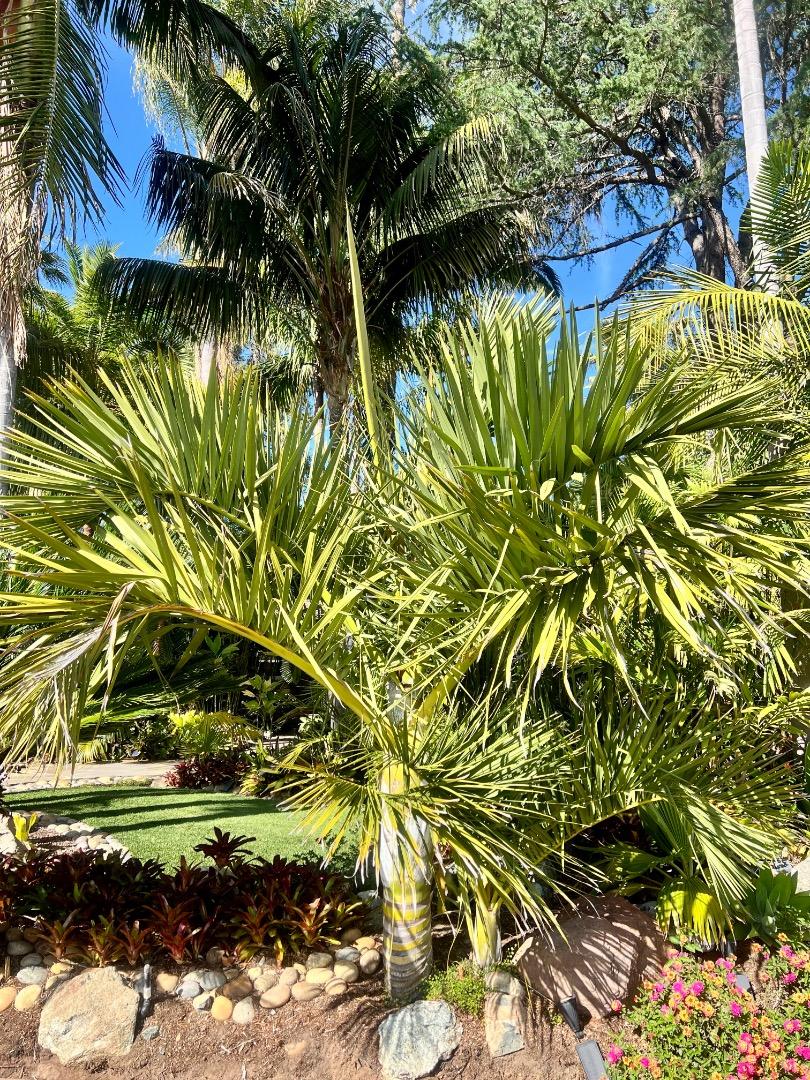
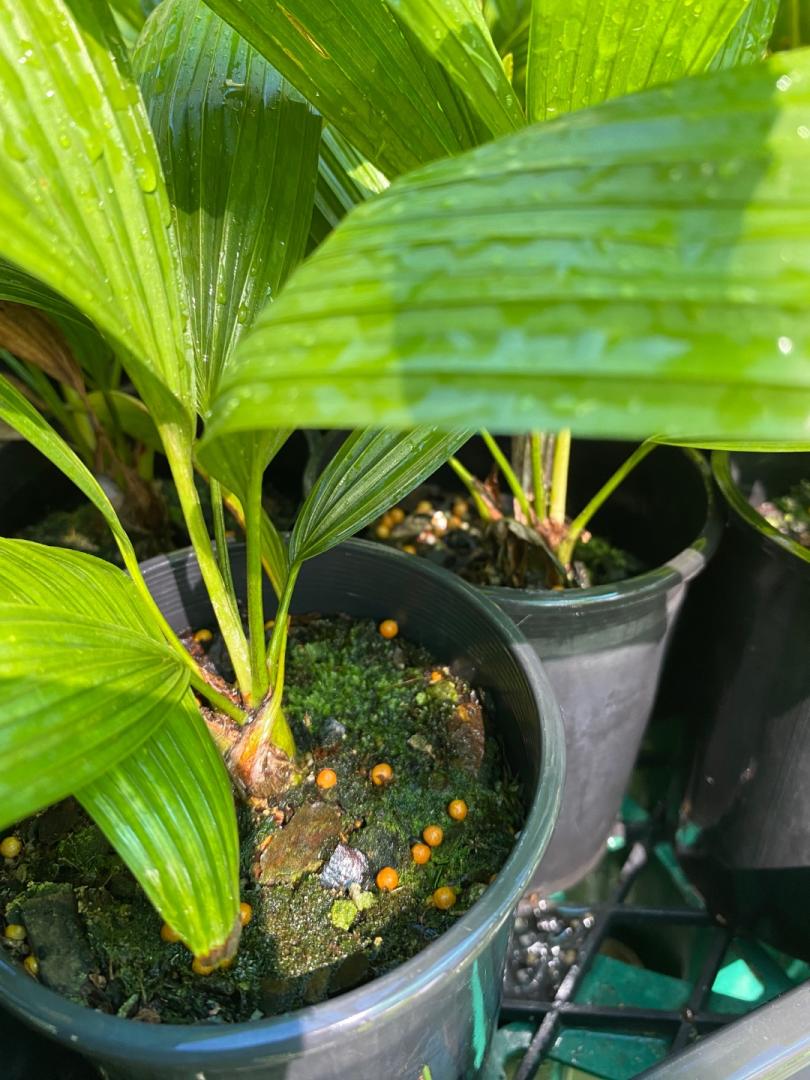
5 pointsA somewhat bit of a rare Howea species, there about the place if you look hard enough. But not that common, the fosteriana got all attention and the bell was left second place. A nice palm with that punk look about it!
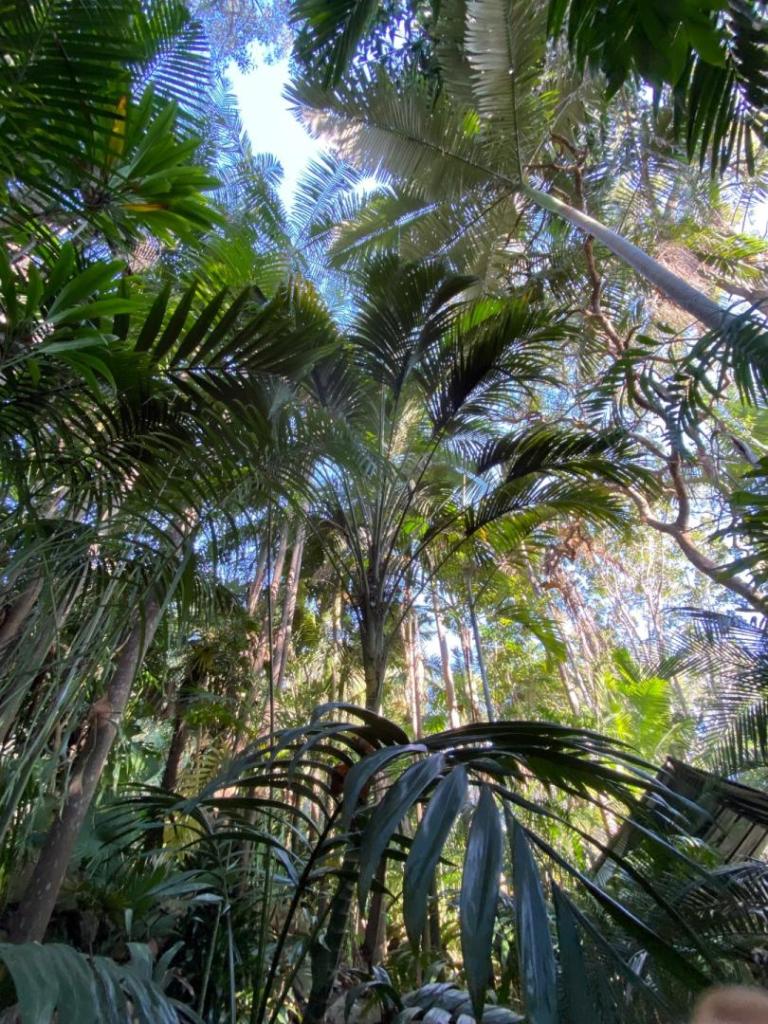

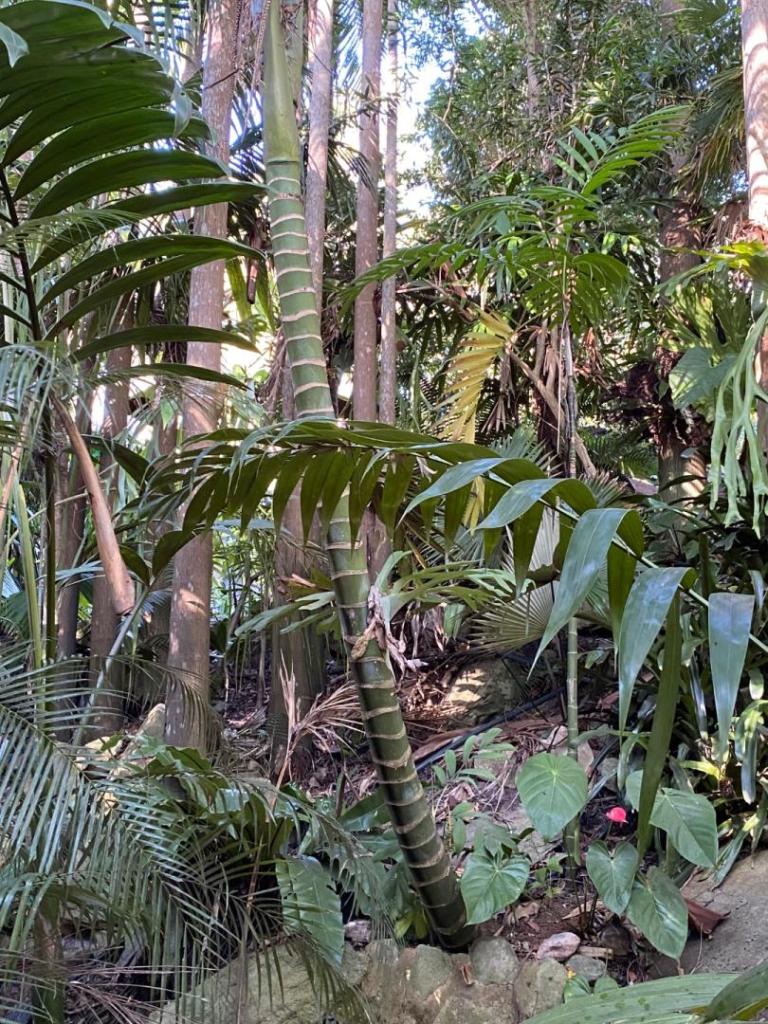

 5 points
 -
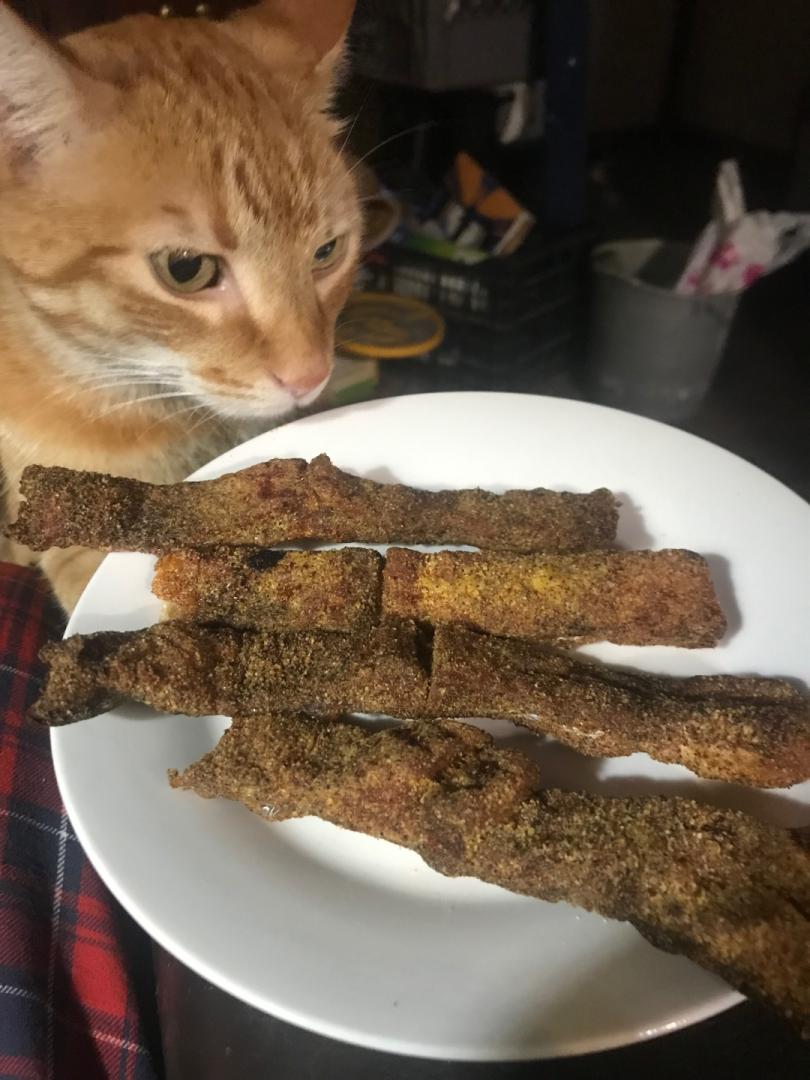
4 pointsAnother good thing to eat under the palms is air fried salmon skin!
 4 points
 -
4 pointsHad some Korean octopus dumplings in the air fryer last night! So good. Conan likes them too!4 points
-
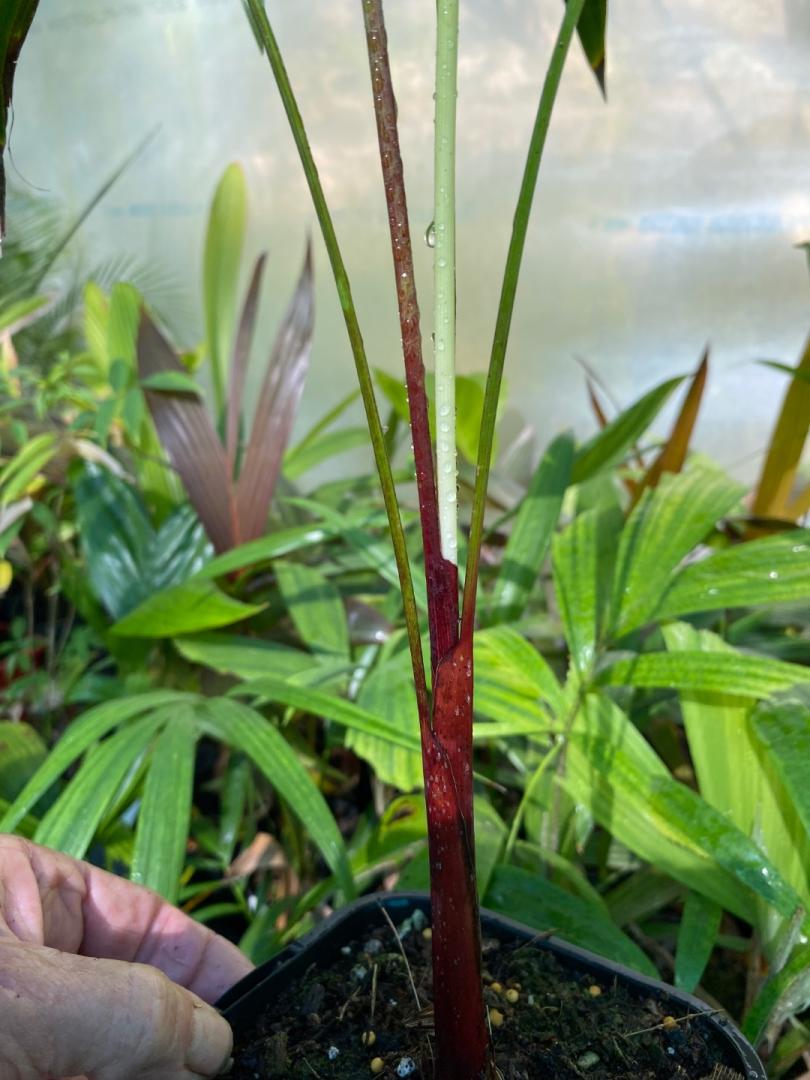
4 pointsAreca songenthensis, dypsis baronii black petiole, both looking good!

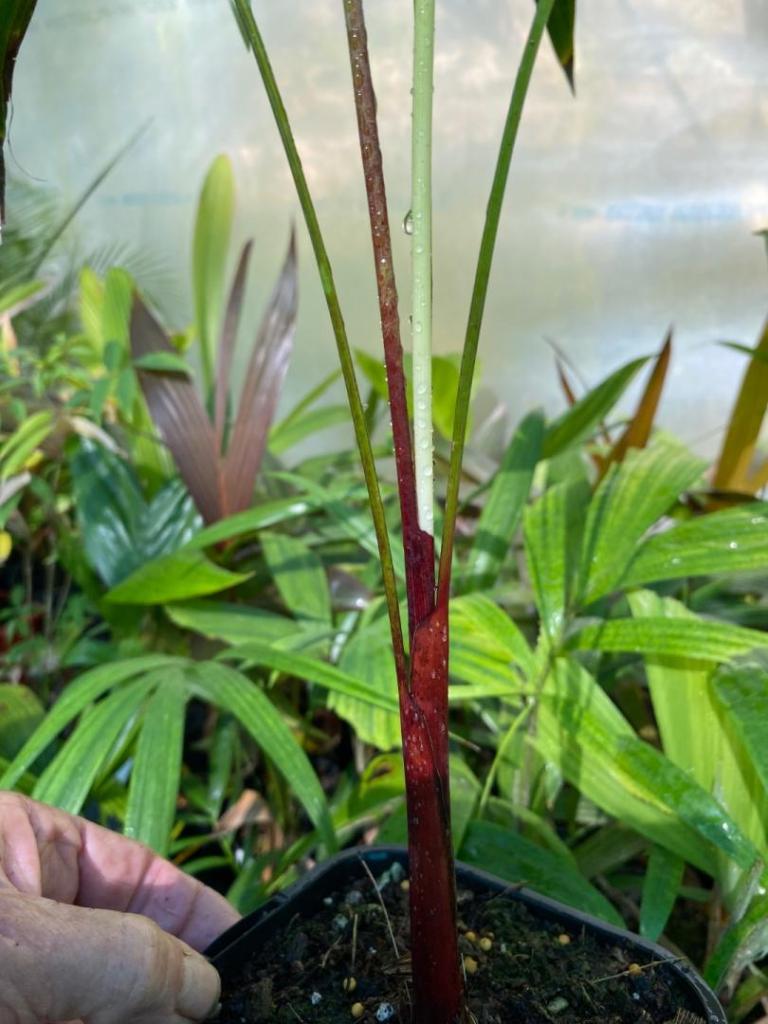
 4 points
 -
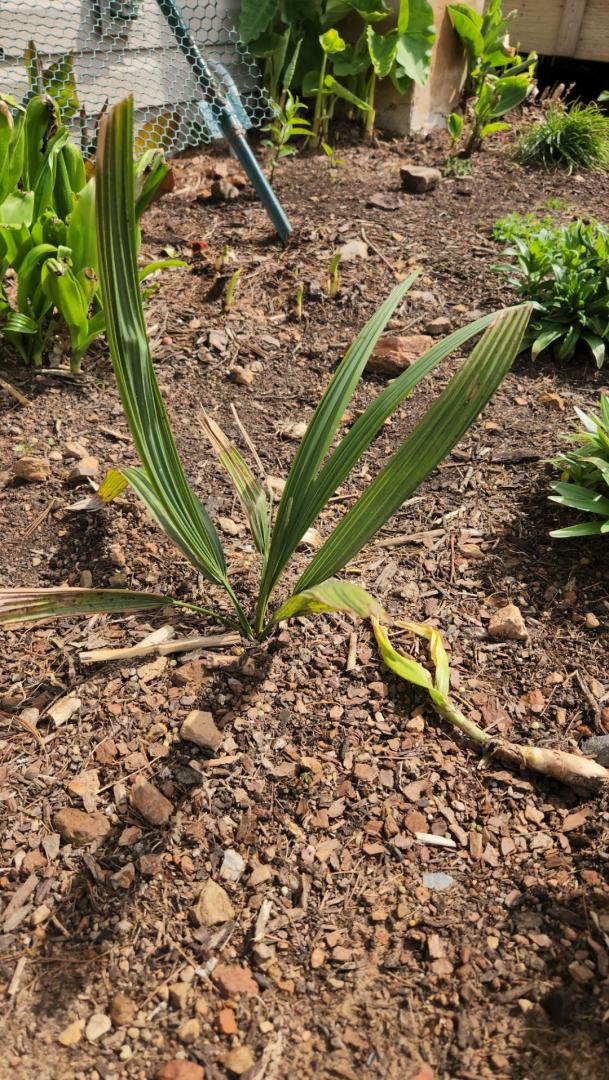
 3 pointsPlanted this sabal Brazoria from Palm Legend Gary Hollar! I'm excited to see how it will grow. It's in a great microclimate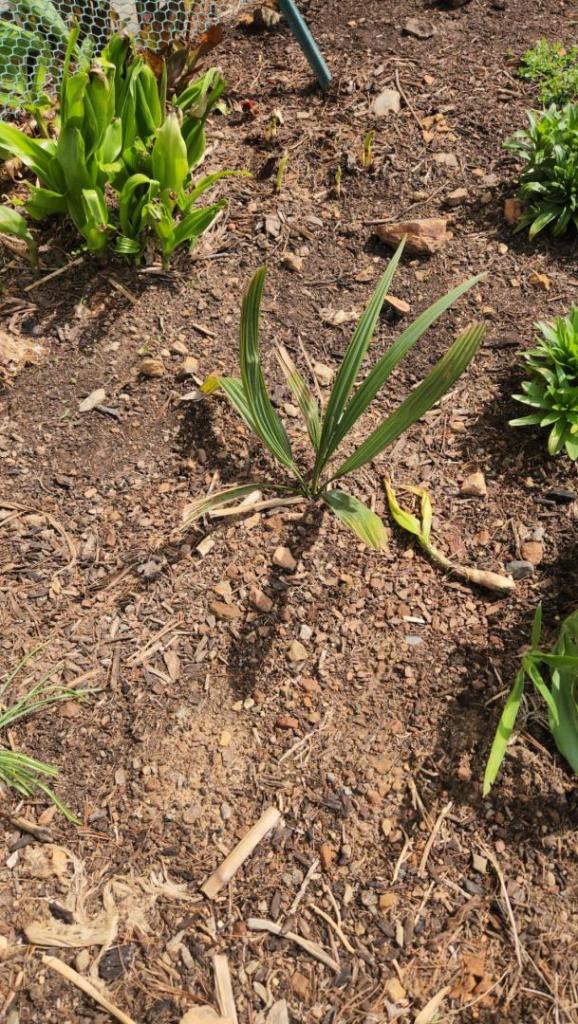
 3 points
 -
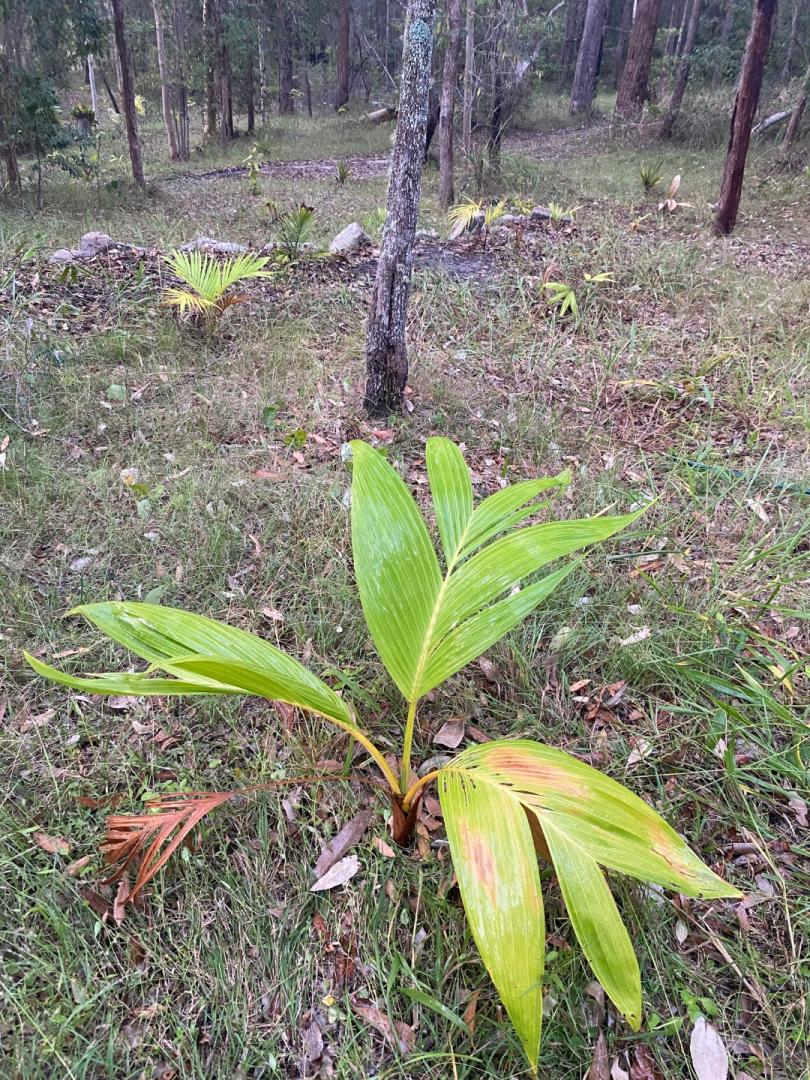
3 pointsBentnickia condapanna, one tough palm, it’s so dry at the moment and the condapanna is still looking good! It could look better with a lot more water, but iam impressed at how tough they are!
 3 points
 -
3 points
-
3 points3 points
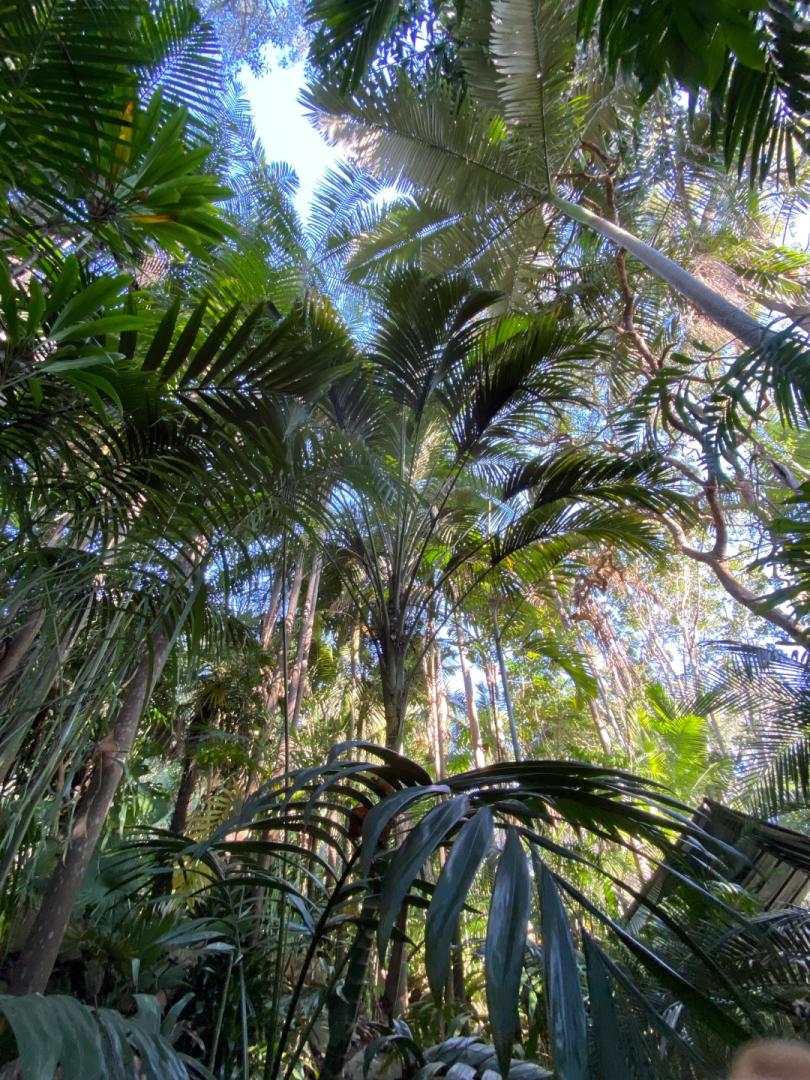
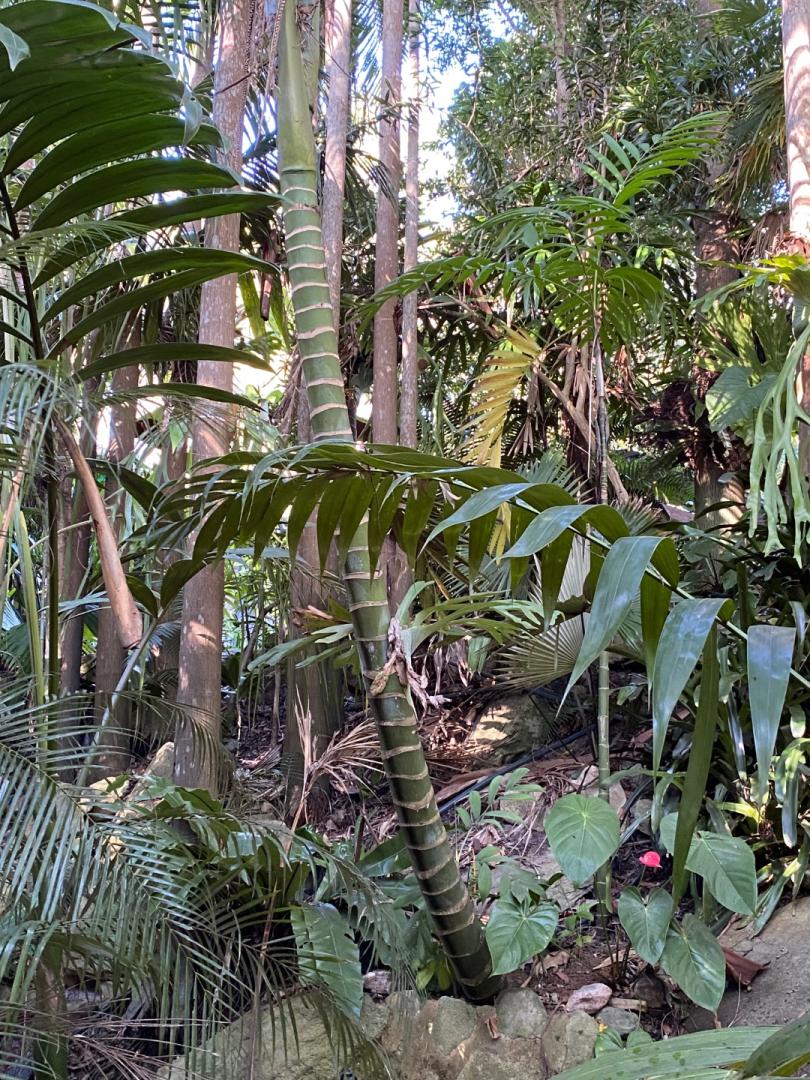
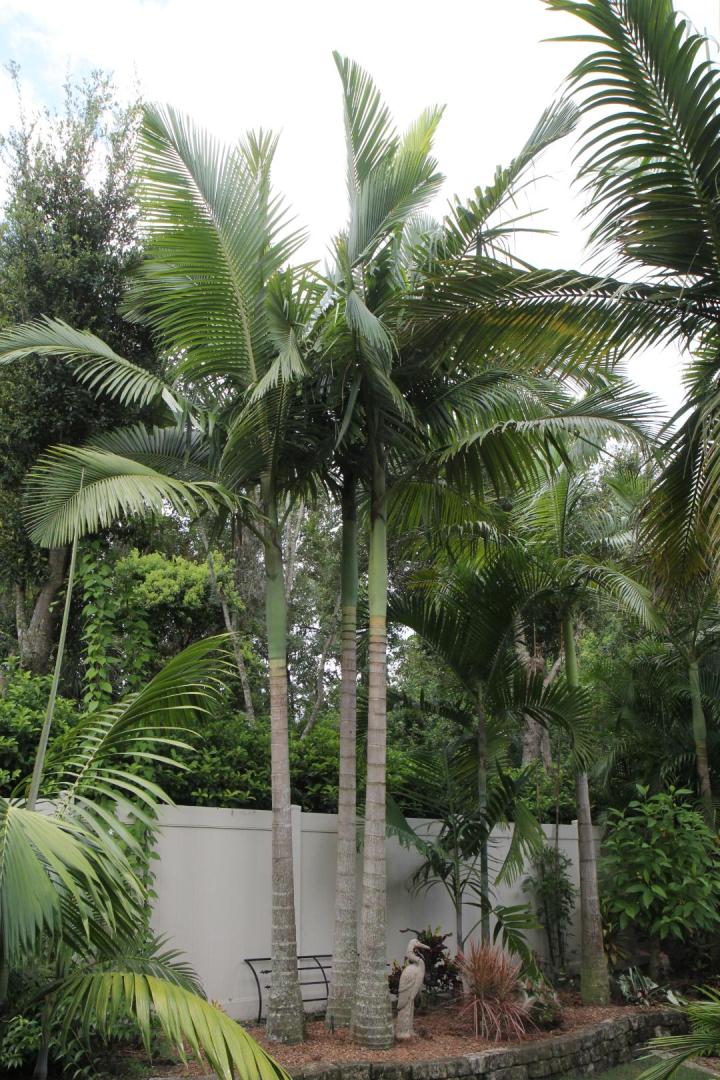
 3 pointsI have found archies to be very good for making multiples and I use a more dense planting than my other crownshafts. They love water so planting in multiples can make it easier to keep them moist. We have a dry spring here and they will get pale if I dont add consistent irrigation for them to look good. Other than that they are easy to keep happy in my yard. My archi8es are currently kind of tall(25-30') cant get em in a pic unobstructed so pictures are. I looked back to 2011 a year after I planted my alexandre triple and then a pic from 2019 where they grew in a bit. Here is the pic a little over a year after planting from 3 gallons, they were quite fast. Note the whitish undersi8des of the leaves in morning sun, hard to see the whitish undersides today as little sun hits them at 30' tall with everything grown in.. second pic 2019 shows how they grew in in 8 years(in 2019) since planting. today they are much larger of course, trunks are over 20' clear and bases are swollen to 17-18" thick.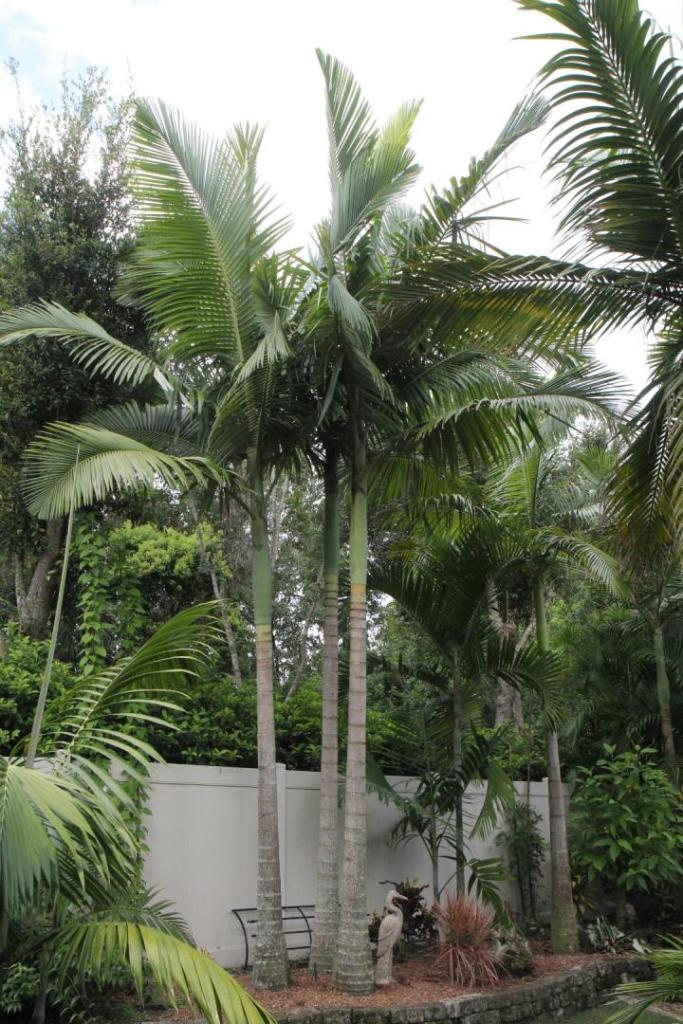
 3 points
 2 pointsWith the introduction of the CRB I'm not buying any more palms. It's enough of a battle to keep the one's I have alive. As they die I think I'm gonna replace w/some native plant. Sad day on the West Side of O'ahu.2 points
2 pointsCRB? AN acronym used by at least 8-9 sources "CRB" most commonly refers to a Credit Reference Bureau (financial data), the Copyright Royalty Board (US government), or CRB Group (engineering/construction). Other definitions include the Commodity Research Bureau Index, Coconut Rhinoceros Beetle pest management, or the former Criminal Records Bureau (now DBS in the UK). What CRB are you referring to?2 points
2 pointsWith the introduction of the CRB I'm not buying any more palms. It's enough of a battle to keep the one's I have alive. As they die I think I'm gonna replace w/some native plant. Sad day on the West Side of O'ahu.2 points
2 pointsCRB? AN acronym used by at least 8-9 sources "CRB" most commonly refers to a Credit Reference Bureau (financial data), the Copyright Royalty Board (US government), or CRB Group (engineering/construction). Other definitions include the Commodity Research Bureau Index, Coconut Rhinoceros Beetle pest management, or the former Criminal Records Bureau (now DBS in the UK). What CRB are you referring to?2 points PALM REPORT 2026 Hi, Wiithout any supplemenetal heat,[which many Palm enthusiasts do to enhance survival] Babshi ,our Sabal palmetto, in Bridgeport, certainly took a real beating by the winter 2025-2025; she lost 2/3 of her fronds, but her spear is strong and im sure she will recover well in a few months with some feeding and care and now seeing the daylight. we will post pictures thanks, DrZ...naturally2 points
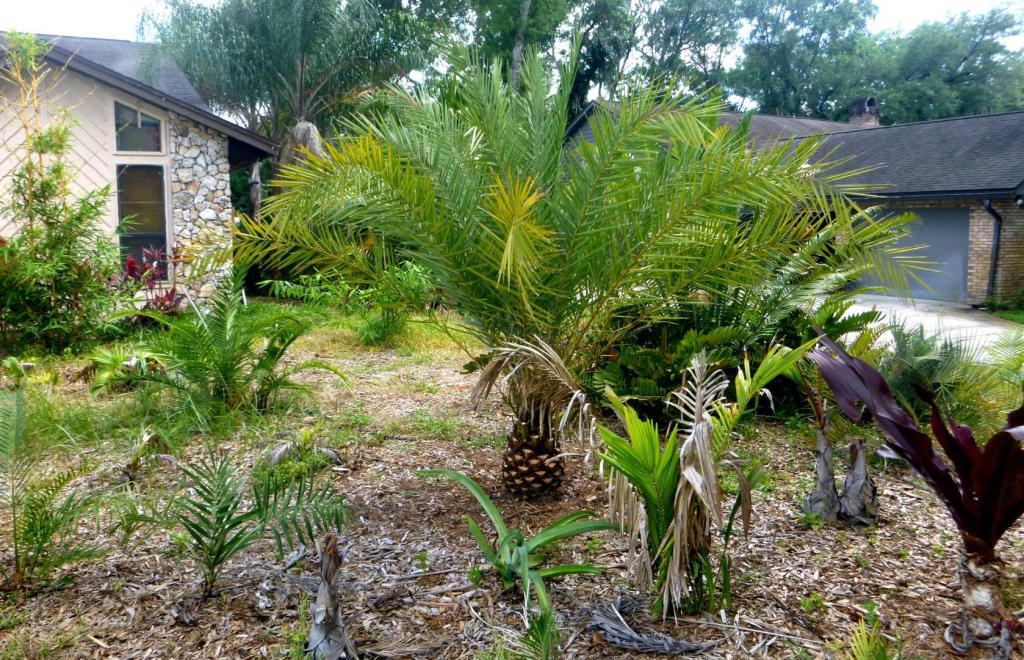
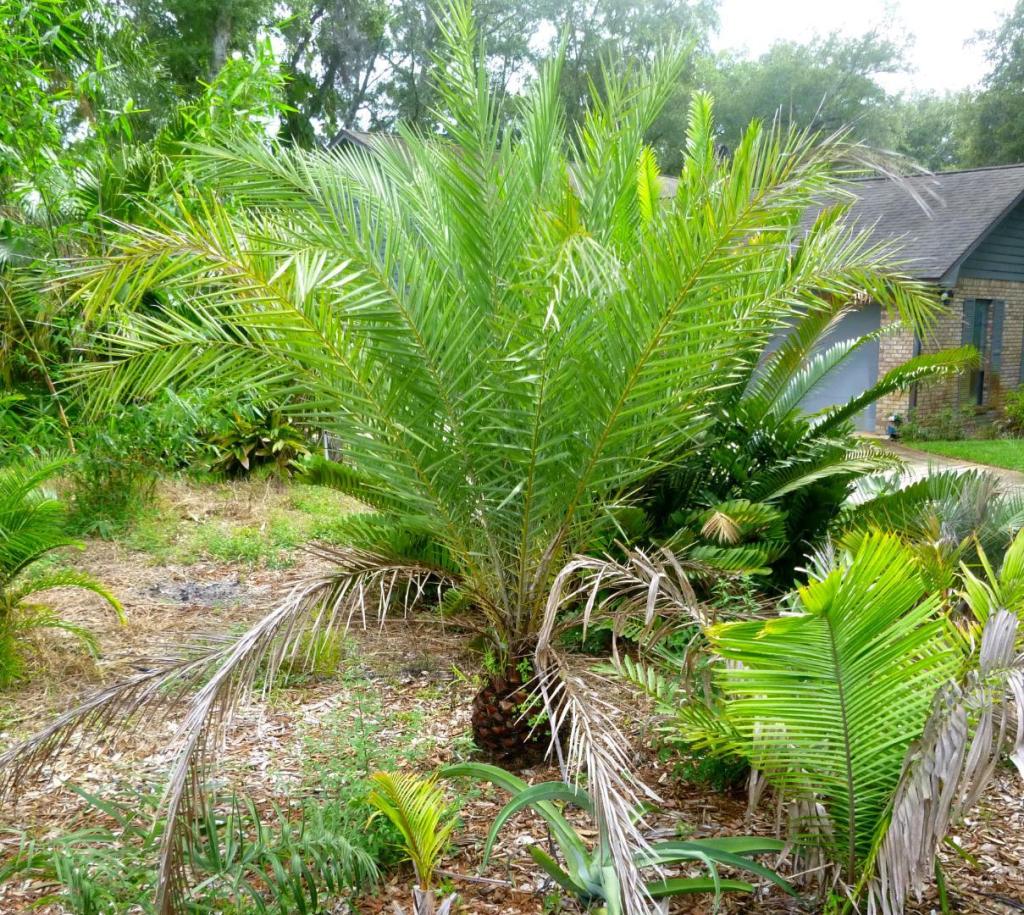
 2 points@ThunderMoon if you really dislike the brown leaflets you could snip them off with scissors. On a Phoenix that's usually a recipe for getting stabbed repeatedly with thorns and the pokey leaves. Usually it's better to leave the entire frond on there until it's completely dead and brown and crispy. Then cut it off at the boot. Doing a diamond cut isn't too complicated once you get the hang of it. I'm sure there's some YouTube videos on how to do it. As far as fertilizing, the general rule of thumb is to avoid fertilizing for 2-3 months after transplant. Many PTers suggest using fish emulsion or seaweed fertilizer first, followed later by granular fertilizers like PalmGain or Florikan. I've planted stuff from 1g up to 30g in my yard and never had a problem *lightly* fertilizing within days of planting. If you only have one or two palms, then the expense of PalmGain might be okay. I've generally used the Sunniland 6-1-8 and recently switched to their 8-0-10 Tree and Shrub. For a mature in-ground palm, the rule of thumb is 1.5lb of 8-2-12 for every 100sqft of canopy area. So for a 12' diameter Sylvestris, that's 6*6*3.14=113sqft. So roughly 1.5lb * 113/100 = 1.7lb of fertilizer 4x per year. If you use a lower concentration fertilizer (like Sunniland 6-1-8) you'd just add 30-40% extra, so you get the same total N and K. FL soils are generally high in P, so you can ignore the middle number. For transplant shock, I moved this Sylvestris from the backyard: To the front yard using a shovel and wheelbarrow with very few roots: After planting you can see I diamond cut the lower fronds off to balance the root loss: 2 months later it had "eaten" the lower set of fronds and pretty much stabilized: At that point I cut off the brown fronds and gave it a normal dose of fertilizer.

 2 points
Yes I remember you saying you hadn’t had any germinate for you. Pretty sure both lots where from the same seed batch we got.2 points
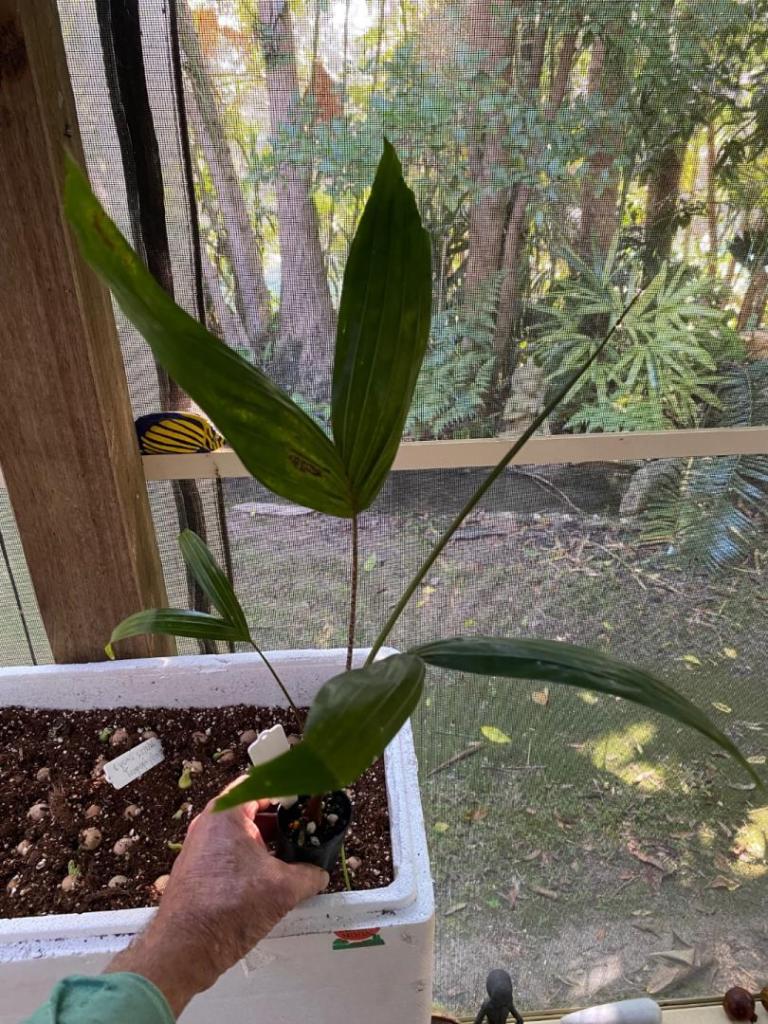
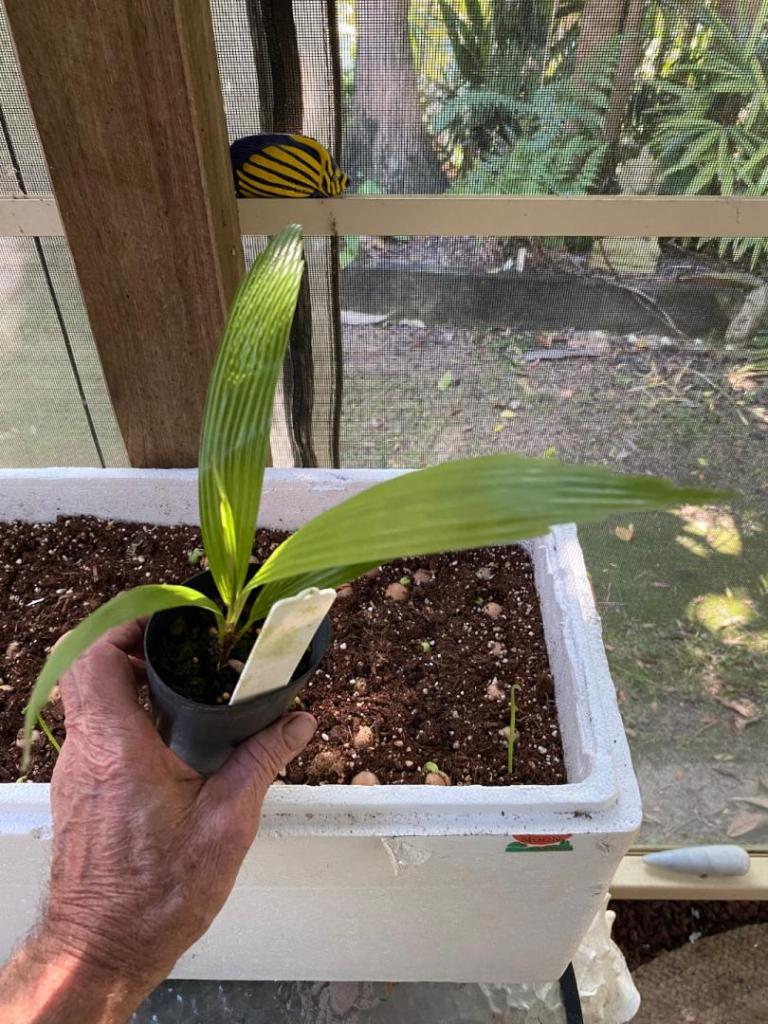
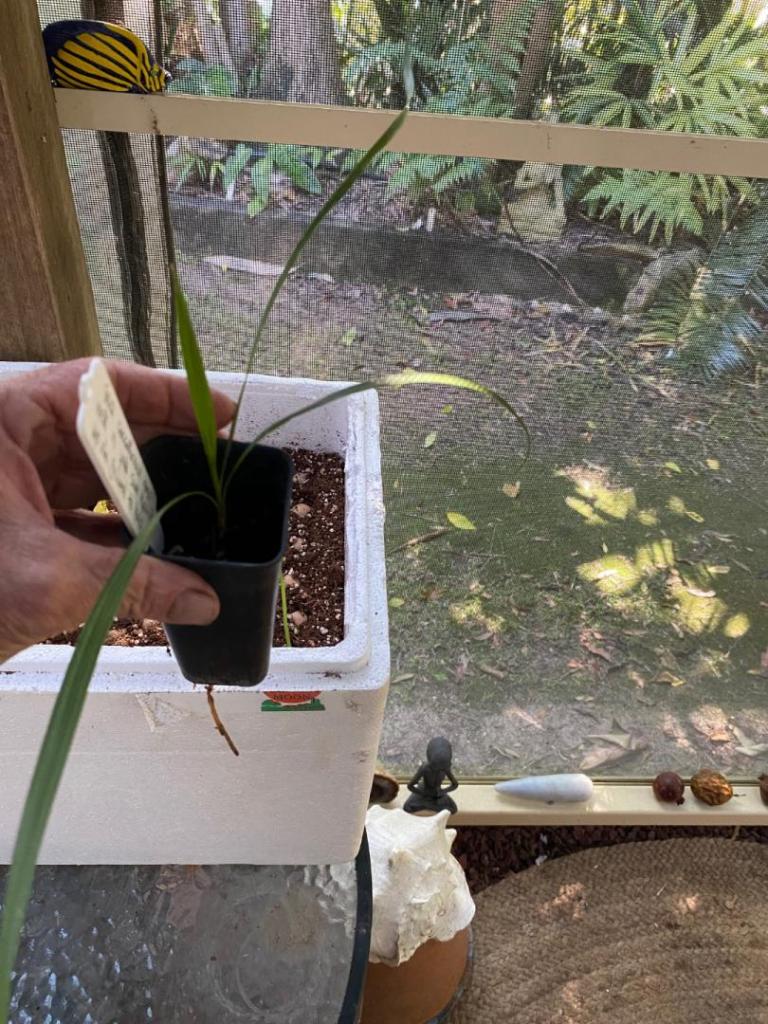
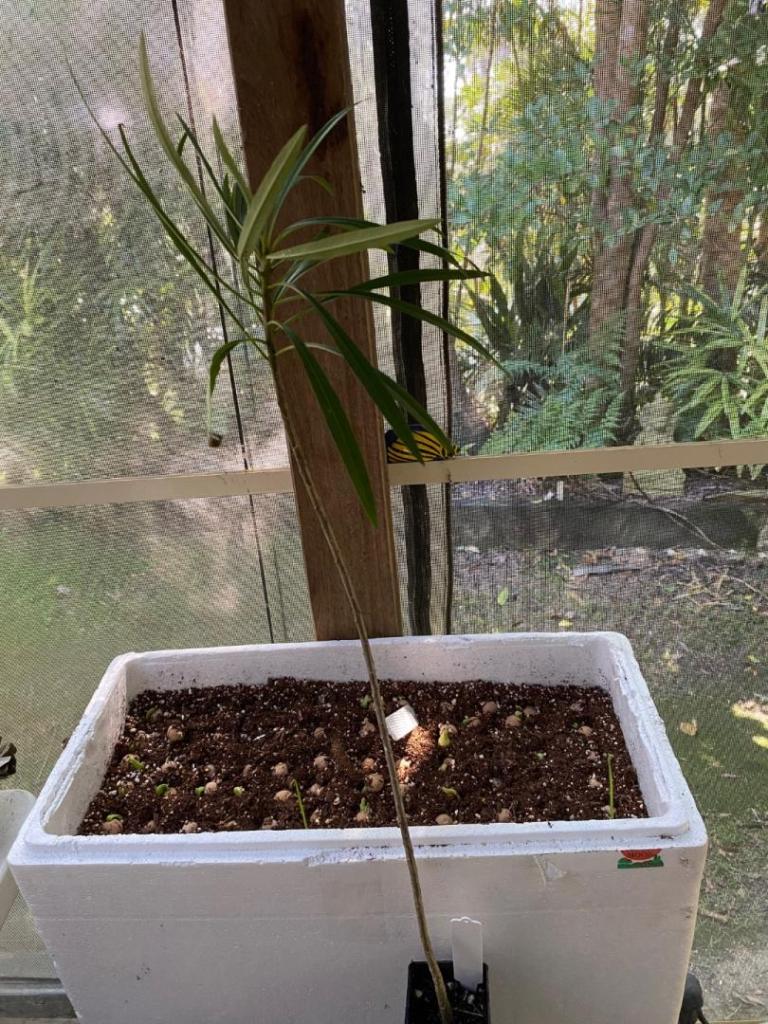
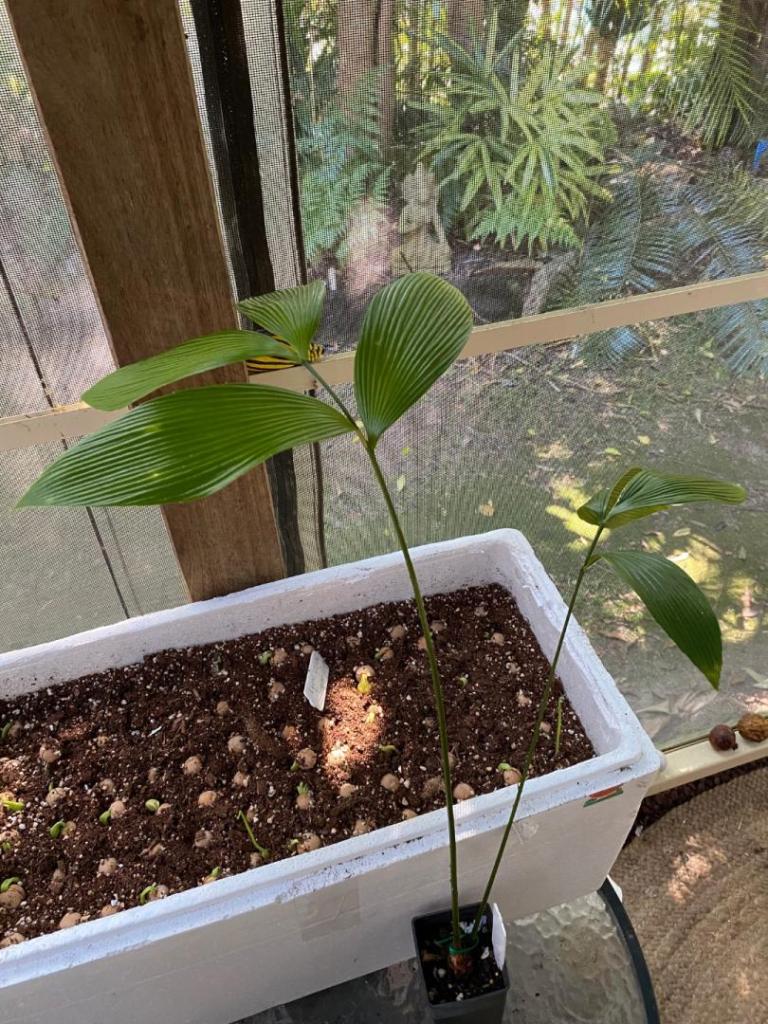
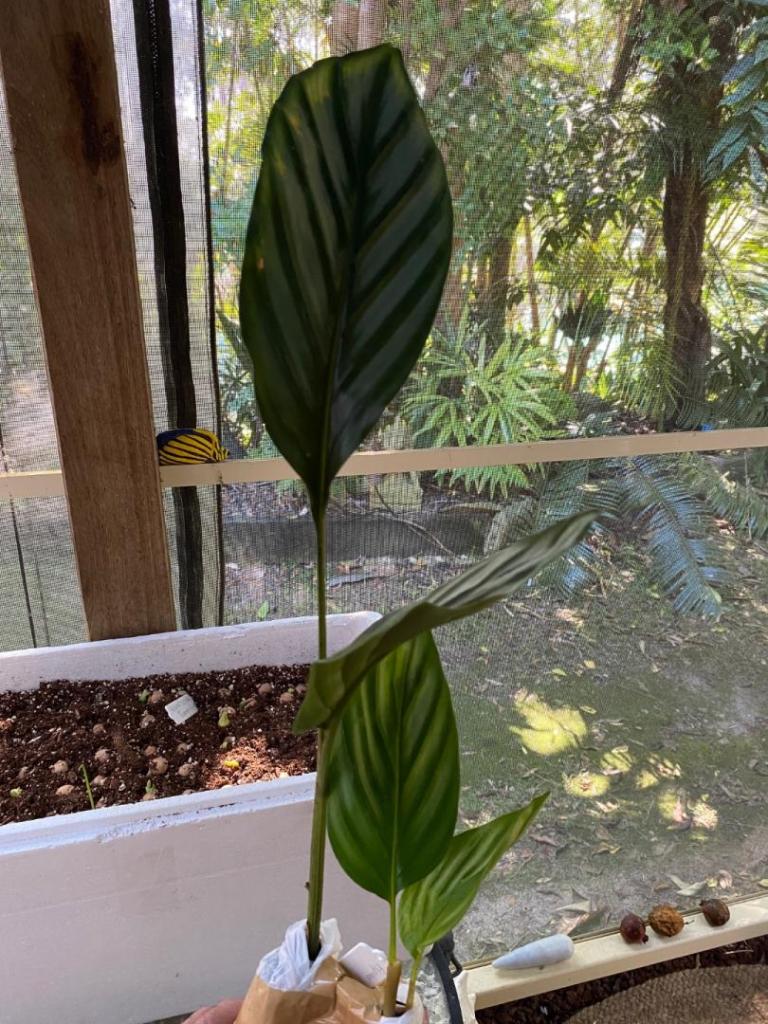
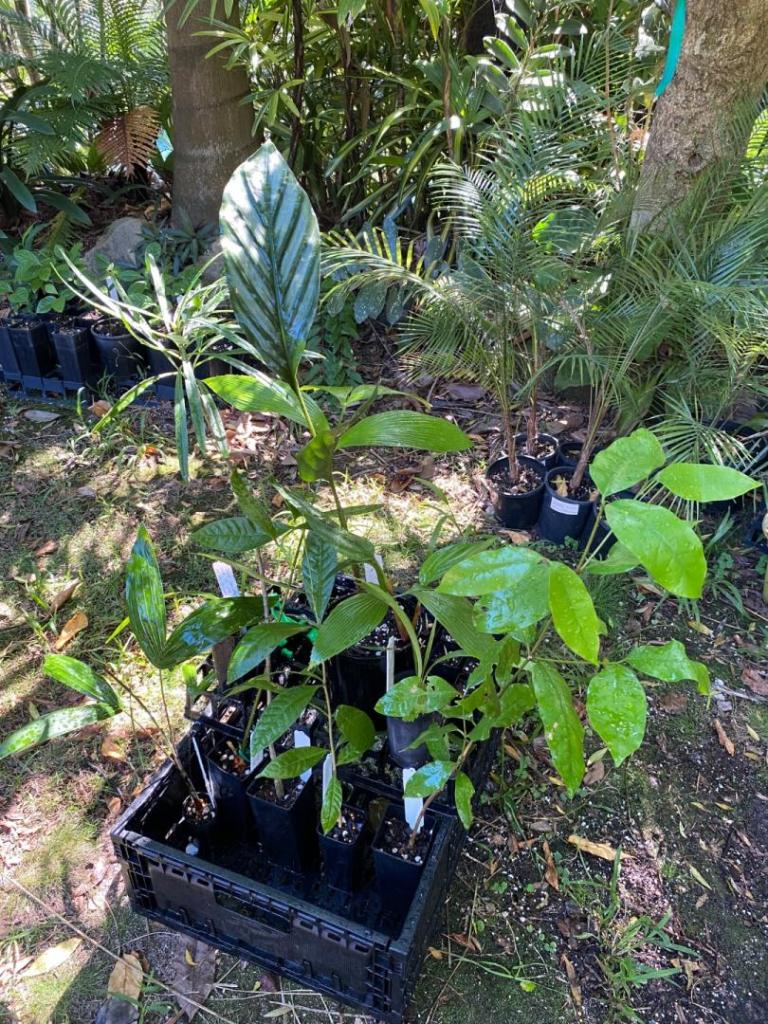
2 pointsThis weeks special garden treats are a few good unheard of rare ones! ixora speciesponapea (ptychosperma) hentyii Gnetum gnemonlicuala Romber cocothrinax spplumeria stenophylla Zamia nespophila Alpinia pumilla
2 points
2 pointsYes I remember you saying you hadn’t had any germinate for you. Pretty sure both lots where from the same seed batch we got.2 points
2 pointsThis weeks special garden treats are a few good unheard of rare ones! ixora speciesponapea (ptychosperma) hentyii Gnetum gnemonlicuala Romber cocothrinax spplumeria stenophylla Zamia nespophila Alpinia pumilla

 2 points
Argh man you got hit , I feel for you on that one. But I know how you feel iam getting the opposite complete dryness with the drought we are going into with no rain for two months, not any that’s worth getting anyway it’s cruel here now. Just too busy to water doing all the other watering in the garden and greenhouses. Plus having a job. Not enough time to water.
2 points
2 pointsArgh man you got hit , I feel for you on that one. But I know how you feel iam getting the opposite complete dryness with the drought we are going into with no rain for two months, not any that’s worth getting anyway it’s cruel here now. Just too busy to water doing all the other watering in the garden and greenhouses. Plus having a job. Not enough time to water.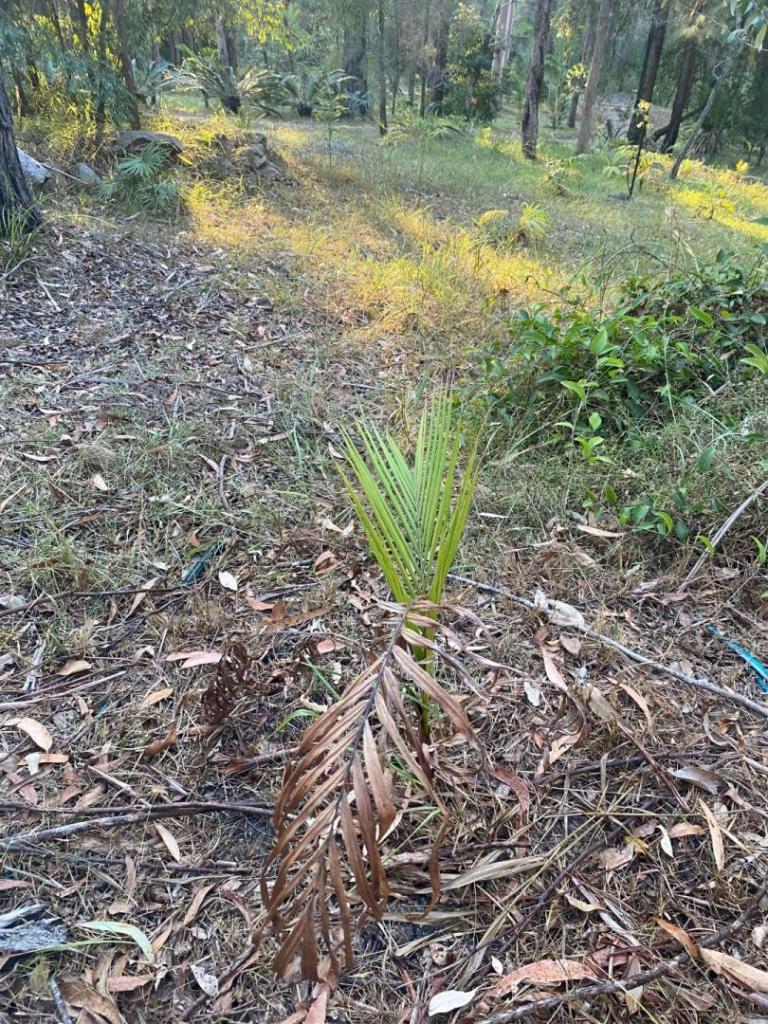
 2 points
 2 pointsYour palm actually looks VERY GOOD for a palm that you understand was dug out of the ground recently, and then transplanted on to your property. I think the browning is minor, and it is consistent with mild transplant shock. I think you should keep your palm well watered, and you probably should not fertilize if for a while. But, it would be good to hear opinions of more expert palm growers, and preferably some with familiarity with your soil conditions. Edit: Listen to Merlyn more than me.2 points
2 points@ThunderMoon it's pretty common to see random frond and leaflet death after transplant. After all, they probably used a backhoe to dig it up, and they certainly had to tie up the fronds with a rope. And then wind damage on the truck will show up a week or so later. in general it looks pretty good. Don't cut anything off until it is dry and crispy brown. The palm will "eat" the oldest fronds for nutrients, so they'll turn yellow pretty soon. The watering seems reasonable. I would move the hose around randomly to make sure it soaks all the roots. Something like a half handful of Sunniland Palm 6-1-8 is probably safe. Too much can burn new roots, so in general "less is more." The next week is probably pretty toasty, dry, and sunny. I'd expect some more yellowing.2 points
2 pointsYour palm actually looks VERY GOOD for a palm that you understand was dug out of the ground recently, and then transplanted on to your property. I think the browning is minor, and it is consistent with mild transplant shock. I think you should keep your palm well watered, and you probably should not fertilize if for a while. But, it would be good to hear opinions of more expert palm growers, and preferably some with familiarity with your soil conditions. Edit: Listen to Merlyn more than me.2 points
2 points@ThunderMoon it's pretty common to see random frond and leaflet death after transplant. After all, they probably used a backhoe to dig it up, and they certainly had to tie up the fronds with a rope. And then wind damage on the truck will show up a week or so later. in general it looks pretty good. Don't cut anything off until it is dry and crispy brown. The palm will "eat" the oldest fronds for nutrients, so they'll turn yellow pretty soon. The watering seems reasonable. I would move the hose around randomly to make sure it soaks all the roots. Something like a half handful of Sunniland Palm 6-1-8 is probably safe. Too much can burn new roots, so in general "less is more." The next week is probably pretty toasty, dry, and sunny. I'd expect some more yellowing.2 points 2 pointsA little update on one of my 2 Medemia Arguns. First inflos! Only one of the 2 plants is blooming so still have my fingers crossed for a male and female.
 2 points
2 points
2 points(173x200).thumb.jpg.87642ce613f801fde119db608b8aeb96.jpg) Somewhere around here, you'll find the loonngg thread regarding this discussion with lots of info to digest.. Regarding This, Only organism that acknowledges state / international " Borders " are a certain group of humans.. Rest of the living world, inc. most humans, does not. Oceans, and limits to climate related adaptations are the only barriers that limit what lives / grows where.. Another angle to this story is that, ..in another recent thread, this one here.. Washingtonia species were recently lumped together, so.. What you ..and everyone else.. in CA and other warm -enough parts of the west.. are seeing when you see robusta, or hybrids, or pure filifera sprouting ..everywhere.. is that particular form of the species expanding it's range, helped in large part by humans bringing it into cultivation.. Other parts of the U.S. are close enough that robusta would spread afar on it's own over time.. The true invasive?, the tree saplings in your first shot.. Unless they are CA Walnuts, most likely, they are Chinese Pistache, ..or possibly Tree of Heaven < though the leaflets don't look right for that menace, imo > ..Note the first part of the common name/ epithet portion of the scientific name < chinensis >.. Is a reflection of where they originated, though some newer cultivars are hybrids w/ other sps from other parts of the old world. Plants brought here from there / other parts of Asia, ..or Europe, Africa, and / or AUS. generally don't have the " checks and balances " organisms around that keep them under control in their respective areas when released into cultivation in the US.. Thus, they can spread and negatively alter New World ecosystems. The reverse often occurs when plants introduced from the Americas escapes cultivation in x or y place in the old world. Excluding island regions like Cuba, Hawaii, or Puerto Rico, plenty of checks and balances around that evolved alongside Washingtonia - whatever to keep them in line, no matter where they're grown in the Americas.2 points
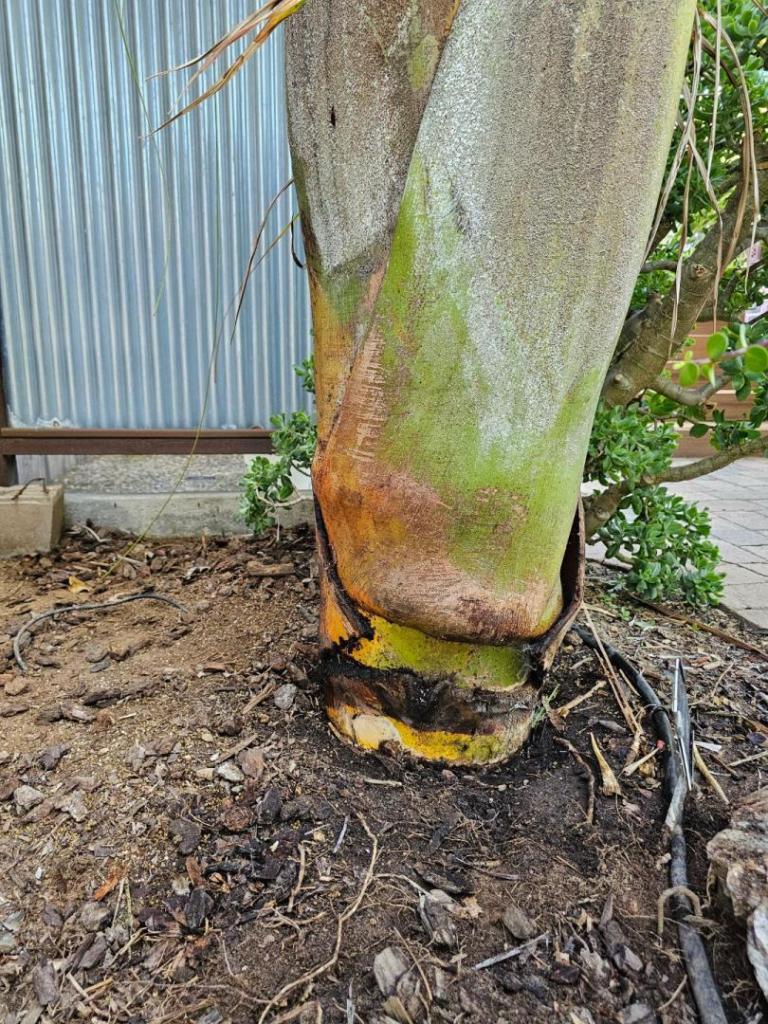
Somewhere around here, you'll find the loonngg thread regarding this discussion with lots of info to digest.. Regarding This, Only organism that acknowledges state / international " Borders " are a certain group of humans.. Rest of the living world, inc. most humans, does not. Oceans, and limits to climate related adaptations are the only barriers that limit what lives / grows where.. Another angle to this story is that, ..in another recent thread, this one here.. Washingtonia species were recently lumped together, so.. What you ..and everyone else.. in CA and other warm -enough parts of the west.. are seeing when you see robusta, or hybrids, or pure filifera sprouting ..everywhere.. is that particular form of the species expanding it's range, helped in large part by humans bringing it into cultivation.. Other parts of the U.S. are close enough that robusta would spread afar on it's own over time.. The true invasive?, the tree saplings in your first shot.. Unless they are CA Walnuts, most likely, they are Chinese Pistache, ..or possibly Tree of Heaven < though the leaflets don't look right for that menace, imo > ..Note the first part of the common name/ epithet portion of the scientific name < chinensis >.. Is a reflection of where they originated, though some newer cultivars are hybrids w/ other sps from other parts of the old world. Plants brought here from there / other parts of Asia, ..or Europe, Africa, and / or AUS. generally don't have the " checks and balances " organisms around that keep them under control in their respective areas when released into cultivation in the US.. Thus, they can spread and negatively alter New World ecosystems. The reverse often occurs when plants introduced from the Americas escapes cultivation in x or y place in the old world. Excluding island regions like Cuba, Hawaii, or Puerto Rico, plenty of checks and balances around that evolved alongside Washingtonia - whatever to keep them in line, no matter where they're grown in the Americas.2 points The first ring on my California grown Chrysalidocarpus robustus. I don't recall seeing any other big specimens here in California. Thanks to visiting the Big Island I have seen some tall specimens which put my juvenile plant in perspective.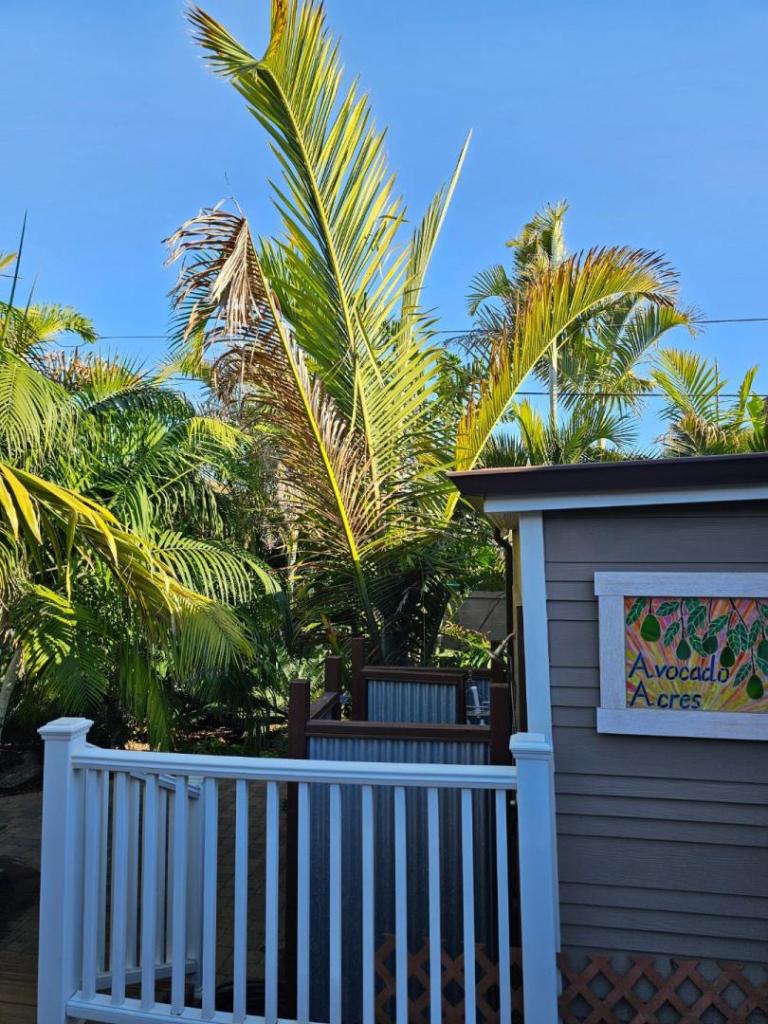

 2 points
I have to make one correction. I listed a palm above as a Phoenix rupicola, when in reality it's a P. theophrasti..
2 points
2 pointsI have to make one correction. I listed a palm above as a Phoenix rupicola, when in reality it's a P. theophrasti..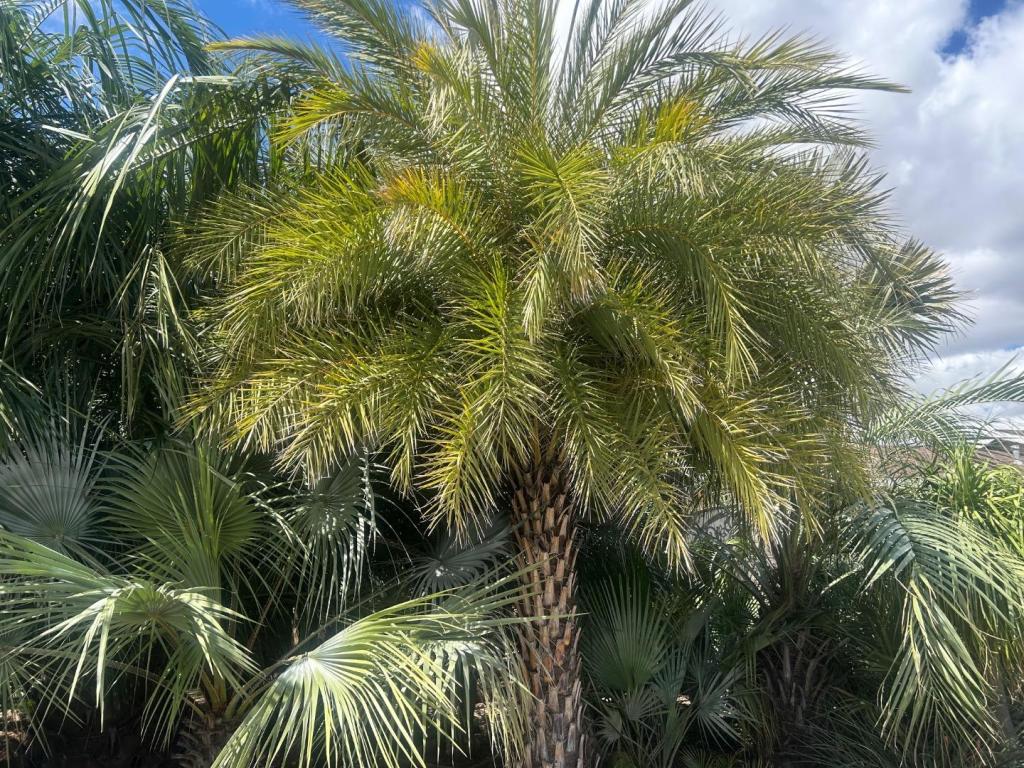 2 points
1 point1 point
2 points
1 point1 point 1 point
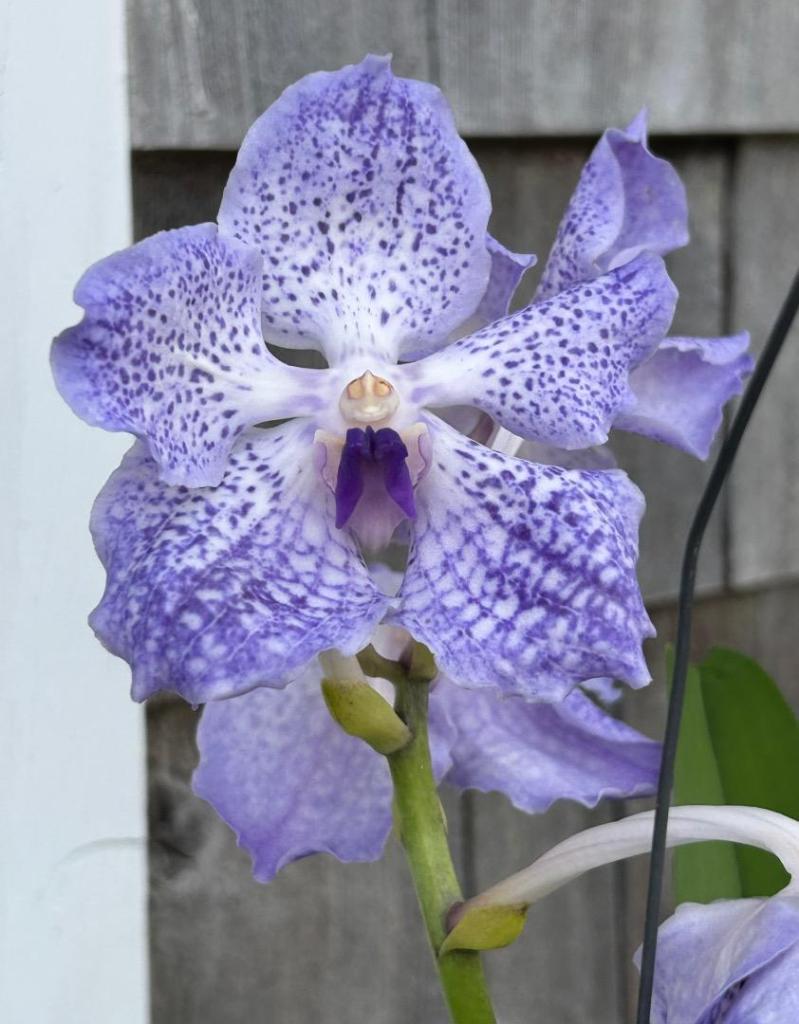
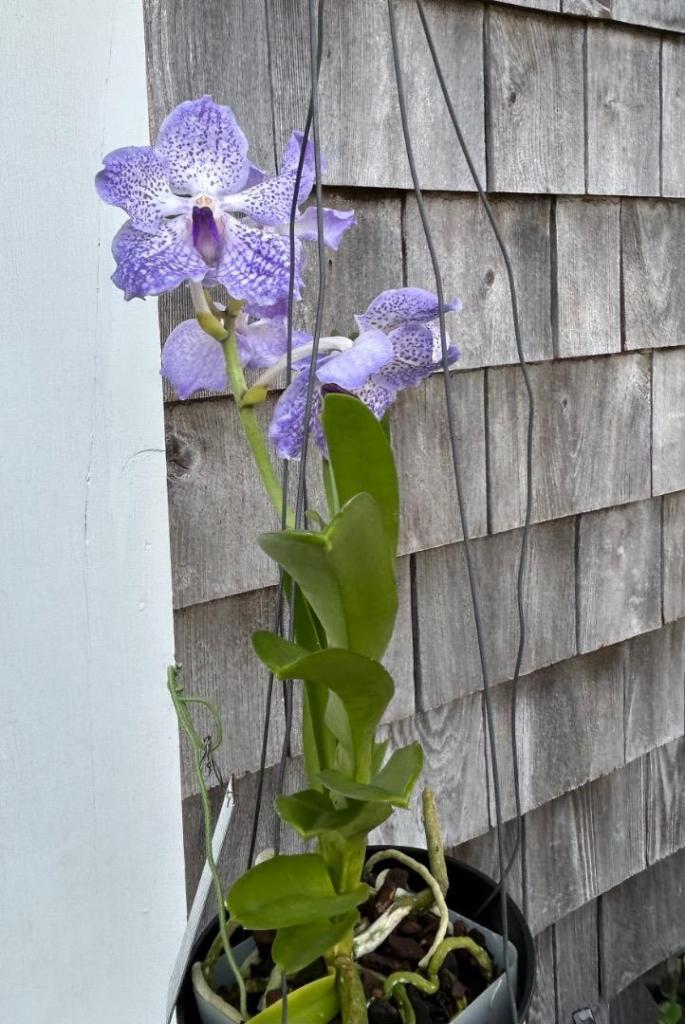
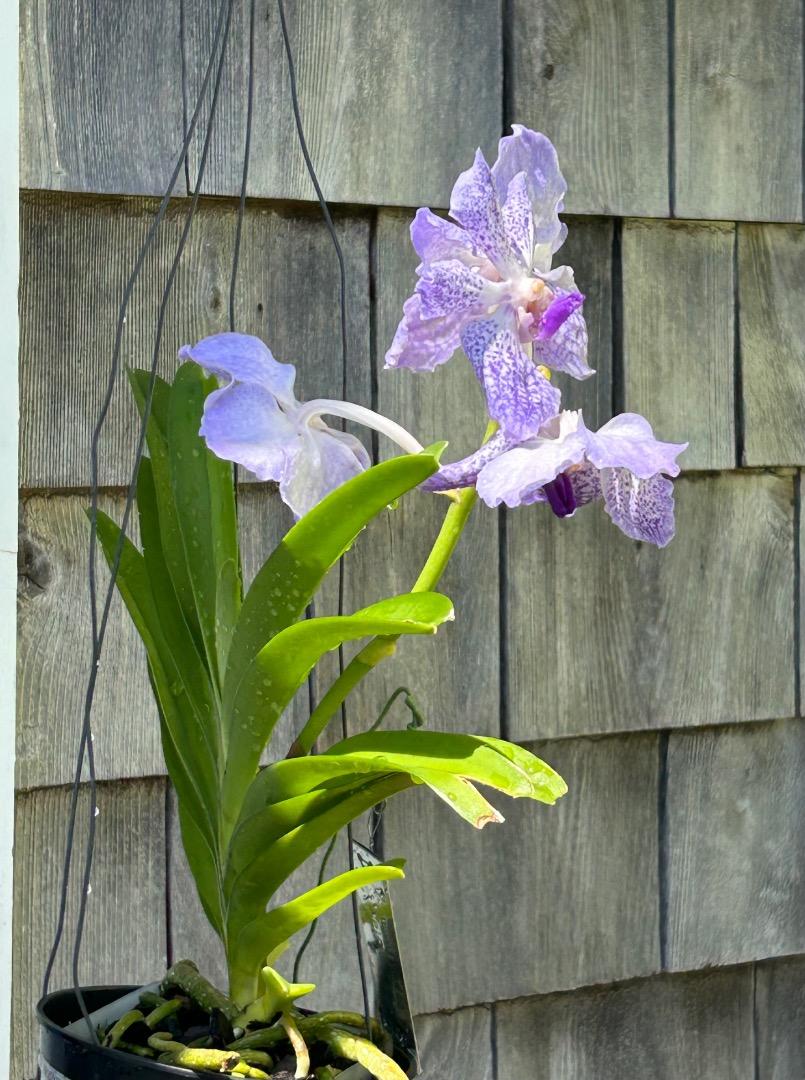
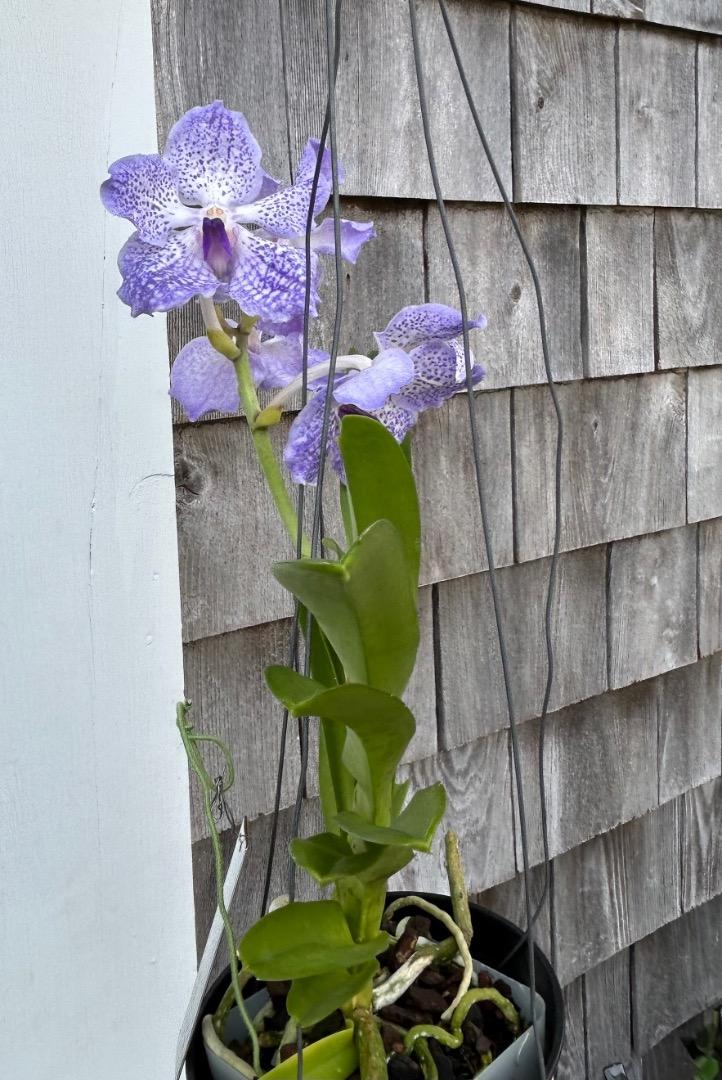
 1 pointV. Manuvadee. A favorite blue. been looking for this one for years to replace the one I lost to cold one autumn. Just shipped from a wonderful grower in HI.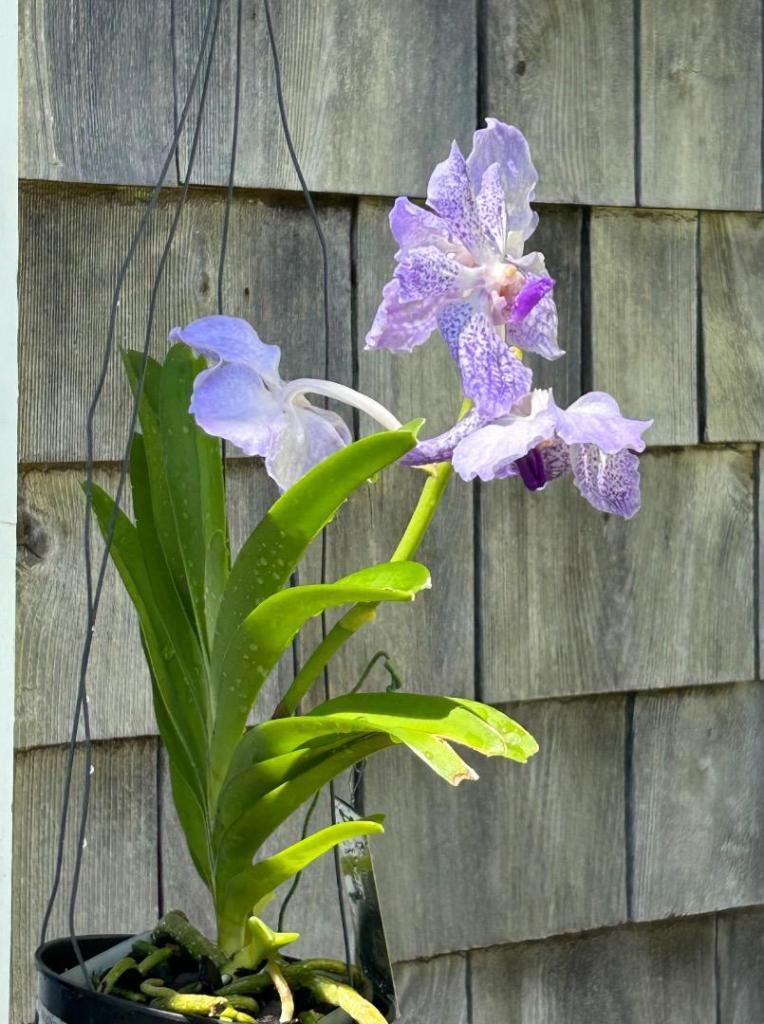
 1 point
The only trick to growing sargentii is getting old watching them grow!1 point
1 point
1 point1 point
1 point
The only trick to growing sargentii is getting old watching them grow!1 point
1 point
1 point1 point 1 pointTwo 3-gal juvenile palms exposed to 27°F. One protected with a cotton shirt experienced 60% foliar damage. Another unprotected in a more exposed spot suffering from a nutritional deficiency had zero damage! Both pushing new growth after first rain of the year.1 point
 1 point
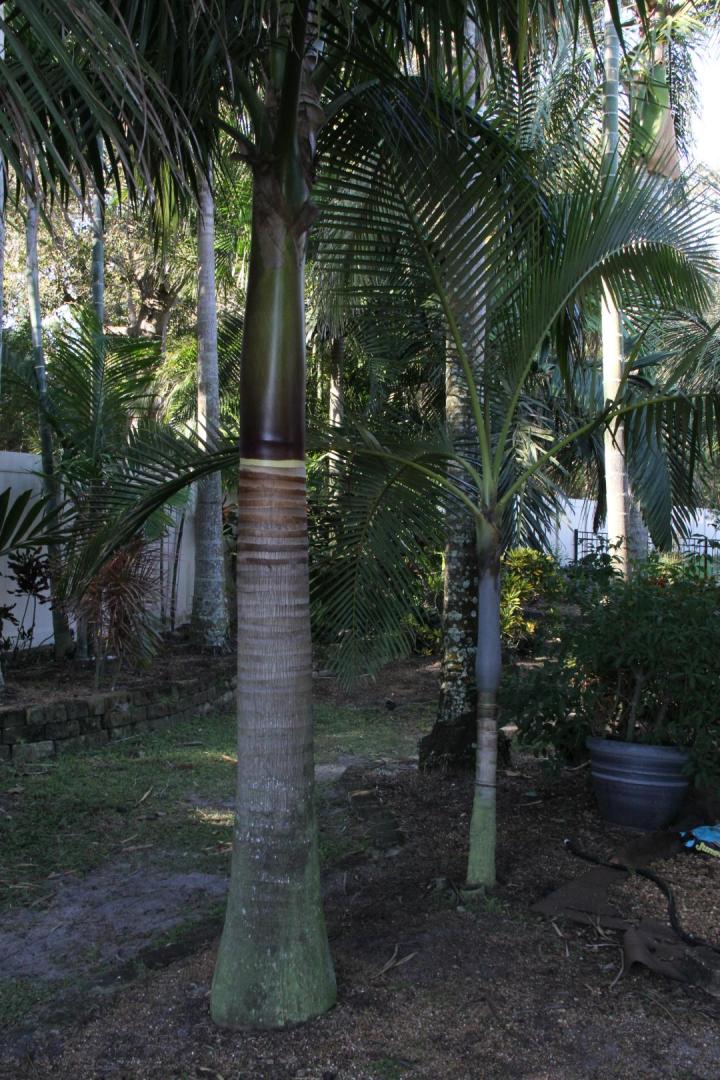
My purpurea is stunted, 7 years in the ground in deep shade but it is in clay so it stays moist. Sunlight is the enemy of th epurple crownshaft here in florida. All the taller ones I have seen are blanched if planted in sun. Here it is to the right of a satakentia. Your climate seems to match southern california and some parts of austrailia perhaps. I would recommend you get growing advice from members that have experience growing in the mediterranean climate. I have grown int he desert where archies die rapidly due to desiccation and in Florida where the roots dry out fast in sandy soil but the air is more humid so not as bad as a desert or mediterranean. Use the search function or just PM @DoomsDave who has grown some beautiful archies. I have seen quite a few archies from SoCal(or NorCal) or Australia look better than mine for sure. Multis are far more water efficient, easier to keep happy than single archies in my yard. I have planted all my archies with other palms nearby so moisture control of the soil is easier. All the shade in the pic also slows water evaporation by sun heating the ground.
1 point
1 pointMy purpurea is stunted, 7 years in the ground in deep shade but it is in clay so it stays moist. Sunlight is the enemy of th epurple crownshaft here in florida. All the taller ones I have seen are blanched if planted in sun. Here it is to the right of a satakentia. Your climate seems to match southern california and some parts of austrailia perhaps. I would recommend you get growing advice from members that have experience growing in the mediterranean climate. I have grown int he desert where archies die rapidly due to desiccation and in Florida where the roots dry out fast in sandy soil but the air is more humid so not as bad as a desert or mediterranean. Use the search function or just PM @DoomsDave who has grown some beautiful archies. I have seen quite a few archies from SoCal(or NorCal) or Australia look better than mine for sure. Multis are far more water efficient, easier to keep happy than single archies in my yard. I have planted all my archies with other palms nearby so moisture control of the soil is easier. All the shade in the pic also slows water evaporation by sun heating the ground. 1 point
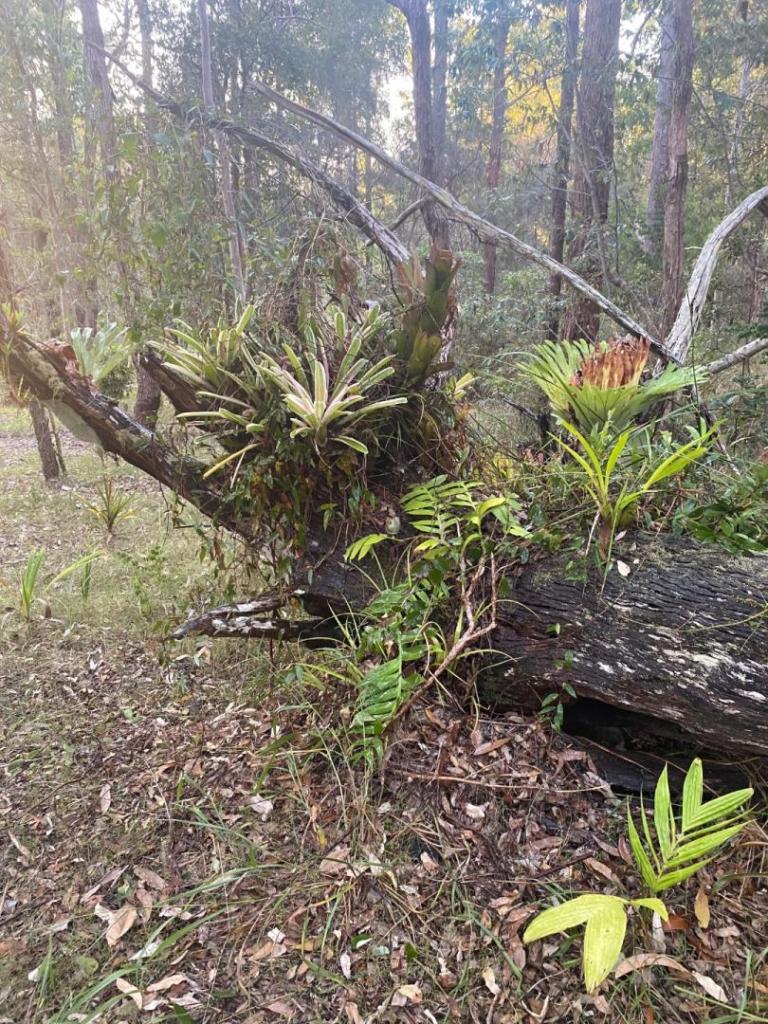
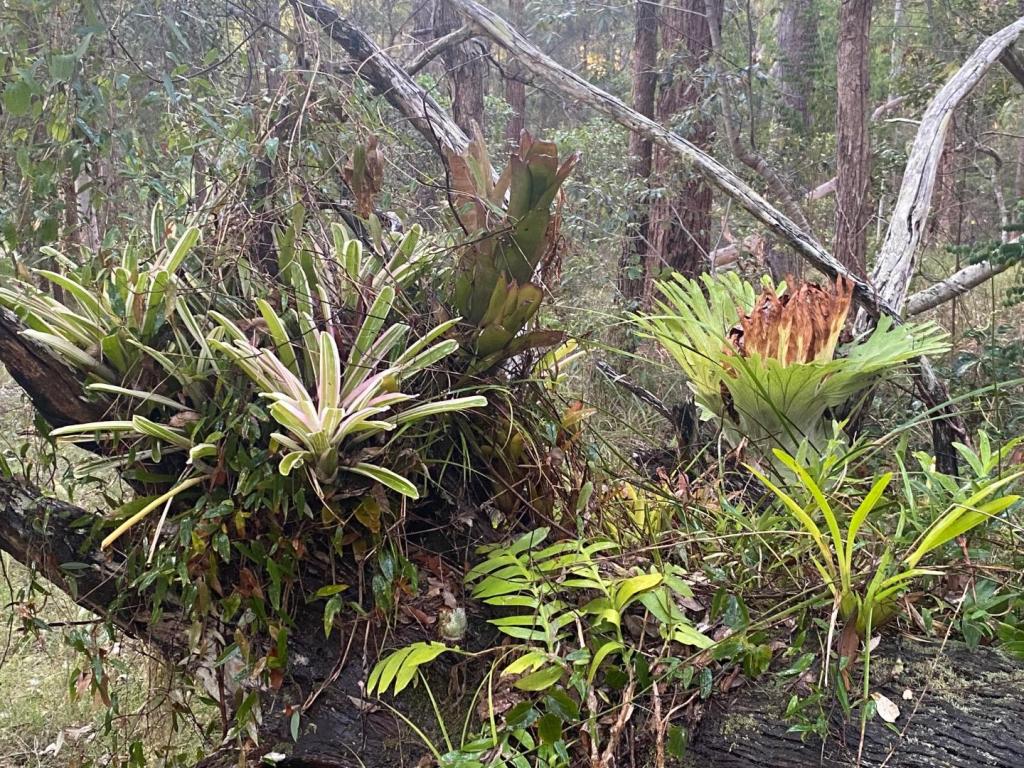
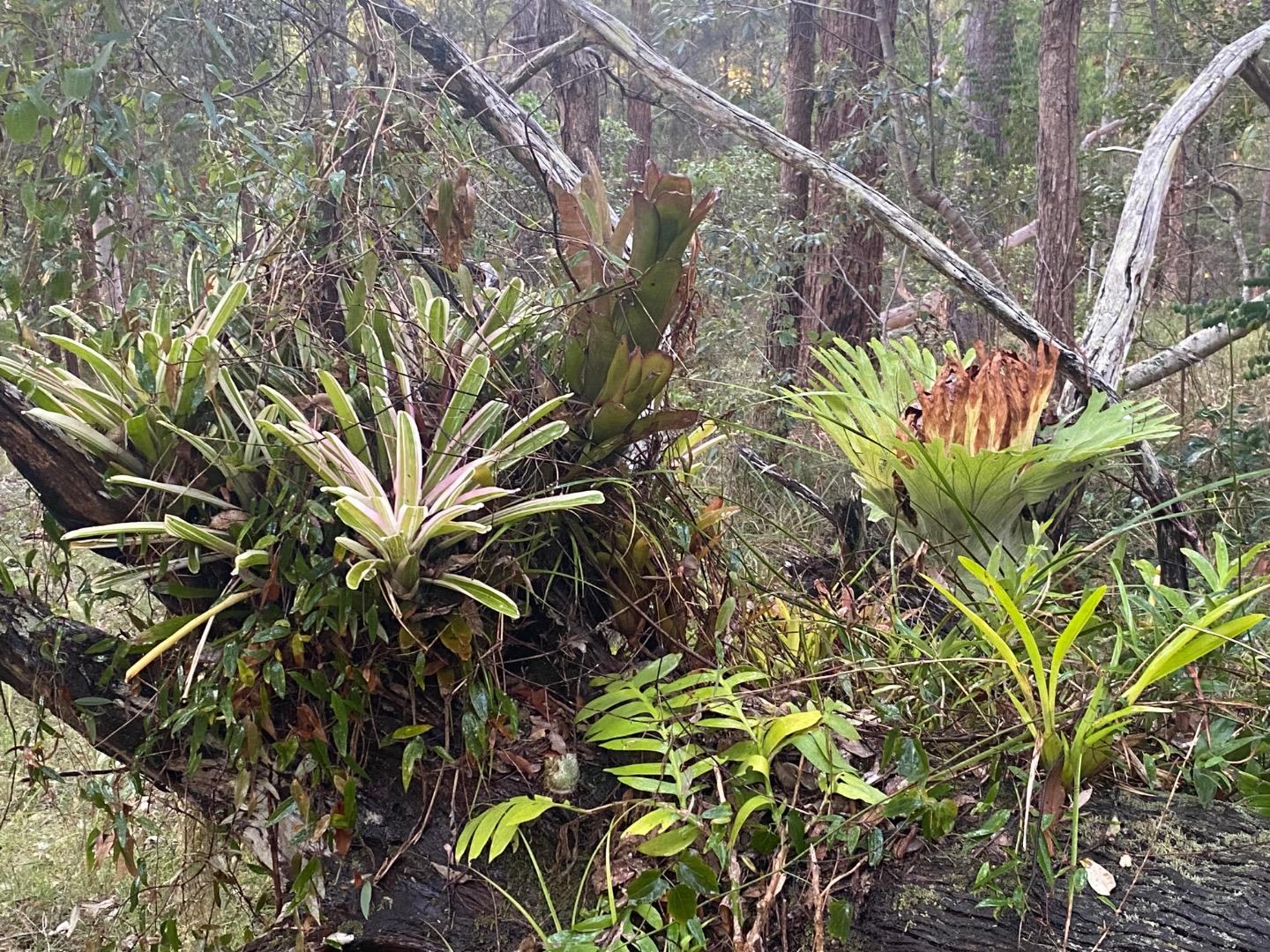
Created this little island oasis in the middle of the bush on a tree stump. I just chuckled em in there nothing special just time was all that was needed, left untouched!
1 point
Created this little island oasis in the middle of the bush on a tree stump. I just chuckled em in there nothing special just time was all that was needed, left untouched!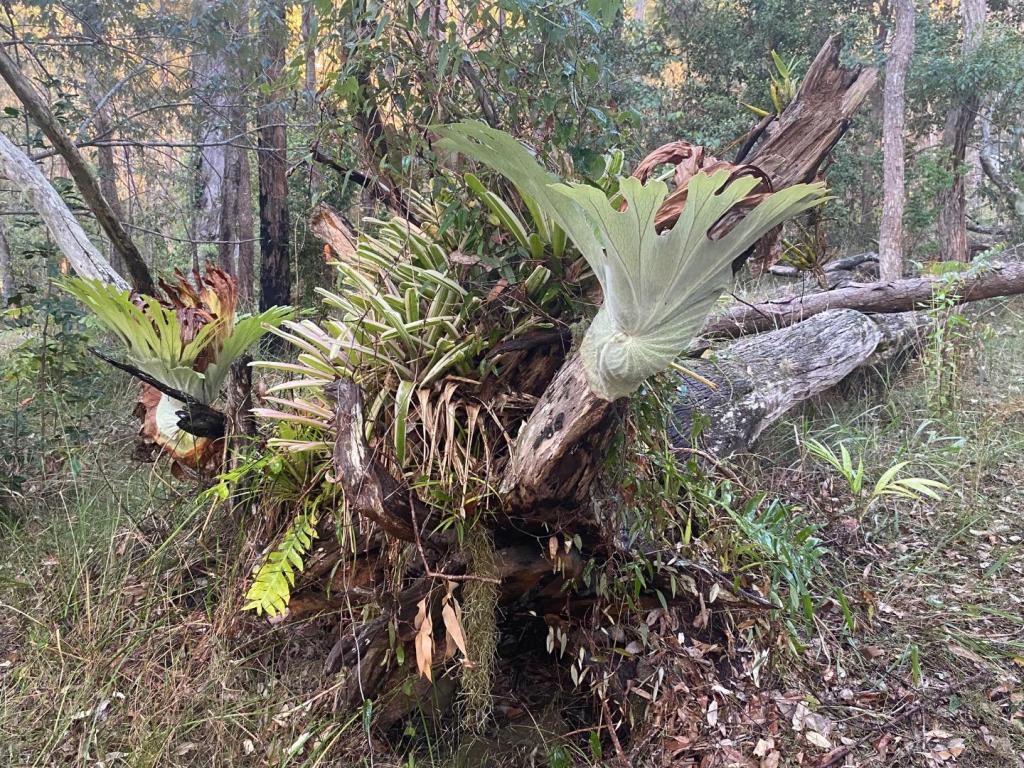


 1 point
 I have often wondered why the robusta isn’t considered native to California. I know its native to Baja California, which would have been California if it still belonged to Mexico. I went on a short walk through my paseos to find what appears to be Washingtonia robustas (maybe hybrids with filiferas) everywhere. It appears they have naturalized and are becoming invasive. Every few yards there’s new sprouts. Thoughts?
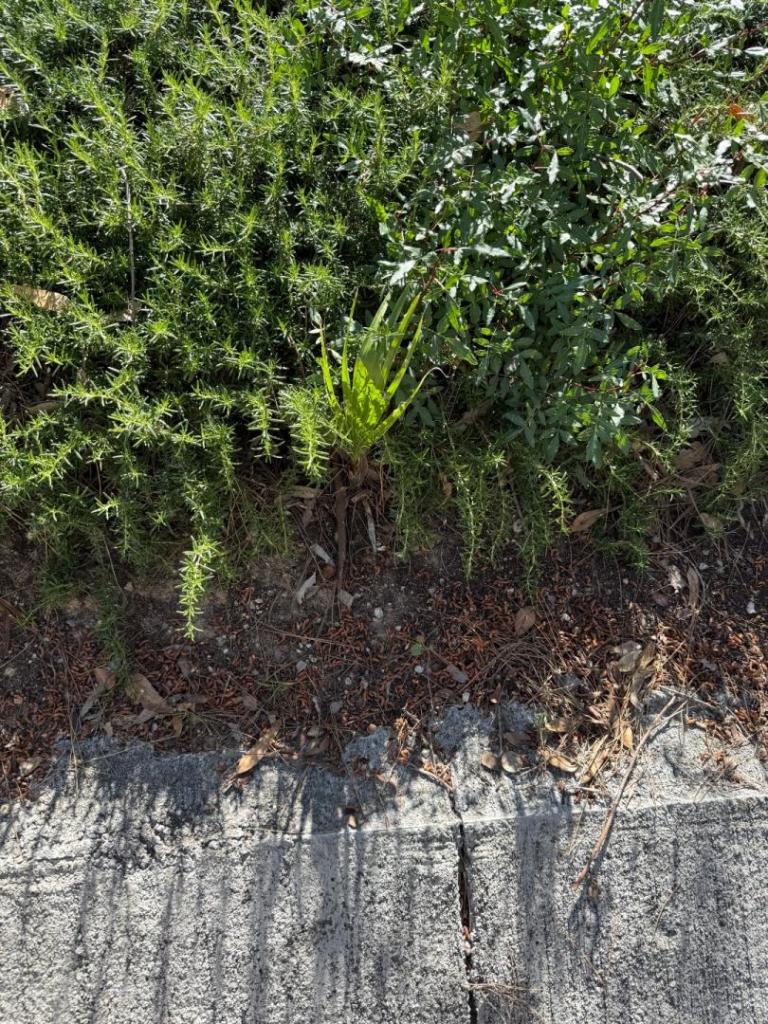
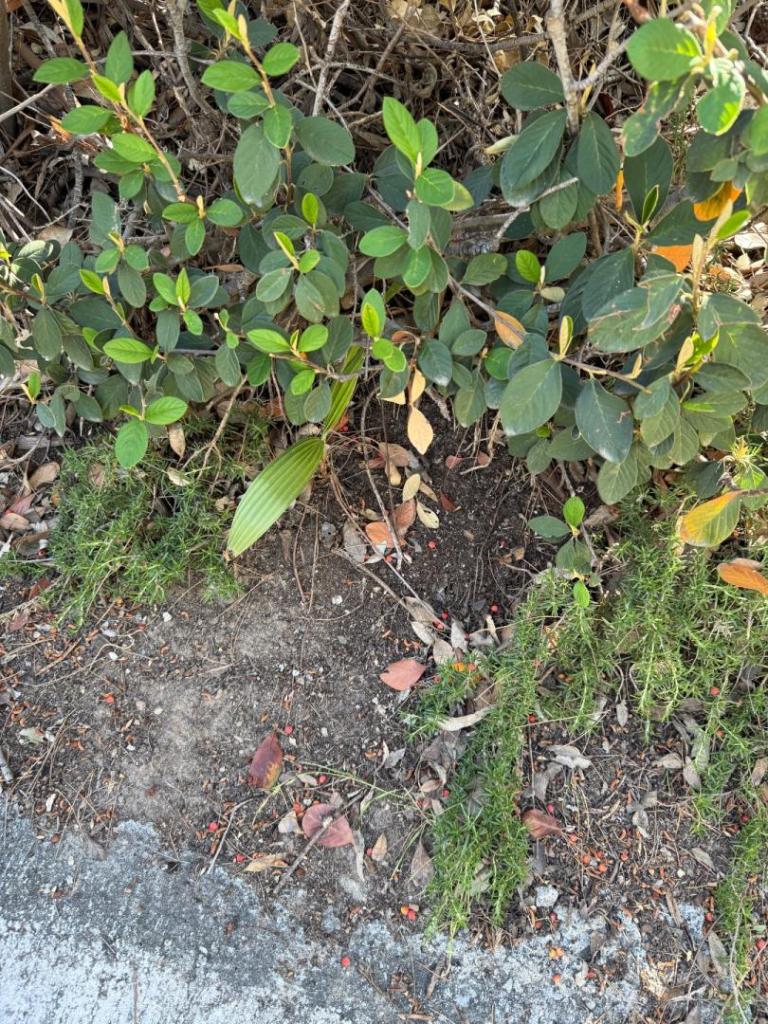
 1 point
To a degree, yes.. More technically, robusta falls just outside the CA Floristic Province.. That said, they've been native to this part of North America ..which includes CA... for much longer than any of it had names.. Can't remember if the genus was present on mainland Mexico before Baja broke off and began drifting north and west.. Homework: ** Flora recorded within the Green River Fossil Deposits ..in Wyoming. Note the " tropical " plant Genus recorded there. Let alone how far north that is from S. Cal. ** When Palms, Ficus, and an Avocado relative now restricted to Mexico, grew around the shallow, warm sea that is now the Central Valley.. Crocodiles, Boa Constrictor, and Iguana roamed CA ..southern part, of the state at least, around the same time, perhaps a little longer. Kern Vulture, a now extinct relative of the exotic looking King Vulture got it's name after it's fossilized remains were un earthed ..in Kern County. Current assumed range of the King Vulture itself extends no further than Sinaloa, though all current inat sightings / observations have been from much further south in Mexico.1 point
Let the soil dry out, sprinkle cinnamon on top of your soil, hydrogen peroxide yes. But your palm is to wet in the soil solarisation is what you need combined with air flow. Place your palm outside in the shade if that’s possible. It sounds like your palm has been over potted, and there is sour soil at the bottom of the container. You could repot your palm into a container that is just the next size up of the root ball. Some fungi are good like mycelium, let the palm dry out.1 point
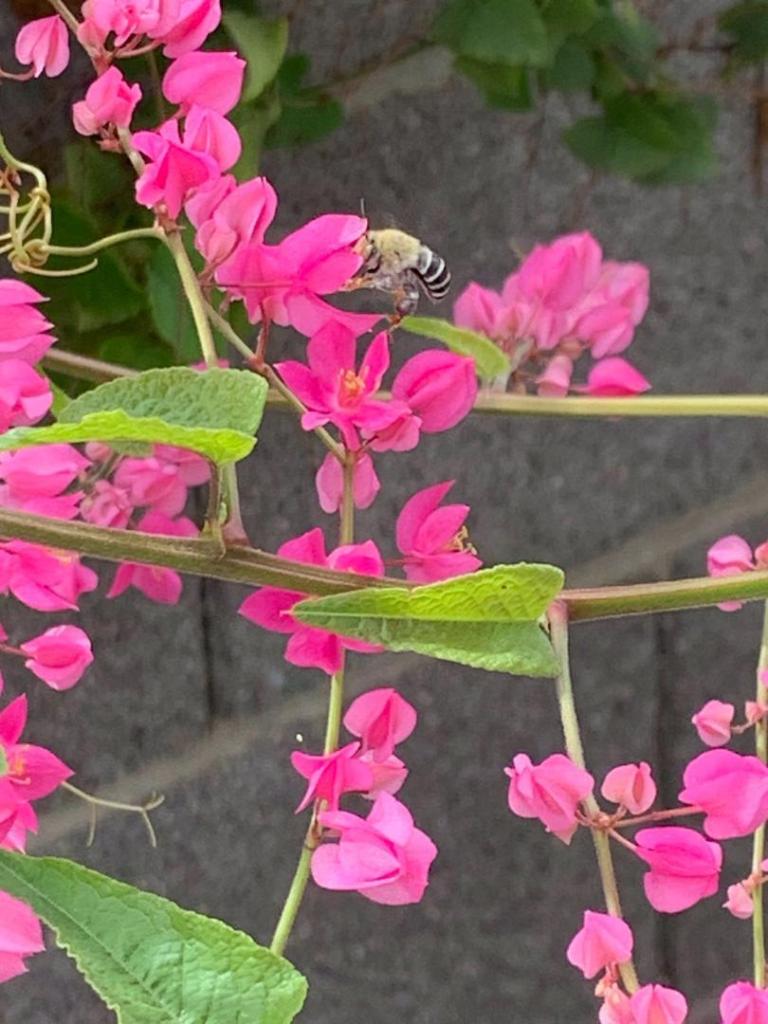
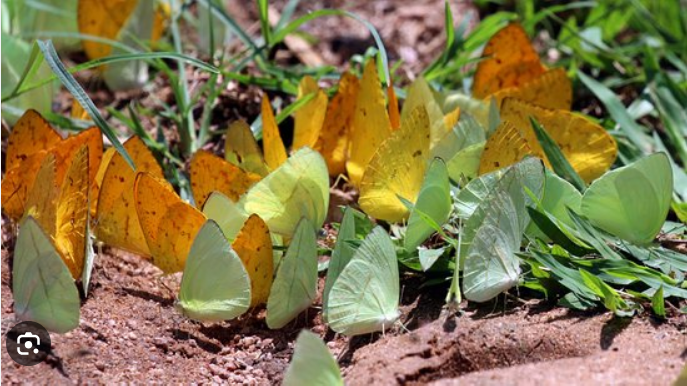
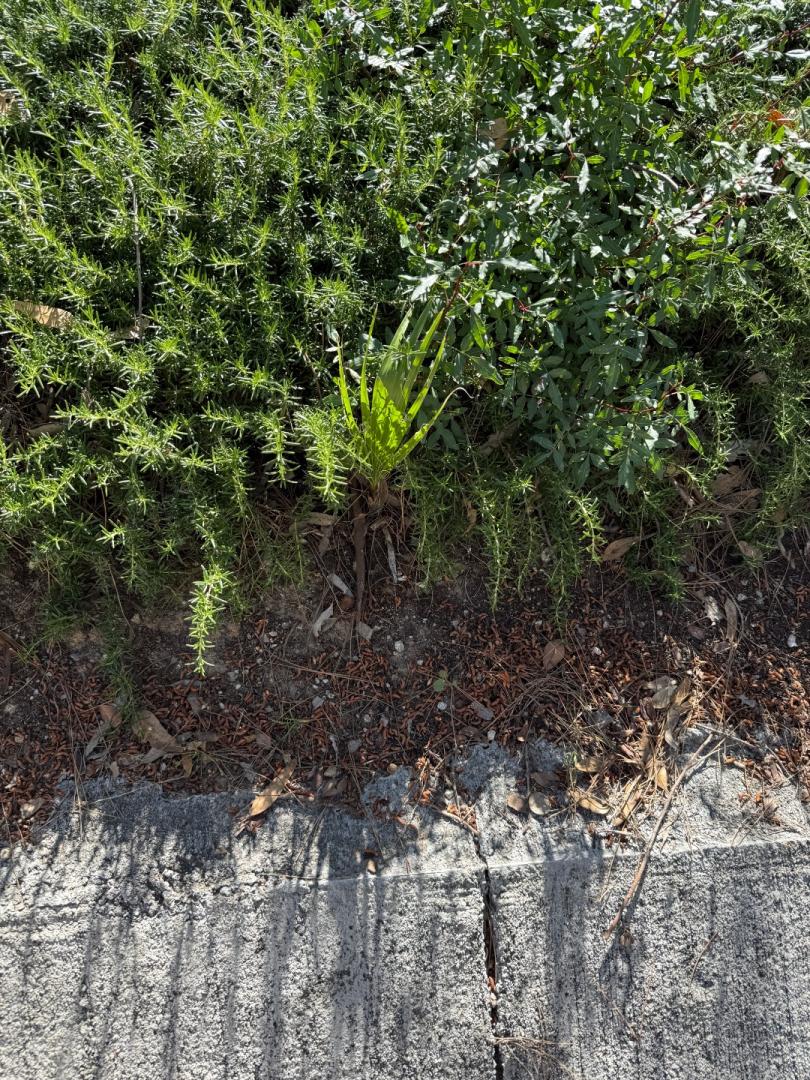
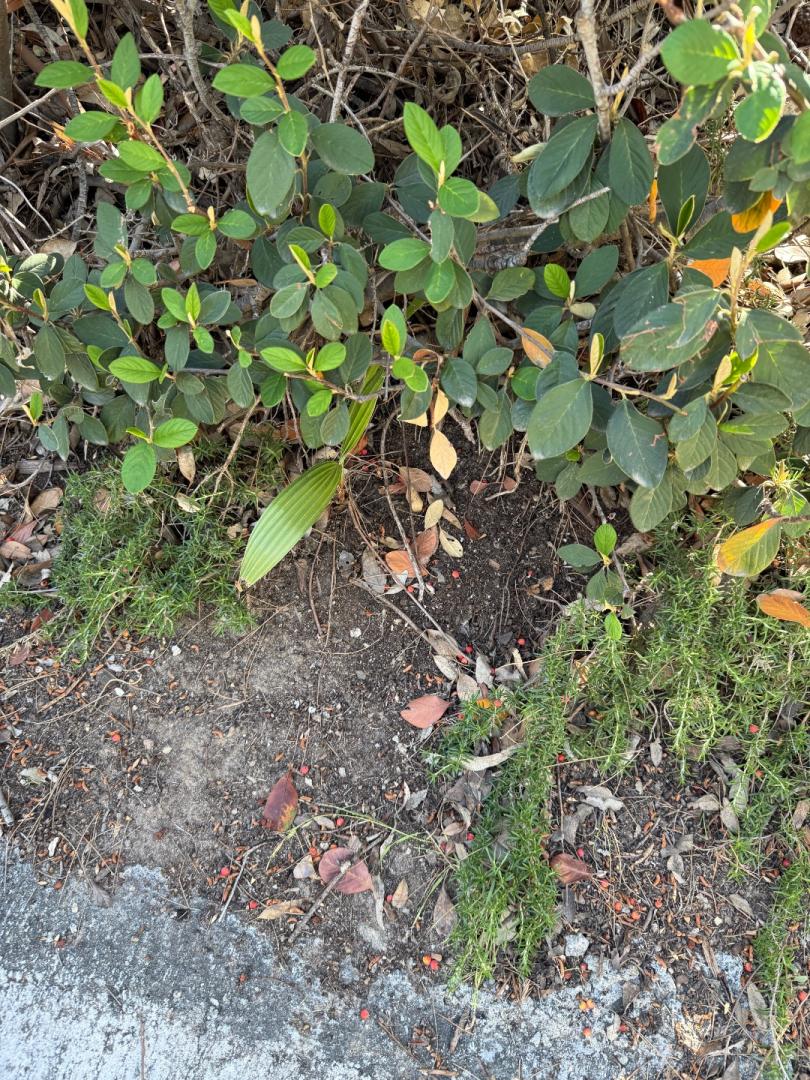
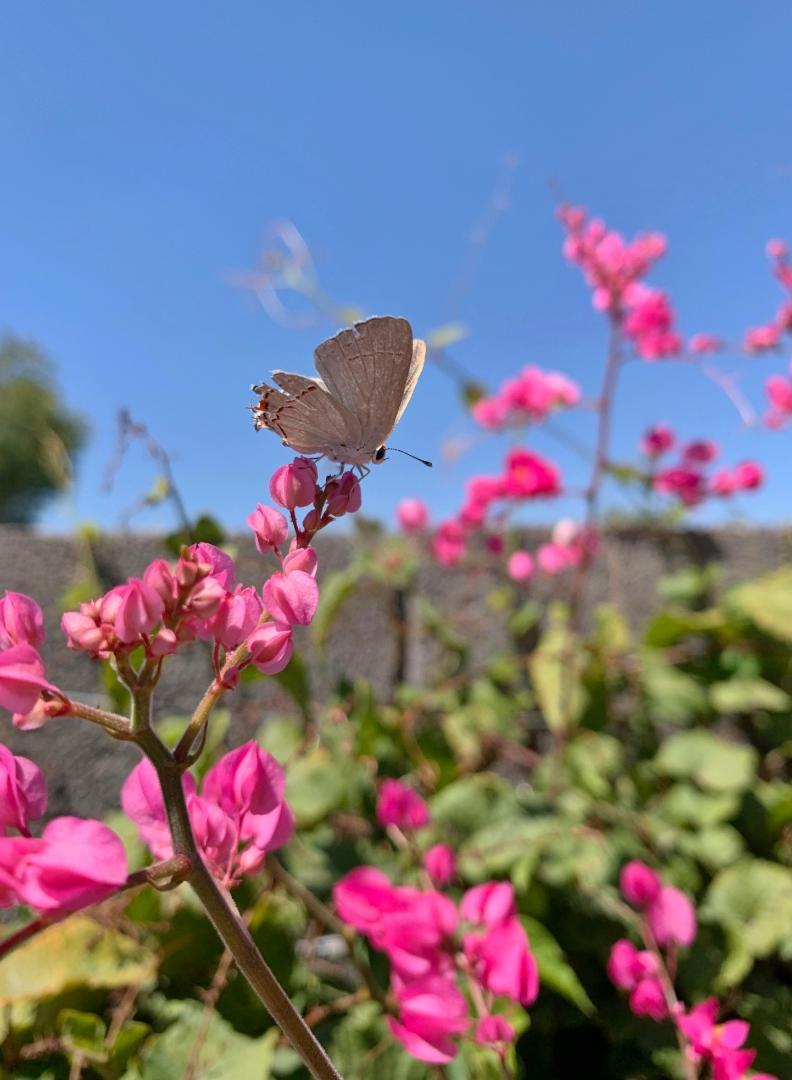
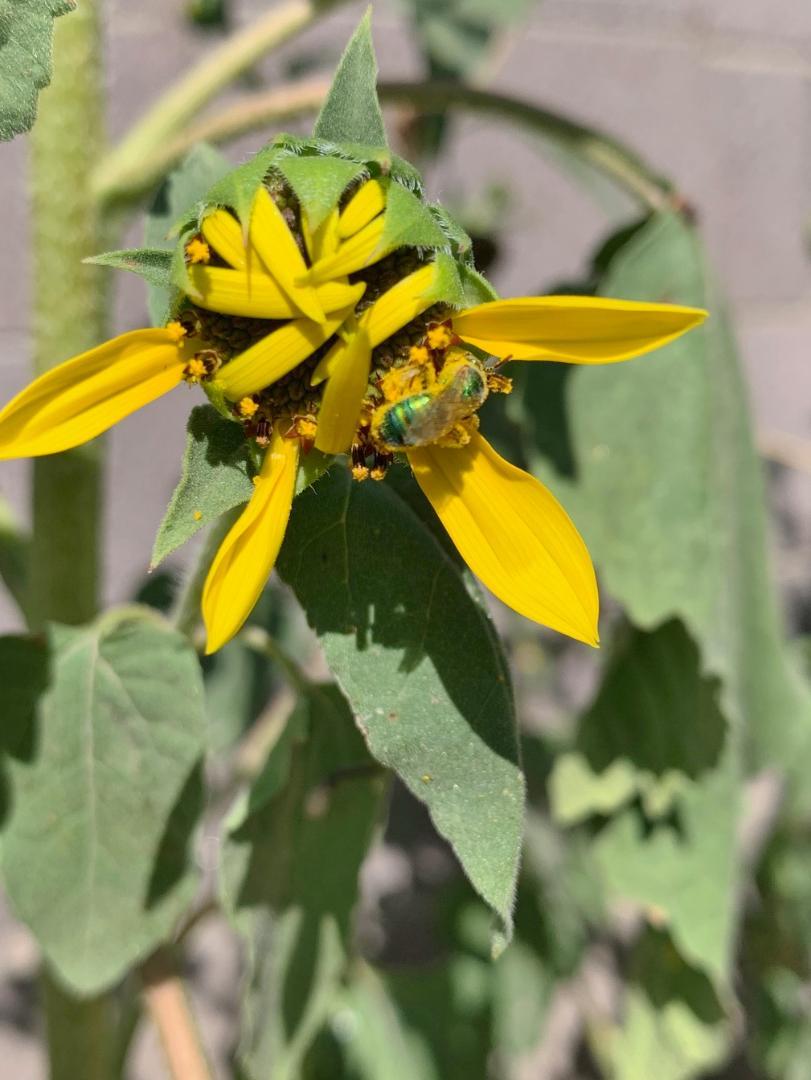
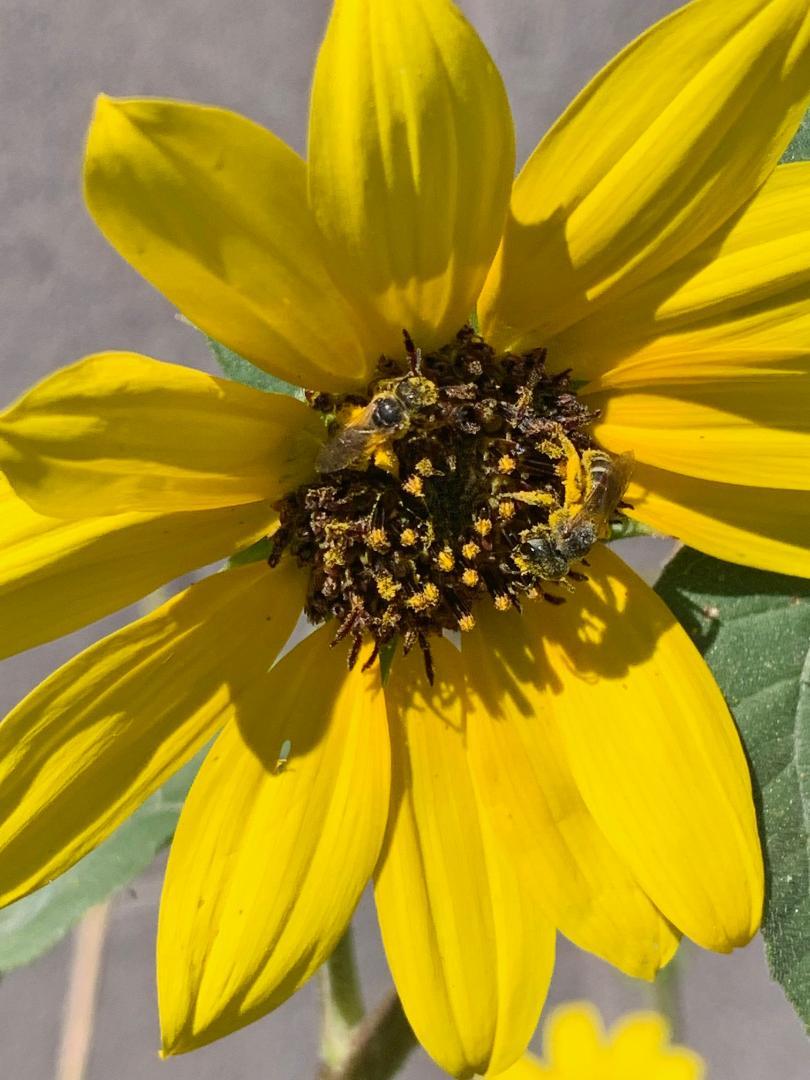
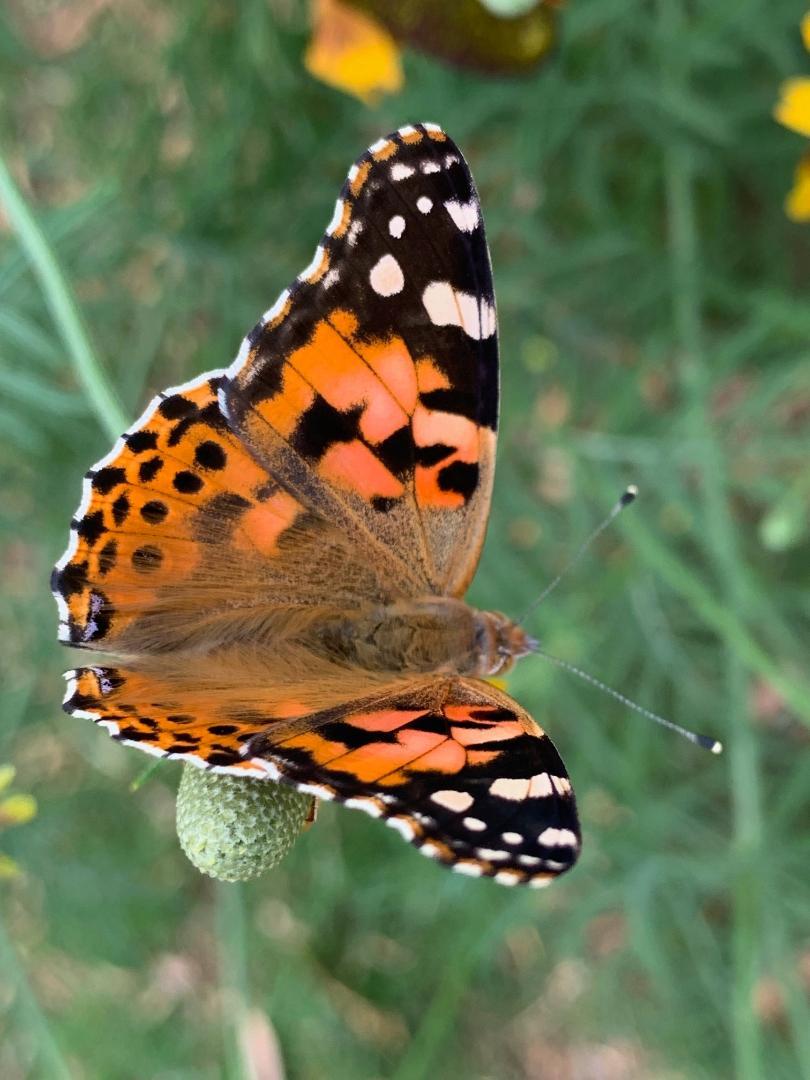
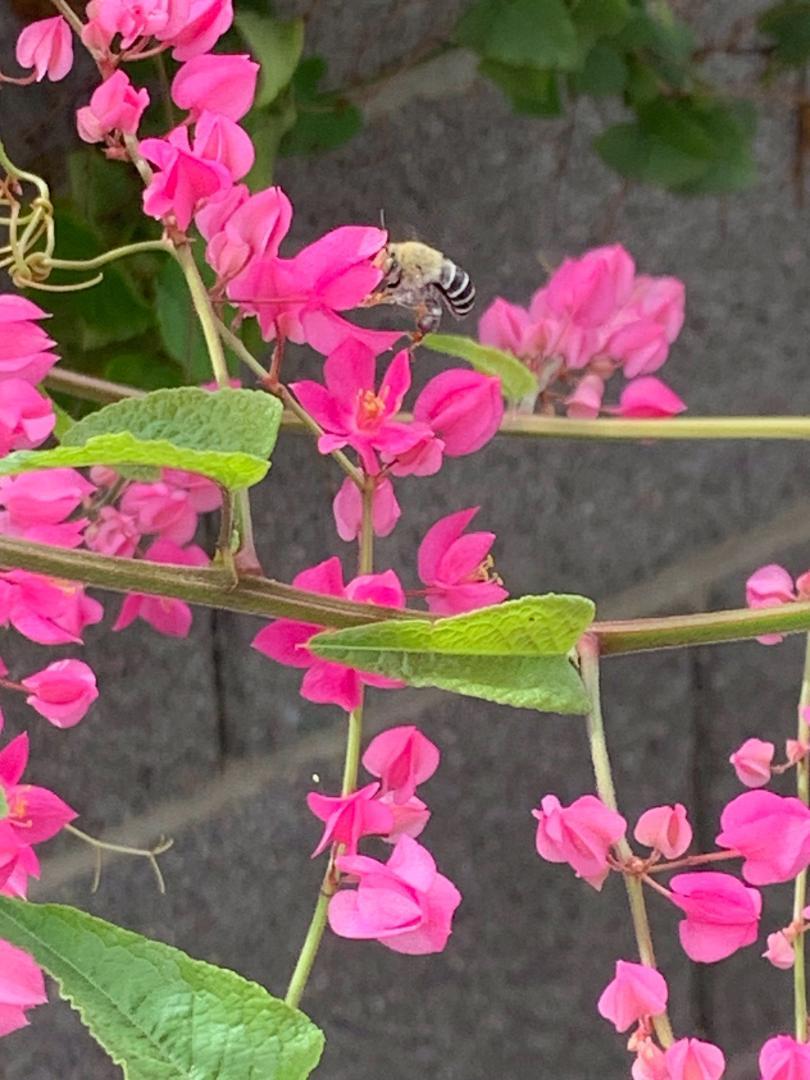
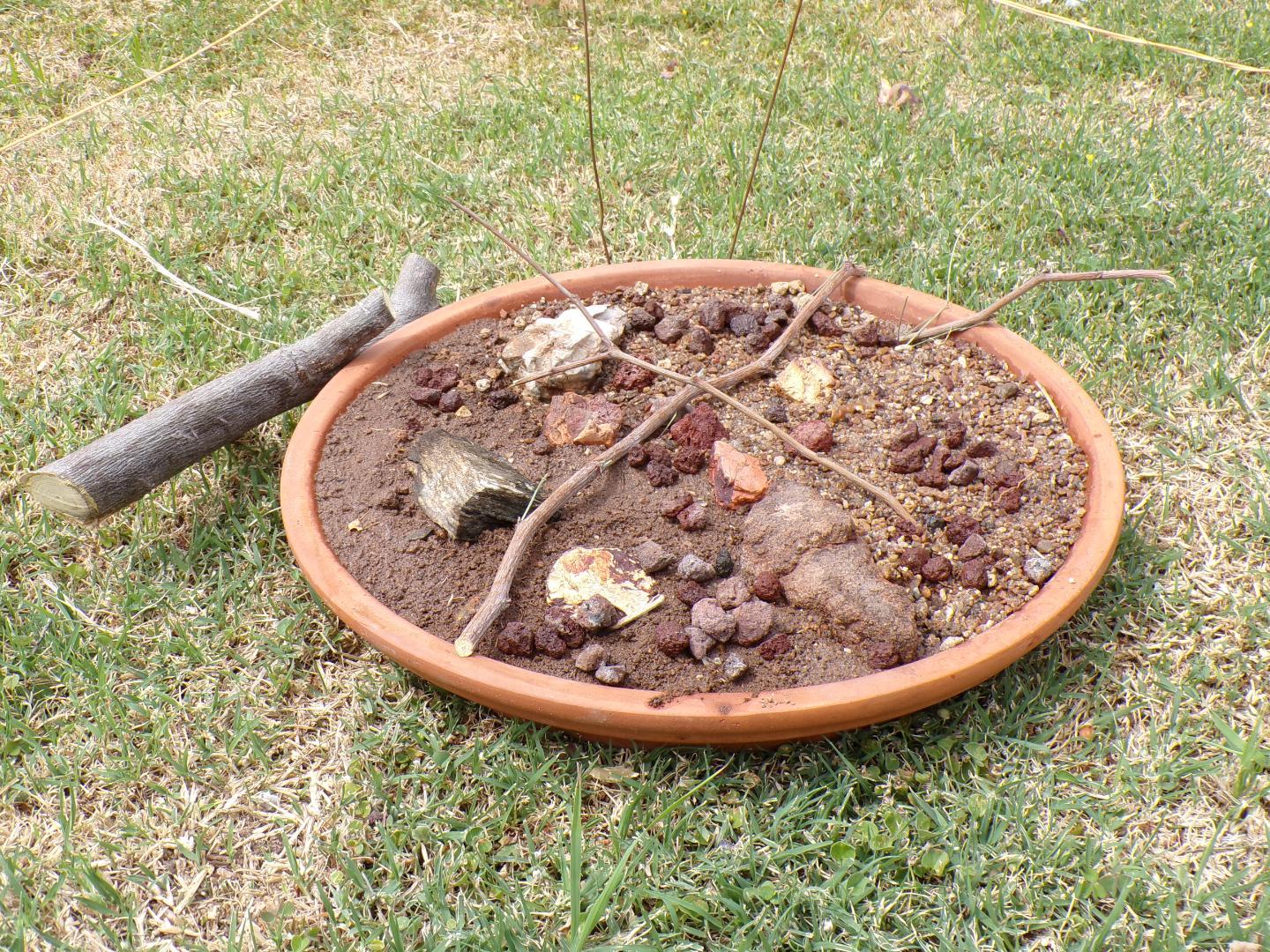
1 point..Other, smaller " Spies that fly... " Halictus ligatus Agapostemon sp. Anthophora californica and friends.. Strymon melinus Vanessa sp.. Speaking of Flutter Butts, doubling down on efforts to get more of them into the yard.. esp since this could be one of those summers that lures some of the rarer, more " tropical " sps out of Mexico, inc Daggerwings, more of the less common, big Sulphur sps, and some others that are well known for large- aggregation puddling.. What is " Puddling ? " ..Simply put, while some assume nectar is the only energy source Butterflies need, that is only half the story.. Most Butterflies, males esp, also need to sip on water that is rich in certain minerals like Sodium and Calcium / elements like Nitrogen to maintain health and reproductive fitness. Minerals / elements that nectar typically doesn't contain. Roam around ..pretty much anywhere, esp. after a warm downpour, it is not uncommon to come across a muddy bald spot in a grassy area in a park, or damp, shaded streamside depression with clouds of butterflies gathering on the mud itself. This is them not just stopping in at such a spot for a sip of water.. Puddling behavior isn't restricted to muddy puddles either.. Any source of the desired minerals, esp. sodium, will do, inc. carrion, poop, rotting fruit, sweat and tears, and even blood ..in the case of a few butterfly sps native to the tropics.. In a garden, while planting both nectar and host - source plants is a big plus, adding a " puddling station " or two helps get lure of them into the yard.. Such a addition can be a simple plastic or terra cotta saucer filled with mud, sand, and/or gravel, and some larger rocks, then adding some salt, ..and / or a dash or two of something like Fish Emulsion and keeping it moist.. This particular station has both mud and wash grit, just to see which substrate local species gravitate to. In others i plan to add, i'll use 1/4" gravel, both bagged and collected sand, and straight Turface. Stations will also be moved around at times to see what " sun vs. shade position is most attractive. Goal is to be able to get shots, similar to these, from the yard this year.. Various Sulphur sps, from the internet.. American Snout, Hackberry Emperor, Empress Lelia puddling along Alamo wash near Picketpost Mtn. Summer 2021. Zelus renardii, hunting for sap suckers..
1 point
To a degree, yes.. More technically, robusta falls just outside the CA Floristic Province.. That said, they've been native to this part of North America ..which includes CA... for much longer than any of it had names.. Can't remember if the genus was present on mainland Mexico before Baja broke off and began drifting north and west.. Homework: ** Flora recorded within the Green River Fossil Deposits ..in Wyoming. Note the " tropical " plant Genus recorded there. Let alone how far north that is from S. Cal. ** When Palms, Ficus, and an Avocado relative now restricted to Mexico, grew around the shallow, warm sea that is now the Central Valley.. Crocodiles, Boa Constrictor, and Iguana roamed CA ..southern part, of the state at least, around the same time, perhaps a little longer. Kern Vulture, a now extinct relative of the exotic looking King Vulture got it's name after it's fossilized remains were un earthed ..in Kern County. Current assumed range of the King Vulture itself extends no further than Sinaloa, though all current inat sightings / observations have been from much further south in Mexico.1 point
Let the soil dry out, sprinkle cinnamon on top of your soil, hydrogen peroxide yes. But your palm is to wet in the soil solarisation is what you need combined with air flow. Place your palm outside in the shade if that’s possible. It sounds like your palm has been over potted, and there is sour soil at the bottom of the container. You could repot your palm into a container that is just the next size up of the root ball. Some fungi are good like mycelium, let the palm dry out.1 point
1 point..Other, smaller " Spies that fly... " Halictus ligatus Agapostemon sp. Anthophora californica and friends.. Strymon melinus Vanessa sp.. Speaking of Flutter Butts, doubling down on efforts to get more of them into the yard.. esp since this could be one of those summers that lures some of the rarer, more " tropical " sps out of Mexico, inc Daggerwings, more of the less common, big Sulphur sps, and some others that are well known for large- aggregation puddling.. What is " Puddling ? " ..Simply put, while some assume nectar is the only energy source Butterflies need, that is only half the story.. Most Butterflies, males esp, also need to sip on water that is rich in certain minerals like Sodium and Calcium / elements like Nitrogen to maintain health and reproductive fitness. Minerals / elements that nectar typically doesn't contain. Roam around ..pretty much anywhere, esp. after a warm downpour, it is not uncommon to come across a muddy bald spot in a grassy area in a park, or damp, shaded streamside depression with clouds of butterflies gathering on the mud itself. This is them not just stopping in at such a spot for a sip of water.. Puddling behavior isn't restricted to muddy puddles either.. Any source of the desired minerals, esp. sodium, will do, inc. carrion, poop, rotting fruit, sweat and tears, and even blood ..in the case of a few butterfly sps native to the tropics.. In a garden, while planting both nectar and host - source plants is a big plus, adding a " puddling station " or two helps get lure of them into the yard.. Such a addition can be a simple plastic or terra cotta saucer filled with mud, sand, and/or gravel, and some larger rocks, then adding some salt, ..and / or a dash or two of something like Fish Emulsion and keeping it moist.. This particular station has both mud and wash grit, just to see which substrate local species gravitate to. In others i plan to add, i'll use 1/4" gravel, both bagged and collected sand, and straight Turface. Stations will also be moved around at times to see what " sun vs. shade position is most attractive. Goal is to be able to get shots, similar to these, from the yard this year.. Various Sulphur sps, from the internet.. American Snout, Hackberry Emperor, Empress Lelia puddling along Alamo wash near Picketpost Mtn. Summer 2021. Zelus renardii, hunting for sap suckers..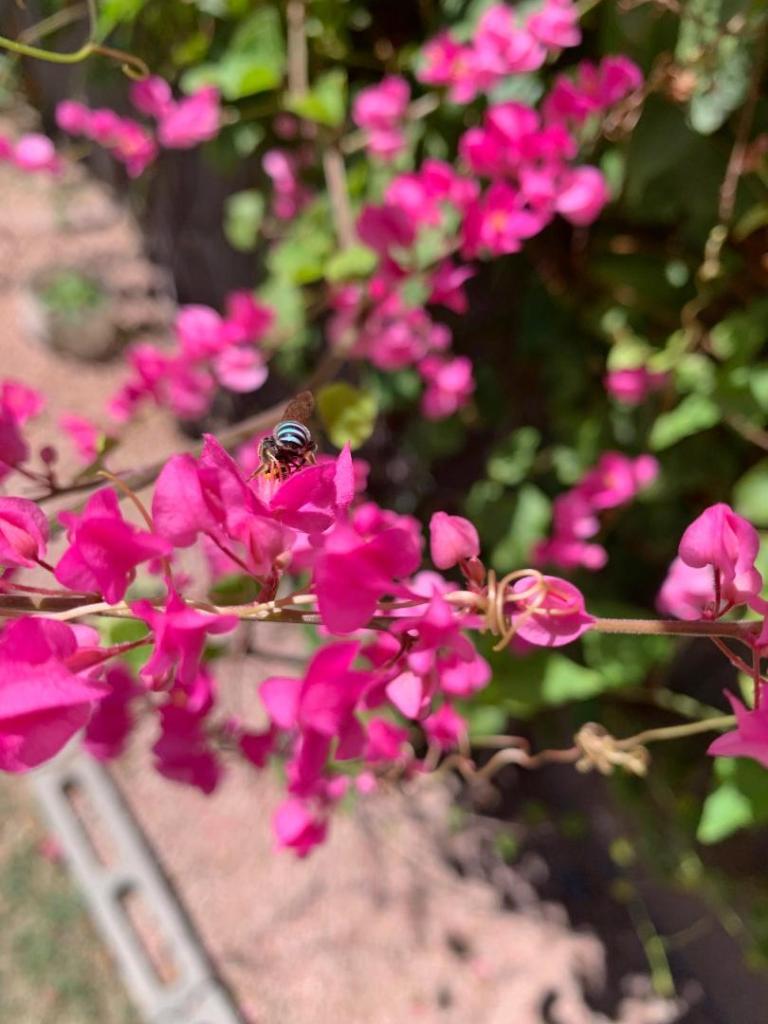
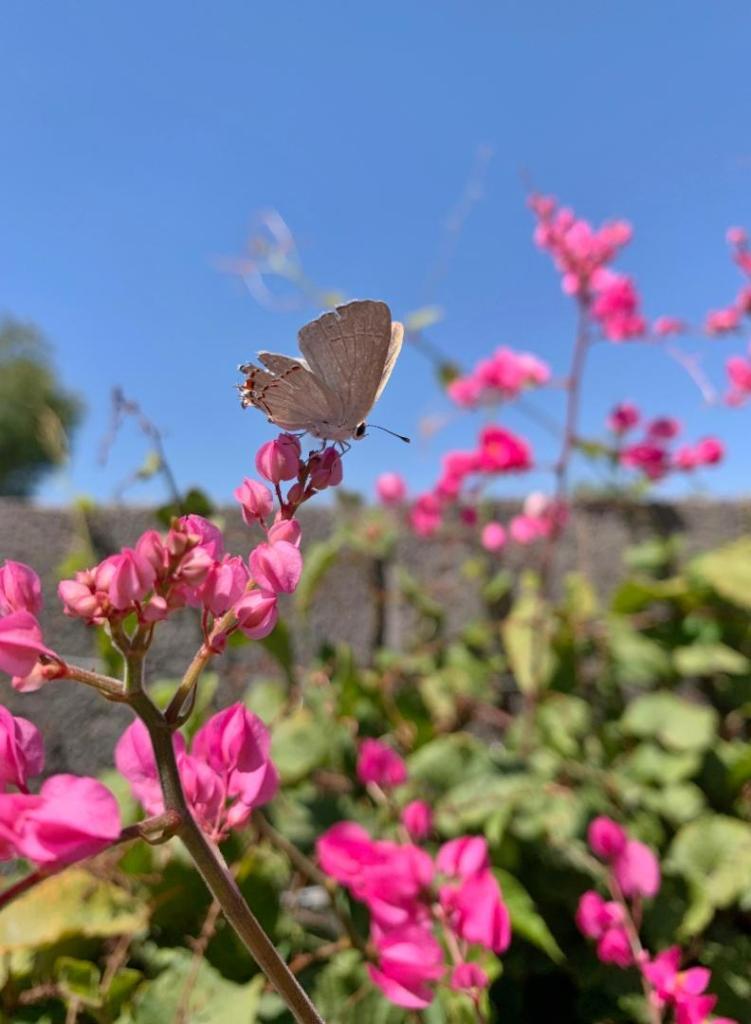

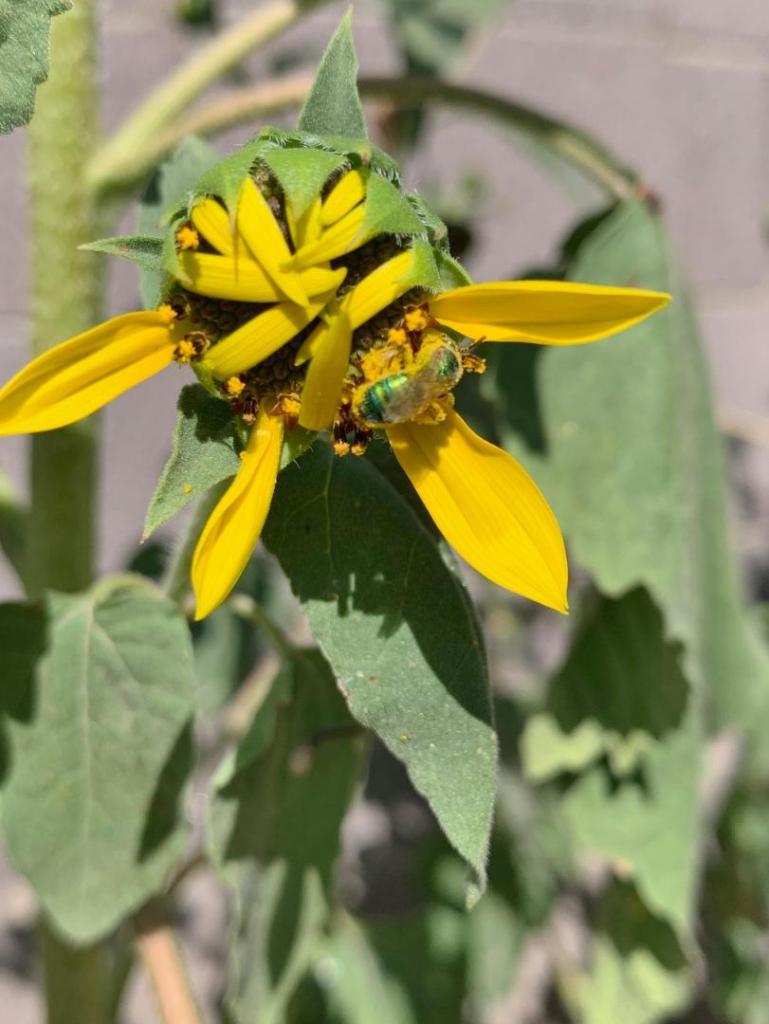


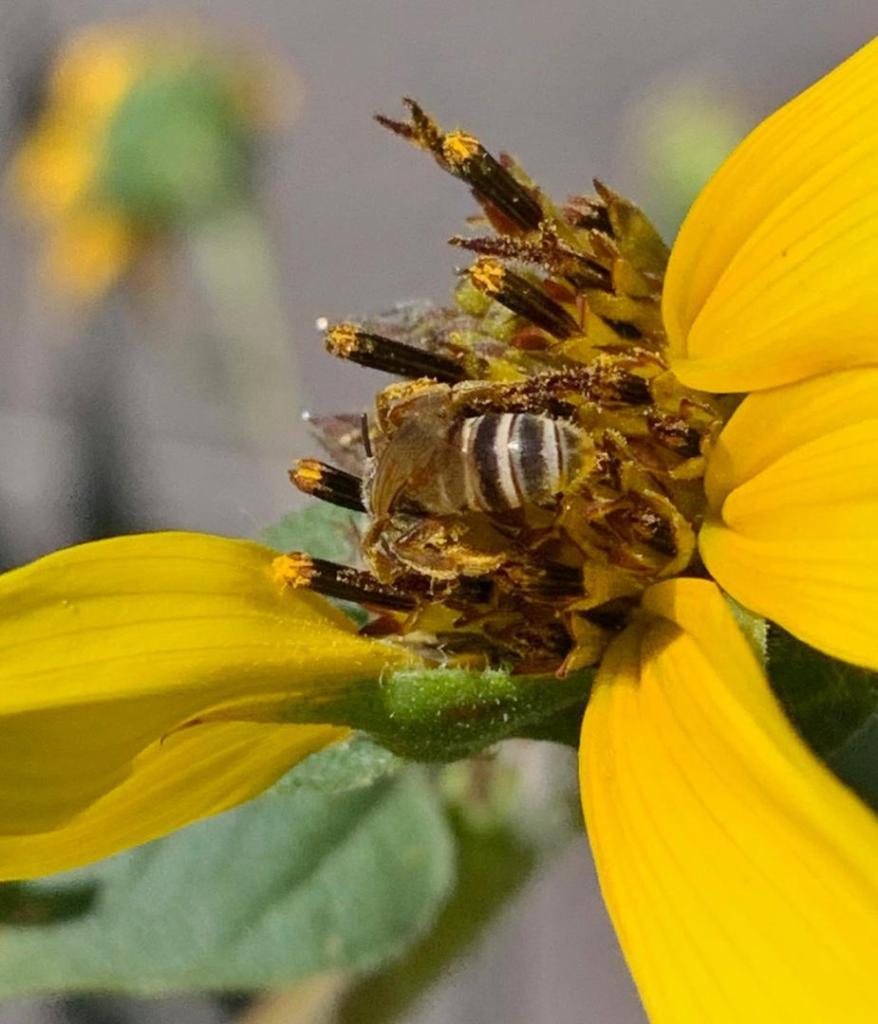


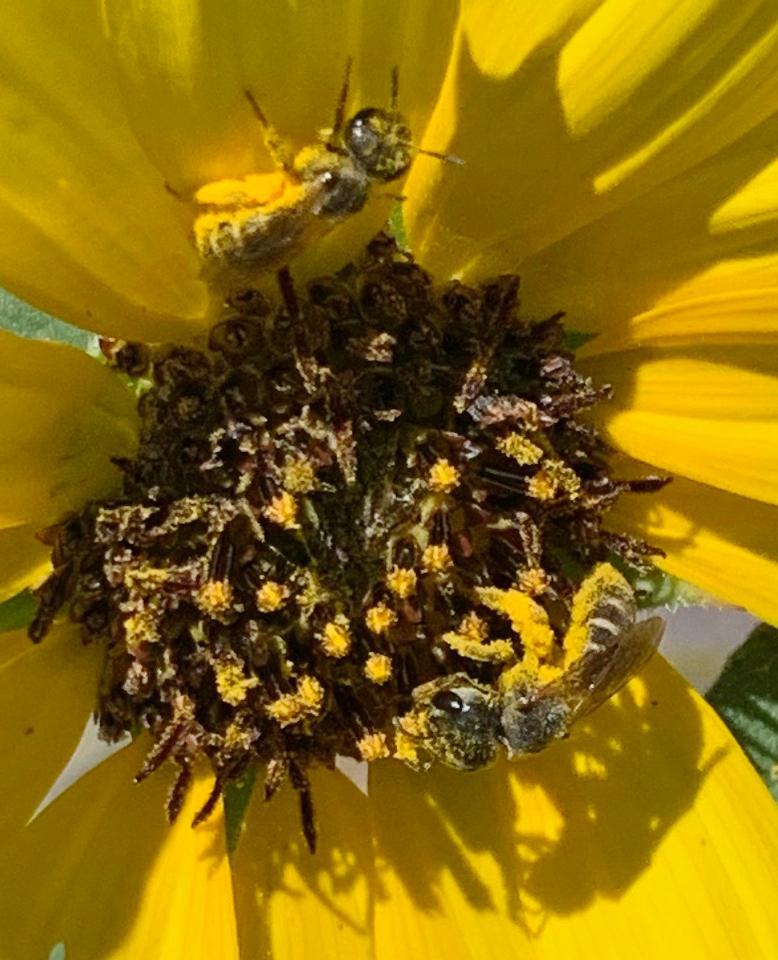


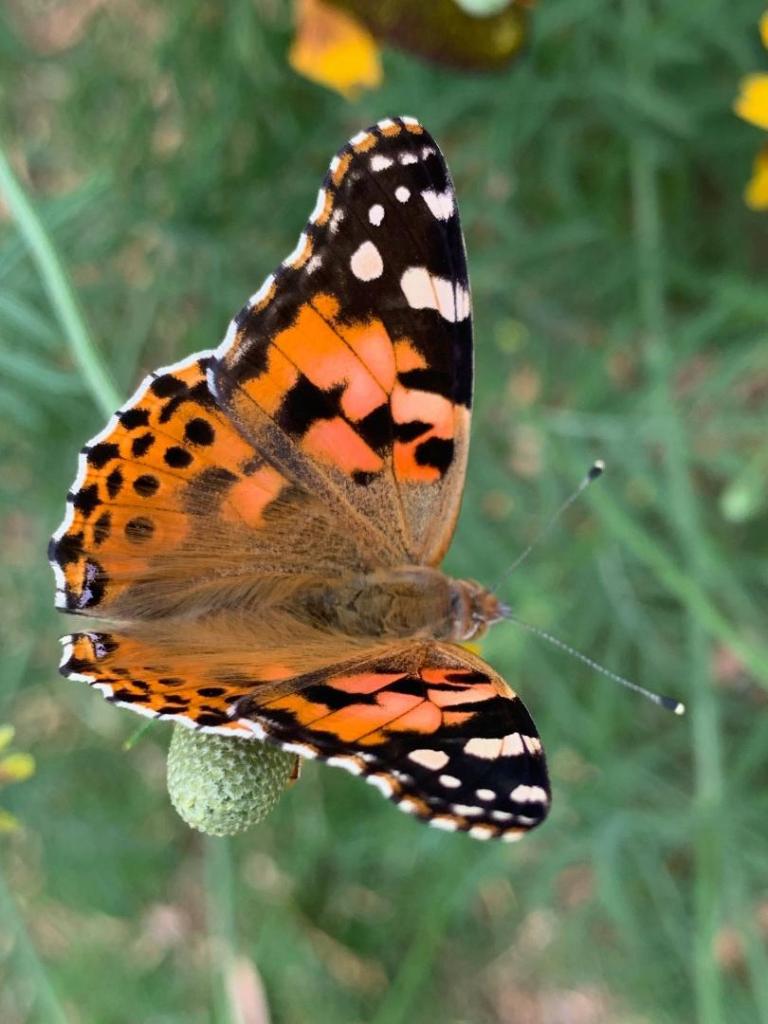

 1 point
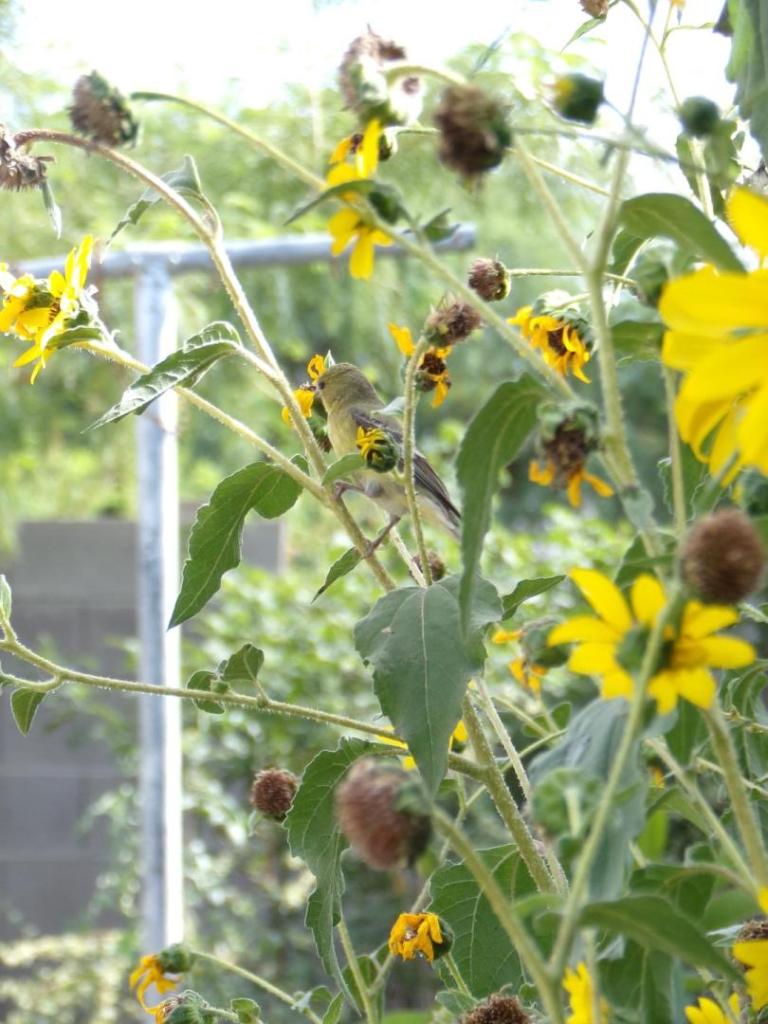
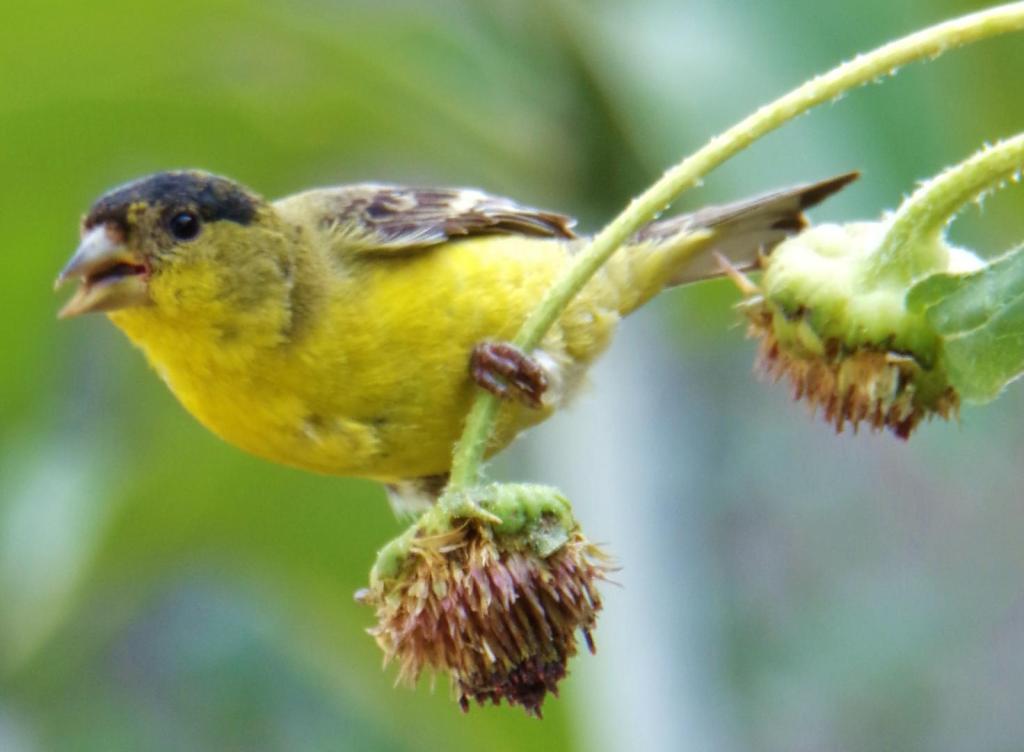
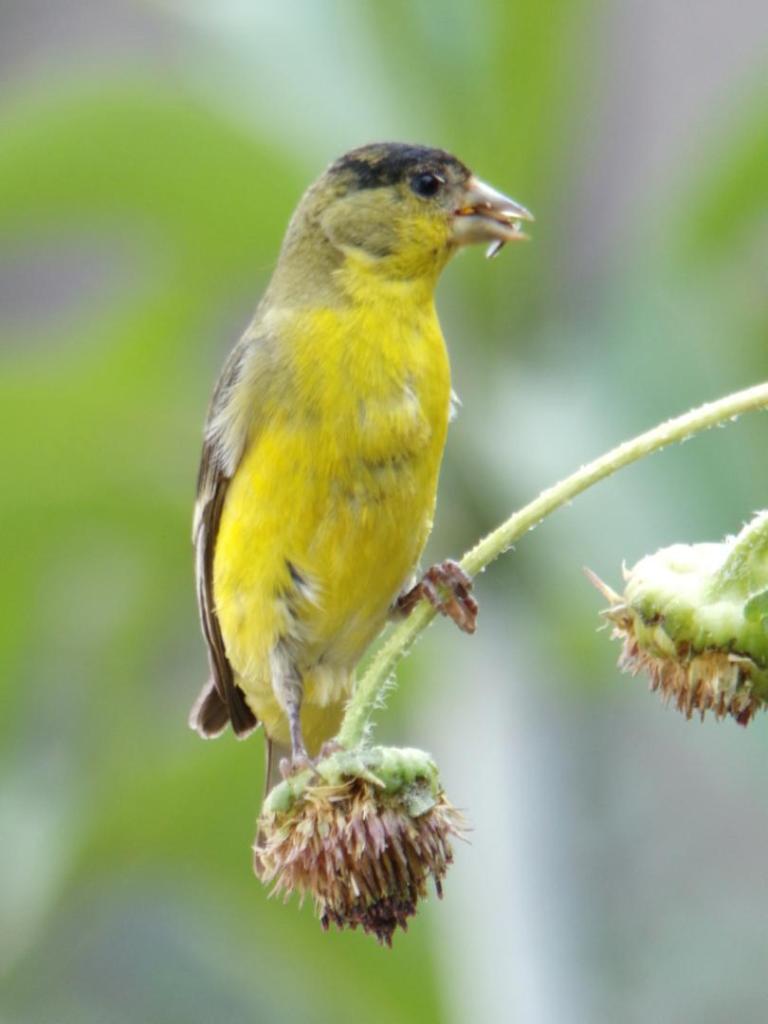
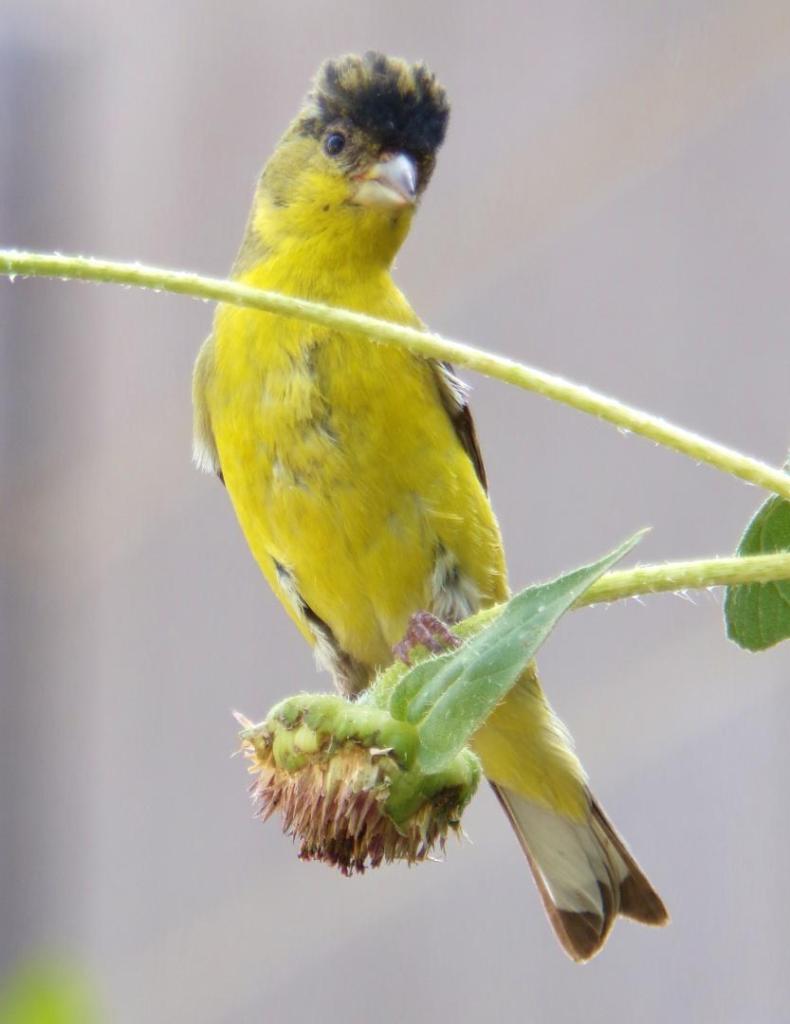
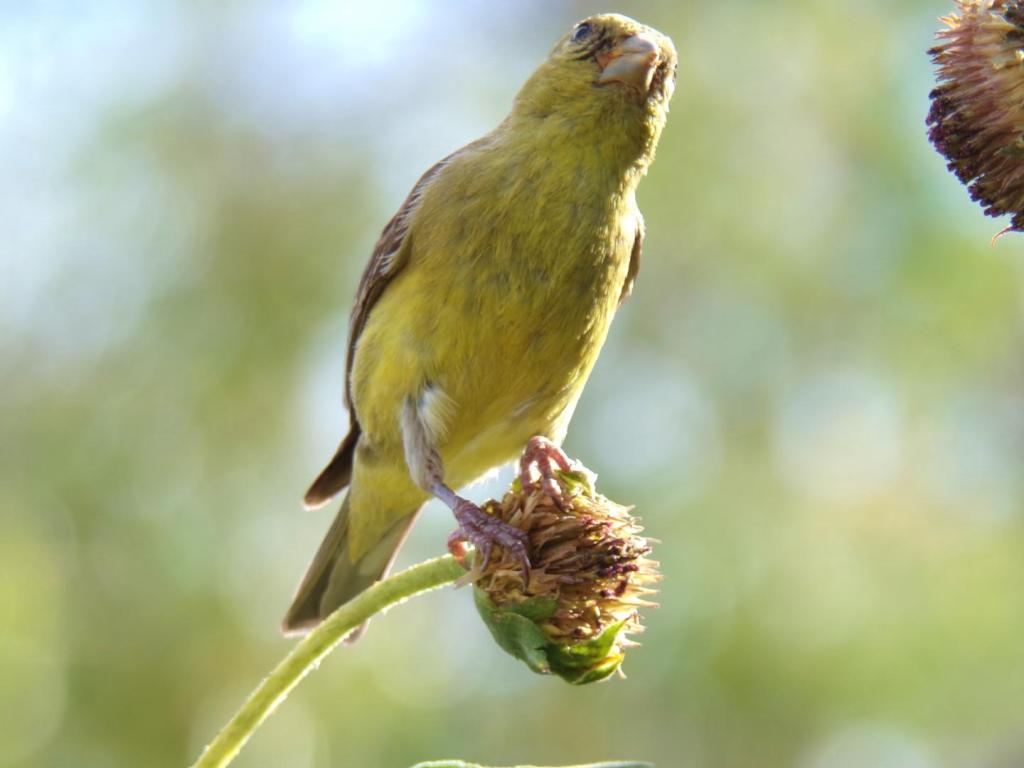
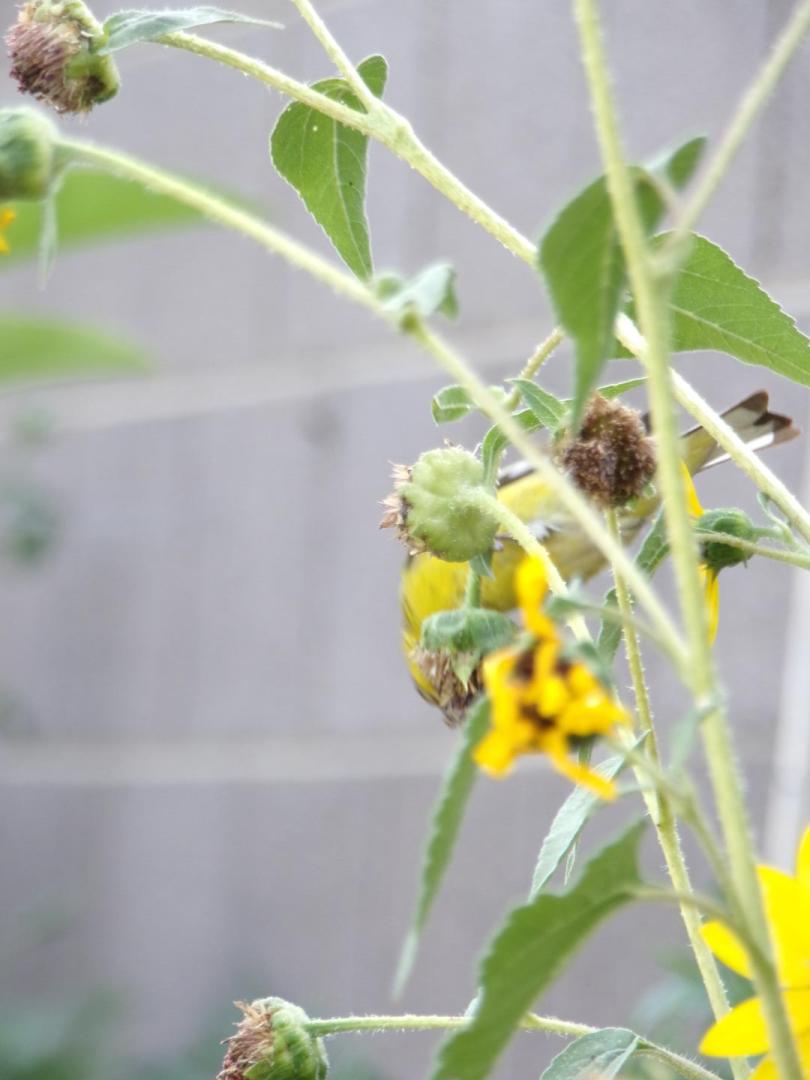
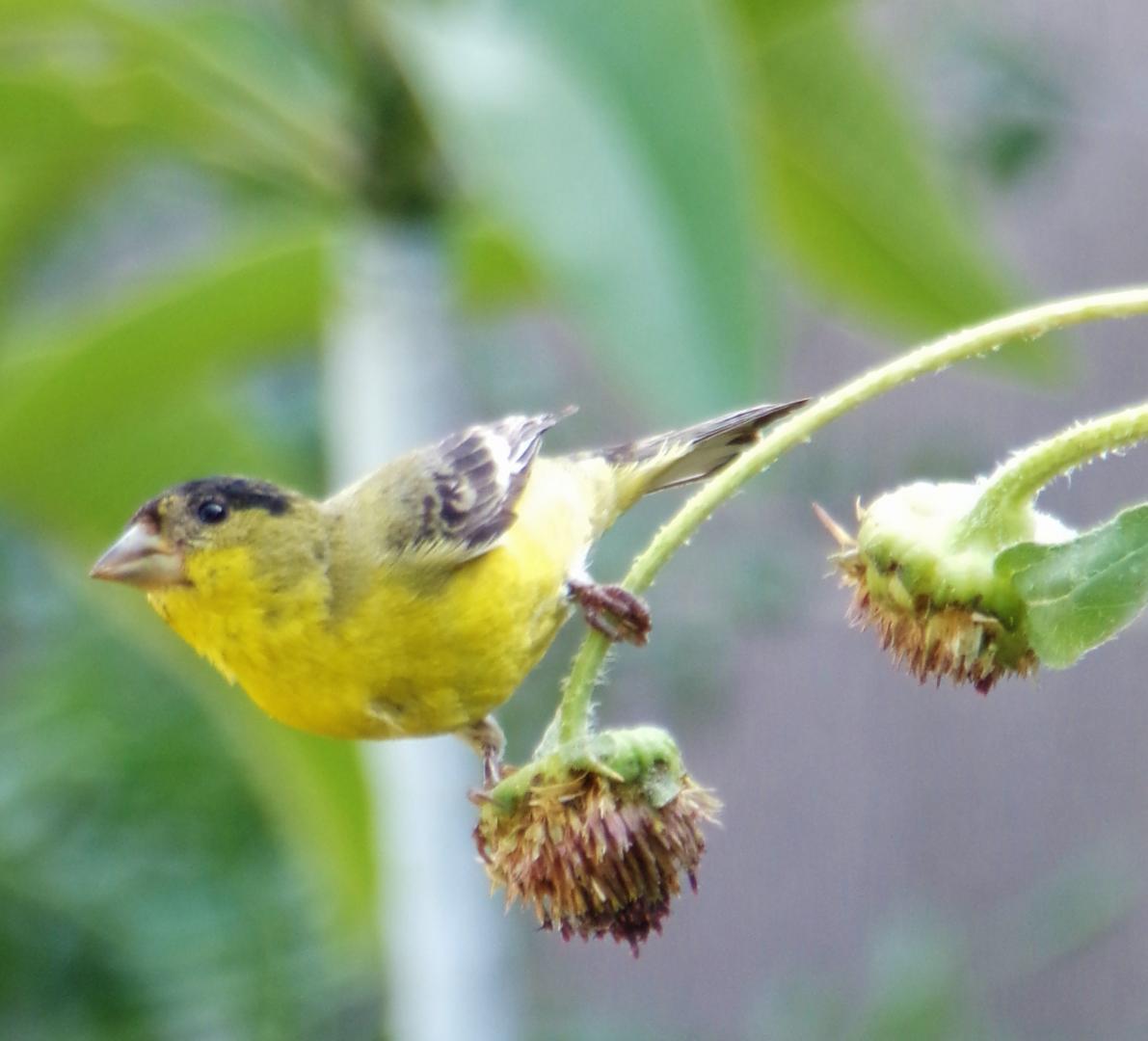
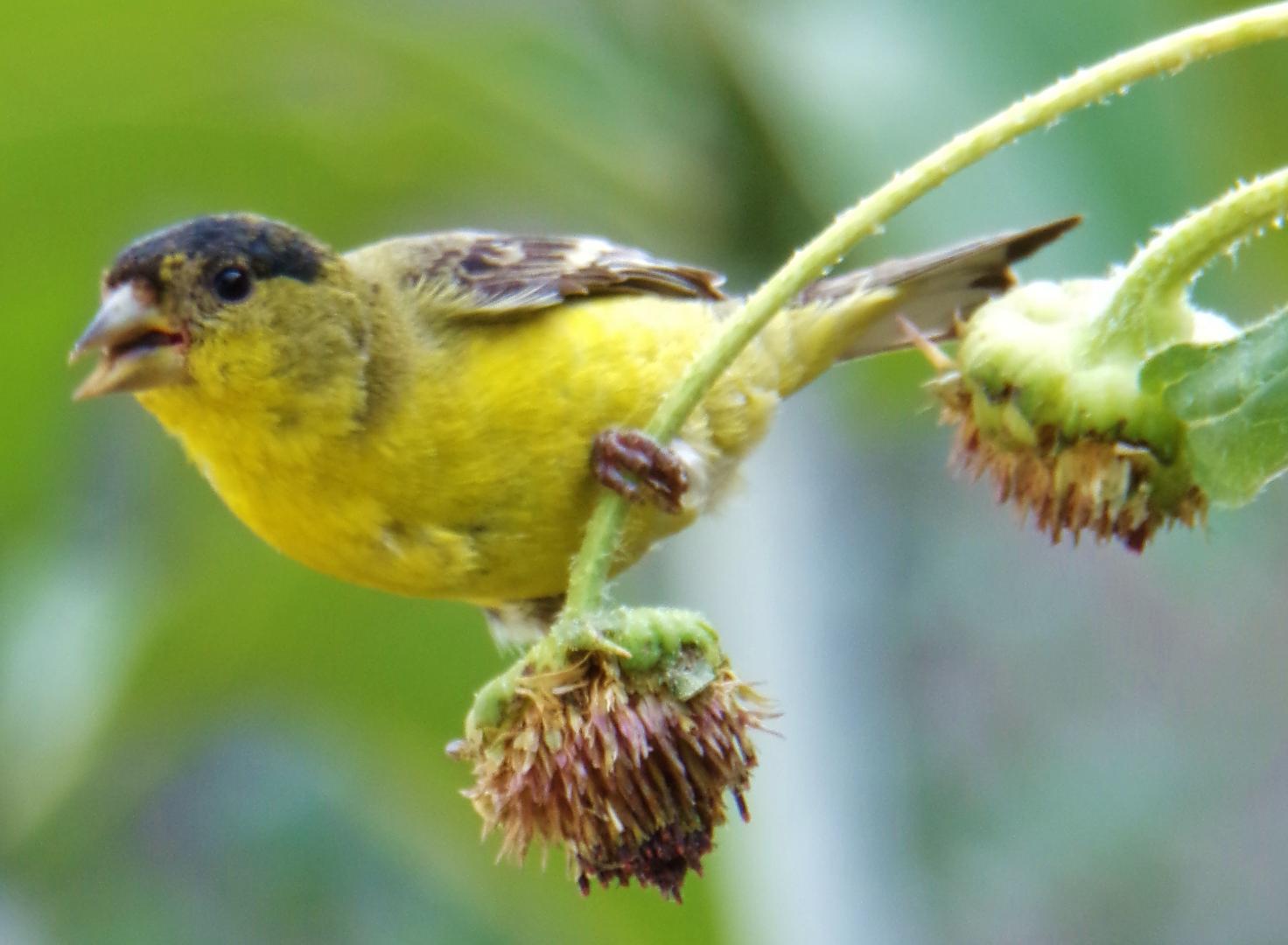
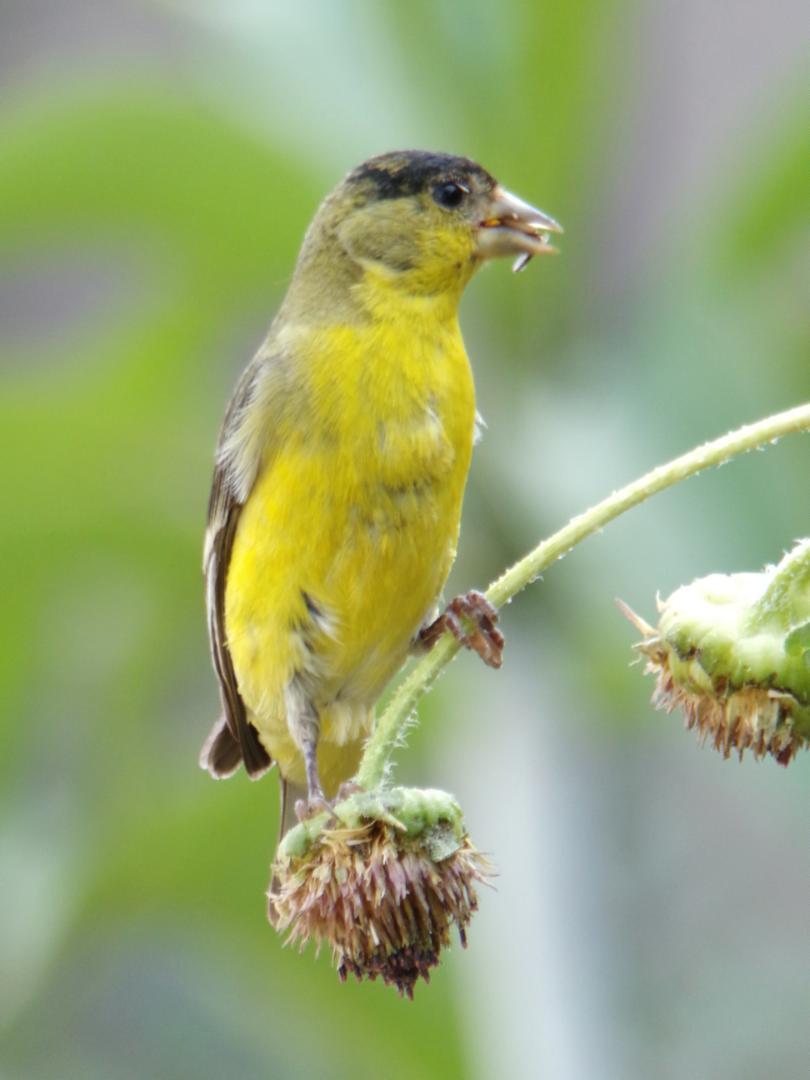
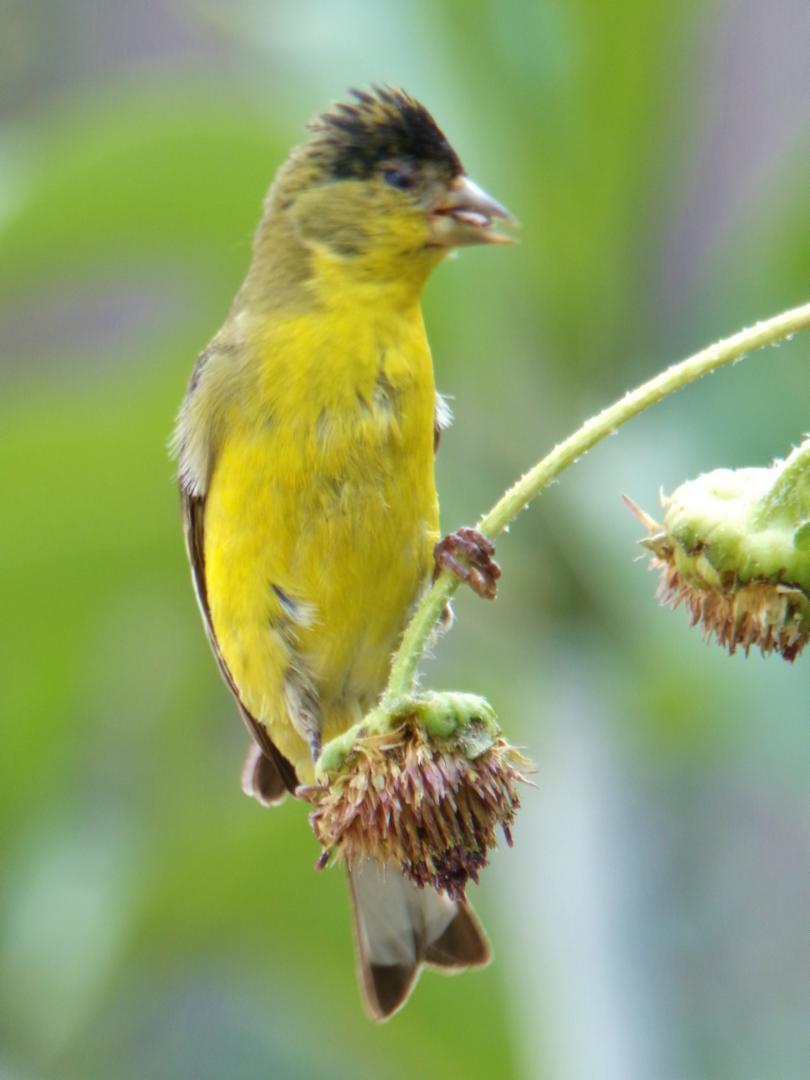
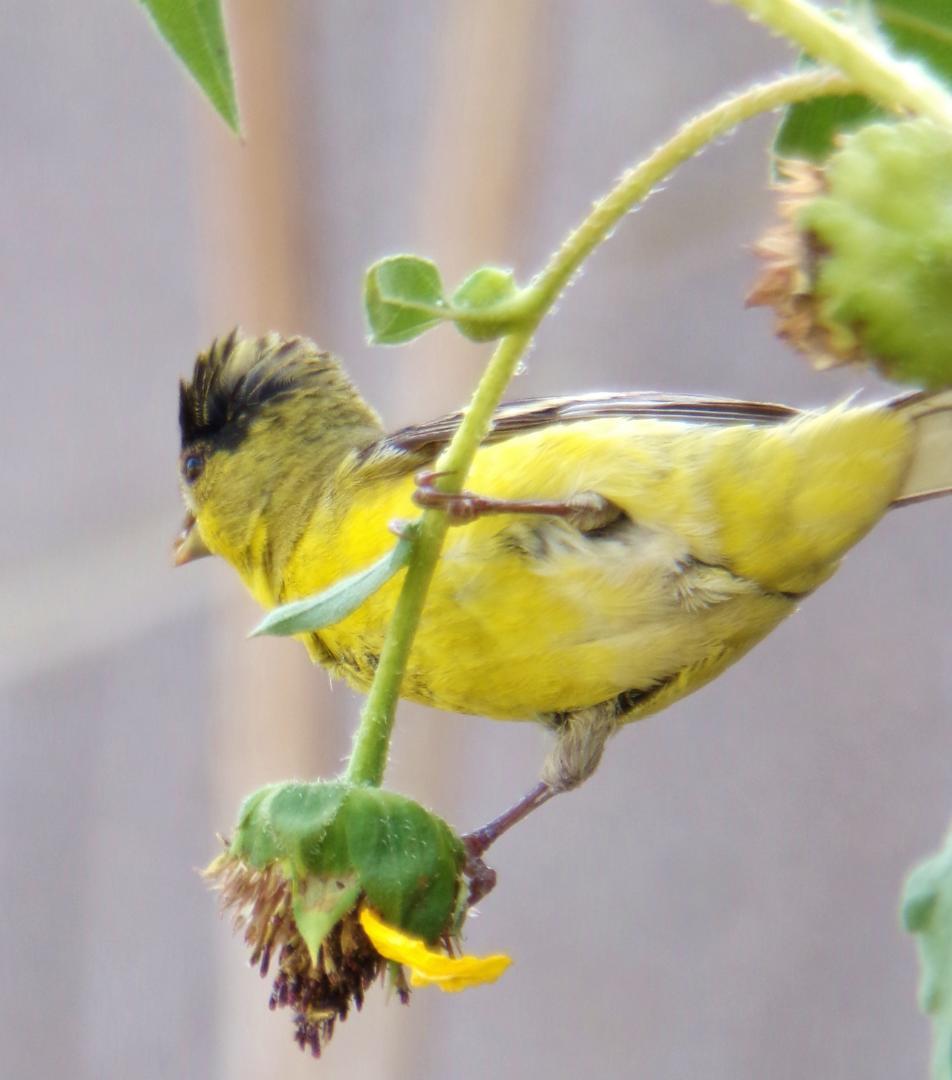
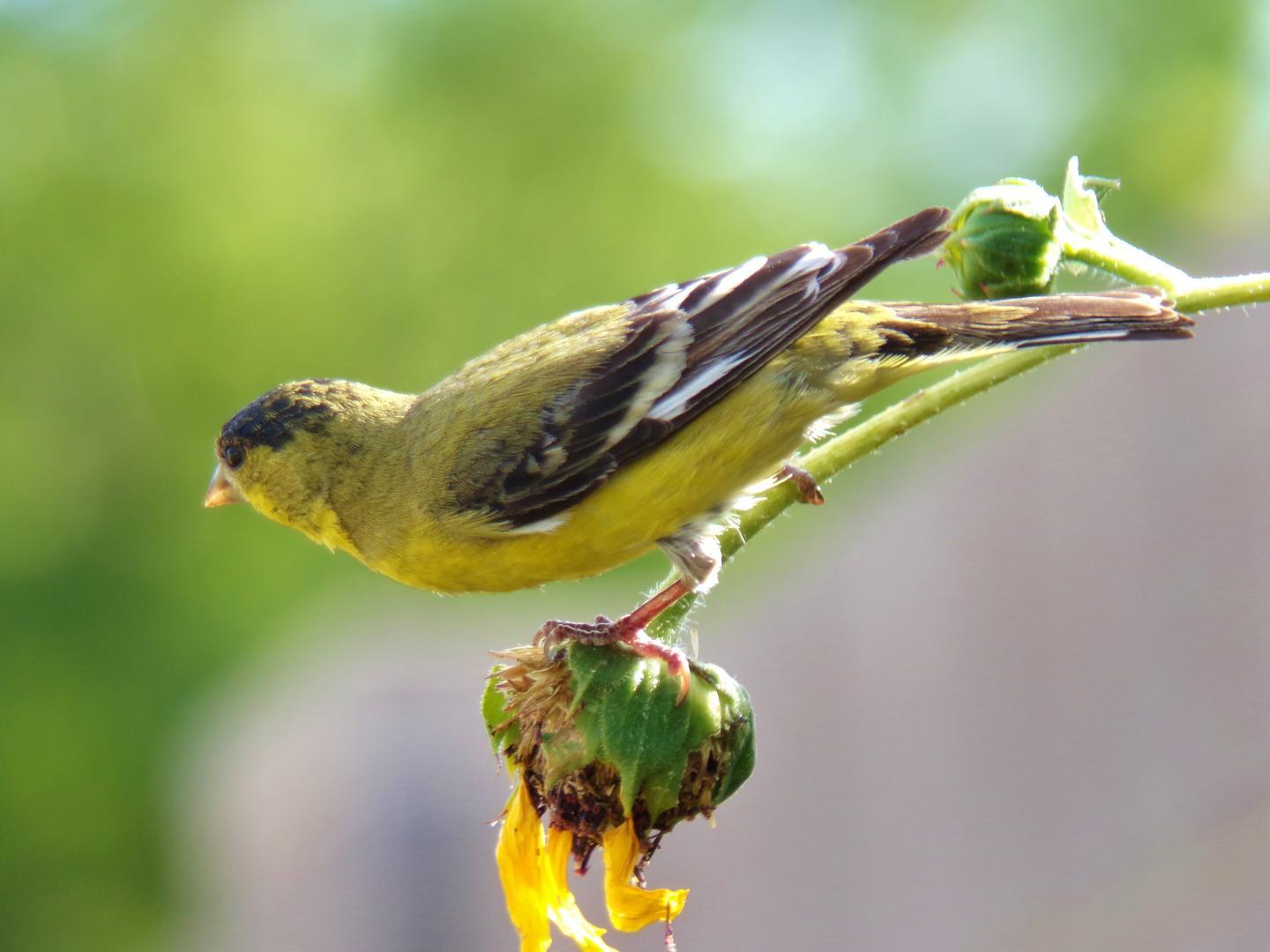
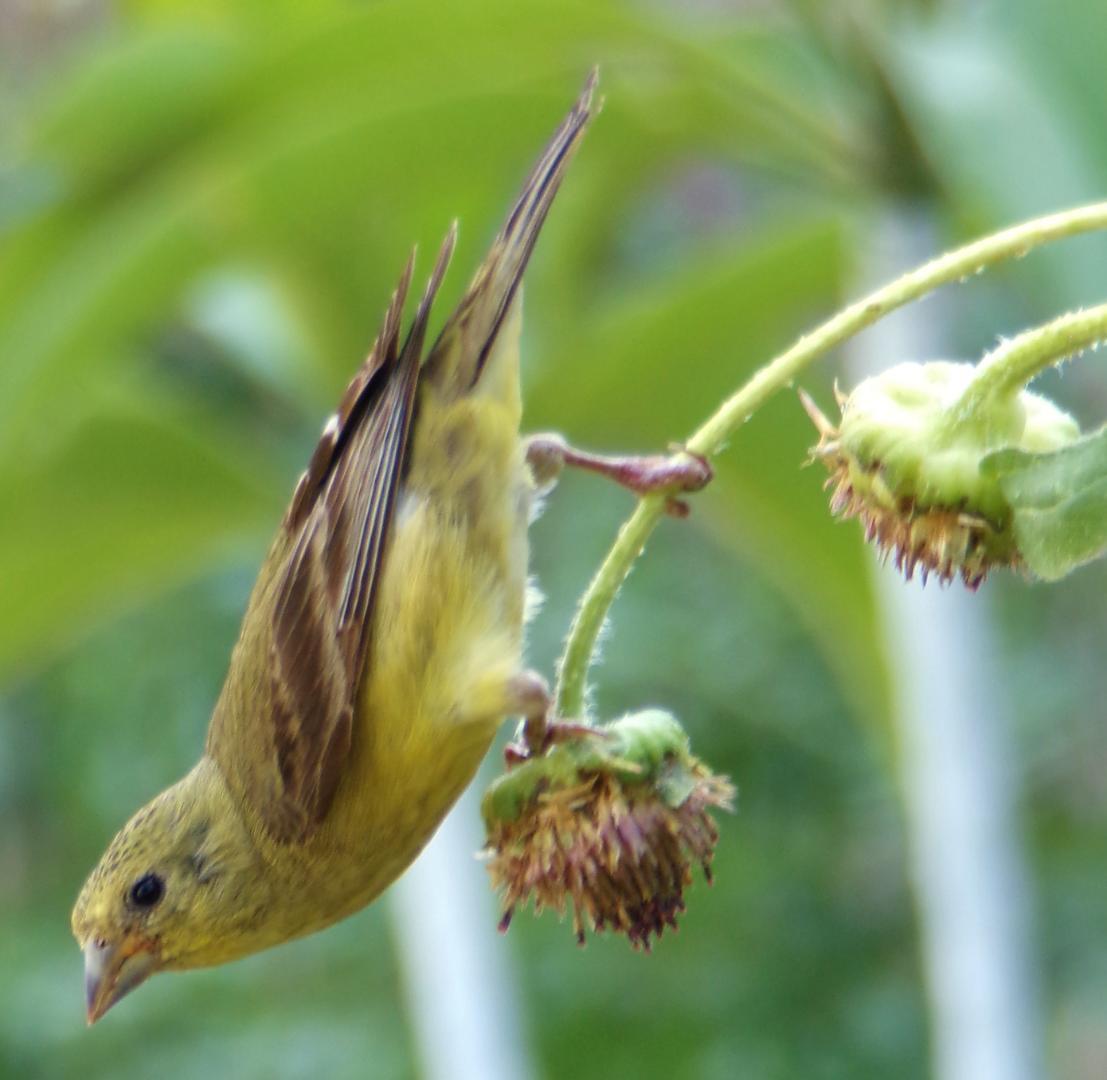
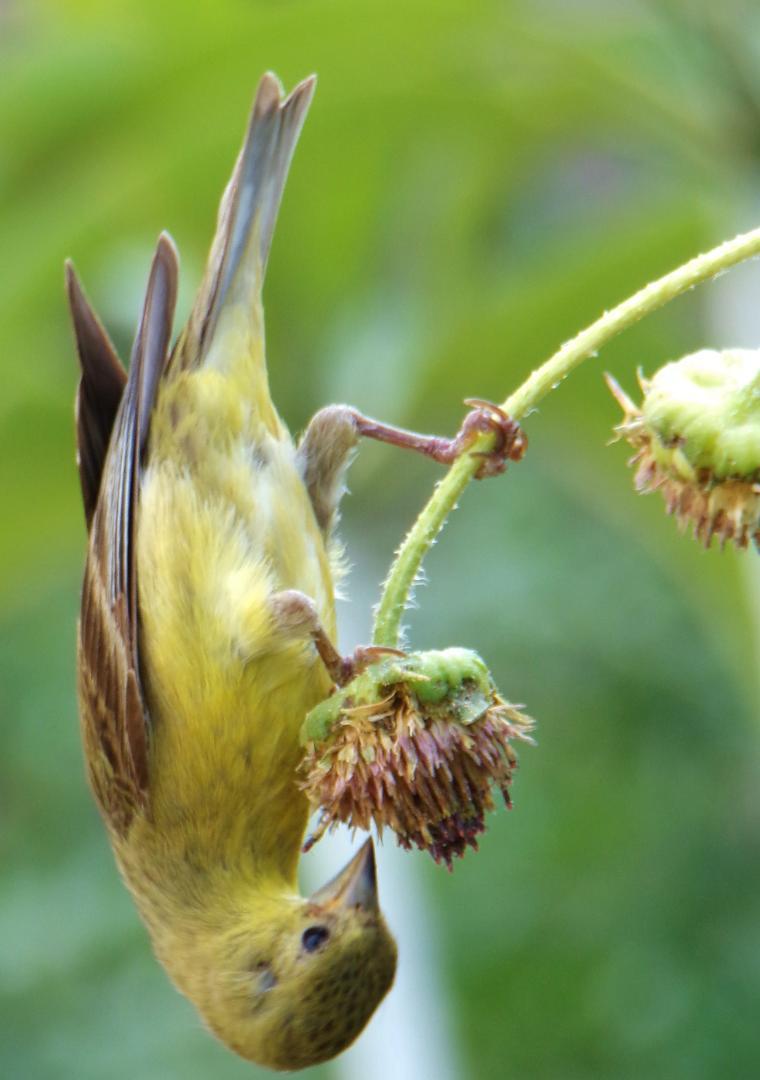
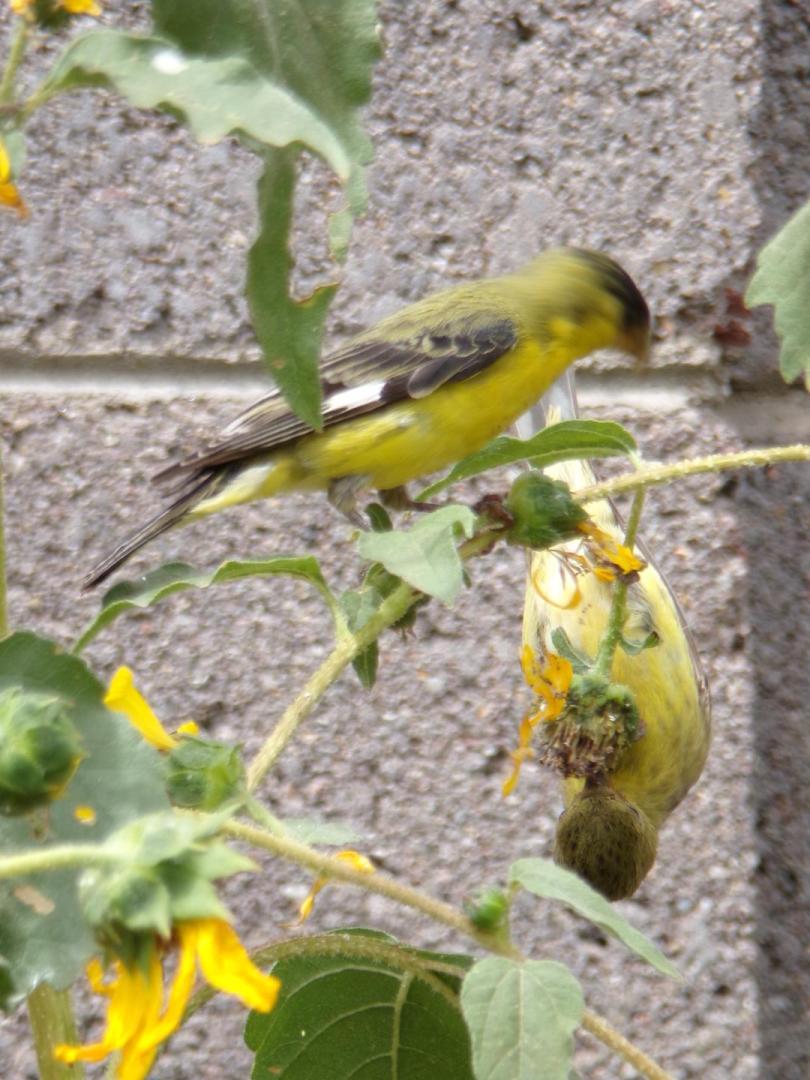
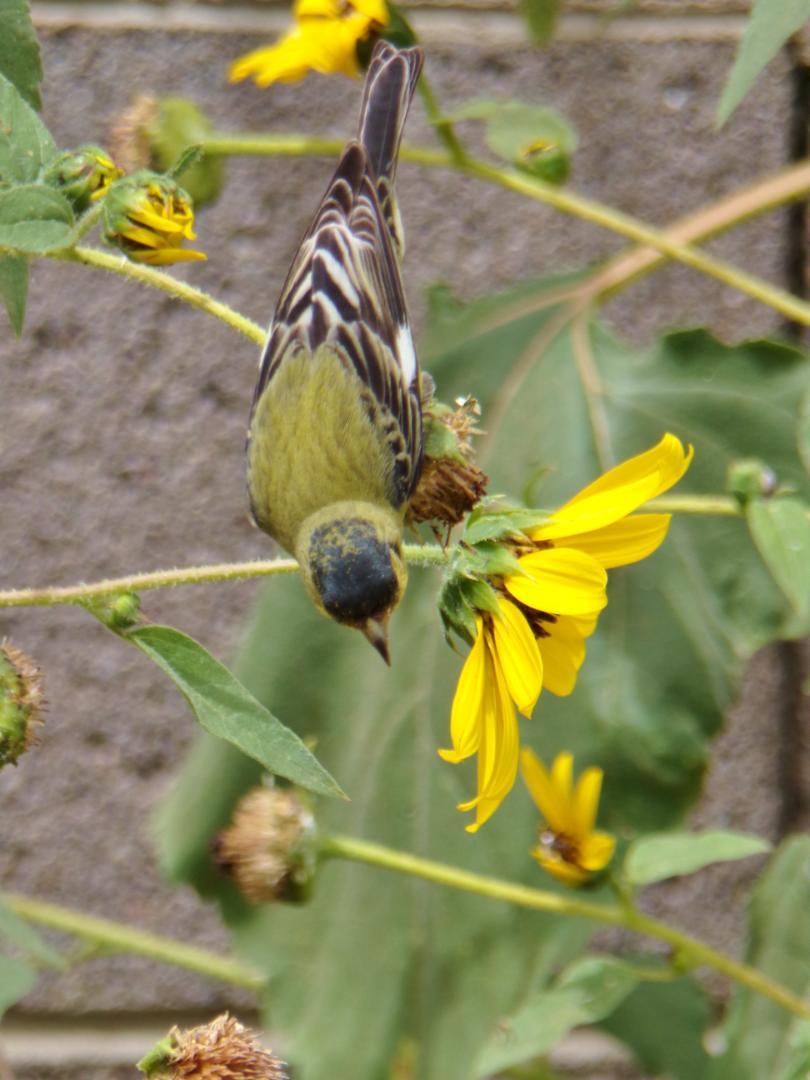
Without fail... Plant Sunflowers = Gold Finch " spies " will arrive shortly once they start flowering.. Spinus psaltria in this case.. Anna's Hummingbird, female..
1 point
1 pointWithout fail... Plant Sunflowers = Gold Finch " spies " will arrive shortly once they start flowering.. Spinus psaltria in this case.. Anna's Hummingbird, female..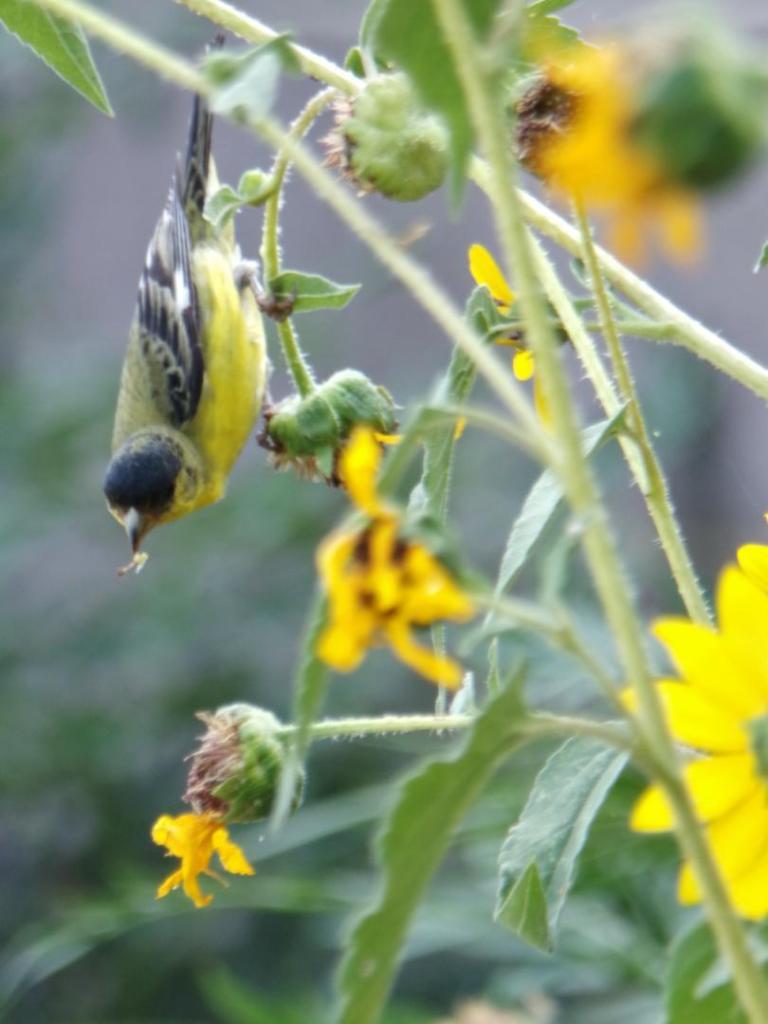









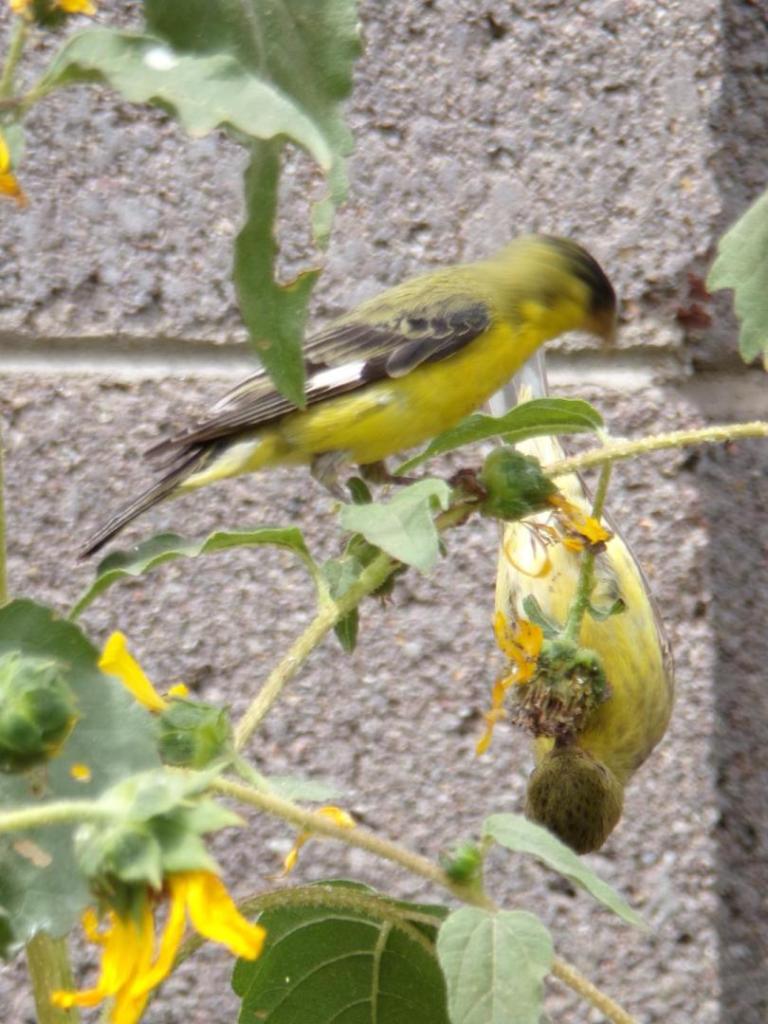
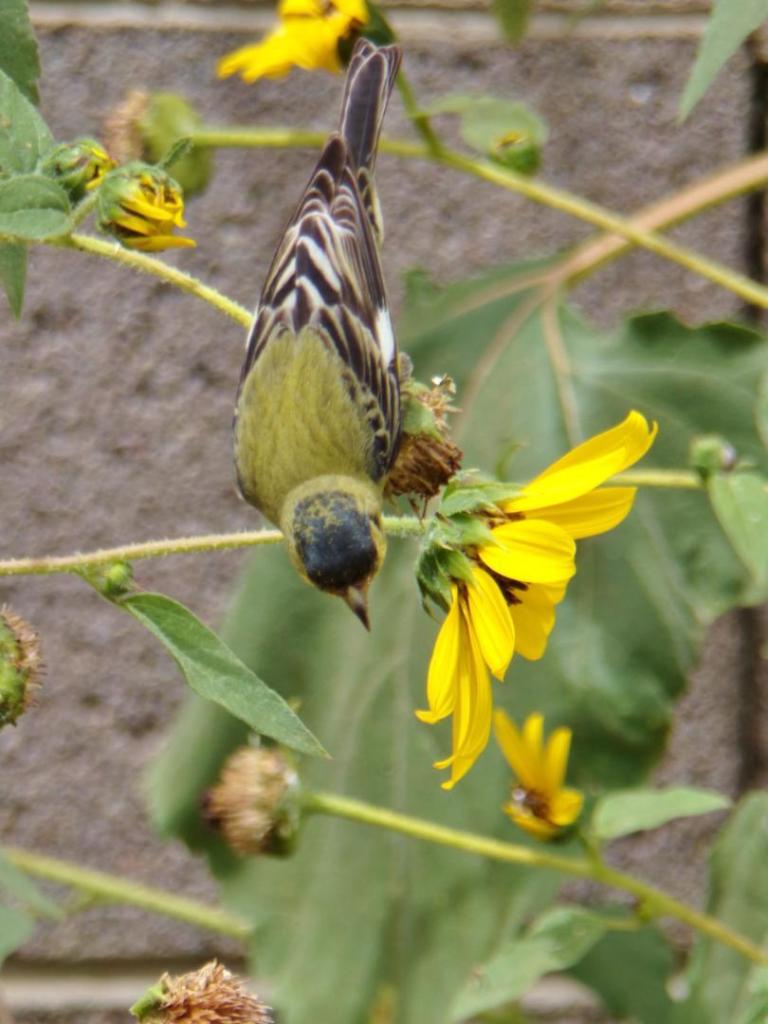 1 point
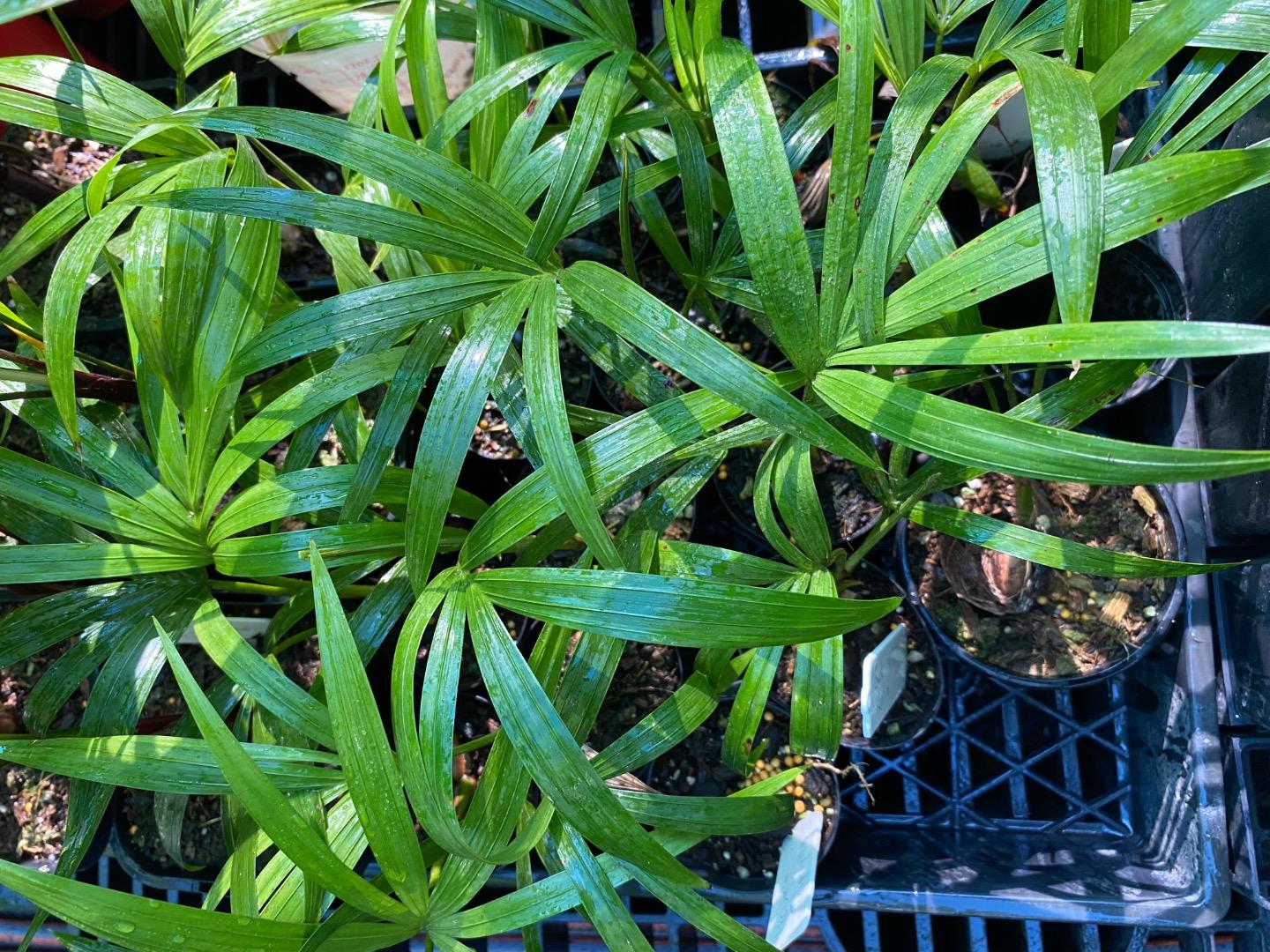
Too look at both varieties as seedlings you would be hard pressed to tell the difference. Both easy growing palms just add water. The hainensis are from rps and the nana are from my garden. Both beautiful palms when mature. Chuniophoenix hainensis Chuniophoenix nana
1 point
Too look at both varieties as seedlings you would be hard pressed to tell the difference. Both easy growing palms just add water. The hainensis are from rps and the nana are from my garden. Both beautiful palms when mature. Chuniophoenix hainensis Chuniophoenix nana
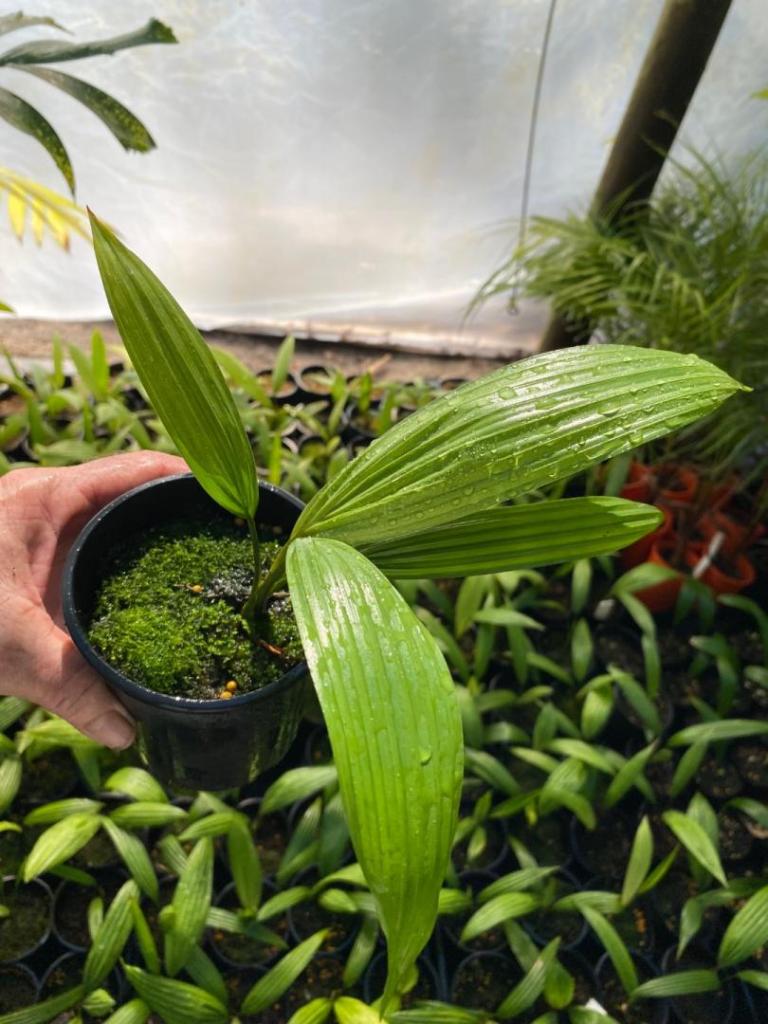
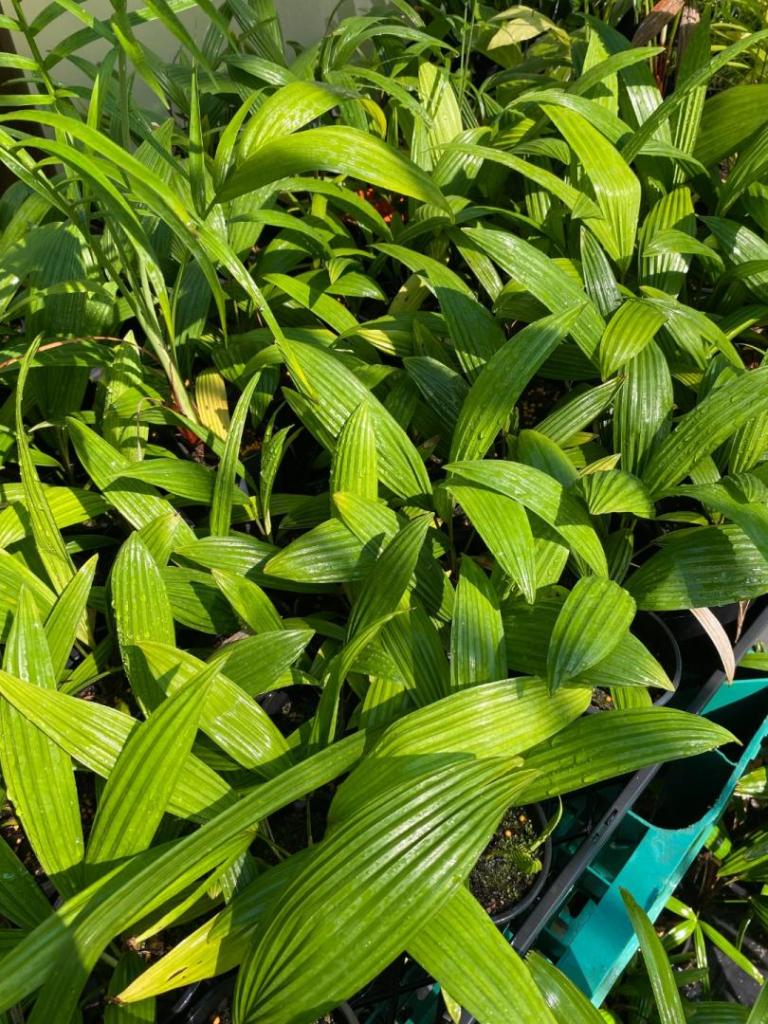
 1 point
 950 Australian dollars. That's a lot of money. I understand it's important not to introduce invasive species. Richard, the only thing you can do is sow as many species as possible so that you can have seeds in Australia in the future.1 point
Saw this specimen today on my way to pick up grandchildren from school:
950 Australian dollars. That's a lot of money. I understand it's important not to introduce invasive species. Richard, the only thing you can do is sow as many species as possible so that you can have seeds in Australia in the future.1 point
Saw this specimen today on my way to pick up grandchildren from school: 1 point
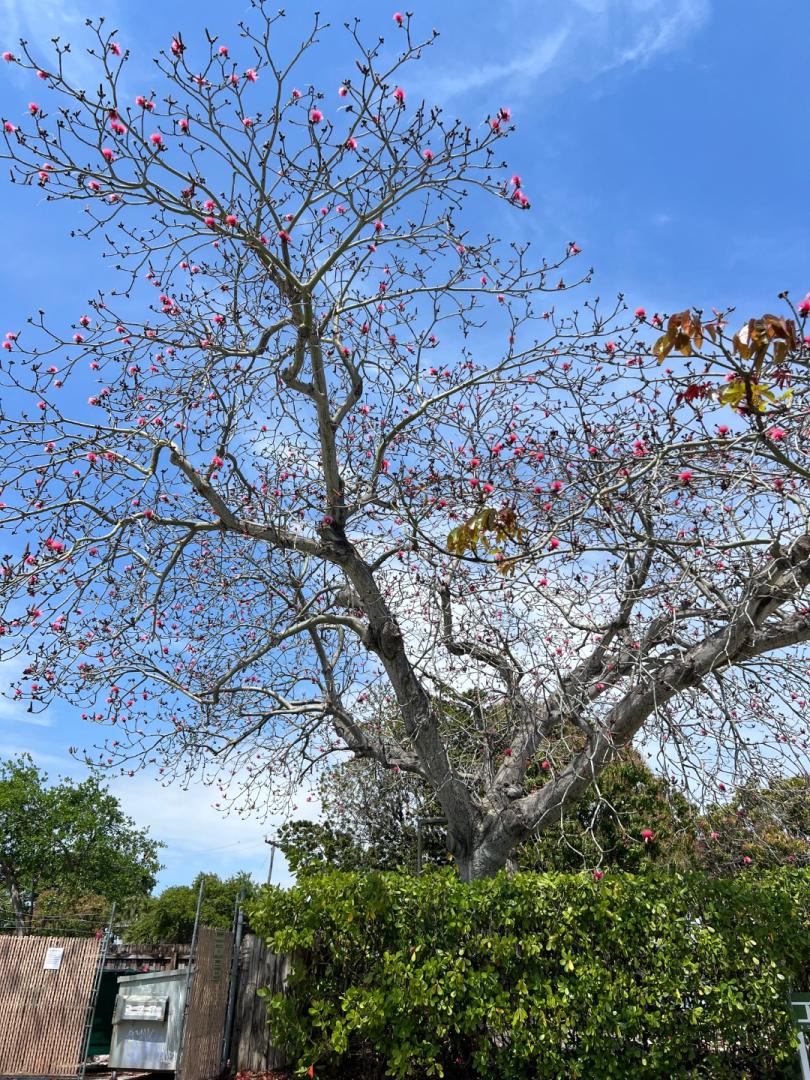
 1 pointThe nectarine tree has been in bloom for 8 days now. Let's hope it bears fruit this time...
 1 point
 1 pointSolicito de su apoyo, para saber que fertilizante puedo utilizar en la palmera ekmanni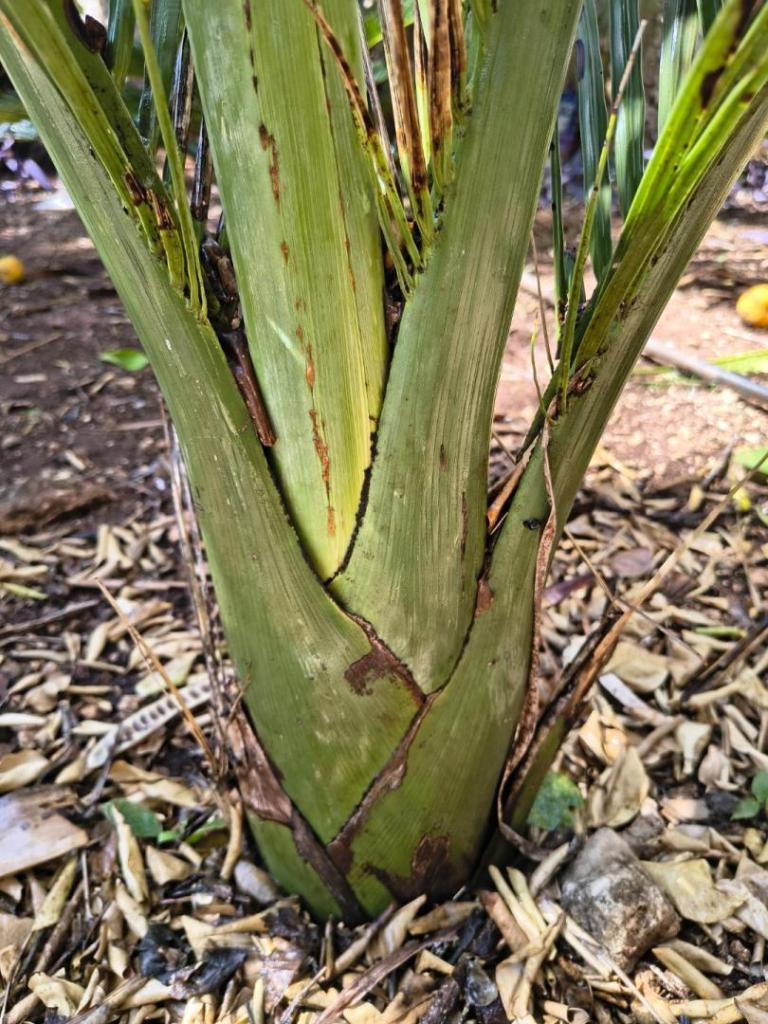
 1 point
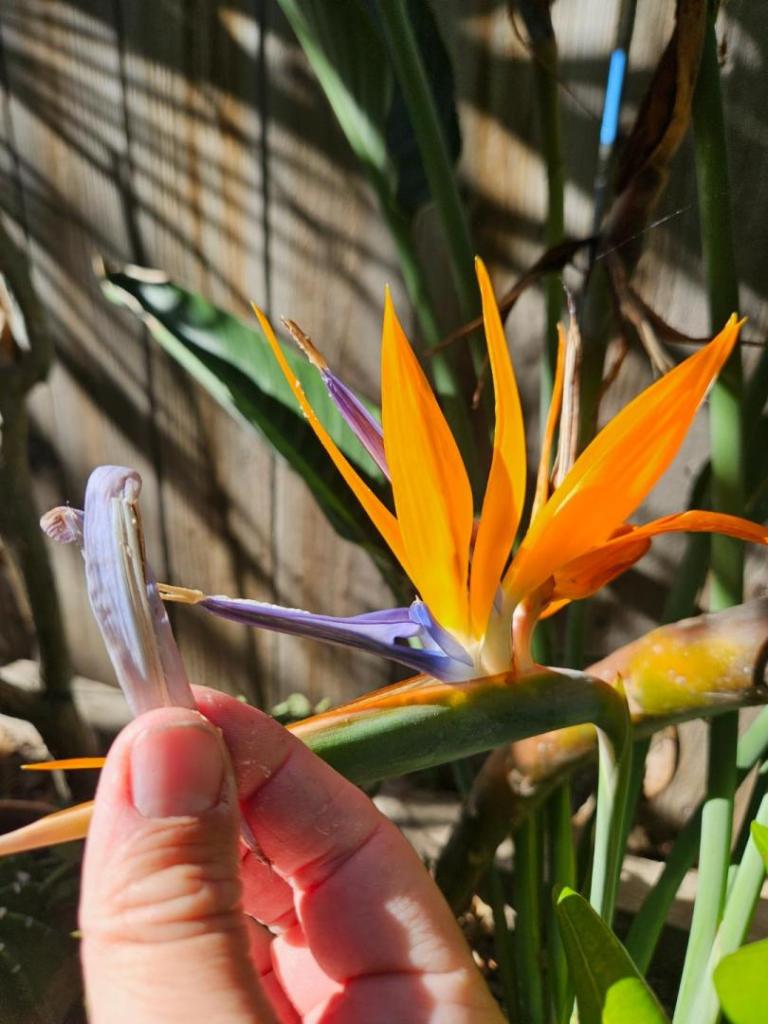
 1 pointCuriosity got the best of me. Let's see if either sets seeds. I'll try to go up on my roof a few times each week to continue crossing pollinating while nicolai is in bloom

 1 point
 1 pointHonestly, I’m not just looking for things to add to this thread. Yesterday the way the sun was hitting the leaves of my Archontophoenix myolensis was very striking to me. As so often the case, the pics don’t quite do it justice. I talked about this palm before. For some reason it has taken its time with getting vertical even though it’s been a consistent grower. This is one of the original palms planted in my garden. I remember I ordered (2) Dypsis lepticheilos, (2) Dypsis pembanas and (2) Archontophoenix myolensis from Jungle Music. All 15 gallons. I was new to this and killed every single one of them except for this one. Maybe planted about 2012-2013 as a 15 gallon. Pretty slow for an Archontophoenix. It does have a bit of a soft spot at the base of it that probably had something to do with it being slow. It’s now moving faster and looking just as good as can be imo. Coincidentally located next to the Beccariophoenix madagascariensis I first posted about.
 1 point
 1 pointSix years ago, Cindy (apaandssa) fell in love with a Puerto Rican farm planted with dozens of palms, some quite rare. Efforts to learn more led her to the Encyclopedia of Palms in the local library. Soon more books and internet searches directed her to the IPS website and Palmtalk. Fast forward a few years and palms have become a major interest, thanks largely to this forum. An unexpected benefit of her palm obsession was attending the Thailand Biennial. Encouragement by IPS/Palmtalk members convinced Cindy to take a more active role. Sitting in on a Board meeting in Thailand persuaded her to join the Palmtalk committee. She still grows orchids and many other tropicals purely as a hobby. When not playing with plants, she is a full-time veterinarians in Virginia. If all goes according to plan, she will retire and move to her farm in 2015.1 point



















































Account
Navigation
Configure browser push notifications
Chrome (Android)
- Tap the lock icon next to the address bar.
- Tap Permissions → Notifications.
- Adjust your preference.
Chrome (Desktop)
- Click the padlock icon in the address bar.
- Select Site settings.
- Find Notifications and adjust your preference.
Safari (iOS 16.4+)
- Ensure the site is installed via Add to Home Screen.
- Open Settings App → Notifications.
- Find your app name and adjust your preference.
Safari (macOS)
- Go to Safari → Preferences.
- Click the Websites tab.
- Select Notifications in the sidebar.
- Find this website and adjust your preference.
Edge (Android)
- Tap the lock icon next to the address bar.
- Tap Permissions.
- Find Notifications and adjust your preference.
Edge (Desktop)
- Click the padlock icon in the address bar.
- Click Permissions for this site.
- Find Notifications and adjust your preference.
Firefox (Android)
- Go to Settings → Site permissions.
- Tap Notifications.
- Find this site in the list and adjust your preference.
Firefox (Desktop)
- Open Firefox Settings.
- Search for Notifications.
- Find this site in the list and adjust your preference.