Jump to content
  • WELCOME GUEST

    It looks as if you are viewing PalmTalk as an unregistered Guest.

    Please consider registering so as to take better advantage of our vast knowledge base and friendly community.  By registering you will gain access to many features - among them are our powerful Search feature, the ability to Private Message other Users, and be able to post and/or answer questions from all over the world. It is completely free, no “catches,” and you will have complete control over how you wish to use this site.

    PalmTalk is sponsored by the International Palm Society. - an organization dedicated to learning everything about and enjoying palm trees (and their companion plants) while conserving endangered palm species and habitat worldwide. Please take the time to know us all better and register.

    guest Renda04.jpg

Recommended Posts

Posted

How many varities of Sabal Minor are there really? I have four specimens that cannot be identified by experts at three different major universities; by individuals possessing doctorate degrees and that specialize in our native species. Yet, no one can accurately identify them. They don't even really attempt to and only can safely give reasons why they aren't consistent with what is in the norm for minor or palmetto. How diverse can one species be before it is justly studied and divided into proper classifications? The might Brazoria palm is considered in some circles to be a Sabal minor or a Sabal Minor Louisiana. Then there is the other mysterious trunking Sabal in texas very far from known palmetto or mexicana populations. You also have several trunking types minor in Louisiana. Are they hybrids with Sabal Palmetto? It has been said that they trunk because of being in a constantly flooded habitat. I can believe that but also can dispute the fact that they live in a constantly flooded habitat in Georgia, Alabama, Mississippi, Florida, and though out much of the species range. They don't trunk in Georgia anywhere; if they do I have never seen one and I frequent the marshes and woodlands. I also have not seen any in Florida and I am in Florida very often. So what are they? Are they hybrids and if so do they reproduce consistently? If they do should they be awarded separate species status?

Posted

Let me work on it and I will have a few for you.

Posted

Thanks Toby, I certainly will. They can be tough to differentiate. I myself have a mystery sabal in that I have been growing for ten years and no one really knows what it is for sure. Thank you again and I hope that your week is going well.

  • 2 weeks later...
Posted (edited)

I forgot to mention this but I have a great deal of respect for Toby and have taken his guidance and advice for many years now. To me if Toby says anything it is the law, no questions asked. Like he said Sabal is diverse, but in some regard that is what makes growing a sabal so much fun. They are like the Cadillac of the palm world so to speak. Still they baffle even the most seasoned experts. I have one for example that no one can even classify and it is trunking and bearing copious amounts of seed that are fertile. Then we have Riverside, Brazoria, Louisiana, Cape Hatteras, etc. No one has really classified them either. In the case of Brazoria at least some DNA research has been conducted and it has given us many answers but still we are hungry with more questions. Sabal species are both a paradox and an enigma all at once.

Edited by palm tree man
Posted

Go look at http://www.plantdelights.com/Buy-Plants-On-Line/Perennials-for-sale-that-start-with-the-letter-S/, they describe 4 different forms of sabal minor that are pure trunkless sabals, plus another several that are the hybrid/trunking ones.

Axel at the Mauna Kea Cloudforest Bioreserve

On Mauna Kea above Hilo. Koeppen Zone Cfb (Montane Tropical Cloud Forest), USDA Hardiness Zone 11b/12a, AHS Heat zone 1 (max 78F), annual rainfall: 130-180", Soil pH 5.

Click here for our current conditions: KHIHILO25

Posted

A group of ecotypes of Sabal minor were planted at the Bamboo Farm and Coastal Gardens in Savannah, GA in 2004. S. minor from Cape Hatteras, 'Louisiana', Oklahoma, Central Georgia, Blountstown, FL and Arkansas. They are all growing in the same area and receive exactly the same light, water and fertilizer. There are clear horticultural differences between the various ones. Most of them were planted on the same day from 3gal. containers, so they have had equal treatment in every way. The largest ones are from Cape Hatteras and Louisiana, with the Louisiana 'type' decidedly larger than all of the others. They are trunking nicely. The minors from Middle Georgia and other interior areas of the Southeast are similar in size and appearance, but the ones from Blountstown, FL are true dwarfs. The FL minors from Blountstown are mature and bearing seed at about knee high. The only other noticeable difference between the various types is how grey-green the leaves are, but I don't see much variation there. S. 'Tamaulipas' seems clearly different to me: the trunks crawl on the ground like Saw Palmetto and the leaves are more costapalmate. 'Tamaulipas' is truly a beautiful palm.

'Tamaulipas' in Augusta, GA below:

DSC_0227.jpg

The Savannah planting in 2004:

DSCN0625.jpg

The Savannah planting in 2012:

DSC_0015_zpsc72c9acb.jpg

Sabal 'Louisiana' in Savannah:

DSC_0016_zps1f1a9c23.jpg

  • Like 1
  • Upvote 1

Joseph C. Le Vert

Augusta, GA

USA

Zone 8

Posted

Those are great pics, I have not been there in several years. The Sabal Minors have really grown! Well it has been more than several years thinking back. lol They were all at least half that size then. Sabal Minor really needs to be studied more and divided into different species. They are similar but so are many other Sabal species from the same areas. Adaptation can account for some differences but adaptation often leads to speciation at some point. Beautiful pics and i can see the Sabal Palmetto "Lisa" poking through as well. Awesome!

Posted

Almost forgot to ask but does Tamaulipas grow a trunk?

Posted

I have at least 7 different Sabal species here. Haven't been able to get a solid ID on any of them.

In my post I sometimes express "my" opinion. Warning, it may differ from "your" opinion. If so, please do not feel insulted, just state your own if you wish. Any data in this post is provided 'as is' and in no event shall I be liable for any damages, including, without limitation, damages resulting from accuracy or lack thereof, insult, or any other damages

Posted

Keith we should really compare notes some time.. I have several planted in a group that I grew from seed that was suppose to be one thing and will probably turn out to be another thing. What do your Louisiana look like? How big are they and how wide are the trunks? Sorry for all the questions. Sabal are mysterious.

Posted

Palm Tree Man, believe it or not, that is NOT Sabal 'Lisa' poking through the canopy, but a Lisa-like form of Sabal causiarum. I collected the seeds myself in 1998 from the old specimen at UF in Gainesville, and a few came up like that. I don't know why. I guess we could call them Sabal causiarum 'Eva Mendes' or something like that.

I'm no expert, but if someone will post photos of leaves, trunk (if any), inflorescences, and fruits, I will take a stab.

As Joe mentioned, we planted many different cultivars/ecotypes in Savannah in 2002, and most of those purported to be different actually turned out to be so. There does seem to be a genetic difference, but this was something Bailey and Zona pointed out in their monographs on Sabal, so it appears to represent a continuum of a range of morphology for that species. It is possible that Sabal minor is the oldest existing species of Sabal, and if so, it would stand to reason that it may be the most genetically diverse.

Posted

Thanks, wow I am really blown away now! The Bamboo farm is a great trip and fun for the entire family. I spent many hours there years ago; we are all very thankful for all the hard work that all the contributors and members have put into it. Thank you all.

Posted

Just sent you a message Tom. Thank you.

Posted

Dude, I am trying to get my wife to make some. If I am successful, I will hook you up!

Posted

Does anyone have Sabal monographs that they could post/email me?

I am not sure what Daniel's wife was gonna cook up for you but I have a sabal key I can forward to you if you want it.

:)

Axel at the Mauna Kea Cloudforest Bioreserve

On Mauna Kea above Hilo. Koeppen Zone Cfb (Montane Tropical Cloud Forest), USDA Hardiness Zone 11b/12a, AHS Heat zone 1 (max 78F), annual rainfall: 130-180", Soil pH 5.

Click here for our current conditions: KHIHILO25

Posted

Palm Tree Man, believe it or not, that is NOT Sabal 'Lisa' poking through the canopy, but a Lisa-like form of Sabal causiarum. I collected the seeds myself in 1998 from the old specimen at UF in Gainesville, and a few came up like that. I don't know why. I guess we could call them Sabal causiarum 'Eva Mendes' or something like that.

:bemused::drool: ...........a Lisa-like form of Sabal causiarum! What the?............why have we not heard about this before!

I demand more pictures! .....just kidding.....could you pretty please show us more pictures of this "Eve Mendes". Fascinating.

post-97-0-51786600-1394847192_thumb.jpg

David Simms zone 9a on Highway 30a

200 steps from the Gulf in NW Florida

30 ft. elevation and sandy soil

Posted

I read it on my phone and the screen is cracked! lol I am getting old; I thought it said monogram! I thought you wanted a palmetto for a shirt of something. I am rolling on the floor; I know that no one else thinks this is funny but me. lol :floor:

Posted

Not a great photo, but you can see the Sabal causiarum to the right. The palm to the left is an unknown Sabal that I purchased as Sabal bermudana but probably is not.

I've always been reluctant to post photos of these because people ALWAYS and persistently assume they are Sabal palmetto 'Lisa.' They are not. I collected the seeds myself from the Sabal causiarum at UF Gainesville in 1998. We knew that three of the palms we planted in 2002 were different, but we assumed that they would eventually grow out of it. I had never heard of Lisa at that time. In any case, there they are.

061-1.jpg

Posted

Not a great photo, but you can see the Sabal causiarum to the right. The palm to the left is an unknown Sabal that I purchased as Sabal bermudana but probably is not.

I've always been reluctant to post photos of these because people ALWAYS and persistently assume they are Sabal palmetto 'Lisa.' They are not. I collected the seeds myself from the Sabal causiarum at UF Gainesville in 1998. We knew that three of the palms we planted in 2002 were different, but we assumed that they would eventually grow out of it. I had never heard of Lisa at that time. In any case, there they are.

061-1.jpg

It could be that we're seeing the expression of the lisa trait in S. causiarum. If so, you could probably make a few dollars if you distributed seeds, because this would be very desirable for some people. If you get a chance, could you take a more close up pictures, so we can see if it has the papery ligules? Some scale of the trunk would be nice as well, to see how large it is.

Keith 

Palmetto, Florida (10a) and Tampa, Florida (9b/10a)

Posted

I will do so the next time I'm up there, but the Southeastern Palm Society had its winter meeting there two weeks ago and as we were touring the area I pointed out the ligules and showed everyone how they are a (the) distinguishing trait for S. causiarum. We have another "typical" causiarum that is just massive, from the same seed source.

Posted

Wow, that would be a much sought after palm if they came true to seed. I also collected some seeds from UF campus from what I think is a S. palmetto x S. causiarum. Only got a few seeds and of those only one currently growing. Was that the palm you collected seed from? If I would have known about the fused leaf possibility I would have brought a broom and collected masses of seed because it was everywhere.

David Simms zone 9a on Highway 30a

200 steps from the Gulf in NW Florida

30 ft. elevation and sandy soil

Posted

The seed I collected from is the old pure causiarum on campus. I went to that one because it had been positively ID'd by Scott Zona. He made a presentation to the Southeastern Palm Society in 1997 and a year later I made a trip to Gainesville to collect seeds. Best trip ever!

Posted

I read it on my phone and the screen is cracked! lol I am getting old; I thought it said monogram! I thought you wanted a palmetto for a shirt of something. I am rolling on the floor; I know that no one else thinks this is funny but me. lol :floor:

Whoa, whoa, whoa - who said that I didn't want a Saball shirt?

Posted

If I talk her into making me one, I will make get her to make two man! I wear and XL what size would you need buddy?

Posted

It would definitely be a conversation piece man. Just saying.

  • 1 month later...
Posted (edited)

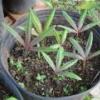
Here is a nice picture of one of my Sabal.

post-9629-0-82836100-1398915077_thumb.jp

Edited by palm tree man
Posted

Thanks Tank that was a facinating read!

  • 2 years later...
Posted

Just a heads up for anybody who's interested.  The Southeastern Palm Society (affiliated with the IPS) will meet at the Bamboo Farm and Coastal Gardens in Savannah, GA on Saturday, February 25, 2017 from 10:00 - 3:00.  The palm collection should be in great shape after two pretty mild winters.  There will be a talk on palms in Chile and a plant auction.  Everyone is invited whether you're a member or not.


Here is Acrocomia totai at the Bamboo Farm:

DSC_0054_zpscba2853a.jpg

And the S. causiarum 'Lisa" palm.  It was grown from S. causiarum seed, but this is one of the weird ones that came up.

DSC_0030_zps8bcd62cb.jpg


  • Upvote 5

Joseph C. Le Vert

Augusta, GA

USA

Zone 8

Posted

IMG_0722.jpg

  • Upvote 3

Joseph C. Le Vert

Augusta, GA

USA

Zone 8

Posted

More pictures from the Bamboo Farm/Coastal Gardens in Savannah, GA

Sabal collection.


Unknown monster Sabal:

IMG_0724.jpg


  • Upvote 4

Joseph C. Le Vert

Augusta, GA

USA

Zone 8

Create an account or sign in to comment

You need to be a member in order to leave a comment

Create an account

Sign up for a new account in our community. It's easy!

Register a new account

Sign in

Already have an account? Sign in here.

Sign In Now


  • Recently Browsing

    • No registered users viewing this page.
×
×
  • Create New...