

Leaderboard
-

happypalms
IPS MEMBER23Points13,433Posts -


Cindy Adair
IPS MEMBER14Points6,551Posts -


Josue Diaz
IPS MEMBER12Points1,953Posts -


Harry’s Palms
IPS MEMBER9Points4,506Posts
Popular Content
Showing content with the highest reputation on 02/17/2026 in all areas
-
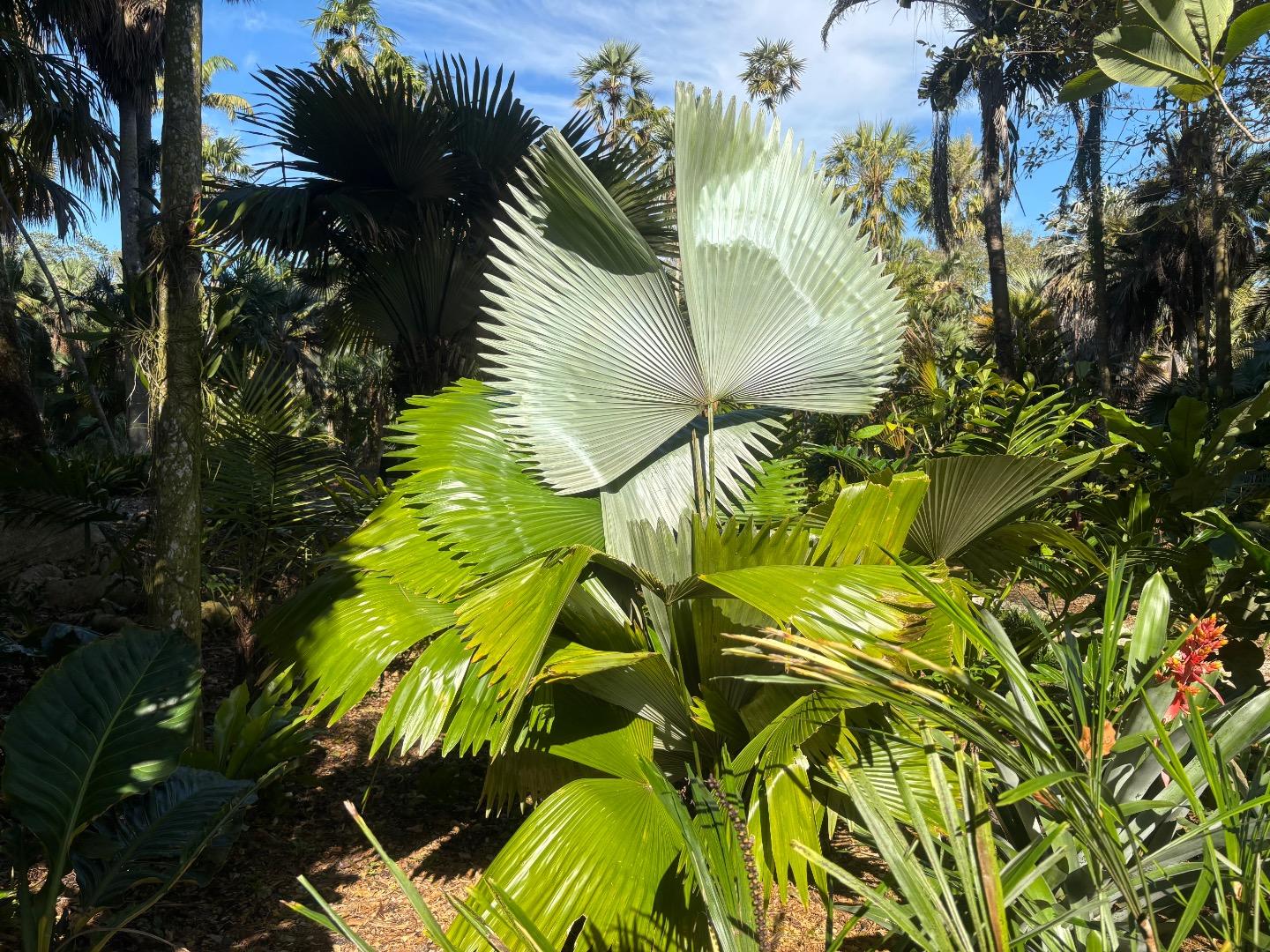
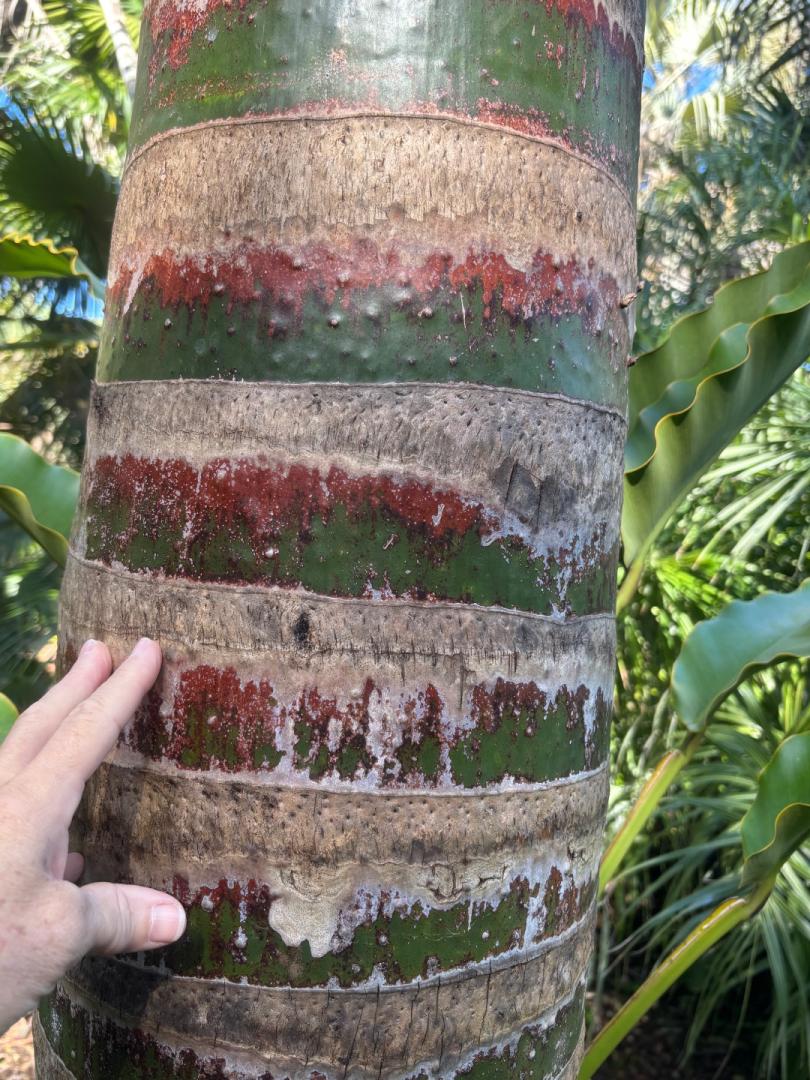
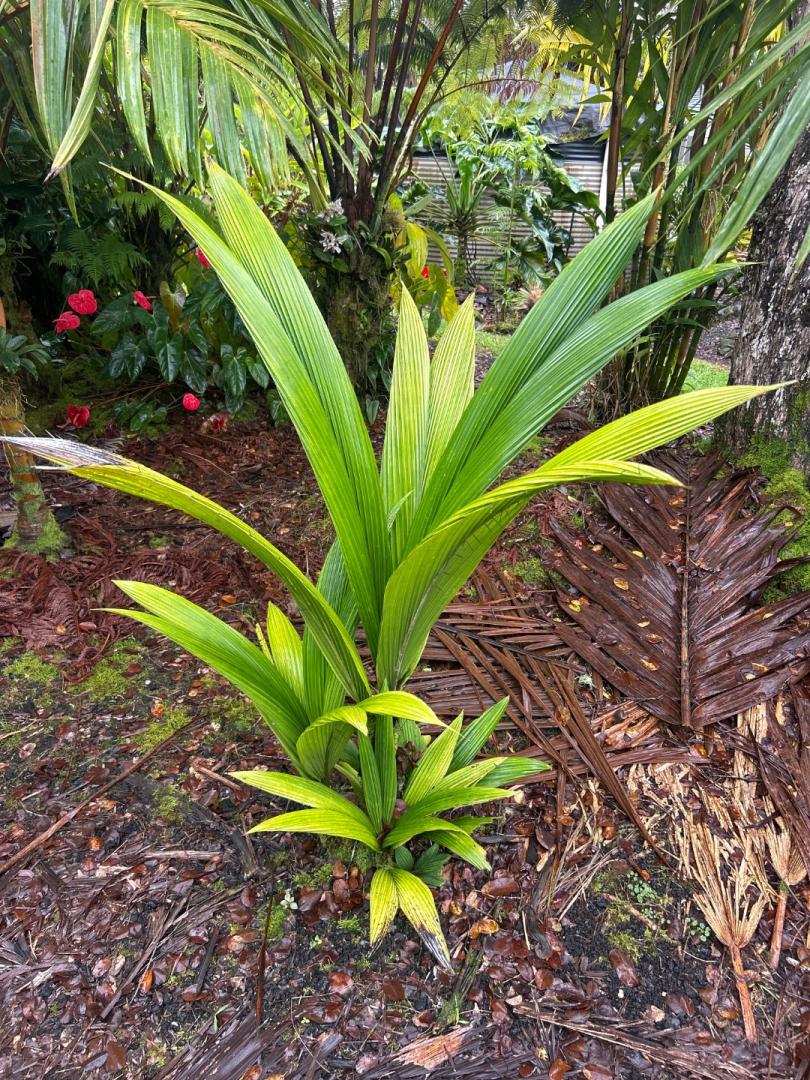
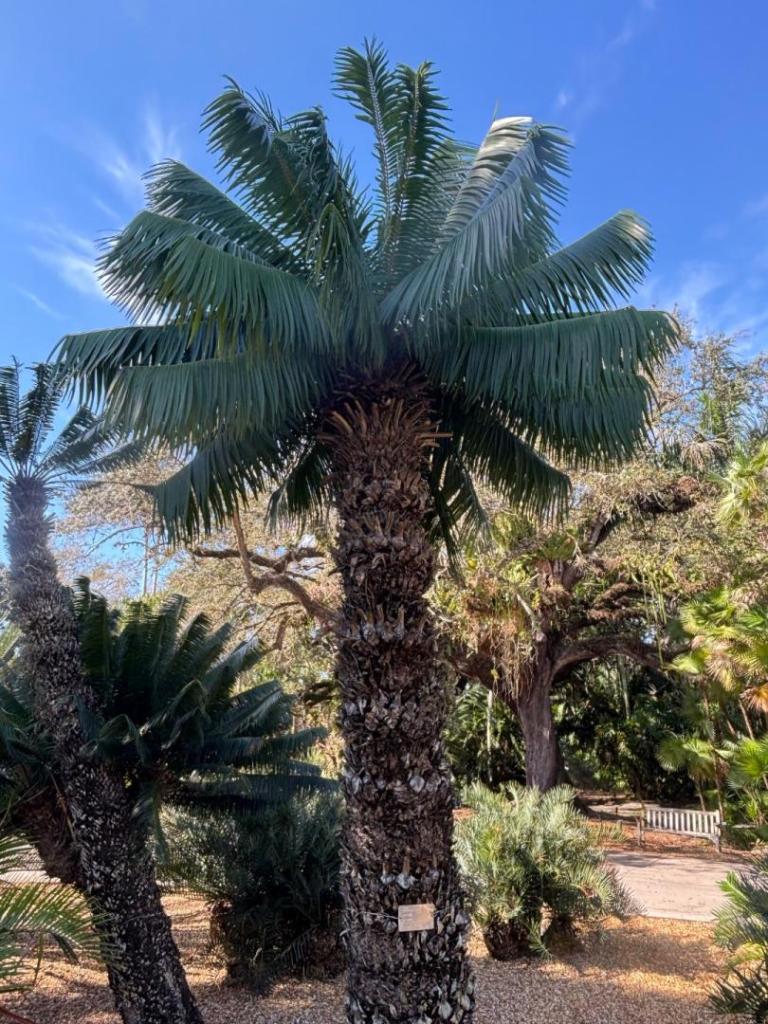
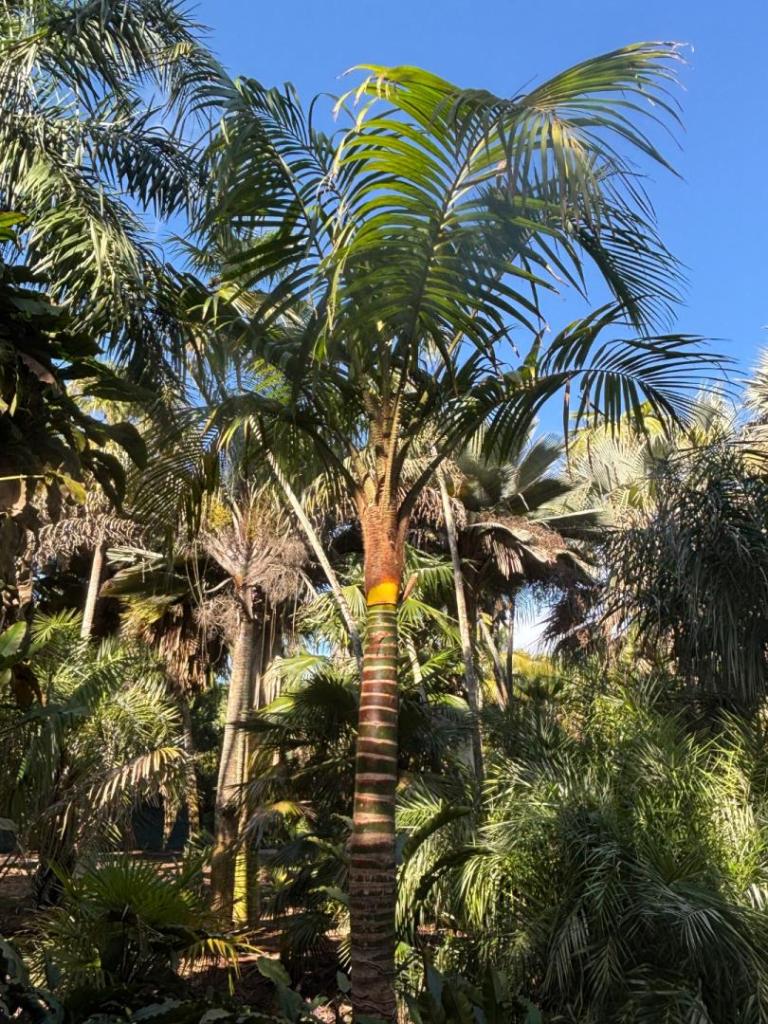
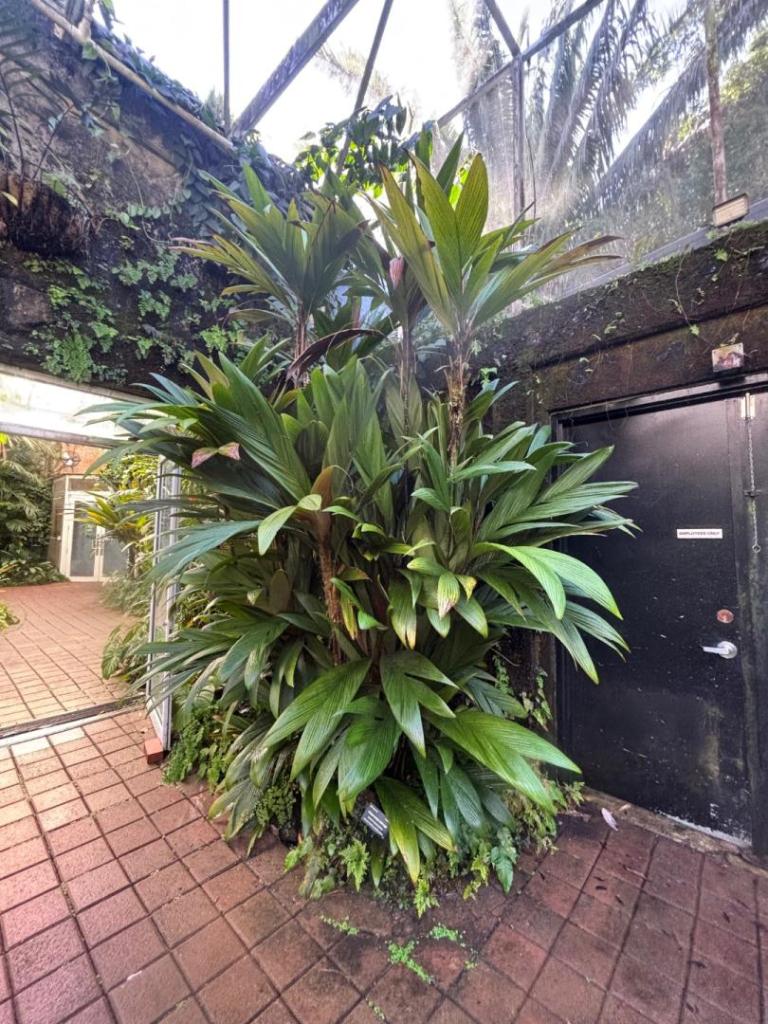
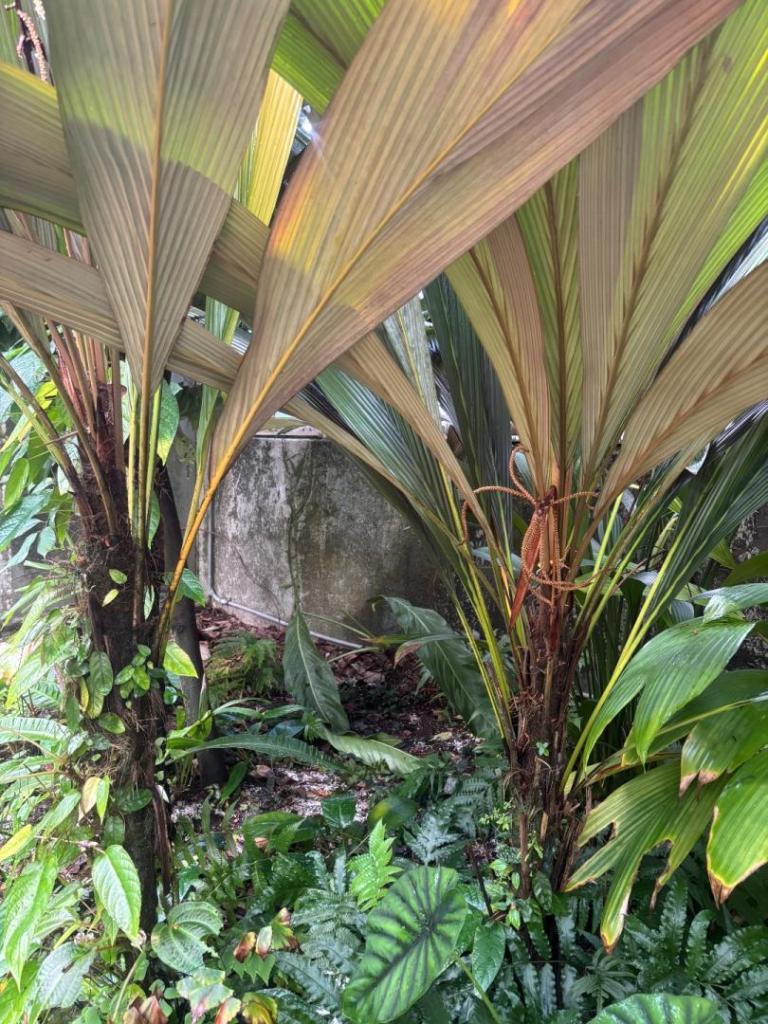
8 pointsI have visited Fairchild Tropical Garden in Miami FL many times but always enjoy seeing new additions and checking on “old friends”. This Sabinaria caught my attention especially since it looks untouched planted outside despite the recent cold spell here. I eagerly await mine growing big enough to show off the gorgeous leaf shape and color! Below are two different Kerriodoxa elegans. Rhino beetles in Puerto Rico love these so not sure if I will get any to trunking size. I am really looking forward to seeing them in habitat in Phuket Island.Thailand on the soon to start IPS post tour. Calyptrocalyx albertisianus is a fairly new addition to my own farm after I saw a beauty at Dean Ouer’s place in HI a few years ago. Here is one at FTG reminding me that they are likely to be much taller than my other more shrub size Calyptrocalyx. I am including a striking cycad that I wish I grew. Microcycas calocoma.


 8 points
 -
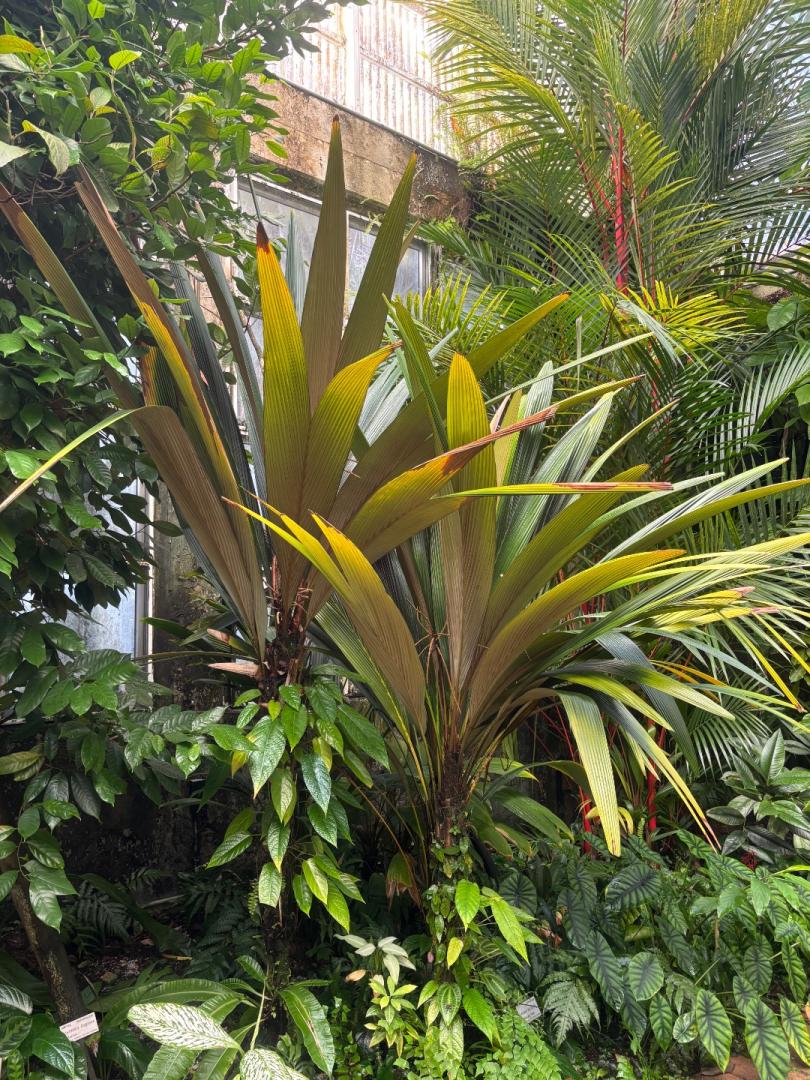
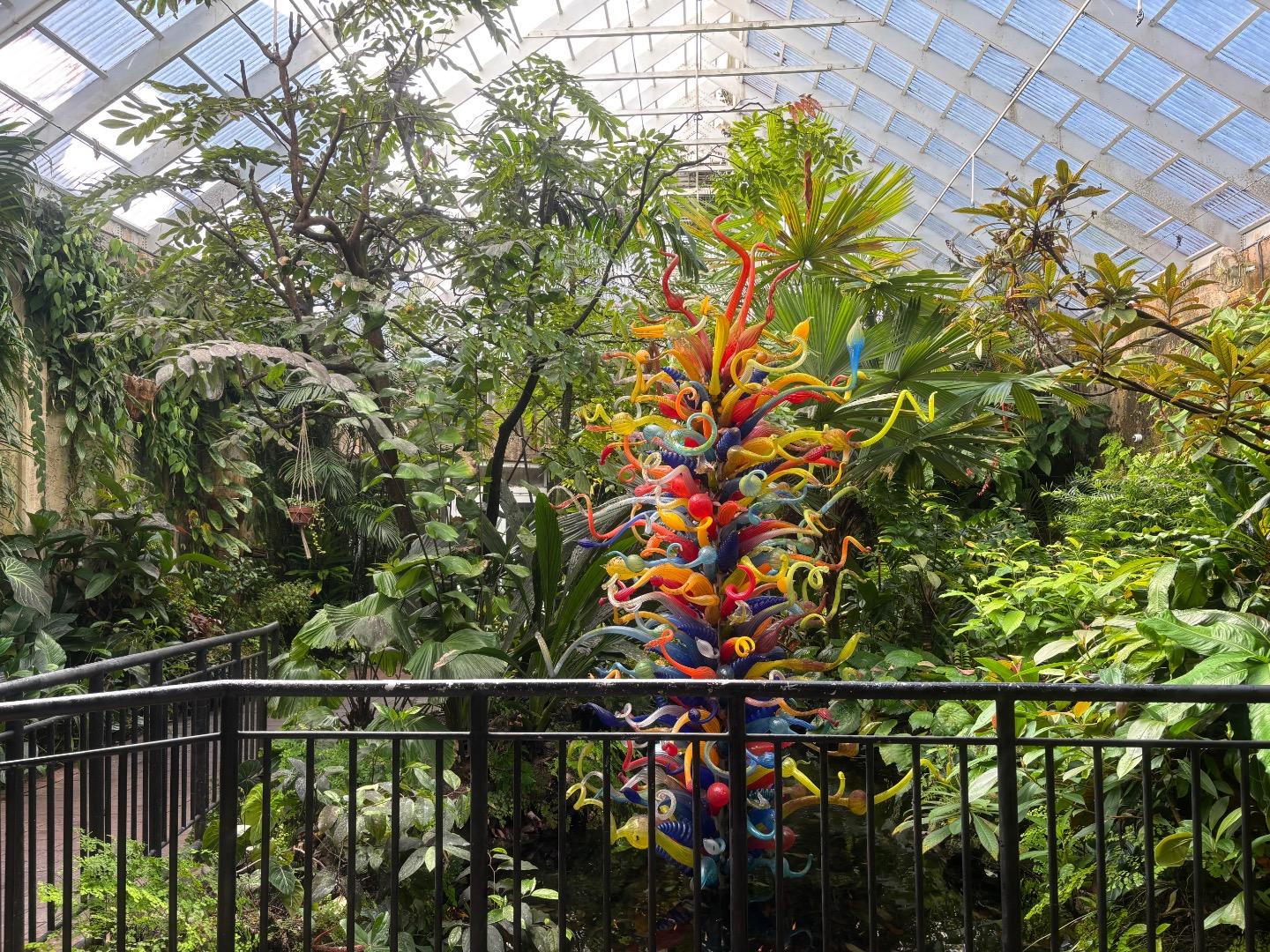
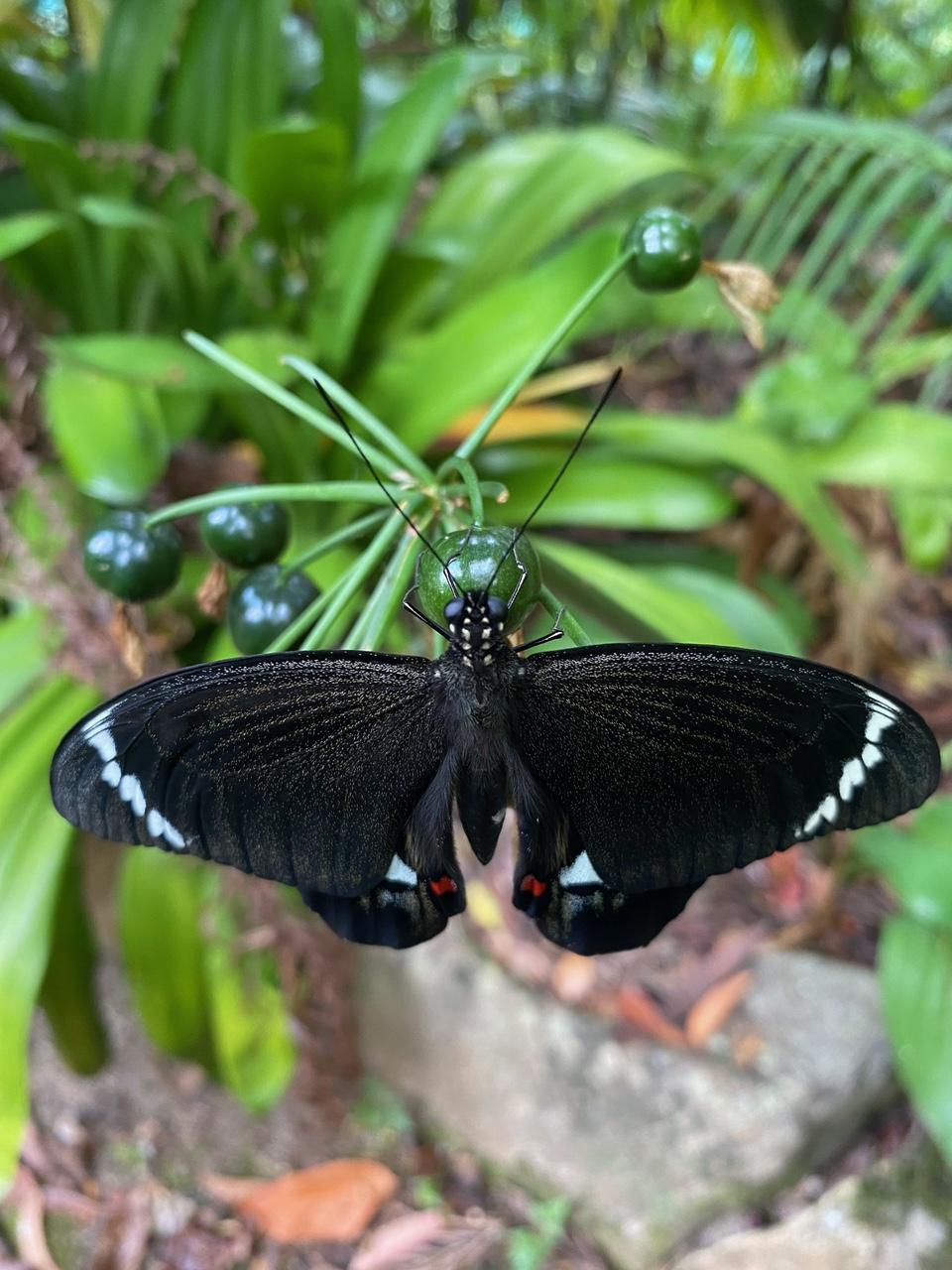
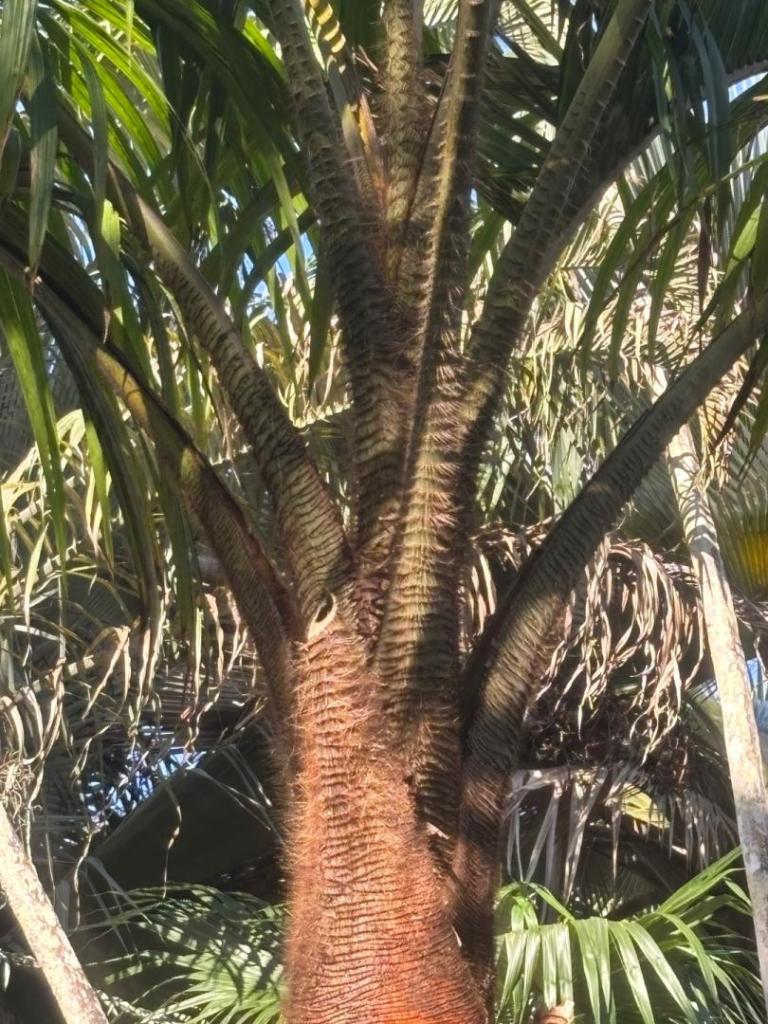
6 pointsI took a pass through the butterfly collection and this papilio lowii posed for me. Pigafetta elata (I only saw one) seemed fine outside. I am down to 2 of these from 5 I grew from seed and planted out in PR. Another rhino beetle delicacy. I now have some seedling Pigafetta filaris (the white one) gifted to me by PR00360 from RPS seeds. Hoping I can get some to trunking size when my beetles seem to ignore them. Mine are at the very dangerous to touch stage but eventually the smooth trunk becomes huggable. This Calyptrocalyx hollrungii is much bigger than mine. Such a nice palm. Sommieria is another species I “met” at FTG many years ago and am so happy to now have in PR. Next some classic FTG views. Entrance to the conservatory:




 6 points
 -
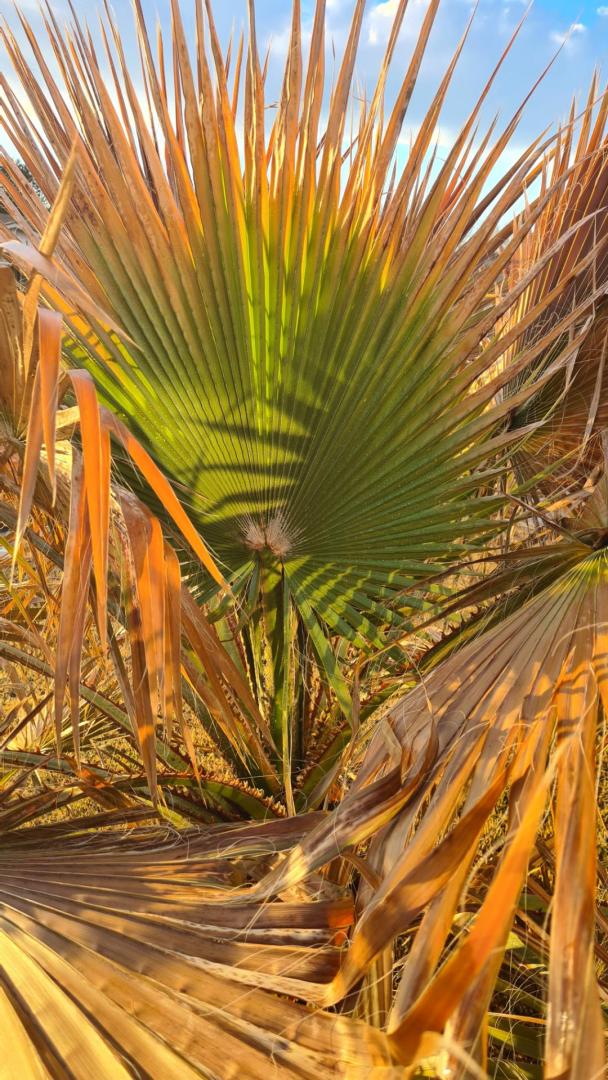
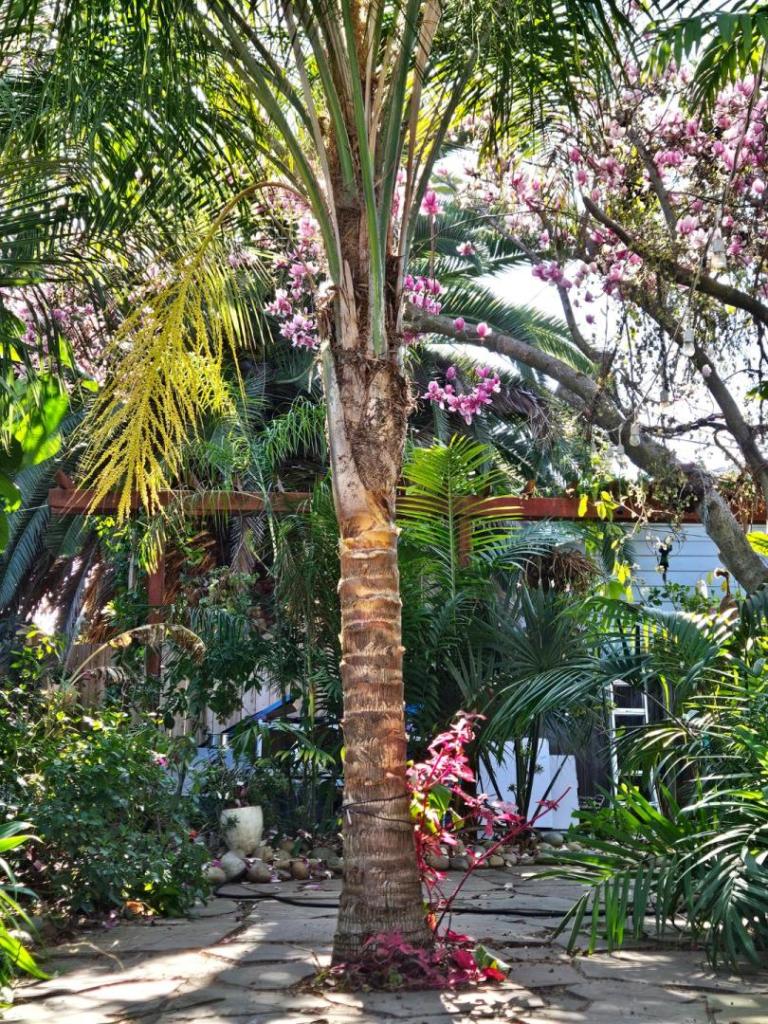
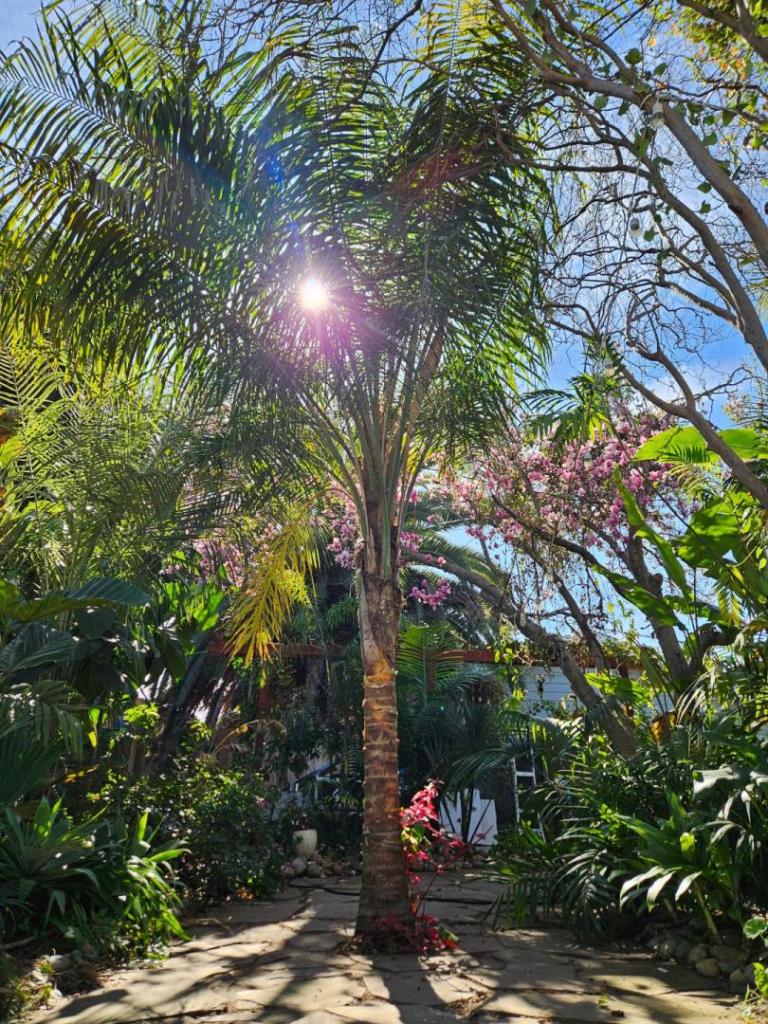
6 pointsI gave this palm a fresh haircut and trim - i have to say that it looks amazing that way
 6 points
 -
 5 points
 -
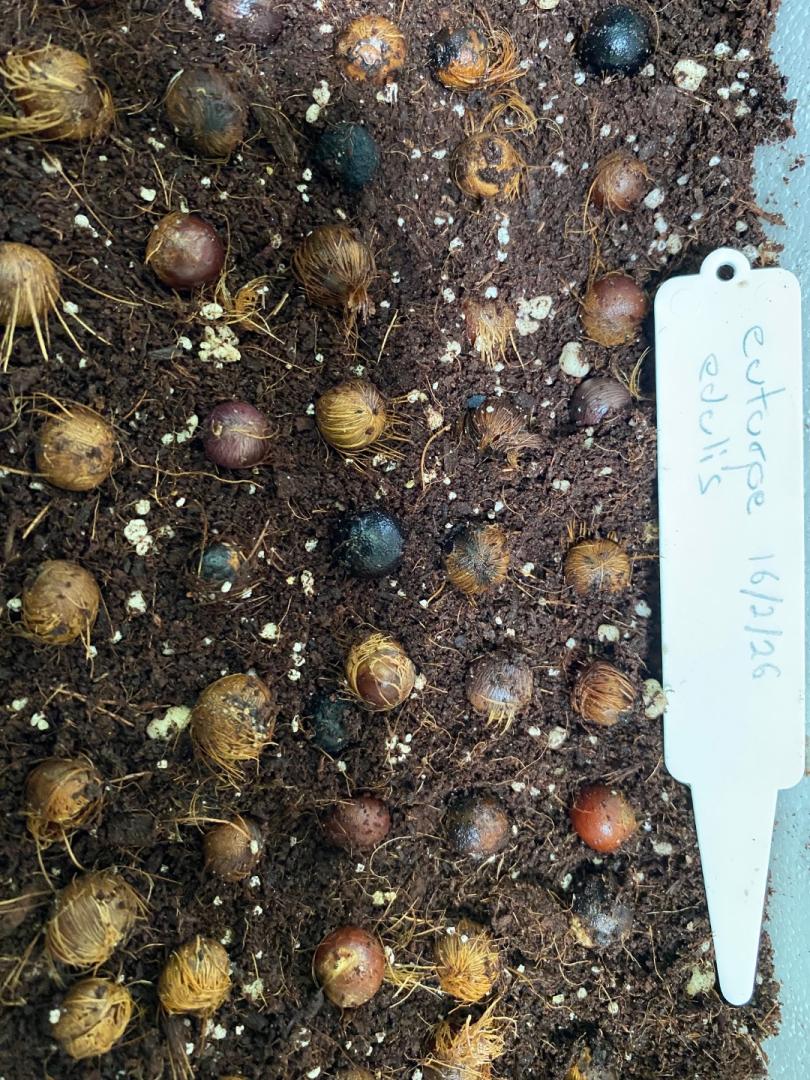
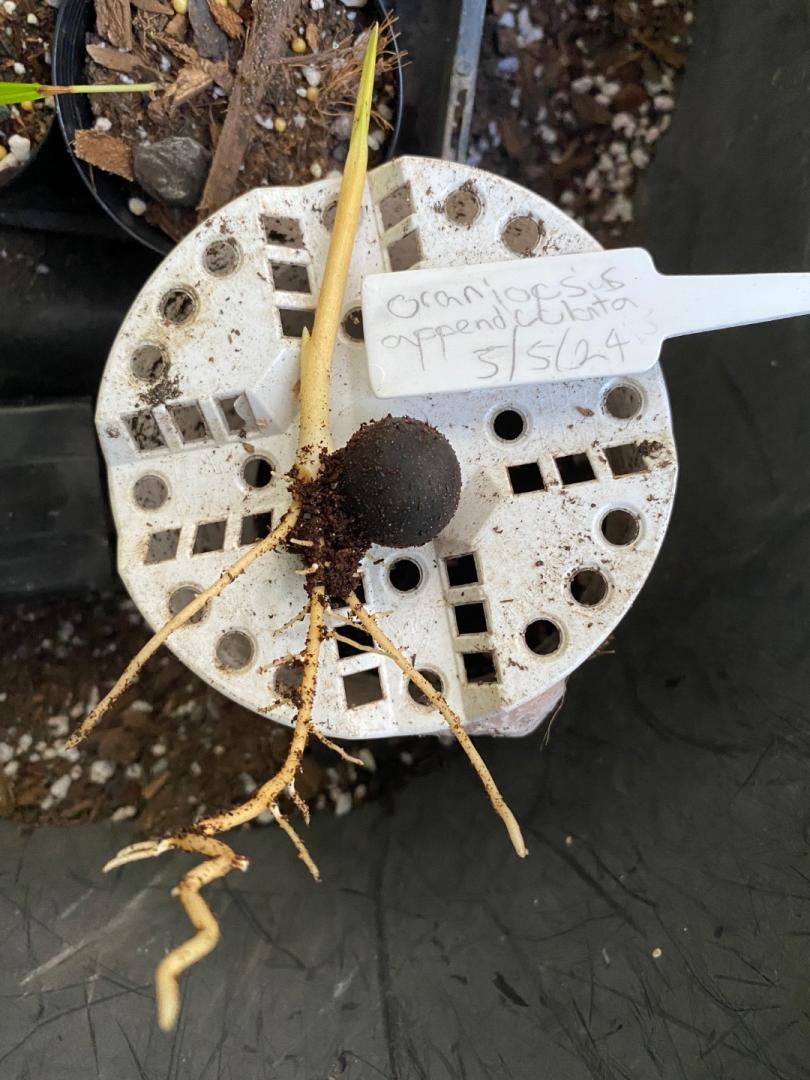
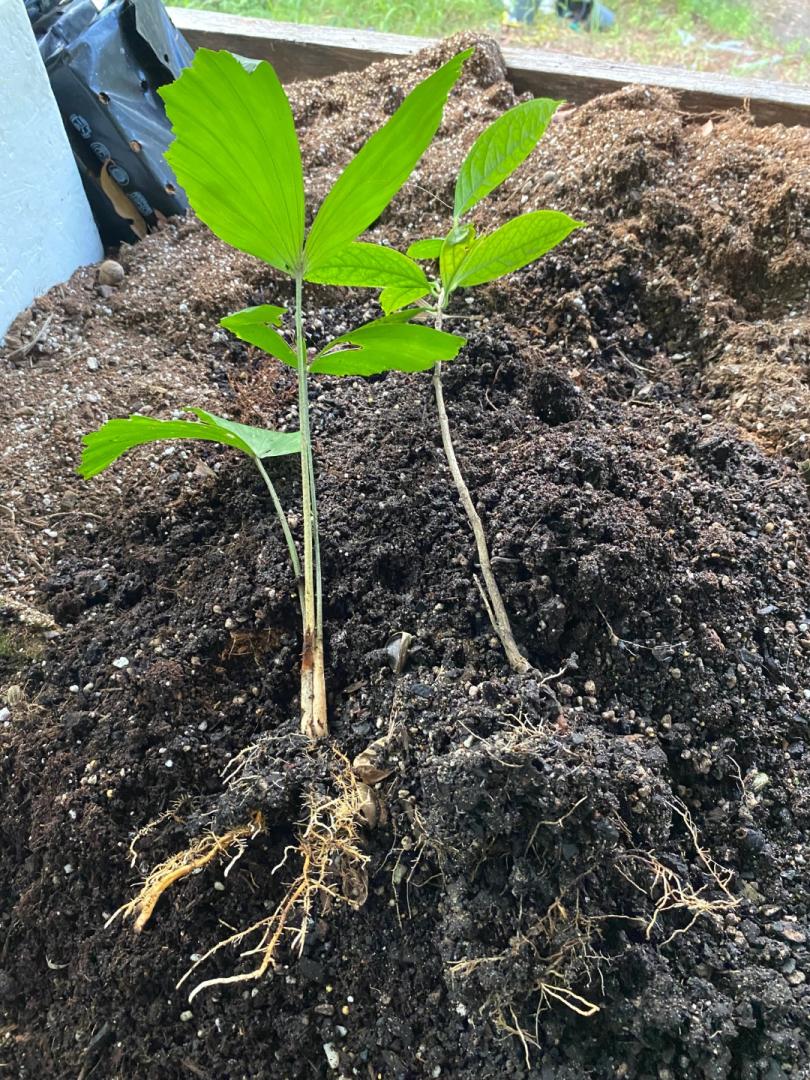
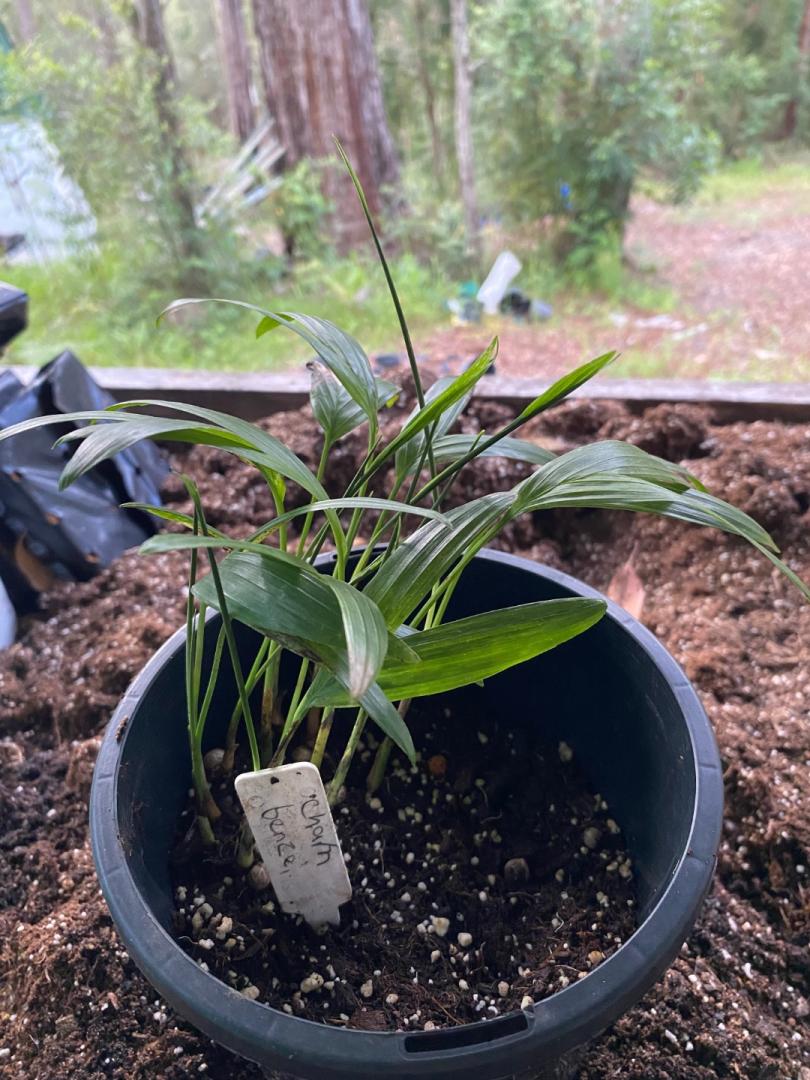
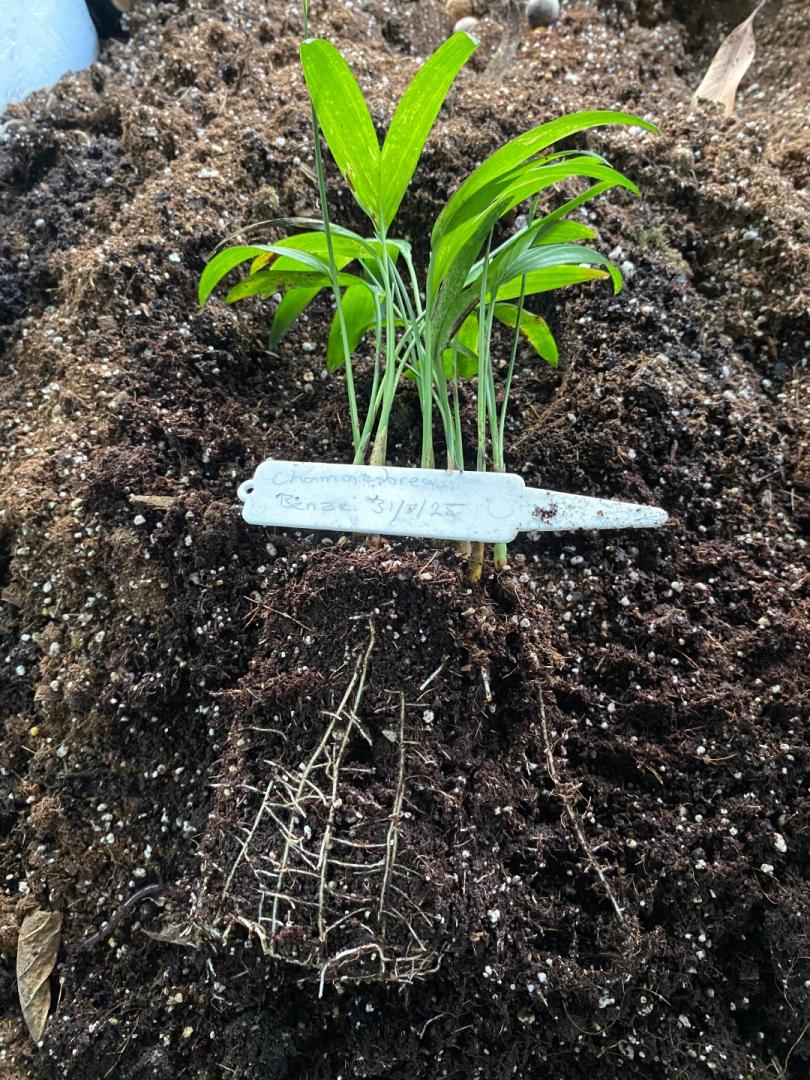
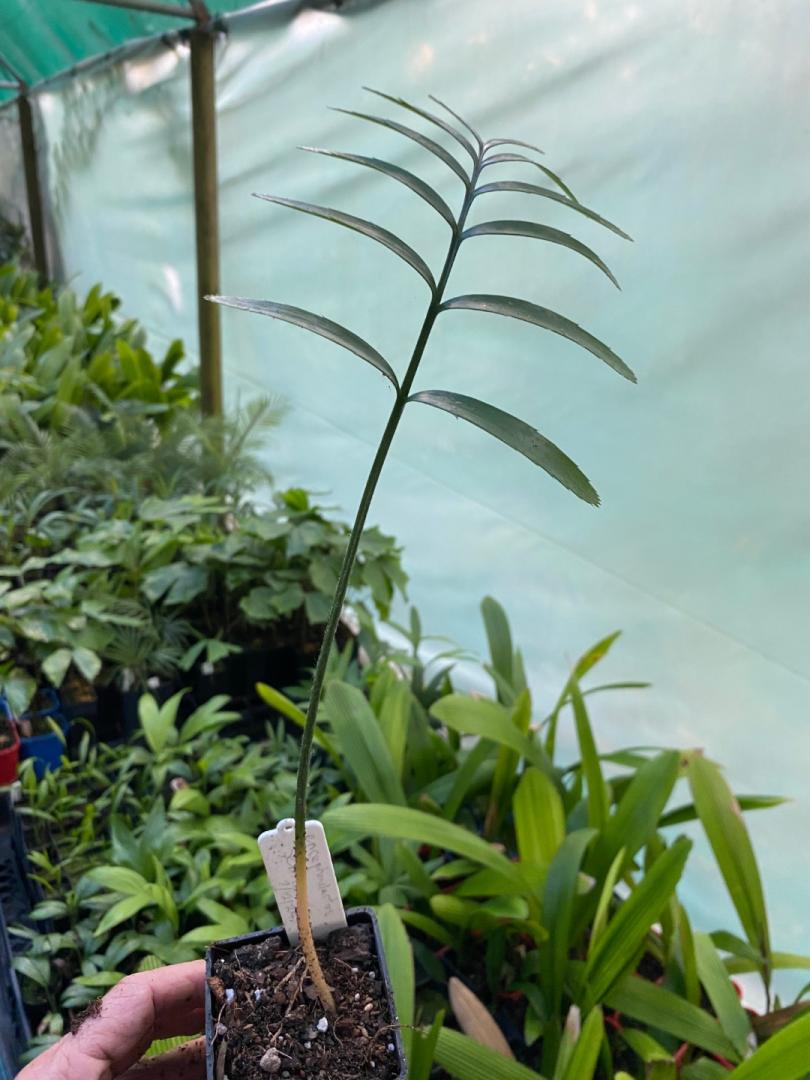
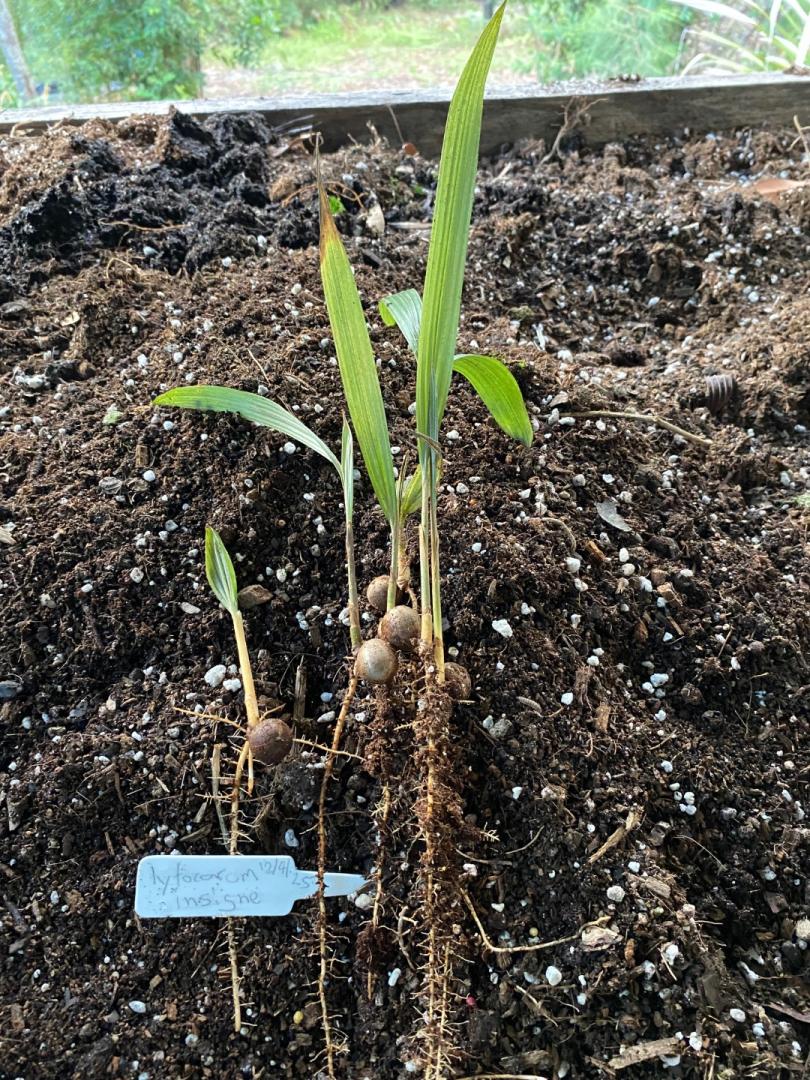
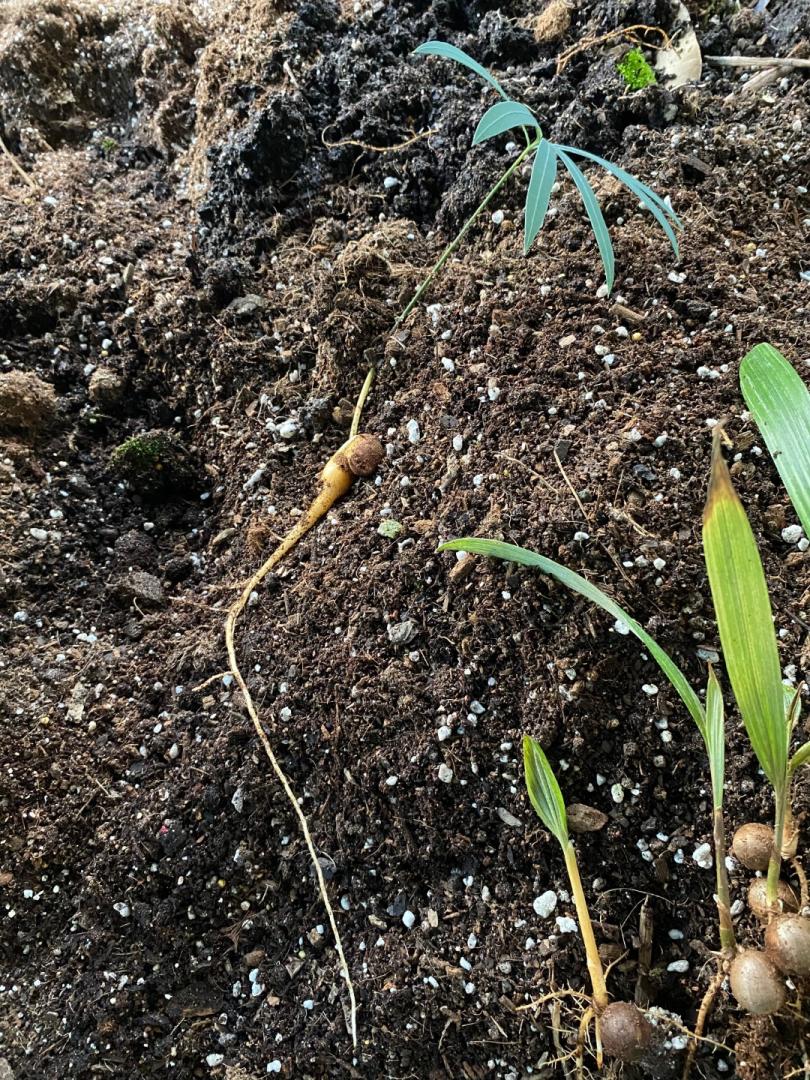
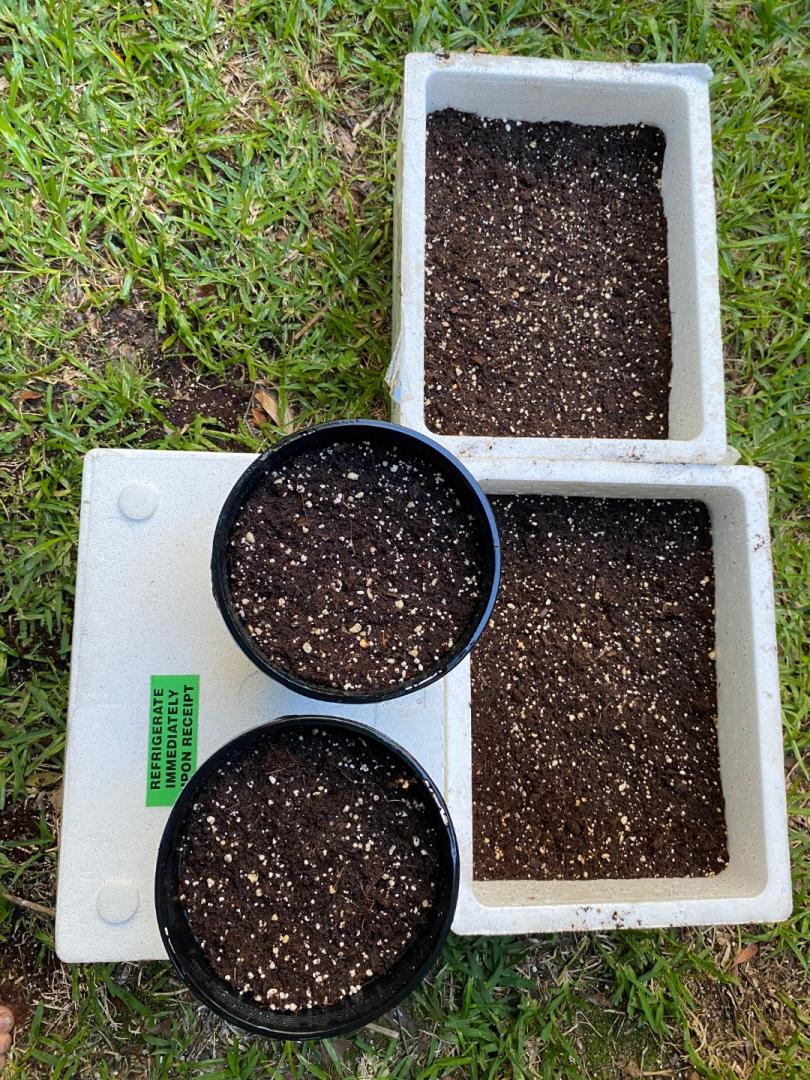
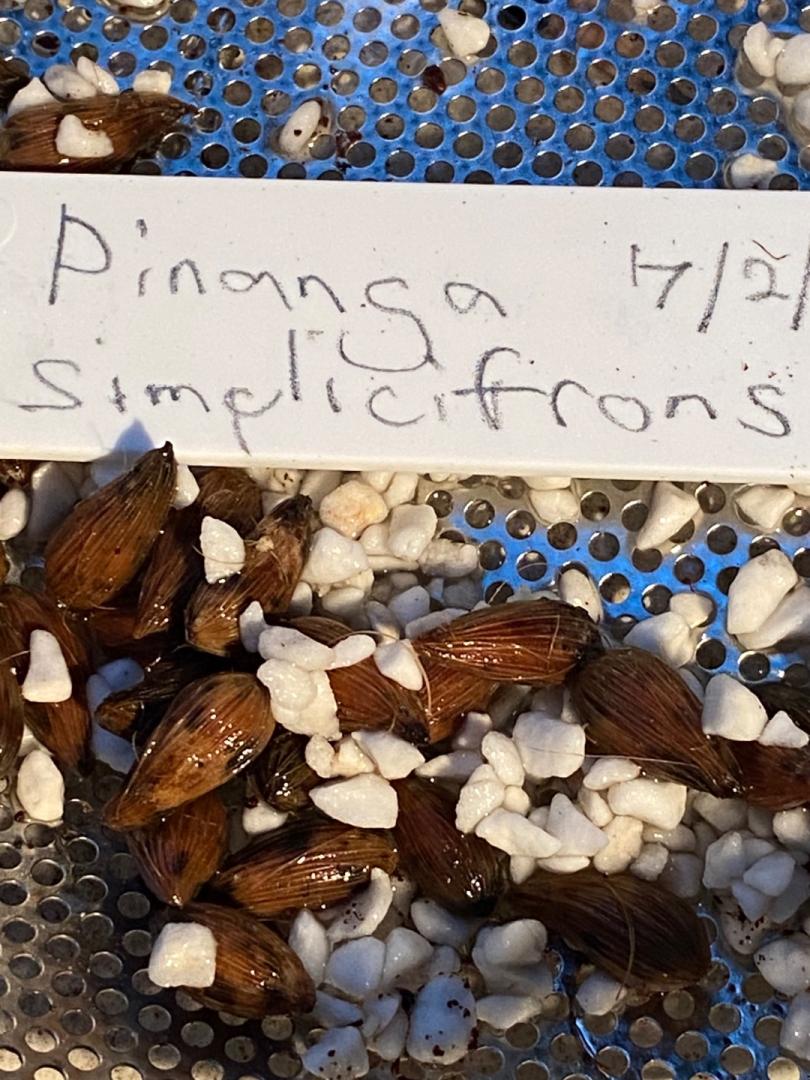
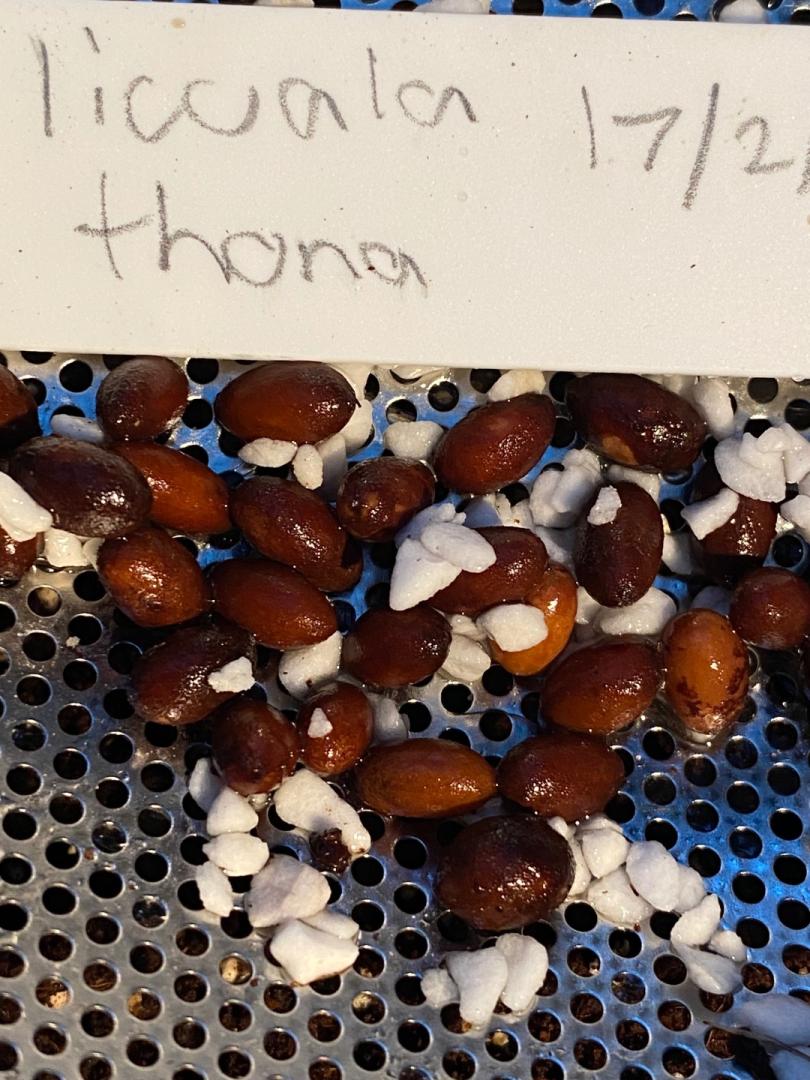
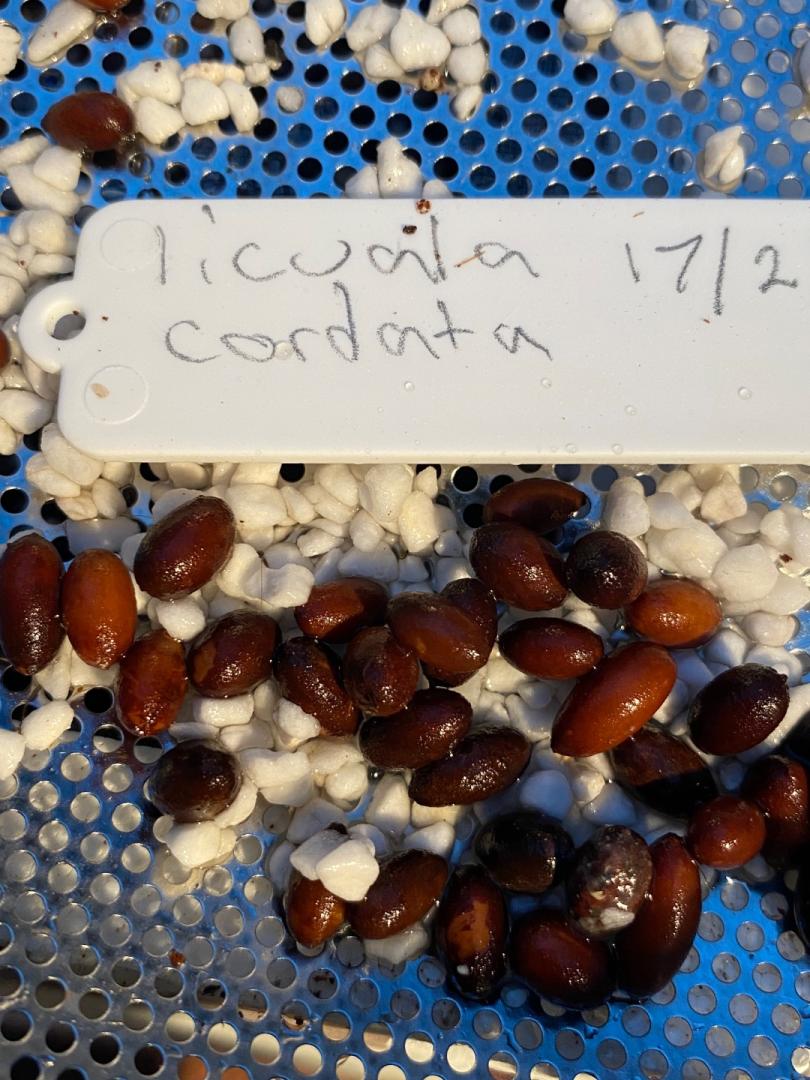
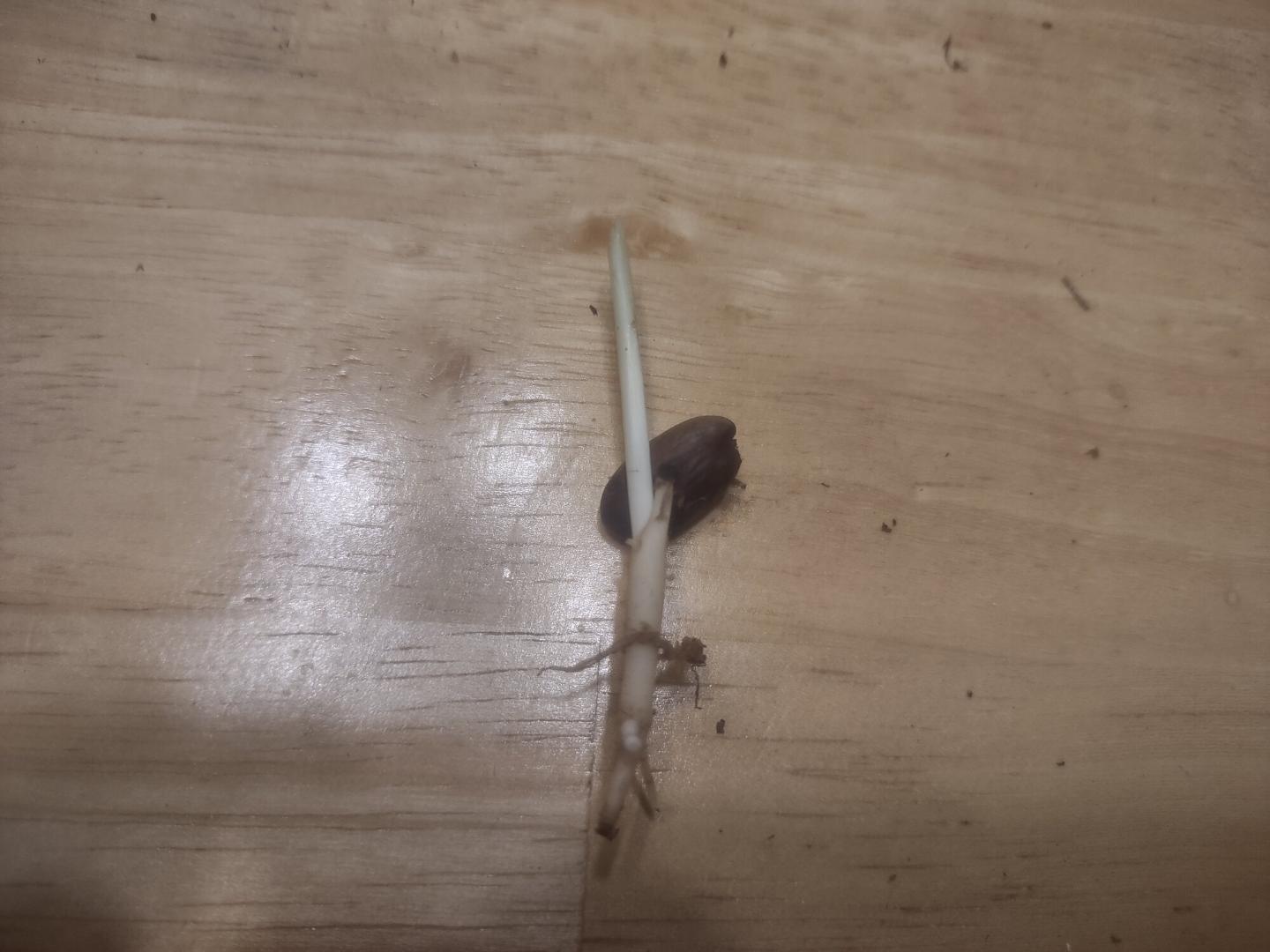
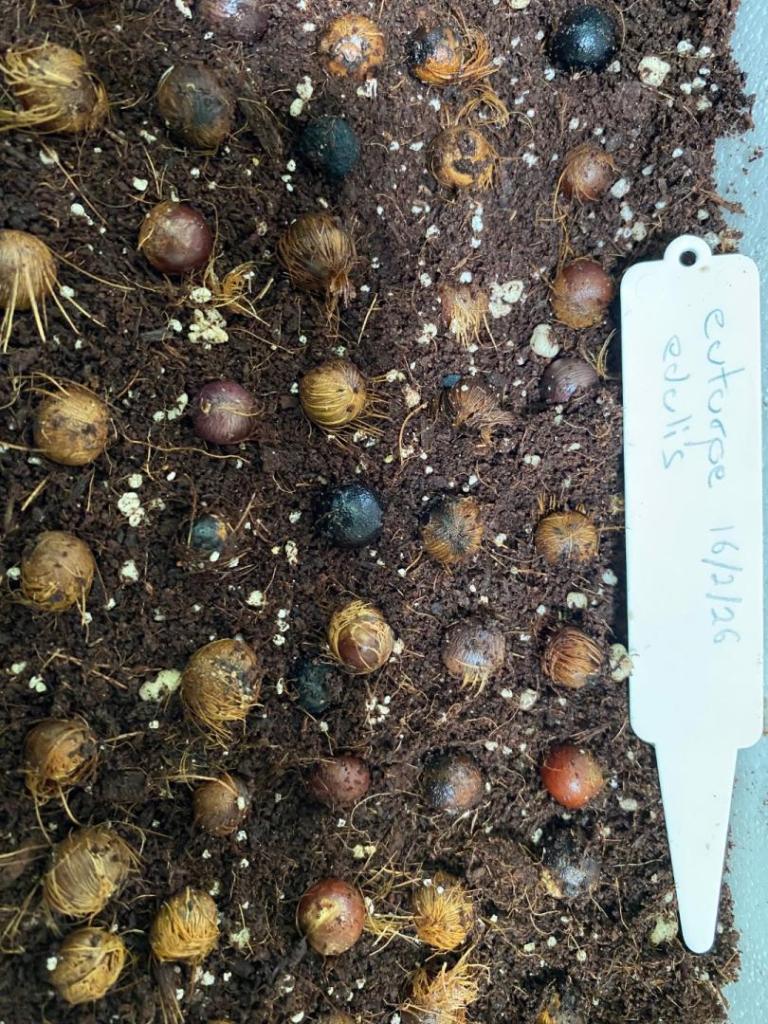
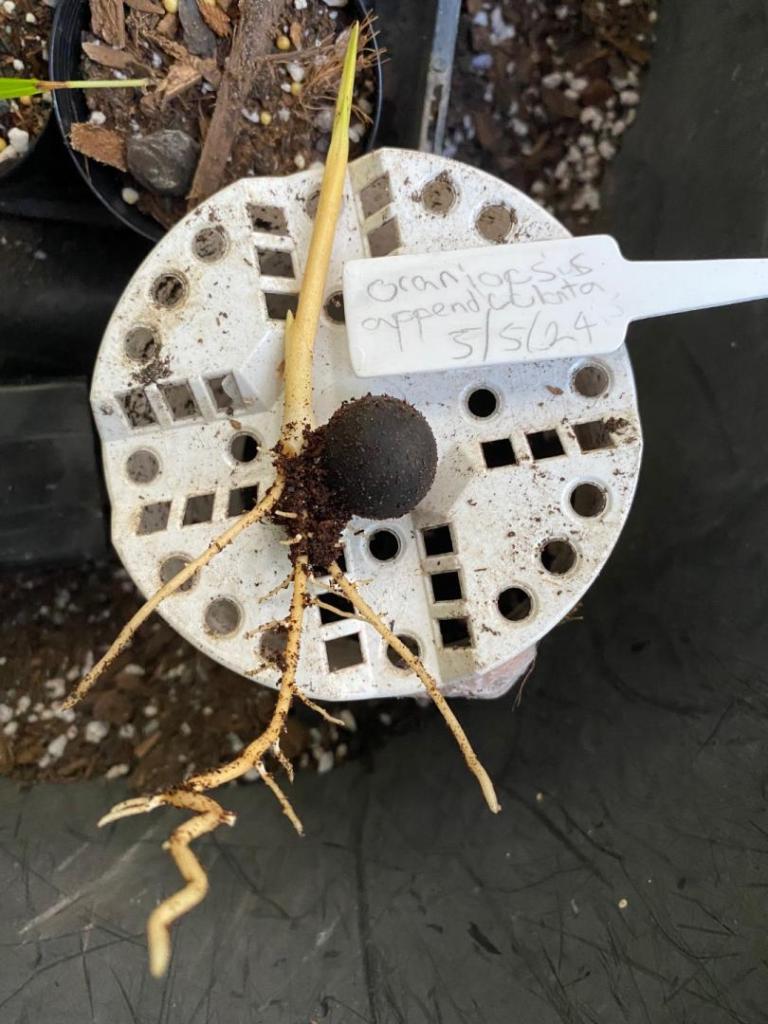
Ok I shall settle the score and start a on the potting bench thread to appease the palm gods. So it is as follows, on the potting bench you shall see what’s been growing and what reds to be potted up, freshly germinated to anything else that needs to be potted, it shall be gor reference as seedling identification. If anyone wants to identify a seedling, and also as documentation of what and how the plants are growing for the palm talk audience and for my own documentation!



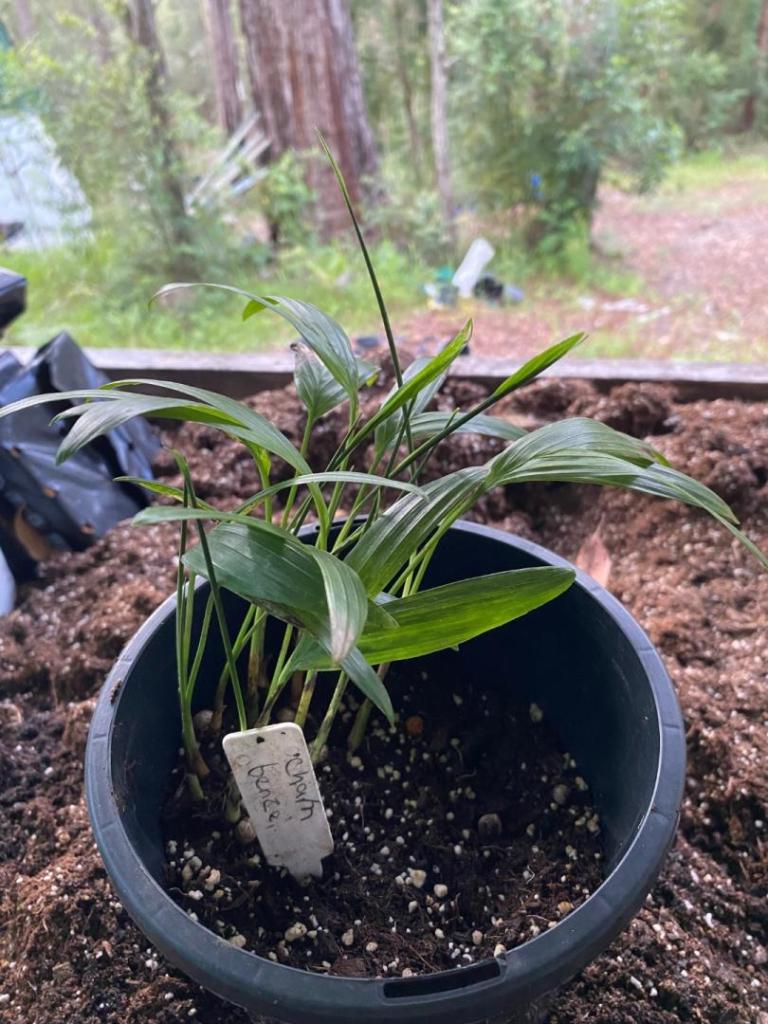
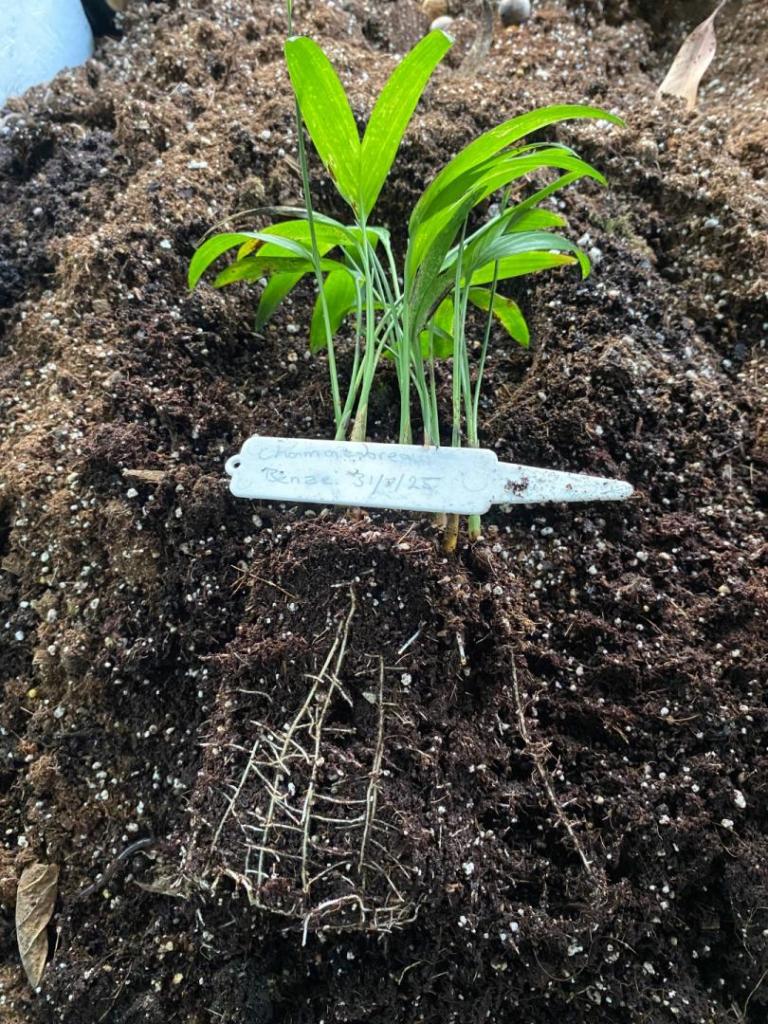
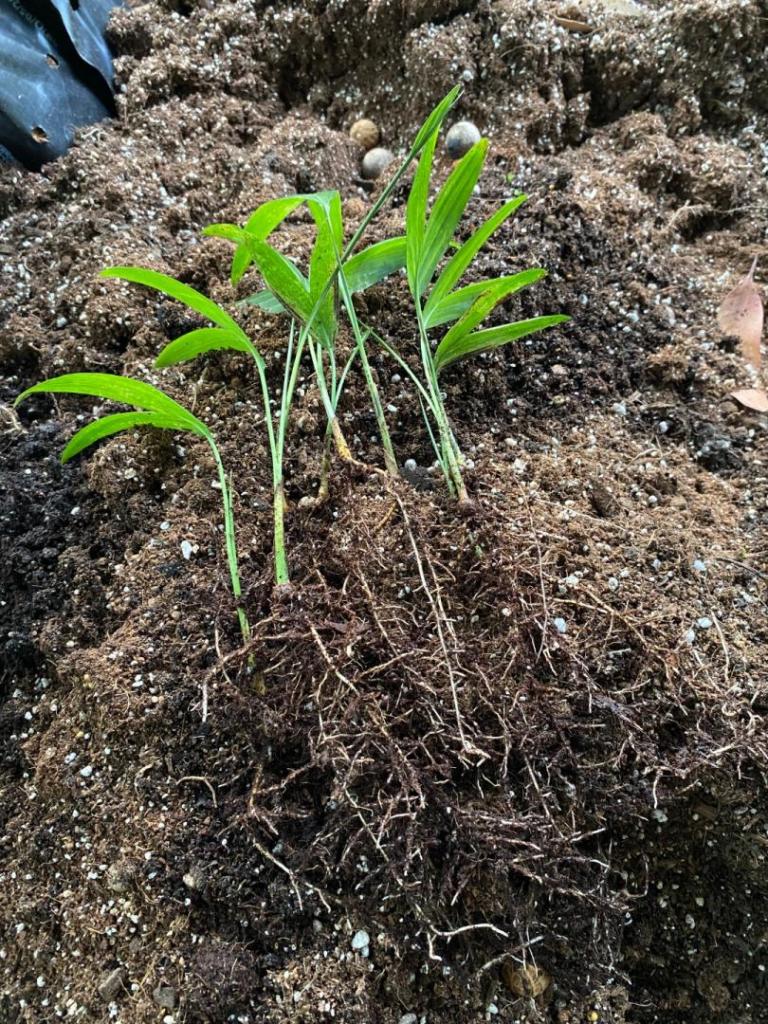


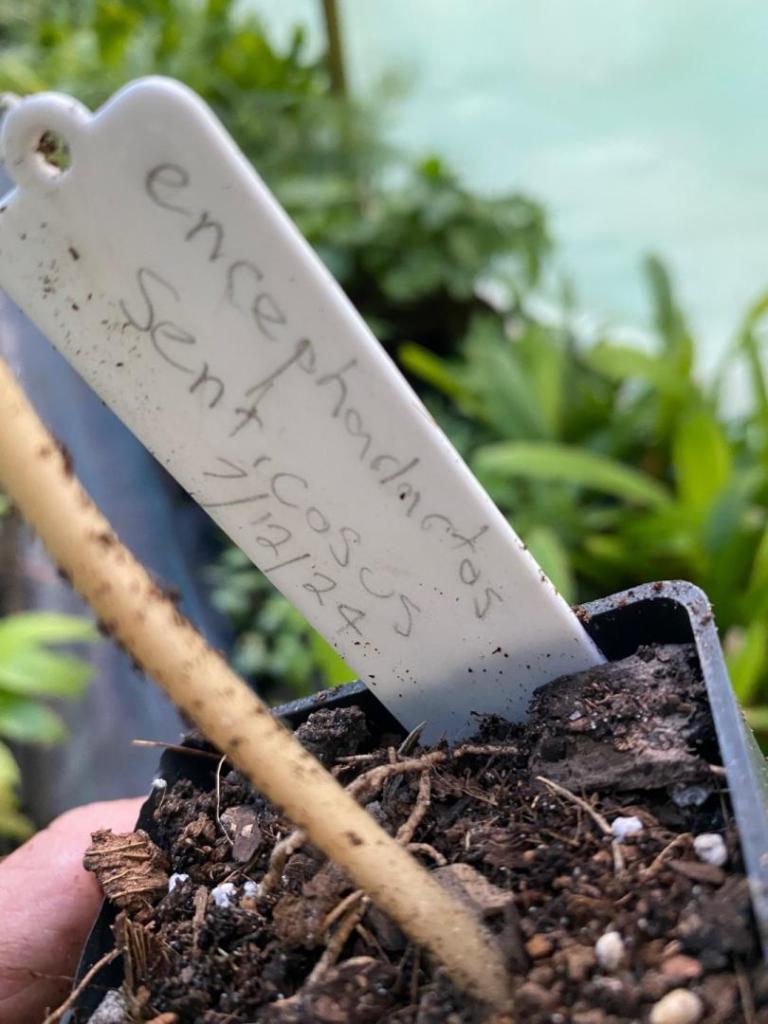


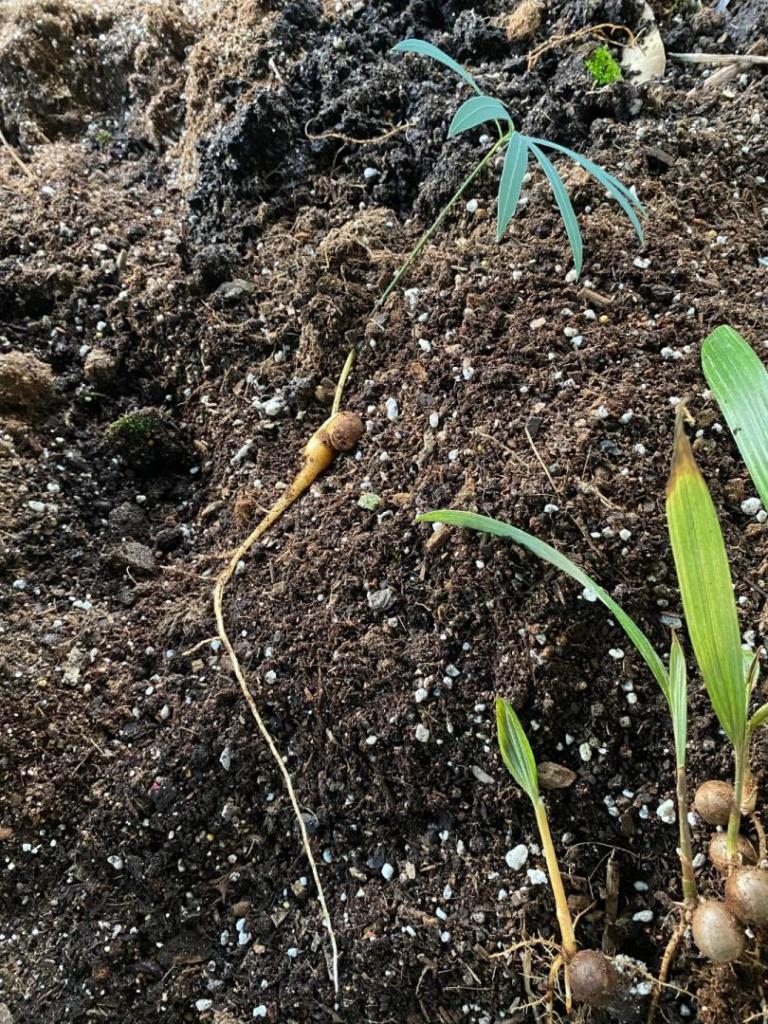
 4 points
 -
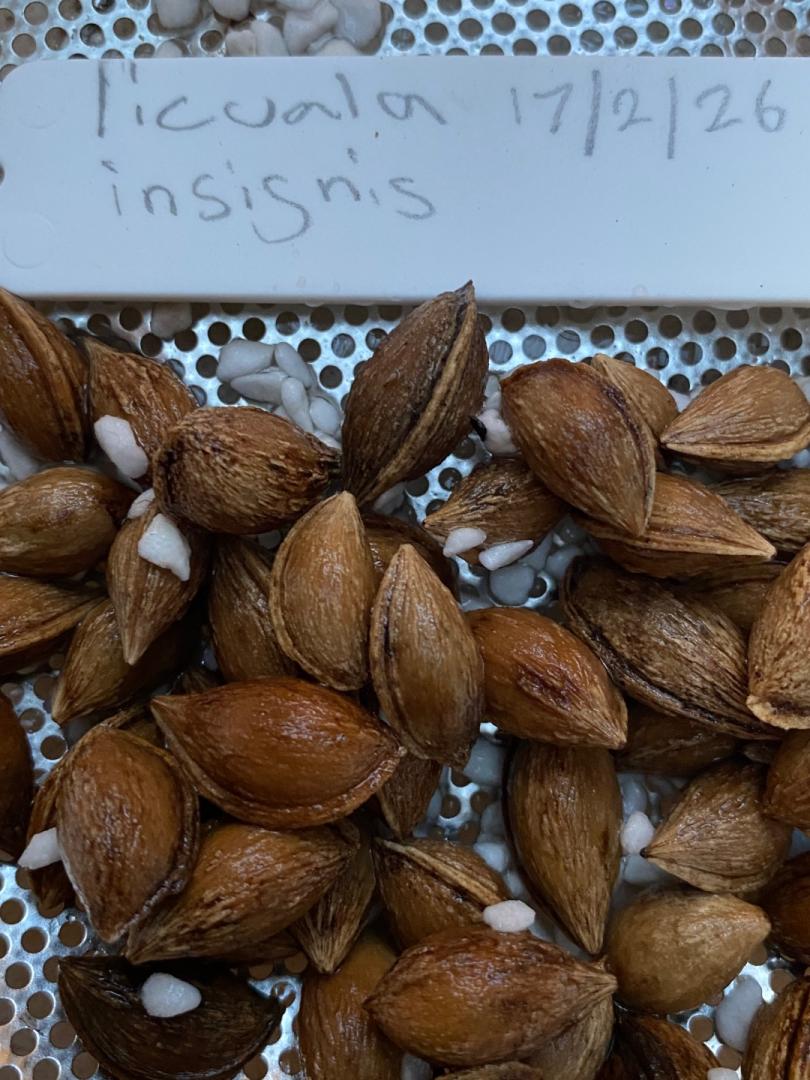
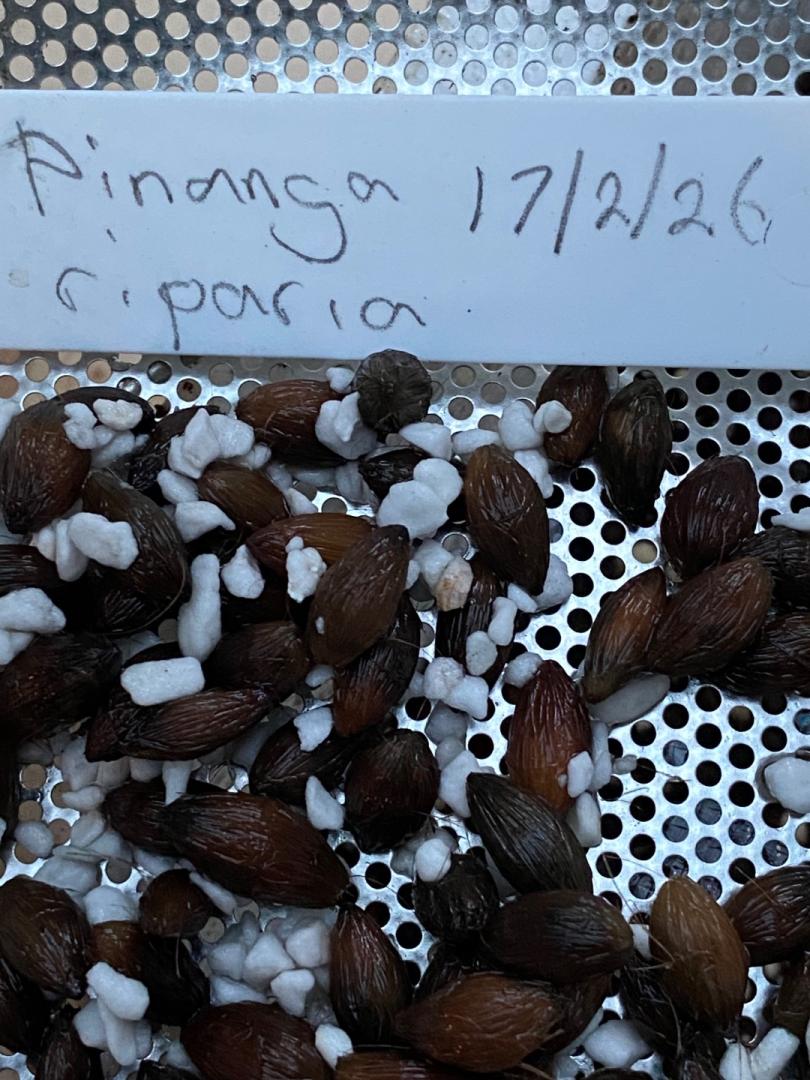
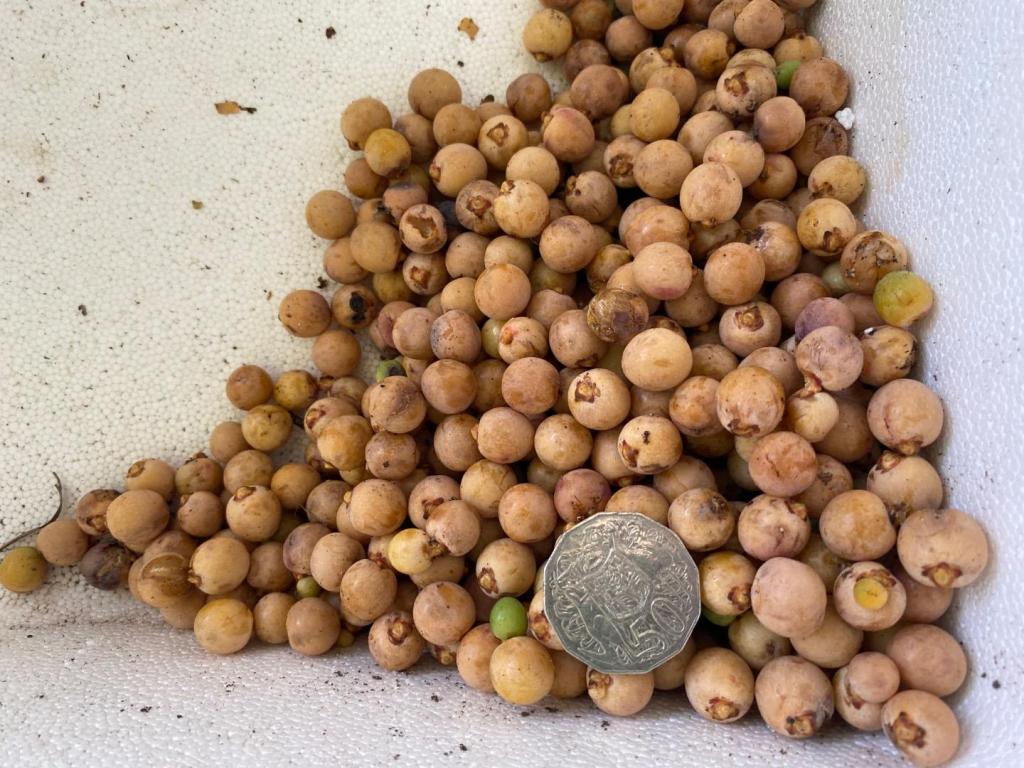
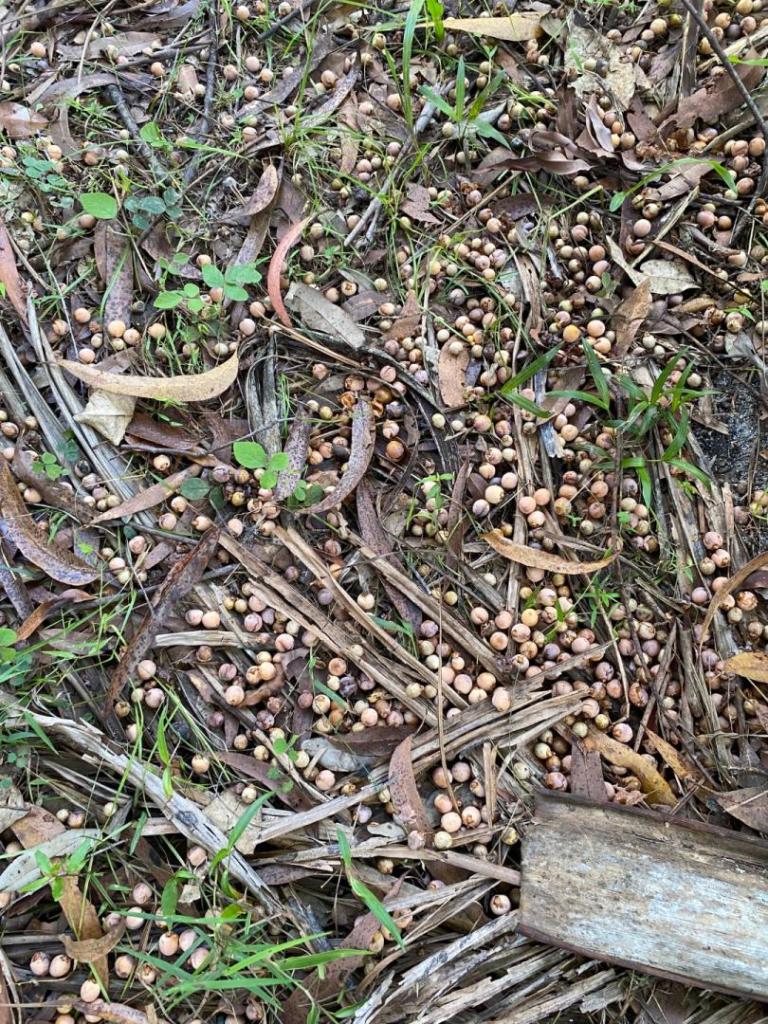
Getting into a few seeds this week, you gotta keep sowing them if you want to grow them! And a nice haul of some dypsis baronii from the garden that shall be distributed around to a few IPS members, sharing the palm seed love around!

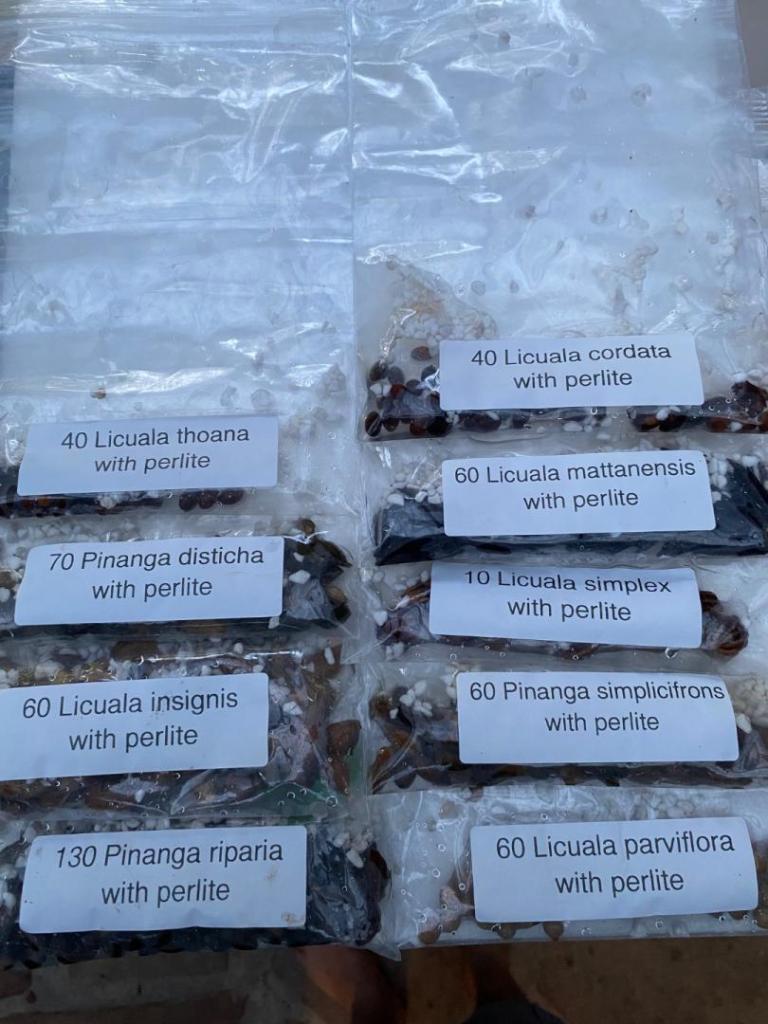
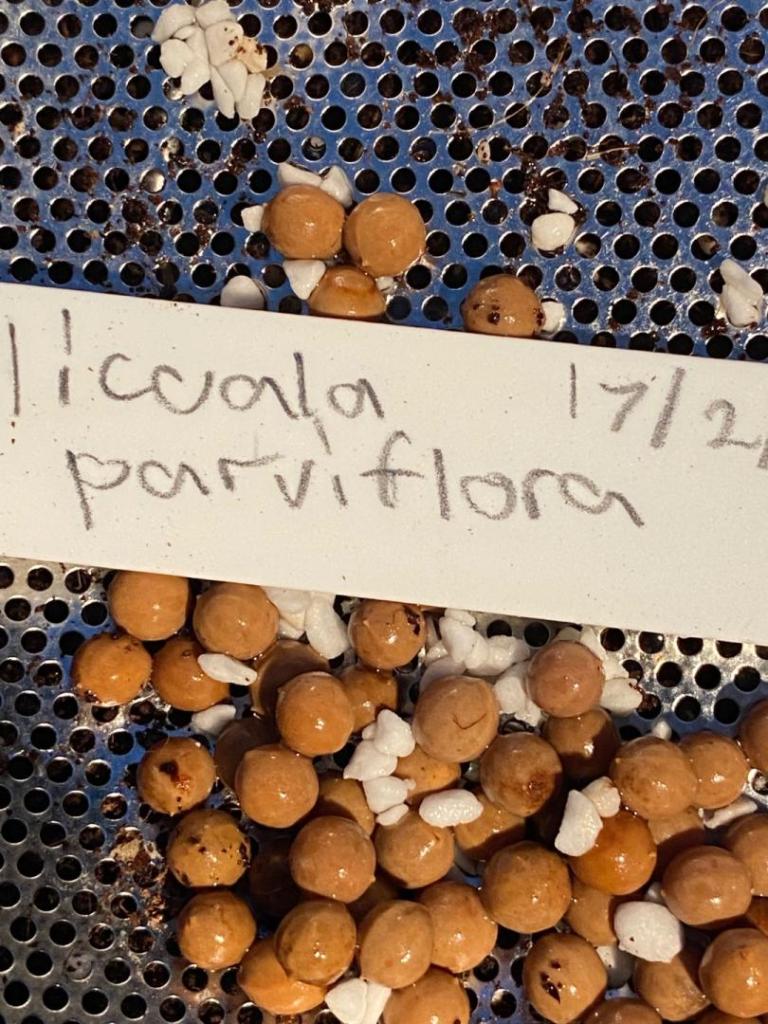
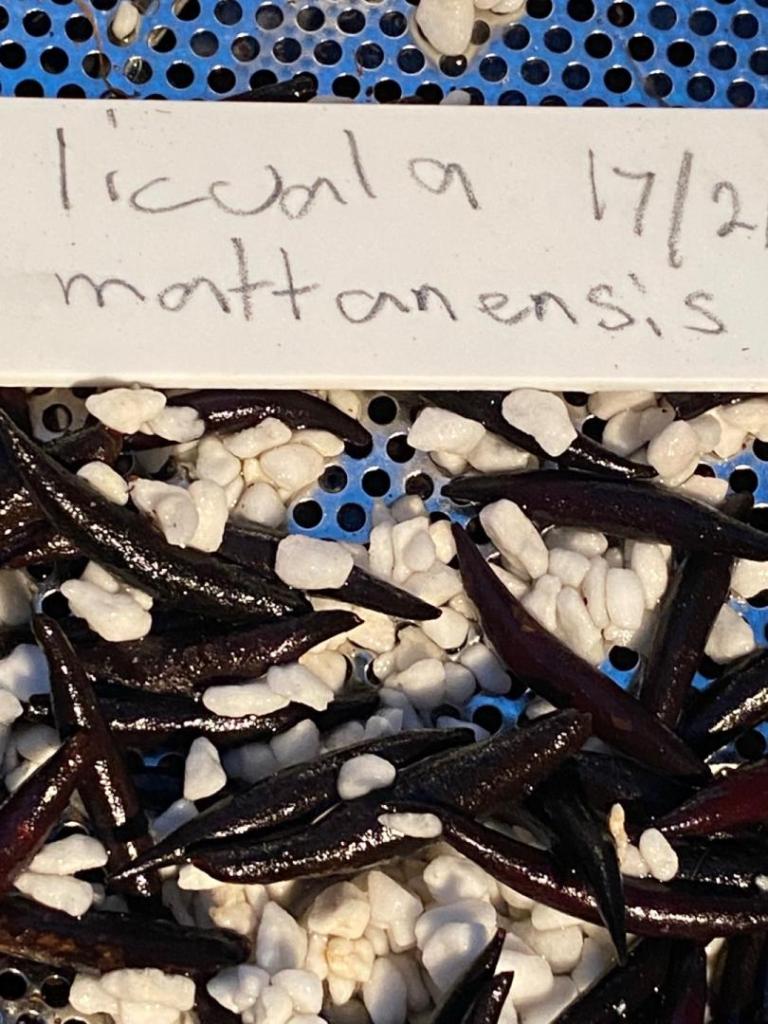

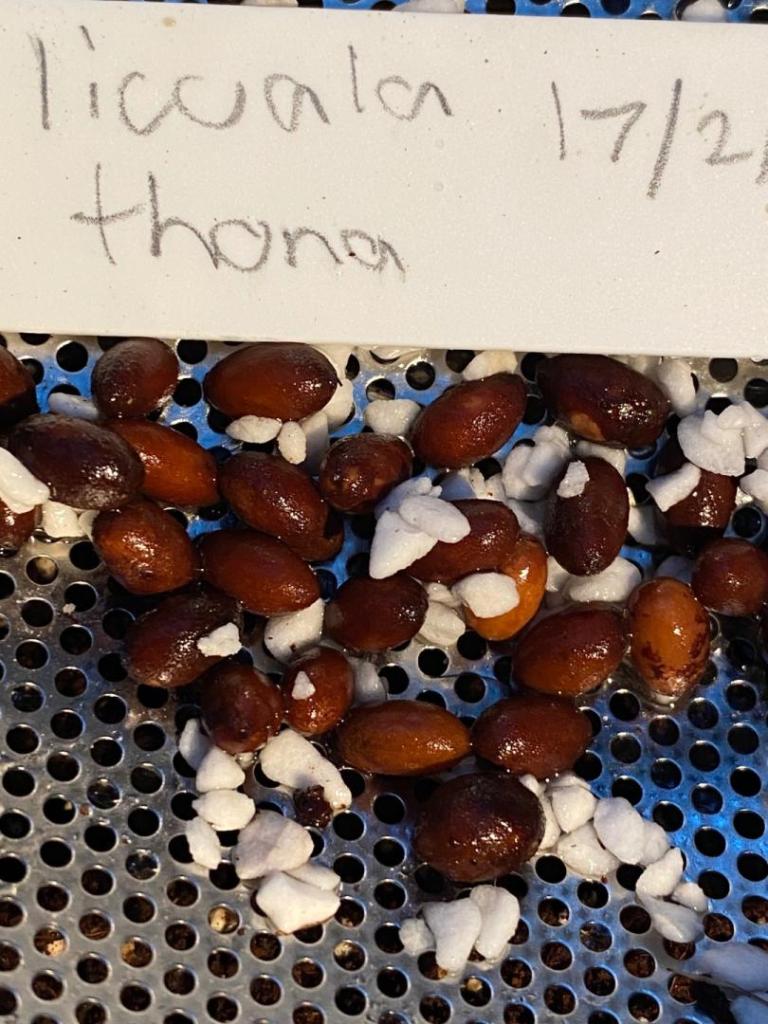

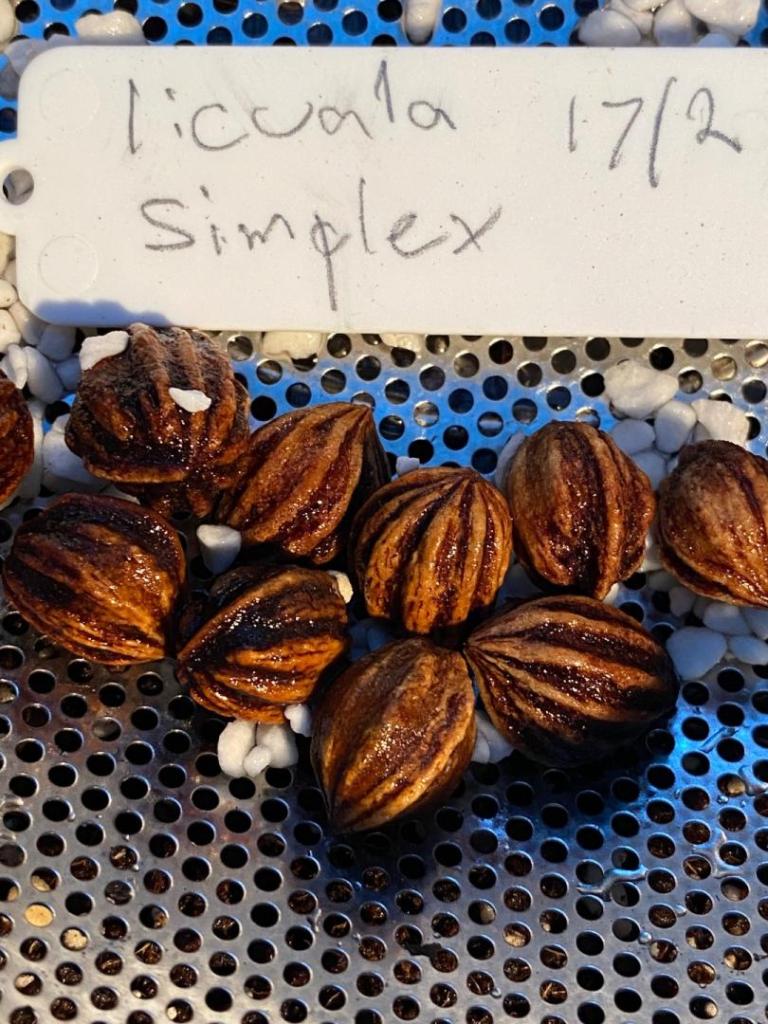
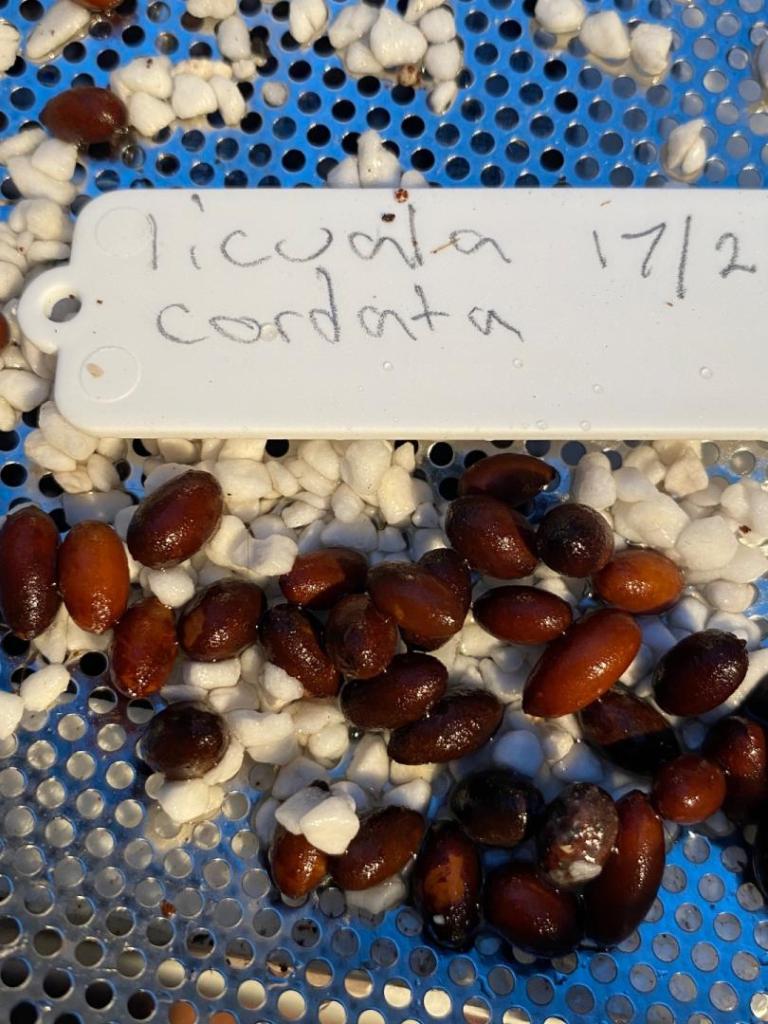
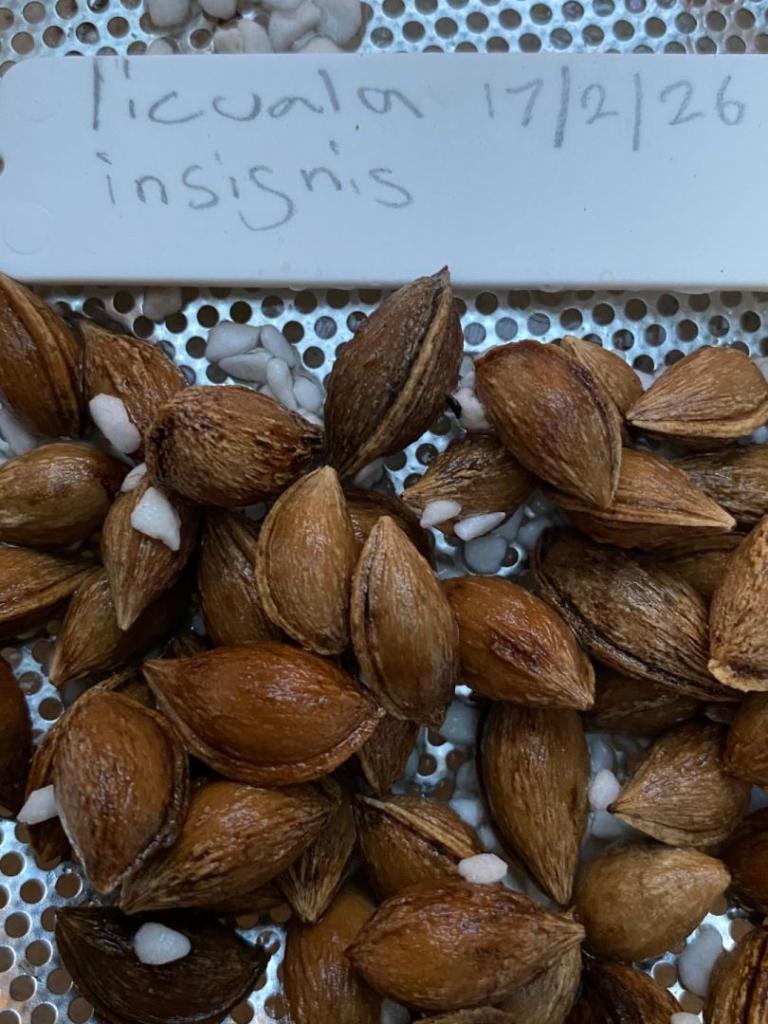


 4 points
 -
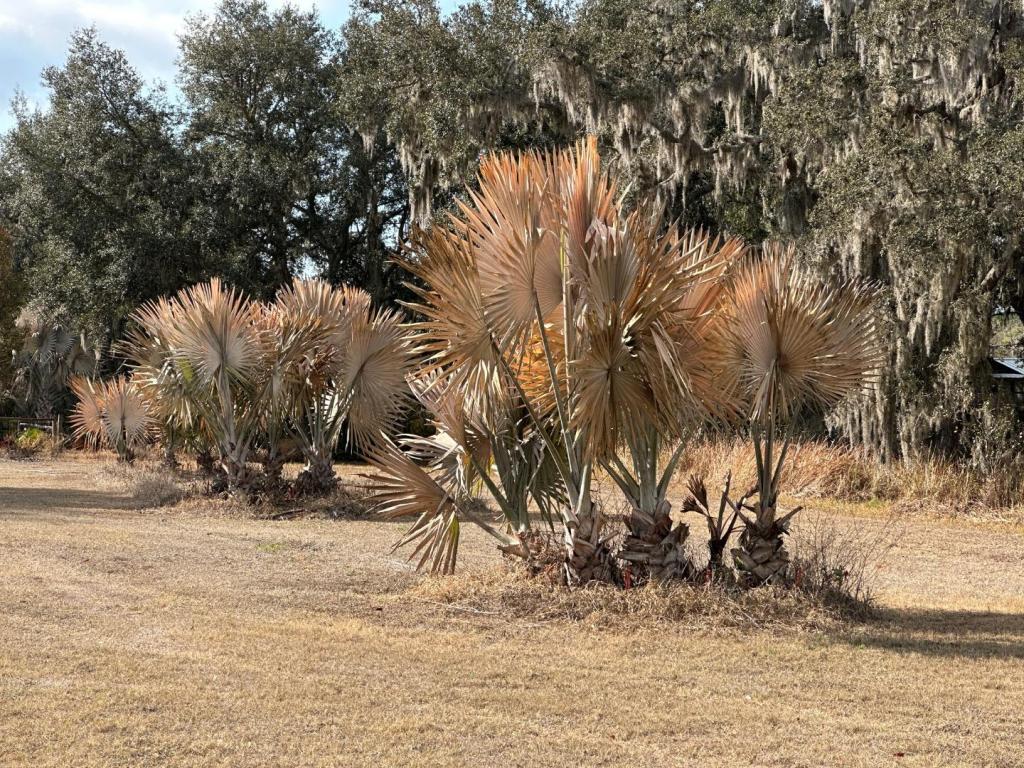
 4 pointsI was able to force this color with 23 degrees but i don't think I’ll be able to maintain this look.
 4 points
 -
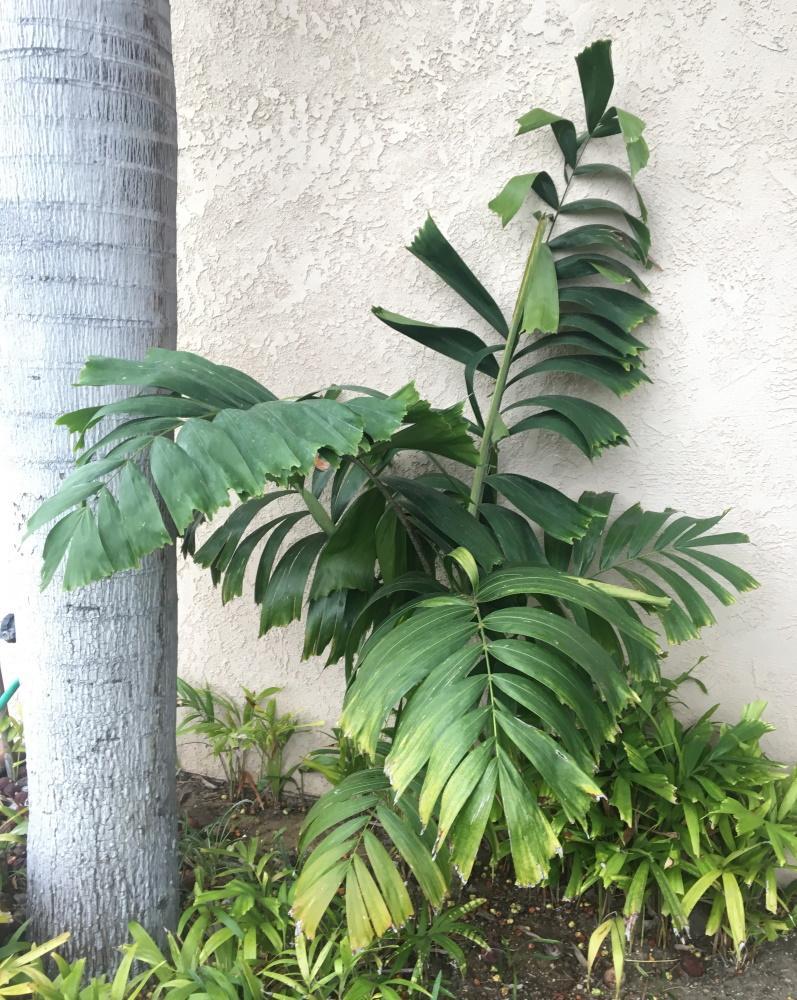
 4 pointsMy little SO Cal. V. arecina jungle... Mom just dropped the seeds and I didn't have the heart to remove them... That promiscuous little tree snuck around the front, got cozy with a foxtail and produced this... Butch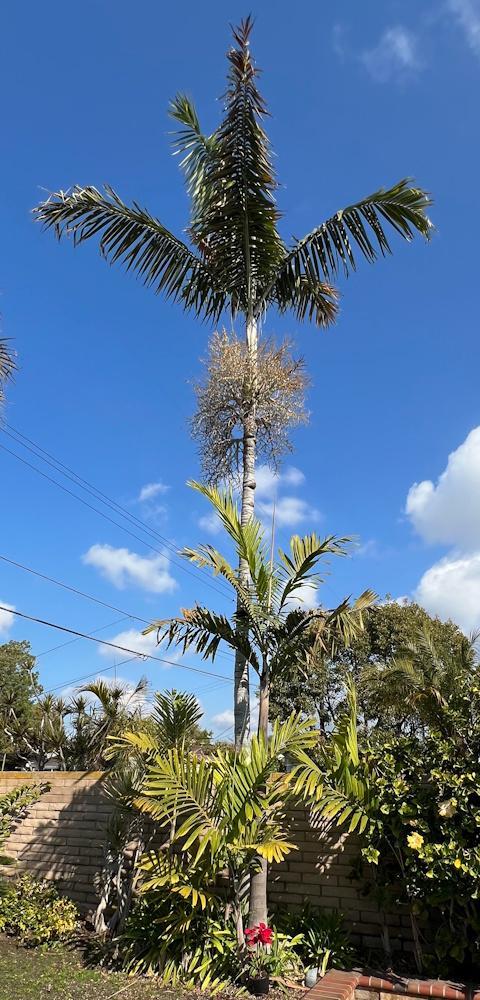

 4 points
 -
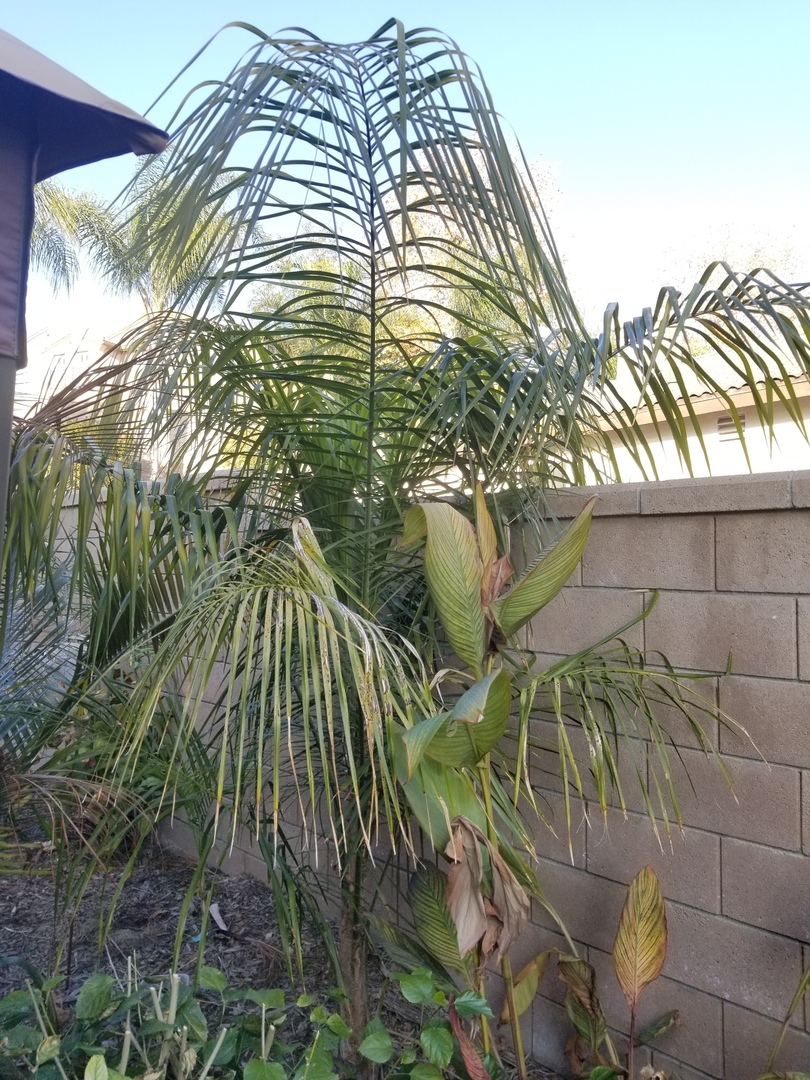
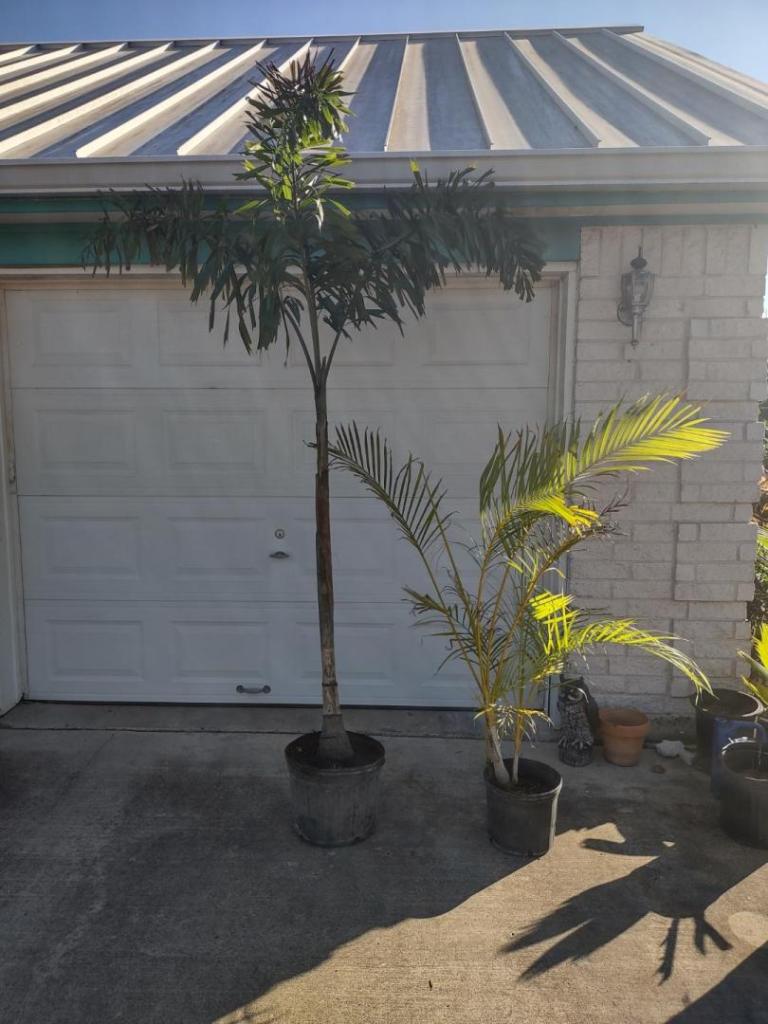
 4 pointsNice double roebelenii! I almost bought one too - $70 at the orange store, right? I settled instead for a $35 foxtail and a $10 Dypsis lutescens. I managed to get both in my Nissan (somehow).
 4 points
 -
 4 pointsAmazing to get such great germination with a rare and exciting palm like this.
 4 points
 -
3 pointsPretty much most of what you see , botanically speaking , is going to be things that won’t grow in the desert . The islands I have visited do have some desert areas but most areas are high humidity and warm trade winds bringing tropical rains . The growth rate of tropical or some temperate plants is about 3x the growth rate even here in Southern California . I have never been to Oahu , other than a stop over , so I can’t recommend any specific gardens . I am sure you will see plenty of palms and tropicals . Some nurseries will sell orchids and small palms , with certs, that you can bring home . The palms I brought home from Maui were growing in shredded paper and came with import certificates . They are still living in my garden 25 years later. Enjoy your trip! Harry This Pritchardia was a seedling that I carried home in my back pack! Not pictured is the Chambeyronia I brought home that is now flowering . I think I paid less than $5 for each seedling in 2002. Harry

 3 points
 -
 3 pointsWow, thanks for the ‘bump’ Richard. Well, an update. The sessifolia got tired of being frail and checked out. The simulans, which was acquired later, died of thirst. The rest of the Veitchia have done well. The metiti, IMO, is a rather unremarkable palm and better planted in a group. I find it interesting that a grouping planted close together can have such a large variation in stature. Anyway, here’s a photo of V. metiti. Tim
 3 points
 -
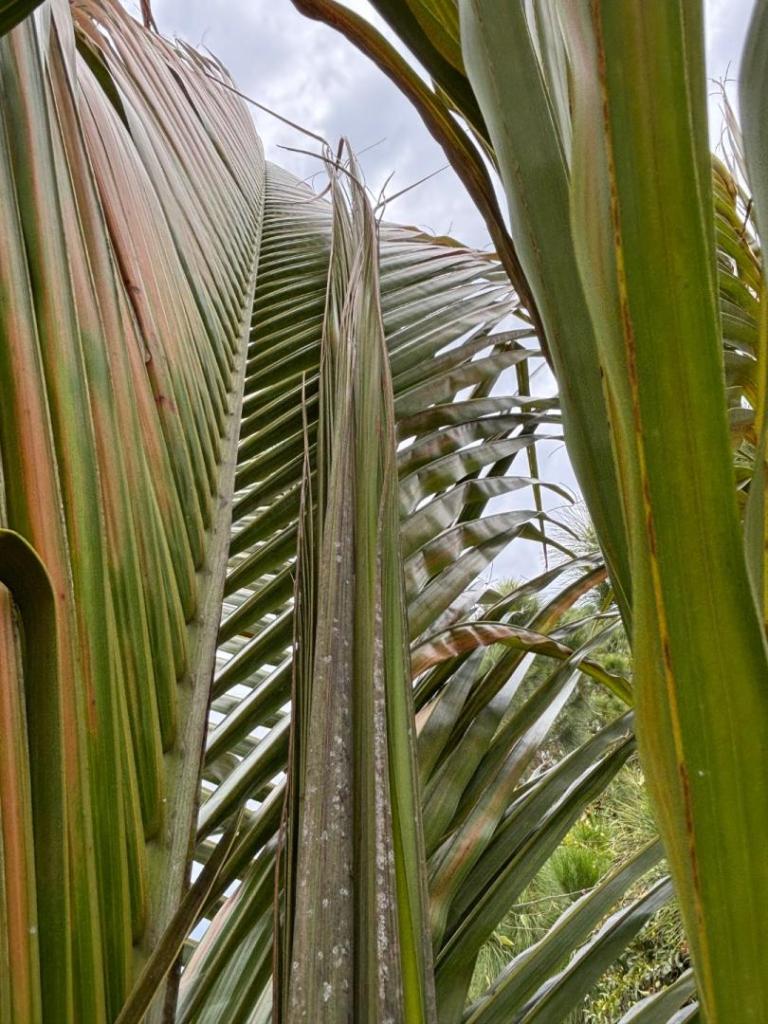
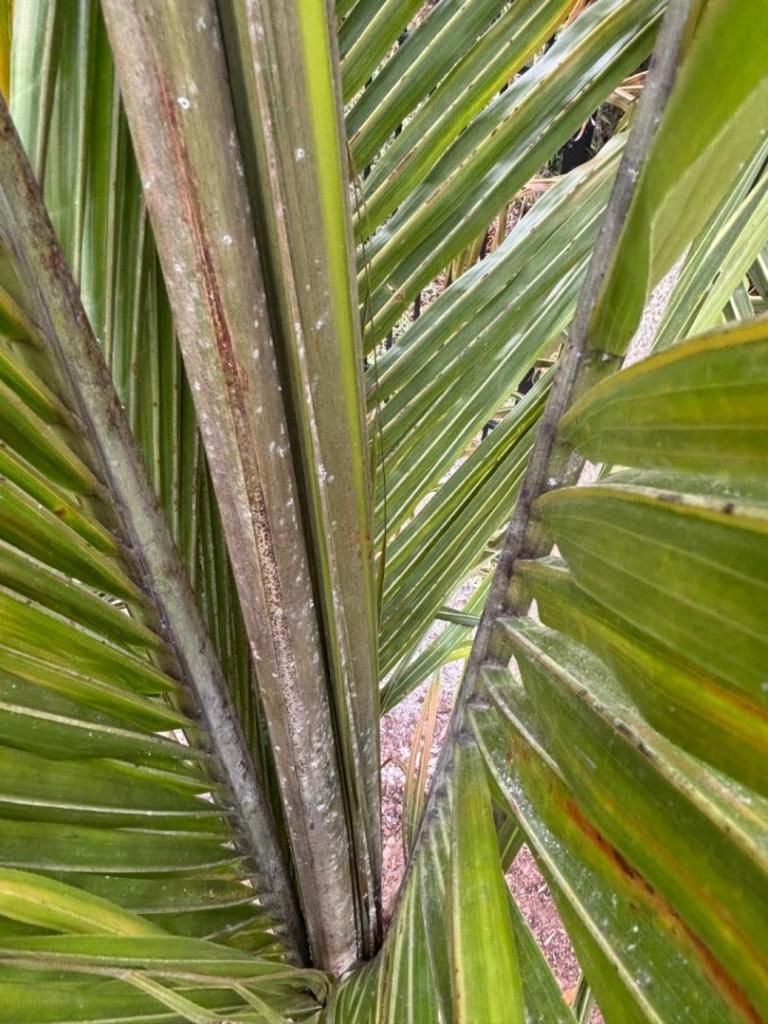
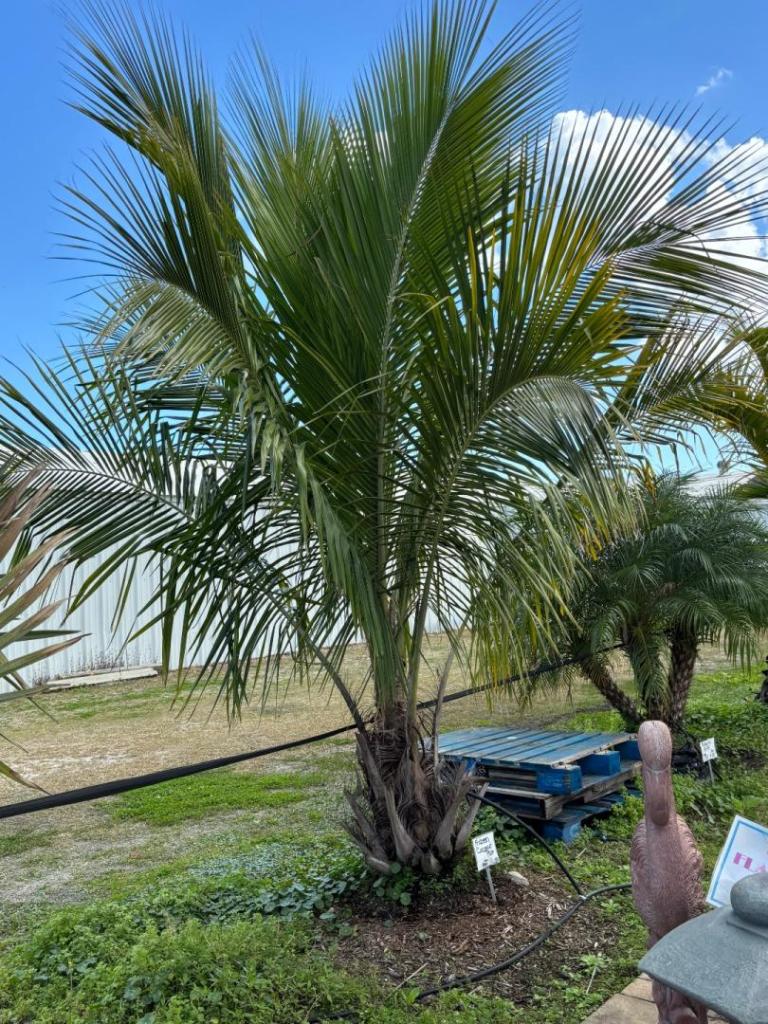
 So I got a good deal on this approx 10ft Beccariophoenix Alfredii. Purchased a couple months ago and paid for installation. Well fast forward a couple frosts and the FL hard freeze and the nursary never called, and I was cool with that, heck I was cool with them holding it until March especially with the recent cold snap, didn’t want to disturb the root system well they called two days ago with no prior warning “we’ve got it loaded and would like to deliver today” so I really had no choice. Still alive obviously but I’m concerned about the burned fronds a the transplant, in fact I feel they under exaggerated how burnt it got. Am I crazy for thinking it a little unprofessional of the nursary to deliver it in this state given it was not burnt at all when purchased. Anyways it’s in the ground at my place and I guess I’m looking for reassurance and care going forward. I was very excited to find it and now I’m worried about it below is before and after
 2 points
 -
 2 points
 -
 2 points
 -
Where its planted will see full sun for most of the day luckily. Time will tell2 points
-
 In pots I would bring in at least under 25F or if mine small seedlings under freezing
 2 points
 -
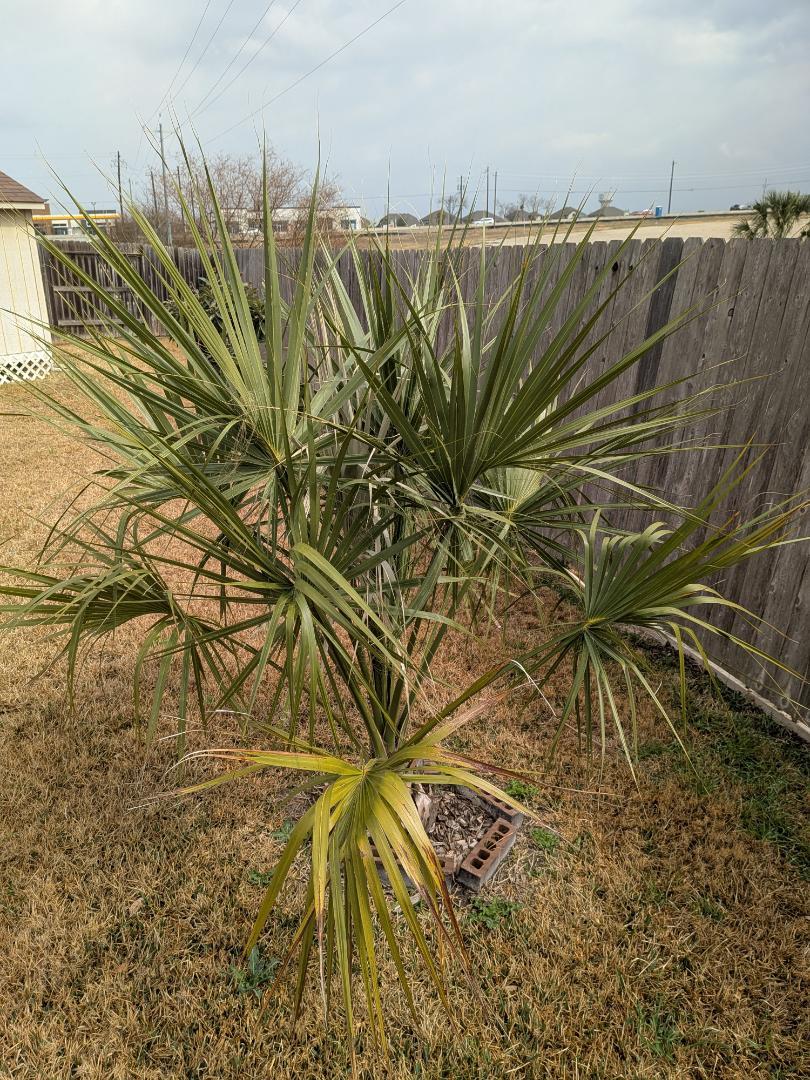
 2 pointsThe palm from the original poster ended up being mine. It is one tough palm. We had the a winter bomb cyclone in 2023 with hurricane force winds and I woke up in the morning and the shelter had blown off and temps were 19F. No damage at all. Mind you this in Pacific Northwest 19F so its much tougher on plants than it sounds. 19F here in Houston is a cakewalk compared to 19F there. January 2024 I ended up moving and a very bad arctic blast hit a couple days after we left. I know the new owners are not gardeners and didn't protect anything. They may have not even been moved in yet and the palm survived and appears to have suffered no damage. I looked up the weather for that time period and it was colder than anything I ever experienced living there. Looks like about 120 consecutive hours below freezing and I never saw 14F in all my years living there. This is the sort of cold spell that can damage or even kill Trachys up there. Jan 12 - 42F, 21F Jan 13 - 20F, 14F Jan 14, 22F, 16F' Jan 15 - 27F, 21F Jan 16, 25F, 19F Jan 17 - 35F, 23F2 points
 -
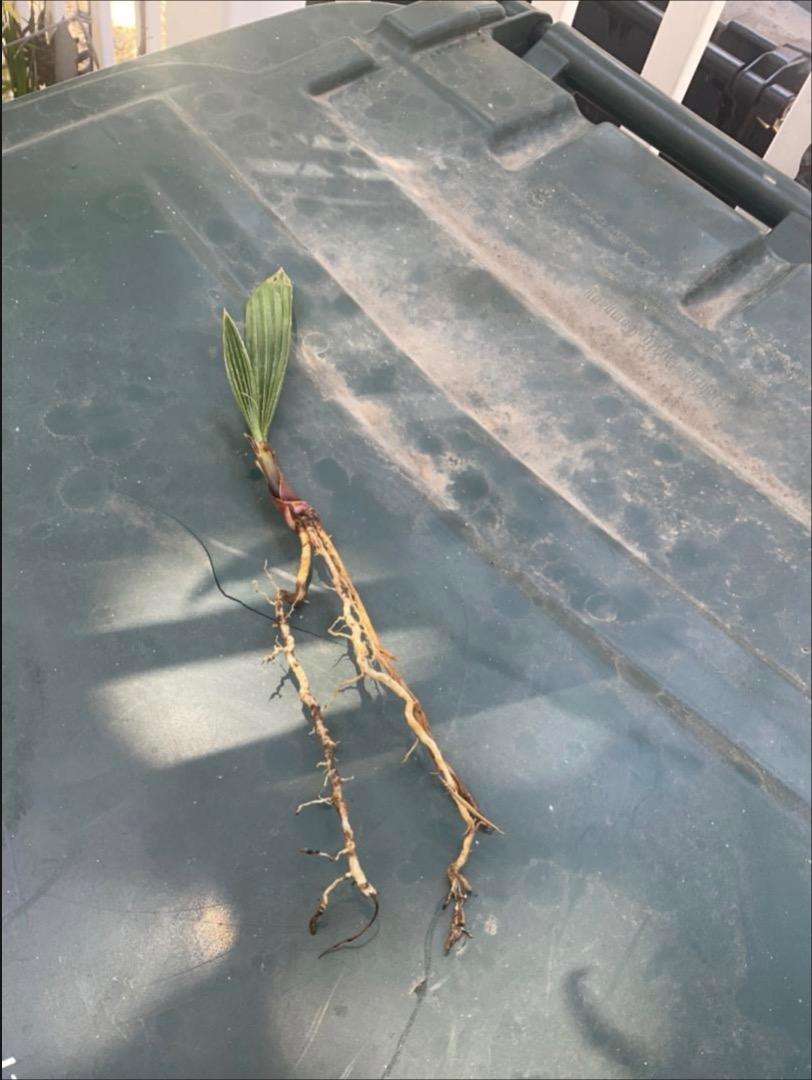
My potting bench is the top of our trash cans ! Perfect height and size for my small projects . Harry It works!
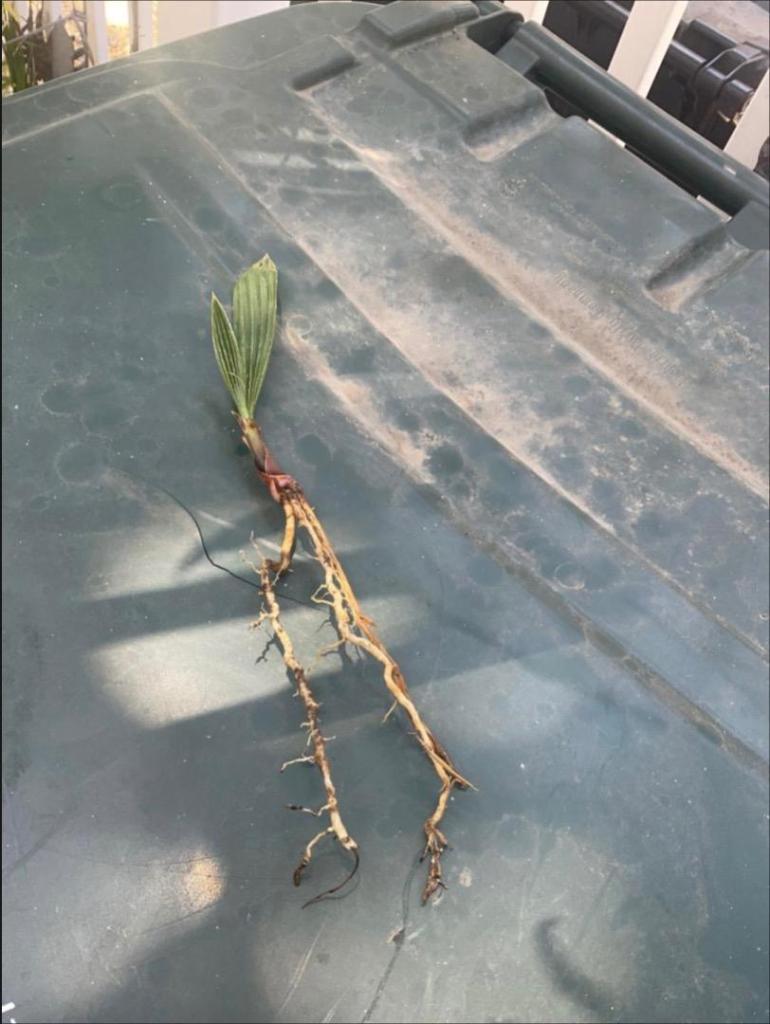
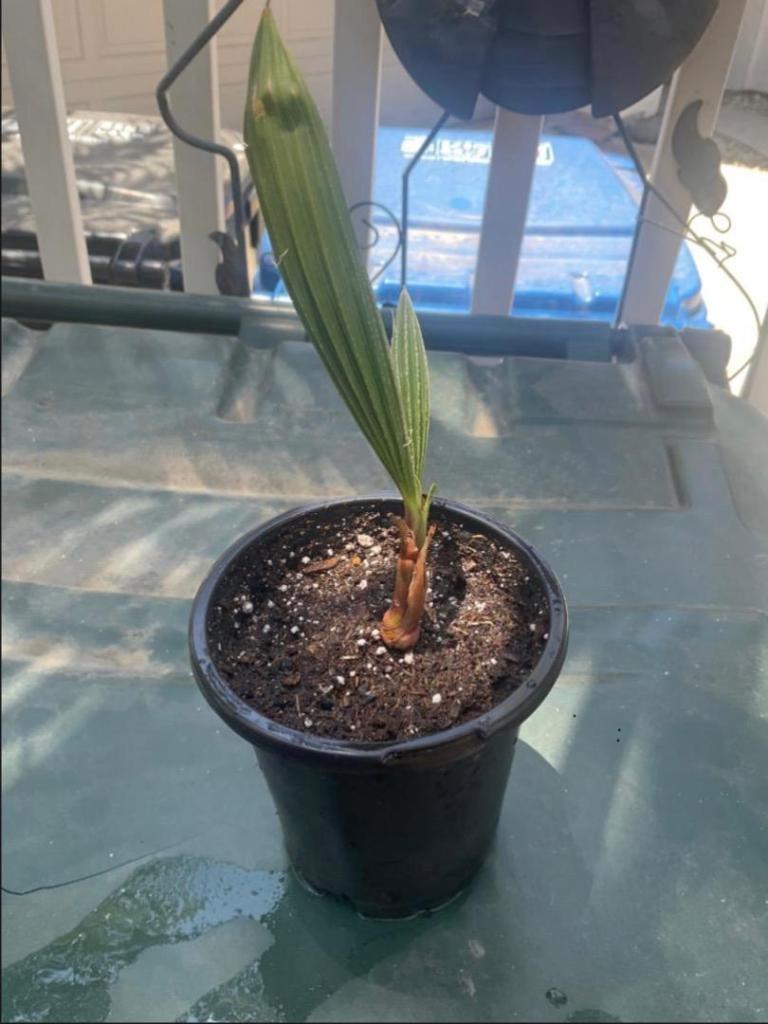 2 points
 -
 2 pointsFoster BG should definitely be on your list. Paradise in the middle of a concrete jungle! Lots of Lodoicia (double coconut) trees to see. aztropic Mesa, Arizona2 points
 -
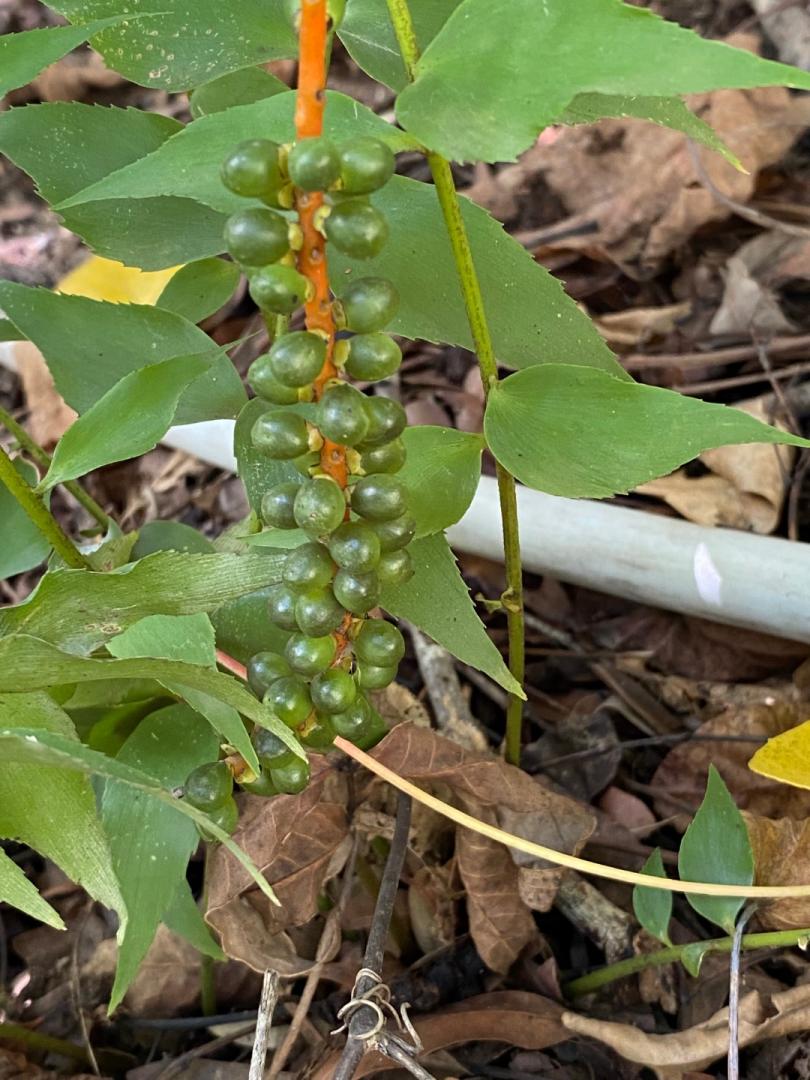
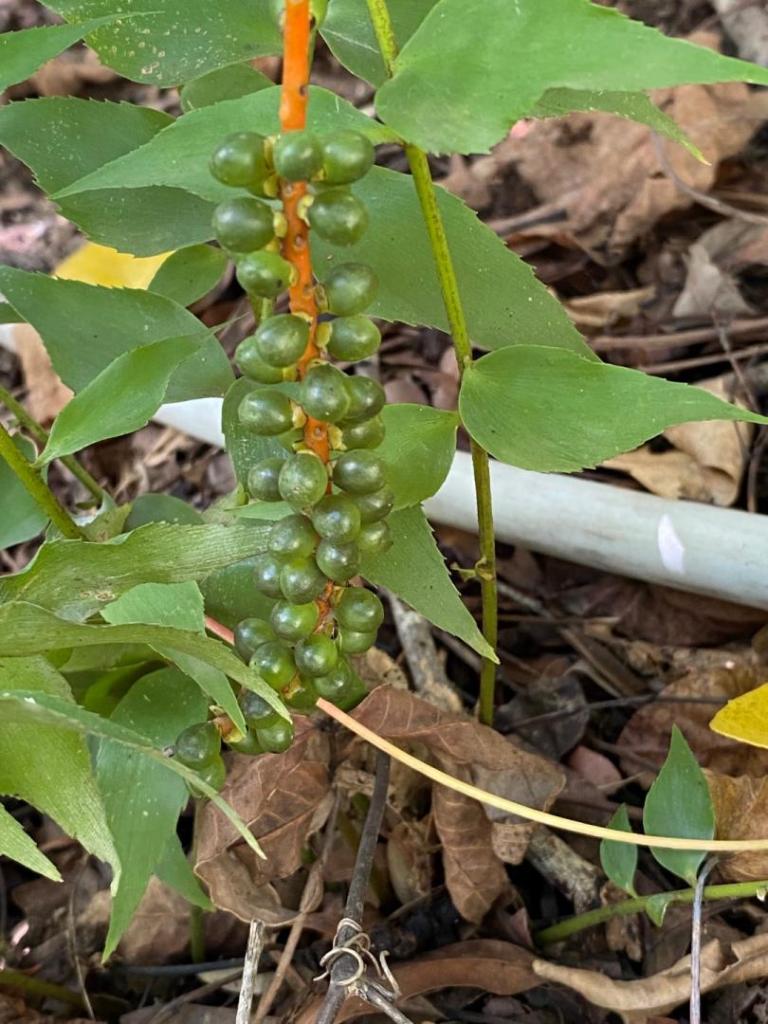
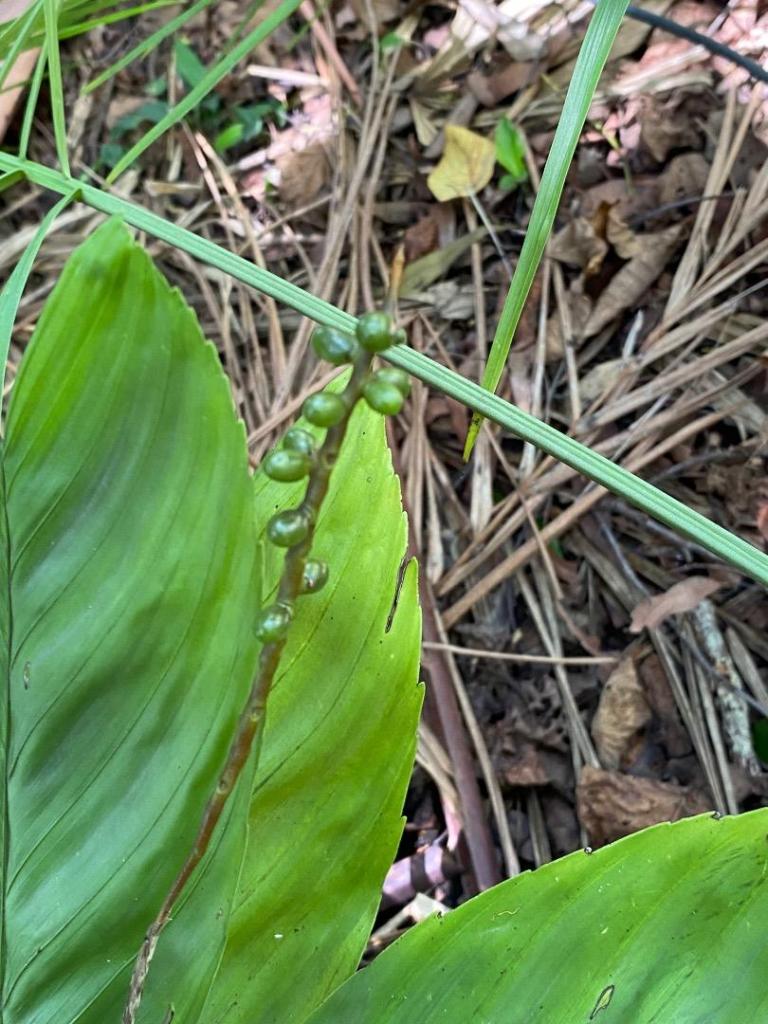
2 pointsA few chamaedorea seeds on there way!chamaedorea plumosa chamaedorea adscendens chamaedorea metallica

 2 points
 -
 @FlaPalmLover if it's easy to keep water out then it's a good idea. Conventional wisdom also says to avoid overhead sprinklers. Yet every single palm nursery on the planet uses big overhead sprinklers, at least until 10g or bigger sizes. They switch to drip lines with emitters or bubblers on 10 to 100g pots. If overhead sprinkling was a serious risk then they wouldn't do it...they'd be risking their livelihood on it. For sure I wouldn't intentionally spray water in the crown, but I doubt a bit of rain is a serious risk. Other people here suggested Daconil in the crown, partially because it stays tacky when it dries. So the mixture *might* stick around in the crown even with some rain. Honestly, as long as torrential rain doesn't wash into the crown, many (or most?) would stay in place. And a systemic (like Banrot or Aliette or others) is great when absorbed. Systemics may be slower though, I read a study somewhere that it could take 1 to 2 weeks to get from the soil to the crown. So I like the idea of the 2 step treatment. I did a soil drench of Banrot + Aliette on a few key palms like my mutant Elaeis, a couple big Arenga Pinnata, and several Attalea Brejinhoensis. Those were all seriously burnt and the frond stems were at least partially burnt towards the crown. So I figure both is a good choice. @junglejim welcome to PalmTalk! I had a couple of 1-2 year old Pandanus Utilis (I think), but both died after 27-30F frosts. They defoliated and started to regrow, but then caught a crown rot and died. So a good crown treatment (Daconil, hydrogen peroxide, Mancozeb, any copper-based, etc) and a systemic (Banrot, Aliette, others) is a good choice.2 points
 -
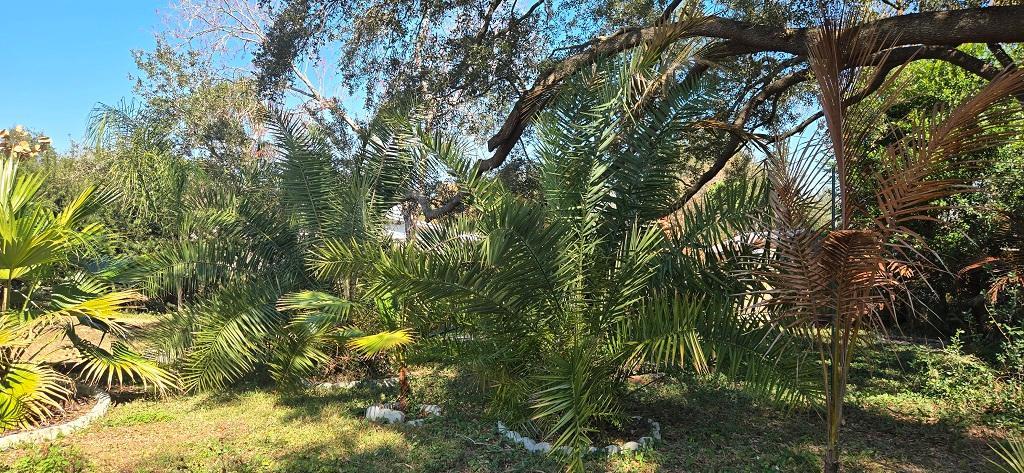
 @pj_orlando_z9b + @Kiplin + @PalmBossTampa + @gyuseppe These are my Phoenix reclinata hybrids with a juvenile coconut that got 100% defoliated for comparison. My best guess is that they are crossed with Phoenix canariensis since that was the closest other species, but they don't have enough trunk to say for sure. Guest appearances from Livistona chinensis, Syagrus romanzoffiana, and Washingtonia robusta as well.
 2 points
 -
.thumb.jpg.304b32ca4398a111edf4ac525048111e.jpg) 2 pointsMy Robusta isn't very leaf hardy. Low 20s , the fronds will turn brown, all of them. I see some they look exactly like mine but seem to handle the cold better. At least mine is pretty bud hardy and recovers fast. I leave the fronds on until they're crispy but the new frond that is currently seeking daylight doesn't look bad at all.
2 pointsMy Robusta isn't very leaf hardy. Low 20s , the fronds will turn brown, all of them. I see some they look exactly like mine but seem to handle the cold better. At least mine is pretty bud hardy and recovers fast. I leave the fronds on until they're crispy but the new frond that is currently seeking daylight doesn't look bad at all.

 2 points
 -
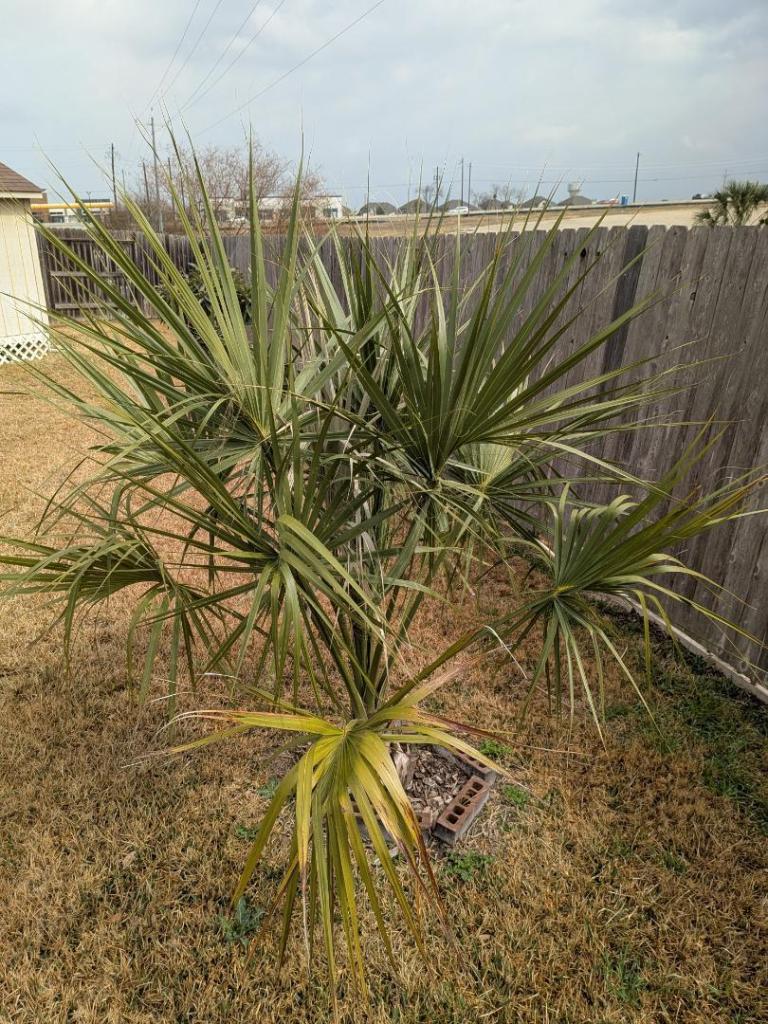
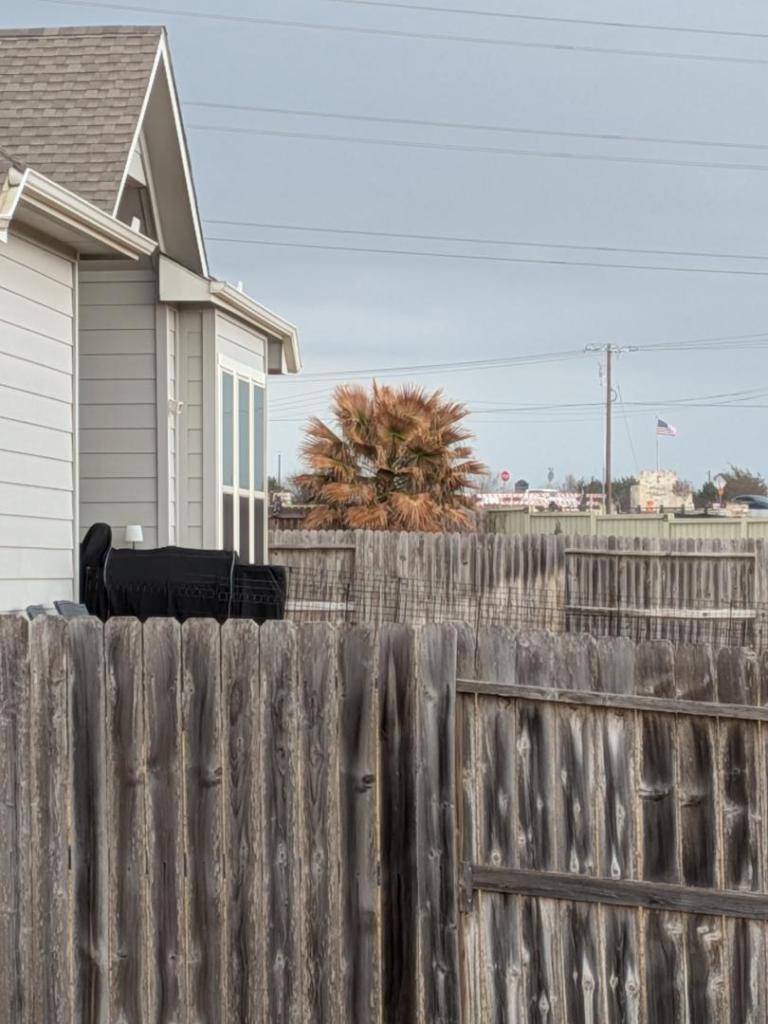
 2 pointsCibolo TX Post Winter storm report: Temps in my neck of the woods hit 19F or 20F, with some freezing rain. As usual, I think the freezing precipitation was the bigger problem. C. radicalis with East Northeast exposure and partial overhead protection from the eave of the house. P. dactylifera was almost immediately dead. It was about 3 ft in overall height and very healthy going into this event. I covered it, but not until it was already wet. So it's spear pulled almost immediately after the freeze. It's leaves were brown within a few days. I cut the trunk down and there was no living tissue left, despite treating it with hydrogen peroxide within a couple of days of the ice. Butia took a little longer to show damage. It was covered with a large patio umbrella, but it blew off during the storm. It was a couple of weeks before the newest leaves started losing color. Spear pulled, and I have been treating it with H2O2 as well. No signs of a new spear yet. Even my S. mexicanas (No protection) have a leaf or two that have lost their color. This surprised me: My Washingtonia that grows like a weed looks pretty much perfect with no protection: Not all Washingtonians are created equal though. This is what another one just a couple of houses down from mine looks like: Small trachycarpus F x Ws took no damage with a bucket to cover them: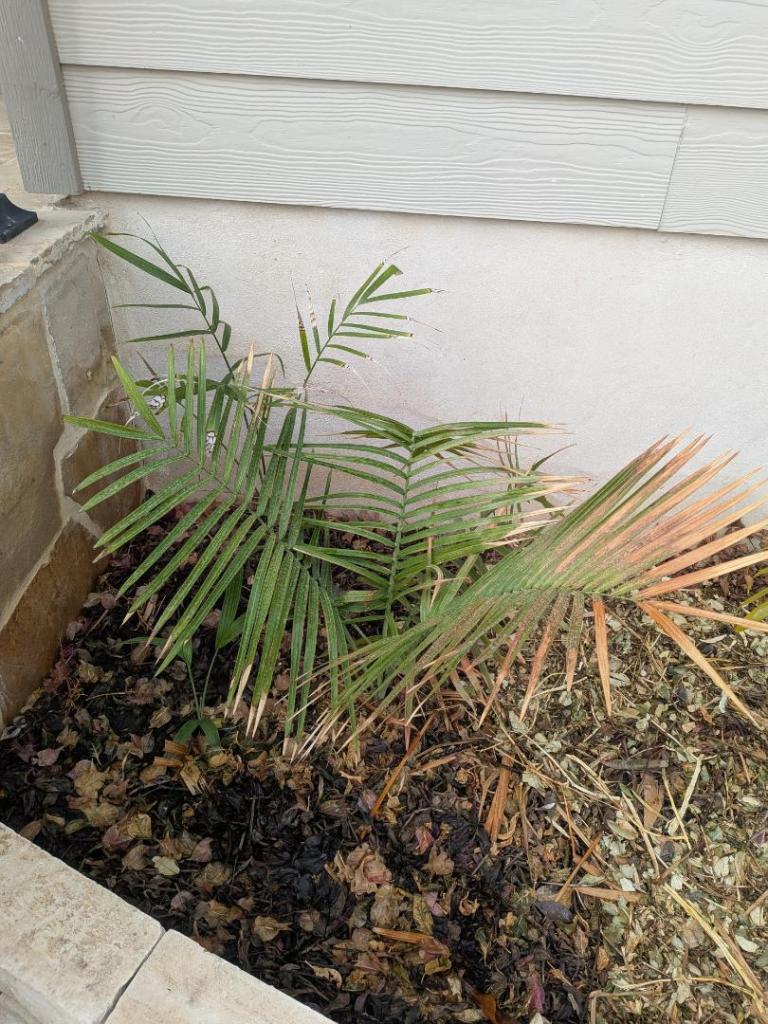




 2 points
 -
 2 points
 -
2 points
-
 1 pointReferring to Art Chadwick’s description of these, I believe this is a highland type as the pseudobulbs don’t seem very tall to me.1 point
 -
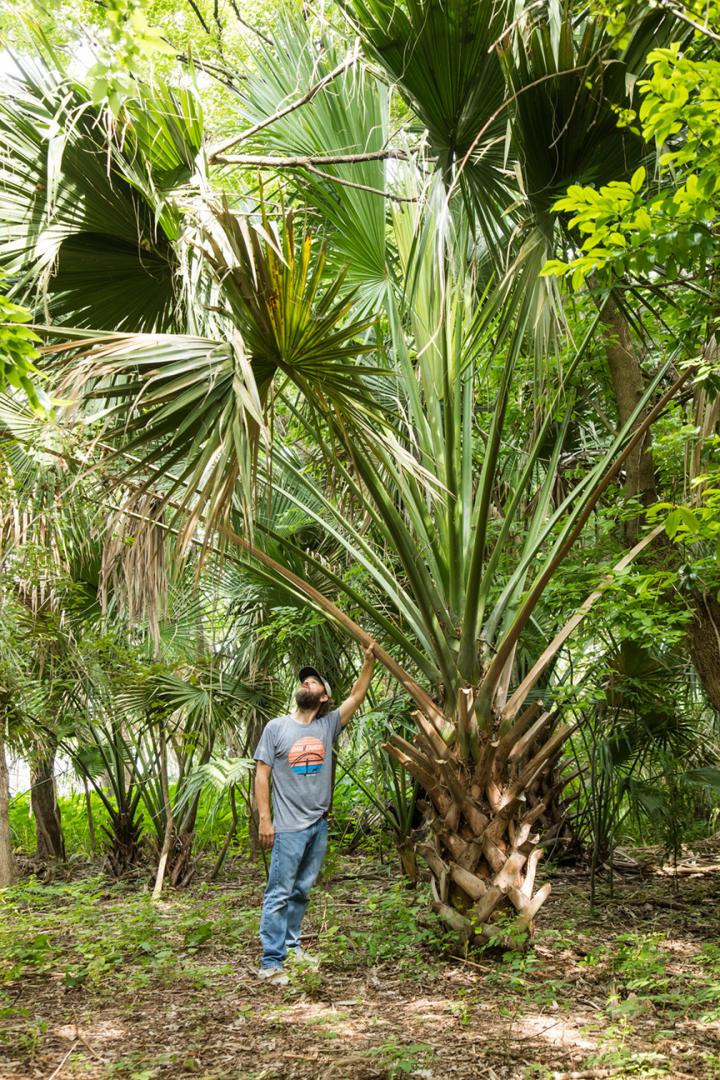
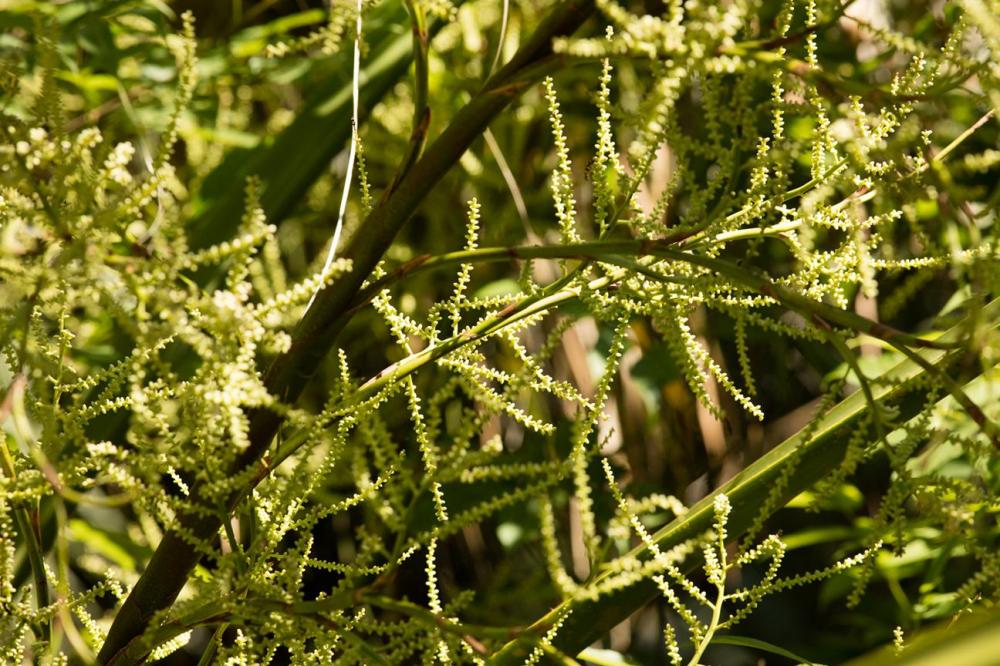
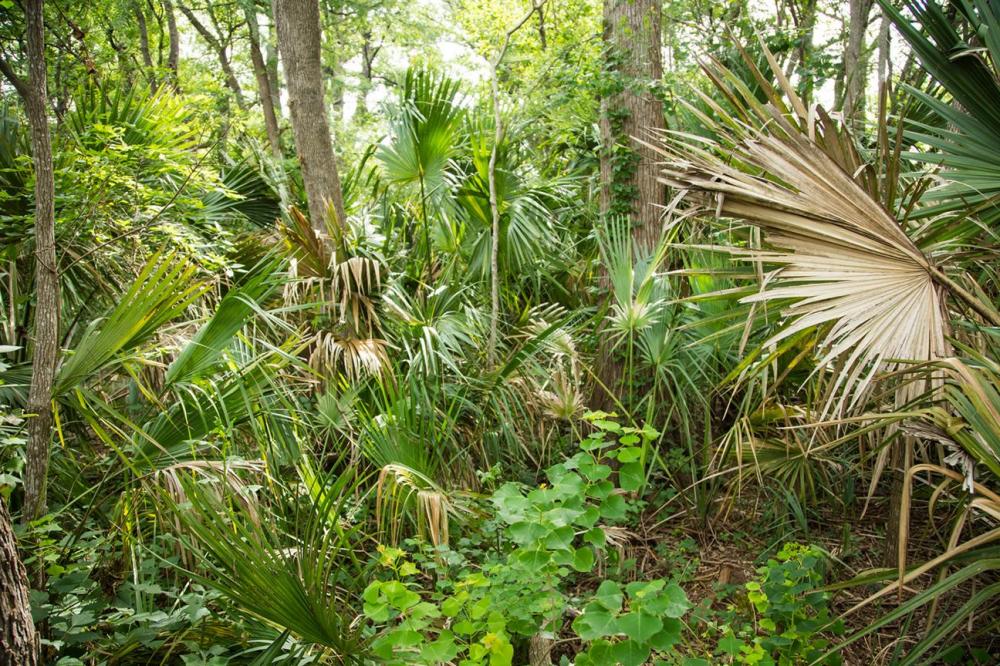
 1 pointHere are some Sabal Mexicanas(?) in Austin. I wanted to show how crazy long the petioles are. Much longer then the 35"-47" that wikipedia states, more like 144++" They seem to be most impressive at this size and perspective. I put the camera on a timer and added some fuzzy Doofus in the photos for scale. These are all from the Laguna Gloria Sculpture Park where they are growing near oaks and cypress. I have many of these growing from seed along with S. Uresana and S. Causiarum too. - thanks Joseph! I can only imagine what those will look like size-wise in the future. The sunny shot of the flowers is a week earlier than the shady one.

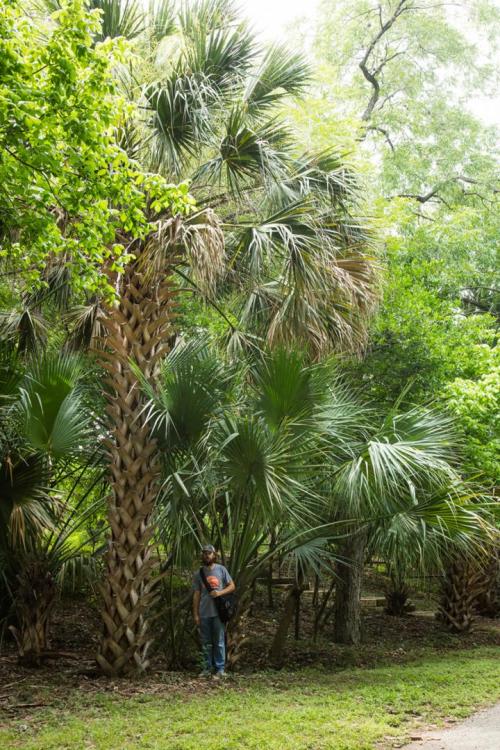
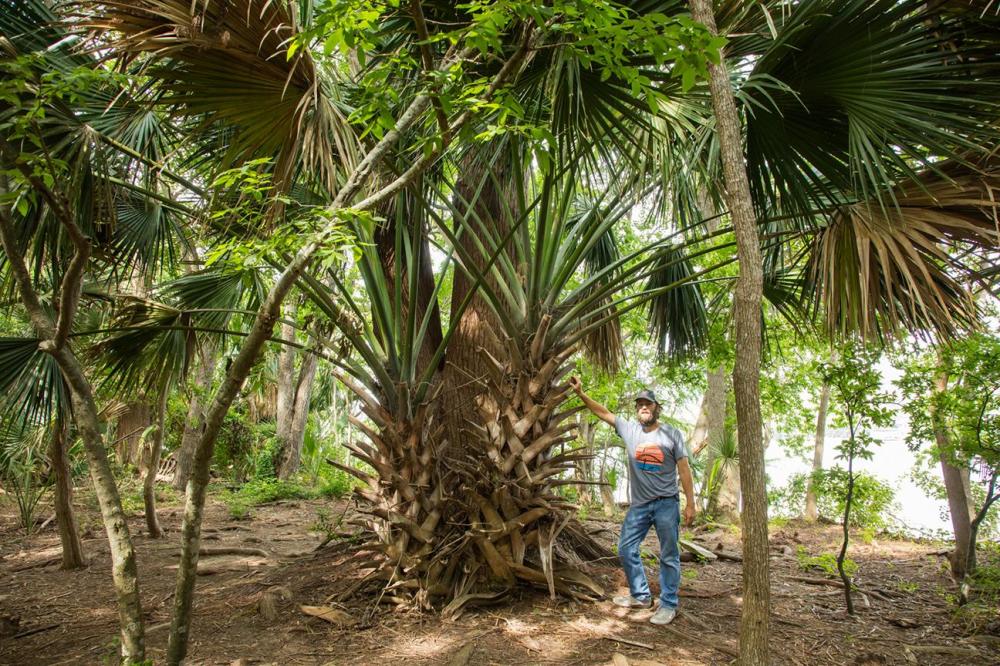


 1 point
 -
 I like it. You're staying on topic rather than graphs, charts, statistical analysis and week long forecasts. Spring isn't far off. "What is your current yard temperature?"1 point
 -
1 pointI prefer it when the article arrives with the posting. If you think of it, perhaps you could do that? Thanks.1 point
-
 1 pointMaybe they could have sold them and had them removed intact. This seems like a stupid loss of a species that is slow growing... not 'invasive' material at all.1 point
 -
(173x200).thumb.jpg.87642ce613f801fde119db608b8aeb96.jpg) 1 pointUpland or lowland form? One ..the upland form.. is supposedly easier to bloom / more adaptable than the form that grows at lower elevations ( Lowland form = Likes the same constantly warm / humid conditions that many other Catts from that elevation range in S.A. prefer ). Upland form is grown w/out too much trouble in the milder parts of CA, even in moderate amounts of sun, and can take temps down to about 38, if completely dry.1 point
1 pointUpland or lowland form? One ..the upland form.. is supposedly easier to bloom / more adaptable than the form that grows at lower elevations ( Lowland form = Likes the same constantly warm / humid conditions that many other Catts from that elevation range in S.A. prefer ). Upland form is grown w/out too much trouble in the milder parts of CA, even in moderate amounts of sun, and can take temps down to about 38, if completely dry.1 point -
 Did you cut them open? I have had seed sink, I cut them open, and no embryo. Some even hollow.1 point
 -
When considering my available options for a rain event, I decided the best thing I could do is use Banrot on any species that appeared to be struggling with post-cold fungal growth.1 point
-
 Sounds perfectly fine to me. This stuff happens in nature all of the time and nature has it's own way of sorting this stuff out.1 point
 -
 1 pointSo here in Florida we had that cold front that did a number on all my Clusia plants and my two Christmas palms which are babies and were just put in the ground. The Sylvester palm is thriving great. what can I do to speed up the growth process? the Christmas palms have all turned brown and the new frond sprouting looks brown as well. They do seem to be alive, just need a lot of love. I have been watering them. Anything I can give them to help them.
 1 point
 -
I know this is not warm for a lot of people , but this is a very warm winter night for us in february its currently. 48f at 12:02 here in needmore Pennsylvania
 1 point
 -
Here's a hybrid Phoenix reclinata x roebelenii that I just germinated. Going into a 12" liner for the winter - after that we'll see...
 1 point
 -
 1 point
 -
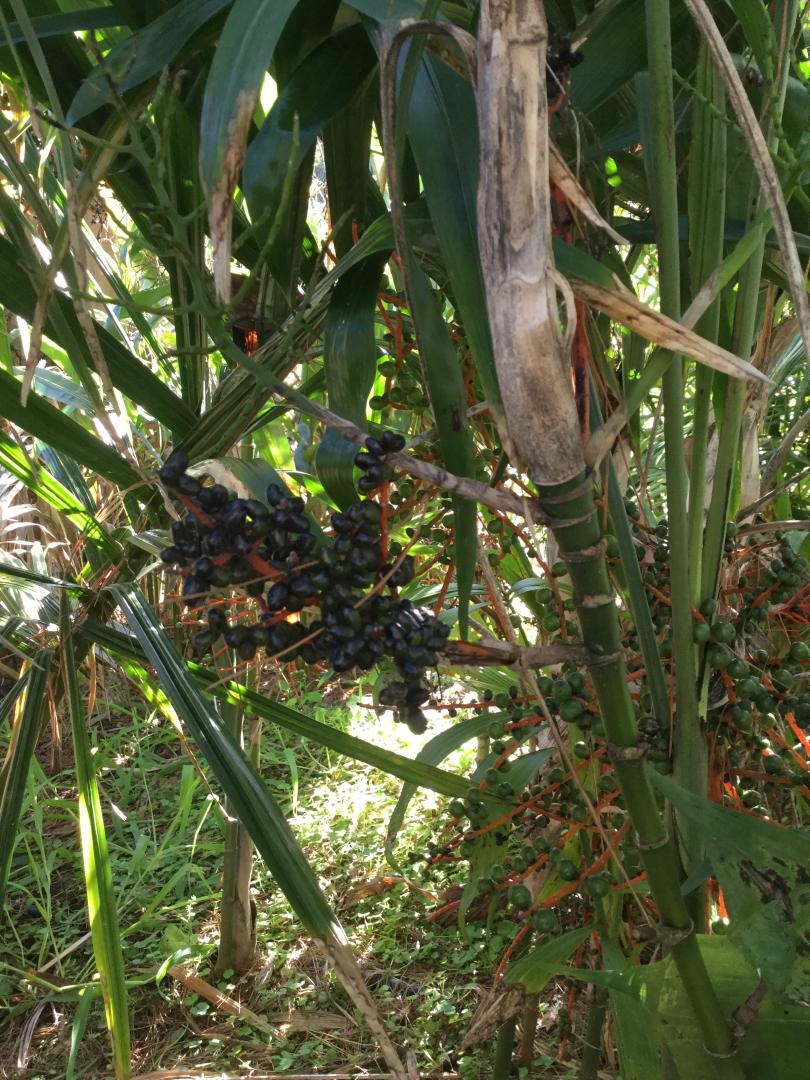
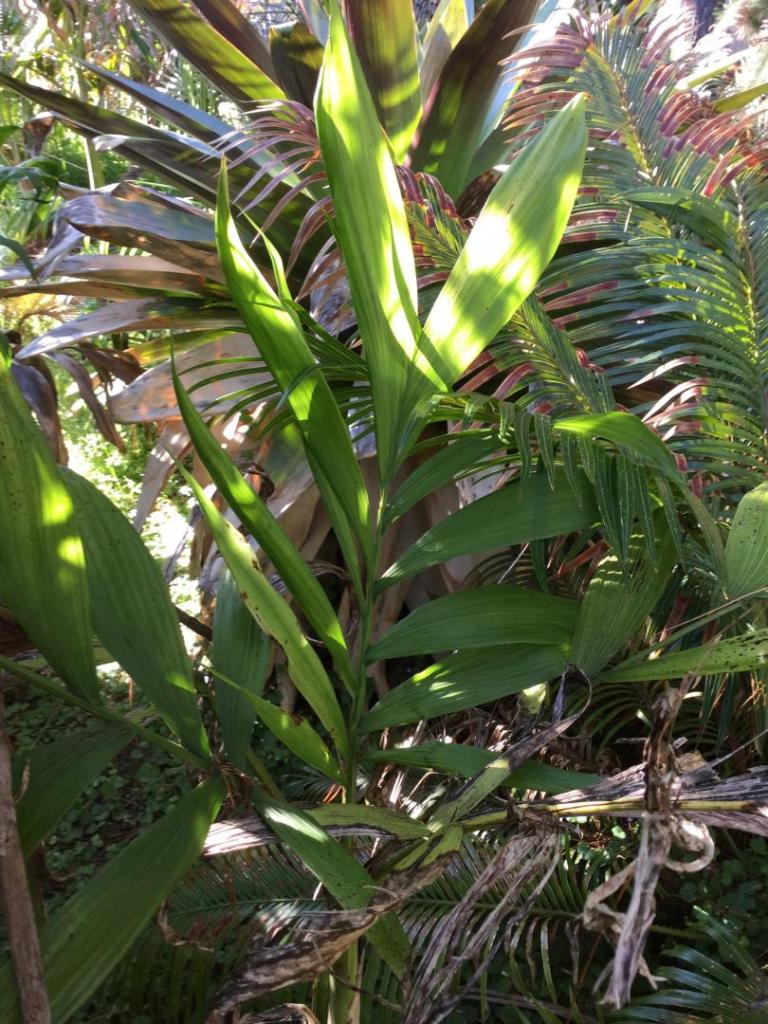
 1 pointJust went out and took some pics. It appears I have two females and one male. I may have to help them along and see if I can get some fertile seeds. But I’m not really sure of the species even though I bought them as falcifera. They appear identical to a picture listed on the Pacsoa website as falcifera.
 1 point
 -
 1 point
 -
 1 point
 -
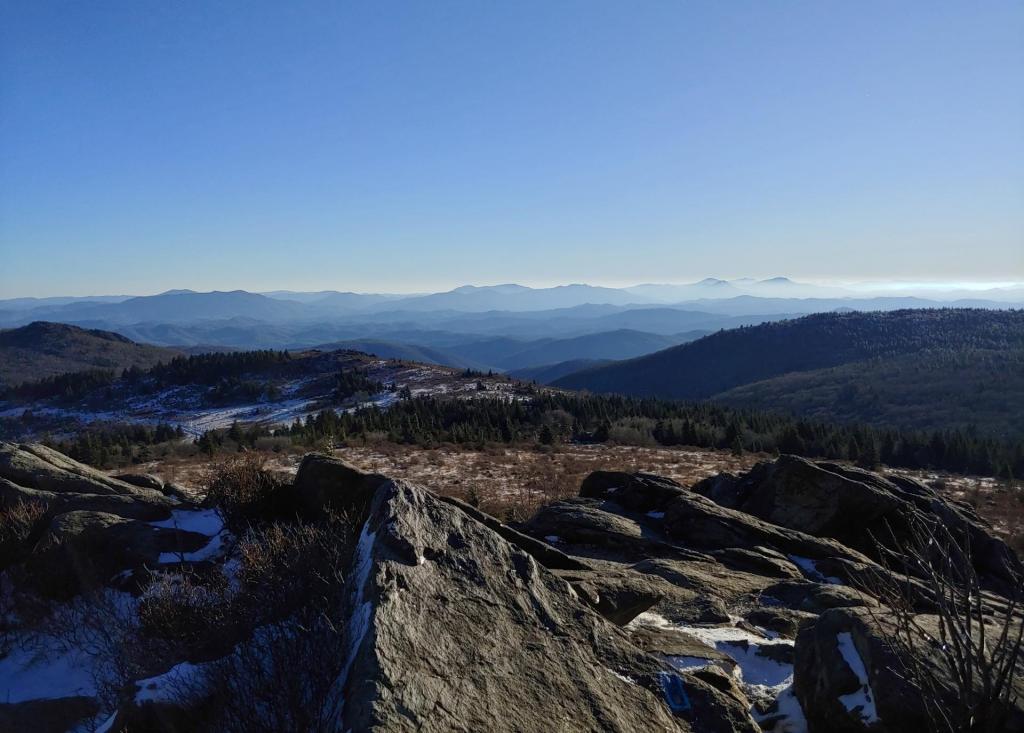
 1 pointThis will be my new setting. White pine, red spruce, and Frasier fir are pretty common there.
 1 point
 -
 Here's mine. 3 years from a skinny 5g and sitting in full Arizona sun all day.
 1 point
 -
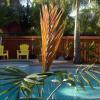 I was thinking I would share mine. It really just put on some size over the last year but now seems to be cranking out leaves. I plan on clearing out some plants in this area soon to add Chameadoria since there's more shade.
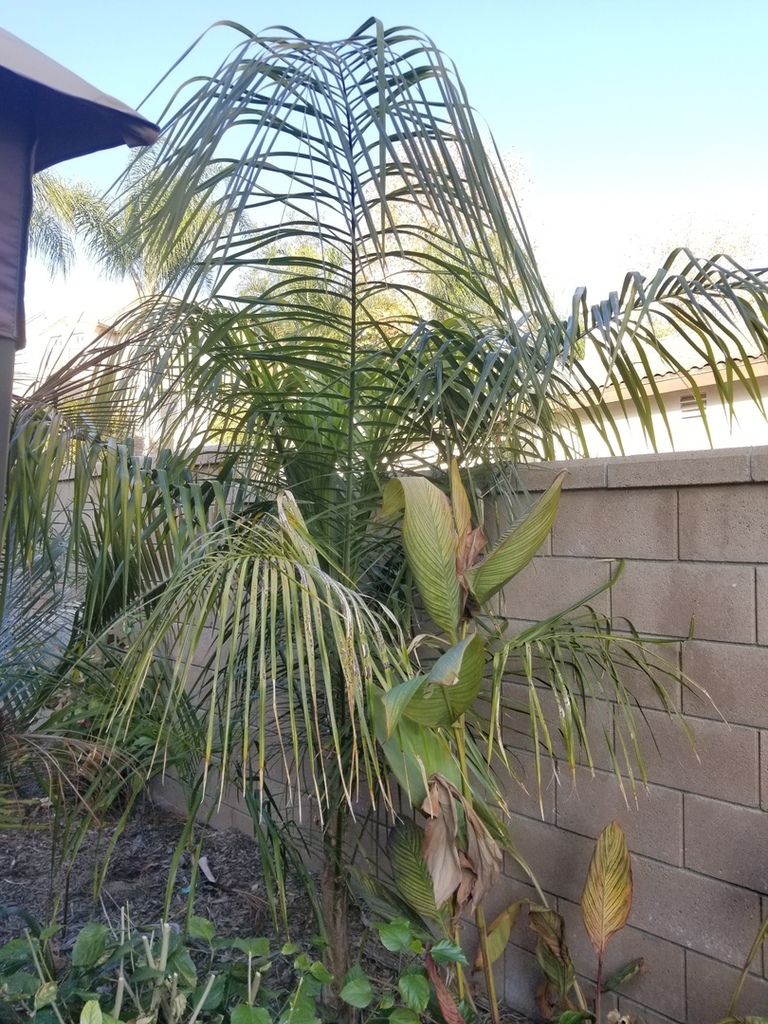 1 point
 -
Couple of mine.. still kinda small but have been solid growers. Only have 3 total but they are nice1 point
-
 Which one? LOL - I must have at least 15. I’ll try posting a couple of the bigger ones in front and back.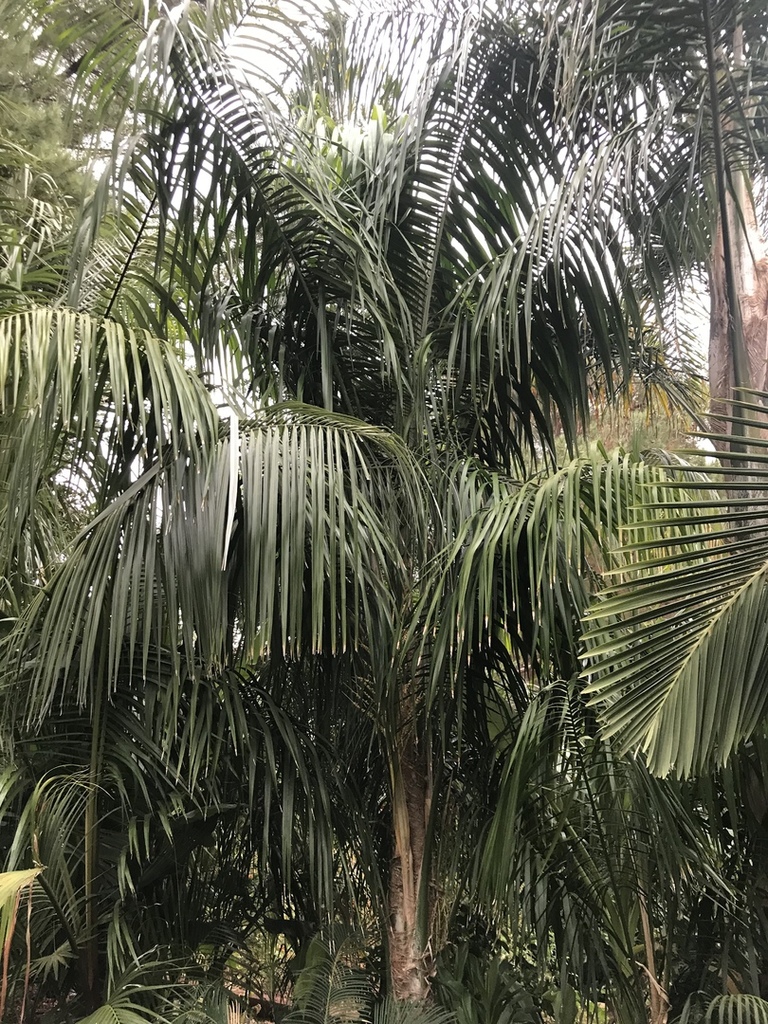
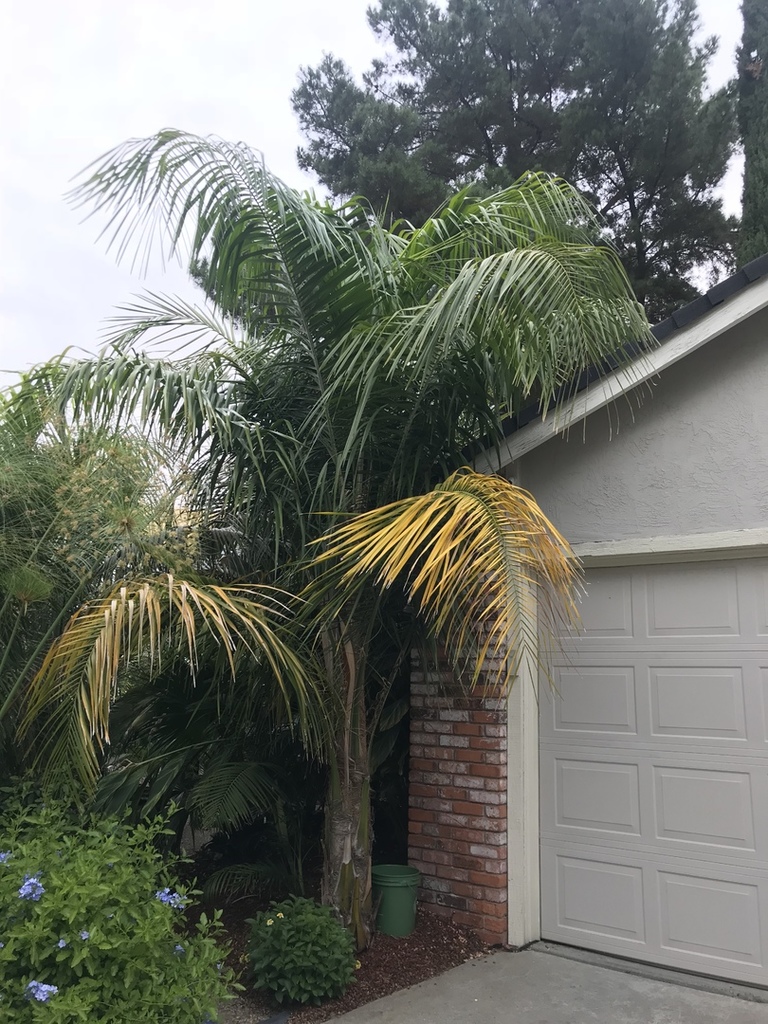 1 point
 -
1 point
-
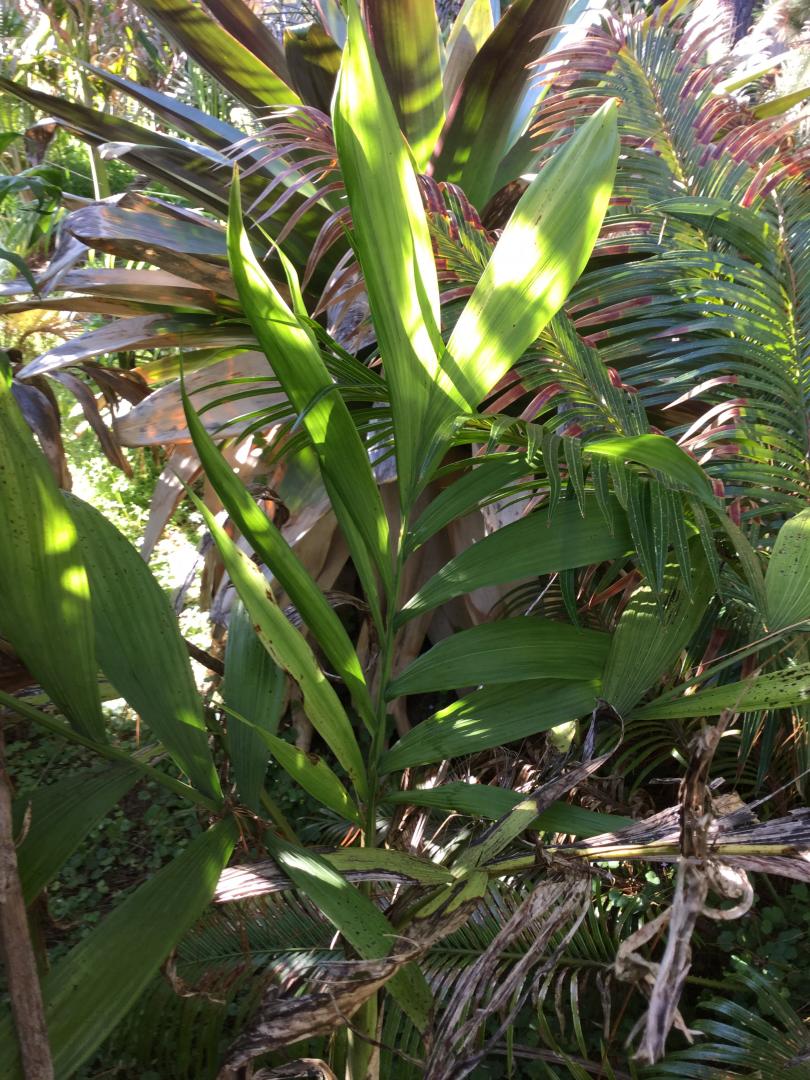
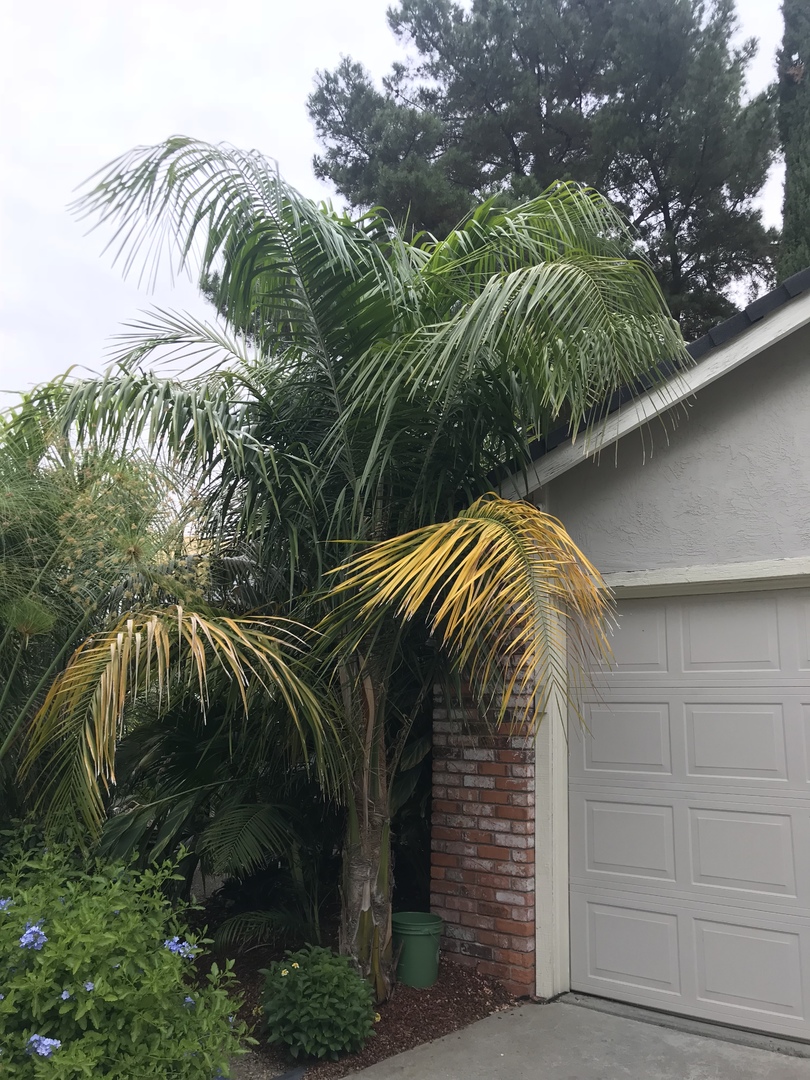
 1 pointI got a Chamaedorea falcifera from a San Jose Nursery. It looks like a multi-trunked Ch. Oblongata with darker leaves.
 1 point