Leaderboard



Popular Content
Showing content with the highest reputation on 11/15/2025 in all areas
-
Anyone else with a Ravenea julietiae which has reached reproduction age? My male is just now pushing out a spathe which won't open for weeks. Share photos if you have them.

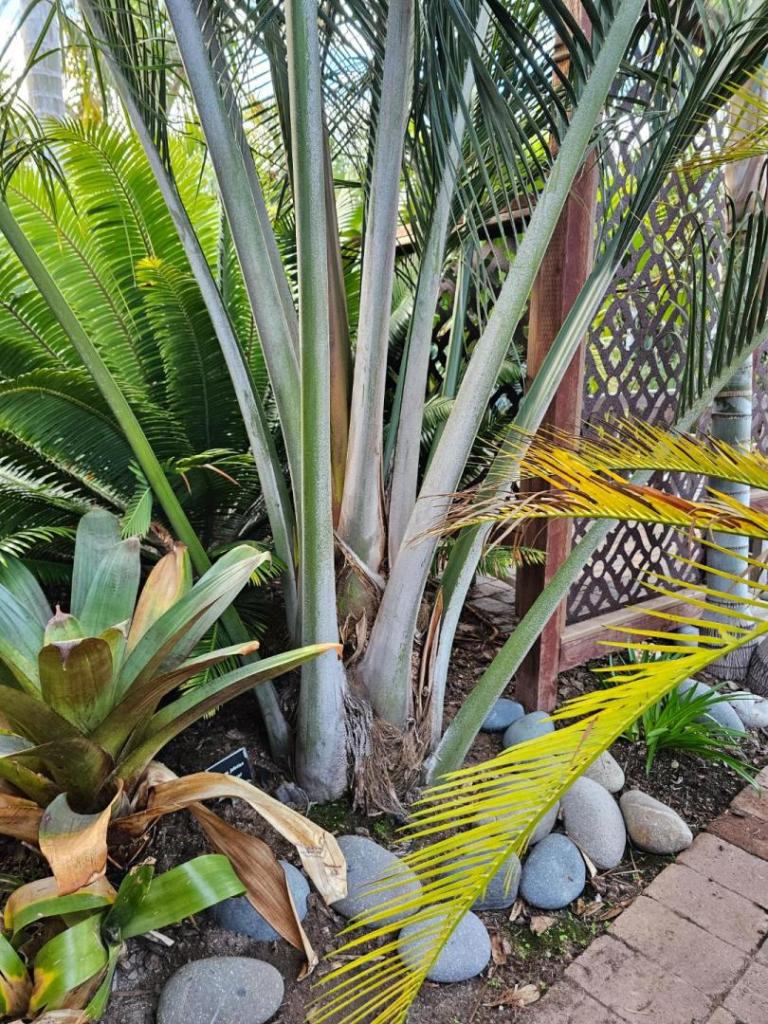
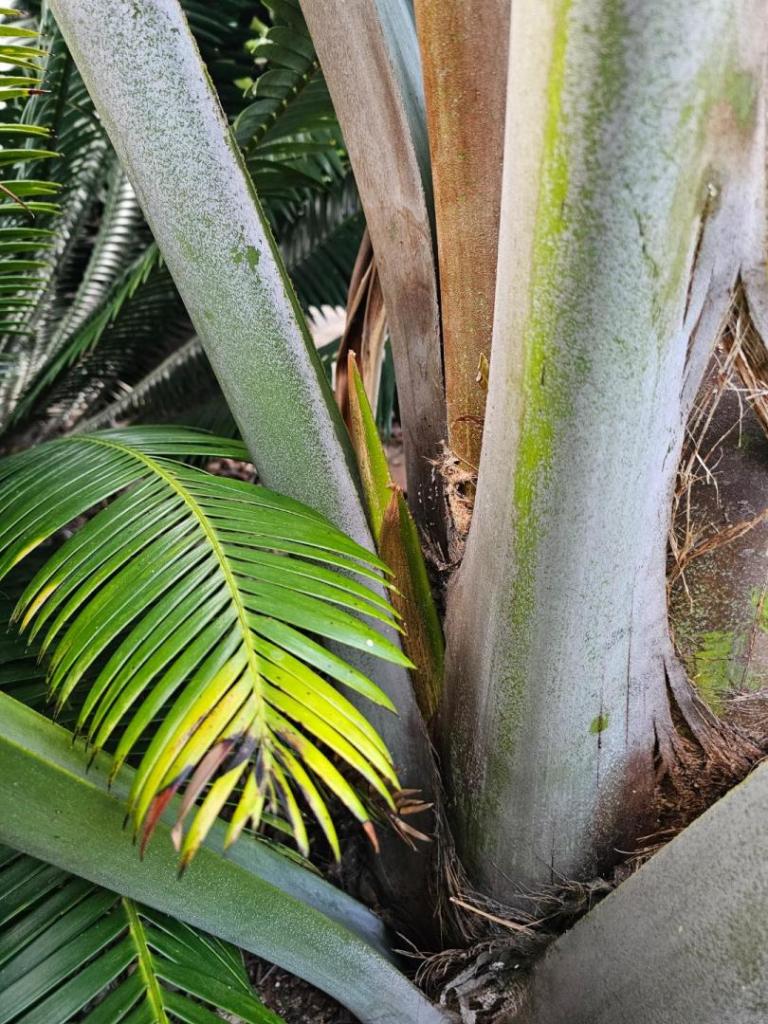
 9 points
 -
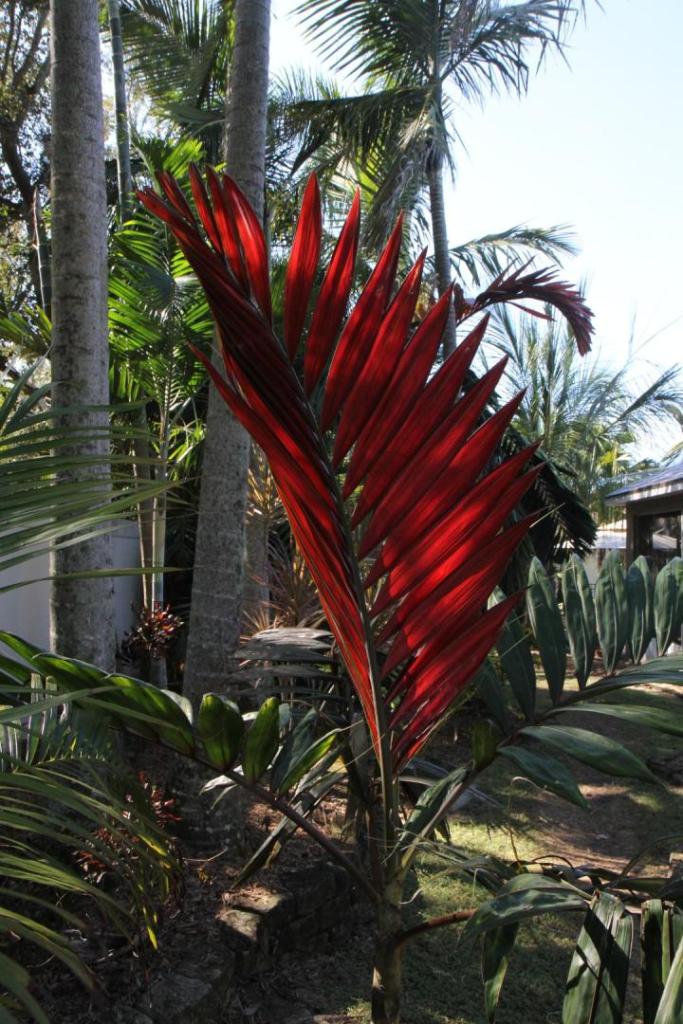
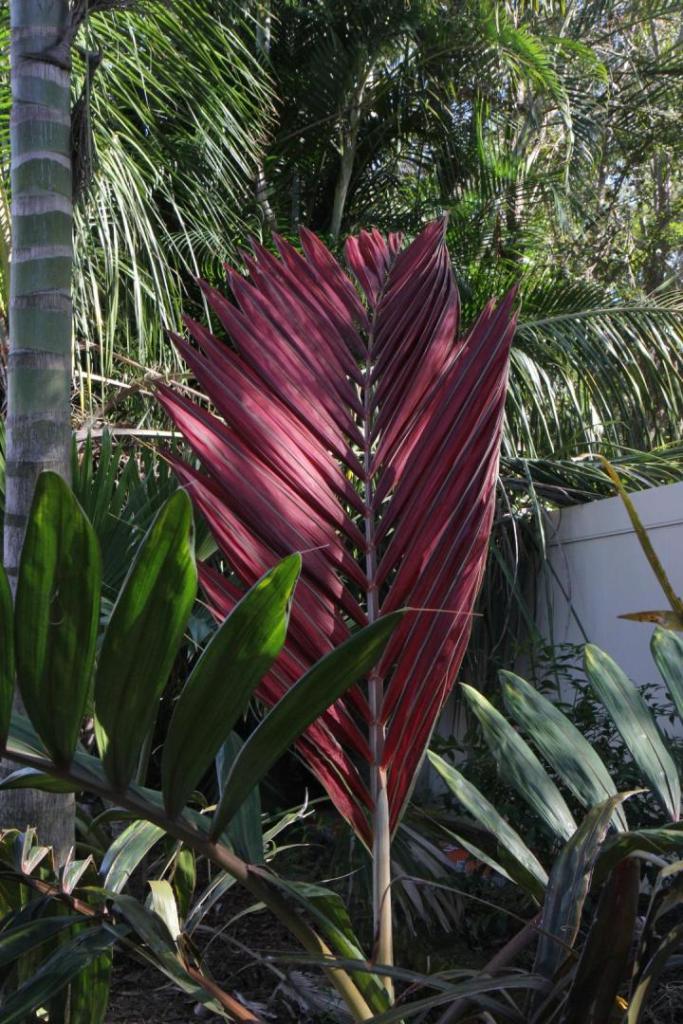
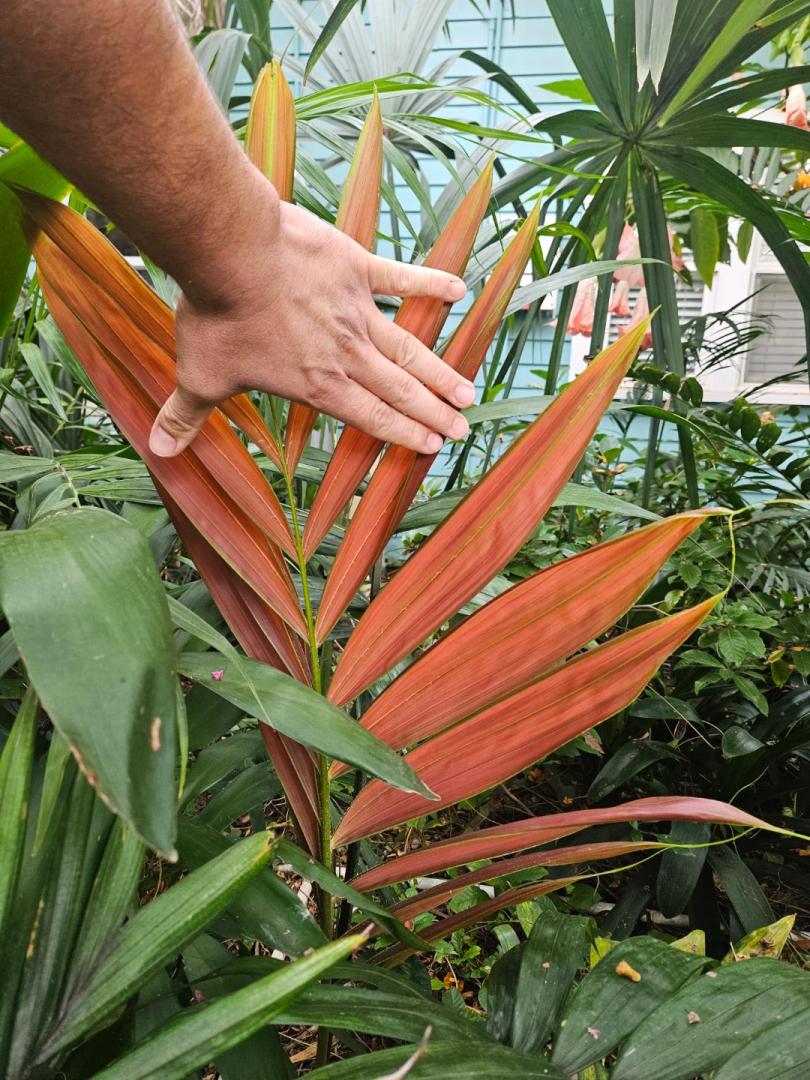
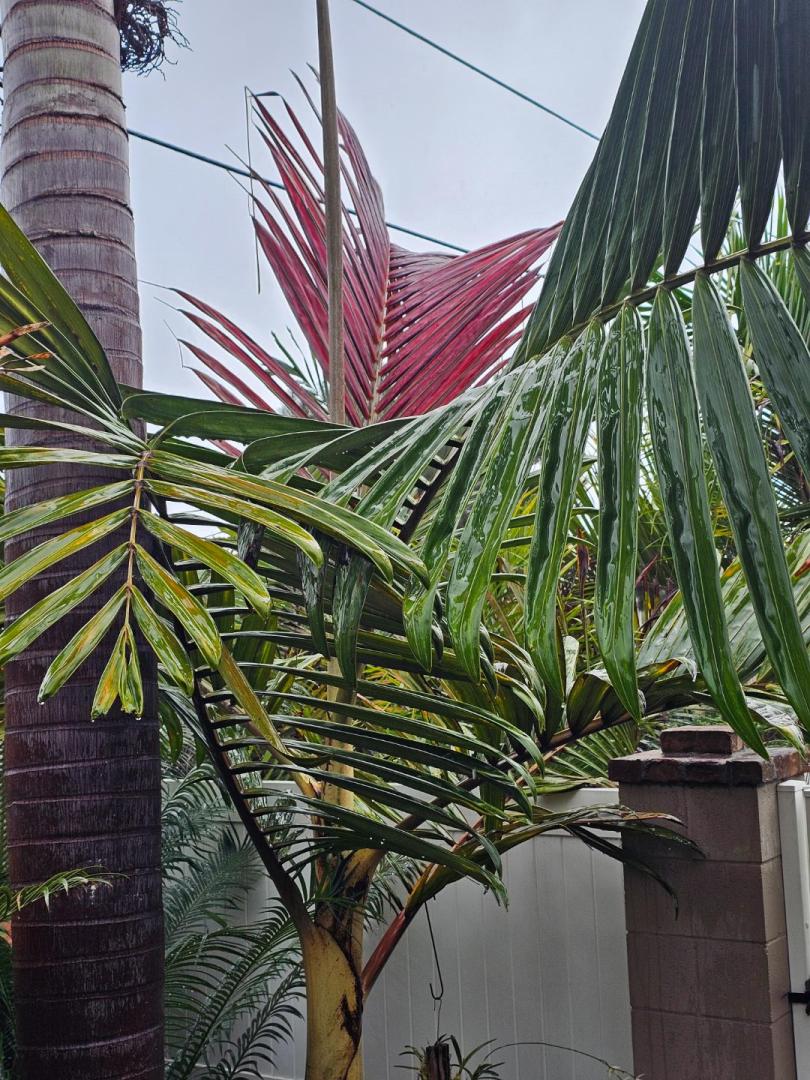
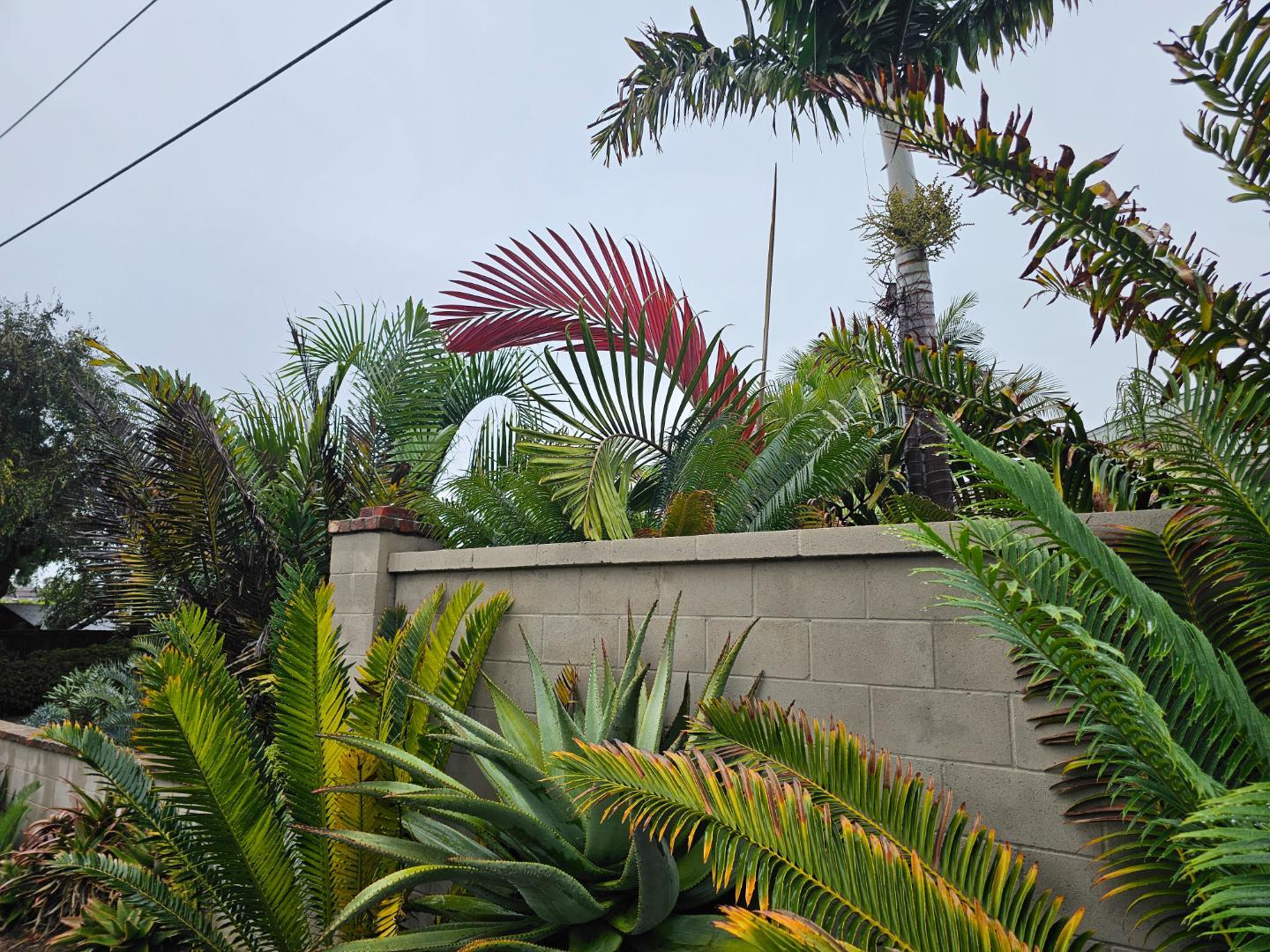
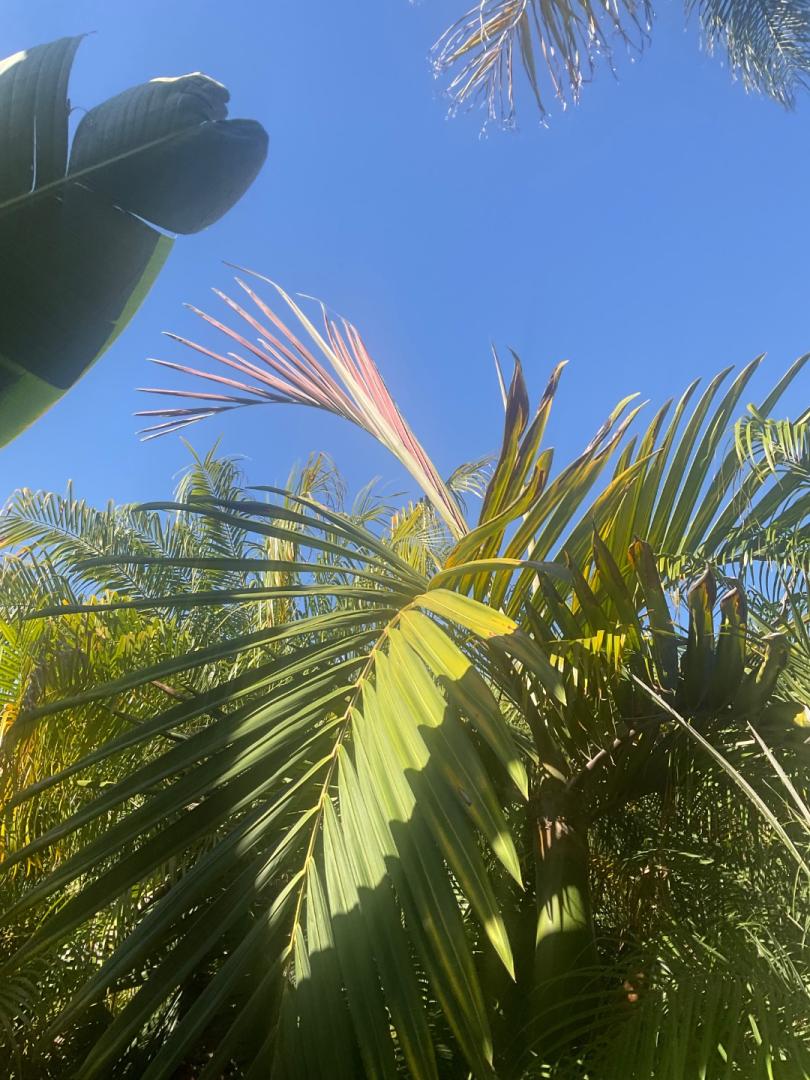
One of my hookeris exhibits a dark red from one direction and brilliant flame from the other. Sun at your back is not nearly as stunning as palm between you and the sun. I was advised here that the macrocarpa hookeri was a deeper from red than the regular macrocarpas by those with experience here. Last sunday the leaf opened and a 5 days later its seen 39 degrees 2 nights and is looking great. WInter and shade seem to make these palms stay red longer in my yard, even more true for the regular macrocarpa which for me turns fast to salmon green in 4 days or less. sun at my back its a dark red/maroon leaf seconds later the 180 degree view shows the "flame" the palm is known for with a transmitted light that is a brighter red.
 6 points
 -
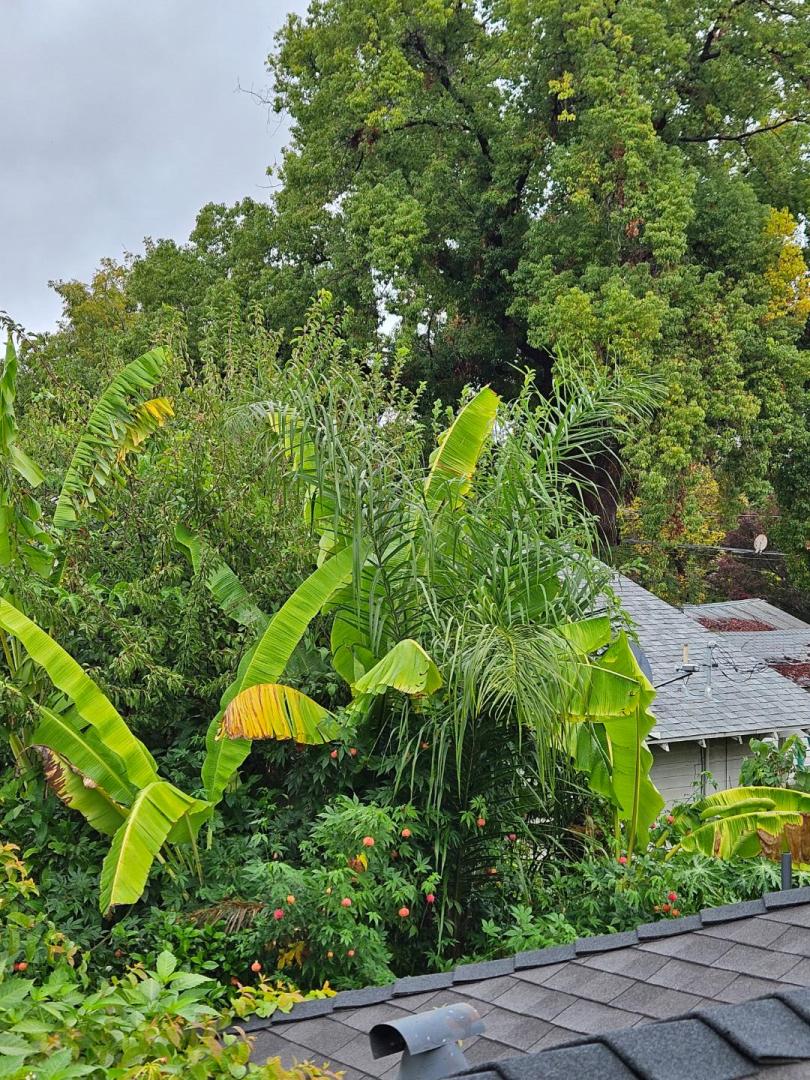
I planted this syagrus amara sometime around 2018. I can't recall if I bought the seedling from Floribunda or planted seed from Montgomery Botanic Center, but either of those is likely. Either way I'm happy to see it growing so well and crossing my fingers it's the real thing and not romanzoffiana. I took these photos from on top of my roof. And here's an Abreojos queen on the other side of the house. A queen called by another name, but it still looks pretty sweet.


 6 points
 -
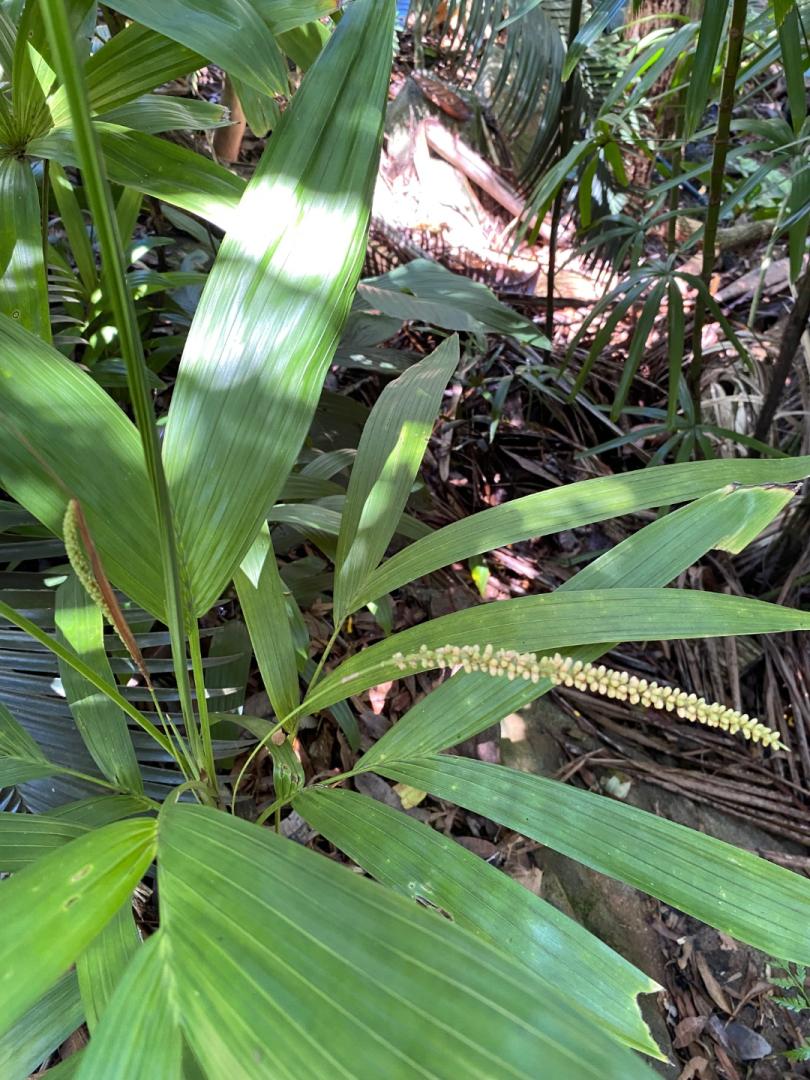
A nice little linospadix minor in flower

 6 points
 -
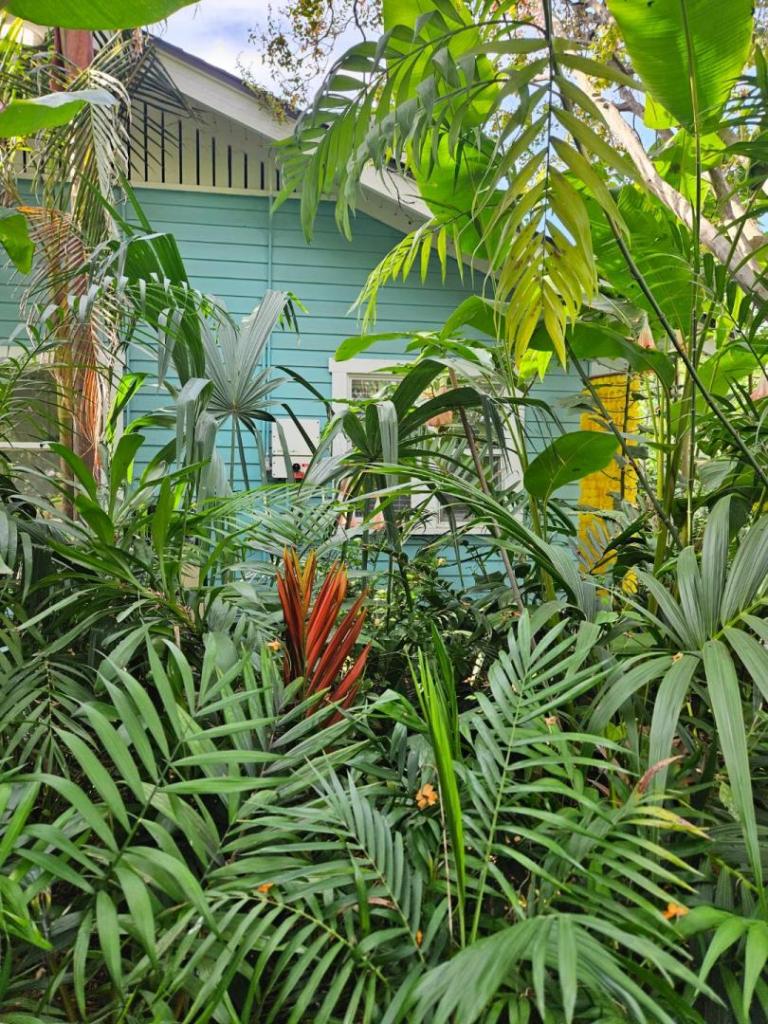
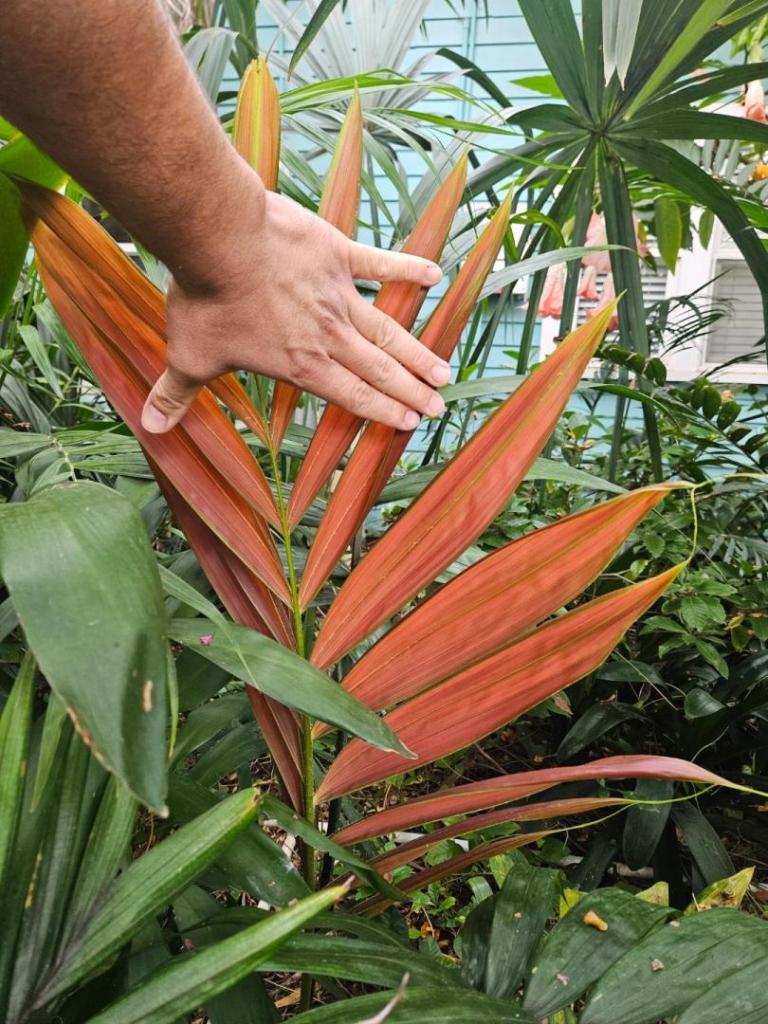
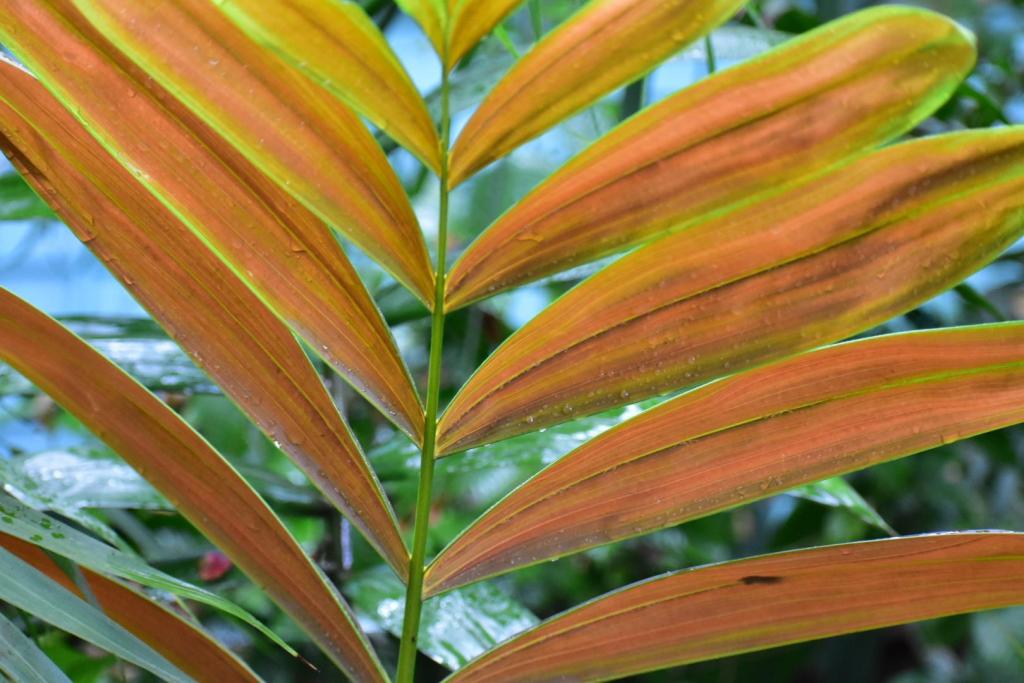
Here is one of my macrocarpa, top photo is when the spear first split, and the second is maybe a week later. The last photo is a week after that.
 6 points
 -
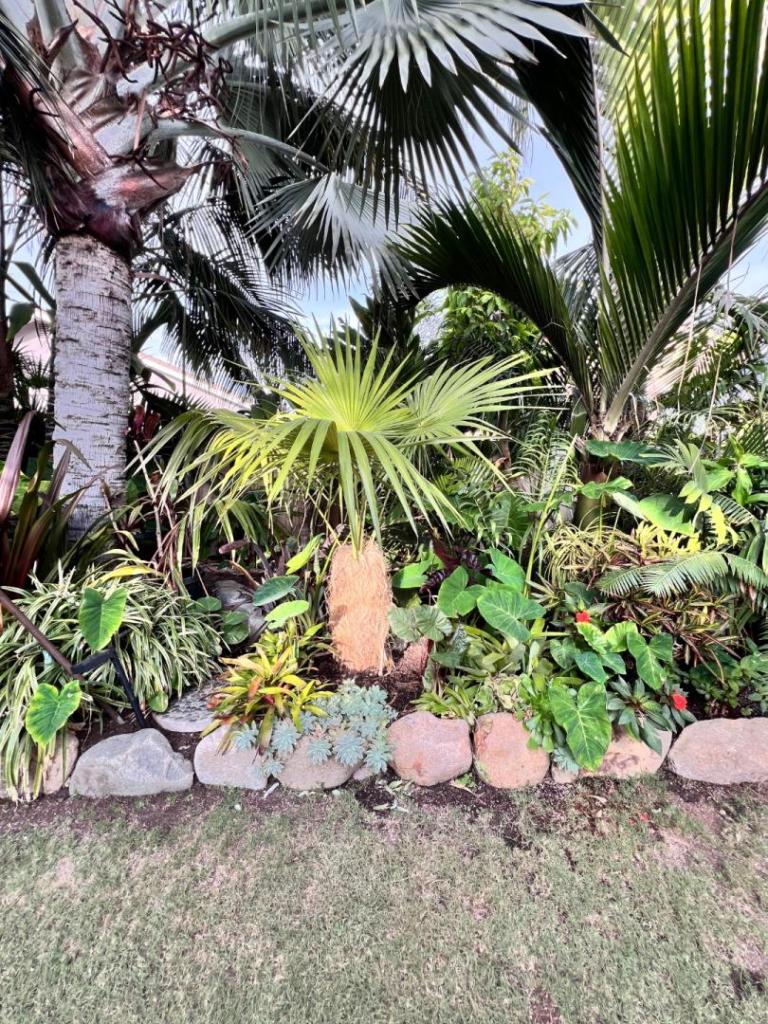
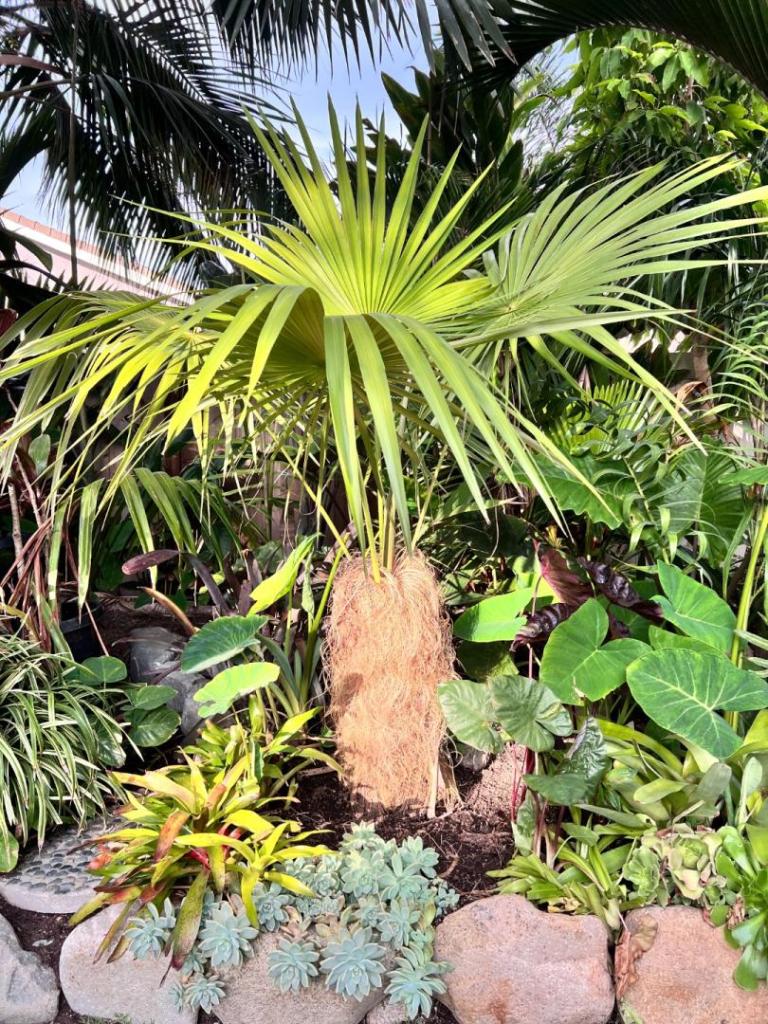
This was a small 1 gallon palm I bought from Jeff Searle in 2006. Keeps on moving albeit slowly. 30” of trunk now.
 5 points
 -
Here is a possible S. sancona I saw at the SD zoo in 2012. Here is a S. amara at Balboa Park at the Palm Canyon And here is an S. amara at the zoo5 points
-
There’s no need for the palm police yet, it only gets noticed when you kill more than 3 palms each winter. But it does go on report! I think @JohnAndSancho has had a visit he known to them as the Mississippi black plague palm killer, but he keeps on bribing them with banana plants and gets off! 🤣5 points
-
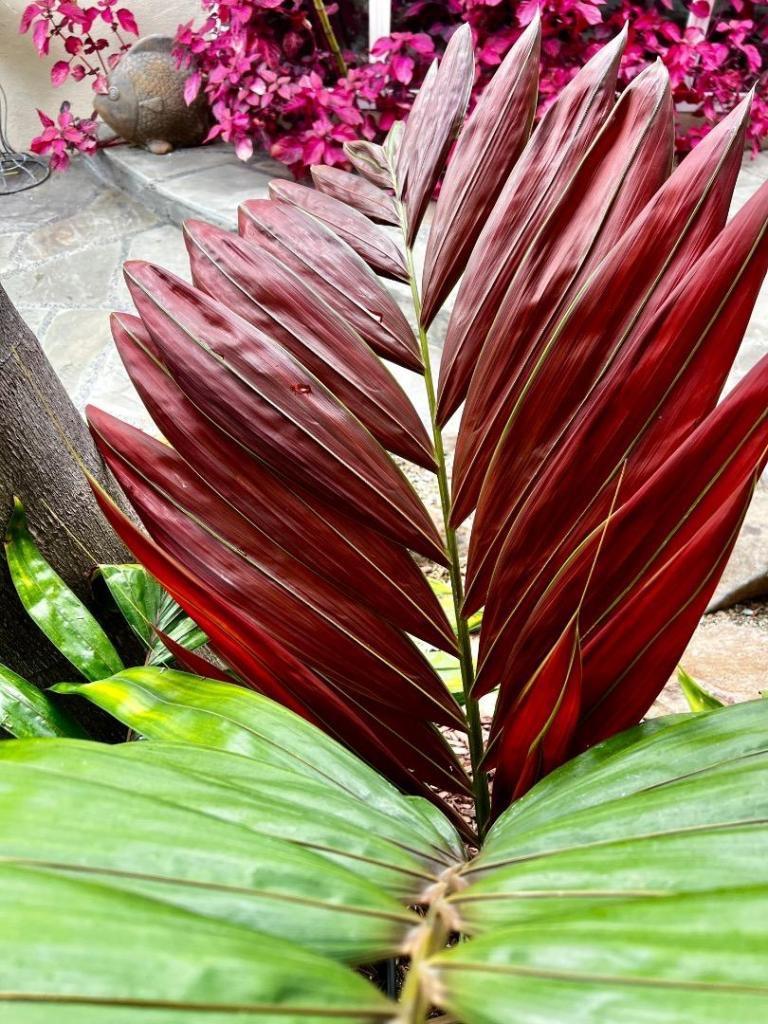
My experience is the opposite. My several macrocarpa have the most intense ruby red new fronds and my four hookeri have a red that ranges from orangish to pink. Here’s my youngest macrocarpa last winter two top photos and one of my hookeri.

 5 points
 -
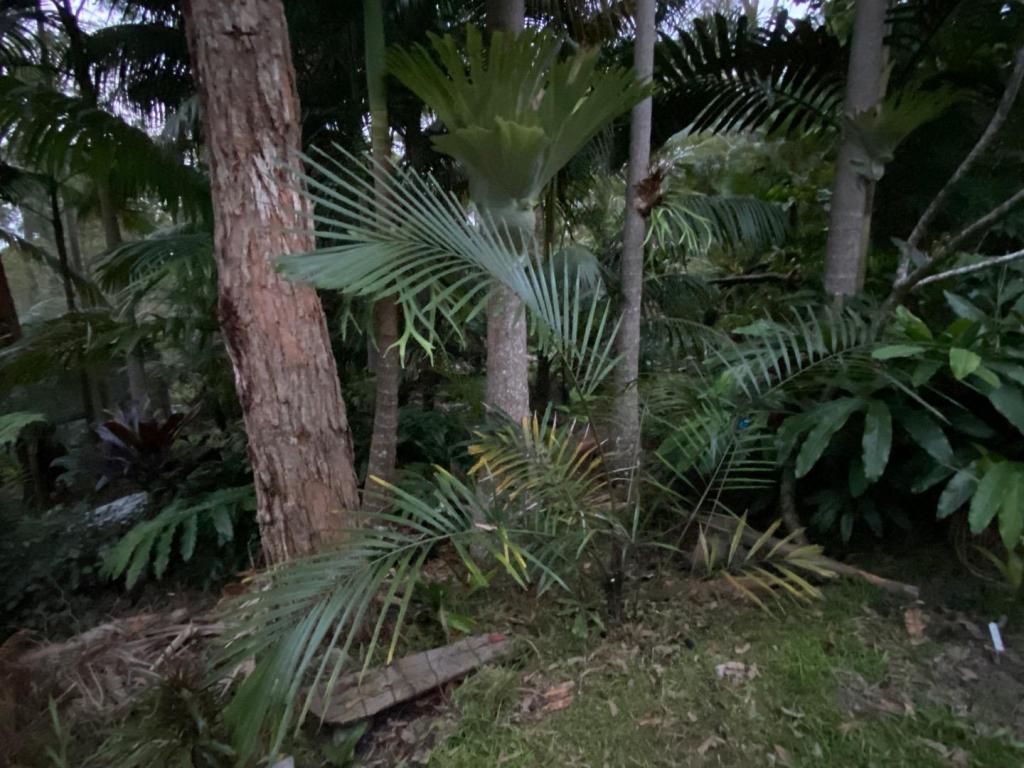
Five nice growing palms for that tropical look. With some recent plantings doing well. Arenga westhoutii borassodendron machadonisptychosperma schefferiArenga engleri Johannesteijsmannia Altifrons
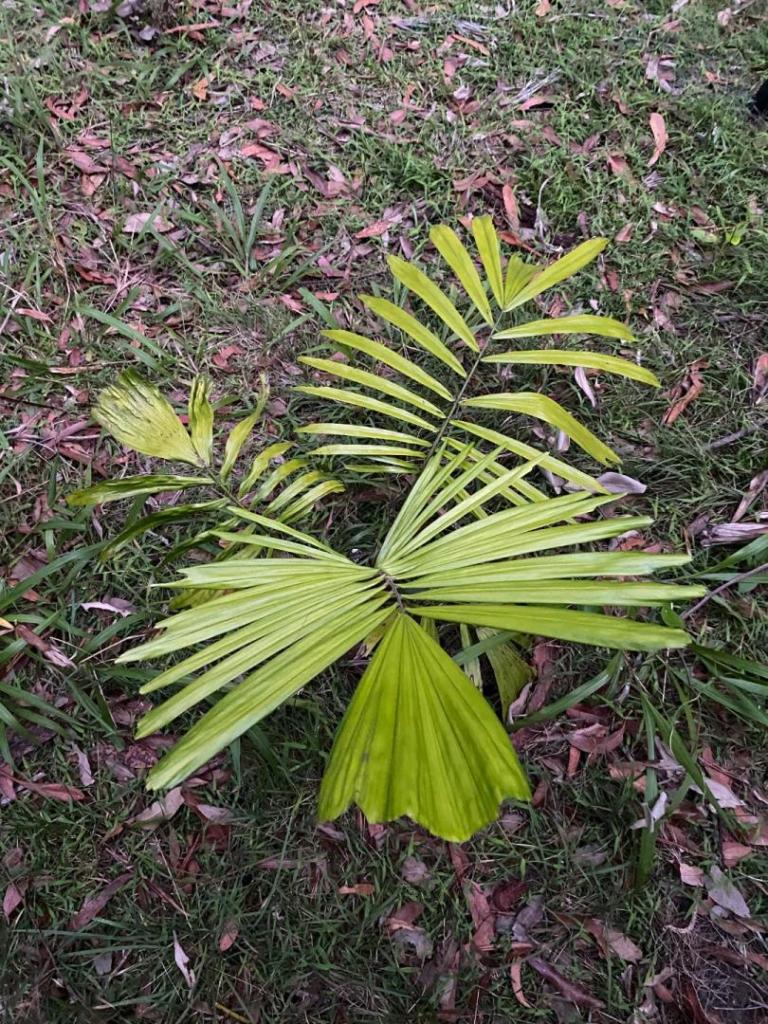

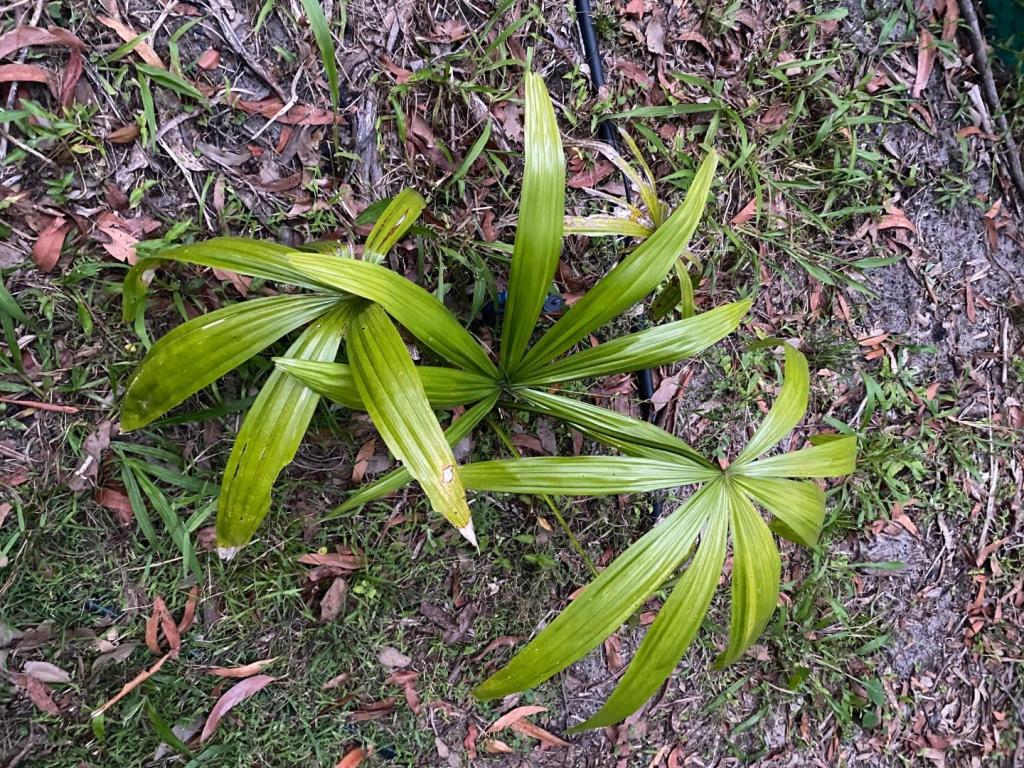

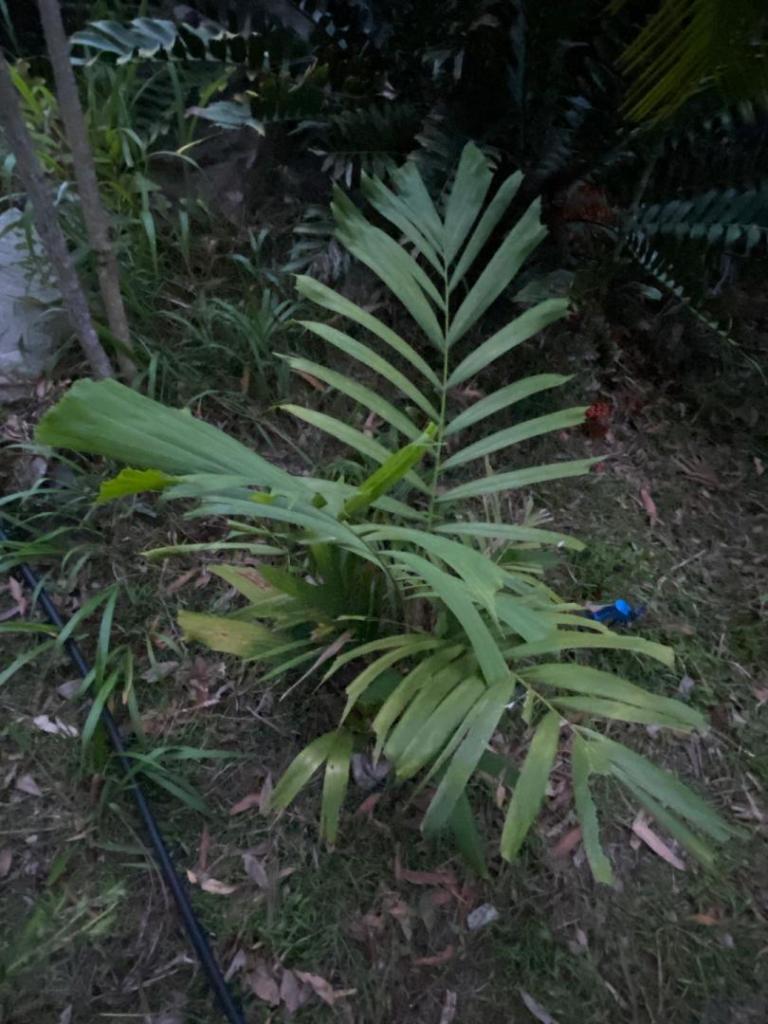
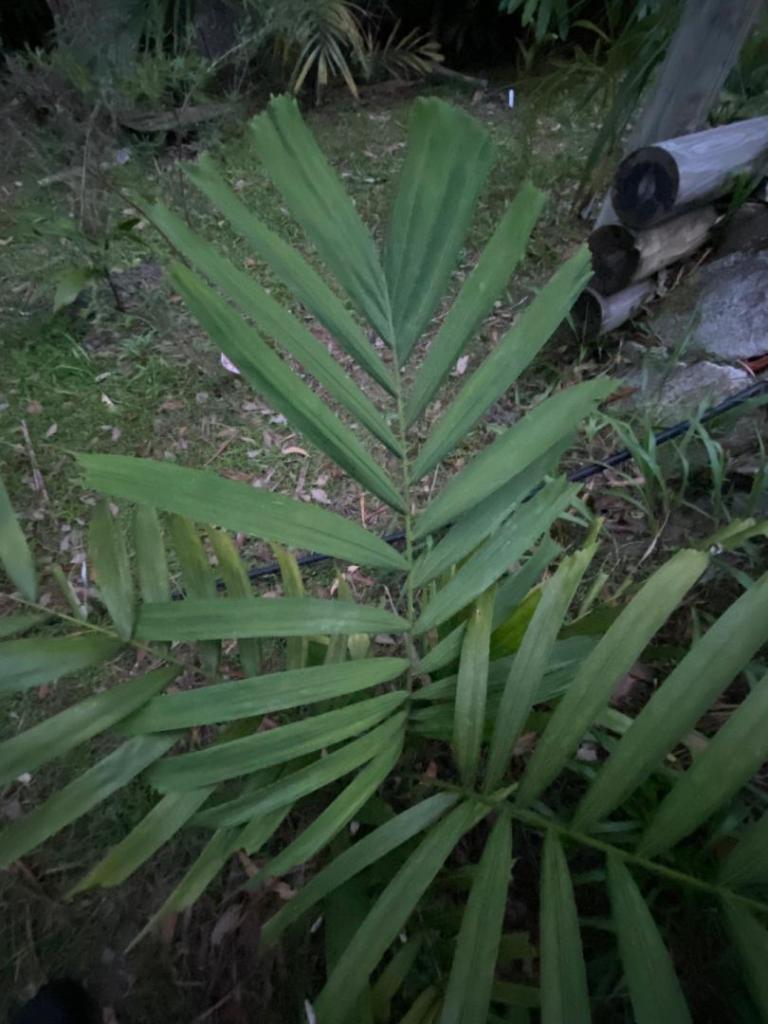

 4 points
 -
Yeah, pretty stiff leaflets on these guys..I took a not great picture of mine this past summer..
 4 points
 -
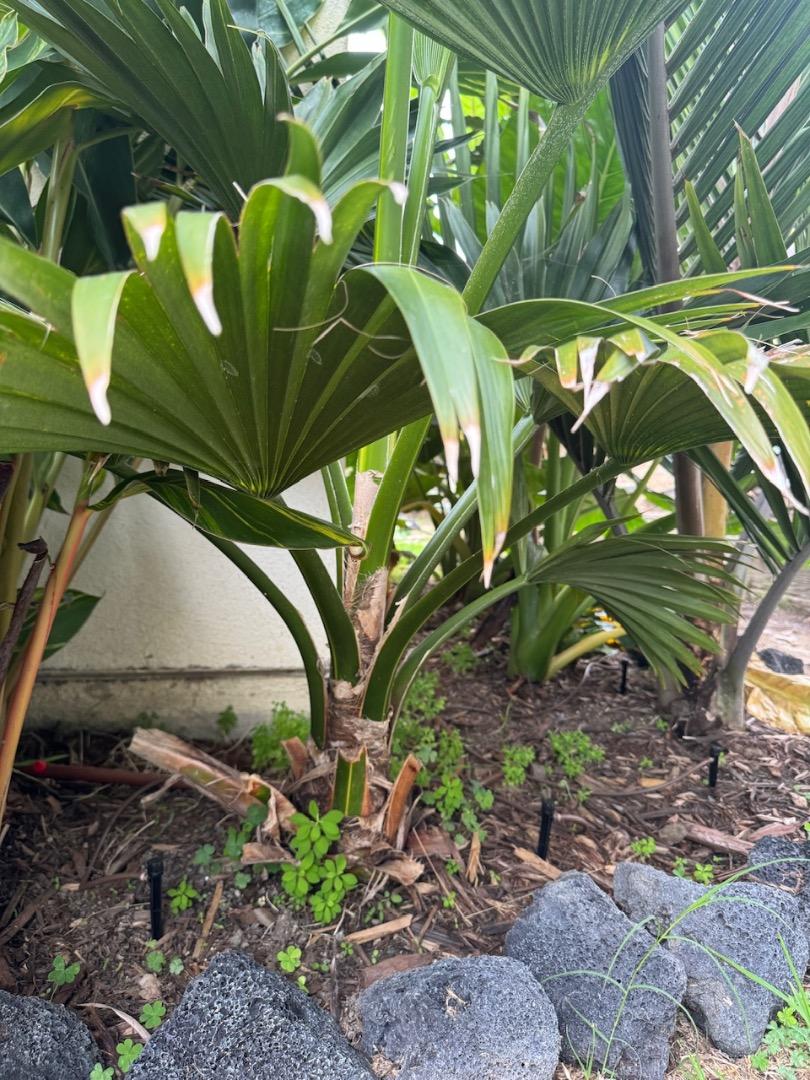
P. Beccariana put in the ground in 2022 from a 15 gallon.

 4 points
 -
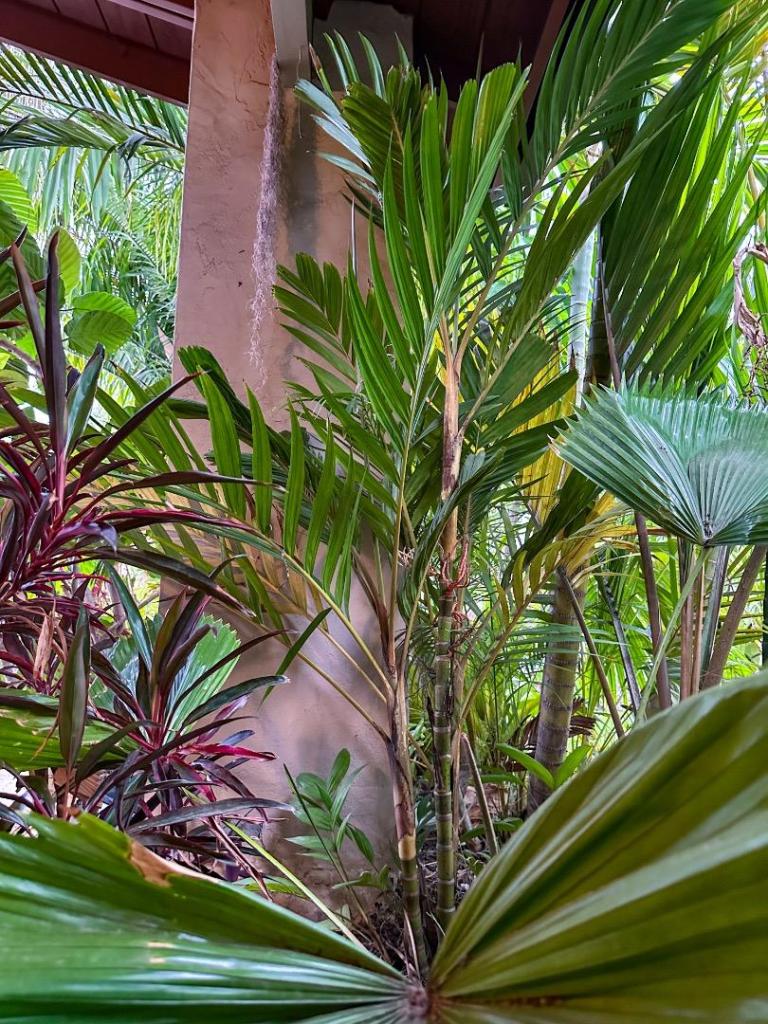
Lighting isn’t the best but here you go.

 4 points
 -
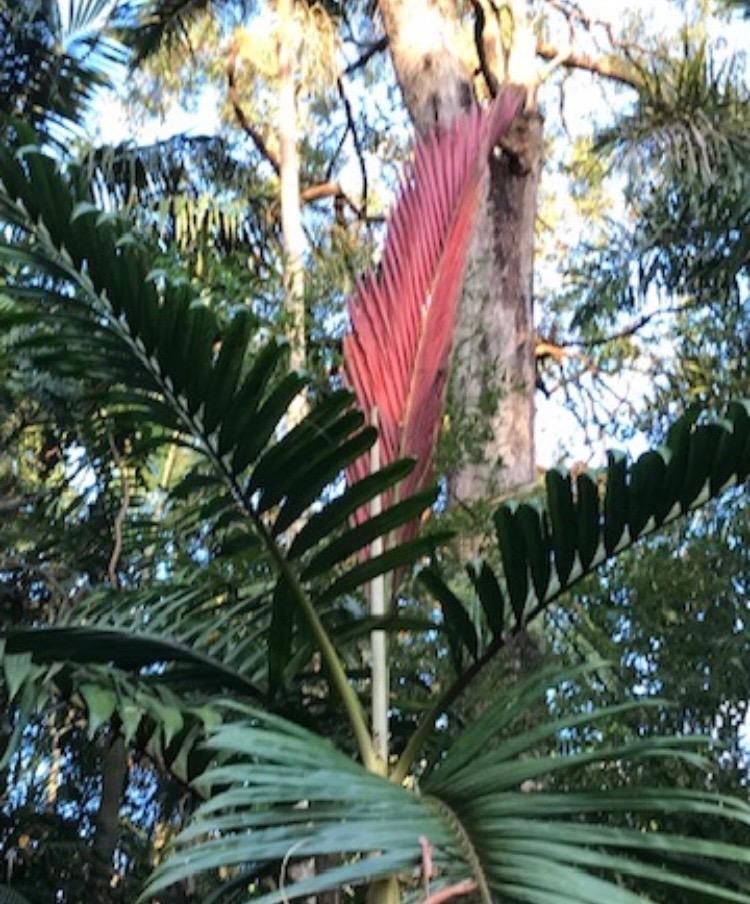
I have quite a few Chambeyronia macrocarpa and hookerii. Through observation, I have noticed temperature and water levels make a difference in both varieties as to the colour, the anthocyanins are at different levels with different amounts of water and temperature. The more anthocyanins the deeper the colour.
 4 points
 -
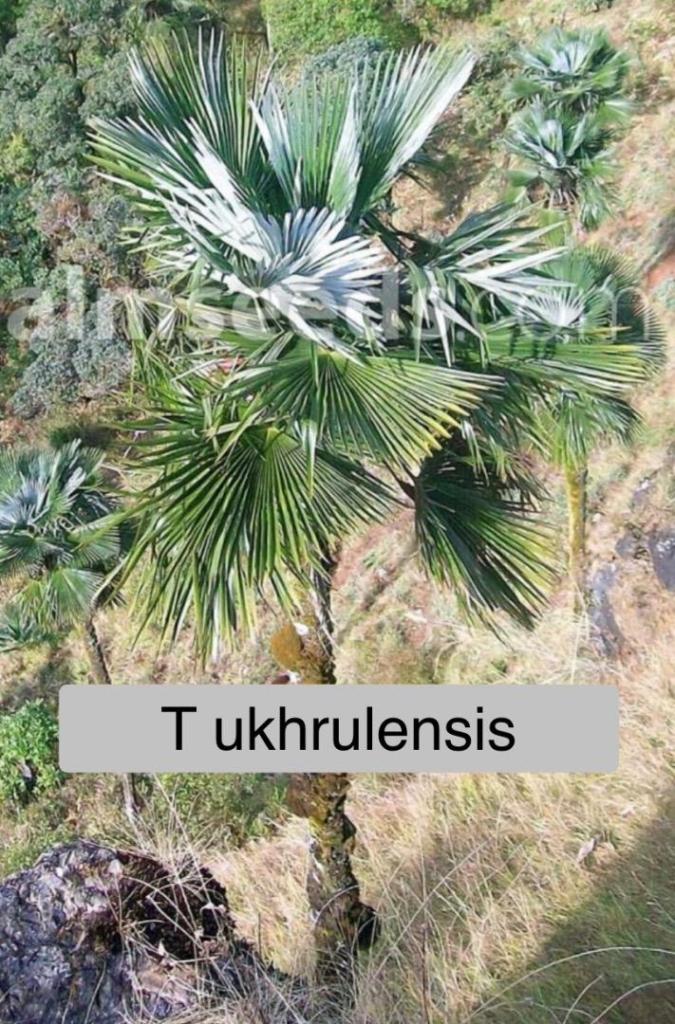
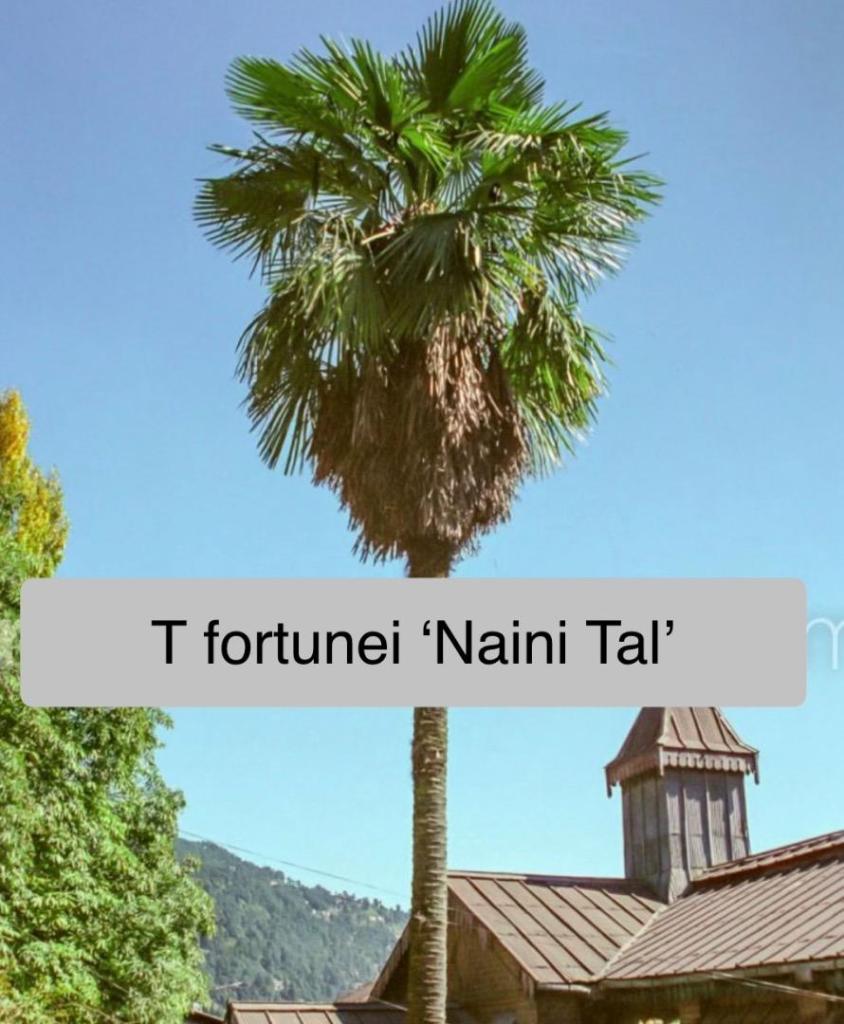
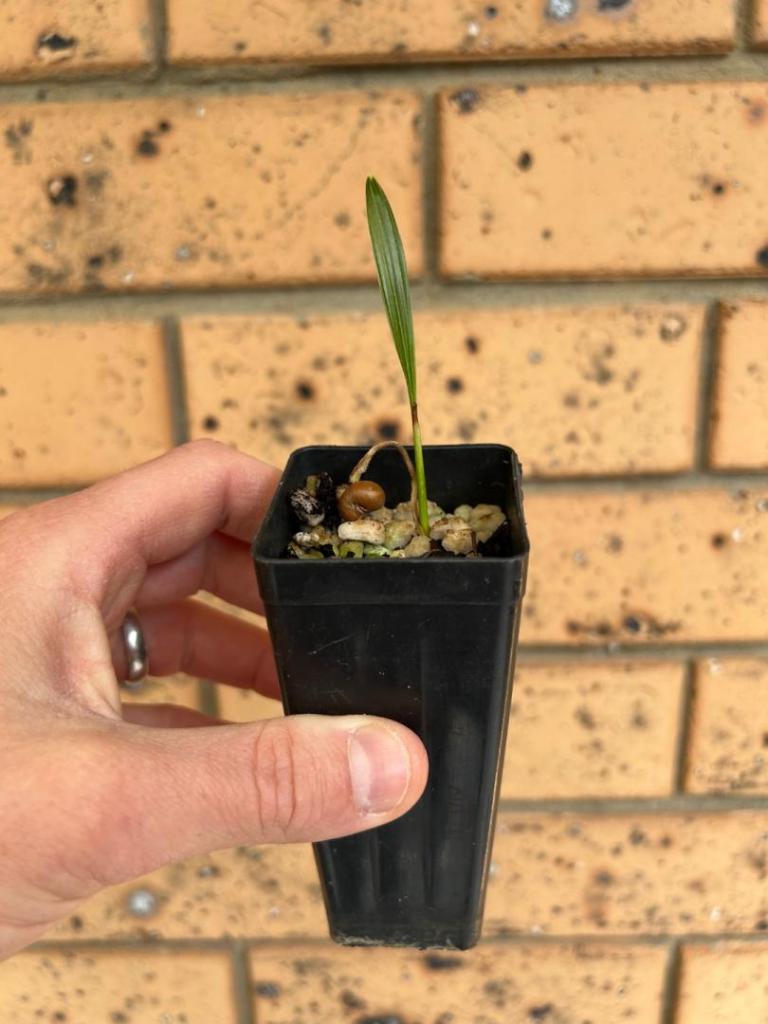
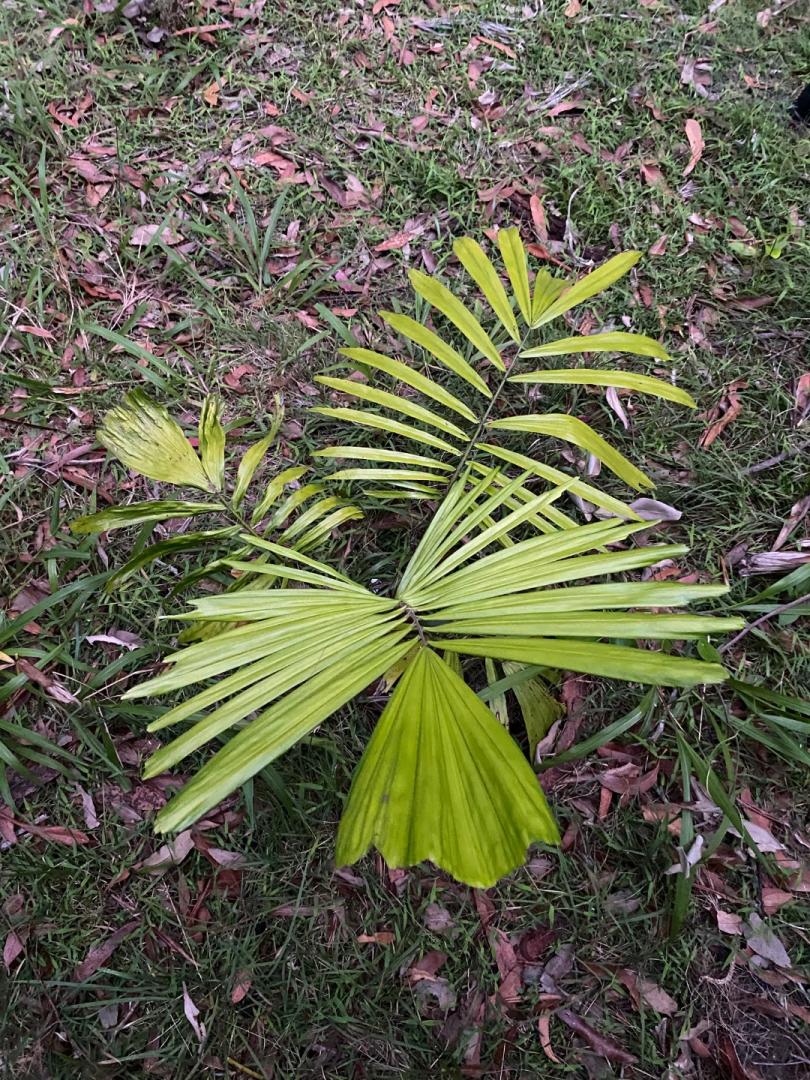
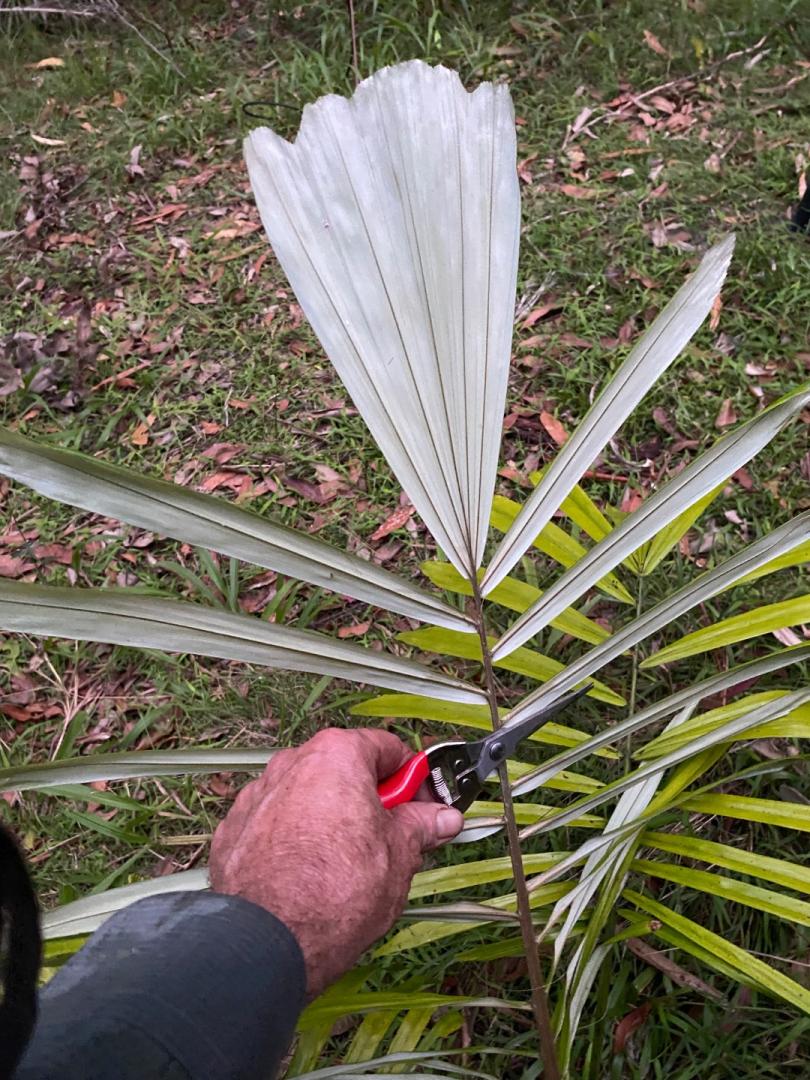
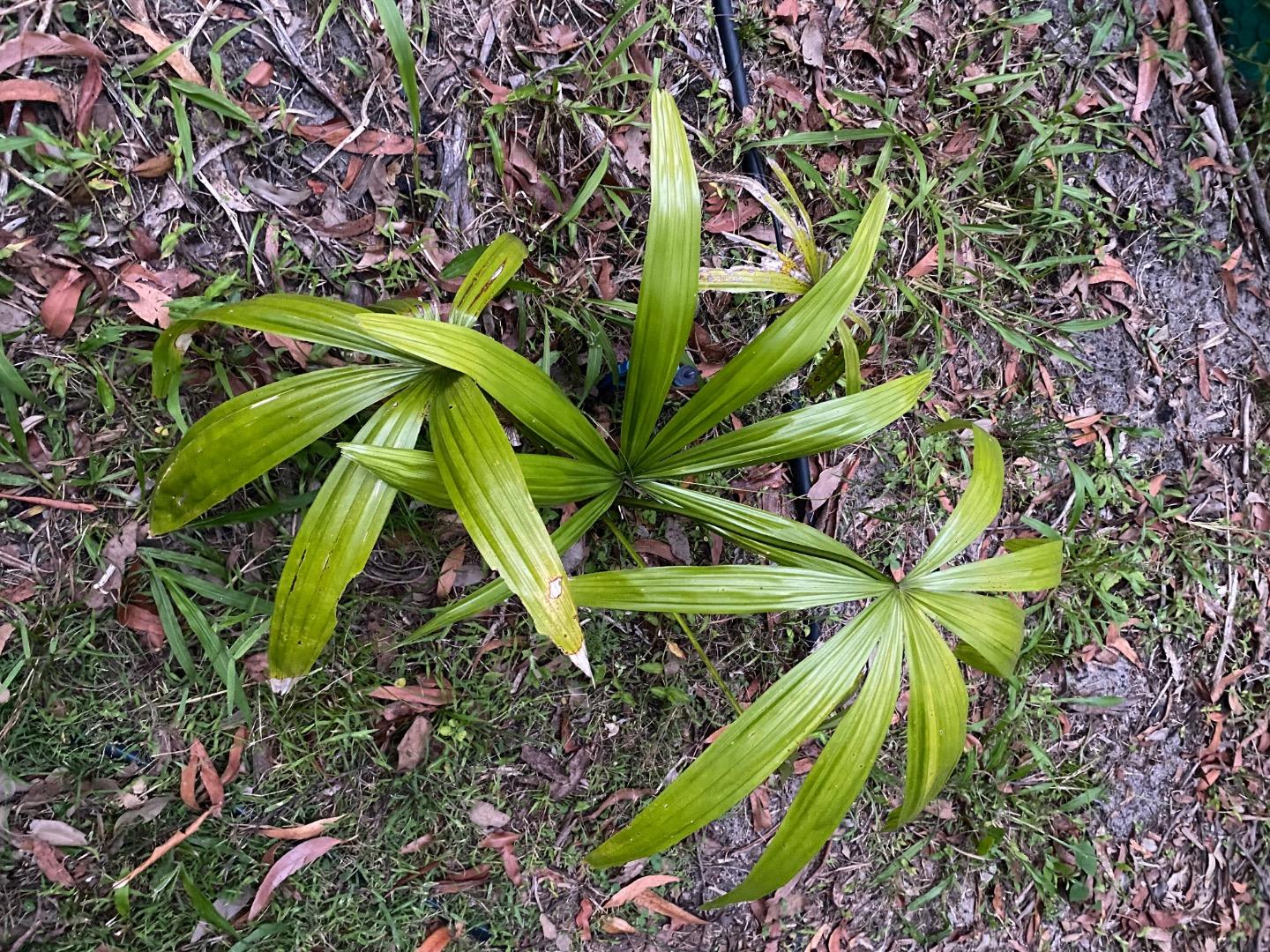
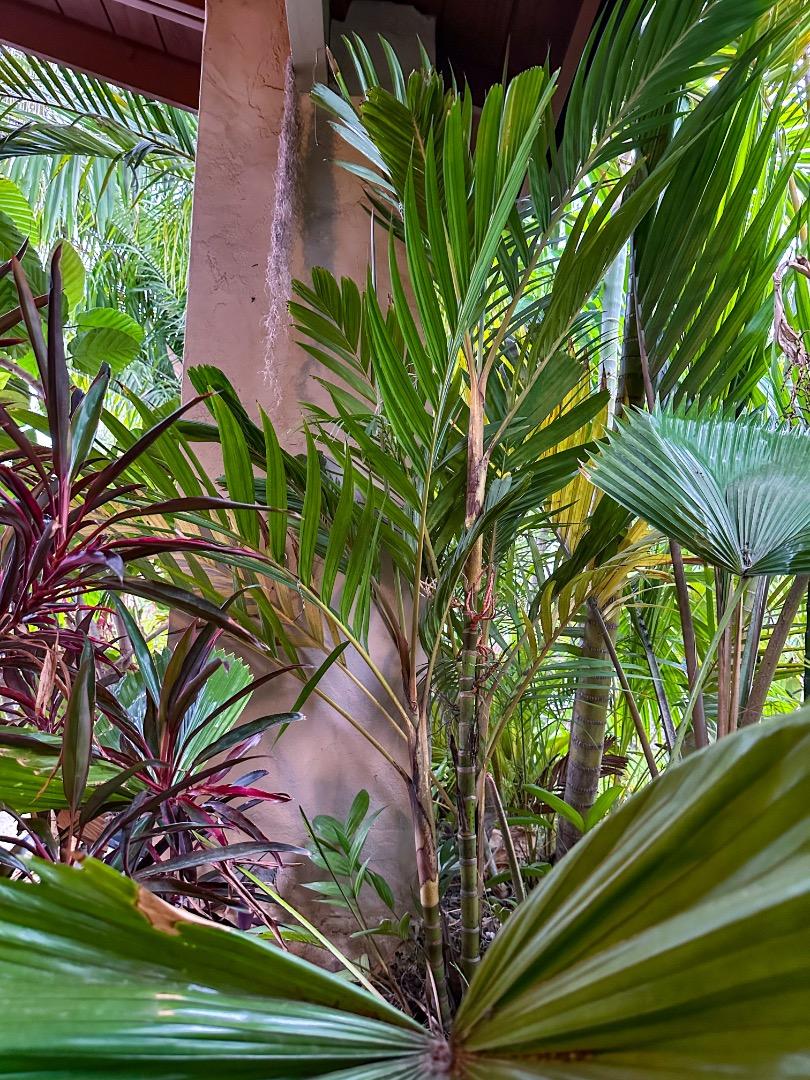
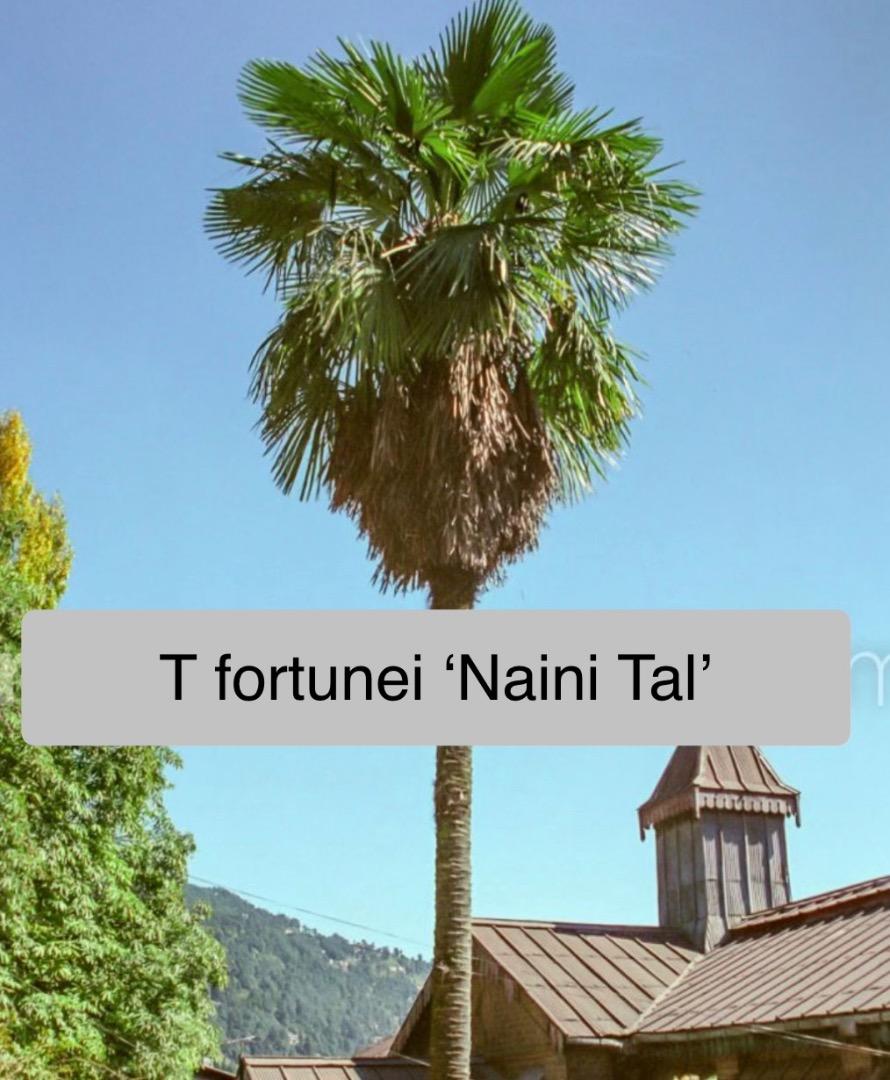
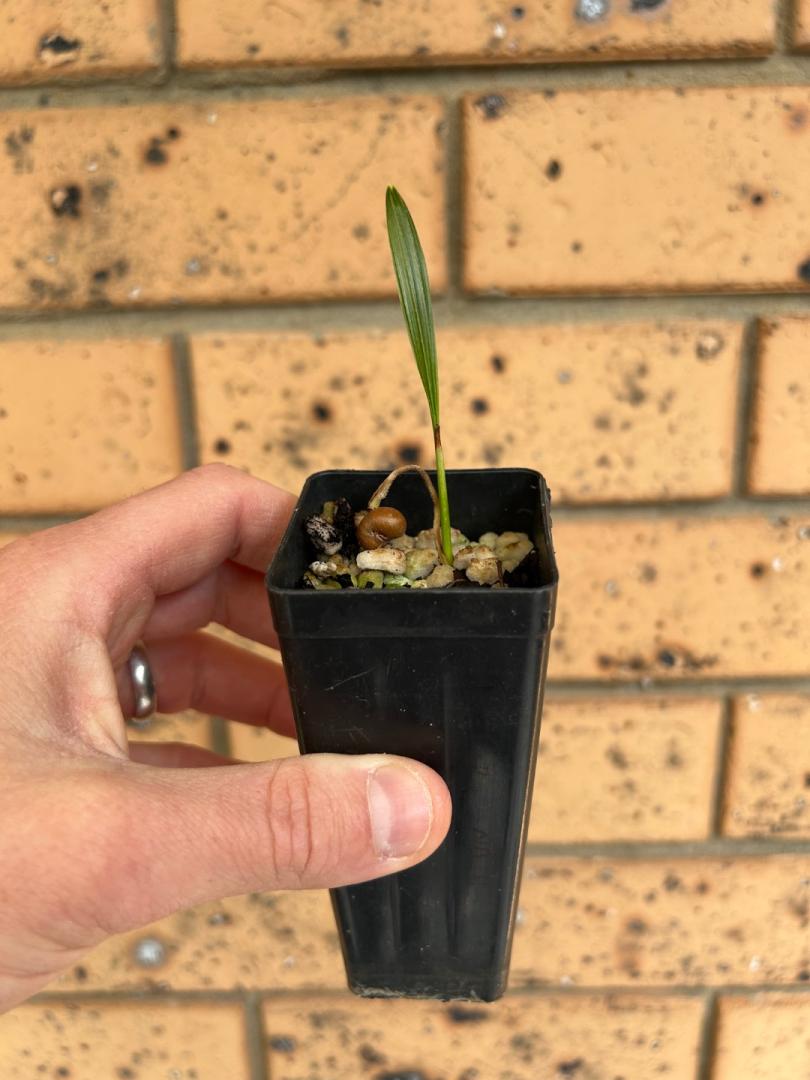
This artificially created F1 hybrid is the result of pollinating a female Trachycarpus fortunei ‘Naini Tal’ (Naini Tal Chusan palm) with a male Trachycarpus ukhrulensis (T Naga Hills / Manipur - Saramati palm). This is among the first hybrids created with T ukhrulensis which was only recently discovered and described in 2006. This will certainly be the first time this hybrid is offered in Australia. The resultant hybrids are expected to retain the strong silver frond underside (abaxial surface) of T ukhrulensis. T fortunei ‘Naini Tal’ is known to be a large, robust and fast growing cultivar of T fortunei so this hybrid is also expected to be quite fast growing Seedlings already appear to exhibit a level of hybrid vigour. These should make excellent specimen palms for temperate and some subtropical locations and will undoubtedly be extremely cold hardy. Photos of mature specimens of each parent species are courtesy of Rare Palm Seeds. The seedling in the last photo is representative of what is available. Seedlings are $20 each. I only have a very limited quantity of these. Postage available with their 50mm pots at buyer’s expense. Australia only. DM me for other available palm seedlings if interested. Any purchase comes with free Chamaedorea klotzschiana (Bow Tie palm) seedlings up to a quantity of 3 if you choose.
 4 points
 -
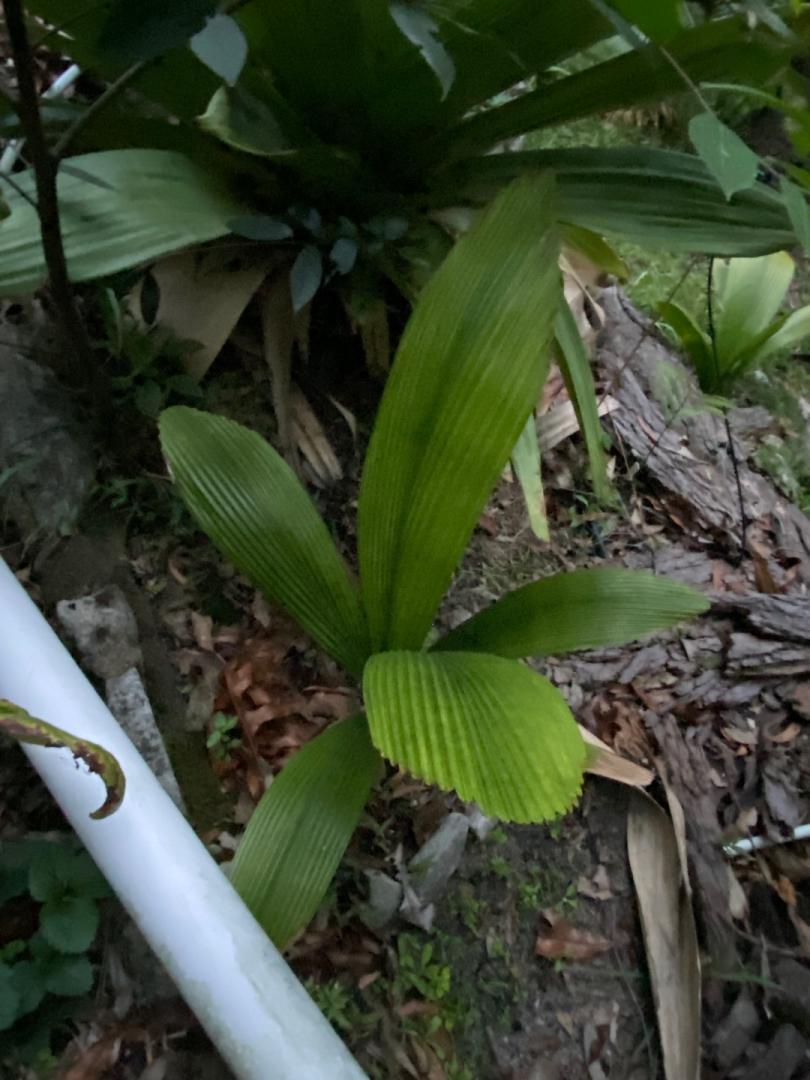
Pritchardua ? And lipstick


 4 points
 -
Guess they lot faster here on O`ahu. Have not taken a photo since 2019. It's about 9' tall.

 3 points
 -
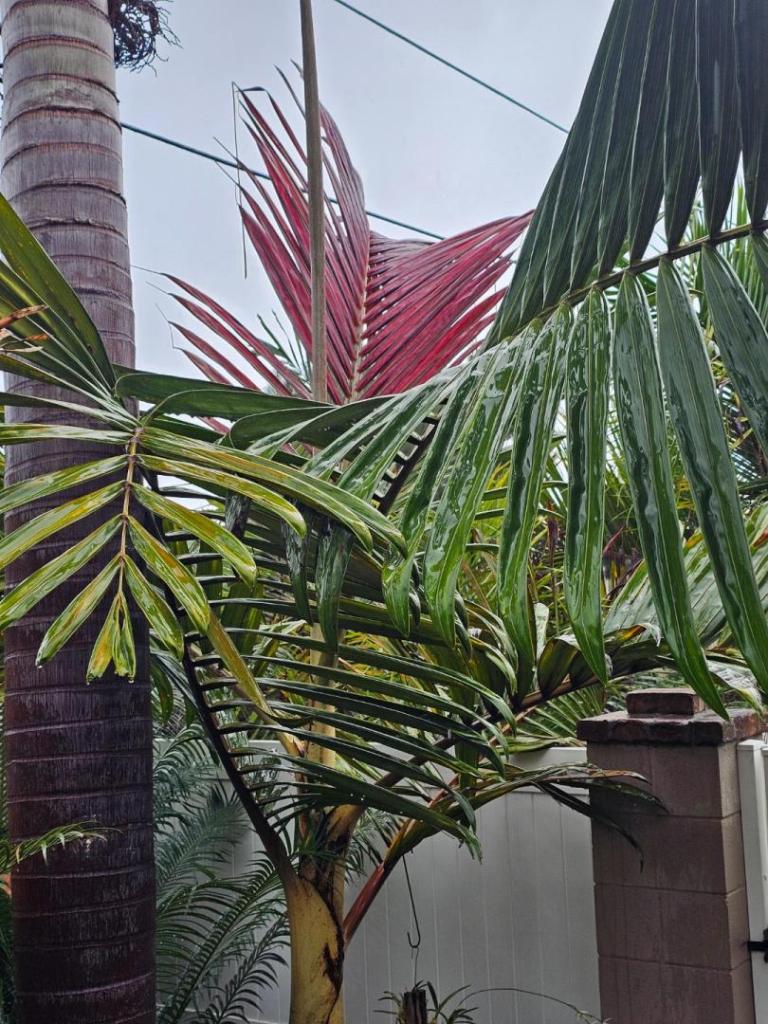
It seems that there is variability in both. My best color on my plants comes on the Chambeyronia hookeri forms and they seemed to perform better at younger ages in more sun than the macrocarpa. My only hookeri in my garden here in Leucadia just opened a new frond a couple of days ago but there are no sunbeams coming through to uplight or backlight the leaflets right now, only clouds and rain.
 3 points
 -
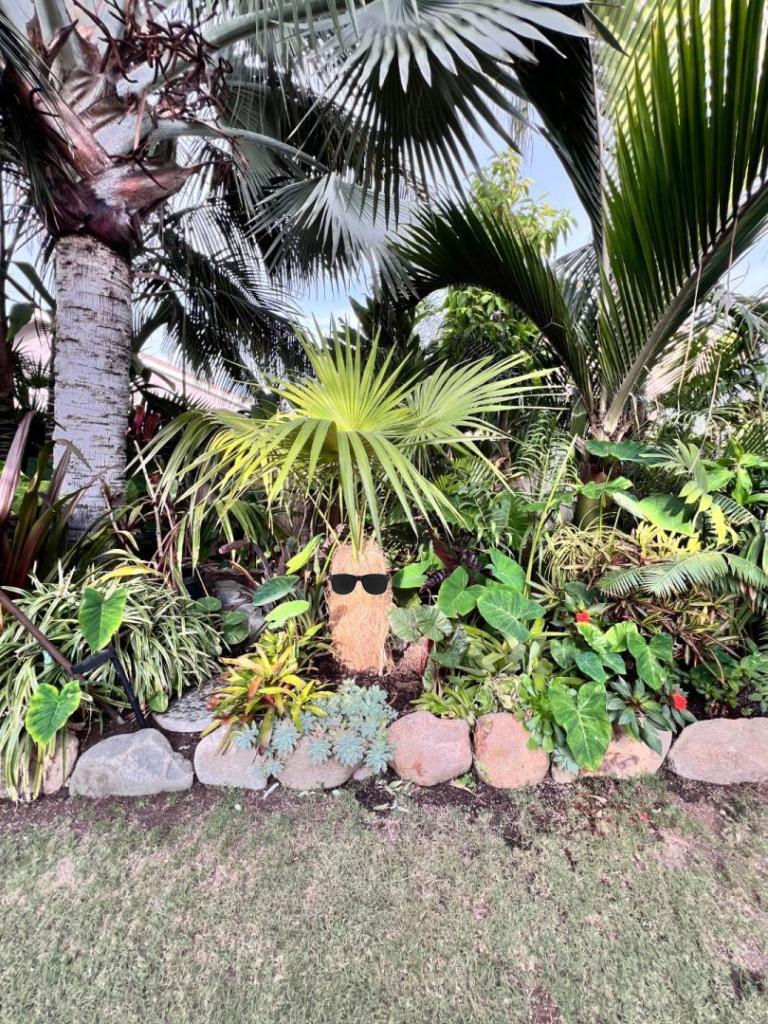
A very COOL palm indeed... and showcased beautifully in that spot. This palm was so hard to obtain (at a larger size) that I talked my husband into driving to Arizona to pick three up. Sadly one died, but the remaining two are doing well. Hoping to find a spot as nice as yours for them.
 3 points
 -
Thank you very much, Jim, for your excellent explanation. That was also my line of thinking, similar to Than's. In this case, as you so aptly describe, the mulch you use can never store too much water, i.e., it cannot be too wet; rather, the rest is essentially stored deep in the soil. This means that, in principle, from a soil perspective, it would theoretically be possible to grow several palm trees and exotic plants from various climate zones, although someone might live in an absolutely dry climate with very little rainfall per year, and of course, temperature is also a factor. However, this greatly expands the entire spectrum ...3 points
-
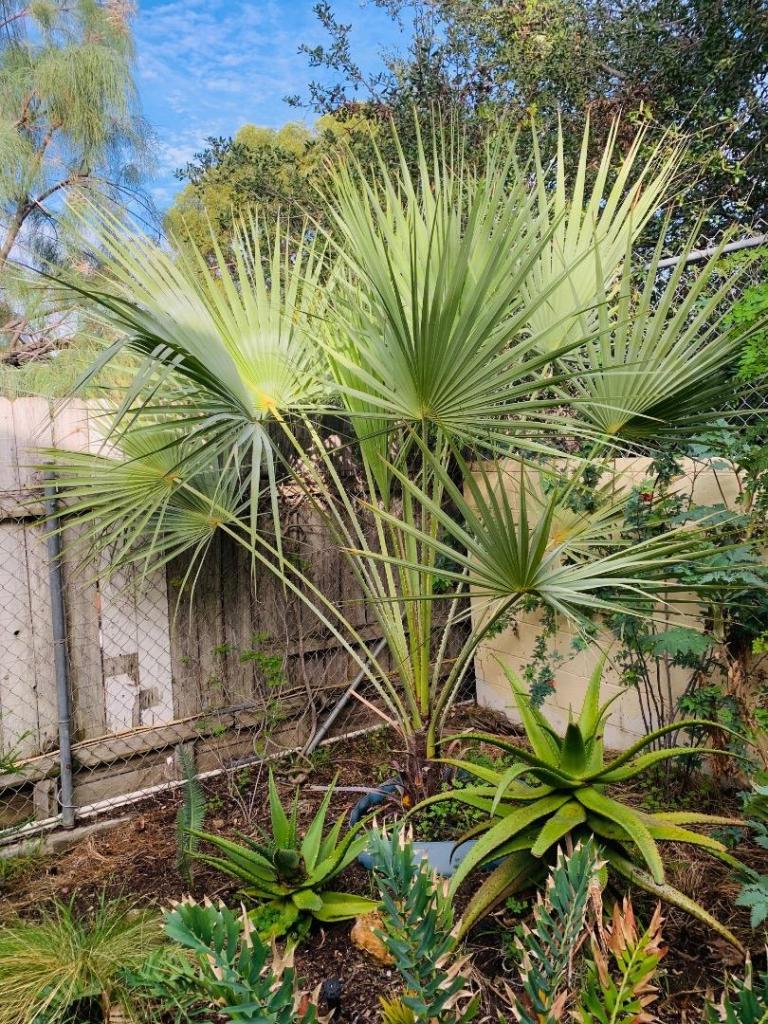
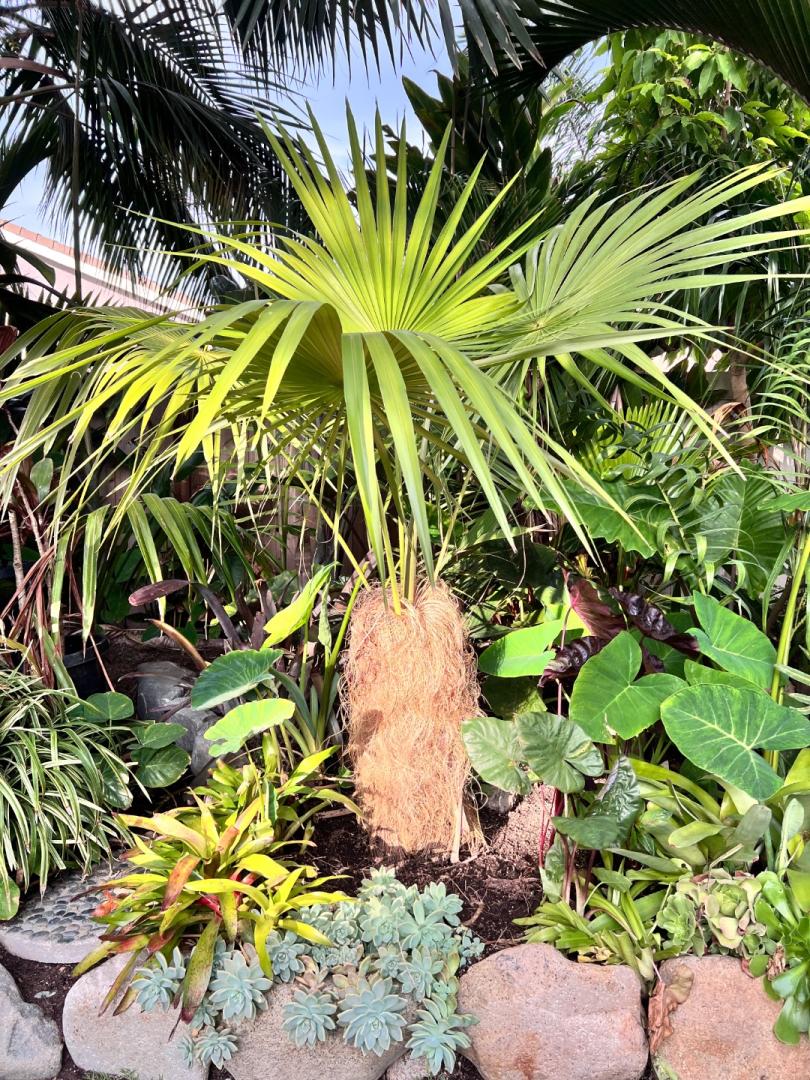
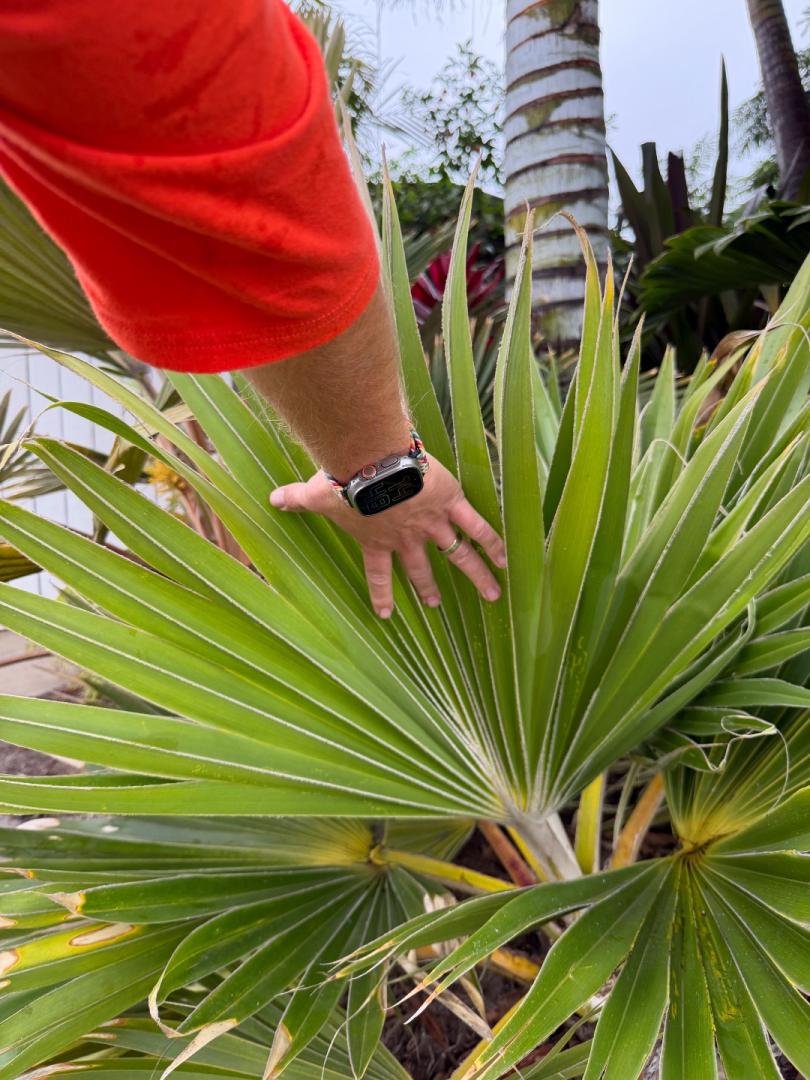
Brahea Clara
 3 points
 -
Good job ! Keep it protected and it should be fine . Was the seed still attached when you dug it out? Harry3 points
-
I have used EB Stone fertilizer for palms on just a few of my palms . I like the product as it is organic and seems to work well . After over a year of regular treatment , my Chambeyronia doesn’t burn near as badly from direct sun . Over 90% of my palms don’t need any help . I refresh the top soil and wood chips regularly , but my Chambeyronia would burn badly during the hottest months . I increased the watering and added EB Stone every 3 months . Whatever you do will take time to noticeably change the look of that palm . Harry3 points
-
Huh I wonder why that might be? Dry air perhaps? Well the jury is still out. Others have said it's just romanzoffiana, and I've had my suspicions. It's more vertical than romanzoffiana at that stage, but if it is amara, it doesn't seem to me affected by cold much. I actually just added a sancona!3 points
-
Oh sorry it should have read every 3 days silly typo. You must be running out of banana plants by now then you’re favourite bribery material. 🤣3 points
-
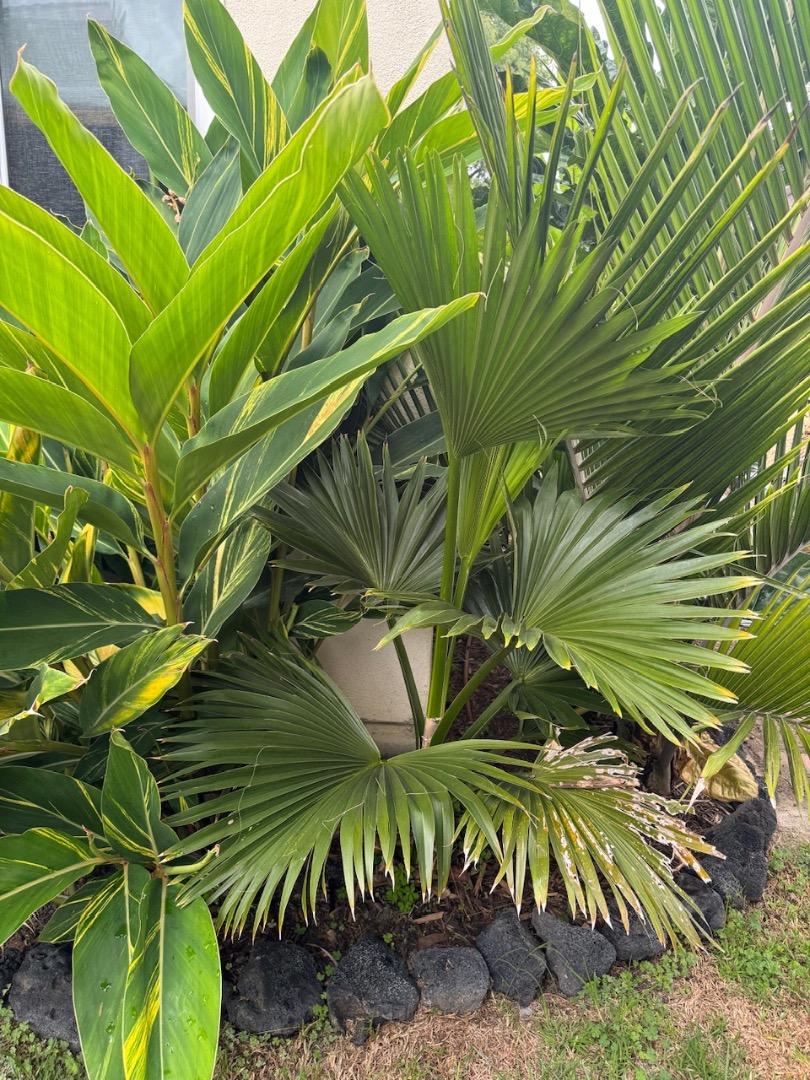
Purchased as P. Martii. A few years old from a 5 gallon I believe.


 3 points
 -
Virtually no color for me.

 3 points
 -
They do great as container palm and easy to grow as well. And they take quite strong light to dappled light.3 points
-
It’s a jungle out there! It will make a difference a winter cover.3 points
-
-1C or -2C are not a problem for cunninghamiana if it’s an occasional occurrence. If it was every week in winter that would be different I think. Larger ones can definitely survive that and if it warms up in summer with good nutrients and soil moisture they can regrow from damage quite quickly. Many of mine have experienced those sorts of minimums.3 points
-
here is my macrocarpa just opening, Clearly more rose than red. I have another macrocarpa that goes dark maroon but green shows after a few days So some variability but its not planting site as these pictured here and above are within 6' of each other.
 3 points
 -
Not at all and I have palms and plants that are both water lovers and ones that are native to drier climates. Besides that, almost all the rain water seeps deeply into the soil whether there’s mulch or not. The mulch only holds a small percentage of that water and provides multiple benefits to the soil and overall health of the plants and trees in the landscape regardless of the time of year.3 points
-
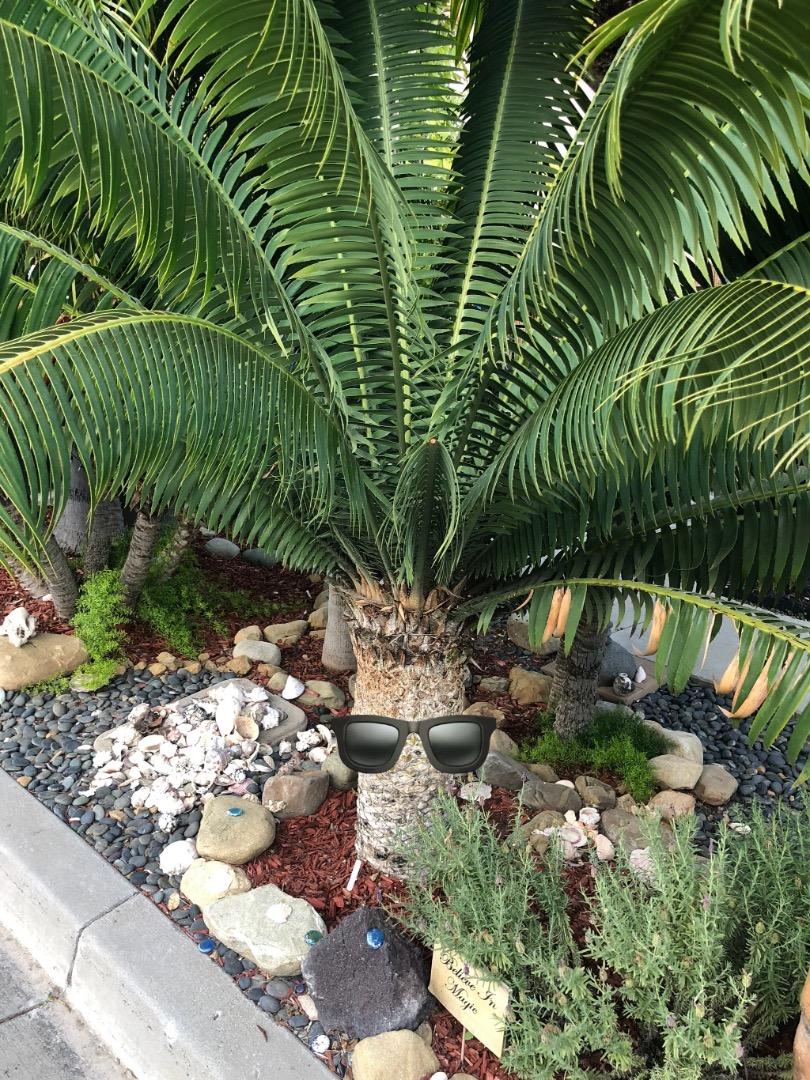
OK , I’ll play along! Harry Sorry , I don’t have an Old Man Palm , will this do?
 2 points
 -
Sabal lougheediana (Bonaire Palm) is a species endemic on the dutch island Bonaire it is first described in 2019 and it is one of the most endangered palm, only 23 palms left on the island and nowhere else they grow. They’re now try to plant Seedlings on the island and seedlings on a small island of the cost of Bonaire(that is a national park) to save this species.
 2 points
 -
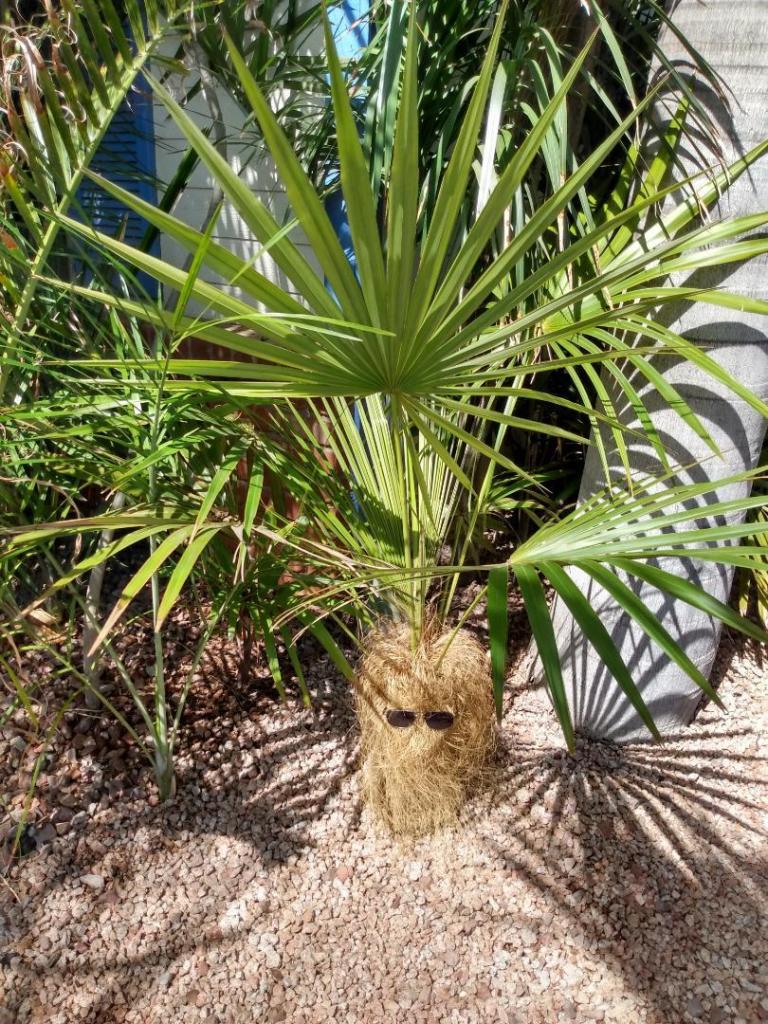
Ha! Beat you to it Stacey. Unfortunately, mine from that imported batch didn't make it. 🤷♂️ That was a one and done import, and that nursery has not imported anything exotic since. aztropic Mesa, Arizona
 2 points
 -
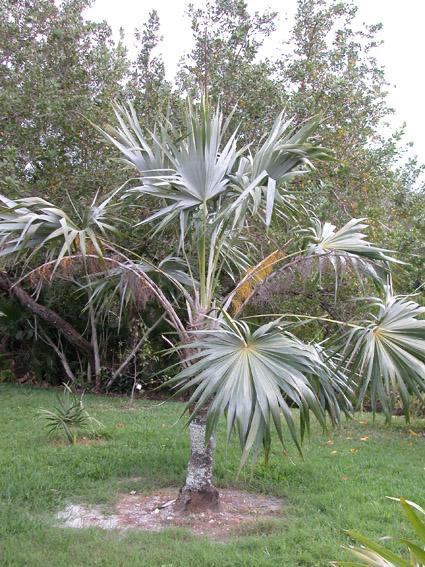
Leucothrinax morrisii….
 2 points
 -
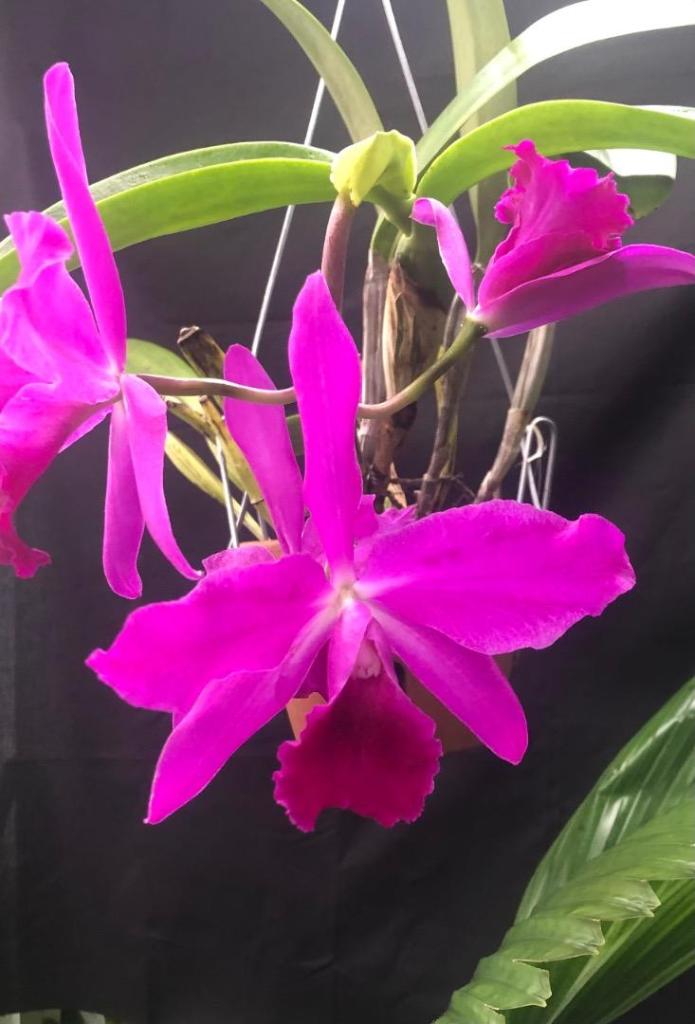
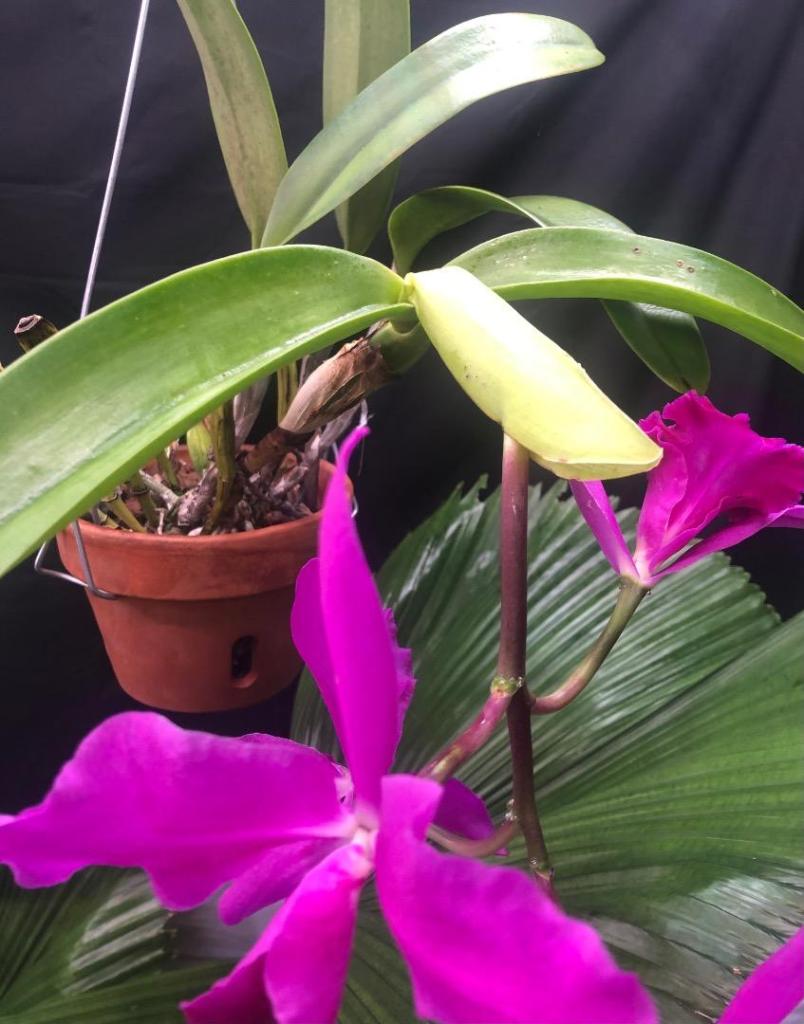
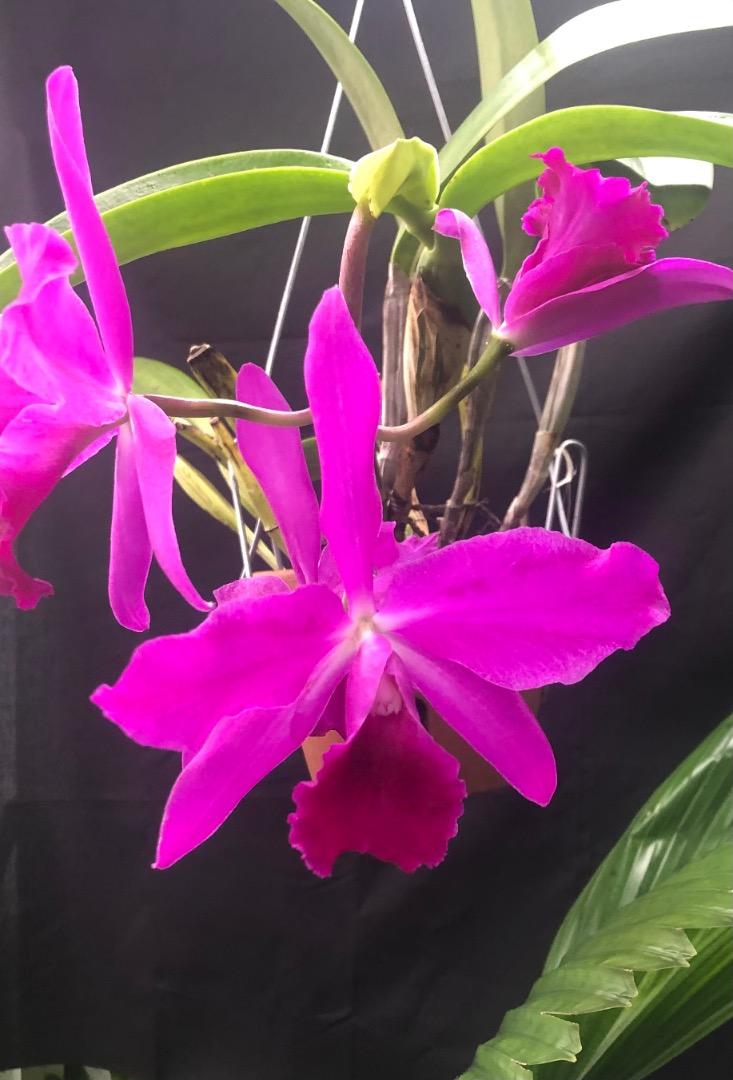
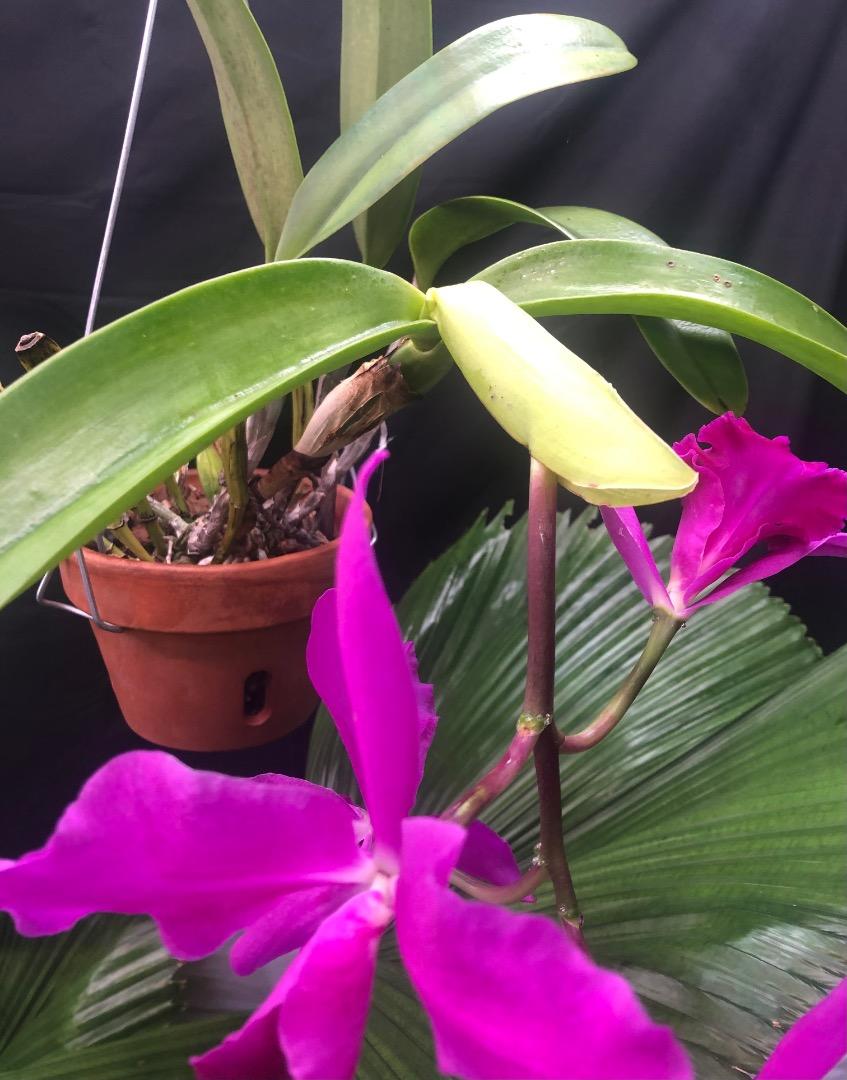
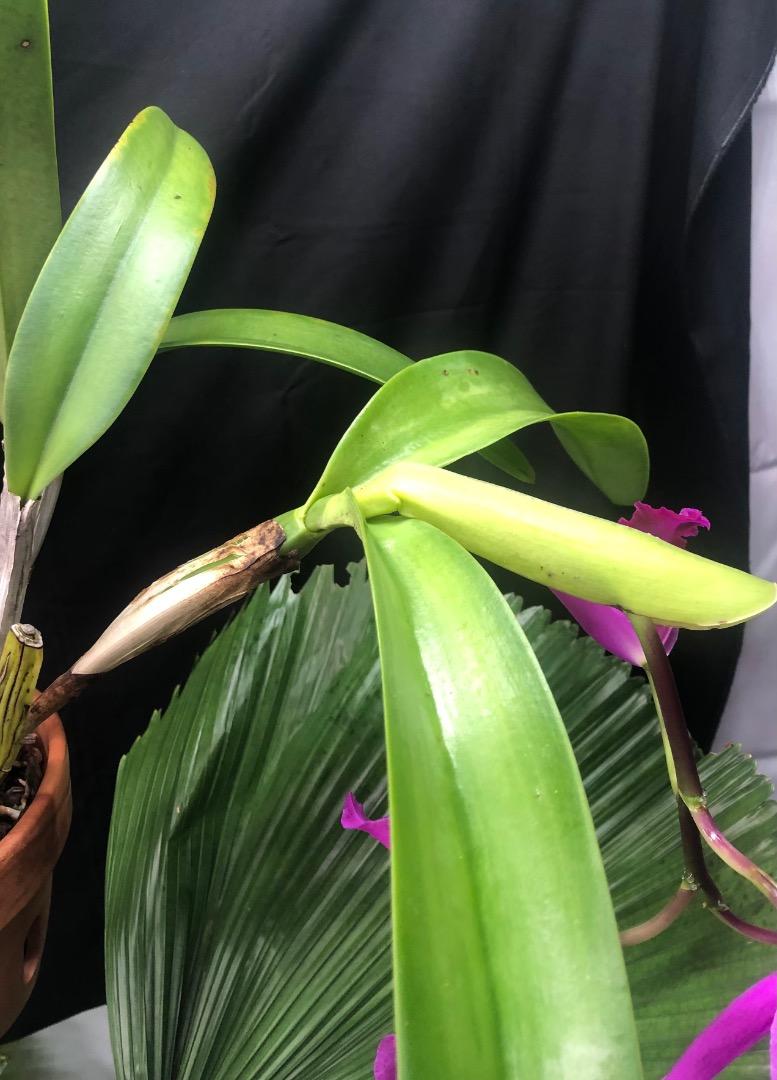
Can Anyone provide any ideas on what cattleya species (or combination of species) this could be? I’ve had it 36 years. Came as a division from a university tropical conservatory collection. Blooms in winter soon after setting sheath. Single sheath. Slightly fragrant. 4-5 flowers on stem and blooms are approximately 5” across. I’m sure it’s an annual bloomer, but for me It blooms once every 18 years. This is the 2nd time it has bloomed for me in 36 years. It must think it has the life cycle of a cicada. Lol thank you for any help you can provide!

 2 points
 -
Both benefit in some way, like a relationship. The big one protects the little one, so to speak. Exciting and extremely rewarding for both. A great, astute observation, Harry. Nature is fantastic.2 points
-
Your Arenga Engleri looks great in shade . Mine is in full sun almost….for now . To the south , I planted two Howea F. that are just starting to trunk and becoming a bit of a canopy for the Arenga. Funny , as the Kentia get bigger , the Arenga is too. My Arenga stayed the same height ( about 6’ overall) for many years until I planted the Kentia next to it. Harry2 points
-
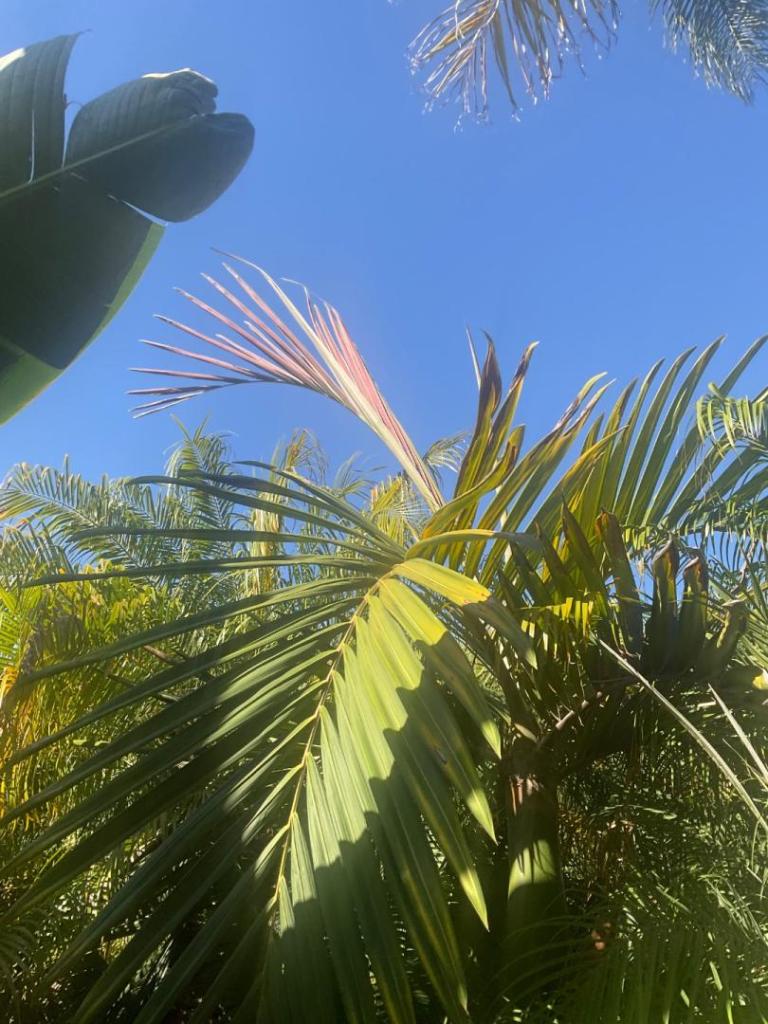
I agree that direct , full day sun , reduces the color and length of time that the new frond has . Mine is in full sun almost all day and the red leaf only lasts 3-4 days . I am inland so it is warm here , not like near the coast . With regular flood watering and a bit of organic fertilizer , the burning has been significantly reduced and the palm looks much better than previous summers . The “ red leaf” still doesn’t last but a few days . I only have the one Macrocarpa , no Hookeri . Harry ‘The new frond shows a burgundy color but only lasts a few days. I will say , these palms get huge fronds when they mature. Mine is getting a flower spathe this year.
 2 points
 -
My rose colored macrocarpa has notably less color in the heat of summer when the sun hits it directly over the house for 3 hrs or so. In winter the sun is south of a line of trees and doesnt get direct sun and the palm responds with more color and longer periods of color. This also happens with the Hookeri but to a lesser extent. Summer full sun weather has much less impressive color and for much shorter durations. I interpret this as the anthocyanins are already present in the spear and the chlorophyll is synthesized after opening. Fast grow conditions/more sun intensity leads to faster synthesis of chlorophyll which is the dominant chromophore in a green leaf. I suspect genetics is involved in which palms are most red2 points
-
It’s a bit hard to tell for sure from the picture, but the leaflet seem a little bit more lax than the one I’ve been grown for many years. Could just be the difference between the plants. My experience with amara, having grown one from a modest size strap leaf seedling nearly 20 years ago, is that it has been fairly slow for me. There were a couple times where I actually thought I was going to lose it, and until recently it seemed to be missing micro nutrients, although I think I’ve finally got that dialed in. After all these years, it may be 12 feet tall overall. Looking better all the time, but I never thought it really loved my relatively cool Mediterranean environment. Especially after seeing the speed that they grow in places like Hawaii. I also tried sancona many years ago and had no luck, giving up after a couple attempts.2 points
-
Excuse me I haven't killed anything in at least 3 days. But for every one I kill now, I'm replacing it with 10.2 points
-
It takes temperatures down to 2 degrees Celsius in my garden, frost would most likely burn it, but there that tough it would most likely bounce back after a light burn.2 points
-
I went to the Mexican market since I had to pick up some pills for Sancho and take Mom to the Dr. I think the lady at the Mexican market makes up prices based on how much she likes you - the first couple times the mangos were a couple bucks apiece but today, I was telling her and (I think her mom) I buy these to plant the seeds and grow trees, and we talked about my grow room and Sancho of course, and I got 3 mangos and 2 Mexican oranges and a can of Horchata for $1.77 today 😂 More incentive to finish my table since new heat mats are here.2 points
-
It depends on soil temperature and kind of plant.2 points
-
Isn't holding moisture rather a problem when the winter is already very wet?2 points
-
@Maddox Gardening-youtube Keep a close eye on it. Those temperatures aren't usually fatal, but they can sometimes weaken the palm to the point where it will develop a crown infection. This happens a lot if the cold is early in the season with more cold spells ahead and there is rain right before a few of them. That said, the old saying in American football is "Don't spike the ball on the 1-yard line." In this case, we're at the 1-yard line on the other side of the field.2 points
-
There are posts from some meteorologists about a sudden stratospheric warming event becoming more likely. It would be a rare event in November just like the last cold front was. It's been interesting weather wise lately in Florida, so why not?2 points
-
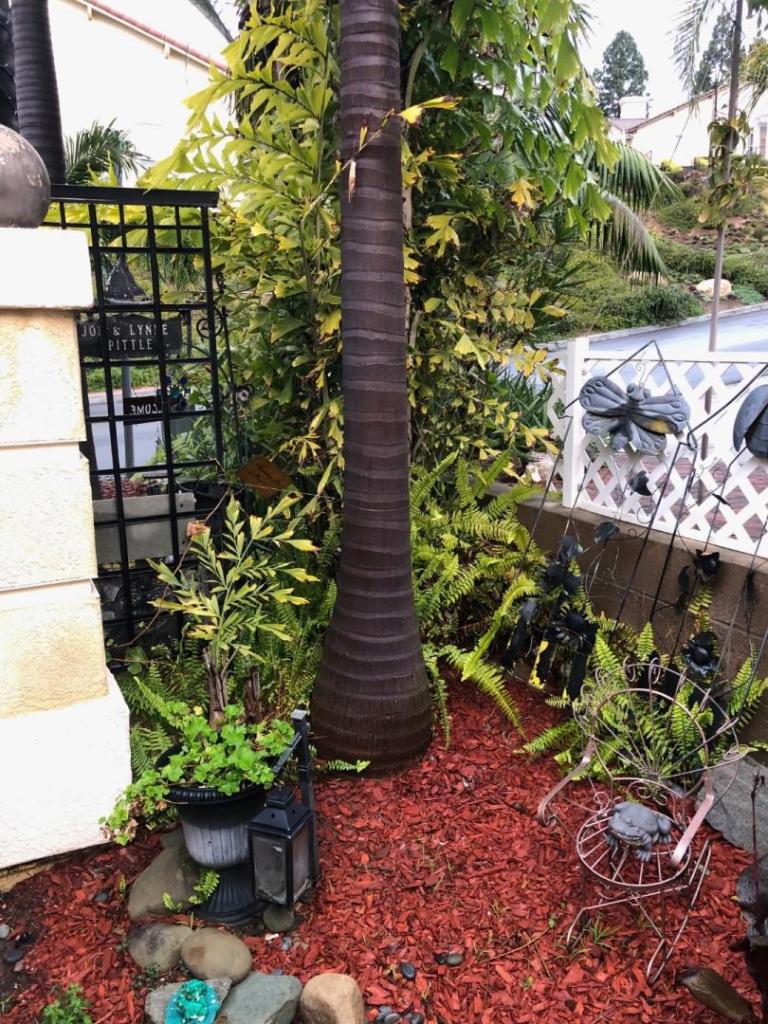
I use wood chips around my plants . It works well year round and really helps insulate during the hottest months . The plants love it and when it breaks down I just add more. Harry ‘This is during the winter after the rain. The water loving Archontophoenix Alexandrea needs moisture even in the top layer and the chips help keep it from drying out. This area gets very warm and dry in the summer and fall months.
 2 points









































.thumb.png.04b3487b96ff29c55b8a8994b91f62b2.png)