Leaderboard




Popular Content
Showing content with the highest reputation on 09/03/2025 in all areas
-
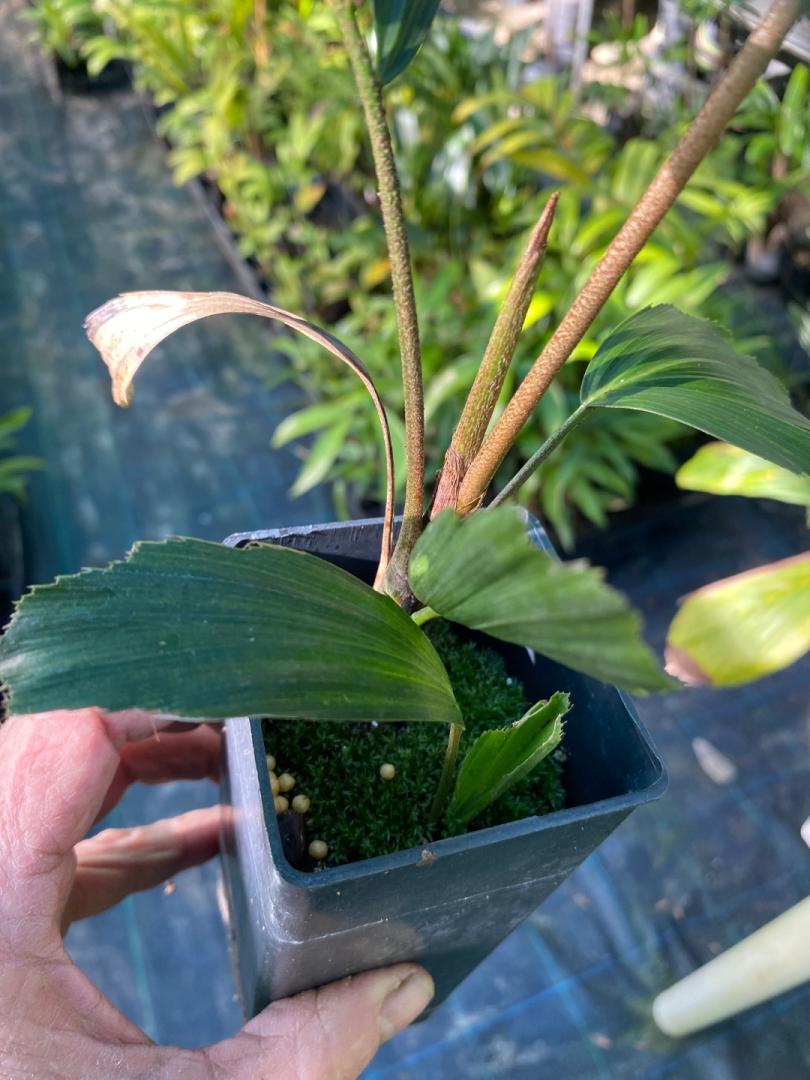
I pulled up 2 big Philodendron pastazanum with lots of roots. I'm selling each for $35, local pickup only. PM me if interested.

 5 points
 -
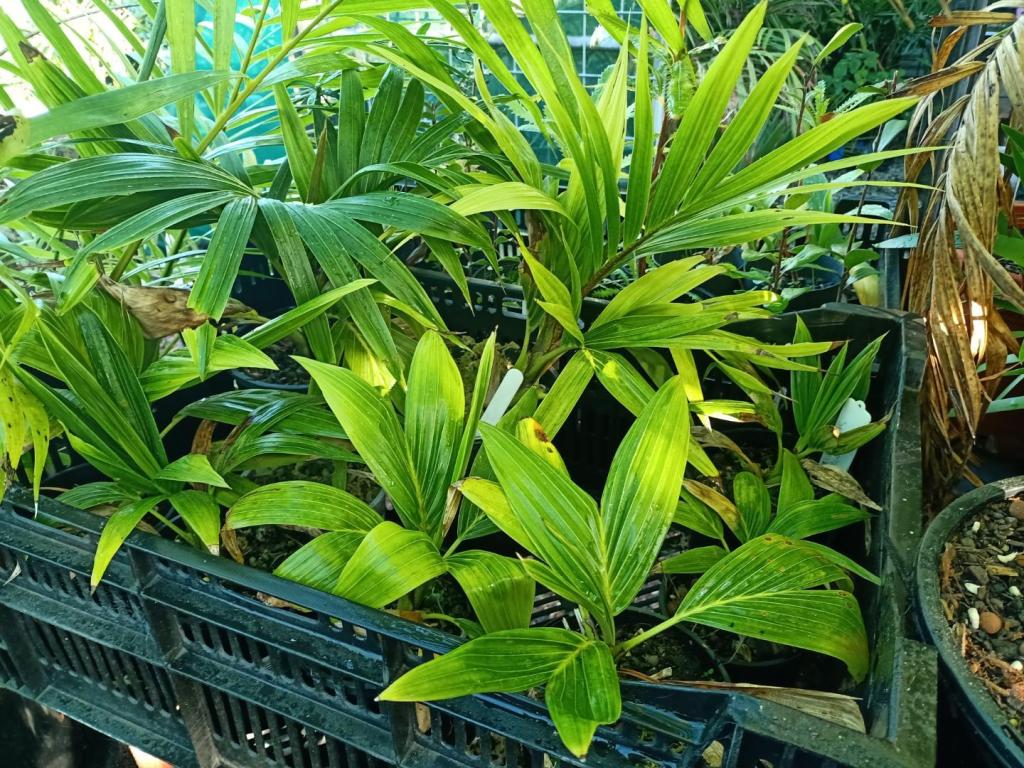
Hopefully the eradication results in more of these little guys...L mooreana ready to hit the ground this spring!
 5 points
 -
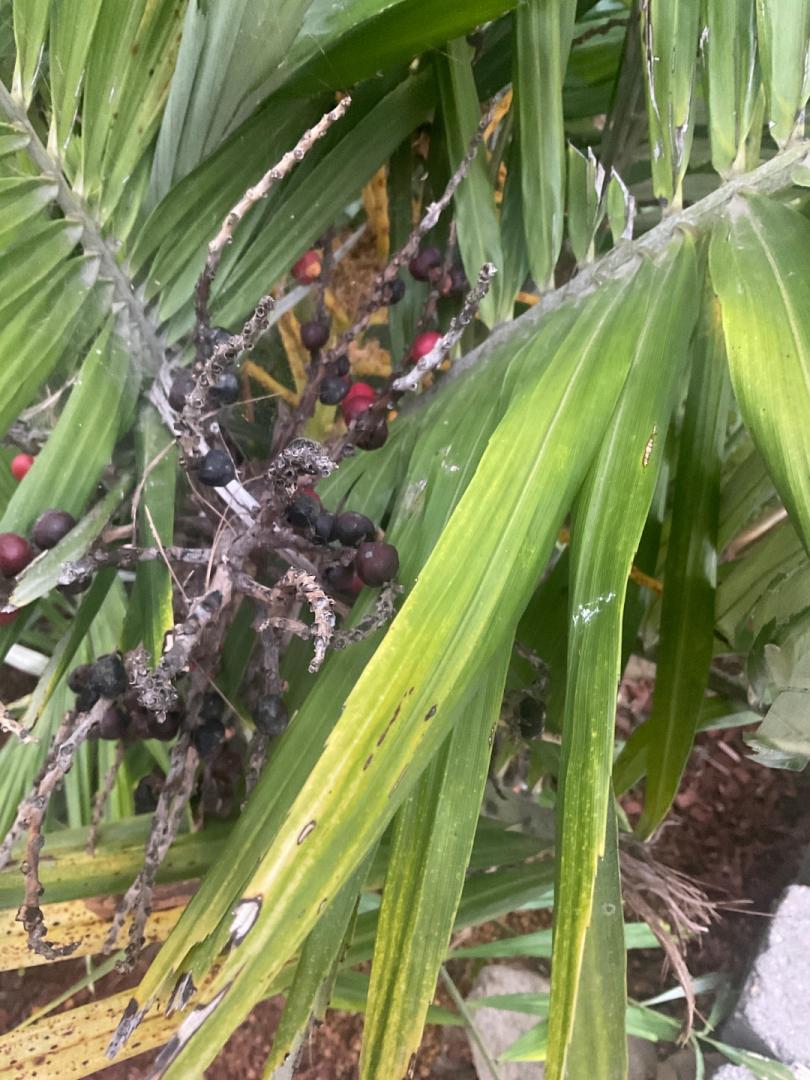
Finally! Hopefully i can get some nuts…

 4 points
 -
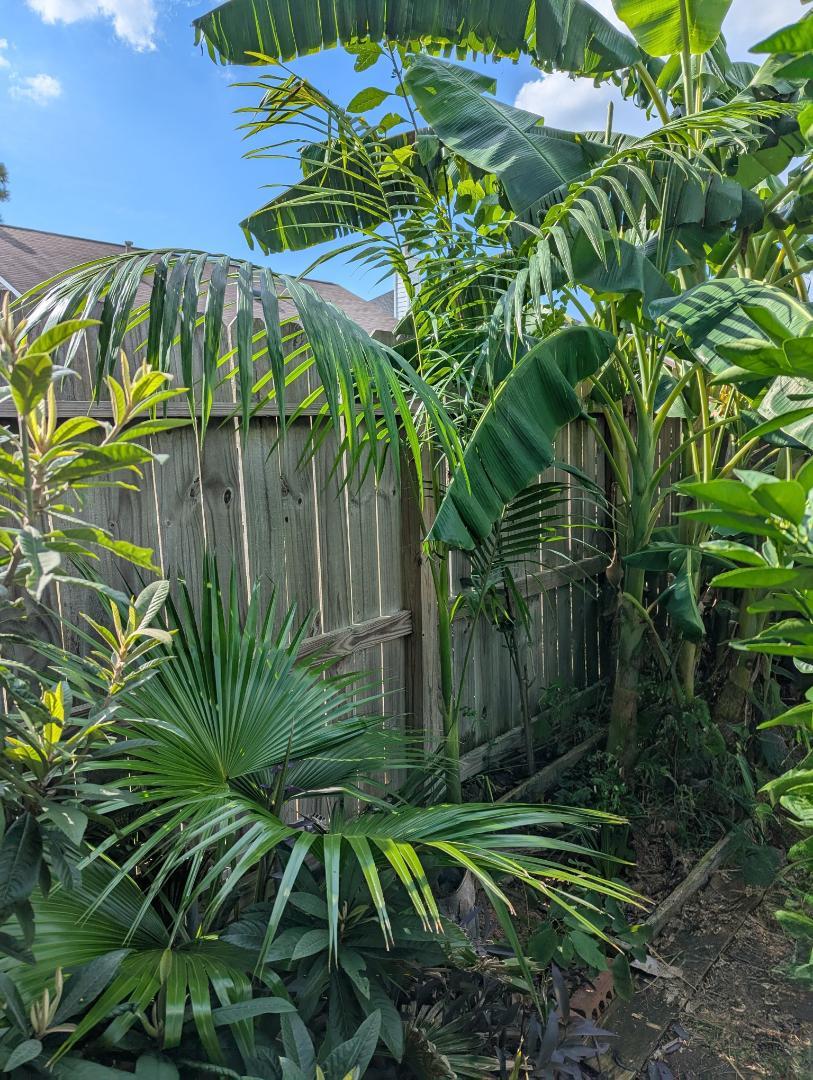
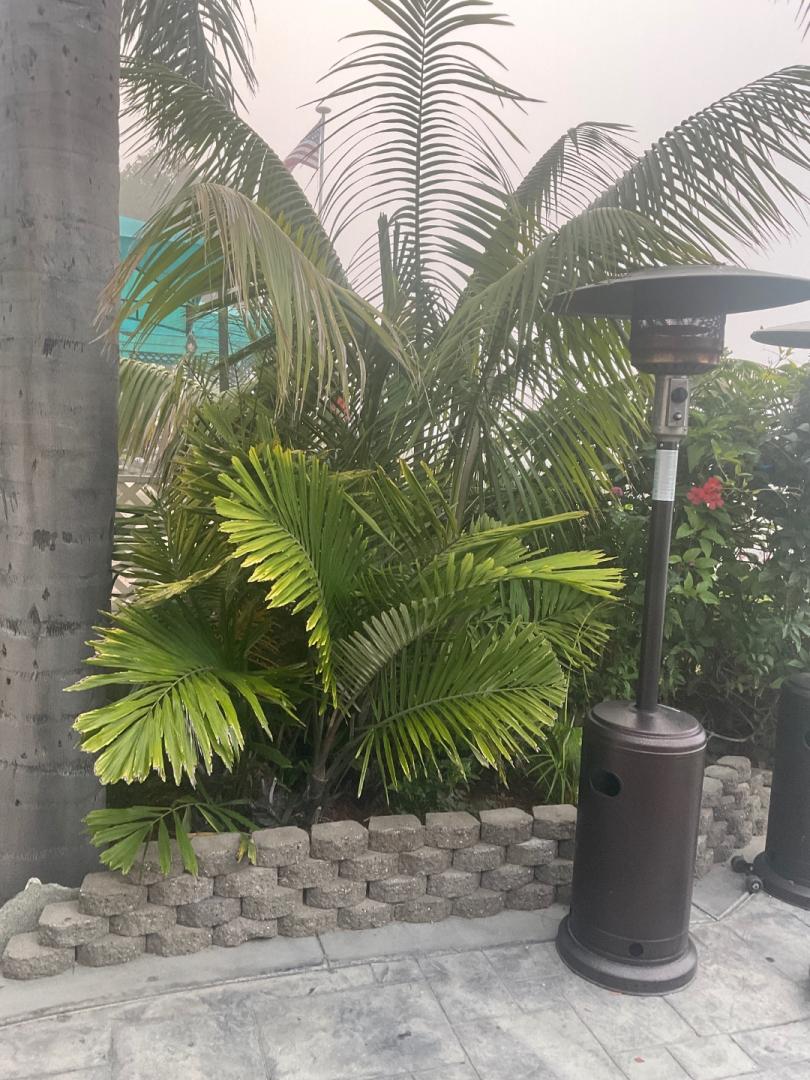
I feel like a lot of my palms I have are basic since I’m trying to grow outside the tropics, but for North Carolina anything that isnt Sabal minor, palmetto, windmill, butia or med fan palm are considered “rare” Youll come across a date palm, washy or Chinese fan palm in the NC beaches once in a while. But never have I see lady palm in North Carolina, which I have success with as a die back perennial palm. A close second would be the queen palms I have zone pushed.
 4 points
 -
The archontophoenix purpurea I have around 6 large established ones in my garden they are that tall I can’t see any colour at all in the crown shaft they do flower but none have set seed as of yet so I thought I might as well grow another 20 to plant out iam not a fan of growing archontophoenix they simply grow to fast for me to hold in containers I prefer the slow growing exotics not something that needs constant repotting and the amount of water they drink in containers to look at there best i would rather water a Joey or licuala before archontophoenix species there a dime a dozen so common you can get them pretty easy especially the alexander and bangalows.


 3 points
 -
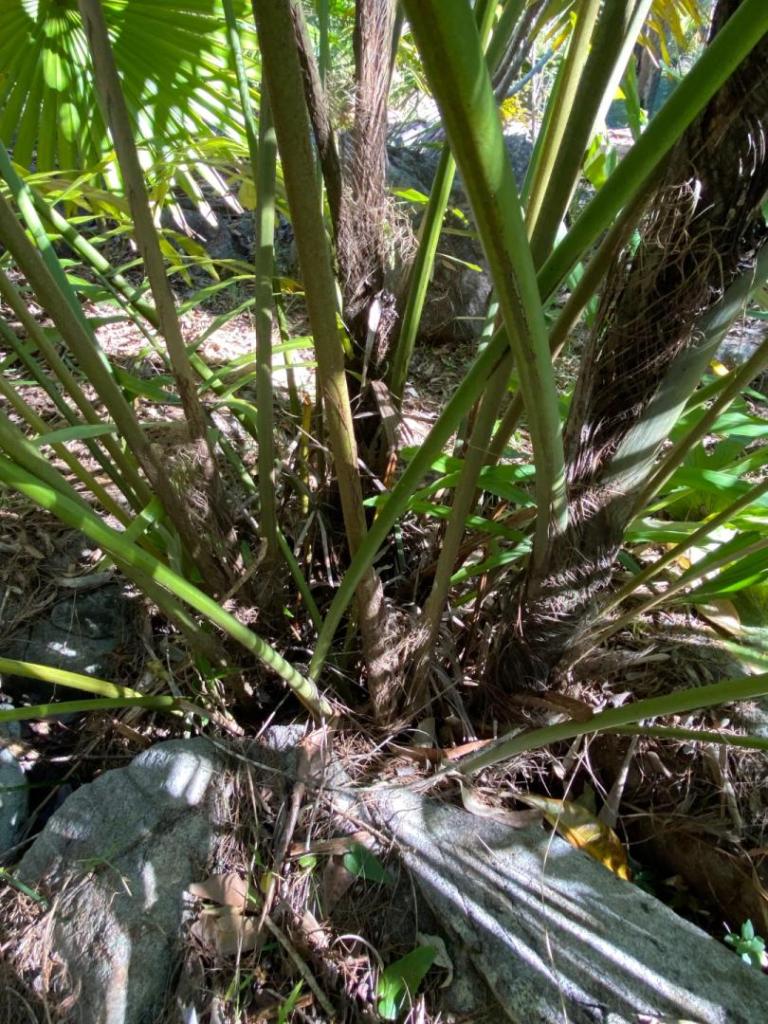
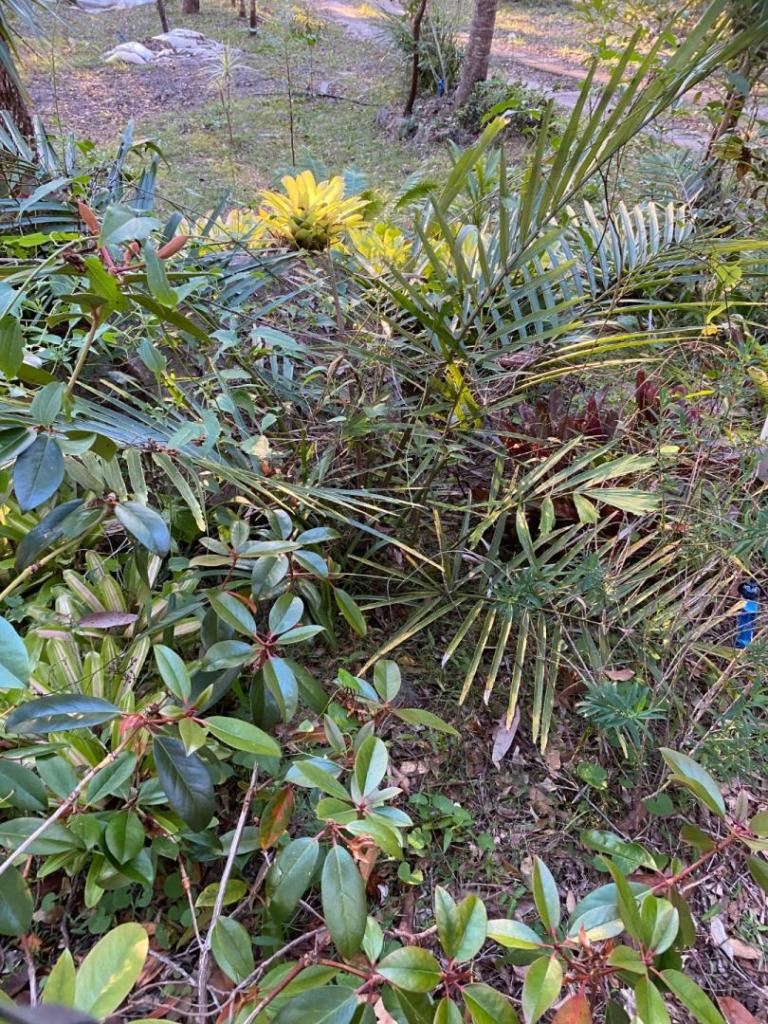
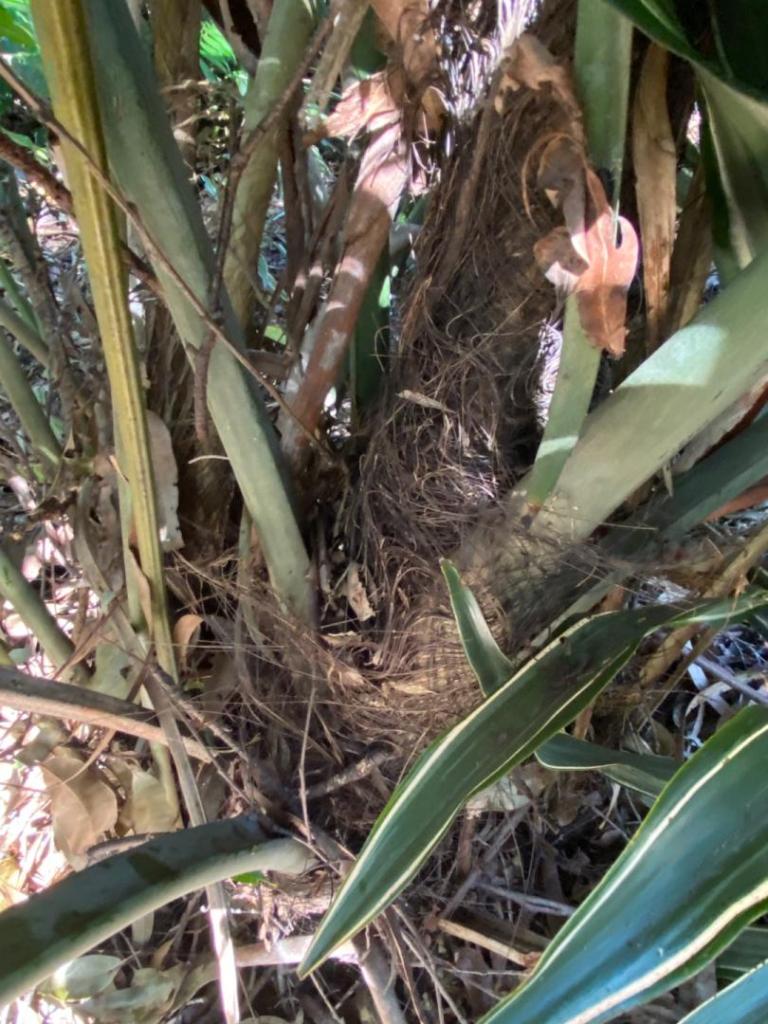
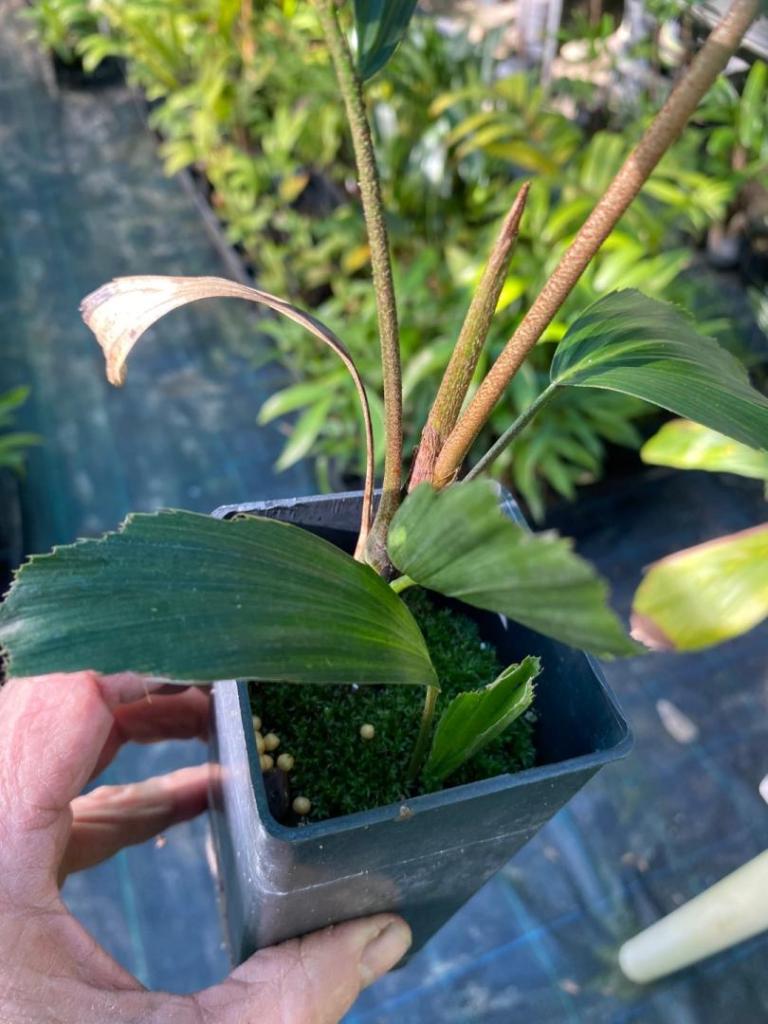
What can you say about the tough old engleri nothing except there super tough die hard palm. Great for screening that neighbour out. Perfect for cold climates, dry tolerant pretty well much sun proof not full blazing sun but tough enough to take the sun and the heat that goes with it. There dotted throughout my garden creating a microclimate as they grow. Great easy to grow palms!







 3 points
 -
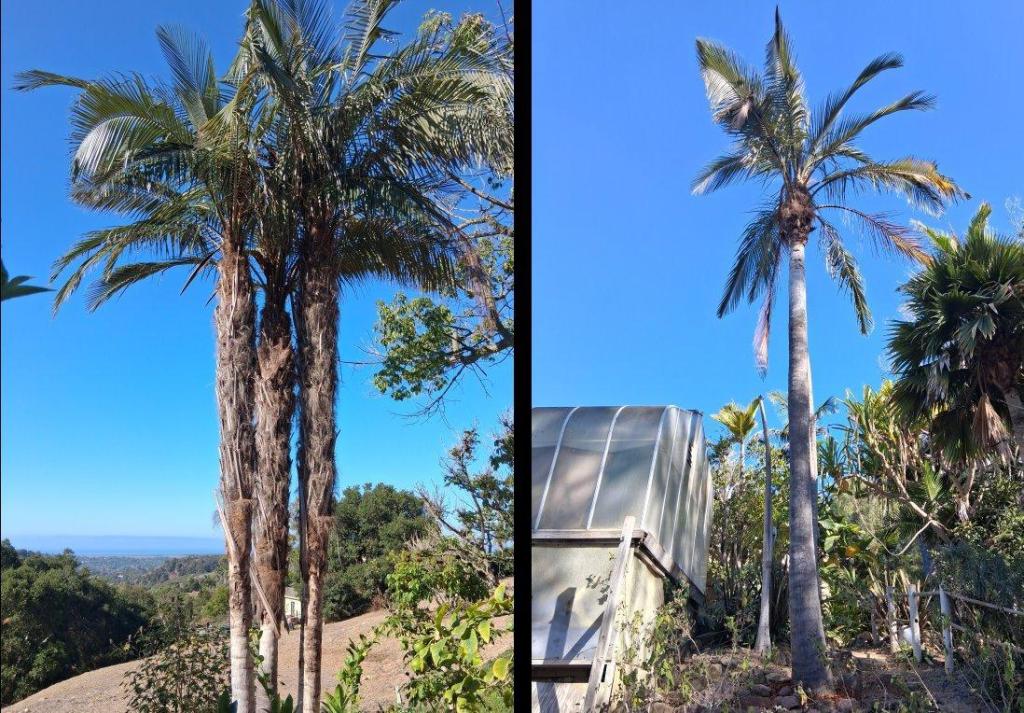
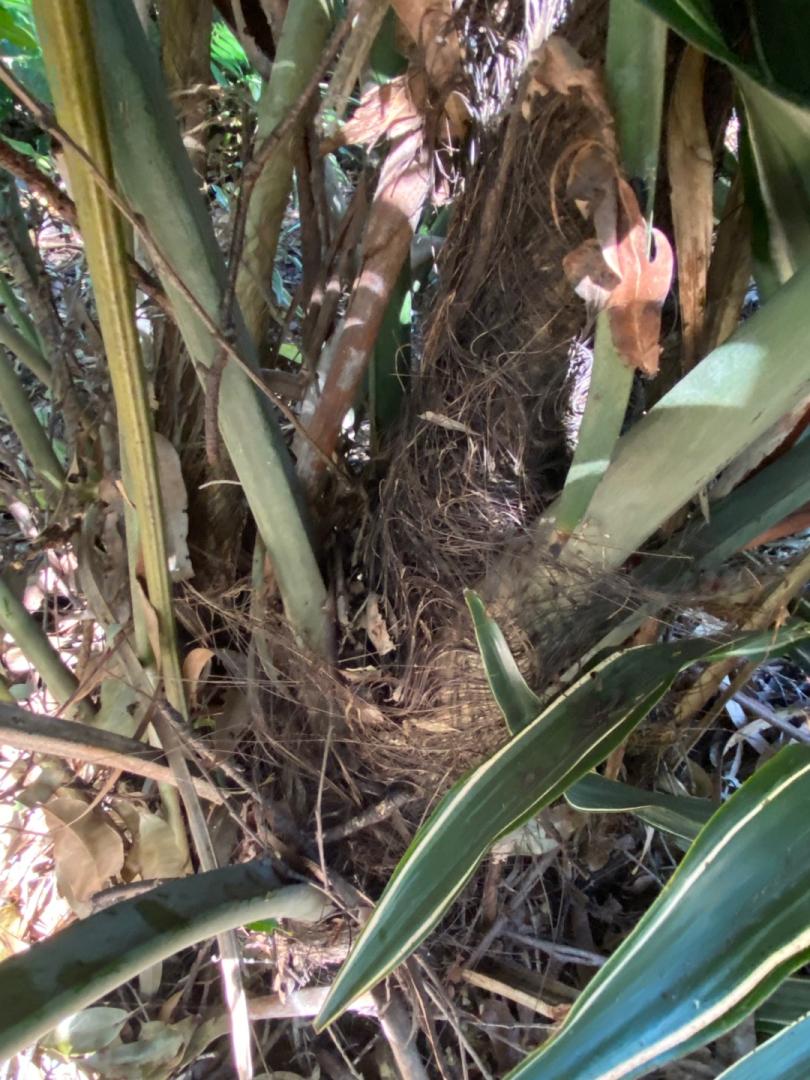
I recently became caretaker for my father's place in Santa Barbara, including his palm tree collection. I have a question about the growing habits of the mature specimens. Below is a pic with a trio of Parajubaea cocoides on one side, and a single P. cocoides on the other. The trio is 15-20 years old, and has the classic hairy-looking trunk. The bottom 10-15 feet or so are smooth, having dropped the frond bases entirely, but from there on up the trees are holding tight to the remnants of the dead fronds. The single P. cocoides on the right is well over 50 years old. As you can see, the trunk is smooth almost to the top. It appears to me that P. cocoides begins shedding its fronds as they die once it reaches maturity. I really want to be right about this. I want someone to say "that's right, you won't need to trim the older tree at all, it will simply drop its fronds like a King palm." Because that would mean that I have one less really tall palm tree to trim. Does anyone know what these trees are like at this age?
 3 points
 -
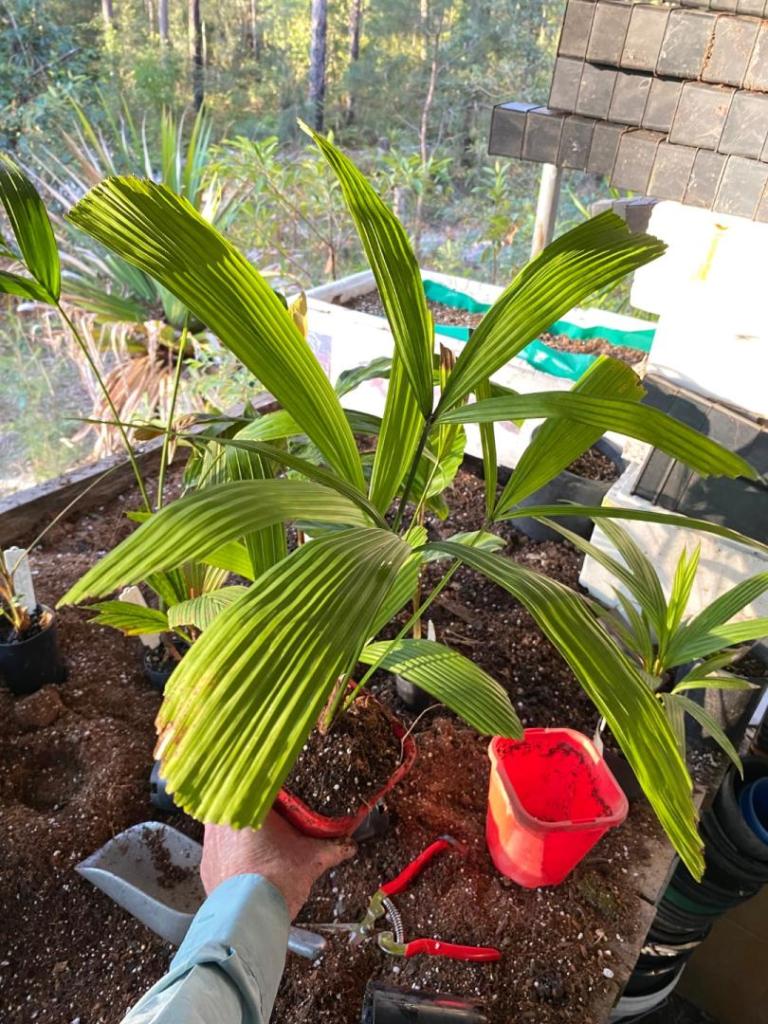
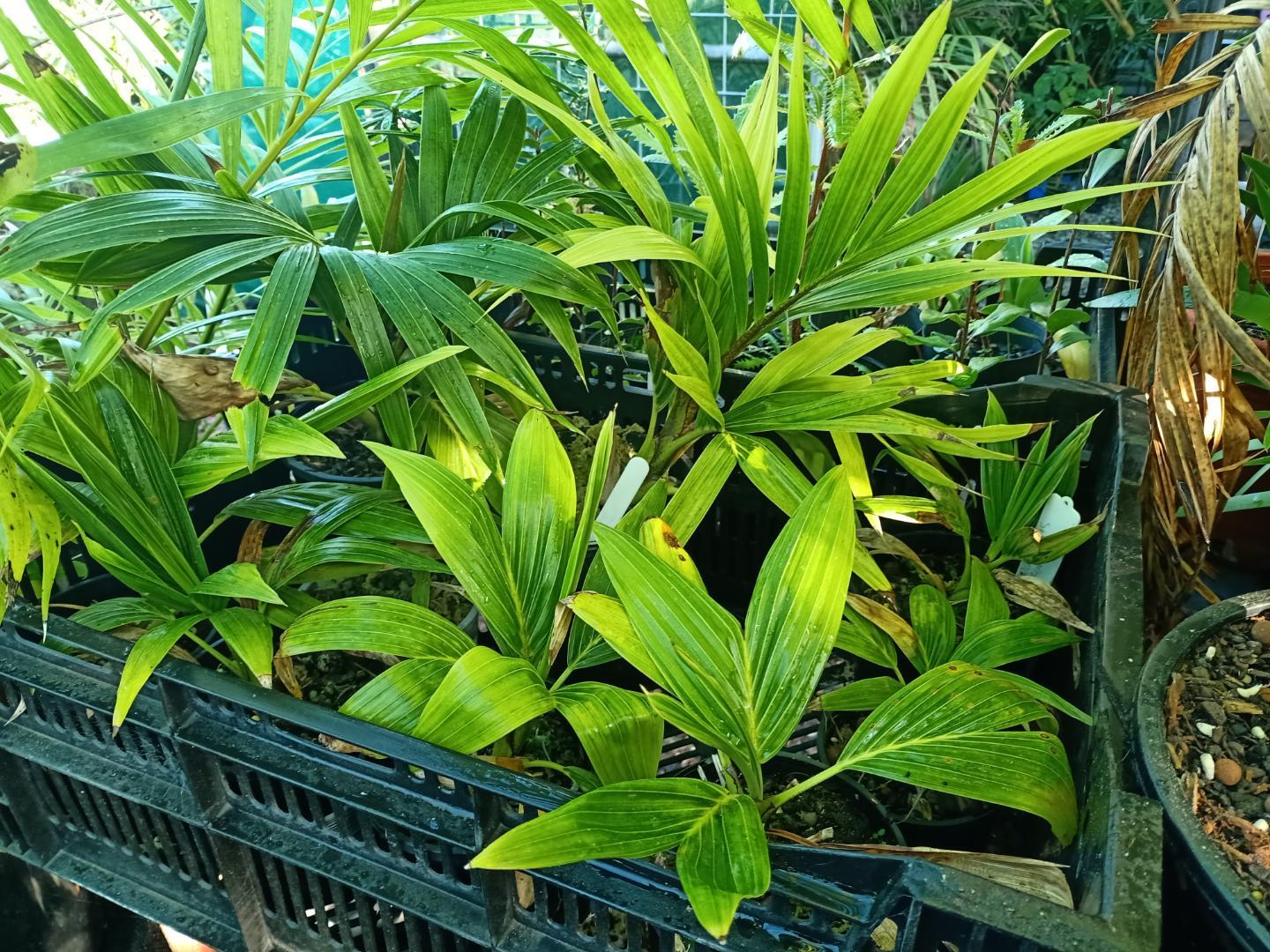
Some more of the newly collected palm species for the garden, lanonia magaloni, iguanura paddle leaf, pinanga sarawakensis, licuala terruginea, Areca loasensis, dypsis sp, licuala orbicularis, iguanura bicornis, dypsis lantzeana and a Calyptrogyne ghiesbreghtiana. They will be grown and planted next spring, all have survived winter well, so one more winter then in the ground they will go!




 3 points
 -
Congrats there @TampaBayRay! Nice watermelon you got there! As @Harry’s Palms notes the seeds take a while to ripen; in my case it’s about two years. They’re usually pretty good about setting seed after blooming. Keep us apprised!3 points
-
Very good , fingers crossed ! My friend’s has a huge batch of fruit but they take their time ripening. Mine has a spathe but hasn’t opened . This is the first year the spathe hasn’t just fallen off , but still not sure if it will produce anything. Yours has a nice Watermellon marking to it. Harry3 points
-
My lovely tall ones that I had to leave behind 4 years ago when I moved house were originally purchased from a supermarket in 1976 when metallicas were fashionable and as easy to find as a fanbelt for a Commodore. (although I think Commodores were called Kingswoods back then) Never in my wildest dreams (and they can be nearly feral) did I ever imagine they would become so rare as they now are. Peachy3 points
-
Personally I think they are a beautiful palm. I have seen a few stunning ones. I have some mature plants in my garden but they are so tall and mixed in with other palms that they hardly even get noticed. This lot are destined for the new garden.3 points
-
@JohnAndSancho I attempted to control the variables, but composting has so many factors that are constantly changing. Even if I only composted one thing, say lawn clippings, and ensured that the moisture and humidity were constant, the heat and light levels are constantly changing throughout the year. Even trying compare year to year, you can’t really count the number of earth worms, armadillidiidae, and other critters that are doing the heavy lifting. As such, I consider composting an art more than a science. Either way, compost soil is really “black gold.” I find that a 50-50 mix of compost and native soil is better than any bagged soil available for purchase.3 points
-
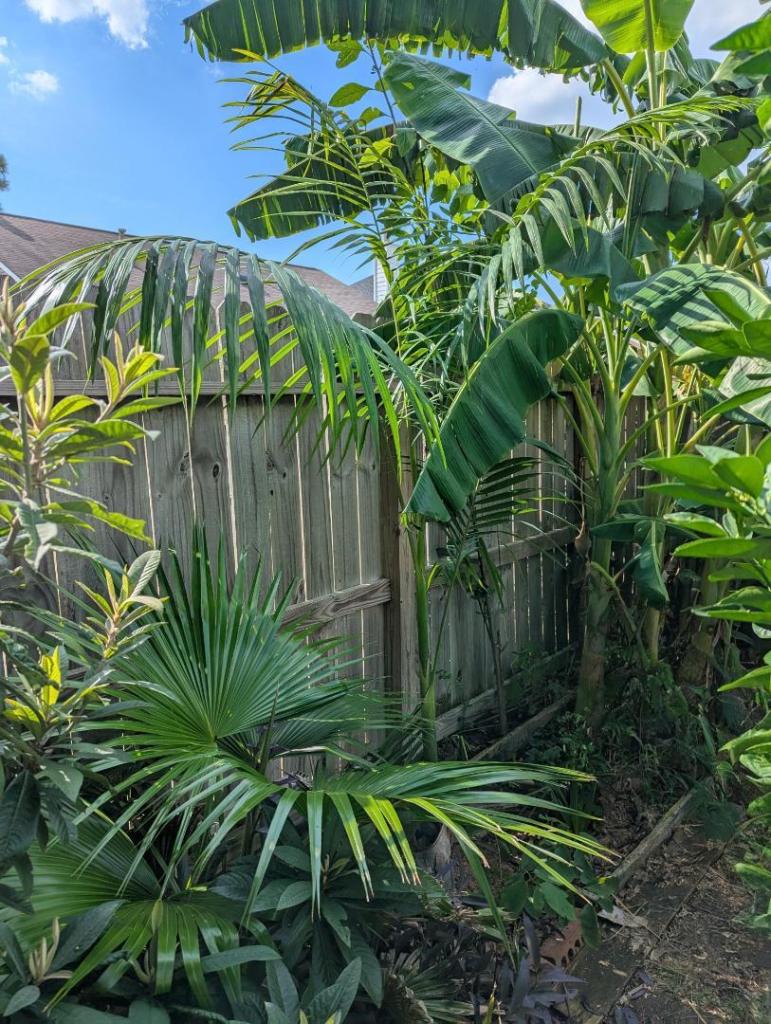
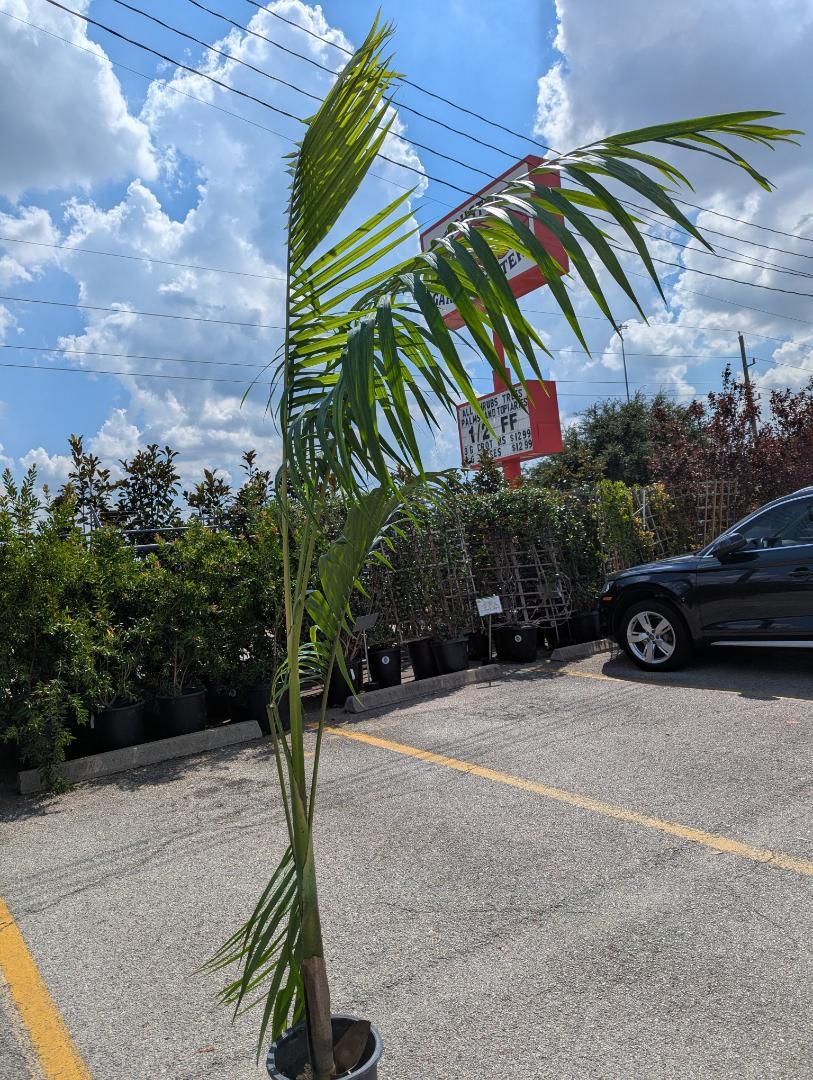
It's 50% off time...let's gooooo!!

 3 points
 -
As you would be keeping an eye on that split leaf form for sure, it makes you wonder if an elegans jumped the fence to produce that split leaf, there is a split leaf form available.3 points
-
Beautiful palm harry. I once purchased a thousand seeds and I got about a thousand to germinate. I wish I had a thousand seeds now of them. You don’t see them anymore in garden centres like you once did. The big chain stores put the palm market into shambles only wanting the basic 5 palms to sell, rhapis, Bismarck, archontophoenix, Howea and golden cane such a shame. Richard3 points
-
Probably the least fussy palm I grow. Recently noticed one of mine is the split leaf form. All from the same personally collected seed batch, but from multiple parent palms in the same garden. Don’t recall any of them being split leaf though.
 3 points
 -
One of my favorites. I have 7 or 8 scraggly old ones and also a handful of second generation seedlings which just flowered this year for the first time. I usually get very sparse volunteer seeds but I read up on hand pollination and made more of an effort earlier this summer when I saw the inflorescences emerging. I didn't do anything fancy, just matched up the timing for when any male flowers seemed to be emitting pollen and picked them off, then lightly dusted them around any female flowers that looked potentially ready for pollination. The pollen is nearly invisible, but in the right light you can see it blowing when a male flower is shaken if it's ready. It seems like they are happily wind pollinated, no paintbrush or anything like that required. After doing this I've got a whole bunch of seed set and I'm excited to grow a lot more. In my past experience it's 4 years from this point to a blooming, trunking plant.
.thumb.jpg.0393650926be538286cd7b84cecfc8d9.jpg) 3 points
3 points -
If the Sabal seeds haven't sunk after a couple days I'd probably toss them and try again. However, like all seeds that don't germinate, toss 'em in a garden bed and you might get a nice surprise next spring!2 points
-
Have a small one that has been locked in it's 3gal pot for years.. Grown under bright, high canopy shade, so i can't say how it would handle full exposure to our sun. Never noticed any issues ( ..other than needing to get into a bigger pot ) w/ ambient heat or the cool spells during the winter.2 points
-
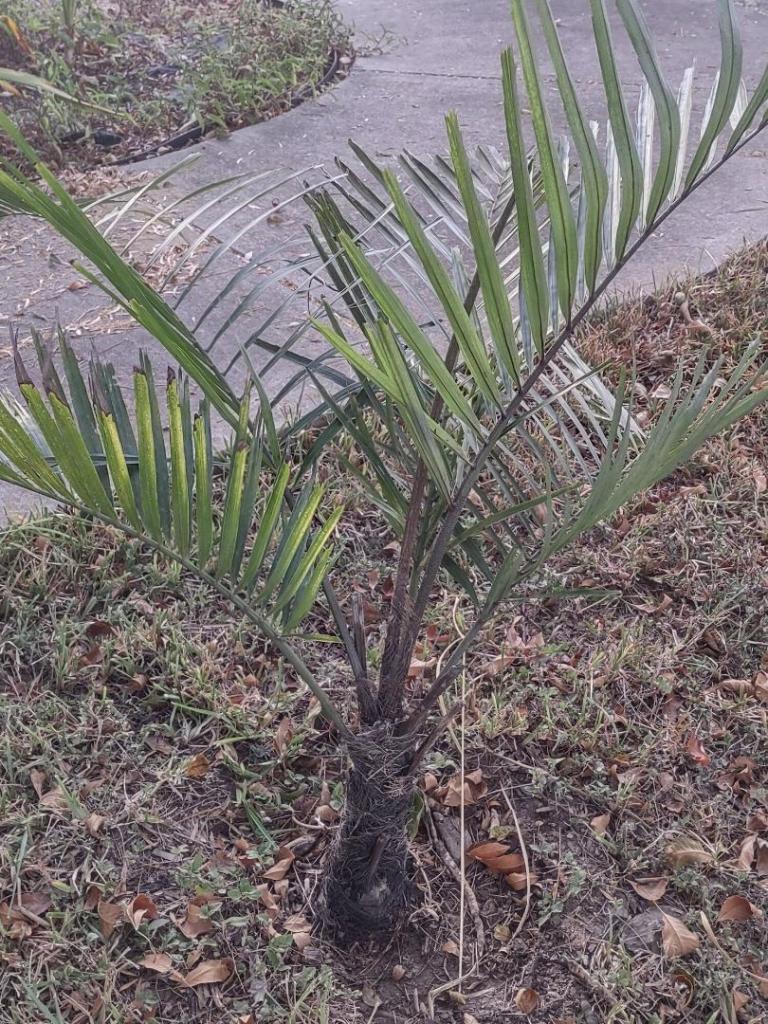
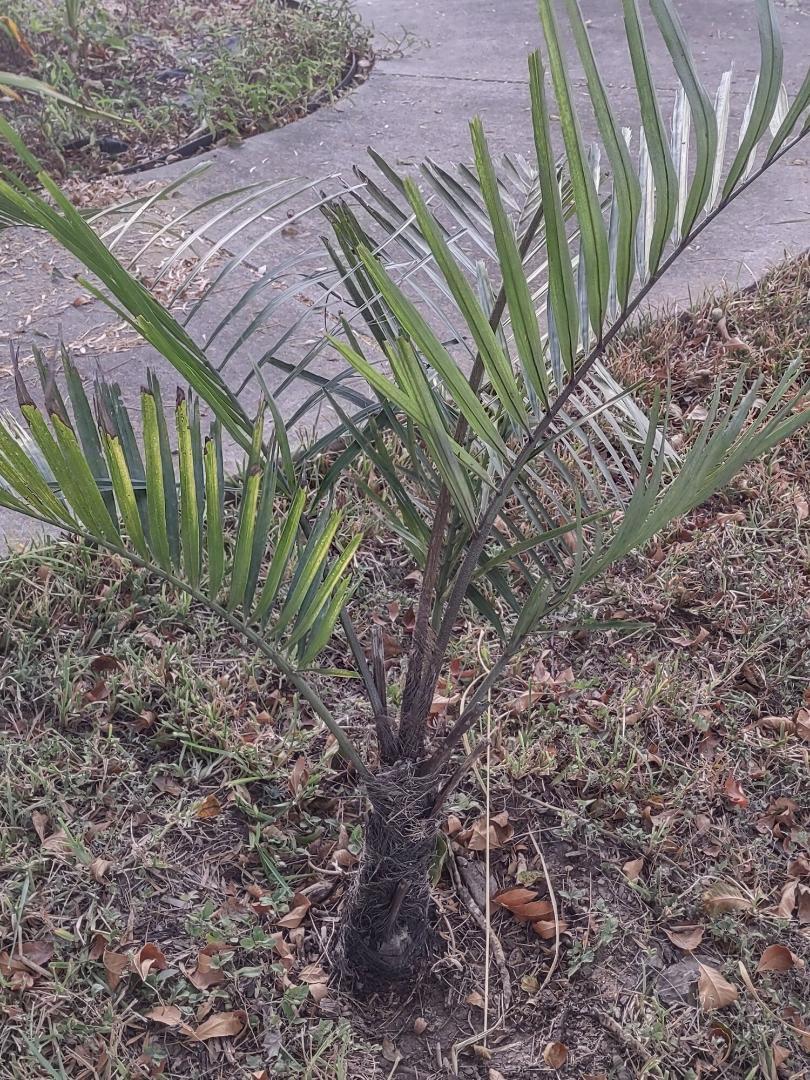
At what size do they start suckering? I'm guessing that mine should start soon. I assume this is engleri - it wasn't labeled at purchase.
 2 points
 -
Iam sure a lot of people are thinking the same way about a few neighbours. The only drawback is they take a while to grow into that screen, but iam sure if it’s that neighbour who needs screening it’s worth the wait!2 points
-
Yes there’s some good ones in that bunch, the pinanga sarawakensis I had written off even before winter of not making it, I even gave my other one away I was that confident it would die but it made it not a problem. The problem with collecting palms is you do need space in time for them, next thing you know you have pots lined up wherever you can. Five years ago my old greenhouse was falling apart and I hardly had any plants in containers. It just snowballed out of control in a good way. Keep the Ernie and he will reward you forever and a day. Richard2 points
-
That's right, my friend Harry. These palm trees have crownshafts. Not all of them do.2 points
-
Remember that Archontophoenix are from the Chambeyronia family. Australia and New Zealand have first-class palm trees.2 points
-
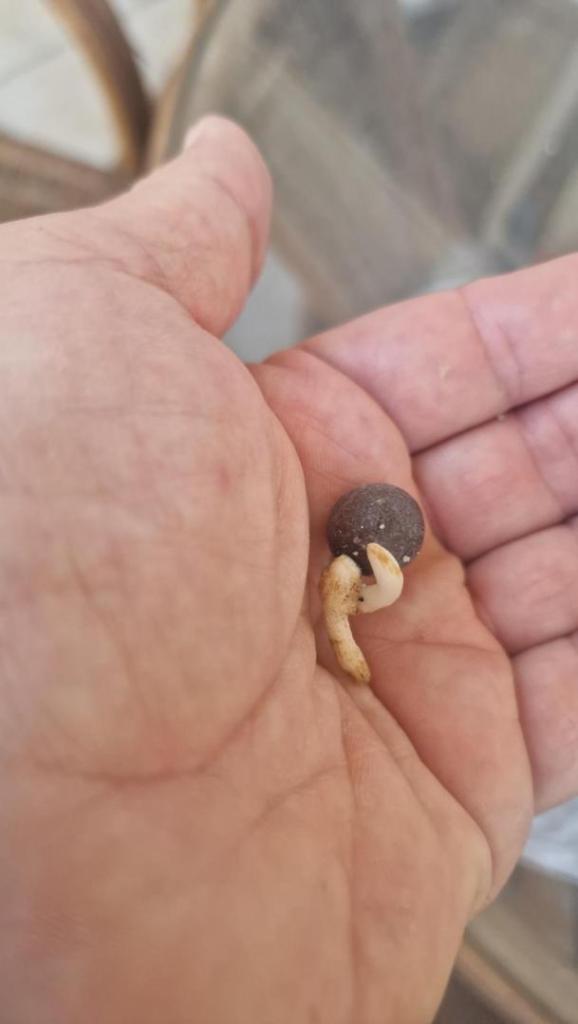
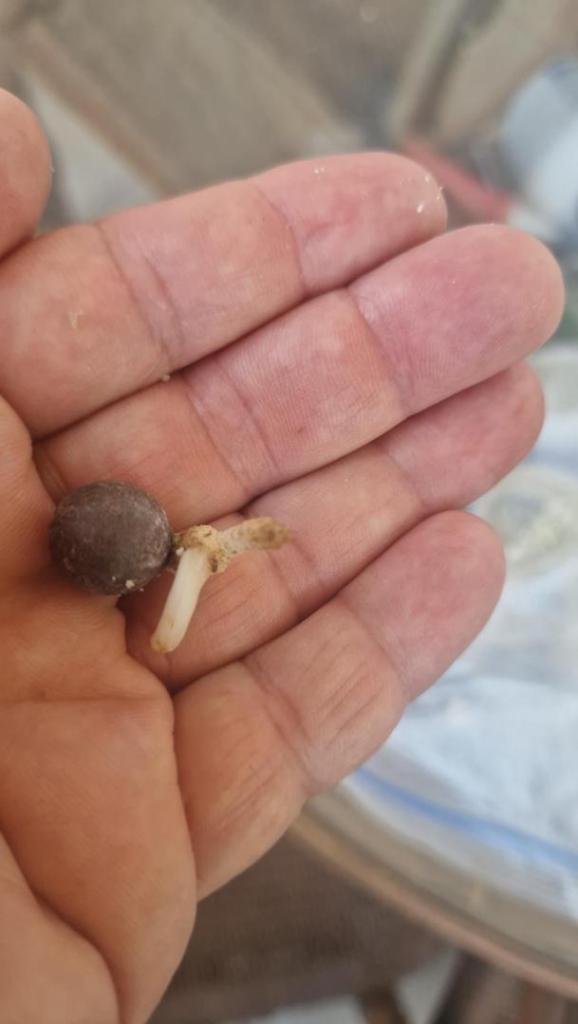
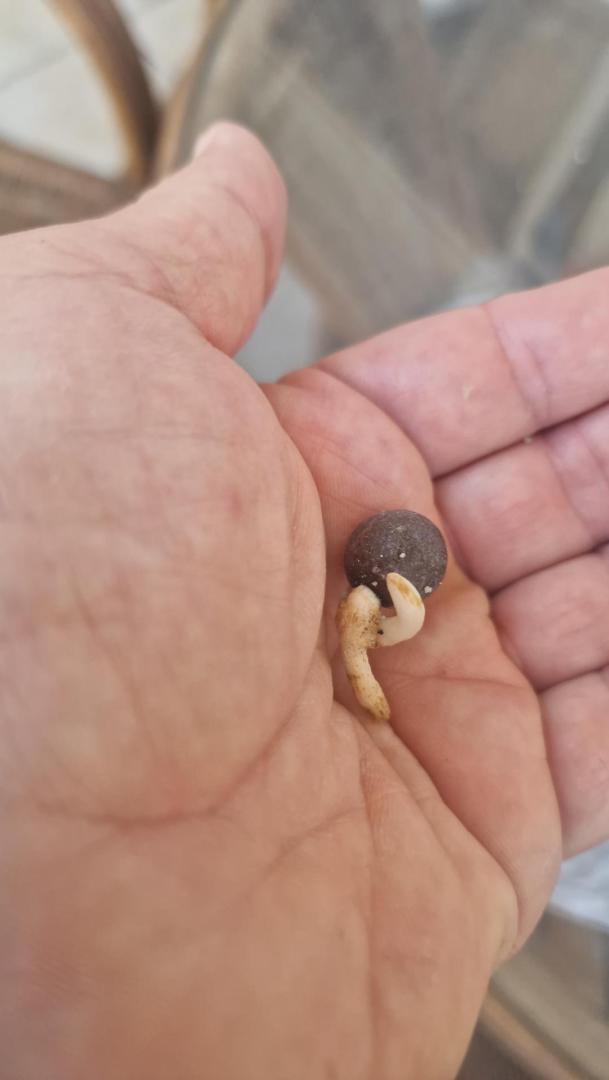
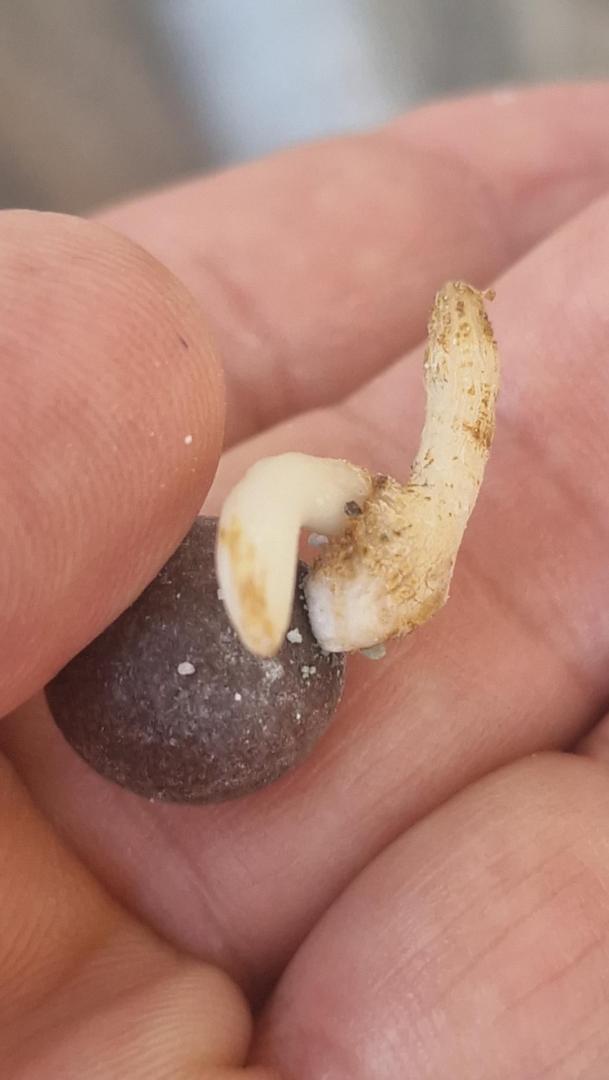
What you call part on the left or I call brown part, does really emerge directly from the operculum. The other part emerges actually from former. At least it looks like it. FYI it is a seed of Nannorrhops ritchieana. 0
 2 points
 -
Chamaedorea schippi and Chamaedorea graminifolia are different species. In Don Hodels book on Chamaedorea say they are one and the same, however in a later paper he published he separated the species, stating C. graminifolia is a single trunk species. This has shown not to be quite correct. They can be both. Single and clustering forms both grow in Sydney botanic gardens. Mine have both forms, however many did not show the clustering form until after seeding. Some people unknowingly sold C graminifolia as Schippi before they became 2 species Hope that helps. Regards Colin2 points
-
Maybe I'll consider one again once I have a proper jungle that can afford them some protection. The thing is I've spent A LOT this year on putting in giant beds, soil amendments, mulch, steel edging and dozens of plants so I at this point I want to put my money toward things that will last. My latest slightly iffy palm is a Sabal pumos. If they can survive in Georgia they better survive here! I've been selling plants/palms locally to help offset the costs.2 points
-
I’m harvesting every week right now, so seeds are guaranteed to be FRESH! Also, my two largest Butia have not stopped flowering yet this season. I guess it’s because of the plentiful rain we have had. So, I will be harvesting well into November, since each palm has another inflorescence coming behind these. As always, I do some quality control on every batch to check for endosperm and embryo.


 2 points
 -
Decided to plant my one birmingham as a patio palm. Thought a slow growing, cold hardy palm will be perfect for this project. A little worried the pot is too big but I don’t think it will be harmful.
 2 points
 -
I was just at Melbourne Zoo on the weekend. They’ve been working on a breeding program for years. It sounds like it’s been successful so there’s hope.2 points
-
I miss HGC almost as much as I miss El Rey Taqueria2 points
-
And it has the bonus of a new coloured leaf. Most ptychosperma are quite fast growing. McArthur is the one palm that used to available quite a lot years ago and I never had in the collection I do now and if well watered they look fantastic. Richard2 points
-
Thanks I will go with 12 in my climate, when I see them flowering again that’s a good indicator.2 points
-
@realarch thank you , they really are pretty easy . I have a good friend that comes over now and then . He is a fellow collector with a beautiful garden . He could not believe the height of them , he said they are very old . I’ve had them at least 30 years , through two houses . Harry2 points
-
Syagrus romanzoffiana2 points
-
This. I think once you get away from the coast, all palms are pretty rare in Mississippi except the native Sabals. But everything I've got has something about it that makes it cool.2 points
-
Nice and green palms, healthy little ones. Would you say that the seeds take 12 months or longer to mature?2 points
-
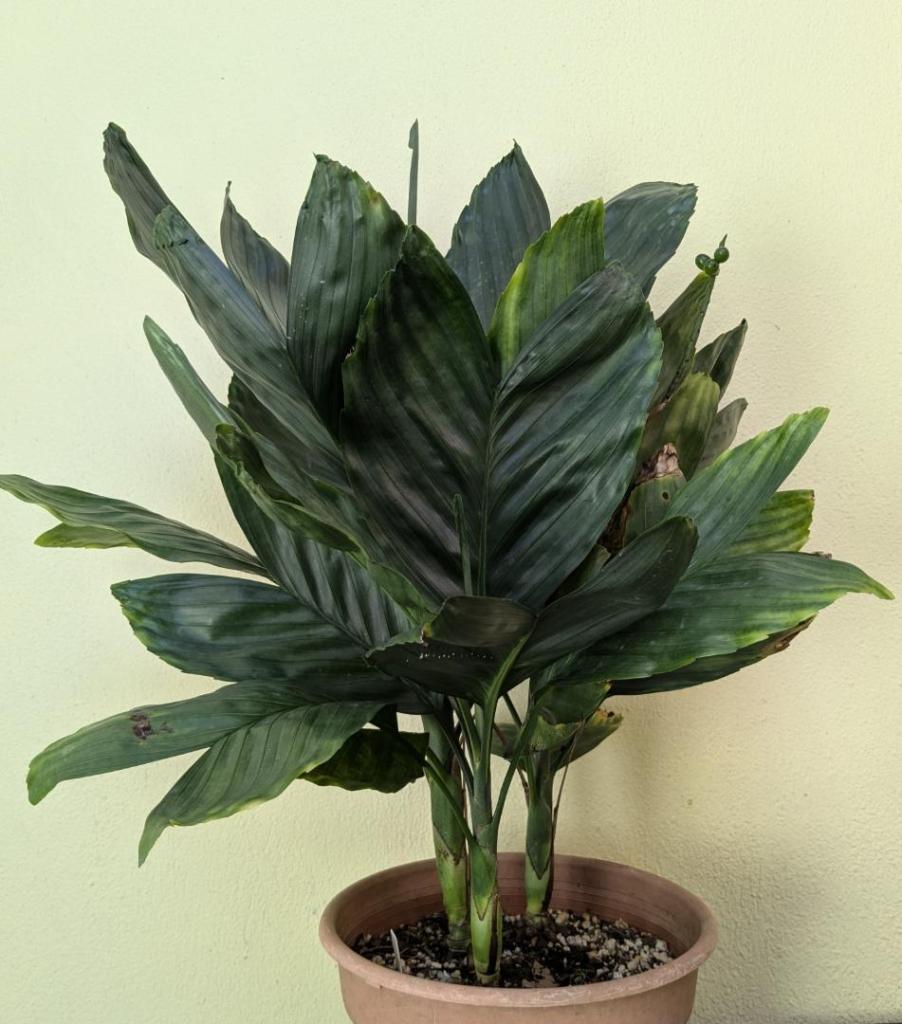
These three are from that handful of volunteer seeds I got four years ago. Seeds are slow to ripen and germinate, and then the seedlings had a lot of fungal issues, but once they get past the delicate early stages they pick up steam fast. Not bad considering it's barely over three years since they were germinated and they're now contributing with a few seeds of their own.
 2 points
 -
Nice palm with a few good seeds, the male pollen is difficult to see and in small amounts. A group planting would be interesting to see how many seeds get produced. One question how long do they take to mature in your climate?2 points
-
Wow! Amazing potted specimens. What a great look. Good job Harry. Tim2 points
-
No. I see this often on many species, no pattern.2 points
-
No, you really should if they deserve it, whether they're on here or not. Cynical, predatory and pathetic are a few words that spring to mind.2 points
-
I had a look John stay away from them they only have a 4.9 postage rating. Iam sitting on $50000 bucks I have a real deal variegated licuala ramsayi var tuckeri I will consider offers above $40000 and also on offer is a rare variegated kentia going cheap because it’s not a bellmooreana for $35000, buyer beware they say 🤣🤣🤣


 2 points
 -
My green form starts to show damage in single digits. I had about 50% frond damage after 2 nights at 4f. Back to back winters of -10f and 0f both completely defoliated it. Never have protected it, although I did move it to a south wall from a north wall after the -10f/0f winters. Yeah, they are tuff!2 points
-
Diehard is correct. I hosted palm sales in my backyard 20 years ago and the ones that didn't sell I just left in a pot in the back corner sections of my backyard. They are in full shade under big oaks. Zero care from me as I forgot and didn't care about them. The pots they were in have long decayed and broke apart. They have survived on their own in East Central Florida.2 points
-
They are slow growing but very forgiving to adverse climate conditions . The last few years we have been getting heat waves that will sometimes burn the Howea that is planted right next to a very thick Arenga Engleri , both in sun . The Arenga shows no sign of leaf burn at all . It has been fruiting for the last few years and I have been pushing seeds around the garden so maybe some seedlings in my future. @Rubberboots It may be worth a try but with shade in your area . I got mine in 1993 as a large potted specimen that was hanging out in an orchard under some Avacado trees. I planted it in 1998 here and it had no shade at that time . It never flinched ….just got bigger to form a nice privacy screen . It is just recently starting getting shade from a couple of Kentia that I planted next to it . Harry ‘the yellow or older fronds are left on the palm as the fruiting stems start to die off. The new stems constantly growing for replacement.( much like Caryota Mitis). The Kentia are starting to trunk and now gaining height. This will be a benefit to the Arenga . Last seasons fruit , more on the way ! Harry

 2 points
 -
I had some seedlings that damped off, and some fresh seeds with lots of goo that I apparently didn't clean well enough. These seeds are gross when they're fresh and they rot quickly if you don't get all the goo off.2 points
-
I like Arenga Engleri so much that I have 5 of them in my garden, I can say that it can withstand -6 degrees Celsius without problems.
.thumb.jpg.9524b20d940ceb68cbb9bb9169c7c716.jpg) 2 points
2 points -
Sorry, I have no access to BGCI. I could only count the botanical gardens described in this topic. Maybe someone on PT does have access to BGCI and could see the source of their data.2 points
















.jpg.0cf735c7525858af1582442942bc68e8.thumb.jpg.894f59a749fff01eb286c1fe4a50ab62.jpg)




.jpg.a757a5b6133e28af07c654619687252b.jpg)
(150x200).thumb.jpg.e1fafdd246043e79fc7371cf6efade3f.jpg)










.jpg.d411f04325b132503782de29d06a1890.jpg)