Leaderboard



Popular Content
Showing content with the highest reputation on 06/26/2025 in all areas
-
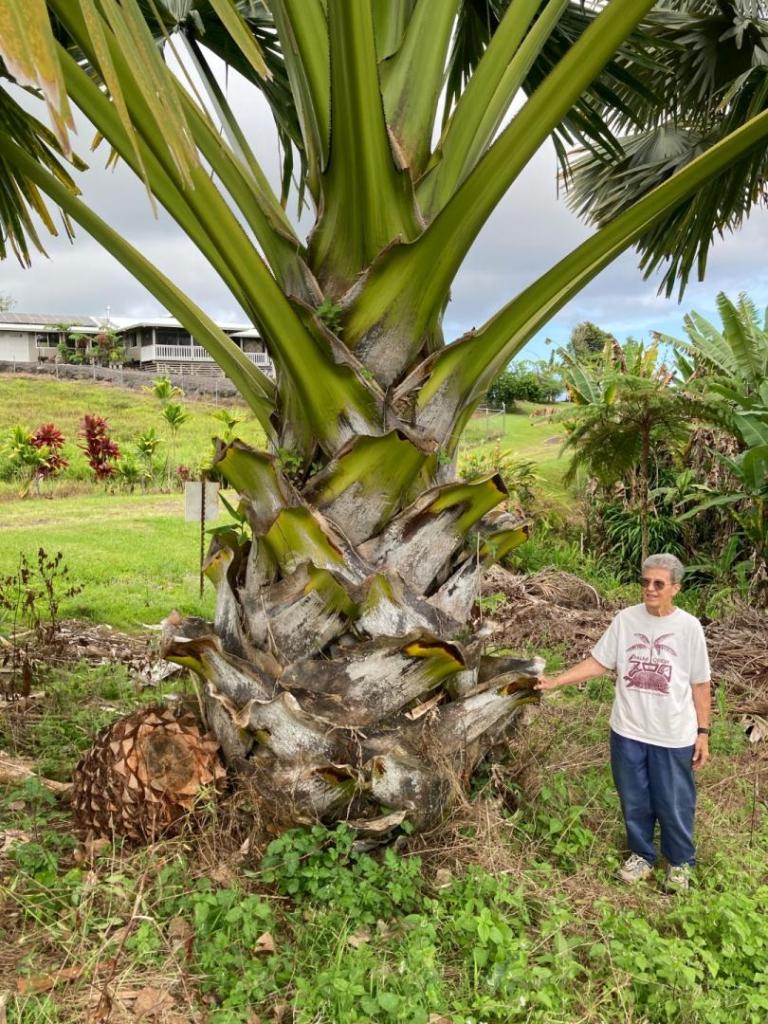
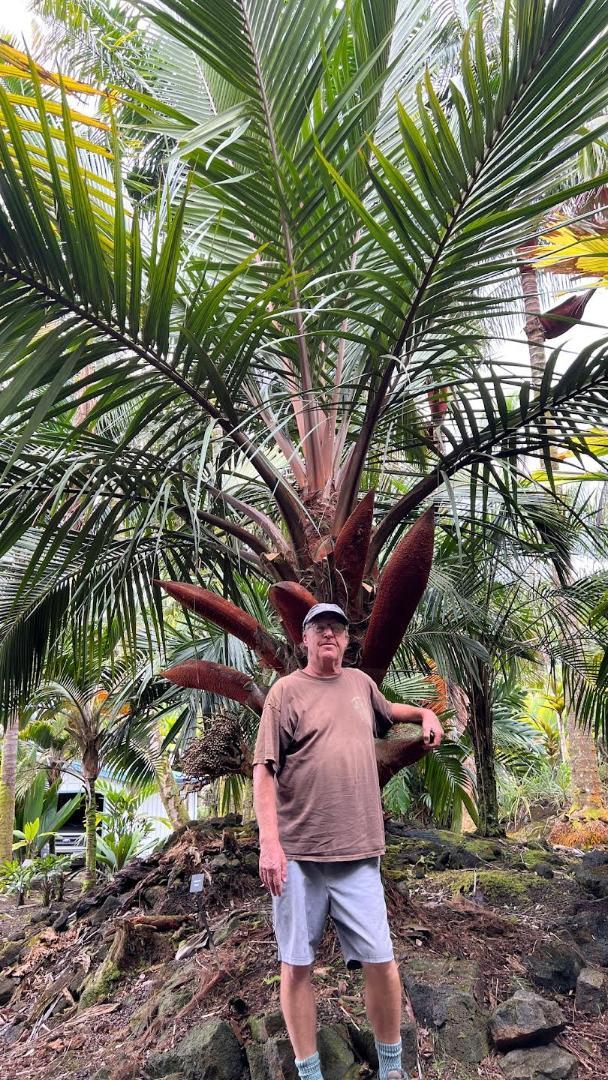
I visited Karen Piercy's place this afternoon under the pretext of picking lychee. Of course, the real reason to visit was to commune with the jaw-dropping collection of massive palms. I posted a photo of this Corypha umbraculifera a few years ago, but it was even more overwhelming on this visit. The trunk has to be over 4 ft in diameter, maybe closer to 5 ft. Growing in deep Hamakua soil at roughly 1200 ft elevation overlooking the Hilo airport. Now you know why you don't often see these growing in suburban landscapes. Certainly gives Tahina competition as the most massive palm out there. It's probably still decades away from blooming. You may remember Karen and her husband, Dean, as the organizers of the 2004 IPS Biennial to Hawaii and helping again with the tour of the former Carlsmith palm collection during the 2022 Biennial. BTW, I filled my 5 gallon bucket with delicious lychee. That didn't make a dent in the fruit still left on the trees. Oh, the hardships of living in Hawaii...
 10 points
 -
Very old thread but worth bringing back up. My Bismarck here in Northern CA with considerably more trunk than the few inches in 2013 and doing well but a lot slower than in Florida for instance. 2024 2013

 6 points
 -
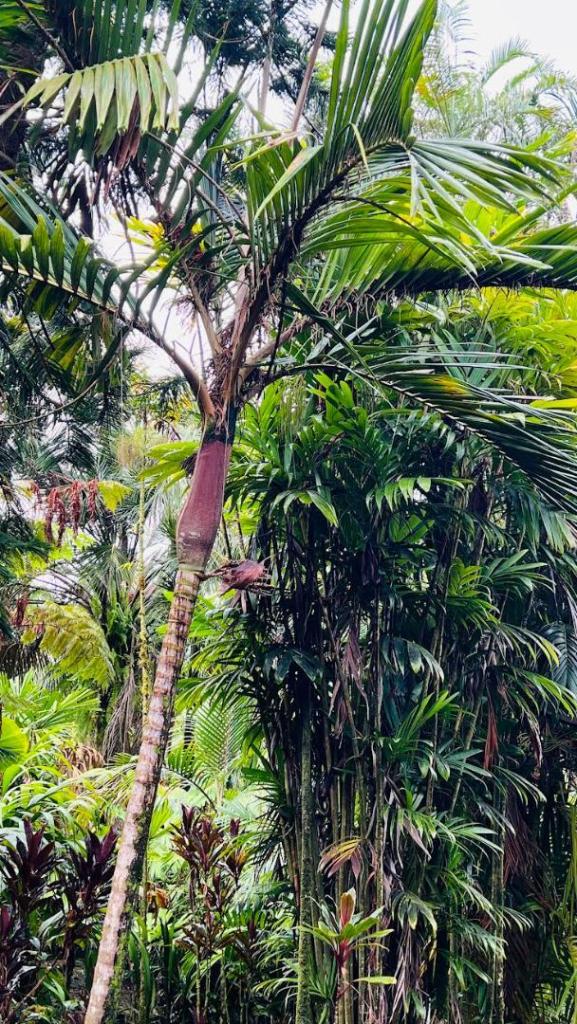
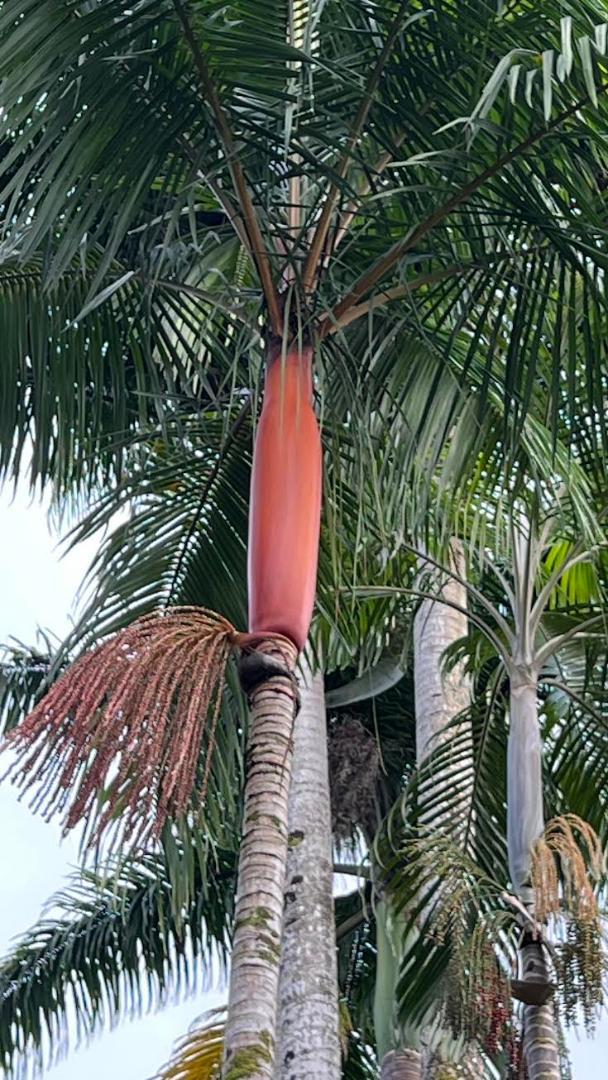
Hello and happy summer to all growers and plant lovers, thank you for a busy spring season! We are happy to share our new price list update, filled with new and enticing species, including the awe inspiring Marojejya insignis (pictured above in its Madagascar habitat) and more, including: Vonitra perrieri is one of the most spectacular palms in the world, the combination of its tropical stature and unbelievably plush soft red wool on its spathes make it a popular talking point in the garden. Seedlings available now at $8/ea. Check out our other Vonitra species as well! Heterospathe califrons adds a dramatic flair to any garden with its upright form and entire leaves, and is Benji approved. Available now in 4 inch size for $20. Ravenea musicalis is another mythical Madagascar palm that is one of the only species that is truly aquatic, as seen above in habitat during one of Jeff's trips. Rare in habitat and very difficult to find for sale, we will be shipping seedlings in pots for $20/ea. Order yours now while supplies last! Chambeyronia lepidota is one of the rarest and most elegant palms of New Caledonia, with its characteristic stiff leaflets and velvety red crownshaft. We are proud to be a part of conserving this amazing species and distributing it to more gardens. Other featured palms from the new list: Euterpe sp. 'Orange Crownshaft' Iguanura polymorpha Pinanga maculata Chrysalidocarpus sp. Hybrid - Jason Dunn (Photo by Jason Dunn) All these and many more are available now on our new price list! View Price List




 4 points
 -
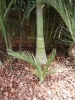
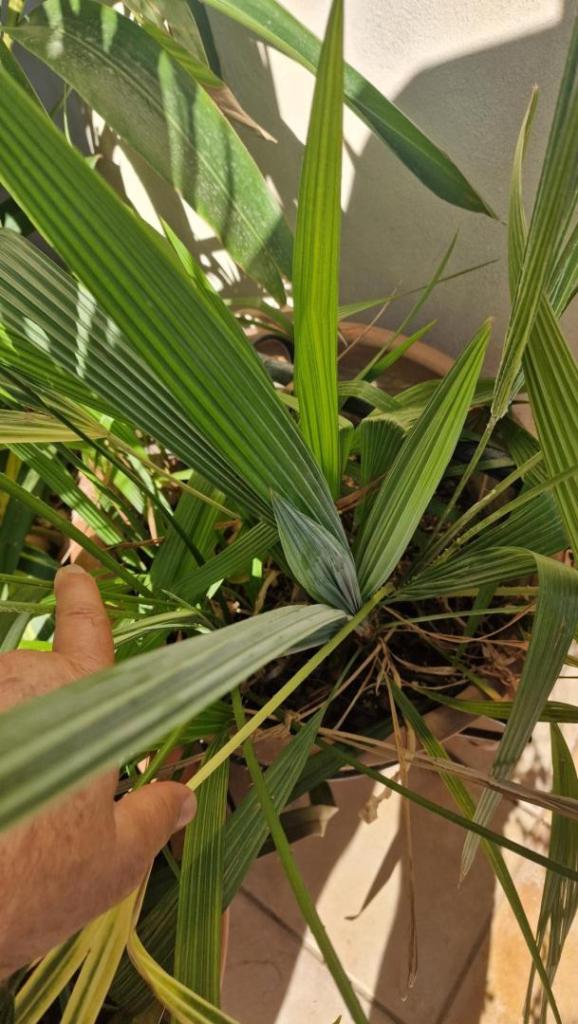
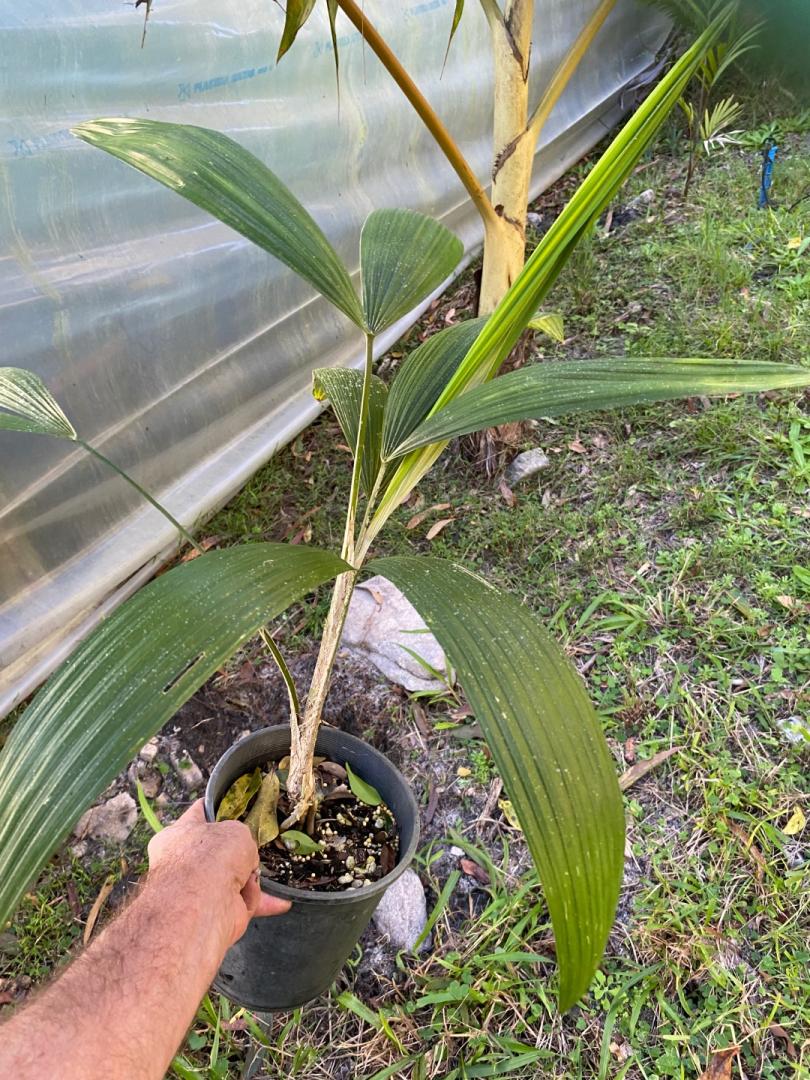
It originates from an batch of seeds produced by my own specimen. It used to have more blue tinges that other seedlings in the community pot, but this summer with more sun exposure It is really standing out! What do you think it more probable, natural variation or hybrid?

 4 points
 -
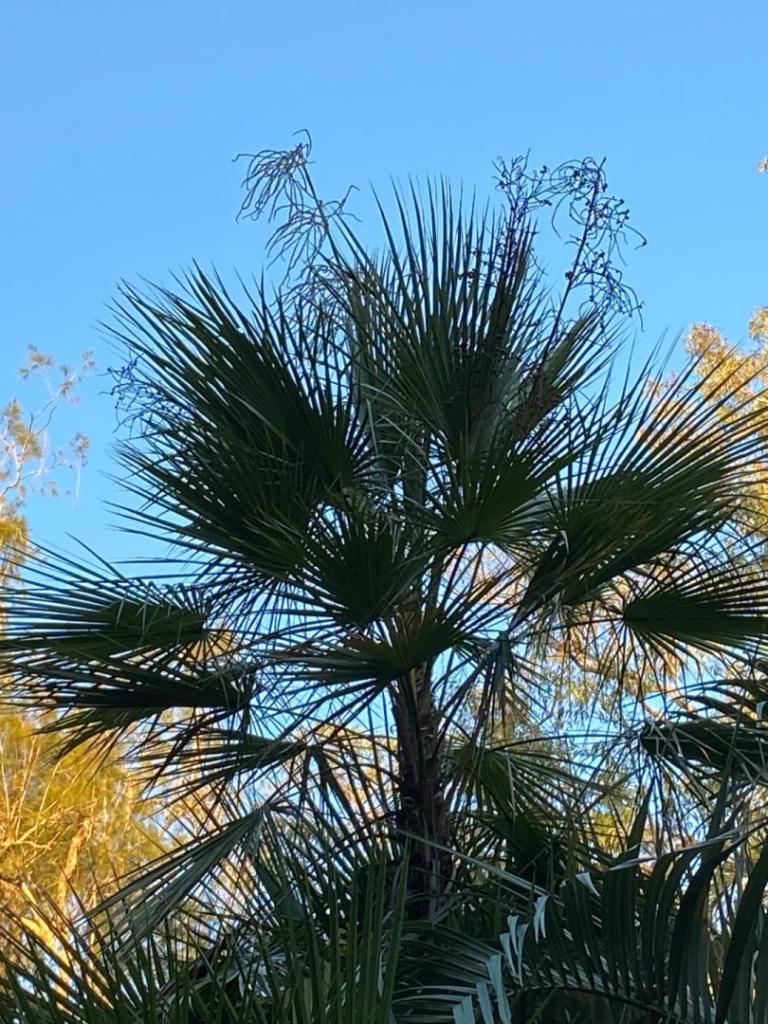
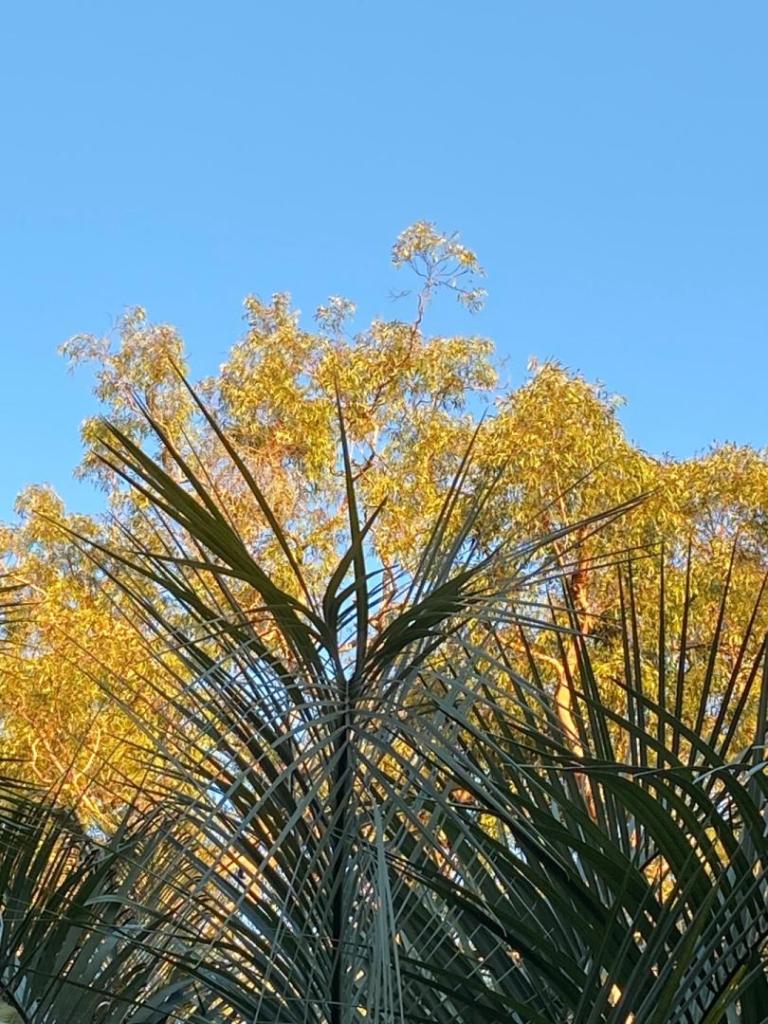
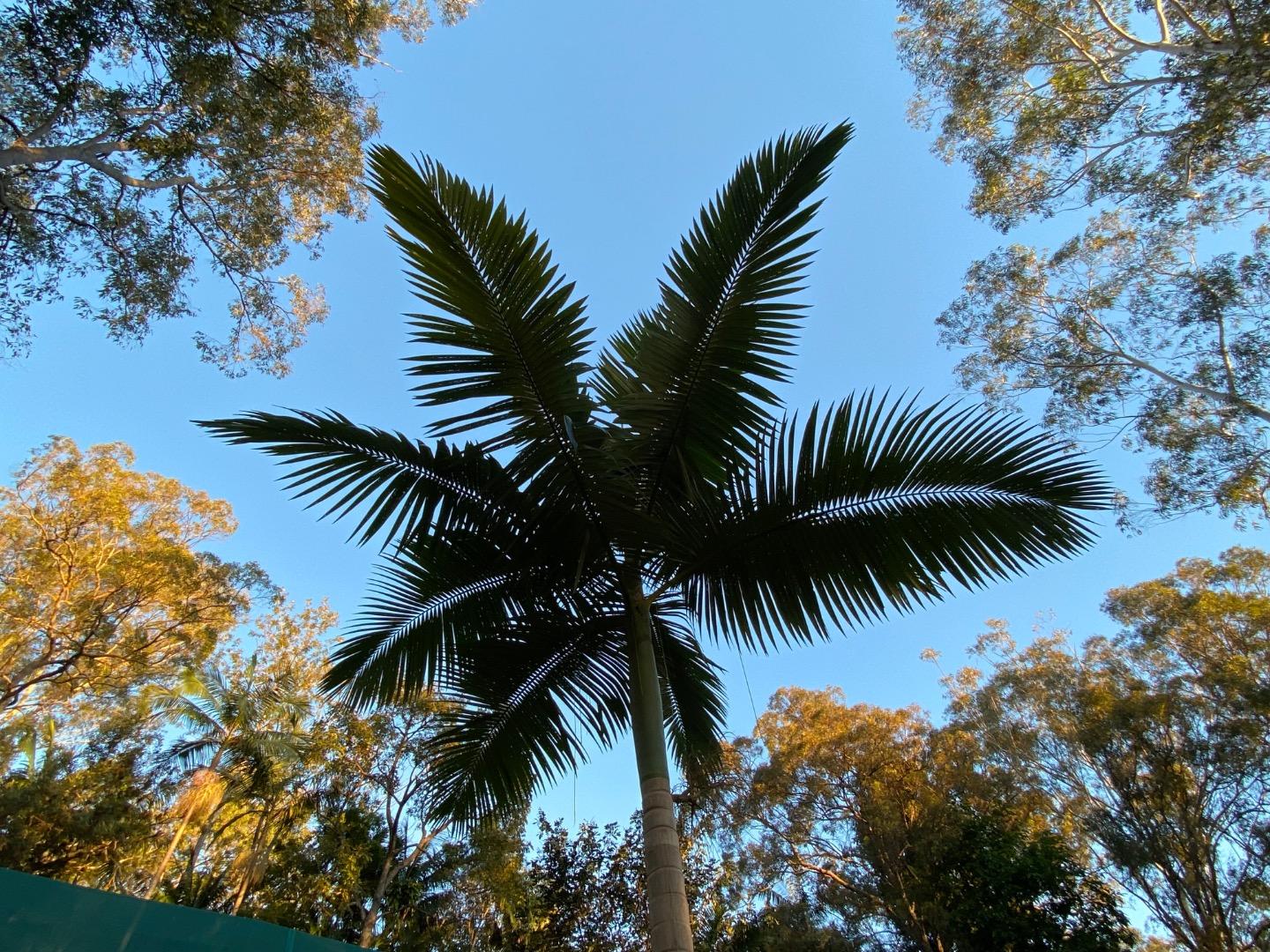
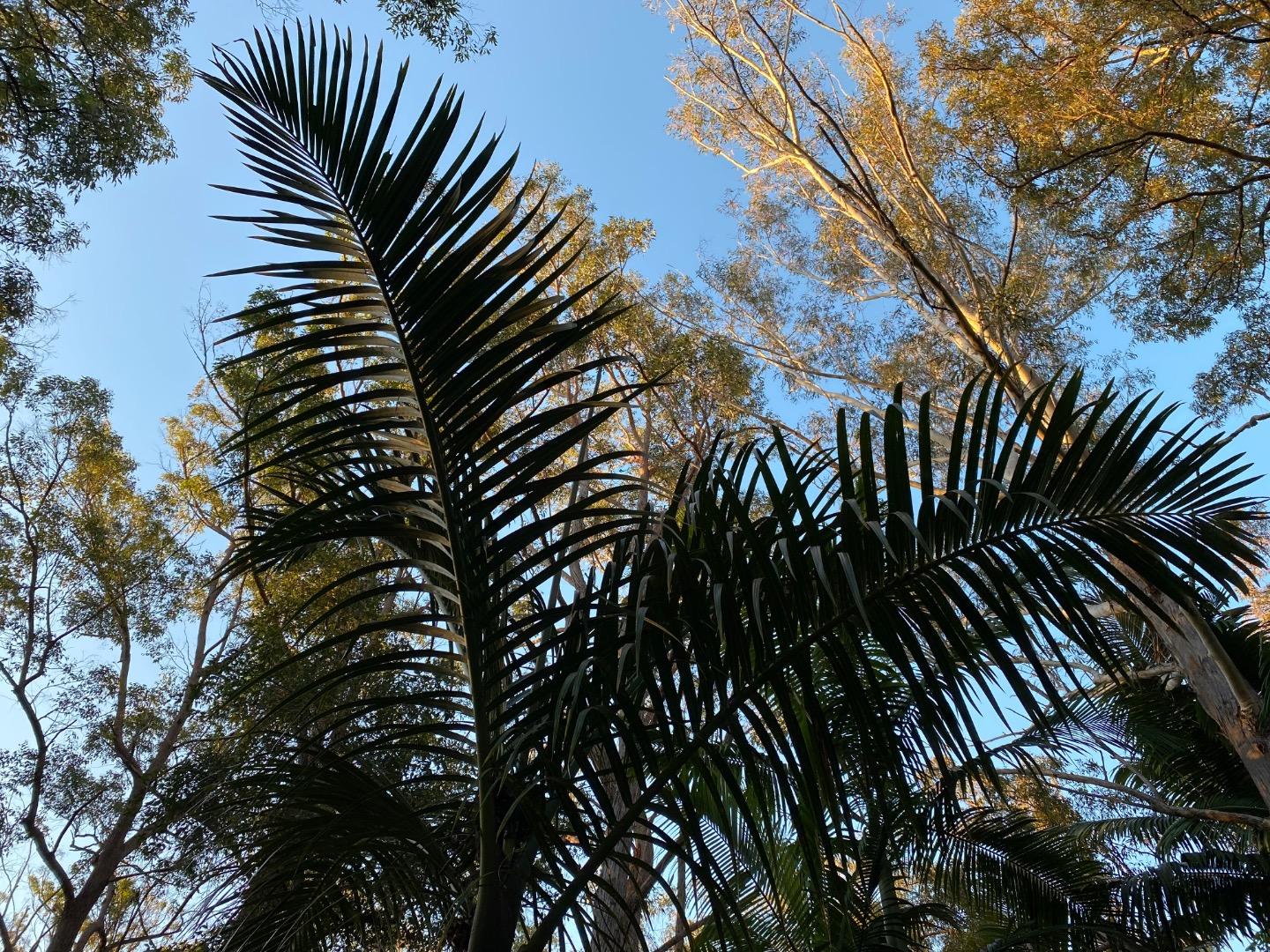
With winter upon us in the southern hemisphere. The cool weather brings out the clearest blue sky days. It makes for a fantastic silhouette among the palms.


 4 points
 -
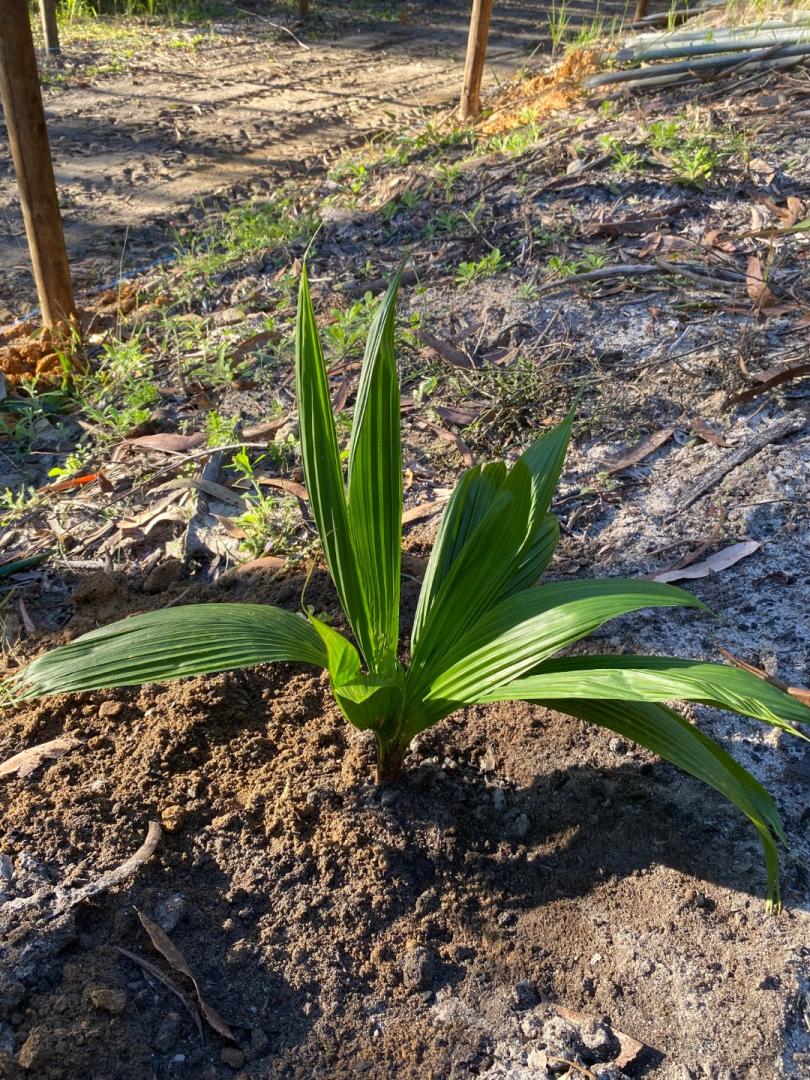
I feel if I can get these guys through their first winter here in the ground they will be well on their way! This is my older Medemia from last year, it's bigger now. Also have some seeds that are now starting to sprout. Can't wait to have a Medemia grove.😁
 4 points
 -
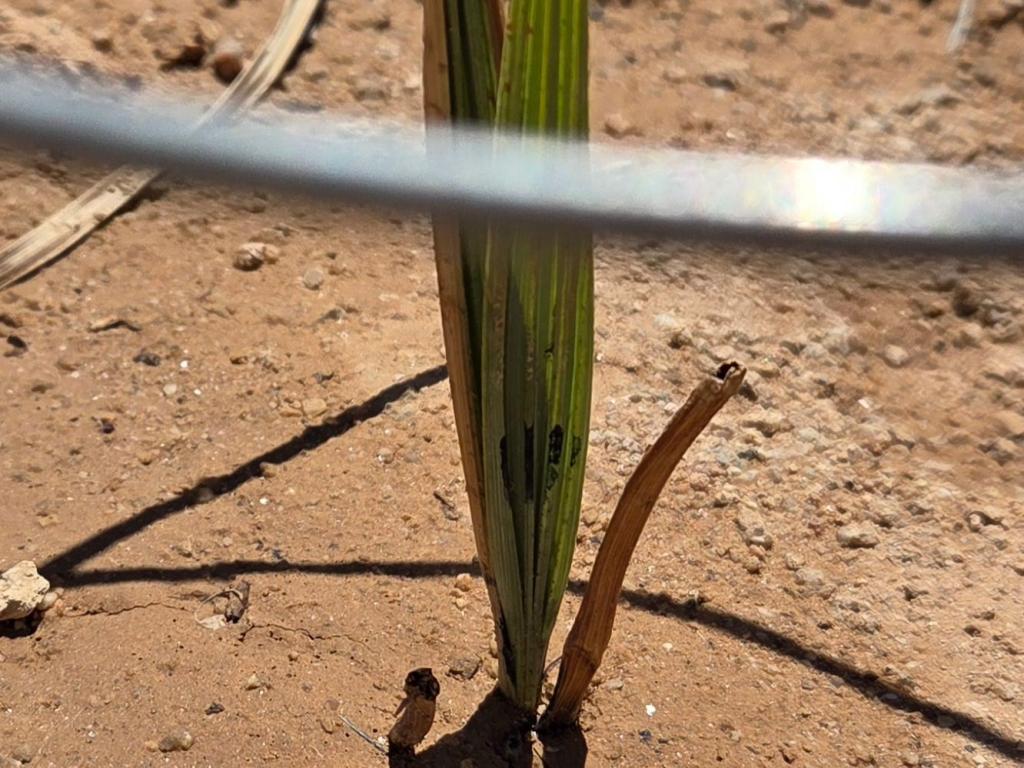
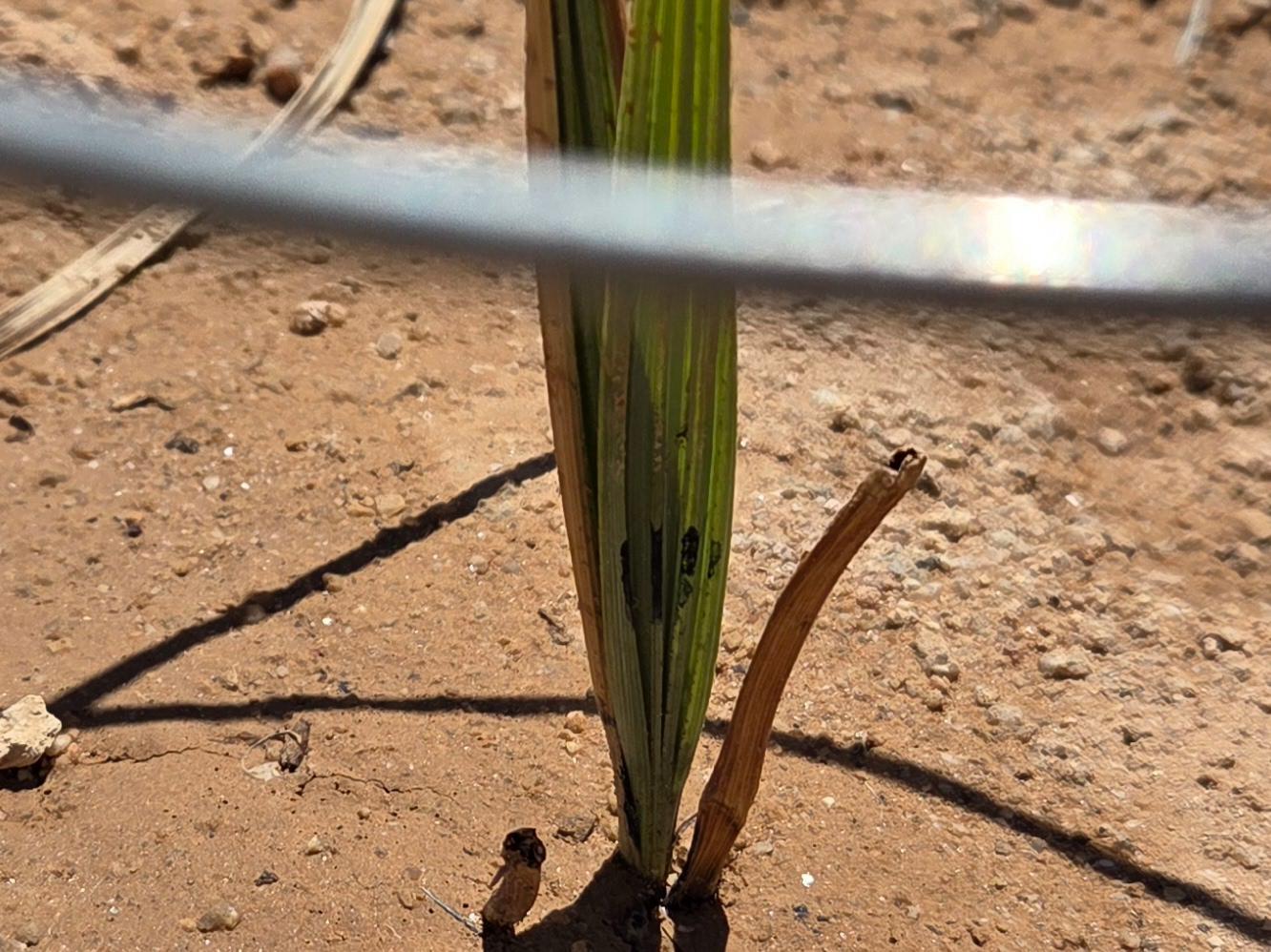
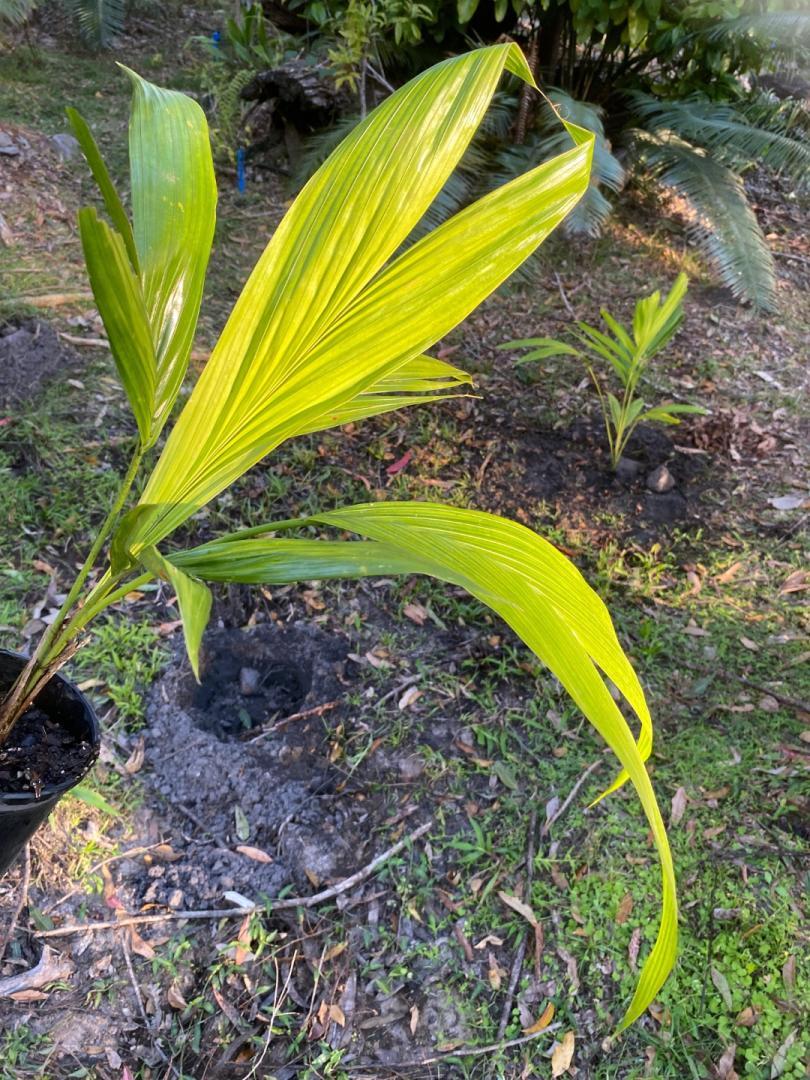
Well it's not much but it is positive growth. These were from the batch of seedlings that Kinzjr had for sale last year. When they arrived here in Arizona they looked perfect and were packed very well. They did not acclimate to my cultivation techniques and started to go south. I put them in the ground a few months ago knowing they'd be happier there once Summer started. Now that we are hitting triple digits everyday, this is what they love, they're starting to grow again. I'm glad to see Positive Growth that means they are still alive.😁👍🏼
 4 points
 -
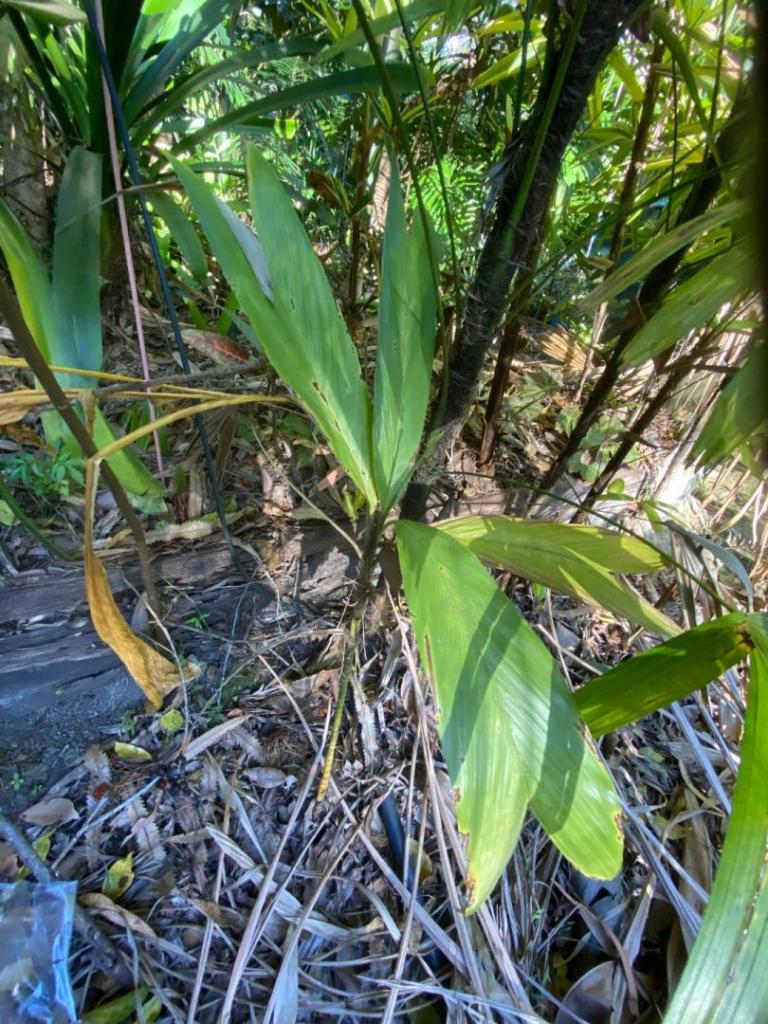
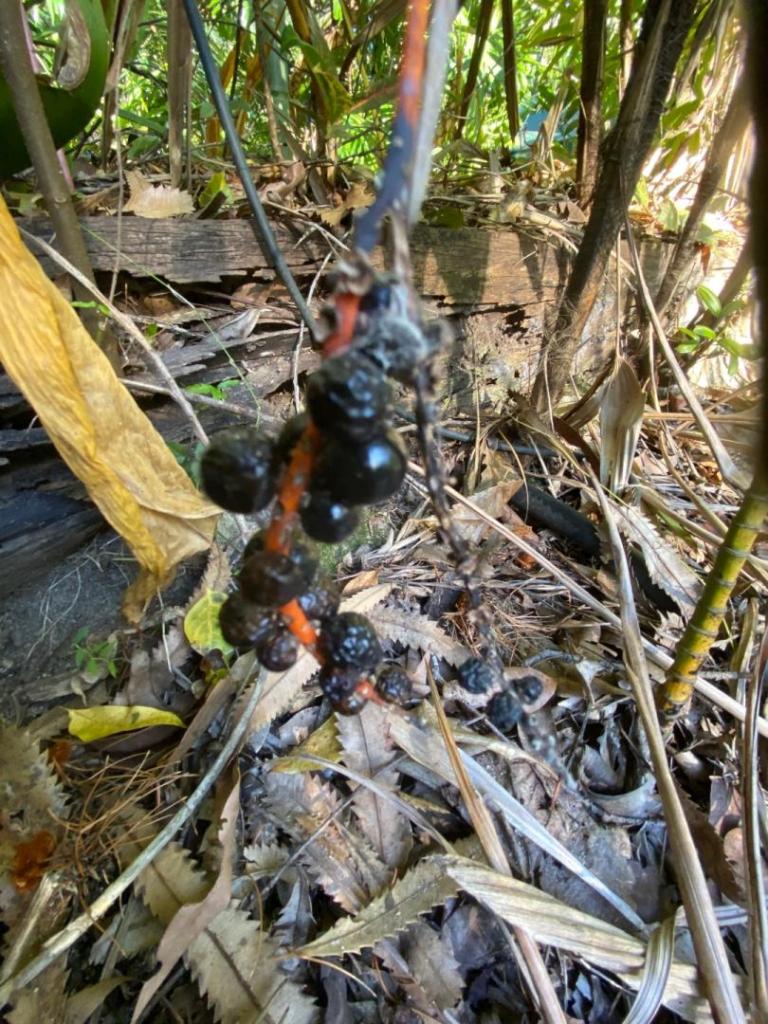
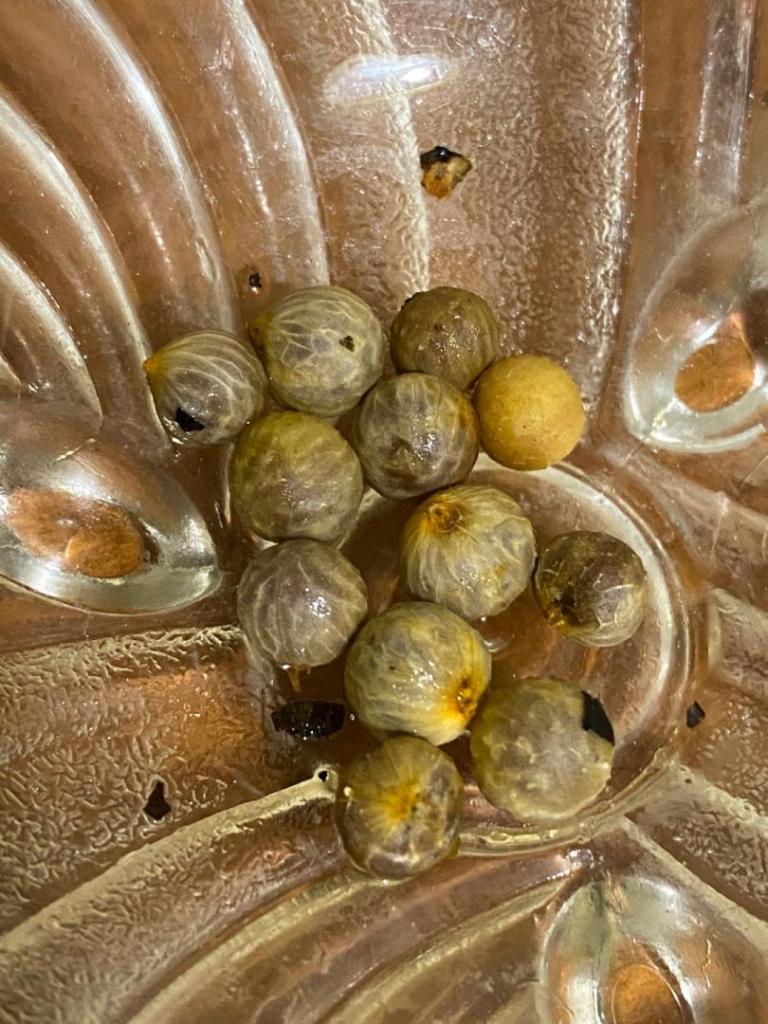
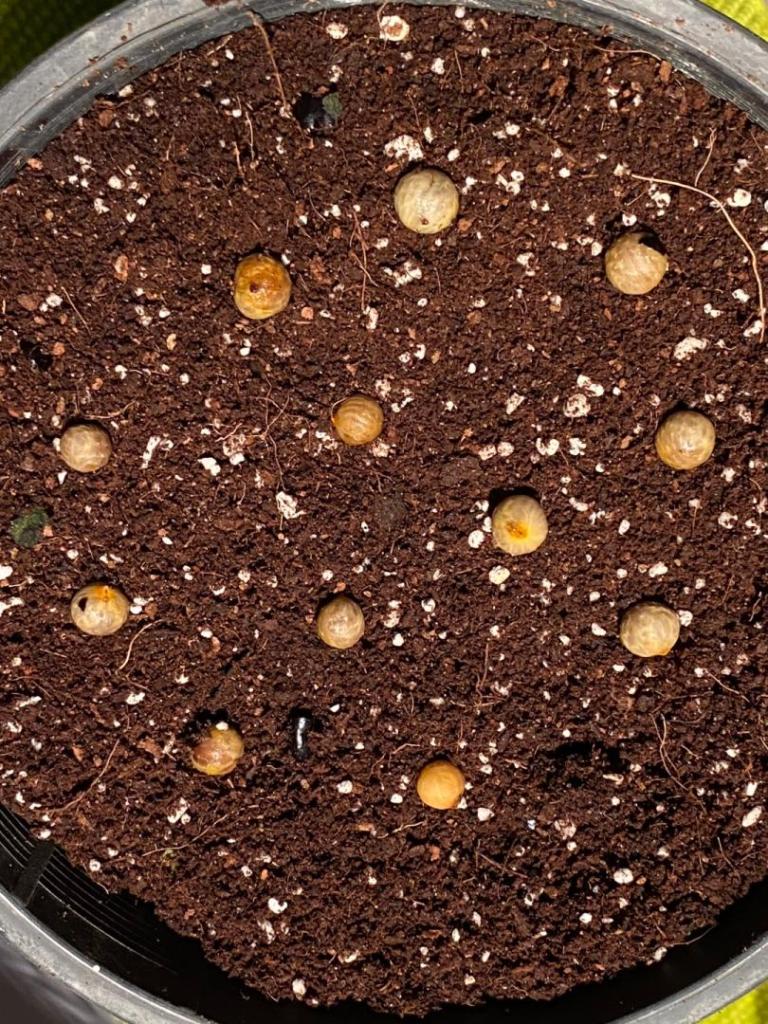
This little genoformis has been a great performer in producing seeds, it never fails to get seeds. Usually a dozen or so each time. It is in an extremely dry part of the yet it still performs well in the seed department, I forgot all about this lot of seeds until I spotted them today so it was time to pick and plant some seeds.
 3 points
 -
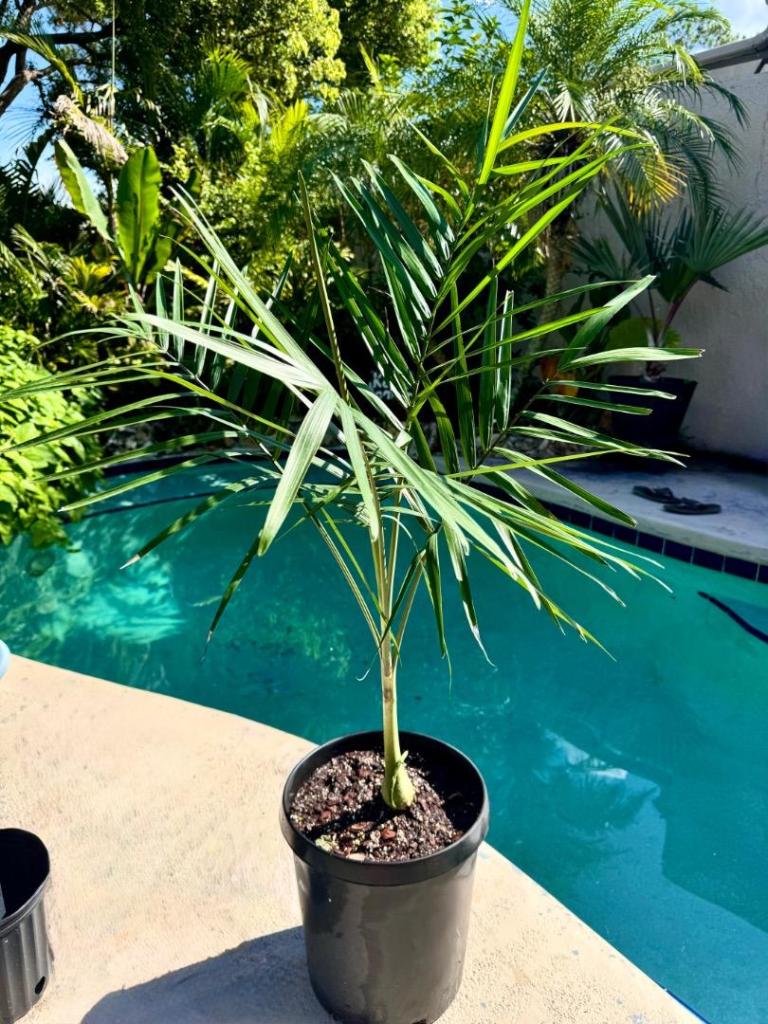
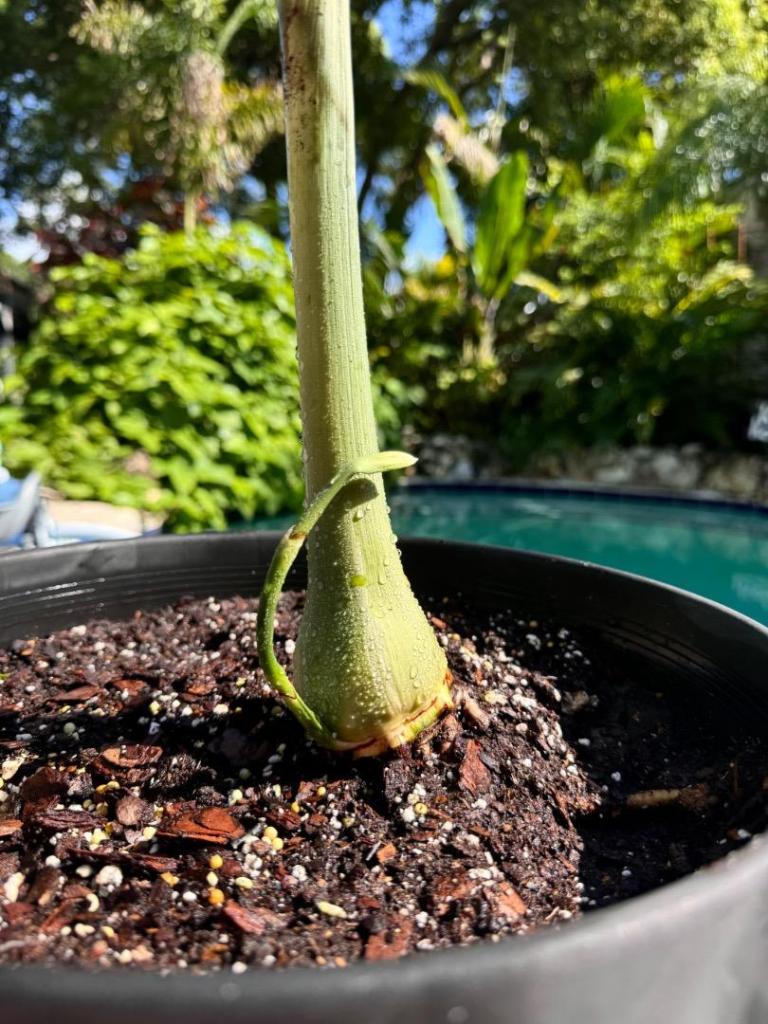
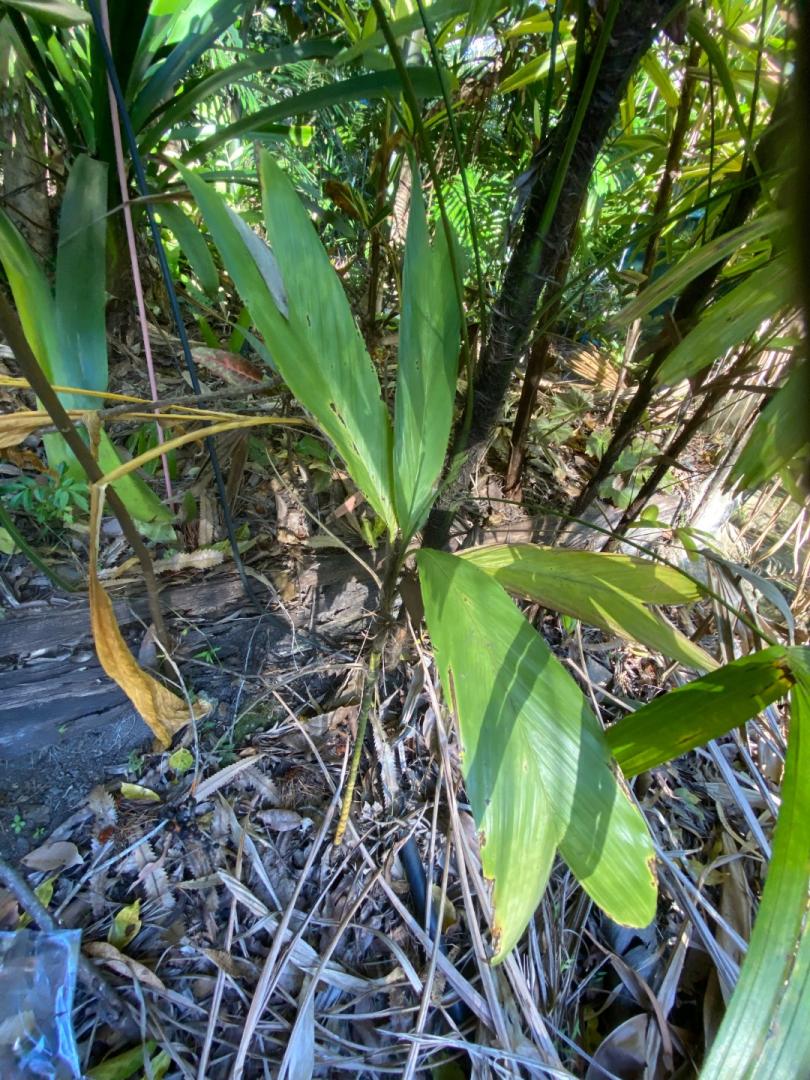
Hey everyone! Been a while. Hope you’re all doing well! Today I was doing the thing I rarely have to do in Central FL during the summer, which is water my crew of potted palms given how hot and dry it’s been for me the last week or so. My “archie” had a boot that was ready to go, so I popped it off. To my surprise, I see a pup growing off the base of it… Then I find myself standing there, head sideways, squinting, hands on my waist, and staring at the damn thing for 10 or so minutes until I realize I’m pretty sure this is a dypsis pembana! I grew it from a batch of archie seeds I got years ago, and admittedly it’s a bit stunted given a period where I neglected to repot it as a seedling, but after babying it the last year it had really taken off. I just never paid it too much mind or really took the time to look closely enough and second guess the species since all the other seeds were (and still are 😅) clearly archies. What do you guys think? Is this a pembana seed that snuck into my batch of archie seeds? Or do I have an oddball archie that miraculously clumps? hahaha.
 3 points
 -
Here is an awesome one in Oakland, CA. I have a few planted that I started from seed in my Oakland garden that I hope gets this big someday!
 3 points
 -
Most definitely not an archontophoenix that’s for sure. Go with pembana if that’s what you think it is, the old saying if it quacks like a duck then it is a duck!3 points
-
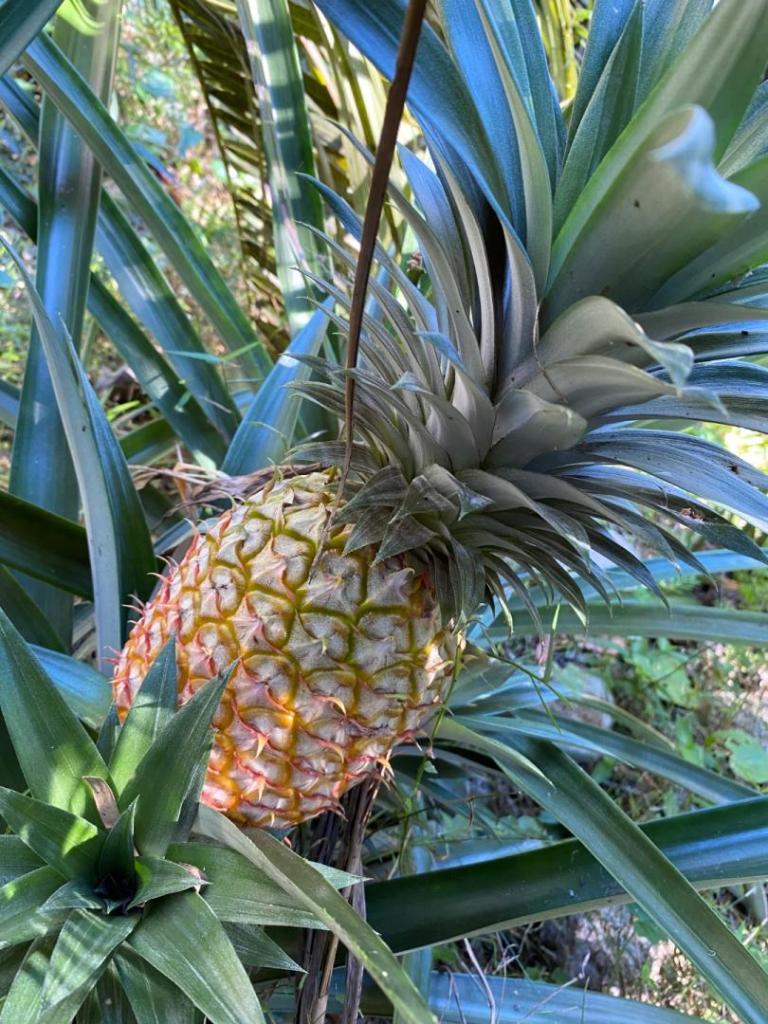
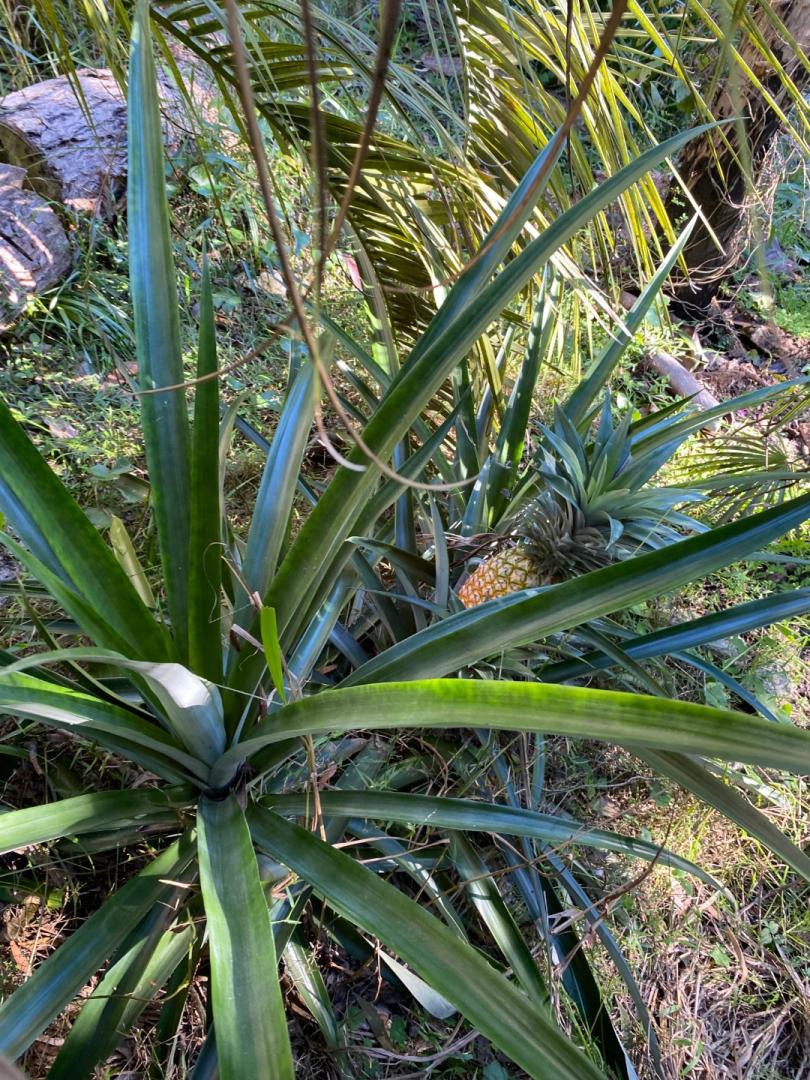
Nothing beats a freshly picked pineapple. I beat the possums on this one. Planted 25 years ago. And it has produced quite a few pineapples over the years. I will cut the top off this one dry out a little then replant it. There so easy to grow, as much sun as possible good drainage and a bit of water.

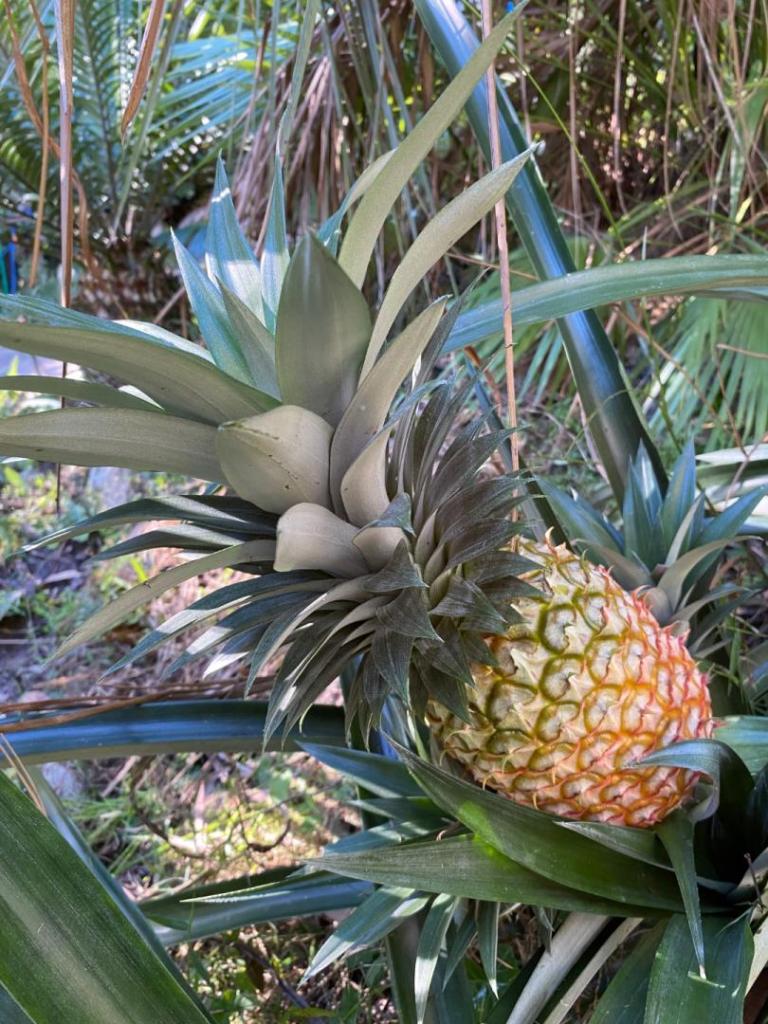

 3 points
 -
@peachy I have a visual right now , and it is pretty entertaining! You swinging on the end of a stubborn frond , that’s pretty fun. You are right about over trimming , or trimming at all. Right now the Syagrus are full and beautiful . I told my neighbor that I would come over and trim a huge frond that is hanging over the fence and he said “don’t you dare!” He loves the shade. They really are great at creating a canopy in a hurry ( super fast growers) . The only reason I trim is to keep our 90+ mph desert winds from breaking the fronds plus the trimmers have a way of getting all those nasty flower spathes prior to opening and creating a mess.. Otherwise they are full 9 months of the year. The trim in the pic doesn’t last long . They get lots of water so they grow out by the end of the windy season. Harry Pulling a flower spathe while my neighbor cuts . The wind allowed us to get to it without cutting into the fronds. Normally the fronds are hanging down and it would be difficult to get to the spathe.
 3 points
 -
Iam not planting any sabinara that’s for sure. But the die hard stuff and if I got a lot of them they can go in. I don’t get frost so that’s another bonus. It felt like spring over the last few days up to 25 degrees and down to 15 degrees so quite lucky for us.3 points
-
What part of the world are you in? I imagine that may be the case in places like Arizona,, but in my area I’ve found the opposite. Those in shade are the slowest whereas those in the hottest sunniest spots grow fastest and look happy.3 points
-
They have become VERY cheap in FL, maybe thats why? FL has vast amounts of land that had been converted from food to landscape plants during the housing boom, Now we have so many palms they are ridiculously cheap. Royals with 10ft wood you can get for less then $100.3 points
-
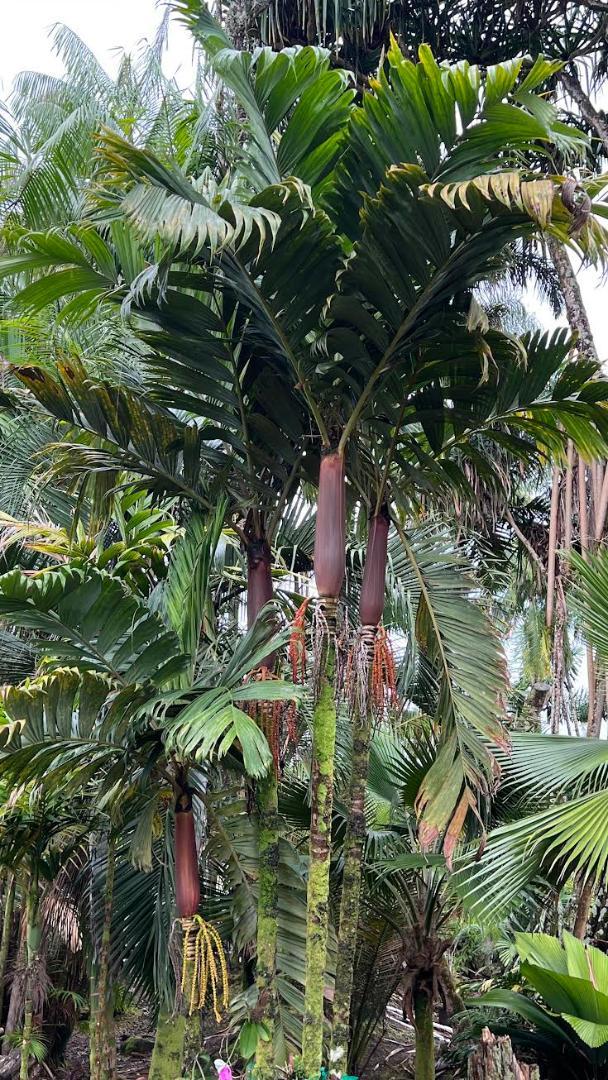
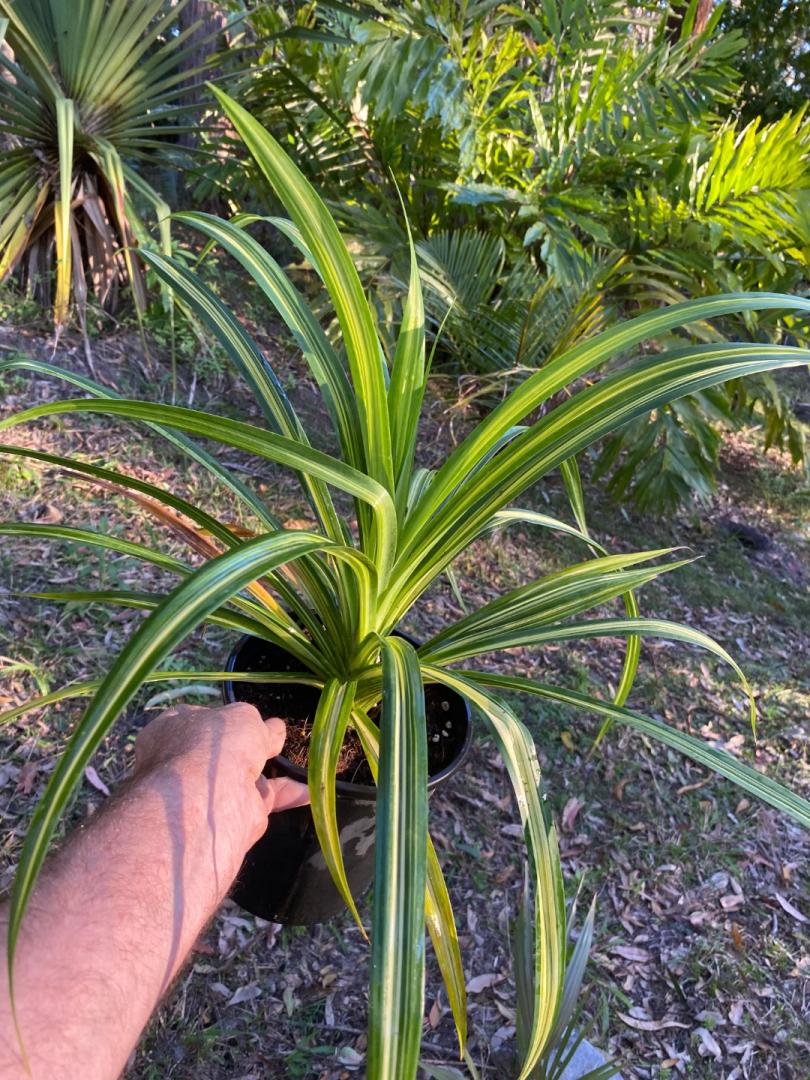
A few proven winners going in the ground, even though winter is here they will be fine, they might sit still for a month or two but come spring and summer they will get a move on. Hopefully they tick themselves in for winter and hold until it warms up, either way they would be in the greenhouse and going through winter regardless. So first up a Pinanga coronata , ptychosperma elegans 2 of them, cocothrinax dussinia, carpoxylon macrospermum the one I repurchased, Crysophilla warscewizianus an unknown rainforest tree, pandanus variegated sanderi, and a satakentia liukiuensis. That should do for today and give the garden something to talk about with the new residents moving in!


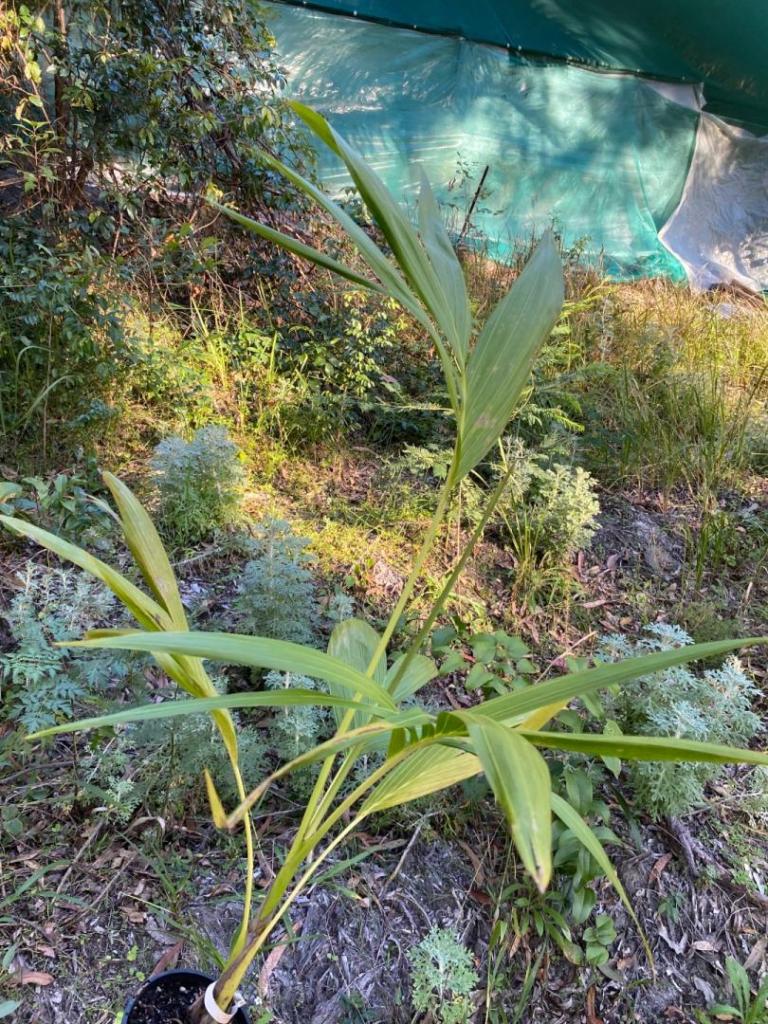


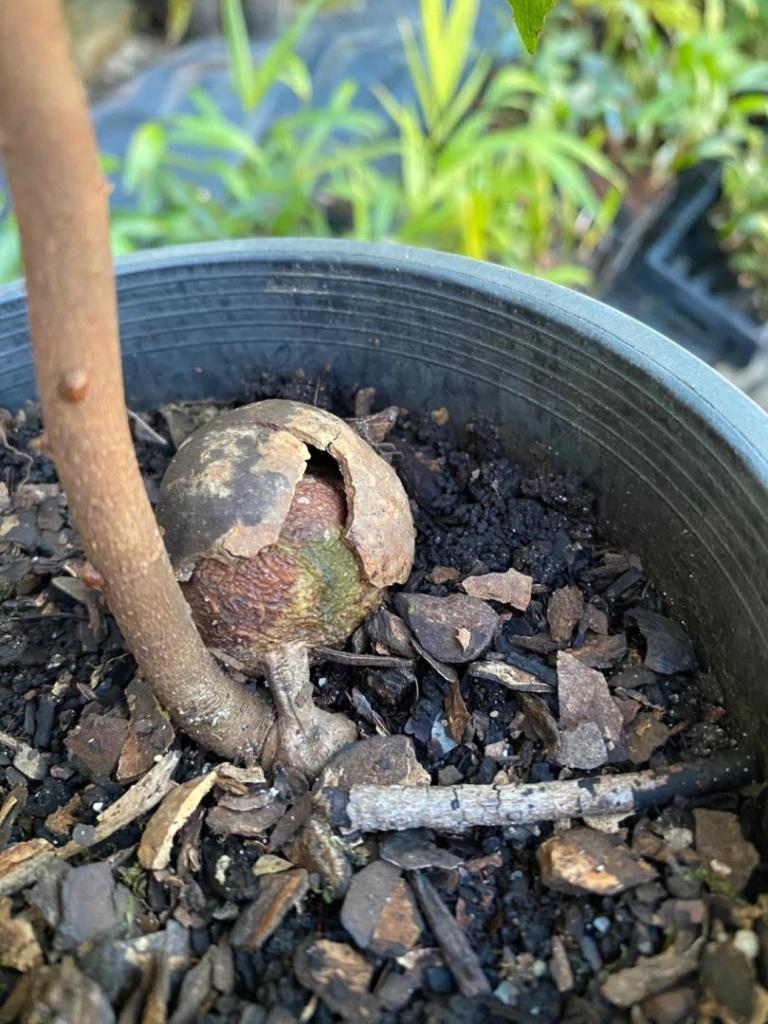


 2 points
 -
Except David's Franken-Brahea. It laughs at any root disturbance it is subjected! Honestly...2 points
-
It's got character. Gangsta lean and whatnot.2 points
-
It could just be a variation but very special for sure. Brahea are very root sensitive as you probably already know . Separating a community pot could be tricky. Harry2 points
-
Probably not. Looking to acquire the most sunlight.2 points
-
@Jim in Los Altos That is pretty good growth for a California Bizmarkia . They are rare here in SoCal but around if you look for them. Harry I was coming home from work and saw the tip of a frond from a street I go down . I decided to investigate and found this lovely specimen by a church . They also had Majesty and Sabal planted across the ally. A very nice example being photobombed by the Decipiens . This is in Ventura at Pauline Sullivans garden. The gardens are being very well maintained by her grandson , I’m happy to say!


 2 points
 -
Yes quite warm for June in my area, even though it’s a subtropical zone the further you go inland 20 to 30 kms or more from the coast the difference in temperatures is incredible in comparison to the coast region. You will get temperatures in the minus 2 to 3 degrees. Yet daytime temperatures around 22 degrees Celsius. A huge hi low temperature fluctuations, and the dryer it gets the colder it get, the leading up to the full moon either side is the danger time for those killer frosts. Knowing your climate is a good thing to understand, a bit like me moving to WA and not knowing the climate would make gardening difficult for a few years until I learnt the weather! But iam not moving to WA where yo can’t Import live plants no way!2 points
-
I tried a product called Envy many years ago, and like @tim_brissy_13 I found no difference using the product. And it most certainly won’t stop the plant cells freezing in a frost. A bit like those electronic mouse deterent devices every few years they market them with a big advertising campaign yet they don’t work. I have seen this product come and go the same way, catching the new market of buyers.2 points
-
Wow, that is really getting big! I remember seeing it years ago when you took me there and it was much smaller then.2 points
-
The poorbold Areca is not performing the best in the cool weather in the greenhouse. It may be the tropical grown foliage that is not acclimated to subtropical conditions. The one leaf that is new seems to be coping a little better. But I have doubts it will make the rest of winter, it may survive time will tell.

 2 points
 -
I’ve experimented with similar products but not found any noticeable difference for frost or sun protection to control surfaces. I’d be curious to hear whether anyone has had positive experiences with these type of products.2 points
-
Well the suns out in winter which is a good thing so go for it. Most of my landscape is still pushing spears well into this winter and we are cooler on average than your part of the world. Cooler tolerant palms are ok to plant in winter even here. Marginal stuff I will wait for though.2 points
-
They can tough it out, it’s surprising what actually grows in winter, it’s not all sleeping for plants just because it’s winter. We can get lii on e temperatures of 2 degrees Celsius and 23 degrees Celsius during the day so that’s almost a 20 degree Celsius difference in high and low temps so things will still grow and having moisture in the soil during winter they don’t mind it. Richard2 points
-
I wanted to give people a heads up that 4” plants of this Mystery palm are now available on the new Floribunda price list. So if you were not able to get seed from me last year, but still want this plant, you can order them from Floribunda. It’s listed as “Chrysalidocarpus Sp Hybrid - Jason Dunn”.2 points
-
@Juanaramirez, the same thing happened to my young Bismarckia that I grew from seed several weeks ago with the newest opening fronds. In several days it looked normal without me doing anything. Here it is today.
 2 points
 -
mine was 35 years old and was ready to flower, but last year it was eaten by the red palm weevil2 points
-
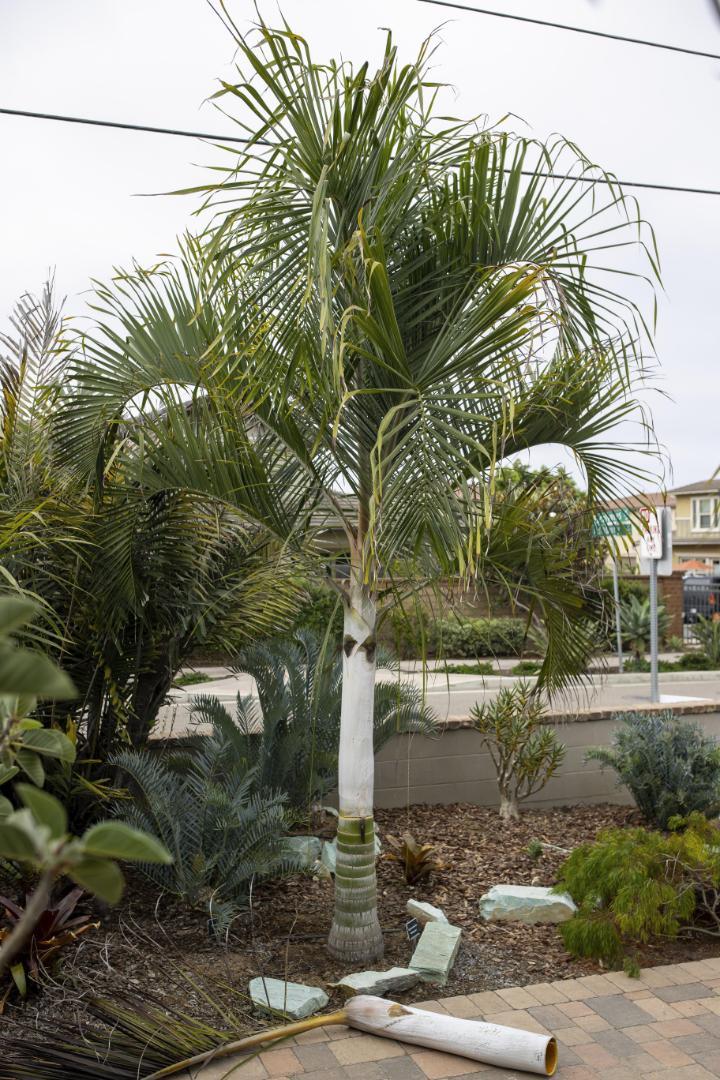
I have had nights in the 30s here in Weston and my Pacifica has suffered no damage whatsoever. Very fast grower (8 years in the ground)
.thumb.JPEG.98ad3ff94cc3082e8d4331f2b6c49911.JPEG) 2 points
2 points -
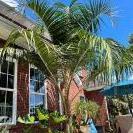
Mine's doing great here in the Bay Area. It's got a foot of solid bare wood trunk and it's over twelve feet tall overall. It's been in its partial shaded area in my front yard for six years from a 15 gallon container. I've also designed Bismarcks into a couple of my Los Altos Hills projects and they're all doing well except for one that got zapped by a gopher.2 points
-
I have a small, residential greenhouse, 200 square feet (18,5 sq m). My primary pests are mealybug, scale, and sometimes spider mites. For low levels of these pests I just use insecticidal soap. However, this never eliminates the problem completely. The pests will continue at a low level for a long time and then suddenly the population will increase dramatically. I am at that stage now. In the past I have applied Orthene three times at one week intervals. This has worked well, and I don't have pests for months afterward. A recent visitor suggested that Safari might be a better choice, although it is much more expensive, (not an issue for me). Your thoughts please, do you concur that Safari is superior, and what application protocol would you suggest ? One application, or more as I have done with the Orthene ? Also, please note that I never use chemical pesticides outdoors, as my garden supports a lot of bird life. Thanks !1 point
-
Full sun. Mine seem to love regular watering.1 point
-
Copernicia baileyana. aztropic Mesa, Arizona1 point
-
Hi, I’ve not grown those varieties; however, nothing looks out of the ordinary for philodendron growth. Only time I’ve experienced real slowness is with some real warm growing ones during winter when night temperatures went below 60 for weeks in the sunroom . I can’t imagine that would be an issue for you now since it’s June and you’re in TX (if I’m remembering correctly). maybe someone who grows these can weigh in with more specifics on their growth. keep us posted, they look like interesting types to grow.1 point
-
Good Morning! I have a mule palm that is slightly leaning. It is healthy. Don’t see any upheaval around the base of the trunk indicating roots coming up or depression on one side. So, is this something to be concerned about and if so a way to remedy? Thank you ahead of time.
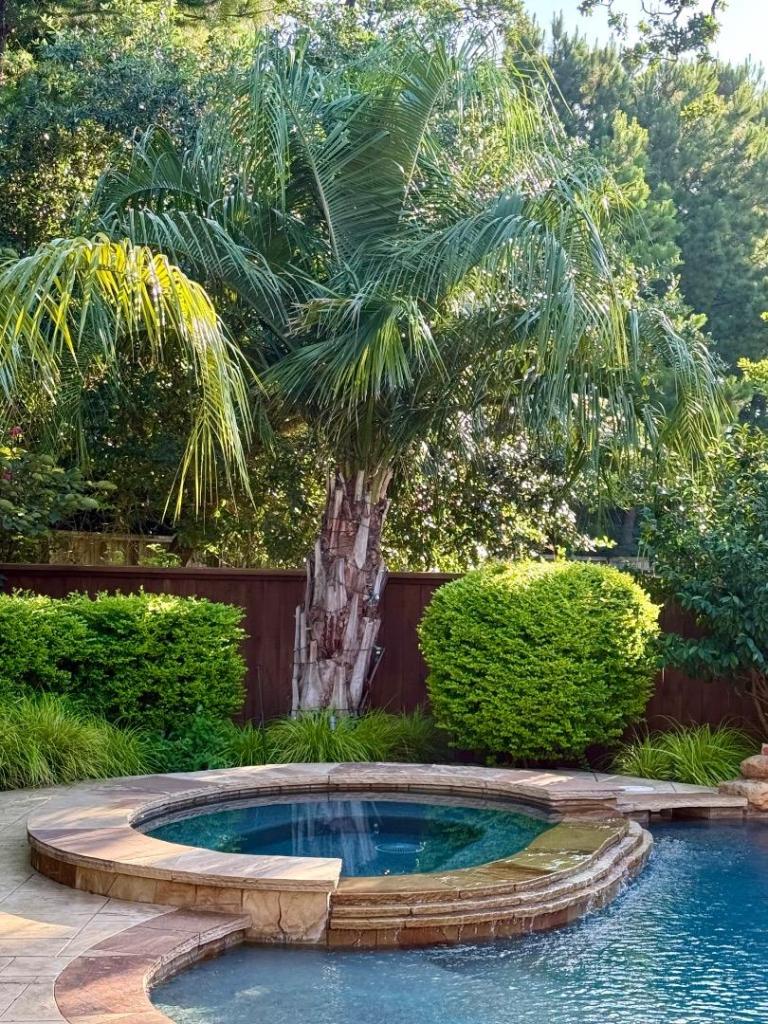 1 point
 -
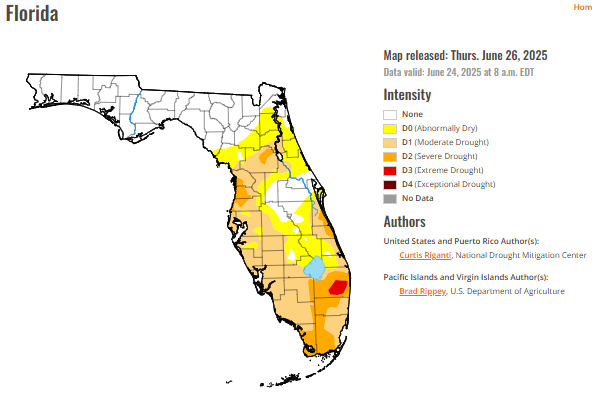
No drought in my garden at the moment. 8.35" of rain have fallen thus far in June. No complaints for a change.
 1 point
 -
I love lychees Rick. I can't imagine how prolific they grow. My mom's tree in Miami bears tons of fruit but the crows eat them all. Wondering if you guys experience the same on Hawaii with pests eating all the lychees? Oh and that palm is nuts. Wish I could grow one in Santa Clarita but I have seen a few in Miami that are stunningly massive. Thanks for sharing.1 point
-
i cleaned out the add-on room to the house and it's super bright and always warm in there. Not that I want to see 9° again in my lifetime, but we're ready and if it really gets stupid, there's a propane heater in there.1 point
-
I would say that "exotic" goes beyond personal taste, and implies something that is also not commonly seen in gardens where one lives. Most palms would be exotic going by the strictest definition of the word for those who live in places where palms are not native. That said, here in Calfornia, a palm from Australia (Archonotophoenix cunninghamiana) or South America (Phoenix romanzoffiana) would hardly be considered exotic here given their abundant planting. That said, the question appears to be asking what species in Bay Android's specific geographic area would be considered exotic or "novel". My response would be to look around neighborhoods nearby for palms and cross of the species that one commonly sees. The best answers will come from people in the Bay Area who know what is uncommon up there, yet will survive in the specific climate zone. My guess is that the selection of the Chrysalidocarpus decipiens will be a pretty novel selection once it is established and gets some size to show off its distinctive form and trunk... patience is the key. Excellent selection! I don't know how it will do in the cooler climate, but Chysalidocarpus ambositrae is another beautiful normally solitairy palm here in California, which will be much faster and not quite as large that I would suggest trying. I believe that Darold has tried these in his significantly more foggy climate in the Sunset, which I don't think they liked.
 1 point
 -
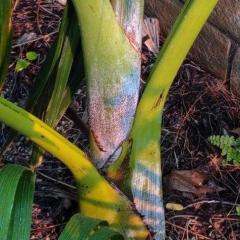
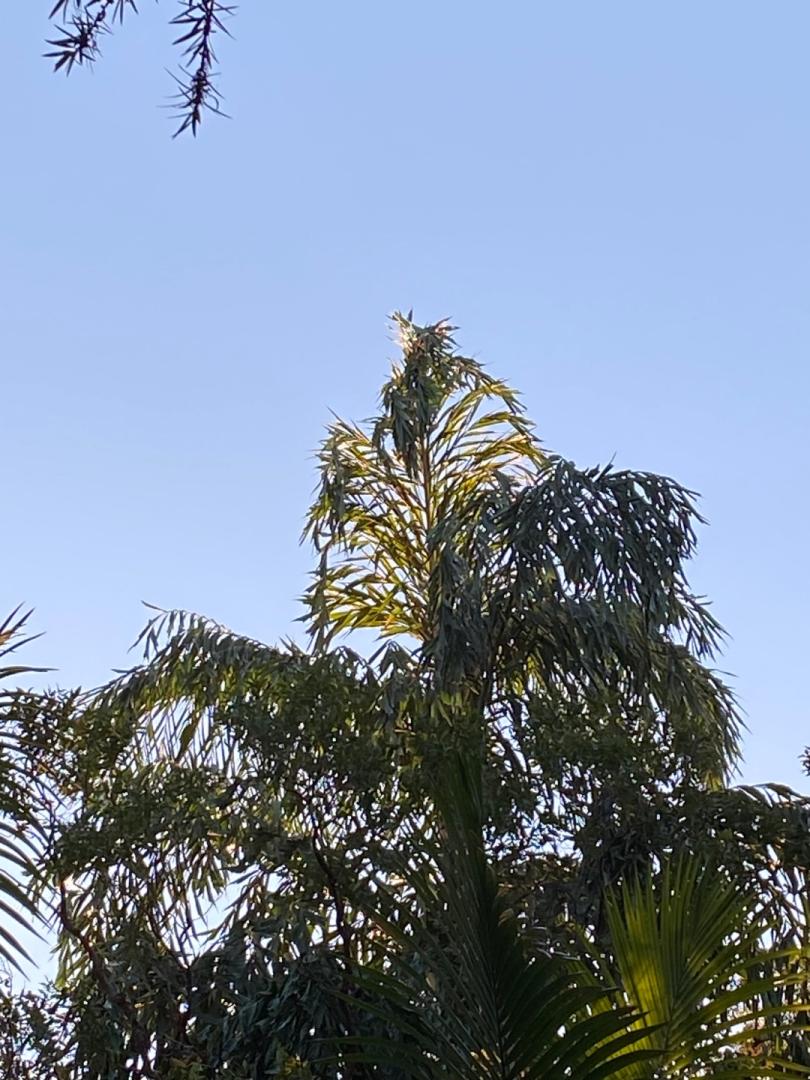
It is so happy and growing so fast. The frond is opening without developing the color first.1 point
-
This looks like a minor to me especially with the inflorescence but the pic is hard to see the trunk and rest of the palm https://www.palmpedia.net/wiki/Sabal_minor1 point
-
Here are mine. Looks like I've got a way to go to catch up to y'all.
 1 point
 -
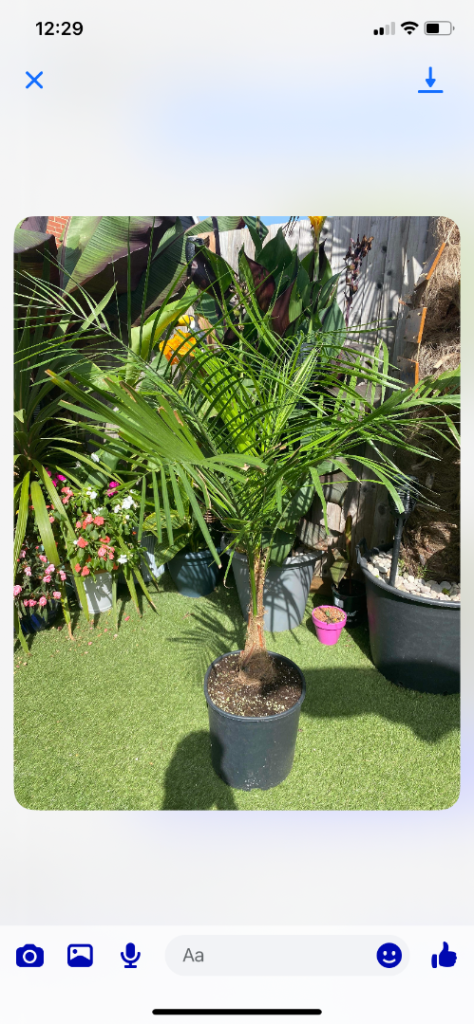
This was mine when I got it a few years ago. I planted into a 35 lite pot and I’m going to put into a 70l pot soon. It’s has grown very quick for me and take -7 a few times here in England without protection
 1 point
 -
Somehow I germinated Salacca zalacca seeds in the 70s (at night) 80s (during the day near the heat lamp on top of my tortoise's enclosure)!1 point
-
Are the lower areas still zone 16? I thought zone 16 were the hills above zone 15. Most of the stations that match my highs and lows in Los Altos Hills are at around 500-600 feet elevation, same as my elevation. You are only at 190 feet, that would be much warmer during the day because of less ocean breeze, just barely into zone 16. Seems you can grow all sorts of things, so you must be getting some frost drainage. Yes, the low lying areas of Scotts Valley are super frosty and cold, it's a definite frost pit. Every Winter you can count on temps getting at least to 27F and maybe even 24-25F on real cold years. It's a true zone 9b in the sense that the coldest yearly low when averaged comes out to about 27F. When I drive to work in the Winter the car road ice alarm comes on occasionally when I drive down 17 through Scotts Valley. it's hot in the Summer, though, 80's and low 90's on a regular basis. I lived on one of the hills further inland above Scotts Valley for about a year, there was still frost, but a lot less frequent, and there was about 5-10F difference with the valley floor. Above 800 feet and below 1200 feet it's actually a USDA 10b climate, as mild as parts of San Diego However, I did see snow flakes one night, but they didn't stick to the ground. What was even more striking were the Summer lows - during heat waves when the marine inversion drops below 500 feet, the temperature wouldn't drop below 70F at night, not very comfortable sleeping weather. Here in the hills closer to the ocean it's a little cooler at night in the Summer, hopefully not too cool for the bismarckia. Axel, Zone 16 extends east from the foothills into the lower elevation slim thermal belt where I am located near the border of Los Altos Hills and Los Altos. My typical yearly low is just barely above 32F and frost is light and occasional. December/January high/low average is 60F/40F and July/August is 80F/59F. I'm eating papayas grown in my yard and my young mango has set fruit this year for the first time. My bananas and heliconia receive superficial leaf tip damage most winters. Winter 2007 we experienced a low of 26F, the lowest since the nasty 1990 freeze.1 point
-
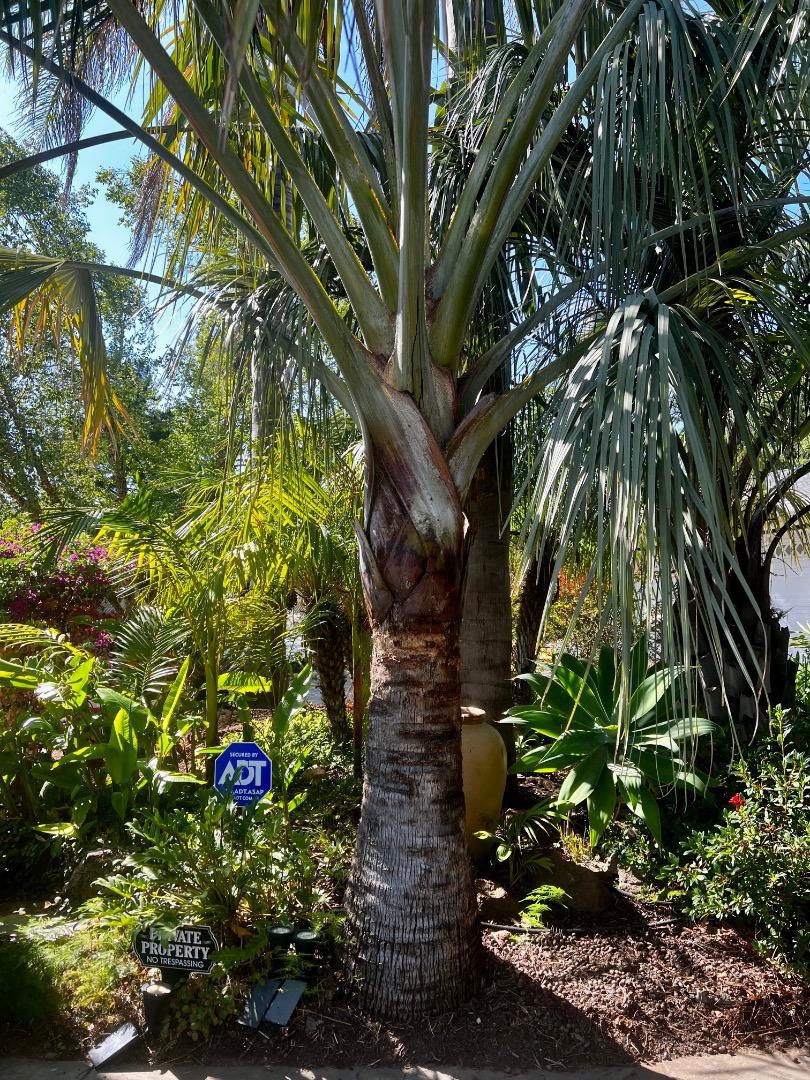
Bizzies really like heat, and much of coastal California isn't really hot enough for them to be happy, unlike much of Florida, which, while it can get cold, has high heat to help the plants get over it. I haven't found them to be the easy grow they are often made out to be. Bizzies can get fussy sometimes and croak. Also, I think there's a lack of imagination among public planters here.1 point


































.jpg.e2ada578ac67e232412dd0bfeced3af5.thumb.jpg.4055cb1a2f589dc4c4afbd2ff1f646c6.jpg)
.JPEG.008faf5b134b599ed3ac2a118b71d452.JPEG)