

Leaderboard
-

happypalms
IPS MEMBER22Points12,544Posts -

ABQPalms
IPS MEMBER15Points148Posts -


Harry’s Palms
IPS MEMBER12Points4,201Posts -
MobileBayGarden
IPS MEMBER11Points264Posts
Popular Content
Showing content with the highest reputation on 03/25/2025 in all areas
-
 6 pointsIf I were doing what you’re doing, I’d get big pots and remove their bottoms. Place them on top of the ground and fill with soil and the palm’s root balls and the palms roots will be able to grow into the ground, anchoring them well so they are stable in the wind. Queen palms grow fairly fast when healthy so you’ll get some privacy for a few years but they will eventually grow tall. There’s no good way to curtail their growth without making them look sickly.6 points
 -
6 pointsHello , and welcome . You are in a very warm , dry area of Southern California . They will need constant watering in containers and may suffer a bit of die back in the hottest months. I would use large , ceramic pots for weight and use a good soil with some sand mixed in for drainage . Make sure there are good drainage holes in the bottom of the pot and put a layer of pebbles in the bottom before putting the soil in . Concrete boxes , like seen in shopping centers would be great if you could find them . Use light colored pots so you don’t cook the roots in the summer. I’ve seen potted Queen Palms in pots that look good but I’ve also seen a lot that don’t . Mine are all in the ground so I have no experience with long term growing in pots. Harry6 points
-
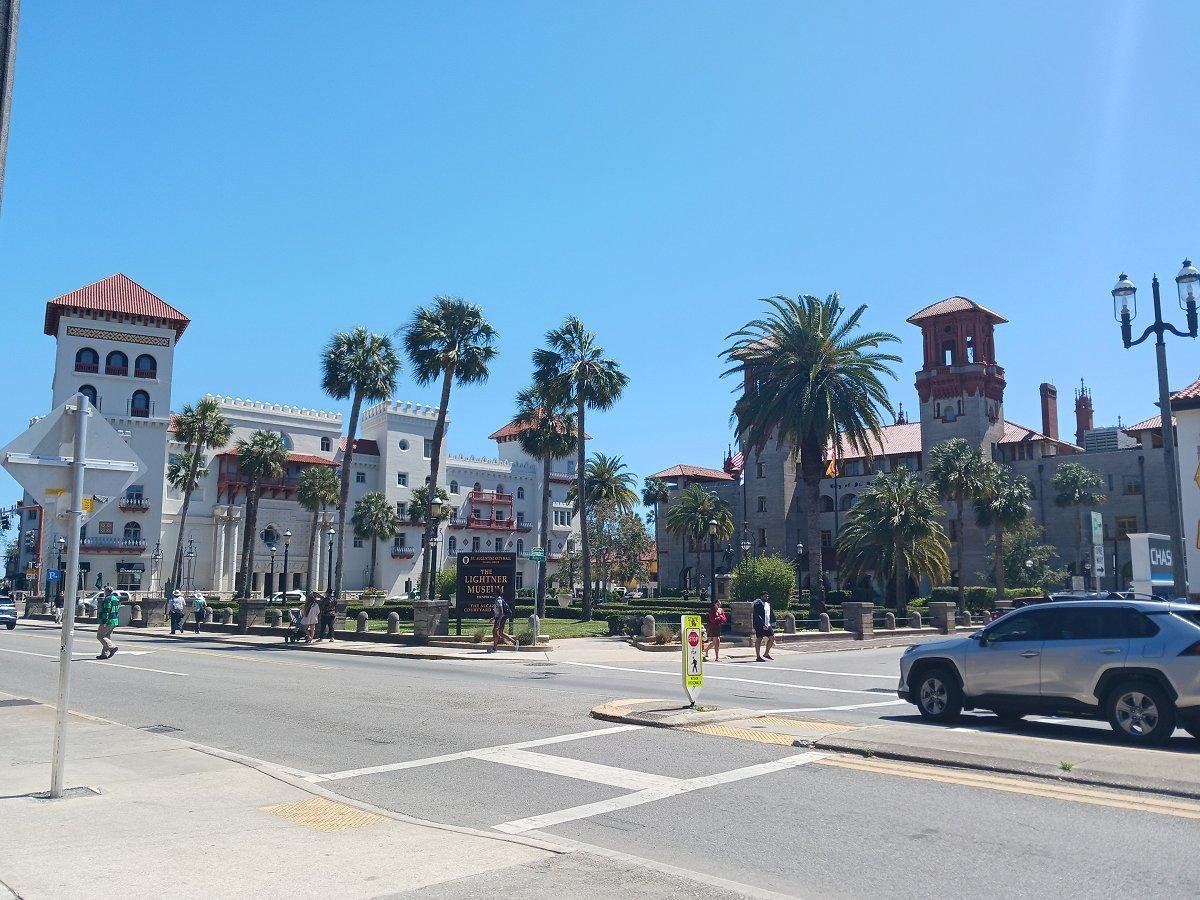
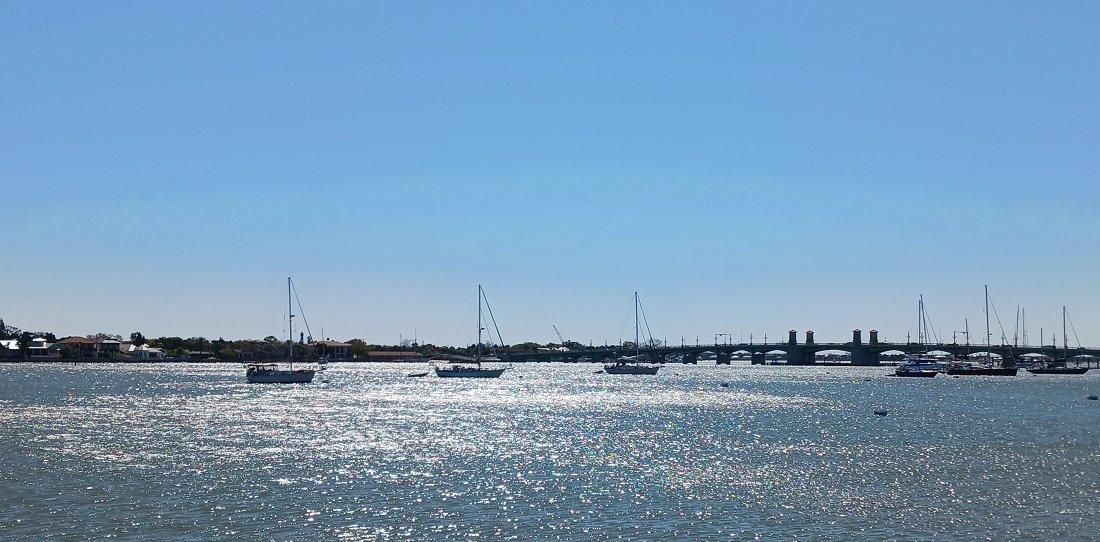
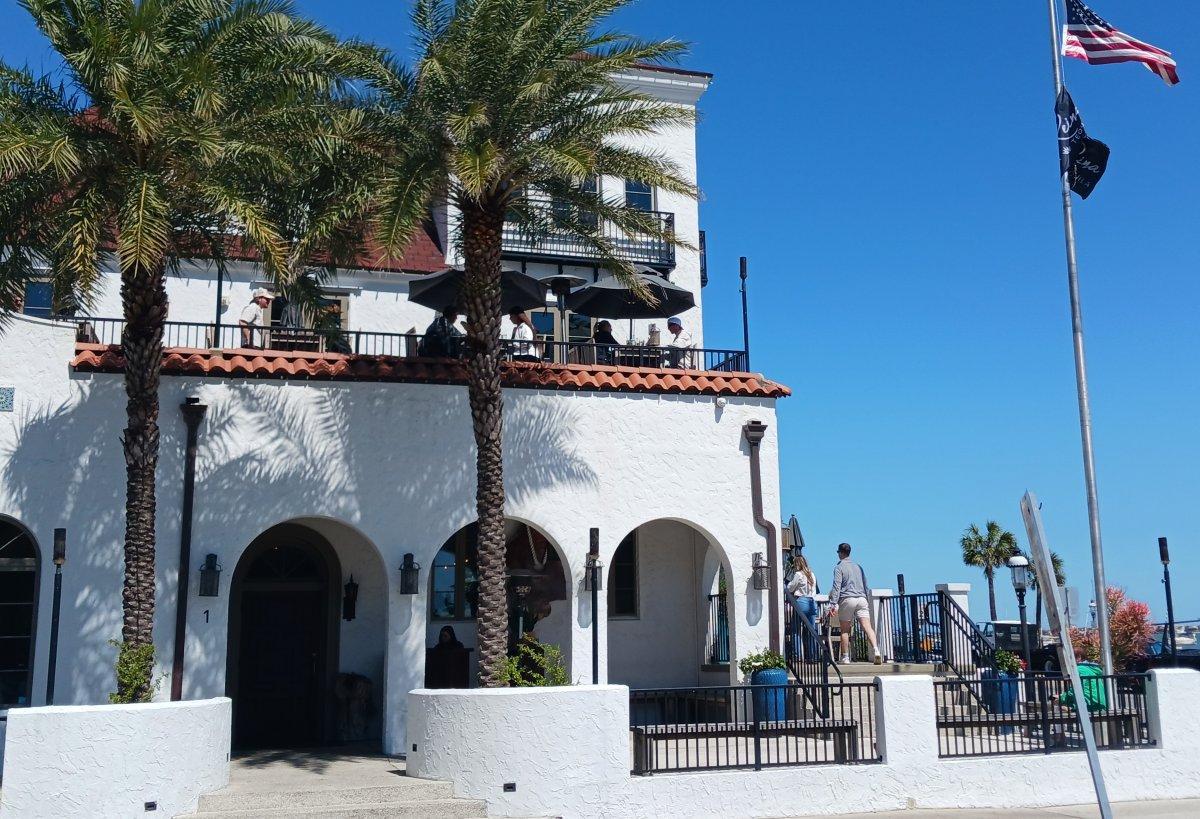
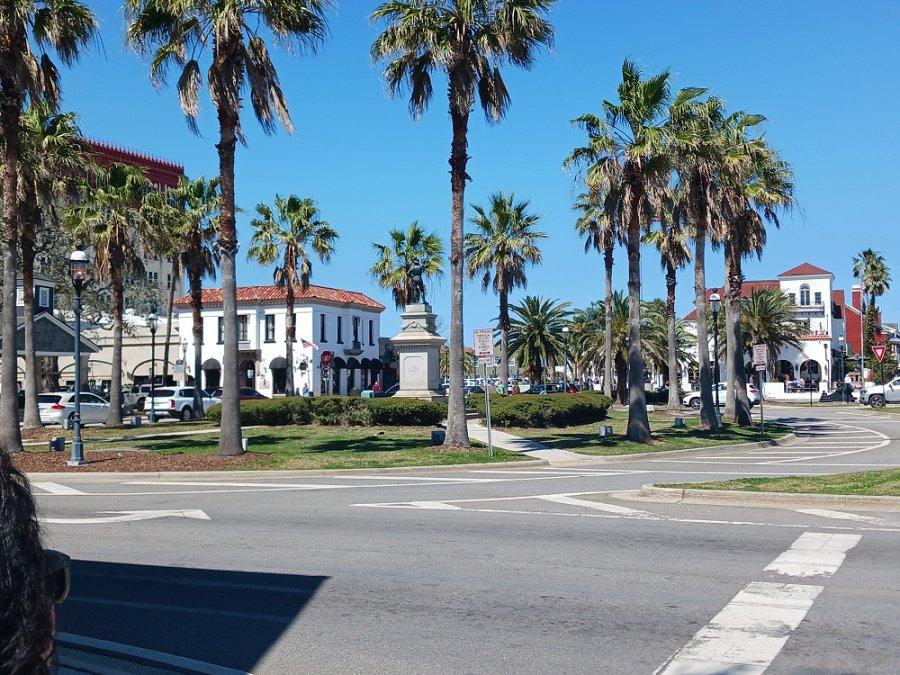
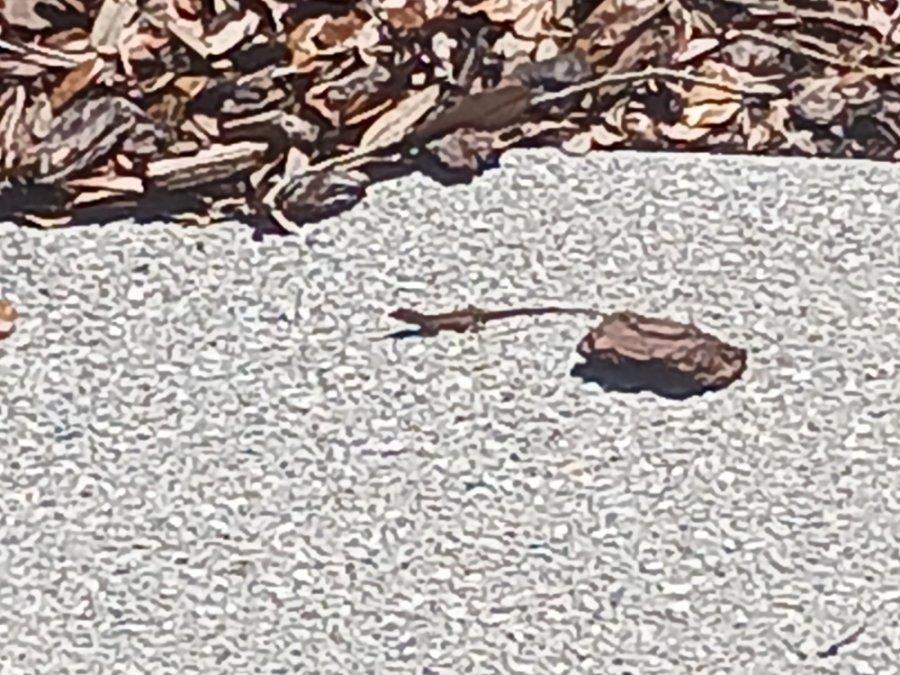
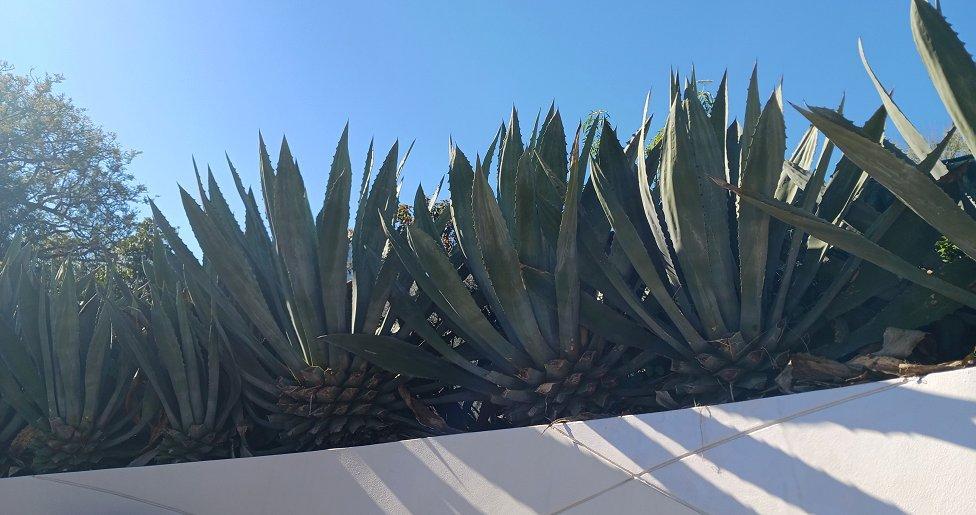
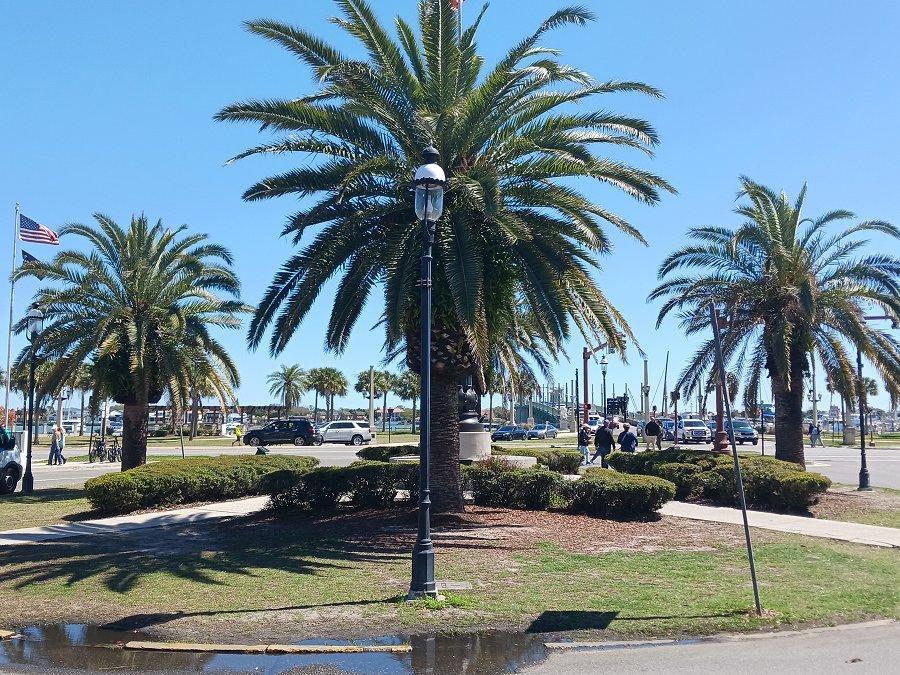
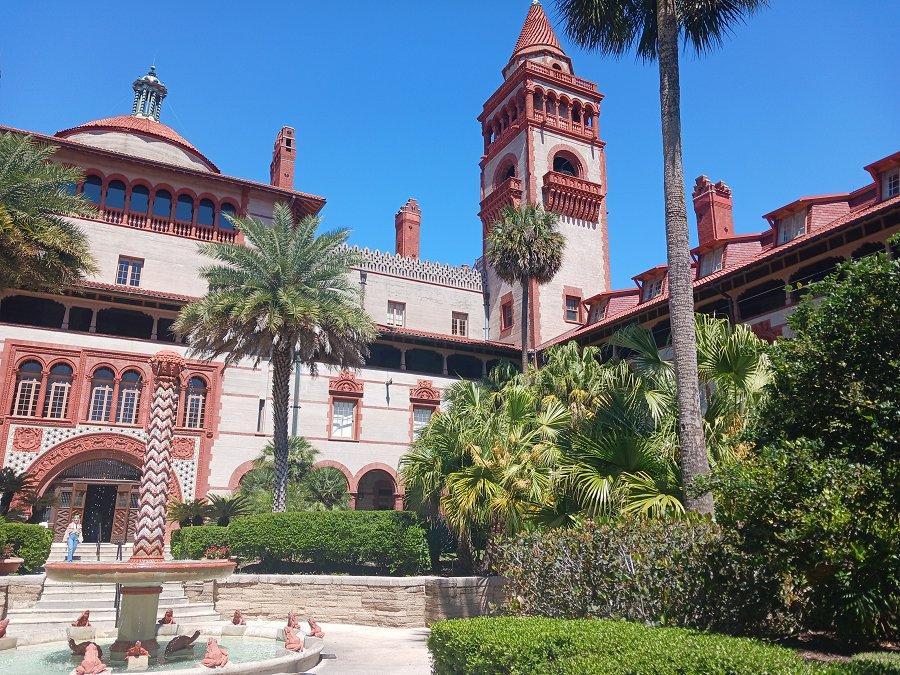
 Passed through one of my favorite East Coast cities a few days ago – the north Florida city of St. Augustine. This Spanish influenced city is one of the first settlements in the United States, and the old city quarters downtown have been well preserved. A late winter walk through the old quarters of the city was nice and I was able to see several different types of palms. Climatically, St. Augustine is zone 9b/10a (lowest temp this past winter was 32 F/0 C in January). This a low latitude humid subtropical climate, with dry, sunny winters, and a summer rainy season. Until the summer thundershowers get going in May, winter and early spring can see drought and at this latitude (28.9 north) many of the palms and plants can look sun pulverized in late winter (the Sahara is located due east across the Atlantic from St. Augustine - lol). Some random shots: Castillo de San Marcos is the oldest masonry fort in the United States (built in 1672) when Florida was part of the Spanish empire. Three 50-foot Sabal Palmettos line the old fort: Looking toward the Casa Monica resort hotel – Sabal Palmettos, Washingtonia palms, and Canary Island Date Palms: Scrubby yuccas, lizards, agave, and hot afternoon sun in this north Florida city: Waterfront area near Bridge of Lions – Canary Island Date Palms : The courtyard of the old Hotel Ponce de Leon with many palms and other exotics enjoying the March sun: A nice green March landscape on the pathway to my hotel: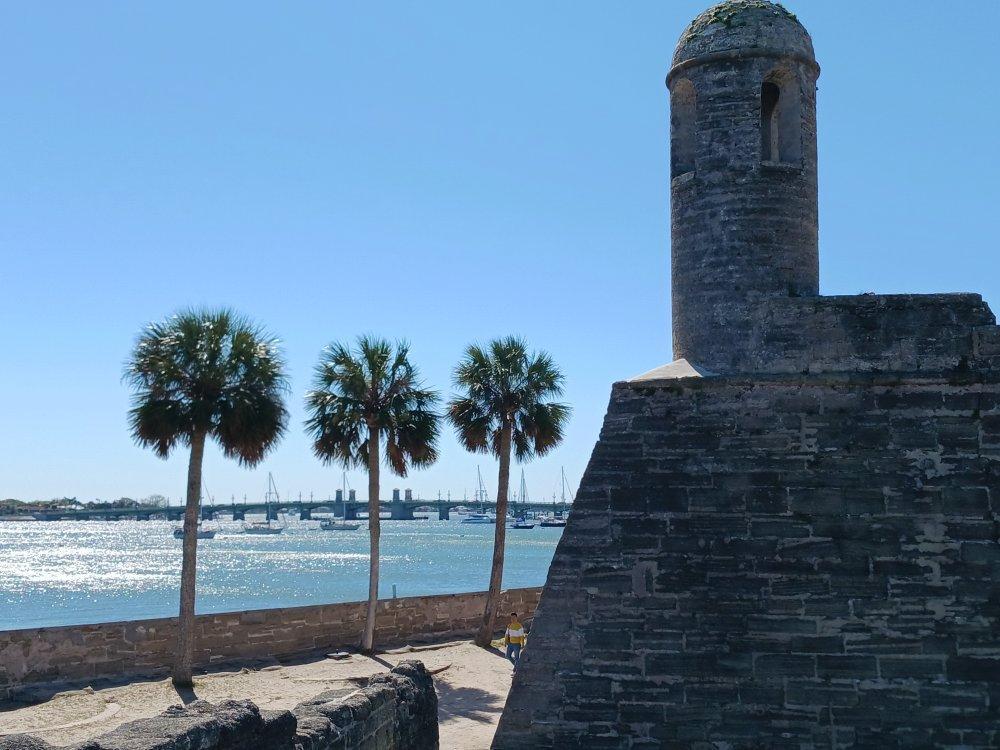




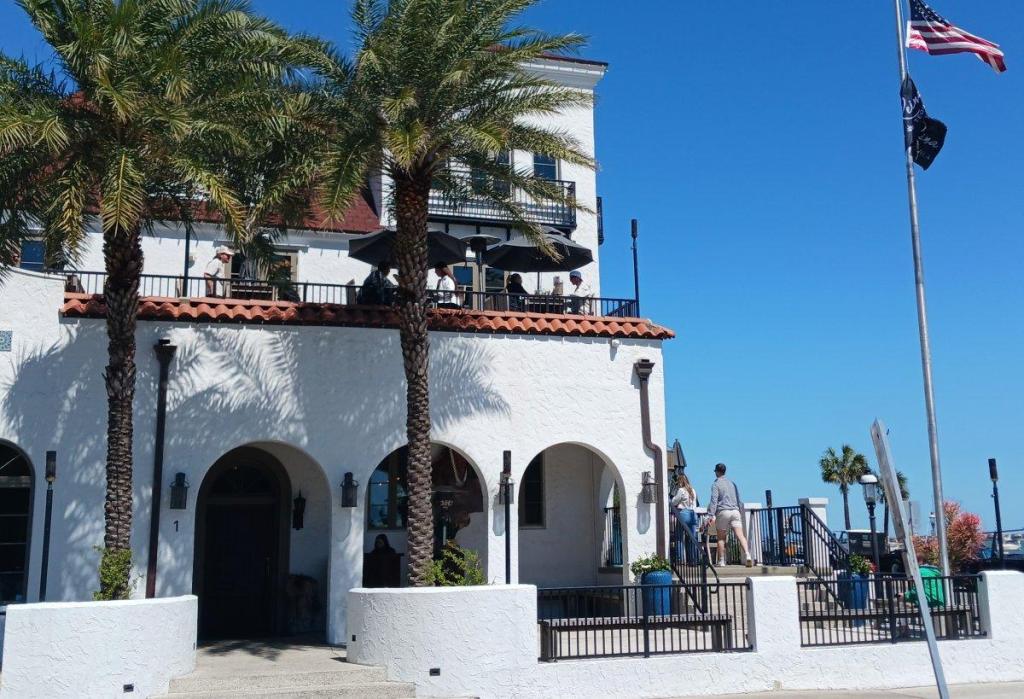 5 points
 -
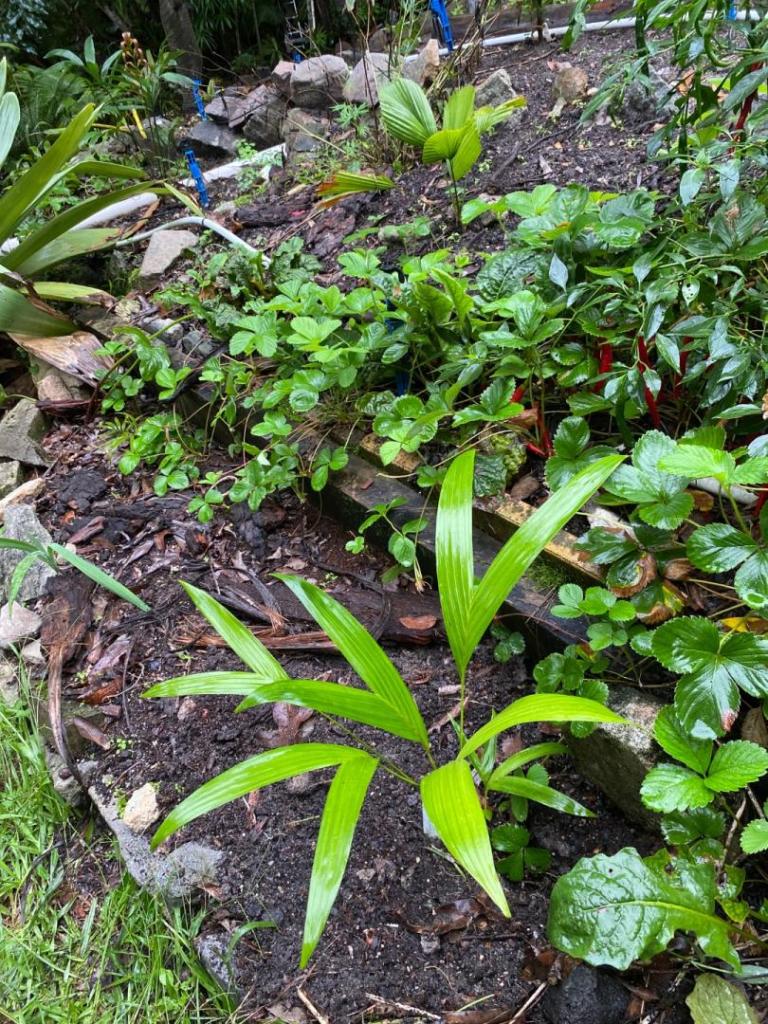
Planted a couple of winners today in the garden. With the weather being so good for planting you got to get em in the ground it’s the only way palms start growing in the ground! A few might recognise where they came from I will leave it those few to guess away. So you know there in good hands @happypalms in the garden.
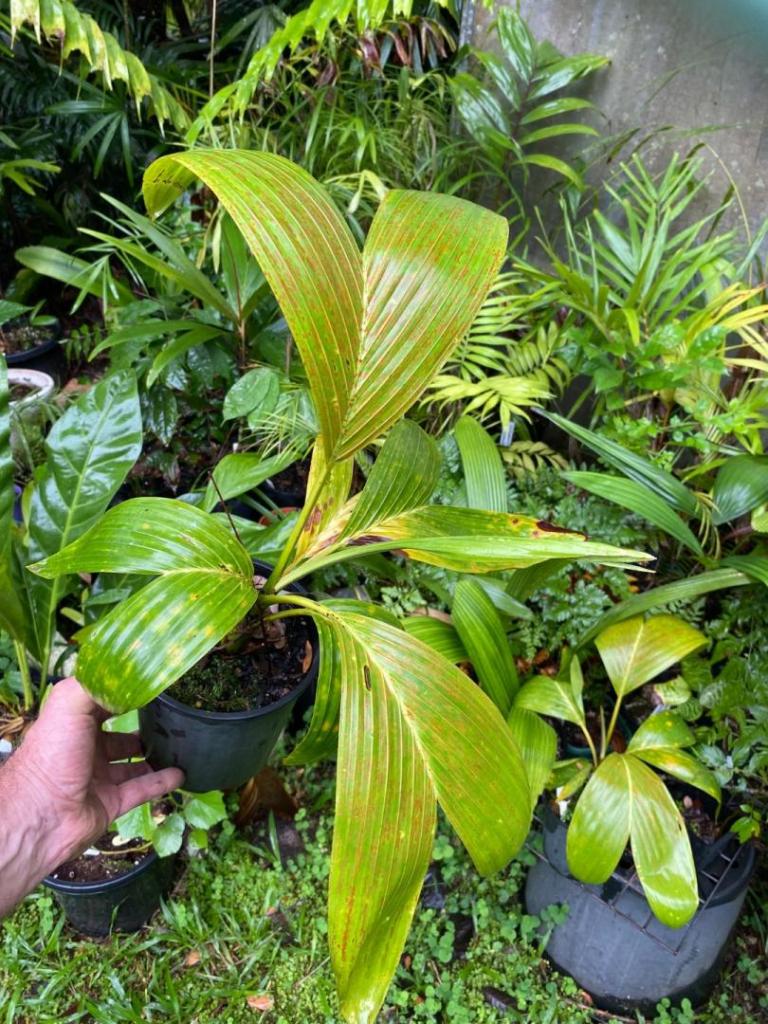
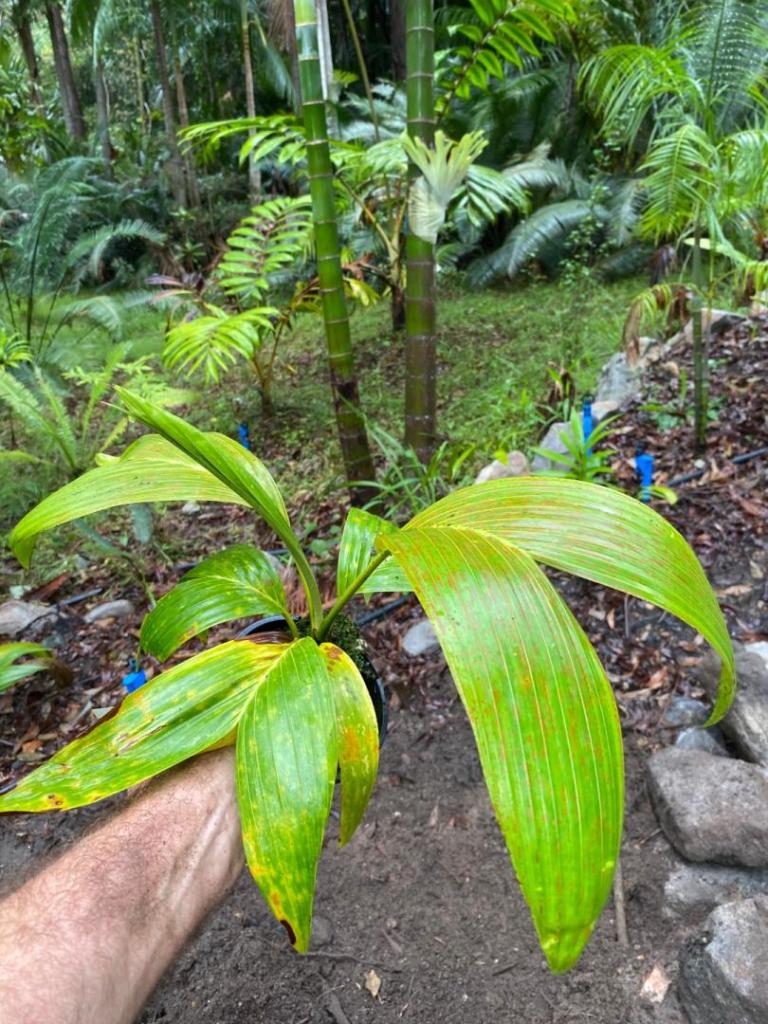
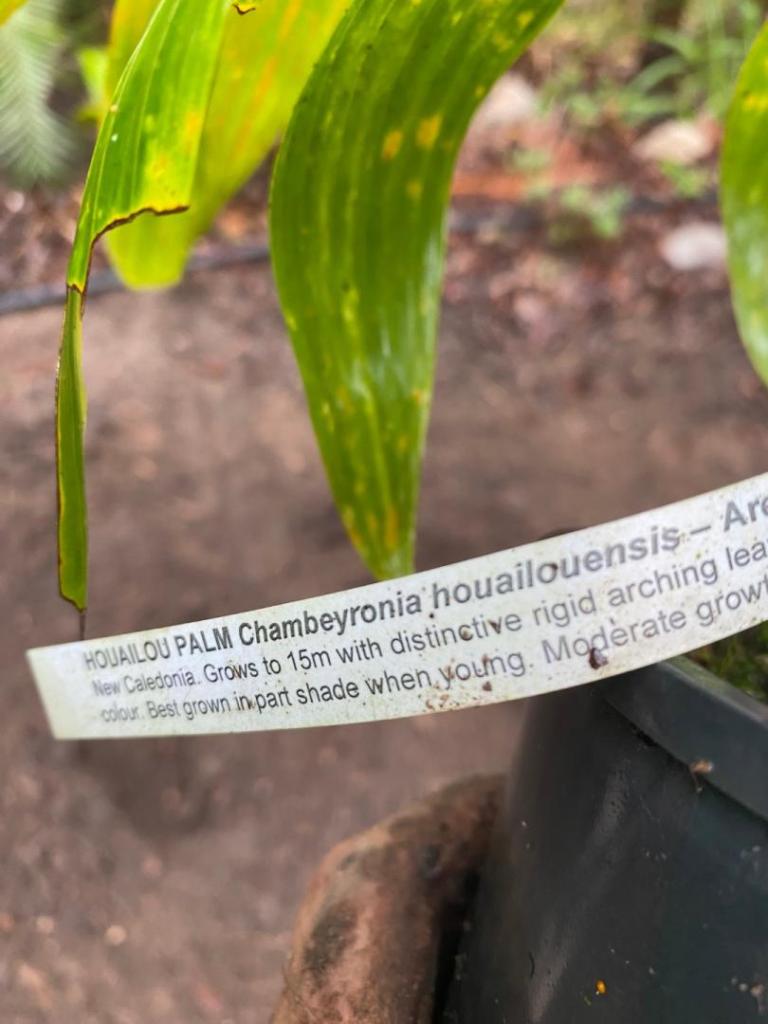
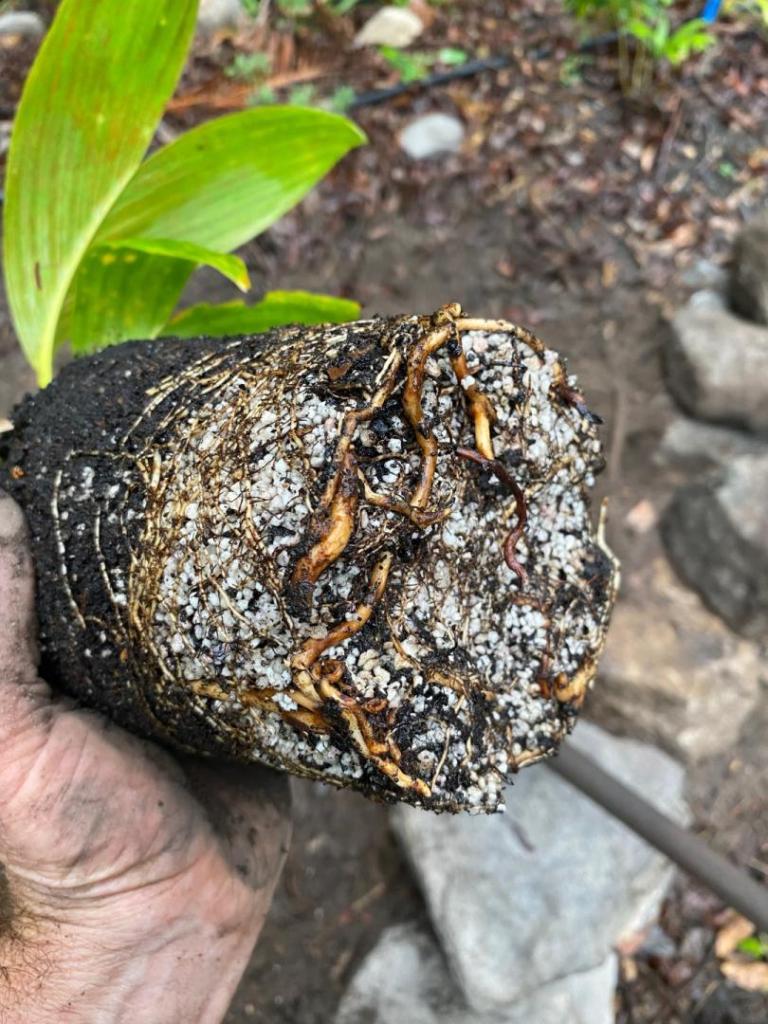
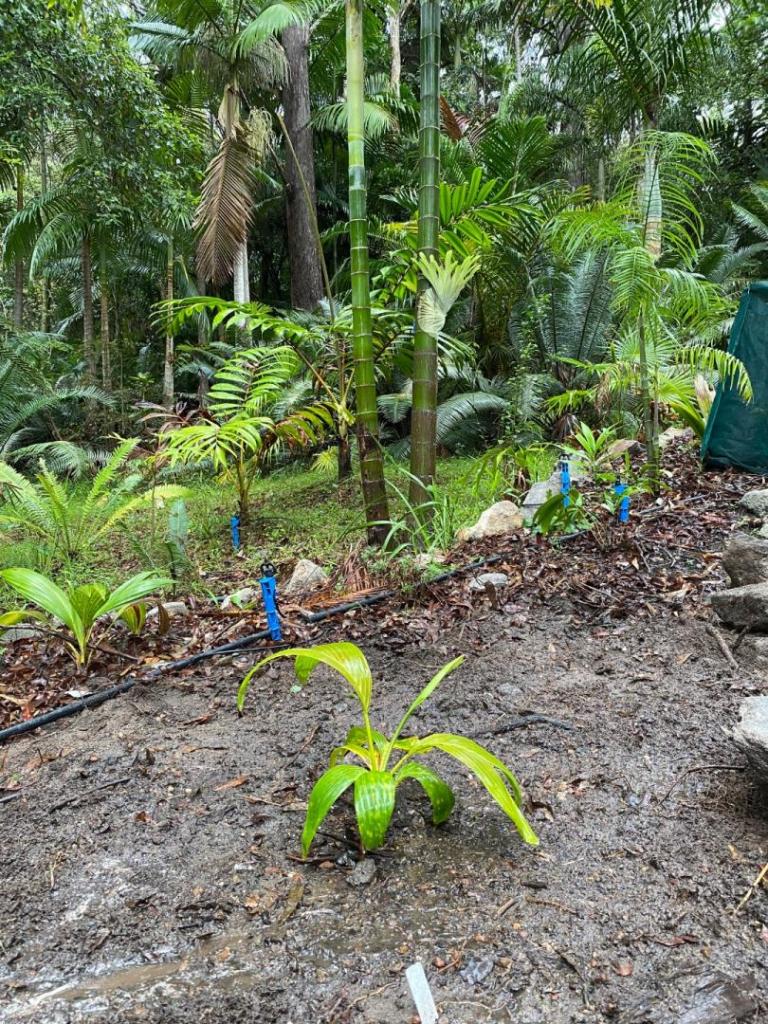

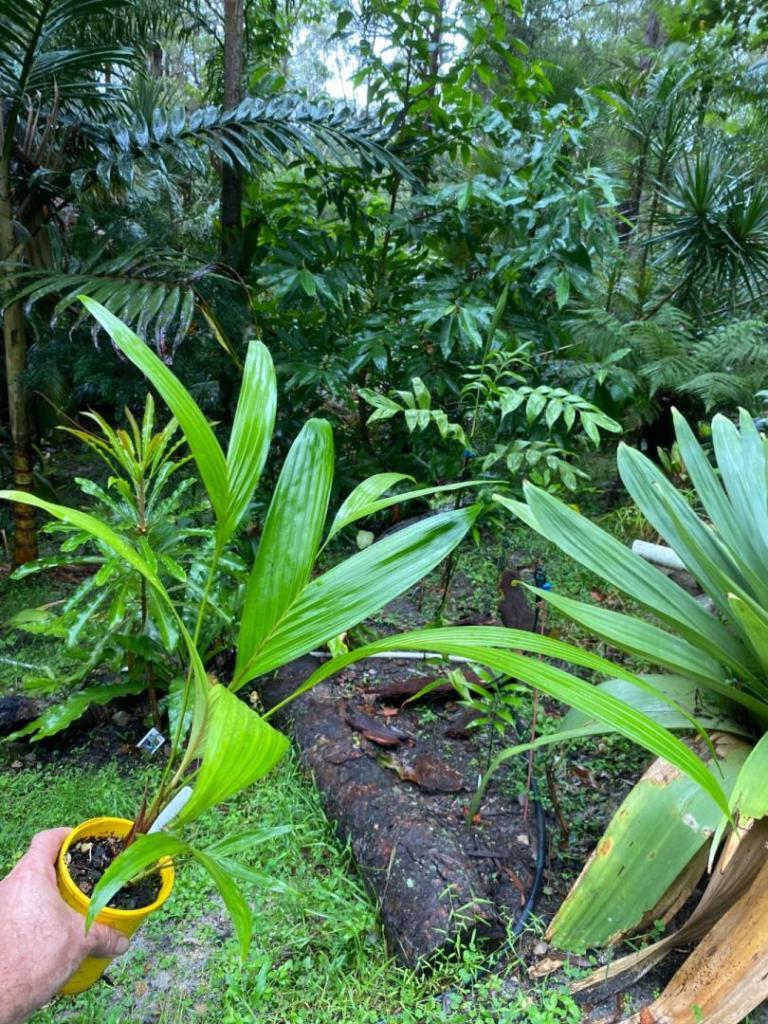

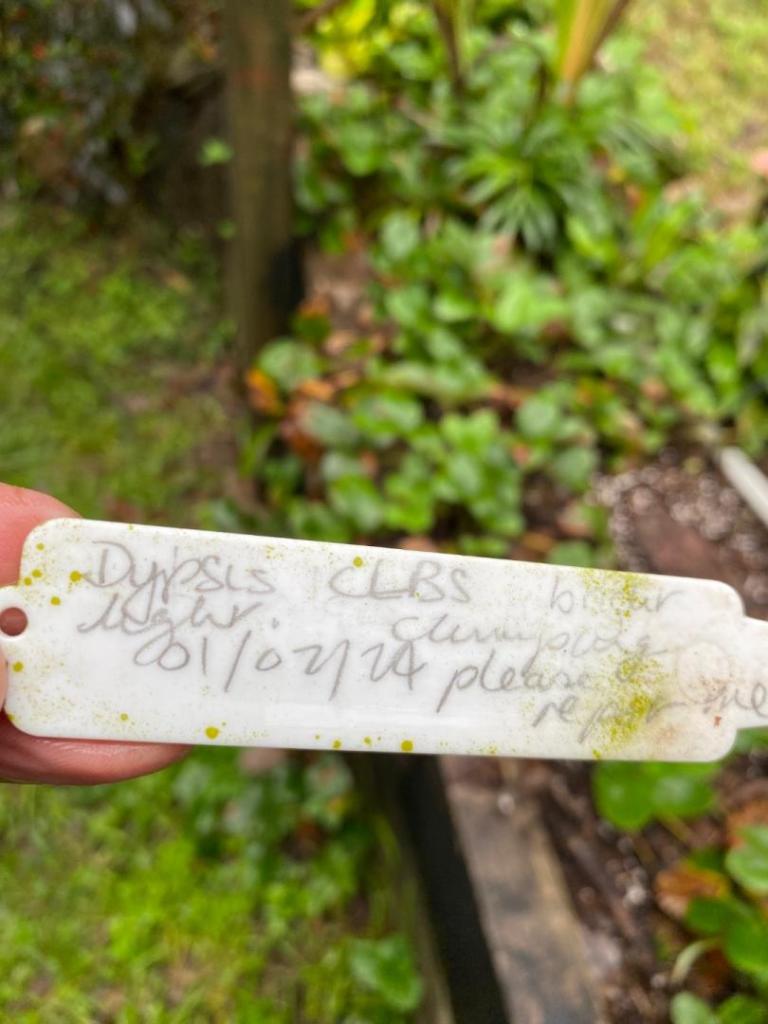
 4 points
 -
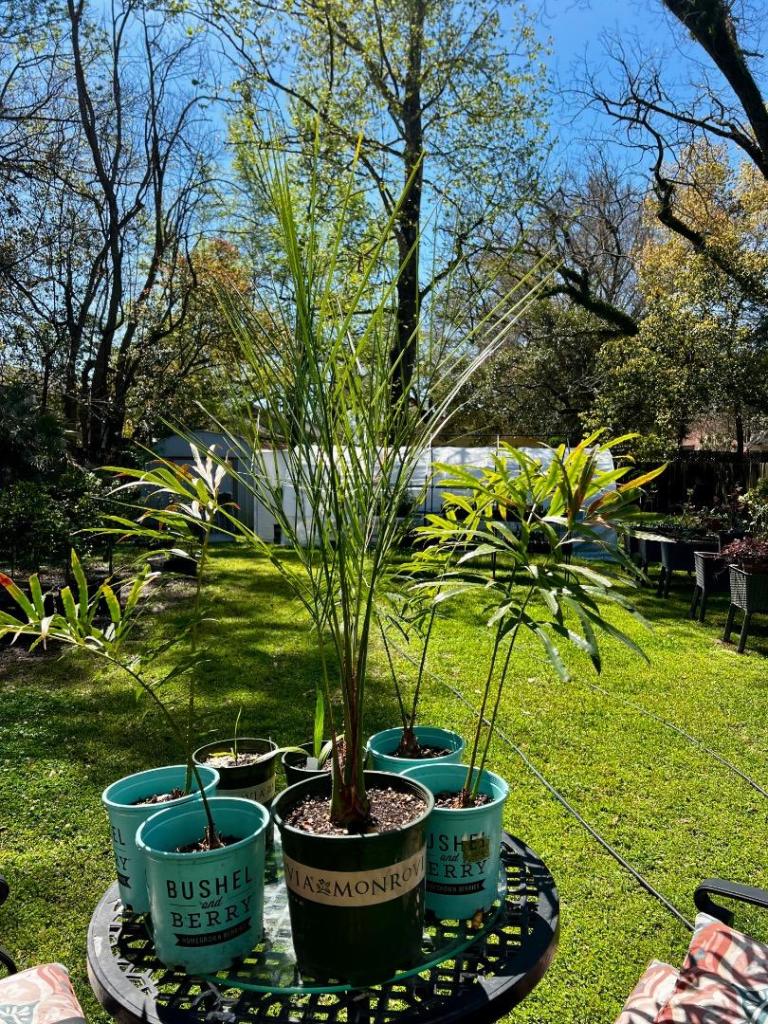
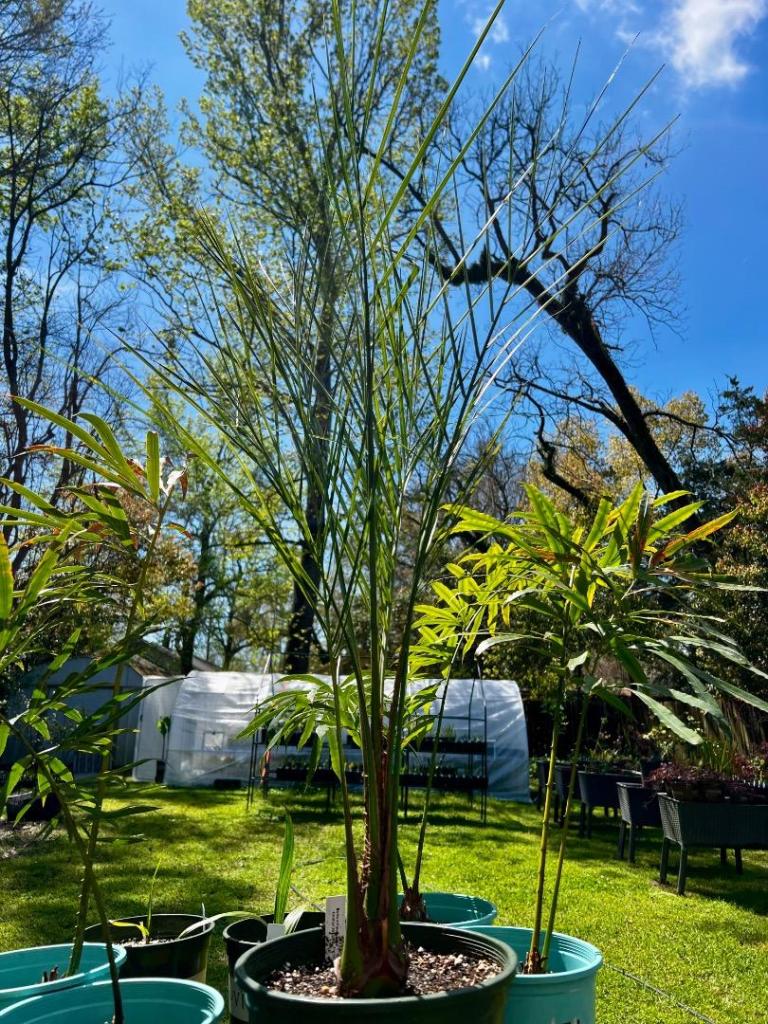
Beautiful! I'm excited to see if they present a more Parajubaea upright look or if the Butia is more dominant. This is a baby B x PJT that I'm hoping keeps this form. It is really starting to get a blue hue I love as well. It's hard to see in the pic but it's almost like a silvery scale that's forming over the new leaves only on one side that reflects blueish tint.

 4 points
 -
 When I got them they were Butia x PJB Sunkha. I have since learned Butia paraguayensis was the likely Butia used, which I wasn't thrilled to hear. I want these palms as big as possible. These are grown in full sun and were repotted last year. I think I'll need to move them up again, as I am not looking to plant them until they are larger. The smaller green one is 26"H x 46"W The more upright bluish one is 44" H x 40" W

 4 points
 -
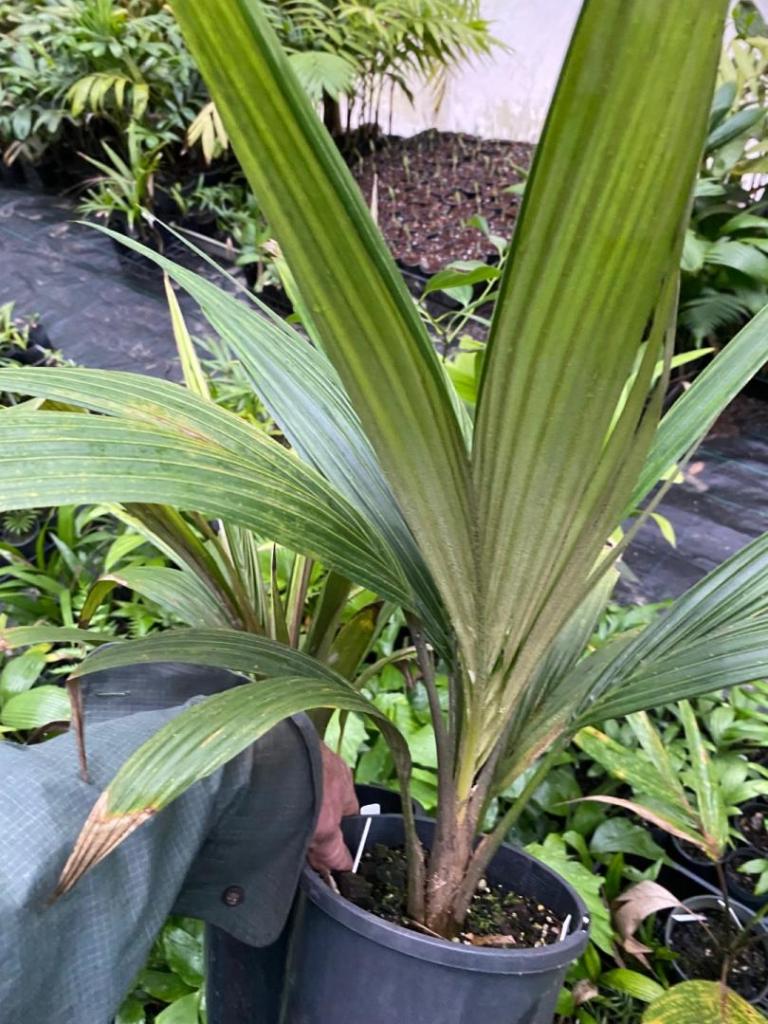
With more rain today and more forecast time to plant more palms. I have these palms already growing in my garden quite established with many years success. So why not plant as many as I can knowing they grow well in my climate without the fear of winter taking its toll on them. They may be small now but 20 years time it will be a different story.

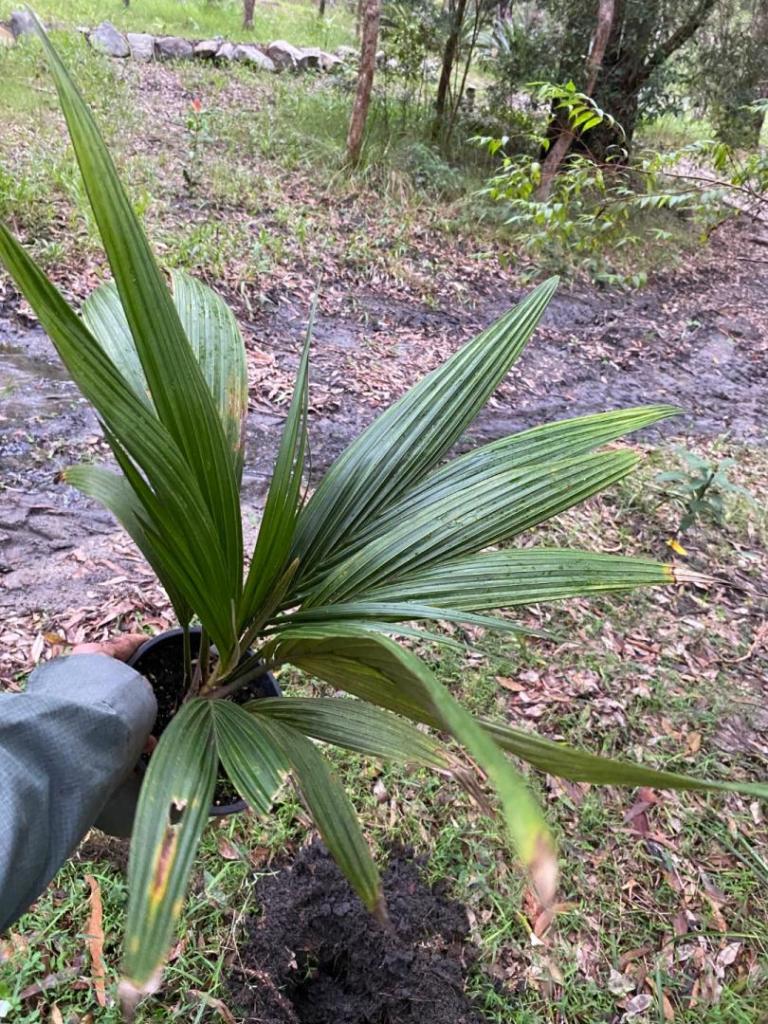


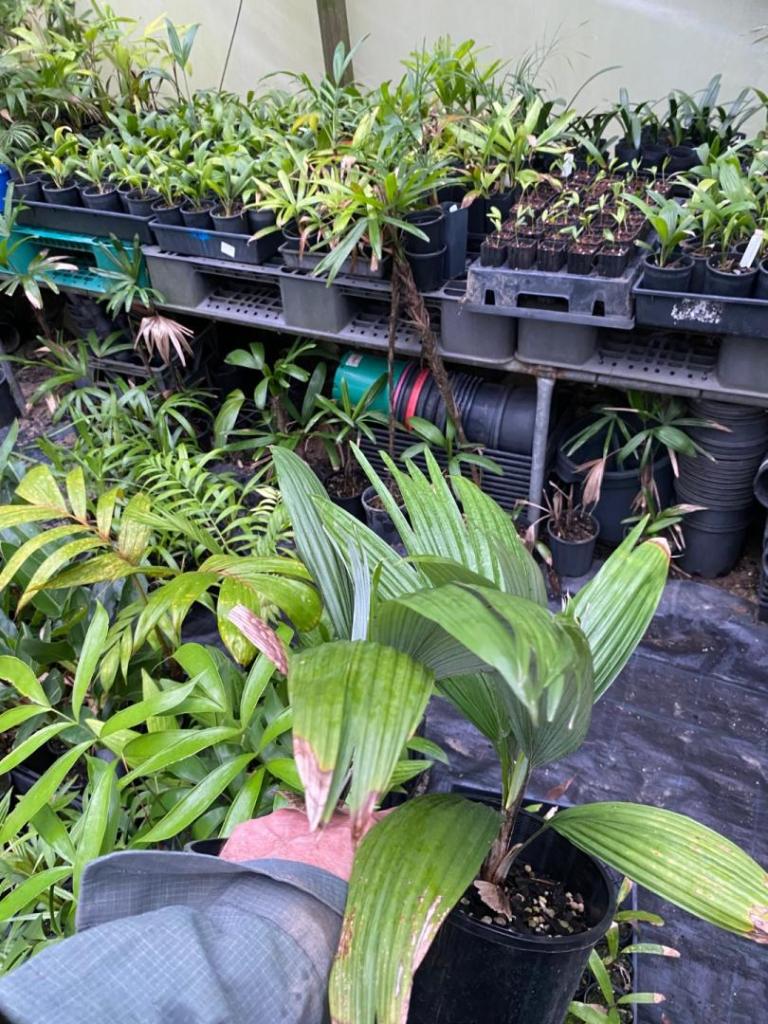
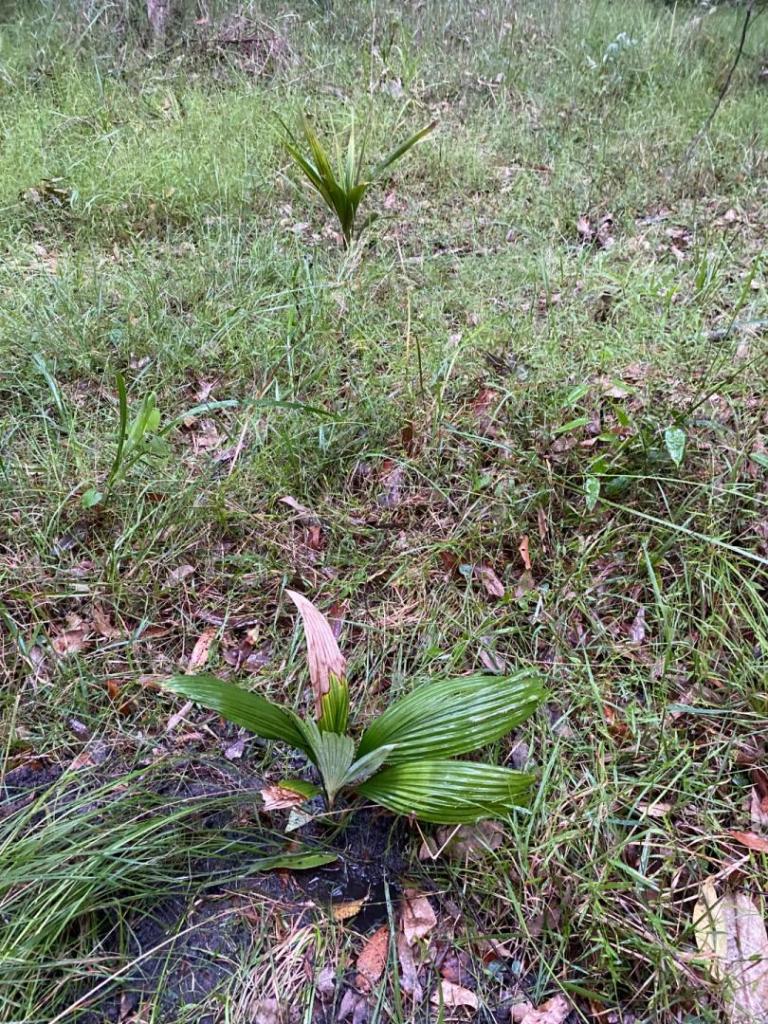
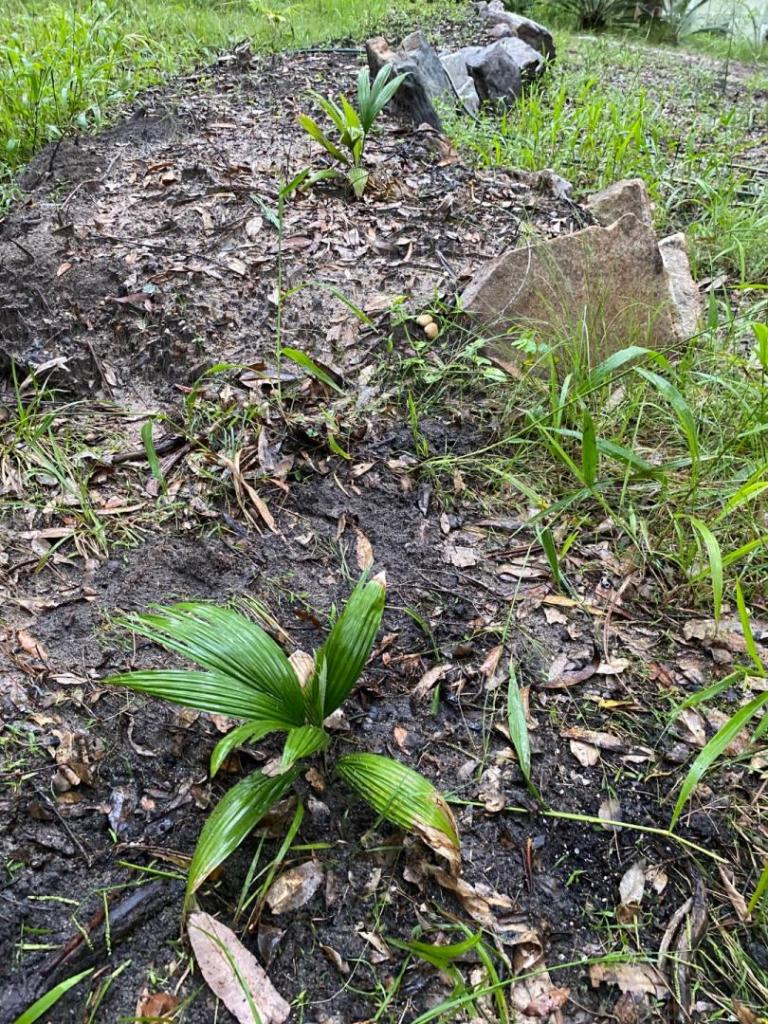

 4 points
 -
4 points
-
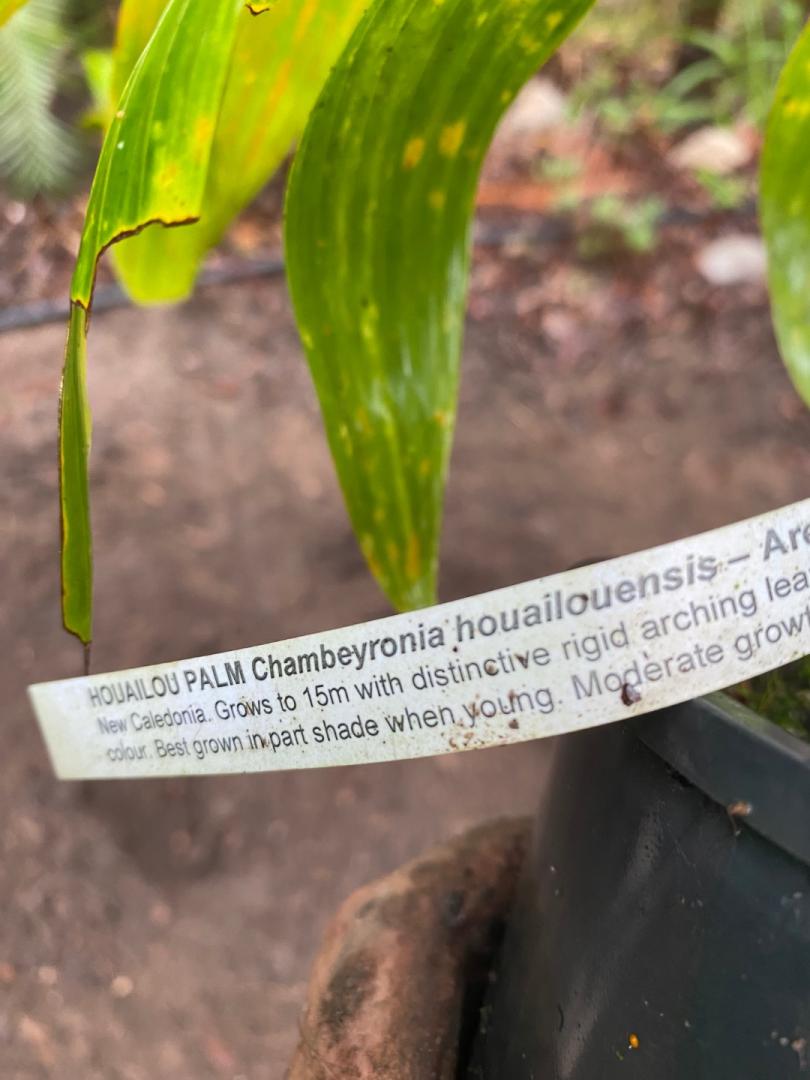
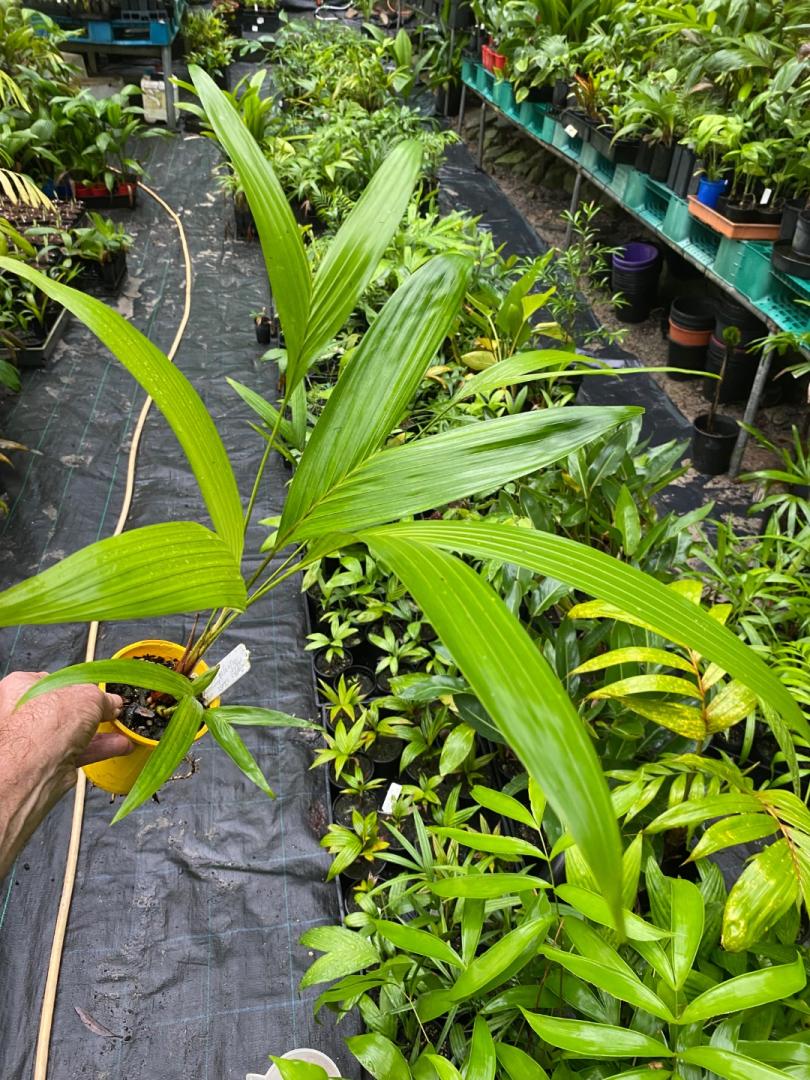
 3 pointsI would guess Chambeyronia but i could be wrong, others will know more i think. Good luck germinating them!3 points
 -
 9a sure rules out most cocos substitutes and humid 9a make it a bit worse I think(stays cold longer). You might not enjoy a palm that sees 20 degrees and gets a lot of damage. When we talk cold tolerance we are talking death. something short of death often means a couple years till the palm recovers if at all. Mule palms are just about the best 9a pinnate palms. They are nice looking but, not a cocos. If you plant in groups or near a heated dwelling, palms will get better cold protection, the one out in the open by itself will be tested. Ten to twelve years ago I heard talk of florida parajubaea sunka plantings here on palmtalk. Anyone know of any that have matured?3 points
 -
 Parajubaea sunkha is the most humidity tolerant of the three species. They can handle high heat without a significant cool down only if it stays dry. I grew one in San Antonio that survived 9°F protected in 2021 Palmageddon just to see it die the following May during an unusually rainy week. 🤨 It never grew during the summer until October's cool down triggered some growth through winter.3 points
 -
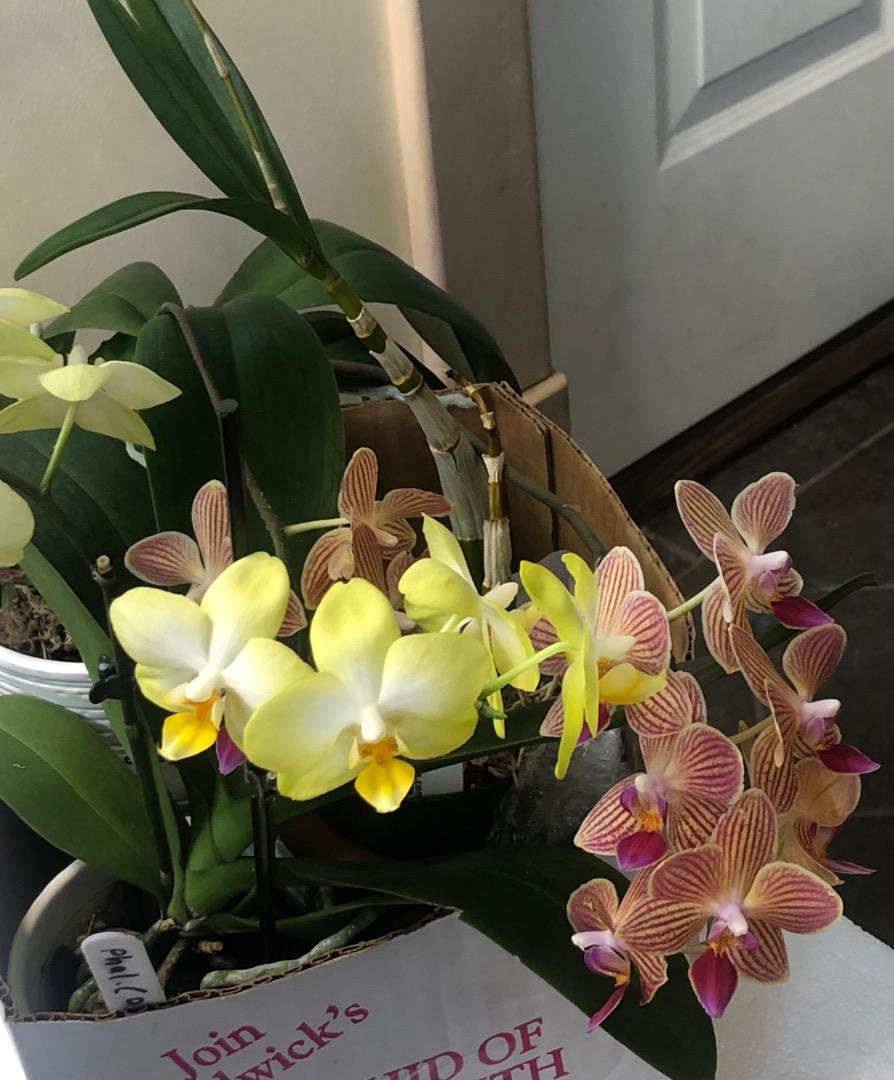
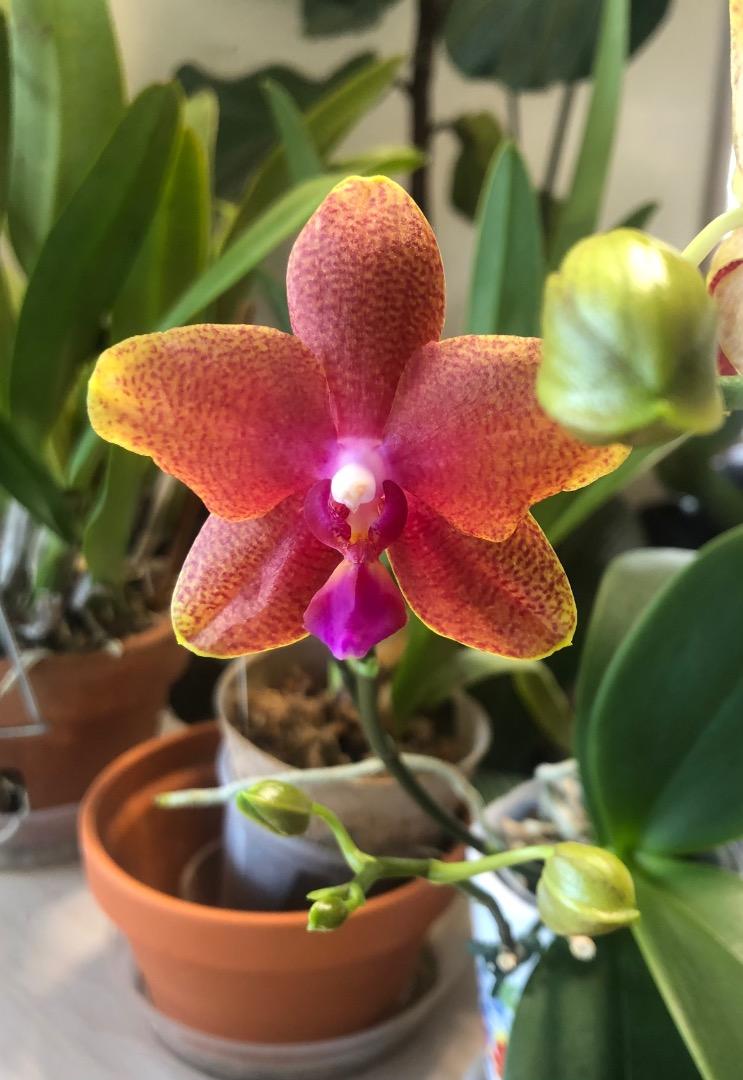
 3 pointsSome orchids in bloom, many just unboxed after transporting them back and forth for display in Connecticut’s recent orchid show (Nutmeg Orchid Society). And good news! I was excited to hear that my phal White Dream’V3’ was awarded best phal in this Connecticut show by the International Phaleonopsis Association. I was told that there were hundreds of phals there, as you can imagine for a March show. First time to ever be awarded anything like that. I’ve seen photos online of stems with 12 blooms, astounding appearance on those. It’s a nice classic white with good substance if anyone is looking for something like this to add to their collection. Hausserman’s has them online. phal White Dream’V3’


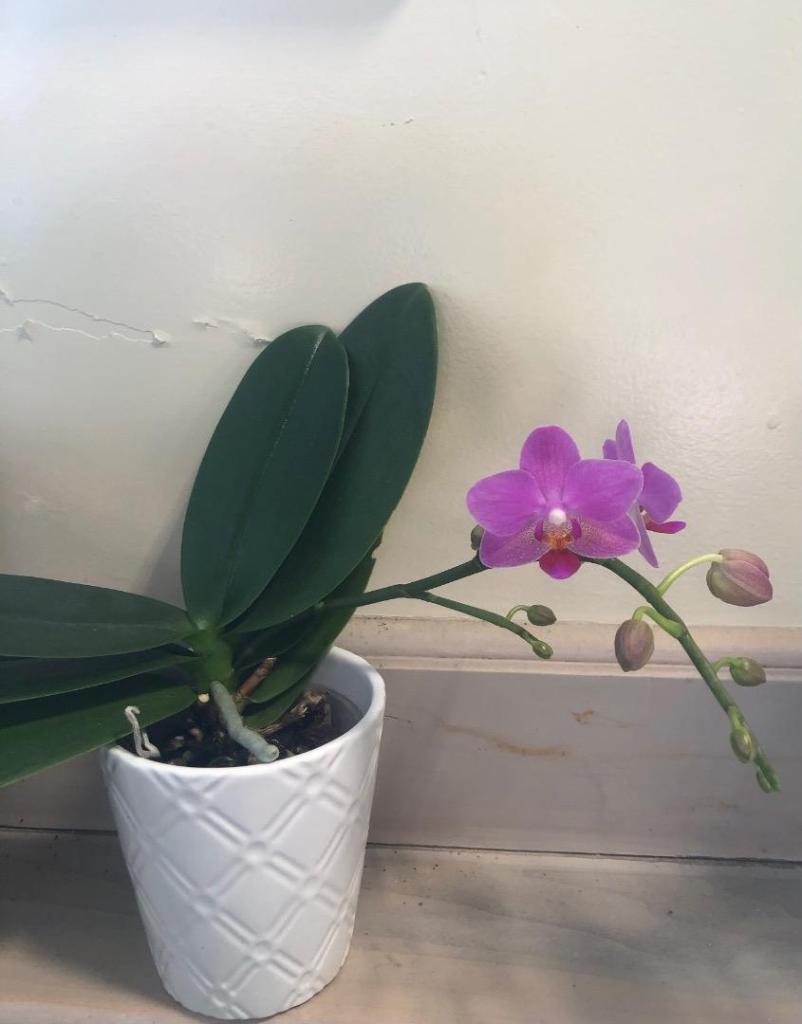


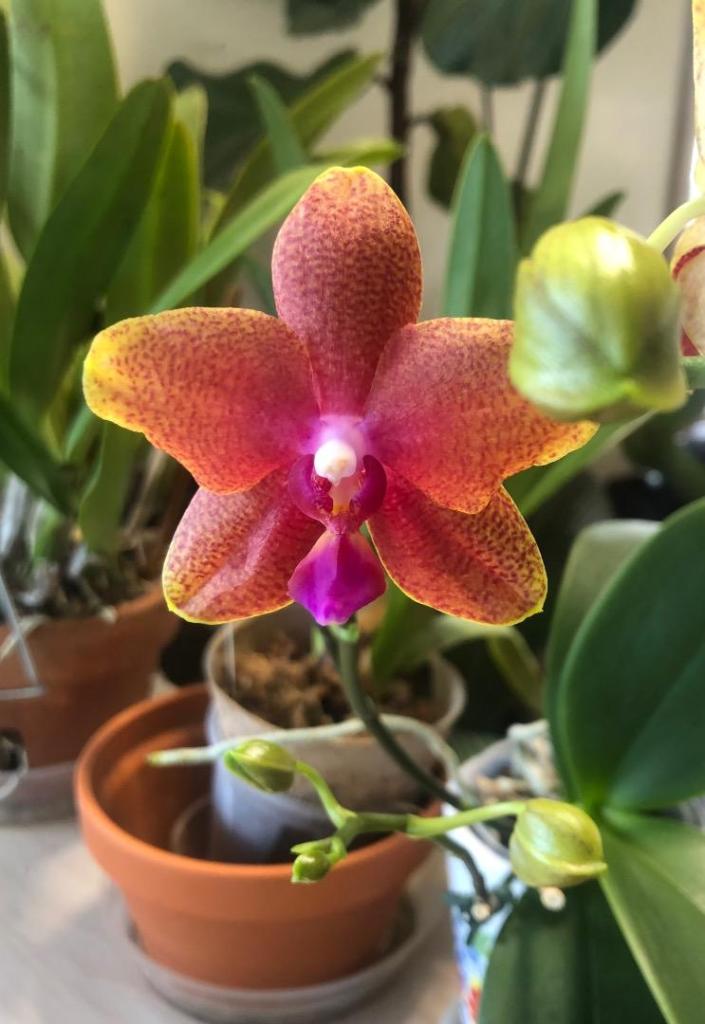


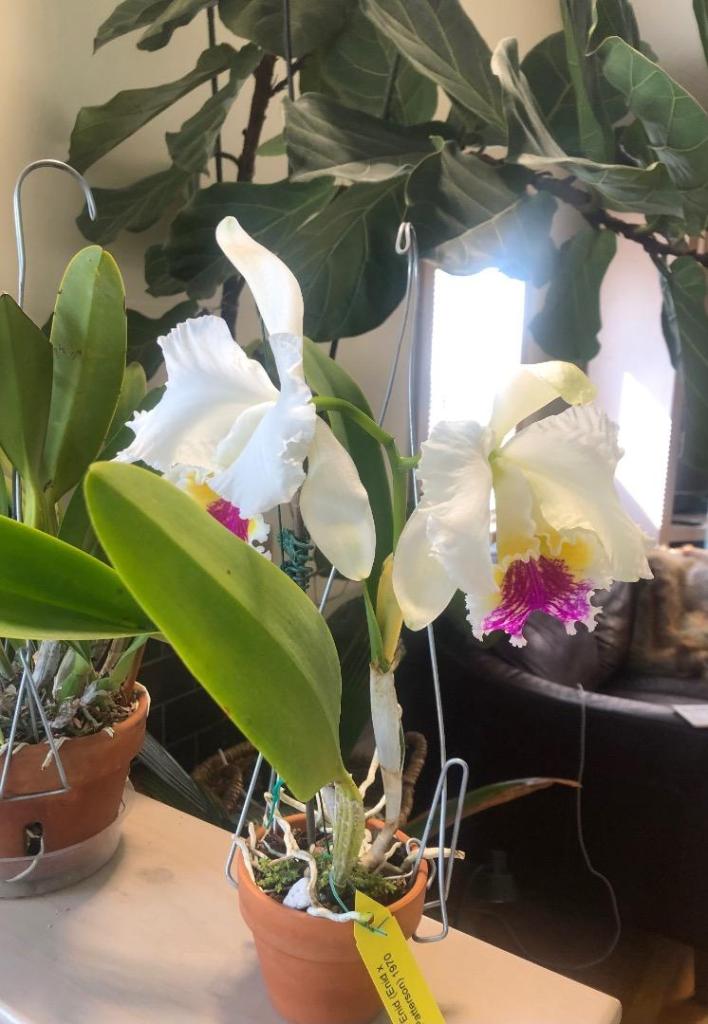
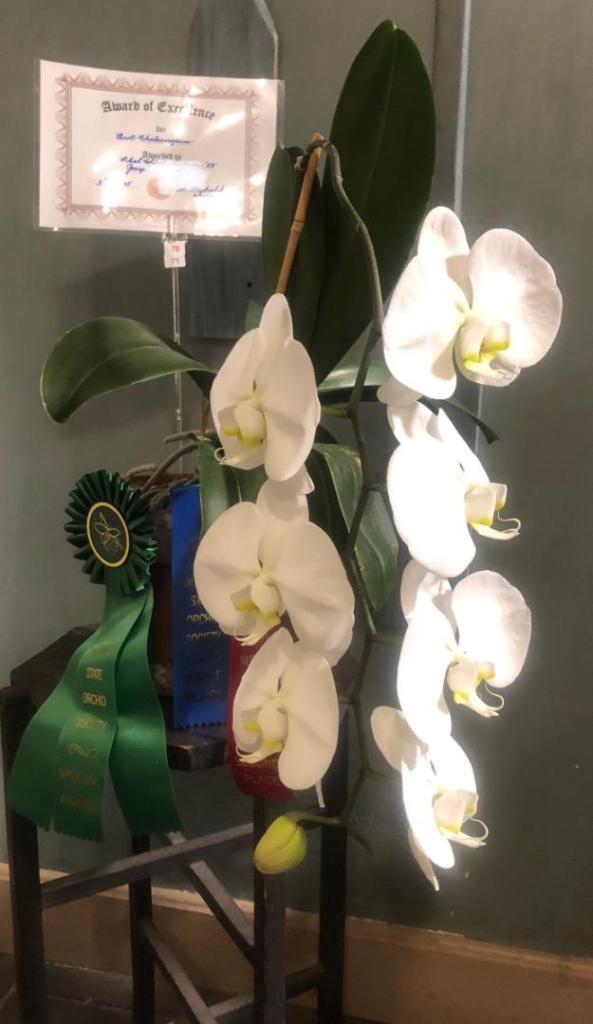
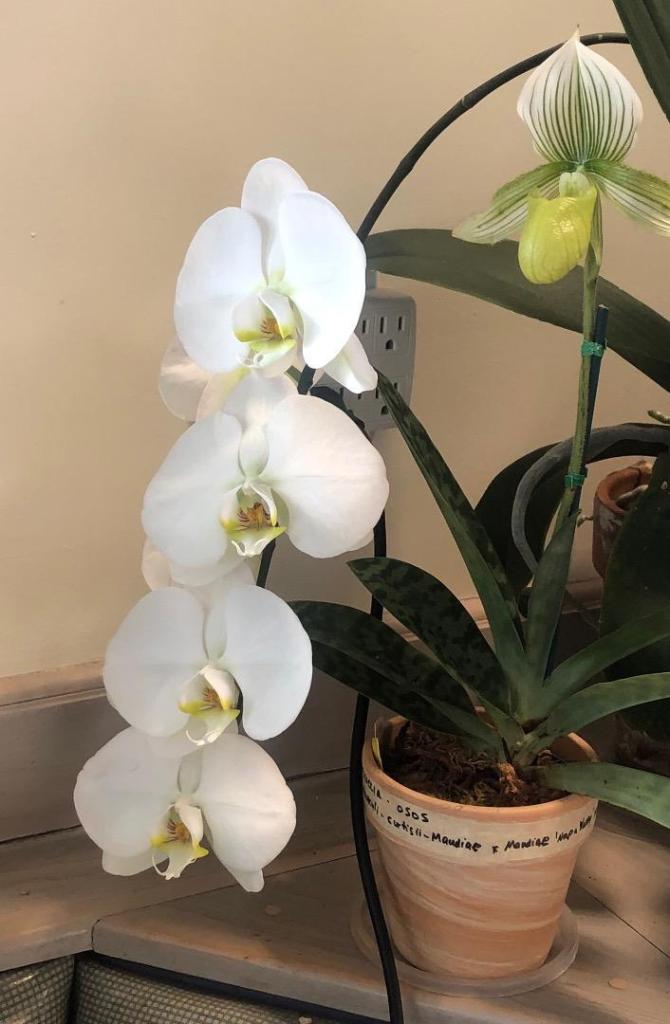 3 points
 -
 Sabal palmetto in reality it’s the consummate palm for much of the southeast and Deep South. When those Hellish winter days come and go, the Sabals reign supreme. I suppose in 9a the Sabals are a hedge against a barren landscape(Texas is a good example). Unfortunately there’s just so many obstacles throughout Florida that give many people trepidation in expanding their Palm gardens(freak cold events, lightning, fusarium, weevils). Sabals definitely have the ability to persevere.3 points
 -
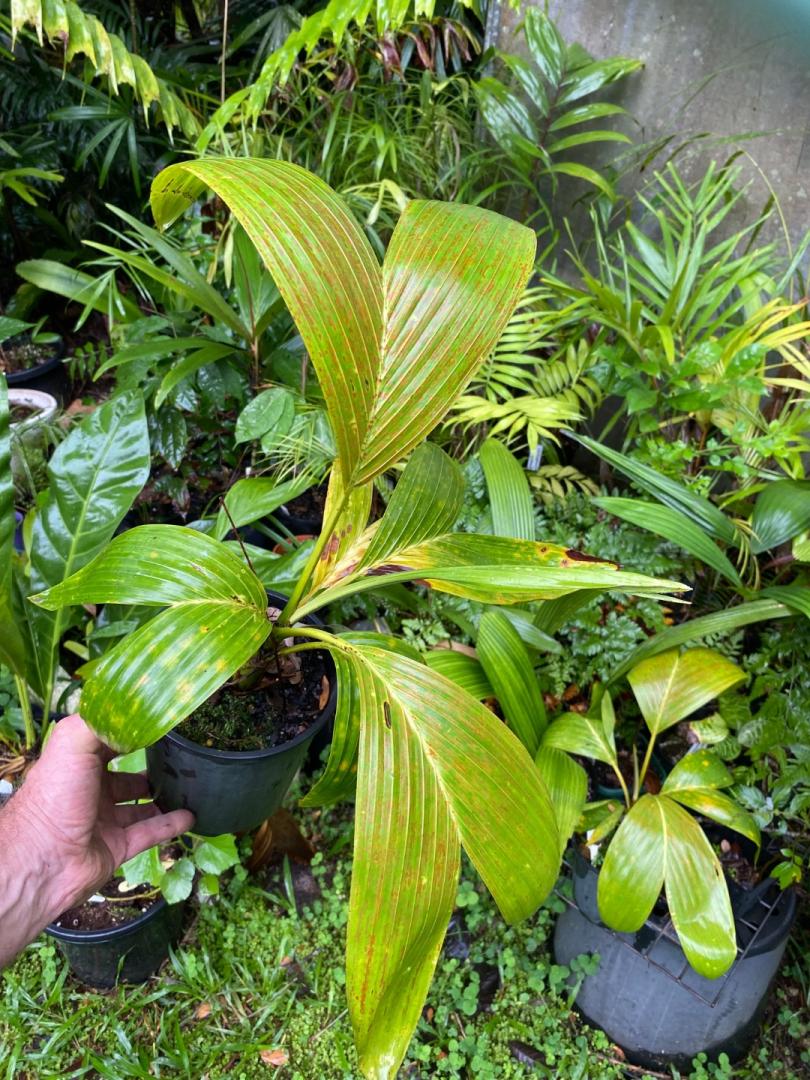
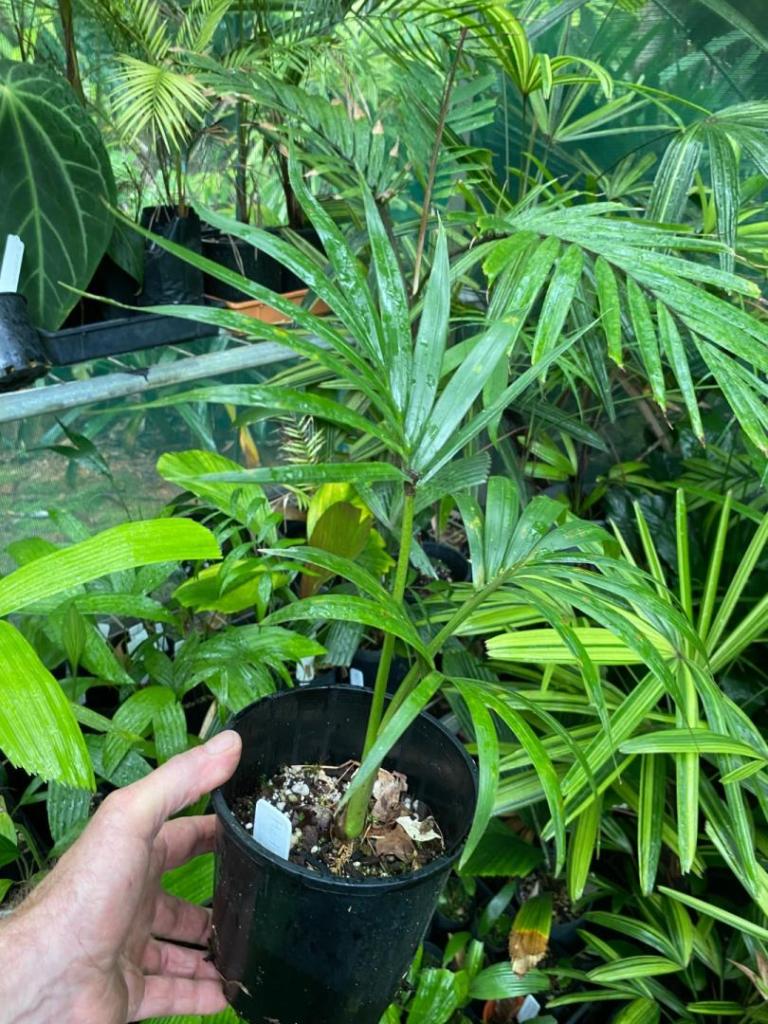
3 pointsTwo winners today catching my eye a Hedyscepe canterburyana and a nice little mottled lanonia dasyantha.
 3 points
 -
 I agree in that more interesting palms should be added. I think in addition to adding more sabals. Unfortunately builders would rather plant maples, oaks, and river birches than palms here. But further south in the county closer to the coast, Sabals are planted more widely. I have 2 Sabals in my yard that I’ve grown from seed and find it to be a privilege to have them in my possession. We are lucky the washies and Phoenix are all mostly coming back after we hit 12F up here in January with snow. We don’t get to have the big pretty palms like queens long term here without protection. P. canariensis could work, and I think mules would be a good thing to see planted widely here, but they will certainly get knocked back every few years or so. PS. Whoever bought the king palms from the local Lowe’s is in for a very rude surprise when the first frost comes in November lol3 points
 -
3 pointsOne of mine was a single stem when I bought it 20 years ago . It has flowered a few times and sends out new stems . Those stems grow tall before flowering. I had one flower prematurely, but only one stem . The rest get 8-10’ before flowering. Harry3 points
-
3 points
-
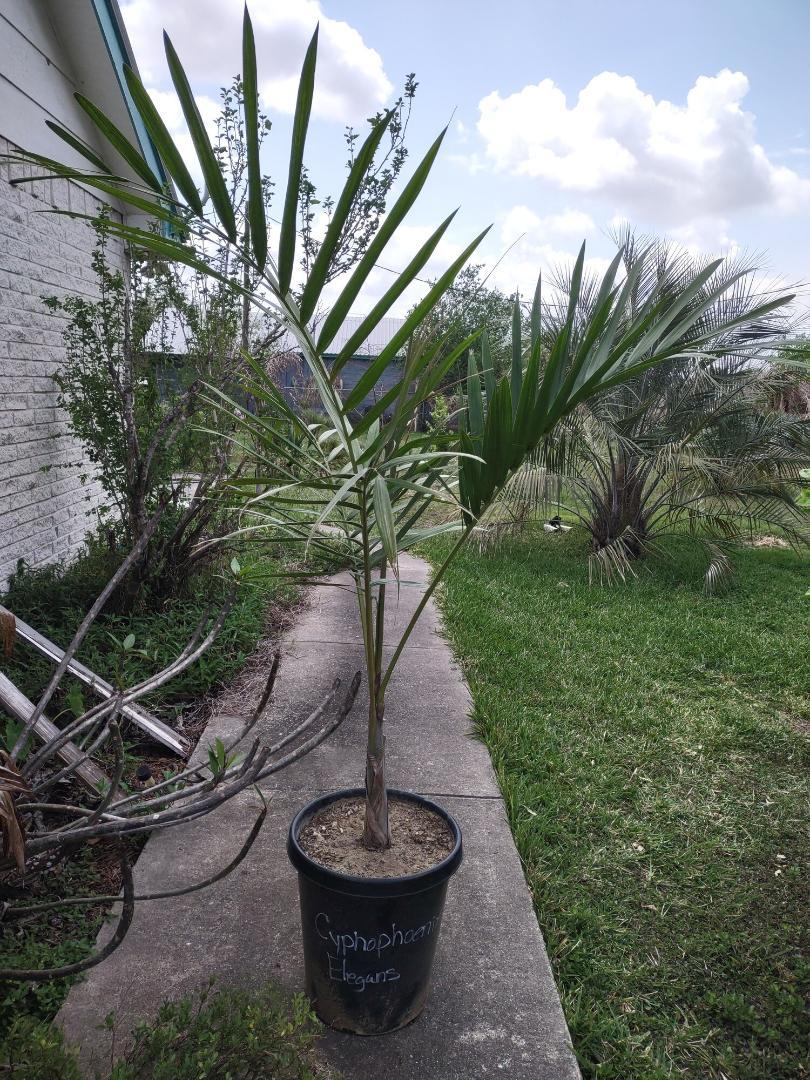
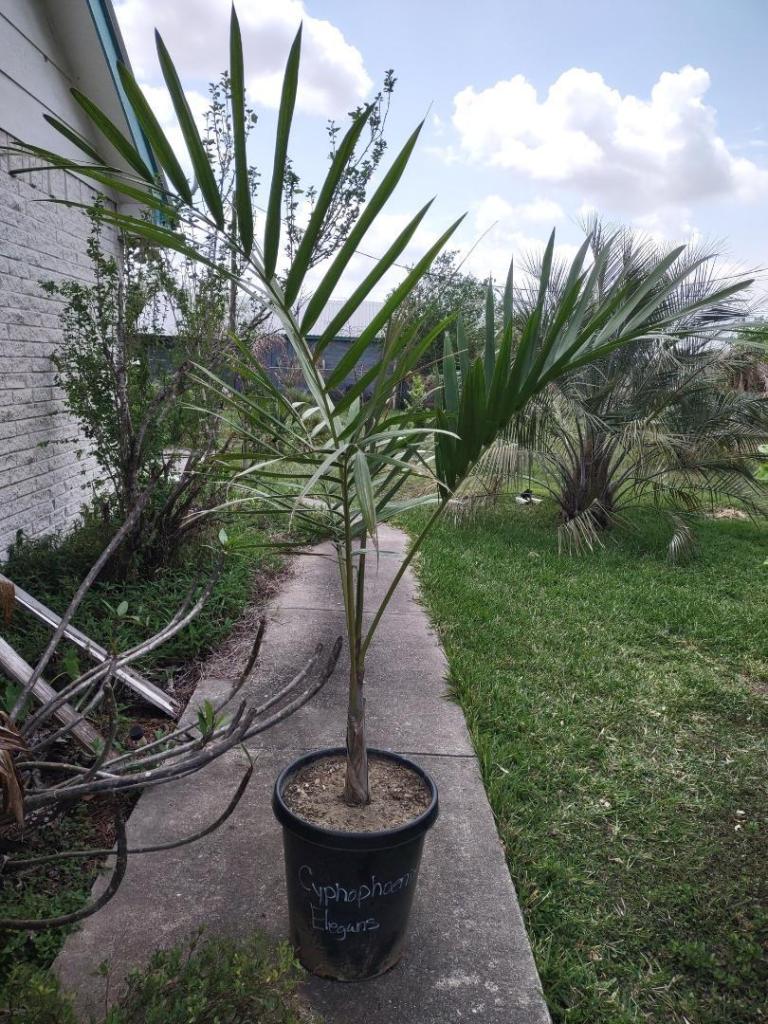
Here's my elegans acclimating to the sun. Hopefully I can plant in a couple of weeks.
 3 points
 -
 3 pointsmy bitter enemy, this Ficus benjamina, I guess is good for something, such as attaching some orchids to it's branches. On the left side, had the buds again, bitten off or snapped off by squirrels or raccoons. this is third year in a row, that this orchid failed to bloom due to critter interference and my wife is super disappointed. She said I may have to untangle this from the tree next time the buds develop to hang it somewhere else. If you got ideas please share. Hairy pig on a Livistona chinensis.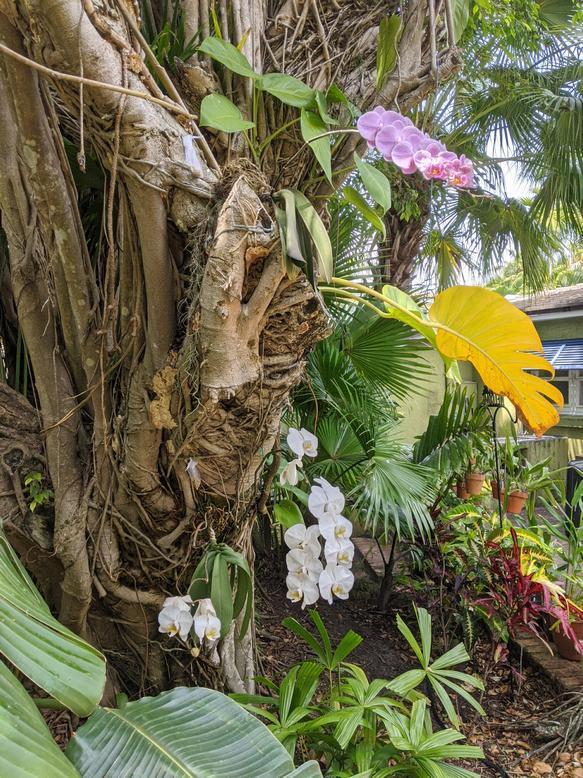
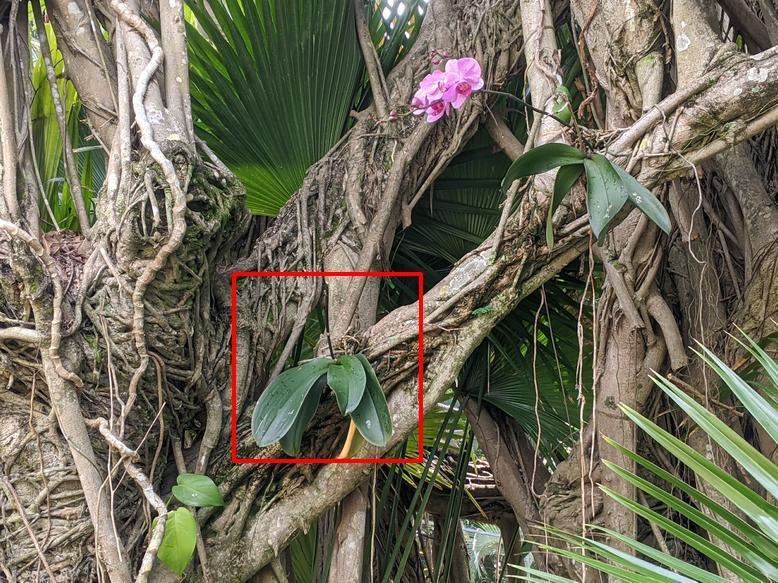
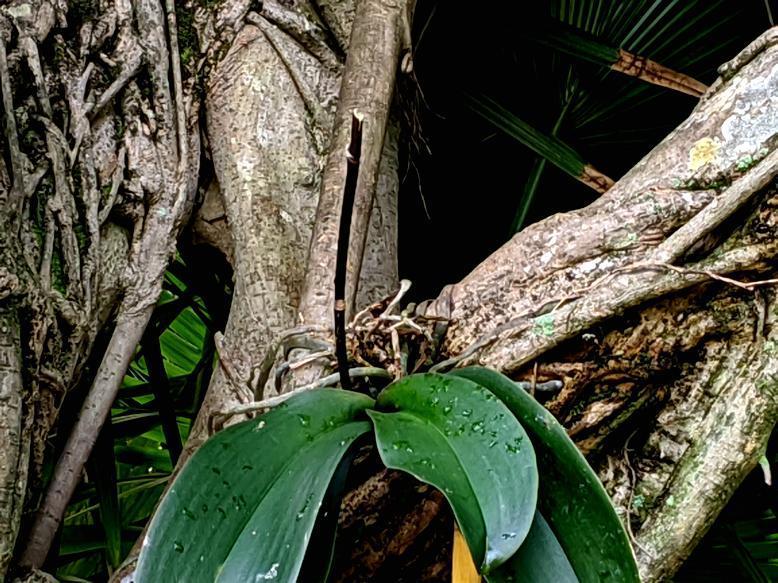
 3 points
 -
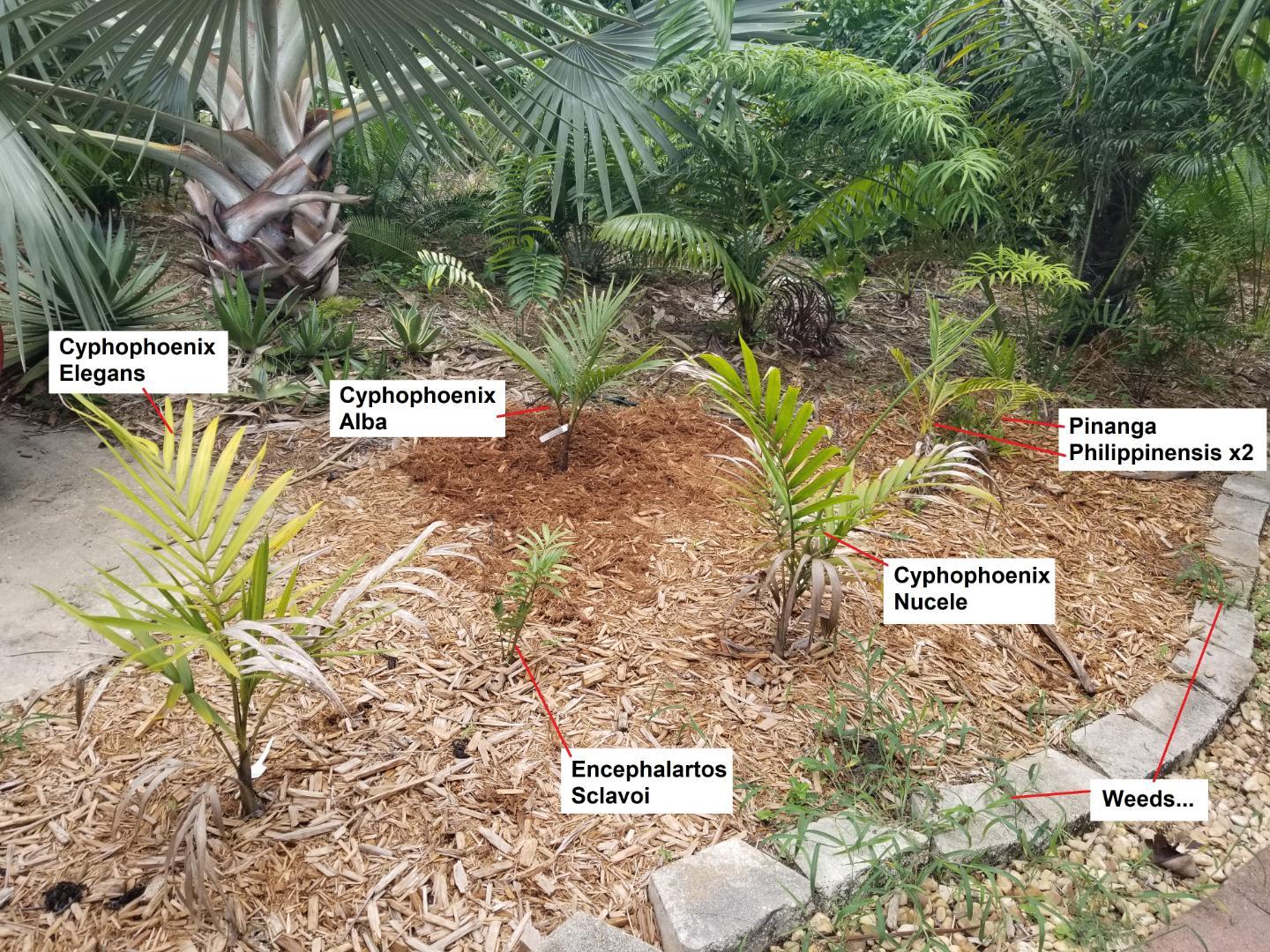
 Here's the three planted near each other. It's hard to see them among the impressive crop of hardy native and imported annuals and perennials...aka "weeds." The Nucele and Elegans were planted in late May 2024, and the Alba in August 2024. The Elegans has a big spear that's not quite visible in the photo: This is a couple of days after the Alba was planted. You can see the Elegans was struggling to acclimatize in the summer, since it was in basically full sun: And this was the day the Elegans and Nucele were planted. The Nucele was in some shade, so it didn't get burned immediately:

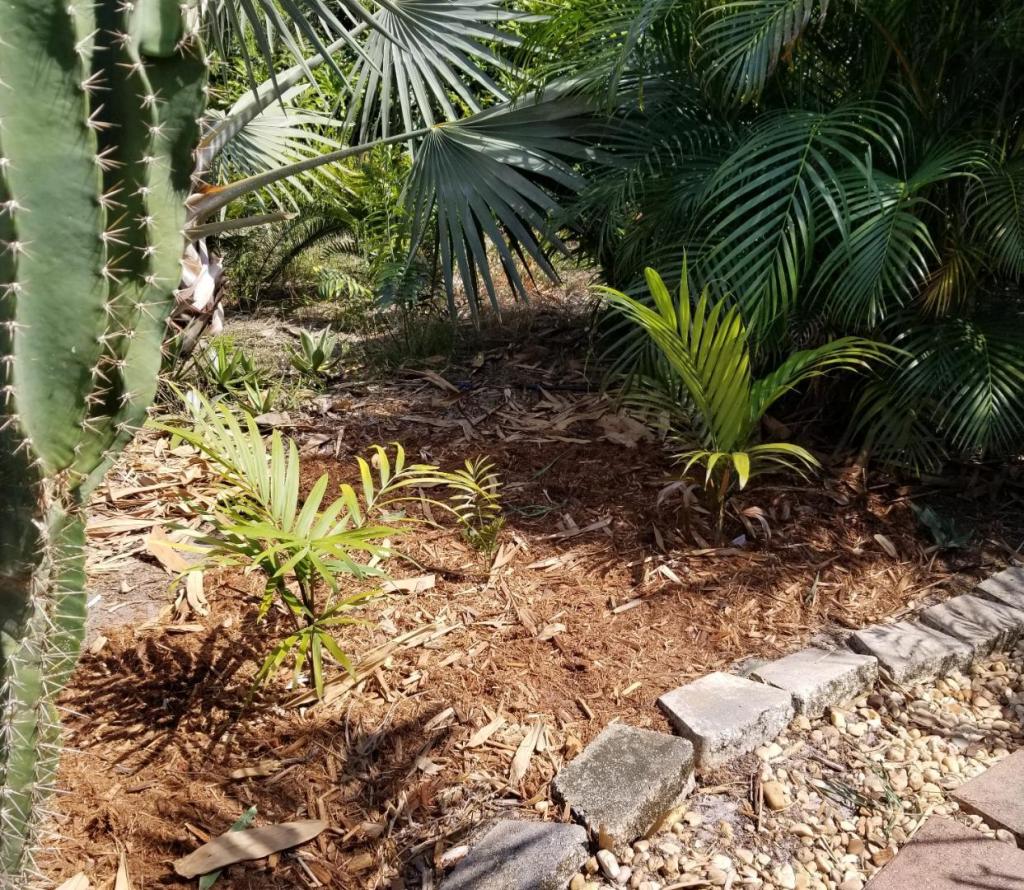 3 points
 -
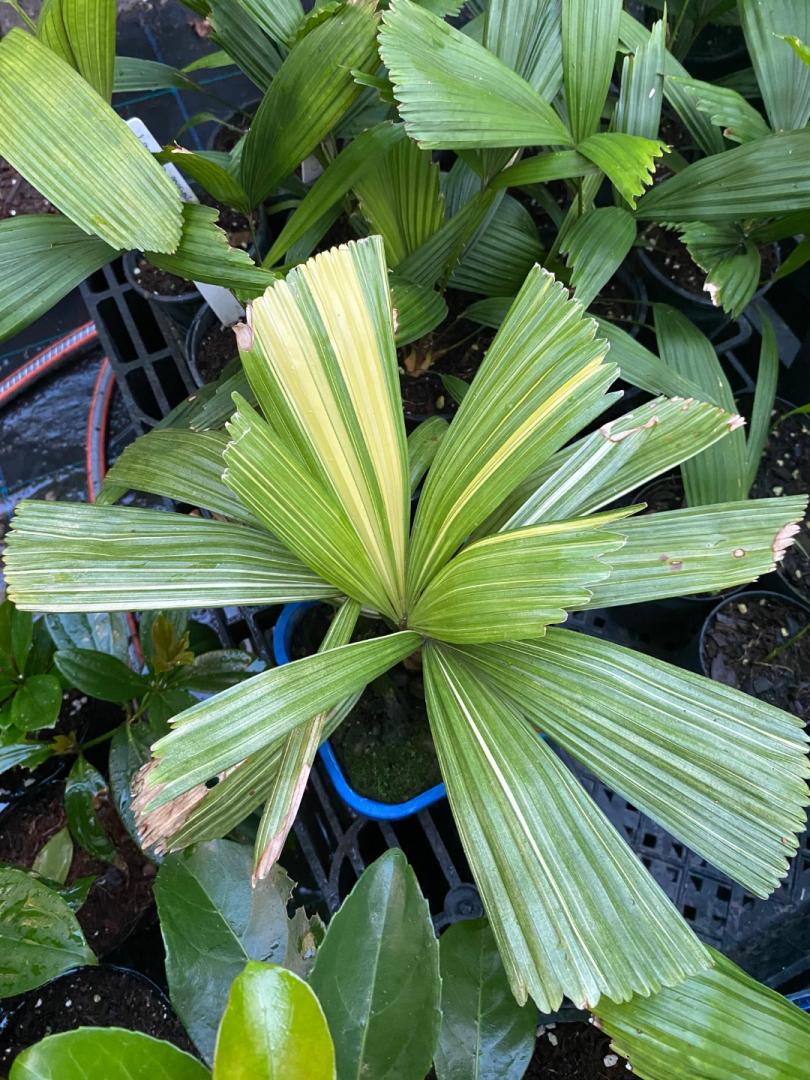
3 pointsIn the greenhouse potting up and my variegated lanonia dasyantha just said look at me as I walked past.
 3 points
 -
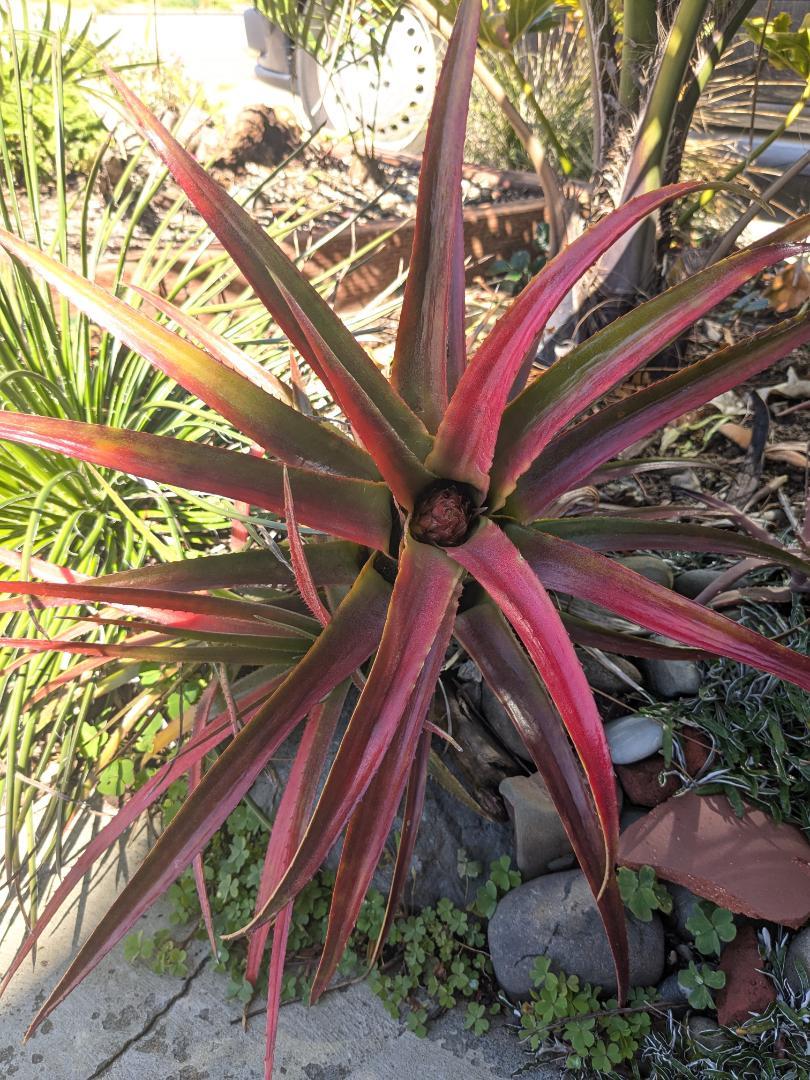
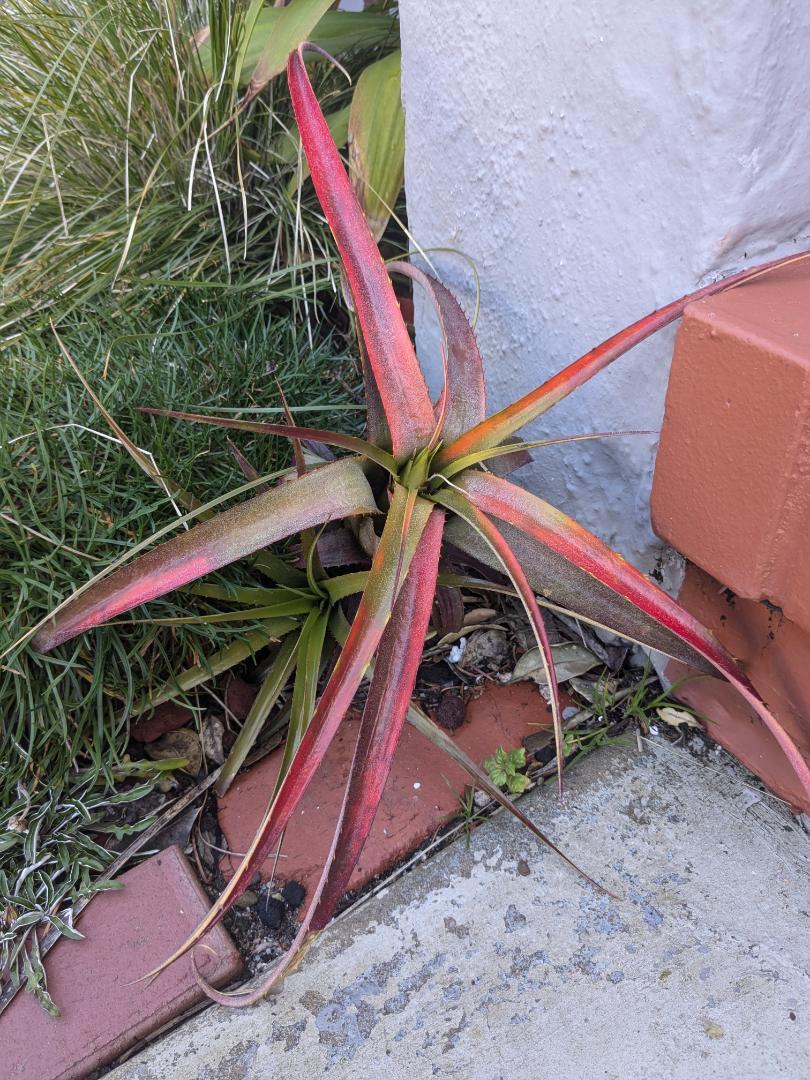
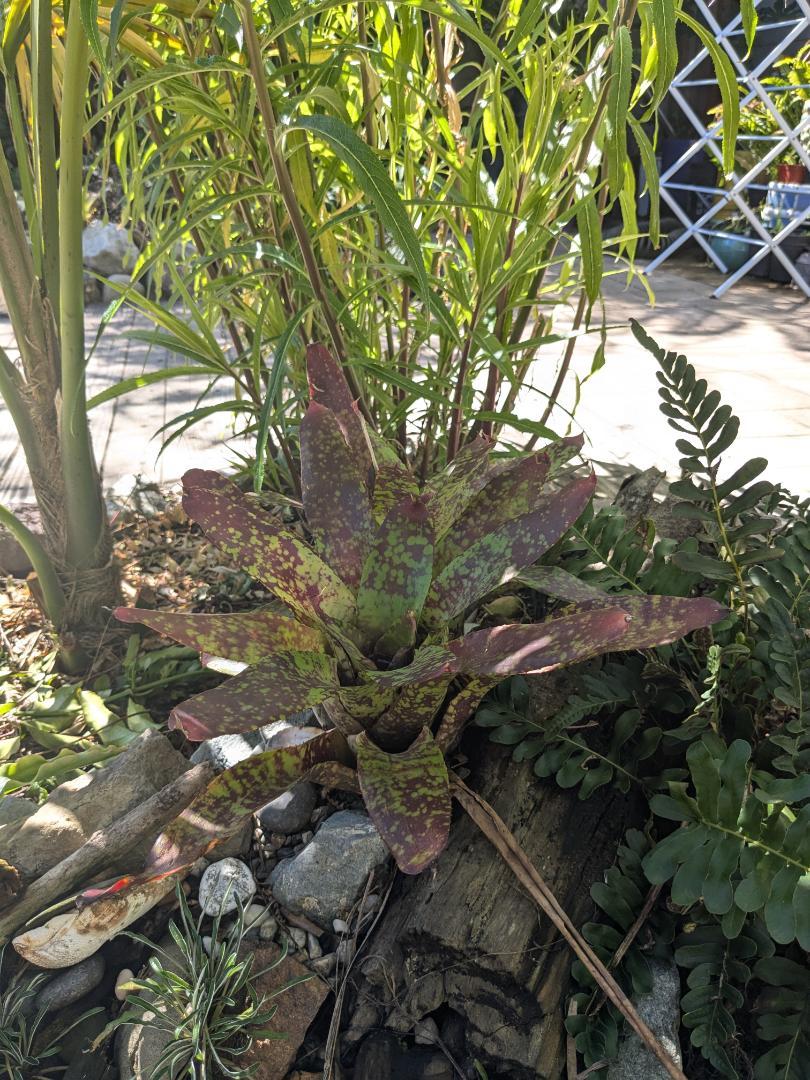
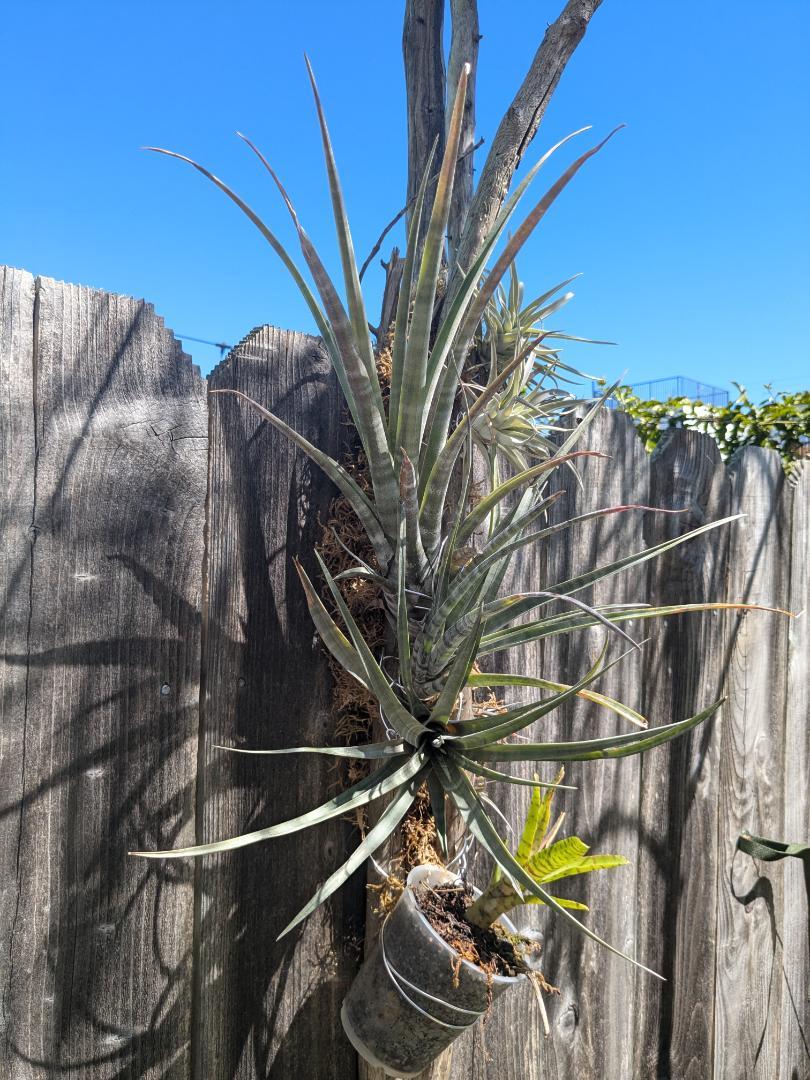
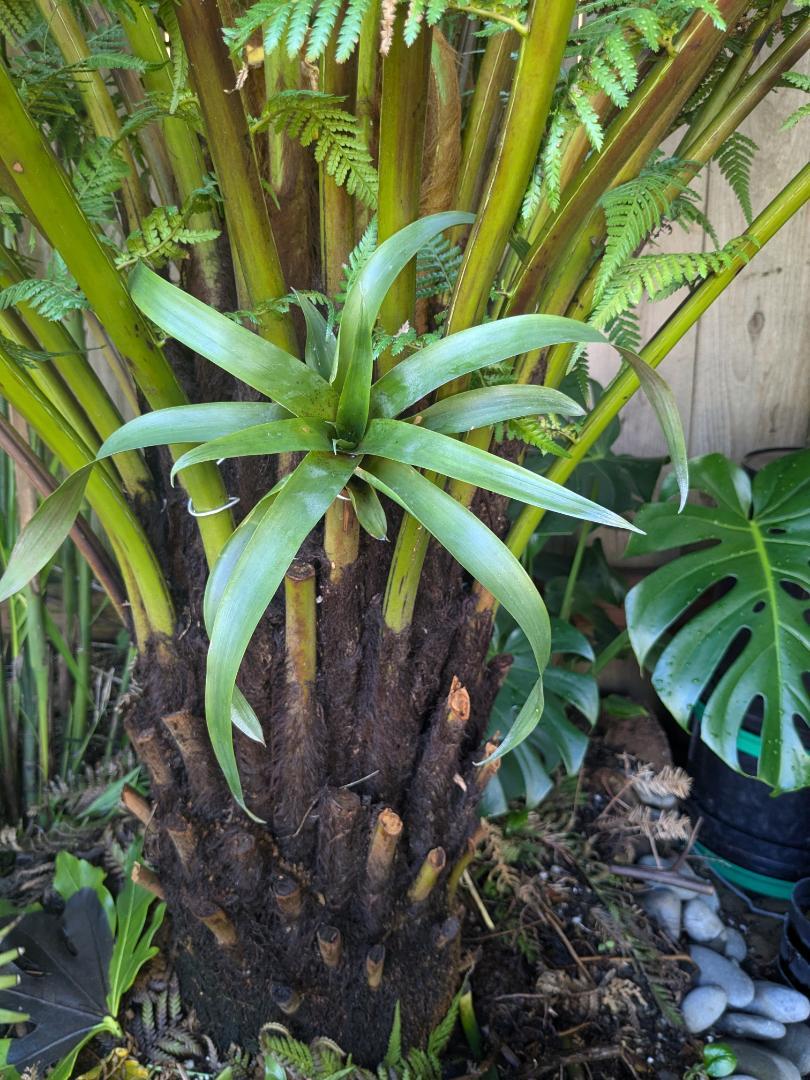
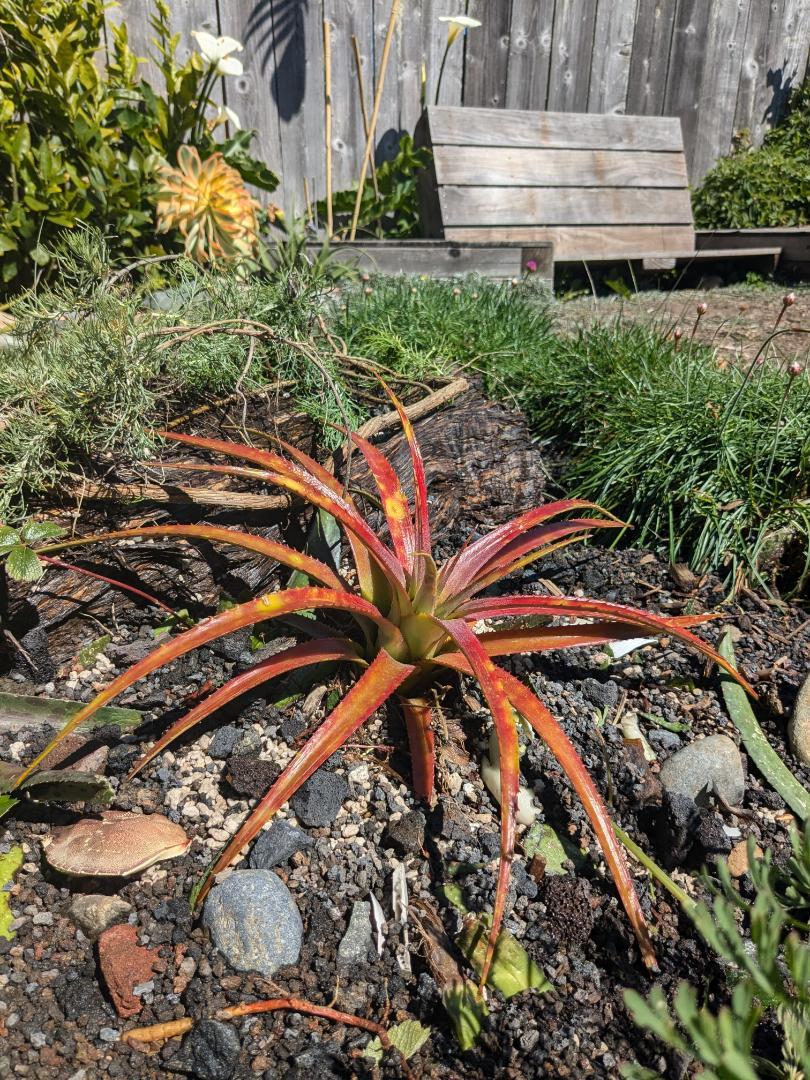
 We grow many bromeliads in our garden, including those that produce a very short flower stalk, such as any of the various forms of Aechmea recurvata. Though the flowers are more of a Violet color, the flower stalk blushes bright red (often the whole plant gets pretty red), which I think would be a beneficial adaptation to attract hummingbirds. I know for some Aechmea, hummingbirds are their primary pollinators, though I'm not sure for this species. If you have hummingbirds around, which bromeliads attract them when in flower? Do any of the "short-stalked" species deliver? Some photos below, to make things more fun. You'll notice many of our bromeliads are still immature. Neoregelia marmorata Racinae (Tillandsia) fraseri Dyckia marnier-lapostelii, very very slow to establish, but now putting out a few pups Tillandsia raackii Tillandsia hildae Puya mirabilis Tillandsia neglecta and a couple clumps of T ionantha showing a single flower Aechmea racinae Aechmea recurvata var recurvata forming a flower Same clone, but with a mottled appearance A recurvata var rubra, post-bloom, each with a single pup Same variety, this one getting ready to push what looks like a very small flower Aechmea recurvata var benrathii

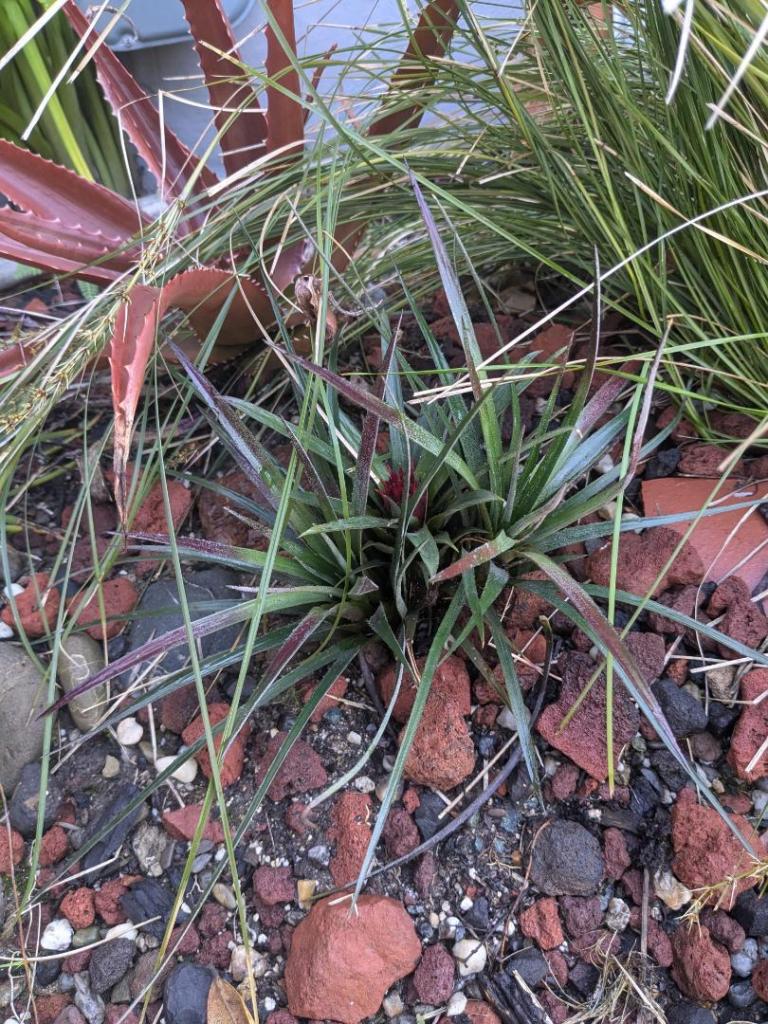


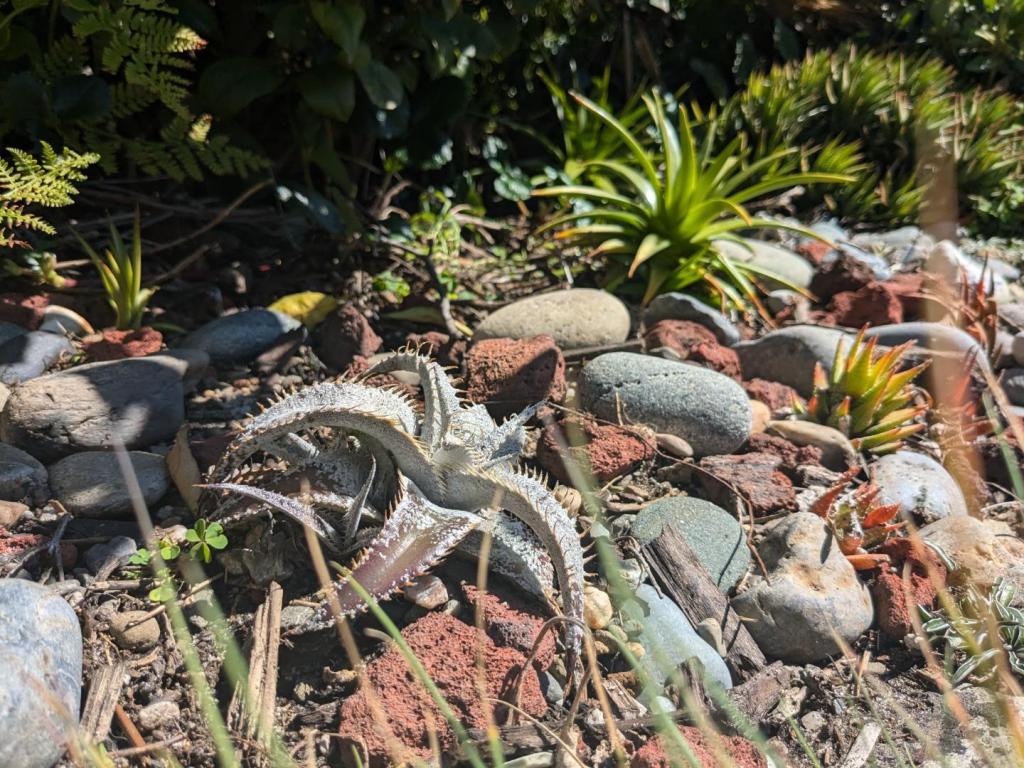

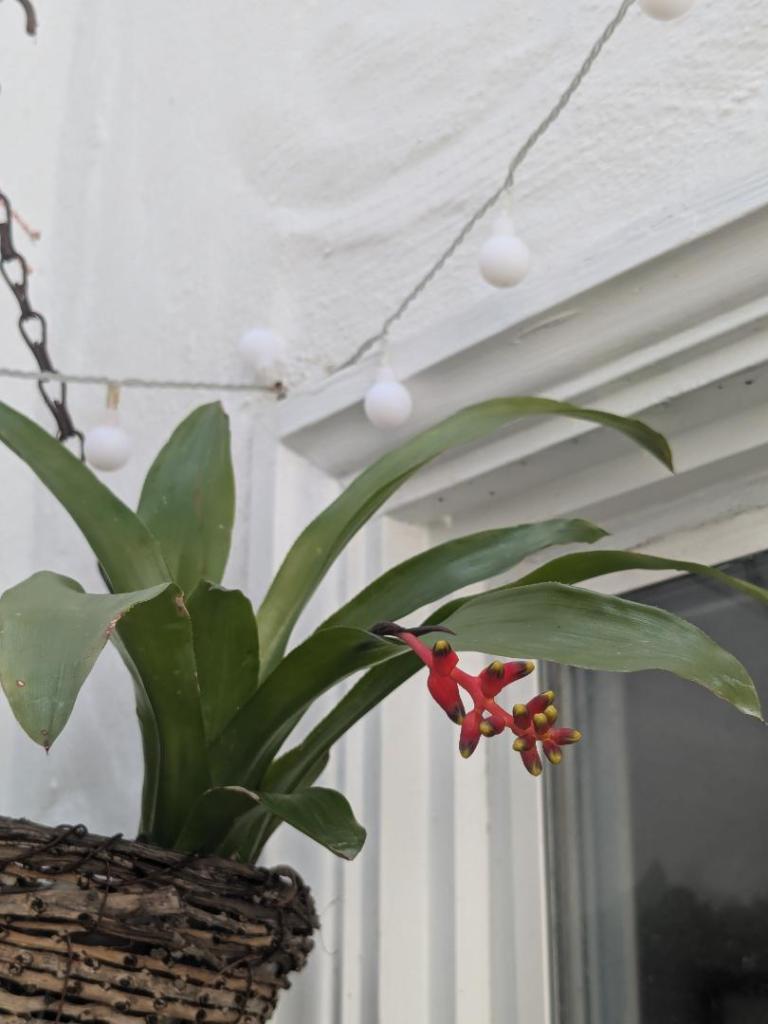
 2 points
 -
 2 points
 -
 2 pointsLooks like L decora, leaves seem too deeply split for chinensis or nitida.2 points
 -
 Still on the hunt for a REALLY weepy oni. A fellow Palmtalker was kind enough to give me seeds of his very weepy one, but I'm not great at seeds... and no action as of yet. Hopefully soon though. 🌱🤞 I did spot this possible weepy this morning though. It had no label, but looks like it might be onilahensis. It was quite expensive though, so I would only buy it if you guys can attest that it's indeed an oni, and specifically one that's "off the charts" on weepiness. Thoughts?
 2 points
 -
2 points@dimitriskedikogloy I'd guess Livistona Decora due to the deeply split fans. Nitida is somewhat similar too.2 points
-
2 pointslol. Thank you Nathan. Yes, makes it seem more worth the hassle of boxing and unboxing tropical plants in cold, blustery weather. Great to see the shows, especially seeing the amazement of the general public, who (if not plugged into the plant world as many of us are on PT) have not experienced anything like the overwhelming variety of all the bloom shapes and colors in one room!2 points
-
(200x194).thumb.jpg.25738373bf7571e51181f2f3921b2671.jpg) 2 pointsCongrats, again ..Keep it up and you're going to have a wall of ribbons by ...December.. Not that that would be a bad thing...2 points
2 pointsCongrats, again ..Keep it up and you're going to have a wall of ribbons by ...December.. Not that that would be a bad thing...2 points -
 2 pointsStrangely, the Queens actually do the best down here in terms of common landscape palms (outside of the native S. mexicana and the ubiquitous W. robusta). Despite the soil salts and the alkalinity, they appear to thrive with a lack of drainage, which keeps them looking lush and beautiful even during our droughts. The nicest queen I've ever seen in my life is about a mile up the road from me. Mules seem to do okay also, but they have problems with the brackish well water if that's how you get your irrigation.2 points
 -
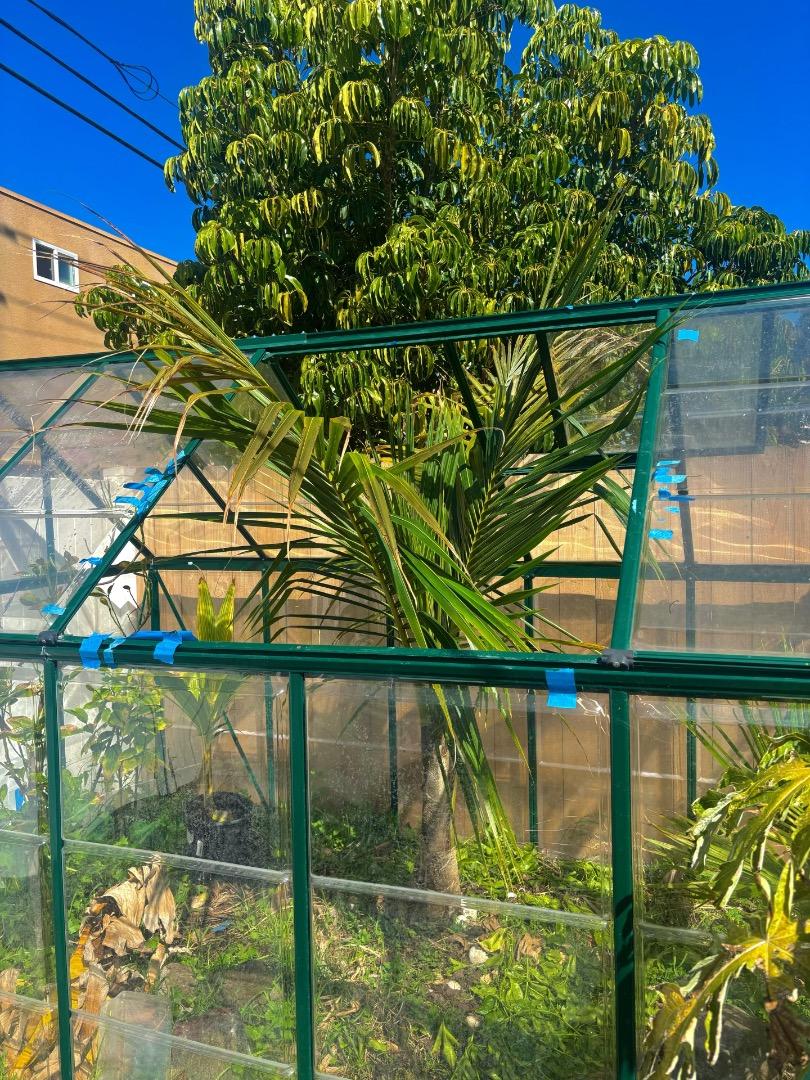
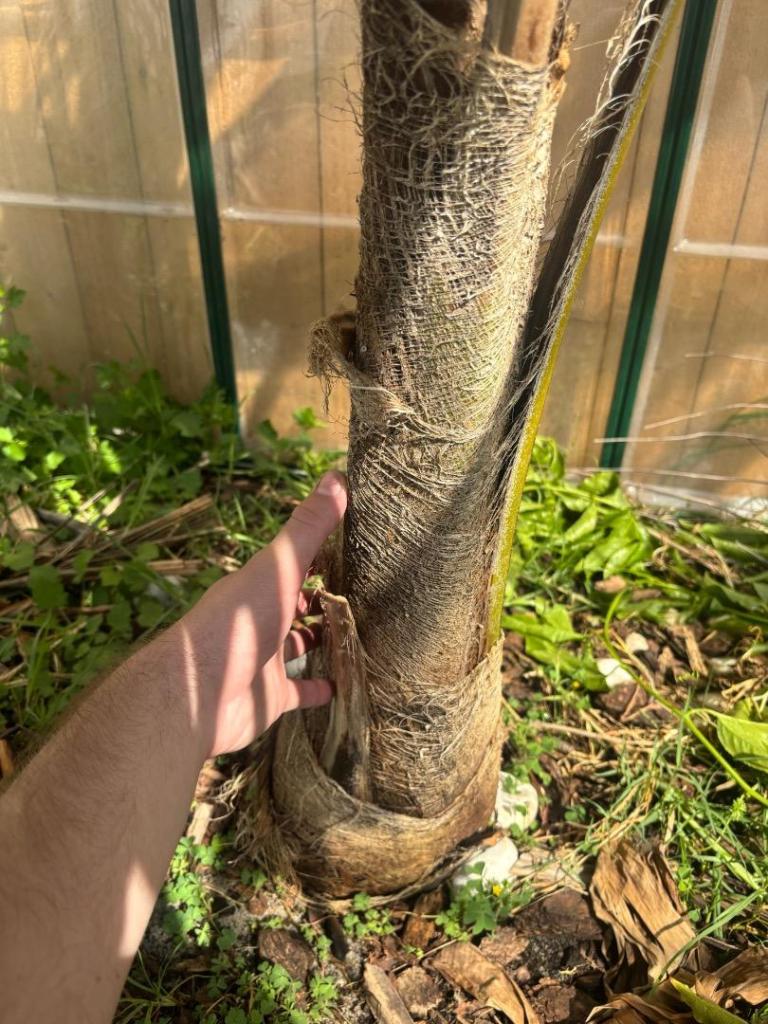
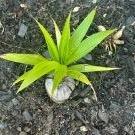 2 pointsMarch 24, 2025 update (when pictures taken) I cant remember if I mentioned it but I removed all the coconuts in the front. They weren’t looking great and I wanted the space. This coconut in the back has been growing fast as ever maybe like an inch a day on all the newer fronds. It was a very nice warm dry winter and i managed to keep the rain away from the clay soil in the back. So that structure is coming down soon. I have discovered nothing works better to keep animals away than thorny garden scraps. I don’t know if the picture captures it but it has gotten so wide and thick. Almost all of the fronds from late January died off and have been replaced. I still wonder if it was the sudden heat of the day that provoked this, or the cold from the night that provoked it. Or both maybe? It was like 80f and 45f at night more or less. Anyways it will be much more established and robust next year. This Coconut made me realize how big they are and how small my yard is haha. I really though I could fit 9 coconuts lol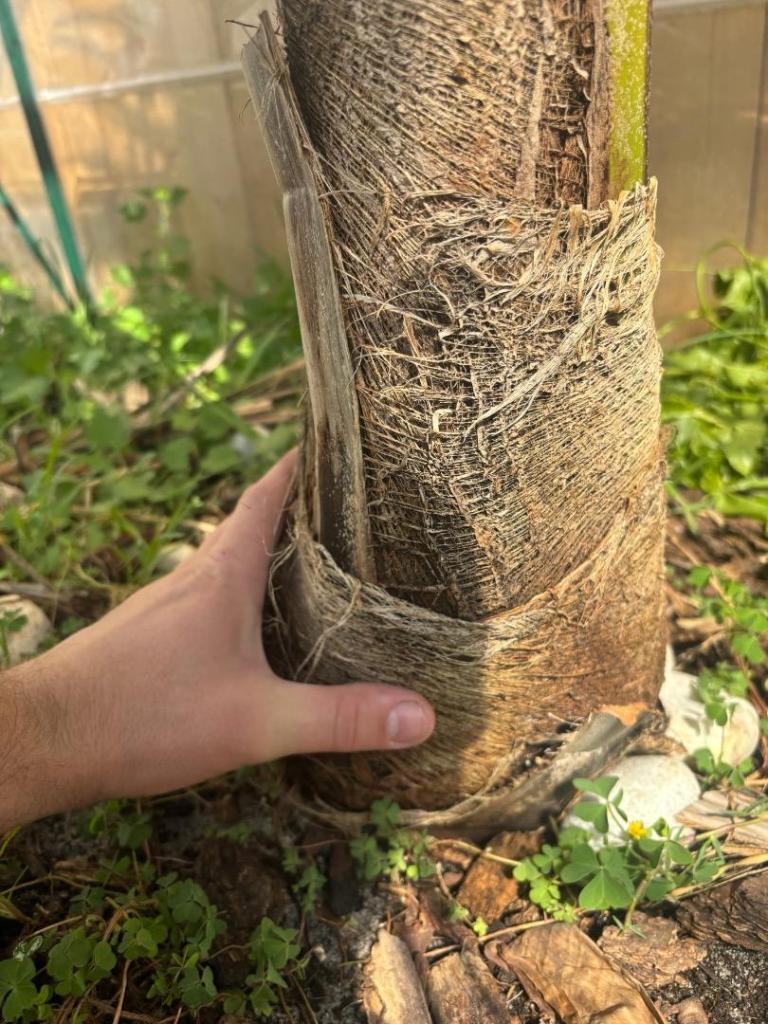
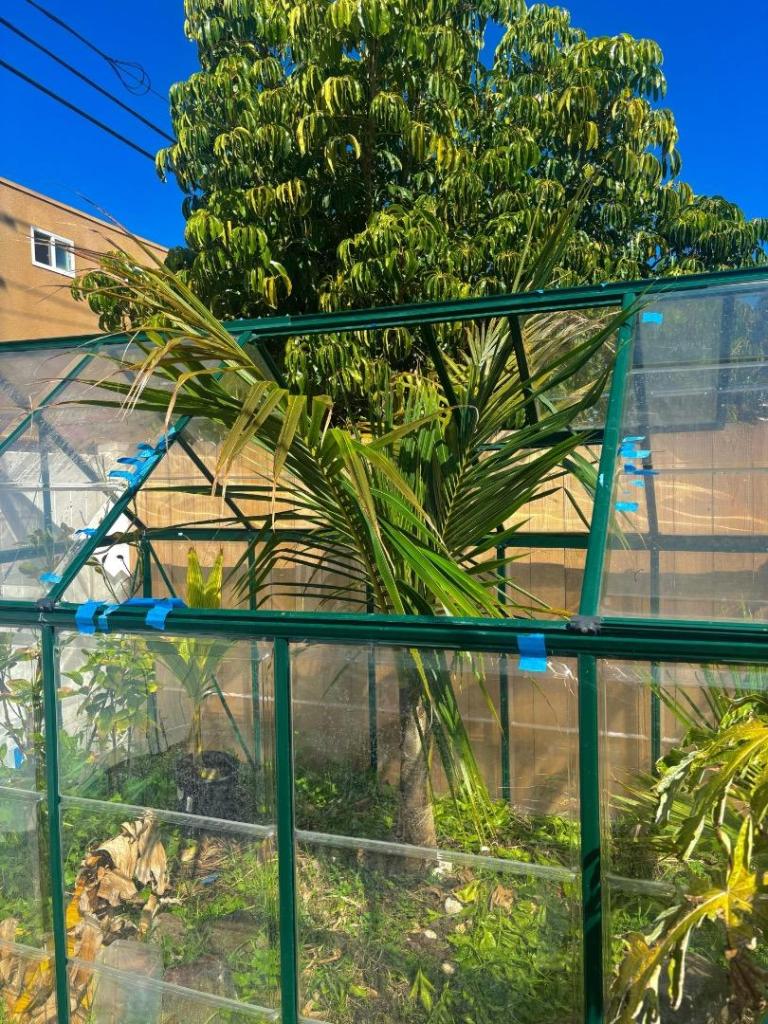
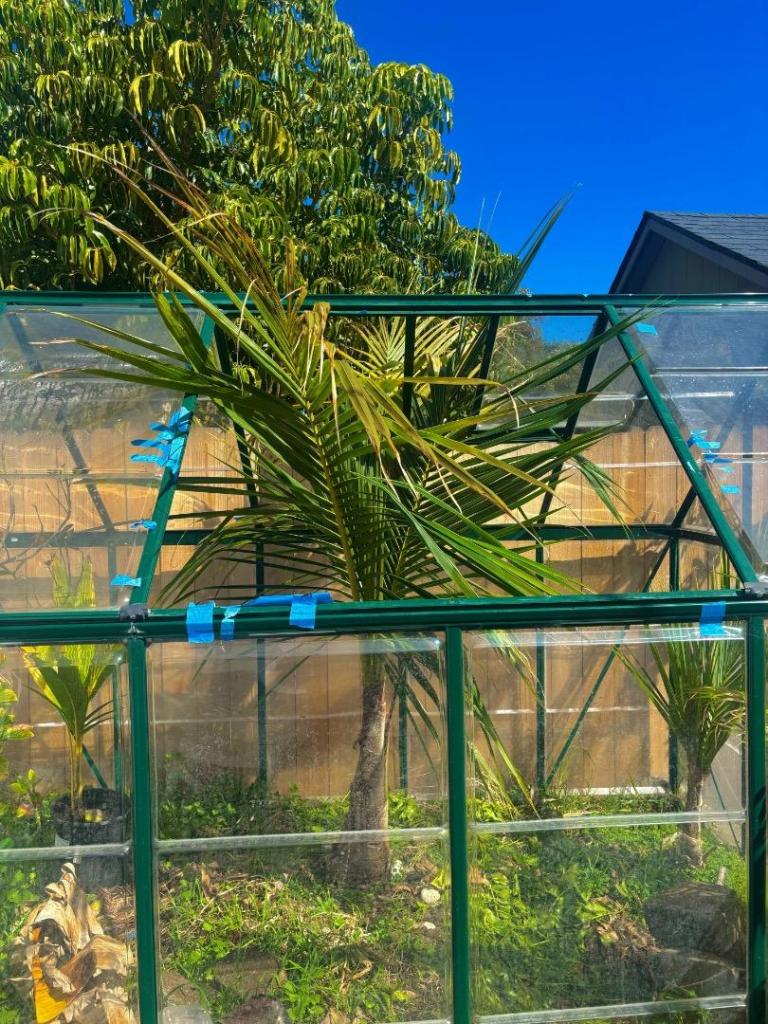 2 points
 -
 2 points
 -
Very true man! I say plant what you love but grow what works for your climate unless you just love to spend money. Inland Santa Rosa county is a different beast than going down to Navarre. If you are looking for some interesting additions that would work for Pace let me know. Also, Lowe's has no clue. Lol2 points
-
2 points
-
I’m of the mindset that the landscape should reflect the variety of plants that can grow there(comfortably). Sabal’s will always be ubiquitous in FL, I’d rather see more “interesting” palms.2 points
-
 Are you sure you don't have some sort of an infestation of bugs? Some pests can be really difficult to detect. Thrips are tiny and can hide in places really difficult to check on plants (like leaf axils). They also move and reproduce fast, and once they've surpassed critical mass in a collection it will be extremely difficult to control them let alone eradicate them. Spider mites are another example of hard-to-detect bugs. Thrips are perfectly capable of taking down 50 palm seedlings of those sizes within a short period of time, if left unchecked. And yes, I meant 50, not just 5 that you had. I am asking, because a sudden reversal in the health of a plant when the environmental and cultural conditions remain the same, is almost always some sort of a pest case. Sure, it could be the humidity too, but I feel that while humidity is important, it is more random and would affect the plants at different times, not all of them at once, like in your case. You need to inspect the plants thoroughly, hose them down in the shower just in case, and if possible treat them with some type of an insecticide (most good ones can't be used within a home, but must be used outdoors). If you are certain that you have no infestation, then placing the plants inside a humidity dome or a small indoors greenhouse will help. If it's caused by low humidity, the greenhouse will solve it. Also a note, 66 F is cold for tropical plants. (For comparison, when temperatures fall that low in my house, I am 24/7 inside my insulated sleeping bag designed for 10F!). It may seem odd to some, but while temperatures remain that low, the plants need less watering. However, having said that, if your soil is very well-draining (as it should be), it shouldn't cause catastrophic failure. Thus, I suspect some pest the most.2 points
 -
 2 points
 -
2 pointsStarting to skin my filiferas.. which I'm having a tough time trying to find the motivation..😳.. need to do a yard clean up as well.. just that little bit filled my trash can.. so now the current plan is to fill my truck up for a dump run..
 2 points
 -
 2 pointsRR Lowe's had a couple pallets of aspen last week. Might want to hurry tho!2 points
 -
2 points
-
 2 points
 -
 Thanks for sharing. The courtyard at the Hotel Pd Leon is itself beautiful. Behind the visitor center are a couple big Mediterranean fan palms. Walking south near the Columbiana restaurant, there's some A.engleri. At the south end of town I found C.alba planted at a house. A few years back there were even some crownshaft palms, but maybe with marginal winters they're gone.2 points
 -
 a neighbor across the street always has a visit from a crow on his large balcony. he takes the tree nuts from a nearby tree in his beak, hops up onto the neighbor's roof and then drops the tree nut onto the concrete floor of the balcony. he does this until the shell of the nut cracks and then he opens it with his beak and eats the whole nut. we had seen this happen several times before. the other crows watched and later tried it too. these birds are extremely intelligent. i absolutely trust them to clean the seeds. great job.2 points
 -
It could be P elegans which is native to the Cairns area, so not a 'weed' as such. Seem to remember seeing them growing wild along the Barron River.2 points
-
From what I have read from people on here, it seems that straight Parajubaea don't like that climate. Pretty sure they need drier conditions and a bit of a cool down at night. However I have two Butia x Parajubaea sunkha hybrids that are supposed to be more humidity tolerant. I have them in pots and they are doing well, but once in the ground I'm not sure how hardy they ultimately will be. They both do not look the same which is interesting.2 points
-
 Sabal minor in the yellow pot, 2023 Aug - 2024 Sep
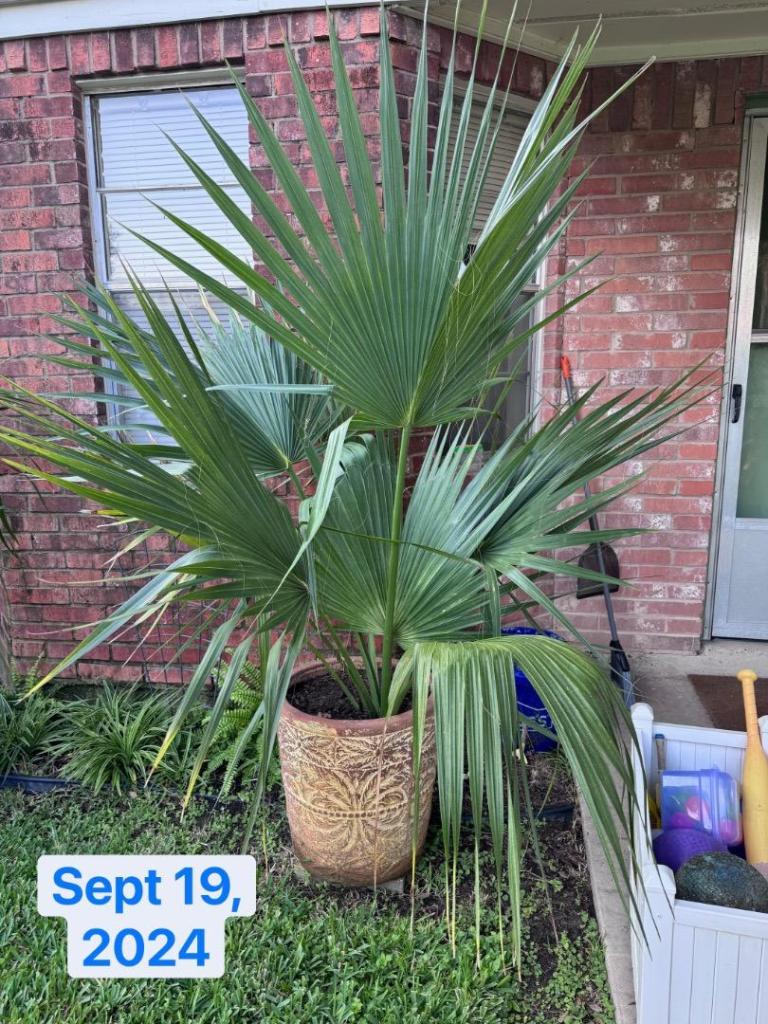 2 points
 -
 2 points
 -
 2 pointsThis Cyphophoenix elegans (or possibly a hybrid with nucele) frond caught my eye before sunrise this morning.
 2 points
 -
 2 pointsMother nature made 2 for me on her own. I collected and grew a batch of seeds myself from the one blue Jubaea at Mission Beach, California and ended up with two J x S hybrids out of about 60 plants. Sometimes,you just get lucky... 🤷♂️ aztropic Mesa, Arizona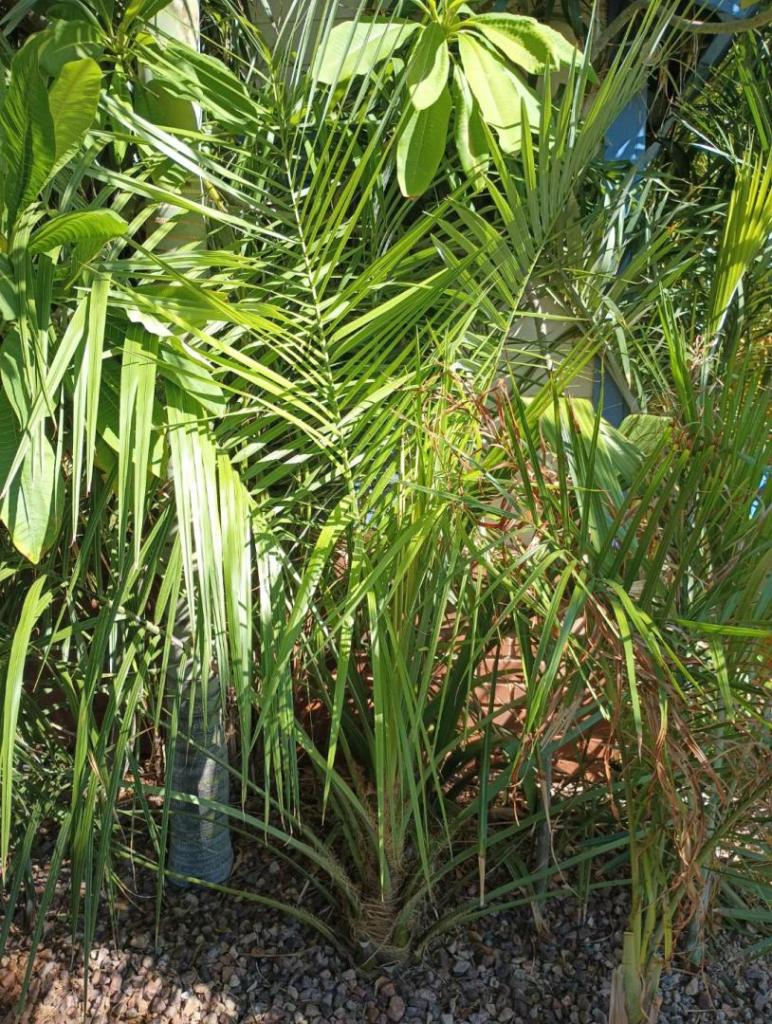
 2 points
 -
 @Zone7Bpalmguy did you get yours from Eureka farms per chance? I ordered a silver from there and just planted it. I have a silver and a green so I can compare them year to year.1 point
 -
1 pointCongratulations! I've wondered the same thing - I've been here 3 years and haven't seen one yet. Shade is probably a good idea for them.1 point