Leaderboard


Popular Content
Showing content with the highest reputation on 12/06/2023 in all areas
-
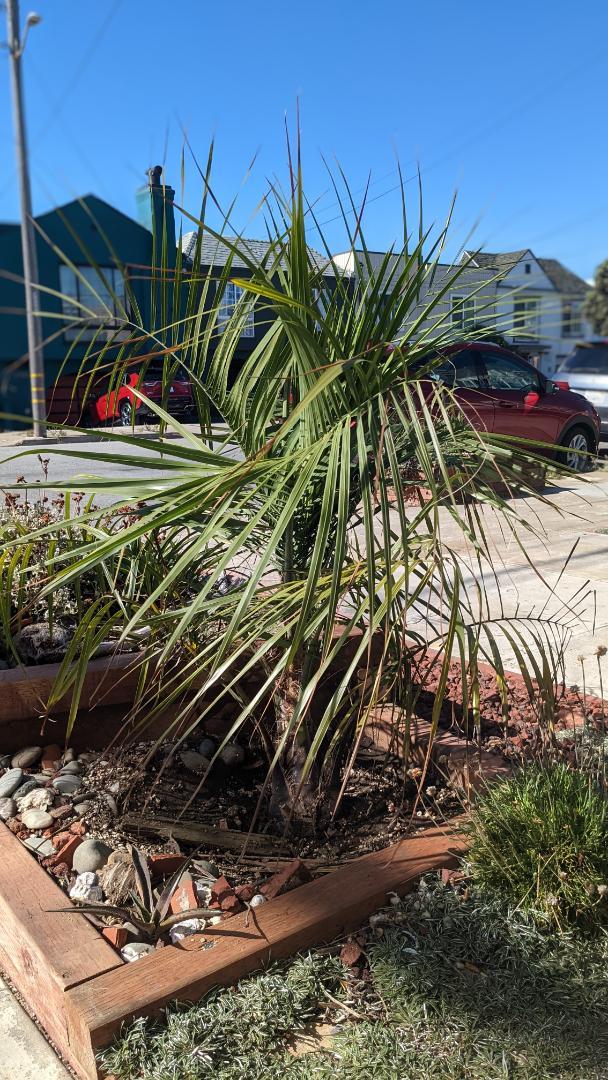
Here’s my big Syagrus p out in front of my place in the glorious sunshine of late fall. Looks a lot like a queen palm, but pale trunk, thicker leaves just gorgeous reminds me of my misspent yute Show us yours or similar Syagrus!
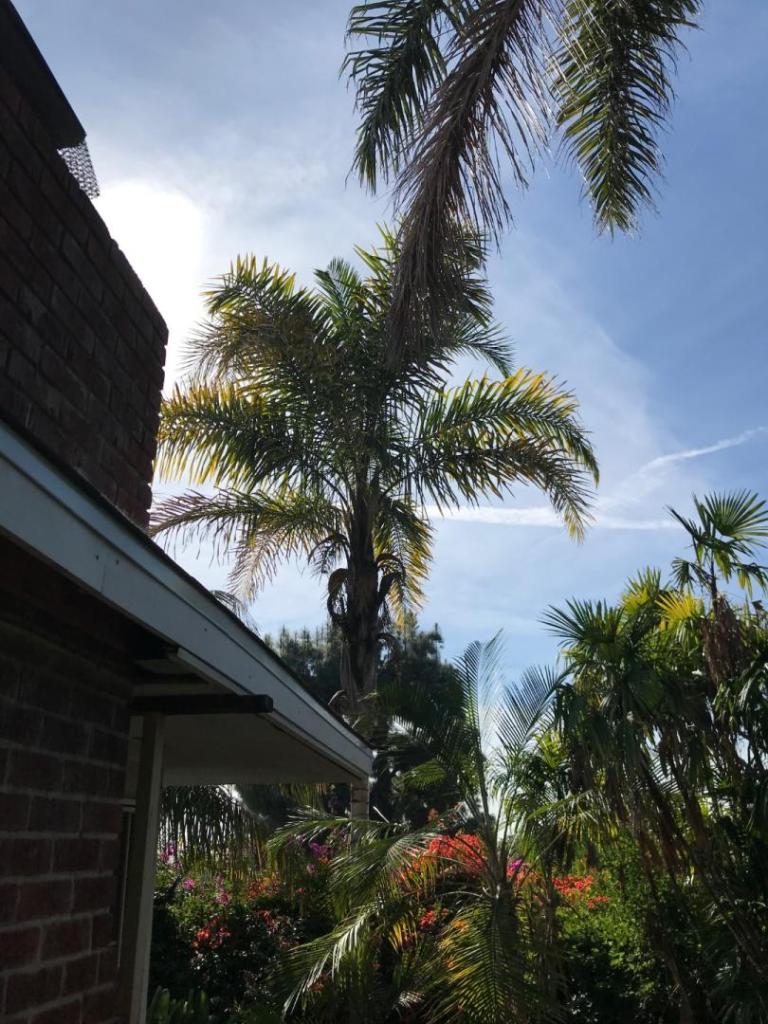 7 points
 -
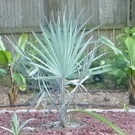
I don't like it when I see temperatures below 24F since my Washy starts showing damage below that temperature , but on the morning of November 30th I had a short period at 21F . I was 25F at about 5:00am and then the winds died and it dropped to 21F for an hour or so before moving back up . I'm pleased to know that that Washy can take a quick dip to 21F and still look respectable . Before below 24F : It's good to know that it doesn't get totally bronzed out by a SHORT period below 24F . Maybe I'll get into January with it looking respectable now that it got through the first cold snap :

 6 points
 -
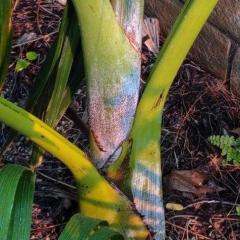
One of the germinated seeds of euterpe edulis orange crownshaft. Already from this stage it wants to show some colour.
 5 points
 -
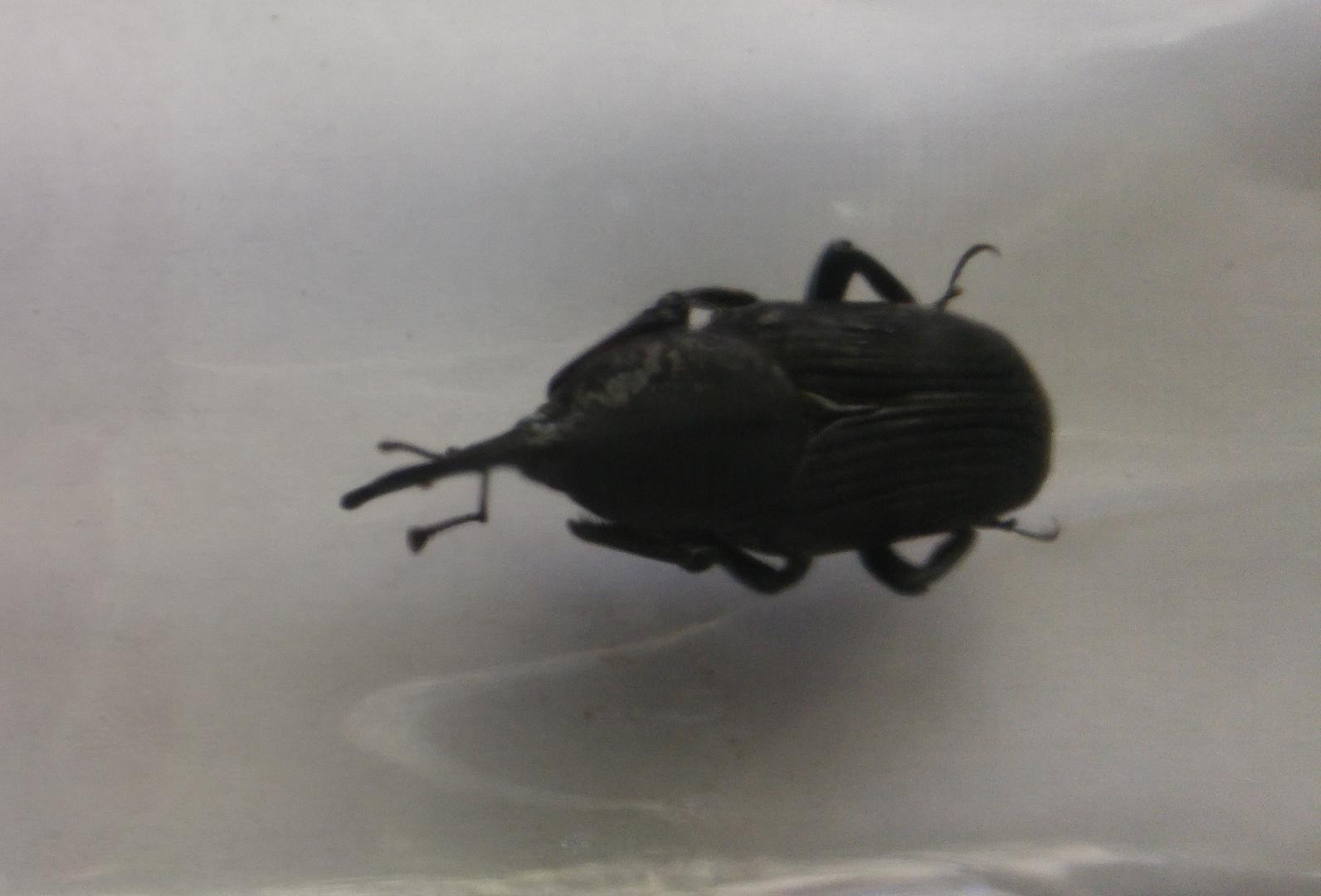
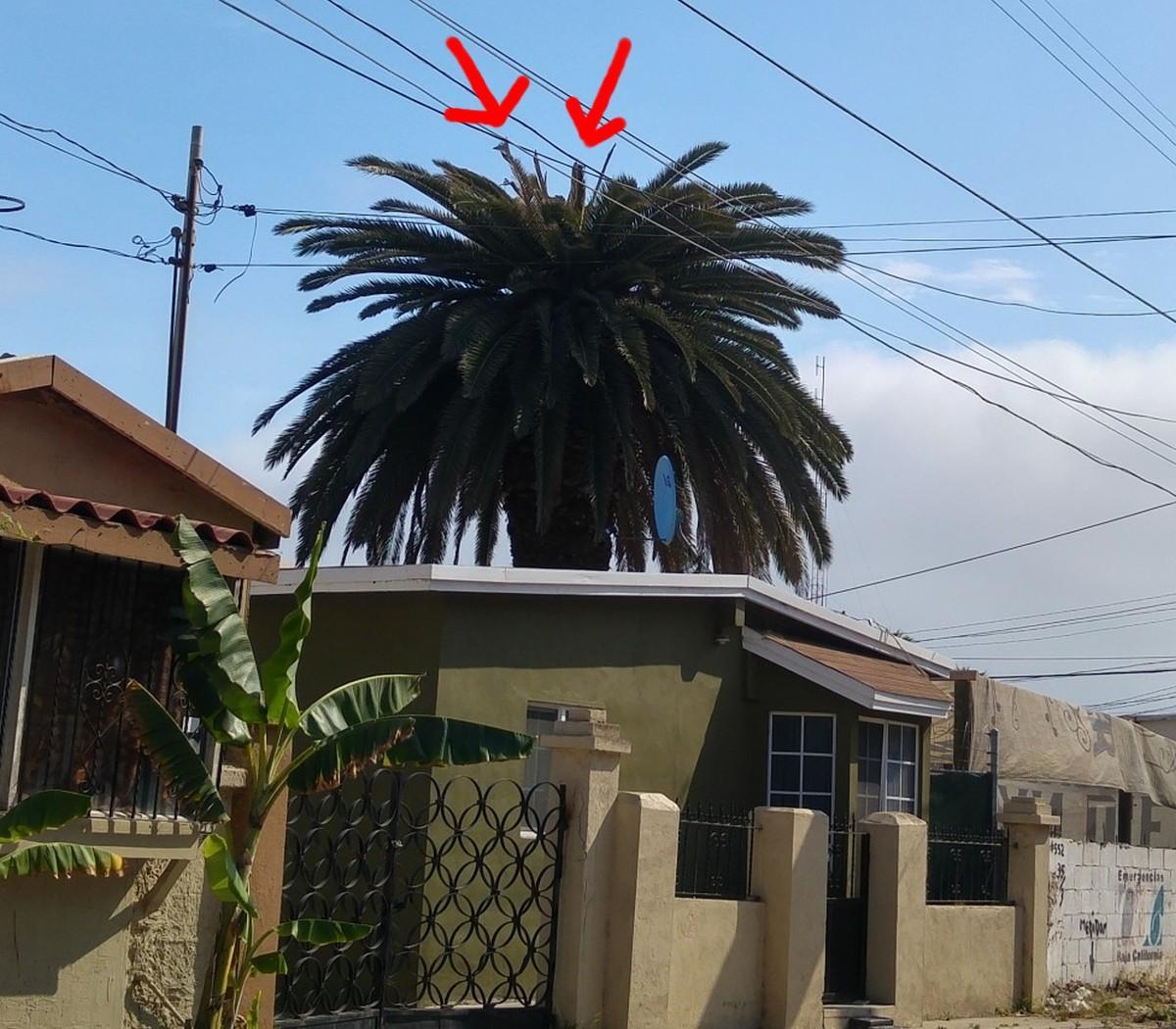
The palm in the first foto in this post is already dead, it will not recover even if you put on it today insecticide. The crown is full of the weevils. These fotos I am attaching are to help people identify the cocoons and the weevil. You will find them on the ground under or by the palm. If you have a CIDP and are watching it to see for infection, pay attention to the fronds on the top of the crown. If you see that the youngest fronds on the top appear eaten, as you can see in the foto with the red arrows, then it is probably infected with the weevils. This is the first evidence you may see of infection.


 5 points
 -
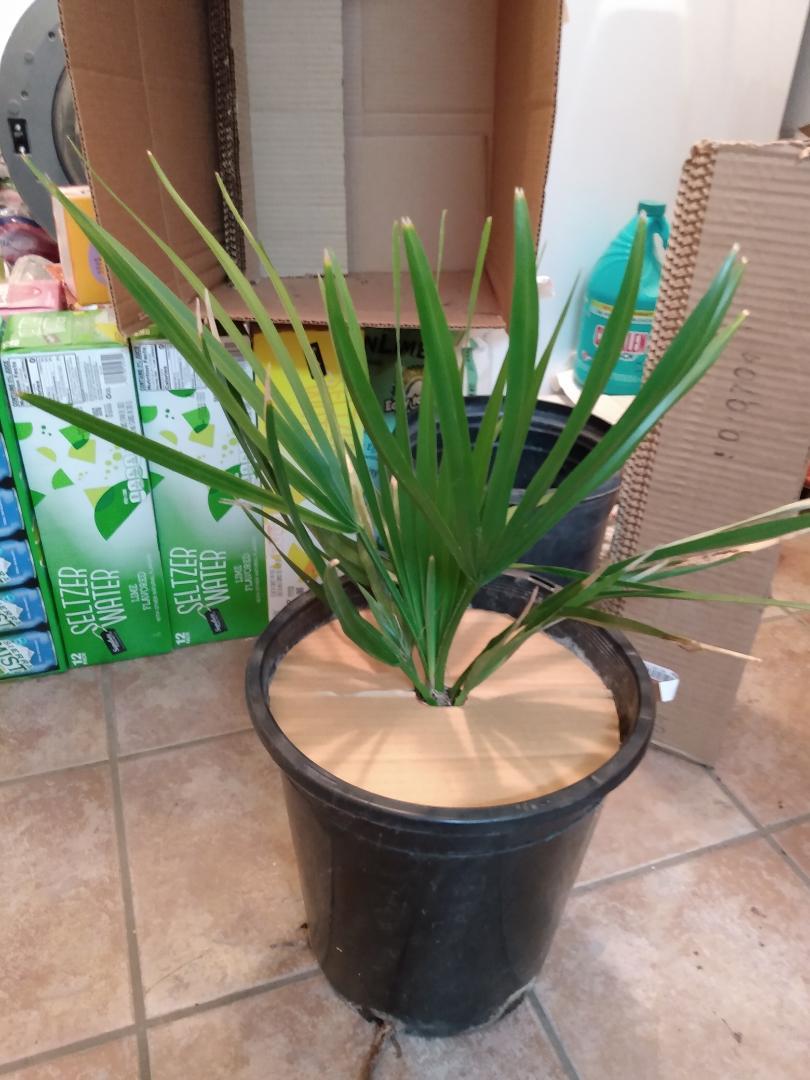
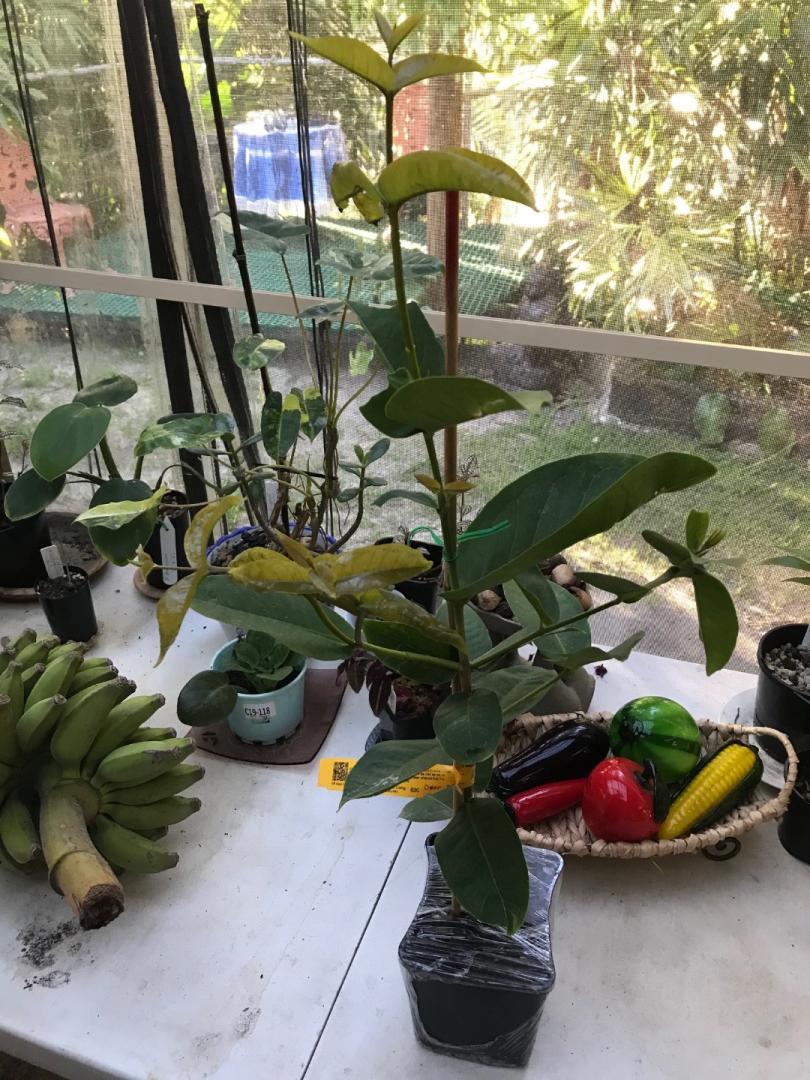
I purchased this plant for my wife as a Xmas gift 💝

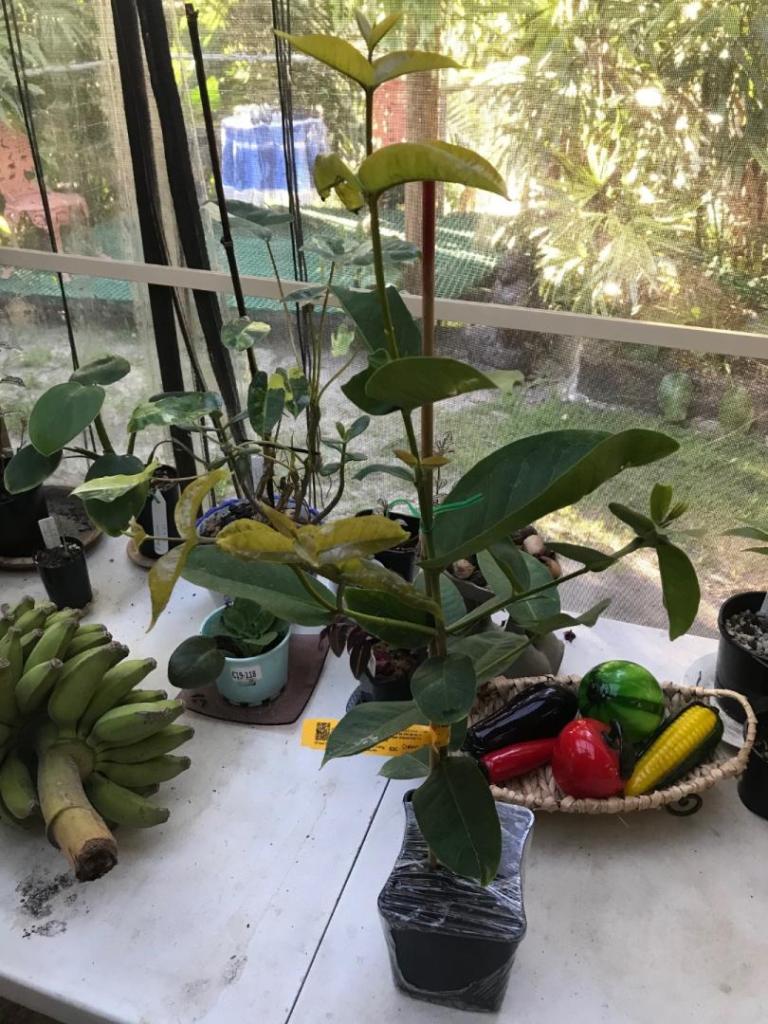 4 points
 -
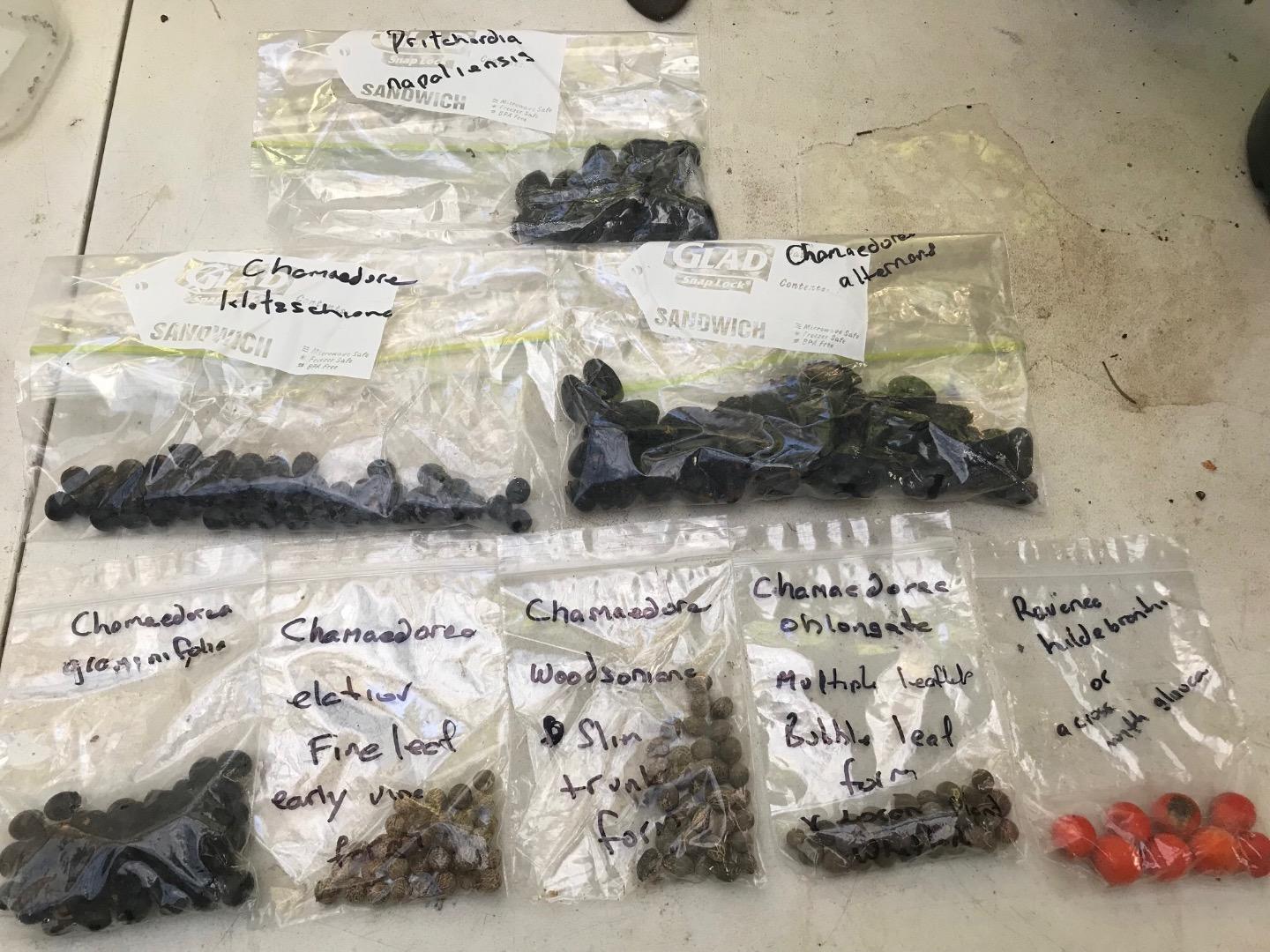
I was gifted these seeds and iam very appreciative of that gift they shall be well looked after and planted in individual groups of varieties for future seed production and i will donate some to my local botanical garden in Coffs Harbour a nice subtropical coastal garden for future generations to admire
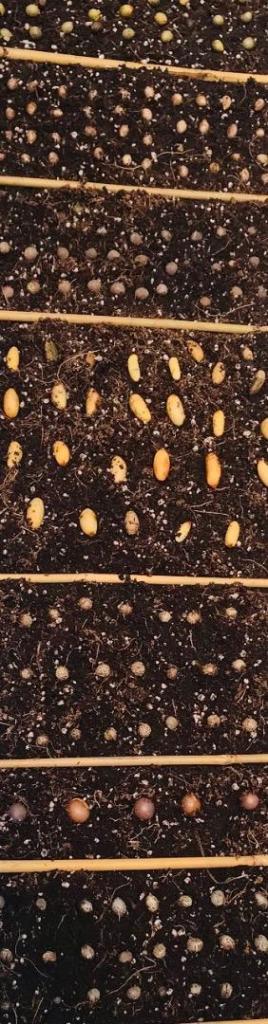
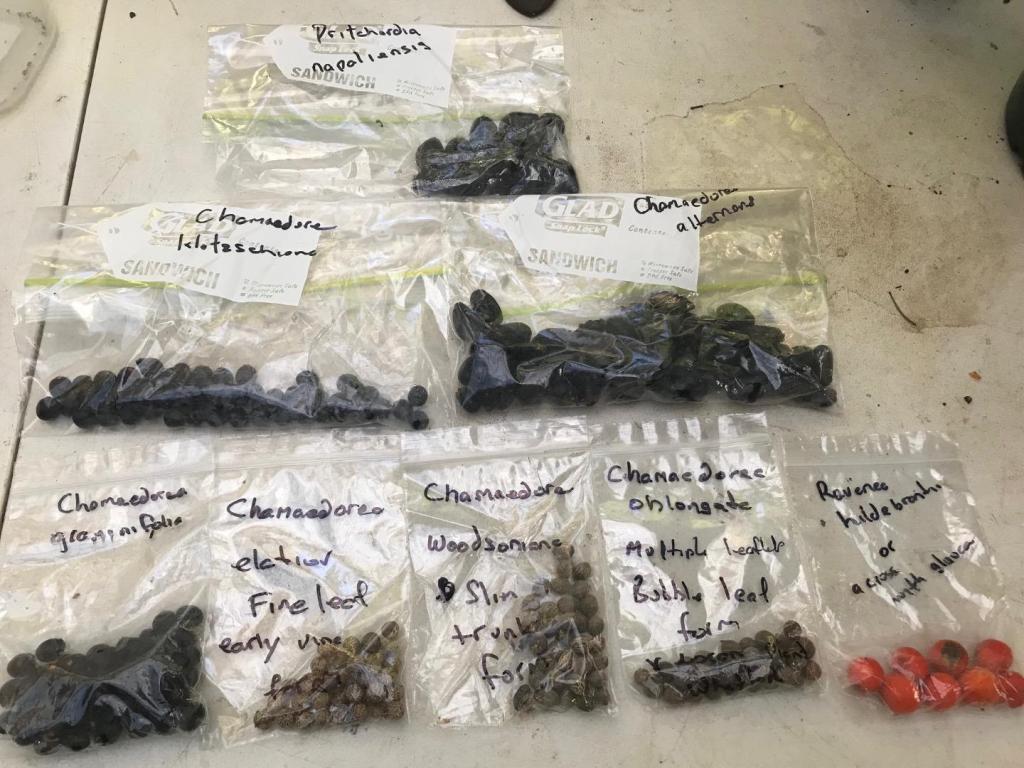 4 points
 -
From what I’ve heard from ‘Matt-N-Dallas’ and Joe at the now defunct NTCHP nursery Brahea ‘Super Silver’ is only hardy to 8-12°F depending on duration, moisture, location etc. It’s green for a number of years before shifting to silver and is just as slow or slower than the silver-blue Sabal uresana. Sabal uresana varies from grey-green for the coastal form to silver-blue in highlands form. Leaf hardiness varies with the silver-blue form barely getting tip burn from 6°F and 5 days straight below freezing in 2021. None of them died at John Fairey Garden. The grey green form completely burned elsewhere from similar temperatures. It seemed like they recovered but according to ‘Collector Palms’ he knew of some that died. I can’t verify that. Brahea armata and decumbens are just as silver and took low single digits(F°) and mostly came back Nannorrhops ritchiana can be just as silver, burned and lost portions of its trunks but recovered at John Fairey Garden and elsewhere. Before pictures at John Fairey Garden:Nannorrhops ritchiana:AFTER: Nannorrhops ritchiana:


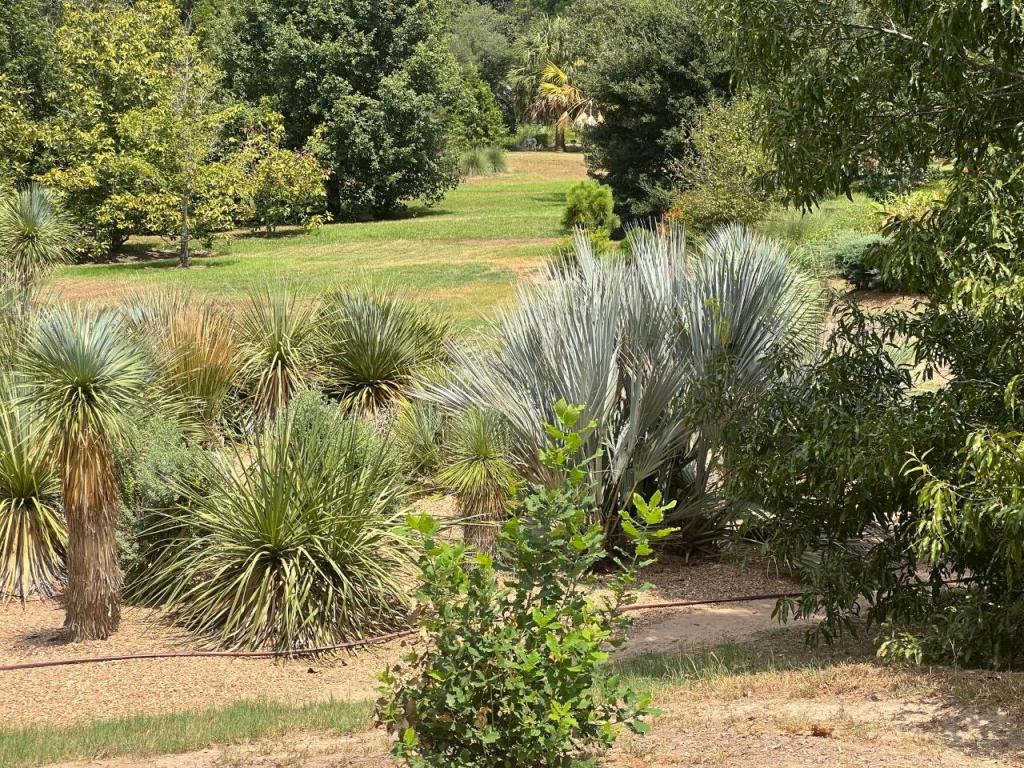

 4 points
 -
This Pinanga frequently catches me eye, sometimes both eyes.

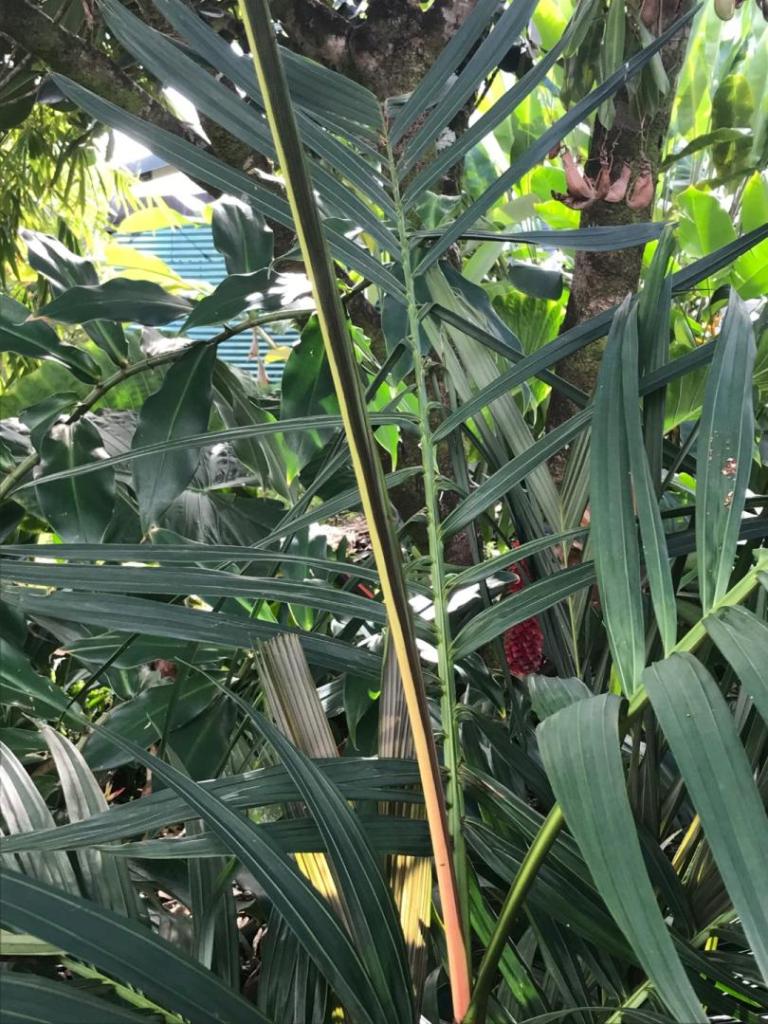 4 points
 -
I have them both as well but can't give much feedback on their growth. I would give a slight preference to the look of the super silver. I bought mine as a 5-gal in 2021 and it has not shown much growth yet. It's still green at this stage. Below is a thread with some awesome pics including the largest one that I have seen belonging to @Stevetoad. My silver uresana is a strap-leaf seedling that came from John Fairey Gardens (formerly Peckerwood) via @Meangreen94z - thanks Daniel! Here's some pics of those uresana:4 points
-
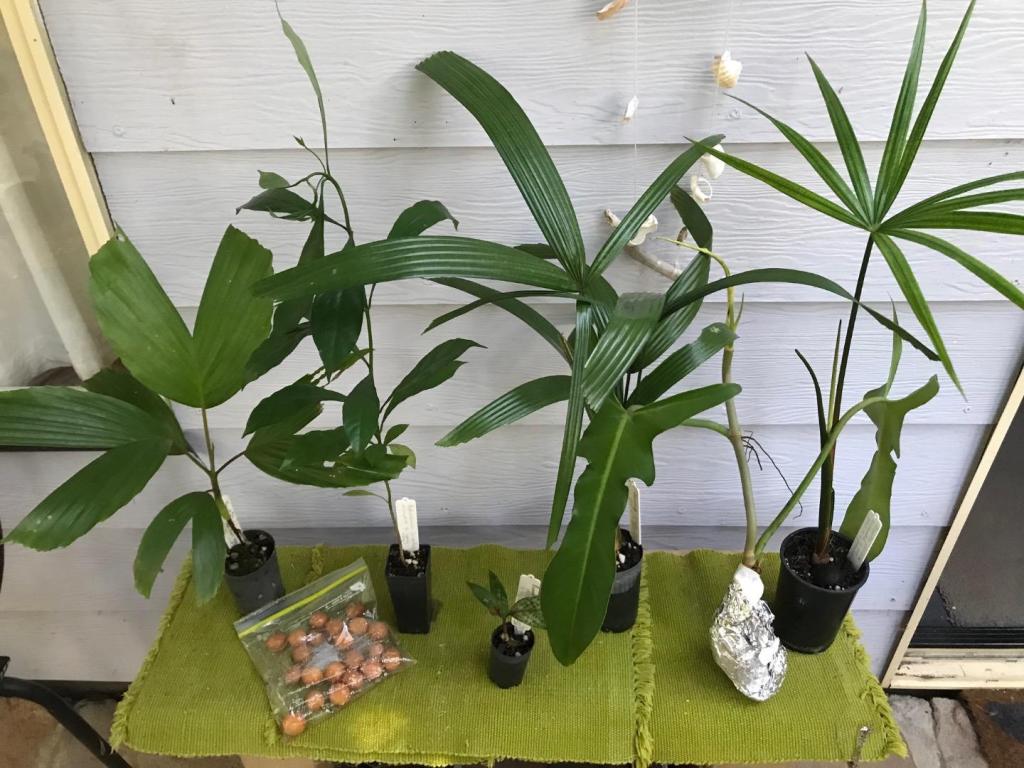
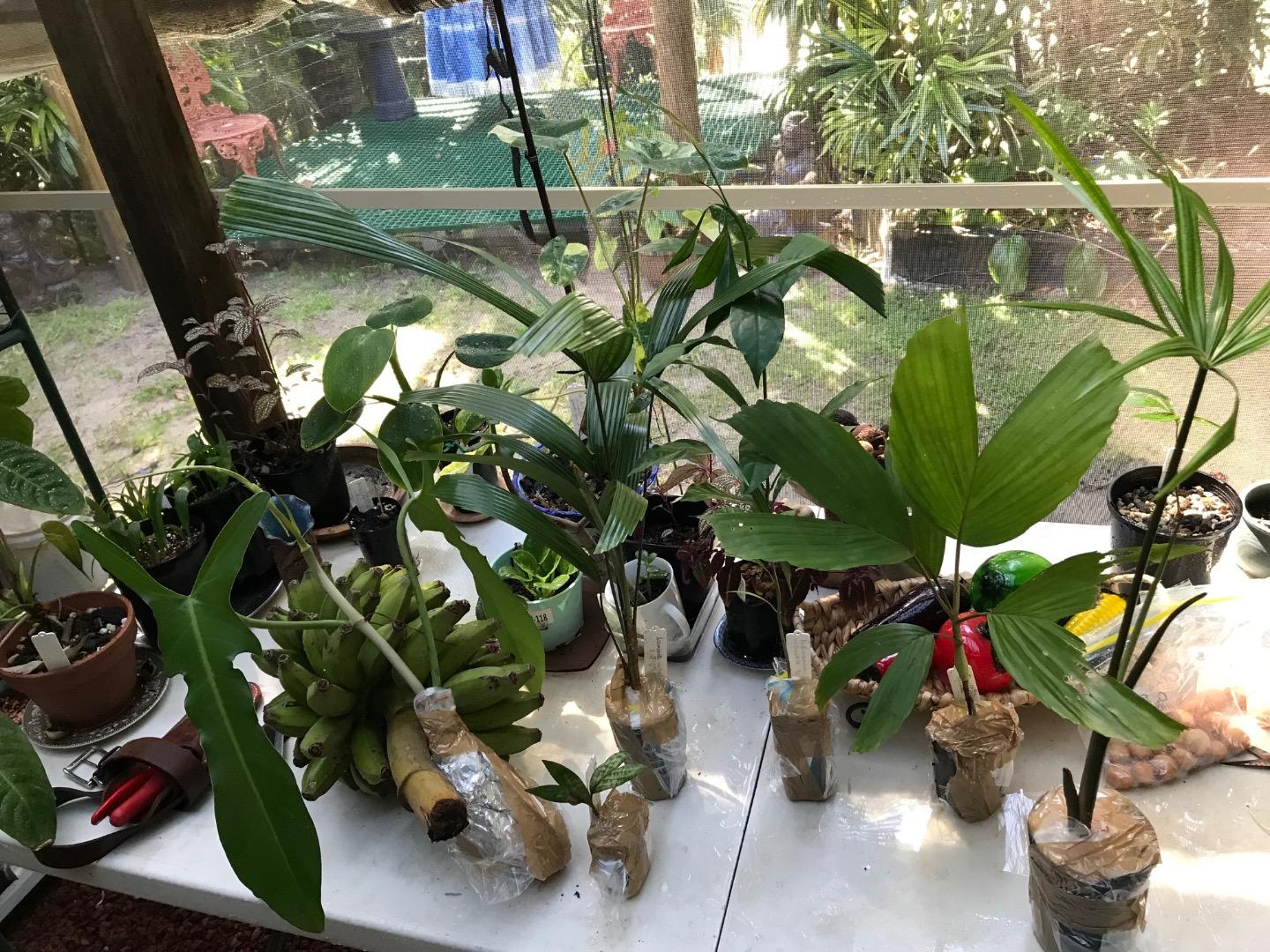
Another fix of palms for the Garden this time a Mauritia flexuosa pinanga distichia lanonia centralis Socrates rostrata a rothmania longifolia a philodendron hybrid Jerry Horne and some cycas species silver form seeds some real winners in there for the garden the standard treatment awaits them winter protection for two seasons giving them some time to develop more roots then planted in the ground although I don’t think the pinanga will go in the ground pushing the palm limits with that one


 3 points
 -
This is hilarious here in South Texas they keep getting killed by cold snaps and people are still replanting them again and again because Queens can work here for many years if we don’t get a harsh winter (like the last two LOL!) it is a commonly available “tropical looking Palm” that Palm illiterate homeowners buy at big box stores here and then wonder why they keep dying in Winter.3 points
-
its not declared by law its just undesirable. we have picrophylla south of the border, a mate has a few fruiting and we sown lots.3 points
-
Recent video posted with Tony Avent from PDN/JLBG in regards to the new hardiness map changes3 points
-
Lemurophoenix, a beauty and beast of a palm. Growing fast these days, dropping a frond about every eight weeks. Tim

 3 points
 -
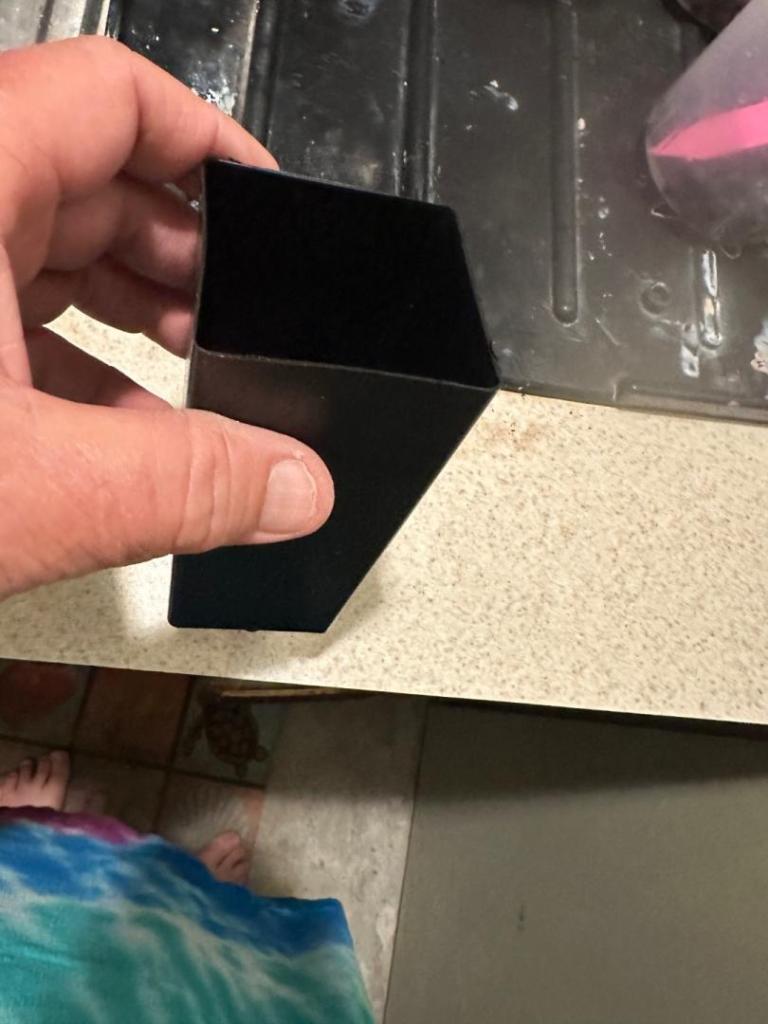
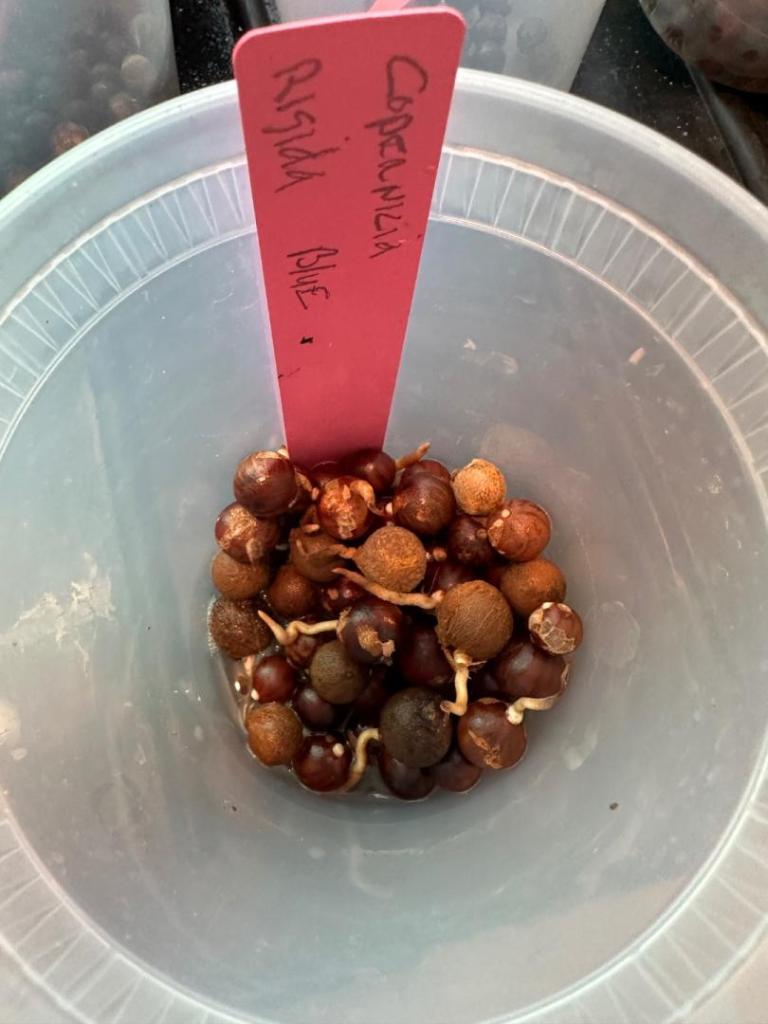
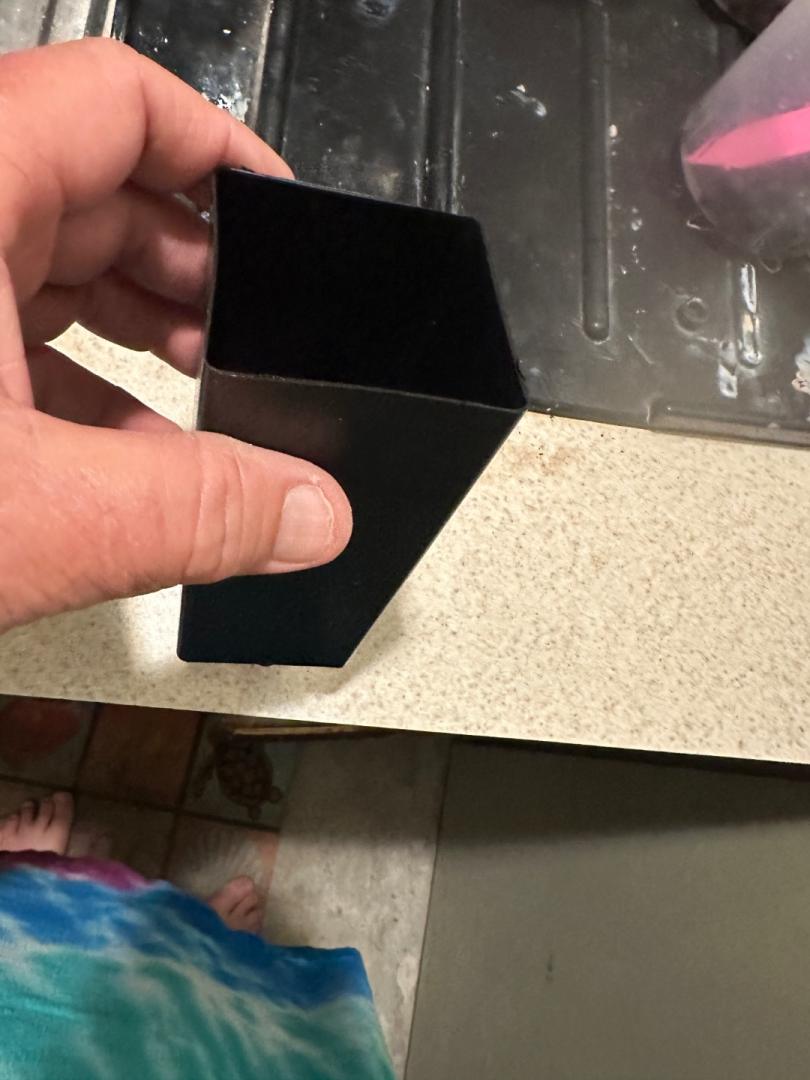
I purchased a case of tree pots 2.38 x 5 for some Copernicia seeds that are sprouting. Would you out a piece of ground cloth in bottom of pot to keep the soil in or nothing at all? I have never used these type of pots before. So looking for experience with these. Also purchased the heavy duty trays for them as well. Just not sure if the soil will stay in by itself?

 2 points
 -
My Livistona chinensis has gained so much weight that it's too large to fit on the bathroom scale. It's now on a diet! 😂
 2 points
 -
@BeyondTheGarden trachies are light, all the weight is going to be in the root ball and how much soil stays with it. I've moved quite a few without equipment and either 1 or 2 additional hands. That said tho i would def opt for mechanical help if it's available2 points
-
That 33 was from a different day. It did get down to about 37 the morning of the 80 high. Got down to 44 this AM after the 80 high yesterday. It's the desert. A difference of 30 degrees is common, 40 happens from time to time.2 points
-
Worth noting that the page (Jones?) quotes an isolated cold event, not the zone where the palm is planted.2 points
-
It really is the best advice. Get a core group of plants that are solid for your zone and by zone I mean plan for the worst winters you “could” get. And then start experimenting from there. Whats the old saying “plan for the worst, hope for the best”2 points
-
Steve, it’s now P. maideniana. Tim2 points
-
I tear off a piece of paper towel and shove it in the bottom before filling it up. By the time the towel disintegrates, the pot should be full of roots anyway.2 points
-
From that video it's looking like Tony's best recommendation is to use the 1990 map for reliability. Kinda makes sense for a variety of reasons.2 points
-
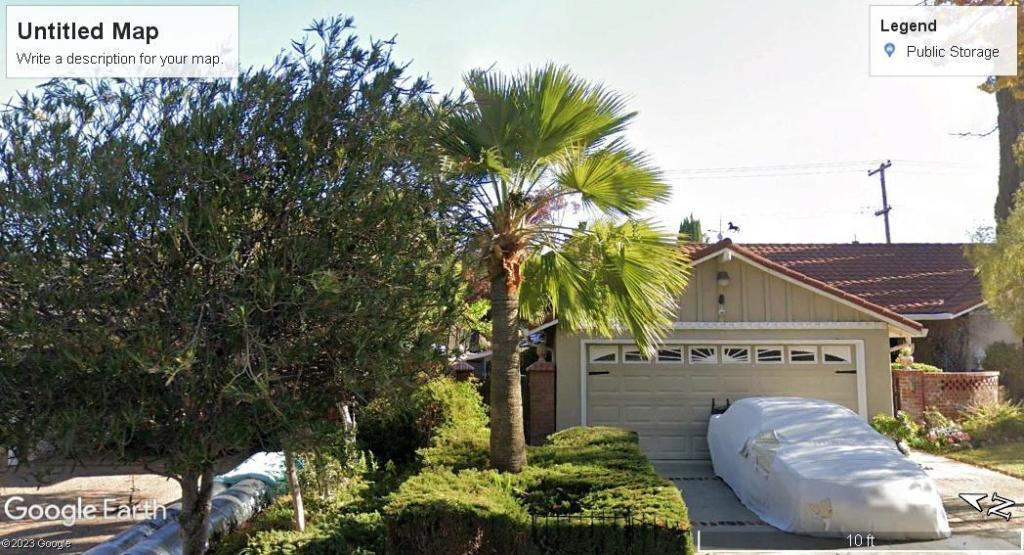
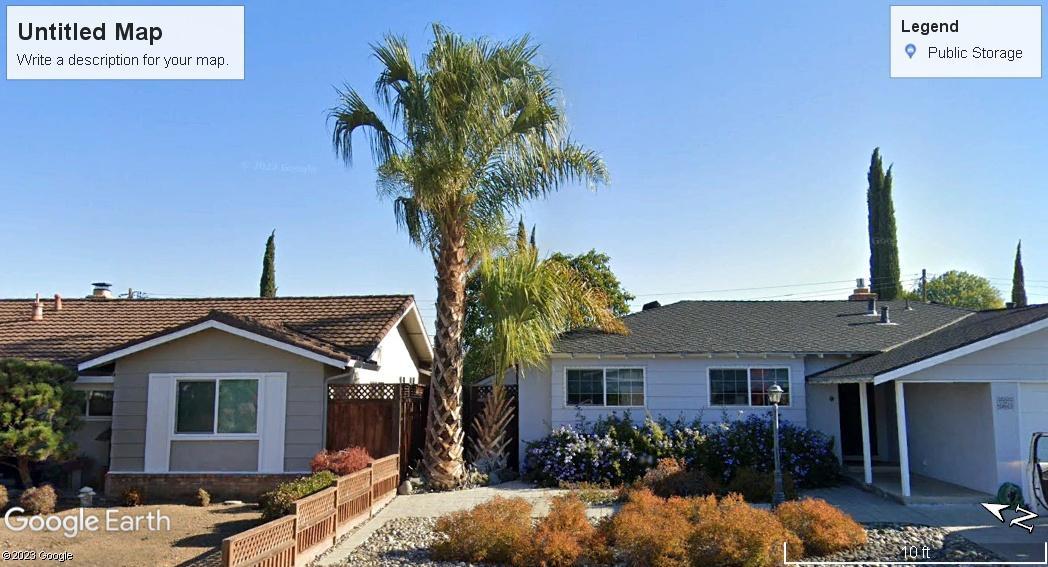
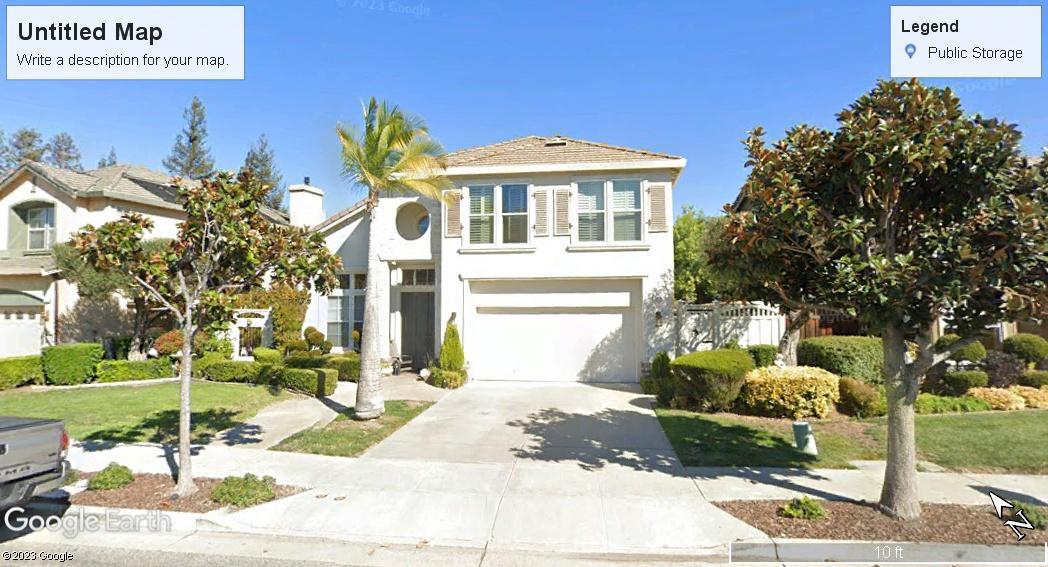
Some advanced age inspiration for you from nearby ( .. out there in the old hood, lol ) Btw, ( ...Before they come creeping out the side yard gate, wagging stubby pinky at me ) Unless ya got some of that ther' DNA testin' to prove it, these are legit filifera, Not the cross.. Nearby Sabals, a niice B. edulis specimen and a couple just found surprises included, just for the heck of it. I want to know where in San Jose someone found BIG Sabal specimens for sale.. Sabal sp B. edulis beauty. ** ..Another King ..Some big White birds in a yard 'round the corner.. ** Not the healthiest, but Could be the biggest Majesty in -at least- San Jose? ** Juby?? / cross? ...A fellow Palmtalker's residence perhaps? ** = Interesting insight regarding this particular section of the overall neighborhood.. Is the site of the old Almaden Winery. Mom worked there when i was a kid. Attended the middle school across from it ..where i watched ..what was left.. of the winery burn down, ..then be developed into these there purrty houses. Fire occurred in ..1988 or 9, shortly before Loma Prieta ( Earthquake ) Used to cut through the property to get to the recharge ponds / friends houses across from the ponds / nearby creek behind it.
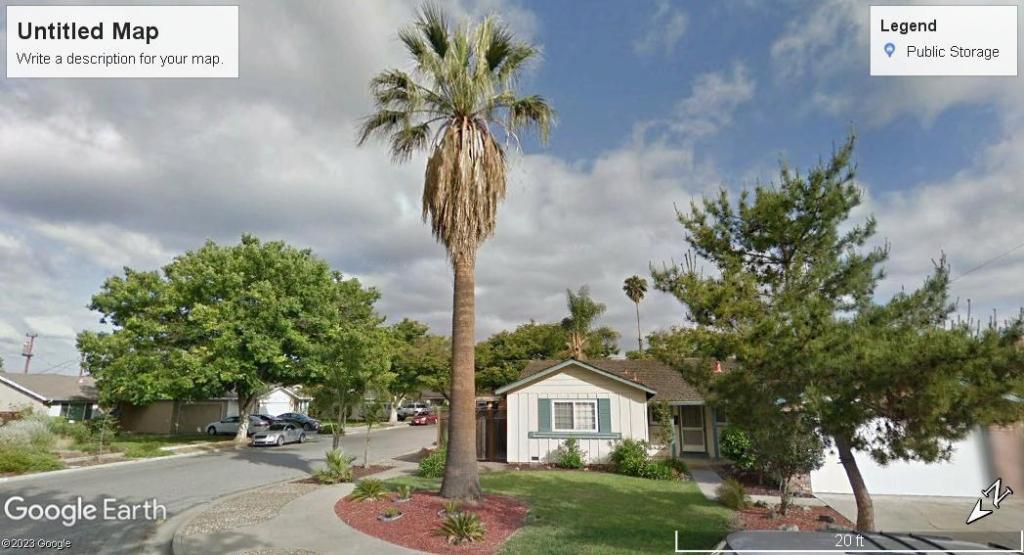

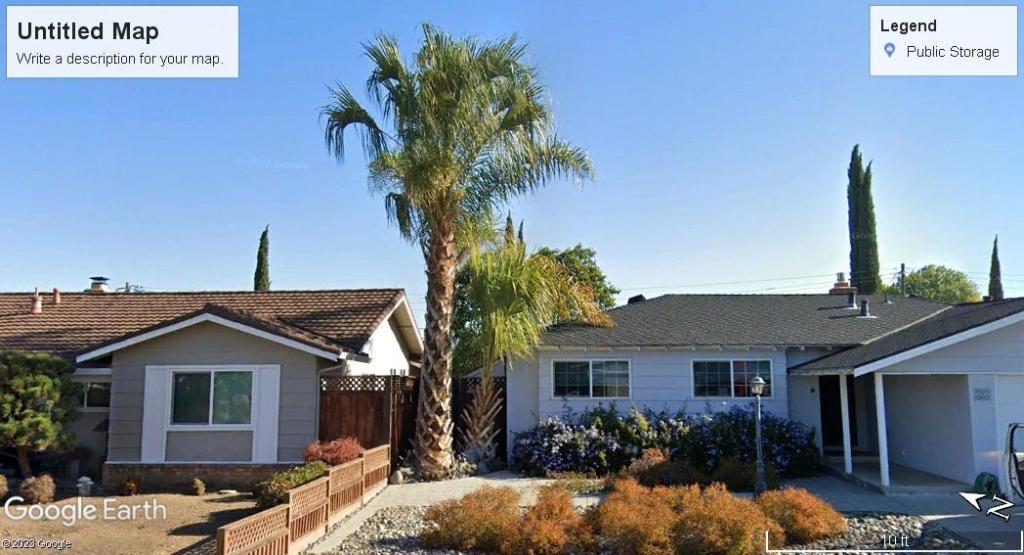


 2 points
 -
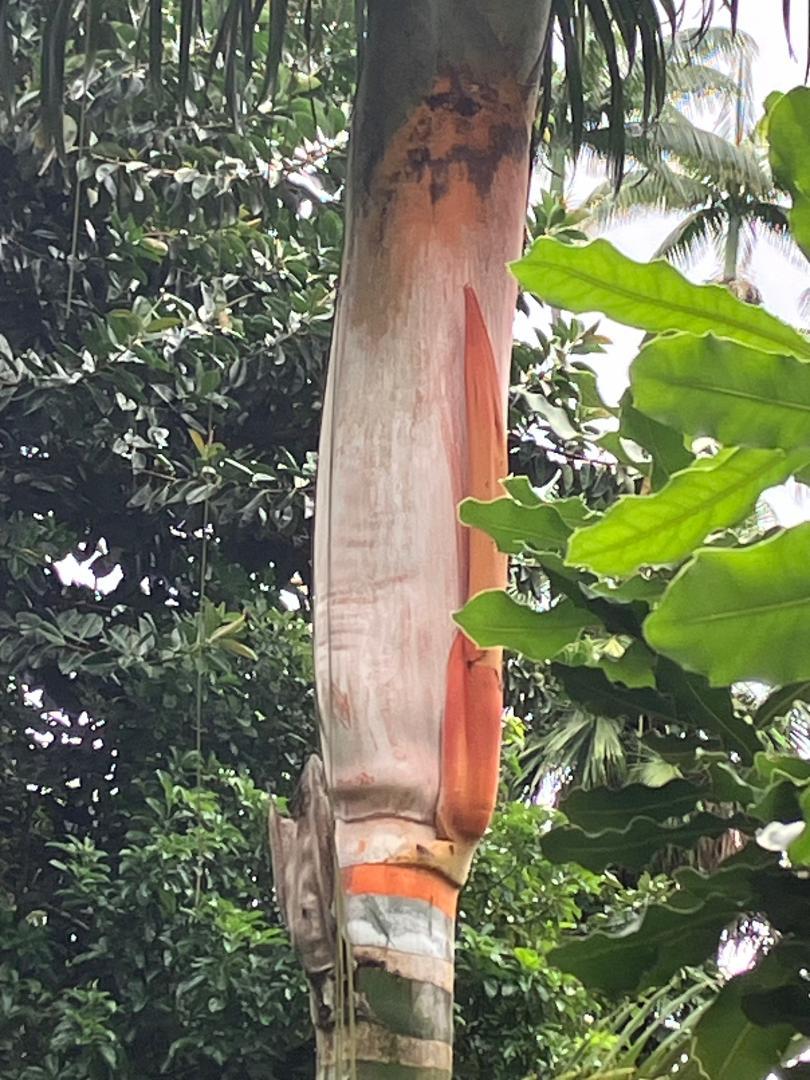
Saw this at Lyon arboretum few days ago. not sure what it is tagged at. Looks what was or is "orange crush" Finally gonna seed after watching] this for a bunch of years aloha
 2 points
 -
My ravenalas soaking the sun at 17C today, near Athens, Greece. Weather forecast says rains in the evening. Ravenalas have surprised me so far, they keep growing despite the recent temperature drop. We have 13C at night.
 2 points
 -
I am wondering why I have never heard of this one before. S romanzoffiana is a declared weed now where I live so this would make a nice replacement. Peachy2 points
-
Protect the crown1 point
-
These aren't reliably winter hardy in 8b/9a. Looks like a somewhat recent planting.1 point
-
Living in a tropical climate L. grandis is a pretty easy grow for us. They can grow in pots for many years, but do require some basic conditions. I’d have to say the two most critical requirements would be humidity and fast draining soil. Recently we had a drought of four weeks and the potted Licuala received no watering, it wasn’t deliberate, we happened to be off island. Other than a few dry leaf tips, the palm looks fine primarily because of the high humidity which avererages 70% and above just about all the time. The palm is in full sun for about half the day and honestly, should look better, but while I figure out what the plants future is, it’s been a bit neglected. Incidentally, my soil mix is mostly just garden soil with some store bought compost and maybe a handful of black cinder. I do fertilize occasionally, but not often. I have some in-ground specimens which are 7 or 8 feet tall, (2-2.5m), and look pretty good. Tim
 1 point
 -
As you can see in the pictures above, living in pretty much in the heart of our " wildflower mecca " here in AZ.. Only " AZ spring hot spots " i haven't made it to -yet- for wet - year spring displays are the Mesa / Table top areas about 1.5 - 3 hours east of me on the San Carlos Reservation ..and a couple spots southwest of where i'm at.. We'll see how this year plays out Rains may not be enough. ..dry everywhere here atm. Several times in the late 80s, early / mid 90s, ...and after a couple decent winters in the 2K's ..when back home in CA.. Can't consider yourself a true blue, native Californian unless you've experienced at least one super bloom, somewhere in the state, in person ...not just in passing, out a window. That said, haven't yet been out to Anza Borrego, Tejon Ranch / Carrizo, CRSP / Ramona Grasslands, or areas east of Paso Robles / San Luis Obispo. On the " to explore " list though.1 point
-
Yep... 20 - 40deg difference between the morning low / afternoon high = VERY common occurrence here, esp. this time of year. Looks like it bottomed out somewhere between 47 and 51 after hitting 81 yesterday. Phoenix ( at Sky Harbour ) was a deg. shy of their record yesterday. Could tie ( if they hit 82 again ) or break today's record high ...if it reaches 83 or 4 today. 71F currently here ( at 10:04AM )1 point
-
Not yet, but they're soaking. I even gave a few to a fellow Palm Talker, if they want to out themselves, I'll let them. Syagrus rock, though sometimes long long after the fact . . . .1 point
-
royals, once they have six or eight feet of trunk, are better able to recover from cold damage.1 point
-
Too much rain on the foliage. Hopefully you do not use sprinklers for irrigation. A couple application of copper based fungicide on the foliage may turn out beneficial. Is it the filifera or the robusta sp, that you grow? Filifera is more prone to fungal problems due to high moisture, imo even to pink rot, but fortunately it is a tough palm and with proper treatment gets usually over such issues.1 point
-
“A palm reaching a crown height you can walk under?” -Advective ^^^ This will be a nice milestone though.1 point
-
Success is the ability to grow over 100 different species of Palms in my zone (finding the yard space will be the most difficult part after joining Palm Talk). Current count: 38 different species. Pinnate: 15 different species Palmate: 23 different species1 point
-
Outdoors? Unfortunately ..no.. Adonidia are among some of the tenderest of tender palms..1 point
-
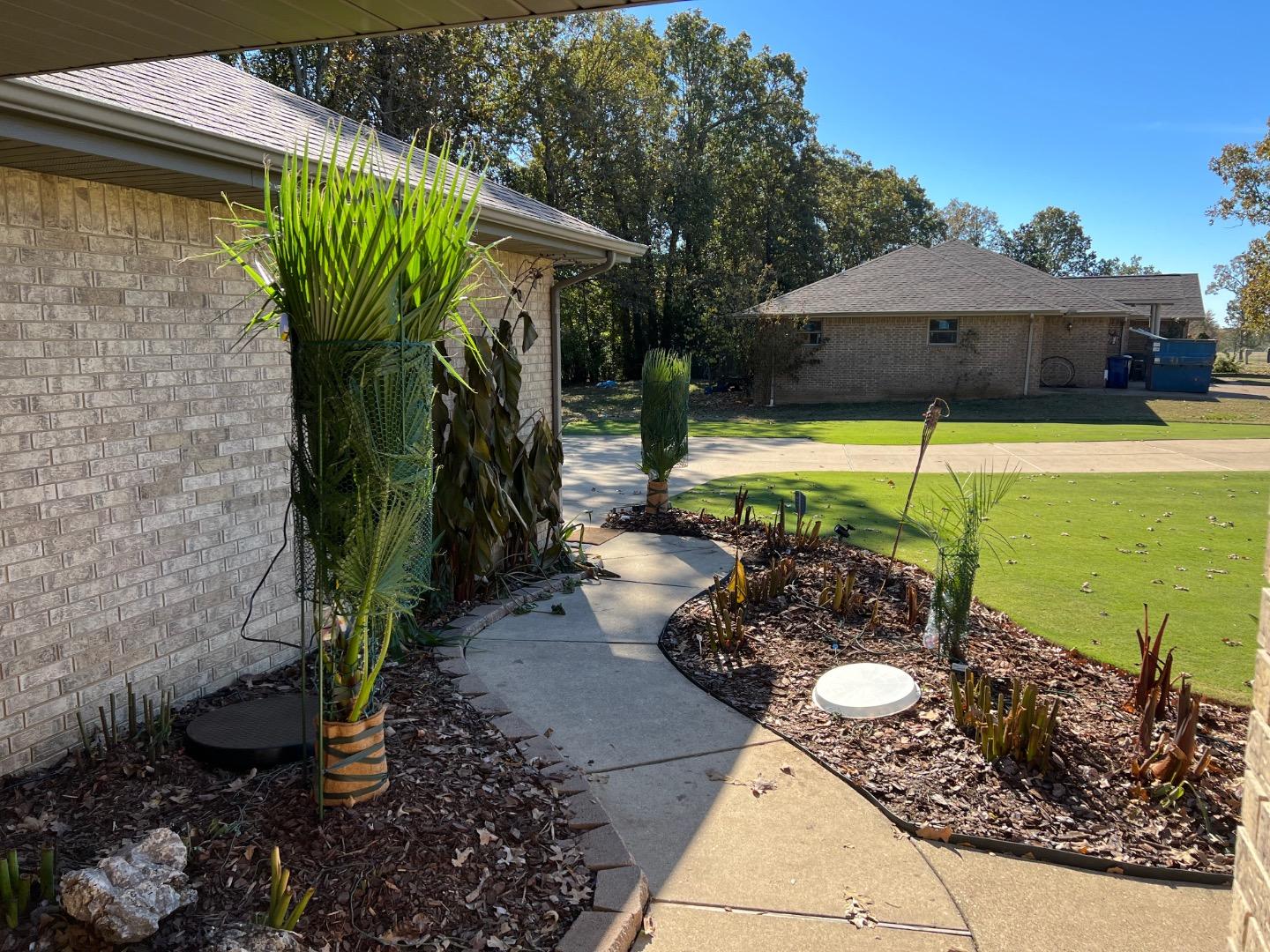
Allen, Thank you for your detailed video info on the tube enclosures with the plant drip pan as a top - these have given me a peace of mind for first year in ground setups - I made several of these for my <4 foot Trachycarpus, Butia, and and even as an outer shell on a 6 and 8 ft Washingtonia robusta. I’m even going to make a short one as a weather screen for an Agave americana. I haven’t had to use them much except 2 nights around Halloween last week when we had a dip to mid/low 20s so I thought it would be good practice to set up, adjust, monitor, etc for a few days. During the day while enclosures were still up I noticed things warmed up quickly to around 80 in one enclosure when ambient outside was 40 something…I could easily pop the tops to allow air out but it was warm and humid air coming out when I did. Did you find that you had to open and vent any for your Butia or others you used these tubes for? I do really like the design - it keeps things pretty clean/uniform looking. I did note that my sensors in enclosures that allowed more light to pass through (ie Dewitt frost cloth) warmed up quicker than ones that I used an internal wrapping of Planket material instead of another wrap of Dewitt. Also having that light hit a plastic baggie over the sensor may have given me a false high temp…Kind of hard to avoid sunshine in my south facing front yard. we’re in the 70s and 80s again now so all enclosures are off and fronds untied. If you aren’t happy with the weather here in Arkansas just wait a minute - Garrett in Mountain Home zone 7A


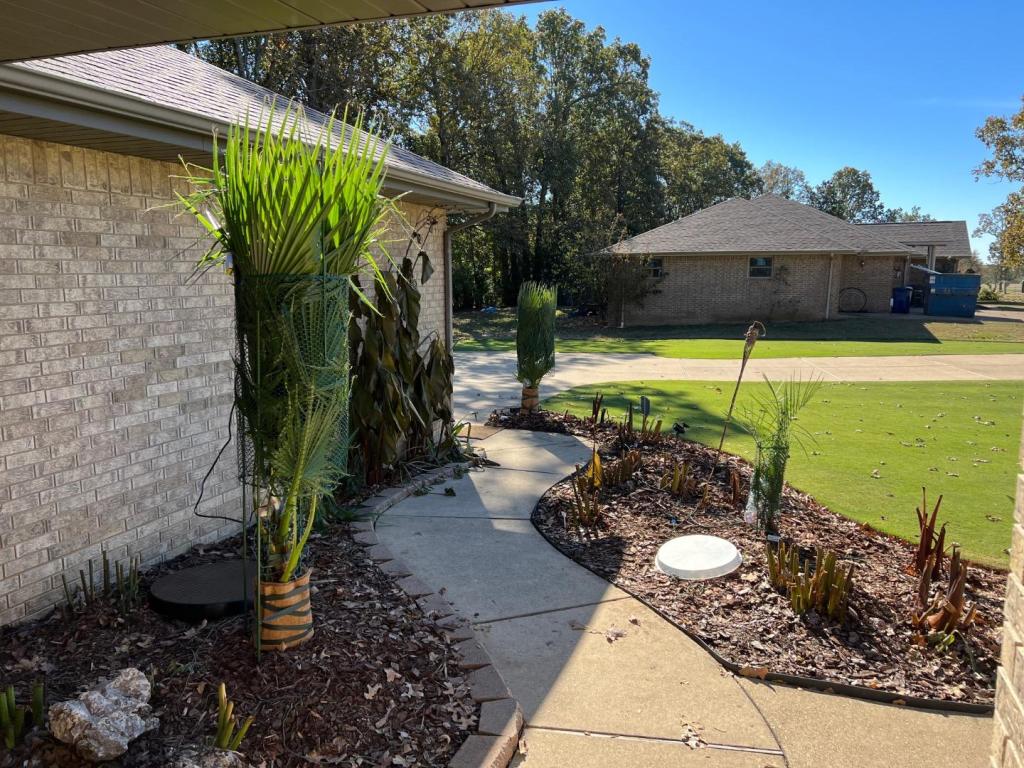 1 point
 -
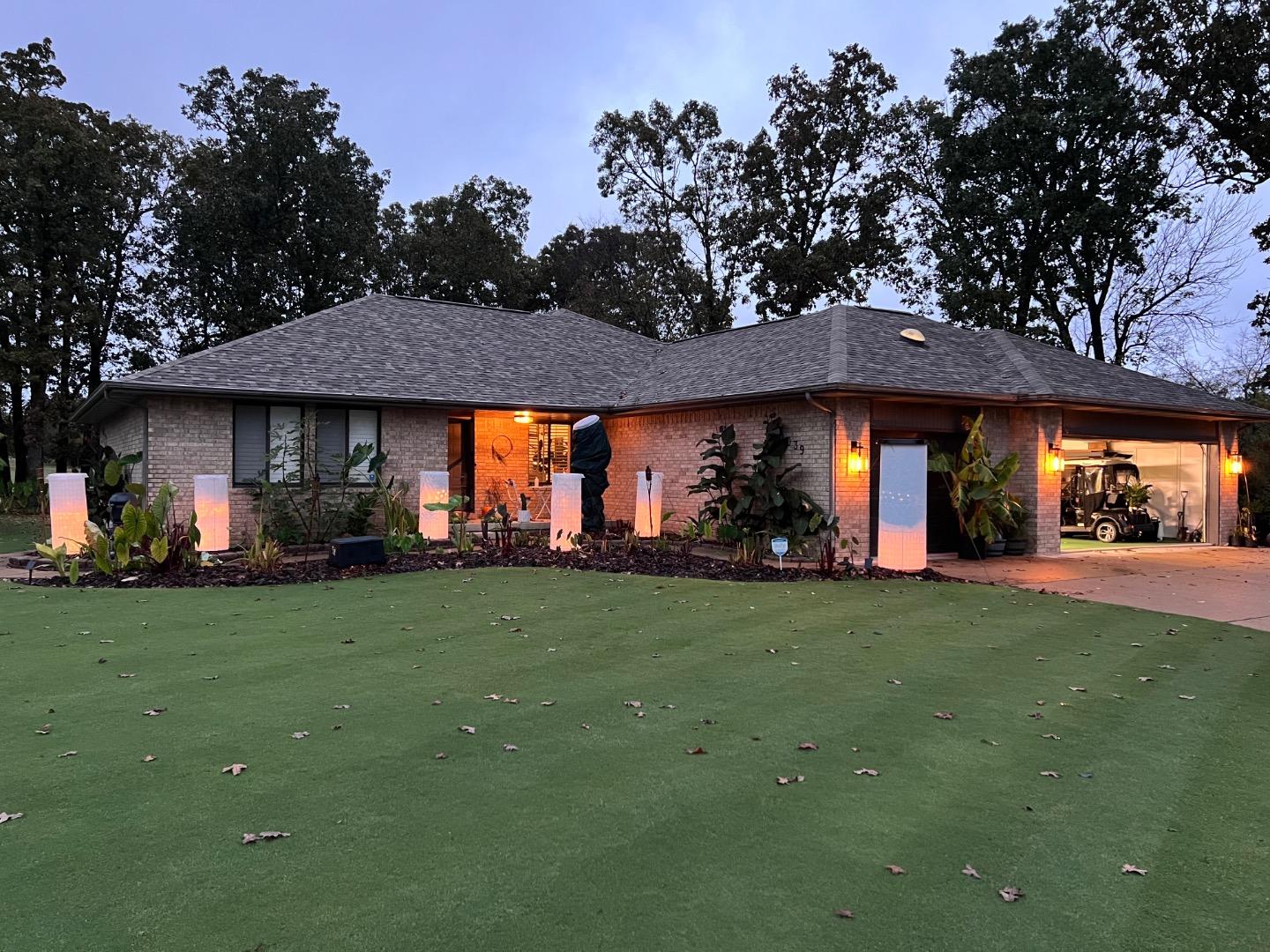
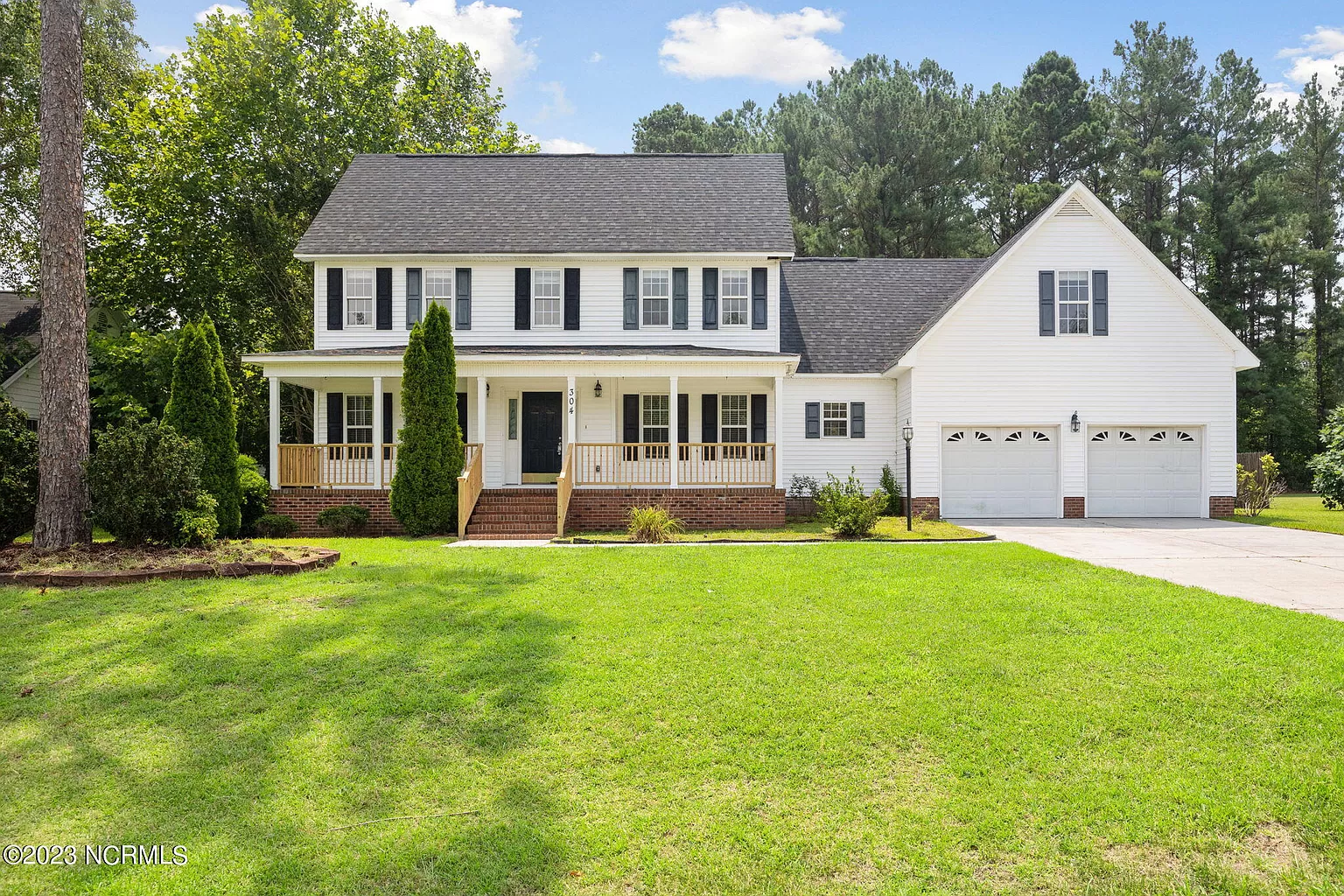
FINALLY got through all the signing and closing processes and enslaved myself to the bank in exchange for them letting me stay in a home they now own! hooray debt! This is quite different from what I had expected. 99% of homes now adays are what I call "HOA modern" style. I think you can imagine what I mean, drive through an HOA and all the homes have this 21st century, non-symmetrical thing going. Just random rectangles shoved together with varying gables sticking out to make it more interesting. Which is of course a very nice style and lends itself well to landscape and certainly palmscaping. This house is much more traditional, symmetrical, I think farm-house is the appropriate style description. Landscaping is going to be different from what I had imagined as I'd like to maintain a more symmetrical, formal, and southern-farm-house appearance. I've got a magnolia and crape myrtle and of course long leaf pine. I need to plant a live oak from which I will hang spanish moss although they take forever to get big. Some existing Acuba japonica also. I have the money to purchase palms now, but being so late in the season (we had frost twice this week), I think I should wait until spring. Better weather and dealers will be fresh on inventory. Gives me some time to get to know the nuances of the exterior and lay a plan. The front actually faces north, so the shadows at the bottom of the brick, and in the nook beside the garage seem to be ever-present. But being at a southern latitude, the sun comes down from a much steeper angle than it did in Washington. Maximizing bang-for-buck meant getting a house that needed some elbow grease; this was a rental for years so it needs some TLC.
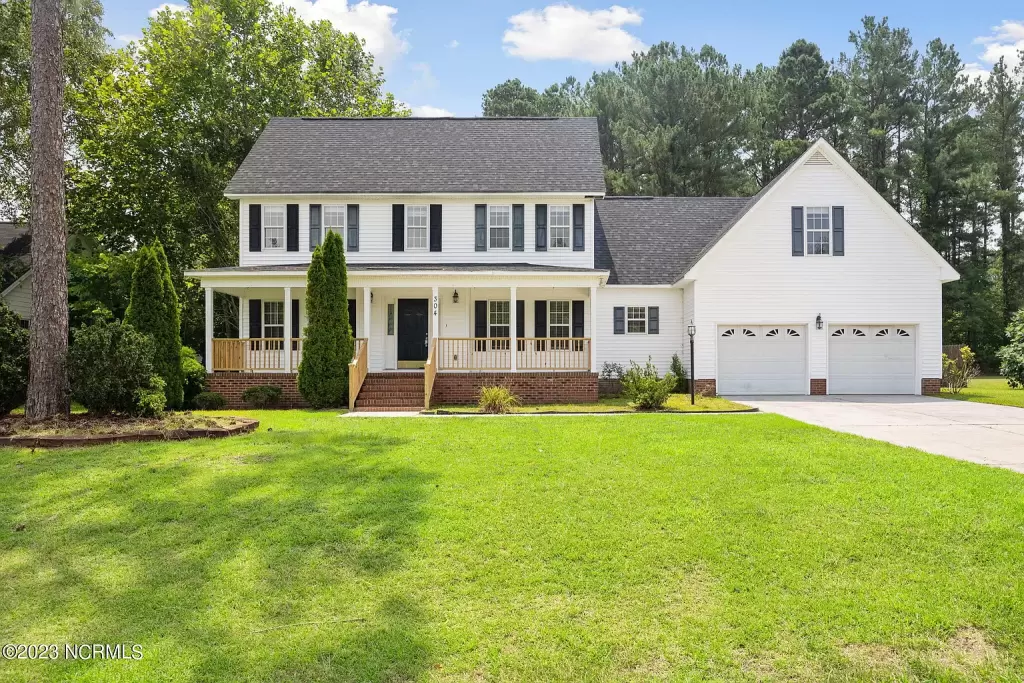 1 point
 -
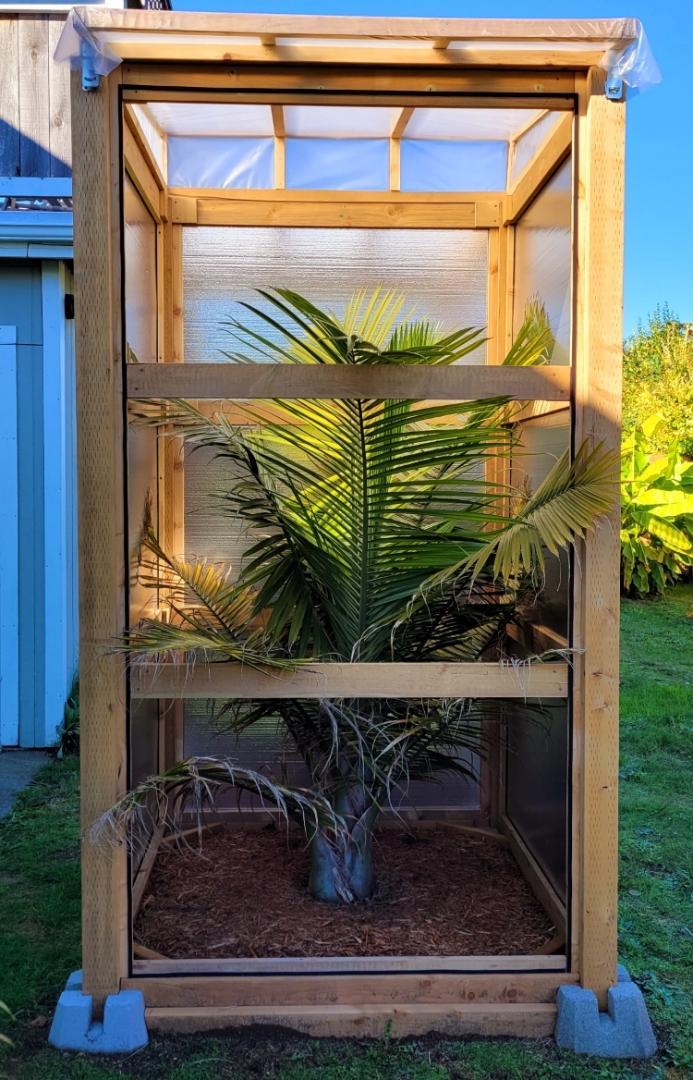
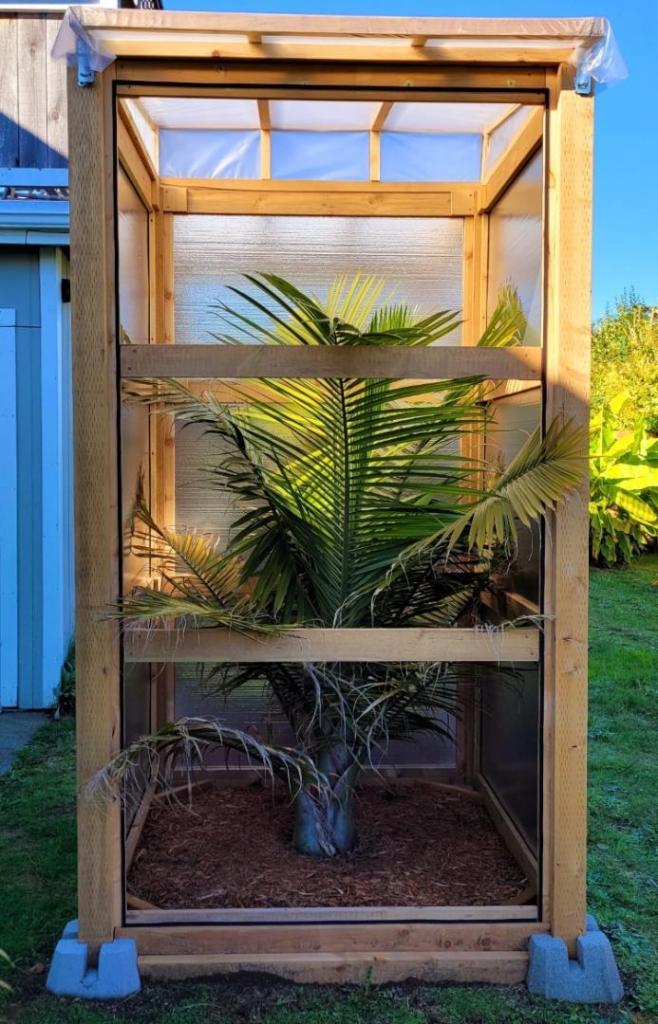
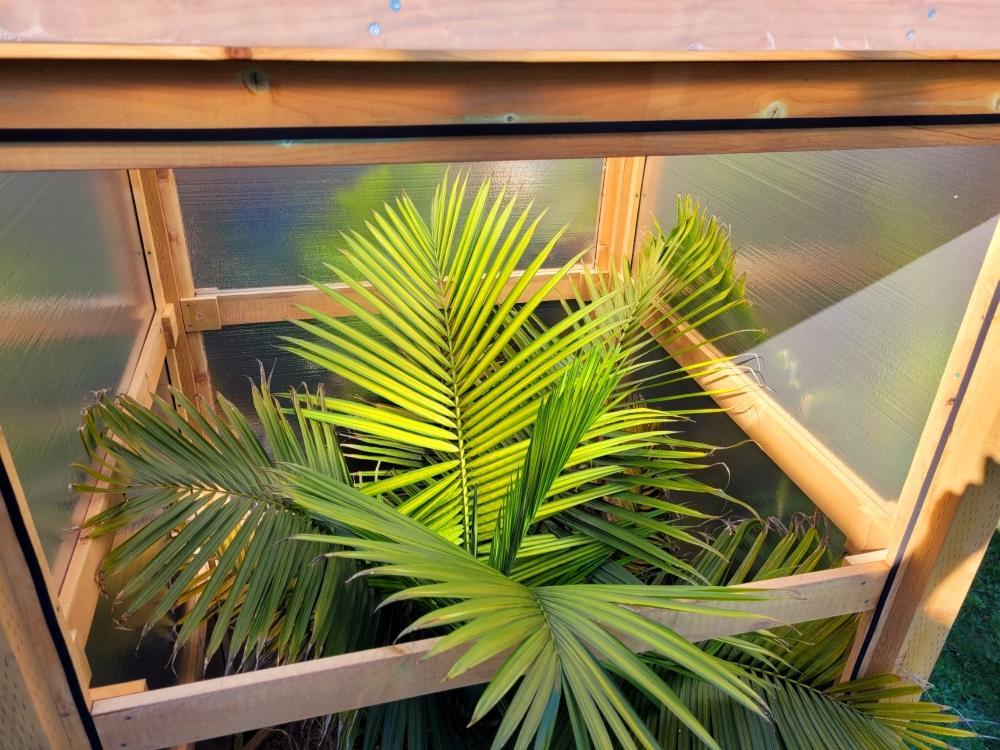
I started installing the side panels. I thought I'd put three of them in place until the weather warrants full enclosure.

 1 point
 -
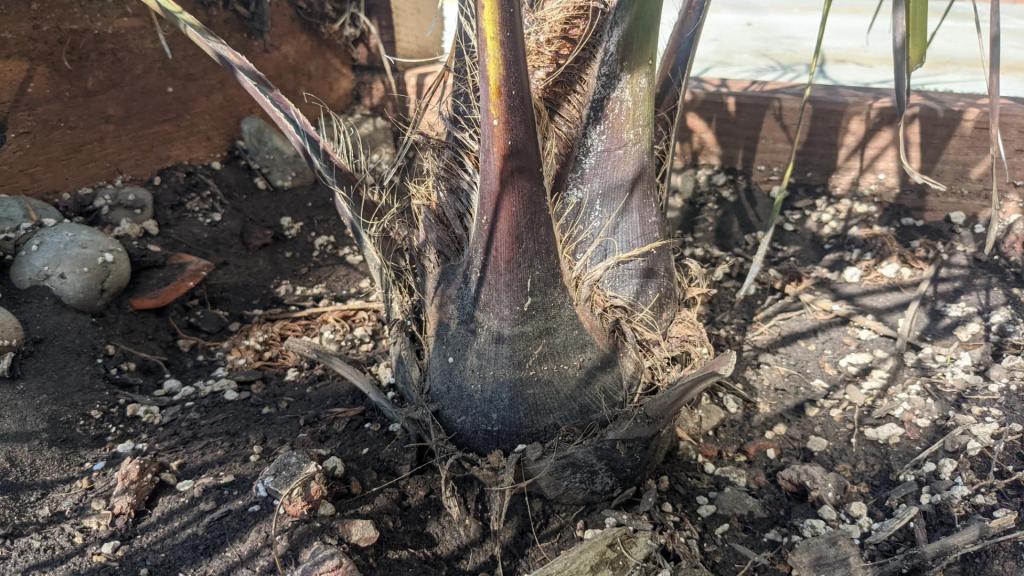
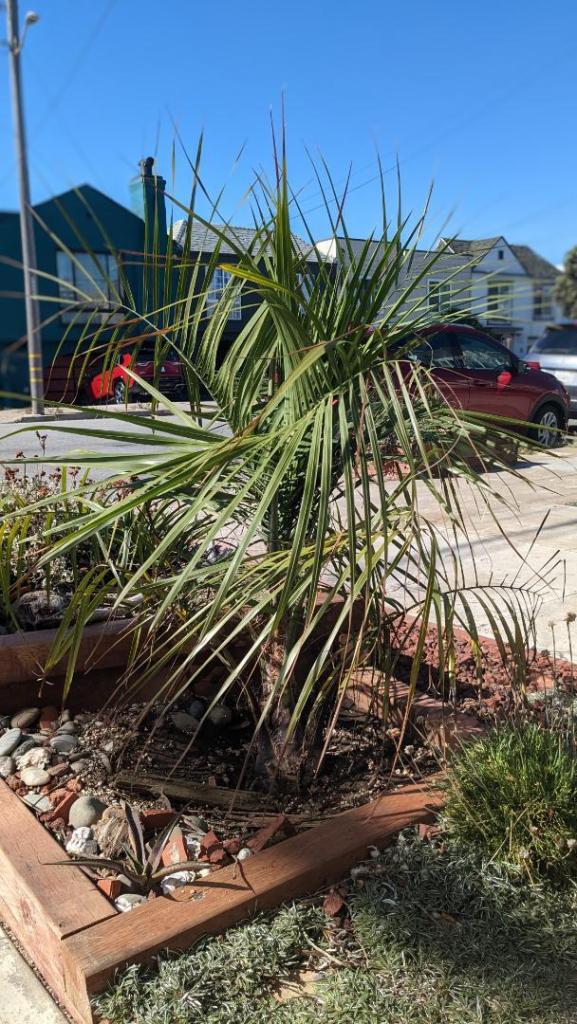
Mules are not threatened by cold here in San Francisco, but Butia odorata has a much healthier appearance than Syagrus romanzoffiana in my cool and windy seaside neighborhood. I have a young mule. Burgundy boots, and it does look to favor Butia, though it's too small assess girth.
 1 point
 -
Those thicker fronds are more likely to withstand cold temps. It's the dainty ends of my fronds that get fried first. I'll probably be leaving a couple fronds out of the protection this year so we'll see what temp fries them unless I get lucky and have a super warm winter..1 point
-
such a sad sight to see tracy. i was just in SD 2 weeks ago and was constantly looking for all cidp with palm weevil damage. i saw many and felt so sad to see such majestic plants coming to an abrupt end.1 point
-
^^^ FIFY. I believe this would be more of an accurate statement, because the different colors do not indicate the mother plant, as the same mother (Butia) produces both Burgundy AND Green Mules at the same time as an F1 Hybrid. Scott W has it correct here: The Legendary Dick Douglas (RIP) figured this all out way back in 2007:1 point
-
That is interesting... Wonder if maybe Soil chemistry, prior land use -if any- ( clearing of any palm sps that might have grown there ) ..and suppression of competing vegetation by the Eucalyptus themselves could all play a part. Pretty scenery regardless.1 point
-
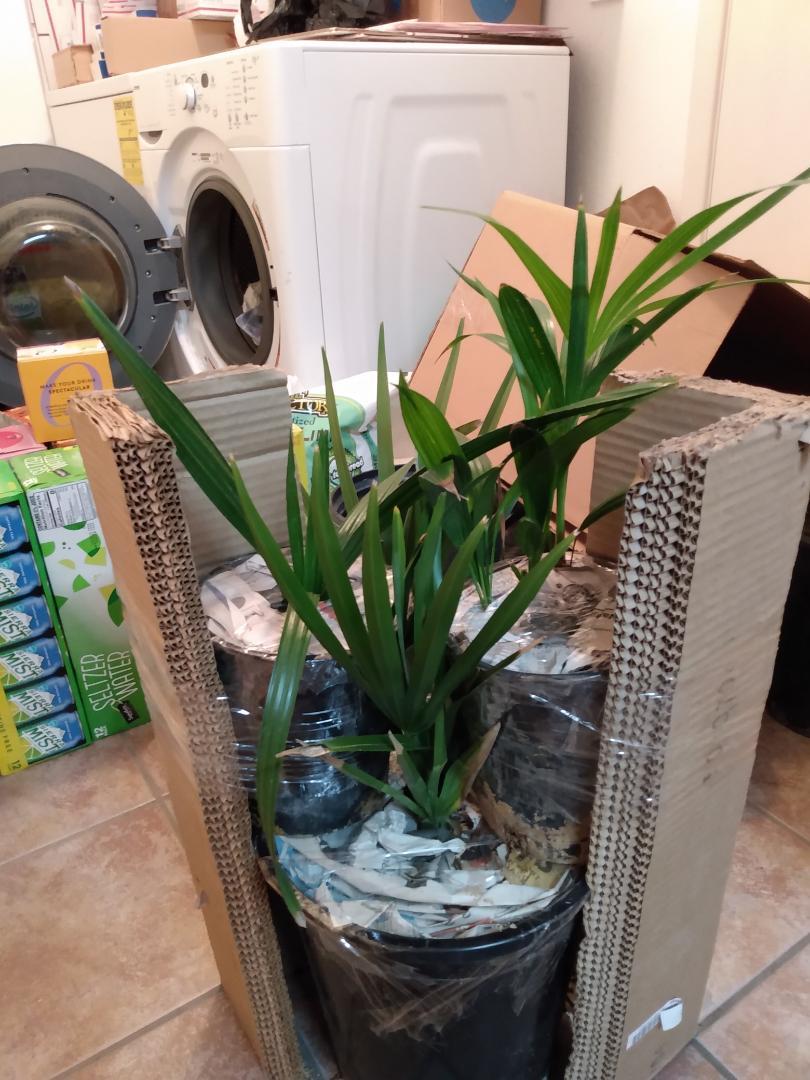
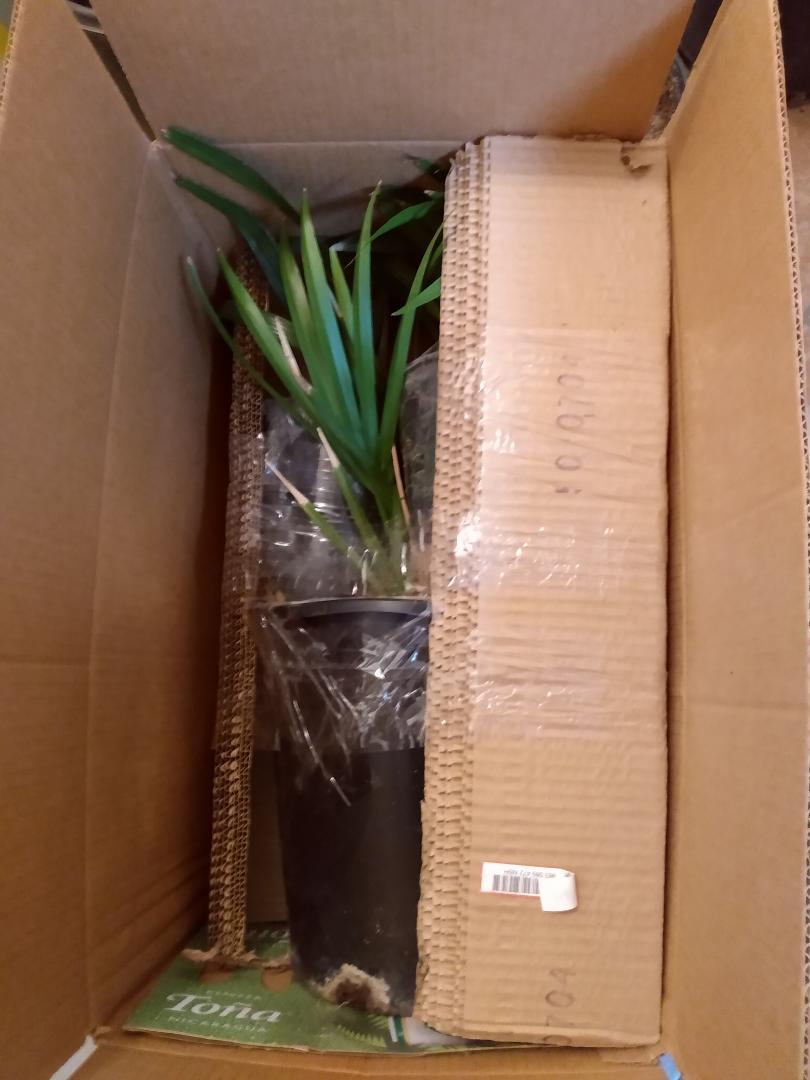
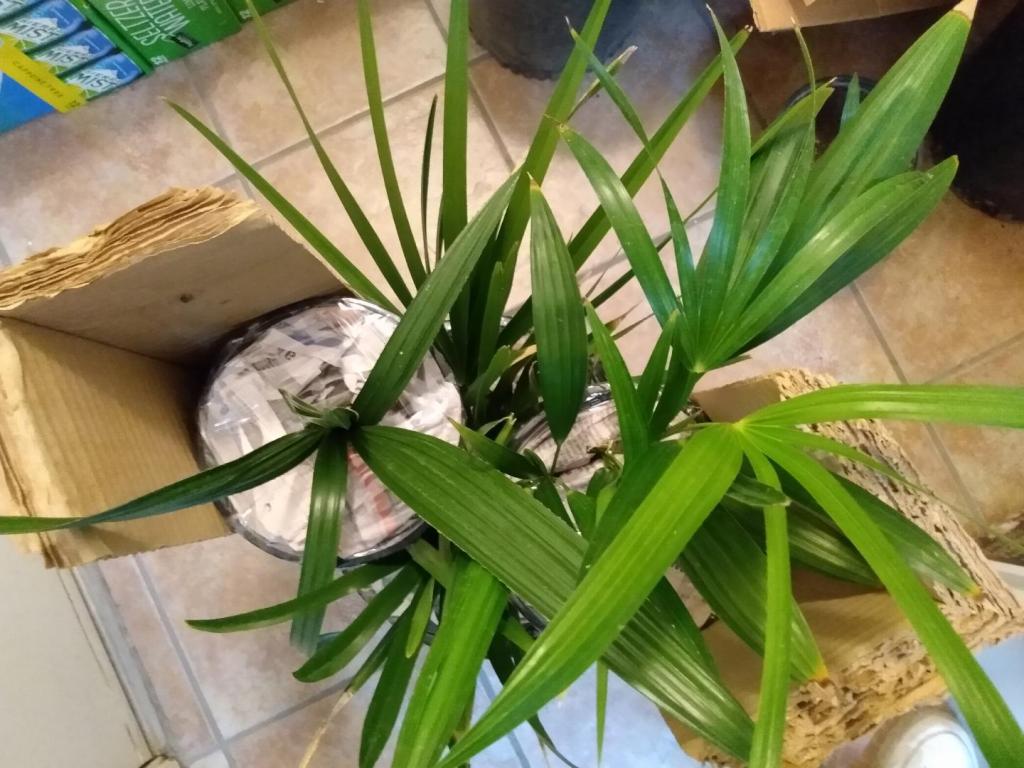
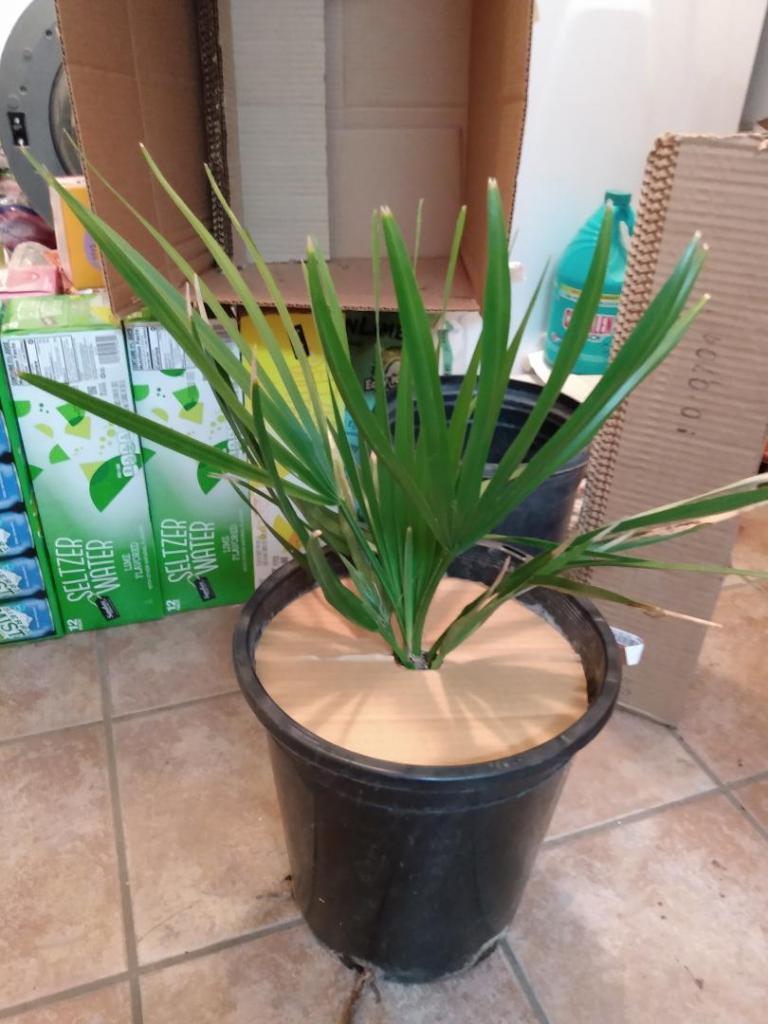
That's the only way I ship anything. It offers the least possible root disturbance, required especially for palms with sensitive root systems. aztropic Mesa, Arizona

 1 point
 -
Is it C. rotang? I would like to start growing this species to harvest for my own use. Is it ever grown/available in the US? Thanks in advance for any info!1 point
-
Paddle leaf Ptychosperma starting at $75. Have a few sizes.
 1 point






















.thumb.png.04b3487b96ff29c55b8a8994b91f62b2.png)

.jpg.0cf735c7525858af1582442942bc68e8.thumb.jpg.894f59a749fff01eb286c1fe4a50ab62.jpg)