Leaderboard

Popular Content
Showing content with the highest reputation on 01/09/2014 in all areas
-
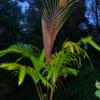
Hello To start this new year, I offer you an overview of the fantastic Analalava Reserve we had the chance to visit during the last trip of Palmeraie Union Society to the east coast of Madagascar in October. This reserve is managed by a local association, in partnership with the Missouri Botanical Garden: http://analalavareserve.com . It presents an absolutely amazing variety of palm species which some of them are one of the rarest in the world .... Good virtual tour! Dypsis lastelliana : Dypsis pinnatifrons :2 points
-
All photos of this fantastic reserve here : http://www.flickr.com/photos/88672295@N02/sets/72157637390190333/10712036334/ Of course, please do not use them without my permission .. : wink:2 points
-
Dypsis hovomantsina :2 points
-
Dypsis fanjana: Dypsis sp. (a probably not described species) :2 points
-
Ravenea sambiranensis : Dypsis sp. : Orania trispatha :2 points
-
Dypsis sp. (a probably not described species) : Dypsis psammophila :2 points
-
Angraecum sesquipedale on a Dypsis carlsmithii : Dypsis sp. : Masoala madagascariensis :2 points
-
Dypsis carlsmithii :2 points
-
Dypsis sp. : Dypsis sp. (D. carlsmithii when young ?) :2 points
-
Marojejya darianii :2 points
-
Dypsis bosseri :2 points
-
Dypsis tokoravina :2 points
-
Ravenea sp. : Orania longisquama : Dypsis sp. Interrupta ? :2 points
-
Dypsis fanjana and Dypsis paludosa : Dypsis fanjana : Dypsis pinnatifrons and Dypsis paludosa :2 points
-
Dypsis fibrosa : Dypsis paludosa :2 points
-
Dypsis poivreana :2 points
-
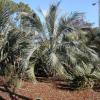
Here's my perfect, dream form of Pritchardia martii. There are a couple of these palms growing in the parking lot of Ventura College. I think the locator map lists these as P. rockiana, if I remember correctly, which is one of the many names now synonymous with P. martii. Other old P. martii names include, but are not limited to, P. martioides, P. gaudichaudi, P. rockiana, uhhhhh I can't remember the others, but there's about 8 of them. Are all of these old names different forms? BTW, the seeds that I collected did not germinate. I had them in a baggie of water to try and rot off the fruit and I left it in the greenhouse which got up to about 100 F on several days and I think I cooked the insides because they went mushy on me. Ohhhhh, I was bummed because I so wanted this form.1 point
-
Howdyall: The thread about the world's toughest palm seems to focus down on fan palms. Which seems reasonable, since I agree: it's a fan palm of some kind. So, what's the toughest feather palm? This is a tougher question than you think. In terms of cold-hardiness, I'd say Jubes. They'll grow along the Atlantic Coast of France. Neck and neck or a close second would be the common date. After that, Buteas and CIDP. Trouble is, Jubes won't take heat and humidity. For just an example. What do the rest of you think?1 point
-
I also recommend using a good organic foliar spray in a 12-4-8 ratio with micronutrients once the chance of any frosts or freezes has passed. For us here in Corpus Christi, that is usually by the second week of February. This helps the palms to receive quickly through the leaves much needed nutrients for new growth. I use a Texas product produced by Medina called Medina Hasta Gro Lawn 12-4-8mixing one ounce per gallon of water, then spraying the crown as I do with the Bonide copper fungicide and liquid seaweed. This works great as a foliar spray fertilizer in tandem with a good organic slow release granular fertilizer. I like to use MicroLife 6-2-4 with 70 micronutrients, specifically formulated for the Texas Gulf Coast, but I think it would be good for the entire Gulf Coast. It is produced by a company in Houston called San Jacinto Environmental. It caused my Golden Malayan Dwarf to more than double in size in just 6 months time from planting it in the ground. Going all organic seems to somewhat increase the cold hardiness of palms and other tropicals too, by strengthening the roots and thus the entire plant. Also, going all organic and adding organic compost to your soil, increases soil temperatures by a couple of degrees, which is really necessary for us zone pushers to get our tender tropical palms to survive in marginal climates. So far, it is working for my coconut palms here in Corpus Christi. John1 point
-
I always treat my tender tropical palms with Bonide copper fungicide that is approved for organic gardening. I went all organic with everything I grow about 3 years ago and my all my plants including my palms are doing much better than they ever did with the artificial chemical fertilizers. With the Bonide, I mix up one ounce per gallon of water then handspray it on my palms (they are all still small enough to reach the crowns with just a hand held spray bottle). I apply it once at the beginning of the season, usually around late November or early December, then again about now, and again at the end of the season in February. This is to prevent and/or kill bud rot. I have stopped bud rot in both coconut and date palms, in which palms that I though were totally lost have fully recovered. I also apply several times throughout the winter applications of liquid seaweed to treat potassium deficiency, which coconut palms are especially susceptible to here in South Texas in the winter. I apply one ounce to a gallon of water, then spray it on the crown, just like with the copper fungicide. Be careful not to apply to much copper fungicide, though so that your palms don't develop a copper toxicity. Good luck. John1 point
-
I have some W. filifera seeds that I want to plant. I know that they are prone to damping off. Does anyone have any suggestions about germinating these seeds: sterilization, medium, temperature? Thanks.1 point
-
Joe, I've never had to soak the filifera seeds in any fungicide. They tend to germinate quickly when fresh and under warm/moist conditions. Best of luck!1 point
-
I've decided to keep calm and carry on. I realize that all the possible negatives contained in the terms of service could never come to pass due to inertia.1 point