Leaderboard



Popular Content
Showing content with the highest reputation on 10/23/2013 in all areas
-
- 9:02AM - The slow morning was taken advantage of, in the form of restocking landscape plants. A little of everything was pulled and taken to their sections. - 10:10AM - These two customers were on a mission for some Heliconias. They had already grabbed what was left in 3 gallon pots and had put them on their cart, but they wanted more. With Andrea's (obscured on the right) guidance, they proceeded around the nursery together as the workers dug up Heliconia rhizomes for them to buy. They had their pick of what they wanted. On the left, volunteer Derek Burch was on hand to answer any and all questions. - Looking to the left from the shot above, the flow of the second Saturday morning was typical. The afternoon was the big question, as it has repeatedly been the busiest time period (of the second weekend) over the history of doing the 'Ganza over two weekends. - 10:12AM - The light was perfect illuminating the opening leaf underside of this Kerriodoxa elegans. I noticed it as I was walking by, as if the palm was waving, so I had to take the photo. This 10 gallon plant along with a lone 3 gallon were all that was left of the group. Ryan1 point
-
My philosophy is that I don't count humic acid as bulk organics because it can be rinsed from soil and or it will decompose and need to be added every 3-4 months. Humic is a great addition to clay or sandy soils along with some mulching. One of the critical functions of organic material is to increase cation exchange capacity in sandy soils, clay soils have a pretty good cation exchange capacity as long as they are not too high in calcium. A second function of organics is to slow excessive drainage, clay doesn't have excessive drainage issues generally, but may have pH issues. There might not be much need for organic material(mulch) in clay soils. Humic acid acts to chelate or stabilize nutrients outside their typically active pH ranges, so its a good safeguard for clay or sand. If pH is too high, sulfur is the best approach for controlling high pH in clay soil. Mulching in areas that get no rain can be very slow or unproductive in getting the organics down into the soil where they can help. Organics that sit on top in a dry environment tend to dry out and blow away. In clay soils that are in a dry environment, soil amendment on planting is my approach and then feed and add humic acid periodically. In my sandy florida soil, annual mulching is quite productive, gets down into the soil and once where it was just sand now has dirt and earthworms.1 point
-
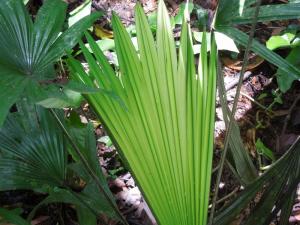
Good morning everyone (or whatever time of day it is in your part of the world)!

 1 point
 -
Several Dypsis species look like those illustrated in this thread. D. remotiflora has very distinctive highly branched inflorescences with incredibly thin rachillae with very distant flowers. I have yet to see any photos that convince me that is it is in cultivation. When your plants flower you will need to check how many (3 or 6) and where the stamens are positioned (whether opposite the sepals or the petals, and the degree of hairyness of the rachillae. John1 point