Leaderboard



Popular Content
Showing content with the highest reputation on 08/19/2013 in all areas
-
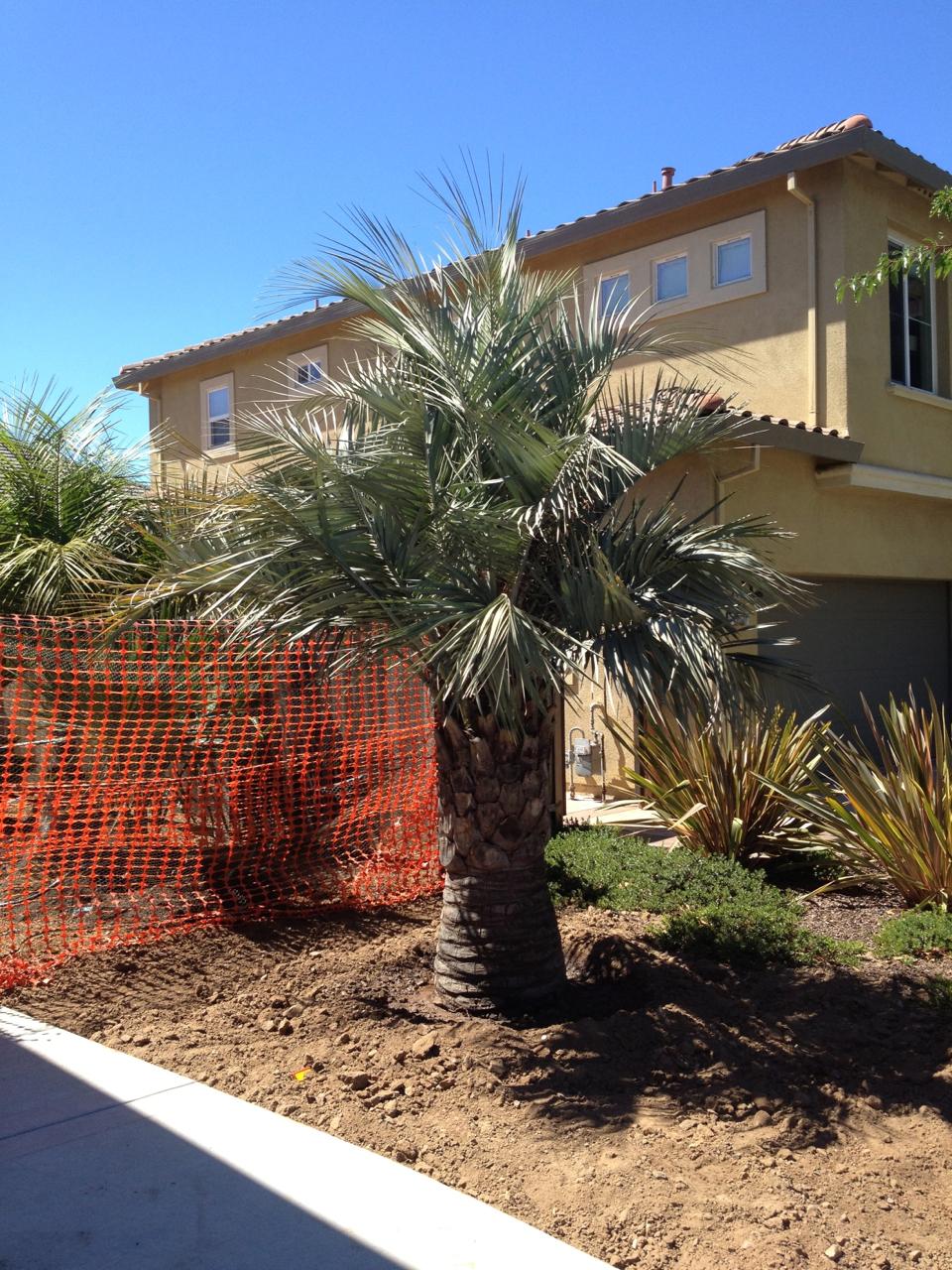
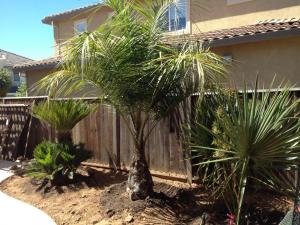
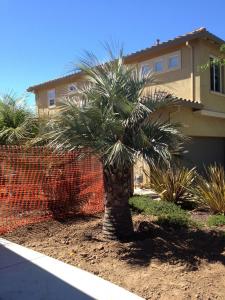
Wanted to share the latest additions to our yard which were installed on Friday a.m. before the temps rocketed upwards during this extremely hot spell we are having. Hopefully the maturity of the palms will carry them through fine. Historically our inland valley which has some marine influence has temps anywhere from low 20sF to around 113F (a few years ago). We were in the mid 20s last winter overnight for about 12 hours when the winds ceased. Despite a current 9b designation we are trying to plant for Zone 9a for the most part. Our nights generally cool off to the 50s-60s during the summer, although it was in the low 80s around 10pm last night. The xButiagrus is our third in our yard, and we are looking forward to watching it grow and providing some much needed shade on our very sunny side yard. This planting bed area has a southwestern exposure and is subject to heat generated off of the two adjacent stucco houses (about 26 foot separation) and the gusty winds that funnel down the valley from San Jose. The Butia is a second one for us but this one is dwarf and much more silvery than our other one which doesn't have much trunk yet. I love the quirkyness of the fronds. It's my favorite palm in the yard. I really like how the boots were trimmed too. The Sabal minor is a new fan palm for us. Told it will do well in our heat and can take our low temps as well. At this point I am leaning towards thinking it looks most like a Texas S. minor "Barton Creek Greenbelt" variety (that's another thread). Our nursery didn't think our Cycas revoluta had flowered yet so not sure what sex it is. Look forward to being surprised. Happy to post more photos if you're interested.
 1 point
 -
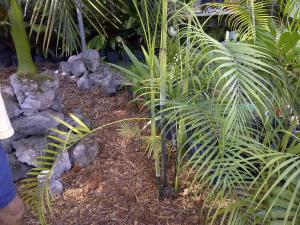
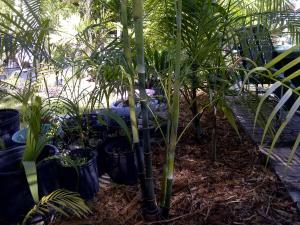
I have been captivated by this palm for a while now. She is so fast and elegant. It was purchased as a seedling and was planted as a 3 gallon about a year and a half ago. It has four trunks and is starting to really show some 'albo'. I just wanted to share--enjoy the weekend!

 1 point
 -
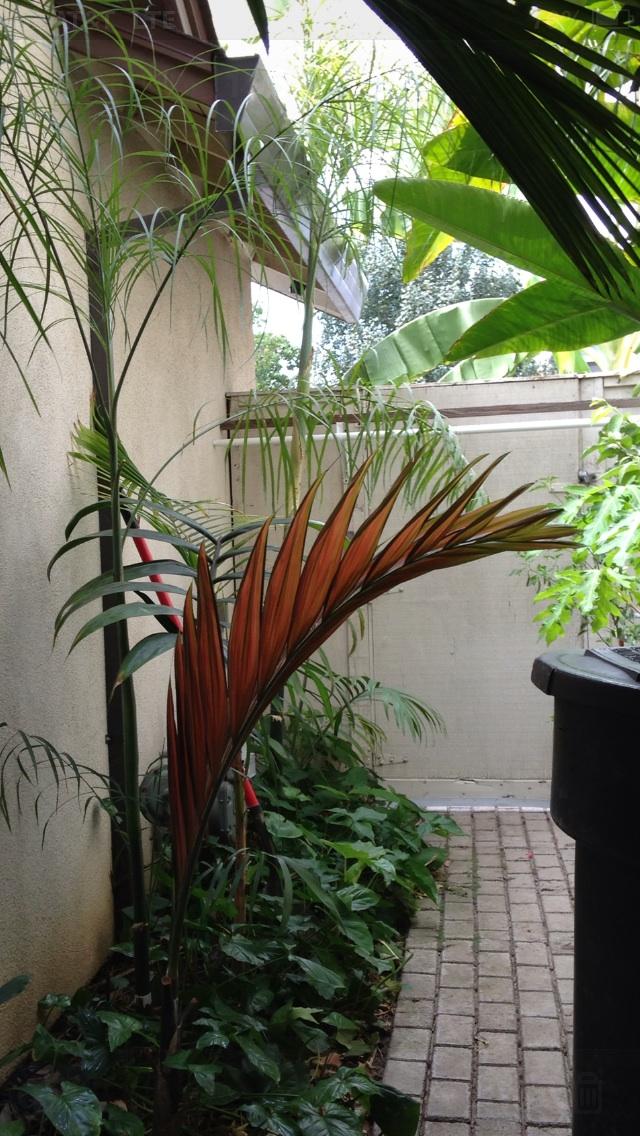
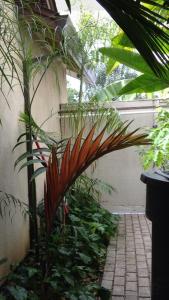
My iPhone isn't doing this pic any good, but here is the second new Cham Mac leaf this year. Jeff
 1 point
 -
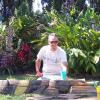
Kathy and I had had fun touring your garden matt thanks to you and Jen for your hospitality .Great meeting you troy, nice photography. We really like the bearded jungle boy shot of matt in the house1 point
-
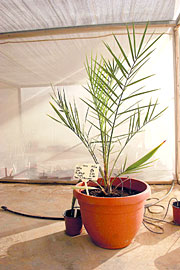
Greetings! I am new to this forum, and pleased to join you all. I wish to bring you interesting news concerning a variety of phoenix dactyliferawhich became extinct about 1,500 years ago: it has actually been resurrected - and from a seed which lay dormant for 1,934 years! The Judean Date Palm you can see in my avatar (if I've set it up correctly), is the species in question, and is now two years old and thriving. I have submitted an article on this palm for publication in Chamaerops, the journal of the European Palm Society of which I am also a member. Since this article has not yet been published, I shall ask permission to submit a similar article in Palms. So, here is a brief summary of this fantastic botanic achievement: Prior to 73 A.D., the Judean Date Palm was abundant in ancient Israel (Judea) and was cultivated in forests(!) stretching from the central Galilee to the northern portion of the Negev desert. In 73 A.D.,, the Roman occupiers finally put down the Judean rebellion by taking the last rebel stronhold, the Massada fortress, which was well stocked with water and foodstuffs, among which were Judean dates. In the 1970's, an archeological dig there uncovered, among other things, hundreds of discarded date pits which were positively identified by Israeli botanists and stored as archeological artifacts. Some thirty years later, Dr. Sarah Sallon, a researcher from the Hadassah Medical Center in Jerusalem, heard about the seeds, and asked permission to attempt to germinate a few. The staff of the Archeological Botany department of Bar-Ilan University thought she was totally cuckoo, but handed over three seeds. Dr. Sallon brought the seeds to Dr. Elaine Solowey, an expert in the cultivation of rare and extinct plants (as well as an experienced cultivator of p. dactylifera), and asked her to try to germinate the ancient seeds. Dr. Holowey, who also believed that Dr. Sallon had gone quite mad, was eventually persuaded, and employed state of the art horticulural procedures to get the seeds to grow. As a result, she actually succeeded in coaxing one of the three seeds to sprout. I was fortunate enough to converse with Dr. Holowey in a lengthy cellphone interview, exchange e-mails with her and even receive some relevant photos. Naturally, I have left out many interesting details from this post for reasons of space and time, but I would be happy to respond to your e-mail enquiries, should you have any. The revival of a long extinct palm variety, the Judean Date Palm, from a nearly 2,000 year old seed, is truly a stunning achievement in modern science.1 point
-
The most robust and perhaps the fastest of the Copernicias. That is a shame Bill. I don't even have that species. Don't be afraid of using your work glove for other tasks other then for scale purposes1 point
-
It looks like we' re sharing same experience. But you live in an at least subtropical (if not tropical) climate and it happens that I have also during main growing season high temps. I have the impression that high temps with full sun slow down growth speed of australis while they are very promoting for the growth of decora, provided they have ample water supply. It would be interesting to read reports from fellows in places with cooler main growing season. As far as Bismarckia is concerned, I tend to agree with you on the condition that it does not suffer during winter a major set back. But I have to mention that there are some decora specimens (mutation or hybrids or variety?), which are astonishingly fast even compared with bizzie or other normal decora. I mean of meters new trunk growth every year. These specimens are imo less cool and cold tolerant with more reddish tinges. That's not my experience, I have a cool coastal climate and decora is still way faster than Australis. So hotcor cold has little to do with it. The only livistona that is faster for me is rigida, the one with the red leaves. They're far outpacing even decora. I honestly don't think livistona really care about temps, they grow just about anywhere. It's a fantastic genus. And they're often way hardier than people give them credit.1 point
-
Livistona nitida can certainly handle the cold that you might occasionally get, but will also manage drought. I lost L. australis to a hard freeze, but L. nitida has done well for years. At the Bamboo Farm in Savannah, GA, the L. nitida easily outgrew W. robusta. It is a beautiful palm.1 point
-
It occured to me one of the suckers could be cloned and the cloned plants would also be identical to the mother plant, and thousands could be reproduced that way. Dick1 point
-
Everyone is talking about seeds from the Judean date palm. What if it turns out to be a male plant?? If so, the only way to reproduce it would be from removing suckers from the tree. Of course these would be identical to the mother tree. Dick1 point
-
(iamjv @ Mar. 10 2007,15:58) QUOTERubyz, I for one, would certainly appreciate seeing your "Palms of Karmiel" album once you have it established. Please inform the board when it's complete and how to view it. Thanks in advance. JV It will probably take at least a couple of weeks to put it together; I'm still organizing the photo content. I already know the species I want to photograph, and I know where everything is because I've lived here for 29 years, and it's a pretty small town (45,000 - 50,000 residents). So, what remains to be done (aside from the photographing itself) is to decide which specimens of each species to select. I appreciate your interest, and I will certainly let the forum know when things have been finalized.1 point
-
(PalmGuyWC @ Mar. 08 2007,15:29) QUOTEHow about showing us some pictures of other palms that grow in Isreal, maybe some from a botanical garden? one of our Palm Society members in N. Calif., who is a scientiest, developed or helped develop the tissue culture process for reproducing P. dactilifera. he was working on trying to tissue culture Butiagrus, but out of his own pocketbook since the organization with the funding was only interested in a food producing palm. Dick, this is a pic of a specimen of the Medjool variety of p.dactylifera propagated by tissue culture and growing in a grove on one of our cooperative farms. Israel and the U.S. are two of only six countries throughout the world that do tissue culture research and sell specimens commercially. I don't know how many such facilities exist in the U.S., but I know there are at least two in France and Israel. All tissue culture research here is through private enterprise; in fact, both Drs. Sallon and Sollowey's research is funded solely through private donations - there is no government assistance. Hence, their biggest problem is funding expensive procedures such as radio-carbon dating. Dr. Sallon even asked me if I knew of any member-tycoon who could donate money to the Judean Date Palm project! (I don't think she was joking.) As for your request to see palms growing in Israel, I am currently planning a digital album called "Palms of Karmiel" (Karmiel is my home town), which will display various palms growing in private gardens (including mine, of course!), commercial areas, the industrial zone, municipal facilities and public areas. I will be more than happy to make the pics available on the forum as soon as I have enough material to display. Israel has only two botanic gardens (one in Jerusalem and one at Tel-Aviv University), neither of which I've seen. I don't even know if they contain any palms, but I intend to find out.1 point
-
Reuven, That's truly an amazing story, and it did make a splash in the media a few months ago. How about showing us some pictures of other palms that grow in Isreal, maybe some from a botanical garden? It might interest you to know, one of our Palm Society members in N. Calif., who is a scientiest, developed or helped develop the tissue culture process for reproducing P. dactilifera. I heard that he was working on trying to tissue culture Butiagrus, but out of his own pocketbook since the organization with the funding was only interested in a food producing palm. I understand, with Butiagrus, he was never quite successful but it showed some promise. It's a very expensive drawn out process and takes time and money to develop the exact amount of combinations and preportions of enzymes and chemicals. What works for one species, will not work for another. Since there is so much varieation in hybrid palms, wouldn't it be great if one super clone could be developed? I have a Butiagrus that has grown to be twice the size of a "normal" Butiagrus. It's a monster palm with a trunk almost 2' in diamater and the fronds are near 20' long. It might make a nice subject for cloning. Dick1 point
-
(Alan_Tampa @ Mar. 07 2007,18:44) QUOTEA human sperm is brand new regardless of the age of the resident body. A plant growing from ancient seed should blind one to any questions regarding viability as the plant exists. Worrying about cosmic radiation bombarding a seed recovered from a dig is gold medal worrying and kudos; but why? The site would have provided at least marginal shielding depending on depth. How deep was it? I bet, deep enough. Alan While I totally agree with your remarks concerning the radiation question, your knowlede of zygotes seems to be somewhat incomplete. Firstly, all human sperm is produced well before a male is capable of ejaculation. and research has shown that the sperm of older males is significantly less viable, less mobile and far fewer in number in an ejaculation. As far as a plant seed is concerned, a dormant seed continues to stay alive only by slowly consuming the nutrients within; for this reason, most old seeds will fail, and the seedlings of the few that germinate die very shortly subsequent to germination - since their food supply has been exhausted. Due to this fact, Dr. Holoway, in her attempt to germinate the seed, applied, among other things, enzymes containing nutrients to supplement any food that might have remained within it. Concerning the viability of the palm, yes, it is currently thriving, but no one can really be certain how long it will stand up to possible climatic change, mutations in bacteria and other disease agents, etc.1 point
-
(ruskinPalms @ Mar. 07 2007,08:19) QUOTEDo you have any concerns that the seed may not be that robust? What I am trying to say is that don't you worry about 2000 years of cosmic radiation bombarding the genetics of this seed? Might this palm be the equivolent of a 50 or even 60 year old woman (combined with a 50 or 60 year old man's sperm) giving birth to a child? Lots of opportunity for genetic mutation? Sorry to play the devil's advocate. Current pictures of a thriving date would assuage my fears. (are those pictures in this thread of the palm in question?) This is a very interesting question, and yes, the pics above are those of the Judean Date Palm. According to Dr. Solowey, the plant looks just fine, and is apparently growing normally. The seeds in question were excavated from an archeological dig in the 1970's, and were discovered in a jar several layers down in the excavation. They were then stored in a protective vessel kept in a closed drawer for thirty years. So, it is reasonable to assume that radiation should not have much of an impact, if any. What the palm turns out to be at fruiting/flowering age (5) and at maturity (16) is, of course, not entirely predictable. However - so far, so good!1 point
-
(Alicehunter2000 @ Mar. 07 2007,05:23) QUOTEIt's not April 1st is it? This is not a joke? They grew a 2,000 year old seed? I've seen on other threads people complaining about seeds from seed dealers that are several months old Not a joke, but certainly unexpected, to say the least. The idea for this project originated in the fertile mind of Dr. Sarah Sallon (picture above) who has been working in the Hadassah Medical Center in Jerusalem with medicines derived from natural sources. Dr. Sallon was thought completely crazy when she asked for the seeds with the intent to germinate them. Dr. Solowey, who actually succeeded in "waking" the seed from its dormancy, also thought, initially, that she was batty. But - you never know if you never try!1 point
-
Drs. Solowey (left) and Sallon holding the young sapling. Notice the extra long frond on the left; this was never before seen by the researchers.1 point
-
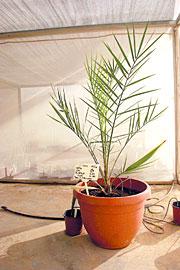
Here's another pic: This is the palm when it was a young sapling.1 point
-
Last one.
 1 point
 -
Metushehlah and Dr. Holowey.
 1 point
 -
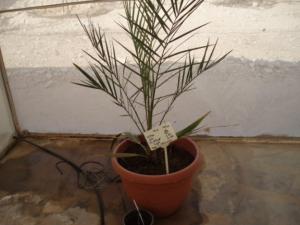
Here are your pictures Ruven, Metushelah in January 2007
 1 point
 -
(Dave from So-Cal @ Feb. 25 2007,03:01) QUOTESo how do we know that the dates cultivated in Judea are any different from ones cultivated elsewhere? Judea was a perfect place for them, like much of the middle east. Are there any distinguishing characteristics? In any case, good luck on getting more seeds and getting them to grow, regardless of what they turn out to be. 2,000 years is a while. The Judean Date Palm is most definitely different, as has already been confirmed by initial DNA testing by Dr. Yuval Cohen at the Volcani Institute in the Negev. I have no details concerning the genetic differences, but hope to obtain them in the near future. As to physical differences, the research botanists noticed that the initial leaves sprouted were much lighter in color than in the currently cultivated varieties; in addition, the third leaf was considerably longer. At present, however, the palm looks like any other two year old p. dactylifera, so it will probably take at least another two years to detect further distinguishing physical characteristics. Finally, so as not to totally exaggerate, the seeds in question are almost certainly between 1,934 and 1,937 years old, unless the Judean Zealots had discovered a way to preserve the fruit - in which case the seeds could be as old as 1,947 years old.1 point
-
(bgl @ Feb. 24 2007,17:43) QUOTERegarding the article(s) you've written - I certainly can't speak for either Scott Zona or John Dransfield (editors of Palms), but I'm fairly certain that if an article is going to be considered for publication in Palms, then they don't want that article published elsewhere as well, so make sure you check with the editors on that! It's already in the works; I've sent off an e-mail to Dr. Dransfield inquiring as to whether a follow-up article, containing information on the planting, DNA analysis and propagation of this palm, would be considered for publication in Palms.1 point
-
(Dave-Vero @ Feb. 24 2007,11:02) QUOTEI assume a few more ancient dates might be made available for germination. Till now, a total of 10 seeds have been treated, but only one has succeeded. Since the seeds are considered to be archeological items in their own right, there is a problem convincing the Powers That Be to hand over their treasure to another institution. It is very likely that once Metushelah (Methusalah in English) flowers, or, more hopefully, fruits, pressure will be exerted upon the seed guardians to be less stingy. Another angle: Israel is a world leader in tissue culture propagation, and two institutes here are already supplying farms with excellent seedlings of p. dactylifera. I have e-mailed Dr. Holowey with an inquiry as to whether it would be possible to propagate the Judean variety in this manner, and am awaiting her reply.1 point
-
Regarding the germination process: Dr. Holowey first soaked the seeds in warm water, which is standard for many amateur seed growers; she then applied gibberellic acid, a growth hormone used by botanists to stimulate germination; next, she added T8, which is a hormone which encourages rooting; she then applied a fertilizer, derived from seaweed, containing enzymes to substitute for the natural nutritional content of the seed (since she was certain the seed's own food supply had long since degenerated); finally, she potted the seed in sterile soil and hooked up the pot to the existing drip irrigation system (typically employed in Israel on farms, experimental fields and even private gardens). The plant was kept, until recently, in protective isolation so as not to be endangered by either insects or disease. I have a rather small but interesting (and very recent) photo of Dr. Holowey standing beside the palm, which I'd be glad to forward to anyone wishing to receive it.1 point