Leaderboard
Popular Content
Showing content with the highest reputation on 07/03/2012 in all areas
-
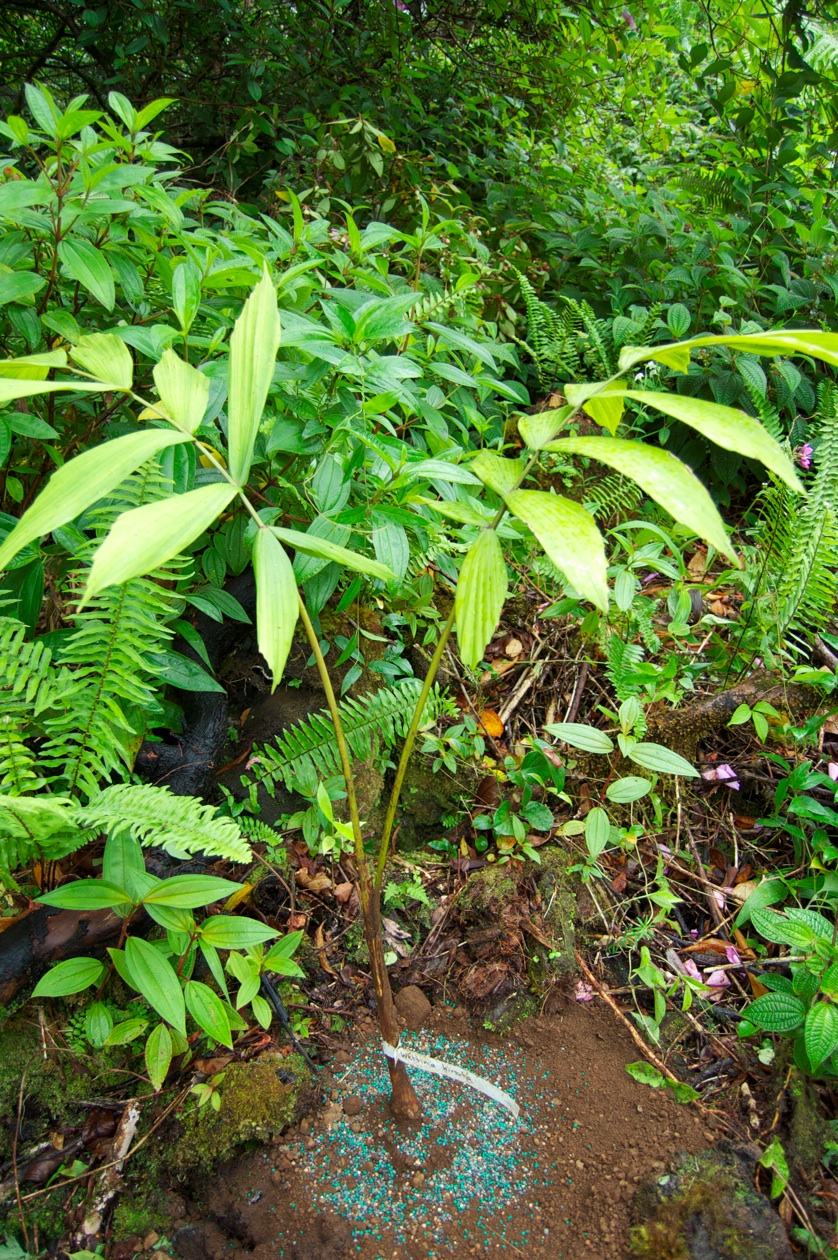
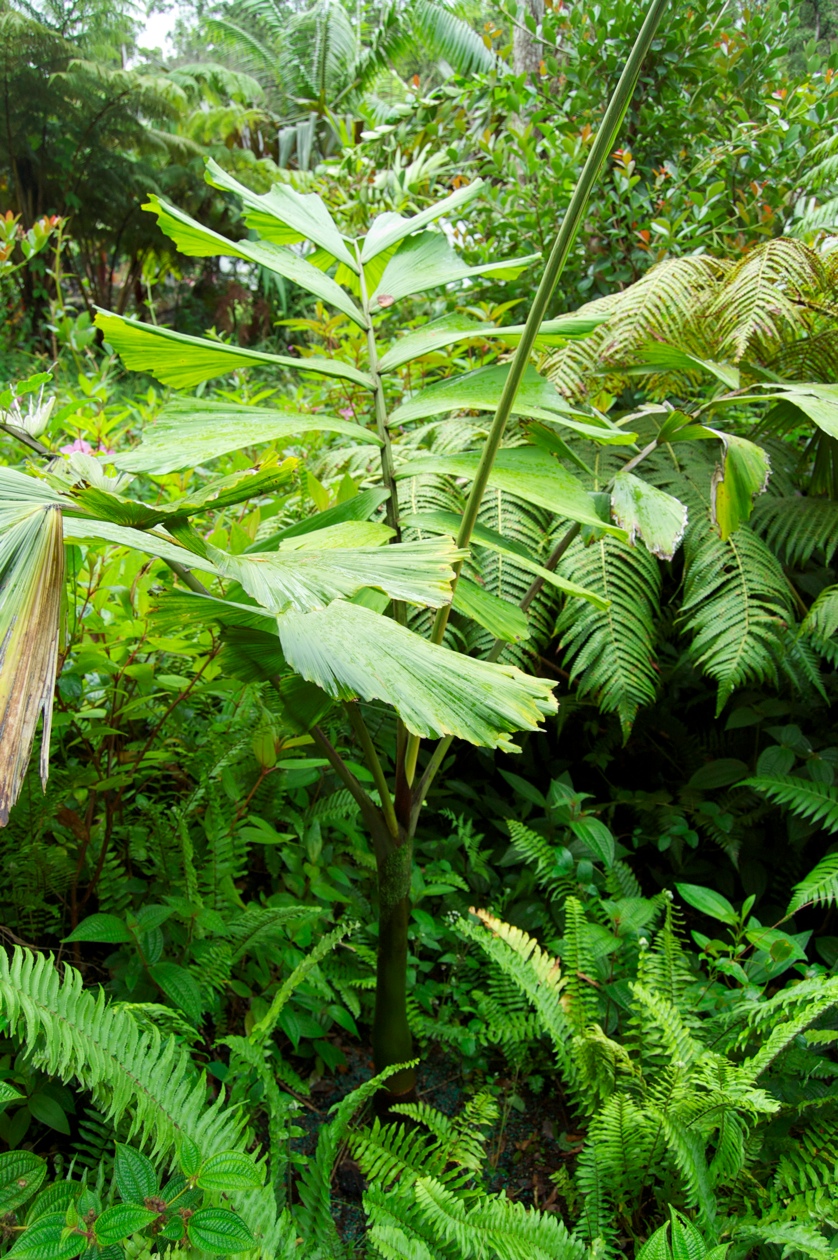
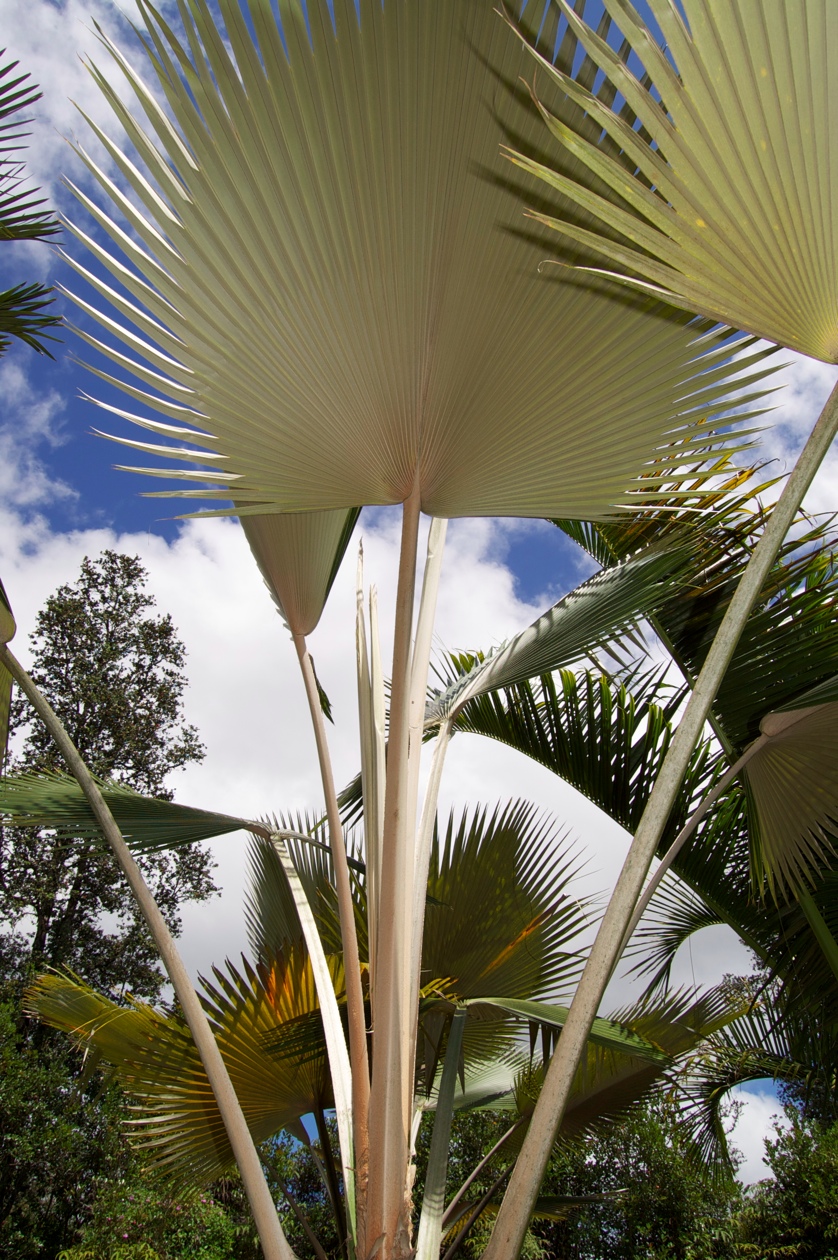
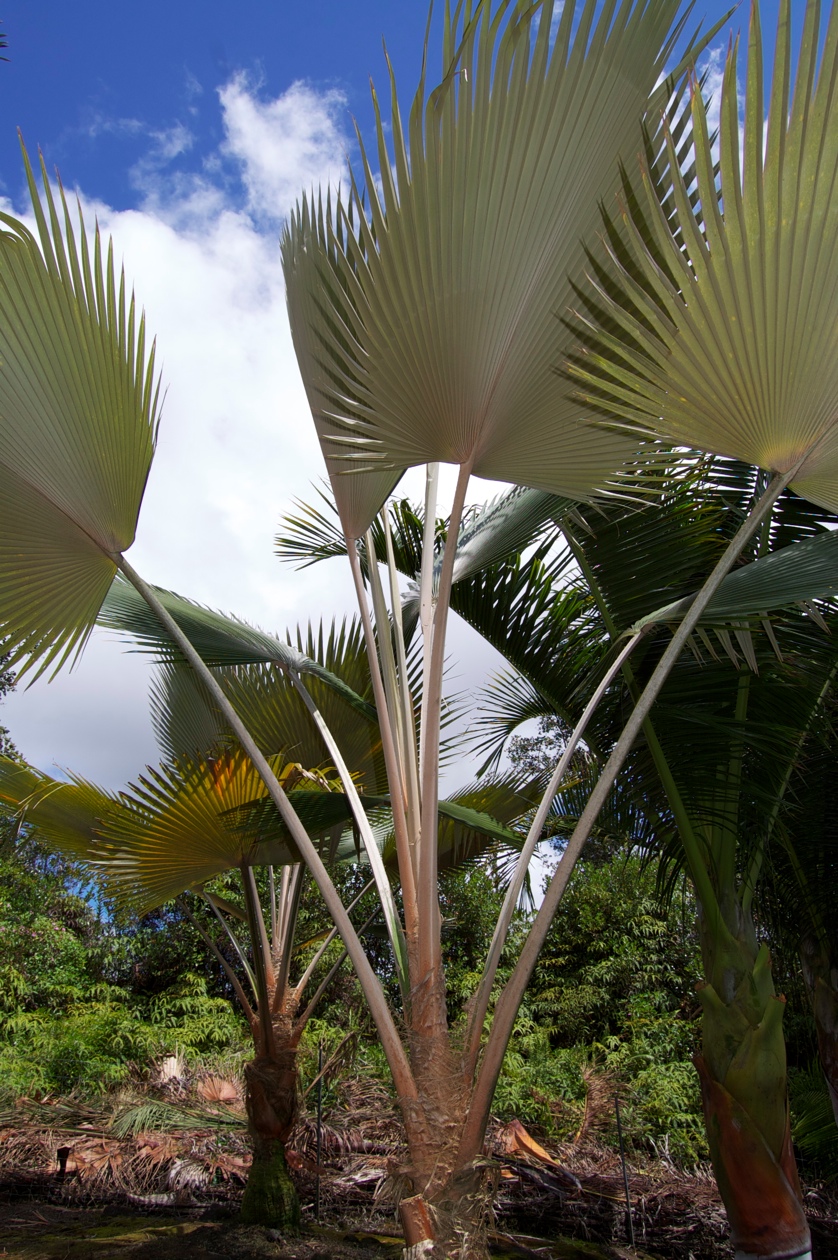
Jason - Very impressive collection of Caribbean palms for a California garden.You may even be the first with a Hemithrinax in the ground in CA.I also have one growing in the Arizona desert,and it seems to be as tough as any of my Coccothrinax species;surviving the extremely high temperatures and even some direct sun without burning.It's definitely been a winner for me and I think when they become a little more common,they will be one of the next "must have" palms. aztropic Mesa,Arizona1 point
-
Wal, It looks like you handled your vaccinations a while back and are unlikely to need any more feedback at this point. But I couldn’t help jumping in to say it looks like you made some good choices. I’m not a medical doctor but have worked in vaccine research and development for several years and have even worked on a vaccine clinical trial that was centered just down the road from Nong Nooch in Pattaya. Deciding on whether to get a particular vaccination usually depends on two main factors: (1) the likelihood of contracting the infectious illness, and (2) the severity of the illness. That is, it might be worth it to be vaccinated against an unlikely infection if the consequences of contracting it are quite dire. Other factors that can also play a role in the decision are cost and vaccine safety, but those were not likely big concerns in the vaccines you considered. Hepatitis A is an obvious and sound choice for travelers. Even though it’s not as prevalent in Thailand as in some parts of the world, it’s readily transmitted, difficult to avoid, and a nasty disease. It’s particularly troublesome in persons over 50 who have a higher fatality rate than younger people. On the other hand, hepatitis B is not so readily transmitted even though it is more prevalent among the Thai population than most of the rest of the world. Hepatitis B vaccinations are being given more routinely nowadays but I can certainly understand someone skipping it. A typhoid vaccination seems like a no-brainer to me since it’s such a terrible infection. Like hepatitis A, it’s transmitted through contaminated food and water. The risk of most of these tropical infections (with the notable exception of dengue) is generally higher in rural, undeveloped parts of the country. I’ve been to Bangkok and Nong Nooch on a few other occasions and can vouch that they are both quite developed. Finally, I recommend having a look at the “ Yellow Book” from the US Centers for Disease Control and Prevention (CDC). It’s full of really great recommendations and timely updates on health risks to travelers to all parts of the world. Good luck on your trip and I hope to meet you in Thailand. Mike1 point
-
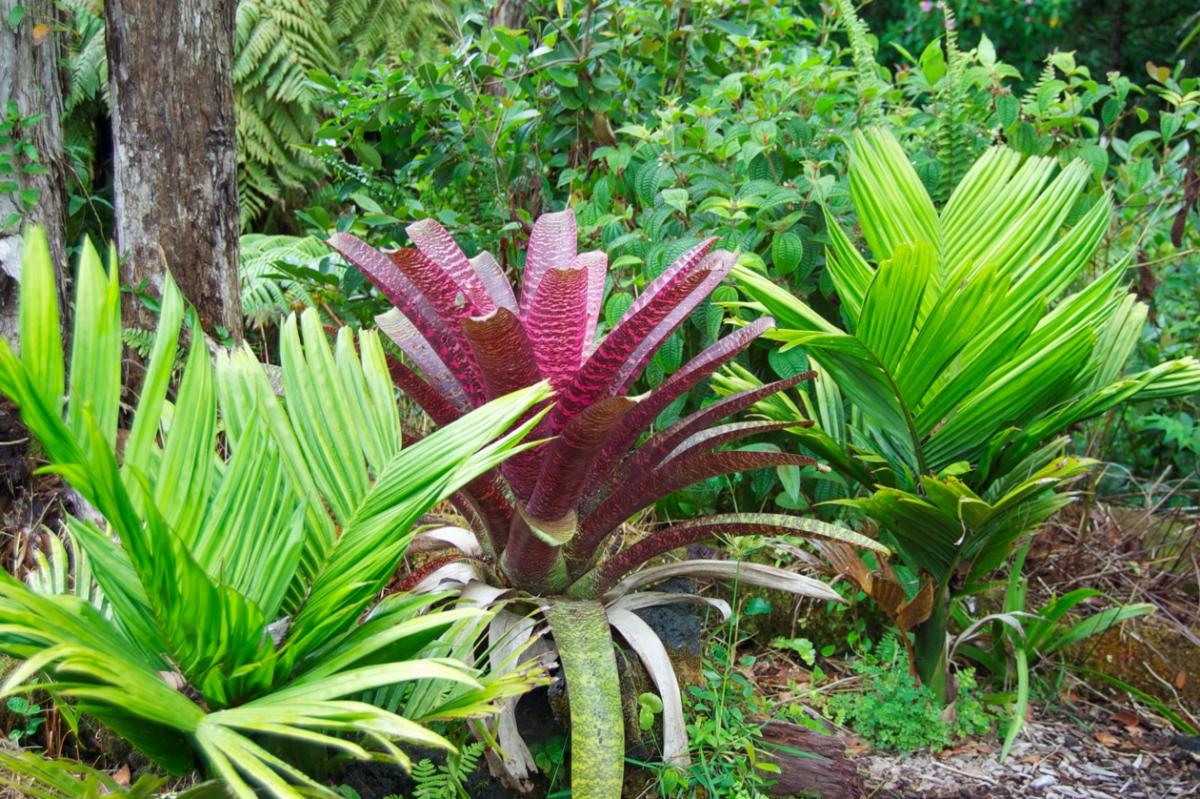
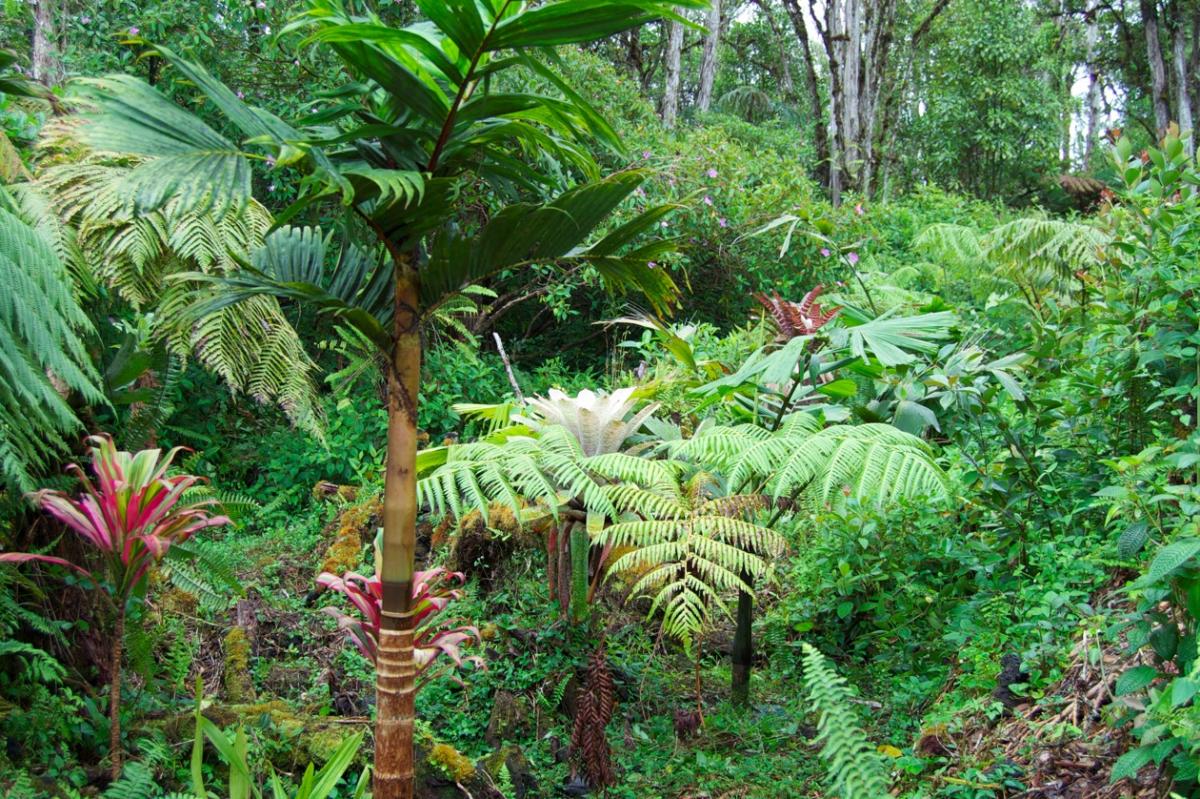
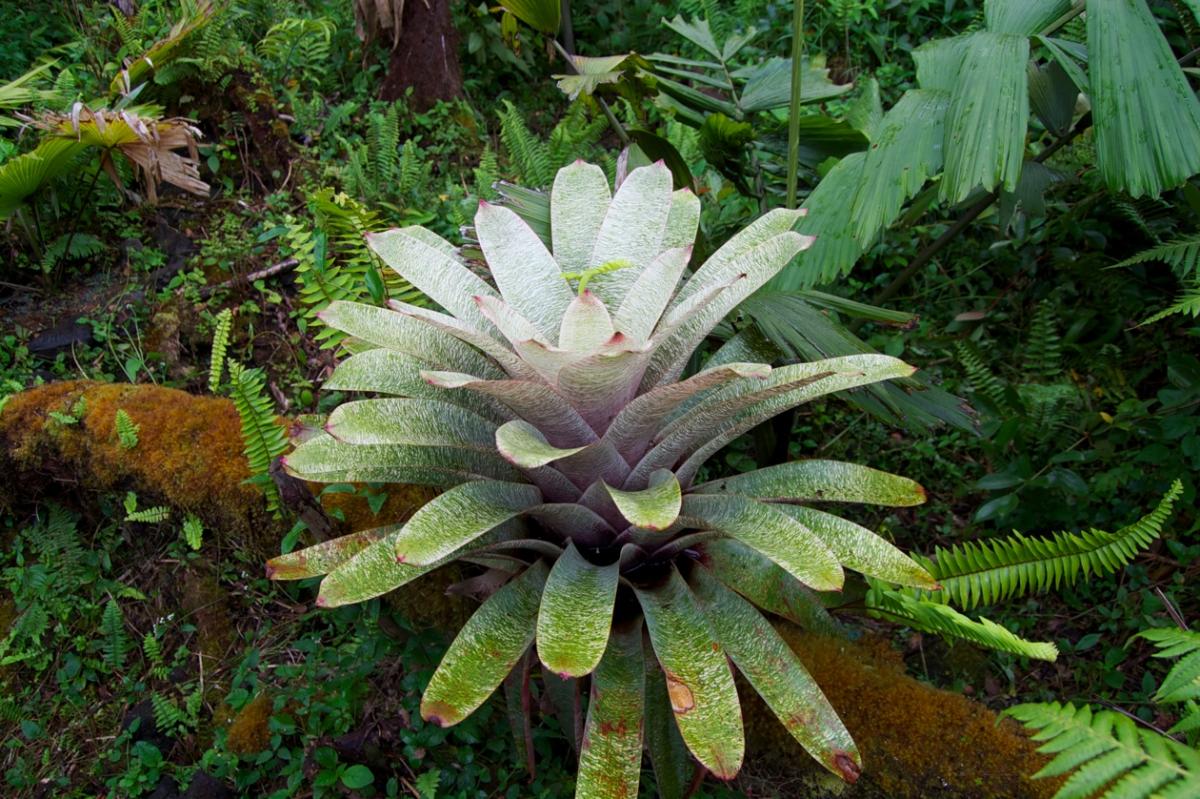
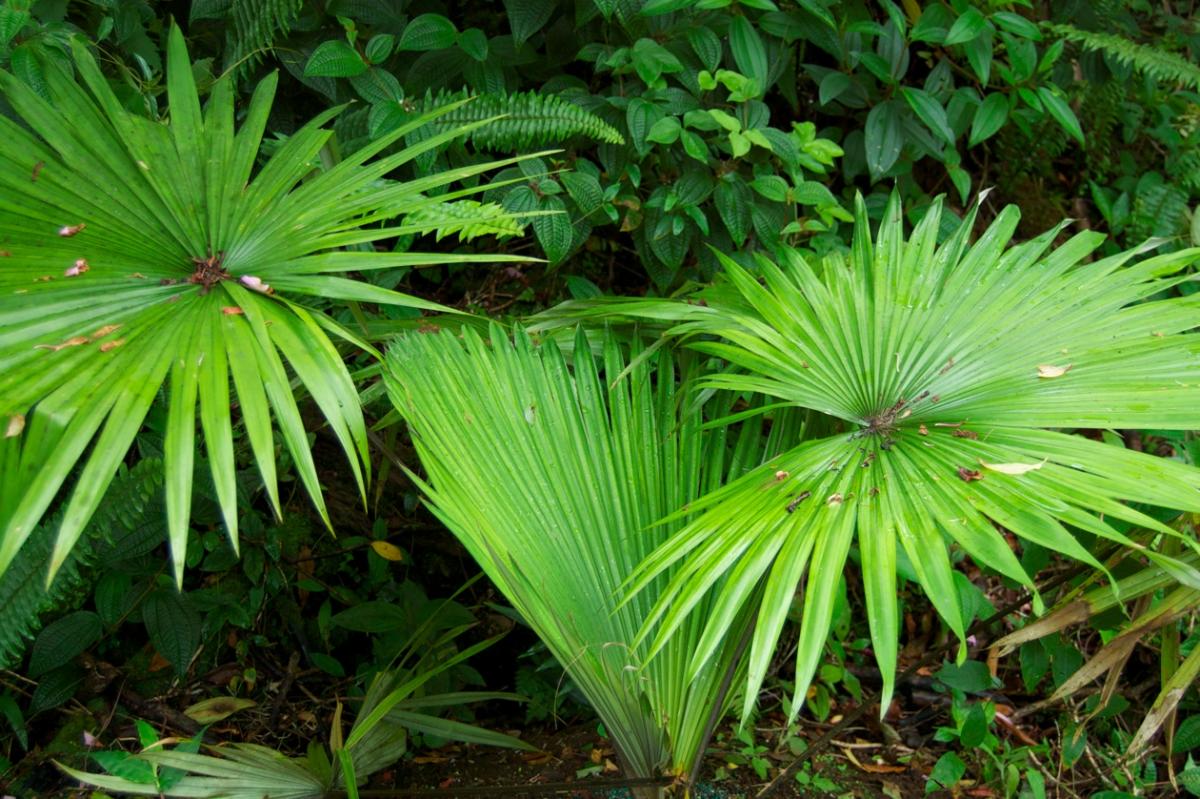
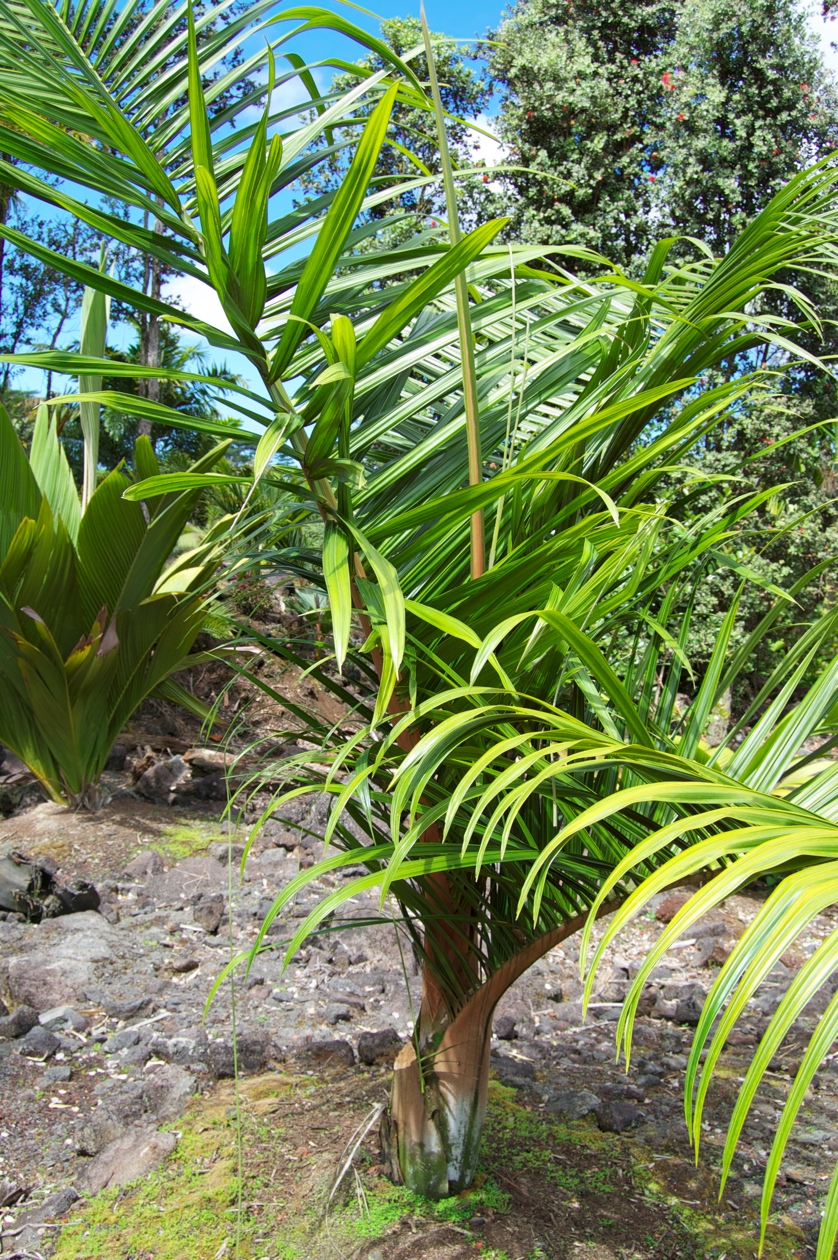
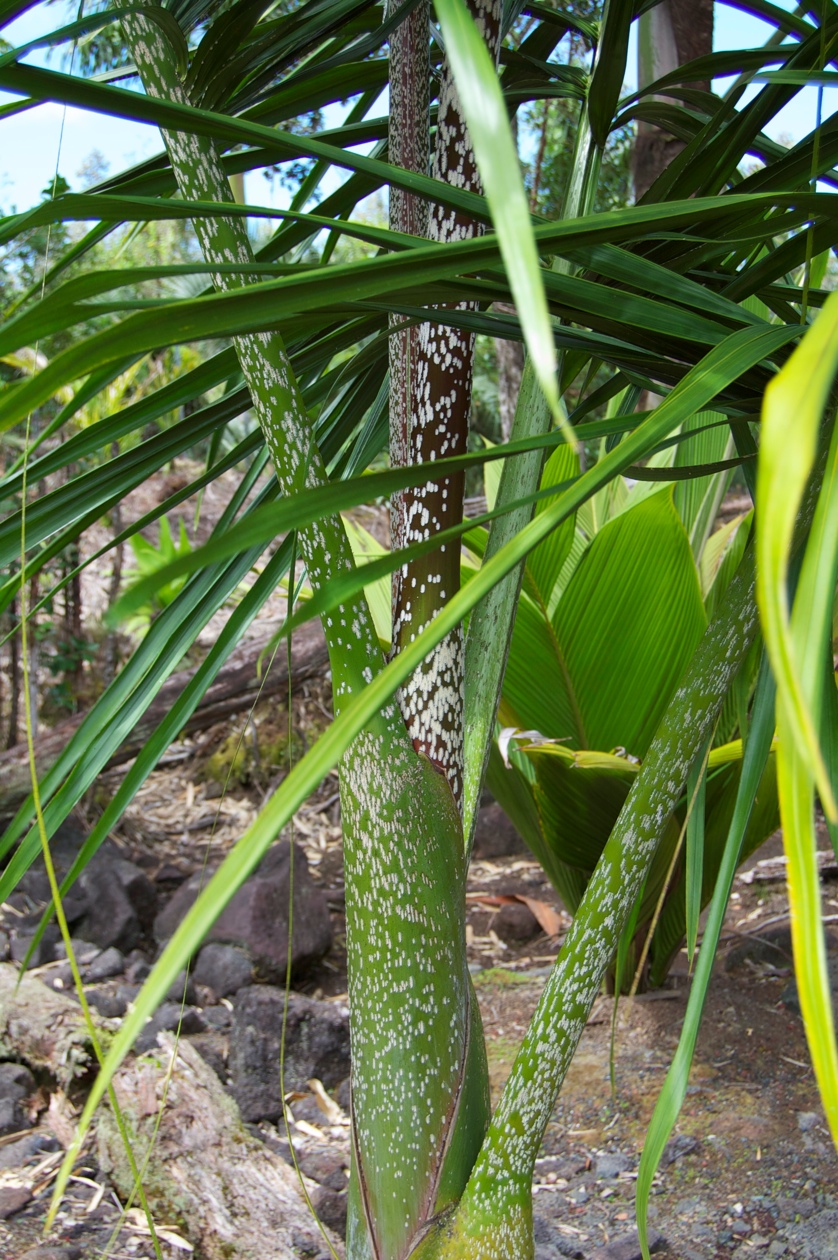
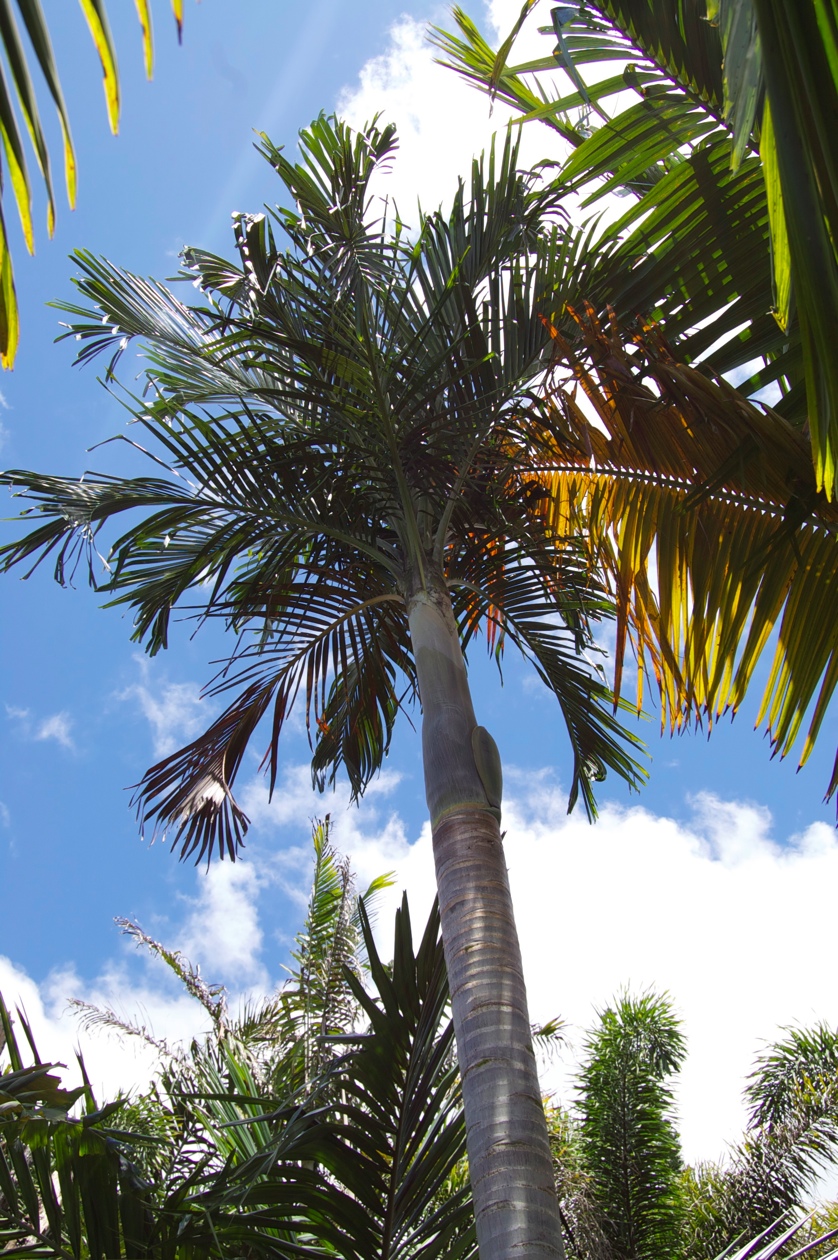
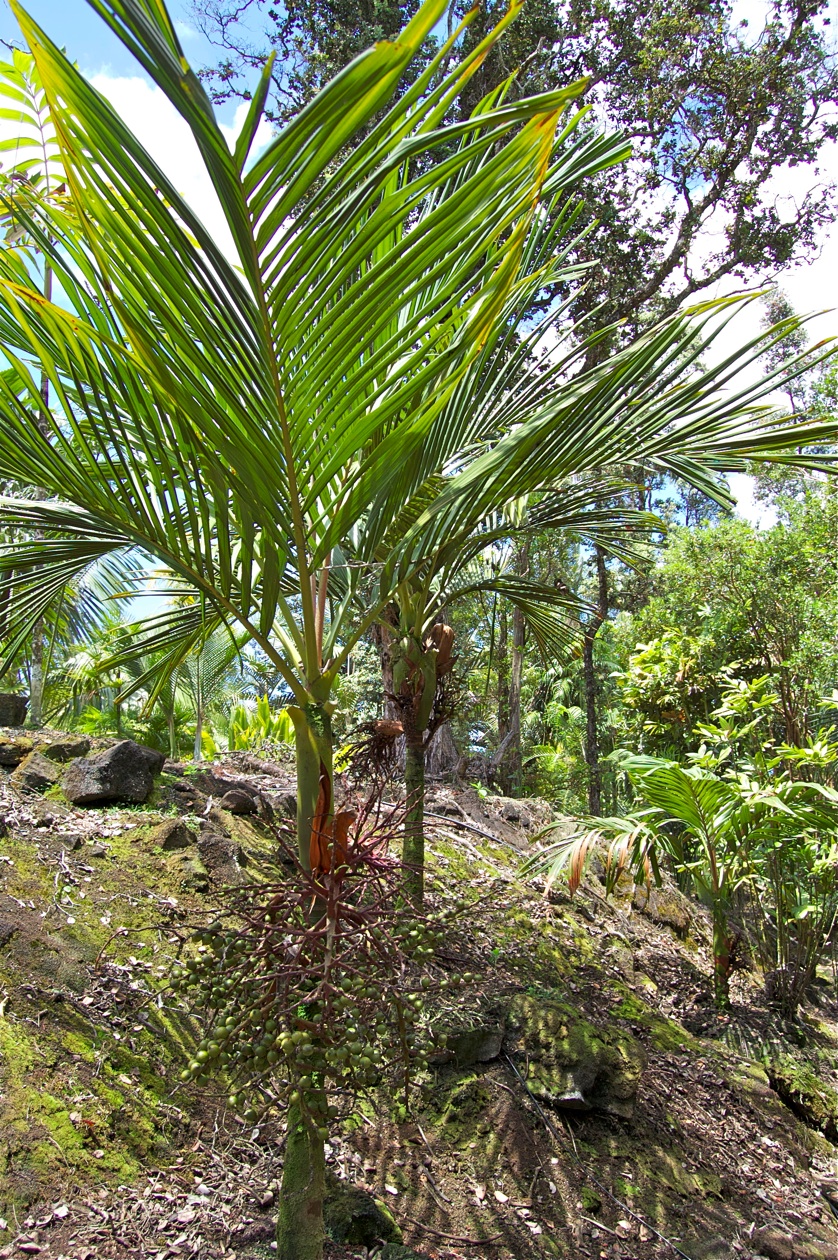
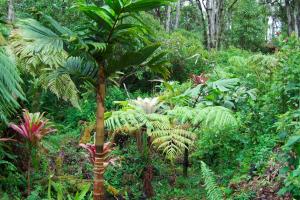
Photos from the wildest part of the garden, most with palms... ~~~ ~~~


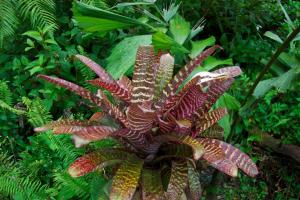
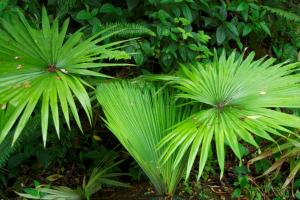 1 point
 -
Freshly planted Wettinia hirsuta............... Youthful Iriartea deltoidea ~~~ Orchid surprise with Kerriodoxa in background......... Pinanga maculata ~~~


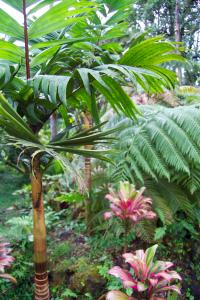 1 point
 -
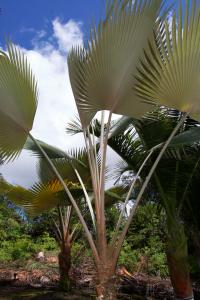
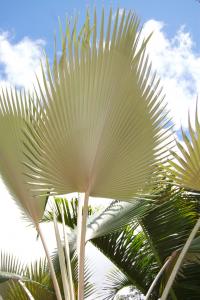
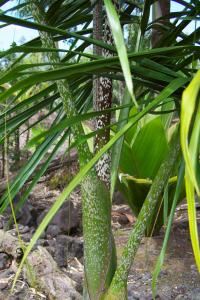
This Pritchardia viscosa was a delight to photograph, begging your indulgence in multiple pix. Another lesson for me in trying to identify young Dypsis: on the left, young D. mananjarensis. On the right, more mature D. mananjarensis. They do change as they grow. Oops! Big correction here: Palm on left is not mananjarensis. I bow to the superior ID skills of my forum peers! I guess I can't listen and take photos at the same time. Last photo, Bo and Suchin with the truckload of palms. She is smiling because she and Jeff just sold us twice as many palms as we had intended to buy.
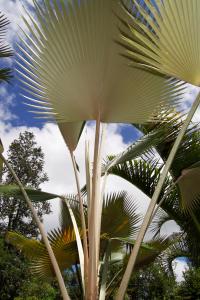

 1 point
 -
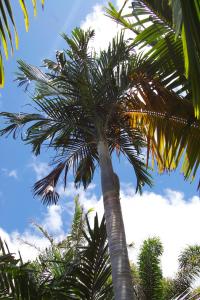
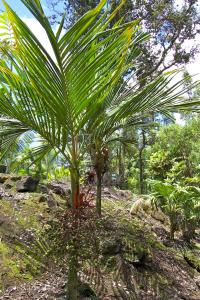
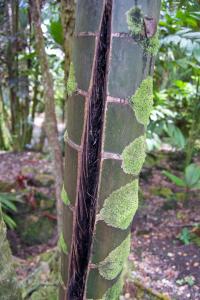
A few more sights you don't see every day, Hydriastele macrocarpa: Loxococcus rupicola producing seed knee-high off the ground. What happens when a palm is fertilized heavily, gets lots and lots of rain, then a dry spell:
 1 point
 -
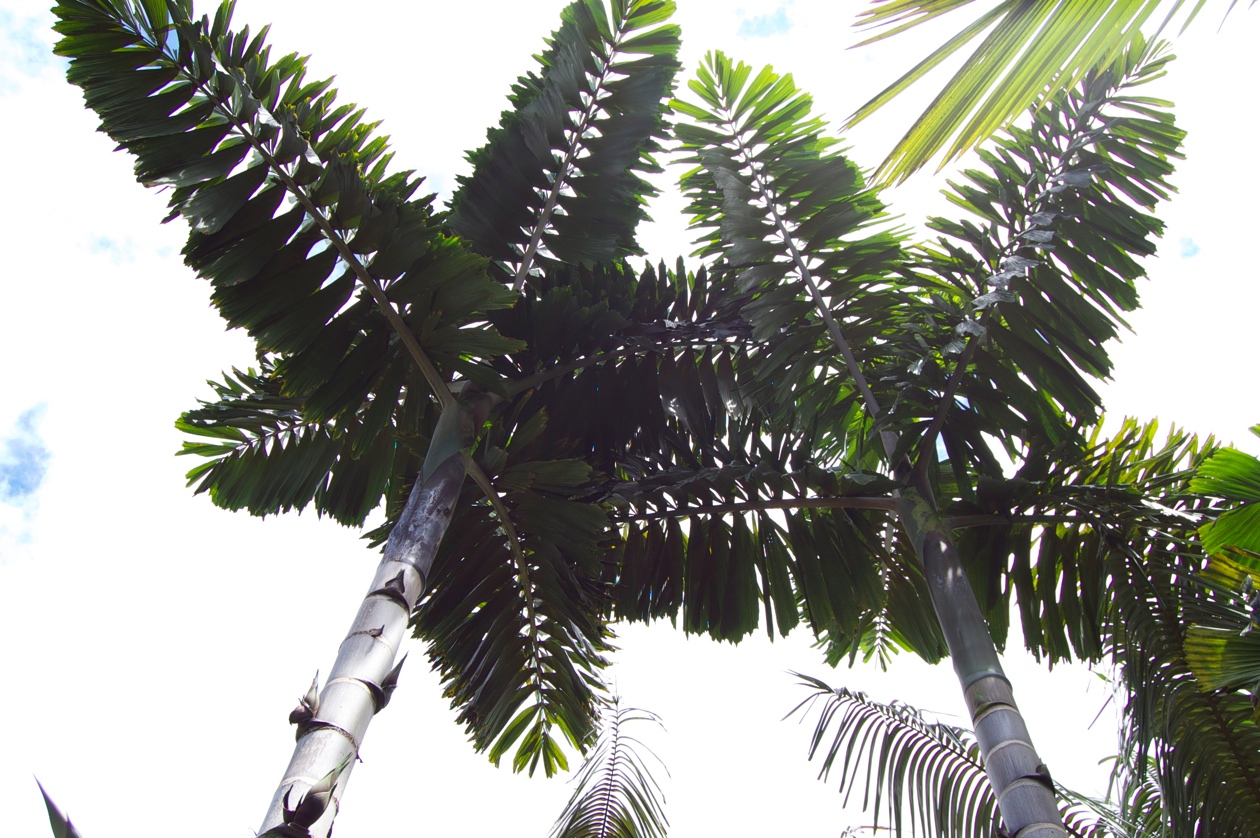
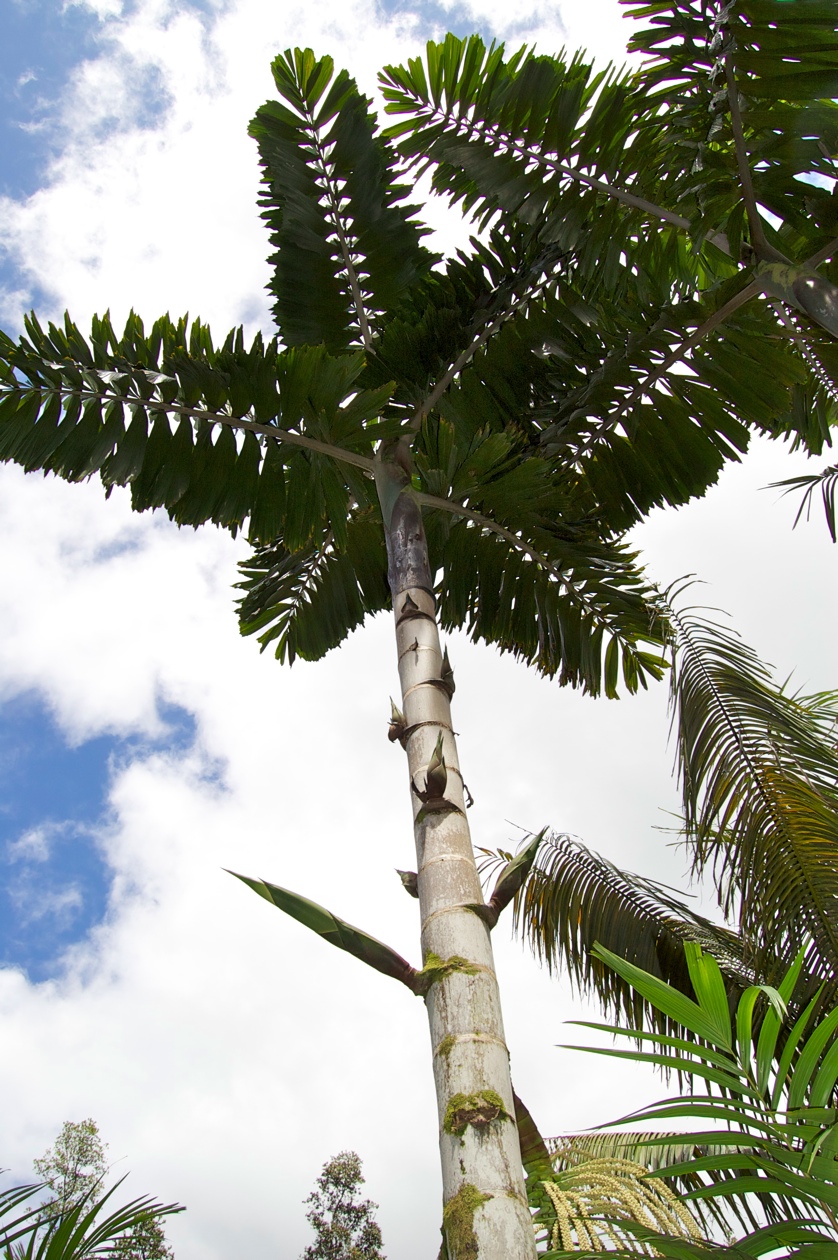
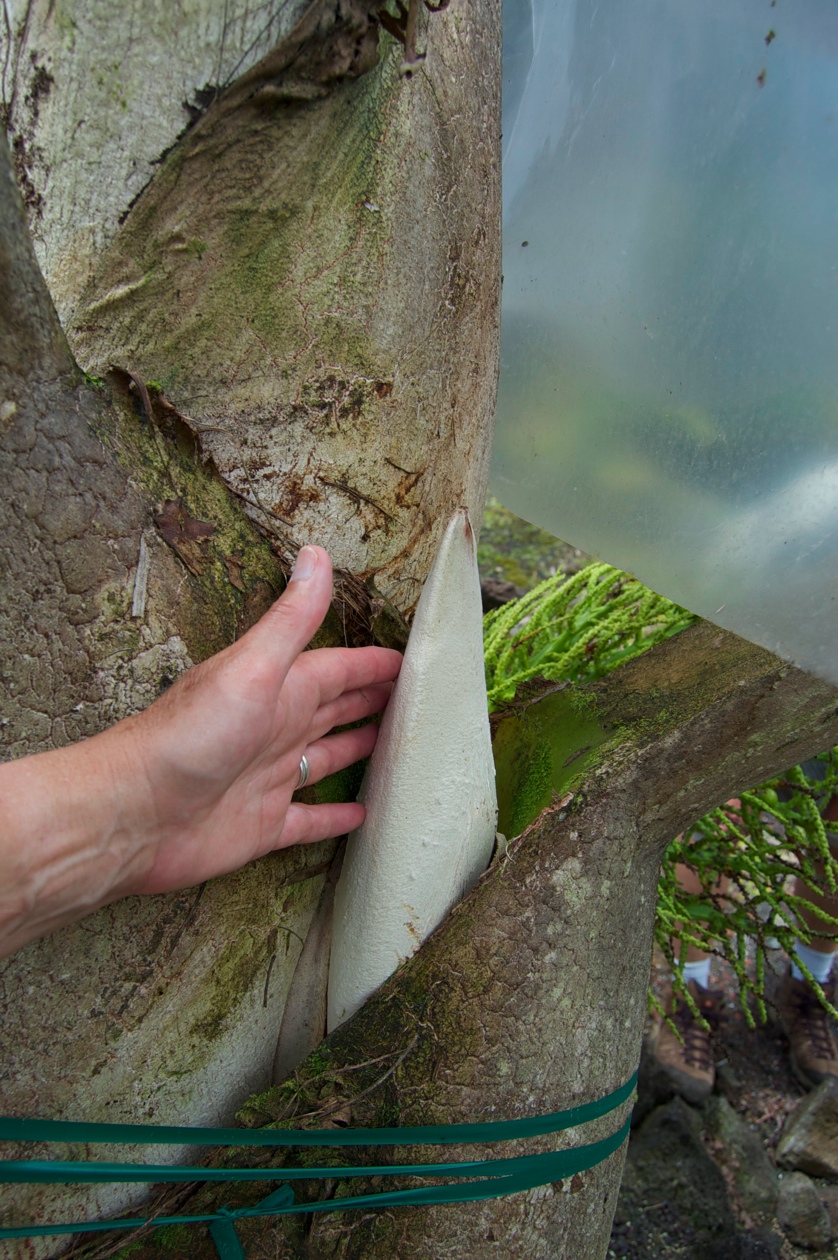
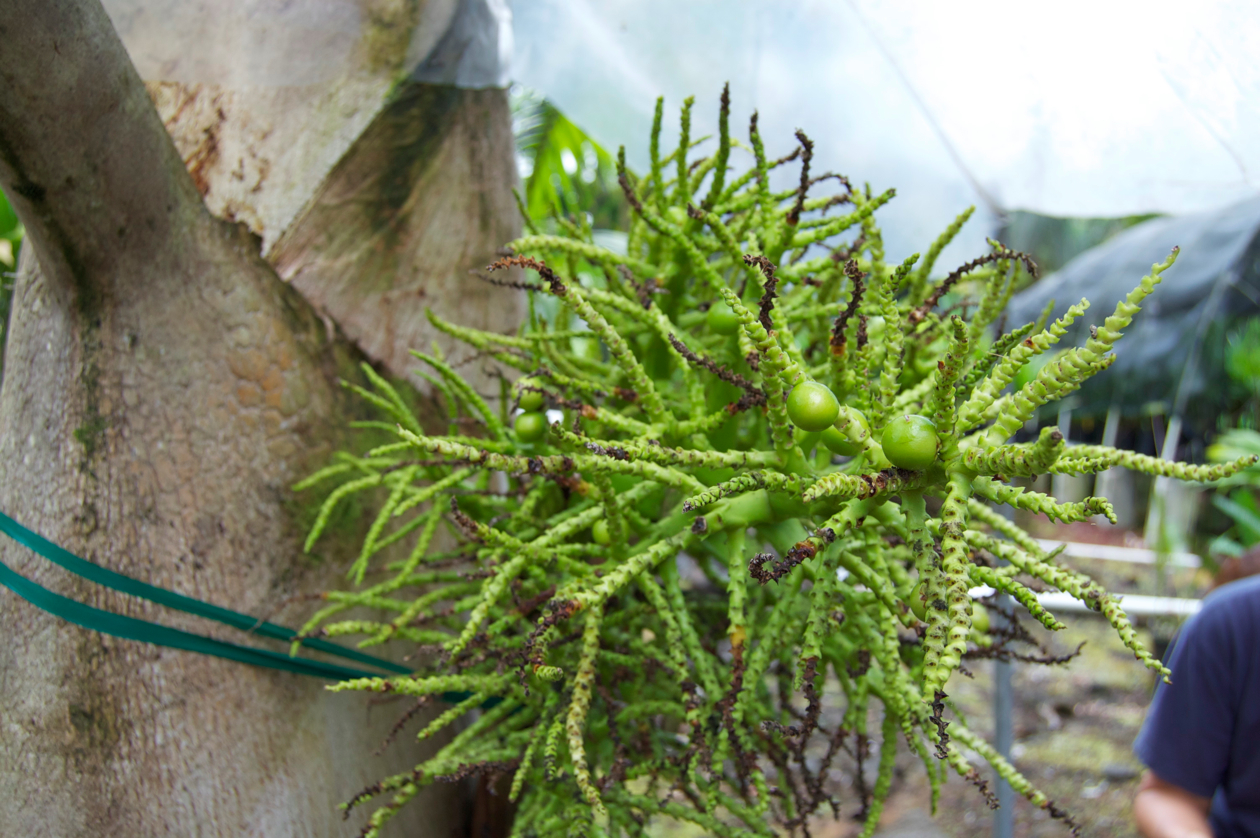
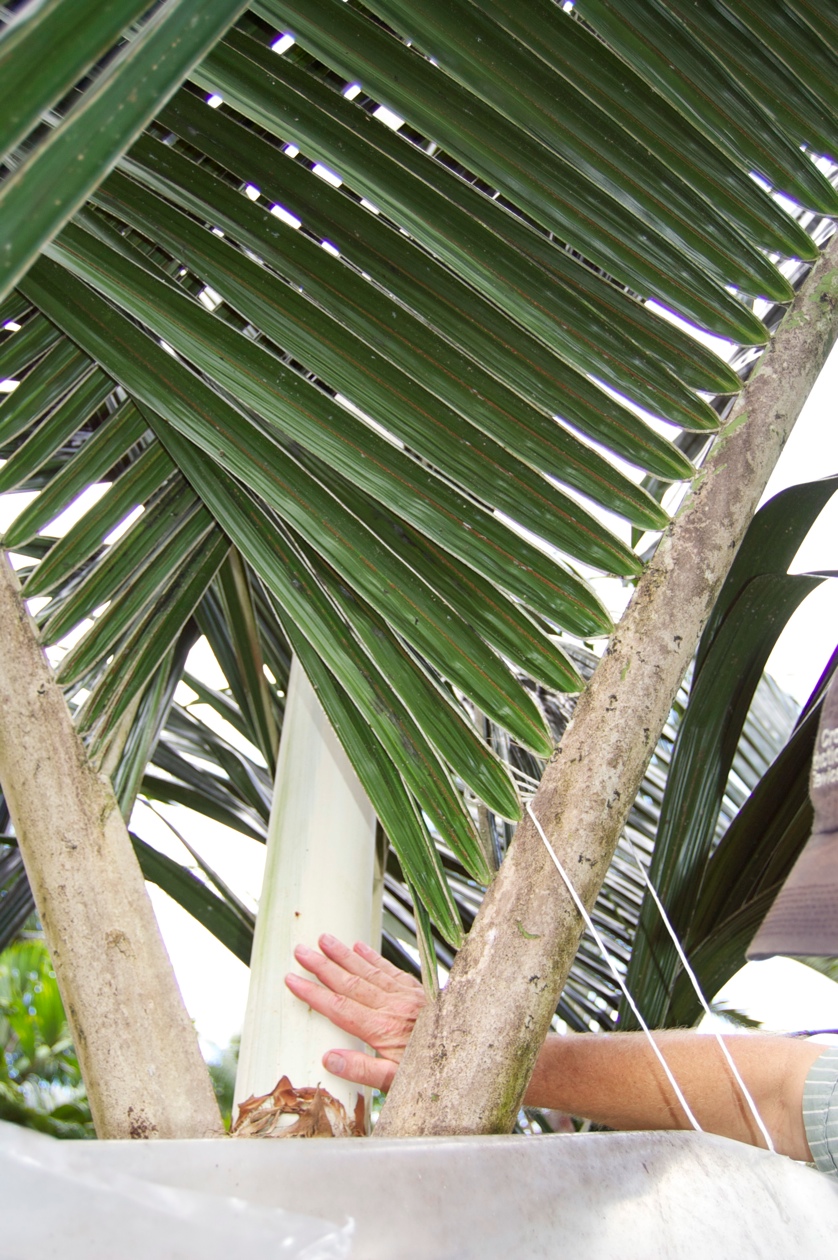
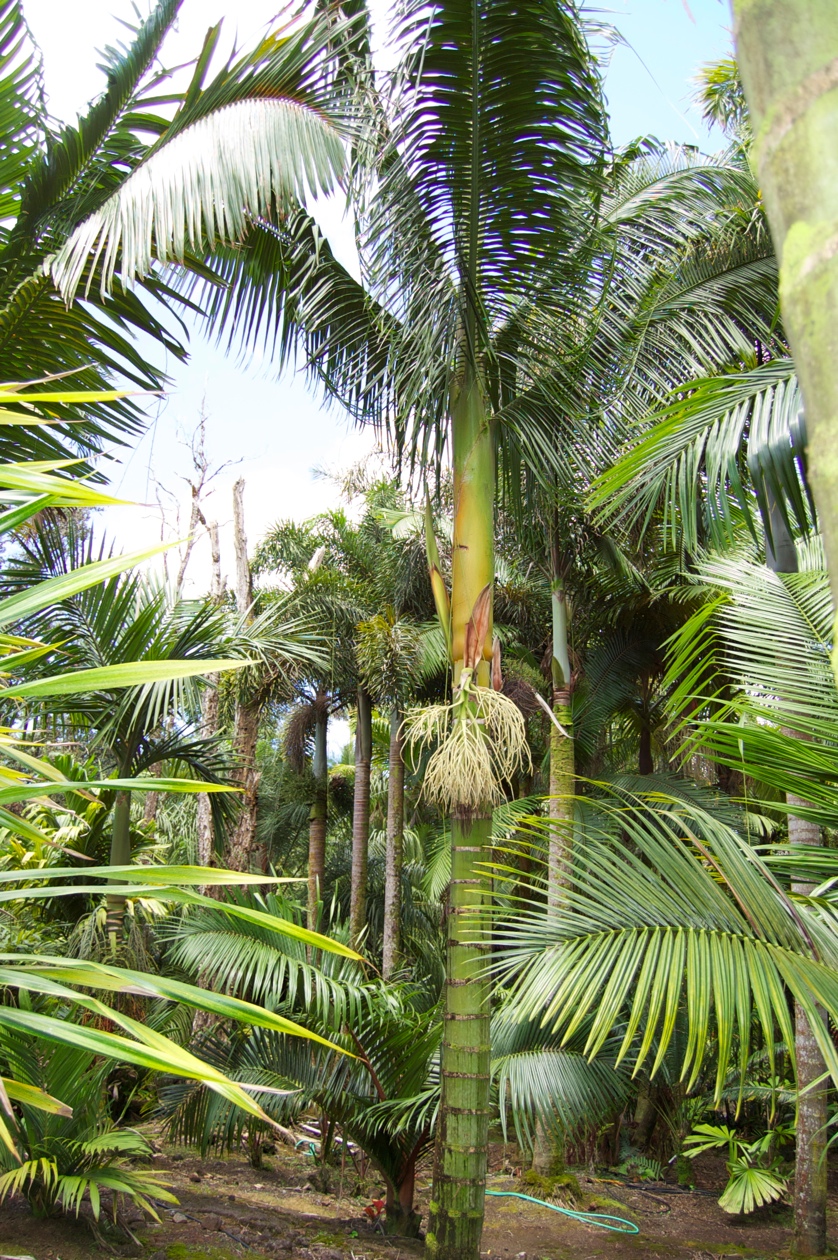
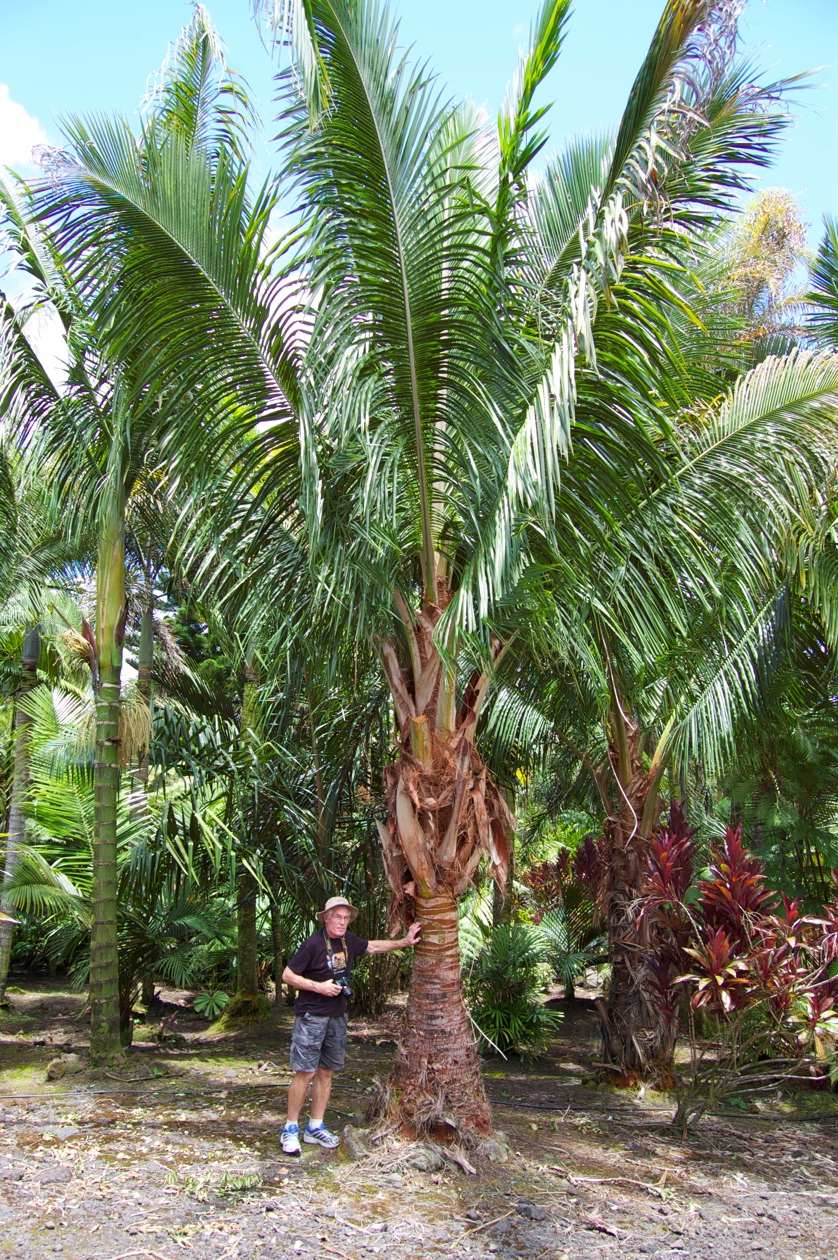
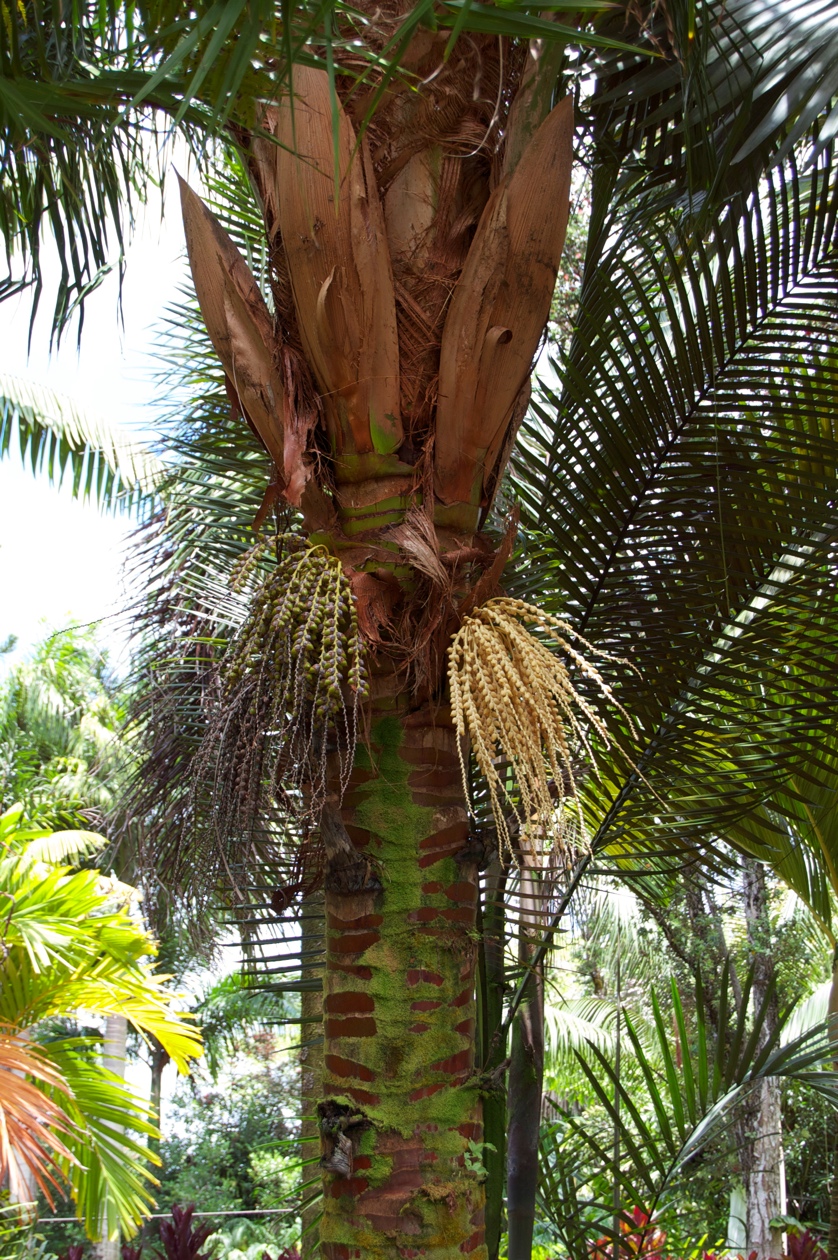
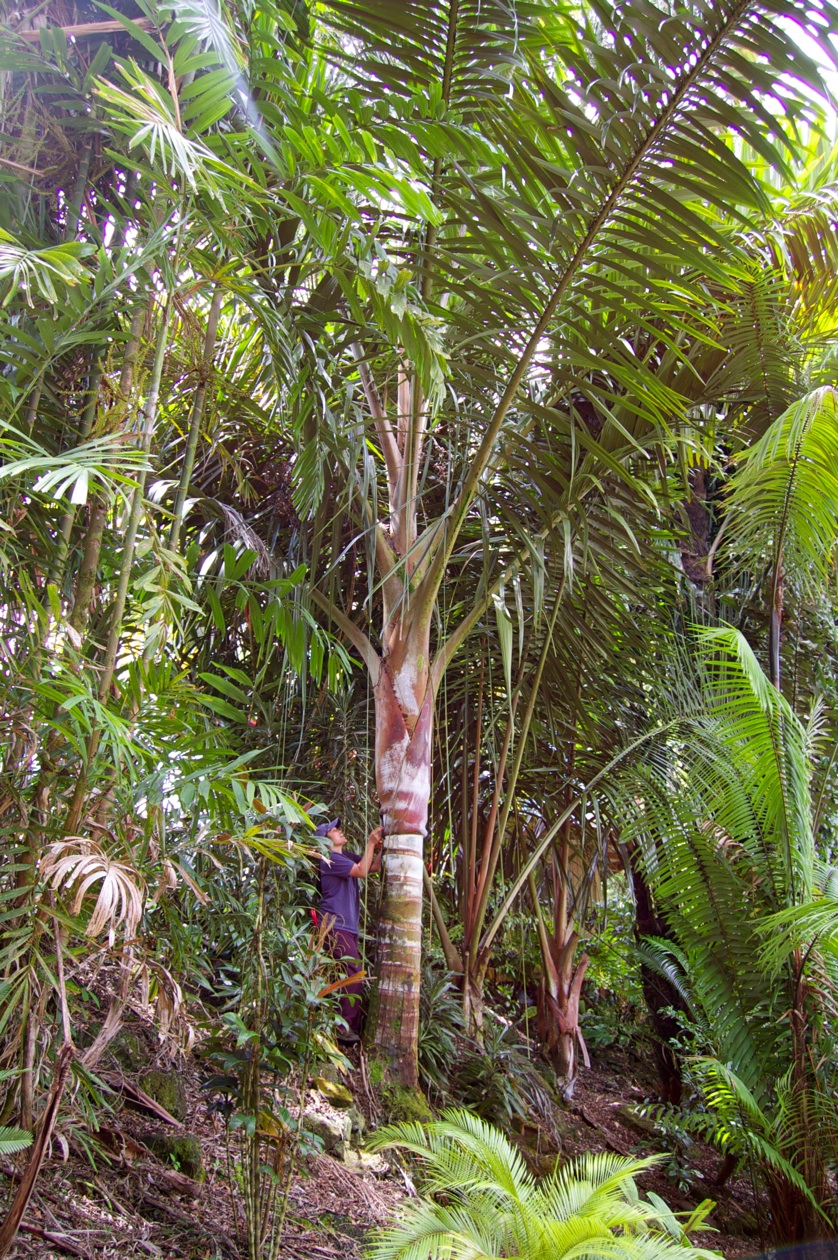
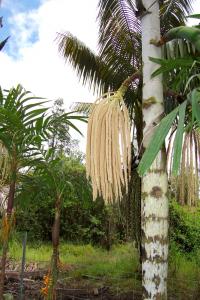
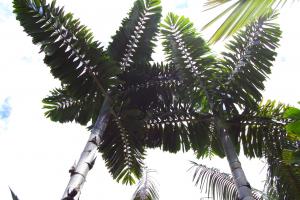
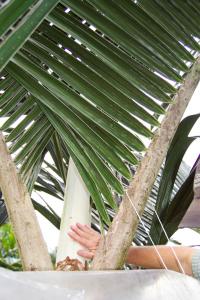
When we came upon the Iriartea deltoidea, all I could say was, "OMG! OMG!" These are very tall and very impressive. Some closer shots of the Dypsis leucomalla (fka 'sp. white'). As Jeff describes it, this thing feels like styrofoam. It isn't plant-like. He had rigged up some plastic to keep the recent heavy rains from knocking off the seeds. Jeff's hand on the spear for scale, 4th photo. We're talking Jurassic...
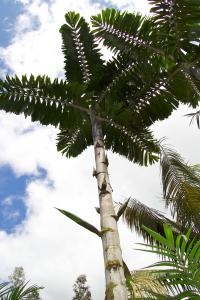
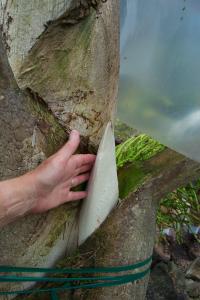
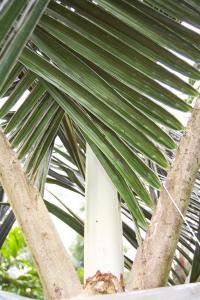
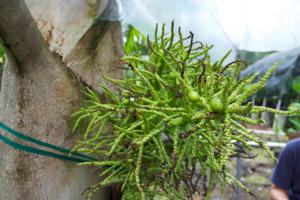
 1 point
 -
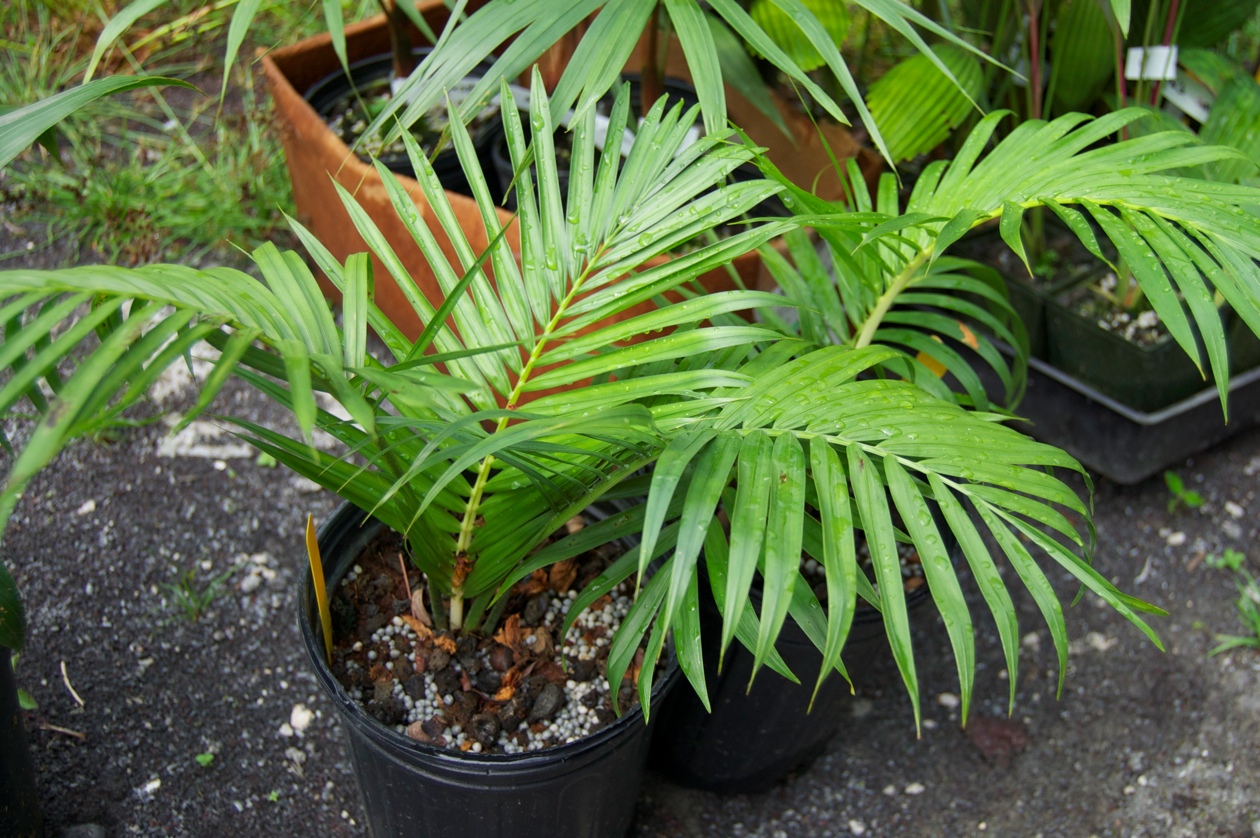
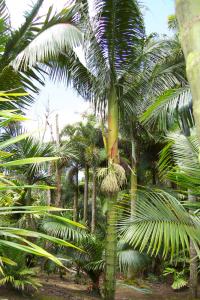
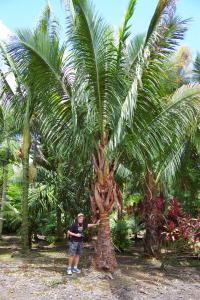
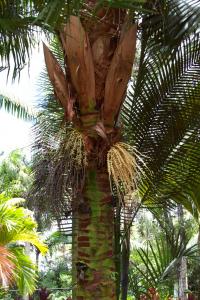
At the risk of causing further injury, I have a few more photos to add. Let's start with an ordinary Dypsis pilulifera, or 'orange crush'. I was hoping to buy a few, but this is not a good choice for an absentee grower as they can be difficult to keep happy when small. Just in case you were not floored by the size of the Beccariophoenix, here it is again, and another with flowers and seeds: A close-up of the renamed Licuala, Lanonia dasyantha: Something really cool from Colombia and Ecuador (thanks for the correction), a Geonoma Jeff described as "chocolate"; the name is G. tamandua var. macrostachya. The can grow at least chest high, with big fat leaves; the unusual coloring and leaf texture are remarkable.
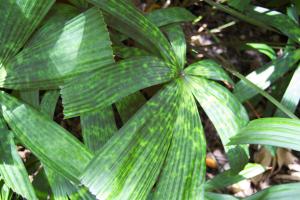 1 point
 -
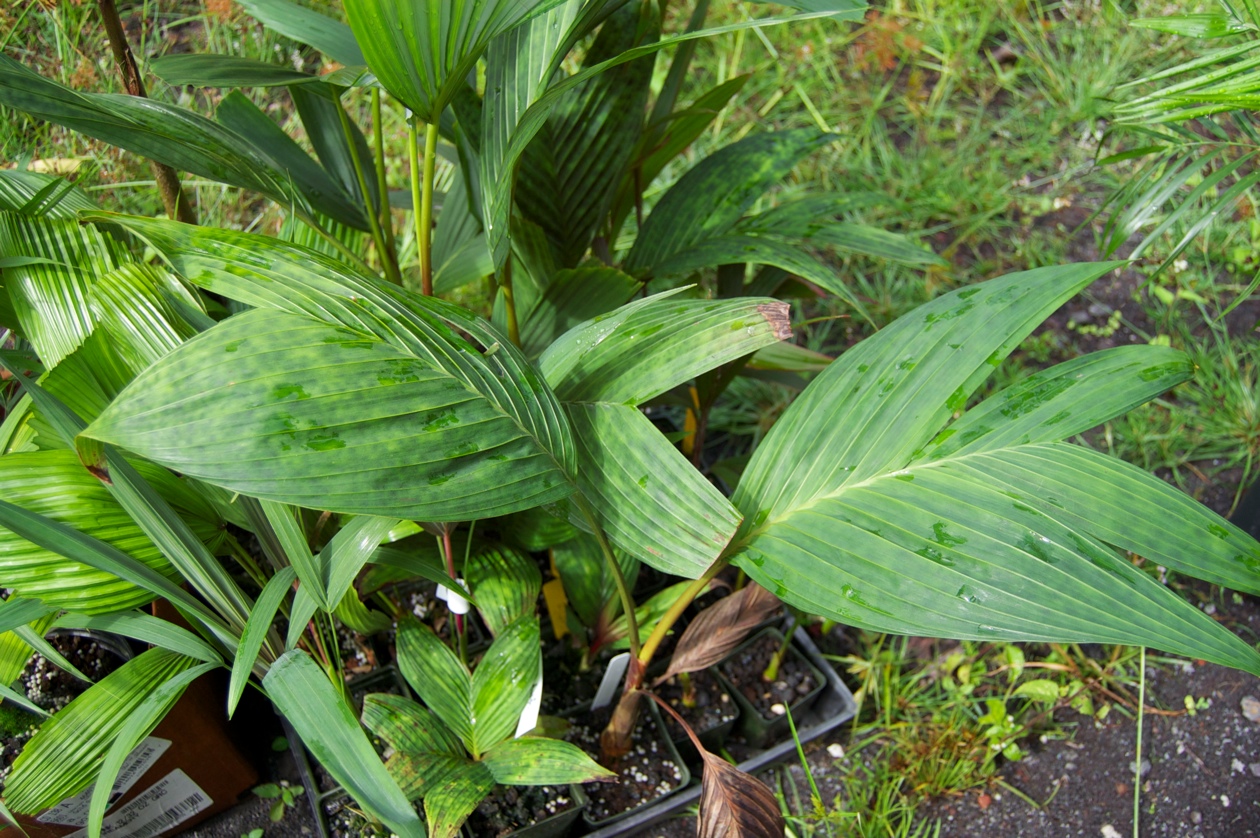
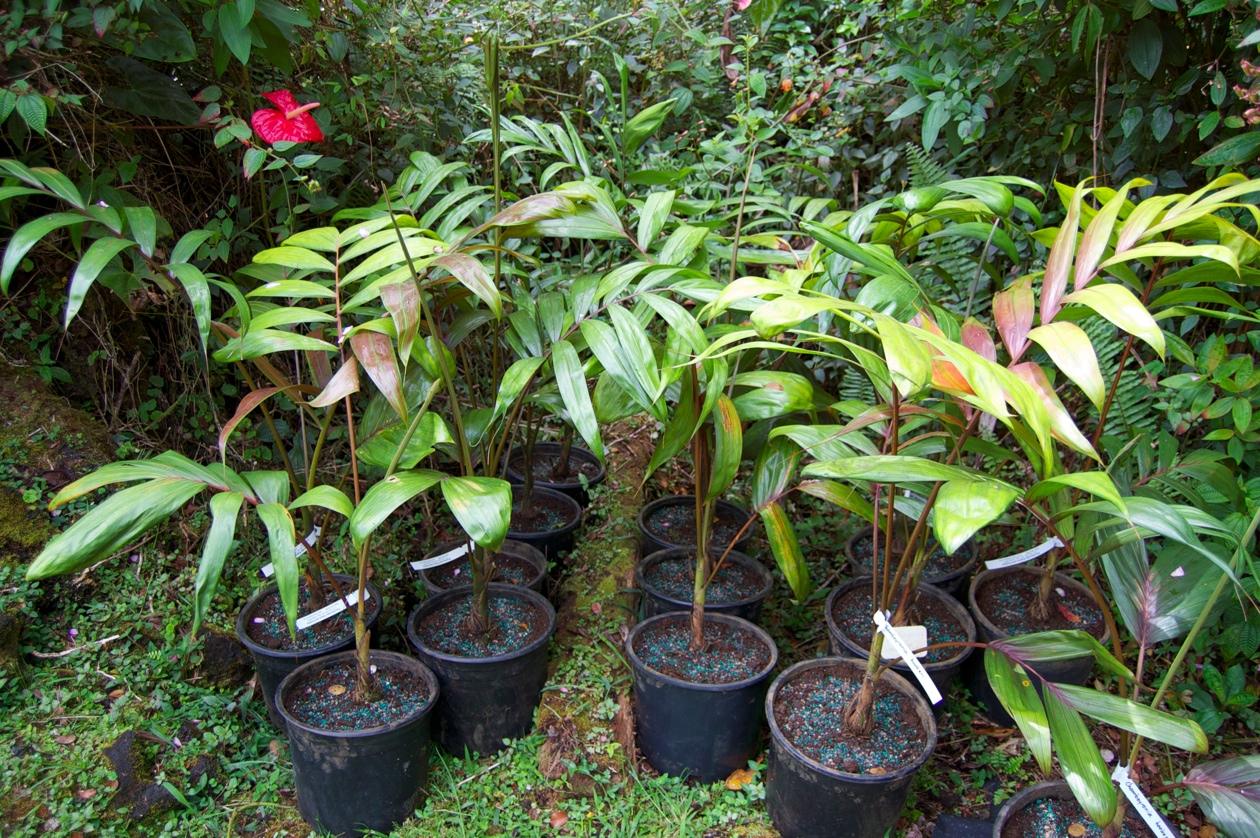
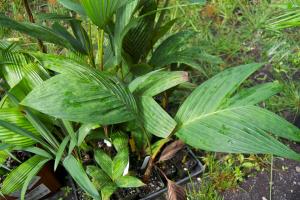
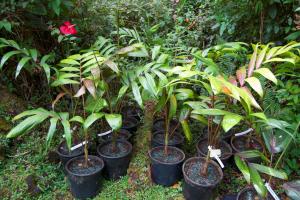
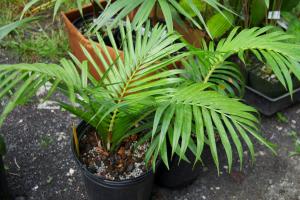
Seems like we took photos of many of the same palms. I will sort through later to see if I have anything fresh to add. For now, I will post a few closeups of the purchases so you can see the offspring of those fabulous palms. First up, this is a one-gallon Dypsis marojejyi, or "Mad Fox": Some barely-germinated Dypsis -- if all goes well, someday these will look like the photo with Suchin: In the mix: Licuala peltata v. sumawongii, Dictyocaryum lamarckianum, Dictyosperma furfuracea, Dypsis saintelucei dwarf, Pinanga caesia (tiny), Pinanga curranii (taller); Dypsis uncertain; Chambeyronia macrocarpa group, half 'hookeri' after potting up from 1-gallon to 5-gallon. Time for my banana break; more later...

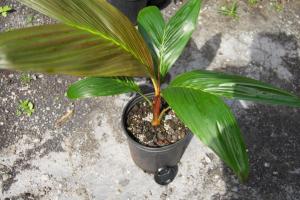
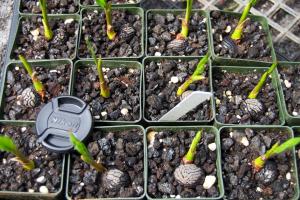
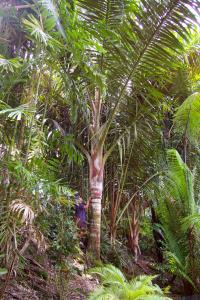
 1 point