Leaderboard




Popular Content
Showing content with the highest reputation on 12/02/2010 in all areas
-
Hi Tom, It just so happens that a lot of palms are native to poor, southern countries, while the rich, cold countries of the North, don't have many. If you have a problem with that, why don't you specify. That aside, there is nothing wrong with collecting wild seeds as long as it is done in a sustainable fashion. A lot of products come from wild forests, some even traded internationally on a larger scale (timber, nuts, fruits etc., some sustainable, others not), many others to just provide for people who live in or near a forest. Is it not preferable to harvest products from a wild forest than to cut down that entire forest to plant crops? People have picked things in forests since the beginnings of mankind. Has that destroyed the forests or exterminated plants? No. The one thing that has destroyed nearly all native forests on this globe is the white mans idea of agriculture, and that destruction is still taking place as we speak and on a frightening scale. And please don't get me wrong here, I am talking about sustainable harvest, which is usually something that works very well on a small scale, like palm seeds, but does usually not work too well when something gets to an industrial scale, such as, say Chamaedorea leaves in Central America. Yes, I would at least exclude all seeds from CITES. The selection of plants on CITES makes no sense anyway. There are a lot of species listed that are well established in cultivation and where nobody would EVER go collect them in the wild, and at the same time there are many species much more endangered that are not listed on CITES even though they easily could be, at the request of a single country. Why is Pritchardia viscosa not on CITES? Why are Fitzroya and Araucaria araucana still in appendix I (= seeds are not exempt) when the threats to their survival were never international trade and when the threats to the wild populations have basically been eliminated? Why are so many Aloe on appendix I (= seeds not exempt) when all of them are in cultivation and a single plant can provide tens of thousands of seeds to establish it there further (= eliminating pressure on wild populations). Why is Ravenea rivularis on CITES (with seeds not exempt) if not for a power struggle between two rival government agencies in Madagascar? (I'll explain that one if you like to hear the story). I could keep going, there are plenty more examples… Tom, yes, of course it is not possible to personally visit every single person that I buy seeds from and verify that it is done in a sustainable manner. For this, my business is too small and my funds too limited. However, people on this board who know me will be able to confirm that I have traveled extensively and have in fact been to most places I buy seeds from. Since you are not an IPS member (why?), you may not know that I have contributed a few things to palm research and I do know from plenty of first hand experience what I am talking about. May I be so bold as to ask what your background is? I thought I had made it pretty clear what I think of people cutting down palms to collect the seeds. The guys who did this on Wodyetia were obviously complete idiots, as only an idiot would cut down a plant that could have provided seeds for many more future harvests, even if illegal. This in NOT how palm seeds are usually collected -- it is in the interest of any thinking collector to keep his source in good health, ESPECIALLY if it is very rare. Please do not make the mistake to think that Wodyetia is a typical example of how things go with collecting rare seeds. It is not. In fact, for horticulture Wodyetia was a discovery of one in a million. Most rare plants never get this kind of attention and this kind of distribution either. From a government/regulation point of view I think the perfect way to learn how to do it wrong is from how things went with Wodyetia and how to do it right is from how things went with Carpoxylon. Both had plenty of government involvement, but with Carpoxylon, palm enthusiasts were invited to join in saving a species from the brink of extinction. Not one tree was harmed in the process, and the species is now well established in cultivation, in Vanuatu and elsewhere, and starting to produce all the seeds one could ever wish for. Wodyetia could have been managed the same way. Aside from that I recall an article in the Australian Palm Society magazine that explained this all very well. I think it was mentioned there that the damage that feral pigs did to the Wodyetia populations was far greater than even the damage done by the idiots who cut down trees for the seeds. In any case, Wodyetia is so common now in cultivation that nobody would go to the trouble of bothering any of the wild trees for seeds. Despite some misguided government interference, the wild plants will be safe from that threat for all times. Is that not an achievement, despite all the things that went wrong (from government as well as from enthusiasts side, I totally agree)? Yes, I completely agree that cultivated plants, even if well managed, are not a substitute for wild populations, but they are a way to satisfy the desires of plant enthusiasts by providing seeds from a safe and plentiful source. I am still waiting for your answer though on how you think a wild population can be reestablished if the causal factors for its original demise are still in place (pigs, rats, habitat degradation in the case of Pritchardia)? If a population cannot reproduce without human interference (fencing, replanting etc.), that population is essentially cultivated, not wild, as is the case with a lot of the Hawaiian Pritchardia. Let me answer your question with another: If collectors in fact are the main threat to P. viscosa reestablishing a stable population, what would happen if you removed that threat? By the way you are arguing, that would do it, but you know as well as I that that reestablishment will never happen even without seed or other collectors, instead, you will see further decline. My approach: Pick the seeds those last remaining plants produce, sell half of them for a high price into good hands and with the resulting funds, propagate the other half to be reintroduced into the wild later on. As for Tahina, it is not my intention to diminish Kew's important role in this amazing story, but I maintain what I said in my post above. It was this board and some very dedicated individuals that initiated the entire discovery (please look up the original thread) and it was many people on this board that raised a very substantial amount of money that was sent down to Madagascar to help fund its continued survival. I had the honor to be involved in these efforts, and I know a large part of the story first hand. Trust me, you don't want to get any deeper into something you know too little about. The exact location of Tahina is NOT a secret, the key to success here was and is to get people involved, not keep them out by wrapping it all up in red tape! Finally, Tom, if I conceded your version of the Wodyetia story, of all the hundreds of endangered palms, is this the only example that has become endangered due to the efforts of seed collectors? If we were such a threat, shouldn't there be more, prominent examples? I wish we could get a better understanding of the two sides out of this discussion and perhaps a way to work together for the benefit of saving rare plants from extinction. I try to believe in the good in people and I don't think there is anyone on this board who would want to risk the survival of a rare species just to have one plant in his or her collection. I think essentially we all here agree on the importance of the same fundamental issues, so let's try to work together. Best, TOBY2 points
-
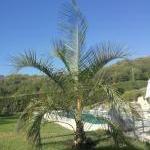
Hello friends, I really hate to post this without having a picture of the subject yet, but there is an interesting looking CIDP I have come across. It has all the typical characteristics of a CIDP, except that the fruit it holds are a nice bright red. This may be more common than I'm aware of, but the CIDP's I see typically have yellowish orange fruit that either fall off as such, or turn black on the palm before falling. I gathered several seeds from the ground and they look no different than the typical seed in size, shape etc. And the few I found that still had their fruit, were still red and ripe. My question is.... is this a common variation, or is it perhaps some sort of hybrid? It is quite stunning and stands out in my area where CIDP's are very common. And I will add a picture of it since I will be sure to have my camera next time I go by it. Thanks, Justin1 point
-
I have been watching and waiting before adopting any particular strategy in dealing with the RPW matter in California and elsewhere on PalmTalk. It still may be premature, but it appears to me as if the situation in California may be expanding, and come springtime it may pick up steam. Of course it is already in crisis mode in the Mediterranean area. Presently we have one longwinded and rambling topic (along with a few orphan topics) that have provided a catch all for comments, reports, general news and discussion, questions, etc. I am wondering whether we need a dedicated topic just for reports of possible sightings, and maybe one just for the latest news and updates. In other words, a more organized method of providing crucial info to those monitoring PalmTalk - a more efficient and easier way for any authorities, scientists, or others not as familiar with finding info and participating on PalmTalk. Perhaps even a dedicated Forum for RPW matters, if in fact it does appear to be developing into a "crisis" in California. A dedicated Forum could contain a topic for Reporting Possible Infestations, a Latest News and Updates Topic, and then regular topics relating to general discussions. We have been very hesitant and reluctant to adding new Forums, as they seem to dilute the viewing and participation. But this may be an exception. Any thoughts on the matter?1 point
-
hey all, this most recent cold snap has already begun to defoliate many of my palms and it just turned December! Typically, our coldest time of the year is late december, through most of January. But with temps already recorded in the very low 30's (being generous at that) probably high 20's, several species have begun to turn for the worse. My roystoneas (regia's) have already begun to "bronze" and not in a good way. Same with my Caryotas, Kings, some Chamadoreas, Beccariophoenix Alfredi, Arenga Micanthra, Chamberyonia Macrocarpa, and last but not least, Marojeyja Darianii. Things are not looking great. I have blanketed every tree with cotton stuffed burlap sacks, from the top of the heart down to the dirt, taped it snug and keeping my fingers crossed. On weekends when I'm home, i'll turn the patio heaters on nearby for additional warmth, however this is not possible at night due to the fact that I'll be sleeping and don't want to burn the house down. Although if i lose all my palms this winter, that might be an option worth considering. I hope none of you are employed by my homeowners insurance carrier! I'll update with pics this weekend, hopefully it will get above 50* F this weekend at some point so I can go outside and take a closer look. I fear if this fails I'll be forced to succomb to the depths of PINE Talk, and not PALM TALK. And I just refuse to limit myself to cold hardy palms, there's only so many butias, braheas, washintonias, queens and trachies before I lose inspiration for growing palms. Winter is such an a$$ kicking bummer! I miss Summer so much already! FINS SHRIVELED AND FREEZING COLD! -eric1 point
-
ANYONE HAVE ANY UPDATES ON THE RED PALM WEEVIL?1 point
-
Old BSman ( yeah I said old) can tell you about my early days as a palm grower. You THINK your area is bulletproof but mother nature slaps ypu back to reality. Listen to Brett get some canopy find your microclimates then plant the zone pushers. There are plenty of cold hardy stuff that is tropical looking.1 point
-
oh yeah hes my right hand man!...haha1 point
-
Hello, you have the (Phoenix canariensis var. porphyrocarpa) with red fruits/seeds. JBG1 point
-
I can't kick you while you're down...1 point
-
I live in South OC and I scrapped ice off my car windshield twice this week. Of course I'm at the bottom of a creek basin at sealevel. Coooooooooooold mornings!1 point
-
Have a look at The Dick Douglas thread to see how awesome a cold hardy palm garden can be - his looks fantastic . There is no point having a heap of palms that even though alive look like they are not mean't to grow in your particular microclimate .1 point
-
You are not the only one dreading what this early onset of cold weather in California may have in store for us. My own garden in Berkeley is still looking pretty good, but I don't have any really tender palms that can't take at least 27/28F temps, but it is kind of shocking that it is already down to near freezing for almost a week now, after it was up to 80F for about 4 or 5 days in a row in mid November. Just like you, I had become used to the worst bout of cold danger coming at the end of December into the first weeks of January. Like you, I have so many tender things planted out in the garden, I almost wouldn't know where to start with protecting things, and get lazy here most winters and do nothing until the second night of a predicted freeze after I see the first night's damage. Is this first wave of cold just a taste of what we will see for the next couple of months? I sure hope not. I am most inclined to protect the Howeia forsteriana's above all else, because they take so damn long to outgrow the damage. But I suppose the Chamaedorea tepelijote's and C. costaricana are equally at risk, and then the Rhopalostylis baurei and Archontophoenix cunninghamiana's and the Chamaedorea plumosa's. I seem to be gravitating more to the hardier palm species these days in new gardens for clients, because I am tired of spending a 2 or 3 whole days racing all over Berkeley, Oakland and Alameda trying to protect 15 foot tall palms in client's gardens. I usually don't really worry much unless it looks like it will drop below 28/29F here, which is typically the worst it ever gets except for bad year freezes such as 1990 and 1998 and then again in 2007. Here's hoping the jet stream doesn't decide to get stuck pumping continuous cold air direct from Alaska straight down the west coast for weeks at a time, but who can say! Glad I live right by the bay where it is only uncomfortable lately in the mornings, and not actually freezing, but 35F at 7 am as it has been for almost a week is really getting old already. So far all that has gotten any frost damage is boring old Coleus, but I miss that deep orange foliage already...1 point
-
Hey Jim , I purchased it, and moved it to my house. it was planted by the previous owner in the mid 80's. \\ tks Nickolas1 point
-
Sorry, Eric. It can be cruel sometimes. Double post for feeling double bad. (and I hit post 2X)1 point
-
Sorry, Eric. It can be cruel sometimes.1 point
-
What if we had a separate "pest and disease forum", with sub-topics for specific things like RPW. Members would be encouraged to post photos with questions like "is this..." You could also break down RPW sightings regionally.1 point
-
I think 2 threads 1) "sightings" - where you have seen a sick palm in california, and post a photo and get advice on this forum 2) "news reports" - a thread where you pass on news reports and official statements1 point
-
Thanks for bringing this up, Dean. I am very interested in the topic but have quit trying to follow the one long, long, long topic as it has gotten too much to try to navigate through - at least for this old dog. I think that it is an important enough topic for a subforum, at least for a trial period of say 6 - 12 months. gmp1 point
-
It's spread, the only question is how far. Check on the main RPW thread for continual updates. Your concern matters! A LOT! Keep checking in your area. The more eyes the better. We all have a stake in this.1 point
-
Oh, and by the way Tom, the Tahina discovery, distribution and conservation was a success due to the personal efforts and dedication of plant enthusiasts and botanists, Kew as an organization was only involved in a secondary way. Best, TOBY1 point
-
Since RPS was mentioned several times in this thread, I feel I should chip in my two cents worth here. I am sick and tired of hearing of "unscrupulous collectors", especially in connection with seeds. While I agree that removing plants from the wild is unscrupulous indeed, seeds are a whole different story. Tom, you would be surprised how few seeds it takes to fill worldwide demand. In nearly all cases that I know it is just a few hundred seeds that are sufficient to satisfy the avid collectors. Often, the one-time harvest from a single tree is more than enough. It is the mass market that sees quantities in the hundreds of thousands, but these are, without exception, seeds of species that are common either in cultivation or in the wild, or both. I agree that, because of the issue of hybridization, for many species of palms, amateur cultivation does not serve as a good tool for their conservation, but there are plenty of examples where hybridization is not an issue and there are many enthusiasts that hand-pollinate or bag inflorescences to produce pure seeds. Cultivated plants in private gardens also can often supply all the seeds that are ever needed for cultivation, even for nursery production on a larger scale. Many of the palms of New Caledonia are great examples for this and in a lot of species that were hard to get just 20 years ago, such as Kentiopsis oliviformis, several Burretiokentia or Chambeyronia there is now a plentiful supply from cultivated sources. The same is true for the Hawaiian Pritchardia, where accessing wild seed sources is in fact almost impossible due to their difficult to access locations. I think there is no disagreement about the causes of Pritchardia endangerment in Hawaii, A) deforestation B ) feral pigs and C) rats, and I find it pretty absurd that now that the levels of some species have dropped to a critical point, palm enthusiasts get part of the blame. I haven't heard of any major improvements in the status of any of the Hawaiian Pritchardia, despite decades of government action. Instead of curtailing the cultivation of these plants via the Endangered Species Act, their wide cultivation should be encouraged, at least as long as feral pigs and rats prevent any meaningful regeneration. Government action on endangered species can be a good thing, but it is often misguided by seeing plant collectors as a main threat, instead of appreciating the real causes that brought a species to the brink in the first place and seeking advice and support from plant collectors in a conservation effort. Even though not a palm, Wollemia is a good example that a different approach is possible, and Tahina as well as Howea is, too, to repeat just some prominent examples. A few words on CITES. For nearly all of the plants listed here, their listing in the appendices has brought no improvement to their status in the wild because the convention is focused on trade alone, not habitat protection. Instead it has created a huge bureaucracy that wastes enormous resources regulating and enforcing the trade of artificially propagated plants, resources that would be more wisely spent in habitat protection and ex-situ cultivation for further seed production. A plant that is endangered in habitat can easily be made common in cultivation. Then, not even the most unscrupulous people would go to the trouble of digging up wild specimens. Why dig something with great risk and effort if you can buy it for a few bucks at a specialist nursery? Makes sense to me and it has been proven this works. Tom, if you actually know of any palm that has become endangered due to the efforts of plant collectors, I would really be interested to hear of it. I can't think of any. Finally a word on RPS. I go to great pains to make sure that people that pick seeds for us from wild sources do this in a way that it will not harm the plants collected from, or their surroundings. For most of these collectors, this goes without mentioning as the plants they are collecting from and the forest around it is a valuable source of income that they will protect from harm. The vast majority of people who do this collecting are also plant enthusiasts and their motives are sustainability and to see plants brought into cultivation, not exterminate them or just make a quick buck. Government agencies and nature conservancies do not have a monopoly on saving plants from extinction. In the long term, plants are saved because people have an interest in them, because they provide an income or they just simply enjoy them. Best, TOBY PS: Tom, a few more comments to your last post: The "lone, rogue guy" often has invaluable knowledge and perhaps would like to work with institutions and government agencies but is usually ignored, more often threatened with conservation laws but very rarely invited to work along. In-situ and ex-situ conservation do not exclude each other. In-situ conservation is usually not limited by the amount of seeds available but by the lack of funding. Plant enthusiast could help out here! Pritchardias, again, if you don't get rid of the pigs and rats, any in-situ conservation effort will be futile in the end. Wodyetia could have used more government cooperation with collectors/growers, how about that for a change.1 point