Leaderboard



Popular Content
Showing content with the highest reputation on 11/29/2010 in all areas
-
Third serious attempt here, after a 35 years long career, spontaneously finished 4 days ago... No nicotine gum this time. Breathing feels great at the moment but what to do with this melancholic mood...ooohhhh, I almost tried to bite the young Chamaedorea seedlings a while ago...1 point
-
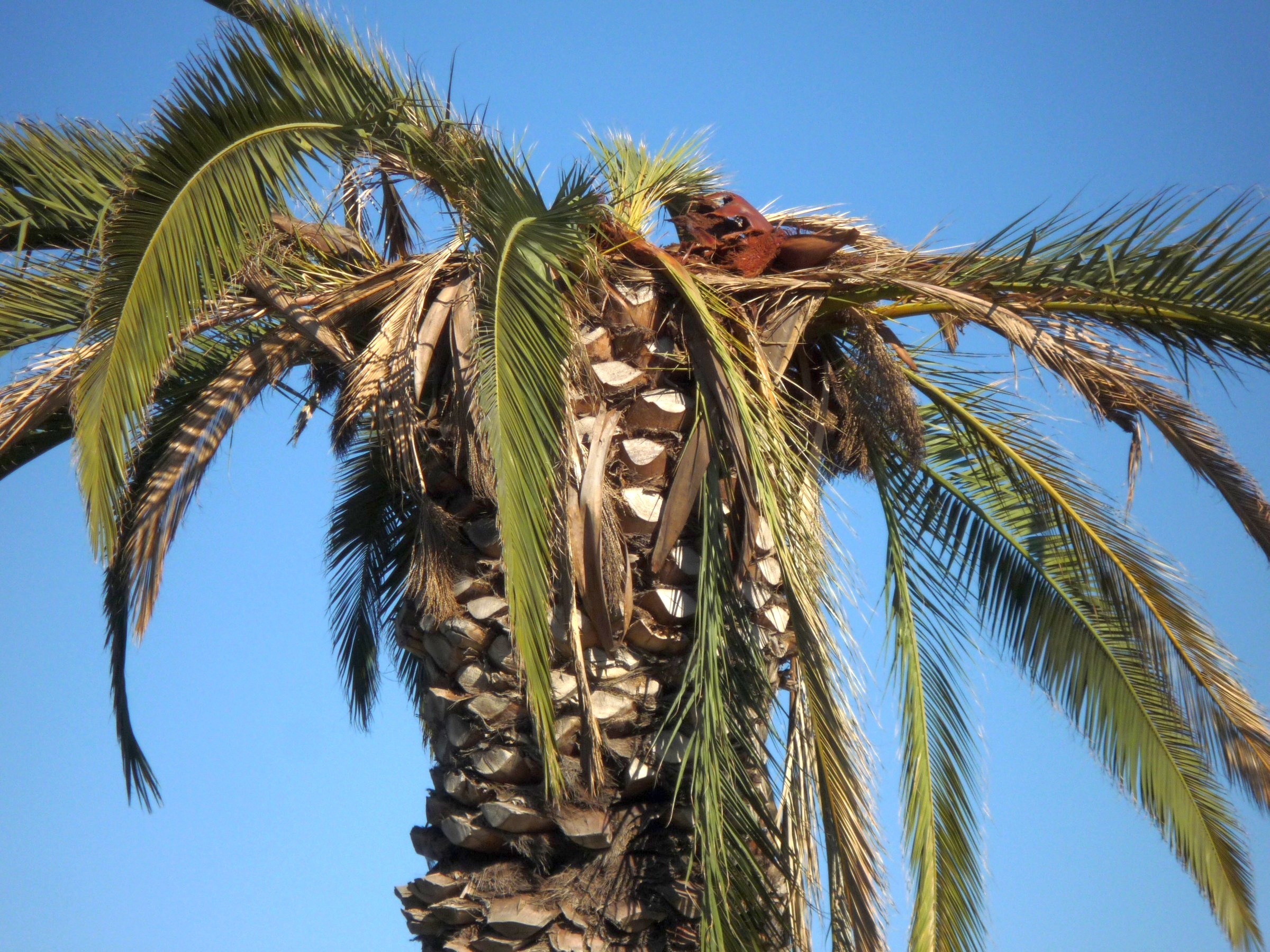
1 foto i take from south and east. Last foto.
 1 point
 -
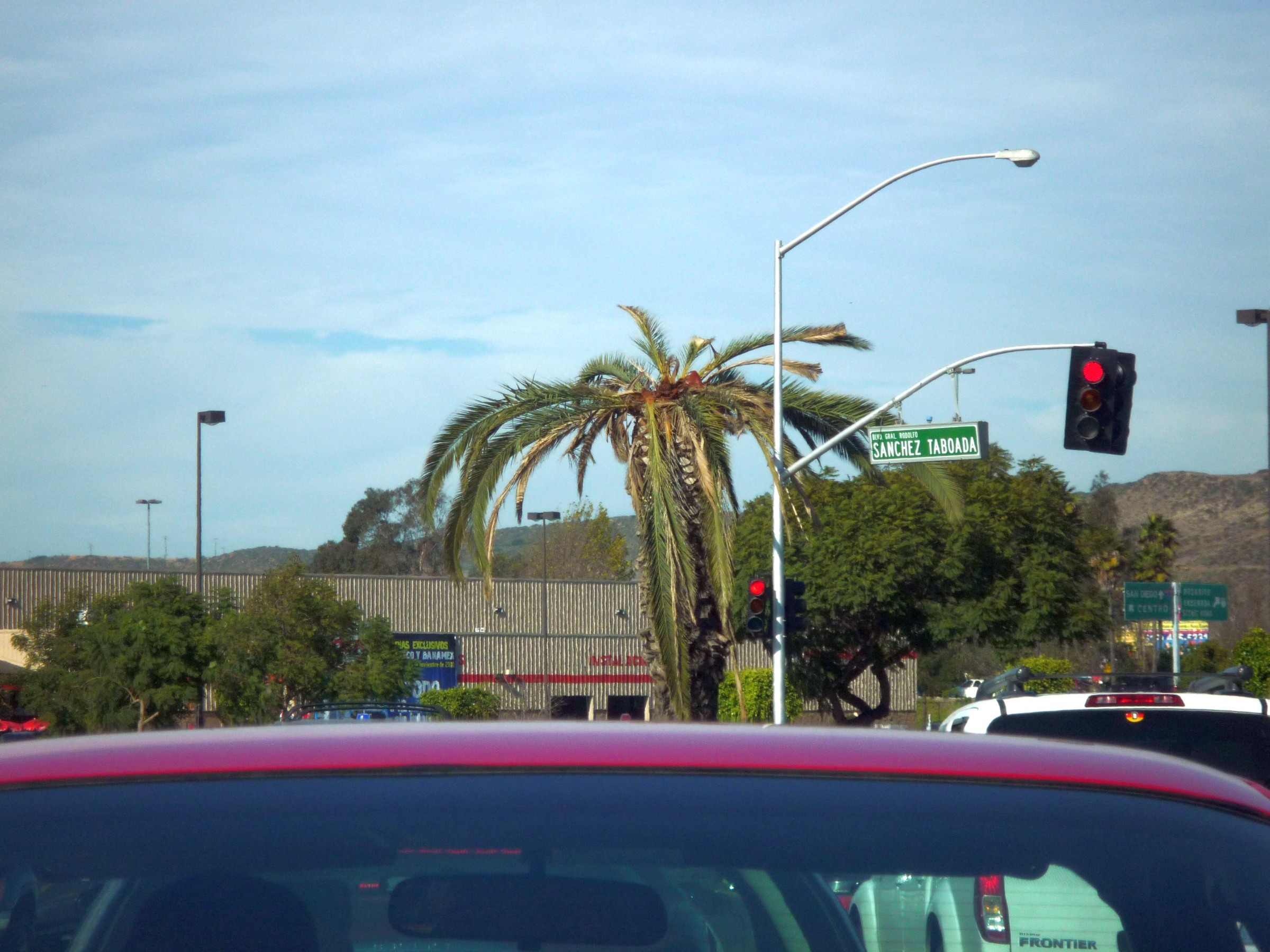
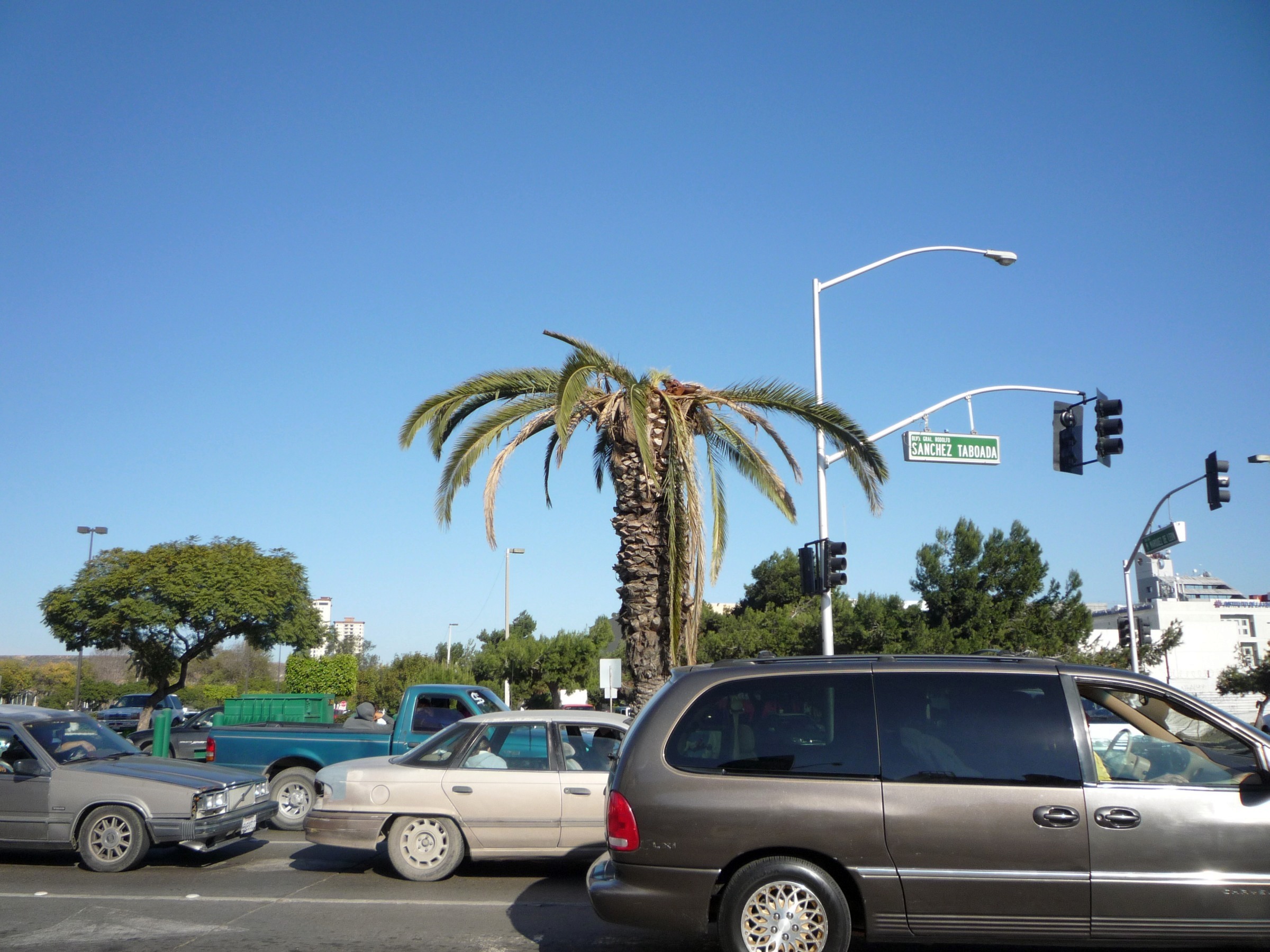
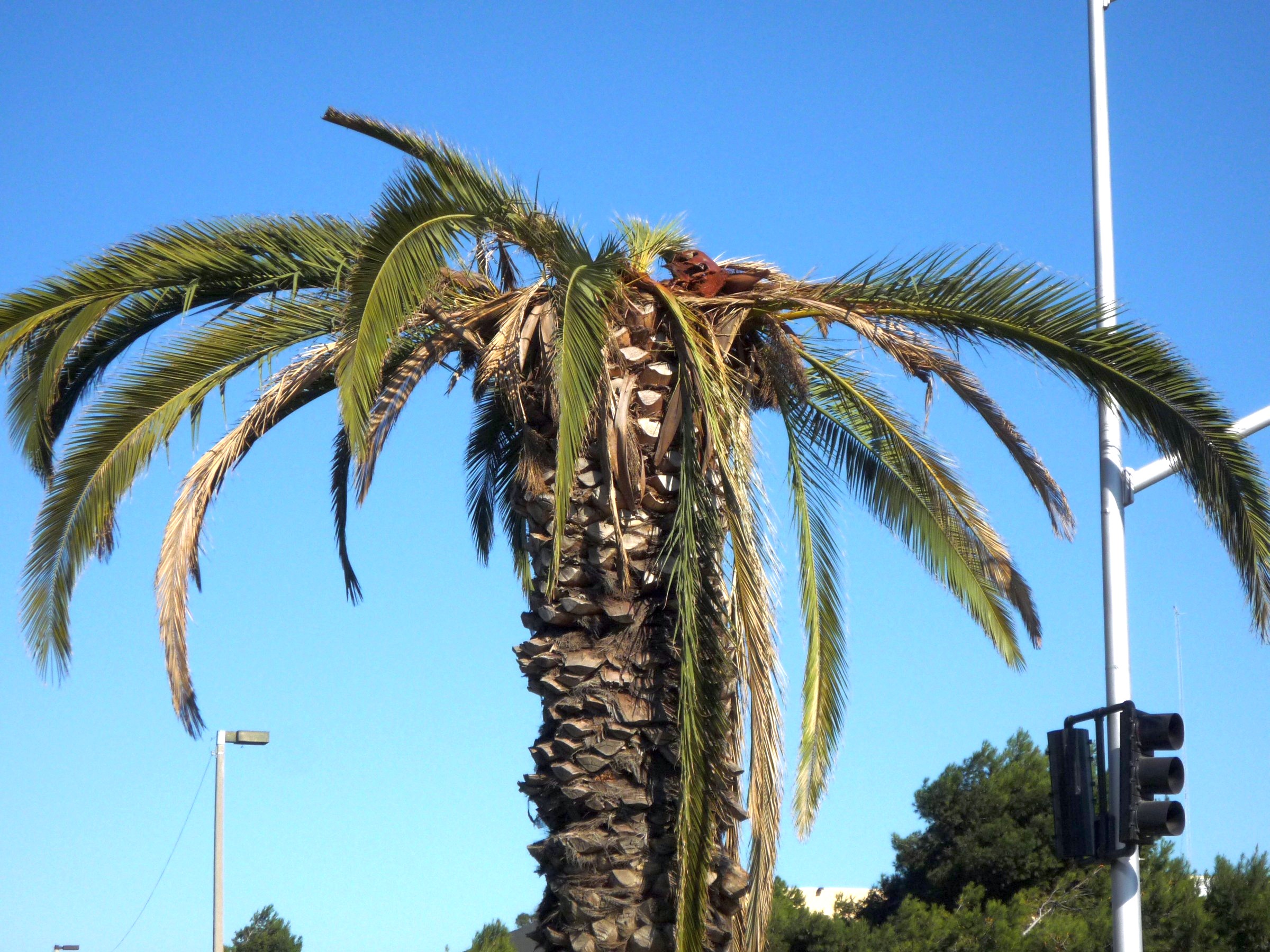
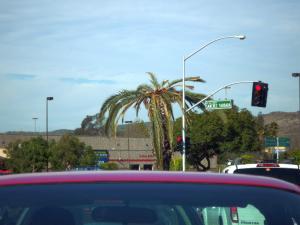
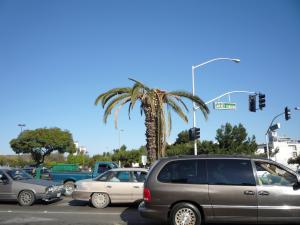
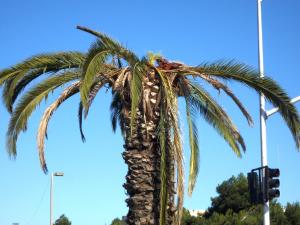
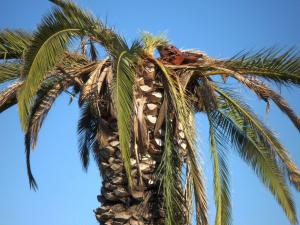
Thank you Kris for the video ! Very good ! In most weeks i dont work in tijuana where i live but in other 2 citys of baja california, mexicali and ensenada. I look for this red palm weevil here also when i drive in the diferent parts of the state, i dont see palms with may be this problem in mexicali and ensenada but i see this palm yesterday in tijuana, when i come back from mexicali for the work. I stop and take fotos. It is in the downtown of tijuana. What do you think ? These 3 fotos i take from the south.
 1 point
 -
Still on the hunt. This is getting closer. It has to be 15 feet of wood. I know I have seen very old tall skinny ones somewhere: Found some that have that hybrid thing going that Vince was showing us: The tall ones are over 15 feet of wood.1 point
-
THese are easily ten footers. I am still looking for the very old, tall and skinny ones:1 point
-
Those are nice Bubba. Here is a monster growing in Dana Point. Obviously its a cross.1 point
-
I have seen a number much older, skinnier and taller than these but the tallest in these two groups have over ten feet of wood: And: I want to see that 20 footer!1 point
-
Here is one with at least 9ft of clear trunk at Ralph Velez' garden in Orange County.
 1 point
 -
I first saw this video on a Swedish travel forum last summer, and posted the link in the Palapa, which of course is no more. The thread on that forum was just bumped, and I just watched the video again. A little bit slow at times, but just be patient. There's plenty of action, and I just love the scene where the posse returns for revenge!1 point
-
As I mentioned in the Big Island thread a few days ago, it was time for the annual Hilo to Volcano 50K (31.1 mile) Ultra-Marathon, yesterday, Saturday Jan. 26th. An Ultra-Marathon, by definition, is anything longer than a "standard" 26.2 mile (42,195 metre) Marathon, but in order to receive some respect the distance really needs to be at least 50K/31.1 miles. But Hilo to Volcano is not your average run-of-the-mill 50K - it goes from sealevel in Hilo to an elevation of about 4,000 ft in the village of Volcano. At least 3,500 ft of that climb is between the 7 and 26 mile markers with many long hills. The race began in the parking lot of Moku Ola (also known as Coconut Island), next to Hilo Hawaiian Hotel Saturday morning at 6 a.m. It was a record turnout with 31 participants! (Last year, 21 were signed up, but only 19 showed up - and finished). The initial three quarters of a mile is on Banyan Drive, and then the next 26 miles is on Highway 11, from Kamehameha Avenue in Hilo to Wright Road in Volcano village. There are official mile markers all along Hwy 11 so it's easy to keep track of one's pace. I've been running all my life (since I was 21), and just started to get into speed-walking about 6 years ago, initially as a warm-up prior to my runs. I realized quickly that speed-walking is fun (and less stressful on the body) so I began to do longer and longer distances and speed-walked my first Marathon in March 2005. I decided to attempt the Hilo to Volcano 50K in Jan. 2006, and then again in Jan. 2007, so yesterday was the third in a row. I am however the ONLY one doing these races as a speed-walk. Everybody else is running these races. All other races (that I know of) have refreshment stations every few miles, with water and gatorade etc. This one is different - you're on your OWN. Most participants have a "support team" and my wife has always been my support team. However, she had an important meeting in Honolulu yesterday and could not be there for me. Luckily for me, a neighbor (husband and wife) amazingly offered to be my support team, despite having to leave home at 5 a.m., and then being there for almost six hours giving me water, bananas, tangerines or gatorade every few miles. Plus write down my mile splits every mile.... So, they were too busy to take any photos (sorry!). Plus it was raining for most of the race! At the beginning everybody leaves me in the dust - after all they are running, and I'm walking! I'm pretty much on my own, even though I can see some of the runners in the distance ahead of me. My pace in the beginning on the fairly flat first 6 miles or so is right around a 10 min. 30 second mile pace, and once I get to the long hills it drops to about 11 min., or just above, depending on the length of the hill. I'm very good at pacing myself, whether I run or speed-walk, and by the time I got to mile marker 21 on Hwy 11 (which actually equates to a total distance of 21.75 mile since the first .75 mile is not on the highway), I was at 3 hr. 57 min. 30 sec. A year ago, when I reached the same mile marker I was at 3:57:30 as well! The big difference was that a year ago I was beginning to slow down a little bit after that. Yesterday I knew I was strong enough to push the pace the whole way, and I had a very strong finish with a total time of 5:49:07. In 2006 it was 5:54:49 and in 2007 5:57:36. In other words, yesterday I was more than five and a half minutes faster than two years ago. Considering that I am (of course!) getting older (I'll be 64 tomorrow), getting faster is always satisfying! Initially, about halfway thru the race I typically begin to catch up with the runners, and pass quite a few of them. Right after mile marker 23 (with a VERY long hill) I passed a whole group of them. I don't know yet how I placed yesterday (it'll probably be in the newspaper tomorrow), but a year ago I finished as #11 out of 19 finishers. So, anyone else doing fun stuff like this! ???1 point
-
Well, one of the great things about living in Hawaii is that you can exercise (run, walk, bike or whatever) in pleasant conditions all year round. The same is of course pretty much true in CA and FL and some other places. When it's below 32F you have to be determined to head out that door...! (And I know - I started running when I lived in Sweden!). The next race for me will be Big Island International Marathon on March 16th. That's a standard marathon, 26.2 miles. Begins in Pepe'ekeo about 10 miles north of Hilo, heads through various parts of Hilo and the finish line is right by Hilo Bay. Will be speedwalking that one as well, and in all likelihood I'll be the only one doing that. Results for the 50K Hilo to Volcano race were in the newspaper this morning. 32 participants crossed the finish line and I came in #19 of the 32. I'm happy with that!1 point
-
Thank you Kim! And the link is working now. Lots of interesting info there, especially as we used to live in Poway. I never hiked up Iron Mountain but I actually ran up Mount Woodson on a few occasions. Starting out from Lake Poway. That was a tough one to run - I remember having to stop once, about halfway up, to catch my breath for about 15-20 seconds. Have never had to do that one any other run! And even though I don't know exactly what your training has involved (as far as longer hikes) I remember you mentioned this in detail some time ago, and based on that I'm certain you're as ready as you will ever be! Just keep in mind - at this point there is absolutely nothing you can do to improve your conditioning in time for your Kilimanjaro hike. But you could mess it up if you head out on another hike, so just enjoy the rest between now and mid Feb! Bo-Göran1 point
-
Kim, Thanks a lot! And if it's any consolation, I've found that when I have a bad experience (a long run or speed-walk in my case, or hike in your case, that doesn't work out quite the way I hoped for), then the next one is usually a good one. The necessary rest may be exactly what you need, and whether you feel you're ready or not, my guess is that you ARE. When are you leaving on your trip? Incidentally, the link doesn't work for me. I also tried typing it in manually, still doesn't work ("The page cannot be found"). Bo-Göran1 point
-
Jake, Larry and April - thanks a lot for your comments! Jake, Flying Pig 1/2 Marathon - what a great name! Love it!!! Larry, Well, I think there are two VERY important aspects that come into play. We have no control over the first one, but the second one is completely under our control: 1) genetics. Some people are just built in a way that makes it possible for them to do things that most other people would not get away with (especially as we get older). Typically, the older we get, knees and hips are problem areas, and some people are just fortunate in that respect. 2) pace. As the expressions goes "speed kills", and that's certainly true. Most people who run races make the mistake of going out way too fast and then fading at the end. Running a negative split (=running the second half faster than the first) is not easy, but you feel MUCH better when you can do that. Both physically and mentally. And if you pace yourself properly (assuming you have the proper training behind you) it's possible to do amazing things. You just have to adjust the pace accordingly (and have a well designed body! ). I call it my "forever pace". When I start out on something like the 50K race yesterday I want to begin at a pace that I feel I can keep up "forever" (or at least for the rest of the day). But, no matter what, to do 26 miles every day for any length of time is an amazing accomplishment! Bo-Göran Edit - Gina, you posted while I was typing the above. I don't wear a heart monitor. I do it the old fashioned way - I manually check my pulse the moment I stop. I check it first for 10 seconds, then I wait 20 seconds and then I check it again for 30 seconds. This also gives me my recovery rate, which is useful info. If it's 140 when I stop running/walking, it'll typically drop to about 110 thirty seconds after I stop. And 40-45 is an excellent resting rate. I would almost be concerned about 30 if that's what it drops to when you sleep! Mine has been right around 40 for many years.1 point
-
Tim and Gina, Thanks a lot for your comments! And Gina, the half marathon is a great distance (was my favorite when I was heavily into running races), and your husband must be excited about the Boston Marathon! I have never been concerned about calorie burn, and I wouldn't know how to measure it. I know my likely calorie burn when I run is right around 100 calories per mile. I check my pulse rate after every single run or walk, and I can actually get my heart rate up to about the same level whether I run OR walk. I would think there's a direct connection between heart rate = effort = calorie burn. The difference in effort for me now, at my age, is that I can go out and run a reasonably easy 5-6 miles at an 8 minute pace OR speedwalk the same distance with an all-out effort (at a 9:30 pace) and end up with about the same heartrate. The max. heart rate, as you probably know, is supposed to be around 220 and then you deduct your age and end up with what is supposed to be your individual max. heart rate. And then approx. 80% of that is what you're typically supposed to aim for in a work-out. For me that's 220 - 64 (my age tomorrow) = 156. And 80% of 156 = 125. However, I routinely go up to 140 or even 150 in a hard work-out. And I can get to that whether I run OR walk. It just takes MUCH more effort when I walk. What's very interesting is that I can push the pace at very close to 100% when I speed-walk (but that takes a LOT of concentration), and I can do that day in and day out, and recover completely by the next day. If I were to push the pace to 100% in a run it would take me several days to recover. Most people obviously know how to walk a brisk pace, but I believe in order to get your heart rate up to a level equivalent to what it would be after an average run you have to push the pace to a level that very few people are comfortable with. But it's important to start out with very short distances (a quarter mile or so), and then gradually build it up. Bo-Göran1 point
-
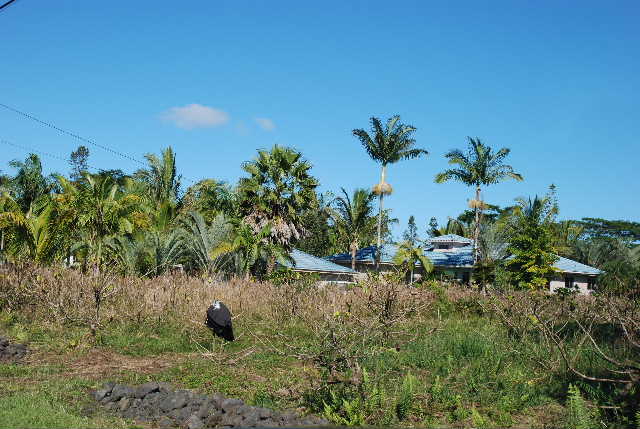
Some questions were raised in the "Grouping ideas" thread in "Discussing Palm Trees" earlier today, so we took a ride thru our neighborhood a little while ago in order to get some photos. First, some general information. The Big Island of Hawaii consists of nine districts (clockwise, beginning in the south): Ka'u, South Kona, North Kona, South Kohala, North Kohala, Hamakua, North Hilo, South Hilo and Puna. Puna is about the size of Oahu and stretches from ocean on the SE side of the island up to the village of Volcano at 4,000 ft elevation. About 30,000 people live in Puna, and it's the fastest growing district on the island. Leilani Estates is one of several subdivisions in Puna. It has 2,042 properties, most of them exactly one acre. There are about 500 homes here, so most of the properties are still "vacant land", even though many people have more than one acre in order to have more privacy, so there will never be 2,000 homes. The "typical Leilani acre" (probably about 90% of all properties) is 100 ft wide and 436 ft deep. Right now the average price for an acre is around $40,000. Leilani Estates stretches from Highway 130, at around 950 ft elevation, down to the Pahoa-Pohoiki road, about 3.5 miles away, and at that point you're just above 600 ft elevation. Lots of taller trees at the upper elevation, and for the most part much smaller trees at the lower portion. There's also a difference in rainfall. How much, I have no idea! We live at 880 ft, about a mile away from Hwy 130, so we're in the "upper" part of the subdivision. I probably also need to address the lava zones: there are nine lava zones on the island: zone 1 is the highest risk, and zone 9 is the lowest risk. Since Kilauea's East Rift Zone runs right under Leilani Estates we are in Zone 1. Nobody really knows when the last lava flow came thru here, but it was probably about 300-400 years ago. Between Leilani Estates and Hilo you'll find Zone 2 and Zone 3 (and almost all of Hilo is in Zone 3). This is a complicated issue and anyone contemplating buying property, or moving here, really needs to educate themselves so that they're comfortable with their decision. I'll begin with the photos in the next post.1 point
-
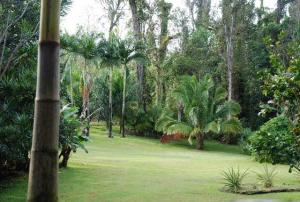
And right across the street, a property that belongs to a good friend of mine (and obviously a Palm Society member). The Beccariophoenix madagascariensis was given to me by a lady who lived 2 streets down (she used to work at Kapoho Palms). I didn't need it, so I gave it to my friend here. That was 6 years ago, and it was in a 3G pot - just under 2 ft tall! Needless to say, it's done very well since. The taller palms to the left of it are Bentinckia nicobarica, and behind them a few unusual Dypsis including the largest "Jurassic Park" that I know of.
 1 point
 -
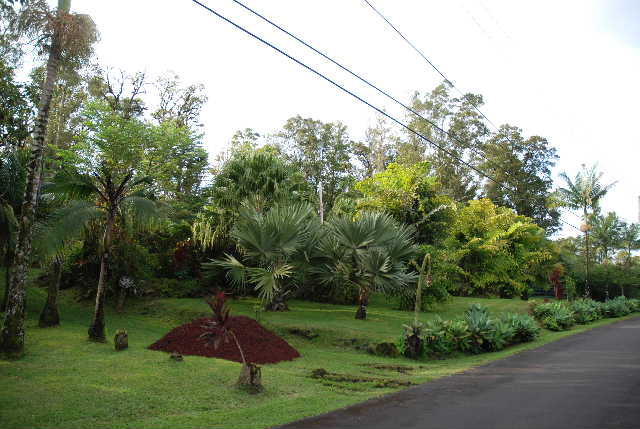
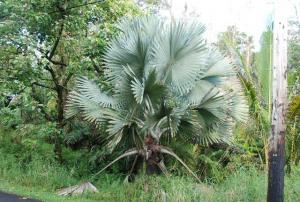
And back on Kumakahi Street, one street "down" from Oneloa and the street we typically take to get home - this Bismarckia is growing on a vacant acre - completely unattended!
 1 point
 -
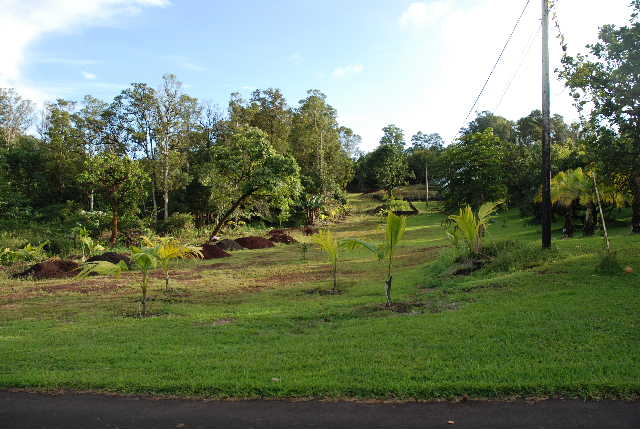
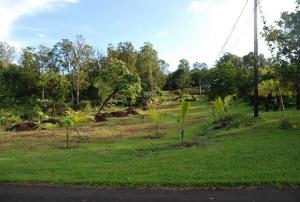
And right around the corner, on Malama Street, another 2 acre property that belongs to another palm enthusiast. He just planted all the Clinostigmas over the last couple of months. Next step: a bunch of Areca vestiaria!
 1 point
 -
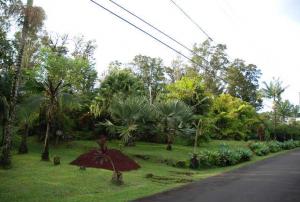
Just a few properties away, still on Oneloa Street, another 2 acre property with quite a few nice palms.
 1 point
 -
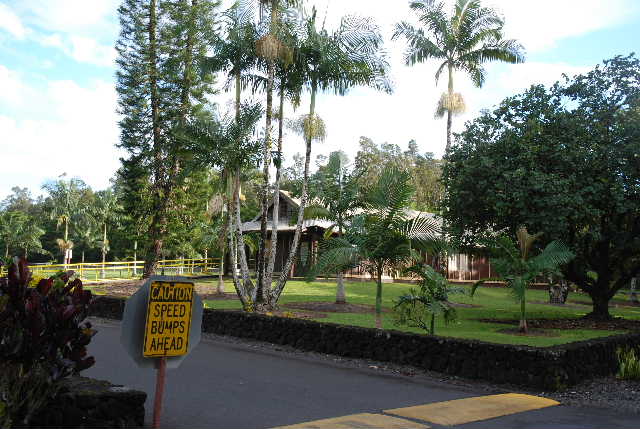
And almost back to Leilani Avenue, but still on Moku Street, is the Leilani Estates Community Center.
 1 point
 -
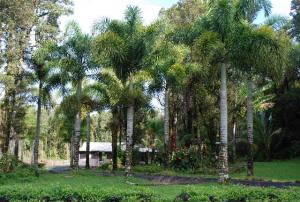
A few properties away, still on Moku Street, these people obviously like Wodyetias!
 1 point
 -
And maybe the beginning of another great garden!? A common sight: a D-9 bulldozer and a newly (partly) cleared acre.
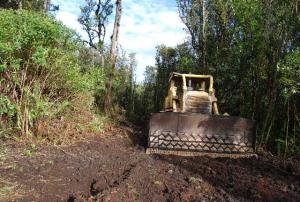 1 point
 -
On Makamae Street, two streets "down" from Kupono, a 3 acre property belonging to another Forum member. A bunch of Clinostigma samoense, and some other misc. palms are already in the ground. I'm sure the beginning of a great palm garden!
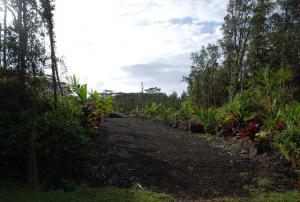 1 point
 -
And Kupono Street is right around the corner. This house is newly built, and the Clinostigmas are already in place (one on the left, two in the distance on the right).
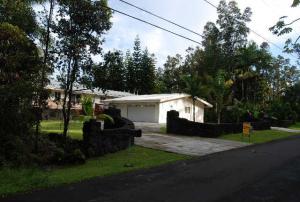 1 point
 -
Same house, slightly different view
 1 point
 -
Don, Ask, and you shall receive! Here are two more photos of the house in post 11. And the largest trees would be some of the older Ohi'a trees. The tallest ones are probably just over 100 ft tall and trunk diameter close to the ground approx 3 ft. Bo-Göran
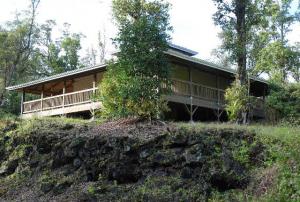 1 point
 -
Michael, Thanks for the info on the plant - much appreciated! And Corey, First of all, it's been more than 11 years since we had our house built so I'm a little bit "rusty" when it comes to cost of building a new home. BUT, first of all, it obviously depends on the size of the house, and the quality of the construction. Many people here think "simple wall" is just fine, and that's obviously cheaper. But there are a number of problems with that, and some of those problems are not going to be apparent until you've moved in and it's too late. For instance, if it's 60F on a cool winter morning, it's going to be 60F in the house. A bit chilly for some... More importantly, mold is going to be a BIG problem very quickly. With double wall construction you can add insulation, cut down dramatically on the mold problem (even though you can never entirely eliminate it here) and wake up to 70F or so in the house even on a chilly winter morning. Just one example. Anyway, it's probably safe to estimate around $100-$125 per square foot when you build a house. So, if you're building a 2,000 sq ft home (I believe that'd be around 180 sq metres), you're looking at $200K-$250K. Adding the price of the lot and bulldozer expense etc. you'll get close to $300K (at the upper range of the per sq ft estimate). Bo-Göran1 point
-
Kim, Thanks a lot! Always nice with feedback! And I will create a new (separate) Big Island thread. Aloha! Bo-Göran1 point
-
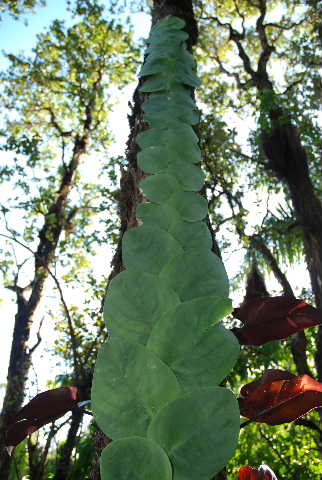
OK, one more photo - and this one is sort of typical for life here in Leilani Estates. As we were heading up Kahukai Street, I made a left onto Alapai, on my way home, and as soon as I made that left, a lady was close to the street there. I was going pretty slow, had my windows rolled down, and one thing led to another so we got into an interesting conversation about plants, and my wife asked her about a particular plant that we had seen on some of her trees. So, we took a 10 minute break, and she showed us some of her plants (which, from a palm point of view, included a very impressive Joey, some Clinostigmas, Pinangas, a Kerriodoxa and many others, more common ones). Anyway, this is the plant, and I think she called it a Raphidophorum, but not certain on that.
 1 point
 -
And just 300 ft away, at the very same time, a guy from Oregon bought 2 acres, and also opened up a rough road to the back of his property. He bought 10 Clinostigmas from me, managed to plant them about half an hour before he had to leave for the airport! That was about 6 weeks ago and I don't think he's coming back for several months. The palms are doing fine, even though they could probably use some fertilizer... This is the last photo - at least for now. I remember one question about soil: there is VERY little top soil in this area, so we have to buy soil (or a cinder soil mix) by the truckload. Usually around $400-$600 for 20-26 cubic yards. It was much cheaper when we moved here, because at that time there was a cinderpit right next to Leilani Estates, but that has since been closed (even though it MAY open again). At that time I was fortunate to pay around $150 for 26 cubic yards. Feel free to ask any questions!
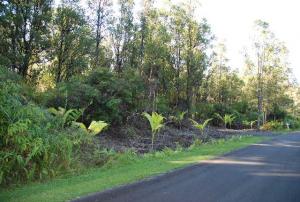 1 point
 -
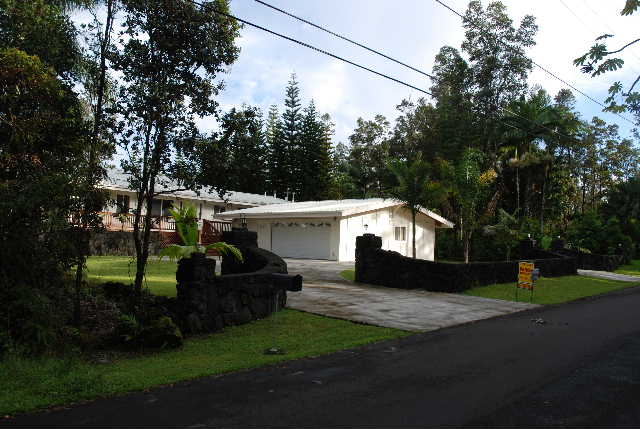
Almost done now...we're heading back home, and this is on Alapai Street, just one street away from us. This house was finished some time last year and has been vacant since. It's probably a spec home. Typically people who build spec homes here just go in with a bulldozer and clear most (or all) of the acre, then build a relatively simple house in the middle of the acre. A house like this, on a one acre property, would typically sell for around $300,000.
 1 point
 -
Heading north to the end of Luana Street, we make a left turn onto Kahukai Street, which runs parallel to Leilani Avenue and Malama Street. This is an interesting new house being built.
 1 point
 -
Another quarter mile north on Luana Street, and this is a fairly typical view. The house partly hidden by tall Ohi'a trees. Most people (but unfortunately not everybody) make an attempt to keep many of the Ohi'a trees intact when they bring in a bulldozer.
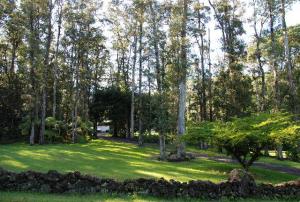 1 point
 -
Heading east on Malama Street we continue to Luana Street, a couple of streets "up", and make a right. Luana Street is really the first street (coming from a lower elevation) that has plenty of tall, mature Ohi'a trees. This property was sold a few years ago, and I believe at that time it was the most expensive property in Leilani Estates (that had been sold). Around $600,000 if I remember correctly.
 1 point
 -
We're making a right onto Malama Street, with the Pacific Ocean to our left, about 4 miles away. This house is just a few properties away from the one above. Beautiful ocean views here. The nextdoor neighbor (to our right) was a Palm Society member, but he moved back to the mainland a few years ago.
 1 point
 -
We're heading down one more street, to the last cross street in Leilani Estates: Kaupili Street, and head back to Malama. This property is right on Malama Street, with an ocean view, and this view, with plenty of palms and all sorts of other plants is common.
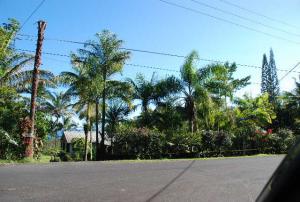 1 point
 -
And the property right next to the one above. These people are just beginning to build and again, this is a typical look in this area of what we call "lower Leilani".
 1 point
 -
And heading north on Ho'okupu Street, towards Leilani Avenue, we get into an area that only had smaller Ohi'a trees when we moved here 12 years ago. In March 1998 (when we had a severe drought, thanks to El Nino) a brush fire spread thru this area and killed off most of the 15-20 ft tall trees. For this reason, many people who've bought land here have cleared the land completely since dead Ohi'a trees aren't all that attractive.... This is obviously a brand new house.
 1 point
 -
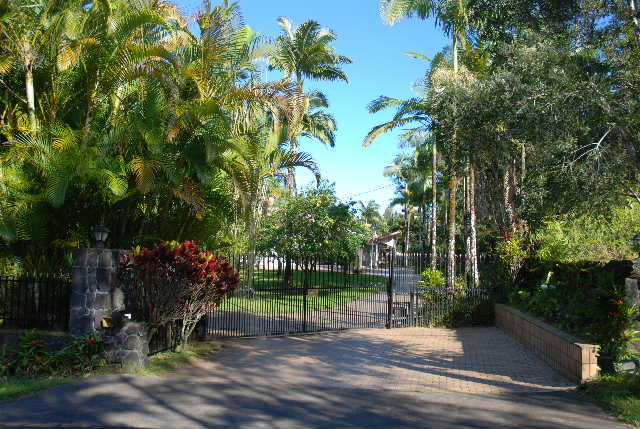
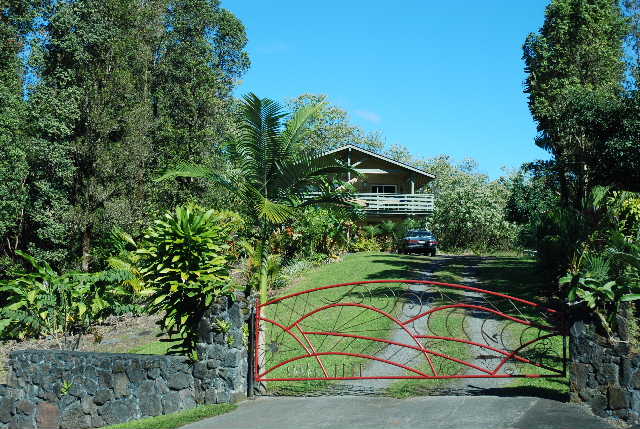
And right around the corner, on Ho'okupu Street is this entrance, to a spectacular garden. During the 2004 Biennial, 3 garden were visited on May 13. Our garden, Pauleen Sullivan's in Kapoho, and this one which at that time belonged to the Swann's. It has since been sold. This is also very typical of many properties here: you cannot see the house from the street.
 1 point
 -
This house, a couple of cross streets down on Malama Street actually belongs to "our" realtor, Heather Hedenschau. She has lived here in Leilani Estates for about 20 years, and a number of Palm Society members have bought their properties thru her.
 1 point
 -
And from the exact same point, looking straight down Malama Street, we can see the Pacific Ocean. This portion of what we refer to as "lower Malama Street" has a number of properties with ocean view. And those are more expensive!
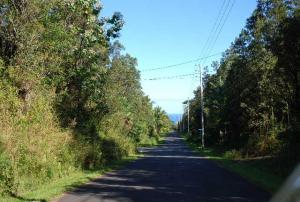 1 point
 -
Driving just a short distance on Malama Street, we have this house on our left. It was built about 5 years ago. From the upper portion of the house they probably (just barely) have an ocean view.
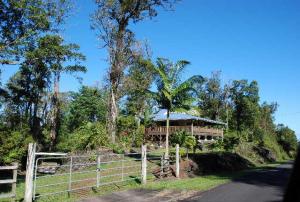 1 point
 -
And this is Malama Street and we're getting ready to make a left. In front of us a couple of vacant properties - again very typical of what you'll see here. And ALL the trees are Ohi'a trees.
 1 point
 -
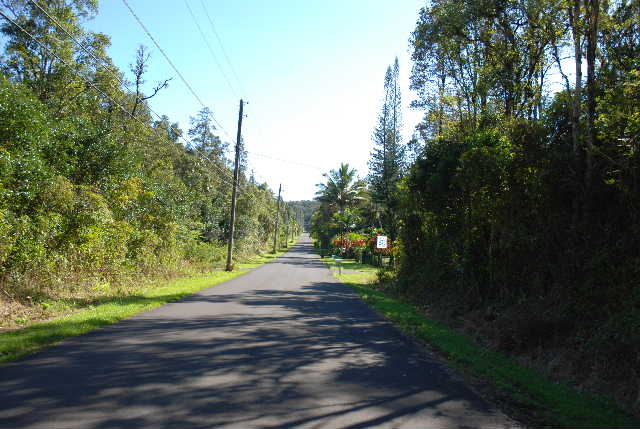
And this is looking in the opposite direction, up Moku Street, with Malama Street all the way in the distance (at a 90 degree angle). Again, this is a very typical street view - plenty of vegetation and no traffic.
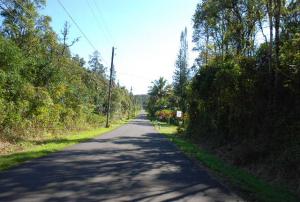 1 point
 -
This is the corner of Moku Street (one street "down" from Pomaikai) and Leilani Avenue. We know the owners of this house, and they're "sort of" into palms. They have planted plenty of Pritchardias AND Clinostigmas. The house came from Bali, where they put it all together to make sure everything was a fit, then they took it apart and shipped it to Hawaii! That was about 3 years ago.
 1 point
 -
Dave - any time - just let me know!! And after your 5 hour trip in an easterly direction it seems you need to make a 5 hour trip in the other direction - in the name of balance... Continuing on Pomaikai Street, we cross Leilani Avenue, and this house is on the other side of Leilani. Again, this is a fairly typical view - a nice house, but with a vacant acre next to it (closer to the camera), which appears to be somewhat "wild".
 1 point
 -
Heading down Malama Street to Pomaikai Street (2 streets away) this house is right there.
 1 point
 -
Looking to our left, more of the Uluhe fern and a few taller Ohi'a trees. This view is VERY typical of many streets here in Leilani Estates.
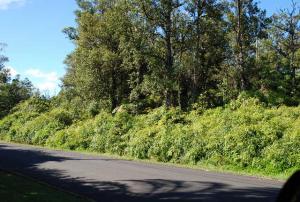 1 point
 -
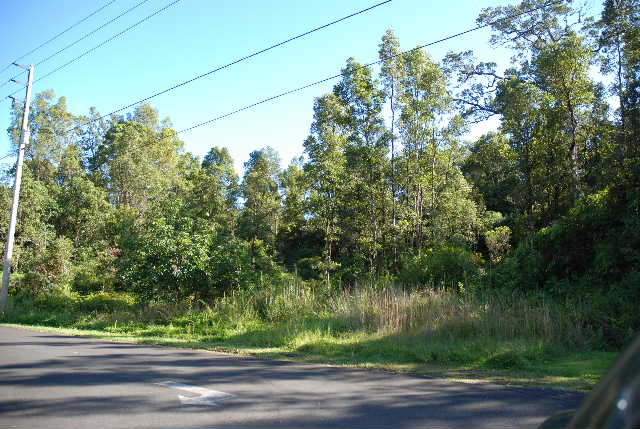
Most of the vegetation here consists of four different species; 2 native and 2 exotic (and invasive). The native: Ohi'a (Metrosideros polymorpha), almost all the taller trees in the subdivision, and Uluhe fern (Dicranopteris linearis - and no, I didn't know the botanical name - had to Google it!). The invasive: Strawberry guava (Psidium cattleianum) and Tibouchina urvilleana (not 100% sure about the species name). The Uluhe fern typically grows along the streets here where it can get full sun (which it needs). It's easy to clear out, but can be a MAJOR challenge to walk thru. Tibouchina is all over the place, but again, primarily in sunnier locations. It's relatively easy to get rid off, especially if you're using equipment (a backhoe for instance). The Strawberry guava can usually be found in the darker portions of the forest, underneath taller Ohi'a trees. It has very hard wood, and is tough to get rid of. This is the view from across our main entrance on Malama Street. The owner, who lives in Alaska, cleared out part of the property about 5 years ago, and then nothing happened. This is NOT unusual. Plenty of Uluhe fern is visible, and a few Ohi'a trees.
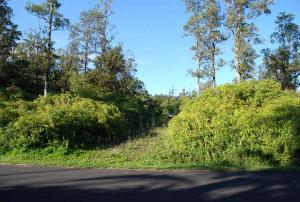 1 point