Leaderboard

Popular Content
Showing content with the highest reputation on 11/23/2010 in all areas
-
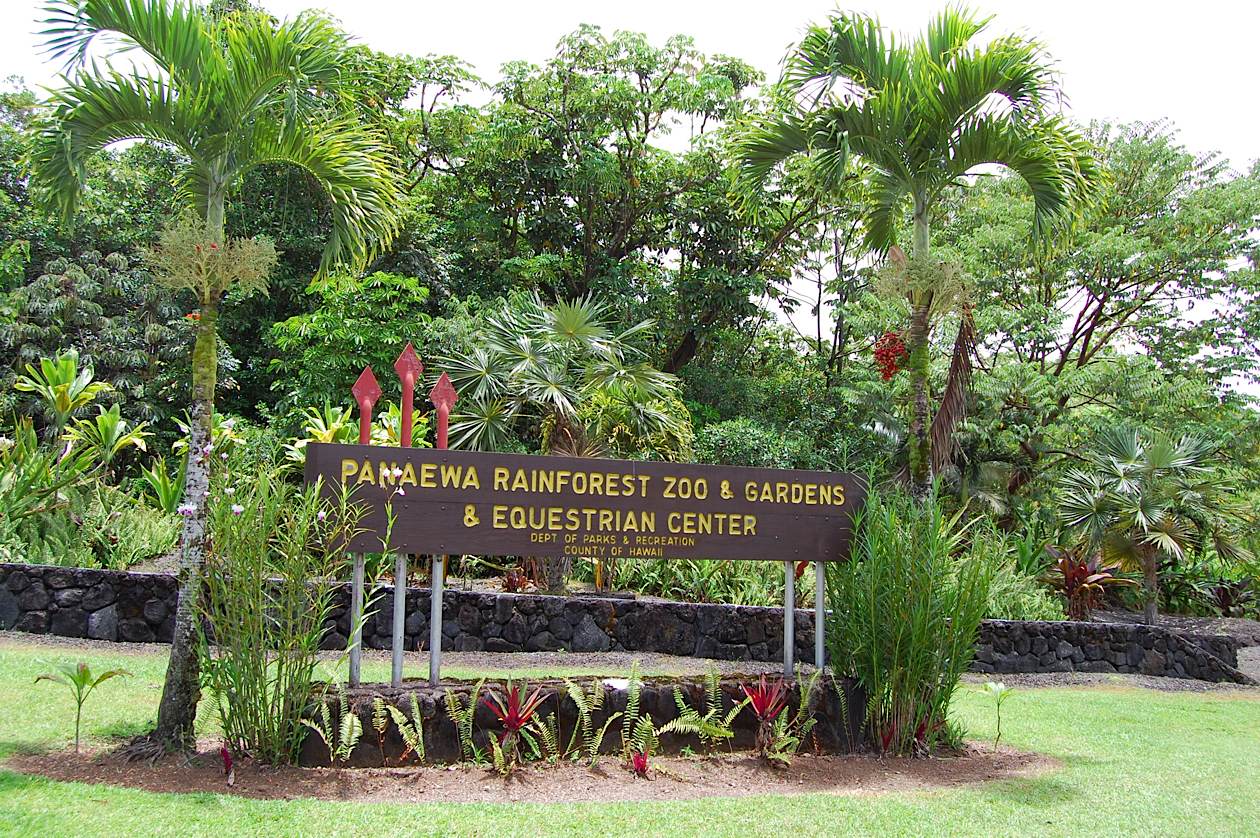
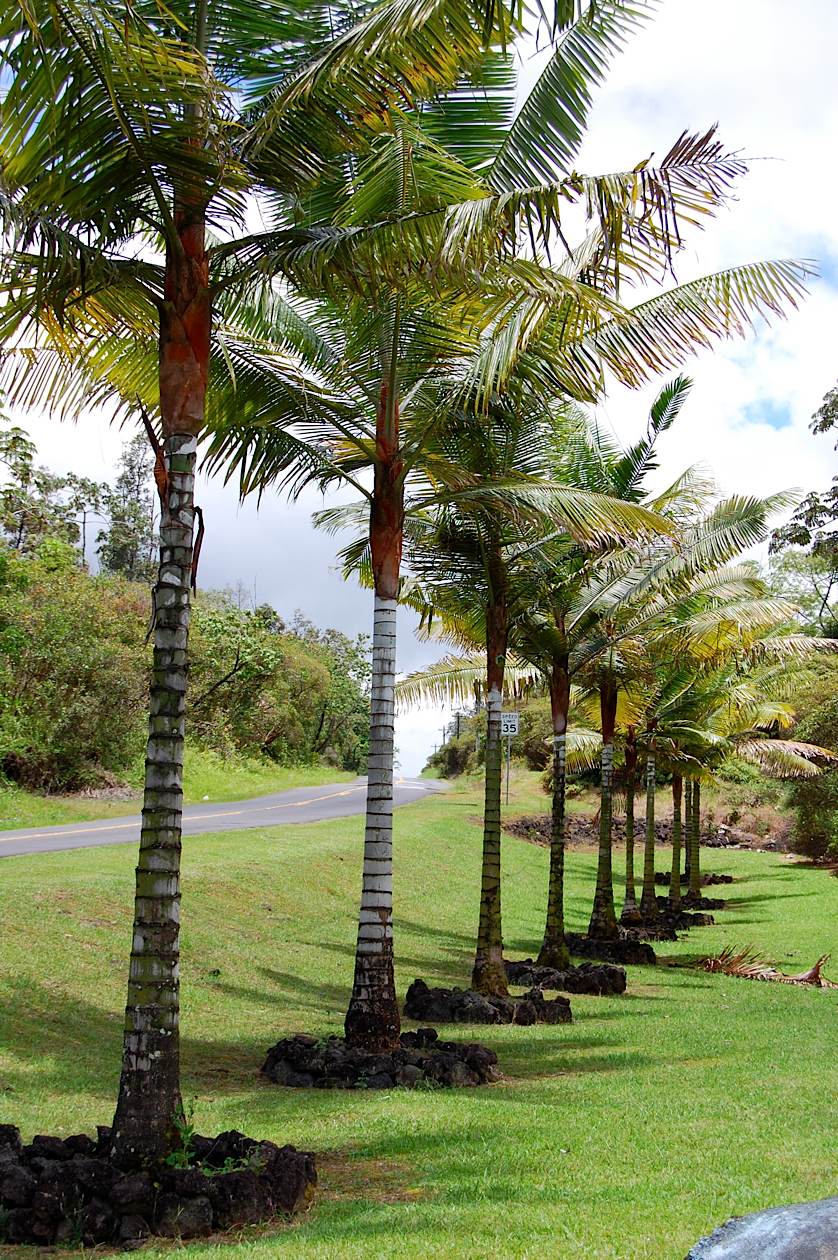
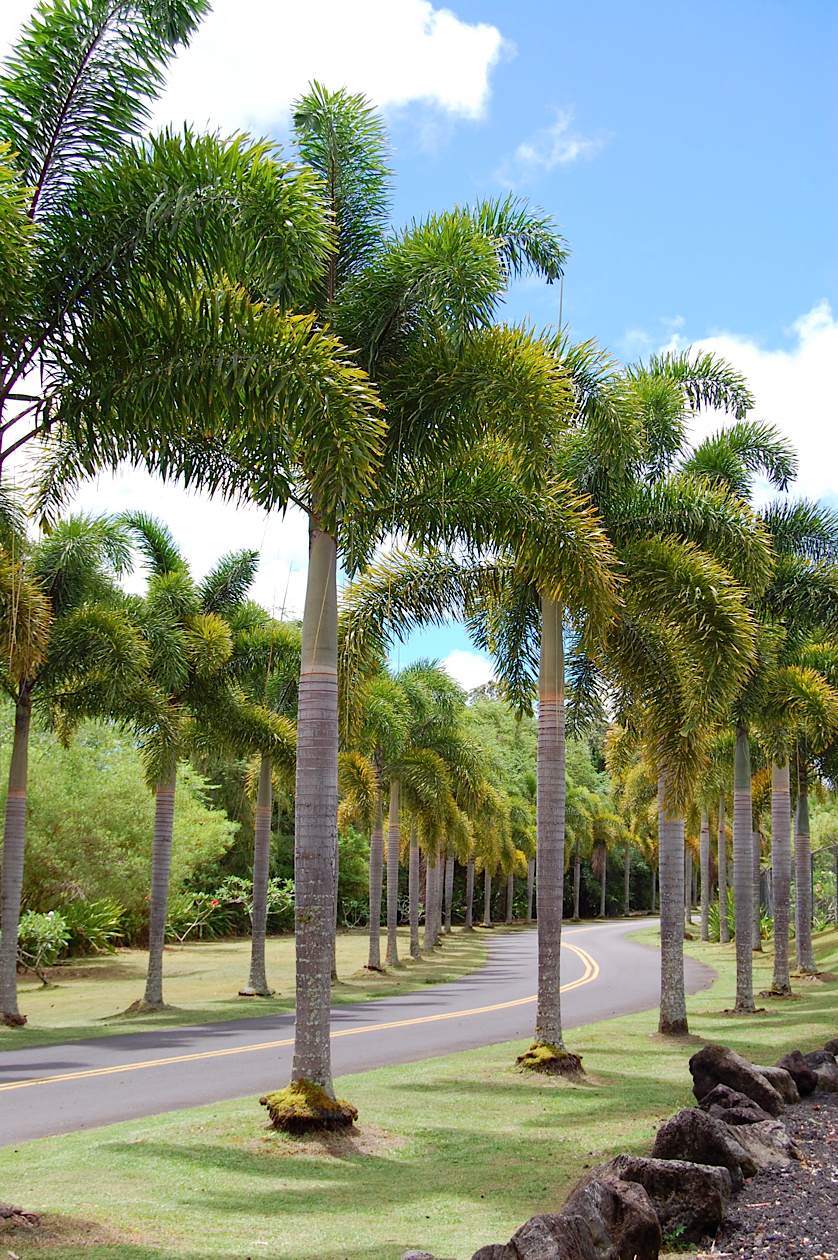
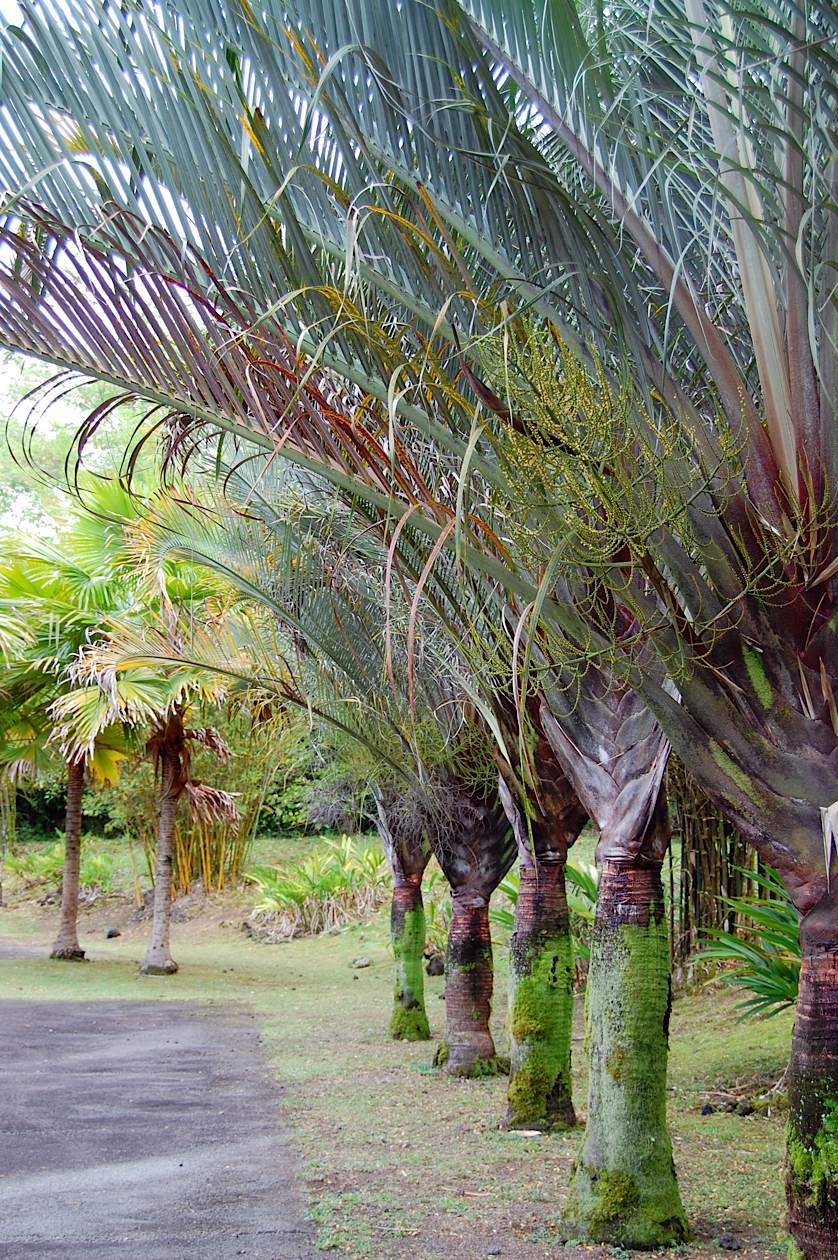
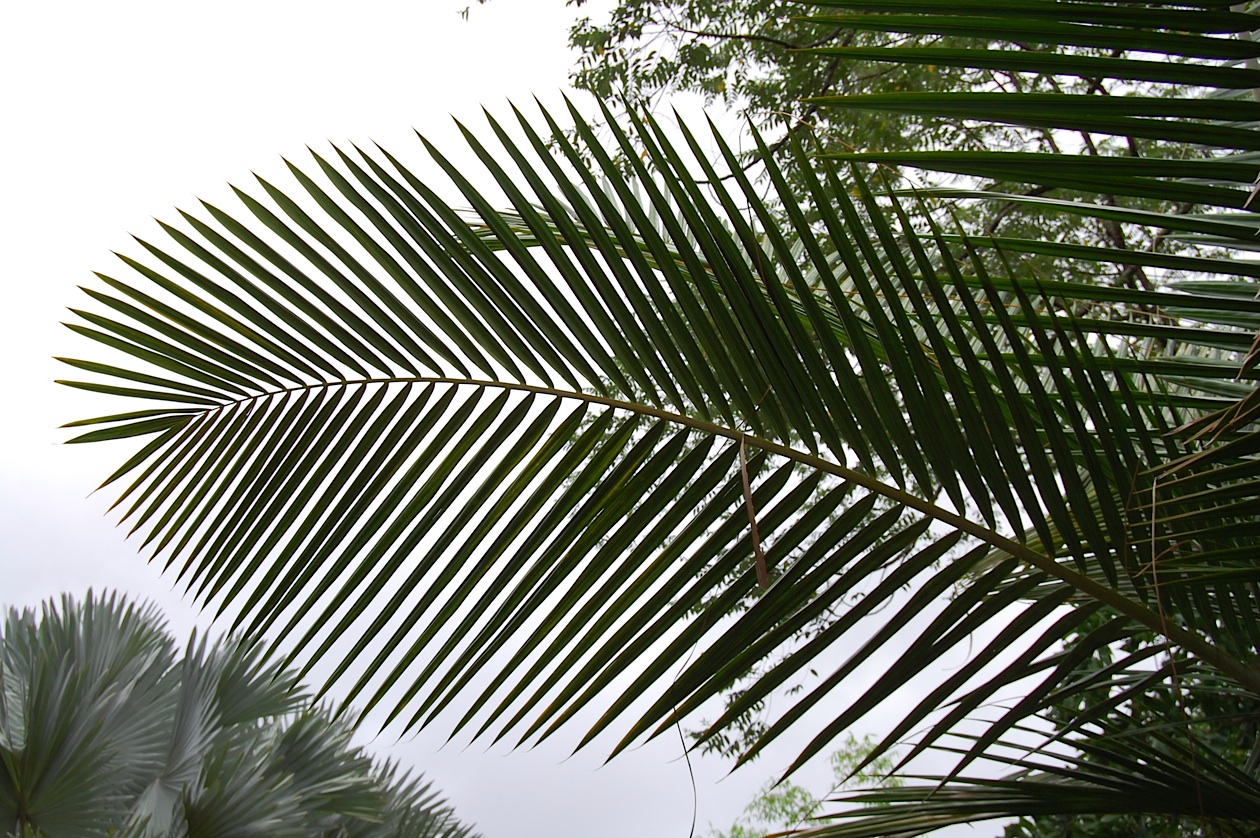
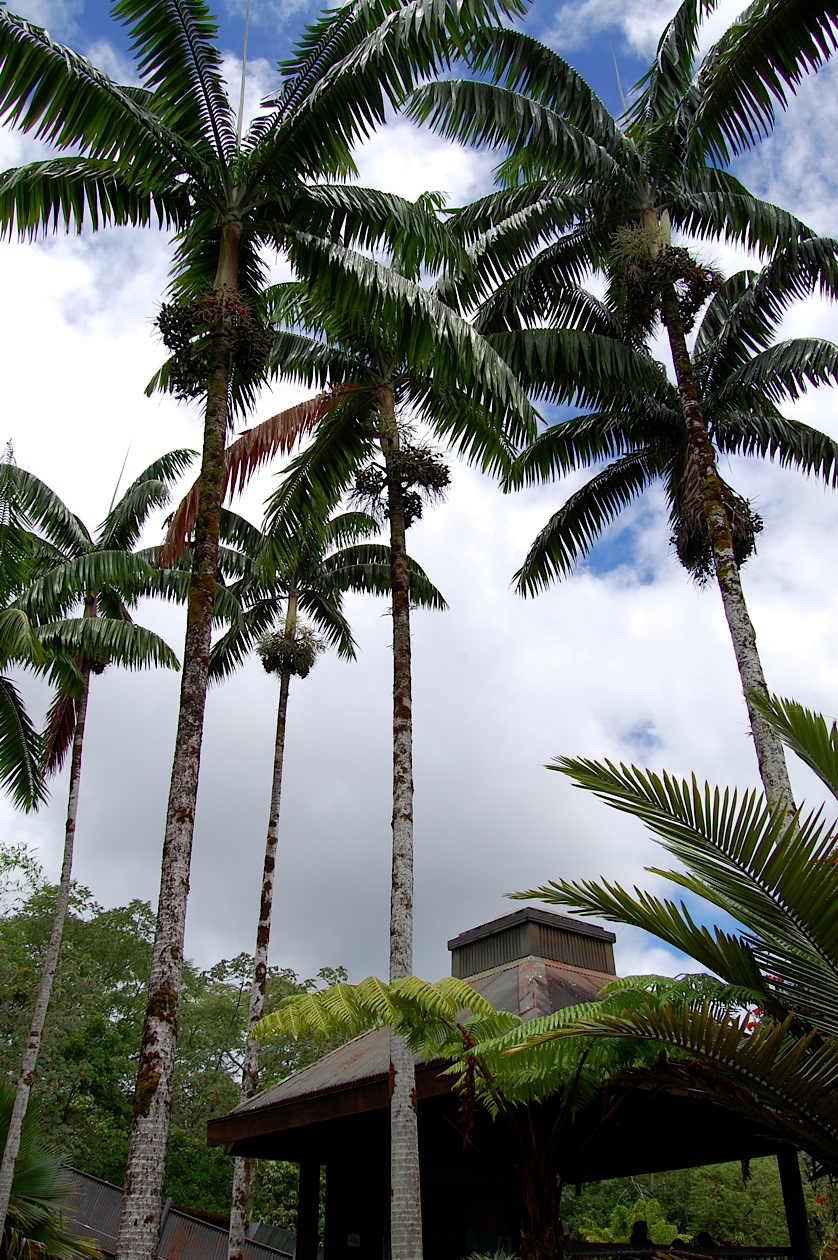
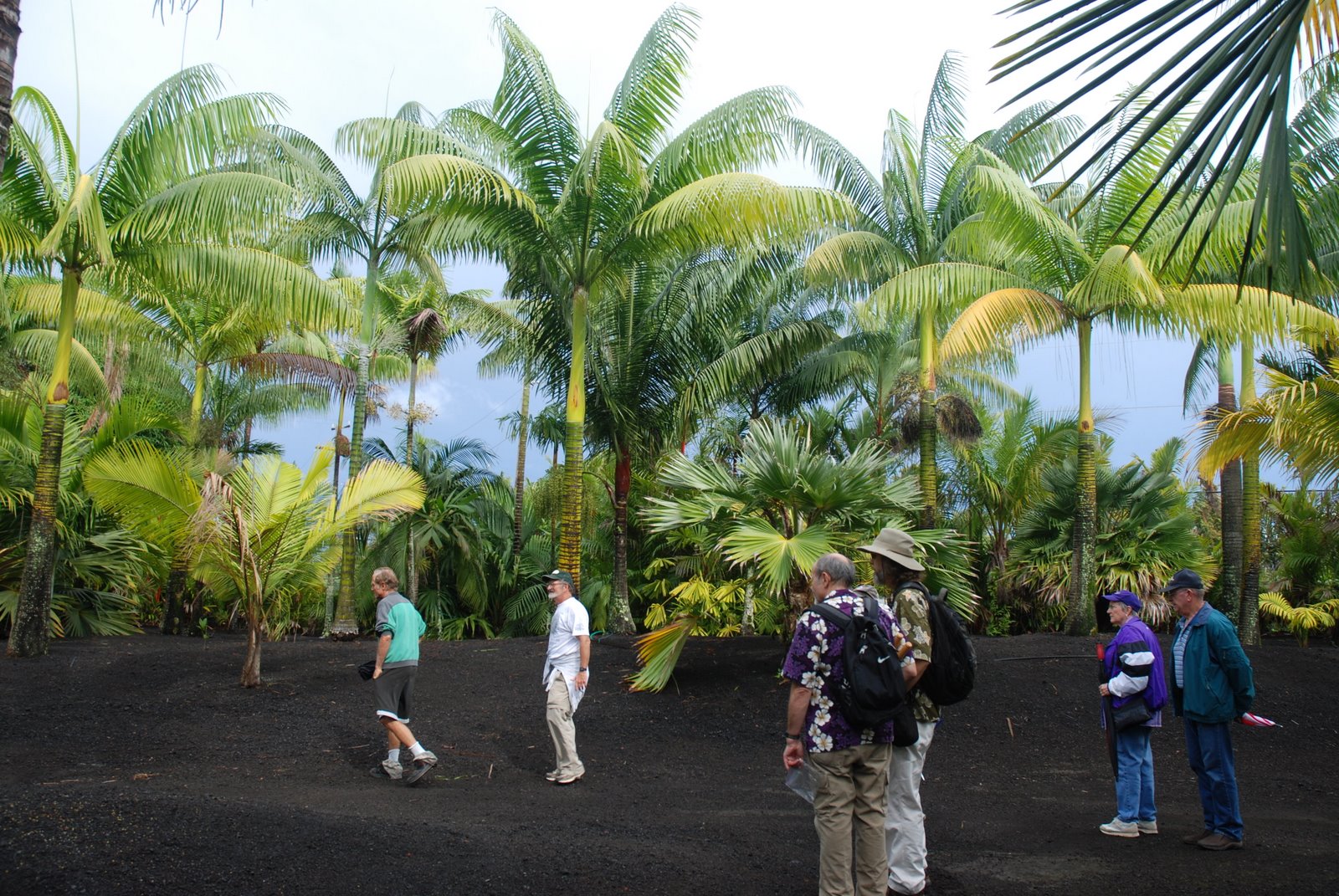
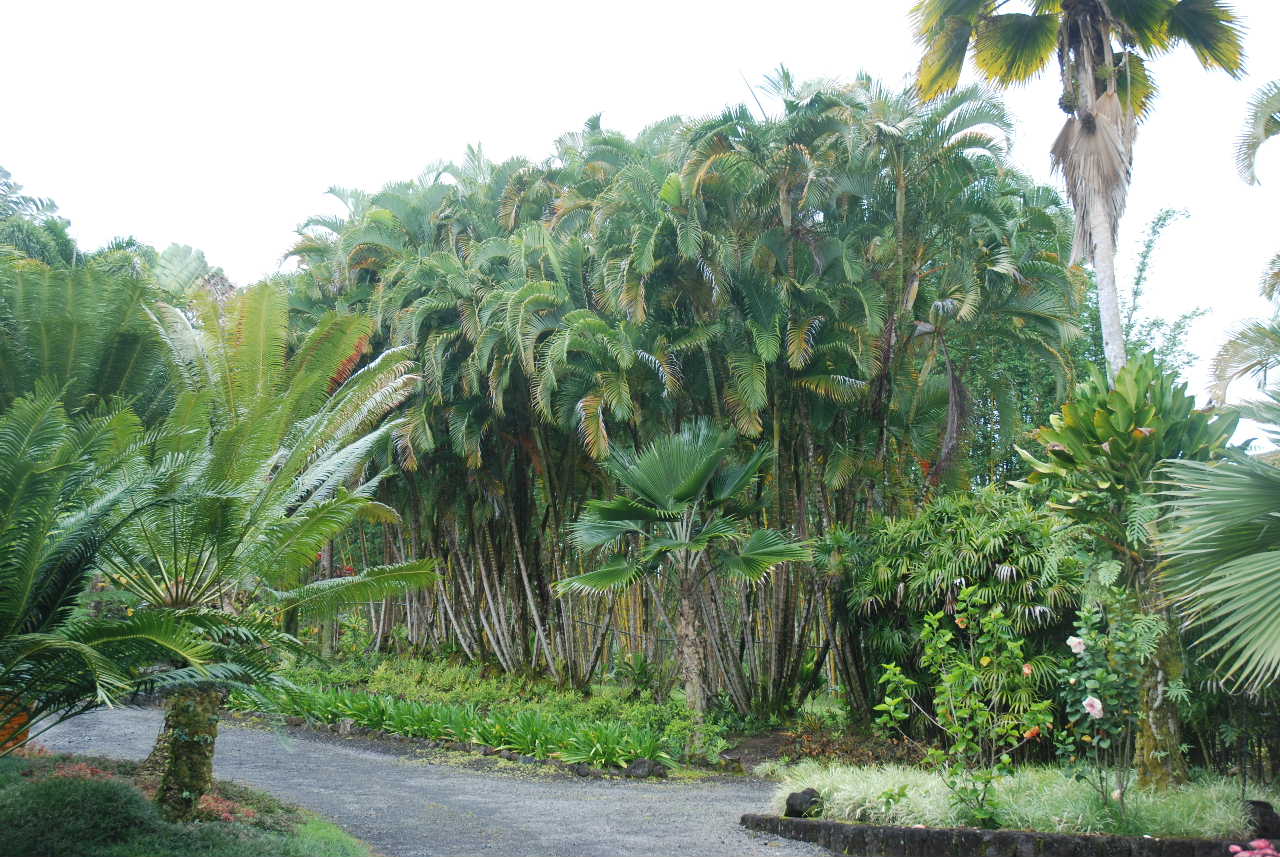
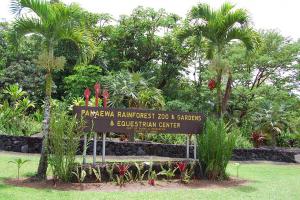
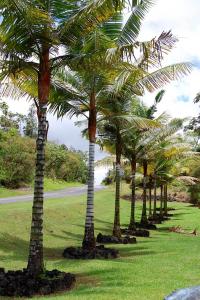
I've been wanting to visit this place, and finally got around to it. I didn't see a single equestrian, though, must have been their day off. Rank and file Dypsis -- are they leptocheilos or lastelliana? I'm guessing leptocheilos... The drive is line with Wodyetia bifurcata, and the parking lot is rimmed with Dypsis decaryi.


 1 point
 -
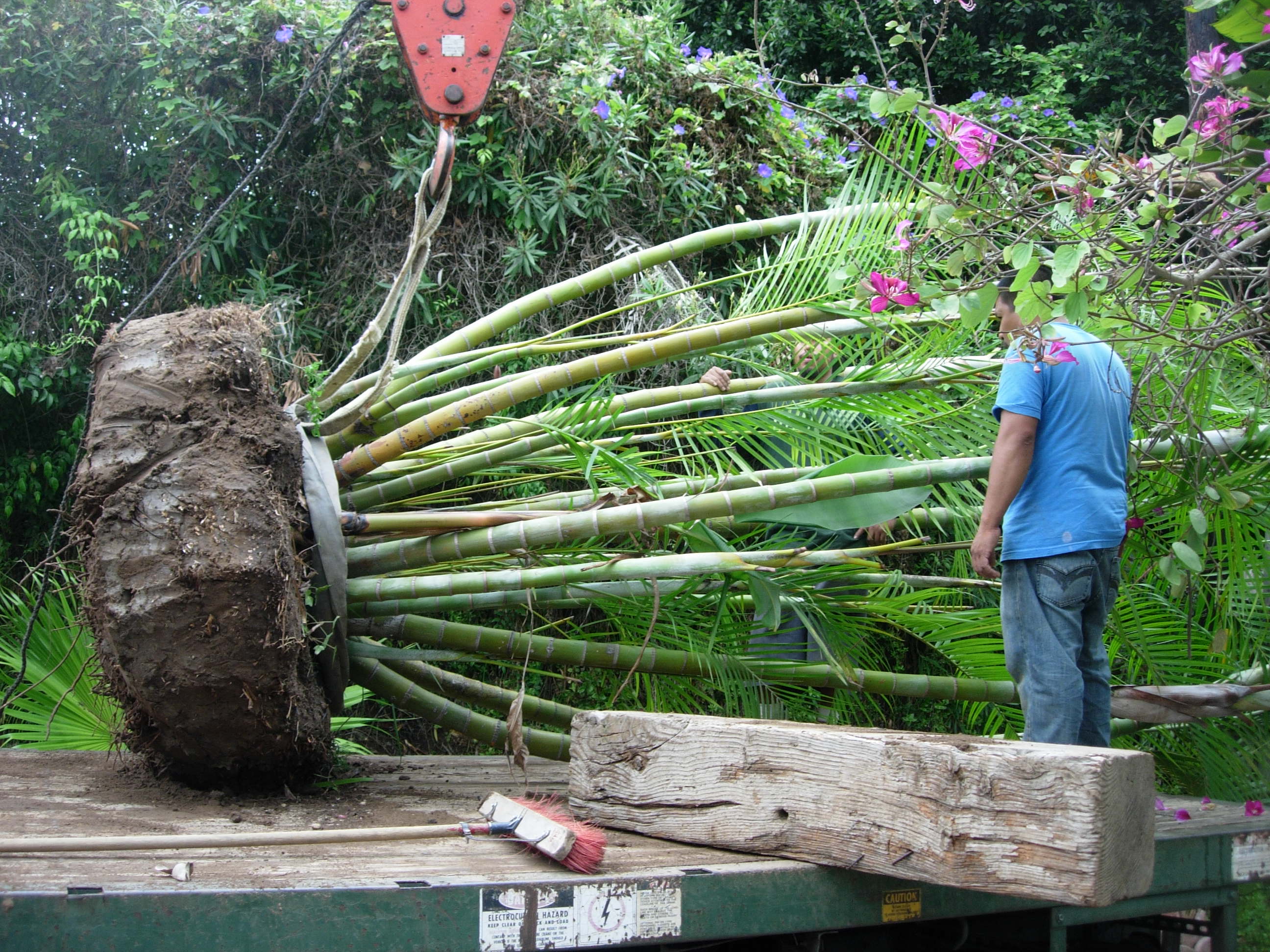
Moved 4 months ago so far opened a new leaf and no sign of shock... contrary to what i have read about moving these beauties! any idea what if its a sapida??


 1 point
 -
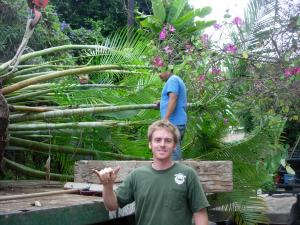
Just adopted these beauties... so far cant even tell they were uprooted!


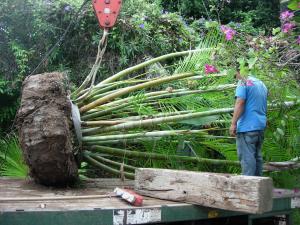 1 point
 -
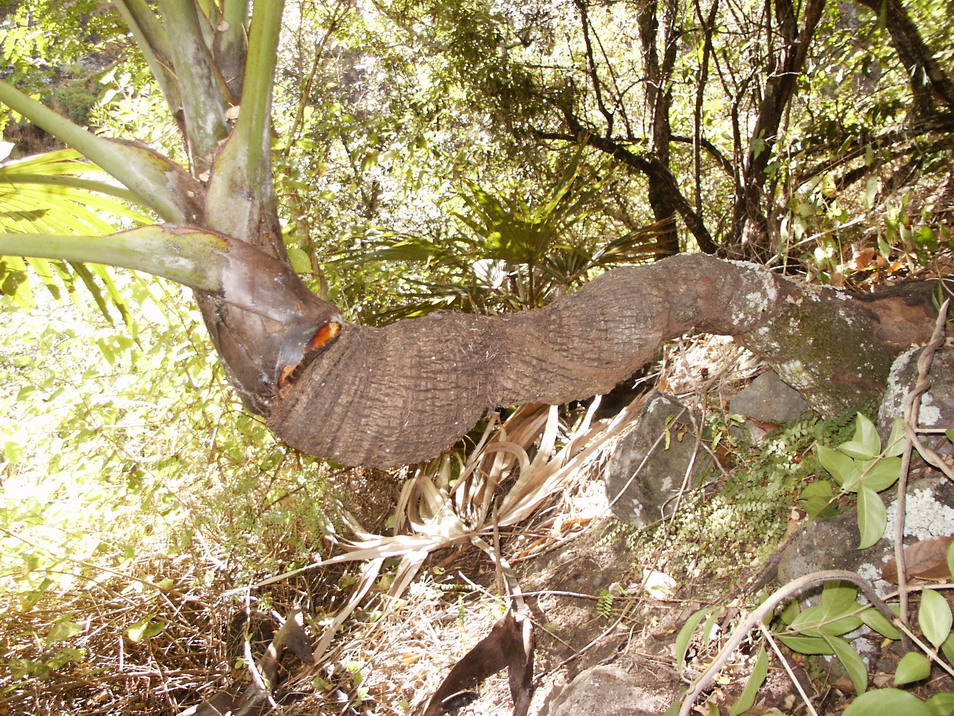
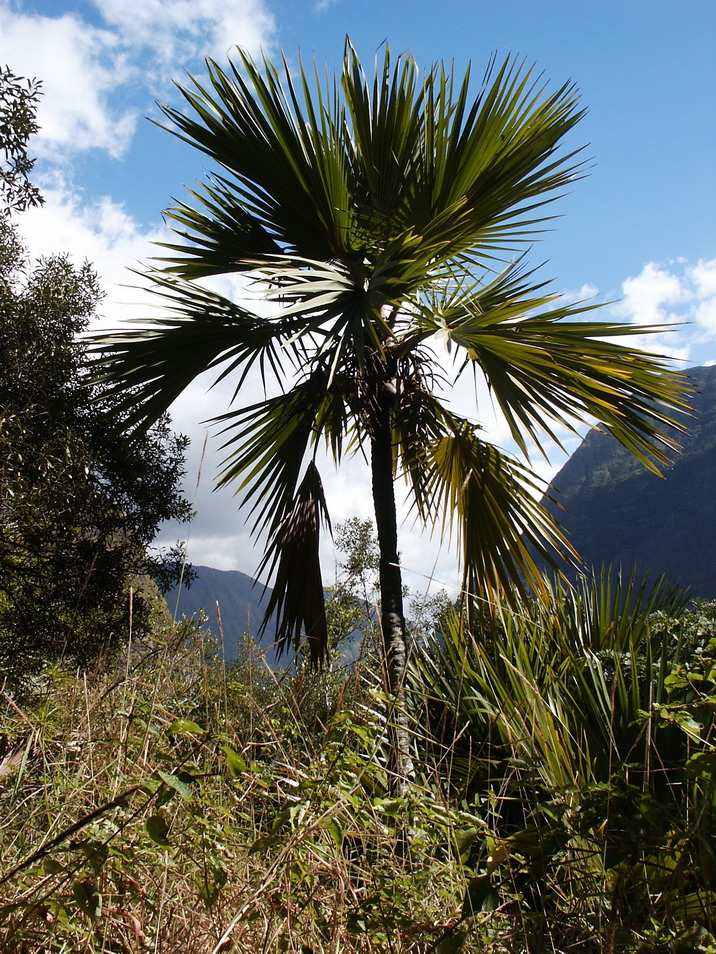
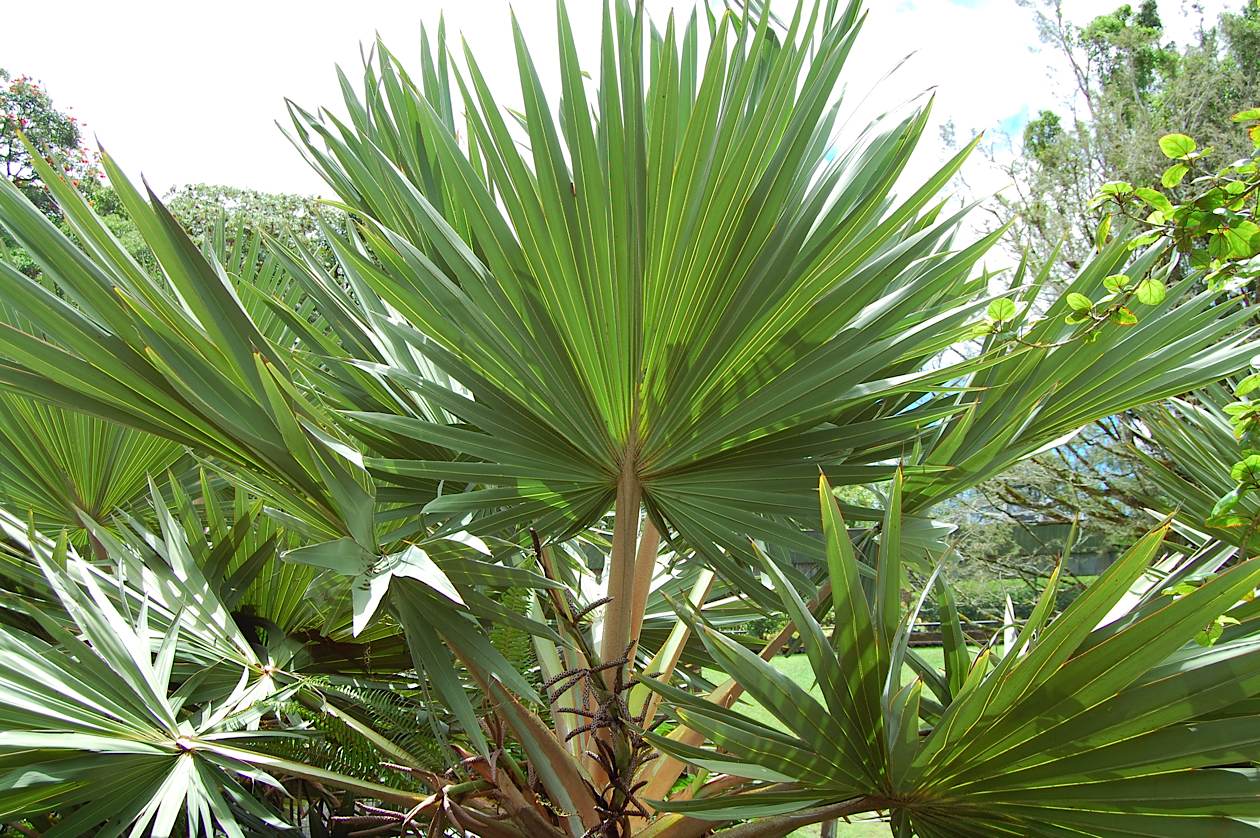
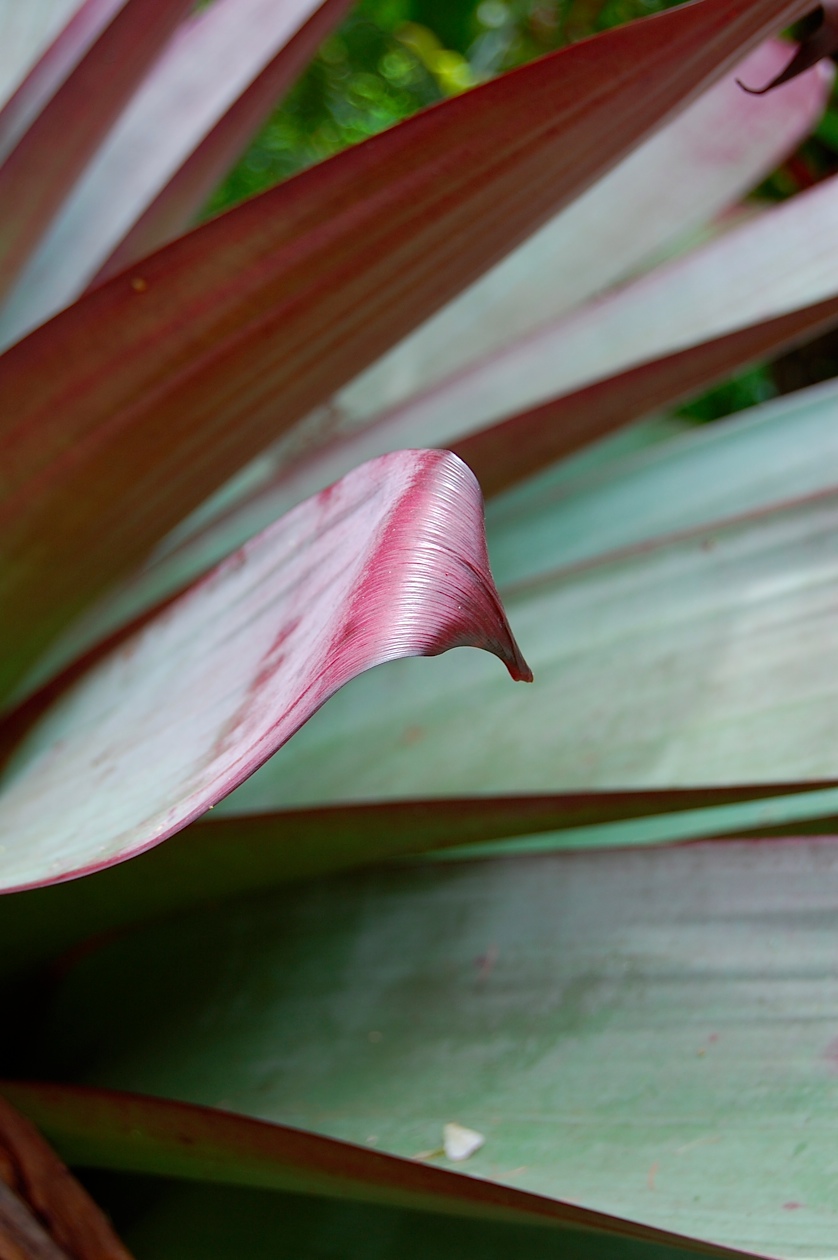
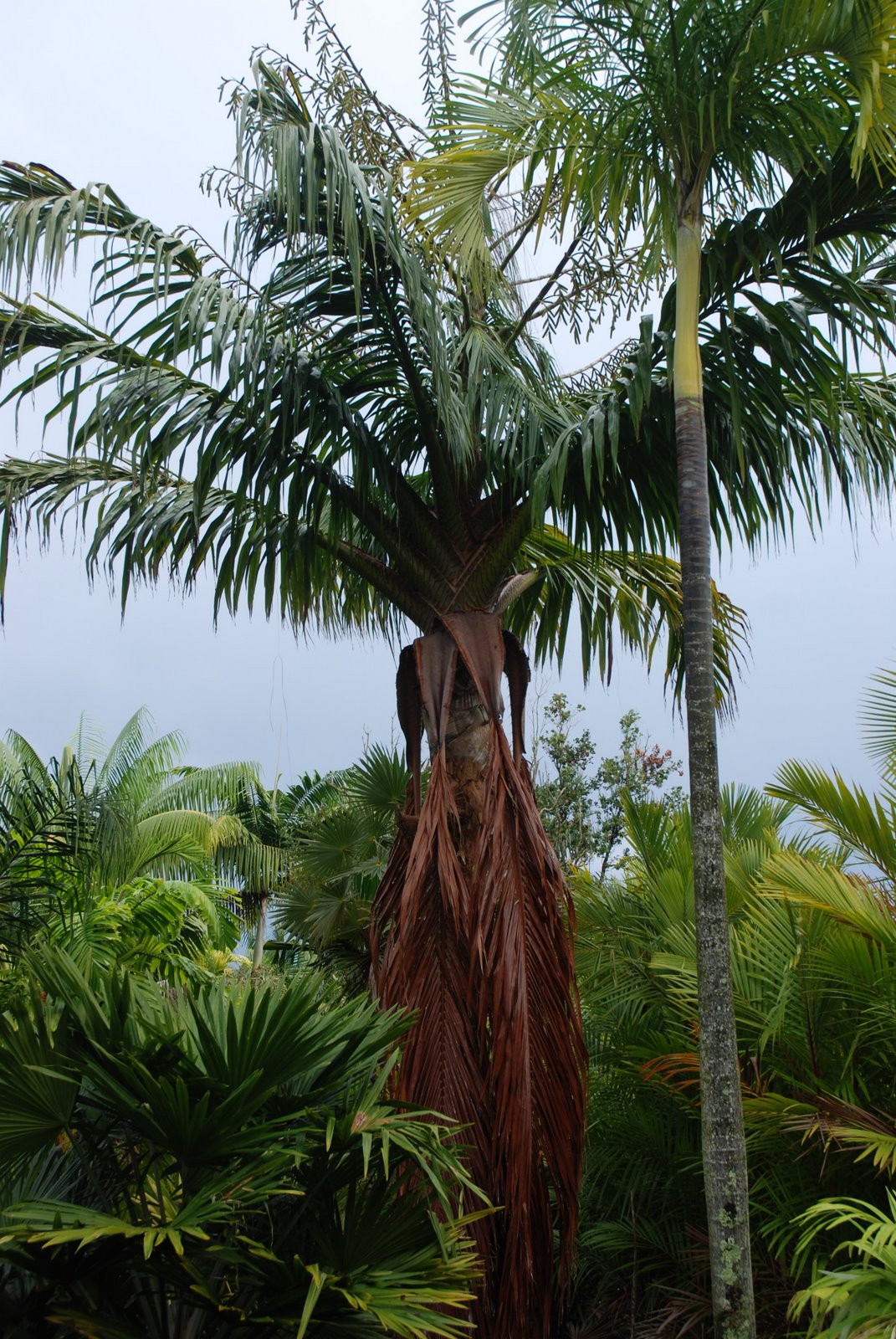
I would like to show here what is now very rare among other rarities : red latania in the wild. This group of twenty or so latania lives in an almost inaccassible Reunion Island place where they are naturally protected from incontrolled urbanization. The ones you are seeing on these shots have more than one hundred years maybe three hundred years for the one in the shade with a weird trunk form. Shade and here location drought slow obviously and greatly growth of this very stiff leaves local varity. Seedlings which result from are of a lesser red appearance than their cultivated coast counterparts. Reagards. Hery

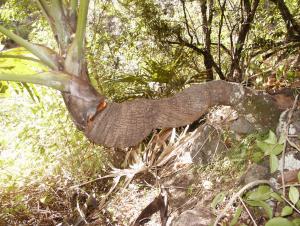


 1 point
 -
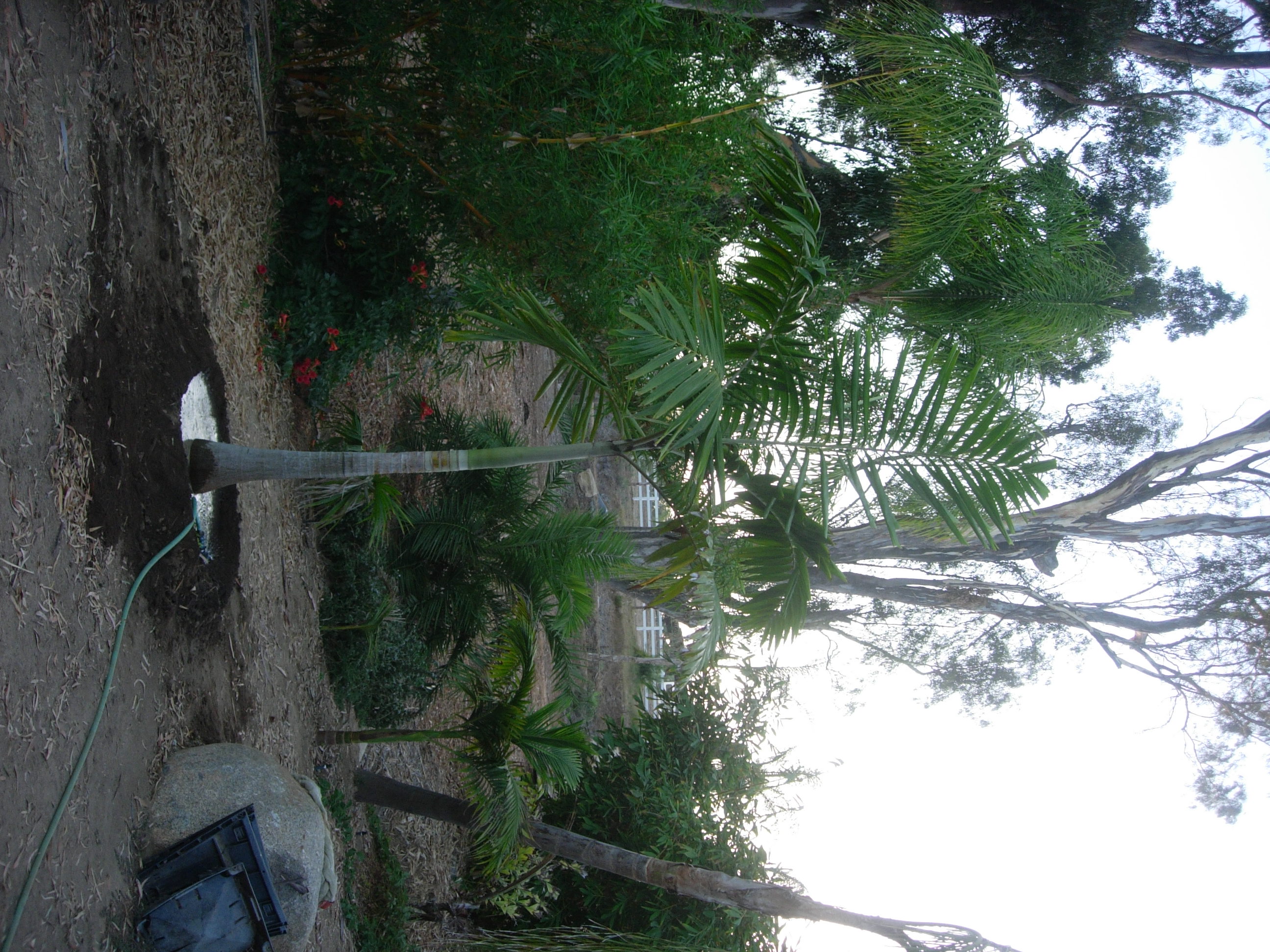
Recently Acquired/transplanted two ukn . palms any Suggestions are appreciated ??


 1 point
 -
thanks for the info Robert!1 point
-
robert - thanks for the info, also the soil was more of a rich sandy loam (very loose) thats why i wrapped the ball very good. I have never experienced a tap root on palms either ( i have transplanted 100's of palms ) however in some readings, a tap root is talked about on the nikau... heres the link My link "The nikau is not transplanted easily as it has a tap root and even if the roots are slightly damaged it will die. It requires moist shade to semi-shade when young. The nikau can be planted in the full sun but its leaves will be more upright and and dry on the tips. It will tolerate light frosts only. Use compost and mulch when planting the nikau to retain moisture and protect from wind when young. It is propagated by seed. Plant the nikau in groups for effect. "1 point
-
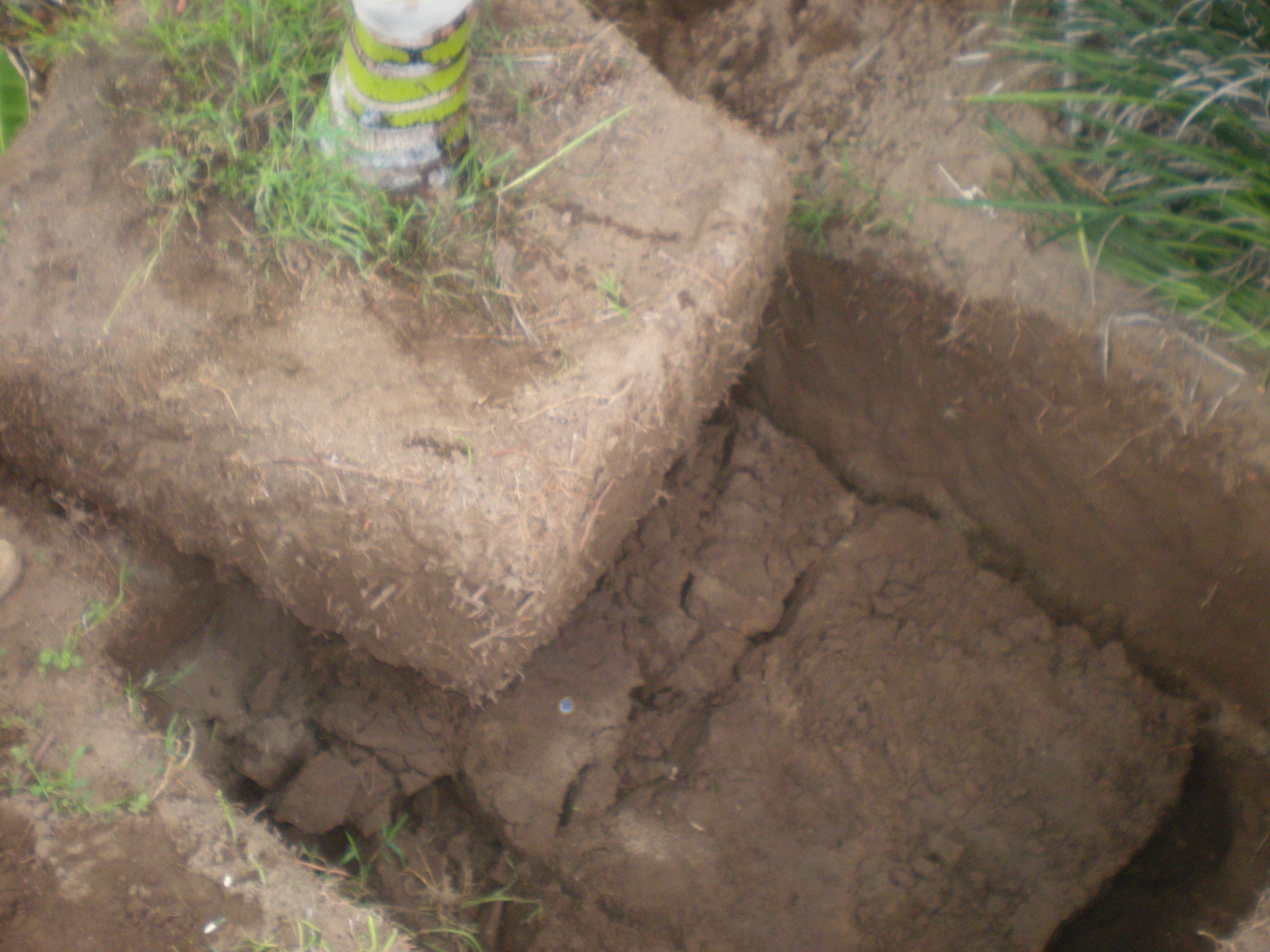
Just figured the Pic situation out, (it was too big) I also added a picture of when we lifted it out ( wheres the "tap root")?heres a recent pic, it just dropped an old leaf, (you can see the immature flower sheath).
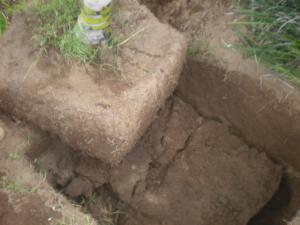
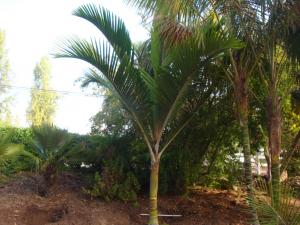 1 point
 -
I just started this hobby 6 months ago. Today I joined this forum and IPS. This post of yours Kris is awesome, and you have done a terrific job with your images. I have about 25 types of seeds all in pots, some germinating, some taking their time to do so. Your illustrations have helped me realize just how simple it is to germinate seeds. I keep trying different mediums, and moving my seeds/Seelings around, from indoors to outdoors, then back again. I dont think this promotes growth and in someway I've read that it can kill the seedlings. Have you had ay experience with moving seedlings.... perhaps in trying to maximize rate of growth? Thanks again, Rob Bermuda1 point
-
heres a recent pic, it just dropped an old leaf, (you can see the immature flower sheath). some reason i cant add a picture im getting this message: Error No file was selected for upload anyway thanks for the ID!1 point
-
ON THE WAY TO THE BAOBABS, THIS TREE WAS FLOWERING DIRECTLY FROM THE TRUNK. A few raphias close by. Their leaves are used for making a cloth called rabanne. And this area produces the best quality.1 point
-
This morning very early I went down to the harbor in the fog to see the tall ships. Hope you enjoy the photos. Click the little diagonal arrows for full screen view. http://gallery.me.com/kiminpl#1000001 point
-
Thanks for the postive comments. If you have trouble downloading the first link, this one is on YouTube, but the pics are degraded. Watch it in small format:1 point
-
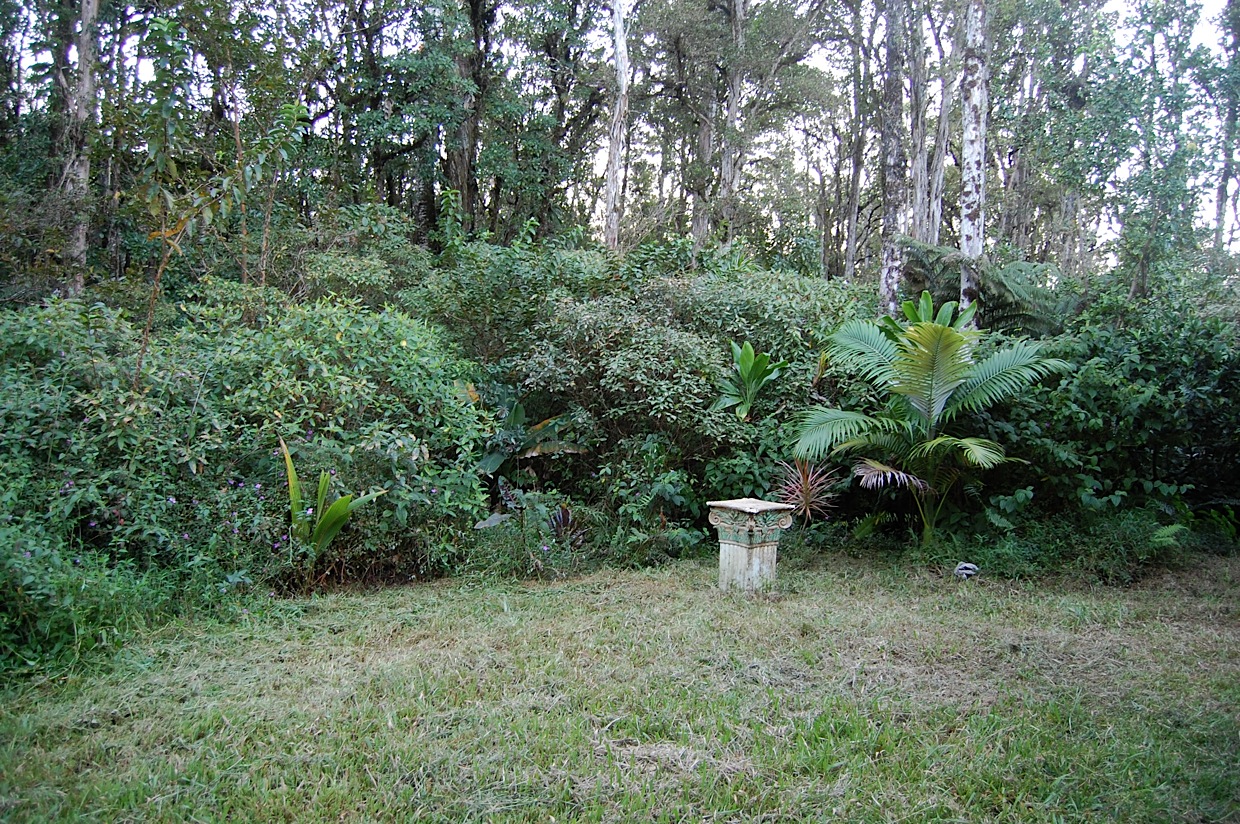
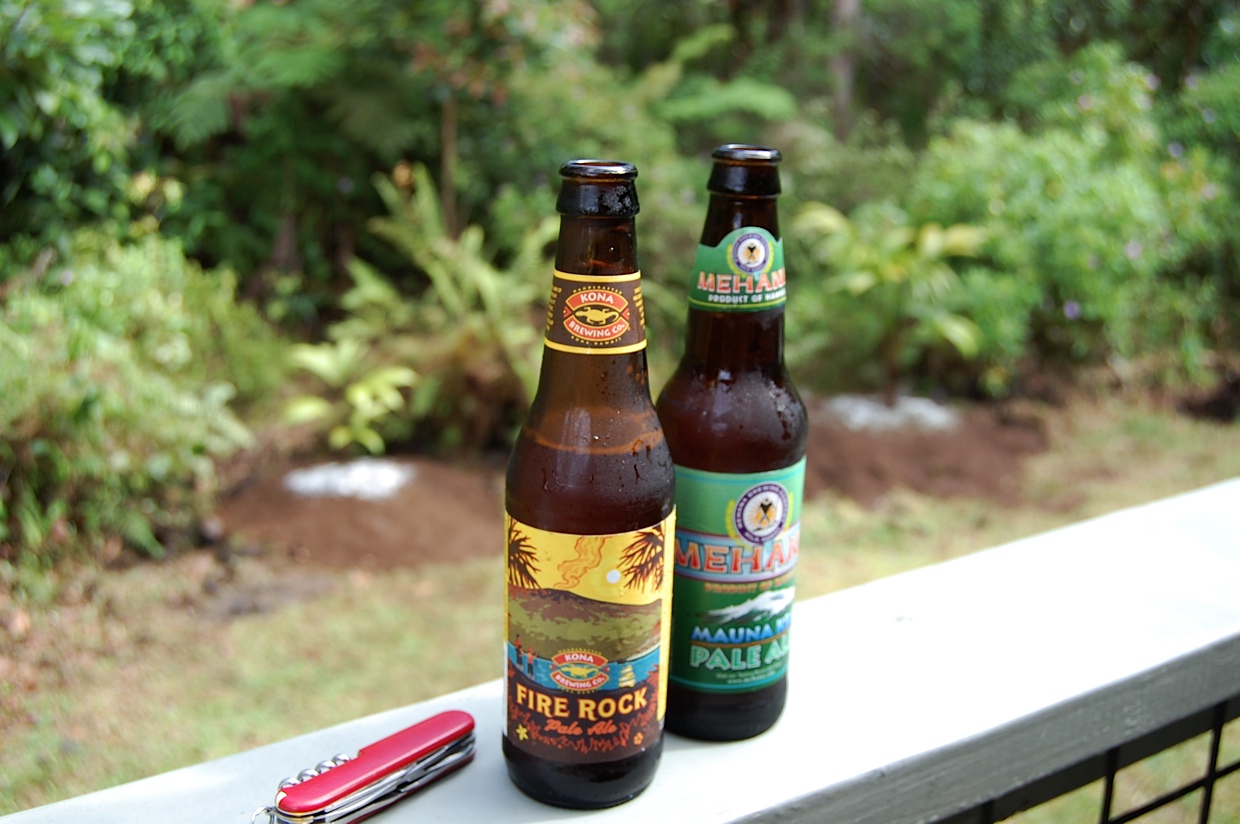
South of our little house the lot drops off steeply toward the lot line. It was a tangle of weeds, invasive shrubs and vines, wet rotting logs, and the detritus of the previous occupants. Here is how it looked in January: And after some weedwhacking and selective deletions: This is a photo from June: Oh, wait, that's the after work celebration. Let me try again...

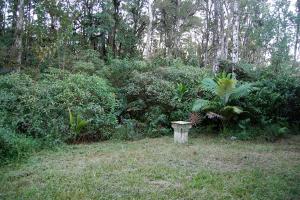
 1 point
 -
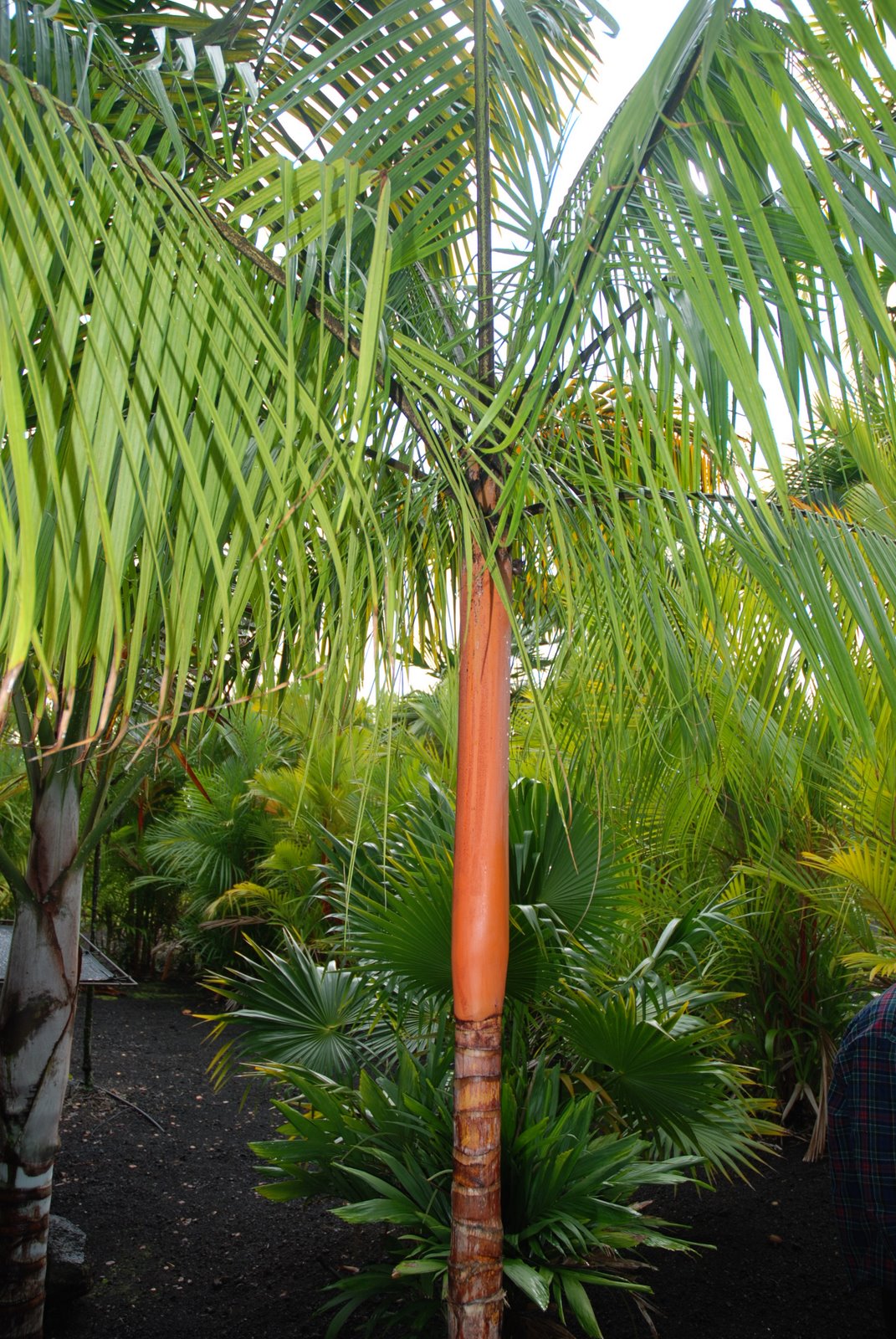
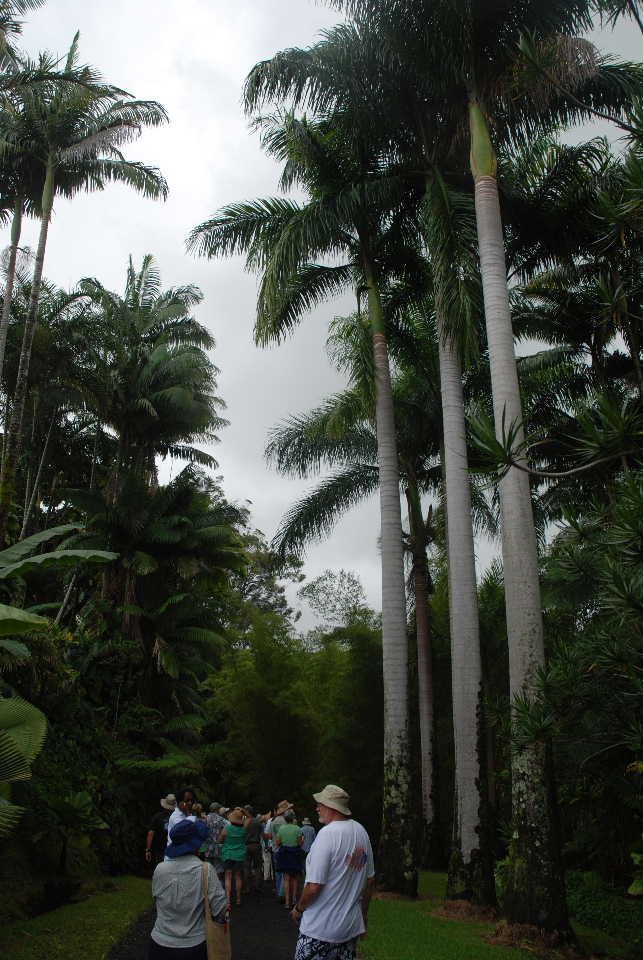
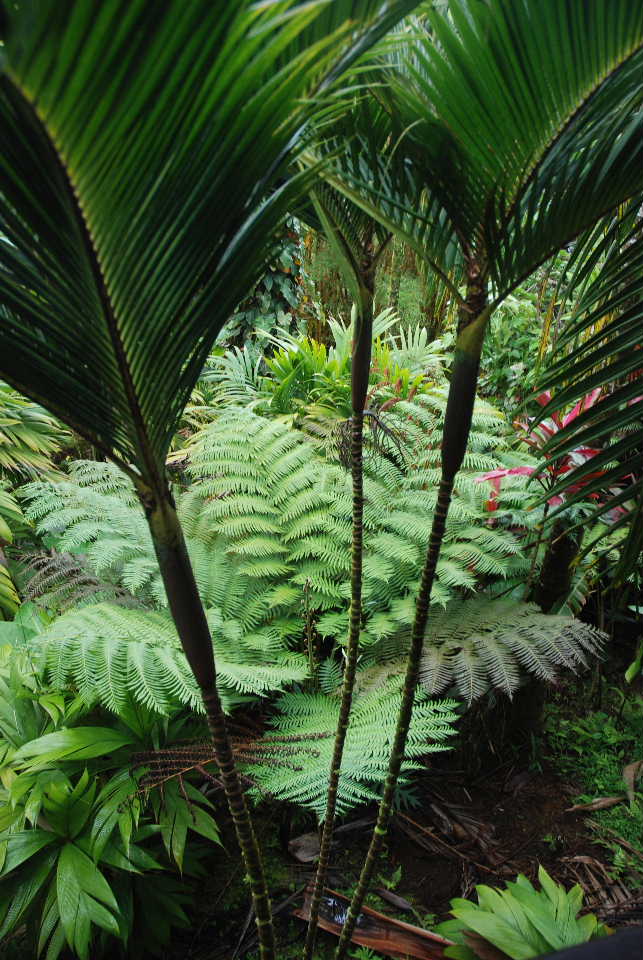
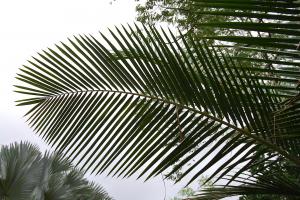
Massive and luxuriant crownshaft of Dypsis leptocheilos, closer look at that incredible Dypsis -- somebody out there knows what this is, please help! n Across the way, a Prestoea montana, very eye-catching, and a couple of bff's coming down the path. I've got a few more, but have to take a break for now.
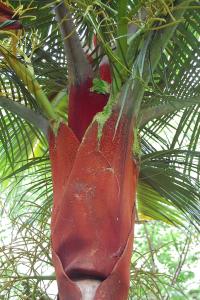

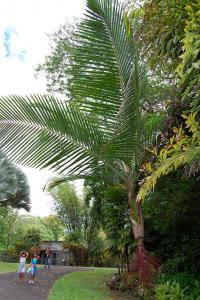
 1 point
 -
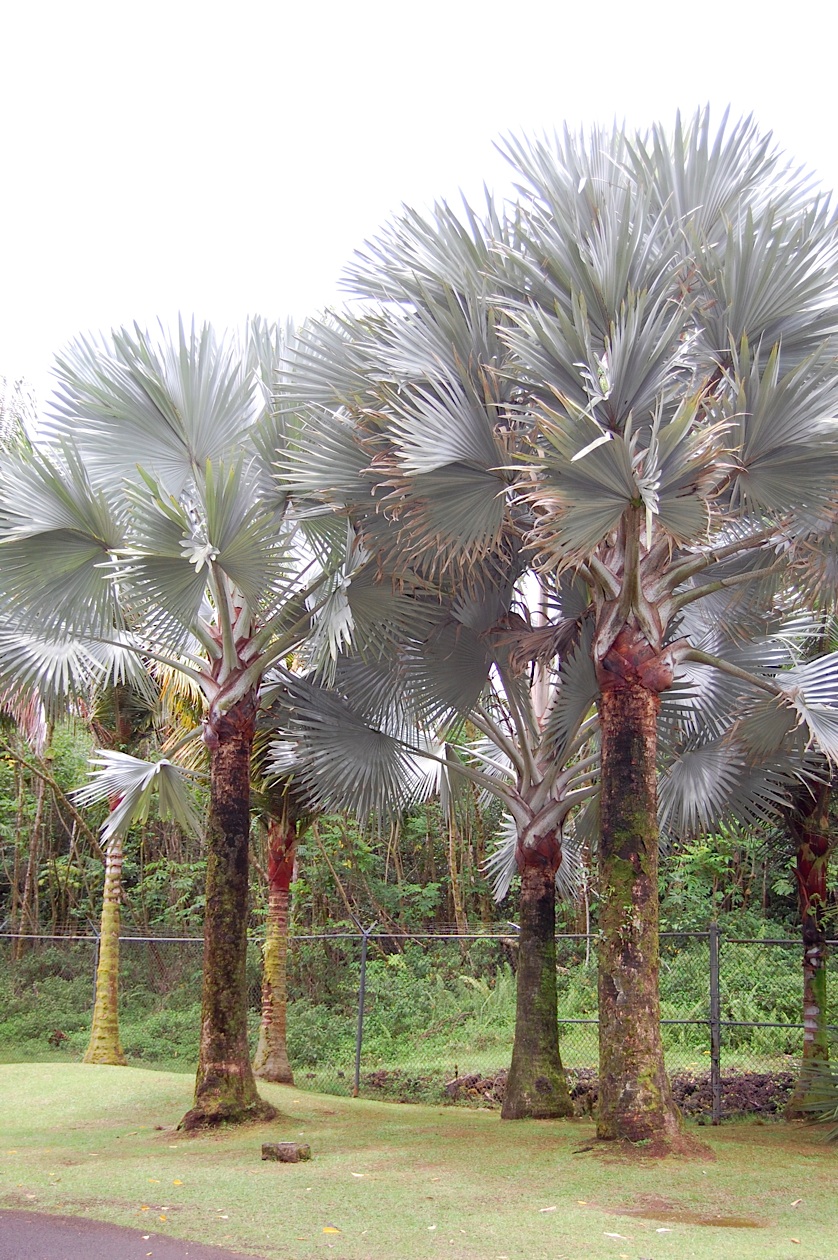
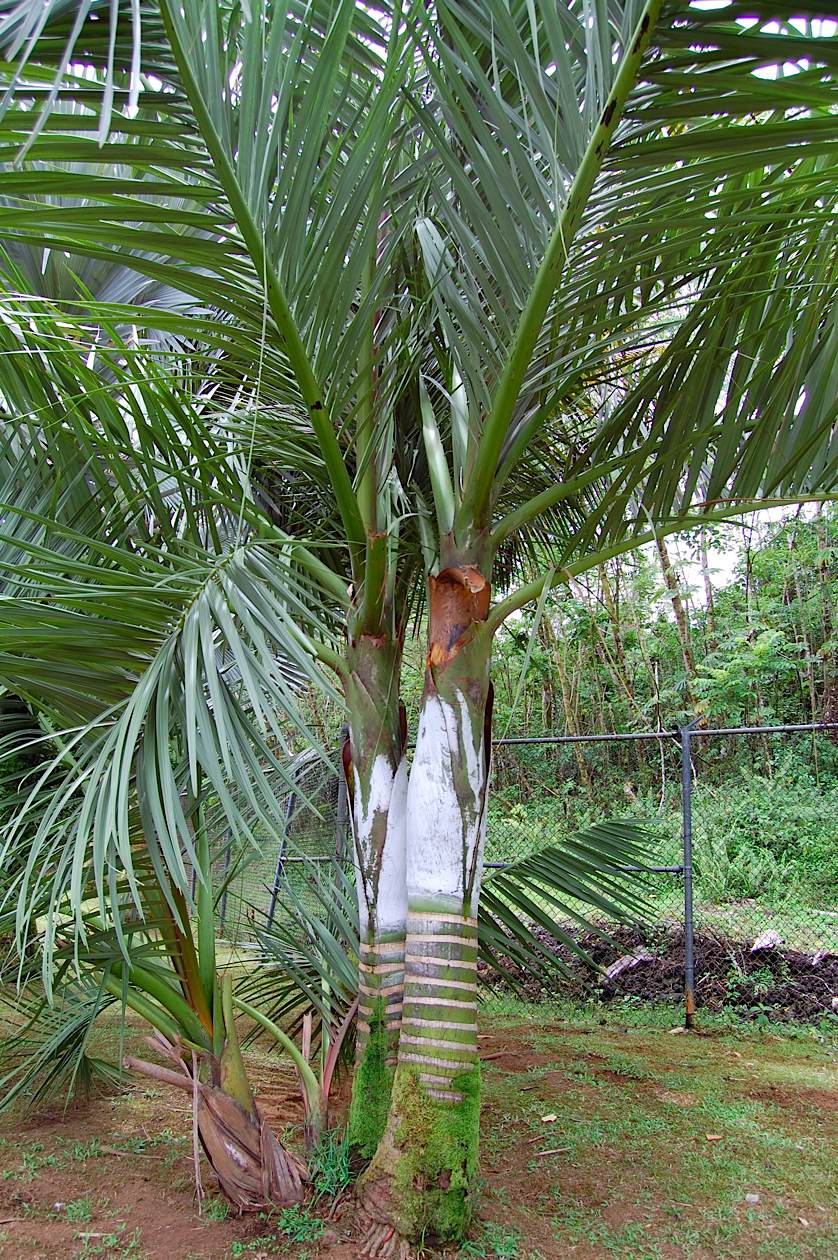
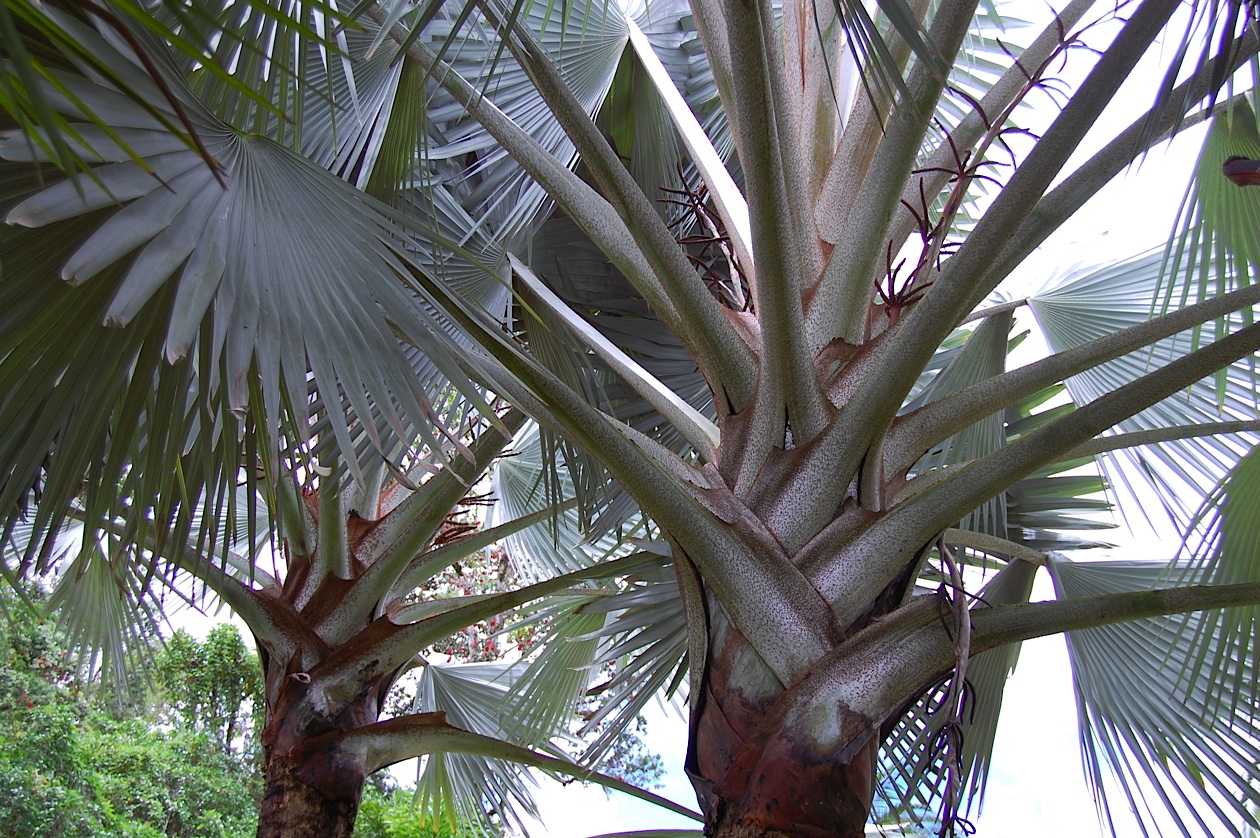
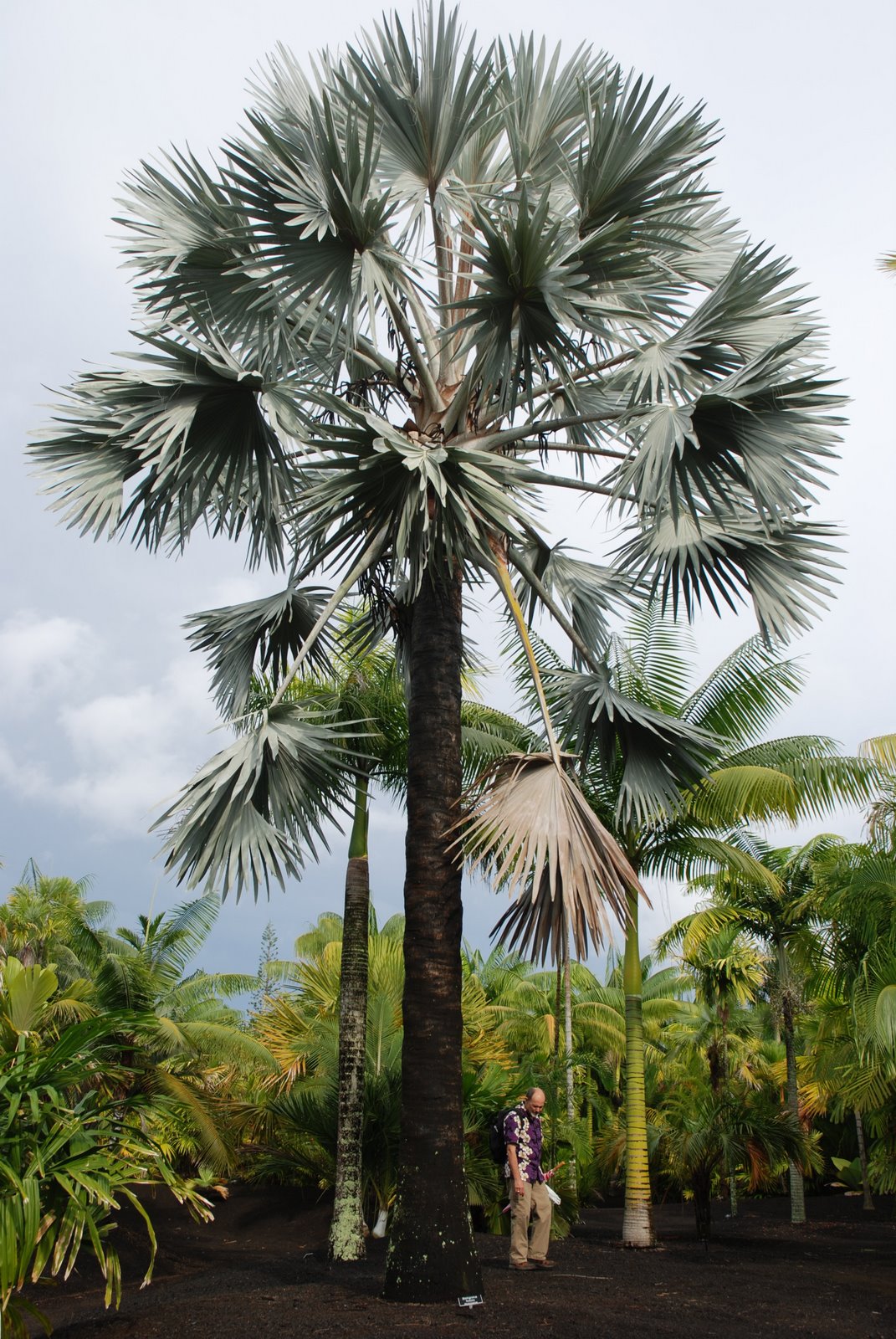
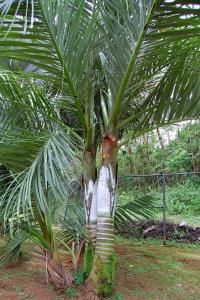
Rounding the bend, this amazing group of palms silenced me. Massive Bismarckia nobilis, monster Dypsis of uncertain species. A closer look at the exquisite Bismarckia group

 1 point
 -
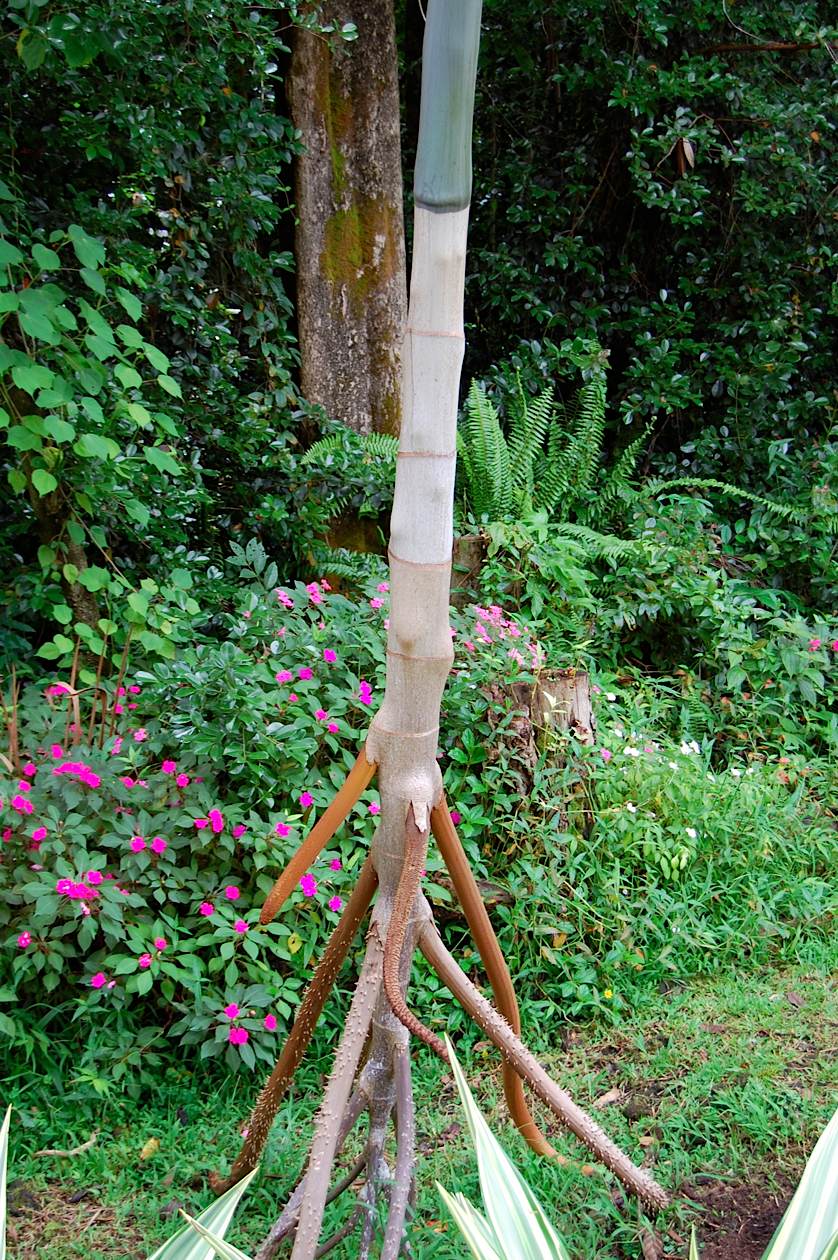
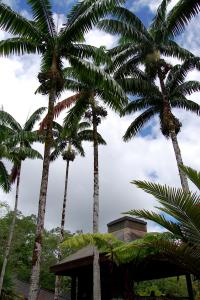
Hey, thanks Dave! Hey, palms on stilts! I'm going to make a wild guess and say this is Ireartea deltoideana, but you already know about my ID skillz... Elegantly swaying group of Veitchia joannis


 1 point
 -
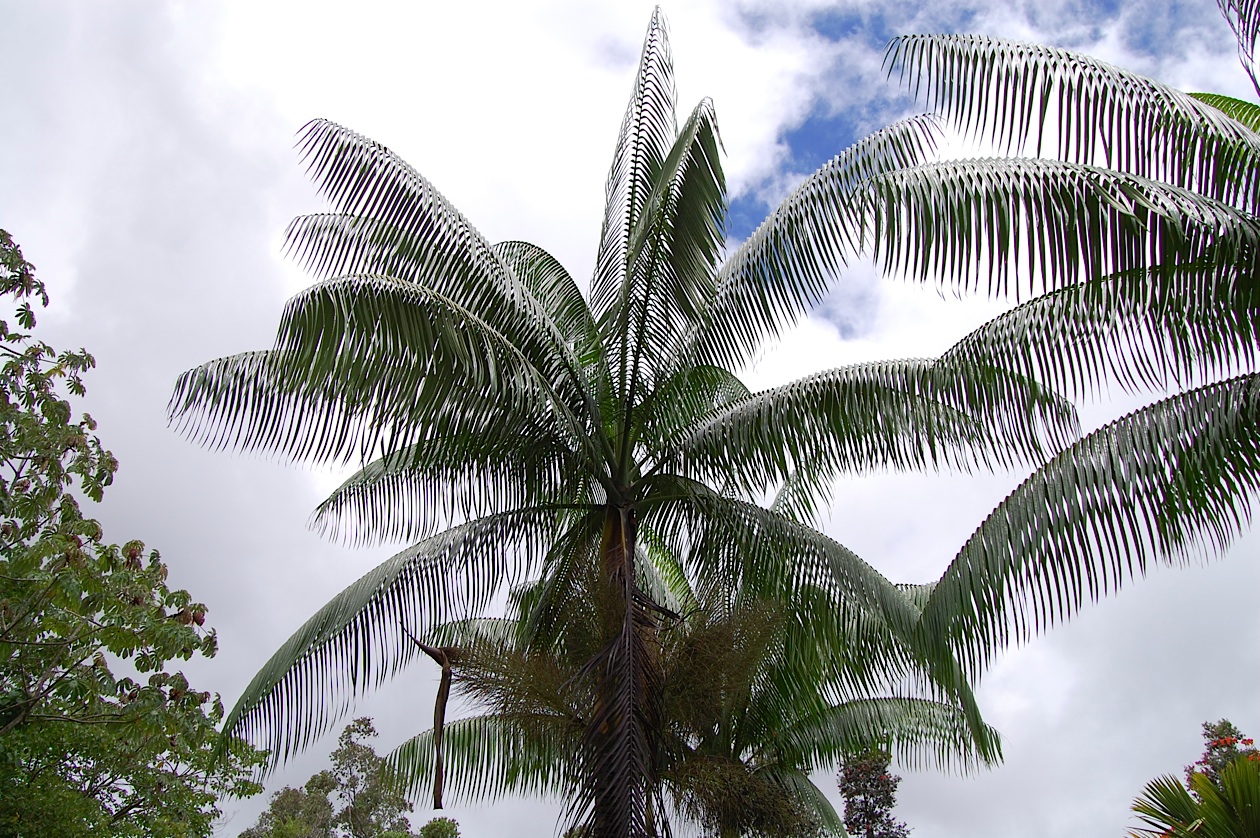
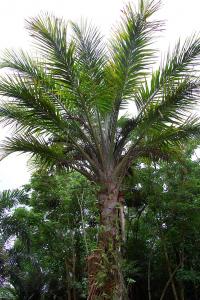
Okay, enough about the animals. Here we have a very fine Metroxylon amicarum, just massive! And the perfect crowns of Clinostigma samoense... And this Marojejya darianii blew me away! For scale, that frond hanging down is easily twice my height, probably about 11 ft. long! Wettinia quinaria, looking a little ragged around the edges

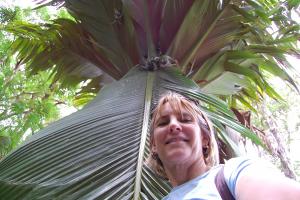
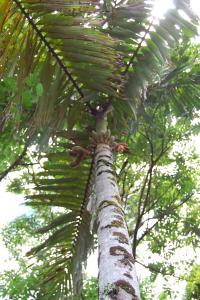 1 point
 -
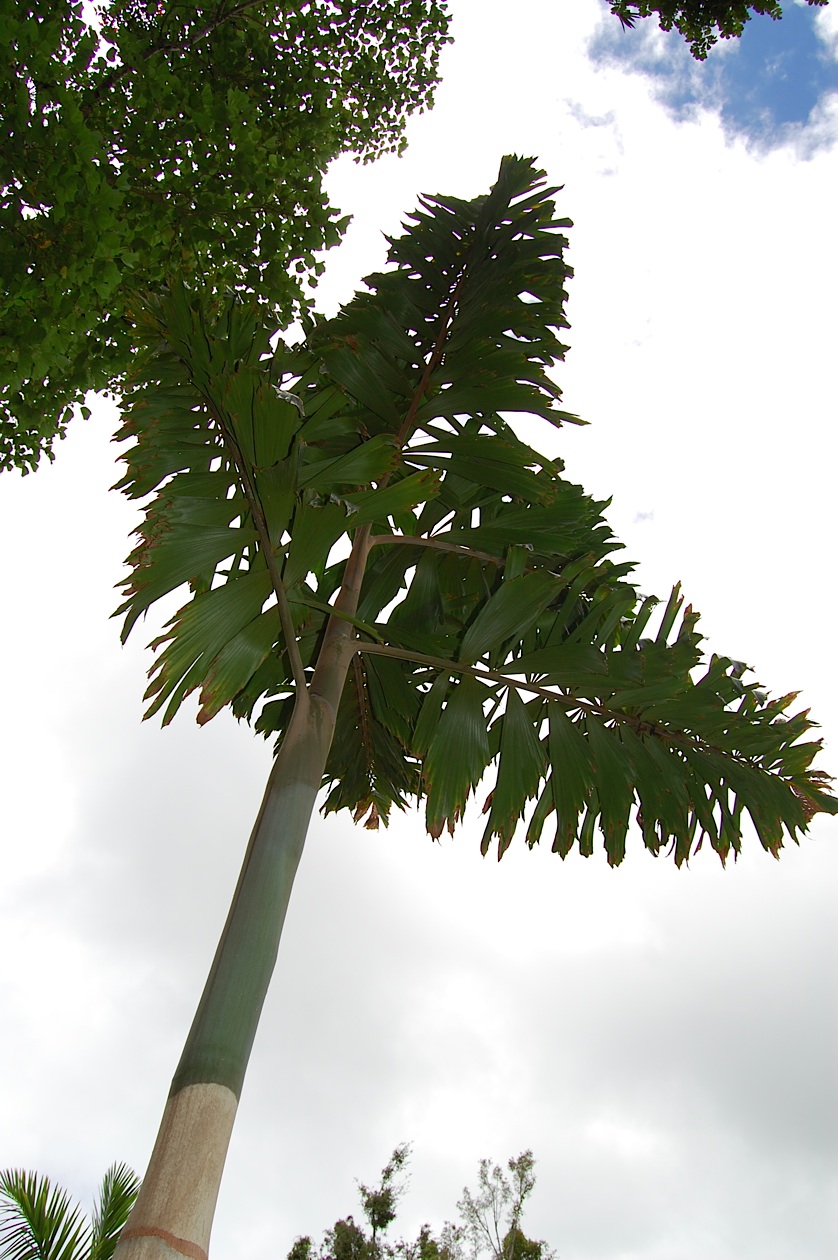
Around by the tiger enclosure I came upon this palm with fans so large I could have taken a nap on them -- well, if I weren't so heavy, I might have... Would that be Borassus? I don't know... At first the tiger enclosure appeared empty, then I saw some shadows moving in the bamboo. Suddenly a ball came bouncing downhill, pushed by playful Namaste, the white tiger.

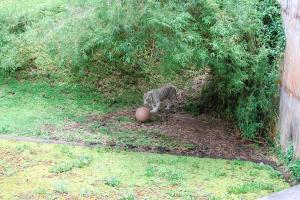
 1 point
 -
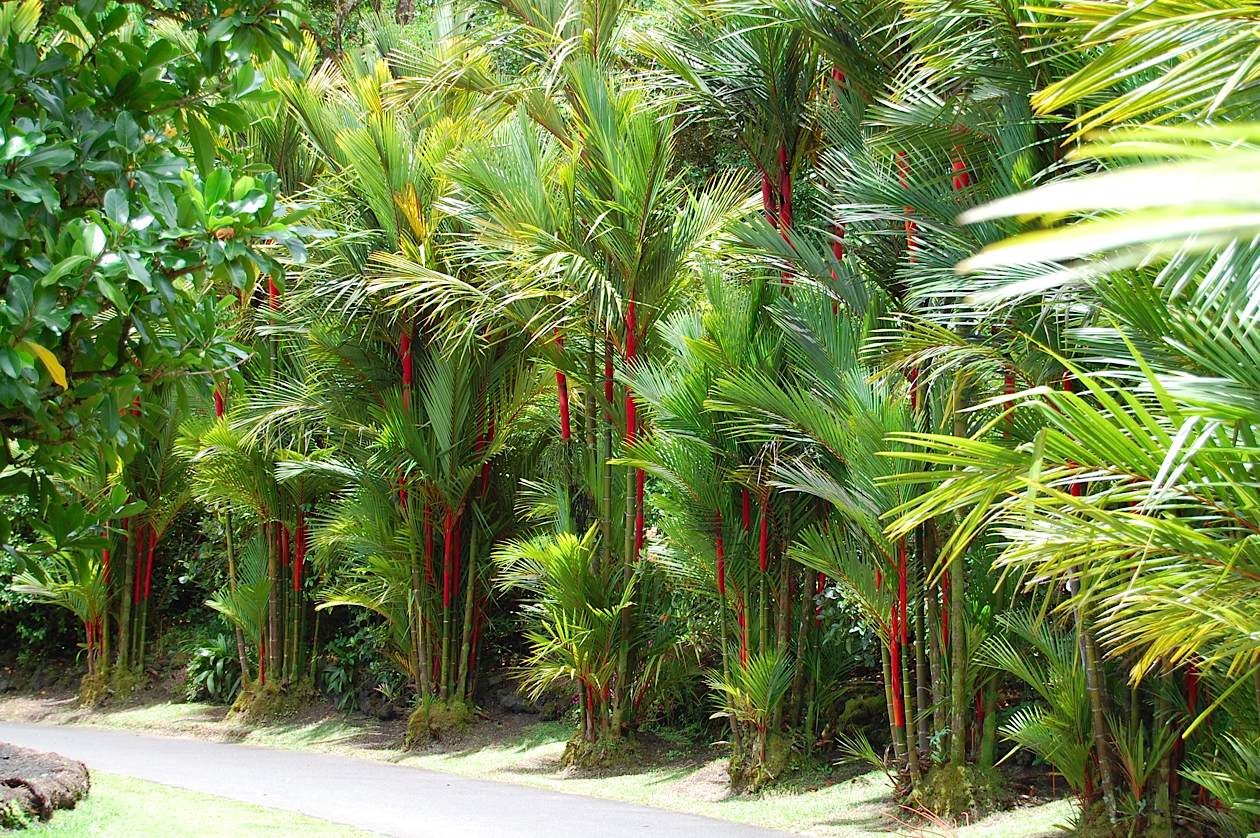
Nice color and form! Cyrtostachys renda in abundance along the pathway; can't get enough of those complimentary colors! Licuala grandis resplendent in sunlight; in landscaping, more is more.
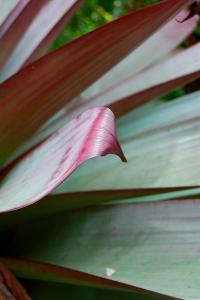
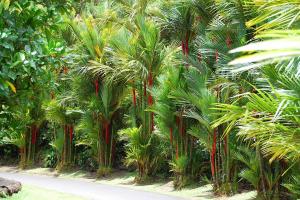
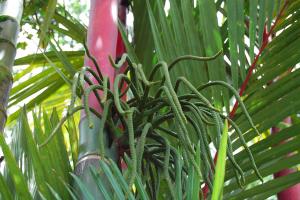
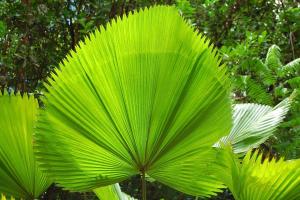
 1 point
 -
Apparently I was (unknowingly) attempting to exceed the 2MB limit, so "the system" only accepted three photos in the post above. Here's my last photo.
 1 point
 -
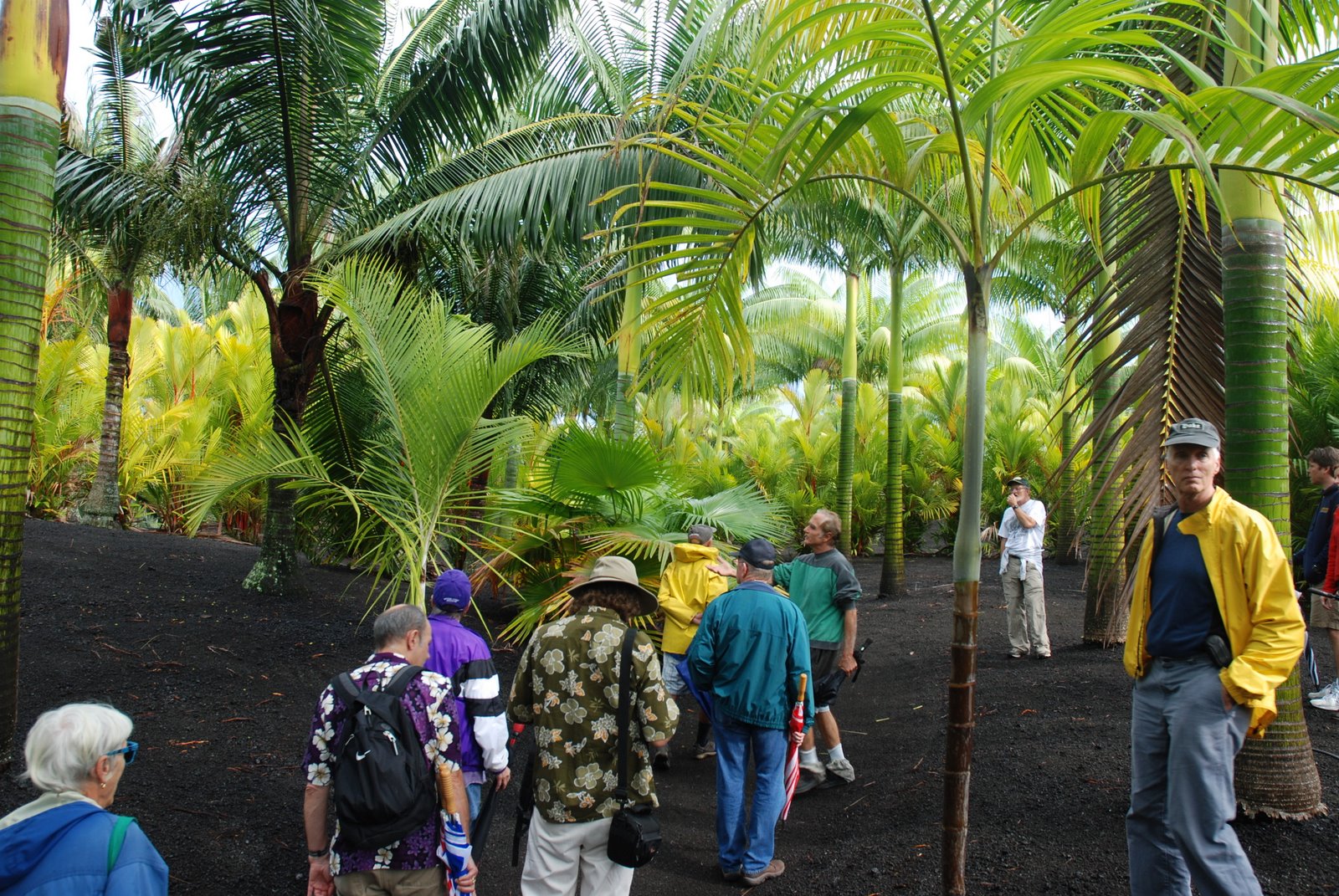
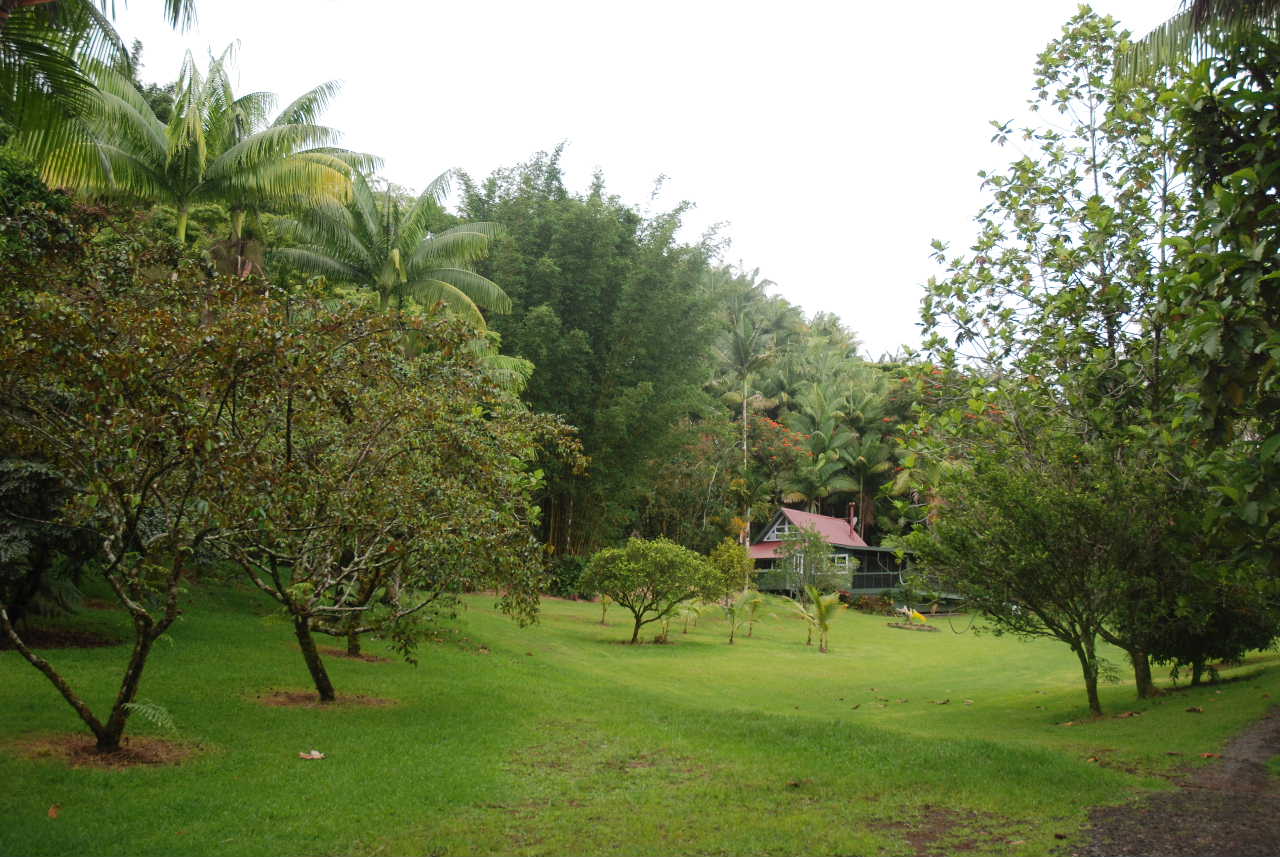
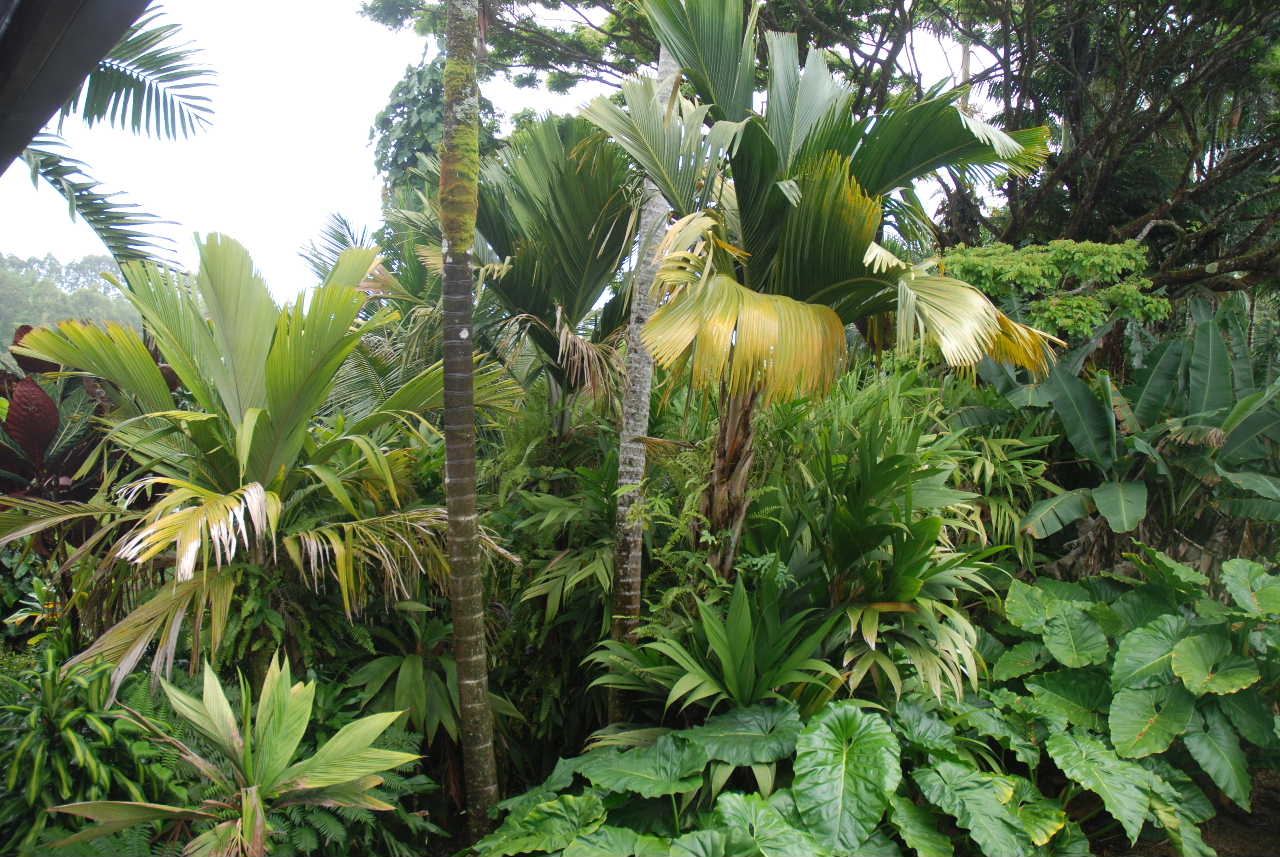
More general garden views. I should mention that the rain had stopped by the time we began the garden tour, and about halfway through, the sun actually came out and the weather couldn't have been more perfect!
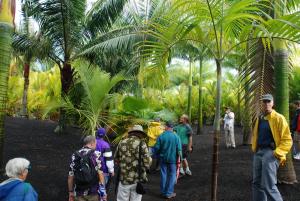
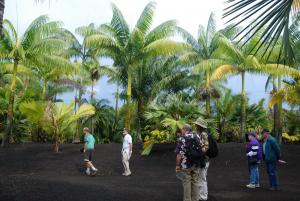
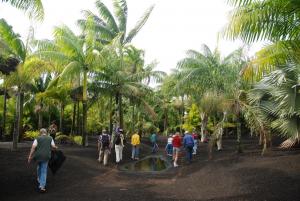 1 point
 -
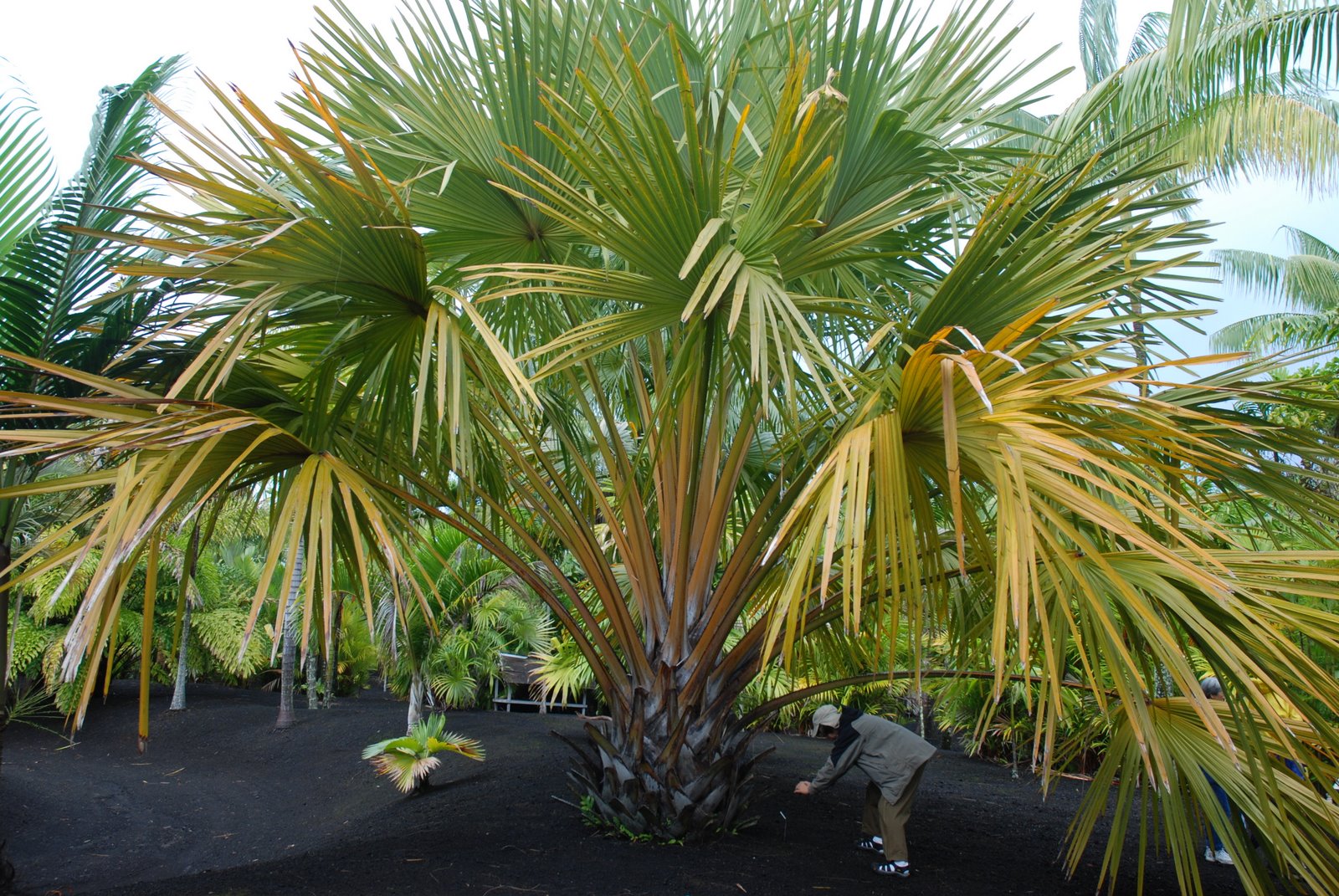
Bismarckia nobilis
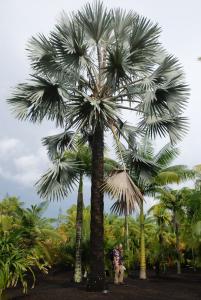 1 point
 -
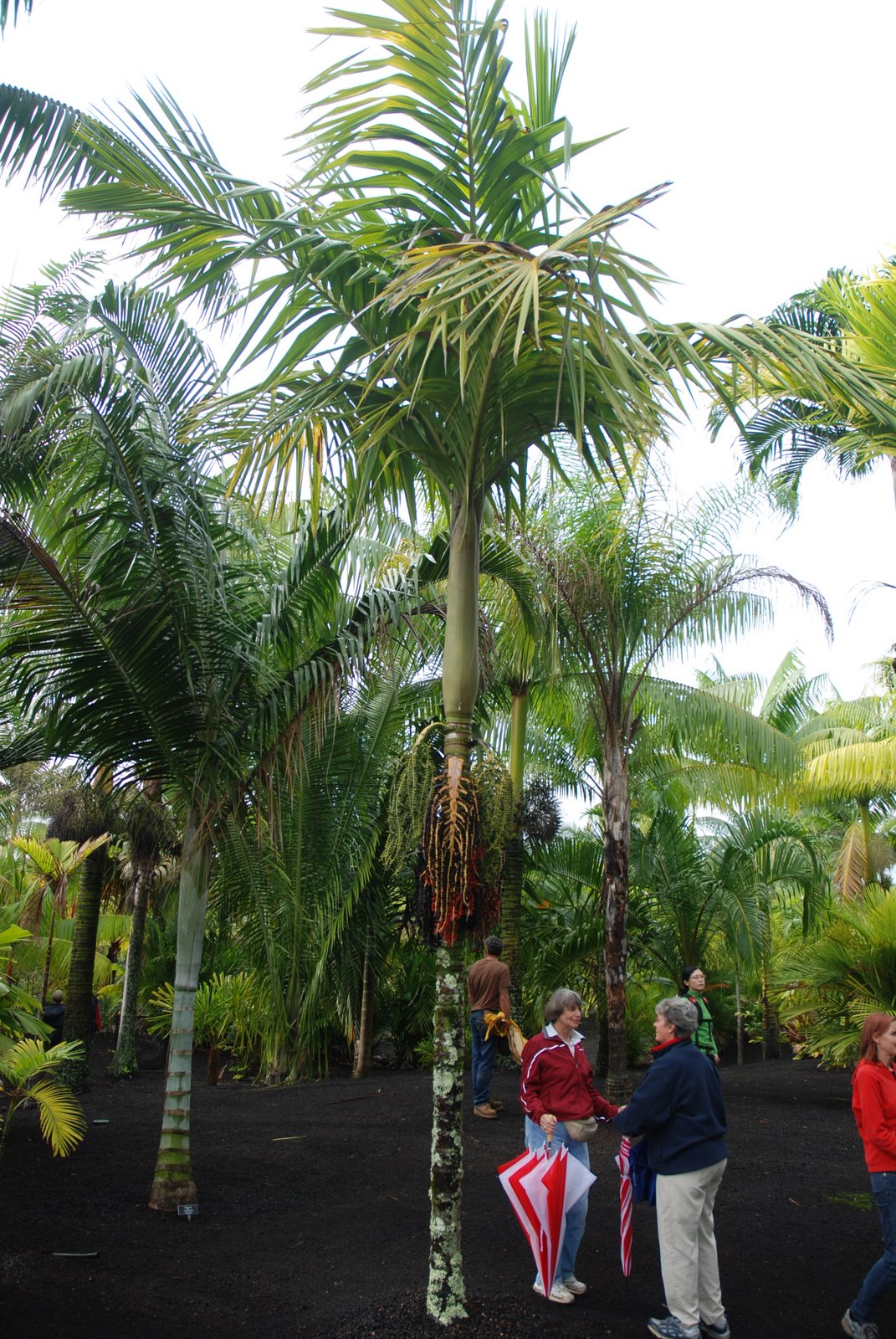
Pinanga turnatensis
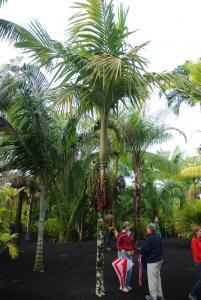 1 point
 -
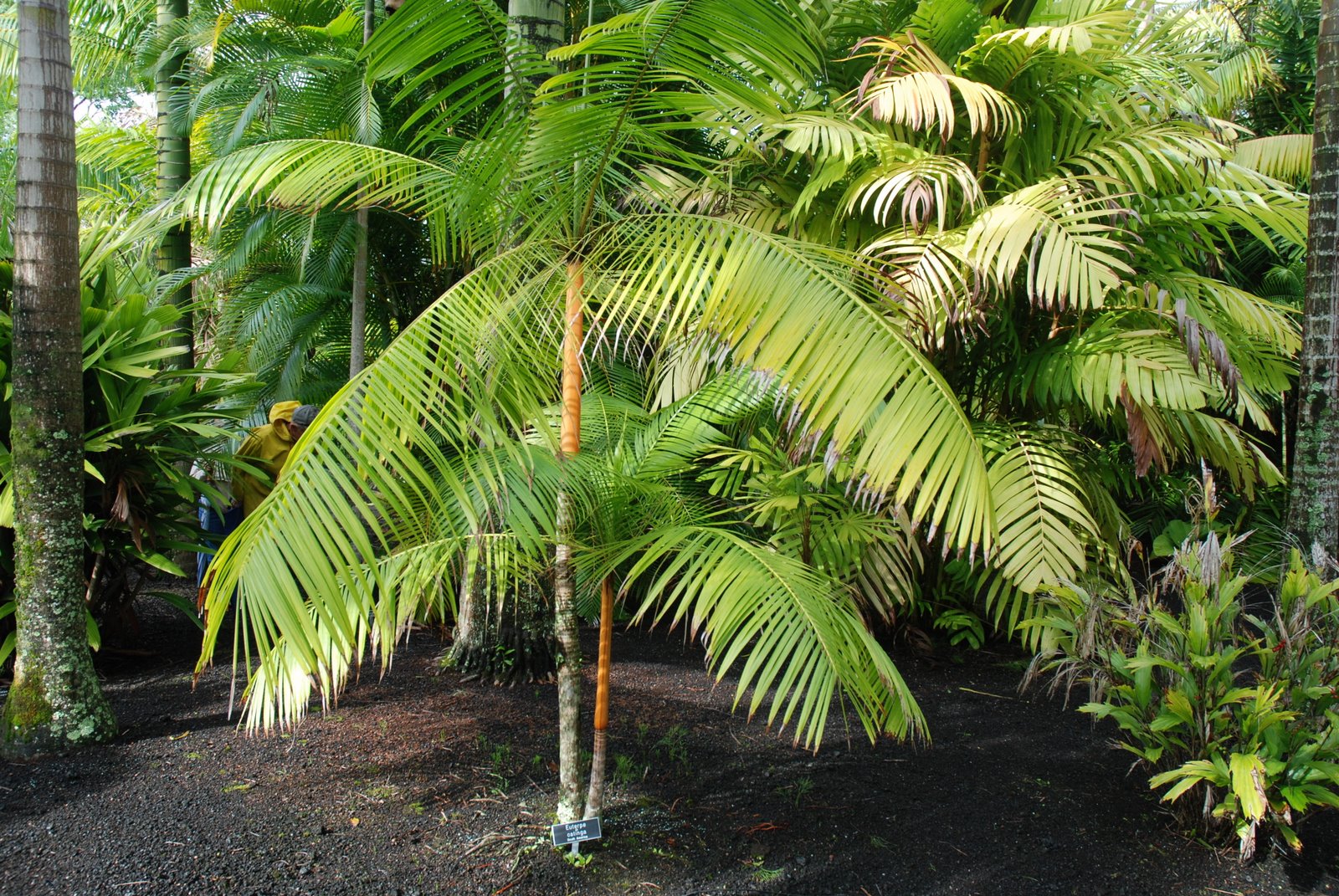
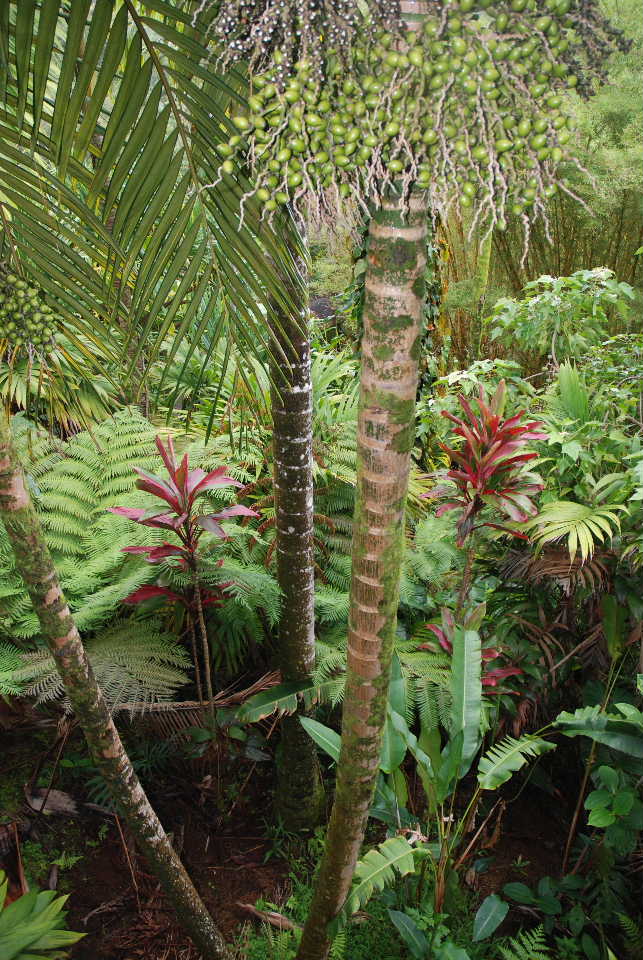
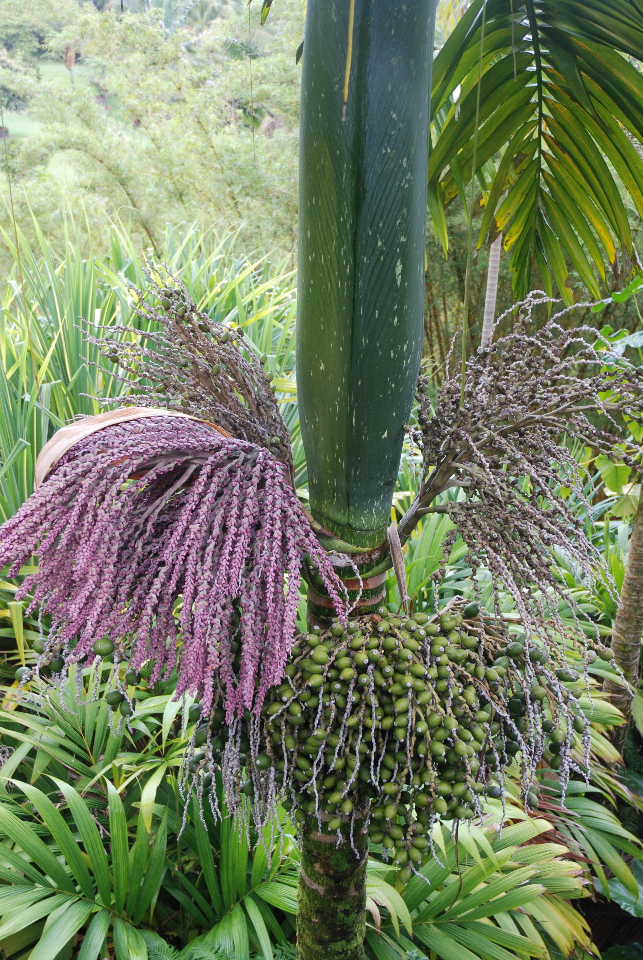
Euterpe catinga
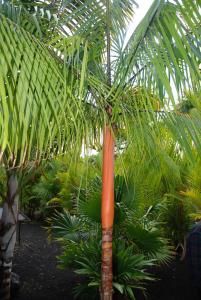
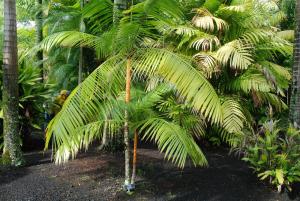 1 point
 -
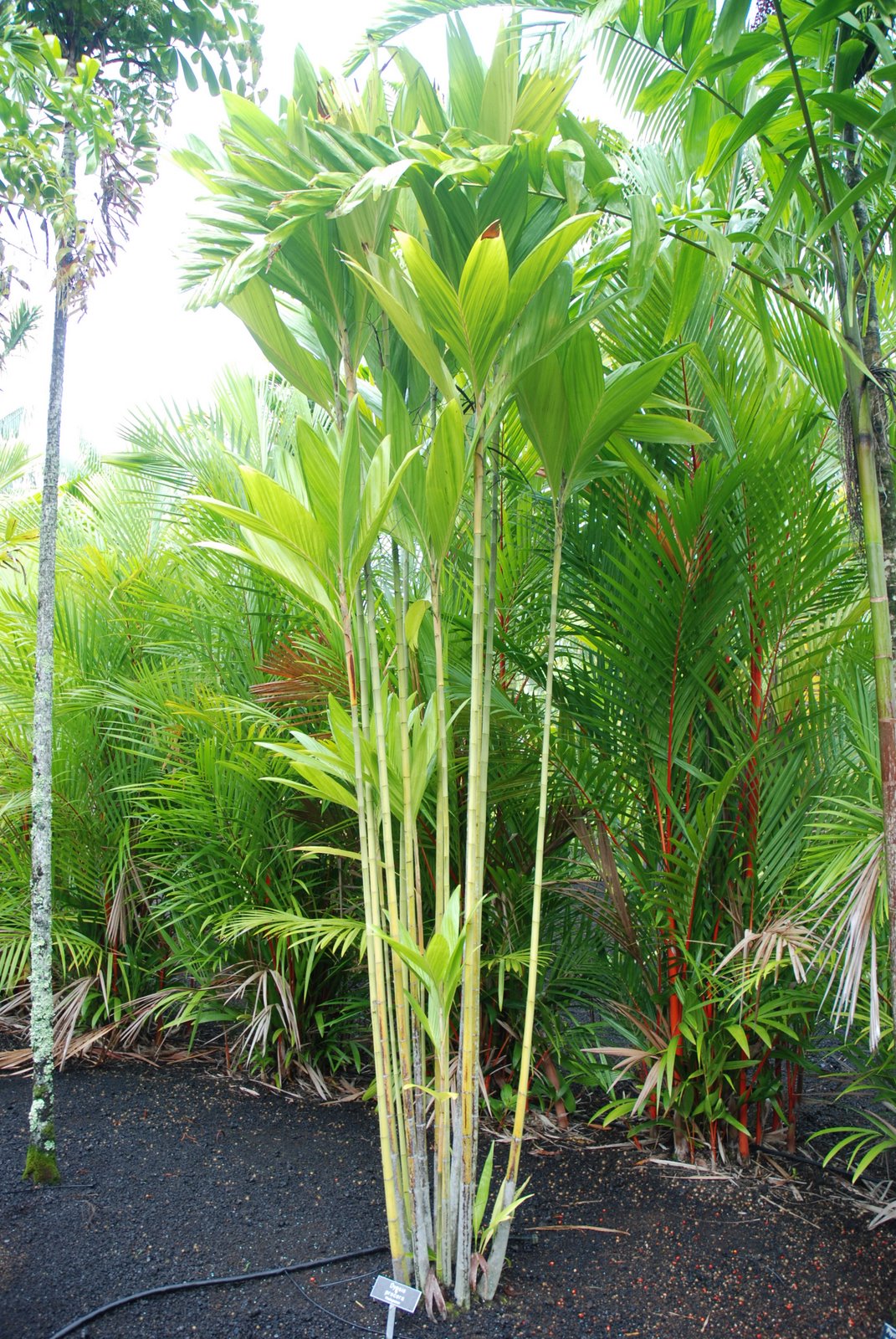
Dypsis procera
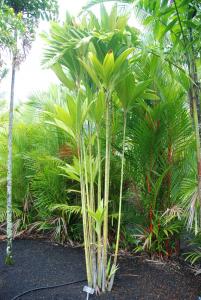 1 point
 -
Corypha utan
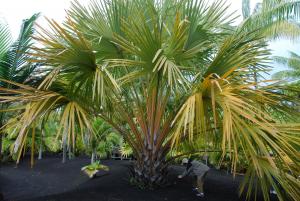 1 point
 -
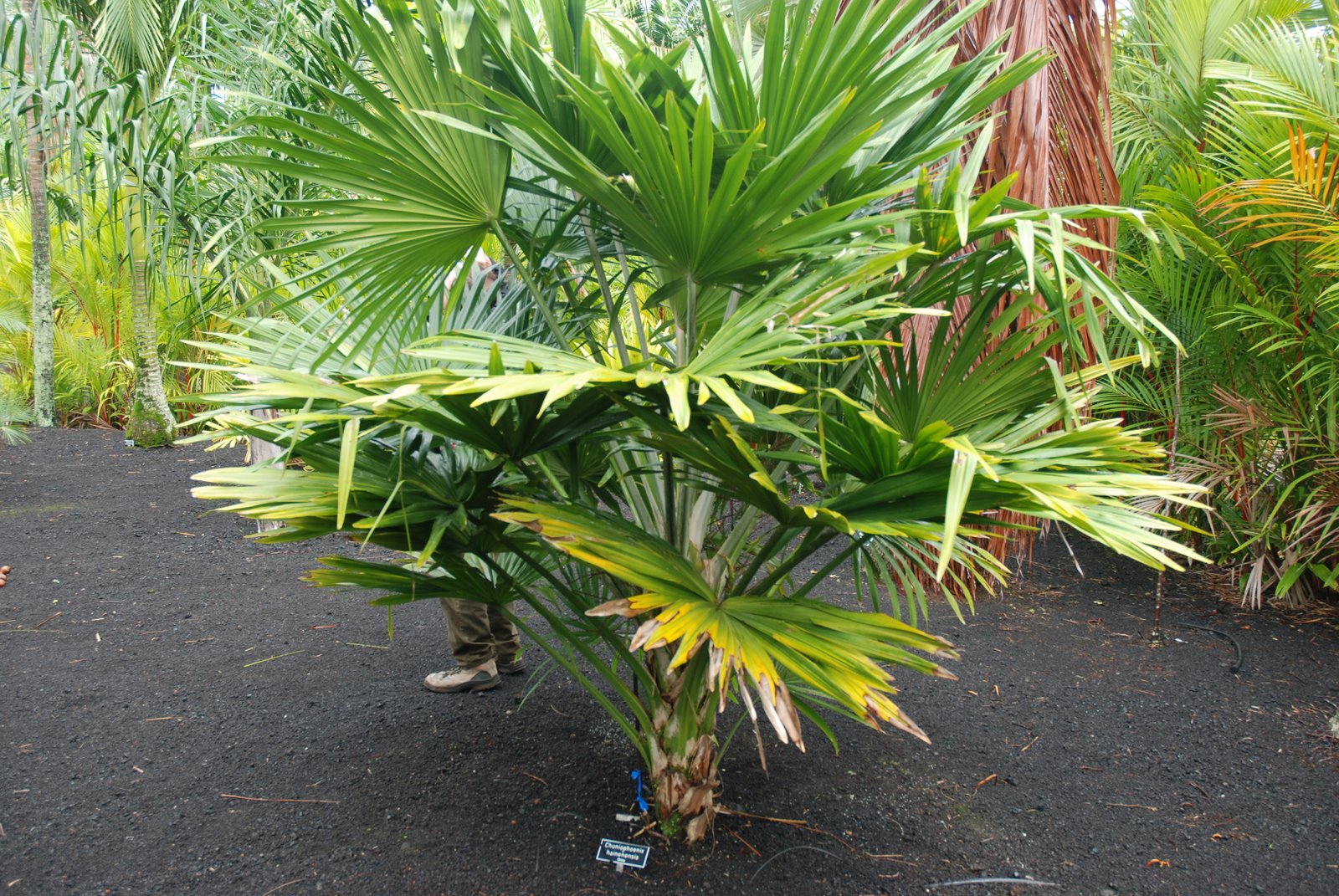
Chuniophoenix hainanensis
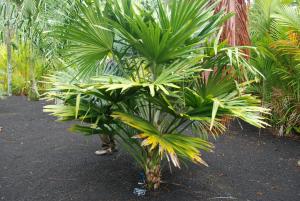 1 point
 -
Fruiting Metroxylon vitiense. This is the end of this palm. Unfortunately!
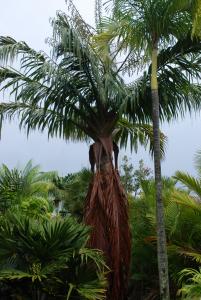 1 point
 -
Orania sp.
 1 point
 -
Carpoxylon macrospermum
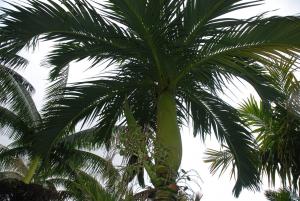 1 point
 -
Astrocaryum alatum
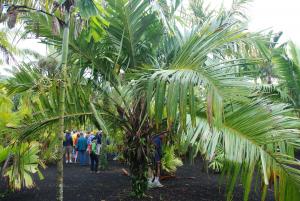 1 point
 -
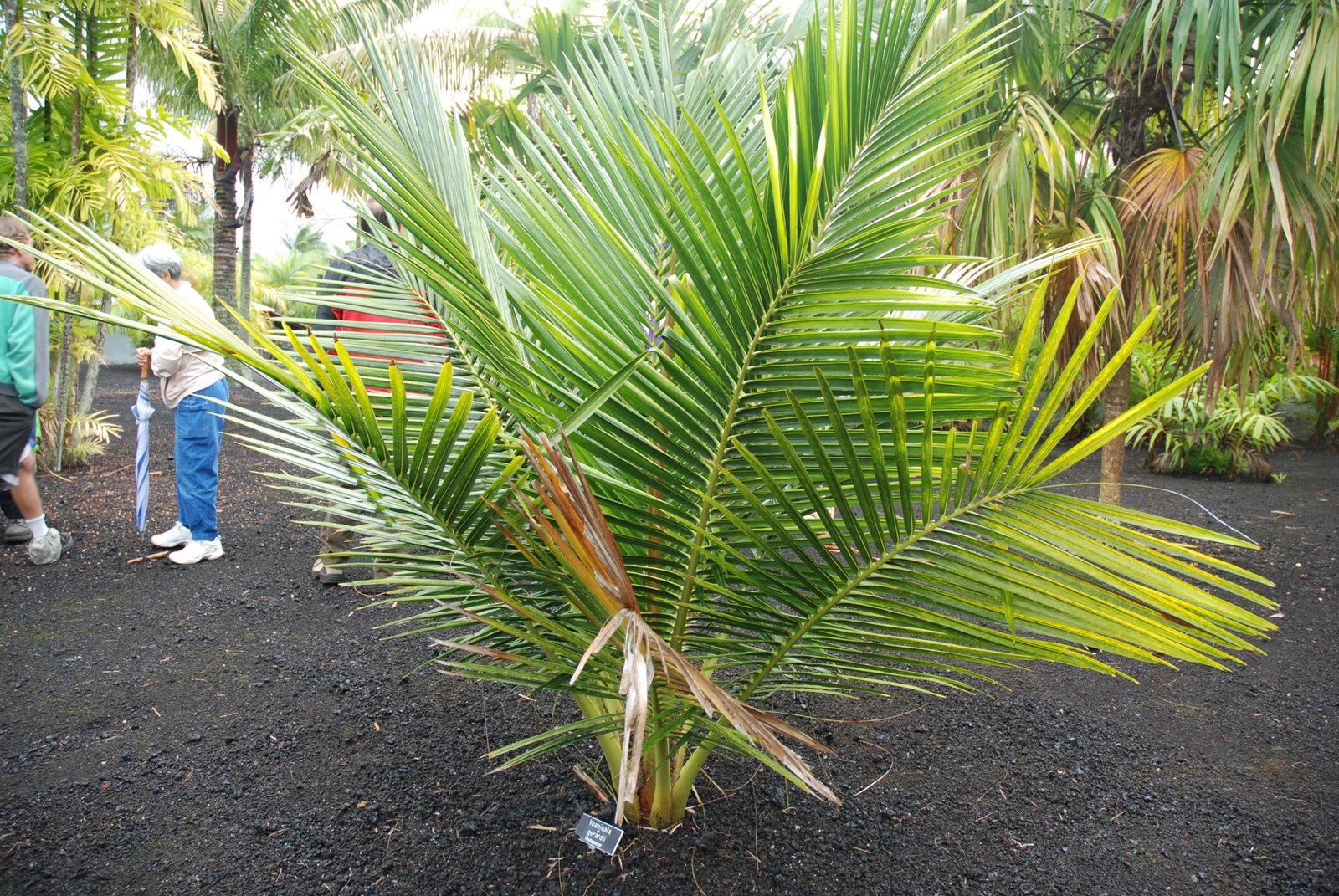
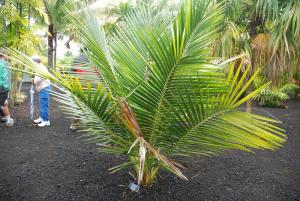
Voanioala gerardii. Probably the largest one in Hawaii, and unless there's a larger one on the mainland (seems unlikely!?) it would be the largest on in the country. It obviously like the heat here.
 1 point
 -
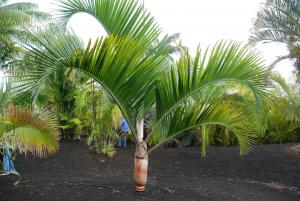
This palm was sold as Dypsis tsaratananensis (which it is not). We're currently calling it Dypsis sp. white.
 1 point
 -
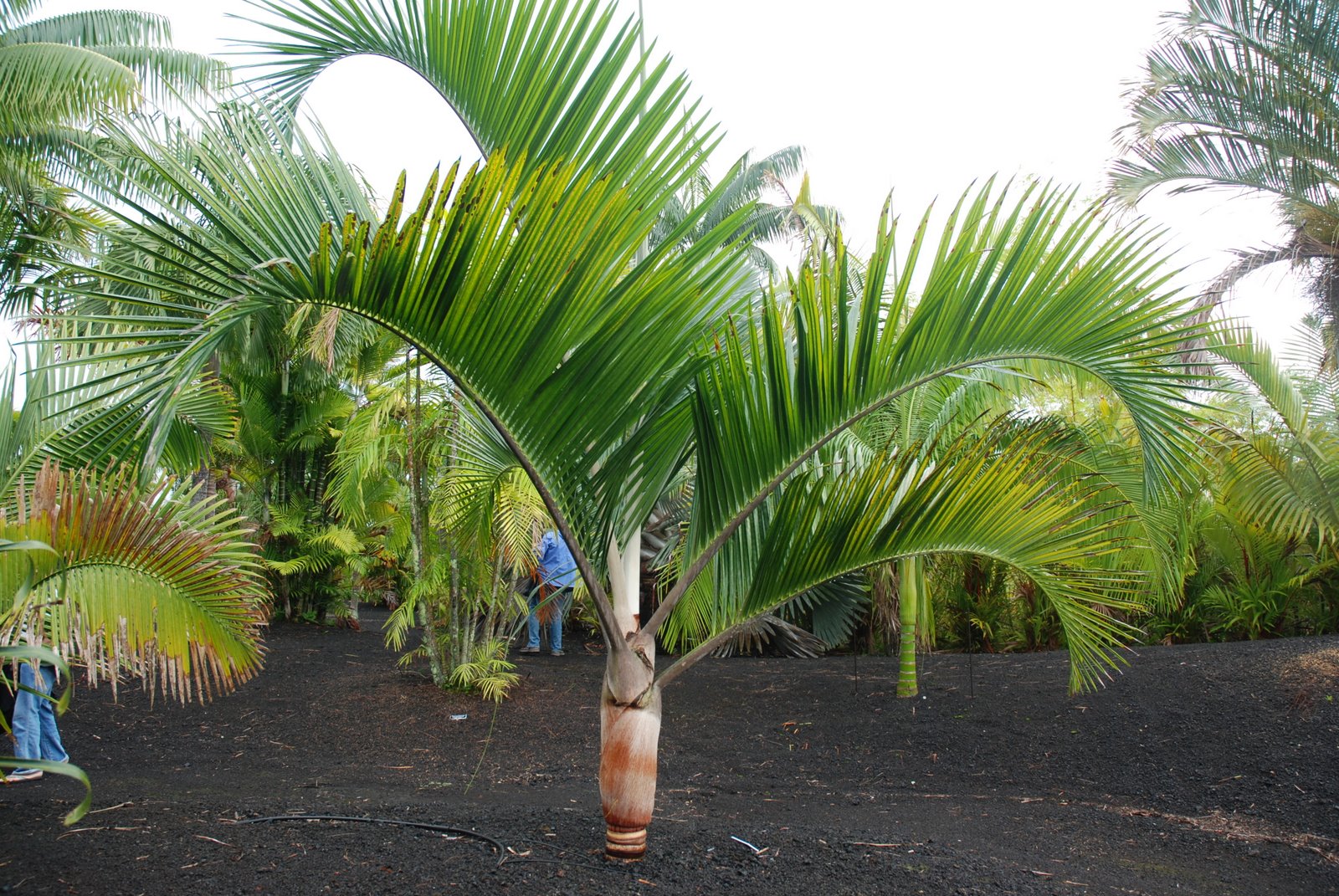
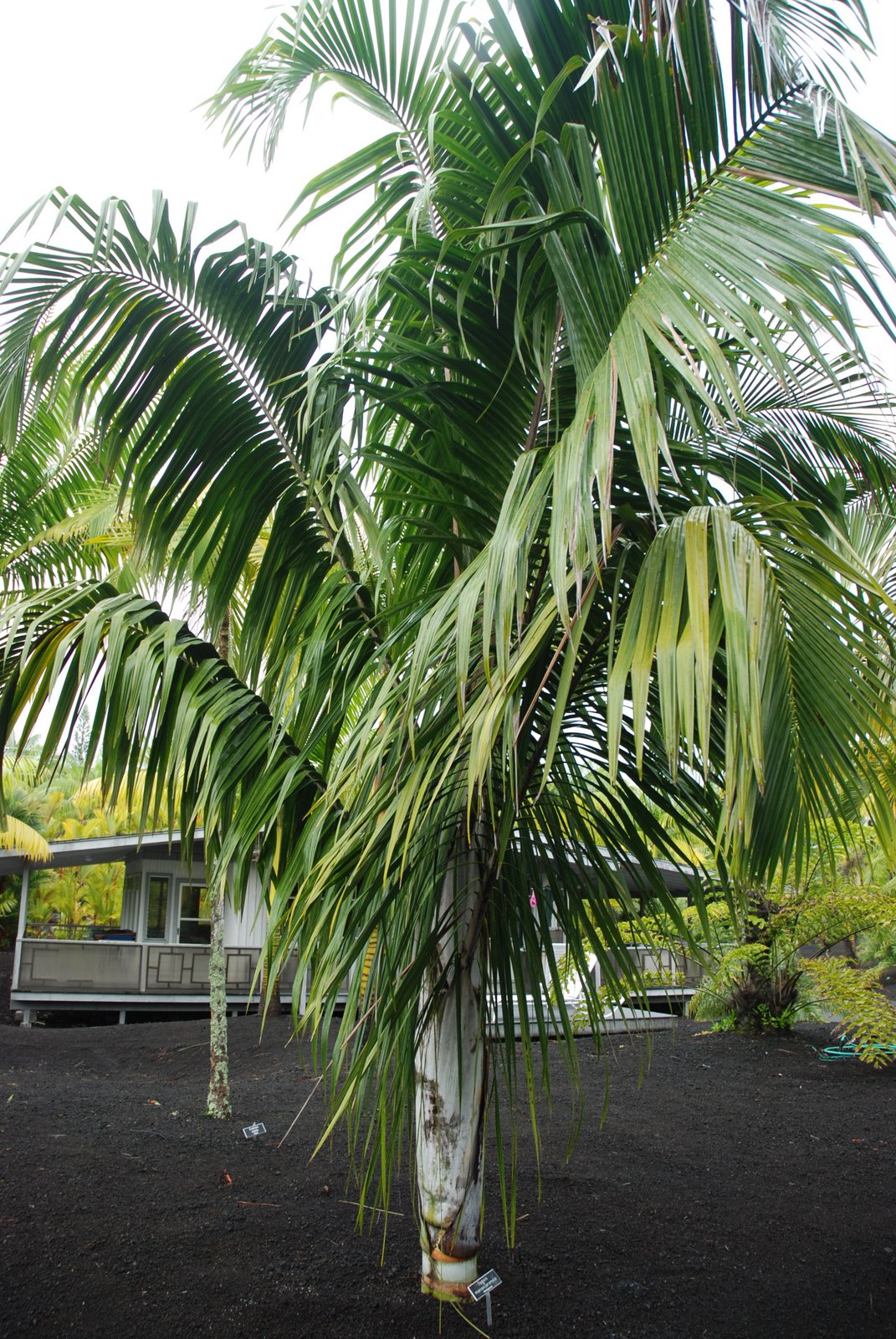
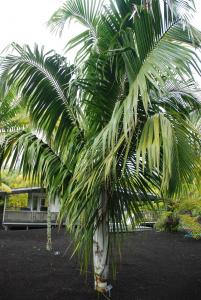
And within 15 minutes or so we were on our way, walking around this very impressive palm garden, with Terry as our guide. He was quick to explain that because he hasn't been able to come over here as frequently as he used to, he is a bit behind on his fertilizer program and some of the palms are a bit on the yellow side. (The property is currently for sale). This was tagged as a Dypsis mananjarensis.
 1 point
 -
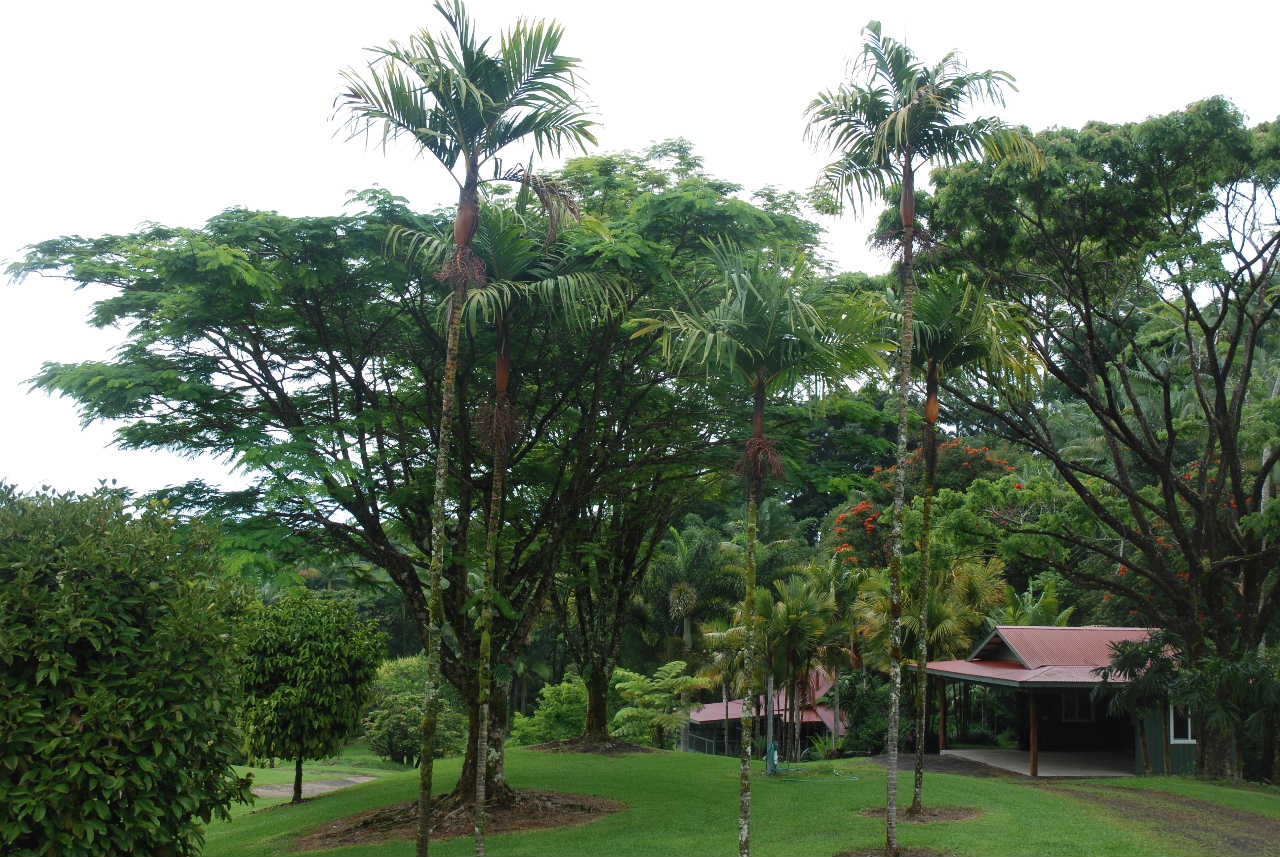
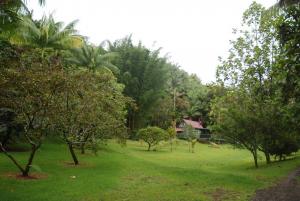
And the last photo from me (but hopefully others in attendance will have caught some views/palms that I missed): the small house again, showing how it's nicely nestled against the backdrop of the side of the valley. Incidentally, the main house is on the market in case anyone happens to have $2,260.000 lying around. Even though we (=HIPS) still refer to it by its old name, Ho'owaiwai (given to it by the previous owner, Liloa Willard), the current name is Hale I'o ("House of the Sacred Hawk") and it's being offered by Clark Realty Corporation in Hilo. MLS #198451.
 1 point
 -
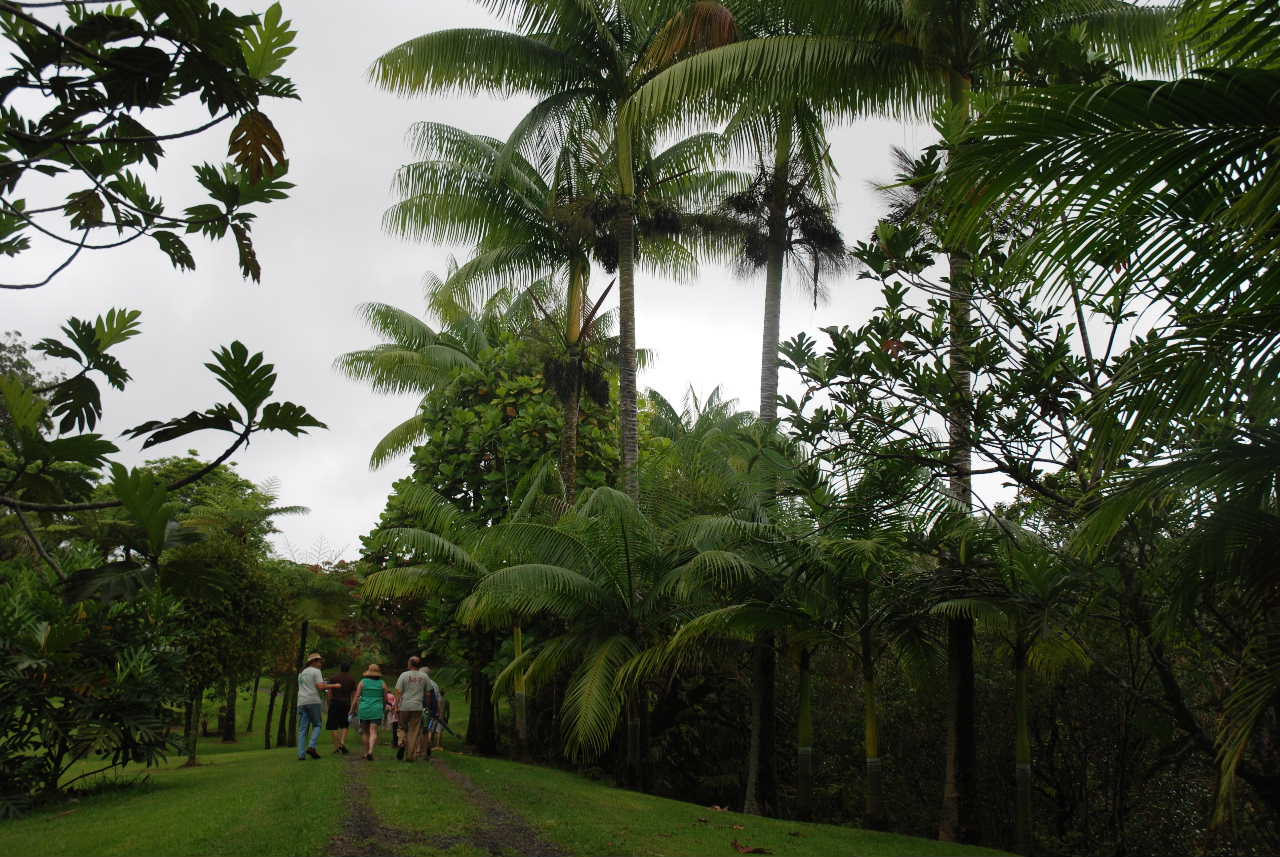
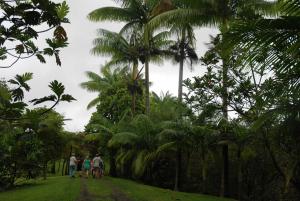
A typical view of the walkway/driveway leading up from the lower portion of the valley. Of course Clinostigma samoense and some others.
 1 point
 -
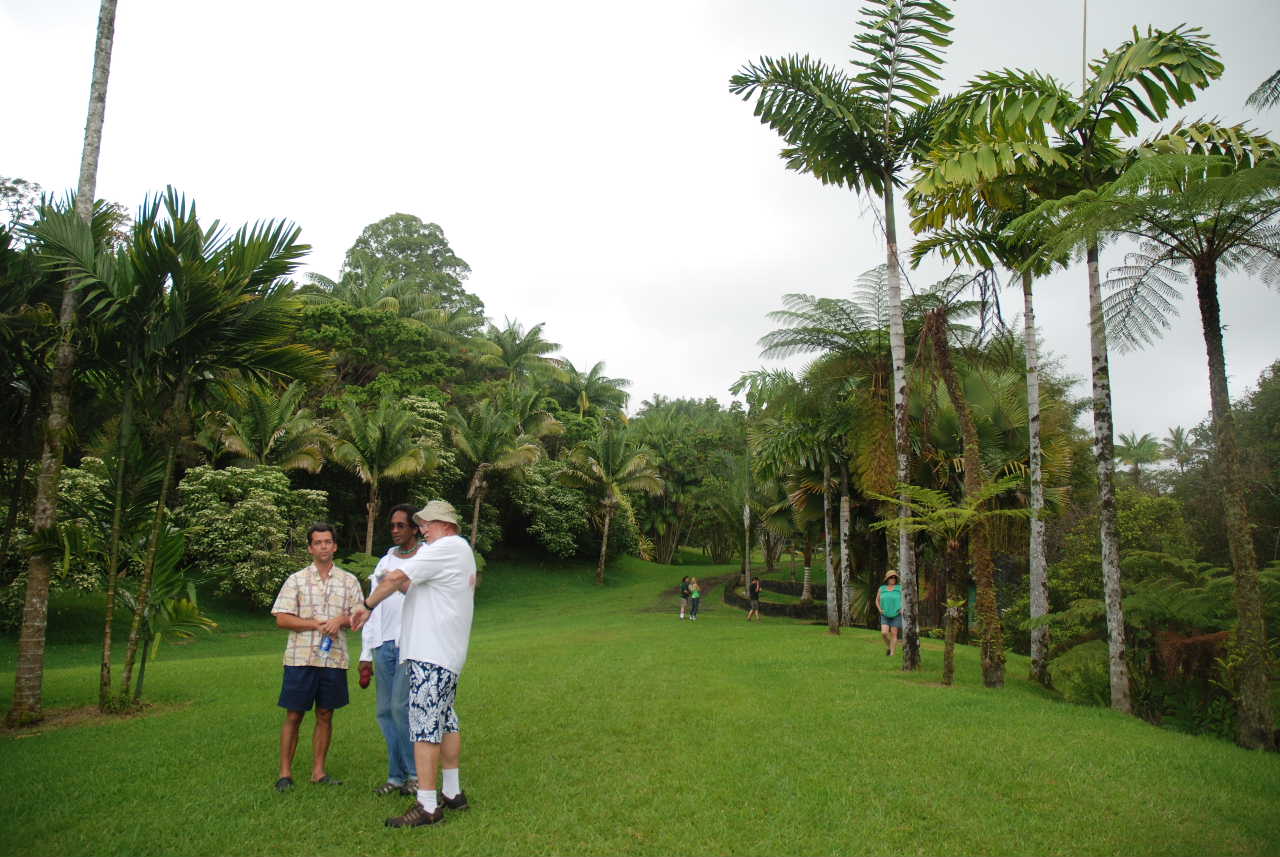
Group of Iriartea deltoidea on the right. And in the distance behind the three guys a few Neoveitchia storckii (one of which was in the previous post).
 1 point
 -
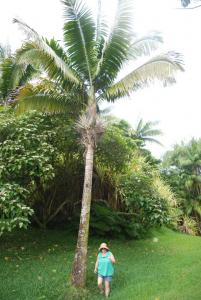
Neoveitchia storckii
 1 point
 -
OK, going for the final stretch here...Deckenia nobilis

 1 point
 -
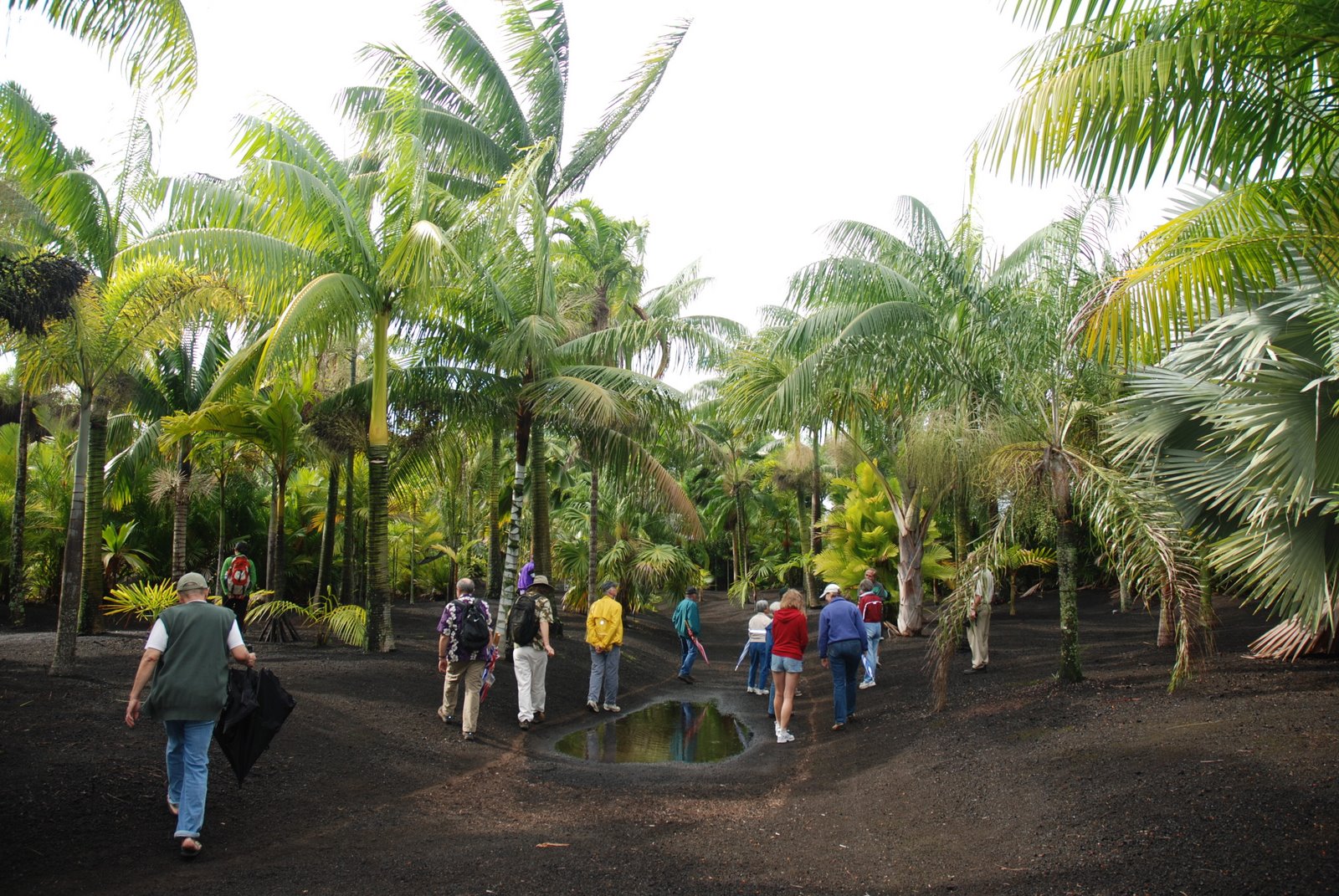
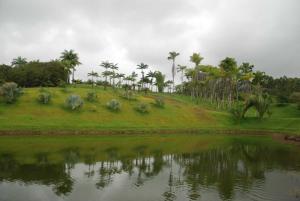
And just beyond those Caryotas, a lake with the newest plantings (many within the last five years or so).
 1 point
 -
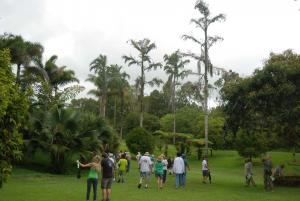
Probably the least attractive palms on the entire property. A group of Caryotas that are on the final stretch!
 1 point
 -
All the remaining photos that I'm posting have been taken in the valley, which seems to extend forever. A group of tall Pinanga caesia, with the smaller house in the distance (to the left). Not sure if the other smaller house is a guest house or storage building.
 1 point
 -
This is the road leading down into the valley. Fairly steep, but not really obvious in this photo. And yes, those are Roystoneas - a popular palm here and these are really good looking specimens!
 1 point
 -
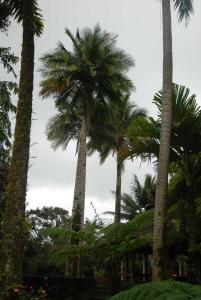
It gets worse...Warning...warning...Roystonea photo imminent...(well, not in this post, but the next one)! Tallest Ravenea rivularis I've seen.
 1 point
 -
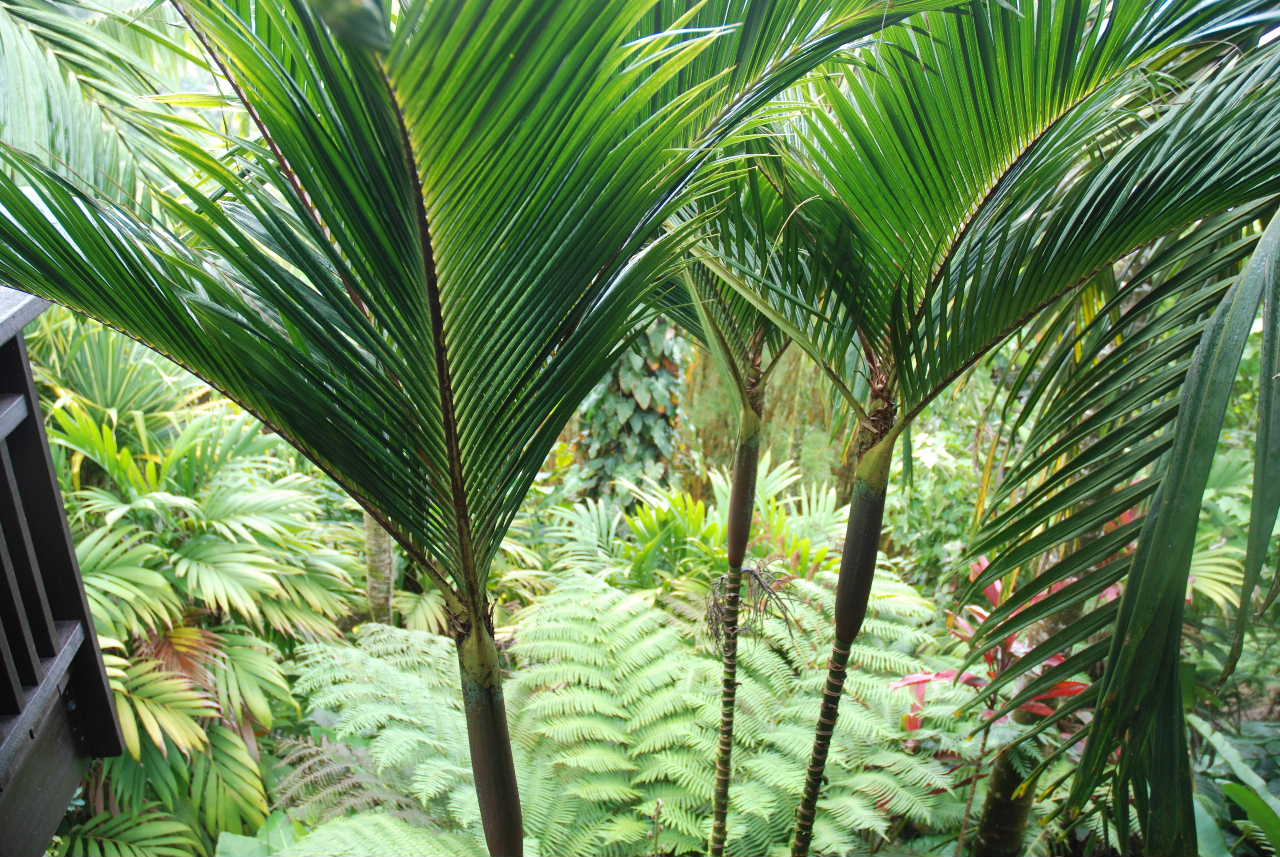
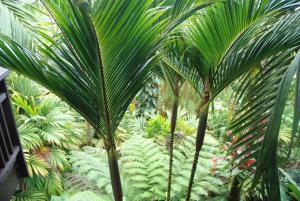
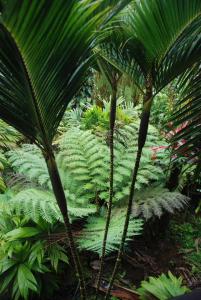
Another palm that you can ALMOST touch from the lanai: Pinanga philippinensis
 1 point
 -
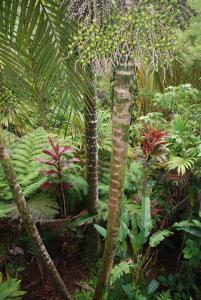
Continuing on the wrap-around-lanai and making a 90 degree turn, we are now facing the valley side. There's a very dramatic drop straight down on this side of the house, and you find yourself looking at eye-level onto a number of palms, with about 20 ft of trunk BELOW you. The bottom of the valley is another 100 ft or so further down. The Pacific Ocean, not visible in any of my photos (partly because of the weather, and partly because there are so many palms in the way) is about 3 miles away, or so. Here are a couple of Chambeyronia macrocarpa. Not the most exciting palm, but this is what's close to the house!

 1 point
 -
This is actually taken from almost the same spot on the lanai but facing a bit to my left. Gives you an idea of the vegetation here. Pelagodoxa henryana plus lots of other stuff!
 1 point
 -
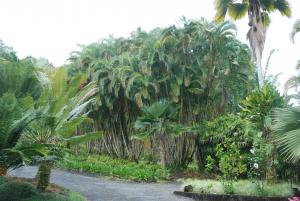
Not that it's a big deal, but should have posted this photo before the Verschaffeltia. This is on the way in from the entrance to the main house. A massive row of Dypsis lutescens. But not something that people here would get but so excited about. As a matter of fact, hardly anyone paid any attention to these palms!
 1 point
 -
OK, OK, simmer down...no need to panic! The garden consists of two very distinct areas: the main part of the garden, between Ka'ie'ie Road (main entrance - see above) and the main house. This part is reasonably flat and about 7-8 acres or so, I think. The main house has been built right on the edge of a ridge. Coming in from the main garden it's just a few steps up to the house, and a wrap-around lanai. The other side of the house is facing a long and deep valley, and that's the other part of the garden. The property has been subdivided so I'm not sure of exactly how many acres this part consist of, but you don't see any fences after you hike down into the valley and there are many large open areas. Liloa and his wife lived in the main house. There's also a smaller house down in the valley, and their daughter and her husband, Tom, lived there. Tom was the foreman and was responsible for maintaining the garden. Liloa sold the property about 5-6 years ago, and as far as I know, he moved to New Zealand. Incidentally, in my post above where I said "Liloa had exquisite taste etc.", I was referring to the time when Liloa designed and had the garden planted. I have no reason to believe that Liloa is anything but healthy and going strong, wherever he is! And being that he is younger than me, he is still a young man! This photo is a bit dark, because the weather was a bit unsettled with a few very brief sprinkles when we were there. Verschaffeltia splendida and other palms right in front of the main entrance to the main house.
 1 point