Leaderboard

.jpg.0cf735c7525858af1582442942bc68e8.thumb.jpg.894f59a749fff01eb286c1fe4a50ab62.jpg)

Popular Content
Showing content with the highest reputation on 11/07/2010 in all areas
-
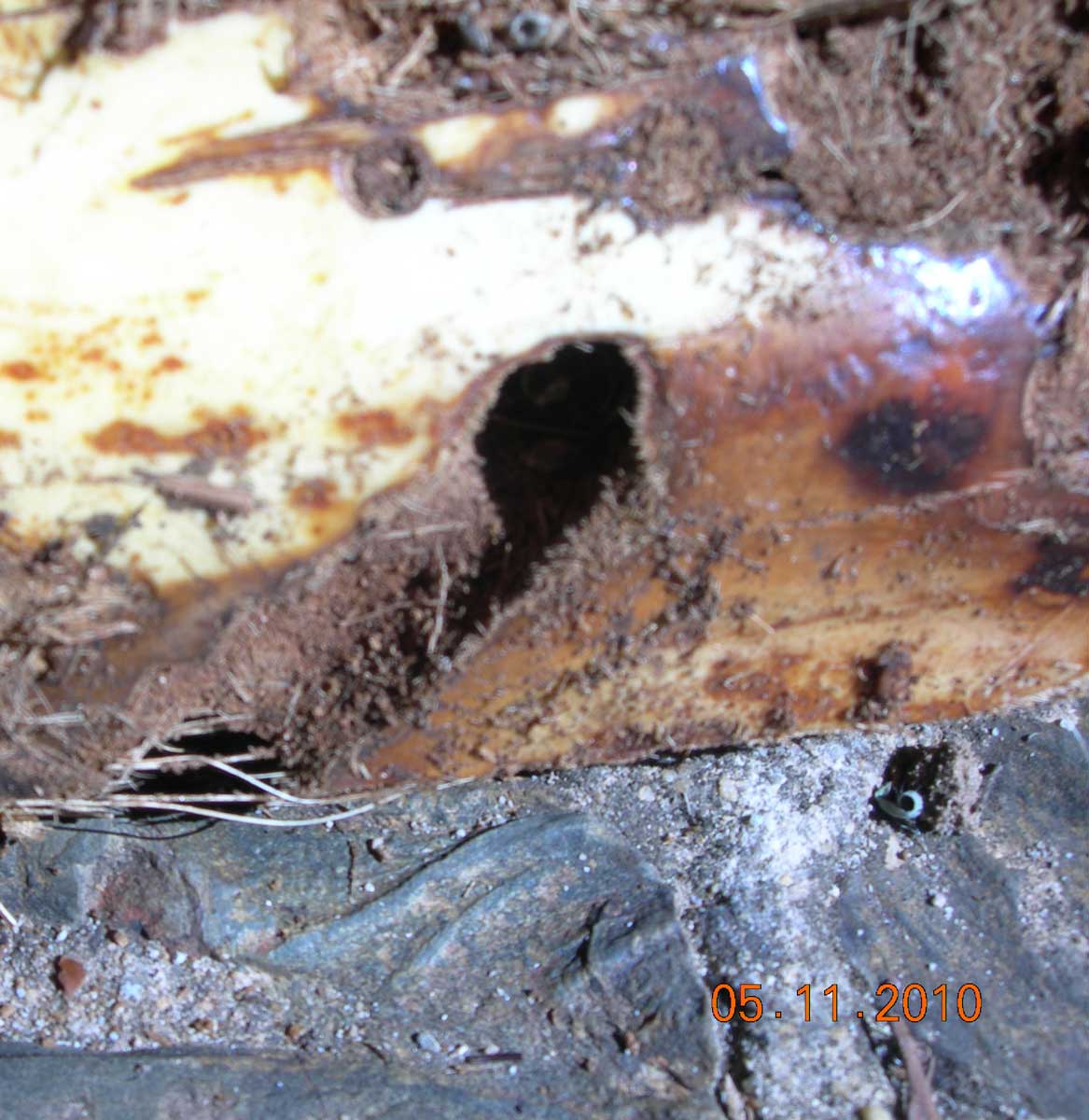
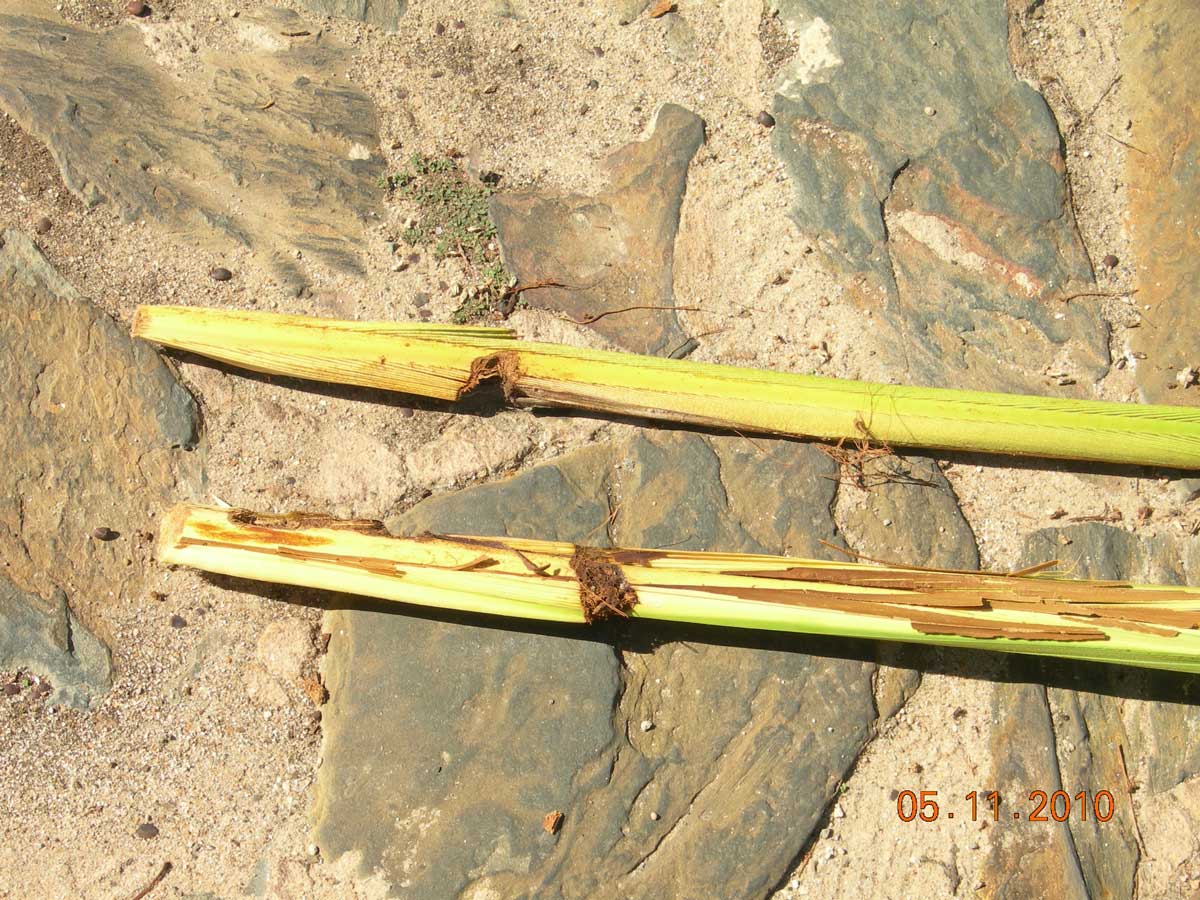
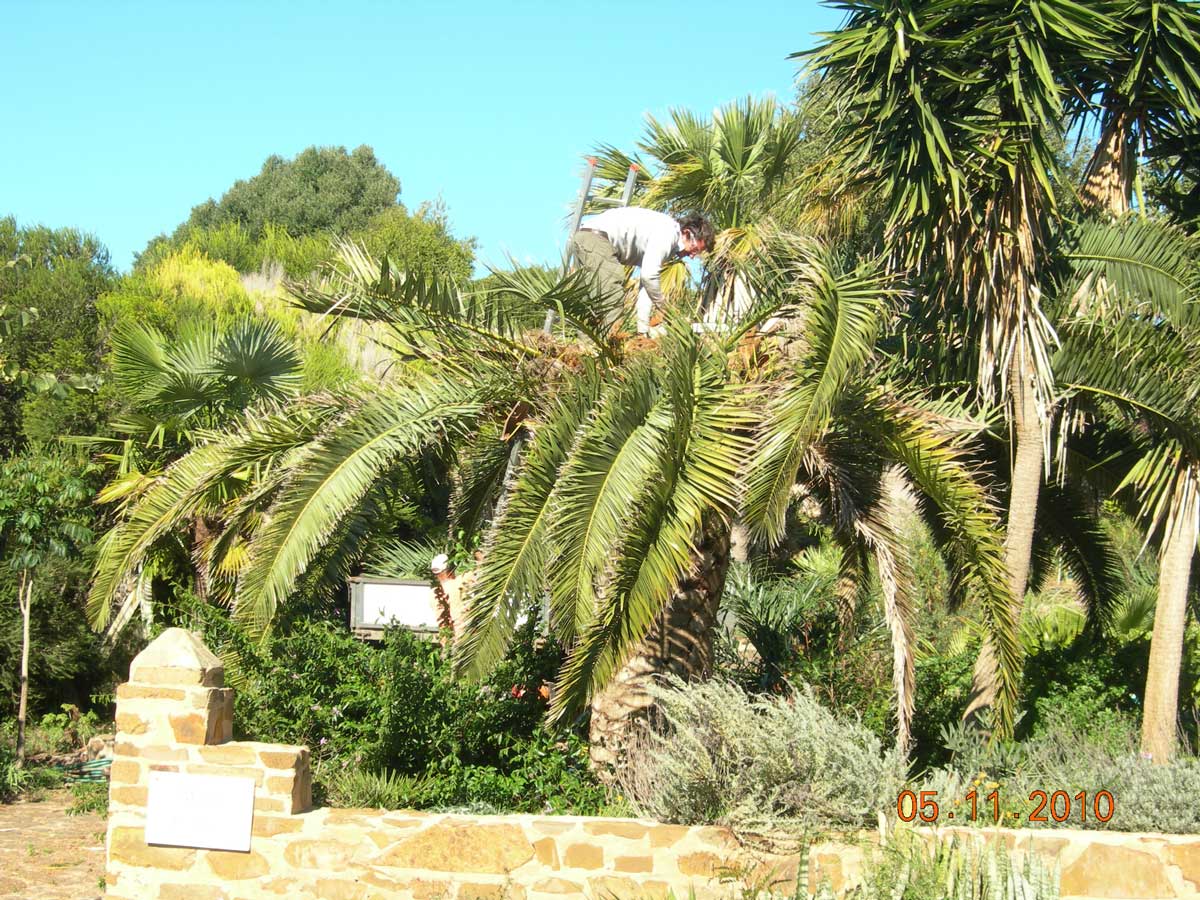
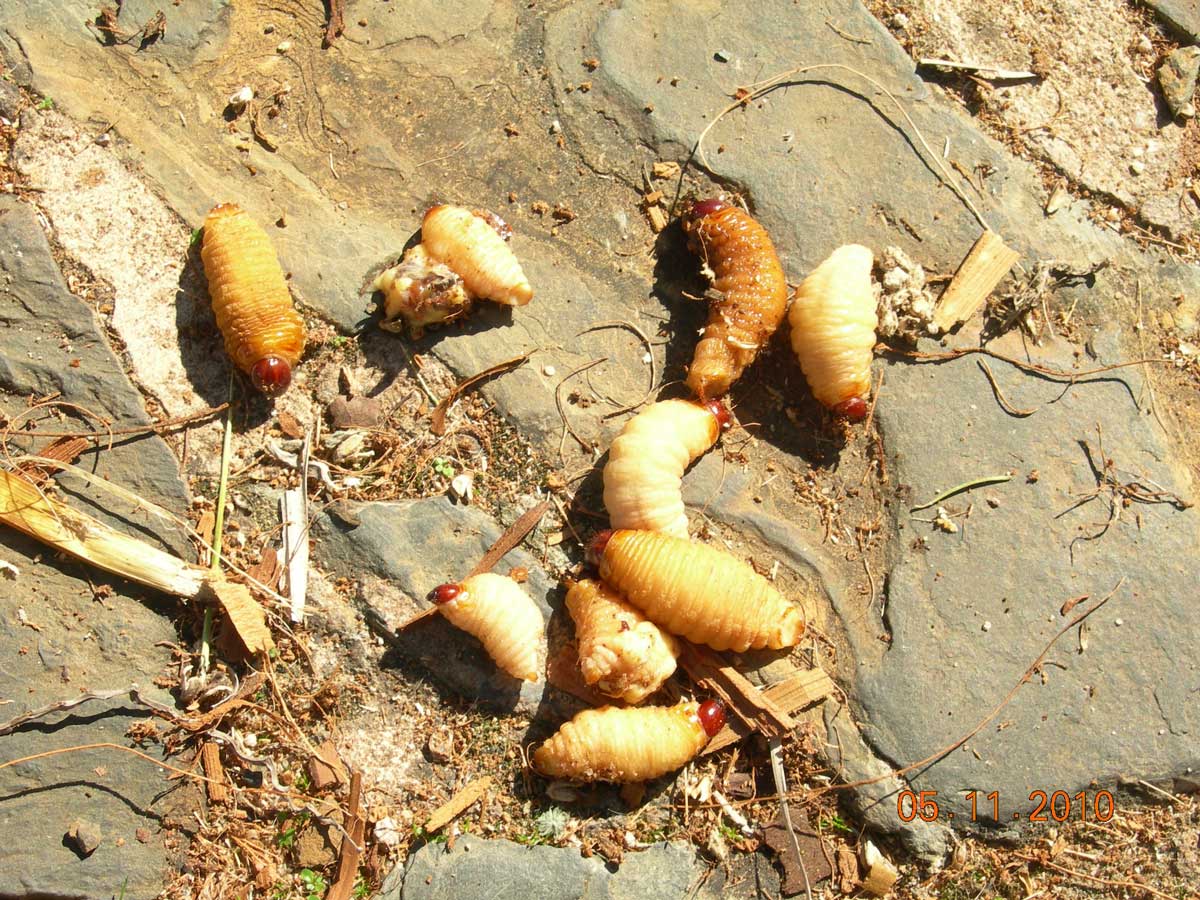
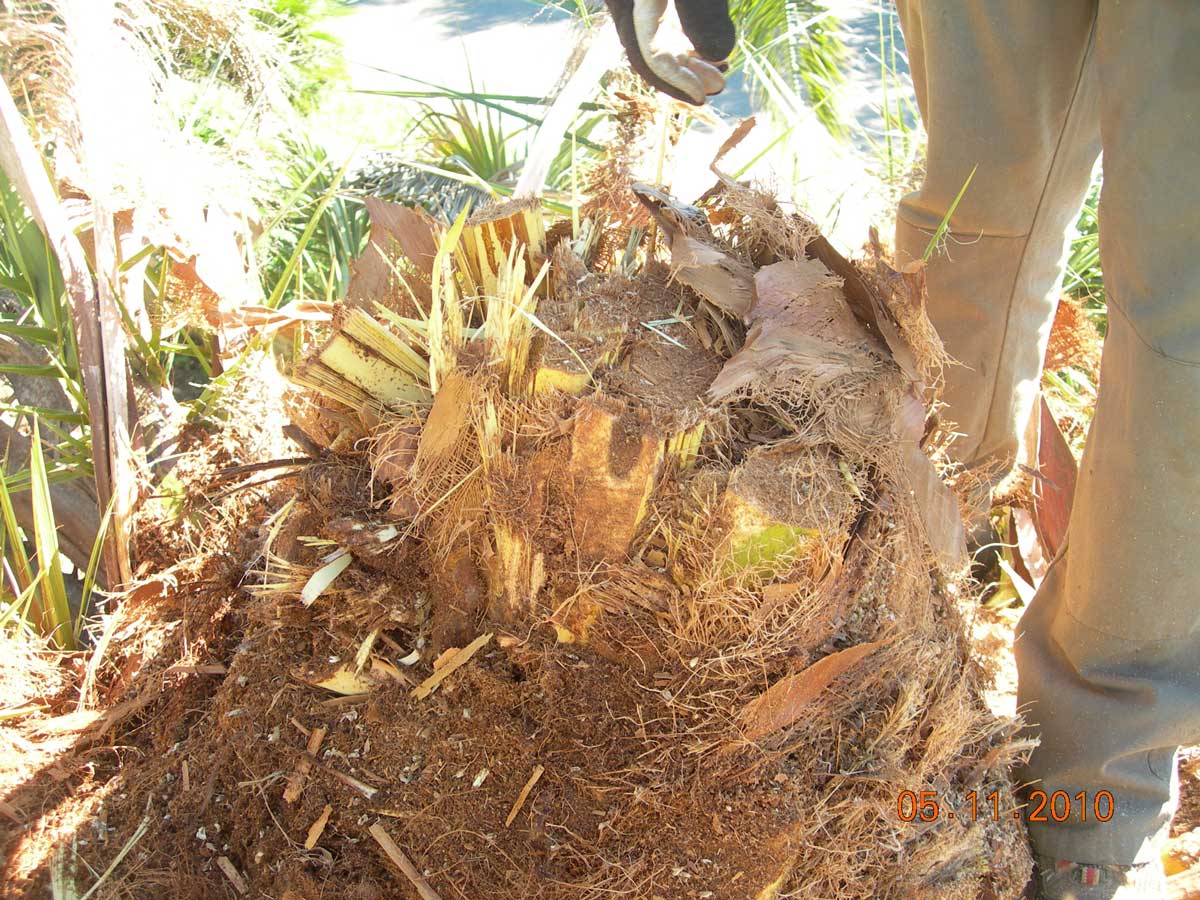
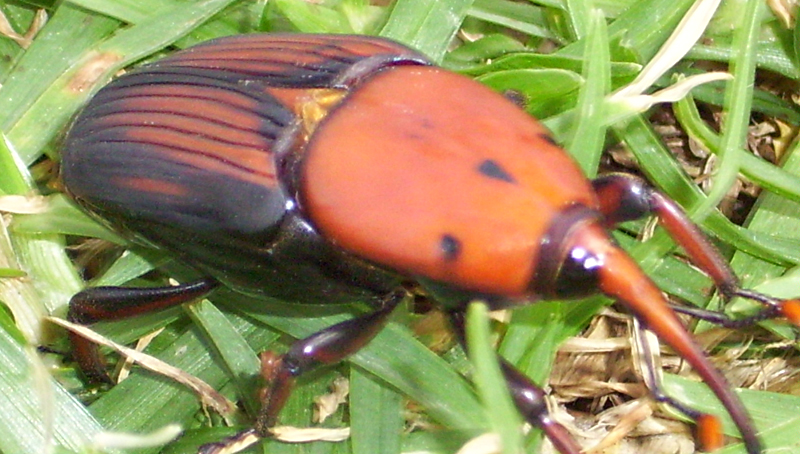
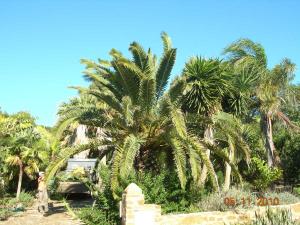
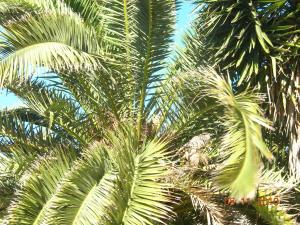
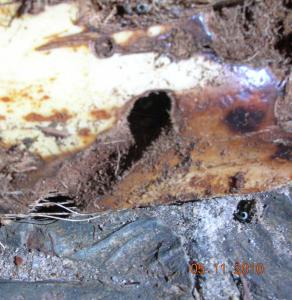
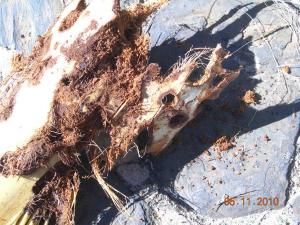
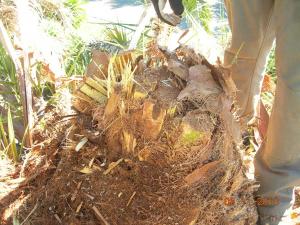
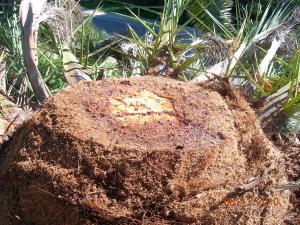
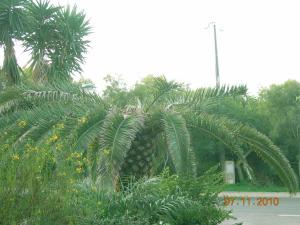
It had to come to me it was only a matter of time After losing three mature CIDP last year to Fusarium oxysporum I had one CIDP left, which I kept under close surveillance, seeing all those affected trees around my hood It was trimmed last March (fronds were hanging in the drive way) and inspected for weevil damage or entry points We found nothing that indicated the presence of the RPW but decide to give it a spray of insecticide and nematodes anyway With cooler weather now we decided to give it another trim and inspection Leonardo(French) arrived with his Bulgarian help and started disinfecting the chainsaw with bleach and diesel so not to spread Fusarium , he also took a good look at the palm , shook his head wearily and pointed at some new fronds that were slightly leaning We put up a ladder, Leonardo put on his safety goggles and gloves, climbed up the ladder pulled out the leaning fronds without any effort and threw them at me saying something that included the word "merde" After that it was routine work for him, with the chainsaw the heart was taken out leaving a flat surface covered with sticky syrup that in no time attracted hordes of flies; the flat part clearly showed the holes burrowed by the larvae In the process several larvae fell on the ground; some young weevils and also some baby rats from a nest between the petioles All the leaves and other plant material was loaded on the truck to be destroyed A thorough spray with insecticide of the on the cut materials and a follow up with a nematode spray next morning.....job done; follow up will be an inspection in two weeks, stay tuned I took a shot of "aguardente de medronho" to calm my nerves and opened a special bottle of wine for dinner to ensure a good night sleep Crown before the operation Three leaning fronds at 13.00 hrs Petiole with entry(left) and exit(right) holes, exit holes are bigger as the larvae fill up with "my" CIDP Damaged petiole Spear damage Leonardo the plant surgeon 9 weevils Open heart surgery Finished surgery


 1 point
 -
I like S. mexicana better, just as hardy as S. palmetto but with a thicker trunk and bulkier fronds. Jonathan1 point
-
Wal, Does this mean that you are one of the 'Men who Stare at Goats" (in bath) ?1 point
-
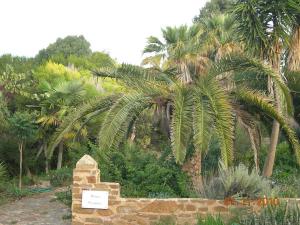
Some more pix Surgery finished After pic Another after pic Always look at the bright side of life....more space for other palms
 1 point
 -
They should plant rare palms. All the seeds that fall would be cleaned up for free.1 point
-
My account of Dr. Kabashima's ~15 min. presentation was very incomplete, Michel. I was just addressing Perry's question about the photo of the palm he posted with the dead lower fronds. Dr. Kabashima did show us a number of images of leaf bases riddled with holes, emergent fronds cut/chewed off, etc. This is an image of a large poster that was distributed at the meeting. They want the arborists to display these at their workplaces to inform their employees of the situation. This is a 4 sided postcard that they intend to mail out to the general public. They also want these in all the arborist's trucks so again, that the employees who are in direct contact with the trees are aware of what to look for.1 point
-
If I have my way, auctioning will not take place here. As someone who has participated in hundreds of eBay auctions, both as a buyer and seller, I can assure you there are many contingencies that we could not accommodate here - from buyers not following through with their offers, to a flurry of bids at the last minute/second that some of those in remote time zones could not negotiate, and that the server may not handle expeditiously. I could suggest though, that if someone is an IPS Member, we could allow a link to the auction. That way the seller would get all the exposure PalmTalk offers (plus everything eBay can offer), and all the contingencies and logistics would be taken care of. Of course, someone would need to assure that those who are posting any links are in fact IPS members. But other than that, I don't see any problems. In fact, we could demand a link or reference back to PalmTalk and a mention of the IPS (if allowed) in the auctions to get more exposure to both from those visiting eBay. PiousPalms (Bill), who helps with the Moderating of the Palm Exchange would need to chime in, as he would be one of those doing any extra work. But those are my feelings. I am willing to bring it up with the PT committee if there is enough interest.1 point
-
As Tom stated in his post, the Laguna Beach meeting was very well attended. I counted 150 present. Several were in attendance from CDFA, County, UC Extension and even USDA. Arborists were present from throughout Orange County and even San Diego. Some notes that I made during the excellent meeting: • Other than the two confirmed Phoenix, no other infested palms or RPW's have been found. • The second palm confirmed with RPW was removed yesterday (the first was remove two months ago), with the supervision of CDFA personnel. I drove by it just before the meeting and the homeowner was out sweeping up the debris. It's gone, although nine days after confirmed live RPW's were identified. This tree was removed by a professional arborist at no charge to CDFA or the homeowner. • Yes, it was reported that Jim Klinger (the owner of Modern Tree Service, who originally detected the pest) seemed to recall a few other Phoenix that had similar symptoms that his company has removed from the same neighborhood over the past year or two. • Mr. Klinger's crew reported the unusual insects to Jim and Jim in turn showed a sample to Ed Black of Black's Tree Care in Tustin. Ed is a very good arborist with considerable experience. Ed knew the beetles and larvae were unusual and in turn brought them to County Ag. officials, who confirmed it as RPW. All of these people deserve a hero's recognition, in my opinion. They did the right thing. I suggest we not be critical, but thankful to these people. Let’s recognize them as very good Samaritans. • I asked John Hooper of CDFA, who is the Program Supervisor of Pest Detection and Emergency Projects, whether the objective at this point was eradication or suppression. This is a very important distinction. John indicated the goal was eradication. I was glad to hear that. • I asked John what the protocol would be upon another RPW discovery. Would it be to destroy the palm, treat the infestation, sanitize the palm mechanically, etc? He indicated it would depend upon the particulars of the infestation, how advanced it was, etc. • At several times during the hour and a half meeting it was mentioned that a Technical Work Group has been formed and that considerable direction would be forthcoming from this group. I specifically asked if this was an international group or all domestic, especially with representation from Europe, the Middle East and other areas where RPW is already present and much research has already happened or is in process. The answer was a brief "yes". • At the conclusion of the meeting I separately asked three CDFA staff if I could have a list of the Technical Work Group member’s names. One essentially said no, not until their recommendations were finalized and then their names would be available, along with their recommendations. I responded that input to this group, from other recognized RPW authorities, after their report is final would be of little value. Finally, with some reluctance, one of the USDA-APHIS directors agreed to email me the names of the members of this committee. I have not received it as yet. • I asked what authority CDFA or USDA would have if an infested palm was on private property and the owner was uncooperative about removal, treatment or sanitation. John Hooper indicated that if this were to happen (hopefully unlikely) CDFA would need to begin a legal action in order to proceed. I replied that it took nine days to remove the second infested tree and even then it was performed as a "no charge favor" by a local tree service. • Thus far 1963 properties have been checked by CDFA, 13,485 palms have been inspected and 141 pheromone bucket traps have been put into place. There was some concern that the traps are being place 6-7 feet off the ground and not at soil level. Although slightly less effective safety issues warrant the higher placement in such an urban environment. • The surveys thus far have been essentially ground surveys with binoculars. Crown inspections of taller palms didn't sound like they were in place. • Prior to Feb 10, 2010 palm importation was legal (with various phyto-sanitary permits, inspections, etc.). On Feb 10 a Federal Import Quarantine Order was place on all palms (in large part due to the threat of RPW) and importation stopped. If RPW arrived prior to this date on infested palms the unknown question is - what was the point of entry and where else might these infested palms have gone? If infested palms went several directions and into other communities, there is a real possibility that this is only one of the areas where RPW is now present. This has been the case in a few other recent invasive pest discoveries in Southern California recently. CDFA is probably a bit apprehensive about using all their resources into the Laguna infestation without resources to understand if there might be another (or two or three) even larger RPW infestation(s) elsewhere that they don’t even know about. So we need to on the alert for RPW throughout the palm growing regions of California, not just in Laguna Beach. • Mr. Nawal Sharma of CDFA discussed regulatory issues and mentioned that there is no palm quarantine related to these detections yet. Nonetheless, he suggested that the movement of palms out of the immediate area although not illegal, would not be recommended. He implied that a quarantined would likely be forthcoming in the near future, once the Technical Work Group completed their work and submitted their suggestions. • Prior to this meeting, apparently the CDFA/USDA/UC group met with members of the Laguna Beach City Council regarding these RPW discoveries. • Individually, I suggested to several of the staff present that a public meeting should be made a high priority in the near future. Today’s meeting, although excellent, was intended for professional arborists and PPA’s, which probably is the right place to begin. I expressed that other stakeholders (including members of IPS, homeowners and other hobbyists) need to be communicated with on this issue. I followed that in the absence of information, people will begin making their own decisions (see many of the comments on this posting board as evidence). In the absence of information, much misinformation may get created and relayed, leading to incorrect actions and many over-reactions. The response to this request from the CDFA staff member that seemed responsible for communications was that future meetings with these other groups would be soon, but would likely be after the Technical Work Group finished their efforts. I have the sense that the next meeting might be in the upcoming two to three weeks. Stay tuned. All in all, the meeting was very well presented and well executed. The panel took brief question during the various presentations and opened up the floor for several more questions at the end. That’s my report today from Laguna Beach. Ron1 point
-
As the "official" repesentative from Sabals Across Georgia, I demand to know where our beautiful, hardy, easy to grow S. palmetto is in the poll? It is after all the state tree of S. Carolina and Florida; name me any other hardy palm that is state tree for 2 states. Here, here! But I'll be happy voting for the equally wonderful Rhapidophyllum hystrix.1 point
-
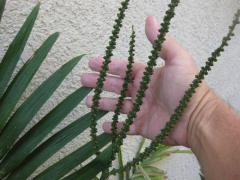
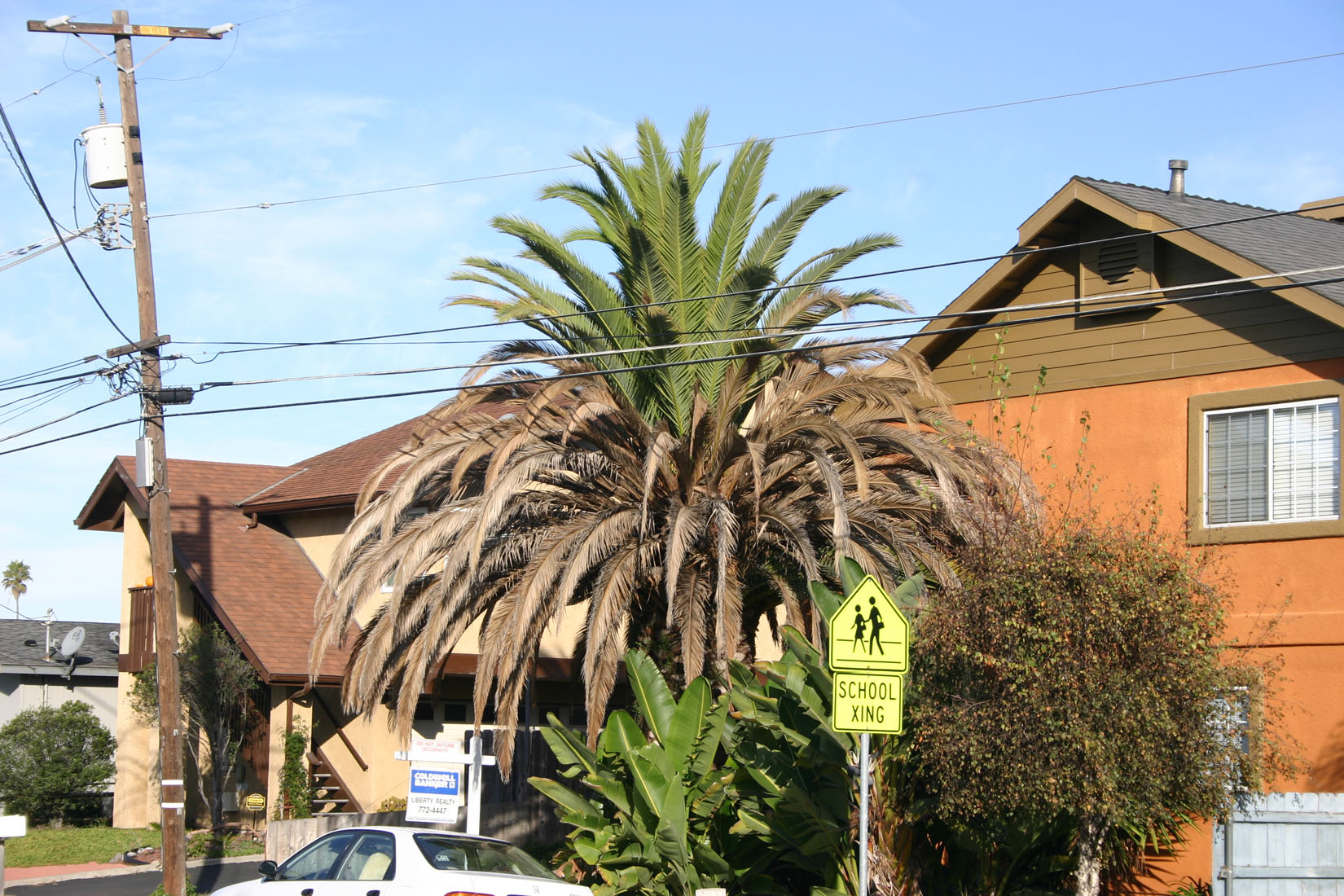
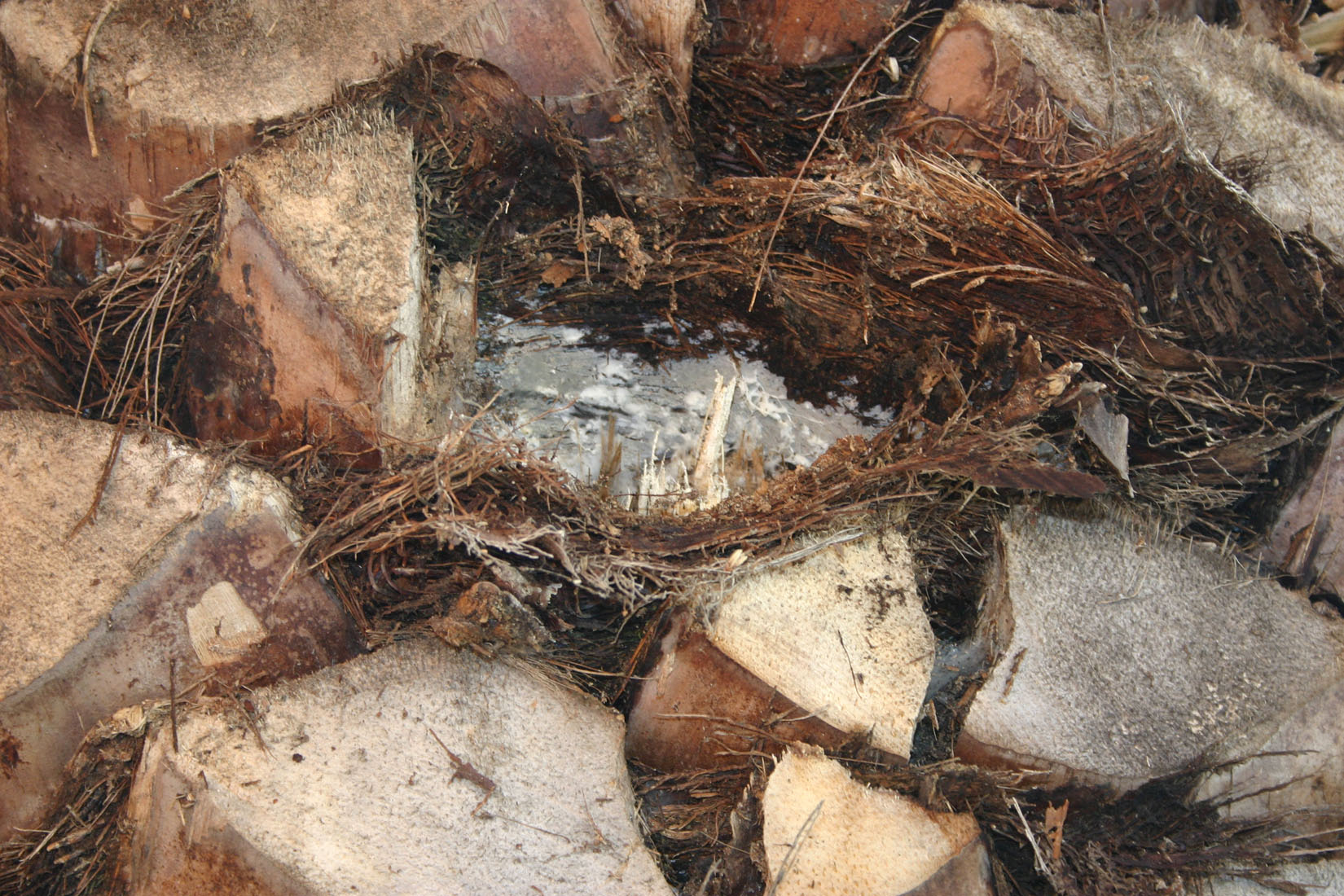
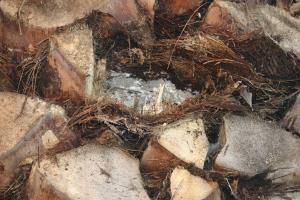
I took these photos this morning. It doesn't look like The RPW infected trees I've seen posted in this thread but I thought I should include it here anyway to see if anyone has any idea of what is affecting this tree. I already alerted the local Ag Department, and they said they'd go check it out. I removed a loose leaf base and exposed the white substance in the second photo, but couldn't get up high enough to really see what was going on there. Perry

 1 point
 -
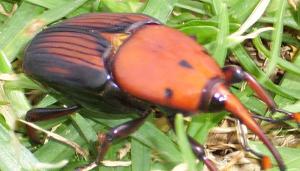
Here's the first clue on how to tell the difference
 1 point
 -
WTF! A tree service sees repeated instances of pests and doesn't think to possibly report it for 2 years? I wonder if a lot of the Phoenix dying in LA from the reported Fusiarium is actually RPW?1 point
-
Wow, takes 30 minutes to remove the fruit from the sidewalk under a palm ??? Aren't oaks as messy or worse shedding large amounts of heavy acorns ???1 point
-
BE FOREWARNED You will need to stay away from discussing the politics (taxes, regulation, government, nazis, etc.) of all this. I know it will be difficult because it is probably inseparable. But if you don't, we will have to close or delete the discussion.1 point
-
I hope no one publishes such sensationalist news here. All that repeated mention of palms lifting footpaths would worry a lot of people most of whom have coconuts and borassus palms growing right next to their buildings.1 point
-
Do you guys really pay $200 to have a queen palm trimmed? No wonder the trees go uncared for at those prices.1 point