Leaderboard


Popular Content
Showing content with the highest reputation on 10/25/2010 in all areas
-
2 points
-
Whatever the reasoning it seems a bad decision to plant anything in a public place that will be hazardous to the public. Falling coconuts are dangerous and damage vehicles and can kill humans. Date palm fronds have been known to cause eye damage and loss. They should chose a species that is not likely to cause any damage at all. Jim2 points
-
Here are some pix of what I have growing around the yard. Early fall pix after a not so great growing season. L. chinensis (not a rare palm but I like it) Dypsis ambositrae Ficus1 point
-
Looking good Mike! I like the curvey perimeter planter idea.1 point
-
Looks really nice Mike, I love the cycads, and that blue longi1 point
-
This one does not like temps below freezing. The long periods of cold in south Fl. sent it into decline .1 point
-
BS man, the Ambositare came out of JD Anderson's greenhouse so I thought I should acclimate it. It was planted in May and has opened two fronds since. I will remove the shade cloth in March. I thought it may help this winter against frost, if I get any. Patrick, it is E. whitelockii. Thanks for the comments guy's.1 point
-
Wow, it looks like you have a really nice framework there for your future jungle. Great choices & I liked the arrangements. I especially liked the Cycad on the left in the fourth photo. Nice work!1 point
-
Very beautiful photos; the colours are superb. Really enjoyed them1 point
-
Caryota gigas Lepidozamia peroffskyana This plant flushes two times a year. Once in April and once in late August early September (like clock work) My garden is still young but I am excited about it. I am already waiting for next growing (buying) season.1 point
-
Dypsis leptocheilos A few in the front P. hillebrandii Coccothrinax Still not sure which one. Bought as mariguama but I don't think that that's what it is.1 point
-
Backyard needs some grass (it's a work in progress) Dypsis betefaka Slowest palm I have ever grown. This one has been in the ground for a year and one half. KO still getting acclimated1 point
-
Kentia and R. glauca E. horridus R. sapida1 point
-
More....... Variegated Sabal or just my brown thumb? Why does my E. princeps flush green? Dypsis decipiens1 point
-
Bizzie and some cycads Blue longifolius?1 point
-
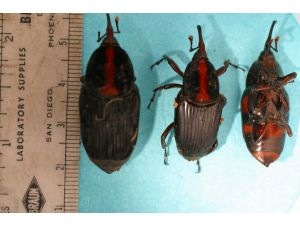
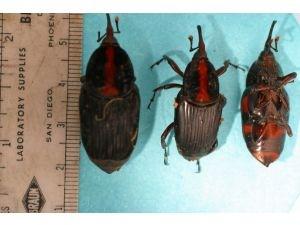
I can sense a certain amount of headless panic in this discussion. I think it would be good to review a few points: - The RPW has been around for millions of years. Yet the native range of the RPW (Southeast Asia) is one of the most palm-rich regions on the planet. - Areas where the RPW has been introduced many decades ago (Middle East, India) are not devoid of palms, to the contrary. - The palm mainly affected in Europe is Phoenix canariensis. Other species do not seem to be affected in a major way. - There are other, closely related Rhynchophorus species with a very similar life cycle naturally present in most parts of the tropics. - Experience from the Canary Islands shows that the RPW can be eliminated with quick and sensible measures. There is no suggestion that the RPW would eliminate all palms in a region. It is a shame about all those old P. canariensis being destroyed, but this is not the end of growing palms, just a major nuisance. In the OC Register Article in the very first post of this thread, there is a picture: Any guesses if this picture is of the actual bugs found in Laguna Beach or just some random picture from somewhere else? Judging by the ruler, it was taken in California, but the bug does not look like a RPW. Best, TOBY
 1 point