Leaderboard


Popular Content
Showing content with the highest reputation on 08/31/2010 in all areas
-
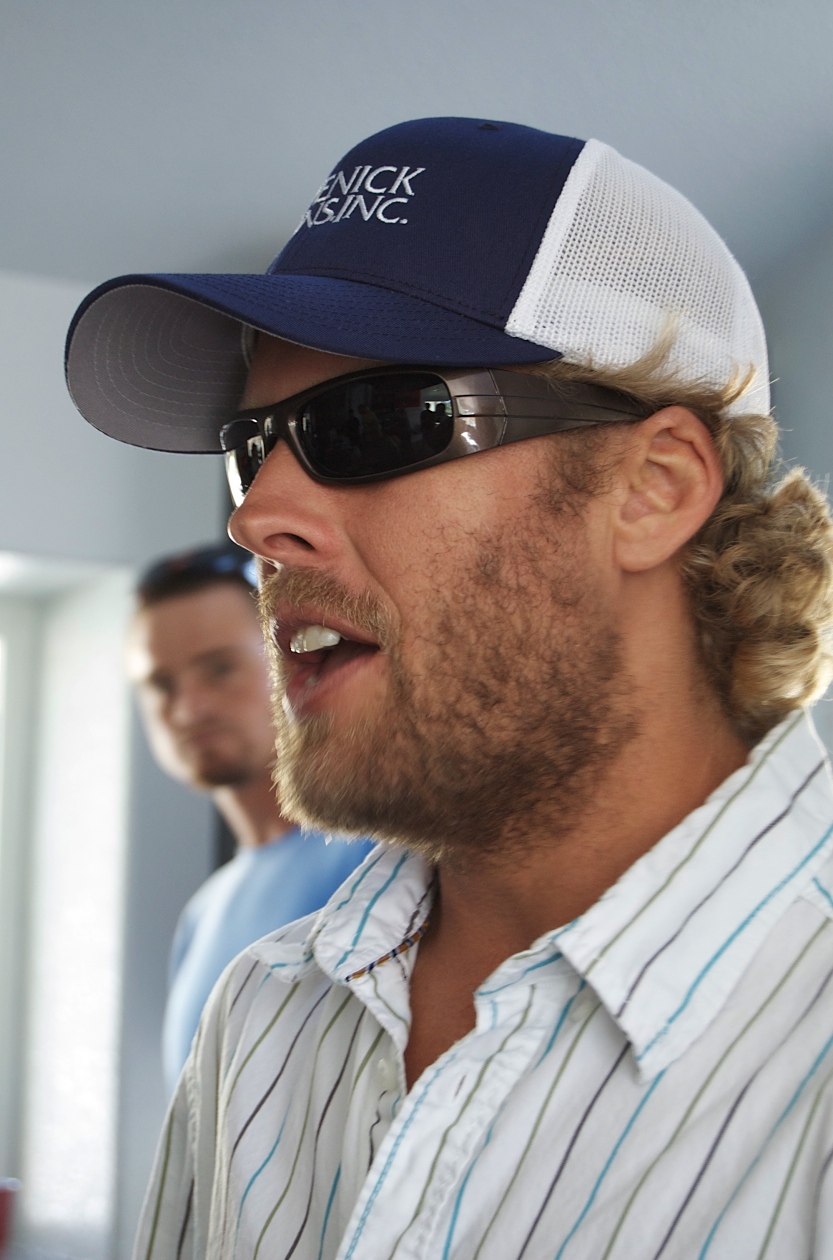
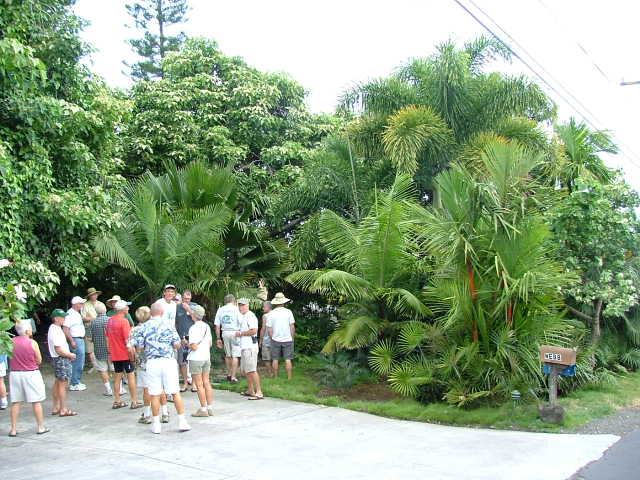
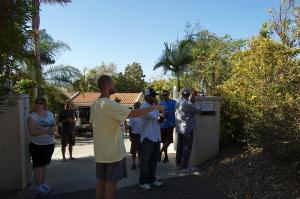
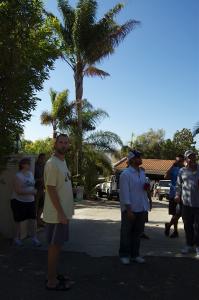
Justin hosted a palmy barbecue coincident with the arrival of Tassie Troy and wife Danylle from Australia. With the stars so perfectly aligned, anyone could see this was a must-do PRA*. We all got acquainted, beverages and plates of barbecued snags in hand, before making the grand tour of the garden. Troy and Danylle in the kitchen............................... Matt got a new hat for the occasion Justin starts the tour at the front gate to his property where many xeric plants are used *rights to "PRA": pohonkelapa

 1 point
 -
After seeing Dave and Justins Parajubaea cocoides it's hard to believe anyone would bother growing a cocos in SO CAL !1 point
-
One major point I suspect that dooms Cocos in California is that, since palms do all of their growing at night, they probably need to have a threshold temperature once the sun goes down, no doubt combined with a warm-enough soil temperature, while they commence growing new tissue. Not only in coastal California, but also inland, nighttime temperatures are quite chilly from the perspective of a lowland tropical plant. Even this morning, temperatures across the L.A. basin were in the mid-50s (admittedly lower than normal)...but those low temps extended approximately 90 miles inland to San Bernardino! But beyond that is the phenomenon of the cold eddy that spins over the cold Pacific, and the fact that as the inland deserts heat up, the pressure gradient sucks in that chilly air sometimes rather early in the afternoon, and often, within 10-15 miles of the coast, temperatures by 5-6pm are already cold enough that sweaters are in order, even though the day may have been 80F at 1pm. This give a unique temperature curve compared to climates where cooling happens much later at night. In terms of absolute low temps, in Miami Beach the average nighttime low temp in the coolest month, January (62.8F), is equal to that measured in the warmest month, August, on the coast in Santa Monica (62.2F). Meanwhile Bermuda, on which coconuts grow plentifully, has daytime temps only a little warmer than coastal and near-coastal California throughout the year, but the nighttime temps are 10F warmer consistently throughout the year. I would be curious to hear from Tyrone if Perth's evening temperatures from, say, 6pm-midnight (as opposed to morning absolute minima) are as cold as those in Southern California, since the absolute minima appear to be similar (though days appear to be much hotter in summer in Perth). If it's a little warmer there in the evening hours, perhaps that's what allows a coconut to push some growth and survive with less herculean efforts than are required in SoCal? Ultimately if you want the look of a coconut in Southern California, why not grow a Beccariophoenix or a Howea? Those are both absolutely beautiful palms that carry the relaxed grace of the tropics and grow well, despite the year-round chilly evenings and nights found in California.1 point
-
izzat 8pm to 10pm?1 point
-
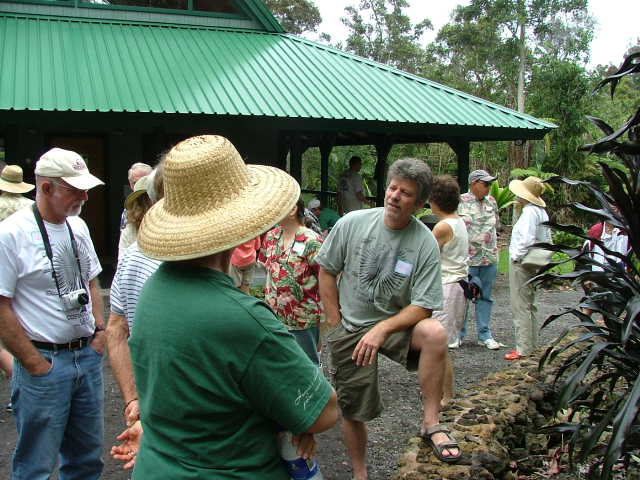
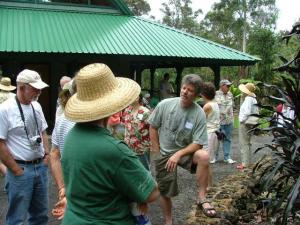
Hawaii Island Palm Society had a full day on the Kona side today, June 24th. The first garden was that of Dean Ouer (Dypsisdean). Located at the 2200 ft level in the Kaloko area halfway up Hualalai volcano (8270 ft/2510 m. tall), Dean has been busy planting all sorts of Dypsis (needless to say!), Clinostigmas, Neoveitchias and many, many other palms. A beautiful garden in a great location (Dean, let's just hope that Hualalai doesn't blow for another couple of hundred years - I think the most recent eruption was around 1801!). Here's Dean in the middle in the light green t-shirt, facing the camera. Karen Piercy, dark green t-shirt/back towards camera was responsible for organizing the IPS Biennial in Hawaii in May 2004.
 1 point
 -
Thanks a lot Moose and everyone else in our palm family. I've been very busy lately but I took the morning off yesterday and did some relaxing palm related activities: went to check and clean palm and cycad seeds put to germinate...and had some nice surprises: Mauritia carana first sprout showing up, 4 Zamia pseudoparasitica ready to open their first leaves, first leaf for Syagrus lilliputiana (graal palm seed from Lorenzi) plus Encephalartos sclavoi and Licuala malajana...what a great birthday !! I appreciated very much your wishes...52 years old (still looking like 51 though...and thinking like 16)...eight years old in Palmtalk...1 point
-
That Hydriastele above is of course the palm in the center of the photo! Next stop was at Garrett Webb's palm nursery, a few miles further down the mountain (closer to the ocean). This is a very dry (probably less than 10 inches of rain per year) and very hot and sunny place (it felt like an oven....). The fact that Garrett is able to grow thousands of palms that are healthy, green and perfect in this brutal climate is nothing short of a miracle!! Here's a palm that really likes the heat: possibly the largest Borassus flabellifer on the island. I believe Garrett said that this palm was grown from seed that he brought back from the IPS Biennial in Thailand in 1998. (The next, and final, stop of the day was at Mark Barville's home & garden but I took no photos there - maybe Al has some? I know he took some photos also). Anyway, the Borassus:
 1 point
 -
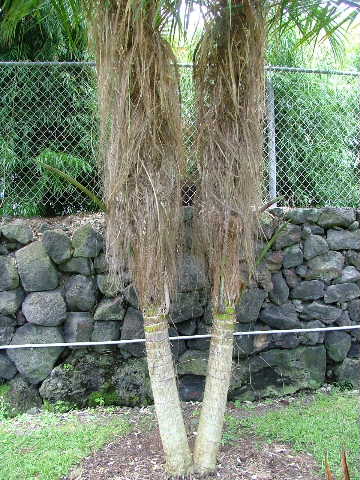
Polyandrococos caudescens, also in Garrett's garden
 1 point
 -
A Dypsis utilis in Garrett's garden, getting ready to begin fruiting
 1 point
 -
Then the group was off, caravan style, to the home of Garrett & Julie Webb, at a lower elevation just a few miles away. The Webb's have a half acre garden, beautifully landscaped with many mature palms. Here's part of the group getting ready for the tour. Garrett is the tall guy in the middle, facing the camera.
 1 point