Leaderboard

Popular Content
Showing content with the highest reputation on 04/13/2010 in all areas
-
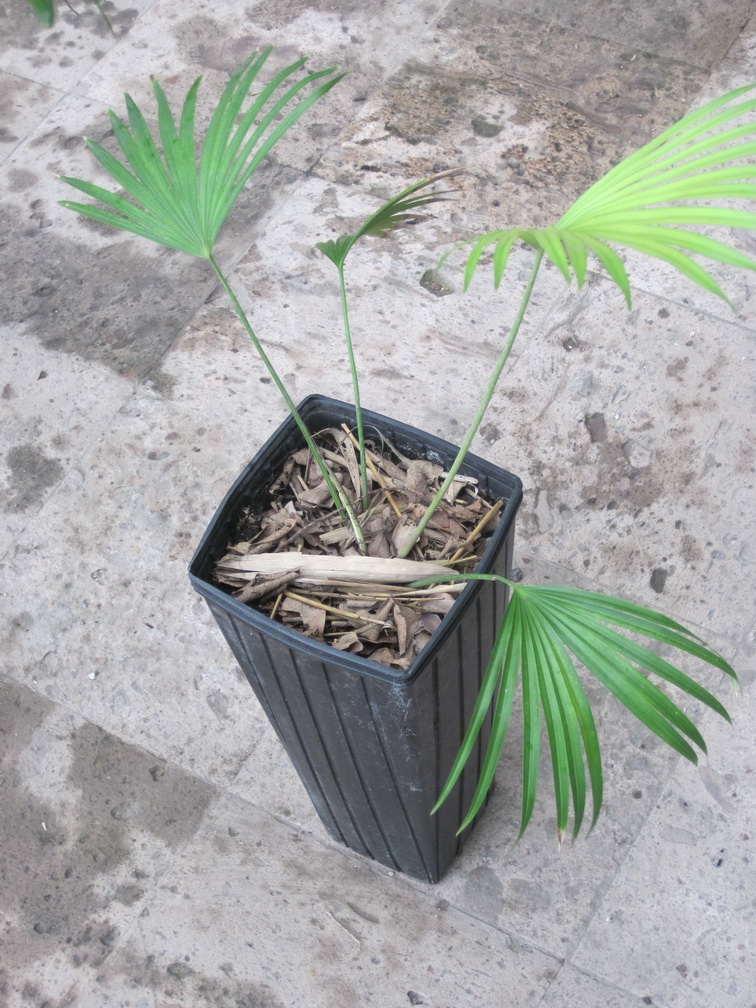
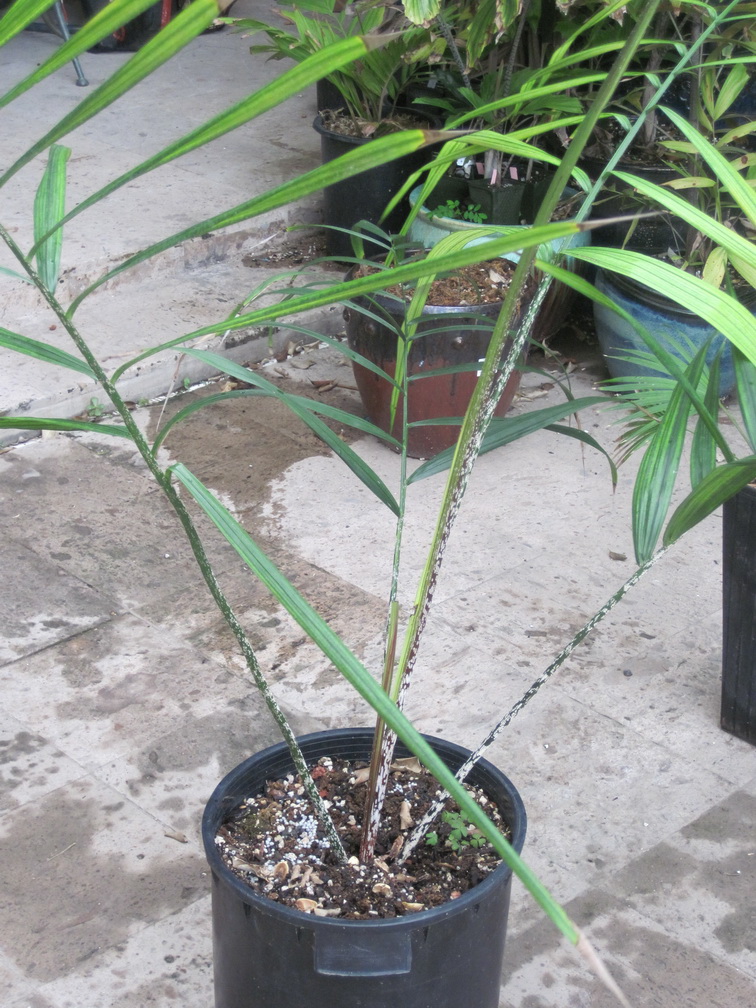
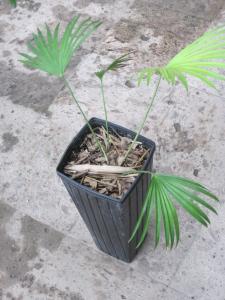
Not trying to buy or sell, but what are these 2 little gems worth to someone these days? I know that lots of Tahina seeds went out to alot of us, but with the political situation in Madagascar and no certainty as to whether seeds will ever come from there in the future, they should be becoming quite valuable. Furthermore, they seem to be very hardy (mine survived 32 degrees for 4 hrs with no visible damage) and they are one of the most attractive fan palms out there, in my opinion. My favorite palm (at the moment) is the mealy bug dypsis. I did buy a bunch of D. malcomberi and D. mananjarensis seeds and seedlings in the past 2 to 3 years, but not one of them looks anything like the original batch. They may turn out like this, but I certainly can't tell at this point. That makes the original ones (not counting out Dr. Darian's plant of course) to be a little more unique. OK, lets hear some offers - just kidding - I'm not selling.
 1 point
 -
- 12:14PM: "Dog toys!" As a group, we walked up the side driveway to a wooden fence-paneled gate that hid all views of the backyard. After it was opened, we saw an empty driveway littered with dog toys and one tour goer who shall remain nameless (for now) said "Ah, I think they have a dog." - Inspired by the toy diversity, Jeff Searle decided to try one out for himself. This side of the pool enclosure was lined with a tall hedge of Cat Palms, Chamaedorea cataractarum. After he was finished, he offered the toy to nearby tour goer Steve Nock who replied with "Woof." - 12:16PM: The pool enclosure on the left ran the length of the entire house, leaving this part of the backyard very long and narrow. The tour walked through at a good pace as we could see a landscaped area up ahead. The hedge of Cat Palms continued down the back of the property while the pool enclosure on the left was lined with Cabada Palms, Dypsis cabadae. - 12:17PM: The southwest corner of the garden was well designed as a comfortable seating area, complete with a giant hammock. Ryan1 point
-
- 12:10PM: The north side of Tim Blake's yard contained a mix of palms planted in different groupings, often with very rare specimens a few inches away from an established landscape species. Common or not, if a palm is well grown and has trunk, it gets a second look, as does this Majesty Palm, Ravenea rivularis deserves. - The average tour goer went blank when they saw this robust Triple Spindle Palm, Hyophorbe verschaffeltii, growing at this point along a bed. They could not identify it. It is very well grown and was neatly trimmed of leaf bases that would otherwise obscure the colorful crownshafts, which is not the typical 'look' of a landscape Spindle Palm. I had Ron get in there for scale, as previous Moose-less photos didn't depict the grouping's size that well. - 12:12PM: I went up high for this shot. The tour arrived quickly at the northwest corner of the garden which was home to various Livistona species and one Fishtail Palm, Caryota mitis. The side driveway in front of us led to the left, up to the back of the house to a enclosed parking area, heavily landscaped with palms and different trees. - Lenny's at it again as some society board members never get a rest. SFPS Director Lenny Goldstein educates a tour goer on the finer points of identifying date palms, while using this Canary Island Date Palm, Phoenix canariensis, as an example. Ryan1 point
-
He made fine points in the identity of the bamboo, but I can't do anything more without either going back to take more photos or digging out my Gigantochloa photos, which are older film images stashed in unorganized, countless boxes. Thank you Gileno, but the photos don't do them justice. To visit the gardens and to see them in person is a whole other experience. It is still quite rare to find mature Attalea species around South Florida, outside Fairchild TB Gardens. One tour goer would not expect to see one unless it its the slightly more common A. cohune. If there were more to see and to see them more frequently, enthusiasts would began to learn their differences. They should be used and collected more often as they are great palms. I have Lorenzi's older, original palm book, not the more diverse modern one that I should also have. It is great for Brazil palms but this Attalea might be a mystery unless I can get a biologist familiar with the cocoid palms, like Larry Noblick, to look at the images. Ryan1 point
-
I don't know about dog pee either, but if mine harms palms then my chamerops is in serious trouble!1 point