Leaderboard



Popular Content
Showing content with the highest reputation on 04/02/2010 in all areas
-
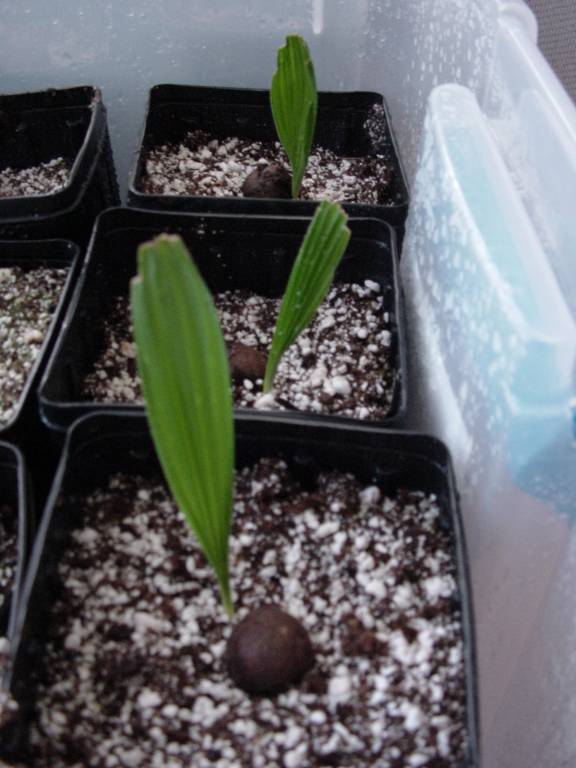
As a member of bus 4 which collected it's fair share of seeds, I am happy to report that my Costa Rican seeds feel right at home in Trinidad and have all been making their valiant efforts to take their rightful places in my rainforest. Areca vestiara, Calyptrocalyx polyphyllus, Geonoma sp., Welfia and others. Cyrtostachys are plump and have been striking. I will be pleased to remember Costa Rica for many years by saying "Oh, I collected those seeds at the IPS biennial in Costa Rica". Pictures will obviously follow as the seedlings grow, and not only for identification assistance......1 point
-
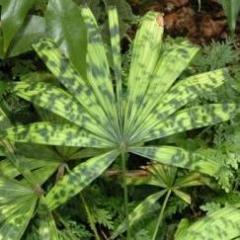
Howdyall: Trinidad-bob's pic of a Corypha in bloom was cool, but, well, these guys are huge. Here's a baby C. utan, and I assume that the guy's not a dwarf. (From the PACSOA website)1 point
-
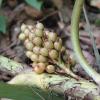
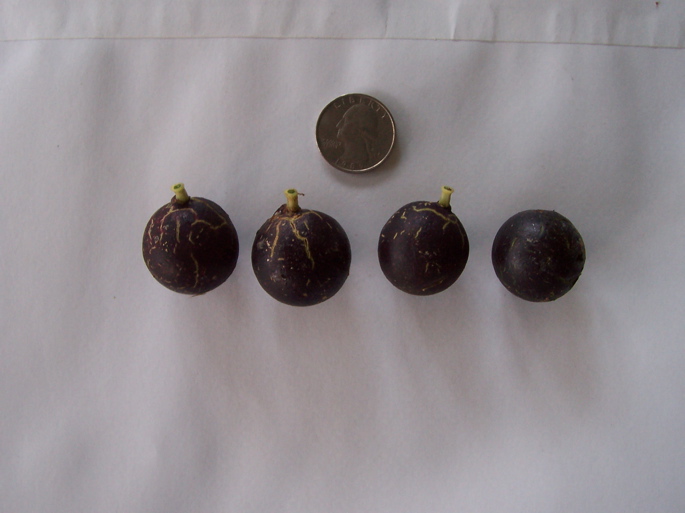
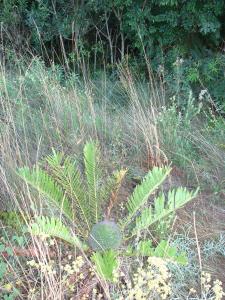
Sorry,maybe a little off topic,but here it has more visibility (please remove to´´ tropical looking plants´´ if necessary) Last holyday I went to my cousins farm in Tibagi county.. He has some agriculture on better soils and zebu cows on +- 100 hectares of somewhat poor soils with planted pastures.There is also a little remnant (+- 5 hectares) near the river where the original campo and campos-cerrados vegetation is still alive. I´m always amazed about the richness of species in the campos and cerrados,from orchids to cactus,bromeliads,lilies,allkind of grasses,palms,mirtaceas...Walking through this campos-cerrados I saw the usual plants but also two strange species looking ferns with strange fruits or flower growing from the top. One species had a thick round green fruit with somewhat purple little spines and the other had elongated multiple fruits also with a red/purple /blue collor., The last one shows a dust of spores when I shake it. The smell is very sweat and I saw some very little bugs eating from the spores In total I found two specimens with the round fruit (one of the fruits was rotting) and 3 with the elongated fruits.Both resemble cycads but I think there aren´t cycads here. Please can you help me identify this species. My cousin has lots of pastures for his zebu cows, and in fact does not need to use this 5 hectares ,but I think that if it wasn´t ilegal ,he would remove all the campos-cerrados vegetation and plant pasture onto the side of the Tibagi river. He is planning to release about 50 zebus on this campos the next week to ´´clean´´it. This cows are very rustic and can eat the native grasses. I´m afraid that this cows on this little parcel will destroy all the native vegetation in a short time....
 1 point
 -
I was gobsmacked when I saw it, wow! Amazing eh1 point
-
updated infor...the trunck is leaking brown liquid and flys are everywhere on the trunk....this cant be good1 point
-
So this is the car that got me into modification...While it is a great balanced car and really fun to drive, it got too slow so I began to modify it to cruise. SoCal is about car culture. Although the car makes me laugh now, it was the hardest thing at the time and very cutting edge. Base is 94 BMW Z3 Veilside body kit (the only one imported into the US) Chromallusion paint Airbag suspension; 5 switches. 2 compressors 7g tank. Eclipse Flipup monitor, Eclipse 2 10" subs, Playstation 2 lots of other minor mods.1 point
-
aprilfoolsday@happyeaster.com1 point
-
Closer
 1 point
 -
Close up
 1 point
 -
and i have Dwarf Talipot seeds1 point
-
On No! There are 200 IPS members heading your way this month Gil.1 point
-
Gileno, do they even have April in Brazil?1 point
-
You need to show up in person! Dean can supply the address!1 point
-
rubyz hasn't visited the forum since June of 07. In one of his last posts he was upset about the lack of attention his discovery was getting, compared to the discovery of Tahina spectabilis (then still unnamed)1 point
-
Did I say I have a lot of C. renda seedlings? Two of my Pholidostachys pulchra seeds germinated. I'm ecstatic!1 point
-
Cyrtostachys renda - then After Now1 point
-
Calyptrocalyx polyphyllus - then Now1 point
-
Areca vestiara - then Now1 point
-
Hyophorbe indica - then Now1 point
-
Welfia - before Now1 point
-
Wal, Most of the Costa Rica collected seed are doing well. Here are a couple of updated photos. Bactris honduranensis - before Now1 point
-
Jeff, the problem was there were no tags! Kim, for me nothing else in this hobby is as satisfying as saying "I grew it from seed!" Robert1 point
-
Here are some seedlings, the id of which I am unsure of. The seeds were collected at the Herrero farm and I have them listed as either Nenga pumila or a Pinanga sp.1 point
-
Scott, I am using a combination of promix and rice hulls for the seedlings. It is a nice light mix and has good moisture and aeration. I use this on orchids also and they have responded really well. Robert1 point
-
The drainage holes are on the sides of the containers. The containers are used to transport grapes from the US to Trinidad and are available mainly from September to December. As a matter of fact I picked up about 6 yesterday. The seeds are just tossed into the germinating trays. If, as in the case of C. renda I have a ton of seeds and the germination rate is good I have to take the sprouts out and space them in another container. More work, but .............. Robert1 point
-
Hyophorbe indicas have been strong growers. I think that I will pot them up to 1 gal soon. Areca vestiara. What are the chances of some of these having red leaves? Geonoma sp. Calyptrocalyx polyphyllus. I germinate my seeds in styrofoam trays. Fill them with a peat moss, sharp sand mixture and stick them in the shadehouse. I don't have to do much more in the rainy season.1 point
-
For those of you who haven't admitted your addiction, or your in denial, we know, we know! All one has to do is look at your palm collection. You can't deny that every square foot is taken up with palms. Why is it that if one only has a street name, the address is not necessary for a palm society meeting? All one has to do is drive down the street and the palm garden hits you in the face. Maybe there should be a Palms Anonomous with regular meetings, but then of course at intermission, or a coffee break, you would be outside whispering to your buddy about trading palms, or seeds, or talking about the latest discovery. I'm afraid there is no help. Dick1 point
-
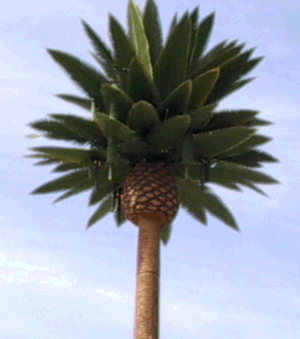
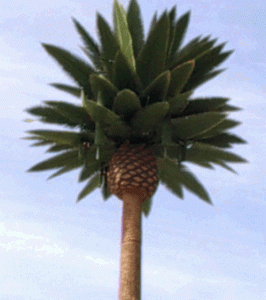
I thought that the subject was going to be some great looking palm. Got hookwinked instead. And to think that I was going to offer my own amazing palm image - aw, what the hell, here it is anyway. Does anyone know what species of Phoenix this is - larseni, or motorolai?
 1 point
 -
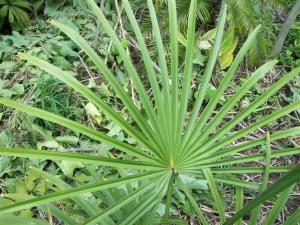
Close-up of leaf . . .
 1 point
 -
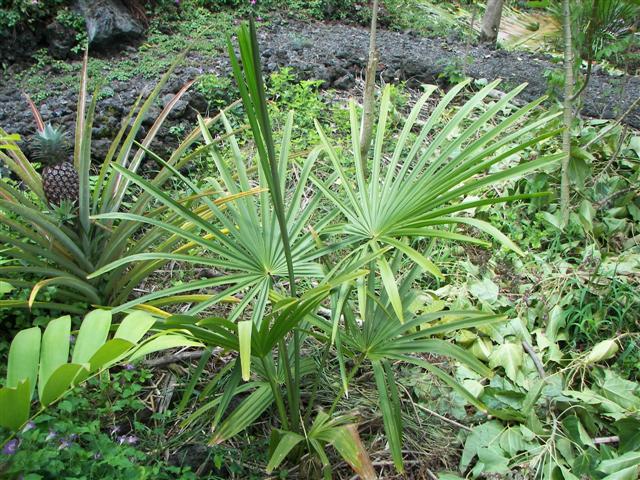
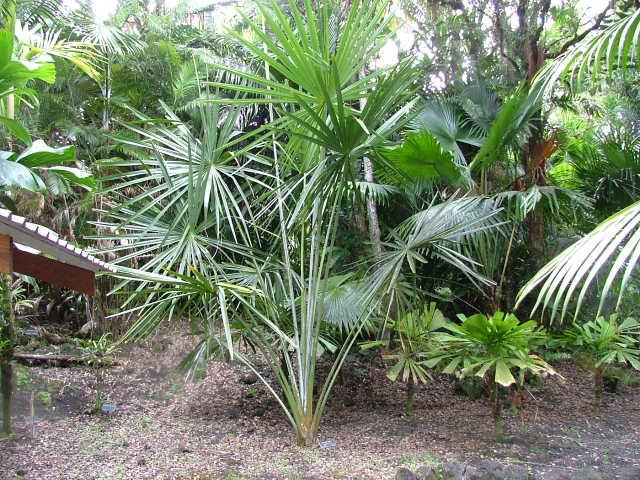
AJQ - the above picture sure looks like a Sabal sp. to me. bgl - your photo in Post 39 does not look like a Corypha lecomtei to me. From pictures of young plants of C. lecomtei sent from Thailand and from my own as well, they have a different look. Here's my C. lecomtei which currently stands at about 1.3 m (52") tall.
 1 point
 -
1. Ptychosperma sp. 2. Attalea cohune 3. Areca vestiaria 4. Borassus aethiopum 5. Calyptrocalyx sp. 6. Manicaria saccifera 7. Desmoncus polyacanthos 8. Pigafetta filaris 9. Hyophorbe verschaffeltii 10. Licuala peltata Cycad: Ceratozamia sp. Ryan1 point
-
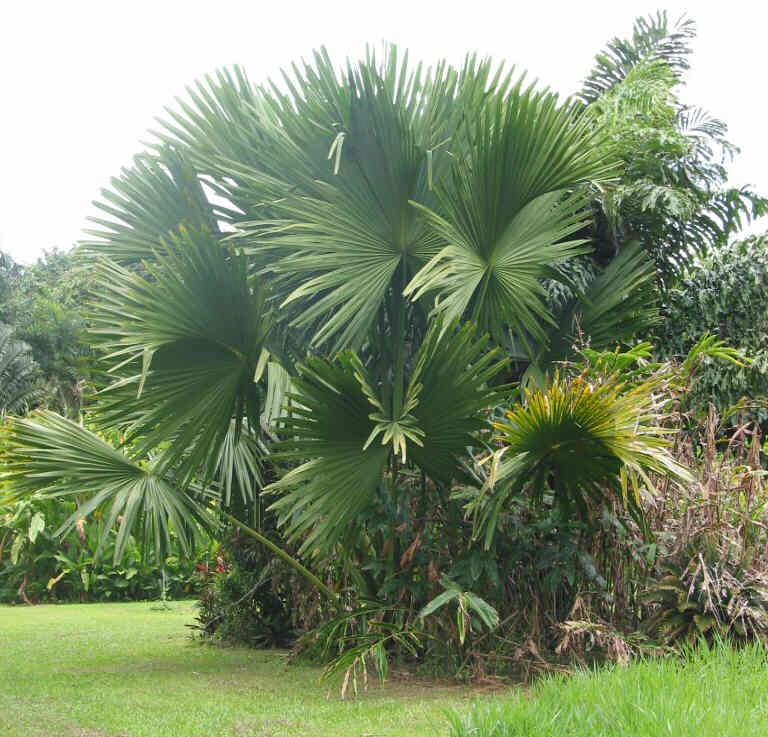
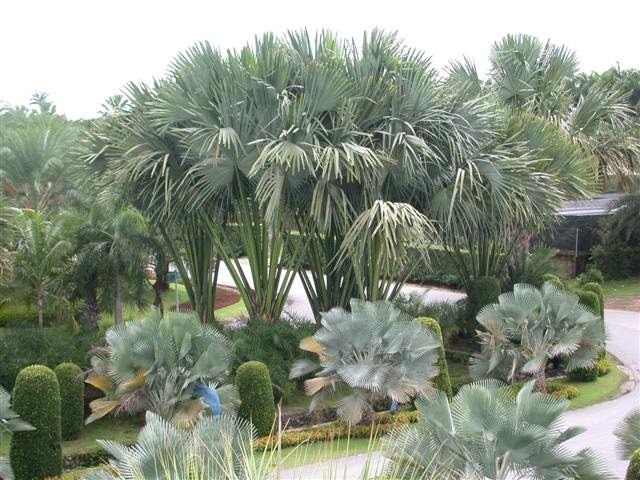
Most of the ones planted there are C umbraculifera and many are about the size of Kyles picture in the first post . There are a few C.utan , personnaly I prefer them .
 1 point
 -
One of about 50 Coryphas planted at a mates place in Whyanbeel . They are all about 20 years old . Here they are bordering a Heliconia bed alternating with some Syagrus spp.
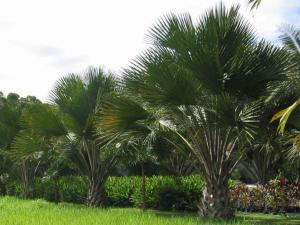 1 point
 -
Yes, photo #8 above is as Bo said, Corypha lecomtei, one of the smallest of the Corypha species. I planted one of these in the garden a few years ago as a very tiny seedling (1-gallon container) thinking that by planting it directly into the ground it just might grow faster - after all the roots would now have lots of space to grow resulting in a much faster growing plant. How wrong I was in it growing FAST! It has been a very slow grower. And I'd certainly agree with Jeff in Modesto in that Noong Nooch Tropical Garden in Thailand has got to be about the 'biggest bestest' tropical garden in the world right now. It's awesome! No wonder the IPS biennial planners are thinking strongly of going back there for their 2010 Biennial meeting. Here's a pic of a Corypha utan growing at H`omaluhia Botanical Gardens on Oahu, Hawaii . . .
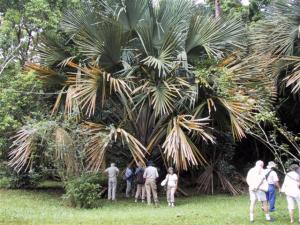 1 point
 -
And C. utan, about 14 ft tall.
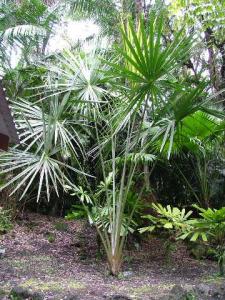 1 point
 -
Dave, No, not exactly (grown another 10 ft)... BUT, they're making progress. Planted all of mine from 1G pots about 9-10 years ago, and for the first 3-4 years they were VERY VERY slow. Now they seem to be picking up speed but I don't think they will ever be fast.... Here's my biggest Corypha umbraculifera, about 10-11 ft tall. Bo-Göran
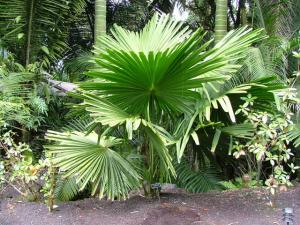 1 point
 -
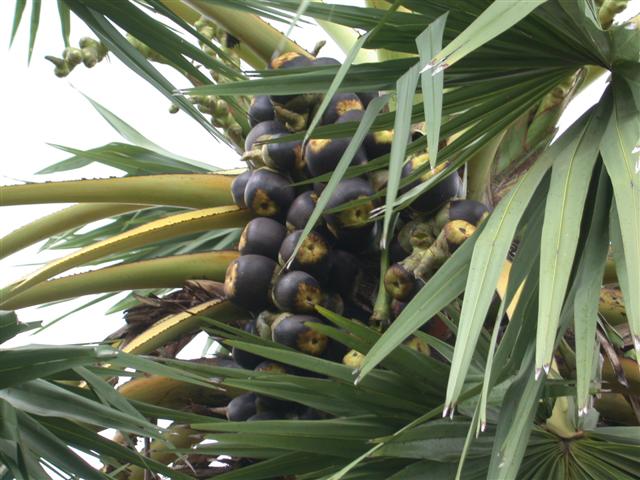
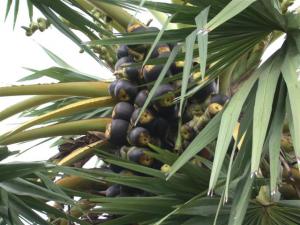
Same park in Thailand .... Here is a Borassus palm with fruit. Jeff
 1 point
 -
Here is a pic taken at Noon nook Botanical Garden in Thailand two years ago. They make Bismarkias look small. Jeff
 1 point
 -
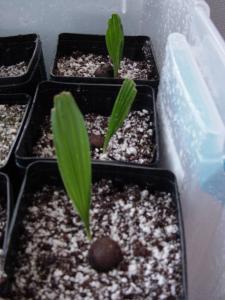
A few of my Corypha umbraculifera seedlings. Germinated 21/5/2006.
 1 point
 -
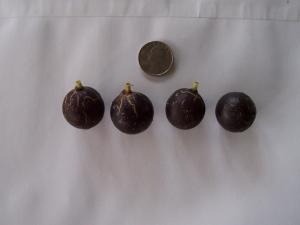
Thanks for the enthusiastic words, everyone. Since the flowering/fruiting process of C. utan is not well documented, I kept a photographic journal. So, there are lots of photographs. It's not finished, either. Here's a photograph of ripe fruit which fell naturally. Most fruit fall due to bird action. (I am VERY popular with the birds in the area, the feathered kind for all you Aussies). Bo, this tree seemed to pick up steam in each year of life. And after leaf bases began to fall, it really took off. And Palmotrafficante, thanks for the news on germination.
 1 point
 -
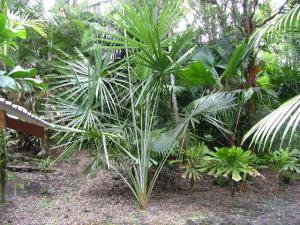
Norm, Wow, great shot! Try to get some more please! Here's a juvenile Corypha utan. It was planted in Sept 1997 from a 2G pot, and today, nine years later, it's about 14 ft/4 m. tall. It seems to have picked speed the last few years. Bo
 1 point
 -
Anna: I will make a point of stopping at Foster next time I am on the Honolulu side. I have not been there in months. Get a photograph or two. Tad: How long did it take for your C. utan seed to germinate? Mike: The C. utan here was in a hurry. Two years after planting out the seedling (like yours), the fronds were over my head. Here's a photograph of this C. utan in full fruit. It's interesting to see the differences between C. utan and C. umbraculifera in the fruiting stages. Thanks to Anna for posting her photographs!
 1 point
 -
*Please click on thumbnail for larger version* As promised, I am posting some pictures of one of the Foster's Coryphas in bloom. It was September 2006. Please see the same palms in 2002 in my earlier picture. Anna1 point
-
Here I am standing with giant Coryphas at Darwin botanical gardens here's the tiny one of the pack.1 point
-
Here is a web site that has some beautiful examples - photos of Coryphas. Click on the colored botanical names. (you'll have to scroll past the orangatangs. Coryphas Pictures - Asian Gardens1 point
-
Anna and Norm, thanks for posting those great photos. These are truly imposing palms. And I don't have any photos from any of the gardens on Oahu because last time I went there was a couple of years ago, and I didn't have a digital camera at the time! Kris, Corypha umbraculifera is supposed to have originated in southern India. Hopefully SOME are still growing there!! Mike (The Palm Nut), I can give you a timeline. This is a C. umbraculifera that was about the size of yours in 1998 when I planted it. Today overall height is close to 8 ft. (My C. utan is taller. I'll try to get a shot of it tomorrow). Bo
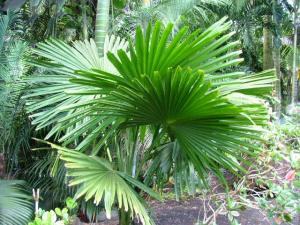 1 point
 -
de nada, Kawika! This is my C. utan. I agree with Daryl about the appeal of Corypha in it's juvenile phase. When my tree was a juvenile, I recall it being very imposing. But here is the tree in the adult condition, just for comparison.
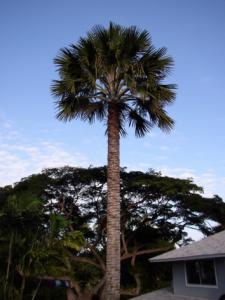 1 point
 -
Here is a picture of two giants growing in Foster's Garden in Honolulu. The palm in the forground was in bloom last September. I will post the picture of it later. If someone has any updates on what is happening to it theses days, please let us know. Anna1 point
-
These C. umbraculifera just bust free of one's imagination. This photograph dates back only thee weeks at one of my trips to Ho`omaluhia. Yes, that IS a picnic table.
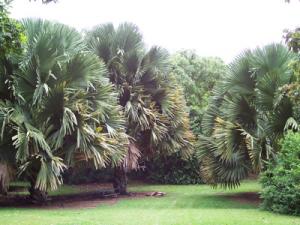 1 point
 -
And here is a particularly orange form of C.utan, which is quite variable in appearance.
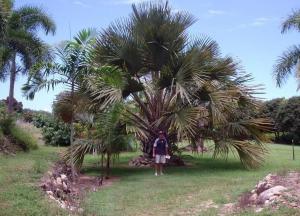 1 point