Leaderboard


Popular Content
Showing content with the highest reputation on 04/01/2010 in all areas
-
I started collecting di-cast planes (1/200 scale) 2 years ago.2 points
-
I remember i saw in other topics some nice visuals of jubaeas, one of them, grown, was in an excellent yard, from a white looking hair man, maybe in S. Francisco. Anyway, i did not find any previous topic dedicated exclusively to this palm. Recently, as i have already posted on other topic, i bought a maybe 10 years old jubaea chilensis. I knew it is slow growing, and i made an investment, just to assure i 'll be waiting less than i would !
 1 point
 -
I read here on Palmtalk, but can not find the thread, something about replacing the soil to keep them alive here in C. FL. I put it in a larger pot for now but would like to plant it in the ground. Advice is needed on what to do.1 point
-
Cycads and friends now... Kris, my car's Pioneer stereo model looks a lot like yours... I hope you don't always put loud music to play in the garage...in this case I'd rather have Cristobal's nicelooking ghosts as neighbours !!1 point
-
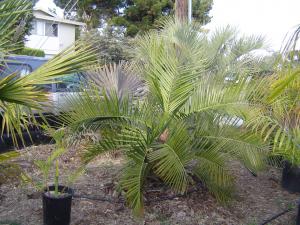
Heres when things were more in focus a year ago....
 1 point
 -
I thought I'd add my Jubea's pics. Here are my little size 9's for scale. I'm really standing up, the palm is growing at a 90 degree angle on a wall of mulch. At least thats what I thought, then things started getting a little blurry.. . . . I think it was all the fresh mulch I was putting down...

 1 point
 -
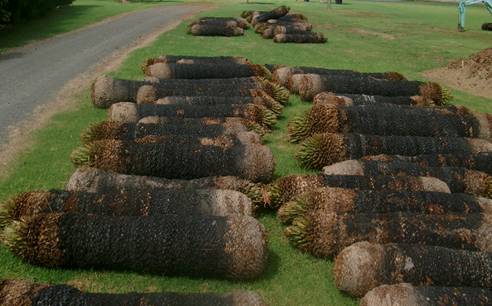
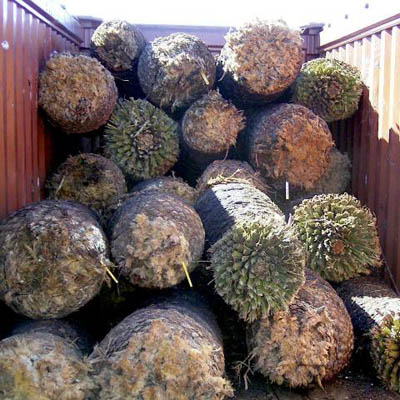
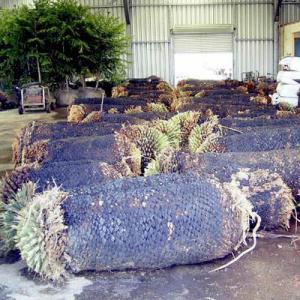
I've seen pictures of them on the internet as just logs, no leaves, no roots, ready for shipment.

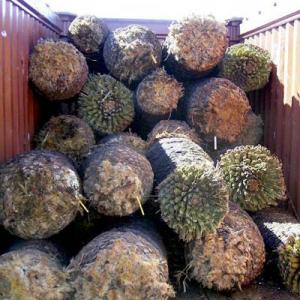 1 point
 -
Cristobal, that is very freaky... but definitely an interest I've never heard of before. BS & Kris, sweet... I'm a car guy myself, will post pics as soon as I get a chance. Tim, I've seen some air horn videos that have cracked me up... very funny stuff.1 point
-
This one is starting to get some size to it.
 1 point
 -
my kid and a JUB.1 point
-
Kris, I hate to be the one to break the news to you but it looks like the manufacturer really messed up your vehicle -- the steering wheel is on the wrong side!!! And I am also a big fan of loud/cool horns -- if you want the absolute loudest -- check out the offerings here (this is a local company but they apparently are the ones who pioneered these set-ups for cars & trucks -- UNBELIEVABLY loud!) http://hornblasters.com/ Tim1 point
-
All Trachycarpus species have been nematode sensitive here. T. latisectus seems to be the most resistant but still susceptible. The heat just further stresses them. If they were growing healthy in a heavy soil with some shade they would grow well in FL. I saw very healthy, 20ft+ T. fortunei specimens at Maclay Gardens in Tallahassee. Here are a couple T. latisectus here at Leu Gardens growing in shade with good humus soil1 point
-
Xenon, I believe you are asking where is the hottest(warmest) place in the tropics. Based upon my reading, that is most likely the Danikil Depression of Ethiopia.It is at latitude 14/11.It's annual average temperature is 94F. Compare that to the warmest in the US, which is Key West at 78F. On average, the temperature in the Danakil Depression exceeds 100F. every day of the year except Jan. and Feb. Then it cools down to a pleasant average high of 97F.The average minimum exceeds 90F. two months of the year. This, of course, does not factor in the exceedingly high relative humidity. As it relates to real heat instead of simply high temperatures, the summer heat in Bender Qaasim, Somalia has an average high of 105F combined with a relative humidity of 61%(afternoon). This creates a normal temperature humidity index of 145F.The absolute high at this location is 113F.This would create a temperature humidity index of approximately 160F.Ready to pack your bags?1 point
-
*Sigh* I bet I'm the only one with a state lower than zone 6 on this page. I'm 5B in Waukesha Cty. SE Wisconsin.1 point
-
The common names "minature" and "forest" coconut do have something to do with their relatedness to the coconut. There are 22 genera in the Arecaceae that fall under the tribe Cocoeae. All the species in these genera are related to the coconut most importantly by the shared, derived trait (synapomorphy) of three or more "eyes" or germination pores on the hardened seed endocarp. Other distinguishing characteristics exist supporting the monophylly strong relatedness) of the tribe, but th previous characteristic is the most non-ambiguous-especially for the layman.The tribe is also commonly divided up into the spiny and non-spiny cocoids. Here are a few of the 22 genera in the Cocoeae-I am sure everyone can identify the spiny from the non-spiny: Aiphanes, Desmoncus, Lytocaryum, Syagrus, Astrocaryum, Bactris, Gastrococcos, Elaeis, Allagoptera, Polyandrococos, Butia, Jubea, Parajubea, Attalea, Jubaeopsis, Beccariophoenix, Voanioala, Barcella. Also amazing is the fact this tribe is distributed disruptively throughout the world and has an extensice pollen record showing many species have gone extinct since ancient times. One famous recent extinction is the Easter island cocoid-Pashcalcoccos(sp?).1 point