All Activity
- Past hour
-

Ficus dammaropsis red fruit form
Navarro replied to Tracy's topic in TROPICAL LOOKING PLANTS - Other Than Palms
Hola @Tracy recientemente compré semillas de ficus dammaropsis de frutos rojos , leyendo tus experiencias me venido abajo jaja, pero navegando en Instagram he visto uno de buen tamaño en tu ciudad , en el jardín botánico de San Diego , encinitas y tiene una muy buena apariencia erguida , has pensado cambiarlo de ubicación? O darle algún suplemento ? El que está en el jardín botánico de San Diego parece recibir sol directo -
Colvillea racemosa
Navarro replied to aztropic's topic in TROPICAL LOOKING PLANTS - Other Than Palms
Vivo en España y el mío se le secan las ramas verdes todos los inviernos (los 3 inviernos que lo tengo ) y hace una semana que empezó a brotar , el año pasado brotó un mes antes -

Beccariophoenix alfredii 8 years growth.
mnorell replied to Stevetoad's topic in DISCUSSING PALM TREES WORLDWIDE
I'm in major agreement in re a wide (and widening) basin for watering, not only for this species but for most. People have been conditioned to think that roots grow down, down, down to get water...without realizing that roots also need plentiful oxygen, and "down, down, down" in most soils is hypoxic/anoxic and thus a "no-grow" zone for roots (except in the most sandy/rocky "soil"), so they almost always go "out, out, out" and stay relatively close to the surface. Beccariophoenix alfredii is native to the immediate shores of the Mania River in central Madagascar, and thus, like the date palm and many other similar river/oasis dwellers, would have ready access to subterranean water. Beccariophoenix alfredii seems like it's definitely more drought tolerant than, say, Ravenea rivularis, but probably enjoys a similar natural environment for maximum growth and happiness. These principles are I think why you see Syagrus romanzoffiana looking great on some highly irrigated golf-courses in the low desert but most of them in general landscape situations look like torture victims because they're placed on pathetic drip-systems with the desert succulents. Same also for Bismarckia, not really in appearance, since it is a pretty tough customer, but in growth rate. Again, they get installed surrounded by Agave and Yucca. And the irrigation systems get geared toward that. Drip, drip, drip. -
.thumb.jpg.6327bd6323d76feb79a5ade1f6f65e1c.jpg)
Cycad cones and flushes
Sr. Califas replied to Urban Rainforest's topic in TROPICAL LOOKING PLANTS - Other Than Palms
Love that emergent color! Great stuff, way to keep that thing happy!! -
Colvillea racemosa
mnorell replied to aztropic's topic in TROPICAL LOOKING PLANTS - Other Than Palms
Sometimes Colvillea is late to leaf out. I have seen some variability also between specimens here in my landscape. I have two younger trees, one in the ground, one in a container, that leafed out about a month ago, but the larger one in the ground is just starting to break dormancy. Think about the natural rhythm for the trees in their native habitat, many monsoonal trees (many flowering trees fit that situation) don't even lose their leaves until February-March-April (Colvillea drops them sooner in my experience). Often these monsoonal trees, like Delonix regia, use this drier period to flower (Colvillea being a bit of an odd exception) and then they re-leaf once the rains start (or are about to start), pretty much at the onset of summer when moisture will be more regularly available. Colvillea looks to have a primary distribution in the dry deciduous forests of western Madagascar from roughly the central area (more or less the Bemaraha plateau region) to the northern tip of the island, with apparently scattered distribution further southward, in areas that receive some rain, but north of the spiny forest area in the extreme south/southwest, from about Toliara northward. Kew has a collection made by Missouri Botanical Garden in 1988 made around the Beza Mahafaly Reserve, which is at nearly 24 degrees South. Sources I consulted show that this drier southern distribution receives about 35-45cm (14-18") of rain annually, and the dry season can be 7-8 months. This species also does well in the Florida Keys (about 35" of rain), where I grew it previously, and in Miami (60" of rain), where I saw it in flower, but it's worth remembering that those areas of Florida are on porous limestone and so drainage is generally excellent, and the spring season is usually hot and bone-dry until rains really get going in July. So be patient. But I think the good drainage and seasonal and relatively light rainfall in habitat should be considered when planting. Many years ago I rotted one of these in heavy soil and have kept that in mind since. (They can take plenty of irrigation or heavy rain during the hot season, though.) They love heat and sun and definitely want to move into dormancy in the winter, in my casual observations and experience they are much less likely than Delonix regia to hold any good foliage through winter. Hopefully your area of Greece doesn't see too much below about 27F, that's where I saw damage occur when I attempted to grow the tree as a die-back in southern Mississippi years ago. I think if the tree can get into dormancy and any frosts/freezes occur after it does so, perhaps you can get a bit of extra cold-tolerance. But I would definitely mulch the base of the trunk if a hard freeze is forecast, as this tree can probably regenerate from the lower trunk if frozen back and the soil kept dry. - Today
-

A natural reserve for the Sabinaria magnifica palm in the Colombian Darien jungle
Sebastian Vieira replied to Sebastian Vieira's topic in DISCUSSING PALM TREES WORLDWIDE
An interesting and beautiful ecological interaction that we were able to observe during our last visit to the reserve, was this group of Pygmy fruit eating bats (Artibeus phaeotis), modifying and using a leaf of Sabinaria magnifica as their daytime roost. Sabinaria is possibly an important resource for this bat species in the area.
-
A natural reserve for the Sabinaria magnifica palm in the Colombian Darien jungle
Sebastian Vieira replied to Sebastian Vieira's topic in DISCUSSING PALM TREES WORLDWIDE
Fantastic results, congratulations. Thank you for the useful information. -
A natural reserve for the Sabinaria magnifica palm in the Colombian Darien jungle
flplantguy replied to Sebastian Vieira's topic in DISCUSSING PALM TREES WORLDWIDE
I love seeing success stories in a world of high challenges to conservation. Thanks for your hard work! -

Beccariophoenix alfredii 8 years growth.
sonoranfans replied to Stevetoad's topic in DISCUSSING PALM TREES WORLDWIDE
While BA grows deep roots, especially in high drainage soil, watering a wide root zone will give expansive roots and faster growth. More roots means more uptake of nutrients to a point. A wide wetting area is recommended for these as they grow larger. My largest has some pretty dense roots within 4" of the surface 15 feet from the trunk. As is above is below. Larger root systems often lead to larger palms above ground. If you wanted to keep one from getting too large, water less and/or restrict the root zone size. -

Chamaedorea klotzshciana
Harry’s Palms replied to happypalms's topic in DISCUSSING PALM TREES WORLDWIDE
I had three of these growing in my courtyard . When grew into afternoon sun , they died . Mine just did not handle being exposed to direct sun at all. Harry -

A natural reserve for the Sabinaria magnifica palm in the Colombian Darien jungle
Zeeth replied to Sebastian Vieira's topic in DISCUSSING PALM TREES WORLDWIDE
This is awesome news, thanks for sharing! -
 Neophyte joined the community
 -
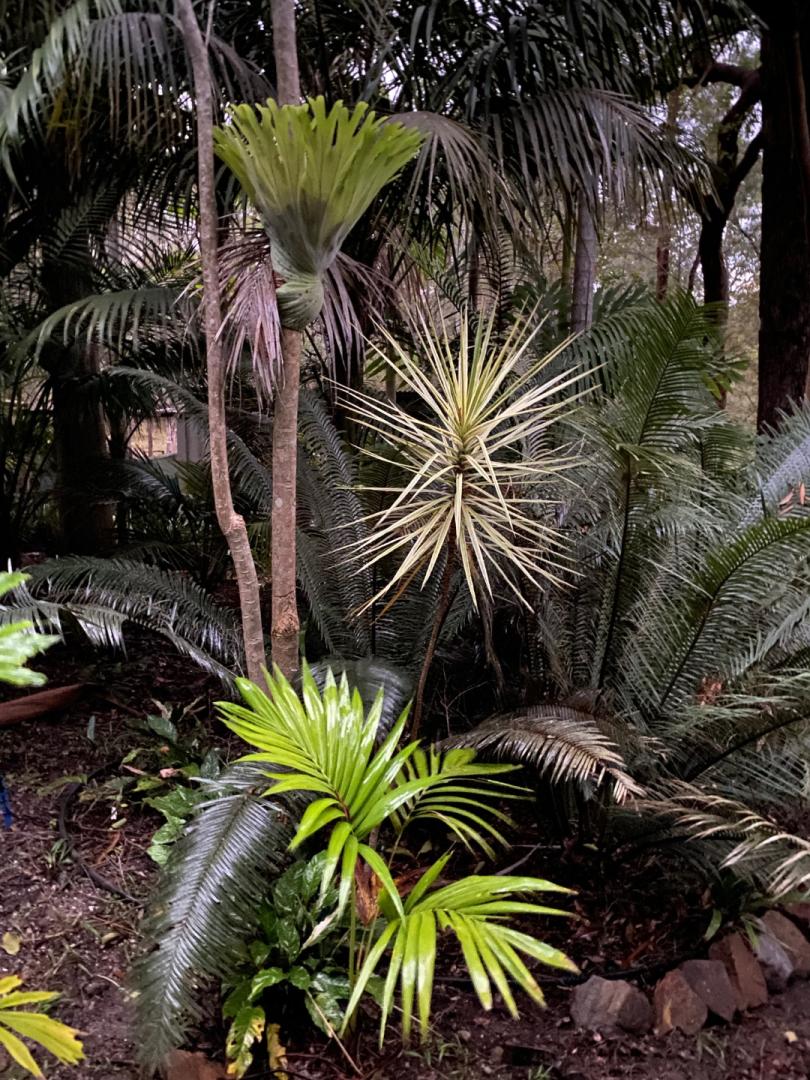
The big ones I think you're asking about are Roystonea oleracea. The smaller palms look like Archontophoenix.
- 1 reply
-
- 1
-

-
Nice you're lucky. This plant has a massive wow factor! Mine is in the ground and probably dead. If I scratch the trunk it's green but it's end of April and no leaves yet...
-

Chamaedorea klotzshciana
happypalms replied to happypalms's topic in DISCUSSING PALM TREES WORLDWIDE
I would say my ones are from your seed. -
Whoa!!! That’s a big change!!
-
Chamaedorea klotzshciana
happypalms replied to happypalms's topic in DISCUSSING PALM TREES WORLDWIDE
Just give them shade and water, they don’t seem to fussy about soil. They are quite fast growing as well! -
We have a dead pinanga declinata
happypalms replied to happypalms's topic in DISCUSSING PALM TREES WORLDWIDE
That’s the problem wet is ok but cold and wet a different story! -

We have a dead pinanga declinata
SeanK replied to happypalms's topic in DISCUSSING PALM TREES WORLDWIDE
I imagine the tropical stuff needs to be dry during cool weather. Vietnam, even at altitude probably only drops to around 15°C. -

Chamaedorea klotzshciana
tim_brissy_13 replied to happypalms's topic in DISCUSSING PALM TREES WORLDWIDE
It’s a great palm and so easy to grow from seed. Your little ones would be from my group of 4 (3 males, 1 female) which pumps out about 300-400 seeds a year now. Germination is close to 100% when I’ve tried although I gifted all of the seed set this year.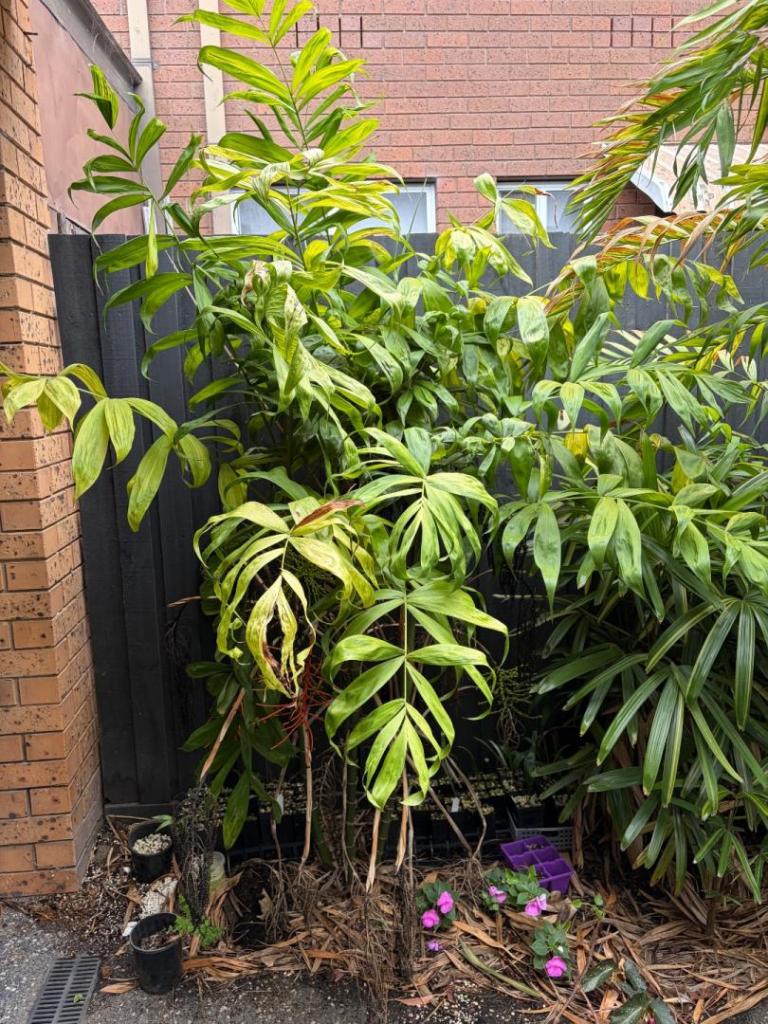
-
A good grower down here too. I had a few three footers some years ago...unfortunately they all became drought casualties just pre covid. Got a heap of new seedlings up now thanks to seed donations from Tim and Colin, thanks guys!
-
We have a dead pinanga declinata
happypalms replied to happypalms's topic in DISCUSSING PALM TREES WORLDWIDE
Possibly to wet it’s in a high irrigation area, with the bio cycle septic water sprinklers, so pretty well much daily with the waste water system. Perhaps cold and continually wet at night. Too late a calyptrogyne ghiesbreghtiana got planted there today being such a wet spot the perfect climate for the ghiesbreghtiana that’s for sure. I might even plant a geonoma atrovirens there as well as its always wet and the coolest part of the garden! -
We have a dead pinanga declinata
tim_brissy_13 replied to happypalms's topic in DISCUSSING PALM TREES WORLDWIDE
Hmm I don’t think it’s temperature related, possibly moisture and/or soil but it would surprise me if it was too moist unless it’s in a really boggy spot. They come from decent altitude in Vietnam and honestly I’d been thinking they were worth a shot even down here miles further away from the equator. I believe there is a thought that P declinata, P annamensis and P baviensis may be lumped all in together as P baviensis so those seedlings I sent you recently may serve to be good replacements. -
 Hi everyone To provide a deeper context to my previous posts about the Stachen Microclimate, I have compiled a comprehensive global comparison. This data covers the period from 2014 to 2025 and pits my 425m (1,394 ft) enclave against some of the most famous palm-growing regions and maritime hubs in the Northern Hemisphere. Scientific Integrity: To ensure the highest accuracy, I have applied a conservative -0.3K safety adjustment to my annual means. This accounts for potential "heat spikes" in my solar-ventilated Bresser station during late afternoon periods when the solar fan might deactivate while the sun is still low. List (2014–2025): Location Elevation Annual Mean Absolute Minimum Santa Barbara (USA) 4 m 15.5 °C -1.0 °C Washington D.C. (USA) 5 m 15.4 °C -14.0 °C Bologna (IT) 37 m 15.0 °C -8.0 °C Venice Lido (IT) 4 m 14.7 °C -7.0 °C Verona (IT) 68 m 14.5 °C -10.0 °C Milan Malpensa (IT) 234 m 13.8 °C -11.0 °C Lyon (FR) 201 m 13.8 °C -10.0 °C Lugano (CH) 273 m 13.7 °C -6.0 °C Magadino (CH) 203 m 12.6 °C -9.0 °C STACHEN (CH) 425 m 12.5 °C* -11.0 °C Seattle (USA) 6 m 12.2 °C -10.0 °C London Heathrow (UK) 25 m 12.1 °C -7.0 °C Brest (FR) 99 m 12.1 °C -7.0 °C Kehelland (Cornwall) 87 m 11.6 °C -5.1 °C Constance (GER) 428 m 11.0 °C -11.1 °C *Adjusted by -0.3K safety margin. Key Observations: Elevation Efficiency: Despite being located 400m+ higher than London, Seattle, or Brest, Stachen outperforms them in annual mean temperature. This highlights the power of our local "Heat-Engine" and the Cfa (Humid Subtropical) characteristics. The "Milan Pattern": Our absolute minimum of -11.0 °C is identical to Milan-Malpensa. We share the same winter resilience and summer heat-sum as the northern Po Valley, but at nearly double the elevation. Regional Anomaly: The 1.5°C gap between Stachen and the regional reference in Constance (same elevation) confirms that our "Solar-Trap" setup and hedge-protection are creating a unique climatic island. Whether you are growing Trachycarpus, Jubaea, or even testing Strelitzia (which successfully overwintered here!), these numbers show that microclimate is often more decisive than latitude. Best regards Mazat
 -
Dypsis onilahensis (upright form)
happypalms replied to joe_OC's topic in DISCUSSING PALM TREES WORLDWIDE
Lucky Hawaii growers!
-

So What Caught Your Eye Today?
Husain replied to The Gerg's topic in DISCUSSING PALM TREES WORLDWIDE
Chamaerops humilis var. argentea opening a new frond


.thumb.png.04b3487b96ff29c55b8a8994b91f62b2.png)