Jump to content
SUPER IMPORTANT - MAJOR IMPROVEMENTS TO PALMTALK - PLEASE READ ×
Upgrade Delayed - Rescheduling Necessary - Info Here ×
  • WELCOME GUEST

    It looks as if you are viewing PalmTalk as an unregistered Guest.

    Please consider registering so as to take better advantage of our vast knowledge base and friendly community.  By registering you will gain access to many features - among them are our powerful Search feature, the ability to Private Message other Users, and be able to post and/or answer questions from all over the world. It is completely free, no “catches,” and you will have complete control over how you wish to use this site.

    PalmTalk is sponsored by the International Palm Society. - an organization dedicated to learning everything about and enjoying palm trees (and their companion plants) while conserving endangered palm species and habitat worldwide. Please take the time to know us all better and register.

    guest Renda04.jpg

Recommended Posts

Posted

A good friend has asked me to recommend a fan palm for her garden.  She is 1/2 block from the ocean, and the location will get a lot of sun -- or as much sun as you can get in Ocean Beach, California.  Initially I was thinking Brahea calcarea aka nitida, but they are really slow growers.  Having seen numerous photos of Pritchardia recently,  they seem an inspired choice.  I'm thinking lush green, large elegant fans.  Which species?

Experts?  What do you recommend?  Pritchardia  or other?  (NO WASHIES!)

Kim Cyr

Between the beach and the bays, Point Loma, San Diego, California USA
and on a 300 year-old lava flow, Pahoa, Hawaii, 1/4 mile from the 2018 flow
All characters  in this work are fictitious. Any resemblance to real persons, living or dead, is purely coincidental.

Posted

I would say it is between beccariana and hillebrandii.  Both have very nice, large leaves.  I have the affinis too but it will have to take a back seat to the other two.

Posted

I personally like P. pacifica the best, but understand they are pretty much the wimps of the genus when it comes to cold.

Larry 

Palm Harbor, FL 10a / Ft Myers, FL 10b

Posted

My Pritchardia list would go as follows:

P viscosa (impossible to get)

P martii

P beccariana

P sp. 'lanai' (not lanaiensis)

P minor

Then a tie between the others

My bias is towards big, round, flat leaves and color on the leaf undersides.  

There are some others that are nice (eriostachys, aylmer robinsonii etc...) but it's hard to know exactly what you're getting and I'm not sure the plants I've seen labeled as such are really what they say.  And there are some that I just don't know too much about (lanigera, shattaueri...)  I have high hopes for P glabrata but mine are too small to know and I've never seen mature one.  Jerry Andersen has a forbesiana that is pretty nice and I think he has seedlings from his tree so you know exactly what you're getting at least.

So if she wants a taller, larger palms, then beccariana is great.  P martii is shorter, and a bit smaller, but has the brownish leaf undersides which I think are cool looking.

Matt

San Diego

0.6 Acres of a south facing, gently sloped dirt pile, soon to be impenetrable jungle

East of Mount Soledad, in the biggest cold sink in San Diego County.

Zone 10a (I hope), Sunset 24

Posted

I would probably just get whatever Pritchardia you can find the best deal on.  They're all so similar, I wouldn't spend a lot of money on the subtle differences if your friend isn't a collector...

Also, I think Pritchardia is a great palm for the location.  They like sun, look lush, and grow reasonably fast.

Jack Sayers

East Los Angeles

growing cold tolerant palms halfway between the equator and the arctic circle...

Posted

I agree with Matt; martii for small, beccarriana for big, (viscosa for jail).

Matt Bradford

"Manambe Lavaka"

Spring Valley, CA (8.5 miles inland from San Diego Bay)

10B on the hill (635 ft. elevation)

9B in the canyon (520 ft. elevation)

Posted

I agree with Matt for agreeing with me.

I disgree with Jack...sort of.  There are a bunch of Pritchardias that look the same.  There are also tons going around with incorrect names, leading people to think more look the same than really look the same.  But beccariana, martii and viscosa are definitely not like the others.  I also remembered that Pritchardia sp. lanai is now lumped with martii (but they leaf coloration and leaf shape is different).

Matt

San Diego

0.6 Acres of a south facing, gently sloped dirt pile, soon to be impenetrable jungle

East of Mount Soledad, in the biggest cold sink in San Diego County.

Zone 10a (I hope), Sunset 24

Posted

(spockvr6 @ Nov. 14 2007,12:24)

QUOTE
I personally like P. pacifica the best, but understand they are pretty much the wimps of the genus when it comes to cold.

Your right Larry, P pacifica and P thurstonii are tops in my book, problem is they would never survive here for long in the ground here unfortunately.

As far as the others, I would go with martii or hillebrandii especially dwarf blue if you can find it.

Don_L    Rancho CUCAMONGA (yes it does exist) 40 min due east of Los Angeles

             USDA Zone 10a

July Averages: Hi 95F, Low 62F

Jan Averages: Hi 68F, Low 45F

Posted

My vote would be Pritchardia beccariana!

Jeff Rood

Posted

(Matt in SD @ Nov. 14 2007,16:36)

QUOTE
I disgree with Jack...sort of.

You Matts in San Diego are all the same.  You think you're so damn superior because you can tell the difference between Pritchardias :D :D :D

Jack Sayers

East Los Angeles

growing cold tolerant palms halfway between the equator and the arctic circle...

Posted

I persnally like the affinis even though the beccariana has larger leaves.

Both Pacifica and Thurstonii probably won't make it anywhere in SoCal.

Now.........that wouldn't keep me from trying, mind you.

After my adonidia 'golden form' croaks this coming winter (that glass is 3/4 empty), I might be tempted.

Coastal San Diego, California

Z10b

Dry summer subtropical/Mediterranean

warm summer/mild winter

Posted

I know you guys already said that thurstonii won't make it in socal, but this is definitely my favorite. I love its seed presentation, much showier than pacifica in my opinion. Probably a little smaller overall though. I have not seen many of the species mentioned, however, so I may like some of these even more.

Parrish, FL

Zone 9B

Posted

My personal favorite is hillebrandtiii.  Yeah, it's the most common, but it's got that great white fuzz on the new leaves that gives it that elegant look.

Or, lanaiensis for a shorter one, without the fuzz.

dave

Let's keep our forum fun and friendly.

Any data in this post is provided 'as is' and in no event shall I be liable for any damages, including, without limitation, damages resulting from accuracy or lack thereof, insult, or lost profits or revenue, claims by third parties or for other similar costs, or any special, incidental, or consequential damages arising out of my opinion or the use of this data. The accuracy or reliability of the data is not guaranteed or warranted in any way and I disclaim liability of any kind whatsoever, including, without limitation, liability for quality, performance, merchantability and fitness for a particular purpose arising out of the use, or inability to use my data. Other terms may apply.

Posted

Your all sounding like a  bunch of palm collectors. If the lady just wants a fan palm, why a Parchardia which would probably be expensive, and you might not even know what your getting? There are lots of other fan palms which would be more available, larger specimans and cheaper, and might even grow better. A palm doesn't have to be rare to make a statement.

Dick

  • Upvote 1

Richard Douglas

Posted

Kim,

I agree that Pritchardia is an ideal choice for her locality.  I've had various species in my yard for 25 years and they've never suffered and look great.  Choose a Hawaiian species and let predicted size be a determinant of your choice.  Also, if there's a possibility of the plant eventually being shaded out by adjacent plantings, Pritchardia tolerate partial sun quite well.

Phil

Jungle Music Palms and Cycads, established 1977 and located in Encinitas, CA, 20 miles north of San Diego on the Coast.  Phone:  619 2914605 Link to Phil's Email phil.bergman@junglemusic.net Website: www.junglemusic.net Link to Jungle Music Palms and Cycads

Posted

(PalmGuyWC @ Nov. 15 2007,04:47)

QUOTE
Your all sounding like a  bunch of palm collectors. If the lady just wants a fan palm, why a Parchardia which would probably be expensive, and you might not even know what your getting? There are lots of other fan palms which would be more available, larger specimans and cheaper, and might even grow better. A palm doesn't have to be rare to make a statement.

Dick

Care to make a suggestion?  I'm open to other ideas...

But I am beginning to infect her with the palm bug. :)   And she recently built a special display area in her yard for all the bromeliads I've given her (another plant disease). :cool:

Kim Cyr

Between the beach and the bays, Point Loma, San Diego, California USA
and on a 300 year-old lava flow, Pahoa, Hawaii, 1/4 mile from the 2018 flow
All characters  in this work are fictitious. Any resemblance to real persons, living or dead, is purely coincidental.

Posted

John, here's P. affinis.  Is this the same palm you're talking about?  I think they look like a raggedy brahea.  Definately not one of my favs.  There are so many other prettier ones in my opinion.

Hawaiia-104.jpg

Matt Bradford

"Manambe Lavaka"

Spring Valley, CA (8.5 miles inland from San Diego Bay)

10B on the hill (635 ft. elevation)

9B in the canyon (520 ft. elevation)

Posted

Here's a photo of a couple of beccarianas in a local arboretum (bizzie in back).

post-279-1195151784_thumb.jpg

Mike Merritt

Big Island of Hawaii, windward, rainy side, 740 feet (225 meters) elevation

165 inches (4,200 mm) of rain per year, 66 to 83 deg F (20 to 28 deg C) in summer, 62 to 80 deg F (16.7 to 26.7 Deg C) in winter.

Posted

leaf detail on one of them:

post-279-1195151856_thumb.jpg

Mike Merritt

Big Island of Hawaii, windward, rainy side, 740 feet (225 meters) elevation

165 inches (4,200 mm) of rain per year, 66 to 83 deg F (20 to 28 deg C) in summer, 62 to 80 deg F (16.7 to 26.7 Deg C) in winter.

Posted

I'm not sure why people think of Martii as a small palm.

Ok, if you see one growing on a 45 degree slope at the top of the Ko`olau Range it is short.

Martii-Short.jpg

But if you go into many of the valleys on the Windward Coast of O`ahu you can find tall ones.  Look close and you can just about make out a human standing at the base of this Martii.

Martii-VeryTall.jpg

Most of the valley Martii's are shorter than this but age has a lot to do w/it.

Here is one of somewhat tall plants on the Ko`olau Summit where the ground is a little more level.

Martii-Tall.jpg

Wai`anae Steve-------www.waianaecrider.com
Living in Paradise, Leeward O`ahu, Hawai`i, USA
Temperature range yearly from say 95 to 62 degrees F
Only 3 hurricanes in the past 51 years and no damage. No floods where I am, No tornados, No earthquakes
No moles, squirrels, chipmunks, deer, etc. Just the neighbors "wild" chickens

Posted

Some palms (Roystonea, Clinostigma) look good when tall. Others (Pritchardia, many Carribean genera) may look better (pers. opinion) when they are small. Here's an image of a pair of martiis at McBryde Garden on Kauai.

post-279-1195159555_thumb.jpg

Mike Merritt

Big Island of Hawaii, windward, rainy side, 740 feet (225 meters) elevation

165 inches (4,200 mm) of rain per year, 66 to 83 deg F (20 to 28 deg C) in summer, 62 to 80 deg F (16.7 to 26.7 Deg C) in winter.

Posted

The previous pic showed the marked bronze color of the undersides of the leaves. This overhead doesn't show it.

post-279-1195159684_thumb.jpg

Mike Merritt

Big Island of Hawaii, windward, rainy side, 740 feet (225 meters) elevation

165 inches (4,200 mm) of rain per year, 66 to 83 deg F (20 to 28 deg C) in summer, 62 to 80 deg F (16.7 to 26.7 Deg C) in winter.

Posted

Isn't P. martii a bit variable depending on what valley or elevation it is found in the ko`olau range on O`ahu?  Earlier they even had different species names but have since been grouped together as one species, P. martii.

Hawaii Island (Big Island), leeward coast, 19 degrees N. latitude, south Kona mauka at approx. 380m (1,250 ft.) and about 1.6 km (1-mile) upslope from ocean.


No record of a hurricane passing over this island (yet!).  

Summer maximum rainfall - variable averaging 900-1150mm (35-45") - Perfect drainage on black volcanic rocky soil.  

Nice sunsets!

Posted

Found another pic of P. affinis I took in Kona, HI.  These things are just wierd.  It looks like they never fully opened their leaves.  Grow damn you, grooooowwww!!!!! ???

post--1195162130_thumb.jpg

Matt Bradford

"Manambe Lavaka"

Spring Valley, CA (8.5 miles inland from San Diego Bay)

10B on the hill (635 ft. elevation)

9B in the canyon (520 ft. elevation)

Posted

Al,

 I think you've put words to my pictures.

  If given deep soil and room to spread it's roots as well as lots of rain the P. martii will grow like a champ.

  I'd bet may others palms would react the same.

  I know many of my so called "rainforest" palms are growing nice, but a lot shorter and thinner of trunk here in my desert.

Wai`anae Steve-------www.waianaecrider.com
Living in Paradise, Leeward O`ahu, Hawai`i, USA
Temperature range yearly from say 95 to 62 degrees F
Only 3 hurricanes in the past 51 years and no damage. No floods where I am, No tornados, No earthquakes
No moles, squirrels, chipmunks, deer, etc. Just the neighbors "wild" chickens

Posted

Matt,

The affinis I agree the affinis I've seen on the big island look weird, like the leaves are only part way open.  But mine looks pretty nice, and I've seen John's (Epicure) and it looks good too.  As much as I don't like the leaf shape as much as the others, it is definitely the healthiest Pritchardia I have (actually maybe the healthiest palm all around).  It looks flawless year round.

Matt

San Diego

0.6 Acres of a south facing, gently sloped dirt pile, soon to be impenetrable jungle

East of Mount Soledad, in the biggest cold sink in San Diego County.

Zone 10a (I hope), Sunset 24

Posted

(Matt in SD @ Nov. 15 2007,23:10)

QUOTE
Matt,

The affinis I agree the affinis I've seen on the big island look weird, like the leaves are only part way open.  But mine looks pretty nice, and I've seen John's (Epicure) and it looks good too.  As much as I don't like the leaf shape as much as the others, it is definitely the healthiest Pritchardia I have (actually maybe the healthiest palm all around).  It looks flawless year round.

Matt

Matt, surely you have recent photos to illustrate this point?  Taken with your new camera?  Pretty please? :)

Kim Cyr

Between the beach and the bays, Point Loma, San Diego, California USA
and on a 300 year-old lava flow, Pahoa, Hawaii, 1/4 mile from the 2018 flow
All characters  in this work are fictitious. Any resemblance to real persons, living or dead, is purely coincidental.

Posted

They seem tough so that's a plus.  But I remember seeing Bob DeJong's before he cut it down.  It was about 20 feet tall and had that not-so-elegant look.  I'm sure yours will grow out of it.

Matt Bradford

"Manambe Lavaka"

Spring Valley, CA (8.5 miles inland from San Diego Bay)

10B on the hill (635 ft. elevation)

9B in the canyon (520 ft. elevation)

Posted

Yeah Matt, my affinis will probably grow out of it's cute phase like you did.

Here's a photo of my affinis for you Kim

IMG_0268.jpg

And martii for comparison

IMG_0281-1.jpg

San Diego

0.6 Acres of a south facing, gently sloped dirt pile, soon to be impenetrable jungle

East of Mount Soledad, in the biggest cold sink in San Diego County.

Zone 10a (I hope), Sunset 24

Posted

If your friend has the room, and it's just one Pritchardia, I still say plant a Hillebrandtii.

Here's mine, mostly recovered after this winter.  I LOVE that white fuzz, gives it that elegant look, to me anyway.

post-208-1195754811_thumb.jpg

Let's keep our forum fun and friendly.

Any data in this post is provided 'as is' and in no event shall I be liable for any damages, including, without limitation, damages resulting from accuracy or lack thereof, insult, or lost profits or revenue, claims by third parties or for other similar costs, or any special, incidental, or consequential damages arising out of my opinion or the use of this data. The accuracy or reliability of the data is not guaranteed or warranted in any way and I disclaim liability of any kind whatsoever, including, without limitation, liability for quality, performance, merchantability and fitness for a particular purpose arising out of the use, or inability to use my data. Other terms may apply.

Posted

A pornoliscious closeup of the growing point.

Whatever she gets, show us!  We'll all drool . . . . .

post-208-1195754900_thumb.jpg

Let's keep our forum fun and friendly.

Any data in this post is provided 'as is' and in no event shall I be liable for any damages, including, without limitation, damages resulting from accuracy or lack thereof, insult, or lost profits or revenue, claims by third parties or for other similar costs, or any special, incidental, or consequential damages arising out of my opinion or the use of this data. The accuracy or reliability of the data is not guaranteed or warranted in any way and I disclaim liability of any kind whatsoever, including, without limitation, liability for quality, performance, merchantability and fitness for a particular purpose arising out of the use, or inability to use my data. Other terms may apply.

Posted

(Dave from So-Cal @ Nov. 22 2007,13:06)

QUOTE
If your friend has the room, and it's just one Pritchardia, I still say plant a Hillebrandtii.

Here's mine, mostly recovered after this winter.  I LOVE that white fuzz, gives it that elegant look, to me anyway.

Wow! That thing is killer! How much sun does it get? I think they look better when they're shaded a little bit. I planted my first in spring (5 Gal.) and expect it to explode this spring and summer. Keep you posted. Mike

Mike Hegger

Northwest Clairemont

San Diego, California

4 miles from coast

Posted

Mike:

The specimen pictured gets full sun to about noon after which it's shaded by a large Cedrus deodar tree to the west.

They're not as fast as Washies, but they're still reasonable.

dave

Let's keep our forum fun and friendly.

Any data in this post is provided 'as is' and in no event shall I be liable for any damages, including, without limitation, damages resulting from accuracy or lack thereof, insult, or lost profits or revenue, claims by third parties or for other similar costs, or any special, incidental, or consequential damages arising out of my opinion or the use of this data. The accuracy or reliability of the data is not guaranteed or warranted in any way and I disclaim liability of any kind whatsoever, including, without limitation, liability for quality, performance, merchantability and fitness for a particular purpose arising out of the use, or inability to use my data. Other terms may apply.

  • 2 weeks later...
Posted

To follow up: I went shopping today and bought my friend a sweet H. beccariana on sale.  I'm taken with the idea of very large round fans.  This will be a nice Christmas gift, she'll love it!

Kim Cyr

Between the beach and the bays, Point Loma, San Diego, California USA
and on a 300 year-old lava flow, Pahoa, Hawaii, 1/4 mile from the 2018 flow
All characters  in this work are fictitious. Any resemblance to real persons, living or dead, is purely coincidental.

  • 2 weeks later...
Posted

Ok, ok I bought a pacifica today :D   Randy

"If you need me, I'll be outside" -Randy Wiesner Palm Beach County, Florida Zone 10Bish

Posted

Aloha Kim,

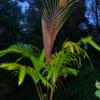
Here is a picture of a luscious Pritchardia martii growing in the Castro district of SF.  Hawaiian Pritchardias seem to adore the Bay and mild, coastal Northern Californian gardens.

Posted

Jacob . . .

S W O O O O O O N N N N N ! ! ! !

Let's keep our forum fun and friendly.

Any data in this post is provided 'as is' and in no event shall I be liable for any damages, including, without limitation, damages resulting from accuracy or lack thereof, insult, or lost profits or revenue, claims by third parties or for other similar costs, or any special, incidental, or consequential damages arising out of my opinion or the use of this data. The accuracy or reliability of the data is not guaranteed or warranted in any way and I disclaim liability of any kind whatsoever, including, without limitation, liability for quality, performance, merchantability and fitness for a particular purpose arising out of the use, or inability to use my data. Other terms may apply.

Posted

I have a P. thurstonii planted in my yard in full sun.  We had frost a couple of nights last winter and it was fine.  It has also been through 3 hurricanes and did just fine.  And it was planted as a 3-gallon size just 4 months before the first hurricane!

Palmmermaid

Kitty Philips

West Palm Beach, FL

Posted

(Dave from So-Cal @ Dec. 10 2007,02:51)

QUOTE
Jacob . . .

S W O O O O O O N N N N N ! ! ! !

Awe shucks, thanks Dave.  I love seeing our special Hawaiian native species thrive and at the same time garner appreciation and popularity outside the islands.  Many other ornamental species such as Koa (Acacia koa) and native Hibiscus, for example, are remarkably well adapted to mild coastal mediterranean-ish and similar garden locales.  

I haven't been in years, (last there in 2002) the Mildred Mathias Botanical Garden on the UCLA campus in Westwood, CA hosts many well-grown Hawaiian native plants, it's worth a visit!  *hint* Esp. to my palm/plant enthusiast friends in So. Cal.  

The a good number of native Hawaiian Pritchardia species that still occur naturally are found in montane habitats that experience high humidity, sometimes even in windswept locales, and temperatures between 80-50F.  This really lends them to growing in mild coastal gardens, father north (or south for your southern-hemisphere folks) than one would traditionally think.

And just to shoot from the hip, I have a hypothesis that many Hawaiian Pritchardias have some genetic insurance against cold winter temperatures because it's an accepted fact that Hawai`i was a cooler place many thousands of years ago when sea levels were much lower and our planet had more glaciers.

Create an account or sign in to comment

You need to be a member in order to leave a comment

Create an account

Sign up for a new account in our community. It's easy!

Register a new account

Sign in

Already have an account? Sign in here.

Sign In Now


  • Recently Browsing

    • No registered users viewing this page.
×
×
  • Create New...