Skip to content
View in the app

A better way to browse. Learn more.

PalmTalk

A full-screen app on your home screen with push notifications, badges and more.

To install this app on iOS and iPadOS
  1. Tap the Share icon in Safari
  2. Scroll the menu and tap Add to Home Screen.
  3. Tap Add in the top-right corner.
To install this app on Android
  1. Tap the 3-dot menu (⋮) in the top-right corner of the browser.
  2. Tap Add to Home screen or Install app.
  3. Confirm by tapping Install.

WELCOME GUEST

It looks as if you are viewing PalmTalk as an unregistered Guest.

Please consider registering so as to take better advantage of our vast knowledge base and friendly community.  By registering you will gain access to many features - among them are our powerful Search feature, the ability to Private Message other Users, and be able to post and/or answer questions from all over the world. It is completely free, no “catches,” and you will have complete control over how you wish to use this site.

PalmTalk is sponsored by the International Palm Society. - an organization dedicated to learning everything about and enjoying palm trees (and their companion plants) while conserving endangered palm species and habitat worldwide. Please take the time to know us all better and register.
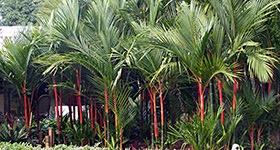
guest Renda04.jpg

Archontophoenix myolensis

Featured Replies

Visited the habitat with mikey and was surprised to see how little habitat there was for this palm to survive. Maybe 30-40 in habitat in an area along a creek 400m long by 40m wide, extremely fragile enviroment as on one end the land has been cleared

probably will only survive in collections. hopefully it will be protected.

So if you have one, appreciate how fragile their existance is in the habitat

enjoy

Colin

post-197-1220859046_thumb.jpg

post-197-1220859079_thumb.jpg

post-197-1220859102_thumb.jpg

post-197-1220859126_thumb.jpg

post-197-1220859190_thumb.jpg

coastal north facing location

100klm south of Sydney

NSW

Australia

Is the habitat protected, Colin? Pity.... if not...

Maybe we should distribute the seeds when or if they are available....

Regards, Ari :)

Ari & Scott

Darwin, NT, Australia

-12°32'53" 131°10'20"

They grow along the creek near Myola. I know the exact palms you've photographed Colin, becasue I photographed them myself. That creek goes into the Baron River, and supposedly there are some along the Baron river as well. They would be hard to get at, that's for sure. All in all A myolensis is the rarest in the genus. I have a few seedlings I germinated from RPS seed. I now have them all. I've been after this species for ages.

Best regards

Tyrone

Millbrook, "Kinjarling" Noongar word meaning "Place of Rain", Rainbow Coast, Western Australia 35S. Warm temperate. Csb Koeppen Climate classification. Cool nights all year round.


Isn't it ironic... that you got the seeds from RPS when it is Australian native....

Regards, Ari :)

Ari & Scott

Darwin, NT, Australia

-12°32'53" 131°10'20"

I have a few seedlings I germinated from RPS seed.

WIll you post pics of your seedlings so I can compare to mine?

Thanks

For the boys downunder,

I have two growing in my collection and they appear to be doing quite well. One is perhaps in too much shade, and I am tempted to transplant it into a more sunny spot. I was not aware that they are so rare and in such a fragile environment. It makes mine all the more important to me.

I have grown them up from 4" seedlings and now they are about 5' overall.

Rick Leitner

Fort Lauderdale, Florida

26.07N/80.15W

Zone 10B

Average Annual Low 67 F

Average Annual High 84 F

Average Annual Rainfall 62"


Riverfront exposure, 1 mile from Atlantic Ocean

Part time in the western mountains of North Carolina

Gratefully, the best of both worlds!

Thanks for the info. I have 2, and didn't know they were that endangered! :o

"If you need me, I'll be outside" -Randy Wiesner Palm Beach County, Florida Zone 10Bish

I have two in ground, the one in sun is a real beauty, the one in shade not so flash.

Who else has this endangered palm ?

Happy Gardening

Cheers,

Wal

Queensland, Australia.

Isn't it ironic... that you got the seeds from RPS when it is Australian native....

Regards, Ari :)

That's true Ari. Noone stocks it at all. Seeds are the only way. They travelled all the way to Europe to end back here in Oz.

This one has an unusual downward curve on the leaflet right at the tip. Real nice. I'd imagine part to fullsun with heaps of water would suit this species really well.

I'll take some photos of my seedlings soon.

Another thing about this species. Some have said that it will be more cool tolerant than a lot of the others in the genus. Myola though in the mountains is not that high in elevation. A purpurea and A maxima are at much higher altitudes, and A alexandrae in the mountains around Eungella quite a way south occurs at a much cooler spot and higher altitude than Myola. I think A myolensis may be not that cold tolerant actually.

Best regards

Tyrone

Millbrook, "Kinjarling" Noongar word meaning "Place of Rain", Rainbow Coast, Western Australia 35S. Warm temperate. Csb Koeppen Climate classification. Cool nights all year round.


Anyone got seedling to spare?? If they are from Northern Qld, I can grow them...

Regards, Ari :)

Ari & Scott

Darwin, NT, Australia

-12°32'53" 131°10'20"

I'm glad I picked up a one-gallon myola last summer. I was thinking of getting another, to plant with a maxima and a tuckeri.

Zone 9b/10a, Sunset Zone 22

7 miles inland. Elevation 120ft (37m)

Average annual low temp: 30F (-1C)

Average annual rainfall: 8" (20cm)

Got 4 seedlings in a 5 gal. Hope to have them in the ground next year. I can get more...should I?

Huntington Beach, CA

USDA Zone 10a/10b

Sunset Zone 24

Gots two now trunking. :)

Colin, this surprises me to hear. From what I remember about Australia when I lived there for my short stay, Auzzies were VERY much all conservationist. I am amazed people are clearing habitat there.

Len

Vista, CA (Zone 10a)

Shadowridge Area

"Show me your garden and I shall tell you what you are."

-- Alfred Austin

Thanks for all the info on this palm. I ordered 100 seeds from RPS last year and I'm not sure how many plants I have now, but I would guess around 40-50,

Do these need a lot of sun? I planted 7 of them in a s spot amongst some trees where they get dappled sunlight through the canopy. Is that a bad location? Maybe I'll try planting the next few plants in more sun. Tuckeri has always been my favorite, but I have a feeling that myolensis is going to be my new favorite Archontophoenix. :)

Formerly Jeff in Costa Rica
 

Gots two now trunking. :)

Colin, this surprises me to hear. From what I remember about Australia when I lived there for my short stay, Auzzies were VERY much all conservationist. I am amazed people are clearing habitat there.

Capitalist pigs are everywhere Len, we are not immune here no way. The dollar versus myola.

Happy Gardening

Cheers,

Wal

Queensland, Australia.

I got four of the beauties last year from Kapohoin Hawaii. I rec'd them as seedlings and they are bustin out of three gallon pots right now at 5 feet tall.

I moved them out of my 50% shadehouse to full sun about four months ago with not a bit of burn. I've kept them in a low spot where they have constant moisture and they have really taken off.

Mike Harris

Caribbean Palms Nursery

Loxahatchee, Florida USA

Gots two now trunking. :)

Colin, this surprises me to hear. From what I remember about Australia when I lived there for my short stay, Auzzies were VERY much all conservationist. I am amazed people are clearing habitat there.

Len, most of the clearing happened more than 100 years ago when our early settlers decided to 'improve' these areas and turn them into farmland. If lush rainforest and palms grow there, then it must be great for crops right? Vast areas of coastal Queensland have been destroyed over the last century, mainly for planting sugar cane. Now they are converting the cane fields into housing developments. I often wonder what is looked like before farmers came along.

Daryl

Gold Coast, Queensland Latitude 28S. Mild, Humid Subtropical climate. Rainfall - not consistent enough!

They grow along the creek near Myola. I know the exact palms you've photographed Colin, becasue I photographed them myself. That creek goes into the Baron River, and supposedly there are some along the Baron river as well. They would be hard to get at, that's for sure. All in all A myolensis is the rarest in the genus. I have a few seedlings I germinated from RPS seed. I now have them all. I've been after this species for ages.

Best regards

Tyrone

Hi Tyrone,

the only way this 'sp' would get beside the Barron River is

if Birds drop the seeds, due to Myola creeks water running in another

direction the Barron feeds the creek, (just so you know).

Cheers Mikey

Edited by calyptrocalyx&licuala freck

M.H.Edwards

"Living in the Tropic's

And loving it".............. smilie.gif

They grow along the creek near Myola. I know the exact palms you've photographed Colin, becasue I photographed them myself. That creek goes into the Baron River, and supposedly there are some along the Baron river as well. They would be hard to get at, that's for sure. All in all A myolensis is the rarest in the genus. I have a few seedlings I germinated from RPS seed. I now have them all. I've been after this species for ages.

Best regards

Tyrone

Hi Tyrone,

the only way this 'sp' would get beside the Barron River is

if Birds drop the seeds, due to Myola creeks water running in another

direction the Barron feeds the creek, (just so you know).

Cheers Mikey

smarty pants...............go the broncos

Happy Gardening

Cheers,

Wal

Queensland, Australia.

They grow along the creek near Myola. I know the exact palms you've photographed Colin, becasue I photographed them myself. That creek goes into the Baron River, and supposedly there are some along the Baron river as well. They would be hard to get at, that's for sure. All in all A myolensis is the rarest in the genus. I have a few seedlings I germinated from RPS seed. I now have them all. I've been after this species for ages.

Best regards

Tyrone

Hi Tyrone,

the only way this 'sp' would get beside the Barron River is

if Birds drop the seeds, due to Myola creeks water running in another

direction the Barron feeds the creek, (just so you know).

Cheers Mikey

smarty pants...............go the broncos

:lol::lol::lol:

You know me Wal, lots of info to share

Oh the Bronco's, :mrlooney: Like I said before Wal, MANLY

will be the winners in the end. :rolleyes:

M.H.Edwards

"Living in the Tropic's

And loving it".............. smilie.gif

Mikey, I never really checked on that detail. The Barron is not far away from that area, so I just assumed that detail. It's unusual for a large river system to supply water to a smaller permanent stream. Normally it's the other way around. Where does that creek go too then? There's so much to explore up there. My favourite spot on earth. I should move. What am I doing here???????????????? :(

Best regards

Tyrone

Millbrook, "Kinjarling" Noongar word meaning "Place of Rain", Rainbow Coast, Western Australia 35S. Warm temperate. Csb Koeppen Climate classification. Cool nights all year round.


Hi Tyrone,

You should make the move Dude we could have lots and lots of Fun that I can guarantee that for sure, that water body actually supplies the farms and various

House’s within the area. I do think that there would be some of the ‘sp’ we are talking about within the Barron district the only thing is we’d have to wait until these babies flower to really be able to key them out.

Cheers Mikey.

M.H.Edwards

"Living in the Tropic's

And loving it".............. smilie.gif

I planted a nice 2 gallon pot that was probably 2' overall height last year and is now about 4' in height with a few inches of trunk. I love this species for the lime green crownshaft but didn't realize just how rare they were. I have mine growing about 6 feet from a A maxima and 6 feet from there a triple A cunninghamiana that is now seeding and a small A purpurea growing not far from them either. When all of them start to flower hopefully in about 5 years what are the chances that any ripe seed from any of them might not be pure but a cross from either of them? This may seem like a stupid question but It would be nice to know that any A myolensis seeds would be pure.

Don

Don_L    Rancho CUCAMONGA (yes it does exist) 40 min due east of Los Angeles

             USDA Zone 10a

July Averages: Hi 95F, Low 62F

Jan Averages: Hi 68F, Low 45F

Hi Tyrone,

You should make the move Dude we could have lots and lots of Fun that I can guarantee that for sure, that water body actually supplies the farms and various

House’s within the area. I do think that there would be some of the ‘sp’ we are talking about within the Barron district the only thing is we’d have to wait until these babies flower to really be able to key them out.

Cheers Mikey.

Mikey, it is just sooooo tempting to move. I had the opportunity to move to Brissie earlier this year but turned it down. It's family that keeps me put at the moment. I think we'd have a great old time if I moved over. Absolute paradise.

Best regards

Tyrone

Millbrook, "Kinjarling" Noongar word meaning "Place of Rain", Rainbow Coast, Western Australia 35S. Warm temperate. Csb Koeppen Climate classification. Cool nights all year round.


I planted a nice 2 gallon pot that was probably 2' overall height last year and is now about 4' in height with a few inches of trunk. I love this species for the lime green crownshaft but didn't realize just how rare they were. I have mine growing about 6 feet from a A maxima and 6 feet from there a triple A cunninghamiana that is now seeding and a small A purpurea growing not far from them either. When all of them start to flower hopefully in about 5 years what are the chances that any ripe seed from any of them might not be pure but a cross from either of them? This may seem like a stupid question but It would be nice to know that any A myolensis seeds would be pure.

Don

Don, cunninghamiana cross with alexandrae all the time very easily in cultivation. In fact I have a couple I bought as alexanders when I was first getting into palms and didn't know how to ID correctly. I call them Bangalers or Alexandalows. But in the wild I noticed that A alexandrae on the lowlands, A purpurea, and A myolensis seemed to be at different stages of development at the same time of year. Now there distributions don't seem to cross and they are at different elevations so the elevation and amount of heat may be the determining factor. I did see A maxima in the wild and I mistook them for alexandrae. A maxima are hard to come by unless you're on a forestry track at high elevation. I went on a 4WD forest tour and just before we came to Oraniopsis at approx the 800m asl I saw some A maxima but not many. I can't remember if they were in flower.

My thoughts are that the different species are at different stages of flower/fruit development, but they could cross over if grown at similar altitudes.

If your A myolensis was beginning to flower I would cut off your A cunninghamiana flowers, and/or your maxima flowers too to preserve the species. If you can get your purpurea to flower you're doing very well. I would find it very hard to cut A purpurea flowers off though. They're rare in there own right, found only on 3 mountains above 800m asl.

Best regards

Tyrone

Millbrook, "Kinjarling" Noongar word meaning "Place of Rain", Rainbow Coast, Western Australia 35S. Warm temperate. Csb Koeppen Climate classification. Cool nights all year round.


In my yard, in Southern California (USA), my myolensis is growing at a slower rate than my cunninghamiana. both palms were planted at the same time at approx. the same size. Especially during the cool winter, my myolensis nearly went dormant while my cunni kept pushing leaves out. Is the myolensis slower growing all around and/or requires more heat than the cunninghamiana?

Palms are life, the rest is details.

In my yard, in Southern California (USA), my myolensis is growing at a slower rate than my cunninghamiana. both palms were planted at the same time at approx. the same size. Especially during the cool winter, my myolensis nearly went dormant while my cunni kept pushing leaves out. Is the myolensis slower growing all around and/or requires more heat than the cunninghamiana?

Yes and Yes.

Mine was/is the slowest of all the Archos, which reminds me, I must get another tuckeri.

Happy Gardening

Cheers,

Wal

Queensland, Australia.

I planted a nice 2 gallon pot that was probably 2' overall height last year and is now about 4' in height with a few inches of trunk. I love this species for the lime green crownshaft but didn't realize just how rare they were. I have mine growing about 6 feet from a A maxima and 6 feet from there a triple A cunninghamiana that is now seeding and a small A purpurea growing not far from them either. When all of them start to flower hopefully in about 5 years what are the chances that any ripe seed from any of them might not be pure but a cross from either of them? This may seem like a stupid question but It would be nice to know that any A myolensis seeds would be pure.

Don

Don, cunninghamiana cross with alexandrae all the time very easily in cultivation. In fact I have a couple I bought as alexanders when I was first getting into palms and didn't know how to ID correctly. I call them Bangalers or Alexandalows. But in the wild I noticed that A alexandrae on the lowlands, A purpurea, and A myolensis seemed to be at different stages of development at the same time of year. Now there distributions don't seem to cross and they are at different elevations so the elevation and amount of heat may be the determining factor. I did see A maxima in the wild and I mistook them for alexandrae. A maxima are hard to come by unless you're on a forestry track at high elevation. I went on a 4WD forest tour and just before we came to Oraniopsis at approx the 800m asl I saw some A maxima but not many. I can't remember if they were in flower.

My thoughts are that the different species are at different stages of flower/fruit development, but they could cross over if grown at similar altitudes.

If your A myolensis was beginning to flower I would cut off your A cunninghamiana flowers, and/or your maxima flowers too to preserve the species. If you can get your purpurea to flower you're doing very well. I would find it very hard to cut A purpurea flowers off though. They're rare in there own right, found only on 3 mountains above 800m asl.

Best regards

Tyrone

Thanks Tyrone. I should say I hope my myolensis, maxima, and purpurea get to the flowering stage some day and if they do I'll make sure to cut off the flowers of the species that I don't want at the time. I sure hope that these species are presereved in their natural setting. Thanks for the photos

Don

Don_L    Rancho CUCAMONGA (yes it does exist) 40 min due east of Los Angeles

             USDA Zone 10a

July Averages: Hi 95F, Low 62F

Jan Averages: Hi 68F, Low 45F

I think if you look hard and long enough you'll convince yourself they are all different... sucked in again guys

Two questions:

Is myolensis slower than purpurea?

Were maxima, myolensis, purpurea and tuckeri all lumped under alexandrae before 1994?

Zone 9b/10a, Sunset Zone 22

7 miles inland. Elevation 120ft (37m)

Average annual low temp: 30F (-1C)

Average annual rainfall: 8" (20cm)

Where were you guys when I had probably a 1000 of them from wild collected seed? :winkie: I must have sold 100 of them to the property owner when I sold out my nursery back in April.

If anyone wants some, I can donate seed from a fruiting specimen at Fairchild, which in turn was wild collected and is not near other Archontophoenix (about 100 yards from A. purpurea that are not flowering). They are not fruiting heavily but Id like to see it grown more! It grows very well in Central and South Florida, and under canopy has taken mid-20s in Central Florida on more than one occasion.

Christian Faulkner

Venice, Florida - South Sarasota County.

www.faulknerspalms.com


Μολὼν λάβε

I have several A. myolensis seedlings here, germinated from seed and they are all doing just fine.

At this point (40 cm tall) it is impossible to diferentiate them from the other Archontophoenix species, unless reading the tag.

What is their main differentiating character when adults? the flowers?

Sirinhaém beach, 80 Km south of Recife - Brazil

Tropical oceanic climate, latitude 8° S

Temperature extremes: 25 to 31°C

2000 mm average rainfall, dry summers

  • Author

Hi All

Some other comments about the palm

It grows along a stream in mottled light.

The seed was collected by a well known (now retired) nurseryman whose main business was palms.

His motivation was to spread them far and wide to ensure survival, who knows we may be getting seed from the US one day to replant the area

Germinating seed and replanting around the area would probably be a good idea.

Until visiting them in habitat, i had no idea how fragile their existence was.

So enjoy yours and protect them if you have them, because yours maybe the one that saves the species. Seed from the wild may not be available again.

There is probably many more species of palms in a similar predictament.

If anyone knows of any with pictures and details of habitat start a new topic so we can be more aware.

regards

colin

coastal north facing location

100klm south of Sydney

NSW

Australia

Mod Edit:

Post deleted. For Sale items must be placed in the Palm Exchange by IPS Members only.

Edited by PALM MOD

I think this is myolensis and it is putting out some seed for the first time. It looks like I might get a good batch so I'll try to distribute some when they are ready. This palm was given to me as a seedling my first visit to a S.F. Palm society meeting about 8 years ago. Sounds like it may be less common than I thought.

IMG_0358.jpg.

I think this is myolensis and it is putting out some seed for the first time. It looks like I might get a good batch so I'll try to distribute some when they are ready. This palm was given to me as a seedling my first visit to a S.F. Palm society meeting about 8 years ago. Sounds like it may be less common than I thought.

IMG_0358.jpg.

Great doberman timing Tim.

Happy Gardening

Cheers,

Wal

Queensland, Australia.

Hey guys... thanks to and at the behest of my good friend TIKIRICK... I have 3 in my collection. Purchased them from Jeff Searle's nursery. They seem to be happy and are about 5' tall. After obtaining them, I did some research and found that they are barely surviving in a rather endangered enviroment. The following excerpt was found on Wikipedia...I hope there are more than the aricle would lead you to believe:

Archontophoenix myolensis, the Myola Palm, is a species of flowering plant in the Arecaceae family. It is endemic to Australia. It is threatened by habitat loss. It occurs in the Myola area and the Black Mountain in the Kuranda range in the Atherton Tablelands, Queensland. The total population is seriously threatened by habitat clearance and is estimated to contain fewer than 100 mature trees and remains unprotected. Regeneration is good.[/size]

David Currie

Tamarac, FL ....suburban Fort Lauderdale

Zone 10B

I did some research and found that they are barely surviving in a rather endangered enviroment. The following excerpt was found on Wikipedia...I hope there are more than the aricle would lead you to believe:

Archontophoenix myolensis, the Myola Palm, is a species of flowering plant in the Arecaceae family. It is endemic to Australia. It is threatened by habitat loss. It occurs in the Myola area and the Black Mountain in the Kuranda range in the Atherton Tablelands, Queensland. The total population is seriously threatened by habitat clearance and is estimated to contain fewer than 100 mature trees and remains unprotected. Regeneration is good.[/size]

Wikipedia sounds correct to me. I've heard that there maybe 100 individuals left, but I wonder if anyone's actually gone out there, walked up the creeks and tributaries and counted them. It could be a wild stab in the dark, and the figure could even be less. :(

Best regards

Tyrone

Millbrook, "Kinjarling" Noongar word meaning "Place of Rain", Rainbow Coast, Western Australia 35S. Warm temperate. Csb Koeppen Climate classification. Cool nights all year round.


  • Author

Hi Tyrone

Mikey and i went along the creek on the lowere side of the bridge and there was very few, we could see the others, there was not anywhere near 100 there.We did not find 40 there may have been some small ones in the denser part of the small area so we allowed for them in our assessment, however there were a few seedling around 1 only palm on the side of the creek edge that we could see, hope the rainy season does not wash them away

regards

colin

coastal north facing location

100klm south of Sydney

NSW

Australia

Colin, that sounds terrible. It's worse than officially thought. What can we do????? That area needs replanting. I wonder if the local council has any forest regeneration policy that would allow controlled collecting of seed, and then reestablishment of plants back into the creek system. That's bad Colin.

I'm going to protect my little ones. These are going to need planting in the ideal location for future seed production as a conservation measure. Maybe I should find a permanent creek near Perth and introduce them to the banks. Only kidding.

I wonder if the authorities read Wikipedia and think "100 is fine". 40 is IUCN red list material. :(

Best regards

Tyrone

Millbrook, "Kinjarling" Noongar word meaning "Place of Rain", Rainbow Coast, Western Australia 35S. Warm temperate. Csb Koeppen Climate classification. Cool nights all year round.


Create an account or sign in to comment

Account

Navigation

Configure browser push notifications

Chrome (Android)
  1. Tap the lock icon next to the address bar.
  2. Tap Permissions → Notifications.
  3. Adjust your preference.
Chrome (Desktop)
  1. Click the padlock icon in the address bar.
  2. Select Site settings.
  3. Find Notifications and adjust your preference.