
Jump to content
  • WELCOME GUEST

    It looks as if you are viewing PalmTalk as an unregistered Guest.

    Please consider registering so as to take better advantage of our vast knowledge base and friendly community.  By registering you will gain access to many features - among them are our powerful Search feature, the ability to Private Message other Users, and be able to post and/or answer questions from all over the world. It is completely free, no “catches,” and you will have complete control over how you wish to use this site.

    PalmTalk is sponsored by the International Palm Society. - an organization dedicated to learning everything about and enjoying palm trees (and their companion plants) while conserving endangered palm species and habitat worldwide. Please take the time to know us all better and register.
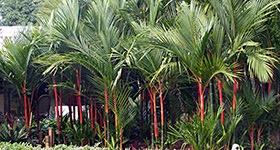
    guest Renda04.jpg

why is there orange sap oozing from coconut tree?


Recommended Posts

Posted

For the last month by now my coconut tree has been oozing sap from its trunk, i dont know

Why or what to do with it. If anyone could give me advice that be helpful.

IMG_0531.jpeg

  • Like 1
Posted

This is what Gemini/Google AI says:

In general, an orange-colored sap or slime on a coconut palm trunk is caused by a mix of bacteria and fungi that are feeding on the tree's leaking sap

. While the slime itself is usually harmless, it indicates an underlying problem that could be serious. The underlying issue may be a simple, non-threatening injury, but it could also be a symptom of a lethal trunk rot disease. 

 
Harmless orange goo
 
  • Cause: The orange color is often caused by a yeast in the genus Cryptococcus, which produces the pigment carotene (the same pigment found in carrots). It is not a parasite but simply a harmless growth feeding on the tree's leaking sugary sap, often after an injury.
  • Conditions: This phenomenon, sometimes called "orange goo" or "orange slime," is more common during cool, wet weather when spring sap flow is high.
  • Outcome: The goo typically dries up during warmer, drier weather. 
  •  
Serious diseases associated with sap leakage
 
If the orange-colored substance is accompanied by other symptoms, such as foul odors or soft, dark patches on the trunk, the palm could be infected with a lethal fungal disease. 
 
Thielaviopsis trunk rot
 
  • Symptoms: This fungus causes a soft, black, and slowly expanding decay in the trunk, leading to the oozing of darkly pigmented liquid. In advanced cases, the inside of the trunk can hollow out. The rot can progress without any visible signs of the tree's fronds being affected.
  • Cause: The fungus Thielaviopsis paradoxa infects palms through fresh wounds on the trunk. This can happen from careless pruning or other mechanical injuries.
  • Prognosis: An infected palm is incurable and will eventually collapse without warning. The diseased palm should be removed immediately to prevent the infection from spreading. 
  •  
Ganoderma butt rot
 
  • Symptoms: This lethal soil-borne fungus rots the palm's lower trunk. While orange sap leakage is not a primary symptom, the presence of orange or tan "conks" (the fungal fruiting body) emerging from the trunk indicates an advanced, incurable infection.
  • Prognosis: A palm with Ganoderma butt rot will eventually die and should be removed, as the conks release spores that can spread the disease. 
  •  
What to do if you see orange sap
 
  • Inspect the tree: Closely examine the trunk around the orange-colored area for any signs of physical damage, discoloration, or softness.
  • Monitor for other symptoms: Look for wilting leaves, sunken black or dark-colored patches, or any conk formations.
  • Consult an arborist: If you notice any of these serious symptoms, contact a certified arborist, especially one with experience in diagnosing palm diseases. A professional can properly assess the tree and determine the best course of action. 
  • Like 2
  • Upvote 1

Lakeland, FLUSDA Zone 2023: 10a  2012: 9b  1990: 9a | Record Low: 20F/-6.67C (Jan. 1985, Dec.1962)

Posted

It’s what happens when you try to grow a coconut palm in Jacksonville.

  • Upvote 1
Posted
16 hours ago, Johnny Palmseed said:

It’s what happens when you try to grow a coconut palm in Jacksonville.

This

Meg

Palms of Victory I shall wear

Cape Coral (It's Just Paradise)
Florida
Zone 10A on the Isabelle Canal
Elevation: 15 feet

I'd like to be under the sea in an octopus' garden in the shade.

Posted

@Maddox Gardening-youtube it looks like you cut off the old frond "boot" too soon.  My guess is that you peeled it back and then cut it off with a knife or scissors/shears.  It probably tore a bunch of not-yet-dead vascular tissue, so the palm will continue to weep until it eventually kills off the base section of the next frond.  Generally you want to leave the lower bases on the palm until they fall off by themselves, to avoid this kind of damage.  Torn tissue is a good way to get a fungal or bacterial infection.

My guess is that it'll be dead from frost before the next frond finishes growing out, unless you take some heroic steps to keep it warm in the winter.  That doesn't have anything to do with the weeping, it's just that coconuts are only really hardy into the upper 30s.  I lost two Cocos that size from a single frost around 28F.  There are a few Cocos in the Orlando area, but in Jax?  Nope.  If you like the Cocos look, consider a Beccariophoenix Alfredii as a hardier option.

  • Upvote 1
Posted
3 minutes ago, Merlyn said:

@Maddox Gardening-youtube it looks like you cut off the old frond "boot" too soon.  My guess is that you peeled it back and then cut it off with a knife or scissors/shears.  It probably tore a bunch of not-yet-dead vascular tissue, so the palm will continue to weep until it eventually kills off the base section of the next frond.  Generally you want to leave the lower bases on the palm until they fall off by themselves, to avoid this kind of damage.  Torn tissue is a good way to get a fungal or bacterial infection.

My guess is that it'll be dead from frost before the next frond finishes growing out, unless you take some heroic steps to keep it warm in the winter.  That doesn't have anything to do with the weeping, it's just that coconuts are only really hardy into the upper 30s.  I lost two Cocos that size from a single frost around 28F.  There are a few Cocos in the Orlando area, but in Jax?  Nope.  If you like the Cocos look, consider a Beccariophoenix Alfredii as a hardier option.

Actually that's exactly what I did, i removed the boot because there was a huge ant's nest inside. im planning to wrap the trunk with heating cables and frost cloth and blankets. It's surrounded by 3 walls and a oak tree canopy. I also had the idea of putting a bunch of water barrels in the area. To warm it up a couple degrees. i am used to this cold and have grown mango trees and soursop in this microclimate, both have survived the winter here just fine.

Posted
57 minutes ago, Maddox Gardening-youtube said:

Actually that's exactly what I did, i removed the boot because there was a huge ant's nest inside. im planning to wrap the trunk with heating cables and frost cloth and blankets. It's surrounded by 3 walls and a oak tree canopy. I also had the idea of putting a bunch of water barrels in the area. To warm it up a couple degrees. i am used to this cold and have grown mango trees and soursop in this microclimate, both have survived the winter here just fine.

In general ants love to nest in the old boots.  For some reason sugar ants (or ones that size) loved my Queens, and carpenter ants love the Chinese fans...no clue why.  Unless it's a nuisance pest (like nesting in the palm and invading your house) I just leave the ants alone.  If you have to take out a nest I'd do it with a bait (like Amdro Fire Ant bait) instead of slicing off a frond base early.

Posted

Maybe fill a small spray bottle with Hydrogen Peroxide and spray the effected area of the palm 3x per week for two weeks. That being say, I wish you luck. I don't know how cold the soil gets there, but if it drops below 65°F, the palm may show problems.

Posted

Now that you mention it @Merlyn, I've seen this happen when I pulled an "old" leaf base off of my Maypan when all but the last quarter inch of the leaf base was brown.

  • Like 1

Lakeland, FLUSDA Zone 2023: 10a  2012: 9b  1990: 9a | Record Low: 20F/-6.67C (Jan. 1985, Dec.1962)

Posted
Just now, kinzyjr said:

Now that you mention it @Merlyn, I've seen this happen when I pulled an "old" leaf base off of my Maypan when all but the last quarter inch of the leaf base was brown.

I've had it happen when "skinning" my Bottle and Spindle palms too.  If I tried peeling it off too fresh I ended up tearing some of the trunk tissue and it would weep for a while.  So if I'm cleaning up the trunk I just leave the bases on a bit longer before using some shears to slice the remaining fibers.  I like the shears over a box knife for stuff like that, just personal preference.

  • Like 1
Posted

The coconut palm has a wooden fence 7 feet (2.13 m) away, blocking the east. A sable palm trunk, about 2 feet (0.61 m) away, blocking the south-east, a wooden and plastic shed next to another 10 feet away, blocking the north-east. And a cement was painted white, blocking the southwest 1 foot away from the coconut palm. And moderate tree cover. So it has an alright microclimate, my Valencia Pride mango is near my coconut palm, and the mango survived a winter here and is now taller than me. So I'm thinking of putting some 55-gallon water jugs near the coconut palm to get at least 1-0.5 degrees warmer.

Posted


18 hours ago, Johnny Palmseed said:

It’s what happens when you try to grow a coconut palm in Jacksonville.

Not everyone is as fortunate to live in a 10a/10b Florida climate like you. Instead of immediately saying this won't work, which it has for the past 3 years on one of my other coconuts. Perhaps, give me some advice, or just leave your unencouraging thoughts to yourself. 

Posted
1 hour ago, Maddox Gardening-youtube said:


Not everyone is as fortunate to live in a 10a/10b Florida climate like you. Instead of immediately saying this won't work, which it has for the past 3 years on one of my other coconuts. Perhaps, give me some advice, or just leave your unencouraging thoughts to yourself. 

 Unencouraging thoughts? Wow. How’s this? You should plant whatever you want. Put a Cyrtostachys Renda in your front yard. I’m sure you can make it work. Whatever. It’s your money.

You have been given advice but you don’t want to hear it. You just disregard any unpleasant information and keep looking for an answer that doesn’t exist. People have advised you that the likelihood of survival is slim to none. If you insist on growing things that have no chance at surviving long term, that’s your choice. But there is no magic answer to growing coconuts outside of a tropical area. I have lived in Daytona Beach, Port Orange, Jacksonville and now Merritt Island. None of these areas are what I would consider “coconut safe”. Although many in this area are pretty old. And 3 years is nothing. Has the weather pattern been favorable for a few years? Sure but it means nothing in the grand scheme. Jacksonville will not be coconut territory in this lifetime. Can you plant a coconut in the ground and keep it alive for a few years, maybe even 5-10? Maybe but it will never flourish because it’s not warm enough, especially in the winter. And whatever “micro climate” you think you have is too small to work long term. One of the pictures actually indicates that your palm is already unhappy to say the least. The width of the trunk is barely larger than the coconut husk. It shouldn’t look like that. The best advice has been to grow the things that can reasonably survive and flourish. That is still true.

And don’t think that living down here is some great deal. My soil is terrible with a high pH and is composed of mostly crushed coquina. I would love to have the soil I had up there - mostly sand but easily amended. I have spent 23 years amending my current yard and I’m still working on it. My water is of good quality but it also has a high pH. Many palms develop micronutrient deficiencies. And it is more expensive since we had a well in Jax that produced potable water. My well down here is so salty that it is only used on the lawn. Up there, we had azaleas, camellias, gardenias, citrus and other things that were beautiful and thriving. We tried growing these down here and they either died or just looked terrible so we pulled them out. We tried and failed but that was before the internet could provide info at a moment’s notice. I wish we had been given some advice and we could have saved a lot of time and money.

Posted

Why do you care so much in the first place? To type out 3 long paragraphs is a lot. Can't you just focus on yourself instead telling other people how to live their life?

Posted

@Maddox Gardening-youtube one of my keys to happiness is 6 words...not my circus, not my monkeys!

That being said, keeping them alive in Jax will be difficult.  Keep in mind that the fences in your other photos will help with windy cold fronts and help reduce advective heat loss.  But a fence doesn't retain enough heat to make a radiant difference at the typical 6AM temperature bottom out.  Concrete and barrels of water might help, but I have no experience trying that. 

I have a 5 sensor temp datalogger set up in my yard.  One is about 3' from the house, and another is about 25' further away.  The close one typically reads 2-3F warmer when it got down below about 35F.  I checked the calibration with them in my fridge and in my freezer, so the measured difference was just the radiant effect of being next to the house.  That'll probably make a difference on how much heat you need, as I noted that one palm was pretty close to the house and the other was several feet further away.

  • Upvote 2
Posted

Use a fertilizer that is rich in potassium. Potassium makes tropical palms handle cold temperatures with more efficiency.

https://www.mdpi.com/2073-4395/14/12/2983

You could also create a "cold hardy coconut" by somehow inserting a CBF gene in a seedling. But I don't know much about that. Will try to learn how to do that though because I would love having a Cold-Hardy Bactris gasipaes.

I don't know much about Jacksonville's climate but as a last option, like others say, you could try other species of palms. I recommend Acrocomia aculeata because it's my favorite palm, but there are other cool-looking species like Acrocomia totai, Attalea dubia, Allagoptera arenaria, Arenga engleri, Bactris setosa, Chrysalidocarpus decipiens, Syagrus schizophylla, Almost all Sabals, etc. I wish here in Mexico we had the same availability of rare palms that americans have but unfortunately it's not like that and I have to look for the hardiest mexican palm species to grow in my garden in northeastern Mexico with an "extreme" subtropical climate. I also have a coconut that has already been 2 years in the ground but I don't pay a lot of attention to it, it grows fine however.


If you really want something that looks tropical, is cold hardy and mimics a coconut very well, get an Attalea guacuyule (Don't confuse with Attalea cohune). When you go to Puerto Vallarta and don't know much about palms, it's almost impossible to difference this species from a coconut. (Photo below).
large.jpeg

  • Like 2
Posted
2 hours ago, Merlyn said:

@Maddox Gardening-youtube one of my keys to happiness is 6 words...not my circus, not my monkeys!

That being said, keeping them alive in Jax will be difficult.  Keep in mind that the fences in your other photos will help with windy cold fronts and help reduce advective heat loss.  But a fence doesn't retain enough heat to make a radiant difference at the typical 6AM temperature bottom out.  Concrete and barrels of water might help, but I have no experience trying that. 

I have a 5 sensor temp datalogger set up in my yard.  One is about 3' from the house, and another is about 25' further away.  The close one typically reads 2-3F warmer when it got down below about 35F.  I checked the calibration with them in my fridge and in my freezer, so the measured difference was just the radiant effect of being next to the house.  That'll probably make a difference on how much heat you need, as I noted that one palm was pretty close to the house and the other was several feet further away.

ok thank you. Ill still definite have to put frost cloth and blankets on it.

Posted
13 minutes ago, idontknowhatnametuse said:

Use a fertilizer that is rich in potassium. Potassium makes tropical palms handle cold temperatures with more efficiency.

https://www.mdpi.com/2073-4395/14/12/2983

You could also create a "cold hardy coconut" by somehow inserting a CBF gene in a seedling. But I don't know much about that. Will try to learn how to do that though because I would love having a Cold-Hardy Bactris gasipaes.

I don't know much about Jacksonville's climate but as a last option, like others say, you could try other species of palms. I recommend Acrocomia aculeata because it's my favorite palm, but there are other cool-looking species like Acrocomia totai, Attalea dubia, Allagoptera arenaria, Arenga engleri, Bactris setosa, Chrysalidocarpus decipiens, Syagrus schizophylla, Almost all Sabals, etc. I wish here in Mexico we had the same availability of rare palms that americans have but unfortunately it's not like that and I have to look for the hardiest mexican palm species to grow in my garden in northeastern Mexico with an "extreme" subtropical climate. I also have a coconut that has already been 2 years in the ground but I don't pay a lot of attention to it, it grows fine however.


If you really want something that looks tropical, is cold hardy and mimics a coconut very well, get an Attalea guacuyule (Don't confuse with Attalea cohune). When you go to Puerto Vallarta and don't know much about palms, it's almost impossible to difference this species from a coconut. (Photo below).
large.jpeg

ok thank you ill defineitly get some fertilizer aswell

Posted
15 hours ago, Maddox Gardening-youtube said:

Why do you care so much in the first place? To type out 3 long paragraphs is a lot. Can't you just focus on yourself instead telling other people how to live their life?

Well I certainly wasted a lot of time on this. Enjoy your palms…🦄 🦄🦄🌈🌈🌈

  • Like 1

Create an account or sign in to comment

You need to be a member in order to leave a comment

Create an account

Sign up for a new account in our community. It's easy!

Register a new account

Sign in

Already have an account? Sign in here.

Sign In Now


  • Recently Browsing

    • No registered users viewing this page.
×
×
  • Create New...