Jump to content
  • WELCOME GUEST

    It looks as if you are viewing PalmTalk as an unregistered Guest.

    Please consider registering so as to take better advantage of our vast knowledge base and friendly community.  By registering you will gain access to many features - among them are our powerful Search feature, the ability to Private Message other Users, and be able to post and/or answer questions from all over the world. It is completely free, no “catches,” and you will have complete control over how you wish to use this site.

    PalmTalk is sponsored by the International Palm Society. - an organization dedicated to learning everything about and enjoying palm trees (and their companion plants) while conserving endangered palm species and habitat worldwide. Please take the time to know us all better and register.

    guest Renda04.jpg

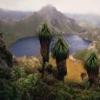
Leppidorachis mooreana in my garden


Recommended Posts

Posted

Had this one in the garden since a strap leaf seedling in 2010 it's very close to trunking now. This area gets full sun in the afternoons but temperatures here in coastal Tasmania rarely exceed 30c  88f or below 2c  34f. 20240714_114937.thumb.jpg.2cc677972ae4f22f407d4eaebf62ae65.jpg


  • Like 17
  • Upvote 4

Old Beach ,Hobart
Tasmania ,Australia. 42 " south
Cool Maritime climate

Posted

Gorgeous! My impossible dream palm. It’s the biggest Leppidorhachis I’ve ever seen. Thanks for posting the photo, Troy.

Meg

Palms of Victory I shall wear

Cape Coral (It's Just Paradise)
Florida
Zone 10A on the Isabelle Canal
Elevation: 15 feet

I'd like to be under the sea in an octopus' garden in the shade.

Posted
On 7/18/2024 at 12:21 AM, PalmatierMeg said:

Gorgeous! My impossible dream palm. It’s the biggest Leppidorhachis I’ve ever seen. Thanks for posting the photo, Troy.

Thanks I have climbed Mt Gower and seen them in person 

Old Beach ,Hobart
Tasmania ,Australia. 42 " south
Cool Maritime climate

Posted

These are my two, same age as Troy's, from the same lot of seedlings I got from LHI nursery before they stopped sending plants. These were sent as single leaf bare rooted seedlings with seed still attached. Of the 20 I ordered, my two and Troy's are the only two survivors that I know of for certain. Troy's has outgrown my bigger one, which is not surprising as he's a far better grower than me! The other 17 were either given away and perished or died in their pots before I could plant them out. 

As anyone who has tried growing these would probably agree, they are very temperamental, particularly in pots. I have multiple survivors of a later seed batch but how many will survive to be planted out is the great unknown, as they have a habit of turning their toes up for no apparent reason. Fingers crossed.

IMG20240721115314.jpg

IMG20240721115330.jpg

IMG20240721115340.jpg

IMG20240721115442.jpg

IMG20240721115513.jpg

  • Like 9
  • Upvote 2

South Arm, Tasmania, Australia - 42° South

Mild oceanic climate, with coastal exposure.


Summer: 12°C (53°F) average min, to 21°C (70°F) average daily max. Up to 40°C (104°F max) rarely.


Winter: 6°C (43°F) average min, to 13°C (55°F) average daily max. Down to 0°C (32°F) occasionally, some light frost.

Posted

Awesome specimens guys.  The Tassie growers should be able to grow these very well. I’ve found they hate dewpoints above 20C especially if the temps are 35C or above. In that situation it doesn’t matter how much shade or water you give them, seedlings will just instantly die. Older plants will just melt leaves. They’re not quite a Juania but they’re not far off. Definitely a difficult cloud forest palm that in my area loves the normal climate here especially winter but hates a heat wave or a humid subtropical period. 

Millbrook, "Kinjarling" Noongar word meaning "Place of Rain", Rainbow Coast, Western Australia 35S. Warm temperate. Csb Koeppen Climate classification. Cool nights all year round.


Posted

Congratulations both growers for the beautifull grown palms ! It' s certainly a rare species. In the past it crossed my mind to give this a try here, but after reading that it also doesn't tolerate well negative temperatures, I gave up the idea

Carambeí, 2nd tableland of the State Paraná , south Brazil.

Alt:1030m. Native palms: Queen, B. eriospatha, B. microspadix, Allagoptera leucocalyx , A.campestris, Geonoma schottiana, Trithrinax acanthocoma. Subtr. climate, some frosty nights. No dry season. August: driest month. Rain:1700mm


I am seeking for cold hardy palms!

Posted
9 hours ago, Alberto said:

Congratulations both growers for the beautifull grown palms ! It' s certainly a rare species. In the past it crossed my mind to give this a try here, but after reading that it also doesn't tolerate well negative temperatures, I gave up the idea

Almost impossible to get them now, which is unfortunate, as ex situ conservation is probably their only hope of long term survival given that increasing temperatures and reduced cloud  cover have already started killing trees in the mossy cloud forest on LHI.

Lepidorrachis grows right at the top of the mountains so has nowhere left to go if the climate warms significantly. The species is listed as critically endangered yet the conservation advice gives no indication of how they will be protected from climate change. The establishment of cultivated breeding populations in suitable ex situ habitats seems the only logical solution to me...the IPS should be applying pressure on the Australian government to make this happen, assuming there are no steps already being taken.

6388-conservation-advice.pdf

  • Like 2
  • Upvote 3

South Arm, Tasmania, Australia - 42° South

Mild oceanic climate, with coastal exposure.


Summer: 12°C (53°F) average min, to 21°C (70°F) average daily max. Up to 40°C (104°F max) rarely.


Winter: 6°C (43°F) average min, to 13°C (55°F) average daily max. Down to 0°C (32°F) occasionally, some light frost.

  • 8 months later...
Posted

I had 2 small ones in my raised garden bed which is well composed sand and both grew well for a couple of years here in geelong just 50 klms south east of Melbourne until a fire torched them shattered to say the least lost a really good size hedyescepe at the same time

Posted
1 hour ago, coops 3214 said:

I had 2 small ones in my raised garden bed which is well composed sand and both grew well for a couple of years here in geelong just 50 klms south east of Melbourne until a fire torched them shattered to say the least lost a really good size hedyescepe at the same time

Bummer, sorry to hear that...not easy plants to replace. Would be nice if the NSW government could be persuaded to release some seed into cultivation. Don't hold your breath though.

  • Like 1
  • Upvote 1

South Arm, Tasmania, Australia - 42° South

Mild oceanic climate, with coastal exposure.


Summer: 12°C (53°F) average min, to 21°C (70°F) average daily max. Up to 40°C (104°F max) rarely.


Winter: 6°C (43°F) average min, to 13°C (55°F) average daily max. Down to 0°C (32°F) occasionally, some light frost.

Posted

Jonathan;  your plant looks great ! 

I have lost two, both with about 1 m of trunk and multiple spadices.  The first one had seeds almost mature, but still with green epicarp.  That was my first,  terrible loss. 

Now, my attitude is that every palm death is an opportunity to refine my garden design.  Grow or die, whatever !

I had the ambition to be the first to produce seeds ex situ, but I am already 74 years old, so this now seems most unlikely.   :mrlooney:

  • Like 1
  • Upvote 1

San Francisco, California

Posted
5 hours ago, Darold Petty said:

Jonathan;  your plant looks great ! 

I have lost two, both with about 1 m of trunk and multiple spadices.  The first one had seeds almost mature, but still with green epicarp.  That was my first,  terrible loss. 

Now, my attitude is that every palm death is an opportunity to refine my garden design.  Grow or die, whatever !

I had the ambition to be the first to produce seeds ex situ, but I am already 74 years old, so this now seems most unlikely.   :mrlooney:

Darold- the solution is to live to 150!

My attitude towards Lepidorrachis is that I don't expect them to live, so if they do it's a bonus. The ones in the pics above are in deep shade under a Blackwood tree, Acacia melanoxylon, the soil is beach sand but with six inches of leaf litter mulch from the tree. Never been fertilised.

So far so good.

  • Like 3
  • Upvote 1

South Arm, Tasmania, Australia - 42° South

Mild oceanic climate, with coastal exposure.


Summer: 12°C (53°F) average min, to 21°C (70°F) average daily max. Up to 40°C (104°F max) rarely.


Winter: 6°C (43°F) average min, to 13°C (55°F) average daily max. Down to 0°C (32°F) occasionally, some light frost.

Create an account or sign in to comment

You need to be a member in order to leave a comment

Create an account

Sign up for a new account in our community. It's easy!

Register a new account

Sign in

Already have an account? Sign in here.

Sign In Now


  • Recently Browsing

    • No registered users viewing this page.
×
×
  • Create New...