Skip to content
View in the app

A better way to browse. Learn more.

PalmTalk

A full-screen app on your home screen with push notifications, badges and more.

To install this app on iOS and iPadOS
  1. Tap the Share icon in Safari
  2. Scroll the menu and tap Add to Home Screen.
  3. Tap Add in the top-right corner.
To install this app on Android
  1. Tap the 3-dot menu (⋮) in the top-right corner of the browser.
  2. Tap Add to Home screen or Install app.
  3. Confirm by tapping Install.

WELCOME GUEST

It looks as if you are viewing PalmTalk as an unregistered Guest.

Please consider registering so as to take better advantage of our vast knowledge base and friendly community.  By registering you will gain access to many features - among them are our powerful Search feature, the ability to Private Message other Users, and be able to post and/or answer questions from all over the world. It is completely free, no “catches,” and you will have complete control over how you wish to use this site.

PalmTalk is sponsored by the International Palm Society. - an organization dedicated to learning everything about and enjoying palm trees (and their companion plants) while conserving endangered palm species and habitat worldwide. Please take the time to know us all better and register.

guest Renda04.jpg

Palm ID...Sabal Causiarum?

Featured Replies

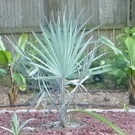
So I thought I had planted an Acoelorrhaphe Wrightii "Cerifera" over on the East side of the yard, but it's definitely not an Everglades Palm!  I had bought a couple of them from TCHP a while back, and I have also bought Sabal Mauritiiformis and Causiarum.  It's definitely not a Mauritiiformis.  In my master spreadsheet I have marked down that one Causiarum died, but my best guess is that I mislabeled the pots of Wrightii and Causiarum...and the one that died was the Wrightii.  So could this be a Causiarum?

1802524471_20230531_193642SabalCausiarum.thumb.jpg.70dc0f716023592fd5163faab3276997.jpg

526592901_20230531_193657SabalCausiarum.thumb.jpg.36aaa5d213dd0c283f5d39f94b5b4f1f.jpg

2129958768_20230531_193748SabalCausiarum.thumb.jpg.3fae5e8890c40029e5b4e7179564340a.jpg

I remember that my young S. causiarum had very heavy textured leaves.

Carambeí, 2nd tableland of the State Paraná , south Brazil.

Alt:1030m. Native palms: Queen, B. eriospatha, B. microspadix, Allagoptera leucocalyx , A.campestris, Geonoma schottiana, Trithrinax acanthocoma. Subtr. climate, some frosty nights. No dry season. August: driest month. Rain:1700mm


I am seeking for cold hardy palms!

Leaves of quite juvenile causiarum specimens have rather a deltoid than round outline. But not sure whether your plant has already grown beyond this stage.

20230512_172002.jpg

This is one of my S. causiarum that didn' t grew well because of not optimal soil conditions... 

20230601_091750.jpg

20230601_091818.jpg

20230601_091848.jpg

Carambeí, 2nd tableland of the State Paraná , south Brazil.

Alt:1030m. Native palms: Queen, B. eriospatha, B. microspadix, Allagoptera leucocalyx , A.campestris, Geonoma schottiana, Trithrinax acanthocoma. Subtr. climate, some frosty nights. No dry season. August: driest month. Rain:1700mm


I am seeking for cold hardy palms!

Definitely looks causiarum to me. I  vote causiarum. 

Hesperia,Southern CA (High Desert area). Zone 8b

Elevation; about 3600 ft.

Lowest temp. I can expect each year 19/20*f lowest since I've been growing palms *13(2007) Hottest temp. Each year *106

4 hours ago, Alberto said:

This is one of my S. causiarum that didn' t grew well because of not optimal soil conditions... 

20230601_091750.jpg

20230601_091818.jpg

20230601_091848.jpg

Alberto, leaf shape looks quite right for causiarum but stem's girth is seemingly less than normal. How old is your specimen and what do you mean by not optimal soil conditions?

1 hour ago, Phoenikakias said:

Alberto, leaf shape looks quite right for causiarum but stem's girth is seemingly less than normal. How old is your specimen and what do you mean by not optimal soil conditions?

It' s all explained in this post were you can see a fat trunking sibbling of this dwarf. 


Carambeí, 2nd tableland of the State Paraná , south Brazil.

Alt:1030m. Native palms: Queen, B. eriospatha, B. microspadix, Allagoptera leucocalyx , A.campestris, Geonoma schottiana, Trithrinax acanthocoma. Subtr. climate, some frosty nights. No dry season. August: driest month. Rain:1700mm


I am seeking for cold hardy palms!

Create an account or sign in to comment

Account

Navigation

Configure browser push notifications

Chrome (Android)
  1. Tap the lock icon next to the address bar.
  2. Tap Permissions → Notifications.
  3. Adjust your preference.
Chrome (Desktop)
  1. Click the padlock icon in the address bar.
  2. Select Site settings.
  3. Find Notifications and adjust your preference.