Jump to content
  • WELCOME GUEST

    It looks as if you are viewing PalmTalk as an unregistered Guest.

    Please consider registering so as to take better advantage of our vast knowledge base and friendly community.  By registering you will gain access to many features - among them are our powerful Search feature, the ability to Private Message other Users, and be able to post and/or answer questions from all over the world. It is completely free, no “catches,” and you will have complete control over how you wish to use this site.

    PalmTalk is sponsored by the International Palm Society. - an organization dedicated to learning everything about and enjoying palm trees (and their companion plants) while conserving endangered palm species and habitat worldwide. Please take the time to know us all better and register.

    guest Renda04.jpg

Recommended Posts

Posted

I’m pretty certain this is a Butia Capita, considering 90% of the Butias in my area are Capita (from what I’ve been told). I just wanted the experts opinion. 
 

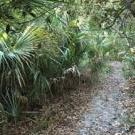
These aren’t great pictures, so I apologize. The trunk is actually longer than it appears. Most of it is covered because a good portion of the trunk is almost horizontal to the ground before it curves up. I’ve been told it’s been here for over 70 years. 
 

The smaller one is a baby I transplanted from it about 5 years ago. It gets 80% shade, so the fronds are long and stringy looking. 

0AE8DD3A-C0ED-4059-8C33-B6AB8303F261.jpeg

C97BC25A-3780-436B-9A7B-76C7CE217547.jpeg

A68F0EE9-5BE4-4C3F-B6DA-C3C61DB8B0D8.jpeg

6B766FCC-87AA-4797-BF38-FB2861B4B6DA.jpeg

BA18835B-8075-4008-BA3C-33C6D9AB127B.jpeg

Posted

Likely B. odorata. Folks have been mistakenly calling them B. capitata forever.  B. capitata is rare in cultivation. 

  • Upvote 1

Longview, Texas :: Record Low: -5F, Feb. 16, 2021 :: Borderline 8A/8B :: '06-'07: 18F / '07-'08: 21F / '08-'09: 21F / '09-'10: 14F / '10-'11: 15F / '11-'12: 24F / '12-'13: 23F / '13-'14: 15F / '14-'15: 20F / '15-'16: 27F / '16-'17: 15F / '17-'18: 8F / '18-'19: 23F / '19-'20: 19F / '20-'21: -5F / '21-'22: 20F / '22-'23: 6F

Posted

Here is the fruit and flowers. The fruits is rather roundish. 

F4FF310E-1226-4778-803B-0265DC568077.jpeg

EBF82A39-F751-46C8-9BC8-29EEFA870E8C.jpeg

Posted

Nice looking trees, which look like Butia to me.  

Like Buffy stated, the general consensus now is that the majority of Butia in cultivation around the US have been renamed Butia ordorata.  Interesting though seeing the variations between them around my area, especially in trunk size, with some being more slender trunked while others are quite robust.

Posted
4 minutes ago, Scott W said:

Nice looking trees, which look like Butia to me.  

Like Buffy stated, the general consensus now is that the majority of Butia in cultivation around the US have been renamed Butia ordorata.  Interesting though seeing the variations between them around my area, especially in trunk size, with some being more slender trunked while others are quite robust.

The information I've seen is that most Butia odorata may not be 100%, some mixture of Butia species in there.  It seems like the smaller trunked ones have B catariensis in them and this may be the majority of their genetic makeup.

  • Like 1
Posted
1 hour ago, Chester B said:

The information I've seen is that most Butia odorata may not be 100%, some mixture of Butia species in there.  It seems like the smaller trunked ones have B catariensis in them and this may be the majority of their genetic makeup.

Thanks for this info!

Create an account or sign in to comment

You need to be a member in order to leave a comment

Create an account

Sign up for a new account in our community. It's easy!

Register a new account

Sign in

Already have an account? Sign in here.

Sign In Now


  • Recently Browsing

    • No registered users viewing this page.
×
×
  • Create New...