Jump to content
IPS 2025 SAVE THE SPECIES - Please Check It Out - Click Here For Video & Info ×
Monitor Donation Goal Progress of SAVE THE SPECIES - Click Here ×
  • WELCOME GUEST

    It looks as if you are viewing PalmTalk as an unregistered Guest.

    Please consider registering so as to take better advantage of our vast knowledge base and friendly community.  By registering you will gain access to many features - among them are our powerful Search feature, the ability to Private Message other Users, and be able to post and/or answer questions from all over the world. It is completely free, no “catches,” and you will have complete control over how you wish to use this site.

    PalmTalk is sponsored by the International Palm Society. - an organization dedicated to learning everything about and enjoying palm trees (and their companion plants) while conserving endangered palm species and habitat worldwide. Please take the time to know us all better and register.

    guest Renda04.jpg

Recommended Posts

Posted

A few days ago, we suffered another miserable wind storm, basically a tropical storm but with crystal clear blue skies. It is this kind of wind event that burned down Lahaina back in August. Luckily, we are too wet over here to catch fire. The wind was about 40 mph all day with higher gusts. My trees did not enjoy all the exercise. My location might have been particularly hard hit because I have not seen much damage driving around. I never lost electricity. About a dozen large ohi`a trees came crashing down. Most fell without doing much damage, but a few palms were in the path of destruction.  SPLAT!

First, the really bad news. Marojejya is just about my favorite palm, and I have seven in the ground. This particular one is was the most impressive because it was growing in deep shade causing the fronds to stretch especially long. 

Dec2023Marojejya-1.thumb.jpeg.b26d62144d744ffb3d1828fcd5f58d1e.jpeg 

The canopy was due to a huge mass of Solandra maxima vines growing in the taller ohi`a trees in the background. The vines had smothered the trees years ago. I knew that I needed to somehow remove the very tall dead trees choked with tons of nasty vines before the entire mess can crashing down on my favorite palm. But how? I’d need to get a large truck with a lift bucket to have any chance of safely removing the vines and then the dead ohi`a. This location is not really accessible to large equipment, so I kept procrastinating. Tuesday Mother Nature took decisive action.

Marojejya2024splat.thumb.jpg.414af17eb58f608da34153072f88f222.jpg

When I first found the mass of fallen trees and vines, I had a hard time locating the palm. Then I saw one frond sticking up waving for help. After a day of careful excavation, the search and rescue team found encouraging signs of life.

2024Marojejyasplat2.thumb.jpg.157be90f7b99623effacc5f752239167.jpg 

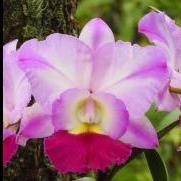
Just as in an earthquake, there were a few miraculous survivors trapped in voids at the bottom of the pile. A cattleya. cattleya-1.thumb.jpeg.70256b7aa0f9143170c39abdcc9ae16e.jpeg

And vanda. I’m sure after some rehab in the orchid hospital, they will make a full recovery. fallenvanda-1.thumb.jpeg.65a5113f31e7760e6110ca6e1205d677.jpeg

After two days of hard work, here is what the Marojejya looks like. The new leaf spear has been knocked off vertical, but my guess is that it will survive. The big problem is that there are three more dead ohi`a trees snapped off 15 ft up still holding a huge mass of vines (upper right).  All of that is suspended directly over another favorite, Licuala peltata var Sumawongii. Not sure I can clear out the vines without crushing the Licuala. 

marojejyaladder-1.thumb.jpeg.0ac98ee9da93d0ccf5c178e8a165c353.jpeg 

One of many loads of debris heading for the green waste pile. This nasty vine is indestructible, so the only way to kill it short of burning it, is to cover the pile with a heavy tarp. Otherwise it will just root and take over a new area.

greenwasteload-1.thumb.jpeg.a4845857b214ce160c9b6e308591bccb.jpeg

Here is the culprit, Solandra maxima. I’m sure somebody thought that this is a beautiful plant that should be introduced to Hawaiian gardens. In reality, it is a horrible, noxious, invasive weed. Nothing kills it.

 Solandramaximavine-1.thumb.jpeg.21036d523d256e722879015f886e4769.jpeg

Here is another very sad situation. This Clinostigma samoense was the very first palm I planted eleven years ago, so it has a lot of sentimental significance. Now it is listing about 5-10 degrees. I’d really like to pull it back to vertical with cables, but I don’t think I have anything strong enough to anchor the lines to. I’d hate to have to cut it down, but if I can’t raise it, it is too dangerous to be left as is.

 Clinostigmaleaning-1.thumb.jpeg.bc4789b4649ff7eaff35cd6ec61bd123.jpeg

Here is a baby Oraniopsis appendiculata taking a nap after the storm. This should not be too hard to get back on its feet.

Orianiopsisfallen-1.thumb.jpeg.b31b115da6c81c0c88086daae844596c.jpeg

I have about ten very tall Pigafetta elata that were not bothered by the wind, but oddly this baby was knocked over. I think it should not be too difficult to straighten it back up... as long as I wear gloves. pigafettaleaning-1.thumb.jpeg.d79c34e776f37234f71f1f62ee8b1eca.jpeg

This Syagrus botryophora is on death row. This palm has always been unsteady. I had to keep it braced with ropes the first three years in the ground because it was always falling over. It has been doing ok the past couple of years without any support, but now it has a date with the chainsaw. Syagrusbot-1.thumb.jpeg.2eae222b471167a119ae1f1fac07e801.jpeg

And there were some welcome near misses. Here is a tiny Chelyocarpus ulei that narrowly missed getting squashed. It has been very slow to get going for me, but I really wanted one after seeing larger ones in other gardens. 

Chelyocarpusulei2024.thumb.jpg.800d7b489c56d54ae0dc321d2cdcae42.jpg

I’ve probably had around 80-100 tall ohi`a trees blown over in storms over the past eleven years. My fault for thinning out the dense forest when I arrived leaving only widely separated large individuals. These trees depend on their tight neighbors to shield them from wind.  Isolated trees are doomed. A recently introduced fungal disease is killing huge numbers of ohi`a in my neighborhood, and then the wind comes along and knocks over the healthy ones with full crowns that provide maximum wind resistance.

It is a little discouraging to put so much work into the garden only to see parts of it destroyed in one afternoon, but 98% of the palms were fine. Trees are always being lost in any healthy forest. Life will go on. And of course, someday the whole place will be buried under 50 feet of molten lava. When judged against that alternative, a few blown over trees is not all that bad.


  • Like 8
  • Upvote 4
Posted

Sorry to read about and see the damage that your garden saw due to the wind. I remember a friend in Puna messaging me and saying that he hoped our construction project was not affected by the wind that day and here at my place in Hilo it was incredibly still when I received that text. I didn’t even know what he was talking about!  So strange how different the weather can be here just a short distance away. 

I always enjoy reading your updates, thanks for taking the time to post them along with great photos. 

  • Like 2
  • Upvote 1
Posted

Oh boy Rick, what a mess on your hands. Looks like the Marojejya will pull through, although it might look a bit funky for awhile. The Clino can be replaced and the other stuff can be straightened out.  

Like Jason said above, I didn’t even know there was a wind event, our micro climate in this part of Hilo is somewhat protected…….TG. Wind is what I worry most about on this side of the island. 

Tim

Tim

Hilo, Hawaii

Posted

It’s been bloody windy and super dry here, I’m seeing drought stress starting again…

Posted

Sad to see the damage to your garden, but often these tough palms will pull through just fine. Many times I've had trees fall and rip off fronds or land 1/2" to the side of the growing point without resulting in death. In 13 years only 3 palm deaths due to falling ohias although I'd wager I've lost 98% of those trees due to Rapid Ohia Death. Garden went from shady to sunny in a few years.

I arrived on the day of the wind event, and it was quite blustery, but not severe at my place. I've seen worse. I found a couple of trees down, but they were out in the weeds, gratefully, and for all I know might have fallen during the rains preceding the winds. 

Gardening in Hawaii is not as easy as it looks. Good luck, Rick!

Kim Cyr

Between the beach and the bays, Point Loma, San Diego, California USA
and on a 300 year-old lava flow, Pahoa, Hawaii, 1/4 mile from the 2018 flow
All characters  in this work are fictitious. Any resemblance to real persons, living or dead, is purely coincidental.

Posted

I am so sorry about your terrible wind damage Rick! 
 

I had read Solandra was too aggressive to grow unless severely contained, but I had no idea it was that bad a plant in Hawaii. 

I appreciate the disaster documentation to remind all of us that this sort of landscape trauma will eventually become “before” photos as our plants and new additions take advantage of the new microclimate. 
 

And I look forward to those future updates on better days.


Cindy Adair

Posted

I'm closer to Rick than to Jason or Tim, so I have had two windstorms the past couple of weeks. But they weren't nearly as destructive as in Rick's location. Our winds on Hawaii Island are normally easterlies, but winter cold fronts in the north Pacific suck air from the south and southwest. Fierce winds had fronds all in one direction and really whipping around. This 6-ft Drymophleous litigiosus went over in the first storm, while a larger one next to it stayed upright.

Drymophleouslitigiosus_proppedupafterwindstorm_MLM_012024.thumb.JPG.3d2435ef8e2fab930a1b2287d00b5a29.JPG

Stakes hammered into the ground and small bungees kept it up during the second storm. One of my Syagrus botryophoras ended up resting against a neighboring tree. This species is notorious for succumbing to winds, but are noted for continuing growth, flowering and fruiting as new growth is perpendicular. My worst problem was from the group of my neighbors'dead albezia trees on my west fence line that rained dead branches on my property. I spent hours after the first storm cutting and disposing this material, and now I have to do it again.

  • Like 3

Mike Merritt

Big Island of Hawaii, windward, rainy side, 740 feet (225 meters) elevation

165 inches (4,200 mm) of rain per year, 66 to 83 deg F (20 to 28 deg C) in summer, 62 to 80 deg F (16.7 to 26.7 Deg C) in winter.

Posted

Rick,

a sad report this time - especially with the shocking pics of your Marojejya at the beginning - but I am sure your garden will

recover soon. I am just wondering if there is no other opportunity to create a kind of (better) wind protection with an other species 

than the ohi'a trees...

All the best!

Lars


Posted

Lars,

It looks like the local population of ohi`a trees (many millions of them) will be completely killed in the next decade by the new fungal pathogen. Everyone is thinking about replacement species. I have a few clumps of various bamboo species planted around the property. They might provide a bit of protection to palms immediately downwind, but it is not practical to shield each palm with bamboo. Even varieties that are sold as 'clumpers' spread quickly in our climate, so bamboos bring as many problems as they solve. As far as shade goes, I am gradually replacing the dying and fallen ohi`a with Elaeocarpus angustifolius, known locally as the blue marble tree. These are super fast growers in Hawaii, but seem to have stronger wood compared to the catastrophic, introduced albizia, famous as the tree that ate Puna. Albizia produce billions of wind dispersed seeds that quickly transform any landscape into a dense forest of 100 ft tall trees ready to fall over if someone sneezes. The seeds from blue marble trees are big enough to fall straight down, so they don't spread. Routine mowing under the trees gets rid of the many babies. Presumably the seeds are dispersed by some large bird in its native habitat. My blue marbles were started from seed and the oldest have been in the ground 8 years. They are now almost 80 ft tall with two foot diameter trunks. I think they look great with a tall, straight, bare trunk topped with a massive open crown. I suspect that the comparatively open crown is an adaptation that helps such a huge, top-heavy tree survive high winds. As they grow, they shed all the lower side branches so they never need pruning. In another ten years when they are 120 ft tall with six foot diameter trunks, I might regret this choice, but for now, I think they are a million times better landscape tree than ohi`a. One blue marble provides more and better canopy than dozens of scraggly ohi`as. One or two trees per acre is all you need. Their far-reaching roots might be a problem in some settings, but I have not planted any within 100 ft of the house. The massive root system should provide stability. After many decades, they develop huge buttress roots resembling a giant washing machine agitator. So blue marbles are great for filtered shade, but probably provide little wind protection to the palms below.

Of course, blue marble trees are not immortal. Each one will come crashing down someday. That should be spectacular. The resulting destruction will dwarf anything I experienced this week. Definitely not a tree for suburban residential gardens. You pays your money and takes your chances.

  • Like 3
Posted

I am sorry to hear of your loss. Here , where we are , every year , we get Santa Anna winds that can reach 60mph , some gusts higher. I have been in this area for most of my 69 years so I try to prepare by trimming up the palms and putting away the deck furniture . I still cringe when I hear the winds howling , thinking about my palms . The winds are usually accompanied by high temperatures and extremely dry conditions for several days . The Thomas Fire occurred just behind my house. It can make a tropical paradise look bad in a day or so. It is disheartening and we just pick up and move on . I hope that your palms respond to all of the care and make a recovery soon. The good news is that the climate there allows for rapid growth , good luck. 

Posted

Rick, I grieve for the damage your palms suffered.   I am with Tim, as I also worry more about the potential for strong winds more than any other plant calamity.  As a Catholic of long standing, my life is steeped in the ancient traditions of misery and certain doom;  therefore, I view climate change with more than a touch of alarm.  Who knows what that will bring?  As Cindy Adair alluded to, disaster really does open the door to new things.  And those new things begin to energize us.  I think,  for example, that ur blue marble trees will be a joy to your garden.  Queenslanders have reported that they are resistant to cyclones, and their shade is not so dense, so that palms who dig dappled light can probably get along well with them.  I would think also that a line of blue marbles will still do a nice job of filtering wind for the protection of taller palms downstream.  BTW, from your post-wind pics, ur garden clearly is a stunning palm and orchid paradise!

  • Upvote 1
Posted

Blue Marble trees, wow, Rick, you are very daring! 🙂 I first saw those at Norm Bezona's garden, they really wowed me with those buttress roots. I collected some seeds. Then I read more about them and chickened out. Now I'm a little envious. 

I planted a Michelia (Magnolia) x alba and it has provided much-needed shade after the loss of most of the Ohi'a trees. Funny, though, I have Ohi'a trees sprouting everywhere, including on palm trunks! It's a little crazy. Feels weird to rip some of them out, but they tend to select the wrong location to root. I'm not necessarily recommending the Michelia -- huge roots extending great distances and constant leaf litter that's difficult to deal with and is slow to break down. It also drops the weaker branches and the wind did a nice job thinning out those little sticks, actually improving the appearance. But the dappled shade is awesome! The palms love it. My most recent tree selection is Bauhinia x blakeana, admittedly for the flowers. One is doing fantastic, the second is slow to get going.

I hope you don't cut down your Clinostigma samoense. They have extensive roots and barring another immediate windstorm, it will hang tight. Well, easy to say looking at a photo; you will know what is best.

Kim Cyr

Between the beach and the bays, Point Loma, San Diego, California USA
and on a 300 year-old lava flow, Pahoa, Hawaii, 1/4 mile from the 2018 flow
All characters  in this work are fictitious. Any resemblance to real persons, living or dead, is purely coincidental.

Posted

Rick,


Thank you very much for your detailed reply. 

Since the Okinawian islands are hit by typhoons every year, your description of alternative species

to create a wind protection was very interesting and educating.


Lars 


Just as a side note: Besides our sup-tropical forests, the most common trees planted for wind protection over here

are the Ceylon Cinnamon tree (Cinnamomum verumand the Yew plum pine/Buddhits pine etc. (Podocarpus macrophyllus).


Posted

This is hard to read, I’m so sorry Rick.  

  • 4 months later...
Posted

It has been about five months since the terrible wind storm that did so much damage. I thought I’d update you on recovery.

Here is the poor Marojejya that got flattened by six falling 50 ft tall trees choked with tons of vines. Most of the fronds were broken off. The two emerging spears also broke. It has taken five months for a new spear to emerge and open. You can tell how small this was at the time of the storm because the tip is broken off (blue arrow). It is roughly 20 ft tall. For comparison, the only frond to survive the impact is about 16 ft tall (yellow arrow). That is the frond sticking out of the debris pile in the January 18 post. I did not trim off the broken fronds because most of them remained green. I was hoping they could still contribute a bit of nourishment towards recovery. I call your attention to the glare of the sky in the background. Before the storm this was occupied by tall trees filled with a thick tangle of vines providing deep shade. Now the tree is in more or less full sun. It will be interesting to see how that affects it.

 Marojejyacontext-1.thumb.jpeg.e97464a23d02682ec8530d9f09f0f9ba.jpeg

Marojejyabrokentip-1.thumb.jpeg.2ebd3c4d255b9431f3a21b16ae7a0940.jpeg

Here is the Licuala peltata Sumawongii that was nearly crushed under the same downed trees. It took about 3-4 days on a ladder with a pole saw, chainsaw, and lopper shears to carefully clear away the mass of broken trees dangling over this palm. But it was worth the effort to save it.

LicualaSumawongiiafterrecovery-1.thumb.jpeg.0fccfd9b76df1071e373c685fede27a7.jpeg

This Oraniopsis appendiculata was blown over flat on the ground, but looks none the worse for wear having put up two new leaves since the storm.

 oraniopsisupright-1.thumb.jpeg.444f534192c844bfe24e5776e9b351d3.jpeg

Likewise, with just a little help this Pigafetta rebounded fine and is probably 50% bigger than when the storm hit. They are just phenomenally fast growers.

 Pigafettaupright-1.thumb.jpeg.16b6a9bc4e75b881d72b84ecbe176212.jpeg

By far the biggest job has been pulling the large Clinostigma samoense back to vertical. First, I had to climb up a tall ladder to attach a protective ring of 2X4 lumber around the trunk just below the inflorescences to prevent the cables from cutting into the trunk. The lumber was hung by a heavy wire from two of the inflorescences. 

Clinostigma2X4-1.thumb.jpeg.1f74b8872b0339f73c9fd6561cde9c0c.jpeg 

Then I attached a cable from the crown to two sturdy ohi`a trees located about 50 ft away. Likewise, the trunks of these trees were padded with some lumber to reduce the damage they would suffer. 

ohiaanchor-1.thumb.jpeg.2b94217ad8ad1d4bd684e33bc2aa2f4c.jpeg

Then I attached a come along winch and began cranking it back to vertical. I’d tighten it a few cranks each week for several months.ohiacrank-1.thumb.jpeg.d67cc4ddbb2dd1bf61e1f759451af649.jpeg

Clinostigmafromohia-1.thumb.jpeg.cf1506d1eaf6095373e7be0f3b2427fa.jpeg

It became clear that it was not going to return to vertical with just the one cable, so I attached a second line extending about 60 degrees to the side. This one was anchored to a handy blue marble tree that was the topic of some conversation in the last post. 

Bluemarbleanchor-1.thumb.jpeg.f2cfb8eae45093190a3e516d864c14cc.jpeg

Clinostigmacable1-1.thumb.jpeg.3f120c43d03306a81c8654a8d897d9b2.jpeg

Now after five months, it is pretty much straightened up. It is not exactly vertical, but it is not going to fall over anytime soon. My homemade plum bob started out about three feet from the trunk at the beginning of the process but is now parallel with the trunk. I’ll probably leave the cables on for a few more months to be sure the roots are well anchored so it doesn’t lean back over, but I think the operation was a success.

Clinostigmaplumbob-1.thumb.jpeg.44e6c23fec1697fd7d52796aa4edf433.jpeg

Clinostigmaupright-1.thumb.jpeg.d571c0bdd13f28d72b51d5bfd9b97efc.jpeg

The storm also tore a large frond from a big Caryota. As you can see, the tree is doing fine. Sorry it's a little out of focus.

vandacaryota-1.thumb.jpeg.350e81e58ac314510696529c75261ded.jpeg

  • Like 8
Posted

Thanks so much for your detailed descriptions and photos.
 

I certainly appreciate the many hours of work you have done. 

I am so glad you have saved so many wonderful trees. 


  • Like 1

Cindy Adair

Posted

Amazing palms and a true survival instinct story job well done 👍 

Posted

Your efforts on behalf of your Clinostigma are heroic! The other palms demonstrate their toughness among plants.  

I have a J. magnifica that had a huge tree trunk fall within 1/8 of an inch of the stem. It was tiny at the time, and it has since gone through an impressive growth spurt! Palms are amazing plants.

Always enjoyable seeing photos from your amazing garden.

  • Like 1

Kim Cyr

Between the beach and the bays, Point Loma, San Diego, California USA
and on a 300 year-old lava flow, Pahoa, Hawaii, 1/4 mile from the 2018 flow
All characters  in this work are fictitious. Any resemblance to real persons, living or dead, is purely coincidental.

  • 1 month later...
Posted

I am going to be lecturing for the ISA on four of the Hawaiian islands in August 2024. I could use some help on a few questions I have. Jeff

  • 5 months later...
Posted

This update is for all those disappointed travelers who had hoped to visit New Caledonia with the IPS a few months ago. Several private Big Island palm gardens have extensive NC collections. My place is just getting started, so this will just be a progress report.

First up is the very popular Chambeyronia macrocarpa. There are lots of photos of this species on PT showing the brilliant red new leaf. In that regard my tree is a dud. It has never shown the slightest hint of red. However, I still have sentimental attachment to it because it was one of the first palms I planted. It was a gift from one of the first HIPS members who reached out to invite me to visit his new garden and introduce me to palms shortly after I arrived in Hawaii. Sadly, that friend passed away a few years later and never got to see his garden mature. I’ve recently added four more babies in the hope some will show the red new leaf trait.

Chamberyoniamacrocarpababy.jpg.5dcbbc22b7807ad441cf1d2f8518ef7b.jpg 

 Chamberyoniamacrocarpa1-25-1.thumb.jpeg.7ed8ba4c0511b26cee87315414796f6c.jpeg

Next up is Chambeyronia houailou. I saw a mature one growing in another Big Island palm garden ten years ago and instantly fell in love. My 1-gallon baby went into the ground in 2020 and had a slow start. After about two years it transitioned from juvenile entire leaves to adult pinnate. Now it seems to be chugging along.

ChambeyroniahouailouB1-21-1.jpeg.48183a3c7ceb51f4b67e8c84dc1f1388.jpeg

chambeyroniahouailou1-25-1.thumb.jpeg.5847622f7967daaf538921b07bf5e346.jpeg 

Kentiopsis oliviformis and pyriformis both went in the ground in July 2019 from a 4” and 1-gallon pot, respectively. Some taxonomists want to lump them with Champeyronia, but I’ll use the old names here. K. oliviformis has really taken off surpassing pyriformis, but recently began showing droopy fronds. No idea what that is about. So far not much distinguishes them from a thousand other pinnate palms, but maybe down the road they will start to have more character.

 Kentiopsispyriformis1-25-1.thumb.jpeg.1987b539e6081f367033dd0ad95319cd.jpeg

Kentiopsisoliviformis1-25-1.thumb.jpeg.b7232a60aec936df167751faf640489c.jpeg

Basselinia eriostachys is an attractive small palm with some color in the crownshaft. I liked the first one, so a few years later I added a couple more. The pigs decided that I was only allowed one and ploughed up the late additions. The sole survivor is just beginning to bloom.

Basseliniaeriostachys1-21-1.thumb.jpeg.b9847ee40600166d181f8b94fd1e985b.jpeg

Basseliniaeriostachysbotht1-21-1.thumb.jpeg.1b7c4863db5d7c6589e8f4dbb51060fc.jpeg 

I only added a few baby Basselinia velutina in the past year, so too early to evaluate.

Basseliniavelutina1-25-1.thumb.jpeg.6107fc0f7ef9641ce483fd77a7648edd.jpeg 

I’m showing the next photo just to make mainland growers feel a little better. PT may promote a certain Hawaiian mystique so that outsiders think 100% of our palms thrive from the moment they go in the ground. That is mostly true, but I have certainly killed plenty of newly planted babies. Sometimes too much sun. More often they dry out during the occasional dry spell. The black cinder I grow in does not hold much moisture, so if we go a week without rain, the ground is bone dry. I am pretty unreliable with the water hose, as this pathetic little Basselinia pancheri found out the hard way. It is smaller now than when planted 18 months ago. Maybe it will pull through, but probably not. 

Basseliniapancheri1-25-1.thumb.jpeg.b3d3f20b62f48dea0936e9dd8ac87697.jpeg 

One that did survive a rough childhood is Burretiokentia grandiflora. When doing my due diligence for this species, I read nothing about it being especially sensitive to bright sun. I usually don’t worry about canopy protecting baby palms because of our cloud cover. However, this poor baby burned to a crisp in the sunny location I planted it. Most fronds were burned after six months, so it depended on just the newest two or three leaves to cling to life. And don’t ask why I didn’t move it. With three acres to care for they are lucky to get planted the first time. Sometimes I set up a small shade cloth tent over a sensitive palm for a few years, but I never got around to giving this one a tent. After years in critical condition, it has slowly recovered enough to begin trunking. It now seems quite sun tolerant. In fact, it is beginning to send up a couple of inflorescences. I’ll be interested to see if the flowers live up to their name.

Burretikentiagrandifolia1-25-1.thumb.jpeg.42b7916e039f1b099f77cd0fde5b80da.jpeg 

Burretiokentiagrandiflorainflorescence1-25-1.thumb.jpeg.cfa5ea020177ce6ee28a0268cd7d5c30.jpeg

Burretiokentia hapala is grown in just about every garden on the Big Island. The tree in general looks good but the primary selling point is the blond dreadlock inflorescences. Or maybe an octopus plush toy? Mine bloomed for years without ever producing seeds. In the last year or two I’m finally getting seeds, but so far none have germinated.

Burretiokentiahapala9-24-1.thumb.jpeg.222450db0ed25161faf61669a08aa3c9.jpeg

Burretiokentiahapalaseeds9-24-1.thumb.jpeg.3873432a05bacb9027c02c65e946c44e.jpeg 

Burretiokentia vieillardii has been painfully slow for me. This one went in the ground over six years ago from a 1-gallon pot. It is just now thinking about trunking. Photos on Palmpedia show interesting crownshafts with inflorescences somewhat similar to hapalaBurretiokentiavieillardii1-21-1.jpeg.ffaabdc07b46187762ada1f97135773e.jpeg

Burretiokentiavieillardii1-25-1.thumb.jpeg.b05b30979fc279f26c0b57b90204a69b.jpeg

Cyphophoenix alb has also been in the ground about six years from a 1-gallon pot, but hasn’t produced much trunk, yet. The jury is still out on this one.

Cyphophoenixalba1-25-1.thumb.jpeg.7332227fd5d6ee30e6ccd452d7d71e31.jpeg 

Cyphophoenix nucele has been a strong grower for me. This went in the ground from a small 4” pot in 2019 and now has about five feet of clear trunk. Nice shade of green. The pigs regularly rototill around the base, but this palm does not lose a beat. 

 Cyphophoenixnucele1-25-1.thumb.jpeg.fa11d5d4da609424b6982b70876f3811.jpeg

So far, my favorite species from New Caledonia is probably Cyphosperma balansae. It is a strong grower and just recently exploded with half a dozen inflorescences. The dark chocolate brown colored trunk and crownshaft are still developing, but it is a good start. I've started adding a few more around the garden.

CyphospermabalansaeB1-25-1.thumb.jpeg.23bb3a5c564688652ba2877b129adafc.jpeg

Cyphospermabalansae1-25-1.thumb.jpeg.688cdb87007a0c4cada2aac4b33913e3.jpeg

  • Like 8
  • Upvote 4
Posted

Great update Rick. You have some really nice New Cal palms. Thanks for posting them. 

Posted

Great collection of New Cals! There’s something about B grandiflora. Have only ever seen a couple in person but the open leaf sheath and colouration set it apart from the rest of the genus. Yours is a beauty Rick!

Tim Brisbane

Patterson Lakes, bayside Melbourne, Australia

Rarely Frost

2005 Minimum: 2.6C,  Maximum: 44C

2005 Average: 17.2C, warmest on record.

Posted

Congratulations on your New Cal collection! I love the way you frequently post photos of the juveniles with information of size and year planted followed by a dated photo to be used for reference.

It was handy to see the species that might be obtainable too. 

I do wish I could find receive larger than seedling size or bypass the need to start so many from seed, but there is joy in the process.

I also appreciate reading about the trials and tribulations of growing palms in another tropical place. I have come to realize that every location has its challenges for palms (and people) but HI or PR remain among the top of my list!

Cindy Adair

Posted

As someone else starting mostly small and working the way up, another thank you for the detailed information provided about each palm and how they’ve done with various conditions and circumstances…including the darn pigs! 😤 

Very interesting, and a valuable ‘research’ resource, as well as inspirational!
Great photos and great job growing this New Caledonia group!  

Posted

Rick,

beautiful images - especially thank you for the "before-after" pics!

Lars


  • 5 months later...
Posted

I thought some people might be interested in unusual inflorescences and fruit. I’ll start with Iriartea deltoidea from Central and South America. Not sure if it will succeed outside the tropics, but it is a winner in Hawaii. The reason I’m featuring it is the odd placement of the inflorescence. Most palms develop flowers in or just below the crown of fronds. Iriartea is distinctive in that the inflorescence takes perhaps 5 years to develop. During that time the trunk keeps growing pushing the crown up. By the time the mature inflorescence sheds the long, horn-like bracts (front tree) to expose the flowers (back tree), there might be 10-20 ft of bare trunk between the crown and the much lower inflorescence. This is the first time mine have flowered. I think it looks very cool especially because the smooth gray trunk is slightly swollen in the middle.  IriarteapairBJune2025-1.thumb.jpeg.ac85747e2868a2425aa97a15b030edda.jpeg

IriarteacrownsJune2025-1.thumb.jpeg.1b262ccdebaccfcdbdb817a8526e22c3.jpeg

Mine still have pretty modest stilt roots. Maybe they will become more impressive with age. 

IriartearootsJune2025-1.thumb.jpeg.518e07884bc2ac3b7691fbf8acb5cc91.jpeg

Next up is a frequently featured palm, Kerridoxa elegans. This is widely grown for the amazing entire leaves. Unfortunately, the occasional cold nights on the mainland may stunt its growth enough so that many folks have never seen a mature trunking female loaded with fruit. Mine pretty consistently bloom in January and February with the fruit ripening in late October. I only have one male and so must hand pollinate the four females scattered around the garden. But the clumps of pale yellow fruit are worth the effort. This one is about 12 years old and 12 ft tall starting from a 3 gallon pot. These may be understory palms, but they are NOT miniatures.

 KerridoxaswwdJune2025-1.thumb.jpeg.930f46bcbb0e24e3ef218c248302b1ce.jpeg

KerridoxaMeJune2025-1.thumb.jpeg.c95e381365dafdeb8b3da125777b0896.jpeg

Prestoea acuminata looks like any typical large pinnate palm, but for me the selling point is the newly opened inflorescence. It is initially brilliant white and resembles a frozen lightening bolt. It is very eye-catching. After the bees are done with it, the rachis gradually turns pink and then deep red (right side, difficult to see). Several inflorescences of different ages might be displayed on the same tree producing a colorful show. PrestoeaacuminatumbloomsJune2025-1.thumb.jpeg.4a0ab587534334b6a608e73db80863ed.jpeg

Marojejya darianii is the primary reason for this post. I have eight in the ground and add another every few years so I always have younger trees without trunks. For my taste, the most attractive stage of their life cycle is when a dozen huge entire leaves seem to erupt directly out of the ground. After they get tall, the tattered fronds don’t look all that much different from your average pinnate palm. Just about every photo on Palmpedia is from gardens in Hawaii plus a few from Australia. This is truly sad because every palm collector should have these in their landscape. I would really like to get seed and do a little propagation. My oldest trees have been blooming prolifically for about five years. The deep red-violet inflorescence is very attractive, but 90% of them have only male flowers pumping out huge amounts of pollen.

Marojejyaallmaleflowers1.thumb.jpg.02ccf0dcb7525390e867c454c48da29a.jpg

Rarely a rachis will have male flowers distally and larger female flowers towards the base. I have no idea what causes most to be all male and only a few to have both sexes.  Fertilizer? Rainfall? Cloud cover? Age? Random chance?Marojejyafemaleflowers-5.thumb.jpg.6b3228f28513534a827f88135a744d0d.jpg

When I find these special inflorescences, I shake pollen over them every day that the female flowers appear open. This has been a total failure. Not a single fruit, ever! Whenever I visit a palm friend growing these I always ask if they get fruit. Most say no, never. A few people do get fruit. When I ask how they encourage production of female flowers and successful pollination, they claim to do absolutely nothing. The trees do all the work. I have always suspected that they are just unwilling to divulge the recipe of their secret sauce.

Last week I was trimming dead fronds in the garden and went to work on a Marojejya that is far from all the other and a bit inaccessible. I rarely visit this one up close. I’ve never tried any type of assisted fertility on this one. I originally got it as a one gallon from Mike in Kurtistown a dozen years ago.

MarojejyawithseedJune2025-1.thumb.jpeg.3a71810b52b70d3ec5fa4b99a56e4000.jpeg

As I was cutting away old fronds, I uncovered two developing infructescences loaded with immature green fruit. The fruit was obscured by all the distal dead ends where the male flowers had been last October.

Marojejyaseedmaleinflor2025.thumb.jpg.855edde6860dcaac8b2db35e0fad42e8.jpg

After cutting those away, I got a better look at the developing fruit. There were also hundreds of dried up, pea-sized aborted fruits that I have been well acquainted with for years. MarojejyaseedJune2025-1.thumb.jpeg.2aeee49516446ebc404a9b0baf6e954d.jpeg

These have probably been developing for about 8 months. They appear to be about 25% the size of mature seeds. I cut one open and it had a central cavity filled with a clear gel. Presumably this will expand and solidify by the time they are ripe. This doesn’t guarantee babies down the road, but it is a big step beyond anything I've gotten before. Looks like those palm friends who professed to doing nothing to assist pollination might have been telling the truth after all.

Here are a few gratuitous photos from the garden. A baby that recently went in the ground near a spreading monkeypod tree that should provide good canopy. MarojejyamonkeypodJune2025-1.thumb.jpeg.6d2adae110cbb7404f8c7b27e16f59e3.jpeg

This is my favorite one that was squashed in January 2024 by a mass of falling trees filled with heavy vines. [Scroll up to the January 18, 2024 post] I’d say this has made a pretty impressive recovery after that near death experience. For scale the Anthurium cupulispathum leaves are 4-5 ft long. MarojejyagiantanthuriusJune2025-1.thumb.jpeg.e40a9b01230c00bd66a95fae37854f05.jpeg

I deliberately planted this one to have dense canopy from the foreground tree ferns and the soon-to-be giant blue marble tree out of frame on the left. I’m trying to recreate light and wind protection conditions that in other gardens have produced palms with exceptionally large fronds.

MarojejyatreefernbJune2025-1.thumb.jpeg.bf94a428616c380d6057dc5e0f973a70.jpeg

Blue marble trunk on the right. We'll find out in 10 years if my plan worked.

MarojejyabluemarbleJune2025-1.thumb.jpeg.09c5626c306473f55775f471cbe72f12.jpeg

  • Like 4
  • Upvote 1
  • 2 months later...
Posted

Today it is all about Beccariophoenix. This was prompted because yesterday I collected my first seeds from B fenestralis. Here is fenestralis (F) and alfredii (A) in two-gallon pots from Mike in Kurtistown about to go into the ground back in May 2016.

BeccarophoenixAFplantingMay2016-1.thumb.jpeg.09c4e5a7e95641ca5f34a40b033e6879.jpeg

Here is the fenestralis today with about 5 ft of trunk. It bloomed for the first time about a year ago. This is the one making seeds. Vonitra crinita lower right. Pigafetta elata upper right. That one sprouted eight years ago from a seed in a load of county green waste mulch. They're fast. Really fast.

Beccariophoenixfenestralisme9-25-1.thumb.jpeg.ad1313c0931efab402d4b2341bebc887.jpeg

The fenestralis seeds are covered with two layers that are easily removed by pinching the pointed end with a pair of pliers. The round seed (right) pops out the other end. If these germinate, the plants will just be for giveaways to visitors. I already have three and don’t have room for any more in the garden.

Beccariophoenixseeds9-25.thumb.jpeg.558b30f2369c810785f5eac3c6a98cc4.jpeg

It has a new spathe that should open in the next month or two. I’ve seen these on larger trees that look like torpedoes or giant spear tips.

Beccariophoenixfenestralisspathe9-25-1.thumb.jpeg.620f765552d291fc3994a94706258e14.jpeg

I have added two more of these at roughly four-year intervals. The youngest one still has the windows pattern of leaflets, but not for much longer.

Beccariophoenixfenestraliswindows1-25-1.thumb.jpeg.102699ac1095910d77cff58a2e0d6a5d.jpeg

Here is the alfredii nine years after going in the ground. From what I see on PT, this is the species preferred by mainlander growers. I’ve seen a few posts where a grouping of these was planted spaced about five feet apart a few feet from the house foundation. With any luck, those died. If they survived, it will be expensive for the homeowner to remove them down the road. This a very large palm that needs plenty of room. I’m guessing most city residential lots can only handle one planted as far from the house as possible. Just in case you were wondering, because we are located so close to the equator, everyone in Hawaii has to lean forward to avoid falling over. Something to do with the Coriolis effect.

Beccariophoenixalfrediime9-25-1.thumb.jpeg.2c8b143256cb77ee88c98705cb7a7251.jpeg

A Chrysalidocarpus lastelliana is just left. Licuala ramsayi and a Marojejya are farther back at the right edge.

Beccariophoenixalfrediiredneck9-25-1.thumb.jpeg.089e878c417fd15531d67312255c90b9.jpeg

I really like the rough texture of the petiole bases covering the trunk, but I’m pretty sure they will fall away in another year or two.

Beccariophoenixalfrediitrunk9-25-1.thumb.jpeg.0c5880b692bc5e6022ca5d5f9b525f94.jpeg

I completed my collection with B madagascariensis about five years ago. This guy is significantly slower than the other two, but maybe it will eventually grow into something distinctive. Beccariophoenixmadagascarensis9-25-1.thumb.jpeg.87cc585ebce3e8484c8b107a3ae24e8b.jpeg

So the experience with this genus in Hawaii is a big thumbs up. If your climate allows, give them a try. And speaking of climate, east Hawaii has been suffering miserable dry weather for over a year. So far in 2025, I’m almost 50” below normal rainfall. Since rain is usually so abundant, we are not set up for irrigation. The graph below shows normal monthly rain average as a horizontal line. The bars above (blue) or below (yellow) indicate the differences between recent months compared to the past twelve-year averages in inches. It’s bad. Ten days ago I was doing my hurricane dance hoping to lure hurricane Kiko in for a direct hit. Instead it turned hundreds of miles north and fizzle out.

Slide1.thumb.jpeg.cde0c6a83356bb51a1655a97fdbc0c81.jpeg

  • Like 7
  • Upvote 1
Posted

Good lord Rick, your palms are looking spectacular! Your hard work in soil prep is really paying off. Those photos are evidence of such healthy and explosive growth. Your thumb is definitely a green one. 

I also can’t believe how your Marojejya are flowering and seeding. My three have yet to produce an inflorescence which is a bit perplexing. Not a problem though, as if I need another large palm.

I noted your comment on trying to achieve a larger entire leaf form on your Marojejya. I’m lucky on that respect with the topography of my neighborhood. We get very little wind here and rarely suffer effects of storm events that other parts of the island experience. Dumb luck is welcomed. 

Tim


Tim

Hilo, Hawaii

Posted

Tim,

The secret to my above average palm collection is not showing all the failures. It's the Lake Wobegon effect.

  • Like 1
  • Upvote 1
Posted

Fascinating garden, post, stories and life in HI.  How was the transition to island life after leaving Houston?  Thanks for all the photos.

  • Upvote 1

Dana Point Tropicals - C-27 License #906810

(949) 542-0999

Posted

Jeff,

Island life is not for everyone. There is a moderate washout rate of new arrivals turning around and returning home after a year or two. If you don't join some type of group to make new friends (like HIPS) or have interesting hobbies, it can be pretty lonely and boring. Coming from Houston which is a big food city, I definitely miss the huge selection of restaurants, big portions, and reasonable prices. We have all the fast food chains here, but very few real restaurants. A tourism based economy offers mostly low wage jobs. The ag economy has never really recovered from the collapse of sugar cane 35 years ago. Hawaii is one of the few states losing population. A big problem is college-educated young people looking for better career opportunities and affordable houses on the mainland. As with any rural community, medical care is very limited. A air ambulance to Honolulu costs about $75K.

As I was reading about the civil unrest in New Caledonia that forced cancellation of the IPS biennial last year, I could see parallels with Hawaii. The native Hawaiians resent all the outsiders who have invaded their islands, stolen the good land, and taken the precious water resources. The state has a shameful history, but no-one has a good solution to make everyone happy now.

Being so isolated in the middle of the Pacific, it is all nature all the time. We have frequent episodes of volcanic eruptions (like TODAY!), and many more earthquakes than California. People living in Puna where I am must be financially and emotionally prepared to lose everything with little warning. A month ago we had a bad tsunami scare from a M9.0 earthquake in far western Pacific. Lahina burned to the ground two years ago killing 100 old people who could not out run the flames and shifting a tight housing market on Maui into CODE RED. Even the normally very wet Big Island is in the grip of a terrible drought. We occasionally get hit by hurricanes (but unfortunately not when we really need one, like NOW). To top it off, we are a disaster case when it comes to invasive species deliberately or accidentally introduced. Really destructive ones.

When I add up all the pluses and minuses, I'm happy with my decision to move here, but it is far from perfect. People with more money than me split their time between Hawaii and a second home on the mainland. 


  • Like 1
Posted

Interesting comments Rick.  Can't argue with them.  Life here can be rough for new comers.

I landed on Oʻahu in Nov. of ʻ63.  The navy sent me here with 1 1/2 years of shore duty which I got extended another 1 1/2 years.  So after 3 years of shore duty, living mostly off base and surfing there was NO WAY I was gonna live this life to live on a ship  w/all my belongings in a little steel locker.

A few months after moving off base my neighbor invited me to go wild boar hunting w/him.  That was the beginning of my conversion from "one mainland haole" to one "local haole".  I loved the life  w/my local friends and was excepted by all I met.  Funny I never did "connect" with any local gals and just 5 months after my discharge I married the love of my life.  She like me came from the mainland and was a teacher at one of the local schools.

I worked at Pearl Harbor shipyard for a few years and then w/the help of the base commander where I was last stationed I returned there to work as a civilian DOD employee.  Began using my GI bill and began night school and later went full time and wound up as a Social Studies teacher at a High School in the town where I lived.  Spent 30 years working there.

Maybe after about 6 years of marriage we managed to buy this 2 acre Ag lot that had almost NO level land and was useless  to a farmer.  There I began my life as a Palm Nut.  LOL  After 60 years in Hawaiʻi and 50 at this place there is not much I would change if I had the chance.

This is not the America of the Mainland.  The locals have a saying that goes something like this.

You didnʻt like it there so you came here.

Donʻt try to make here like it was there.

  • Like 1

Steve

Born in the Bronx

Raised in Brooklyn

Matured In Wai`anae

I can't be held responsible for anything I say or do....LOL

Posted

Thank you for the reply Rick.  I’ve often thought it would be awesome to live out my retirement over there.  There are pros and cons to anywhere one decides to live or is currently living.  Not sure my wife would be too keen though.  I imagine HI is less humid than Houston.  Houston summers are next level.

Your palms look awesome.  My favorite palm of all is the C. Balansae.  I have 3 in my garden (Dana Point, CA) that are two years old and cruising along.  These came from Floribunda.

Do a lot of you bring in soil to your garden or is there a pretty good base before hitting lava rock?

It has been a few decades since I was on the Big Island.  I’ve been to Oahu more times than I can count.  I worked for the airlines and took advantage of every layover.  I knew Foster Gardens, Ho’O’Mahulia, and Lyon Arboretum like the back of my hand.  Hoping to make it to the Big Island next year to explore the Hilo side.

Thank you 

Dana Point Tropicals - C-27 License #906810

(949) 542-0999

Posted

Do a lot of you bring in soil to your garden or is there a pretty good base before hitting lava rock?

Everything north of Hilo has deep soil. The Puna District south of Hilo where I live is solid rock with a few isolated exceptions. Most people down here do not bring in significant amounts of soil because of the prohibitive cost. Instead they hire a huge bulldozer to 'rip' their property  to a depth of about two feet. A few inches of cinder might be spread on top to make a smoother surface. The pulverized rock after ripping does allow for sufficient root penetration for many trees and results in a level surface that allows for a lawn (and a house).

It has been a few decades since I was on the Big Island.  I’ve been to Oahu more times than I can count.  I worked for the airlines and took advantage of every layover.  I knew Foster Gardens, Ho’O’Mahulia, and Lyon Arboretum like the back of my hand.  Hoping to make it to the Big Island next year to explore the Hilo side.

If you make it to the Big Island, be sure to contact local Palmtalkers. Everyone here is happy to show visitors their gardens. The IPS was here three years ago and could not squeeze in all the palm gardens even with three days. You will see far more species diversity than any single tropical rainforest in the world. In most cases the palms look far better here than they do growing in their native habitats. Several gardens were planted over 25 years ago so the trees are huge.

  • Like 1

Create an account or sign in to comment

You need to be a member in order to leave a comment

Create an account

Sign up for a new account in our community. It's easy!

Register a new account

Sign in

Already have an account? Sign in here.

Sign In Now


  • Recently Browsing

    • No registered users viewing this page.
×
×
  • Create New...