Jump to content
  • WELCOME GUEST

    It looks as if you are viewing PalmTalk as an unregistered Guest.

    Please consider registering so as to take better advantage of our vast knowledge base and friendly community.  By registering you will gain access to many features - among them are our powerful Search feature, the ability to Private Message other Users, and be able to post and/or answer questions from all over the world. It is completely free, no “catches,” and you will have complete control over how you wish to use this site.

    PalmTalk is sponsored by the International Palm Society. - an organization dedicated to learning everything about and enjoying palm trees (and their companion plants) while conserving endangered palm species and habitat worldwide. Please take the time to know us all better and register.

    guest Renda04.jpg

Date palm hardiness and growth rate help


Recommended Posts

Posted (edited)

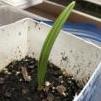
I have been wondering whats the hardiness of date palm seedlings vs seeds I heard they are very resilient as seedlings. Also some people say they grow in zone 7 I am in zone also I would like to know what age they flower/fruit. some pictures of my palms. Thanks.

Edited by climate change virginia
  • Like 1

"The good thing about science is that it's true whether or not you believe in it."
~ Neil deGrasse Tyson

Posted
11 minutes ago, climate change virginia said:

I have been wondering whats the hardiness of date palm seedlings vs seeds I heard they are very resilient as seedlings. Also some people say they grow in zone 7 I am in zone also I would like to know what age they flower/fruit. some pictures of my palms. Thanks.

Welcome to PalmTalk!

Phoenix dactylifera is good down to the 20F mark, sometimes lower, in the humid climates on the east coast.  There are a few that survive abnormally low temperatures in arid areas like El Paso, TX or Las Cruces, NM.  Mind here in Florida took about 5-6 years in the ground to start producing flowers and dates, but can now actively reproduce.

https://www.palmtalk.org/forum/index.php?/topic/62531-is-this-normal-pics-included/&do=findComment&comment=922533

  • Upvote 2

Lakeland, FLUSDA Zone 2023: 10a  2012: 9b  1990: 9a | Record Low: 20F/-6.67C (Jan. 1985, Dec.1962)

Posted
26 minutes ago, kinzyjr said:

Welcome to PalmTalk!

Phoenix dactylifera is good down to the 20F mark, sometimes lower, in the humid climates on the east coast.  There are a few that survive abnormally low temperatures in arid areas like El Paso, TX or Las Cruces, NM.  Mind here in Florida took about 5-6 years in the ground to start producing flowers and dates, but can now actively reproduce.

https://www.palmtalk.org/forum/index.php?/topic/62531-is-this-normal-pics-included/&do=findComment&comment=922533

Yeah I think humidity is the key here.  There are some I’ve seen in arid places that infrequently dip to single digits in the early morning that are doing fine.  The east is a totally different animal.

  • Like 2
  • 2 weeks later...
Posted (edited)
On 10/8/2020 at 10:32 AM, kinzyjr said:

Welcome to PalmTalk!

Phoenix dactylifera is good down to the 20F mark, sometimes lower, in the humid climates on the east coast.  There are a few that survive abnormally low temperatures in arid areas like El Paso, TX or Las Cruces, NM.  Mind here in Florida took about 5-6 years in the ground to start producing flowers and dates, but can now actively reproduce.

https://www.palmtalk.org/forum/index.php?/topic/62531-is-this-normal-pics-included/&do=findComment&comment=922533

Mine are grown from seed and they are not even a year old. The humidity here in the winters are desert like and we have LOTS of urban heat from DC. Which makes us like a very cold 8a. We havent gone below 10f since the vortex of 2014. 

Edited by climate change virginia

"The good thing about science is that it's true whether or not you believe in it."
~ Neil deGrasse Tyson

  • 1 month later...
Posted

when does a date palm get its first feather leaf?

"The good thing about science is that it's true whether or not you believe in it."
~ Neil deGrasse Tyson

Posted
22 minutes ago, climate change virginia said:

when does a date palm get its first feather leaf?

I would assume between 1 and 2 years of age they should begin producing mature fronds. I dont have any experience with these though.

Palms - 1 Bismarckia nobilis, 2 Butia odorataBxJ1 BxJxBxS1 BxSChamaerops humilis1 Chamaedorea microspadix1 Hyophorbe verschaffeltiiLivistona chinensis1 Livistona nitida, 1 Phoenix canariensis2 Phoenix roebeleniiRavenea rivularis1 Rhapis excelsa1 Sabal bermudanaSabal palmetto4 Syagrus romanzoffianaTrachycarpus fortunei4 Washingtonia robusta
Total: 34

Posted
On 10/18/2020 at 8:46 AM, climate change virginia said:

Mine are grown from seed and they are not even a year old. The humidity here in the winters are desert like and we have LOTS of urban heat from DC. Which makes us like a very cold 8a. We havent gone below 10f since the vortex of 2014. 

Also FYI here - your humidity may seem desert-like in the winter, but it is not.

This morning my house was 12% humidity and I'm near the river and an actual oasis at the bottom of a valley. All the vegatation down there is wet.  I'd imagine just a little further up the hill from my house, humidity was probably in the single digits, and this is every morning.  Even your driest days are probably 20-30% at least, likely more.  This can definitely make a difference, especially for desert-native species like P. dactilyfera.

The chances of P. dactilyfera surviving any meaningful length of time in your climate are basically 0.  If you wanted even the most remote of remote chances, you'd need P. sylvestris in an impeccably stable and warm microclimate that somehow also received first light at dawn.  There is some thought that J. chilensis could potentially survive your temps but would need desert-level humidity conditions.

Posted
42 minutes ago, ahosey01 said:

Also FYI here - your humidity may seem desert-like in the winter, but it is not.

This morning my house was 12% humidity and I'm near the river and an actual oasis at the bottom of a valley. All the vegatation down there is wet.  I'd imagine just a little further up the hill from my house, humidity was probably in the single digits, and this is every morning.  Even your driest days are probably 20-30% at least, likely more.  This can definitely make a difference, especially for desert-native species like P. dactilyfera.

The chances of P. dactilyfera surviving any meaningful length of time in your climate are basically 0.  If you wanted even the most remote of remote chances, you'd need P. sylvestris in an impeccably stable and warm microclimate that somehow also received first light at dawn.  There is some thought that J. chilensis could potentially survive your temps but would need desert-level humidity conditions.

your right about my humidity I went back and looked at my past humidity and its around 38-65% in the winter also I was told that houses in the winter are more dry during the winter because of the heater and also my house didn't have a humidifier so that's what gave me the illusion of a desert like winter. so you are right :)

"The good thing about science is that it's true whether or not you believe in it."
~ Neil deGrasse Tyson

Create an account or sign in to comment

You need to be a member in order to leave a comment

Create an account

Sign up for a new account in our community. It's easy!

Register a new account

Sign in

Already have an account? Sign in here.

Sign In Now


  • Recently Browsing

    • No registered users viewing this page.
×
×
  • Create New...