Jump to content
IPS 2025 SAVE THE SPECIES - Please Check It Out - Click Here For Video & Info ×
Monitor Donation Goal Progress of SAVE THE SPECIES - Click Here ×
  • WELCOME GUEST

    It looks as if you are viewing PalmTalk as an unregistered Guest.

    Please consider registering so as to take better advantage of our vast knowledge base and friendly community.  By registering you will gain access to many features - among them are our powerful Search feature, the ability to Private Message other Users, and be able to post and/or answer questions from all over the world. It is completely free, no “catches,” and you will have complete control over how you wish to use this site.

    PalmTalk is sponsored by the International Palm Society. - an organization dedicated to learning everything about and enjoying palm trees (and their companion plants) while conserving endangered palm species and habitat worldwide. Please take the time to know us all better and register.

    guest Renda04.jpg

Recommended Posts

Posted

Hello all!! 

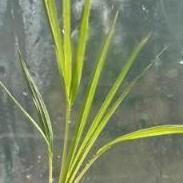
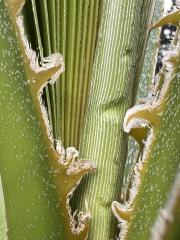
I was at a local nursery last weekend and noticed a few of there canary island date palms had suckers growing from base/trunk. 

From what i understand phoenix canariensis don't sucker. Any thoughts? 

20200821_173608.jpg

Screenshot_20200825-095152_Gallery.jpg

Posted

Hybrid.

I've seen them crossed with reclinatas; usually they're smaller and skinnier than CIDPs, with floppier leaves.

But once in a while, you get one that looks like multiple CIDPs all stuck together.

Do you have any pictures of the plant from more of a distance?

  • Like 3
  • Upvote 1

Let's keep our forum fun and friendly.

Any data in this post is provided 'as is' and in no event shall I be liable for any damages, including, without limitation, damages resulting from accuracy or lack thereof, insult, or lost profits or revenue, claims by third parties or for other similar costs, or any special, incidental, or consequential damages arising out of my opinion or the use of this data. The accuracy or reliability of the data is not guaranteed or warranted in any way and I disclaim liability of any kind whatsoever, including, without limitation, liability for quality, performance, merchantability and fitness for a particular purpose arising out of the use, or inability to use my data. Other terms may apply.

Posted

I actually do have a photo of one of them! 

Judging by the size of the fronds, I would have thought this guy wasn't a hybrid. 


Screenshot_20200825-110023_Gallery.jpg

  • Like 1
Posted
11 minutes ago, Coasta said:

I actually do have a photo of one of them! 

Judging by the size of the fronds, I would have thought this guy wasn't a hybrid. 


Screenshot_20200825-110023_Gallery.jpg

That looks like a reclinata or a reclinata crossed with a CIDP.

The key feature is the relatively flat leaves, as opposed to the more plumose ones held by a CIDP.

If you get one for your yard, be aware that CIDPs are better in drought than reclinatas, though I'll accede to those with more experience in such matters. CIDP habitat is on these rocky islands; reclinatas are right on the edges of rivers, full of hippos, snakes, crocodiles . . . .

  • Like 3
  • Upvote 1

Let's keep our forum fun and friendly.

Any data in this post is provided 'as is' and in no event shall I be liable for any damages, including, without limitation, damages resulting from accuracy or lack thereof, insult, or lost profits or revenue, claims by third parties or for other similar costs, or any special, incidental, or consequential damages arising out of my opinion or the use of this data. The accuracy or reliability of the data is not guaranteed or warranted in any way and I disclaim liability of any kind whatsoever, including, without limitation, liability for quality, performance, merchantability and fitness for a particular purpose arising out of the use, or inability to use my data. Other terms may apply.

Posted (edited)

Interesting as I am on the search for another cananry island date palm it's good to know this stuff. 

I currently have one in the ground and I question if it's going to have the really long fronds and how much of it is canerienses.  The fronds are sort of floppy and don't stand straight up like others i see. 

Also the fronds are only 4ft in length right now.. please see below. 20200825_111124.thumb.jpg.443b35bf5d4600097d8532b6eed6eefa.jpg20200825_111135.thumb.jpg.f12b725f0cb4013a207c939398bf97e8.jpg 

When I compare it to one at the nursery which has 5ft fronds, it makes me wonder. 

20200821_172749.thumb.jpg.123fbca957b51fb66dde3d9c6c40c61b.jpg

Edited by Coasta
  • Like 1
Posted
1 hour ago, Coasta said:

I currently have one in the ground and I question if it's going to have the really long fronds and how much of it is canerienses. 

Your in-ground Phoenix looks more like CIDP.   Hopefully yours won't sucker like the one at the nursery - the suckers are a pain to deal with (literally).  I'd plan on the long fronds of CIDP although it could end up being a hybrid also because of how easily they hybridize.  And the last photo you included at the nursery looks like one grown in more shade which can make the fronds stretch out.  Plus the growers would want to keep them trimmed in a way that they can fit more plants in a limited space forcing the growth upwards and also at the retailer to minimize customers/employees from getting poked!

  • Like 2

Jon Sunder

Posted
8 hours ago, Fusca said:

Your in-ground Phoenix looks more like CIDP.   Hopefully yours won't sucker like the one at the nursery - the suckers are a pain to deal with (literally).  I'd plan on the long fronds of CIDP although it could end up being a hybrid also because of how easily they hybridize.  And the last photo you included at the nursery looks like one grown in more shade which can make the fronds stretch out.  Plus the growers would want to keep them trimmed in a way that they can fit more plants in a limited space forcing the growth upwards and also at the retailer to minimize customers/employees from getting poked!

Thanks Fusca!! I appreciate your response and really hope that is the case :). 

Posted
20 hours ago, Coasta said:

Interesting as I am on the search for another cananry island date palm it's good to know this stuff. 

I currently have one in the ground and I question if it's going to have the really long fronds and how much of it is canerienses.  The fronds are sort of floppy and don't stand straight up like others i see. 

Also the fronds are only 4ft in length right now.. please see below. 20200825_111124.thumb.jpg.443b35bf5d4600097d8532b6eed6eefa.jpg20200825_111135.thumb.jpg.f12b725f0cb4013a207c939398bf97e8.jpg 

When I compare it to one at the nursery which has 5ft fronds, it makes me wonder. 

20200821_172749.thumb.jpg.123fbca957b51fb66dde3d9c6c40c61b.jpg

Both pictures look like CIDPs to me. Note the relatively plumose, stiff leaves. Compare that with the one in your first picture in your first post. The one in your second picture above is a lot greener, I think because it's in a bit of shade.

Just for fun, it might be interesting to see if you can locate other Phoenix species like P. rupicola or sylvestris. I know rupicolas are from India and it gets and stays hot there, but they're also hard to find here in the U.S., at least as "full blooded" specimens and not mutts with CIDP. That said, the mutts are nice, too.

We had some seriously nutty Palm Talkers who know the AZ landscape for nurseries well, hope some of them are around. Maybe even have some plants to sell.

  • Like 1

Let's keep our forum fun and friendly.

Any data in this post is provided 'as is' and in no event shall I be liable for any damages, including, without limitation, damages resulting from accuracy or lack thereof, insult, or lost profits or revenue, claims by third parties or for other similar costs, or any special, incidental, or consequential damages arising out of my opinion or the use of this data. The accuracy or reliability of the data is not guaranteed or warranted in any way and I disclaim liability of any kind whatsoever, including, without limitation, liability for quality, performance, merchantability and fitness for a particular purpose arising out of the use, or inability to use my data. Other terms may apply.

Posted (edited)

Here's a question/clarification for me.  When you guys are saying "plumose" regarding CIDP, I've always thought of the CIDP as having a consistent "V" shape to the leaflets, with a steeper V near the base of the fronds and flattening out towards the tip of the frond.  But each leaflet is inserted at a similar angle.  I used this to distinguish more pure CIDP from hybrids, because a lot of the other Phoenix like Dactylifera have several different insertion angles for the leaflets.  And Roebellini frequently has no "V" at all, at least towards the end of the frond.  So for example his in-ground CIDP may be pure, but it also has at least 4 different insertion angles towards the base of the frond, maybe even 5 or 6 angles.  This evens out to more-or-less 2 angles towards the tip, see below. 

978924949_CIDPleafangles.jpg.78af07015913d1d62d050599ffa22aa8.jpg

I know "plumose" means just more than a flat plane leaflet insertion, but I tend to think of plumose palms as things like Queens with seemingly random insertion angles.  In the context of CIDP they are also plumose, but just in a more "regular" manner.  Other Phoenix like Dacty are more "irregularly plumose."  Is that a fairly accurate statement, or am I way off base?  :D

Edited by Merlyn2220
  • Like 2
Posted
2 hours ago, DoomsDave said:

Both pictures look like CIDPs to me. Note the relatively plumose, stiff leaves. Compare that with the one in your first picture in your first post. The one in your second picture above is a lot greener, I think because it's in a bit of shade.

Just for fun, it might be interesting to see if you can locate other Phoenix species like P. rupicola or sylvestris. I know rupicolas are from India and it gets and stays hot there, but they're also hard to find here in the U.S., at least as "full blooded" specimens and not mutts with CIDP. That said, the mutts are nice, too.

We had some seriously nutty Palm Talkers who know the AZ landscape for nurseries well, hope some of them are around. Maybe even have some plants to sell.

Thanks Dooms Dave! I believe i saw a rupicola at a local nursery here, but he has it as a collectors item. 

Posted
14 minutes ago, Merlyn2220 said:

Here's a question/clarification for me.  When you guys are saying "plumose" regarding CIDP, I've always thought of the CIDP as having a consistent "V" shape to the leaflets, with a steeper V near the base of the fronds and flattening out towards the tip of the frond.  But each leaflet is inserted at a similar angle.  I used this to distinguish more pure CIDP from hybrids, because a lot of the other Phoenix like Dactylifera have several different insertion angles for the leaflets.  And Roebellini frequently has no "V" at all, at least towards the end of the frond.  So for example his in-ground CIDP may be pure, but it also has at least 4 different insertion angles towards the base of the frond, maybe even 5 or 6 angles.  This evens out to more-or-less 2 angles towards the tip, see below. 

978924949_CIDPleafangles.jpg.78af07015913d1d62d050599ffa22aa8.jpg

I know "plumose" means just more than a flat plane leaflet insertion, but I tend to think of plumose palms as things like Queens with seemingly random insertion angles.  In the context of CIDP they are also plumose, but just in a more "regular" manner.  Other Phoenix like Dacty are more "irregularly plumose."  Is that a fairly accurate statement, or am I way off base?  :D

Merlyn, thanks so much for braking this down. I'm curious to see what others say about your statement. 

I am hoping mine is mostly pure and I get some nice long stiff fronds. :)

Posted
13 minutes ago, Merlyn2220 said:

Here's a question/clarification for me.  When you guys are saying "plumose" regarding CIDP, I've always thought of the CIDP as having a consistent "V" shape to the leaflets, with a steeper V near the base of the fronds and flattening out towards the tip of the frond.  But each leaflet is inserted at a similar angle.  I used this to distinguish more pure CIDP from hybrids, because a lot of the other Phoenix like Dactylifera have several different insertion angles for the leaflets.  And Roebellini frequently has no "V" at all, at least towards the end of the frond.  So for example his in-ground CIDP may be pure, but it also has at least 4 different insertion angles towards the base of the frond, maybe even 5 or 6 angles.  This evens out to more-or-less 2 angles towards the tip, see below. 

978924949_CIDPleafangles.jpg.78af07015913d1d62d050599ffa22aa8.jpg

I know "plumose" means just more than a flat plane leaflet insertion, but I tend to think of plumose palms as things like Queens with seemingly random insertion angles.  In the context of CIDP they are also plumose, but just in a more "regular" manner.  Other Phoenix like Dacty are more "irregularly plumose."  Is that a fairly accurate statement, or am I way off base?  :D

You raise a good point.

I think it's more accurate to say that reclinata leaves are almost flat, while those of CIDP have various angles of insertion.

This picture resembles the CIDP in the OP's garden. The leaves have varying angles of insertion, and are relatively short.

599px-Phoenix_canariensis_55N.jpg.2f59939cfa7f388ff819233db6d299e2.jpg


Here's what appears to be a pure reclinata. Much flatter, and also a bit floppier.

reclinata.jpg.3e9656e2c62cfdf590170affc7fb9ebe.jpg

  • Like 1

Let's keep our forum fun and friendly.

Any data in this post is provided 'as is' and in no event shall I be liable for any damages, including, without limitation, damages resulting from accuracy or lack thereof, insult, or lost profits or revenue, claims by third parties or for other similar costs, or any special, incidental, or consequential damages arising out of my opinion or the use of this data. The accuracy or reliability of the data is not guaranteed or warranted in any way and I disclaim liability of any kind whatsoever, including, without limitation, liability for quality, performance, merchantability and fitness for a particular purpose arising out of the use, or inability to use my data. Other terms may apply.

Posted
11 minutes ago, Coasta said:

Thanks Dooms Dave! I believe i saw a rupicola at a local nursery here, but he has it as a collectors item. 

Rupicolas are my favorite large Phoenix. They're really pretty if well-grown, and while spiny aren't lethal like their larger cousins. If you have limited space, it might be worth trouble to find one.

  • Upvote 2

Let's keep our forum fun and friendly.

Any data in this post is provided 'as is' and in no event shall I be liable for any damages, including, without limitation, damages resulting from accuracy or lack thereof, insult, or lost profits or revenue, claims by third parties or for other similar costs, or any special, incidental, or consequential damages arising out of my opinion or the use of this data. The accuracy or reliability of the data is not guaranteed or warranted in any way and I disclaim liability of any kind whatsoever, including, without limitation, liability for quality, performance, merchantability and fitness for a particular purpose arising out of the use, or inability to use my data. Other terms may apply.

Posted

Thanks DoomsDave for those photos comparing the two. I am learning so much and starting to think my cidp is more on the pure side. Speaking of space.. I am thinking of adding another CIDP and I am planning on posting another subject on minimum space between two CIDP. Maybe a reclinata might be a good choice. 

Posted
2 hours ago, Coasta said:

Maybe a reclinata might be a good choice. 

@DoomsDave made a good suggestion - rupicola is probably the least "dangerous" and a very nice looking Phoenix in my opinion.  Reclinata can look nice too, but they sucker and they have spiny needle-like thorns (like CIDP and roebelenii have) close to the trunk where you do the trimming.  You just have to be aware of the poking/stabbing dangers involved with maintaining them.  I'd think if you ever got behind in your trimming of reclinata and the suckers start getting thicker than you had planned it would really be a nightmare trimming chore.  I've not done it myself with reclinata but I've had my share of discomfort from my theophrasti, sylvestris hybrid and CIDP.  I bought the sylvestris as a solitary palm so that I wouldn't have to deal with any suckers but apparently it's a hybrid with dactylifera because it's suckering anyway!  :rant:

  • Like 2

Jon Sunder

Posted
On 8/26/2020 at 10:42 AM, Coasta said:

Thanks DoomsDave for those photos comparing the two. I am learning so much and starting to think my cidp is more on the pure side. Speaking of space.. I am thinking of adding another CIDP and I am planning on posting another subject on minimum space between two CIDP. Maybe a reclinata might be a good choice. 

I'd consider a rupie, too if you can find one. They really like the heat.

Let's keep our forum fun and friendly.

Any data in this post is provided 'as is' and in no event shall I be liable for any damages, including, without limitation, damages resulting from accuracy or lack thereof, insult, or lost profits or revenue, claims by third parties or for other similar costs, or any special, incidental, or consequential damages arising out of my opinion or the use of this data. The accuracy or reliability of the data is not guaranteed or warranted in any way and I disclaim liability of any kind whatsoever, including, without limitation, liability for quality, performance, merchantability and fitness for a particular purpose arising out of the use, or inability to use my data. Other terms may apply.

  • 4 years later...
Posted

This suckering phoenix grows in Amsterdam. The color and leaves seem to be canariensis at first sight, but the leaves are a little floppier.

IMG_9560.jpeg

  • Like 1
Posted

It’s in dappled shade which could explain the leaf structure. To me it doesnt look like dacty or theo.

IMG_9562.jpeg

  • Like 1
Posted
1 hour ago, Axel Amsterdam said:

It’s in dappled shade which could explain the leaf structure. To me it doesnt look like dacty or theo.

IMG_9562.jpeg

That sure looks like my Reclinata that I planted on my hill many years ago. I am getting to the point where I am ready to cut a lot of the suckers off so the trunked stems will be visible. They produce copious amounts of shoots ….constantly. Harry

  • Like 1
Posted
3 hours ago, Harry’s Palms said:

That sure looks like my Reclinata that I planted on my hill many years ago. I am getting to the point where I am ready to cut a lot of the suckers off so the trunked stems will be visible. They produce copious amounts of shoots ….constantly. Harry

Thanks, this is a close up of one of the suckers

IMG_9570.jpeg

  • Like 1
Posted

I would buy it for fun. I like suckers.

Posted

I had a suckering CIDPx reclinata, it grew trunks constantly and had up to 4-5" thorns.  A better barbed wire fence might be tough to find.  Cutting the trunks doesnt work, they just regrew out the cut point.  I ended up having to kills the suckers with applications of motor oil  I had allowed 8 trunks and they looked well on their way to 1'+ thickness.  If someone tried to remove it they had better have armor to protect themselves.  I have a rupicola triple, its a nice bright green with flat leaves.  THe different insertion angles of dactylifera are tell tale that its at least a mix.  The whole leaf flatness or V on a CIDP seems to develop as they grow larger.  Sylvestris are plumose and recurved if pure, but we have a lot of dactylifera mildly recurved (biplanar) hybrids they call "sylvestris" that are light green/silver.  Rupicolas do very well in arizona if you water consistently and keep the late day sun off them.  Treeland chandler had a triple 15 years ago that inspired me to plant a triple here.  Low painless maintenance, and an unusual bright green color.

Formerly in Gilbert AZ, zone 9a/9b. Now in Palmetto, Florida Zone 9b/10a??


Tom Blank

Create an account or sign in to comment

You need to be a member in order to leave a comment

Create an account

Sign up for a new account in our community. It's easy!

Register a new account

Sign in

Already have an account? Sign in here.

Sign In Now


  • Recently Browsing

    • No registered users viewing this page.
×
×
  • Create New...