Jump to content
  • WELCOME GUEST

    It looks as if you are viewing PalmTalk as an unregistered Guest.

    Please consider registering so as to take better advantage of our vast knowledge base and friendly community.  By registering you will gain access to many features - among them are our powerful Search feature, the ability to Private Message other Users, and be able to post and/or answer questions from all over the world. It is completely free, no “catches,” and you will have complete control over how you wish to use this site.

    PalmTalk is sponsored by the International Palm Society. - an organization dedicated to learning everything about and enjoying palm trees (and their companion plants) while conserving endangered palm species and habitat worldwide. Please take the time to know us all better and register.

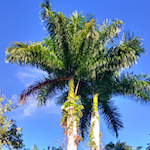
    guest Renda04.jpg

Sabal palms naturally north of Bald Head Isle


Recommended Posts

Posted

Ive heard of cape hatteras however i also heard they were cut down by the locals and eaten.  the only sabals there were planted and there arent many.

does anyone know of sabal palmetto naturally north of Bald Head Island?

Posted

There are S. palmetto naturalizing north of Bald Head throughout coastal NC to at least Beaufort that I have observed, but they are likely offspring of transplanted landscape palms.  I think through this process they will expand the area where they grow and reproduce in the wild.  The cold tolerance of the seedling stage seems to be what limits the natural distribution of S. palmetto.

As far as the northern most large native palmetto... There is a lone large Sabal on Battery Island in the Cape Fear river which is about 2 miles north of where they are native on Bald Head.  I imagine it ended up there via a bird dropping a long time ago.  Every time I boat past that island and see that palm I think that it is probably the northernmost "native" S. palmetto in the world.      

  • Upvote 1
Posted

Hmmm. I don't know.  This debat has gone in and in for ages it seems.  I tend to believe they were once, or are actually native up to exteme southeastern VA.   


This photo of native Sabal palmetto has been around online for ages.   I've read several accounts of people seeing these first hand.  Supposedly there are a few more well hidden away in uninhabited areas in dunes near back bay, pretty far south.  I can't say for sure though since I haven't seen them first hand.   

What I do know is that there are many known plant sabals in the area that are 20-25 feet tall or so and have been there anywhere Between 15 and 25 years, have full crowns, look very healthy, and produce seeds.    I know someone that personally has 3 large ones that were planted 20 years ago and are still there today.   They're 2-3 miles inland from the ocean and south of va beach.   By the same token there are just as many of nit more sabals there that look ratty and stay looking terrible or many that just die after a few winters.  Usually those are the new transplants. Sometimes those survive and end up being lush healthy trees though.    

Ba beach is a tough nut to crack.  You have native Spanish moss in several areas, live oaks that do great in many spots, but then you'll have two of the same established mature palms right next to one another and one severe cold snap severely damages or kills one, while the one next to it looks like almost nothing phased it.    I still don't understand why windmills are not tried more there.  They do fantastic and get very big.   

IMG_1303.PNG

  • 4 weeks later...
Posted

@DCA_Palm_Fan

Thankfully, sabals are so adaptable that there is a good chance that the ones that are thriving there have the set of traits necessary to naturalize the area.  At least that's my hope.  I share your belief that they were present in the VB area previously.  Regarding Windmills, fantastic choice in that zone.  I'd imagine dwarf palmetto and needle palms would be practically bulletproof there.

A question out of my own curiosity: Has anyone there tried palms grown from seeds either from NC or VB itself?  Any observations regarding their ability to naturalize?

You may or may not know the answers, but any observations or data might also be relevant to those who are pushing the limits in southeast NJ and other extremely marginal climates.

  • Upvote 2

Lakeland, FLUSDA Zone 2023: 10a  2012: 9b  1990: 9a | Record Low: 20F/-6.67C (Jan. 1985, Dec.1962)

Posted

@DCA_Palm_Fan People have been saying for years that Sabal minor have been native to the Virginia Beach area, but no one is or has really bothered to look. I actually believe they are native to the area and the are actually put on some native range maps as native to Virginia Beach. As for Sabal palmetto, I am not sure. I heard that in the colonial days Saw palmetto were native as far north as Chincoteague Island, Virginia. I could easily see this being true. If I never get to go to a coastal forest in Virginia Beach, I am going to look for Sabal minor. Here is a Sabal minor native range map that includes Virginia Beach. 


SabalMinoirNew.jpg

PalmTreeDude

Posted

And another one. 


image.png.f2af244d2c98a95d854e1164dc107150.png

PalmTreeDude

Posted
On 12/11/2016, 12:34:36, PalmTreeDude said:

And another one. 


image.png.f2af244d2c98a95d854e1164dc107150.png

Hmm.  I'm not sure how accurate those maps are.  Any idea of where they came from?  That seems awfully far north into VA to me. I do think they wither once were, or still are native to VA, but I would bet that if that is in deed the case, they are confined to the very far southeastern corner of it.  Say no farther north nor west than the dismal swamp area. That would be my best educated guess on that.  Same or even smaller area for Sabal Palmetto. 

Posted (edited)
20 hours ago, DCA_Palm_Fan said:

Hmm.  I'm not sure how accurate those maps are.  Any idea of where they came from?  That seems awfully far north into VA to me. I do think they wither once were, or still are native to VA, but I would bet that if that is in deed the case, they are confined to the very far southeastern corner of it.  Say no farther north nor west than the dismal swamp area. That would be my best educated guess on that.  Same or even smaller area for Sabal Palmetto. 

I got the map with the red from a friend who sent me it. The one in green is from City data from a thread, who knows who it came from. I find it interesting that 2 maps have VA includes, and there are written statements of Sabal minor in VA growing naturally in the extreme South East by Virgonia Tech. I can believe the map, or at least it seems reasonable. Other than the Great Dismal Swamp area and VA Beach, the rest of the range would make sense because it goes into very marshy and wet areas. If they are native that far north, I don't think there are any large stands of them, at least they are not discovered. These maps all never leave the 7b climate. I agree with the green one the most out of the two. 

Edited by PalmTreeDude

PalmTreeDude

Create an account or sign in to comment

You need to be a member in order to leave a comment

Create an account

Sign up for a new account in our community. It's easy!

Register a new account

Sign in

Already have an account? Sign in here.

Sign In Now


  • Recently Browsing

    • No registered users viewing this page.
×
×
  • Create New...