Skip to content
View in the app

A better way to browse. Learn more.

PalmTalk

A full-screen app on your home screen with push notifications, badges and more.

To install this app on iOS and iPadOS
  1. Tap the Share icon in Safari
  2. Scroll the menu and tap Add to Home Screen.
  3. Tap Add in the top-right corner.
To install this app on Android
  1. Tap the 3-dot menu (⋮) in the top-right corner of the browser.
  2. Tap Add to Home screen or Install app.
  3. Confirm by tapping Install.

WELCOME GUEST

It looks as if you are viewing PalmTalk as an unregistered Guest.

Please consider registering so as to take better advantage of our vast knowledge base and friendly community.  By registering you will gain access to many features - among them are our powerful Search feature, the ability to Private Message other Users, and be able to post and/or answer questions from all over the world. It is completely free, no “catches,” and you will have complete control over how you wish to use this site.

PalmTalk is sponsored by the International Palm Society. - an organization dedicated to learning everything about and enjoying palm trees (and their companion plants) while conserving endangered palm species and habitat worldwide. Please take the time to know us all better and register.

guest Renda04.jpg

Featured Replies

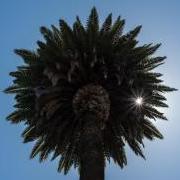
I was walking through La Cantera (an open air mall on the north west side of San Antonio) the other day and I saw some interesting palms (at least interesting for San Antonio).  I believe the palms in the first picture are Phoenix dactylifera, and I believe that's Serenoa repens in the second. Can anyone confirm that they are those species?


I have seen many Phoenix canariensis growing around San Antonio (I have one growing in my yard as well), but not so many Phoenix dactylifera.  It was interesting to see such tall specimens growing here (if that is what they are).  I saw about 8 this size alone at La Cantera.


Whatever the second palms is, it looks like it is fruiting seeds.  I didn't notice the seeds until after I got back home and looked at the picture.  I'll have to go back on a collection run soon; it is a good thing I live close by!.

20160814_181552.jpg

20160814_181620.jpg

Unified Theory of Palm Seed Germination

image.png.2a6e16e02a0a8bfb8a478ab737de4bb1.png

(Where: bh = bottom heat, fs = fresh seed, L = love, m = magic, p = patience, and t = time)

DISCLAIMER: Working theory; not yet peer reviewed.

"Fronds come and go; the spear is life!" - Anonymous Palmtalker

Hi,

The palm that is fruiting looks like Saw palmetto,silver form.

Love,

Kris.

love conquers all..

43278.gif

.

The tall palms are definitely P dactylifera.  They often "migrate" east once they "retire" from date production in CA and AZ.  

Land O Lakes FL, a suburb on the North Side of Tampa, FL

Summers are great, 90f/32c in the day & 70f/21c at night with plentiful rain & sun

Winters are subtropical with occasional frosts and freezes. Tropical cyclones happen.

We have a few Royal palms in the warm microclimates but Coconuts freeze.

I am a Kayaker, Hiker, Bicyclist, and amateur Photographer that loves the outdoors.  

  • 9 years later...

There is a non 'migratory' date palm on Kentucky street, across from Little Flower Bascilica.

Create an account or sign in to comment

Account

Navigation

Configure browser push notifications

Chrome (Android)
  1. Tap the lock icon next to the address bar.
  2. Tap Permissions → Notifications.
  3. Adjust your preference.
Chrome (Desktop)
  1. Click the padlock icon in the address bar.
  2. Select Site settings.
  3. Find Notifications and adjust your preference.