Jump to content
LAST CHANCE - PALM TALK ACCESS INFORMATION - CLICK HERE ×
  • WELCOME GUEST

    It looks as if you are viewing PalmTalk as an unregistered Guest.

    Please consider registering so as to take better advantage of our vast knowledge base and friendly community.  By registering you will gain access to many features - among them are our powerful Search feature, the ability to Private Message other Users, and be able to post and/or answer questions from all over the world. It is completely free, no “catches,” and you will have complete control over how you wish to use this site.

    PalmTalk is sponsored by the International Palm Society. - an organization dedicated to learning everything about and enjoying palm trees (and their companion plants) while conserving endangered palm species and habitat worldwide. Please take the time to know us all better and register.

    guest Renda04.jpg

Recommended Posts

Posted

Here is a picture of my variegated sago that I purchased a couple of years ago. Happy to see that is has flushed many times now and has shown variegation every time. Bought it from a guy named Jerod at surf city palms.  He always has an amazing selection of variegated palms and cycads. 

image.jpeg

  • Upvote 1
Posted
On 8/14/2016, 7:22:13, 5150cycad said:

Happy to see that is has flushed many times now and has shown variegation every time.

I may be naive, but how does one tell when it is genetic "variegation" versus a nutritional deficiency which is causing the absence of green in portions of the plant?  Perhaps I need to read up on genetic mutations, chlorophyll, photosynthesis and processing of nutrients before asking such a broad question.  I ask, because over the years, I have seen flushes on Cycas revoluta which exhibit some of this coloring variation, but never consistent from flush to flush.

33.0782 North -117.305 West  at 72 feet elevation

Posted

The picture above looks like a combo of nutrient/sunburn to me, not varigation. 


To me the pic below is a varigated sago.

2007-11-03_06-55-06.jpg

  • Upvote 2
Posted
10 hours ago, TexasColdHardyPalms said:

The picture above looks like a combo of nutrient/sunburn to me, not varigation. 


To me the pic below is a varigated sago.

2007-11-03_06-55-06.jpg

I agree that some parts of that picture could be some nutrient/sunburn but I would disagree that this is not a variegated sago. This sago has shown this trait every single time it has flushed since I bought it. If it was a one or two time thing than I would think otherwise. I don't think it is a coincidence. I Bought it from a guy who specializes in variegated palms and cycads. My understanding is that there are different types of variegation. 

image.jpeg

image.jpeg

  • Upvote 1
Posted

It is variegated. There also should be stripes on the petioles also. I used to have a white and green variegated. I sure do miss it. Wasn't worth selling it for $500. 

Los Angeles, CA and Myrtle Beach, SC.

Posted
2 hours ago, Brad Mondel said:

It is variegated. There also should be stripes on the petioles also. I used to have a white and green variegated. I sure do miss it. Wasn't worth selling it for $500. 

Thank you for your response. I think I paid $100 for a 4" plant. Not too bad for a variegated sago in my opinion. It looks better and better every year. Do u have a picture of the one u sold for $500? 

Posted

Here you go. These pictures are seven years old so the quality isn't great. image.jpeg.c5fa19cd5707e8467d28b09b0652bimage.jpeg.e5c464272f3a3125395d3086d51d0image.jpeg.ebd9bf04a965b1ab82c866eccd4d6

Los Angeles, CA and Myrtle Beach, SC.

Posted
9 hours ago, Brad Mondel said:

It is variegated. There also should be stripes on the petioles also. I used to have a white and green variegated. I sure do miss it. Wasn't worth selling it for $500. 

I can see why you miss it. That was a nice looking sago. Thanks for posting

Posted

There are a lot of different types of variegation.   All the plants above look to be variegated to me.  Well done.

DSC_1374.JPG

  • Upvote 1
Posted

 I have one that comes out nicely colored and then fades a little. Then I have one that comes out green and then over the month that the leaves harden up, then the variegation shows and holds a stronger color. Here are the two, but I need to take another picture of the green one since it is starting to color up. Brad, if you ever want another one, I'd probably sell the one in the top picture for about half of what you got for yours.

IMG_20160708_120214.jpg

IMG_20160708_120127.jpg

Posted

That's a beautiful specimen you got there. What's the history behind it? I found mine at a big box store mixed in with a bunch of green ones. Every time I go I look for them but that's the only one I ever found. 

Los Angeles, CA and Myrtle Beach, SC.

Posted

Its just an offset from a variegated plant that came from Miami. Its about 4+ inches and has been rooted for about 3 years now.

Posted

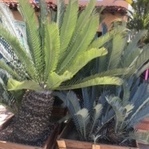
Partial to my D. spinulosums last flush.. :)

20160724_113354.jpg

Zone 10a at best after 2007 AND 2013, on SW facing hill, 1 1/2 miles from coast in Oceanside, CA. 30-98 degrees, and 45-80deg. about 95% of the time.

"The great workman of nature is time."   ,  "Genius is nothing but a great aptitude for patience."

-George-Louis Leclerc de Buffon-

I do some experiments and learning in my garden with palms so you don't have to experience the pain! Look at my old threads to find various observations and tips!

Posted
6 hours ago, BS Man about Palms said:

Partial to my D. spinulosums last flush.. :)

20160724_113354.jpg

That dioon spinulosum looms amazing. Wish I could get my hands on one of those. 

Create an account or sign in to comment

You need to be a member in order to leave a comment

Create an account

Sign up for a new account in our community. It's easy!

Register a new account

Sign in

Already have an account? Sign in here.

Sign In Now


  • Recently Browsing

    • No registered users viewing this page.
×
×
  • Create New...