Jump to content
SUPER IMPORTANT - MAJOR IMPROVEMENTS TO PALMTALK - PLEASE READ ×
Upgrade Delayed - Rescheduling Necessary - Info Here ×
  • WELCOME GUEST

    It looks as if you are viewing PalmTalk as an unregistered Guest.

    Please consider registering so as to take better advantage of our vast knowledge base and friendly community.  By registering you will gain access to many features - among them are our powerful Search feature, the ability to Private Message other Users, and be able to post and/or answer questions from all over the world. It is completely free, no “catches,” and you will have complete control over how you wish to use this site.

    PalmTalk is sponsored by the International Palm Society. - an organization dedicated to learning everything about and enjoying palm trees (and their companion plants) while conserving endangered palm species and habitat worldwide. Please take the time to know us all better and register.

    guest Renda04.jpg

Recommended Posts

Posted (edited)

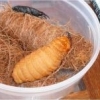
I discovered this palm weevil in Tijuana in 2010, and the authorities on both sides of the border were notified.

Since then, it has now become established in the very most south part of Southern California....and is moving north quickly.


Los Angeles TV (KABC - ABC Network) coverage about Rhynchophorus Palmarum:

http://abc7.com/news/expert-warns-of-new-insect-threat-to-socal-palm-trees/1407487/


Mark Hoddle's University of California Center for Invasive Species Research webpage about this weevil is located here:

http://cisr.ucr.edu/palmarum.html


Additional TV coverage in the Coachella Valley (KMIR - NBC network), where it was recently detected, is here:

http://www.kmir.com/story/32351065/invasive-bug-killing-palms-found-in-valley


Watching these videos and viewing the webpage, shows the tremendous damage this pest causes. These palms weigh several tons, and each cost thousands of dollars to remove.

Rhynchophorus Palmarum prefers Phoenix species palms, but will also attack many other species.
 

Please contact Mark Hoddle of the University of Southern California Riverside, Center for Invasive Species Research, through his webpage, if you see palms with similar damage in any part of Southern California.
 
Edited by Cristóbal
  • Upvote 5

TEMP. JAN. 21/10 C (69/50 F), AUG. 29/20 C (84/68 F). COASTAL DESERT, MOST DAYS MILD OR WARM, SUNNY AND DRY. YEARLY PRECIPITATION: 210 MM (8.2 INCHES). ZONE 11 NO FREEZES CLOSE TO THE OCEAN.

5845d02ceb988_3-copia.jpg.447ccc2a7cc4c6

Posted

Thank you for the update on this.  It seems like there is a never-ending array of things out to get our palms.

Resident of Puerto de la Cruz, Tenerife, San Diego, CA and Pahoa, HI.  Former garden in Vista, CA.  Garden Photos

Posted

Thanks for the info!

I hope every californian people read this.

In Europe we have its cousin, the red weevil ( Rhynchophorus ferrugineus).

It arrived to Spain 20 years ago.

Now, after 20 years, the 90% Phoenix canariensis are death.

Do you want the same in California? People must be carefull.

  • Upvote 2
Posted

Thanks for passing on the info. I saw that news clip a couple weeks ago so I've been keeping an eye out for sick looking palms in the area. 

Posted

Thank you, Cristobal, for the news clips and links.  Everyone should be on the alert to protect their palm gardens.  Make your own traps with a bucket and monitor them! Southern California with thousands of tall dead palms is not a pleasant image.

  • Upvote 1

Kim Cyr

Between the beach and the bays, Point Loma, San Diego, California USA
and on a 300 year-old lava flow, Pahoa, Hawaii, 1/4 mile from the 2018 flow
All characters  in this work are fictitious. Any resemblance to real persons, living or dead, is purely coincidental.

Posted

Thanks for posting this. Sadly I believe this is a hopeless fight in the US. We can't stop humans, how can we stop insects? We will just need to learn to combat these guys here sooner or later. 

  • Upvote 2

Len

Vista, CA (Zone 10a)

Shadowridge Area

"Show me your garden and I shall tell you what you are."

-- Alfred Austin

Posted

Thank you Cristobal for the update, quite concerning indeed.. Crazy to think that in a 30 day period, these Beetles, which can fly up to 5 miles per day.. can cover a distance of anywhere from 75 to 150 Miles from where they originated.

  • 2 weeks later...
Posted

Thanks for the update Cristobal. I remember reading your thread from a few years ago when you discovered those first infected palms. Always wondered if it was contained to a small area and then caught in time or not. Sad to hear about the latest finds.

So had this thought, what happens to it when it reaches our vast coastal and inland mountain ranges where I doubt there are any palms. Will that have exhausted it's food source? Catching infected palms from southern Cal from being shipped elsewhere has to be top of the list for prevention of the spread. Thanks to you Cristobal and the efforts of the ag departments and research people like Mark Hoddle has been an important early step in making nurseries, growers, etc. aware of the infestation.

Zone 9b (formerly listed as Zone 9a); Sunset 14

  • 2 years later...
Posted (edited)

Any updates on these south of the border invaders?

Edited by GottmitAlex

5 year high 42.2C/108F (07/06/2018)--5 year low 4.6C/40.3F (1/19/2023)--Lowest recent/current winter: 4.6C/40.3F (1/19/2023)


Posted

And Mark Hoddle is a Kiwi! Or at least he has a New Zealand accent.

Create an account or sign in to comment

You need to be a member in order to leave a comment

Create an account

Sign up for a new account in our community. It's easy!

Register a new account

Sign in

Already have an account? Sign in here.

Sign In Now


  • Recently Browsing

    • No registered users viewing this page.
×
×
  • Create New...