Jump to content
  • WELCOME GUEST

    It looks as if you are viewing PalmTalk as an unregistered Guest.

    Please consider registering so as to take better advantage of our vast knowledge base and friendly community.  By registering you will gain access to many features - among them are our powerful Search feature, the ability to Private Message other Users, and be able to post and/or answer questions from all over the world. It is completely free, no “catches,” and you will have complete control over how you wish to use this site.

    PalmTalk is sponsored by the International Palm Society. - an organization dedicated to learning everything about and enjoying palm trees (and their companion plants) while conserving endangered palm species and habitat worldwide. Please take the time to know us all better and register.

    guest Renda04.jpg

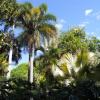
Washingtonia filifera in Satellite Beach


Recommended Posts

Posted

I found today another possible filifera in Central Florida can anyone confirm this is filifera or filibusta? the trunks look much fatter in person.

http://goo.gl/maps/Xssr8

Posted

they do look like filifera, though the trunks aren't nearly as thick as in the southwest desert. Still, they look maintenance and are surely irrigation free...

Formerly in Gilbert AZ, zone 9a/9b. Now in Palmetto, Florida Zone 9b/10a??


Tom Blank

Posted

Yes...those look like filifera to my (untrained) eyes as well. I also agree they are skinnier than the ones I've seen out west but they are still cool palms!

Larry 

Palm Harbor, FL 10a / Ft Myers, FL 10b

Posted

Oh yes, those are filifera, not the happiest I've seen but it's definitely filifera, if there is any robusta in it it's only a small part. I attribute the relative scrawniness to the climate that it's in more than anything.

Corpus Christi, TX, near salt water, zone 9b/10a! Except when it isn't and everything gets nuked.

Posted

They may not be like the ones in Arizona but they are still fat when seen in person. Hopefully my seedlings grows up like so.

Posted

So, what is the smaller palm to the left?

In my post I sometimes express "my" opinion. Warning, it may differ from "your" opinion. If so, please do not feel insulted, just state your own if you wish. Any data in this post is provided 'as is' and in no event shall I be liable for any damages, including, without limitation, damages resulting from accuracy or lack thereof, insult, or any other damages

Posted

About 25-30 years ago , there were 2 or 3 large Filiferas in Daytona Beach. They were at the Burger King on

Nova Road. They were very fat . They did well for quite a few years , but after reaching about 25' tall, they began

to decline , and one by one died.

The soil there is marly sand/clay , with some coquina , and can have excessive moisture . It's about 2 3/4

miles from the Beach , and is actually a hardwood forest/Sabal/oak woods type of system. ( Ancient estuary bottom )

A better ventilated location might have helped them to survive longer .

Posted

I see no evidence of robusta genetics,,,gray green leaves or red in the petioles....fat trunks... I say filifera. Do they seed?

John Case

Brentwood CA

Owner and curator of Hana Keu Garden

USDA Zone 9b more or less, Sunset Zone 14 in winter 9 in summer

"Its always exciting the first time you save the world. Its a real thrill!"

Posted (edited)

Yes...those look like filifera to my (untrained) eyes as well. I also agree they are skinnier than the ones I've seen out west but they are still cool palms!

Here is a view of some real deal (I believe) filiferas in Sacramento. Ive walked by these many times and the trunks are massive. In this street view, the car on the far left provides scale for the palm trunk.

This is Capitol Plaza in Sacramento.....a really cool city park with hundreds of different palms and trees (many of which are very old). This is my favorite place to go in Sac!

https://maps.google.com/maps?q=capitol+plaza,+sacramento,+ca&hl=en&ll=38.574868,-121.491648&spn=0.000001,0.000817&sll=28.176994,-80.592994&sspn=0.004741,0.006539&t=h&hq=capitol+plaza,&hnear=Sacramento,+California&z=21&layer=c&cbll=38.574868,-121.491648&panoid=3T8hq_nBYBu-rvbYgs2JKg&cbp=12,65.89,,0,0

Edited by spockvr6

Larry 

Palm Harbor, FL 10a / Ft Myers, FL 10b

Posted

So, what is the smaller palm to the left?

when you move the screen to the left in front of the house there is a dypsis lutscens and the branching plant to the left of that is a screw pine

Posted

So, what is the smaller palm to the left?

when you move the screen to the left in front of the house there is a dypsis lutscens and the branching plant to the left of that is a screw pine

Thanks

In my post I sometimes express "my" opinion. Warning, it may differ from "your" opinion. If so, please do not feel insulted, just state your own if you wish. Any data in this post is provided 'as is' and in no event shall I be liable for any damages, including, without limitation, damages resulting from accuracy or lack thereof, insult, or any other damages

  • 2 weeks later...
Posted

Probably filibusta, trunk not fat enough to be pure filifera, and filifera has little chance of surviving Florida's rainy Summers.

Axel at the Mauna Kea Cloudforest Bioreserve

On Mauna Kea above Hilo. Koeppen Zone Cfb (Montane Tropical Cloud Forest), USDA Hardiness Zone 11b/12a, AHS Heat zone 1 (max 78F), annual rainfall: 130-180", Soil pH 5.

Click here for our current conditions: KHIHILO25

  • 4 weeks later...
Posted

I live in Satellite, my mom lives one street over on Park Ave. Yes, those are W. filifera, planted when they were very young (probably misidentified at robusta at the time). They have never looked good, always, always, ragged brown on the heads, they don't like the humidity at all compared to the W. robusta.

Warrior Palm Princess, Satellite Beach, Florida

  • 2 weeks later...
Posted

About 25-30 years ago , there were 2 or 3 large Filiferas in Daytona Beach. They were at the Burger King on

Nova Road. They were very fat . They did well for quite a few years , but after reaching about 25' tall, they began

to decline , and one by one died.

The soil there is marly sand/clay , with some coquina , and can have excessive moisture . It's about 2 3/4

miles from the Beach , and is actually a hardwood forest/Sabal/oak woods type of system. ( Ancient estuary bottom )

A better ventilated location might have helped them to survive longer .

Bill H2DB:

Yes, I remember seeing and photographing those Burger King Filiferas back in the nineties during many trips to spring break. Then, over a short period of time, one by one they died. I always wondered who planted them and where they got them. I think W. filifera does better in Florida if they are raised/planted from seed/seedlings so they adapt to our climate. I've seen several very old real filiferas here in Jacksonville over the years that were planted that way. Most are gone now but they lasted a long time./ Howfam

Create an account or sign in to comment

You need to be a member in order to leave a comment

Create an account

Sign up for a new account in our community. It's easy!

Register a new account

Sign in

Already have an account? Sign in here.

Sign In Now


  • Recently Browsing

    • No registered users viewing this page.
×
×
  • Create New...