Jump to content
  • WELCOME GUEST

    It looks as if you are viewing PalmTalk as an unregistered Guest.

    Please consider registering so as to take better advantage of our vast knowledge base and friendly community.  By registering you will gain access to many features - among them are our powerful Search feature, the ability to Private Message other Users, and be able to post and/or answer questions from all over the world. It is completely free, no “catches,” and you will have complete control over how you wish to use this site.

    PalmTalk is sponsored by the International Palm Society. - an organization dedicated to learning everything about and enjoying palm trees (and their companion plants) while conserving endangered palm species and habitat worldwide. Please take the time to know us all better and register.

    guest Renda04.jpg

Recommended Posts

Posted

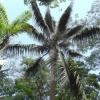
I went to Panama City last weekend and our bus dropped us off at the Albrook Mall/Bus Station. These palms were planted all around the parking areas. There had to be at least 3 to 4 hundred of them planted all around the entire complex. At first I thought they were Acrocomia but now I'm not sure. Whatever they are, they make nice parking lot palms.

post-747-052483700 1339357712_thumb.jpg

post-747-056073500 1339357728_thumb.jpg

Formerly Jeff in Costa Rica
 

Posted

Q:how did i manage to quote myself in the next post?

A: lots of practice.

the "prince of snarkness."


still "warning-free."


san diego,california,left coast.

Posted

weird. big thick phoenix-looking things but kinda "roebelinii-esque" on top.

the "prince of snarkness."


still "warning-free."


san diego,california,left coast.

Posted

African oils?

may be ....

Visit my site

www.palmasenresistencia.blogspot.com

And comment me

Posted

Ken, I think the fronds are too small to be African Oil Palms.

Formerly Jeff in Costa Rica
 

Posted

Ken, I think the fronds are too small to be African Oil Palms.

Jeff, these are Elaeis olifera, which are native to Panama, Costa Rica, Nicaragua and many other close by regions including northern Colombia..The leaves of 10 to 12 ft are shorter than the african oil palm (elaeis guineensis)

Posted

Pete, while that would be a good guess, my understanding of E. oleifera is that it is essentially acaulescent (trunkless) to prostrate (trunk crawling across the ground). I have seen it in Panama and elsewhere, and the individuals that I have seen have never been obviously arborescent (uprght trunking).

Jody

Posted

Pete, while that would be a good guess, my understanding of E. oleifera is that it is essentially acaulescent (trunkless) to prostrate (trunk crawling across the ground). I have seen it in Panama and elsewhere, and the individuals that I have seen have never been obviously arborescent (uprght trunking).

Jody

Jody, as you would be very well aware E oloeifera in it "native habitat'grow exatly like you are saying simply because its prime growing locations are in "extremly wet, low lying, boggy grounds and right besides rivers that many times well cover the bottoms of the trunks during floods.....Jeffs pictured E Oleifera are growing upright as they are in a dry hard carpark surrounded by bitumen, that would never experience flooding... also see how all the old leaves have been cut off...I have seen E oleifera besides very very wet sugar cane fields in FNQ just the way you are describing, but there is also in the same area on a higher drier plateau that receives high rainfall E oleifera with very upright trunks..In this same area the farmer also had E guineensis which where of a much larger size..Jody, i know you are a very well travelled lady...I also have travelled and worked and seen many palms in Burma, Thailand, Malaysia, Indonesia, Papua New Guinea and ofcourse my homeland of Oz..Pete

Posted

My humble opinion is that they are very groomed African oil palms.

El Oasis - beach garden, distinct wet/dry season ,year round 20-38c

Las Heliconias - jungle garden ,800m elevation,150+ inches rainfall, year round 15-28c

Posted

It would be nice to know how long these palms have been growing here and what size they were when planted. To find 3 to 4 hundred palms for a project like this it would seem more likely that these just might be trimmed Elaeis guineensis (African Oil Palm). Perhaps moved there from an oil palm plantation? Then too Elaeis olifera are not normally found in large numbers and they are much slower growing to obtain trunk height like these palms have. Those are just my thoughts right now . . . but then there is always the possibility that someone could have many years ago planted hundreds of E. olifera for whatever reason and they ended up here? If so, how old would these palms be now?

Hawaii Island (Big Island), leeward coast, 19 degrees N. latitude, south Kona mauka at approx. 380m (1,250 ft.) and about 1.6 km (1-mile) upslope from ocean.


No record of a hurricane passing over this island (yet!).  

Summer maximum rainfall - variable averaging 900-1150mm (35-45") - Perfect drainage on black volcanic rocky soil.  

Nice sunsets!

Posted

I had no idea Jody was a well travelled Lady! :floor: I am pretty sure he's not a "lady" I would describe him more as a real nice GUY and neighbor. Pedro--very poor observation skills... I say African oil too.

Posted

elaeis flowers are pretty characteristic,unfortunately i dont see any in these shots that are in flower.

the "prince of snarkness."


still "warning-free."


san diego,california,left coast.

Posted

I had no idea Jody was a well travelled Lady! :floor: I am pretty sure he's not a "lady" I would describe him more as a real nice GUY and neighbor. Pedro--very poor observation skills... I say African oil too.

Ditto!

Orlando, Florida

zone 9b

The Pollen Poacher!!

GO DOLPHINS!!

GO GATORS!!!


Palms, Sex, Money and horsepower,,,, you may have more than you can handle,,

but too much is never enough!!

Posted

I don't know guys, but I would bet money that they are not African Oil Palms. AOP's have longer fronds (even when grown in full sun) that almost grow vertically from the top of the crown. The fronds on these parking lot palms are much more relaxed. They just don't look right for AOP's.

Formerly Jeff in Costa Rica
 

Posted

I had no idea Jody was a well travelled Lady! :floor: I am pretty sure he's not a "lady" I would describe him more as a real nice GUY and neighbor. Pedro--very poor observation skills... I say African oil too.

I meant Lad not Lady sorry Jody......mandrew , i dont have poor observation skills,( mandrew you are very new to learning about palms) im a well travelled lad that has seen both oil palms ..this is not an african oil palm

Posted

I had no idea Jody was a well travelled Lady! :floor: I am pretty sure he's not a "lady" I would describe him more as a real nice GUY and neighbor. Pedro--very poor observation skills... I say African oil too.

I meant Lad not Lady sorry Jody, a simple spelling muddle......mandrew and markheath i dont have poor observation skills,( mandrew you are very new to learning about palms and mark you have very few palms and little knowledge about many palms ... im a well travelled Lad as well that has seen both oil palms ..this is not an african oil palm...as i mentioned in my above post ive seen in FNQ both Elaesis side by side in drier conditions and also very very wet conditions..Im well aware of Jodys fantastic knowledge, we have been friends on PT for quite some time..Pete :)

Posted

Pete, thanks for your input. I do not doubt that E. oleifera could grow arborescently (is that a word?), but I have not seen it before. I know of a population of Serenoa repens (saw palmetto) with tall, arborescent trunks to 20'OA. That is obviously an anomaly. I would love to see photos of the two species growing side by side in a dry environment; I have not seen that before, either.

Jody

Posted

Pete, thanks for your input. I do not doubt that E. oleifera could grow arborescently (is that a word?), but I have not seen it before. I know of a population of Serenoa repens (saw palmetto) with tall, arborescent trunks to 20'OA. That is obviously an anomaly. I would love to see photos of the two species growing side by side in a dry environment; I have not seen that before, either.

Jody

Jody, my next trip North i will track these down for you, i havnt seen them for many years, i hope they are still there and not cleared to build houses by the 1000s like a lot of ex sugarcane land in FNQ...Jody are there any good sized vertical trunking oleifera in Florida ? Have you in all your travels seen them always growing in "extremely wet grounds"? Thanks for the PM you sent me understanding my wrong spelling. all best Pete

Posted

As I said, I have never personally seen a vertical trunking E. oleifera anywhere. I have only seen one individual here in Florida, and it had a prostrate trunk a meter or so long and a short vertical trunk less than a meter tall. It was flowering and seeding profusely (both species of Elaeis are quite precocious), and it was in a fairly wet situation. The ones that I saw in habitat in Panama were in fairly wet conditions also.

Jody

Posted

As I said, I have never personally seen a vertical trunking E. oleifera anywhere. I have only seen one individual here in Florida, and it had a prostrate trunk a meter or so long and a short vertical trunk less than a meter tall. It was flowering and seeding profusely (both species of Elaeis are quite precocious), and it was in a fairly wet situation. The ones that I saw in habitat in Panama were in fairly wet conditions also.

Jody

Thanks Jody, yes since all oleifera come from very very wet boggy grounds this would certainly force the trunk to be like it is...Drier conditions would help the trunk grow upright and like Jeffs pics show, these palm continually have old leaves cut and no doubt all flowering stages would also be cut to avoid them falling on cars below...I have walked in oil plantations in Malaysia years ago and their leaves and trunks where "Immense". African oil palms in FNQ also have" Immense leaves"..

Since E Oleifera grows in so many regions of central and sth America,( 10 regions) there must be areas that are not "boggy and wet" where these palms grow upright?

Posted

I had no idea Jody was a well travelled Lady! :floor: I am pretty sure he's not a "lady" I would describe him more as a real nice GUY and neighbor. Pedro--very poor observation skills... I say African oil too.

I meant Lad not Lady sorry Jody......mandrew , i dont have poor observation skills,( mandrew you are very new to learning about palms) im a well travelled lad that has seen both oil palms ..this is not an african oil palm

Wow, that 'y' is pretty far from the 'd', but since you are a well traveled lad, I will let it slide! :lol:

Posted

Those are AOP's! The leaves are like that because they are not in a grove all looking for the sun!They are in a hot and drier parking lot so they MUST shorten their leaves to keep them from being damaged. Palms are self adjusting(like any plants).

Can you get a close up so everyone can see the thorns and fruit?

I DIG PALMS

Call me anytime to chat about transplanting palms.

305-345-8918

https://www.facebook...KenJohnsonPalms

Posted

Ken, I wish I had taken some close-up photos, but I only snapped a couple pics as we were walking into the mall. I did look up into the crowns as I was walking by them and the petioles were dark green. I didn't see any flowers or fruit on any of them. These palms are located in Panama City (12 hour bus ride from here) so I probably won't be going back there for a while.

Formerly Jeff in Costa Rica
 

Posted

Maybe this will help. Quote from Andrew Henderson's Field Guide to the Palms of the Americas. The numerous linear leaflets are either regularly arranged and spreading in the same plane (in the American oil palm, Elais oleifera), or irregularly arranged in clusters and spreading in different planes (in the African oil palm, Elais guineensis), and this character easily distinguishes the two species.

From the photo, these fronds look rather plumose to me.

If anyone has the new Encyclopedia of Cultivated Palms by Riffle, Craft & Zona, there is a photo of both side by side that will end this discussion before someone gets hurt!!!

Mike Harris

Caribbean Palms Nursery

Loxahatchee, Florida USA

  • 4 weeks later...
Posted

Hello for All

In these days I'm in Panama and was in the parking lot of Albrok Mall seeing the palm trees .

Definitely Acrocomia aculeata

then insert pictures

Regards

Visit my site

www.palmasenresistencia.blogspot.com

And comment me

Posted

This is EXACTLY why I try not too ID a palm from a picture here on PT too often. It just can be too hard most times. Good 'hunch" to Jeff and a great call to Mantis for seeing them upclose and reporting back to us all. B :hmm: efore someone got hurt.....

Searle Brothers Nursery Inc.

and The Rainforest Collection.

Southwest Ranches,Fl.

Posted

Pindo, thanks for checking out the palms at the mall and providing an ID. I have seen Acrocomia planted in parking lots in other parts of Panama (closer to the Costa Rican border).

Formerly Jeff in Costa Rica
 

Posted

Thanks Mantis for the clarification.

Mike Harris

Caribbean Palms Nursery

Loxahatchee, Florida USA

Posted

Thanks Pindo for the clarification and good call Mantis, is what I meant to say.

Mike Harris

Caribbean Palms Nursery

Loxahatchee, Florida USA

Posted

I could accept Acrocomia, but I have never seen A. aculeata with persistent leaf bases.

Jody

Posted

I could accept Acrocomia, but I have never seen A. aculeata with persistent leaf bases.

Jody

Hi Jody, I'm not positive of the species of these, but here are some Acrocomia photos I took in Costa Rica. When they are smaller they can have some persistent leaf bases.

I imagine that if this palm was trimmed up nicely, it could look very similar to the Panama mall palms.

post-747-0-56918000-1342311079_thumb.jpg

A little taller

post-747-0-24491500-1342311116_thumb.jpg

When they get really tall, they go smooth...

post-747-0-84707000-1342311166_thumb.jpg

Formerly Jeff in Costa Rica
 

Posted

Since this is recent thread, I guess it would be OK for me to post a reply.

Jody, I concur with your observations. Jeff (Anderson) stated that parking lot palms thorns wore off fairly easily. Here is a shot of the base of my Acrocomia aculeata. Some thorns have been "rubbed off" by falling debris but we can still find a decent amount of persistent thorns remaining.

post-1729-0-20127700-1342366947_thumb.jp

I could accept Acrocomia, but I have never seen A. aculeata with persistent leaf bases.

Jody

Coral Gables, FL 8 miles North of Fairchild USDA Zone 10B

Posted

Prominent thorns are found on trunk on the Moose's Acrocomia aculeata.

post-1729-0-89653200-1342367770_thumb.jp

top of photo is about 14 ft. from the ground

post-1729-0-13709400-1342368012_thumb.jp

Continuing up to @25 ft. of "clear trunk".

I could accept Acrocomia, but I have never seen A. aculeata with persistent leaf bases.

Jody

Hi Jody, I'm not positive of the species of these, but here are some Acrocomia photos I took in Costa Rica. When they are smaller they can have some persistent leaf bases.

I imagine that if this palm was trimmed up nicely, it could look very similar to the Panama mall palms.

post-747-0-56918000-1342311079_thumb.jpg

A little taller

post-747-0-24491500-1342311116_thumb.jpg

When they get really tall, they go smooth...

post-747-0-84707000-1342311166_thumb.jpg

Coral Gables, FL 8 miles North of Fairchild USDA Zone 10B

Posted

As Jody stated: "but I have never seen A. aculeata with persistent leaf bases."

post-1729-0-03136300-1342368662_thumb.jppost-1729-0-03136300-1342368662_thumb.jp

Here are fronds hanging down that are green. Notice any brown ones? My Acrocomia aculeata sheds its fronds readily. More often than not the leaf bases and petioles still have some green after abscission. Jeff's last posting of the "tall" Acrocomia aculeata appears to have a marcescent characteristic.

I could accept Acrocomia, but I have never seen A. aculeata with persistent leaf bases.

Jody

Coral Gables, FL 8 miles North of Fairchild USDA Zone 10B

Posted

Hello: here have a little job that I wrote some time ago about Acrocomia aculeata in Argentina.

At present, RBG Kew recognizes other species before naming them as synonyms

In my humble opinion, the palms without leaf remains correspond to A totai and growing in Argentina, Bolivia, Paraguay and southern Brazil and the others with leaves remains on the trunk are A aculeata (Central America to Mexico)

http://palmasenresis...ta-english.html

Visit my site

www.palmasenresistencia.blogspot.com

And comment me

Posted

Pindo - having seen them in person, you would have the best benefit for a proper ID. There is some prima facie evidence that the "parking lot palms" may not be Acrocomia aculeata but perhaps another Acrocomia sp. When we visited the golf couse during the 2006 Biennel, they had used Acrocomia aculeata salvaged from the site and not bulldozed. I don't recall any being marcescent. Also, these palms have very spiny petioles and rachis. For someone to have "pruned" green fronds would have been quite a painfull undertaking. The spines are very sharp, penetrate clothing very easily. They are also brittle at the thorn tips and break off in the skin readily. I speak from personal experience. Long handled lopers are used to cut my fallen fronds to 3 ft. lengths, then use the lopers as "tongs" to place in trash cans for removal.

post-1729-0-06354500-1342370432_thumb.jp

Here is an overall aspect of my Acrocomia aculeata.

Gotta get back to repotting plants into 7 gallon containers. My break was too long. Only 15 more to go ...

Hello for All

In these days I'm in Panama and was in the parking lot of Albrok Mall seeing the palm trees .

Definitely Acrocomia aculeata

then insert pictures

Regards

Coral Gables, FL 8 miles North of Fairchild USDA Zone 10B

Posted

Some pics in Allbrok parking lot

post-1464-0-74635300-1342370880_thumb.jp

post-1464-0-92813400-1342370868_thumb.jp

post-1464-0-85773300-1342370857_thumb.jp

post-1464-0-70137100-1342370844_thumb.jp

Visit my site

www.palmasenresistencia.blogspot.com

And comment me

Posted

Hello Moose

I have seen thousands of Acrocomia sp. in Panama. Both the city and in the field.

In public spaces all palms are pruned with the machete and take away the thorns, inflorescences and infructescences, for security and cleaning

The look is very confusing, but certainly since I have seen the characteristics that define the species

In the shadow of the forest leaves are longer and somewhat darker. Like your photos

Regards

Visit my site

www.palmasenresistencia.blogspot.com

And comment me

Create an account or sign in to comment

You need to be a member in order to leave a comment

Create an account

Sign up for a new account in our community. It's easy!

Register a new account

Sign in

Already have an account? Sign in here.

Sign In Now


  • Recently Browsing

    • No registered users viewing this page.
×
×
  • Create New...