
Skip to content
View in the app

A better way to browse. Learn more.

PalmTalk

A full-screen app on your home screen with push notifications, badges and more.

To install this app on iOS and iPadOS
  1. Tap the Share icon in Safari
  2. Scroll the menu and tap Add to Home Screen.
  3. Tap Add in the top-right corner.
To install this app on Android
  1. Tap the 3-dot menu (⋮) in the top-right corner of the browser.
  2. Tap Add to Home screen or Install app.
  3. Confirm by tapping Install.

WELCOME GUEST

It looks as if you are viewing PalmTalk as an unregistered Guest.

Please consider registering so as to take better advantage of our vast knowledge base and friendly community.  By registering you will gain access to many features - among them are our powerful Search feature, the ability to Private Message other Users, and be able to post and/or answer questions from all over the world. It is completely free, no “catches,” and you will have complete control over how you wish to use this site.

PalmTalk is sponsored by the International Palm Society. - an organization dedicated to learning everything about and enjoying palm trees (and their companion plants) while conserving endangered palm species and habitat worldwide. Please take the time to know us all better and register.

guest Renda04.jpg

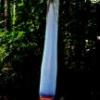
Blue Crown Palm besides Dictyocaryum lamarckianum
Featured Replies

Is there any other species of Palm beside Dictyocaryum lamarckianum that has a blue crownshaft, I think this might be the most beutiful and I love to know about any others that's similar, I'm going to try and grow it in Florida.

post-6411-071168200 1326197445_thumb.jpg

post-6411-011547300 1326197452_thumb.jpg

  • Author

I also would like to know about any other colorful crownshaft palms

Edited by kaybelize

you'll find sometimes a blue crownshaft on the poorly known Euterpe broadwayi (here in Guadeloupe Isl)

euterpe_broadwayi_guad3.jpg

euterpe_broadwayi_guad4.jpg

euterpe_broadwayi_guad5.jpg

Olivier
My Flickr Album
Palmeraie Union Society - Ti-Palm' Society

Kaybelize--welcome to Palmtalk!

Kaybelize--don't try it!

This palm only grows in equatorial mountains where the rainfall and temperatures are relatively constant. Any fluctuation and the plant will die. A much less demanding palm with vibrant colors is Areca vestiaria. If you are stuck on "blue" then I would advise Archontophoenix myolensis--a robust palm that will love Naples and has a nice bluish crownshaft. Good luck in your future palm endeavors! :)

I second and third Andrew's advice. Dictyocaryum is an absolute no-go in FL or anywhere else outside the SF Bay area. Temps over 70-75F will kill it. Some spindle palms (Hyophorbe verschaffeltii) have really nice blue-green crownshafts. Also, Bentinckia nicobarica has a lovely bluish stem and crownshaft. It is cold sensitive but may survive in the ground in Naples, esp. near the coast.

Meg

Palms of Victory I shall wear

Cape Coral (It's Just Paradise)
Florida
Zone 10A on the Isabelle Canal
Elevation: 15 feet

I'd like to be under the sea in an octopus' garden in the shade.

Kaybelize,

First of all, welcome to PalmTalk! :) And while there are other palms with bluish crownshafts, I do believe that Dictyocaryum is the most dramatic one when it comes to color. I'm not sure how it does in the SF Bay area, though. Can't recall seeing any photos of trunking specimens in the ground there, but if someone would like to post one, that'd be great! :) They thrive here on the Big Island. Apparently they do require somewhat cooler temperatures, which is why they grow well at a bit of elevation. However, we hit 85F on most summer afternoons, and that's not a problem for them. But in Naples, FL, no, I'm afraid not!

Aloha, :)

Bo-Göran

Leilani Estates, 25 mls/40 km south of Hilo, Big Island of Hawai'i. Elevation 880 ft/270 m. Average rainfall 140 inches/3550 mm


pinanga caesia has a purpleish crownshaft. ive also seen hyophorbe verschaffeltii with a blue-ish crownshaft,although its not as

striking as the pinanga.

the "prince of snarkness."


still "warning-free."


san diego,california,left coast.

euterpe edulis can get some pretty colors on its crownshaft too...

"it's not dead it's sleeping"

Santee ca, zone10a/9b

18 miles from the ocean

avg. winter 68/40.avg summer 88/64.records 113/25

Hi Keybelize! Welcome.

You might consider Archontophoenix purpurea. Here's one growing at Gary's place in Escondido, CA.

post-126-097556800 1326216627_thumb.jpg

post-126-020199600 1326216633_thumb.jpg

Matt Bradford

"Manambe Lavaka"

Spring Valley, CA (8.5 miles inland from San Diego Bay)

10B on the hill (635 ft. elevation)

9B in the canyon (520 ft. elevation)

Hello Keybelize,

Welcome to Palmtalk!

Here is one of my favourites. It's not blue, rather purple, but hey, this Pinanga is coooool!

Concerning your question about coloured crownshafts, I also love Neoveitchia storckii, Euterpe catinga, Chambeyronia houailou, Cyrtostachys renda, Areca vestiaria, Areca macrocalyx, Dypsis pilulifera, Hedyscepe canterburyana, Welfia regia, and a few others, including many Pinagas.

Of course, Dictyocaryum lamarckianum is a must.

Last but not least, Geonoma undata, especially the ones grown by this unbelievable plant collectors couple in NZ: Dick and AnneMarie Endt.

First post, great post Keybelize!

post-5641-024250300 1326219186_thumb.jpg

Sebastian, garden on La Palma island, 370 m (1200 feet) above sea level / USDA Zone 11/12 ; Heat zone IV / V

Record High: 42°C (107F) / Record Low: 9°C (48°F). Rain: 600 mm (24 inches) per year with dry/wet seasons. Warm Season: July-November / Cool Season: December-June
Warmest month (August/September) average minimum temperature : 21°C (70°F) / Warmest month (August/September) average maximum temperature : 28°C (82°F)
Coldest month (February/March) average minimum temperature : 14,5°C (58°F) / Coldest month (February/March) average maximum temperature : 21°C (70°F)

Temperature of the sea : minimum of 20°C (68°F) in march, maximum of 25°C (77°F) in September/October.


I saw a picture of the crownshaft of a Socratea exhorrhiza that was a bluish steel gray. No idea how it grows in Naples.

I saw a picture of the crownshaft of a Socratea exhorrhiza that was a bluish steel gray. No idea how it grows in Naples.

It doesn't, nor do most of what Sebastian mentioned, but some do--MattyB's suggestion is a great one, though not blue...

I also would like to know about any other colorful crownshaft palms

OK, my suggestions weren't blue, but still, I answered that very question above... :mrlooney:

Now, concerning blue crownshafts, I must admit that you KayBelize picked the one which is probably the most "bluetiful" of all, Dictyocaryum lamarckianum. At least of the species which are available in books and trade (because with well over 2,000 species in the palm family, I always wonder how do look all these other ones which are so rarely seen either in books, gardens, nurseries or websites... A whole world to discover! That's what I like with gardening).

There are so-called "blue" crownshafts, like Hedyscepe, Dypsis cabadae, Dypsis saintelucei, etc. But they are more bluish grey, kinda glaucous, than blue blue.

Of the ones I know, only Dictyocaryum lamarckianum has such a vivid, unusual blue colour.

I sometimes came across a Roystonea violacea, Bentinckia nicobarica or a few others with a sort of bluish violet tint, but nothing as strikingly beautiful (in terms of crownshat's colour) as Dictyocaryum.

Your post is great, but however, I'm afraid I personally can't help much. It's a bit like if you asked what's as red as Cyrtostachys!!!

However, please keep on posting such brilliant questions, so we can search and search for new or "forgotten" species. It's just a pleasure to visualise again and again these jewels.

Thanks Olivier971, I never really paid attention to Euterpe broadwayi before but it's nonetheless a great palm indeed.

Edited by Sebastian Bano

Sebastian, garden on La Palma island, 370 m (1200 feet) above sea level / USDA Zone 11/12 ; Heat zone IV / V

Record High: 42°C (107F) / Record Low: 9°C (48°F). Rain: 600 mm (24 inches) per year with dry/wet seasons. Warm Season: July-November / Cool Season: December-June
Warmest month (August/September) average minimum temperature : 21°C (70°F) / Warmest month (August/September) average maximum temperature : 28°C (82°F)
Coldest month (February/March) average minimum temperature : 14,5°C (58°F) / Coldest month (February/March) average maximum temperature : 21°C (70°F)

Temperature of the sea : minimum of 20°C (68°F) in march, maximum of 25°C (77°F) in September/October.


I second Pauls' recommendations. Pinanga caesia is a knock out IMO.

Oh, and welcome to the forum.

Vince Bury

Zone 10a San Juan Capistrano, CA - 1.25 miles from coast.

http://www.burrycurry.com/index.html

Welcome to the forum Kay!

You may want to check out this Hyophorbe verschaffeltii with a bluish crownshaft growing at the Naples Zoo, right after you walk in, near the little theater they have.

post-3501-057539200 1326475175_thumb.jpg

Kay,

Did you get all that ? laugh.gif

Welcome to Palm Talk.

Manny

I had a huge bad luck with this species. I just killed all my 50 Dictyocarium. They were 2 year old seedlings, thriving with no protection. But they did not stand the transplant! They all dried out in one week.

So I went to the nursery that had lots of them. All sold and shipped abroad. No more dictyos left in Tenerife ! ! !

Sebastian, could you get some from Paul's nursery ?

Carlo

  • Author

Thanks for all the suggestions everyone I'm loving the Purple King, Pinanga and Areca vestiaria, I'm going to still try and grow my beloved dictyocaryum lamarckianum even though I know it's probably not going to grow

:(

what about growing it indoors to keep it from the heat will that work?

I had a huge bad luck with this species. I just killed all my 50 Dictyocarium. They were 2 year old seedlings, thriving with no protection. But they did not stand the transplant! They all dried out in one week.

So I went to the nursery that had lots of them. All sold and shipped abroad. No more dictyos left in Tenerife ! ! !

Sebastian, could you get some from Paul's nursery ?

Carlo

Hi Carlo,

I'd love to buy some (although this species is more suited to the windward side / Barlovento) while the dry and sometimes too hot conditions on the leeward here may not be appropriated...

I would anyway try it if I could find it, and plant it in a semi-shady, cool and sheltered spot (it's one of these almost impossible, like Hedyscepe, but which are so beautiful that I'd like to try).

However, I just checked on Paul's last updated list, and I didn't see any Dictyocarium unfortunately...

I'll let you know.

Kaybelize, I don't know if Dictyocarium would make it indoors. If the air is not too dry, then I guess it's possible, it's a moisture lover.

Sebastian, garden on La Palma island, 370 m (1200 feet) above sea level / USDA Zone 11/12 ; Heat zone IV / V

Record High: 42°C (107F) / Record Low: 9°C (48°F). Rain: 600 mm (24 inches) per year with dry/wet seasons. Warm Season: July-November / Cool Season: December-June
Warmest month (August/September) average minimum temperature : 21°C (70°F) / Warmest month (August/September) average maximum temperature : 28°C (82°F)
Coldest month (February/March) average minimum temperature : 14,5°C (58°F) / Coldest month (February/March) average maximum temperature : 21°C (70°F)

Temperature of the sea : minimum of 20°C (68°F) in march, maximum of 25°C (77°F) in September/October.


Then we have to start again from seed. Paul has sold or killed all his plants.

They were not bothered by summer weather in my property. I got some hot, dry and windy months but they kept on growing in the shade. My seedlings were totally happy, I think I kept them for too much in their tray so they did not stand the transplant.

Hedyscepe is not impossible, you have seen mine. A few have even been thriving outdoors in the Palmetum during the past 4 years.

Carlo

Hi Carlo,

I'd love to buy some (although this species is more suited to the windward side / Barlovento) while the dry and sometimes too hot conditions on the leeward here may not be appropriated...

I would anyway try it if I could find it, and plant it in a semi-shady, cool and sheltered spot (it's one of these almost impossible, like Hedyscepe, but which are so beautiful that I'd like to try).

Then we have to start again from seed. Paul has sold or killed all his plants.

They were not bothered by summer weather in my property. I got some hot, dry and windy months but they kept on growing in the shade. My seedlings were totally happy, I think I kept them for too much in their tray so they did not stand the transplant.

Hedyscepe is not impossible, you have seen mine. A few have even been thriving outdoors in the Palmetum during the past 4 years.

Carlo

The problem on La Palma Carlo is that it's the only island in the Canary with a North/South ridge, so (apart from the fact that there are two leeward sides, the North AND the East, which is unusual in the Canary), we have a big problem when the hot Saharan "Calima" wind blows : The North/South ridges produces a very strong föhn (aka Foehn) effect, so not only do we have extremely high temperatures (I remember in September 2010 I had 36°C as a minimum temperature, at dawn of course, for a 24 h range) but worst of all, the air moisture which is our great luck here, as it's fairly high, drops to central Sahara numbers. After August 2009's and September 2010's calimas, almost all the mature Howeas died on this side of the island, while they were totally fine (with much milder temps and higher moisture) on the other side. Even the 200 years old Roystoneas in Argual had their heart melted down and looked like if they had suffered from an attack by a heart eating insect. But that wasn't the case (my wife works there), it was Calima! And our own Hedyscepe looked almost dead after that dreadful event. It's grwong back now, but wow, it has been severely damaged.

This is why we now focus more on species capable to withstand this phenomenon. So far, Pseudophoenix, Cocos, most Dypsis, Jubaeopsis, Phoenix, Wodietya, and quite a few others seem able to withstand it. But I'm worried about any species coming from islands which are far away from a continent, and also palms growing at high altitude near the equator.

I wonder if the problem is similar in Queensland (with the wind coming from the desert) and California (with the infamous Santa Ana).

Edited by Sebastian Bano

Sebastian, garden on La Palma island, 370 m (1200 feet) above sea level / USDA Zone 11/12 ; Heat zone IV / V

Record High: 42°C (107F) / Record Low: 9°C (48°F). Rain: 600 mm (24 inches) per year with dry/wet seasons. Warm Season: July-November / Cool Season: December-June
Warmest month (August/September) average minimum temperature : 21°C (70°F) / Warmest month (August/September) average maximum temperature : 28°C (82°F)
Coldest month (February/March) average minimum temperature : 14,5°C (58°F) / Coldest month (February/March) average maximum temperature : 21°C (70°F)

Temperature of the sea : minimum of 20°C (68°F) in march, maximum of 25°C (77°F) in September/October.


Thanks for all the suggestions everyone I'm loving the Purple King, Pinanga and Areca vestiaria, I'm going to still try and grow my beloved dictyocaryum lamarckianum even though I know it's probably not going to grow

:(

what about growing it indoors to keep it from the heat will that work?

That's the spirit Kay! If you have the money you may as well put your mind to rest by trying. They surely can take more heat than some think but I'm pretty sure that close freezing is impossible for young plants. Carlo's plants would have seen pretty warm temperatures. Perhaps he can advise how high? Some have found they do much better in the ground than pots but handle them like gelignite!

cheers

Richard

>The problem on La Palma Carlo is that (...) we have extremely high temperatures (I remember in September 2010 I had 36°C as a minimum temperature, at dawn of course, for a 24 h range) but worst of all, the air moisture (...)drops to central Sahara numbers (...) almost all the mature Howeas died on this side of the island, while they were totally fine (with much milder temps and higher moisture) on the other side. Even the 200 years old Roystoneas in Argual had their heart melted down and looked like if they had suffered from an attack by a heart eating insect.

What?! Those two died?!

So far, Pseudophoenix, Cocos, most Dypsis, Jubaeopsis, Phoenix, Wodietya, and quite a few others seem able to withstand it. But I'm worried about any species coming from islands which are far away from a continent, and also palms growing at high altitude near the equator.

I wonder if the problem is similar in Queensland (with the wind coming from the desert) and California (with the infamous Santa Ana).

I'd be more optimistic. Santa Anas are much worse than any calima we can get here, hot Queensland is much hotter than anywhere in the Canaries. I am on the southerly hot-and-windy side of Anaga and can still grow outdoors Clinostigma samoense, Hedyscepe and (no more) Dictyocarium. I actually believe that palms from Oceanic islands here do grow very well. New Caledonian palms love it here.

I will sow Dictyos again next year if seeds will be available :hmm:

What?! Those two died?!

No, they didn't, but they looked ugly for quite a while. I agree with you that one's got to be optimistic, as apart from these extreme but rare events, the climate is incredibly evenly in the Canary. But still, that was a shock to see all these dead Howeas after that strong burning calima wind wave in late 2010. It's a shame because it's a palm I love and I hesitate to grow it now. If the garden was closer to the sea, in Tazacorte, that would be different. It's warmer at night there (good for borderline species at my place, like Artocarpus altilis), and cooler during the day. The perfect spot...

However, you are on the southerly side of Anaga, which means that when the hottest winds arrive here, from the South-East, you cannot suffer from that Foehn effect I mentioned. Honestly, I couldn't believe these non-stop 5 days with the thermometer constantly above 32°C, I never ever experienced that, not even in inland Andalucia. During this calima wave, we had an average min/max temp of 37,5°C, with max temps of more than 40 every day. Crazy... And again, a super-dry wind caused by the fact that the SE-Calima crossed the ridge before hitting us... Awful. I just have to plant tall trees now to create a sheltered, cooler micro-climate for Dictyocaryum and others I would like so much to grow.

I'm thankful Kaybelize started this post (and that you Carlo insist in giving me hope), as I'm quite keen again now to try this wonderful species. King of the blues...

Sebastian, garden on La Palma island, 370 m (1200 feet) above sea level / USDA Zone 11/12 ; Heat zone IV / V

Record High: 42°C (107F) / Record Low: 9°C (48°F). Rain: 600 mm (24 inches) per year with dry/wet seasons. Warm Season: July-November / Cool Season: December-June
Warmest month (August/September) average minimum temperature : 21°C (70°F) / Warmest month (August/September) average maximum temperature : 28°C (82°F)
Coldest month (February/March) average minimum temperature : 14,5°C (58°F) / Coldest month (February/March) average maximum temperature : 21°C (70°F)

Temperature of the sea : minimum of 20°C (68°F) in march, maximum of 25°C (77°F) in September/October.


Create an account or sign in to comment

Account

Navigation

Configure browser push notifications

Chrome (Android)
  1. Tap the lock icon next to the address bar.
  2. Tap Permissions → Notifications.
  3. Adjust your preference.
Chrome (Desktop)
  1. Click the padlock icon in the address bar.
  2. Select Site settings.
  3. Find Notifications and adjust your preference.