Jump to content
  • WELCOME GUEST

    It looks as if you are viewing PalmTalk as an unregistered Guest.

    Please consider registering so as to take better advantage of our vast knowledge base and friendly community.  By registering you will gain access to many features - among them are our powerful Search feature, the ability to Private Message other Users, and be able to post and/or answer questions from all over the world. It is completely free, no “catches,” and you will have complete control over how you wish to use this site.

    PalmTalk is sponsored by the International Palm Society. - an organization dedicated to learning everything about and enjoying palm trees (and their companion plants) while conserving endangered palm species and habitat worldwide. Please take the time to know us all better and register.

    guest Renda04.jpg

Recommended Posts

Posted

Hi All,

I need some clarification. Is a Licuala peltata (not a var sumawongii) also called a Licuala elegans? or are these two different species of palm?

Jerod

Jerod

SurfCityPalms.com

Posted

That is what Jeff Marcus at Floribunda told me! I have one, you can PM me if you want it.

Posted

The undivided leaf form of Licuala peltata is Licuala peltata var. sumawongii. The palm L. elegans is a different species native to Sumatra that has not been seen in a long time.

Ryan

Hi All,

I need some clarification. Is a Licuala peltata (not a var sumawongii) also called a Licuala elegans? or are these two different species of palm?

Jerod

South Florida

Posted

Hi All,

I need some clarification. Is a Licuala peltata (not a var sumawongii) also called a Licuala elegans? or are these two different species of palm?

Jerod

L. elegans is a synonym for Licuala peltata var. sumawongii.

Happy Gardening

Cheers,

Wal

Queensland, Australia.

Posted

Palmarum is usually spot on with the in depth info, but I was under the same impression as Wal...

Posted

Palmarum is usually spot on with the in depth info, but I was under the same impression as Wal...

Palmarum is spot on, and as Wal points out, L. elegans is synonymously linked to var. sumawongii. However, it is not recognised by Kew.

More of an urban synonym. biggrin.gif You'll see L. elegans on Floribunda's price list.

Posted

Oops, NOT a var. sumawongii... Licuala Peltata V. Sumawongii is synonymous with Licuala Elegans is what I meant.

Posted

lol, ok, I guess I am still confused. I have what I was told was a L. Elegans, a large L. Peltata var samuawongii, and now a small L. Peltata but was told it's NOT a var Samuawongii.

Jerod

SurfCityPalms.com

Posted

lol, ok, I guess I am still confused. I have what I was told was a L. Elegans, a large L. Peltata var samuawongii, and now a small L. Peltata but was told it's NOT a var Samuawongii.

Jerod,

Licuala peltata and Licuala peltata v. peltata are distinctly recognised by Kew. Most likely you have 2 x v. sumawongii and a v. peltata.

Posted

lol, ok, I guess I am still confused. I have what I was told was a L. Elegans, a large L. Peltata var samuawongii, and now a small L. Peltata but was told it's NOT a var Samuawongii.

In Laymans terms.... Licuala Elegans is the entire leaf Peltata

Licuala Peltata is split leaf, like that of most Licualas

Posted

Aloha Jerod,

I "think" you have three separate species. L. elegans is a valid species & from a different area, Sumatra. It has an entire leaf, not sure of the botanical differences between other Licualas with entire leaves.

L. peltata var. peltata has a split leaf.

L. peltata var. sumawongii has an entire leaf. Both are from Thailand, Malaysia areas.

Karen

North of Hilo on the Big Island of Hawaii

1200' elevation, 200" rain/year

Year round stream with small waterfalls

Posted

elegans is a horticultural name for var. sumawongii. I think it may no longer be known in habitat.

Posted

I'm "pretty sure" that anyone here growing a Licuala elegans is growing a v. sumawongii.

Whilst the true Licuala elegans remains elusive, it synonymous reference to v. sumawongii helps to distinguish it from Licuala peltata and var. peltata.

Posted

Ok, so my elegans and var sumawongii and more than likely the same kind if tree, and both have a unsplit large leaf. Then what does the L. peltata look like when it gets mature (not the peltata var peltata)?

Jerod

SurfCityPalms.com

Posted

Ok, so my elegans and var sumawongii and more than likely the same kind if tree, and both have a unsplit large leaf. Then what does the L. peltata look like when it gets mature (not the peltata var peltata)?

Go surfing on the web, go hunting, Tons of pics and information. You sound confused still. Remember ... Elegans is Peltata var Sumawongii

Peltata var Peltata is split

Jerod, i just looked at your web page and you say you want to "Educate the community about palms"sorry but i cant help myself, "You must first Learn before you try and educate" Happy Learning

Posted

Ok, so my elegans and var sumawongii and more than likely the same kind if tree, and both have a unsplit large leaf. Then what does the L. peltata look like when it gets mature (not the peltata var peltata)?

Go surfing on the web, go hunting, Tons of pics and information. You sound confused still. Remember ... Elegans is Peltata var Sumawongii

Peltata var Peltata is split

Jerod, i just looked at your web page and you say you want to "Educate the community about palms"sorry but i cant help myself, "You must first Learn before you try and educate" Happy Learning

Posted

Ouch, that's a hit to my gut.

I can educate people all day long in germinating, care, and maintenance. I've never claimed to be an expert that has the ability to know and describe every one of the 2,600 varieties of palms in extreme detail, I'm sure there is almost no one out there that can. This was a simple questions I had and apparently almost everyone that chimed in has a different opinion so I wasn't alone.

Thank you Everyone for your input.

Jerod

SurfCityPalms.com

Posted

Ok, so my elegans and var sumawongii and more than likely the same kind if tree, and both have a unsplit large leaf. Then what does the L. peltata look like when it gets mature (not the peltata var peltata)?

That is a very good question and here in PT should be the place to get those answers.

Let's break that question down for a second.

Is L.peltata var peltata actually L.peltata itself ? yes or no ?

If they are the same, then on we go. If they are different,

What is the difference between L.peltata var peltata and L.peltata ? (knowing that L.peltata is a split leaf Licuala)

I put this to the PT members: L.elegans and L.peltata var sumawongii are two different palms that happen to look the same. The true L.elegans is lost in the wilderness, some nurserymen decided to use it's name because of it's similarity of form and it's simplicity layman marketing name instead of the long drawn out name L.peltata var sumawongii.

What about Dictyosperma album var album ? is that just Dictyosperma album ?

Happy Gardening

Cheers,

Wal

Queensland, Australia.

Posted

Ok, so my elegans and var sumawongii and more than likely the same kind if tree, and both have a unsplit large leaf. Then what does the L. peltata look like when it gets mature (not the peltata var peltata)?

That is a very good question and here in PT should be the place to get those answers.

Let's break that question down for a second.

Is L.peltata var peltata actually L.peltata itself ? yes or no ?

If they are the same, then on we go. If they are different,

What is the difference between L.peltata var peltata and L.peltata ? (knowing that L.peltata is a split leaf Licuala)

I put this to the PT members: L.elegans and L.peltata var sumawongii are two different palms that happen to look the same. The true L.elegans is lost in the wilderness, some nurserymen decided to use it's name because of it's similarity of form and it's simplicity layman marketing name instead of the long drawn out name L.peltata var sumawongii.

What about Dictyosperma album var album ? is that just Dictyosperma album ?

Thank you Wal! That's exactly what I was looking for. Well explained. So the fact that I have three Licualas that are all a solid leaf, it is safe to say (no matter what others have called them) that they are all three the same kind of Licuala.

Jerod

SurfCityPalms.com

Posted

Looking through a number of old Floribunda price lists - and let's face it, Jeff grows most tropical species - he's only ever listed var. peltata and elegans. That might suggest that peltata and var. peltata are the same, although if Kew makes a distinction in var. peltata, who, or where is the real peltata?

Posted

Jerod,why dont you post pics of your 3 entire leaf ( solid as you called it) Licualas. Who knows Jerod, being entire leaf it may even be Grandis, Orbicularis, Cordata but most likely Licuala Peltata var sumawongii which is a very easily obtainable Licuala and has a Nursery Trade name of Licuala Elegans which was named by the collector Watana Sumawong. Forget about the elusive maybe extinct other Licuala Elegans being talked about this adds confusion to some. Look fwd to seeing your 3 pics, no blows intended Jerod there were a lot of answers given and it didnt seem as if you grasped it.

Posted

Jerod,why dont you post pics of your 3 entire leaf ( solid as you called it) Licualas. Who knows Jerod, being entire leaf it may even be Grandis, Orbicularis, Cordata but most likely Licuala Peltata var sumawongii which is a very easily obtainable Licuala and has a Nursery Trade name of Licuala Elegans which was named by the collector Watana Sumawong. Forget about the elusive maybe extinct other Licuala Elegans being talked about this adds confusion to some. Look fwd to seeing your 3 pics, no blows intended Jerod there were a lot of answers given and it didnt seem as if you grasped it.

I'm pretty sure they're the peltata after hearing all the info about them. The part that was throwing me off was that I have always thought a L. Elegans and L. Peltata var sumawongii were basically the same kind if tree, but the sumawongii was a variety that got a larger leaf. Then, (this is what started to confuse me) I was given a "Licuala peltata" in a trade and the guy swore it was just a L. peltata and not the sumawongii variety. As I did research, I started to see other people talk about this but never found a definitive answer. In looking up a "complete palm list" I saw the L. Elegans and L. Peltata var sumawongii, but nothing about a L. Peltata by itself. As far as I was concerned, if there was not a L. Peltata by itself why would they have to put a "var" anything after its name. Like the C. Macrocarpa, the watermelon variety is different so they added a "var watermelon" to the C. Macrocarpa name. Makes sense right?

Pics added. The first pic I was told is a L. Elegans, send one is L. Peltata var sumawongii, and the third was called a L. Peltata

And Pedro, no hard feelings here, I was just set back a bit by the comment.

post-5591-021286200 1319248381_thumb.jpg

post-5591-068122200 1319248413_thumb.jpg

post-5591-098777700 1319248673_thumb.jpg

Jerod

SurfCityPalms.com

Posted

Thanks for the Quick Pics Jerod, very safe to say they are all Licuala Peltata var sumawongii ( Trading common name Lic Elegans) its been so long since ive seen a very small one like the last pic though. Jerod there is a Licuala Peltata which i will post a pic showing leaf detail. Jerod, why have they both got Peltata to their name? Because, their inflorescence and fruits are identical. One Palm book i wont mention wrongly shows a Lic Peltata var Peltata with Entire leaves. Ive said more than enough, but heres a few pics of some still small Licuala Peltata var Sumawongii ( Elegans) growing here, these are still small and have lots more growing to do. Apologies for any bluntness. Pete

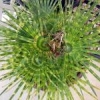
post-0-098117700 1319252614_thumb.jpgLic Elegans and boot for scale,this is still small

post-0-079627600 1319252621_thumb.jpg Licuala Elegans and Ramsayi

post-0-093890300 1319252628_thumb.jpg Licuala Peltata

Posted

Interesting, thanks for the pics.

Jerod

SurfCityPalms.com

Posted

Licuala peltata and Licuala peltata var. peltata are/is the same exact species. Whenever there is a variety within a species, it is a taxonomic requirement to also list the parent species as a variety. When you look on a list, such as the Kew monocot checklist, you will notice there is no extra information after the varietal names.

The use of Licuala elegans as a trade name for Licuala peltata var. sumawongii will fade away over time, hopefully.

Ryan

South Florida

Posted

Licuala peltata and Licuala peltata var. peltata are/is the same exact species. Whenever there is a variety within a species, it is a taxonomic requirement to also list the parent species as a variety. When you look on a list, such as the Kew monocot checklist, you will notice there is no extra information after the varietal names.

The use of Licuala elegans as a trade name for Licuala peltata var. sumawongii will fade away over time, hopefully.

Ryan

Ryan, I doubt very much the trade name Elegans will disappear, it has been known as this for over 40 years. Pete

Posted

Whenever there is a variety within a species, it is a taxonomic requirement to also list the parent species as a variety.

Ryan

I was thinking this might be the case, thanks for the confirm Ryan.

Happy Gardening

Cheers,

Wal

Queensland, Australia.

Posted

I was sold a 'divided leaf' Lic. elegans :rolleyes:

Michael in palm paradise,

Tully, wet tropics in Australia, over 4 meters of rain every year.

Home of the Golden Gumboot, its over 8m high , our record annual rainfall.

Posted

I was sold a 'divided leaf' Lic. elegans :rolleyes:

Do they call that one Pelegans? :D

Posted

Whenever there is a variety within a species, it is a taxonomic requirement to also list the parent species as a variety.

Ryan

I was thinking this might be the case, thanks for the confirm Ryan.

Ditto, that. Thanks Ryan.

Posted

Licuala peltata and Licuala peltata var. peltata are/is the same exact species. Whenever there is a variety within a species, it is a taxonomic requirement to also list the parent species as a variety. When you look on a list, such as the Kew monocot checklist, you will notice there is no extra information after the varietal names.

The use of Licuala elegans as a trade name for Licuala peltata var. sumawongii will fade away over time, hopefully.

Ryan

Ryan, I doubt very much the trade name Elegans will disappear, it has been known as this for over 40 years. Pete

Well, any respected grower and collector will do their best to let go of the name. The name, L. elegans is rarely ever seen or used in south Florida these days. If it is, their corrected.

Jeff

Searle Brothers Nursery Inc.

and The Rainforest Collection.

Southwest Ranches,Fl.

Posted

Geez! All this sounds like a few Dypsis discussions I remember seeing here... :)

Zone 10a at best after 2007 AND 2013, on SW facing hill, 1 1/2 miles from coast in Oceanside, CA. 30-98 degrees, and 45-80deg. about 95% of the time.

"The great workman of nature is time."   ,  "Genius is nothing but a great aptitude for patience."

-George-Louis Leclerc de Buffon-

I do some experiments and learning in my garden with palms so you don't have to experience the pain! Look at my old threads to find various observations and tips!

Posted

Licuala peltata and Licuala peltata var. peltata are/is the same exact species. Whenever there is a variety within a species, it is a taxonomic requirement to also list the parent species as a variety. When you look on a list, such as the Kew monocot checklist, you will notice there is no extra information after the varietal names.

The use of Licuala elegans as a trade name for Licuala peltata var. sumawongii will fade away over time, hopefully.

Ryan

Ryan, I doubt very much the trade name Elegans will disappear, it has been known as this for over 40 years. Pete

Well, any respected grower and collector will do their best to let go of the name. The name, L. elegans is rarely ever seen or used in south Florida these days. If it is, their corrected.

Jeff

Jeff, the name Licuala Elegans is used by ALL respected growers and collectors in Australia and I doubt very much that will change, after all, you sell Archontophoenix as "King Palms", but guess what jeff" Who gives a rats" Palms have many different names in different parts of the world. Also, one must remember who named it Elegans, the great man who found the palm and distributed the seed over 40 years ago. Someone ELSE needs to have some respect. Pete

Posted

Geez! All this sounds like a few Dypsis discussions I remember seeing here... :)

Bill, on the left is a Lamborghini. On the right is a Lamborgini ice-cream vendor in Peru. Close - but not right in so many ways.biggrin.gif

post-1155-042737900 1319425625_thumb.jpg post-1155-045694500 1319425654_thumb.jpg

Posted

I'm a disrespected grower/collector and I call them elegans one day and peltata sumawongii the next.

The nurseryman would be reluctant to call them anything other than elegans for marketing sake me thinks.

Happy Gardening

Cheers,

Wal

Queensland, Australia.

Posted

Licuala peltata and Licuala peltata var. peltata are/is the same exact species. Whenever there is a variety within a species, it is a taxonomic requirement to also list the parent species as a variety. When you look on a list, such as the Kew monocot checklist, you will notice there is no extra information after the varietal names.

The use of Licuala elegans as a trade name for Licuala peltata var. sumawongii will fade away over time, hopefully.

Ryan

Ryan, I doubt very much the trade name Elegans will disappear, it has been known as this for over 40 years. Pete

Well, any respected grower and collector will do their best to let go of the name. The name, L. elegans is rarely ever seen or used in south Florida these days. If it is, their corrected.

Jeff

Jeff, the name Licuala Elegans is used by ALL respected growers and collectors in Australia and I doubt very much that will change, after all, you sell Archontophoenix as "King Palms", but guess what jeff" Who gives a rats" Palms have many different names in different parts of the world. Also, one must remember who named it Elegans, the great man who found the palm and distributed the seed over 40 years ago. Someone ELSE needs to have some respect. Pete

So which Elegans is the Real Lamborghini?? The one thats alive n kickn

Posted

Licuala peltata and Licuala peltata var. peltata are/is the same exact species. Whenever there is a variety within a species, it is a taxonomic requirement to also list the parent species as a variety. When you look on a list, such as the Kew monocot checklist, you will notice there is no extra information after the varietal names.

The use of Licuala elegans as a trade name for Licuala peltata var. sumawongii will fade away over time, hopefully.

Ryan

Ryan, I doubt very much the trade name Elegans will disappear, it has been known as this for over 40 years. Pete

Well, any respected grower and collector will do their best to let go of the name. The name, L. elegans is rarely ever seen or used in south Florida these days. If it is, their corrected.

Jeff

Jeff, the name Licuala Elegans is used by ALL respected growers and collectors in Australia and I doubt very much that will change, after all, you sell Archontophoenix as "King Palms", but guess what jeff" Who gives a rats" Palms have many different names in different parts of the world. Also, one must remember who named it Elegans, the great man who found the palm and distributed the seed over 40 years ago. Someone ELSE needs to have some respect. Pete

Pete,

Your point is totally "off the charts". The thread is about the correct species name, and where is anyone talking about using common names??? Apples and oranges. And I know exactly who Watana was...I usued to buy these very seed from him back in the 80's!

Searle Brothers Nursery Inc.

and The Rainforest Collection.

Southwest Ranches,Fl.

Posted

When I learned in past Palmtalk posts that Licuala elegans and Licuala peltata var. sumawongii were the same plant, I deleted the first name from my list of palm species and added a "2" by the latter name. I made a new tag for the L. elegans and threw the old tag away. However, on the back of my aluminum tags, I continue to write any common, trade or former scientific names that I find so I can learn and better follow discussions like these on Palmtalk. Happily I really like this palm so don't mind at all giving space for two.

I initially wasn't as pleased when I ended up with both a "Polyandrococos caudescens" and an Allogoptera caudescens, only to later learn that Allogoptera is the correct name. Nevertheless, the two plants are in different microclimates and are different sizes/ages and I wouldn't give either of them up now.

So, I need to be sure I keep enough aluminum tags to remake as needed. The Saribus rotundifolius tag is already in my suitcase ready for my quick trip next month to replace the old Livistona rotundifolia tag that I placed when Palmtalk initially identified the palm. I see I need to change my computer file names, too. Thanks for continuing to update me!

post-4111-079227700 1319464570_thumb.jpg

post-4111-073552300 1319464606_thumb.jpg

Cindy Adair

Posted

My attempt at humour was to highlight two Licuala species, both taxonomically legitimate. One is incredibly affordable due to it's proliferation, whilst the other is of "mythological status". The joke was intended to highlight my instinctive indifference, and my comment, "not right in so many ways" was an appreciation that many think differently. After all, I did not say it was, "wrong".

However, since I was PM'd and mildy "goaded" with the question, "Have you ever seen a Licuala elegans?" I will say this. To me, the idea of a Latin binomial being adopted and used as a "pseudonym" is cause for debate. To do so (IMO), is taxonomically incorrect. Neither does it provide for a common name, regardless of which continent you come from. That would further explain why the debate earlier drifted towards a spat over common name usage. You play around with taxonomy and all hell breaks loose - presumably for those who don't mind the scientific boundaries being "muddied". IMO, Licuala elegans doesn't even need to exist, and if it should happen to reappear one day, what then?

Posted

I agree with John. This is a unique situation, and is not the same as using a "common name" when referring to a palm. As he noted, all "hell would break loose" if we started to use an already described and recognized latin binomial as a "common name" for another already described and recognized species. Common names are not latin binomials.

Call Licuala peltata var. sumawongii the "Elegant Licuala" if you like, but not Licuala elegans, because it is not.

animated-volcano-image-0010.gif.71ccc48bfc1ec622a0adca187eabaaa4.gif

Kona, on The Big Island
Hawaii - Land of Volcanoes

Create an account or sign in to comment

You need to be a member in order to leave a comment

Create an account

Sign up for a new account in our community. It's easy!

Register a new account

Sign in

Already have an account? Sign in here.

Sign In Now


  • Recently Browsing

    • No registered users viewing this page.
×
×
  • Create New...