Jump to content
  • WELCOME GUEST

    It looks as if you are viewing PalmTalk as an unregistered Guest.

    Please consider registering so as to take better advantage of our vast knowledge base and friendly community.  By registering you will gain access to many features - among them are our powerful Search feature, the ability to Private Message other Users, and be able to post and/or answer questions from all over the world. It is completely free, no “catches,” and you will have complete control over how you wish to use this site.

    PalmTalk is sponsored by the International Palm Society. - an organization dedicated to learning everything about and enjoying palm trees (and their companion plants) while conserving endangered palm species and habitat worldwide. Please take the time to know us all better and register.

    guest Renda04.jpg

Recommended Posts

Posted

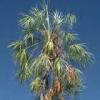
This is tagged as Sabal Casurina, but looked just like some others tagged as other sabals, and I am not brushed up on Sabals at all, so I am not sure... But suposedly a major University comes out and ID's all the species, so who knows. There are a couple things I know are flat out tagged wrong, but I suppose other people could be moving tags that have come off. Any how there are multiple species in very close proximity, so I'm guessing they could be hybridized. Here are the species I can recall by memory...

Bermudadana

Casurina

Causarium

Minor

Uresana

Palmetto

Rosei

So to the first folks that are interested I have about a 24oz beer mug full of seed to divide up...

post-3576-12681995714479_thumb.jpg

post-3576-12681995842702_thumb.jpg

post-3576-12681995954926_thumb.jpg

post-3576-1268199615138_thumb.jpg

post-3576-12682004886011_thumb.jpg

post-3576-12682005000743_thumb.jpg

  • Upvote 1
Posted

Never heard of Sabal casurina. Can anyone enlighten me?

Meg

Palms of Victory I shall wear

Cape Coral (It's Just Paradise)
Florida
Zone 10A on the Isabelle Canal
Elevation: 15 feet

I'd like to be under the sea in an octopus' garden in the shade.

Posted

I've never heard of Sable Casurina either but I would say the seeds are bigger than palmetto. I did a post called name that Sable Feb 18th That might help with the seed size but due to my computer inabilities I can't seem to link it to this post.

Semper Fi

Don

Posted

Probably a misspelling of Sabal causarium. Tho, some has argued that the species epithet should be "causaria" in keeping with the laws of botanical nomenclature. I don't know those laws, but I have seen many ACCEPTED, VALID botanical names in obvious violation of the implied law of gender agreement between the genus and the species epithet. *shrugs*

Anyway, Sabal causarium, or Puerto Rican hat palm, does have larger seeds and larger leaves and larger trunk than the cabbage palm, Sabal palmetto. This is all I know off the top of my head. Good luck!

Jeremy Breland
itinerant public garden horticulturist
A native of the US Gulf Coast: USDA hardiness zone 8b-9b; AHS heat zone 8-9, Sunset climate zone 28; Trewartha climate classification: Cf-humid subtropical; Hot and humid summers with occasional droughts, warm and wet winters punctuated by cold snaps.

Currently in New Orleans, LA, zone 9b, heat zone 8

Posted

Probably a misspelling of Sabal causarium. Tho, some has argued that the species epithet should be "causaria" in keeping with the laws of botanical nomenclature. I don't know those laws, but I have seen many ACCEPTED, VALID botanical names in obvious violation of the implied law of gender agreement between the genus and the species epithet. *shrugs*

Anyway, Sabal causarium, or Puerto Rican hat palm, does have larger seeds and larger leaves and larger trunk than the cabbage palm, Sabal palmetto. This is all I know off the top of my head. Good luck!

Hey JMBreland and Don,

I'm no Sabal finatic, and have not studied the genus closely (I want to have Uresana, and Maritima in my collection) but, look at the photos of the palm in question. Does that look like Causiarum ? I don't think it does ? :unsure::blink::huh: Its in filtered light, but I can't imagine that could cause it to be so petite, and there is no paper at the base where the petiols emerge. It just does not seem possible to me...

Your thoughts ?

Dave

post-3576-12682404544928_thumb.jpg

post-3576-12682404669299_thumb.jpg

Posted (edited)

Sabal palmetto seeds for comparison.

post-97-12682731814777_thumb.jpg

Edited by Alicehunter2000

David Simms zone 9a on Highway 30a

200 steps from the Gulf in NW Florida

30 ft. elevation and sandy soil

Posted

Sabal palmetto seeds for comparison.

Those are black, right ?

If so, they don't look like the seeds I pulled from that tagged Casurina...

Posted

I don't know if this is helpful, but here is a shot of some Sabal causiarum seeds after they've germinated. They certainly look similar to the seeds in your picture - dark brown, similar size. The parent tree, however, was much more robust than any in your pictures.

Mike

post-1659-12683347963598_thumb.jpg

Mike Lock, North coast of Maui, 330 ft/100 m elevaton, 80 in/2000 mm average rainfall

Posted

I don't know if this is helpful, but here is a shot of some Sabal causiarum seeds after they've germinated. They certainly look similar to the seeds in your picture - dark brown, similar size. The parent tree, however, was much more robust than any in your pictures.

Mike

Thanks for the input Mike ! What do you make of the jpics ? Is it possible that the tree in question could be that petite from being in mostly filtered sun light ?

Dave

Posted (edited)

Upon closer look, I'm noticing that the leaves look greener than the species. And, yes, as others have noted, it does look really small for a S. causiarum. The species normally have a bluish-green cast to its leaves and its petioles. Also, the species' petioles are notably thick. The palms in question look like a Sabal palmetto to me.

Btw, I just noticed in my previous post that I misspelled S. causiarum. Oops.

Edited by JMBreland

Jeremy Breland
itinerant public garden horticulturist
A native of the US Gulf Coast: USDA hardiness zone 8b-9b; AHS heat zone 8-9, Sunset climate zone 28; Trewartha climate classification: Cf-humid subtropical; Hot and humid summers with occasional droughts, warm and wet winters punctuated by cold snaps.

Currently in New Orleans, LA, zone 9b, heat zone 8

Posted

Upon closer look, I'm noticing that the leaves look greener than the species. And, yes, as others have noted, it does look really small for a S. causiarum. The species normally have a bluish-green cast to its leaves and its petioles. Also, the species' petioles are notably thick. The palms in question look like a Sabal palmetto to me.

Btw, I just noticed in my previous post that I misspelled S. causiarum. Oops.

From the looks of the palm, I might agree, but doesn't the seed look wrong for S. Palmetto ?

Posted (edited)

It's def. not causarium. I would go with Sabal mauritiiformis or maybe Sabal yapa (just cause of the super skinny trunk) maybe one of those crossed with a palmetto. Cause the leaves have a very palmetto look! Those are my guesses. Also here is a pic of a Sabal causarium just to show you the size of them. I just took this picture at the botanical gardens a couple weeks ago. Got burnt pretty bad this winter!!!

DSCF2105.jpg

Edited by blake_tx

Blake

Posted

It's def. not causarium. I would go with Sabal mauritiiformis or maybe Sabal yapa (just cause of the super skinny trunk) maybe one of those crossed with a palmetto. Cause the leaves have a very palmetto look! Those are my guesses. Also here is a pic of a Sabal causarium just to show you the size of them. I just took this picture at the botanical gardens a couple weeks ago. Got burnt pretty bad this winter!!!

DSCF2105.jpg

That looks like a great garden...

Posted

Yes it is a beautiful garden, It was even better before! But the new curator seems to hate palms!!! He has killed (literally chopped down at the base of the trunk) A double coconut, a king sago with about 5 clear foot of trunk! A african oil palm (like 30ft tall) Attalea with 30 foot leaves, and like 15 coconuts!!! Its so upsetting!!

Blake

Posted

It's def. not causarium. I would go with Sabal mauritiiformis or maybe Sabal yapa (just cause of the super skinny trunk) maybe one of those crossed with a palmetto. Cause the leaves have a very palmetto look! Those are my guesses. Also here is a pic of a Sabal causarium just to show you the size of them. I just took this picture at the botanical gardens a couple weeks ago. Got burnt pretty bad this winter!!!

DSCF2105.jpg

Why did your sabal get burned much more than your phoenix? :hmm:

Milwaukee, WI to Ocala, FL

Posted

Yes it is a beautiful garden, It was even better before! But the new curator seems to hate palms!!! He has killed (literally chopped down at the base of the trunk) A double coconut, a king sago with about 5 clear foot of trunk! A african oil palm (like 30ft tall) Attalea with 30 foot leaves, and like 15 coconuts!!! Its so upsetting!!

What gives that curator the right :rant: ! Have you spoke with any one there about this development ?

Posted

It's def. not causarium. I would go with Sabal mauritiiformis or maybe Sabal yapa (just cause of the super skinny trunk) maybe one of those crossed with a palmetto. Cause the leaves have a very palmetto look! Those are my guesses. Also here is a pic of a Sabal causarium just to show you the size of them. I just took this picture at the botanical gardens a couple weeks ago. Got burnt pretty bad this winter!!!

DSCF2105.jpg

Why did your sabal get burned much more than your phoenix? :hmm:

Jason that sable is from Puerto Rico were it's much warmer. Ie: it's not as cold hardy as a Sable Palmetto for example.

Semper Fi

Don

Posted

Leaves look like sabal, but the trunk looks slightly off, any other ideas?

Create an account or sign in to comment

You need to be a member in order to leave a comment

Create an account

Sign up for a new account in our community. It's easy!

Register a new account

Sign in

Already have an account? Sign in here.

Sign In Now


  • Recently Browsing

    • No registered users viewing this page.
×
×
  • Create New...