Jump to content
  • WELCOME GUEST

    It looks as if you are viewing PalmTalk as an unregistered Guest.

    Please consider registering so as to take better advantage of our vast knowledge base and friendly community.  By registering you will gain access to many features - among them are our powerful Search feature, the ability to Private Message other Users, and be able to post and/or answer questions from all over the world. It is completely free, no “catches,” and you will have complete control over how you wish to use this site.

    PalmTalk is sponsored by the International Palm Society. - an organization dedicated to learning everything about and enjoying palm trees (and their companion plants) while conserving endangered palm species and habitat worldwide. Please take the time to know us all better and register.

    guest Renda04.jpg

Recommended Posts

Posted

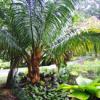
I must have passed this palm 50 times in the past without noticing it here at the UCLA Botanic Garden. Last week I finally took a good look and it's a nice palm! Somewhat reminiscent of a C. crinita with the trunk. Is anyone growing this one?

IMG_2599.jpg

And another one:

IMG_2603.jpg

Closeup of trunk:

IMG_2610.jpg

San Fernando Valley, California

Posted

Hello Peter, how are things?

The T. acanthacoma in your photo must be a very old specimen. The one I have must be going on

15 years now and probably has been in the ground for about 10. Now that it's established it's growing

much faster. Of course not knowing anything about the palm at the time it's not planted in an ideal location.

In fact I obtained it from a PSSC raffle many years ago. There was some discussion about whether T. brasiliensis and T.acanthacoma

were indeed the same palm, but now I think it's agreed they are two different species . The tag on this one was T. acanthacoma.

It's pretty unforgiving with the spiny trunk and sharp leaf ends, but it is a such a beautiful palm at this stage of

it's life and the large palmate leaves always deserve a second look.

Tim

post-1300-1234281478_thumb.jpg

It gets partial shade most of the year and it's been flourishing.

post-1300-1234281559_thumb.jpg

post-1300-1234281609_thumb.jpg

Tim

Hilo, Hawaii

Posted

I have four T. acanthocomas and they are tough as nails. They will take temps. below 15F with little damage. They will take full sun but look best with some partial shade. Mine produce hundreds of seeds almost every year, and I have dozens of them coming up under the mother trees. They are very slow in the juvinile stage. They should be planted off the beaten path because the trunks are vicious with the spines.

Dick

  • Upvote 1

Richard Douglas

Posted

Oh, yeah, the Spinal Tap Palm!

:mrlooney:

When Palmazon and I were removing a huge banana right next to my specimen, we took turns getting needled in the spine. Fortunately, those spines look nastier than they are . . . . . but nasty enough.

Slow as Congress wallowing in molasses in January in the northern Hemisphere.

Let's keep our forum fun and friendly.

Any data in this post is provided 'as is' and in no event shall I be liable for any damages, including, without limitation, damages resulting from accuracy or lack thereof, insult, or lost profits or revenue, claims by third parties or for other similar costs, or any special, incidental, or consequential damages arising out of my opinion or the use of this data. The accuracy or reliability of the data is not guaranteed or warranted in any way and I disclaim liability of any kind whatsoever, including, without limitation, liability for quality, performance, merchantability and fitness for a particular purpose arising out of the use, or inability to use my data. Other terms may apply.

Posted

Does this palm naturally tend to have the lower leaves drop downward and suddenly??? I noticed on mine that decline of the frond after being parallel with the ground increases... so you always get the erect new fronds and the spent older fronds, leaving somewhat of a gap in between.... you can see this in Peter's pics above. Jv

Jv in San Antonio Texas / Zone 8/extremes past 29 yrs: 117F (47.2C) / 8F (-13.3C)

Posted

Here's mine in SoCal.

post-11-1234326752_thumb.jpg

animated-volcano-image-0010.gif.71ccc48bfc1ec622a0adca187eabaaa4.gif

Kona, on The Big Island
Hawaii - Land of Volcanoes

Posted
Does this palm naturally tend to have the lower leaves drop downward and suddenly??? I noticed on mine that decline of the frond after being parallel with the ground increases... so you always get the erect new fronds and the spent older fronds, leaving somewhat of a gap in between.... you can see this in Peter's pics above. Jv

yes, older plants do that. Mine is still too short for that to be noticeable.

IF you never trim them, they get a skirt like a Washie.

Plant them in Texas! Yee-haw! They take low temps.

Watch out for the Spinal Taps . . . .

Let's keep our forum fun and friendly.

Any data in this post is provided 'as is' and in no event shall I be liable for any damages, including, without limitation, damages resulting from accuracy or lack thereof, insult, or lost profits or revenue, claims by third parties or for other similar costs, or any special, incidental, or consequential damages arising out of my opinion or the use of this data. The accuracy or reliability of the data is not guaranteed or warranted in any way and I disclaim liability of any kind whatsoever, including, without limitation, liability for quality, performance, merchantability and fitness for a particular purpose arising out of the use, or inability to use my data. Other terms may apply.

Posted (edited)

Nice plant Dean! How old is it?

Edited by Peter

San Fernando Valley, California

Posted

Thanks Peter,

I'm guessing that is almost 20 years old in that pic.

animated-volcano-image-0010.gif.71ccc48bfc1ec622a0adca187eabaaa4.gif

Kona, on The Big Island
Hawaii - Land of Volcanoes

Posted
I have four T. acanthocomas and they are tough as nails. They will take temps. below 15F with little damage. They will take full sun but look best with some partial shade.

Dick

Thanks Dick for that useful piece of information!

I've got some seeds from Colin [THANKS a LOT!] which germinated and I'm looking forward to grow that spiny fellow. :lol:

40270.gif

Greetings from Amman/Jordan

Simona

Posted

Thanks Dave for the info. BTW your spinal tap comment cracked me up!!! :floor: Jv

Jv in San Antonio Texas / Zone 8/extremes past 29 yrs: 117F (47.2C) / 8F (-13.3C)

Posted

I forgot to mention all of the Trithrinax do best in a Mediterranean climate. I've heard they do not do well in the South East or Florida, in fact I've seen very few in Florida. They seem to thrive in my hot/cold, summer,winter climate.

Dick

  • Upvote 1

Richard Douglas

Posted

They grow well here as long as they are in well drained soil, sun, and have good air circulation. We have lost T. acanthacoma, brasiliensis, and campestris in an area that began to get shaded, the buds rotted out.

This one was planted in June 1996 from a 3 gal. size. It was labeled T. brasiliensis when we obtained it. It is in full sun all day and in very well drained sandy soil.

100_0322.jpg

100_0323.jpg

Eric

Orlando, FL

zone 9b/10a

Posted
Does this palm naturally tend to have the lower leaves drop downward and suddenly??? I noticed on mine that decline of the frond after being parallel with the ground increases... so you always get the erect new fronds and the spent older fronds, leaving somewhat of a gap in between.... you can see this in Peter's pics above. Jv

Ours does this, too. The lower leaves will remain green but turn downward along the trunk.

Eric

Orlando, FL

zone 9b/10a

Posted

One of the features of Trithrinax acanthocoma, besides the spiny trunk, is the luscious fruit that are formed. Despite its looks, it's not edible.

post-1848-1234377072_thumb.jpg

Posted

Great looking palm. I wish my ex-wife would go and hug one.

Just kidding, the trunks are a very attractive aspect!

Coral Gables, FL 8 miles North of Fairchild USDA Zone 10B

Posted

i planted one out last spring. it hasn't grow much during it's first year but it looks like it has survived the long cold spel we had at the end of 2008. it does has some brown spots on some of the leaves but the leaves that it grew last year are looking good...i did put an umbrella above it to keep it dry.

Posted

This is one of my favorites!!! It´a very rare palm here in habitat and also in cultivation. It´s a treatened species and very beautifull so it deserves cultivation!! I have a very old one that I saved from a chainsaw.

Carambeí, 2nd tableland of the State Paraná , south Brazil.

Alt:1030m. Native palms: Queen, B. eriospatha, B. microspadix, Allagoptera leucocalyx , A.campestris, Geonoma schottiana, Trithrinax acanthocoma. Subtr. climate, some frosty nights. No dry season. August: driest month. Rain:1700mm


I am seeking for cold hardy palms!

Posted

Very pretty...thanks all for the pics.

Rusty

Rusty Bell

Pine Island - the Ex-Pat part of Lee County, Fl , USA

Zone 10b, life in the subs!...except when it isn't....

Posted
:blink: Does anyone know for sure if Trithrinax acanthacoma is a separate species from T. brasiliensis? If so, how would one tell them apart? :unsure:

Perry Glenn

SLO Palms

(805) 550-2708

http://www.slopalms.com

Posted

So, the brasilensis and acanthocoma are not suckering species like campestris? BTW, great photos that everyone has posted!

My campestris is doing great here in NC, and I was wondering if the others would do just as well.

C from NC

:)

Bone dry summers, wet winters, 2-3 days ea. winter in low teens.

Siler City, NC

Posted

Here is a year old picture of ours in Tampa, with the the ranch hand as scale. The first time I noticed the leaf drop I thought it was the beginning of the end, glad to hear its not a pathogen. It has never flowered.

IMGP3470-1.jpg

Posted
This is one of my favorites!!! It´a very rare palm here in habitat and also in cultivation. It´s a treatened species and very beautifull so it deserves cultivation!! I have a very old one that I saved from a chainsaw.

Unfortunately, in south america the pulp industry is out of control, destroying vast unending swathes of land for ugly eucalyptus and pinus plantations. It is this industry that is threatening Trithrinax with extinction in the wild as well as many other native plants. It is horrific what this industry is doing to nature here.

Resident in Bristol UK.

Webshop for hardy palms and hybrid seeds www.hardy-palms.co.uk

Posted

Brad,

Good to see your posting

This is a hand full of species I can grow in North FL and never have to worry about.

Heres a specimen I have been growing a few years-- its about 1/2 the szie of Brads---flowers regularly tho--

I think it is the direct sunlight---Merrill had a very tall one in Gainesville that took all the freezes but died a few years back.

It has been through 89 here

Best regards

Ed

post-562-1234625534_thumb.jpg

post-562-1234625592_thumb.jpg

Posted

Hers a better photo

post-562-1234626468_thumb.jpg

post-562-1234626516_thumb.png

Posted

Ed, Brad,

Those are nice looking T. acanthocomas. I suspect you guys get just enough winter chill for their requirements. They are definately temperate palms. The flowers are beautiful and very fragrant on T. acanthocoma and campestris. The flowers grow very rapidly. One day I see a bract emerging and 2 days later they are in full bloom and covered wilth bees.

Dick

  • Upvote 1

Richard Douglas

Posted

I am growing one in Dallas that is doing well. It has approx 2' of trunk and is very tough and slow growing.

Posted

T. brasiliensis has a cousin, T. campestris that makes T. bras seem downright cuddly by comparison. I call it the Gaucho Oucho Palm . . . . . .

Let's keep our forum fun and friendly.

Any data in this post is provided 'as is' and in no event shall I be liable for any damages, including, without limitation, damages resulting from accuracy or lack thereof, insult, or lost profits or revenue, claims by third parties or for other similar costs, or any special, incidental, or consequential damages arising out of my opinion or the use of this data. The accuracy or reliability of the data is not guaranteed or warranted in any way and I disclaim liability of any kind whatsoever, including, without limitation, liability for quality, performance, merchantability and fitness for a particular purpose arising out of the use, or inability to use my data. Other terms may apply.

Posted
Ed, Brad,

Those are nice looking T. acanthocomas. I suspect you guys get just enough winter chill for their requirements. They are definately temperate palms. The flowers are beautiful and very fragrant on T. acanthocoma and campestris. The flowers grow very rapidly. One day I see a bract emerging and 2 days later they are in full bloom and covered wilth bees.

Dick

Dick

Good to hear from you! One of the few up sides (against the many downsides) of living in Zone 9

They seem prosper here without a whole lot of trouble.

Best regards,

Ed

Posted
I have four T. acanthocomas and they are tough as nails. They will take temps. below 15F with little damage. They will take full sun but look best with some partial shade.

Dick

Thanks Dick for that useful piece of information!

I've got some seeds from Colin [THANKS a LOT!] which germinated and I'm looking forward to grow that spiny fellow. :lol:

I would go with Trithrinax campestris myself as here in the Uk is an T. acanthocoma that received -9 C / 15 F this year and though it far from dead its probably going to look rubbish for quite awhile.

Destruction_Jan_2009_003.jpg

This has been planted out since 2002 but is not my palm.

Zone 8b

Central UK

Average min over last 5 years -5.1 C

Posted (edited)

Kev,

sadly my T. acanthacoma is dead or almost dead...i could pull the spears and a couple of leaves yesterday :huh:...coldest temp it has seen is -8.5°C. the fact that it was only planted last year and did not grew much with the cold wet summer is maybe one of the reasons of the damage but i dont think they survive temps much lower than -9°C in our climate...T. shizophylla is much stronger and did not care about al the cold we had.

Edited by kristof p
Posted

Kev,

I'm surprised the T. acanthocoma didn't take the cold better. They are supposed to be super cold hardy. Mine have taken 14F with little or no damage. I'm sure the one you have pictured will recover. Maybe it was below freezilng for a long time. I've only had one or two days in Walnut Creek where it never got above freezing, and that was the devistating '89 freeze.

Dick

  • Upvote 1

Richard Douglas

Posted

hi Dick the palm Kev shows suffered nearly a full week of subzero temps and snow john did do a full review of his garden over on the eps site for any one interested in cold hardy palms

http://www.palmsociety.org.uk/forum/topic....mp;topicid=1202

Ricky

http://doncasterwx.co.uk/"><img src="http://doncasterwx.co.uk/wd/wdl/wxgraphic/wxgraphic.php?type=banner_big" height="80" width="500" border="0" alt="DoncasterWx weather" />
  • 15 years later...
Posted

For reasons unknown, the Trithrinax acanthocoma I've had for years in the same spot has gone into a quick decline. It'll probably be dead by the end of this year. Leaves turn a weird dark bronze color then dry out. Don't know if the problem is with the soil or a disease, but nothing in the vicinity of this palm seems to be affected. The T. campestris a few feet away on my palm berm is growing just fine.🤔

Trithrinax1.png

Trithrinax2.png

  • 1 month later...
Posted
On 2/11/2009 at 2:42 PM, Perito said:

:blink: Does anyone know for sure if Trithrinax acanthacoma is a separate species from T. brasiliensis? If so, how would one tell them apart? :unsure:

BUMP
Based on Lorenzi's Brazilian Flora: Arecaceae (2010),  the segment tips of T. brasiliensis are flexible (vs. rigid in T. acanthocoma); the leaf sheath spines are brittle and deciduous soon after leaf death (vs. rigid and long-lasting in T. acanthocoma); the petiole is less than 3 cm in width (vs. more than 3 cm wide in T. acanthocoma); and the segment tips are half the total length of the segment (vs. 1/5 for T. acanthocoma). The color of the leaf blade of T. brasiliensis on the adaxial surface is more olive-green or glaucous than that of T. acanthocoma.

Jason Dewees

Inner Sunset District

San Francisco, California

Sunset zone 17

USDA zone 10a

21 inches / 530mm annual rainfall, mostly October to April

Humidity averages 60 to 85 percent year-round.

Summer: 67F/55F | 19C/12C

Winter: 56F/44F | 13C/6C

40-year extremes: 96F/26F | 35.5C/-3.8C

Create an account or sign in to comment

You need to be a member in order to leave a comment

Create an account

Sign up for a new account in our community. It's easy!

Register a new account

Sign in

Already have an account? Sign in here.

Sign In Now


  • Recently Browsing

    • No registered users viewing this page.
×
×
  • Create New...