

Leaderboard
The search index is currently processing. Leaderboard results may not be complete.
-

happypalms
IPS MEMBER29Points12,276Posts -

.thumb.png.04b3487b96ff29c55b8a8994b91f62b2.png)
Than
IPS MEMBER25Points2,303Posts -

Phoenikakias
IPS MEMBER17Points6,600Posts -

RiverCityRichard
IPS MEMBER11Points152Posts
Popular Content
Showing content with the highest reputation on 01/07/2026 in Posts
-
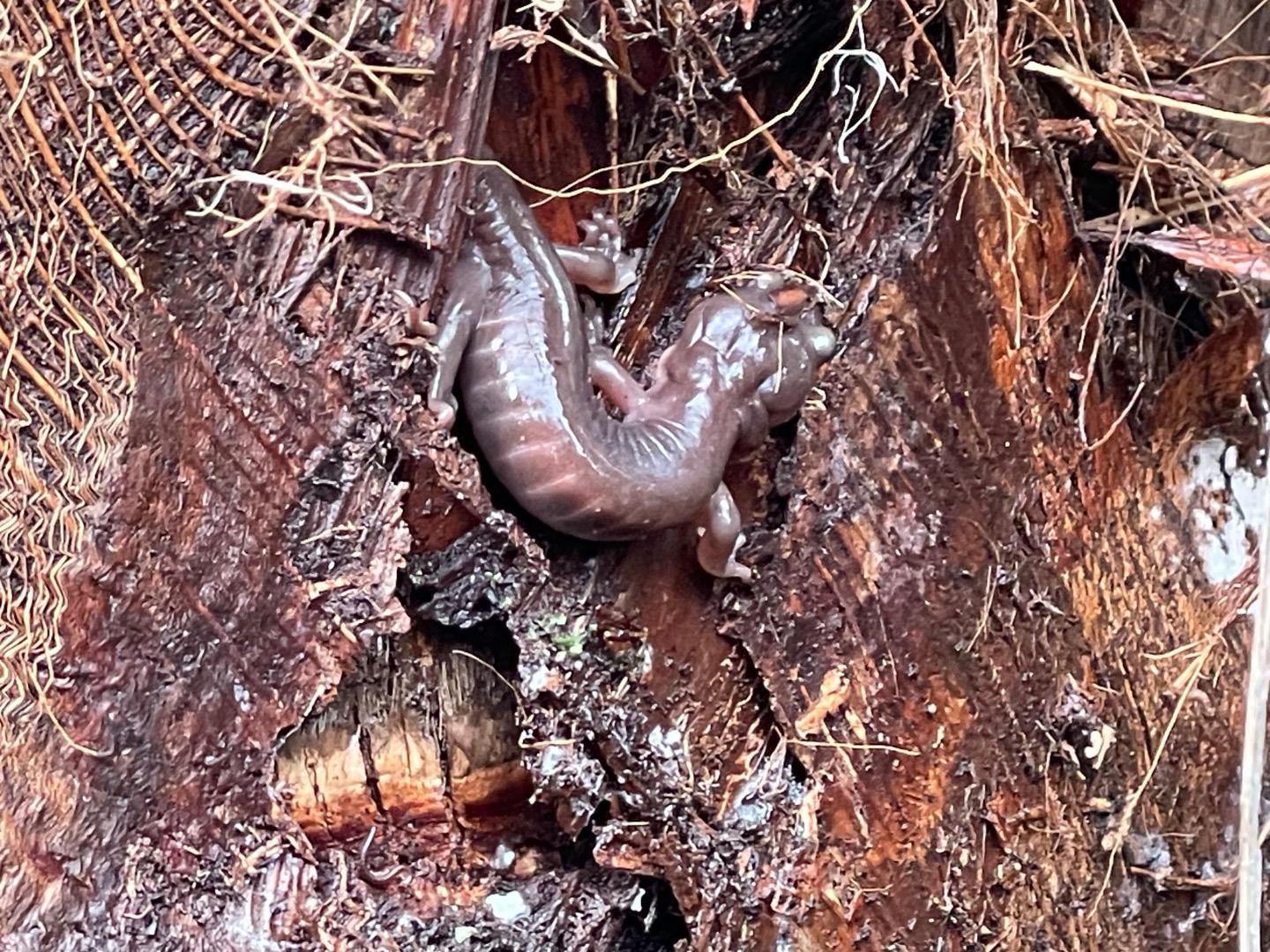
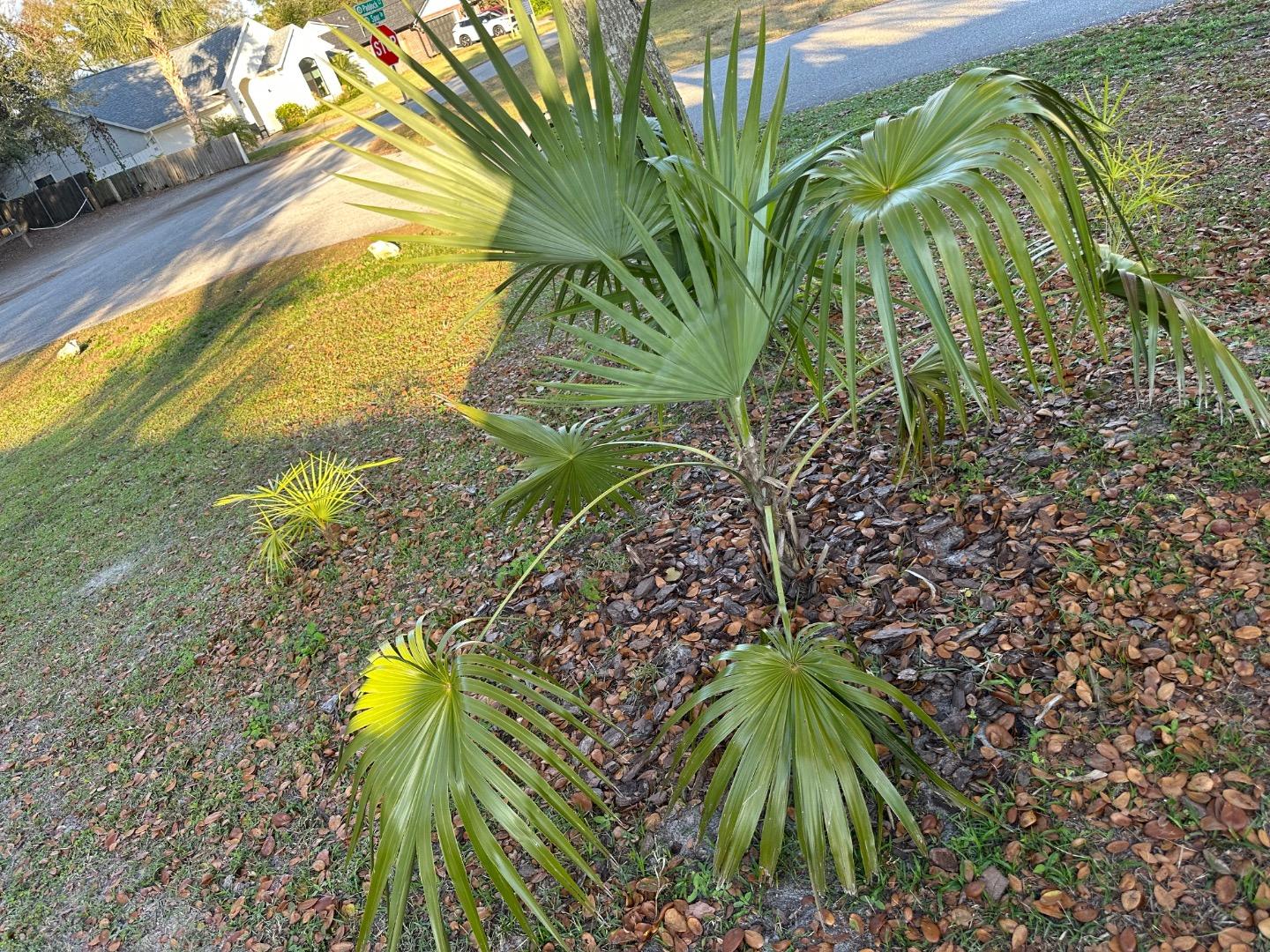
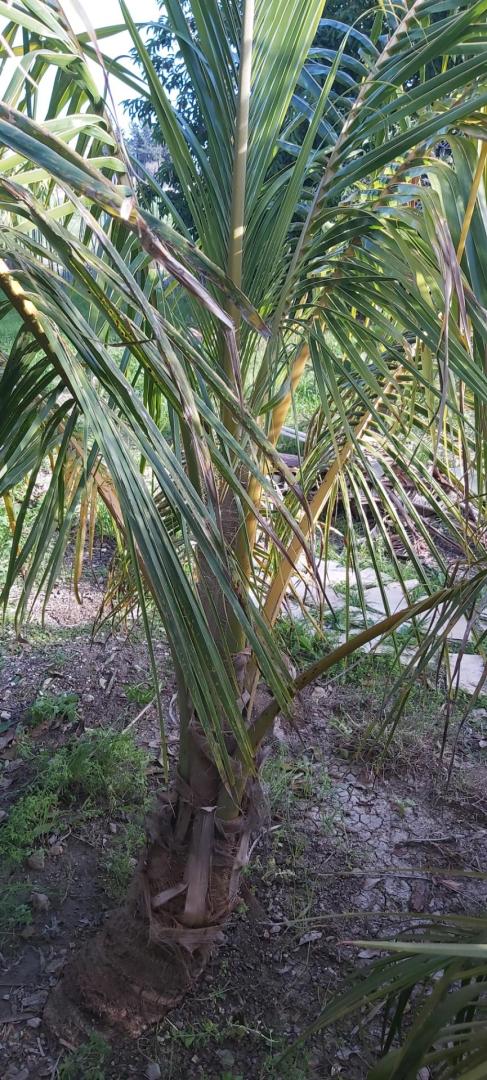
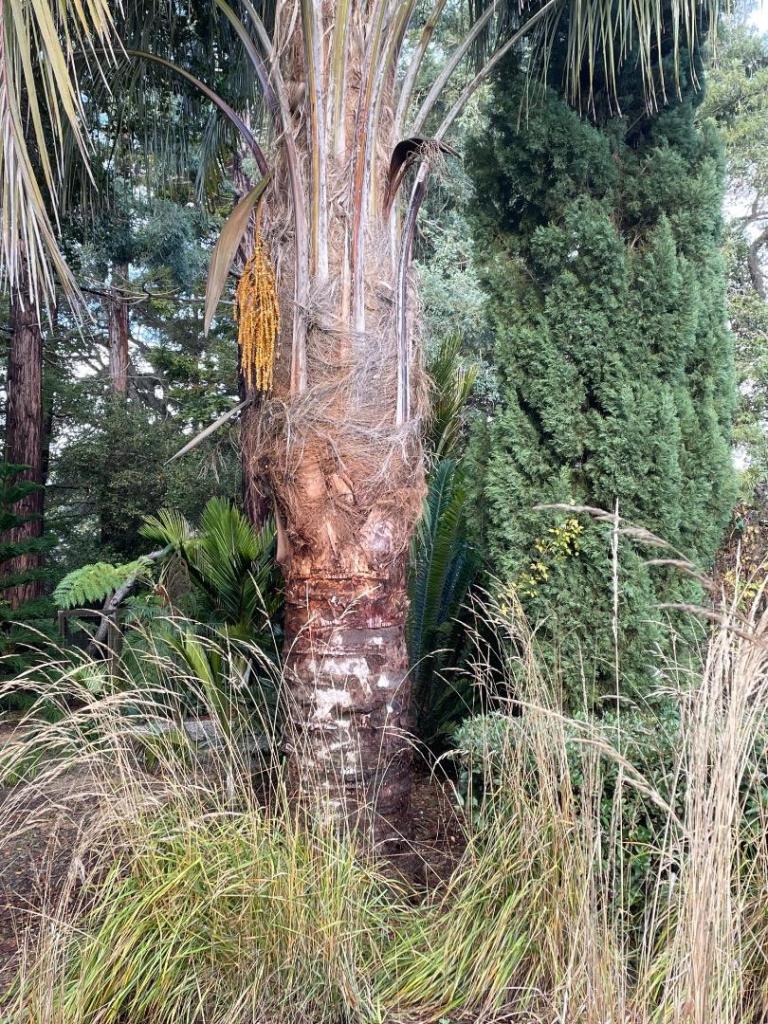
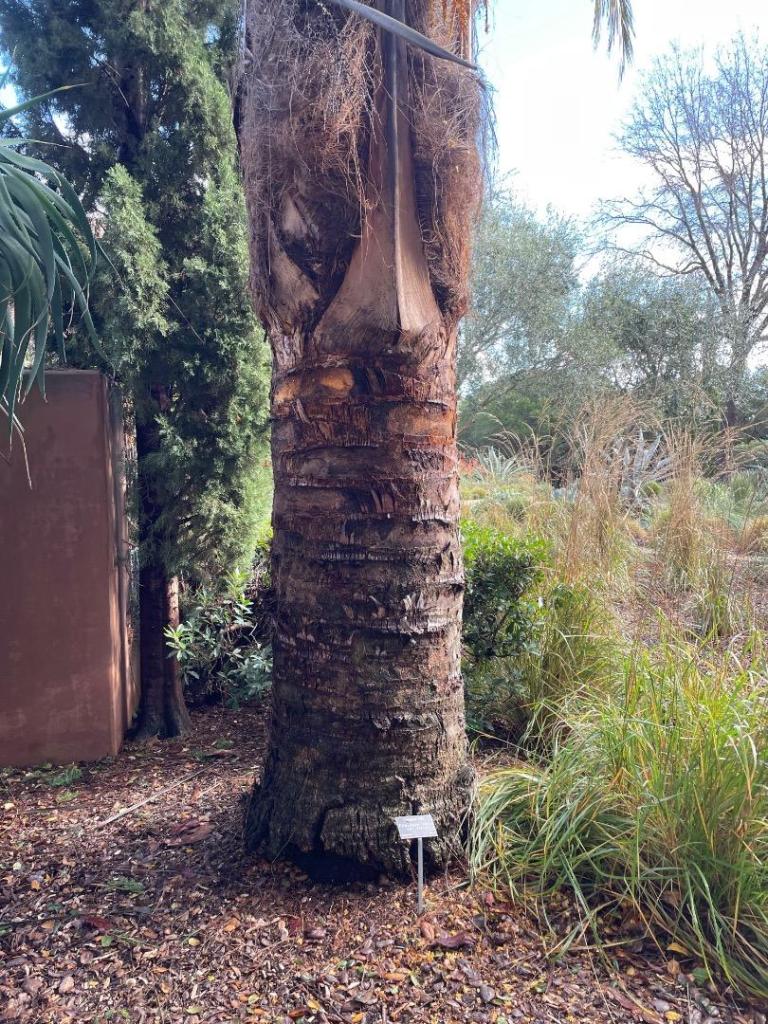
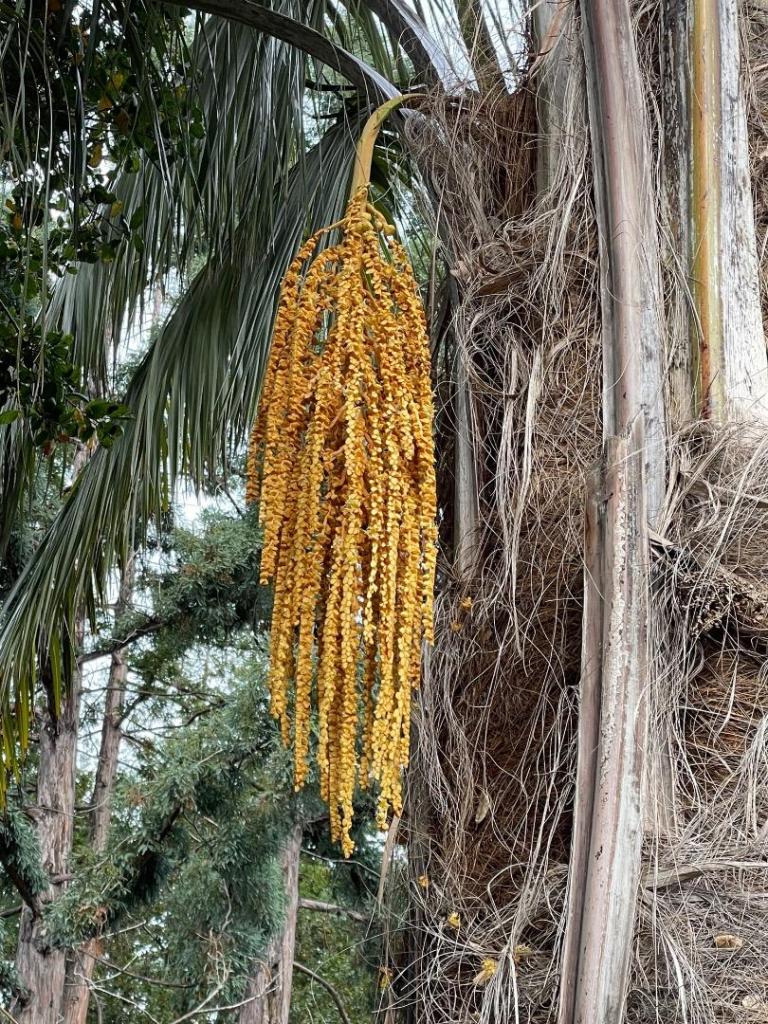
 10 pointsPosting a few photos of my Parajubaea torallyi. I planted this palm about 15 years ago from a 5-gallon pot. It currently has about six feet of clean trunk and it’s about 25+ feet tall. This time of year, I tug on the old leaf sheaths to see if any of them are ready to come off. If they're ready, they pull off easily. However, if they aren't, no amount of pulling will remove them. It’s not unusual to find Arboreal Salamanders (Aneides lugubris) under the old leaf sheaths as shown in the photo below. I'm in the San Francisco bay area.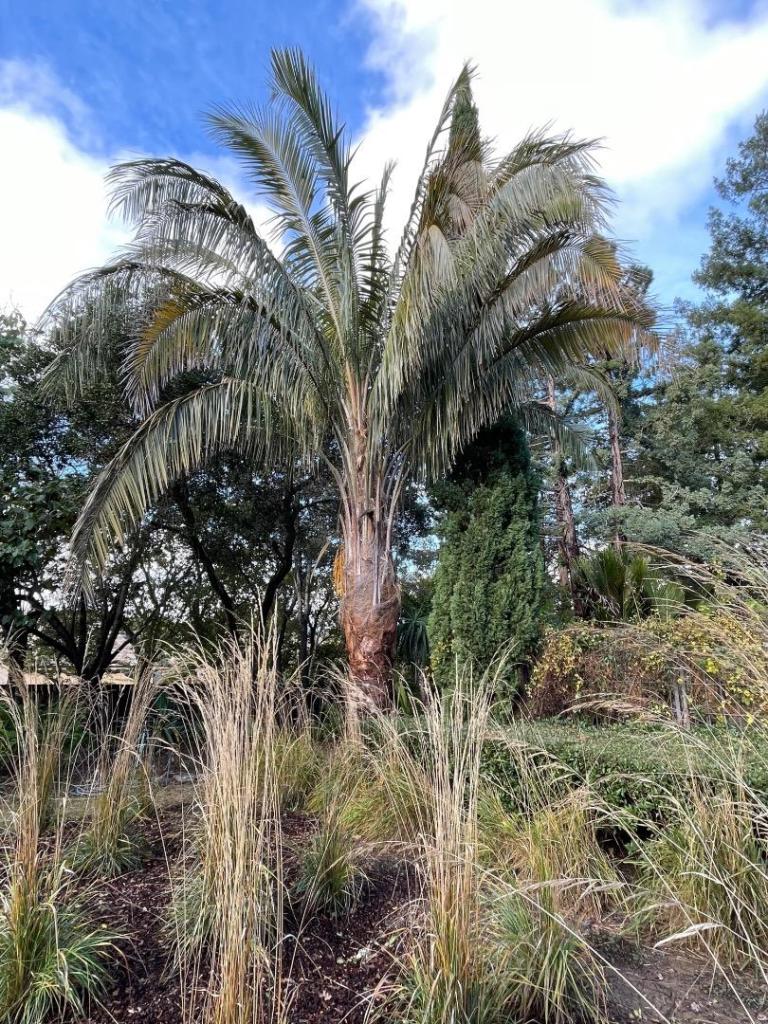

 10 points
 -
6 points
-
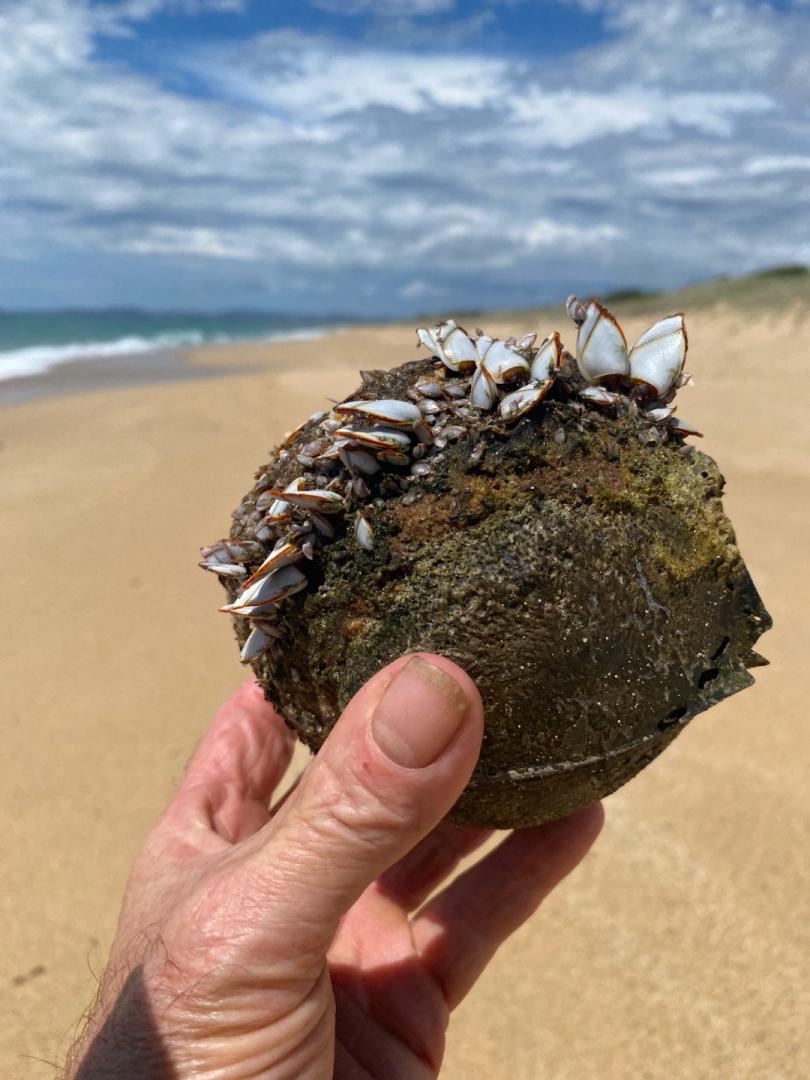
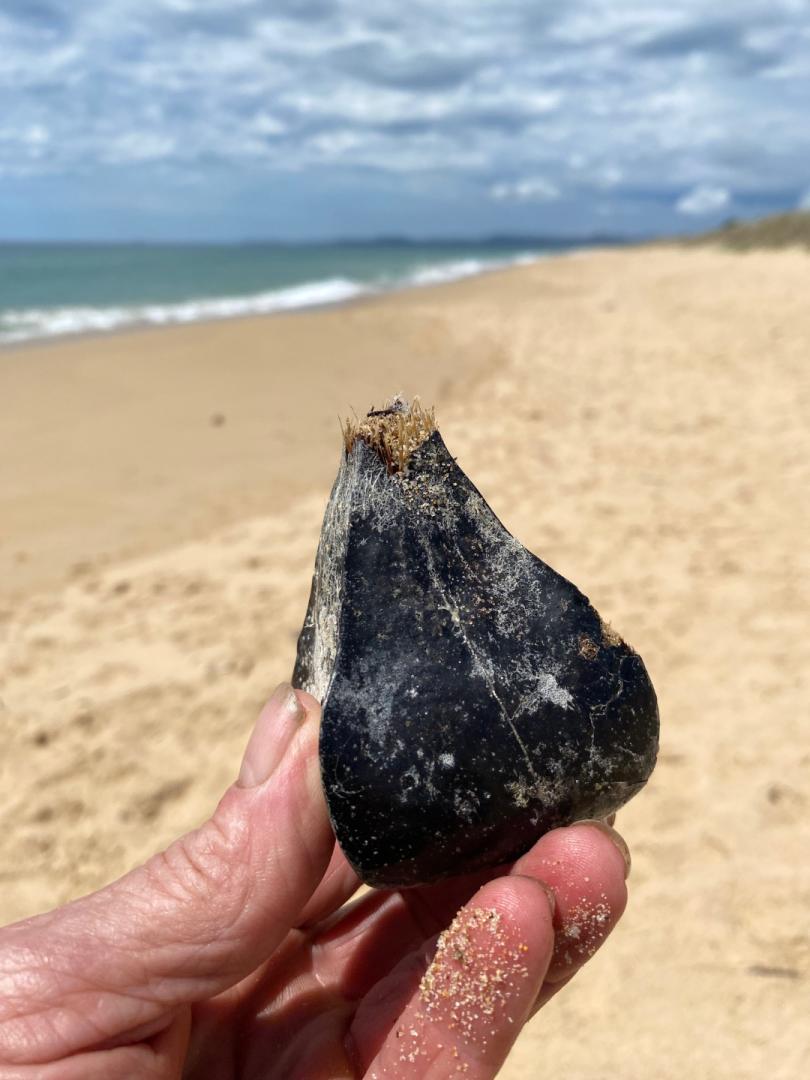
4 pointsA nice summer swim and a walk along a beach, with absolutely no body on the beach for miles, except for a few seeds!


 4 points
 -
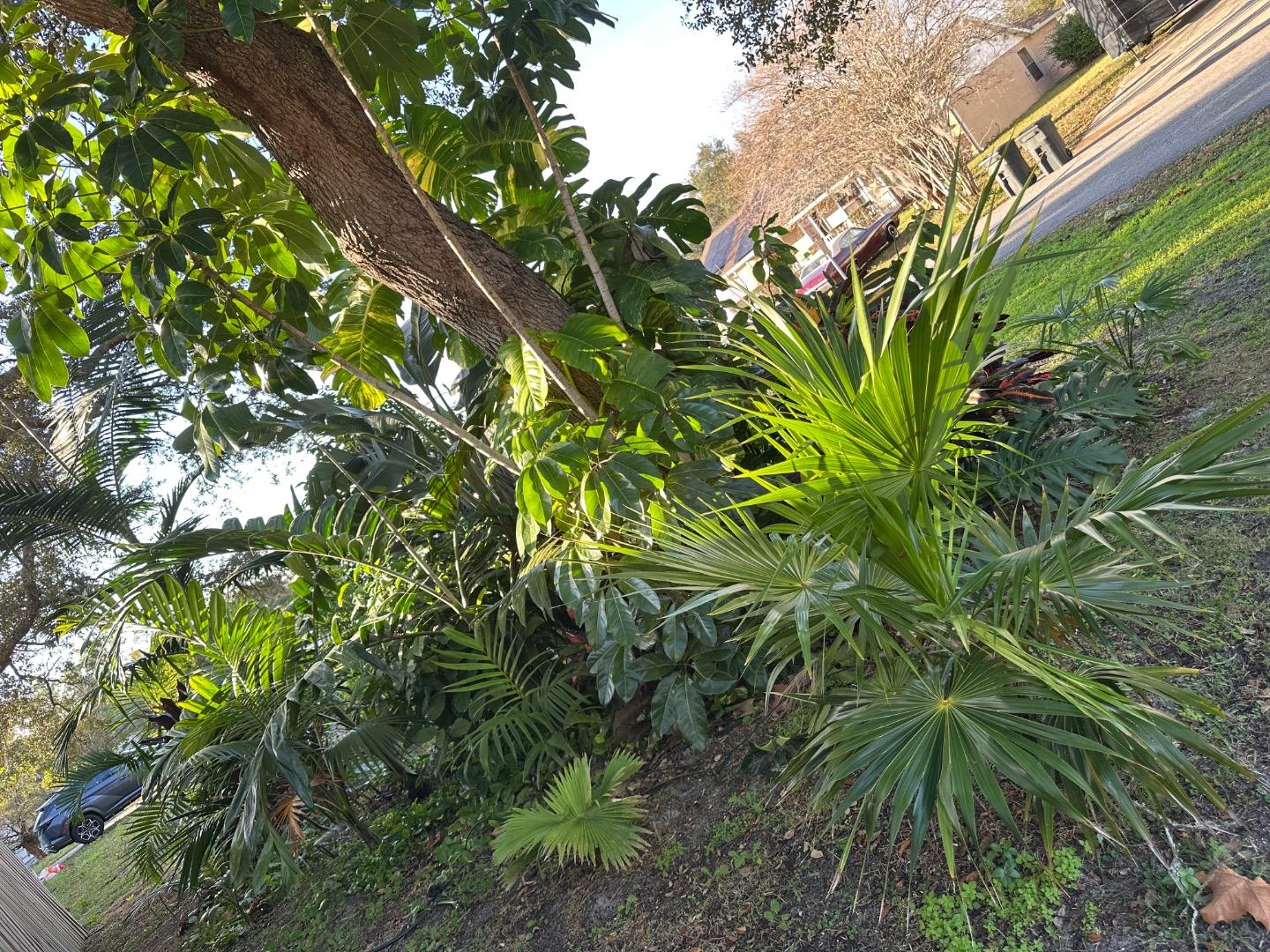
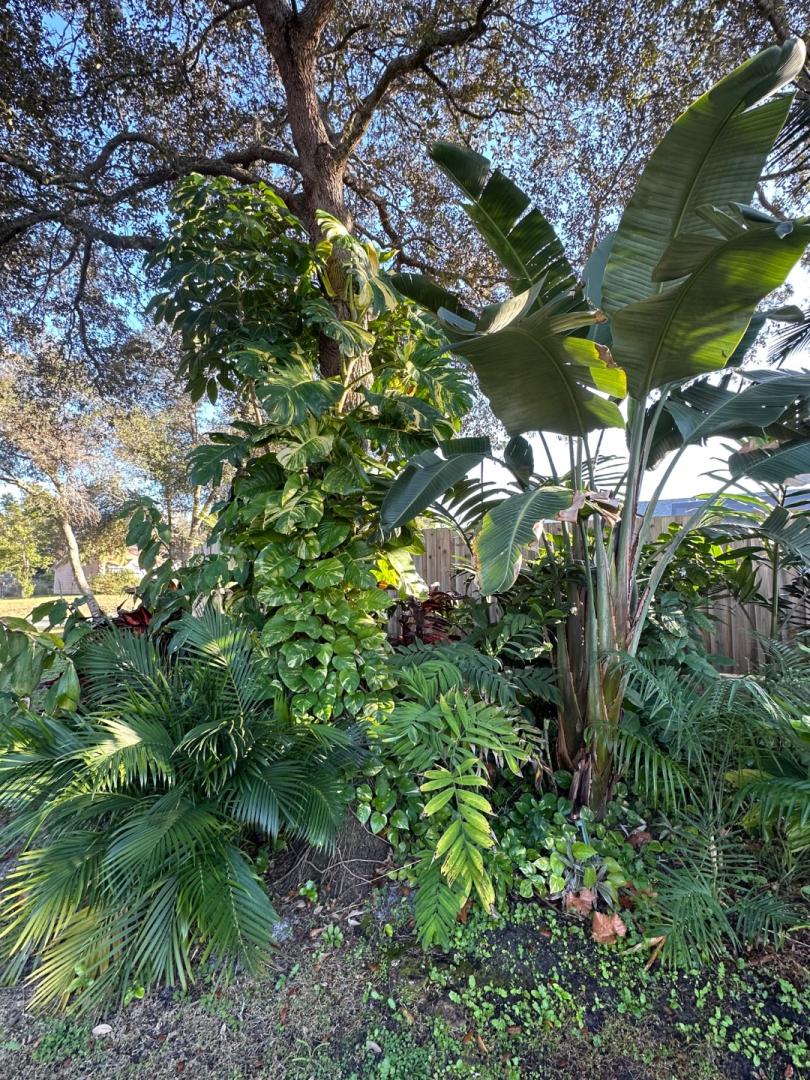
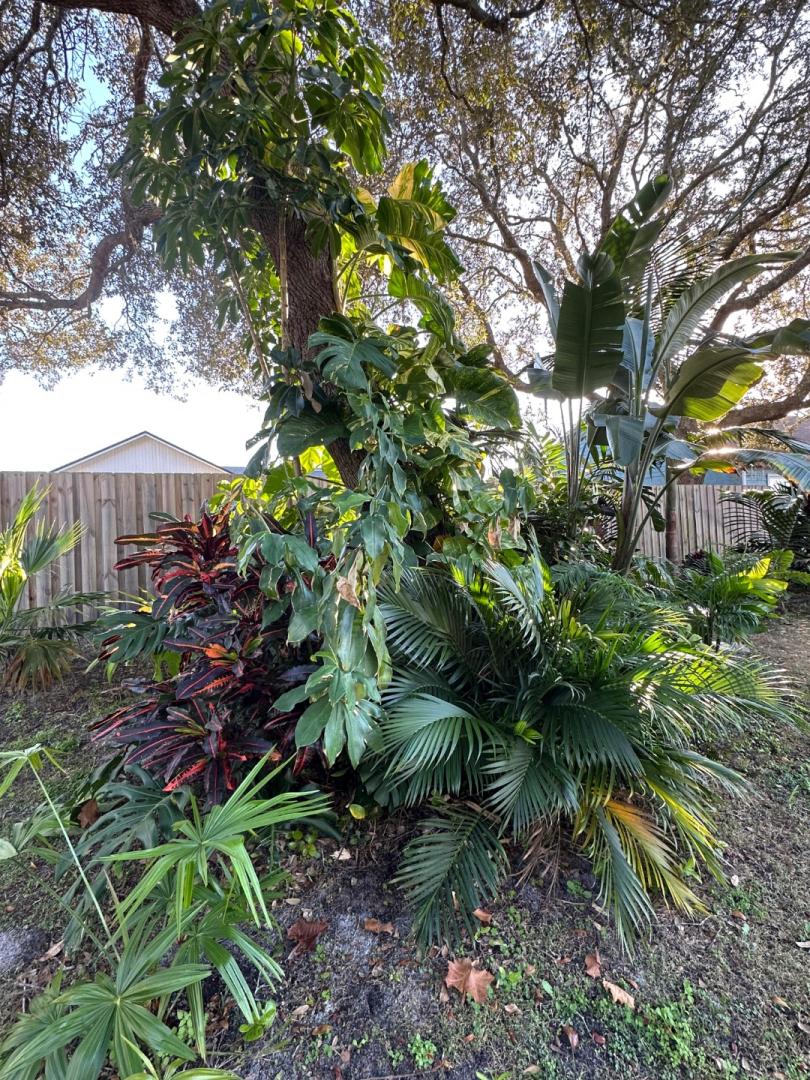
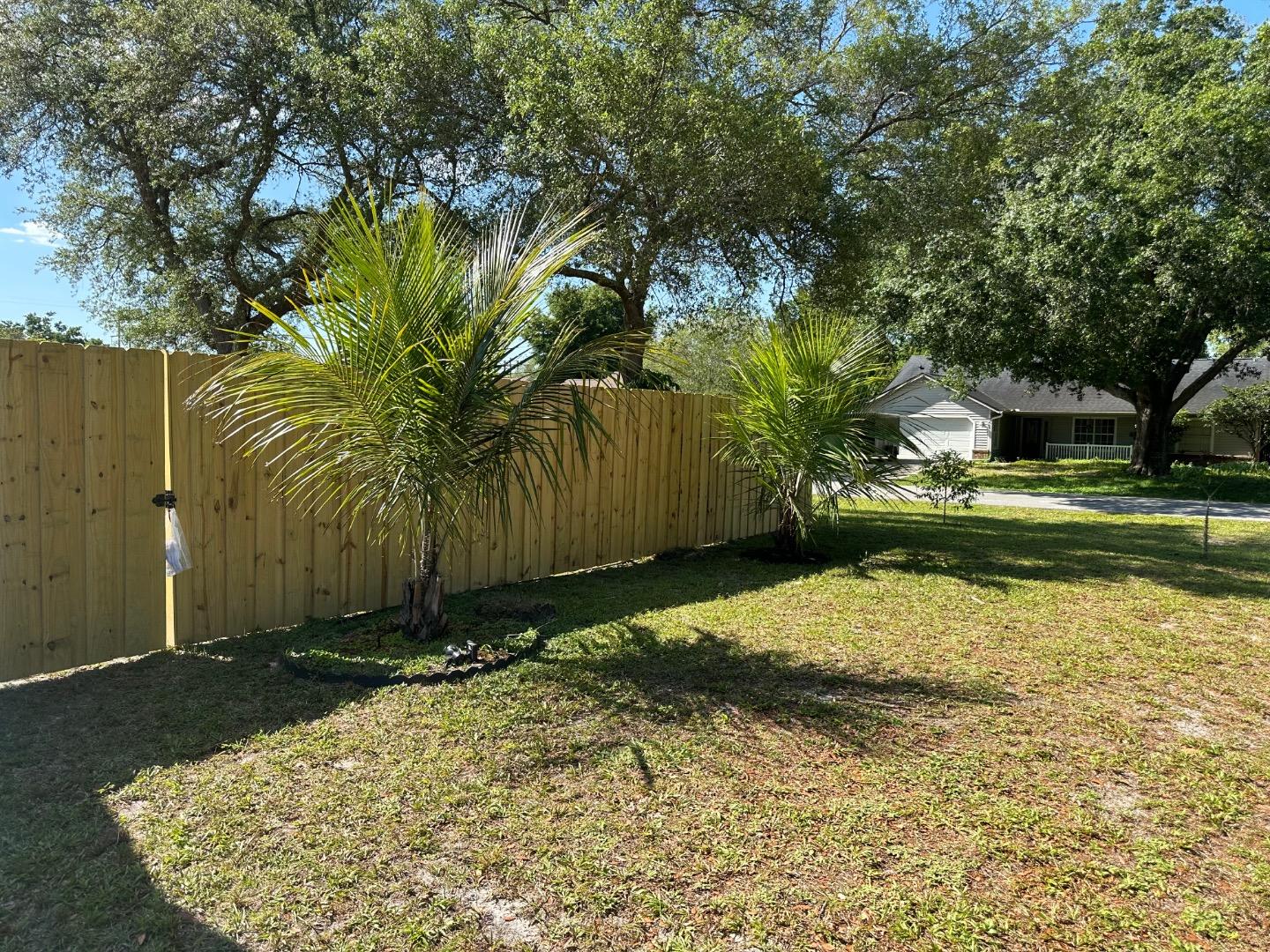
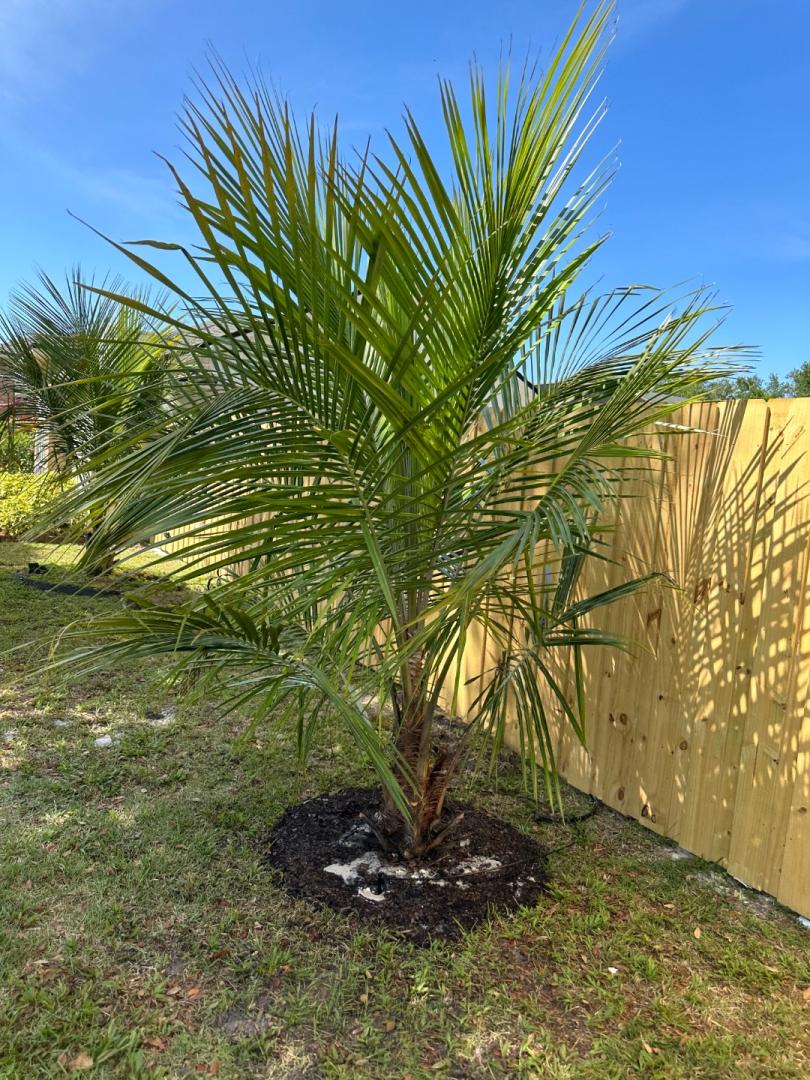
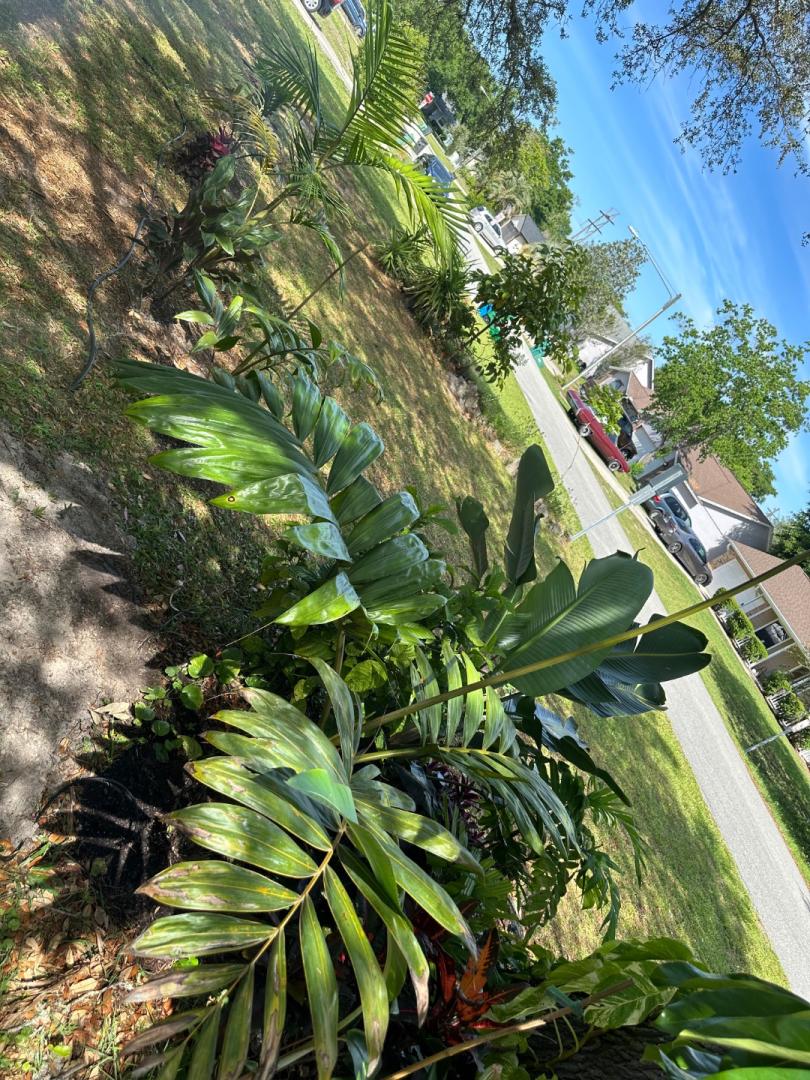
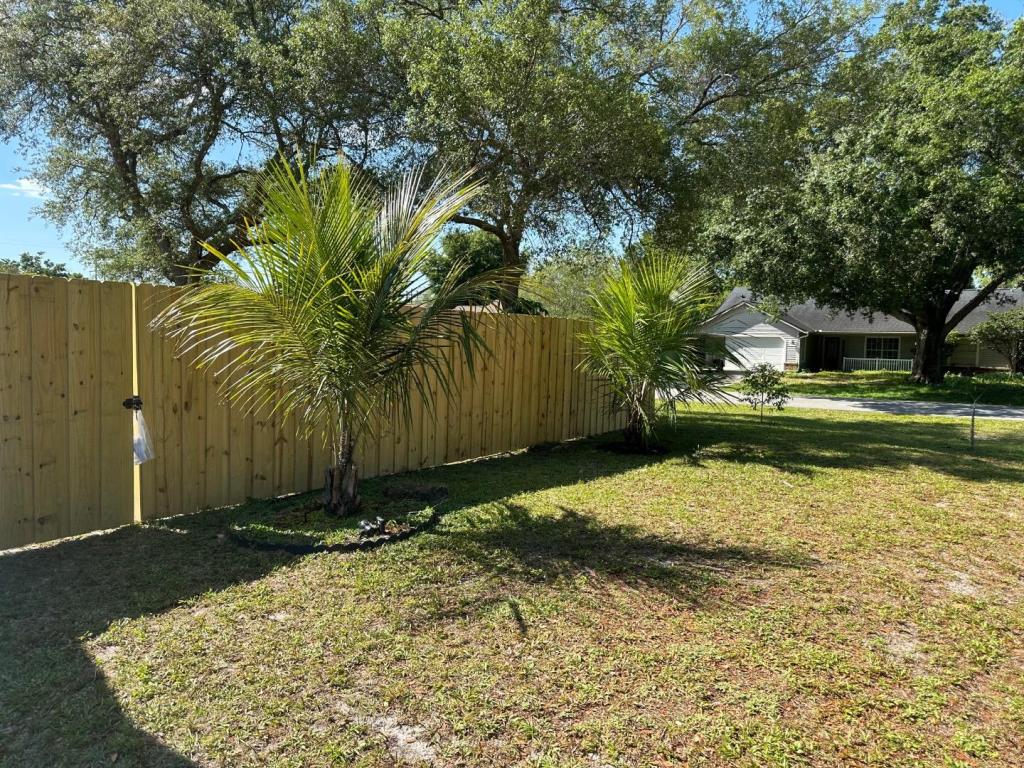
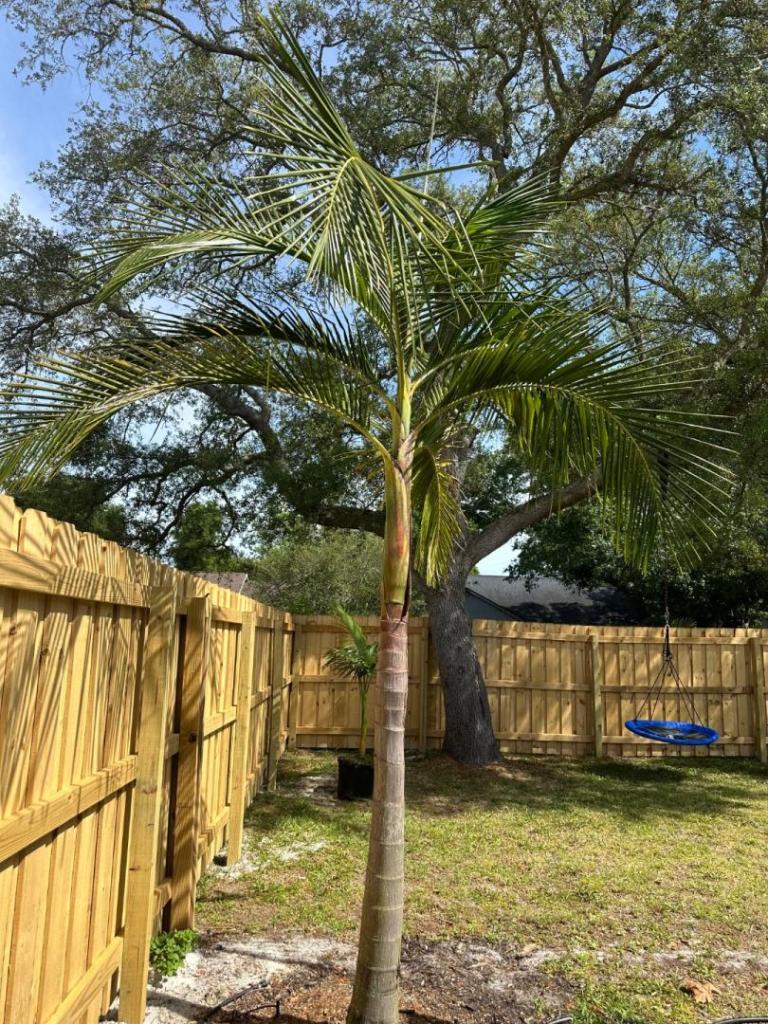
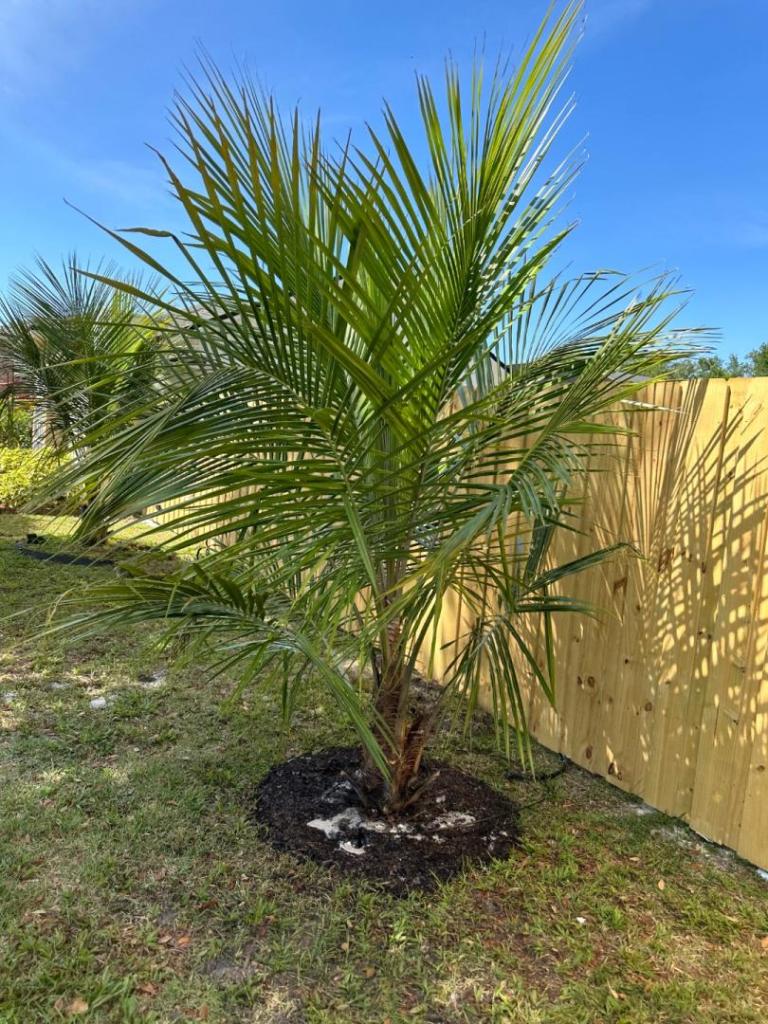
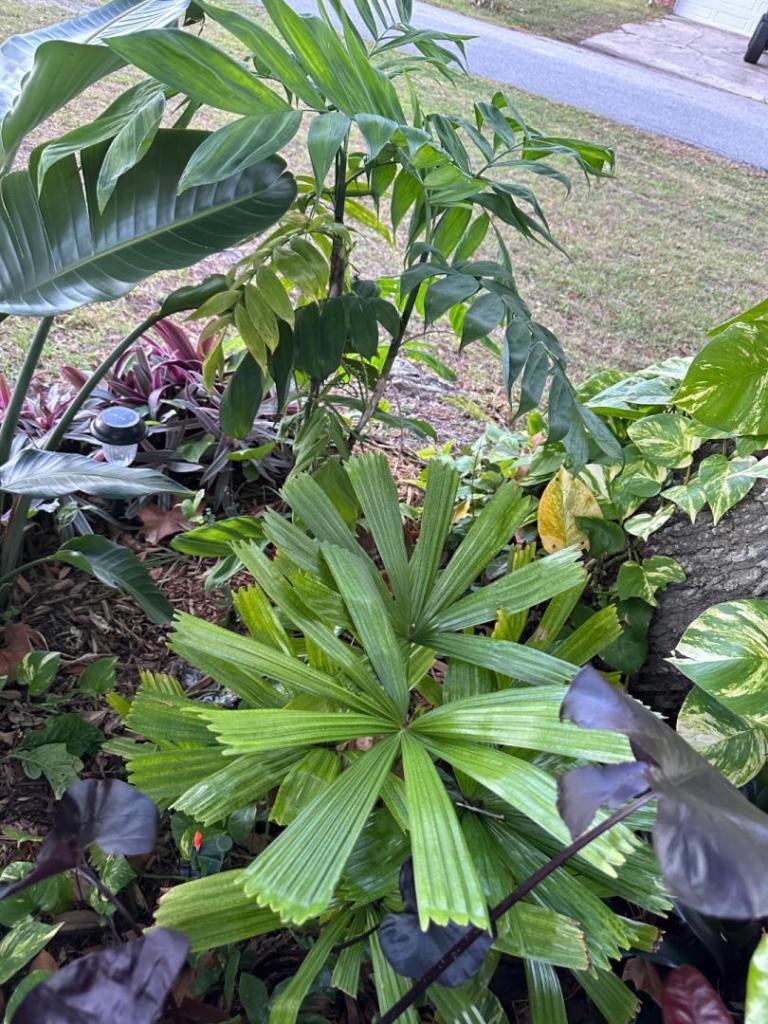
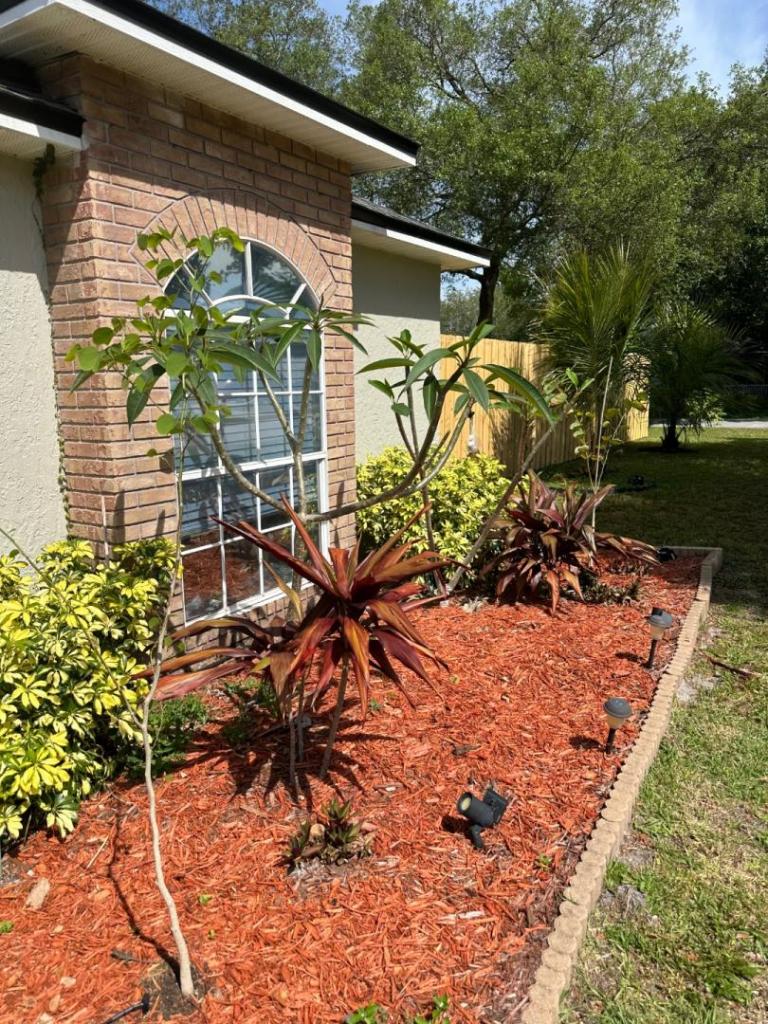
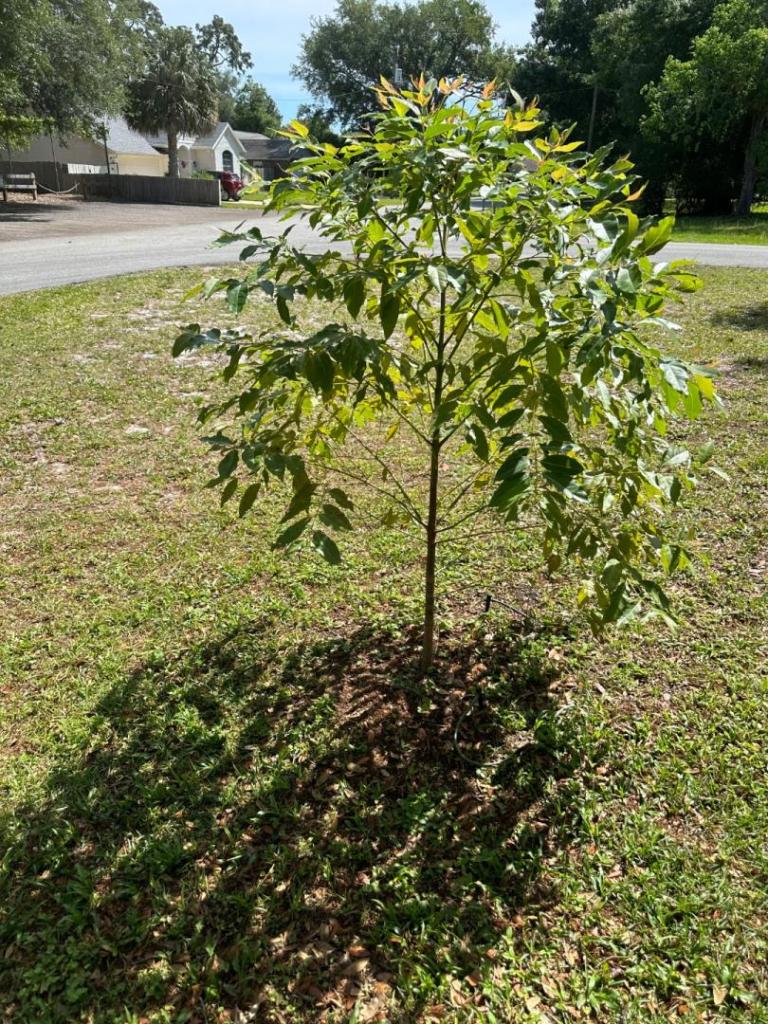
3 pointsNew member, but have been getting some good info from everyone on this site for a while. Started getting some palms a few years back and got inspired to start a bigger garden. In DeBary FL, about 30 miles north of Orlando. Progress so far: 2 B. Alfredii, one on the left planted from a 15g in June 2022, other went in this week from a 25g. Archontophoenix Cunninghamiana planted from a 7g in November 2021. Side yard has a couple of flamethrowers, Chambeyronia Oliviformis, another king palm, Lanonia Dasyantha, Caryota Obtusa, Chamaedorea Radicalis x Cataractarum (most likely) and Chamaedorea Microspadix. Plenty of other tropicals mixed in, big fan of Plumerias. Always run the risk of a hard freeze, but taking advantage of some high oak canopy and looking forward to a dense jungle look in a few years time.
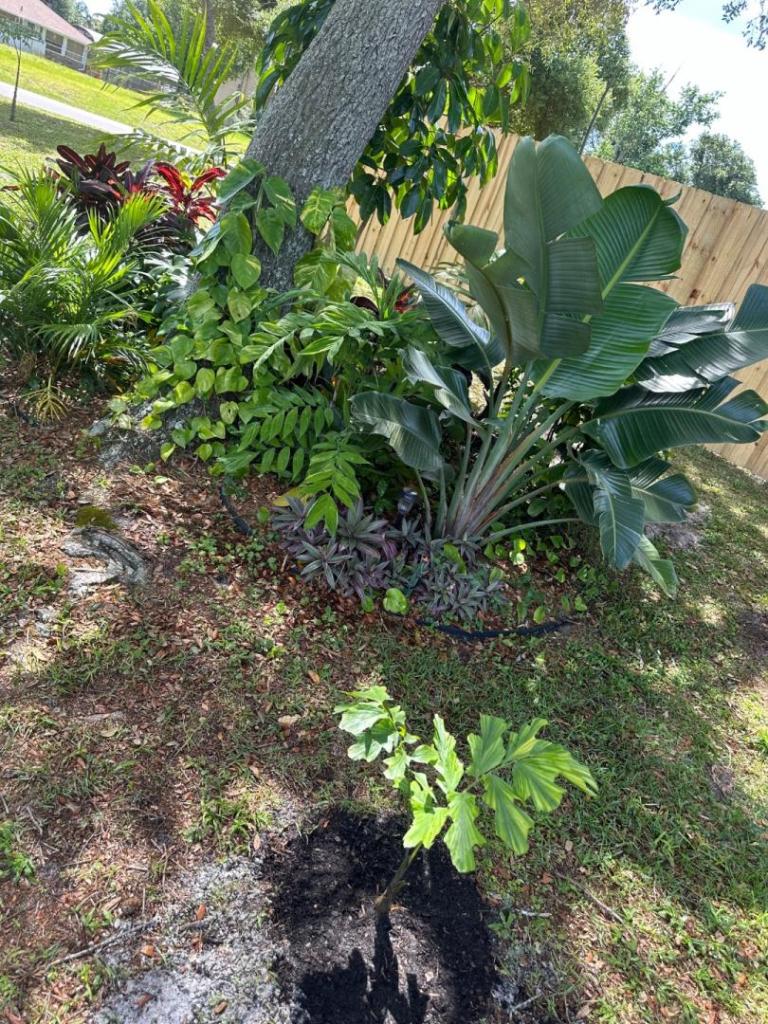

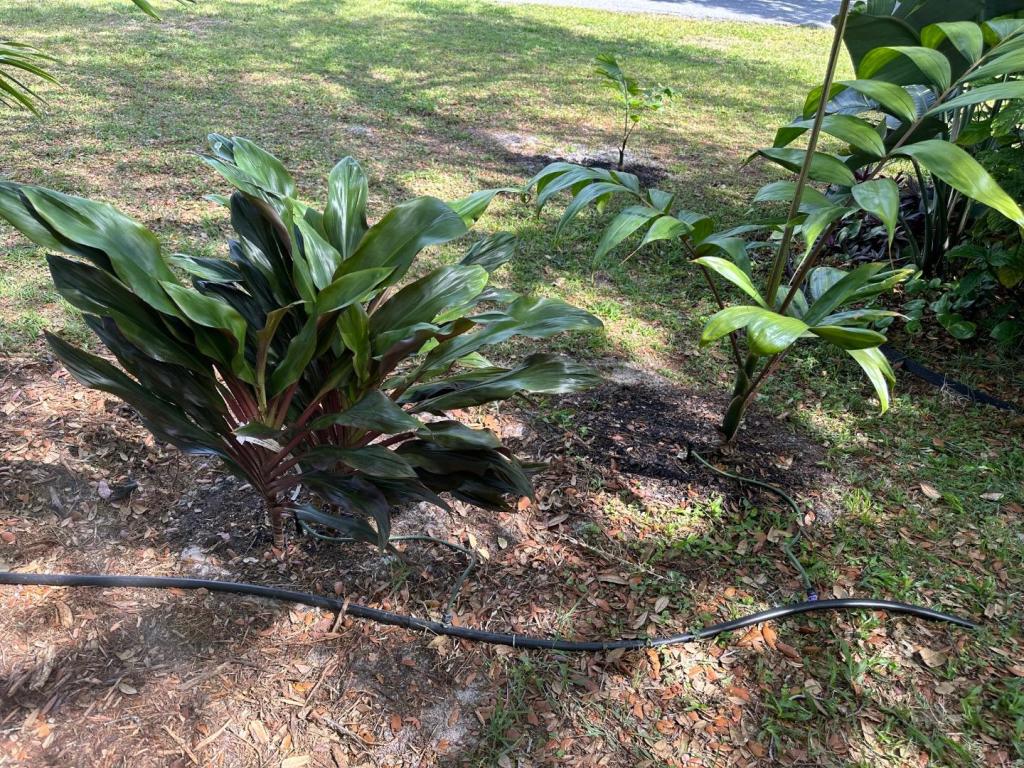
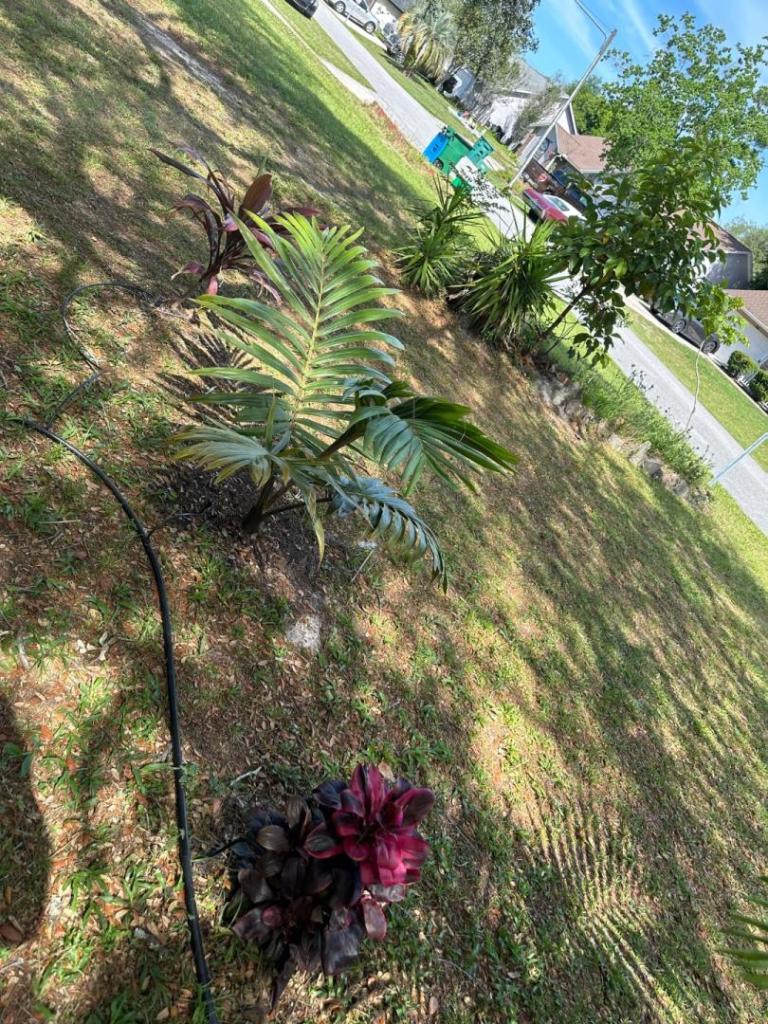
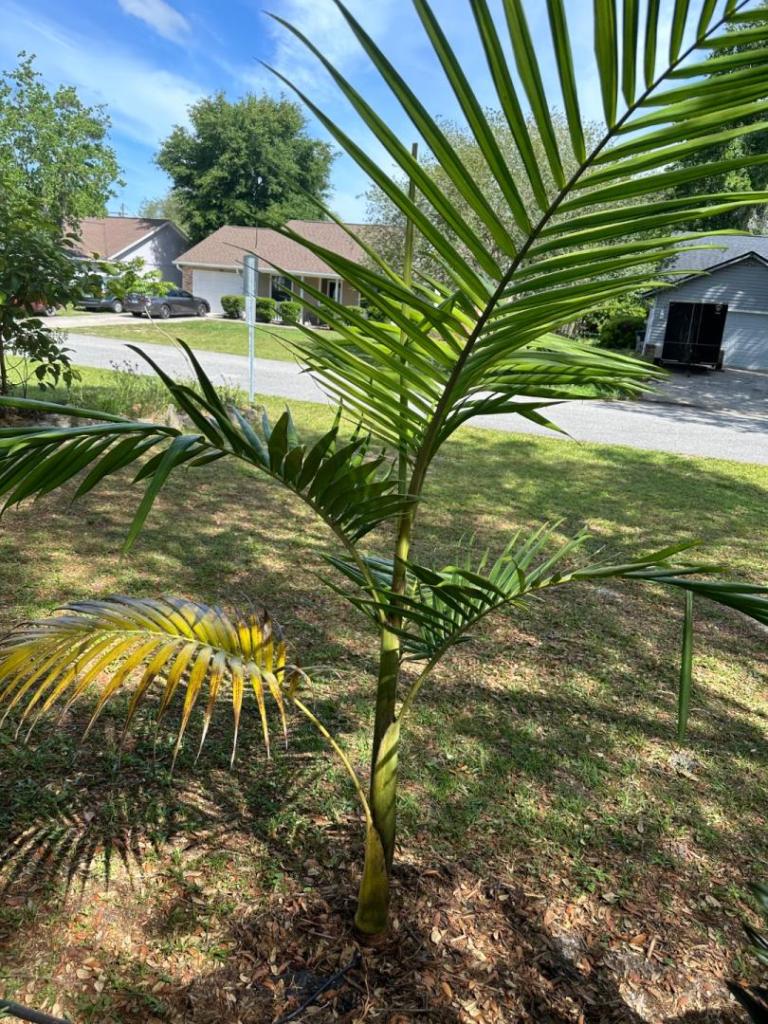
 3 points
 -
 3 pointsNothing palm-related here. I sat and watched some squirrel videos with the Yorkie.
 3 points
 -
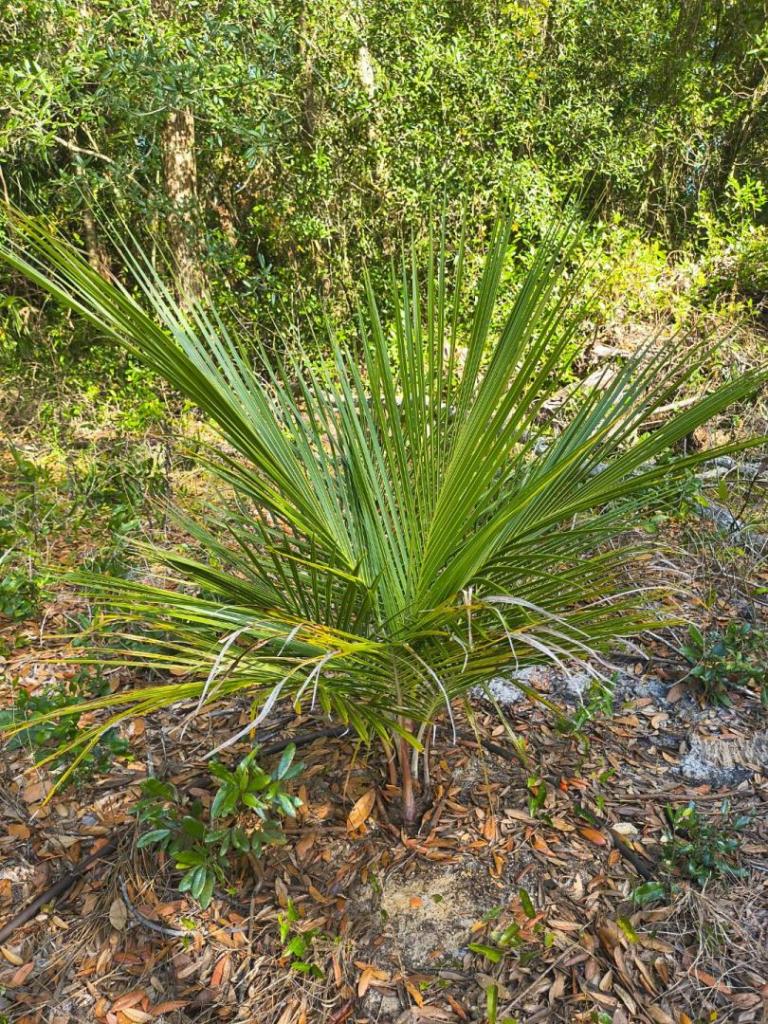
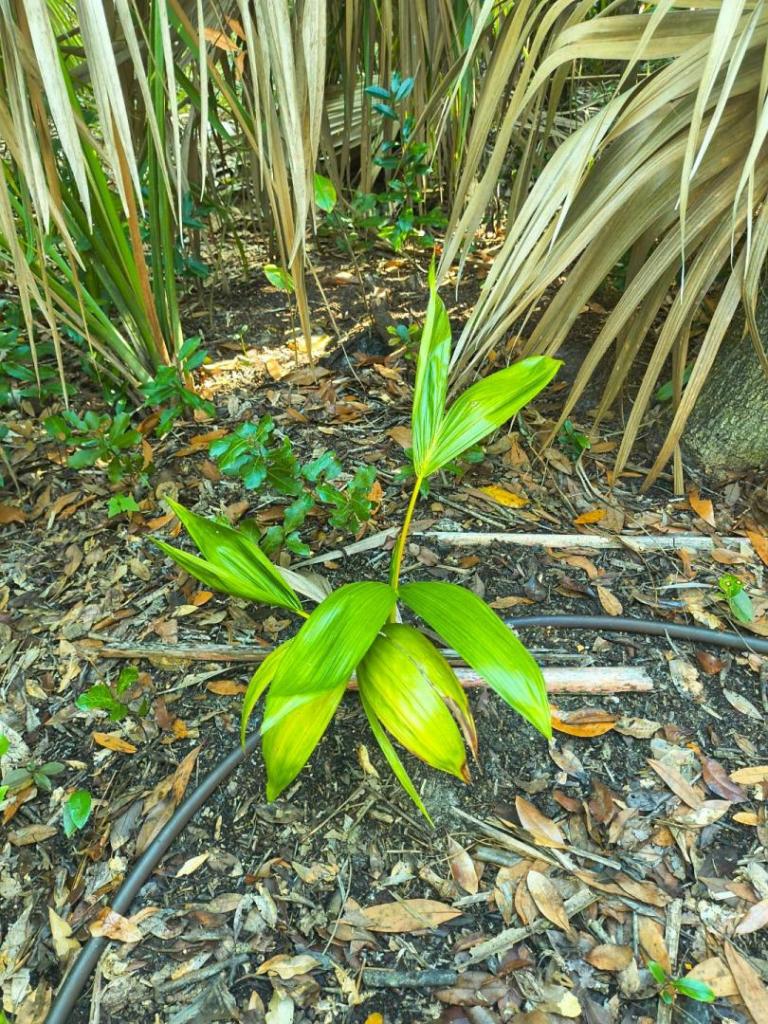
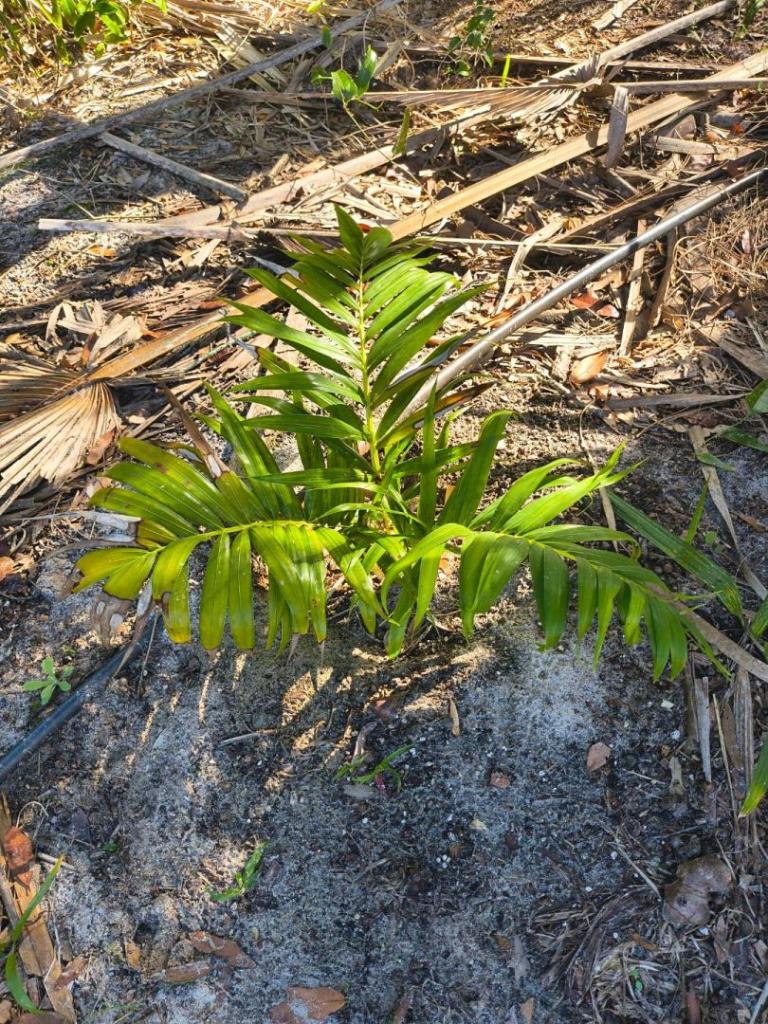
 Some happy plants in winter after a few freezes, just some chlorosis from sun or chill. The current project is a greenhouse, so no photos of other stuff yet till it's done in the next few weeks. After the summer slaughter things calmed down and the potted plants are mostly happy, so once they are organized into a good look I'll get more photos of them too. In order: cyphophoenix (I think Alba), chrysalidocarpus lanceolata, leptocheilos, basilongus, carlsmithii, B. alfredii, and chrysalidocarpus titan and Prestonianus to finish. All in ground two seasons and starting to get going a bit faster than the start. Losses were all due to heat and wet after the January freeze deaths, so learned to give more shade in summer planting spots, and less water with the high humidity even if they drain super sharp. Not pictured are a bunch of others, cold damaged and recovering from the cold last year, like hyophorbe and chambeyronia. Chrysalidocarpus lastellianus is not a good 10A palm for looks, it chill spots in the low 30s, but could survive a warm 9b event most likely under good cover (like a Christmas palm would do I think). Hoping the two cold events this November and new years are the two this year (average is 1 or so) and we are done but that's a stretch being January 7th.


 3 points
 -
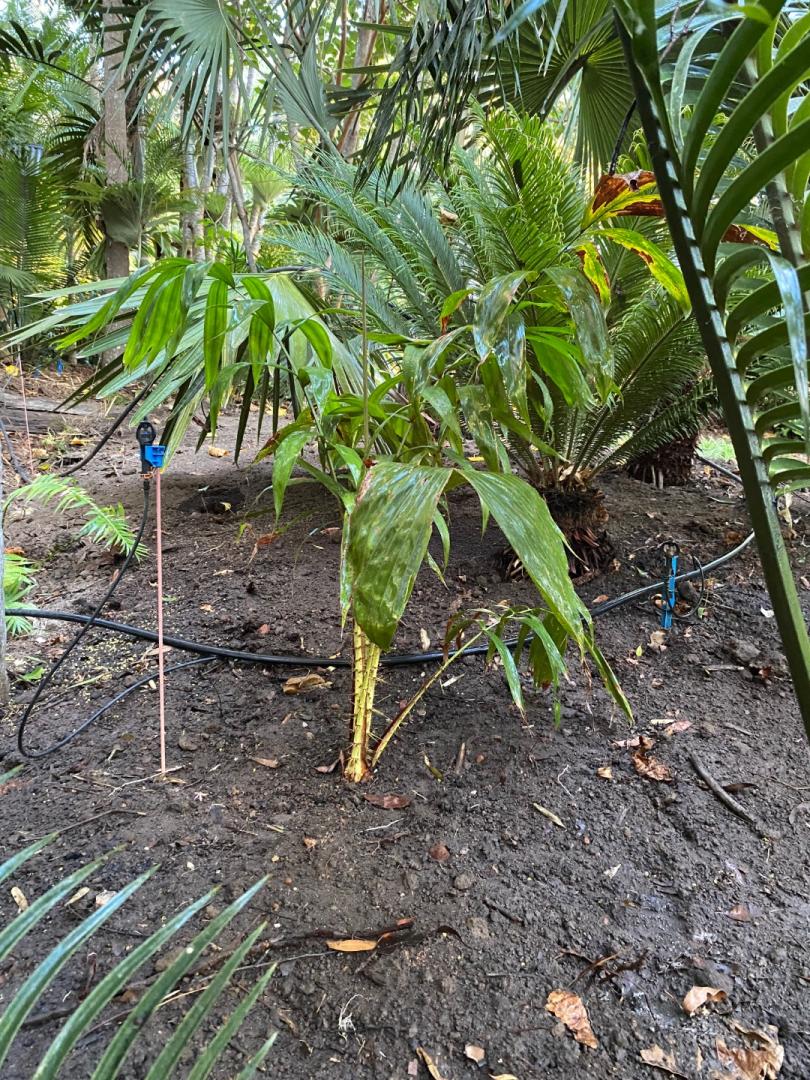
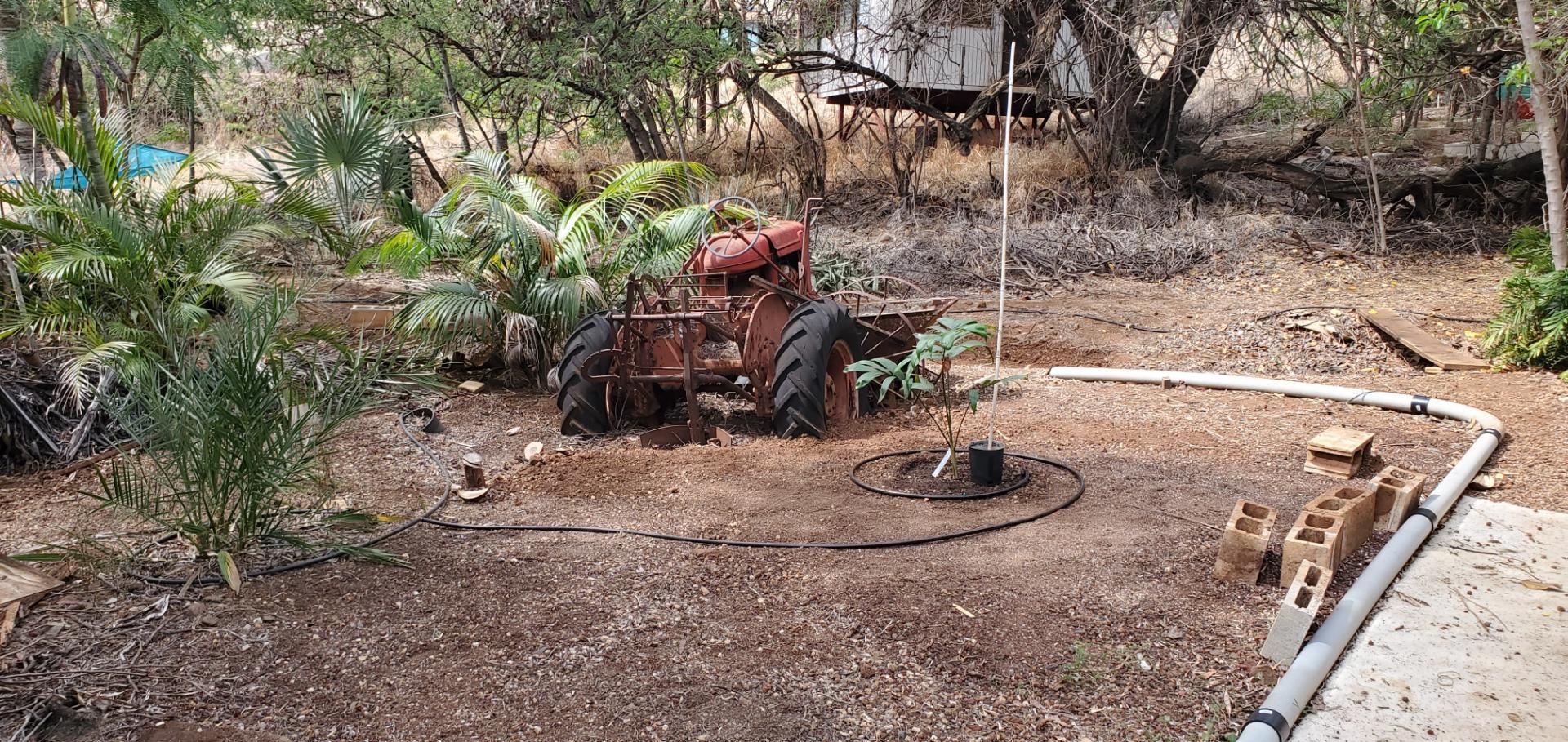
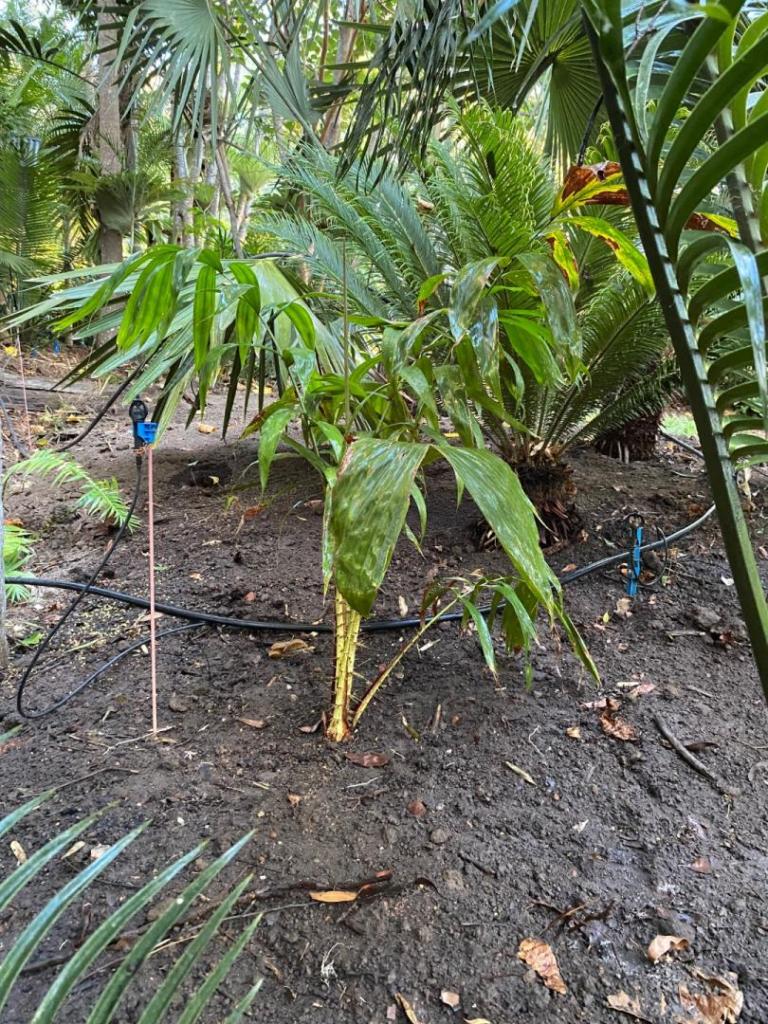
Doing a spot of landscaping, and as usual I need to plant palms in the new garden. I will see how this one goes all i know is I had choose carefully where this one went, not a palm you plant next to path with thorns thorns that would stop Alcatraz escapes!


 3 points
 -
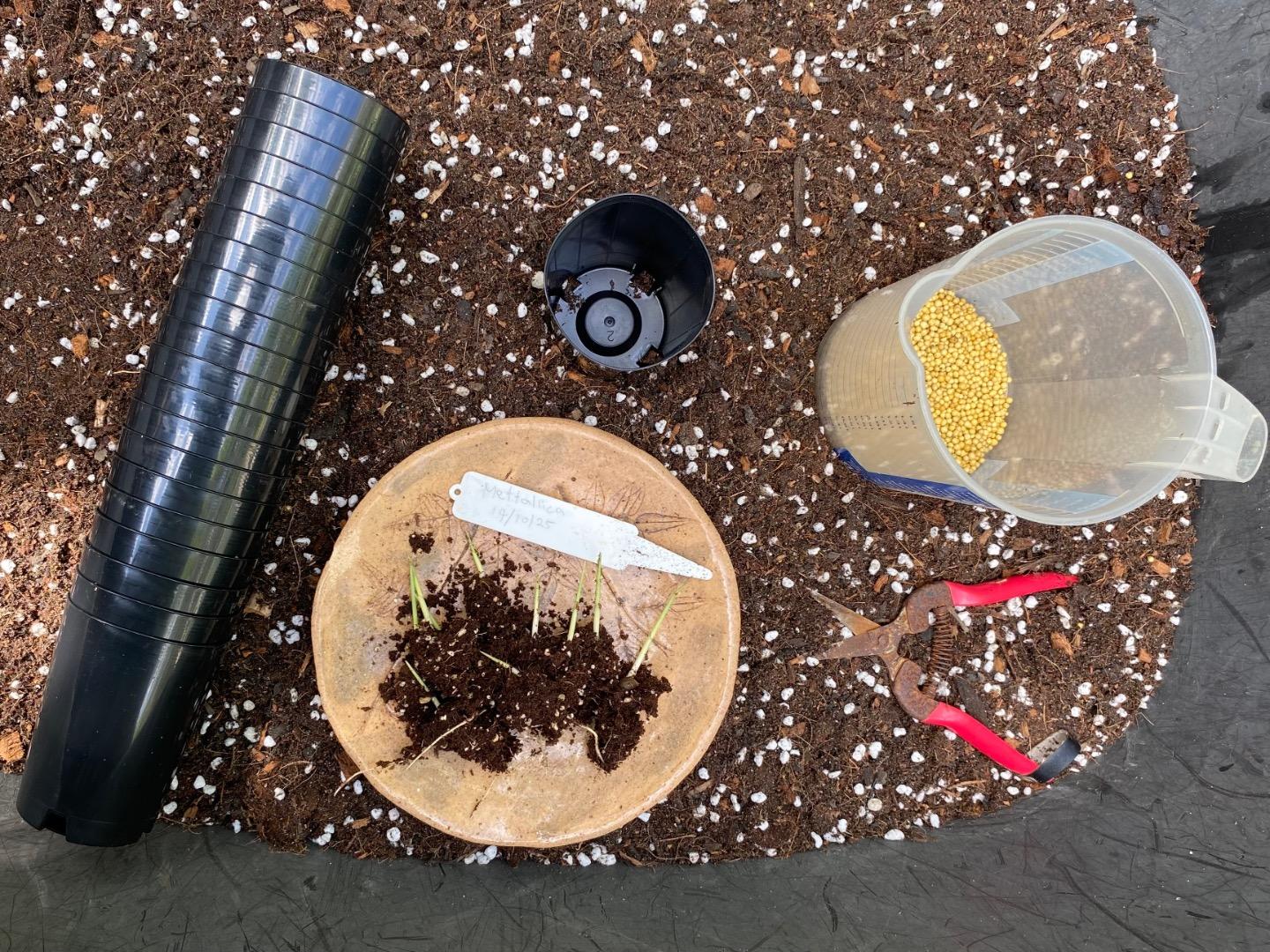
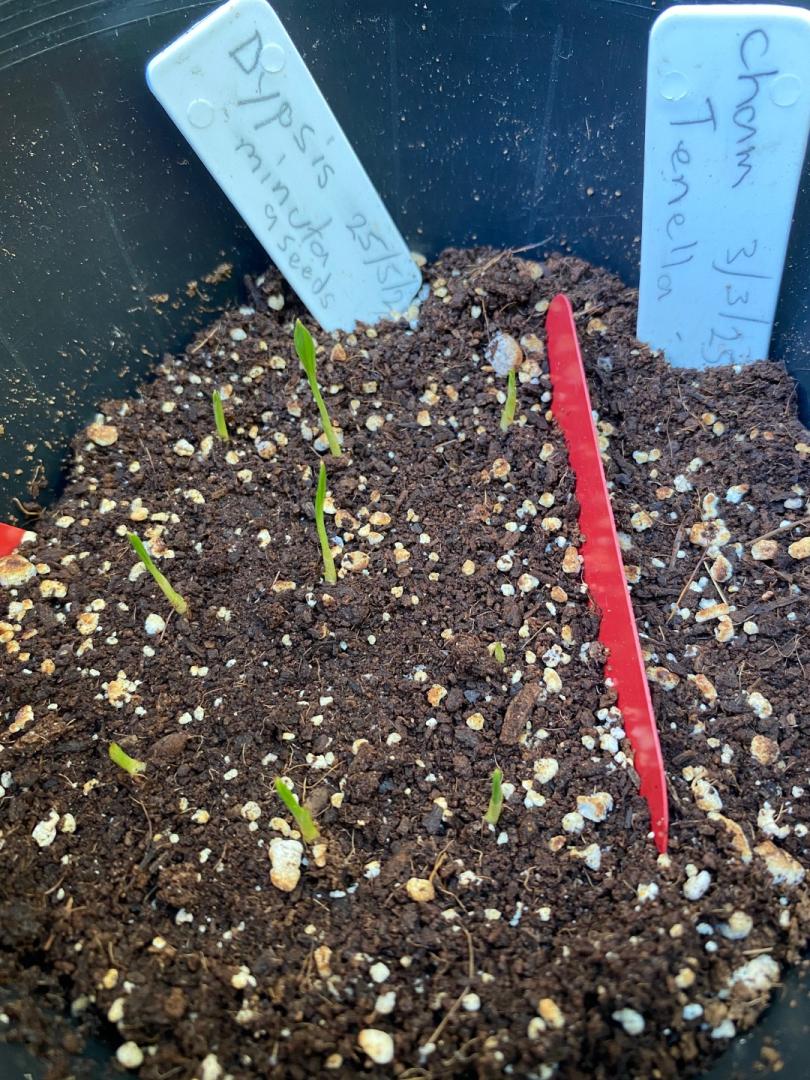
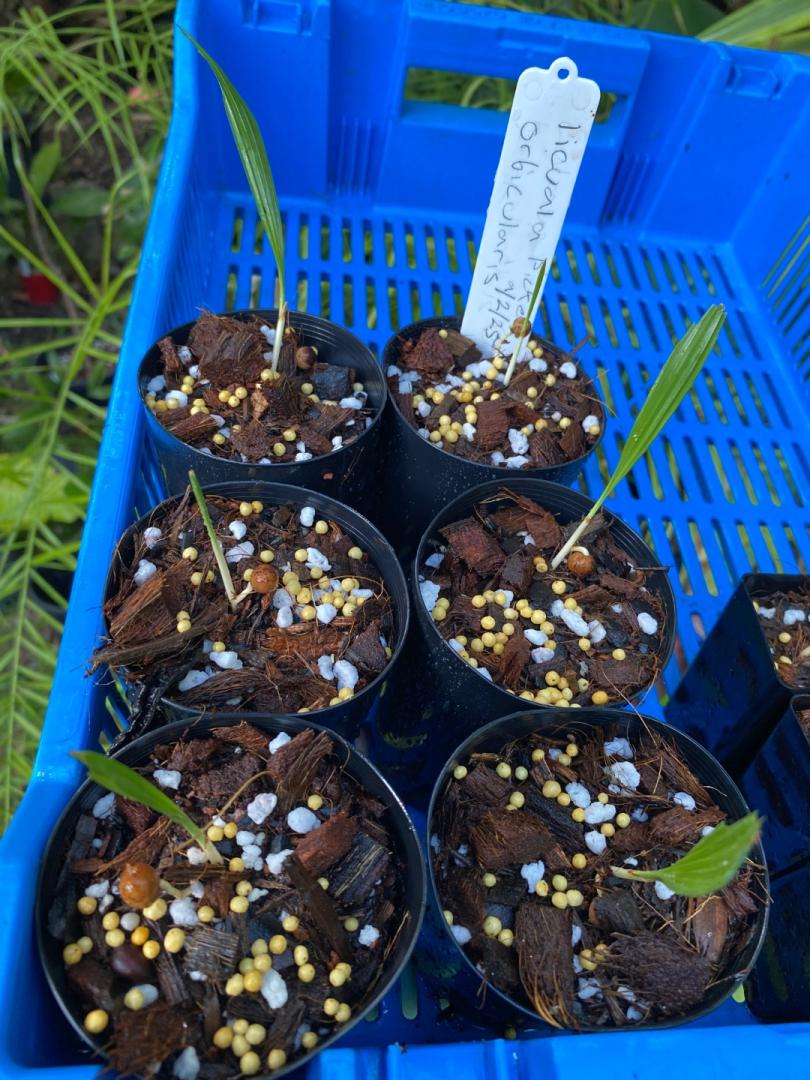
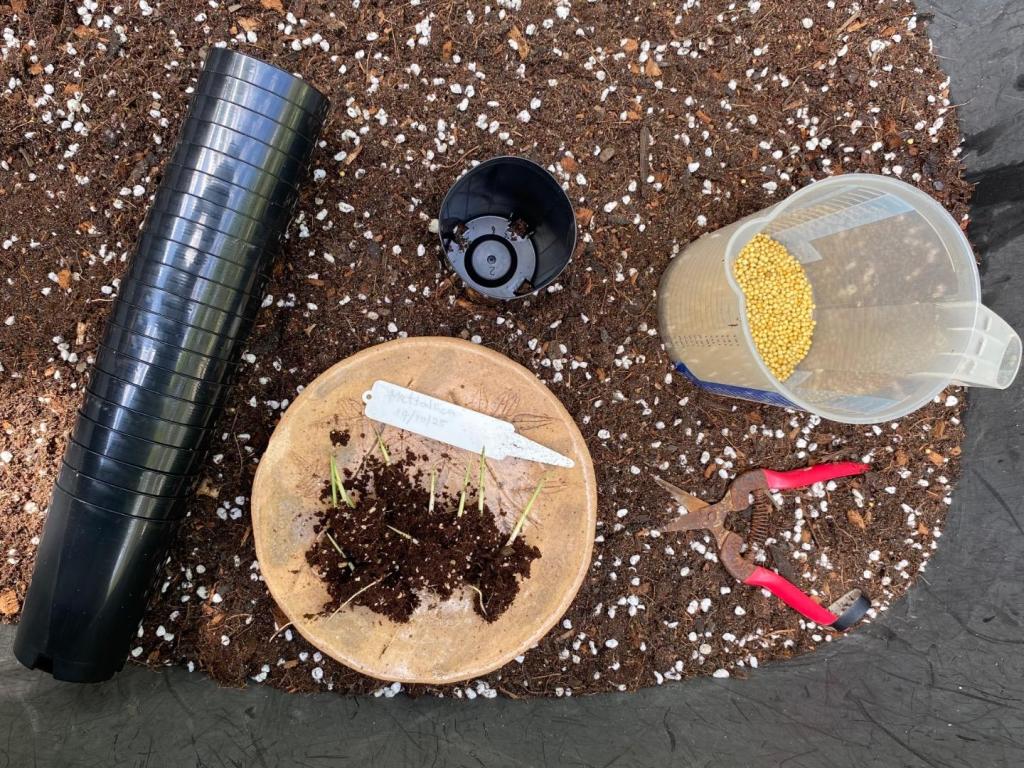
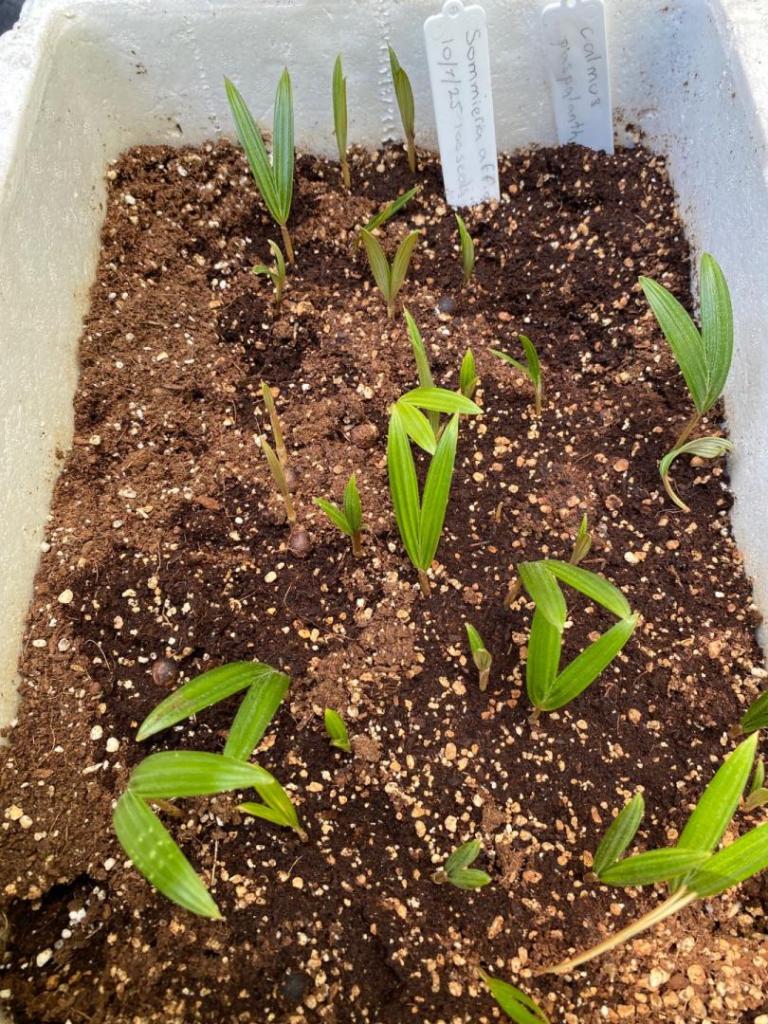
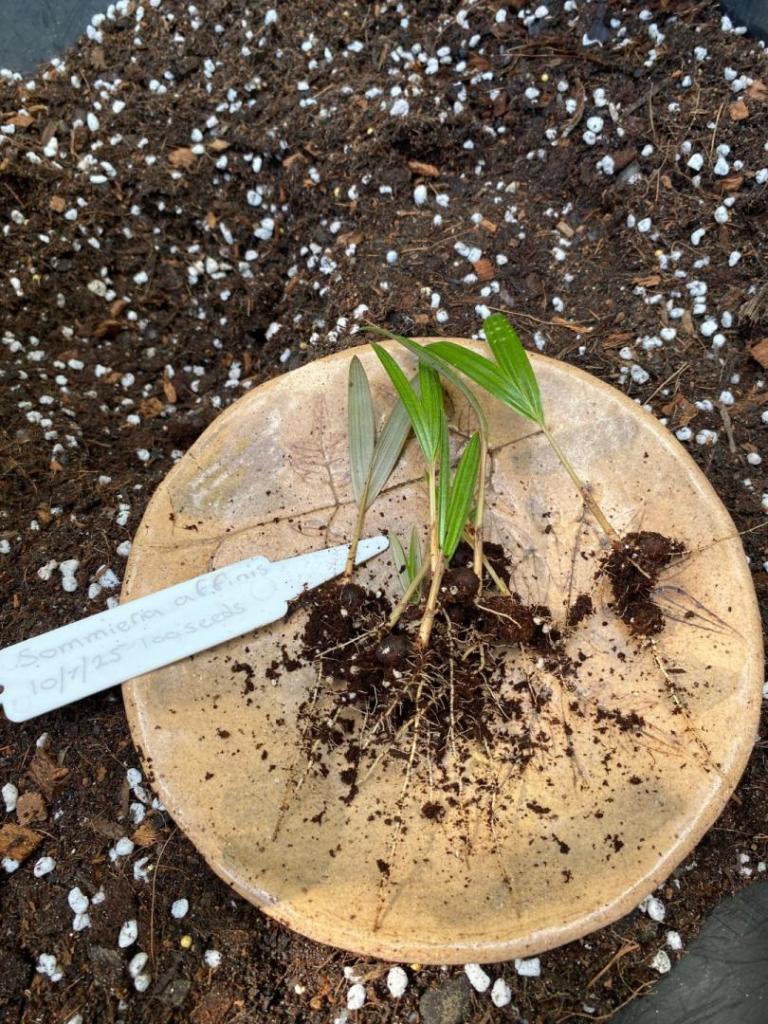
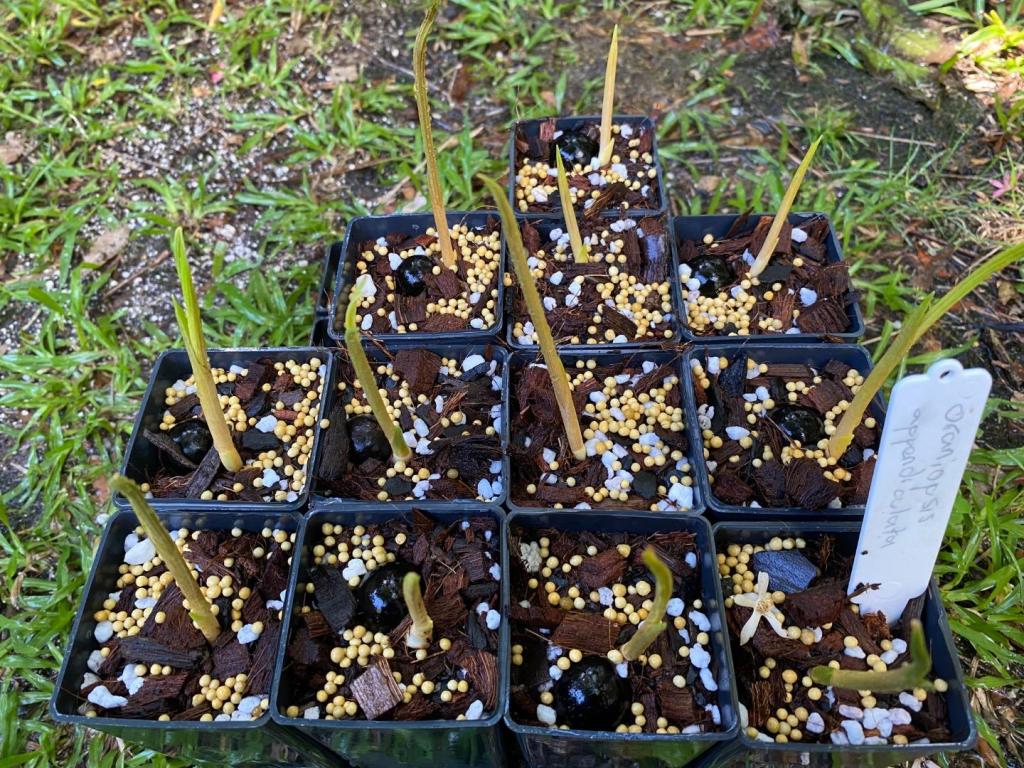
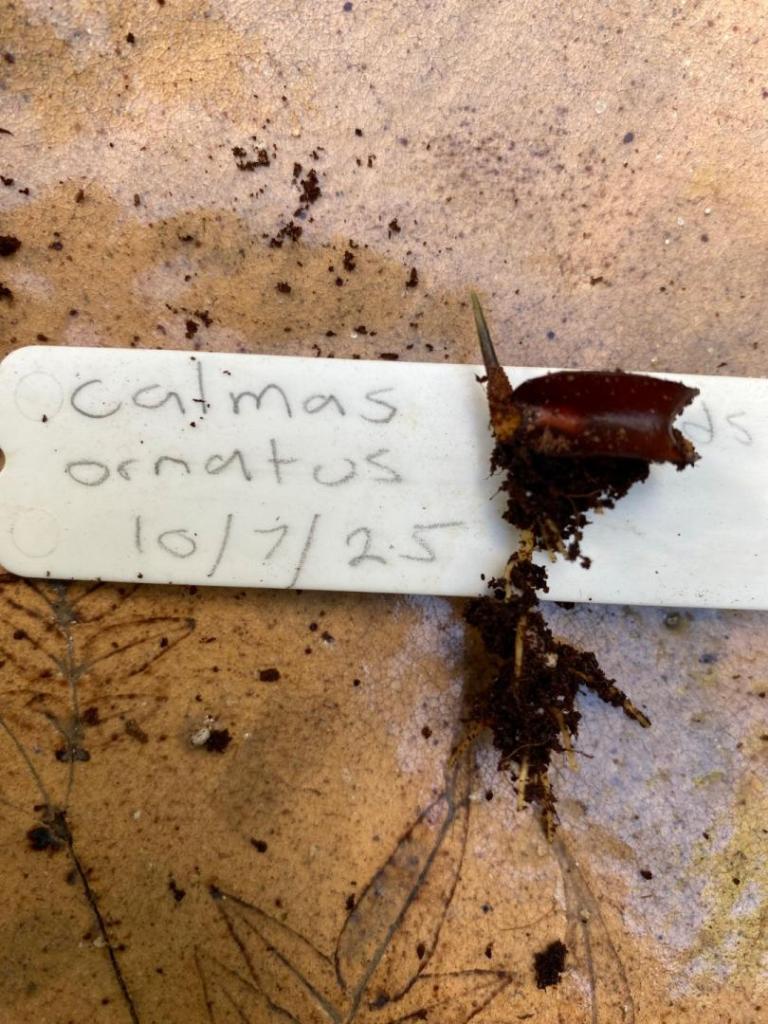
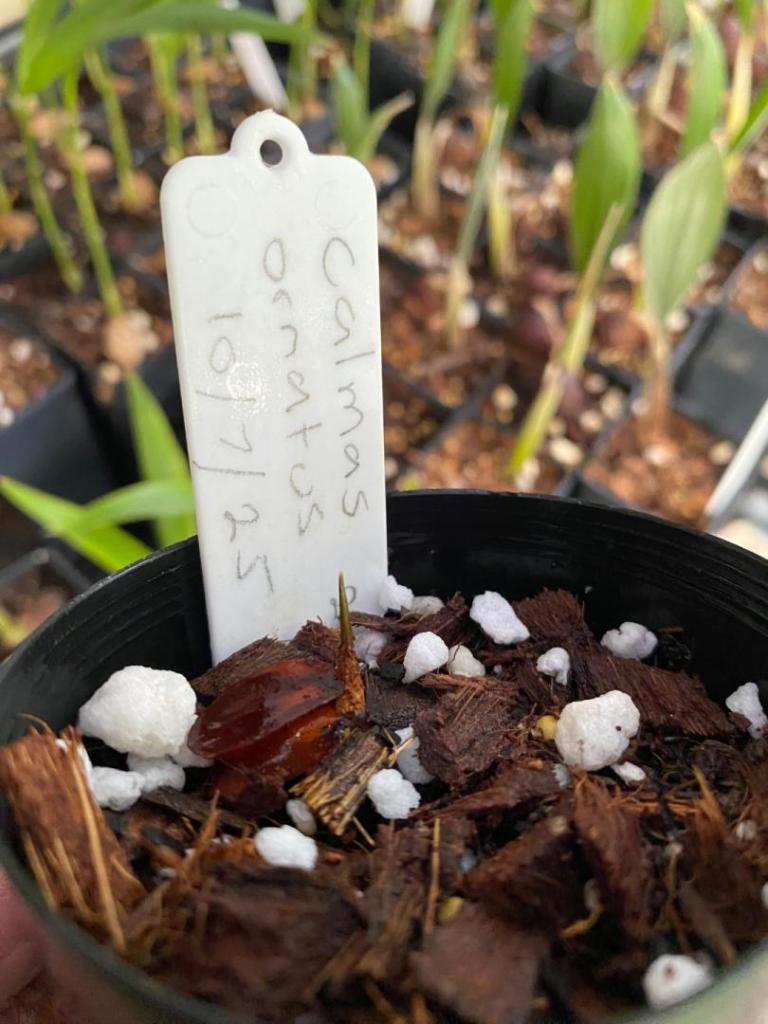
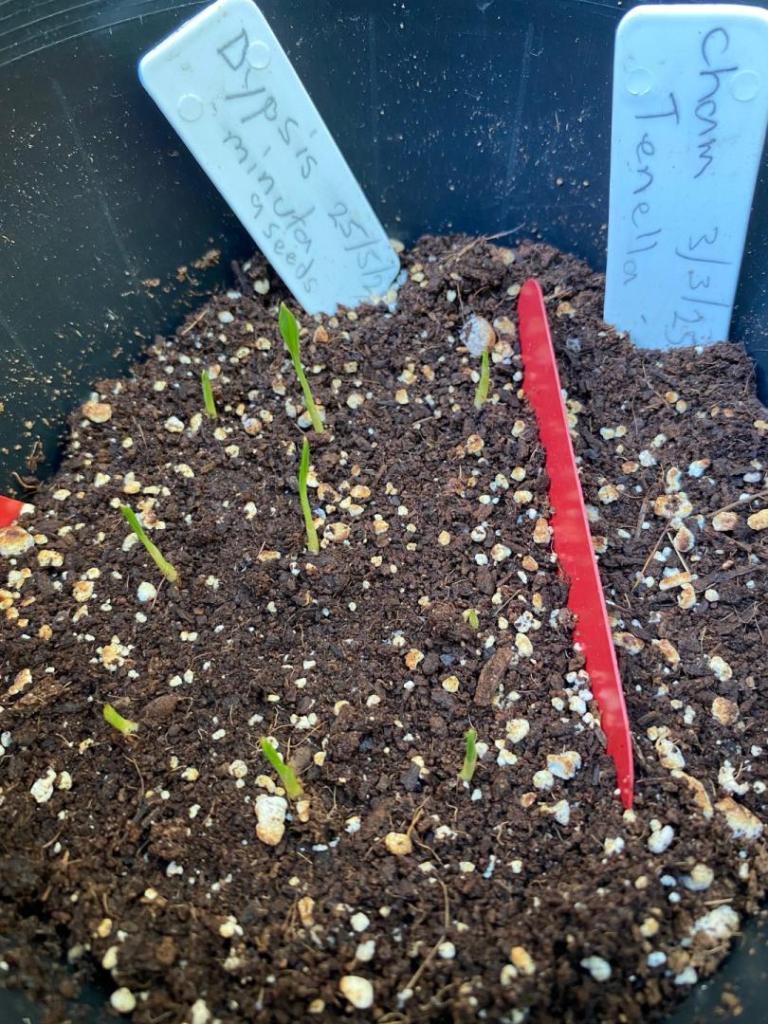
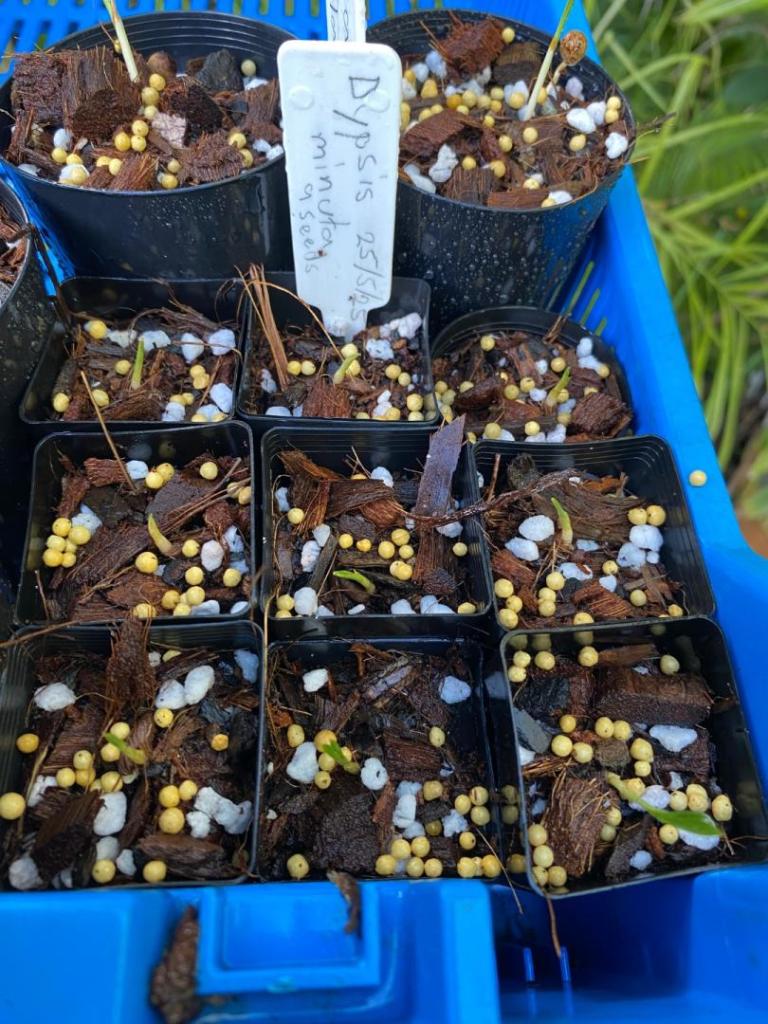
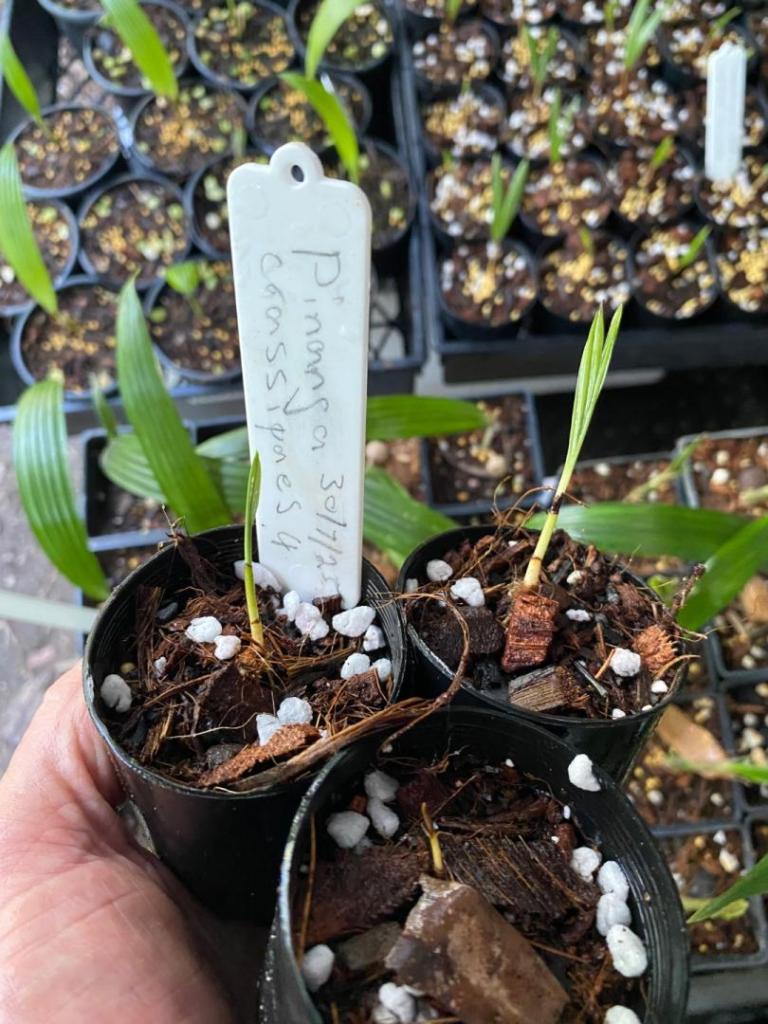
3 pointsSome nice summer seedlings just perfect for potting up in the warm weather. Now’s the perfect time for those tropical seedlings, heat and humidity certainly help tiny seedlings, I might as we’ll take advantage of the warm weather iam sure winter will be a different story!





 3 points
 -
 3 pointsThat looks similar to my seedling mix. I will change things depending on the species and age of the plant. Dypsis and Chrysalidocarpus tend to need excellent drainage so more perlite is put in. Howea, Archontophoenix and even Chambeyronia don’t require much more than a good potting mix with plenty of pine bark and less perlite. Hyophorbe indica actually needs a soil you could grow orchids or bromeliads in as they come from areas of lava flows with incredibly good drainage and humus rich soil over almost solid crumbly rock. So I’ll use the coarse coir, clay balls, coarse river sand a bit of the pine bark from a good potting mix for them. I get much better success than using straight potting mix. I buy Richgro Pro base mix in bulk and add Osmocote 6 month with Scott’s micromax.3 points
 -
 3 pointsThanks for the "Bible," you're very kind. However, I haven't contributed to the encyclopedia for several years. Regarding the Veitchia, I had the arecina in my garden for many years before it was cut down during renovations. The joannis is growing ever more vigorously. This album contains photos of the arecina and the joannis, which is not recent, it's currently about 1 m taller: https://www.flickr.com/photos/pietropuccio/albums/72177720322877228/3 points
 -
Rub it on Jason! Some of us wonder if we will live long enough to see any trunks in the garden 😅3 points
-
 3 pointsAnother update on this one, sorry. It caught my eye this morning opening a new frond. It’s been growing great. -dale
 3 points
 -
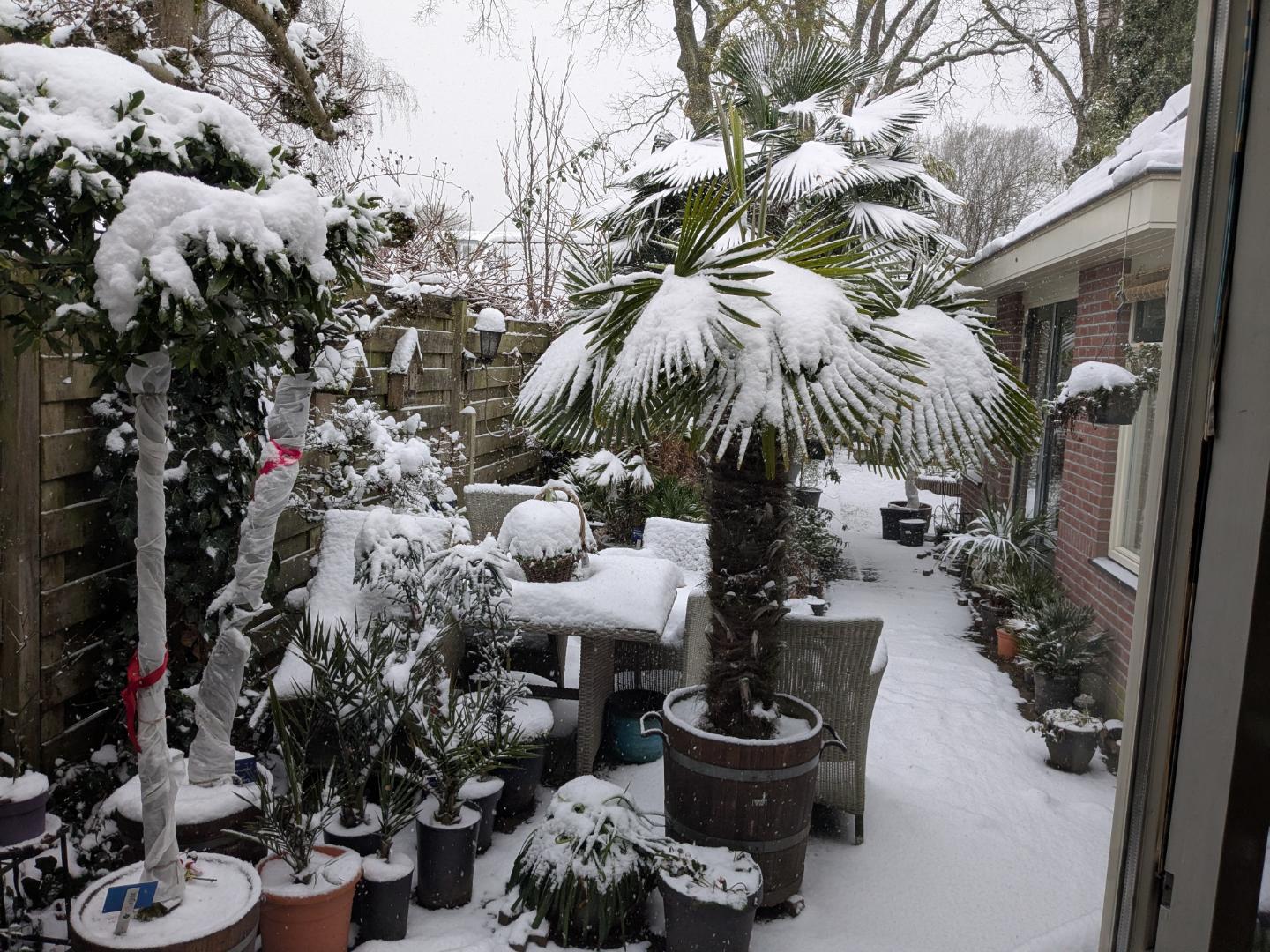
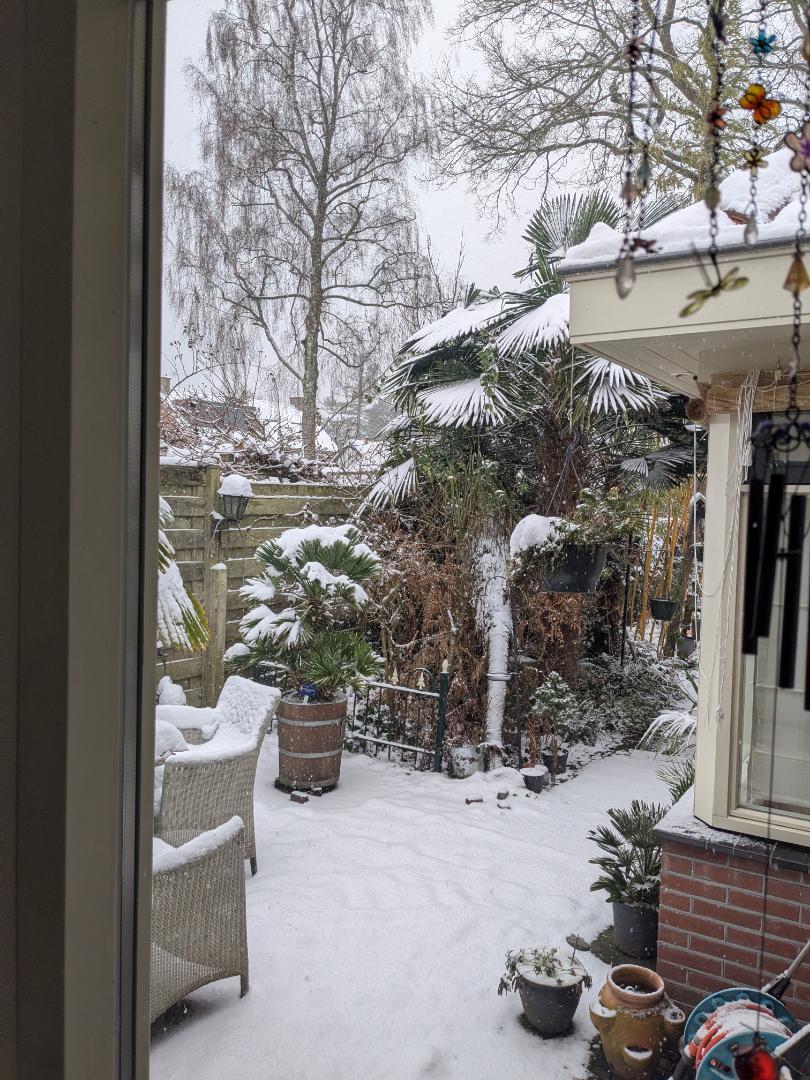
 2 pointsIt's wintertime in Holland with snow and a few degrees below zero C.. Nothing to worry about, just enjoying the view of the garden with some Trachy. fortunei, a Chamaerops humilis vulcano, laurels with winterprotection for the stems and a few date palms! By the end of the week, it will all be over again!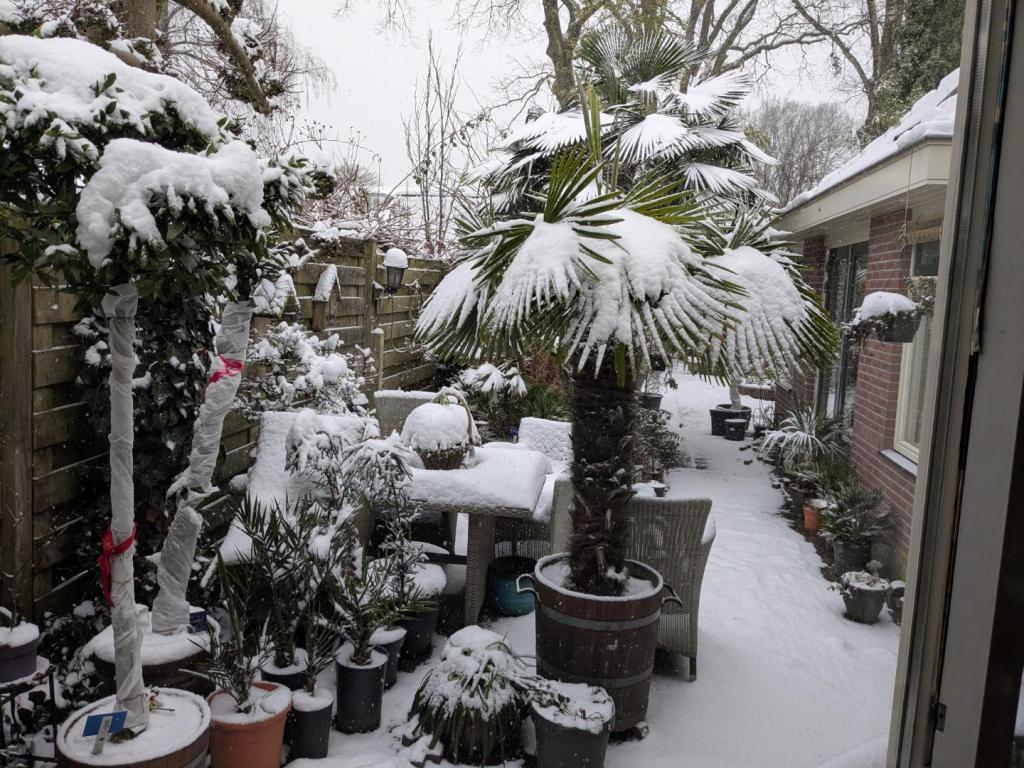

 2 points
 -
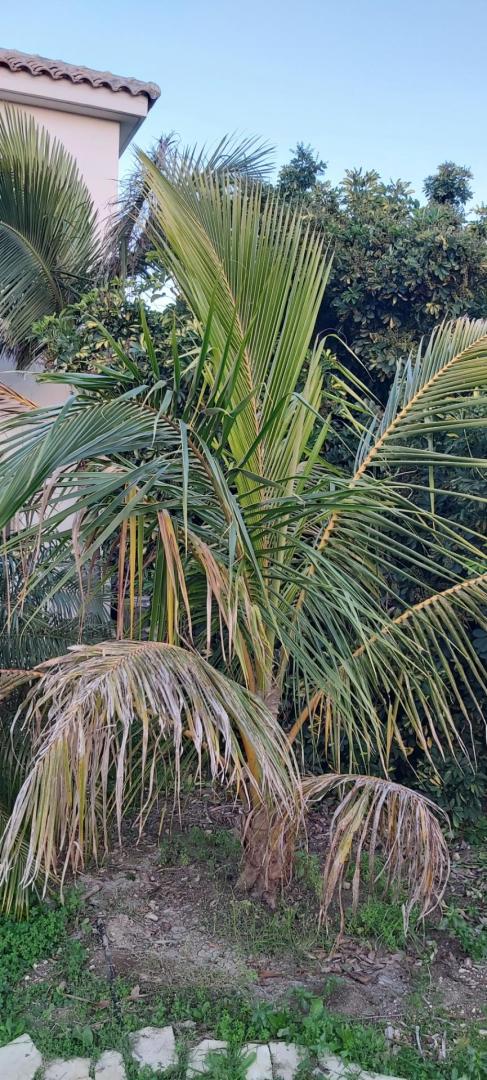
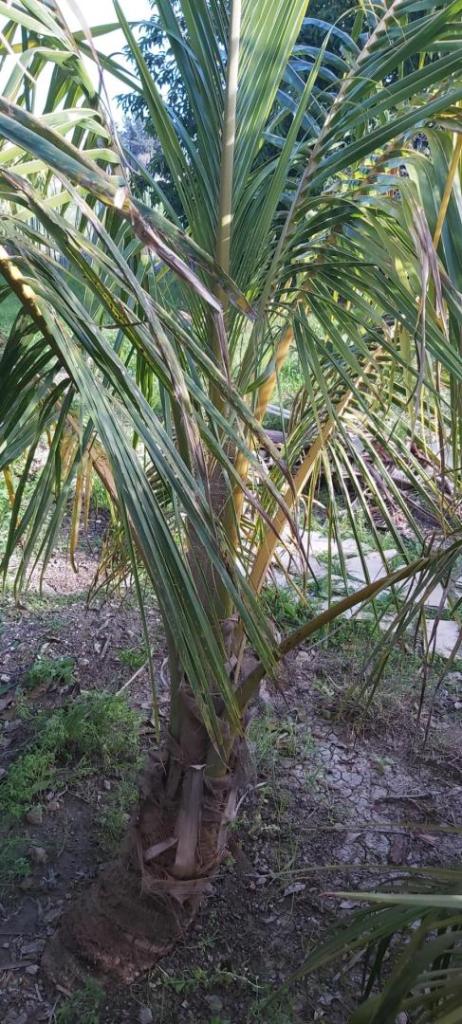
 2 pointsHappy new year everybody. A small update of my coconut palm in Cyprus. It's still alive for another winter. I increased the water in the summer and it started to make a difference in the growth.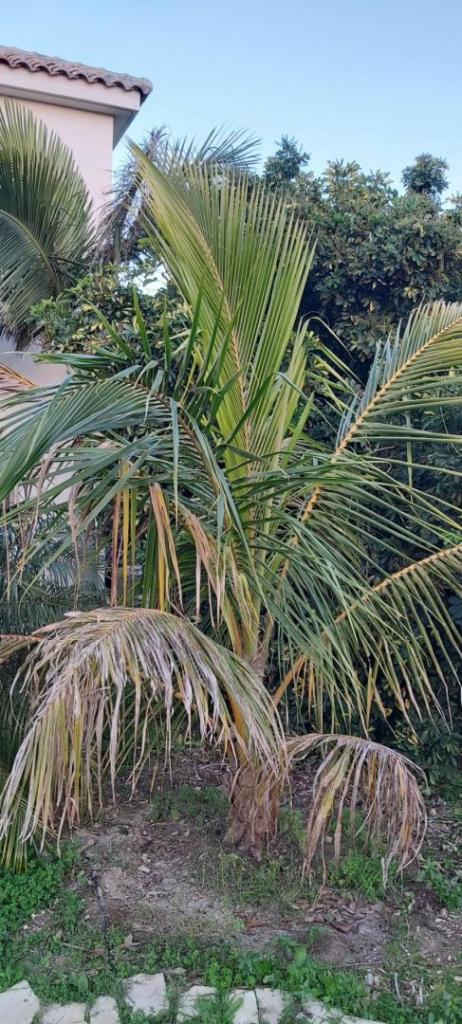

 2 points
 -
2 pointsI can only imagine your nightmares, if huntsman eggs are that big omg!2 points
-
2 pointsWith only -1 perhaps those measures would suffice, if they are not 10B palms. I repeat, you are extremely fortunate, that you do not get snow cover unlike central eastern parts, which are affected by the Aegean jet stream.2 points
-
 2 points3 1/2 seems to be about normal for me. I was wondering if they started exploding like most palms once trunking begins.2 points
 -
2 pointsWhen I first bought my place in Rhodes, I put in a couple citrus plants and an avacado. When I returned a week later, they were all dead. Before buying even one more tree, I put in irrigation for the entire garden. Maybe not so important today as I have a lot of shade in the back garden where it has been out for a couple of years. But at the beginning, full sun was bloody deadly for everything.2 points
-
2 pointsThis is a lesson I too have learned this summer, about all my plants! All, no exceptions, wanna be watered every day. I underwatered even my African acacia. Once rains started they started growing so much faster.2 points
-
2 pointsHahaha! No way. I must love a plant too much. I love my Ravenala enough perhaps but the electric socket is too far..... Anyway, I dunno what the future will bring, but if I don't get below -1 C and light frost, I believe simply covering the plants will be enough. I will also add bottles with hot water on the coldest nights (water from the water heater - the sun is not enough).2 points
-
2 pointsMy cimate is pretty much identical to both yours and Jonathan's (in Malta). I have 20 degrees today with a low of 16 tonight. The coldest night I've had this year has been 9 degrees one night last week. The lowest high was in the same 24 hour period and it was 14. Every year is getting noticeably warmer. I read an article a few weeks back that states the same for Cyprus. I have these 3 right now. The larger one is Green Mayaln Dwarf (third winter outside). The smaller ones were both purchased as Panama Talls. Another Palmtalk member, who lived for some time in Florida, had purchased the same "Panama Talls" from the same South Florida nursery but he is quite cerain they are Jamaica Talls or crossbreeds of the same. Regardless, I love them as they take my full summer heat and sun quite well. The Green Malayans (I've gone through at least a dozen of them) need to spend the hotter part of the summer in the shade or they are too beat up to make it through winter. For that reason, I have started leaving them in pots. I marked the spears on all three 9 days ago. One of the smaller ones has grown about 1 cm since then. The other tow cocos have both grown about 2 cm. You told me a couple of years ago you have a Golden Malayan Dwarf and I believe the other one in Paphos is a Golden Malay as well. It is truly amazing to see photos of that one. Maybe I will put the smaller ones in the ground this year or maybe I will keep them one more year in pots. The Green Malay will only go in the ground when I can leave it in full summer sun. I think that's going to take another 3 or 4 years.
 2 points
 -
2 pointsBecause there are no other more marginal plants around...Btw bougainvillea can be scorched to the ground and resprout and even flower during following summer. Of course this is not possible with a solitary palm sp.2 points
-
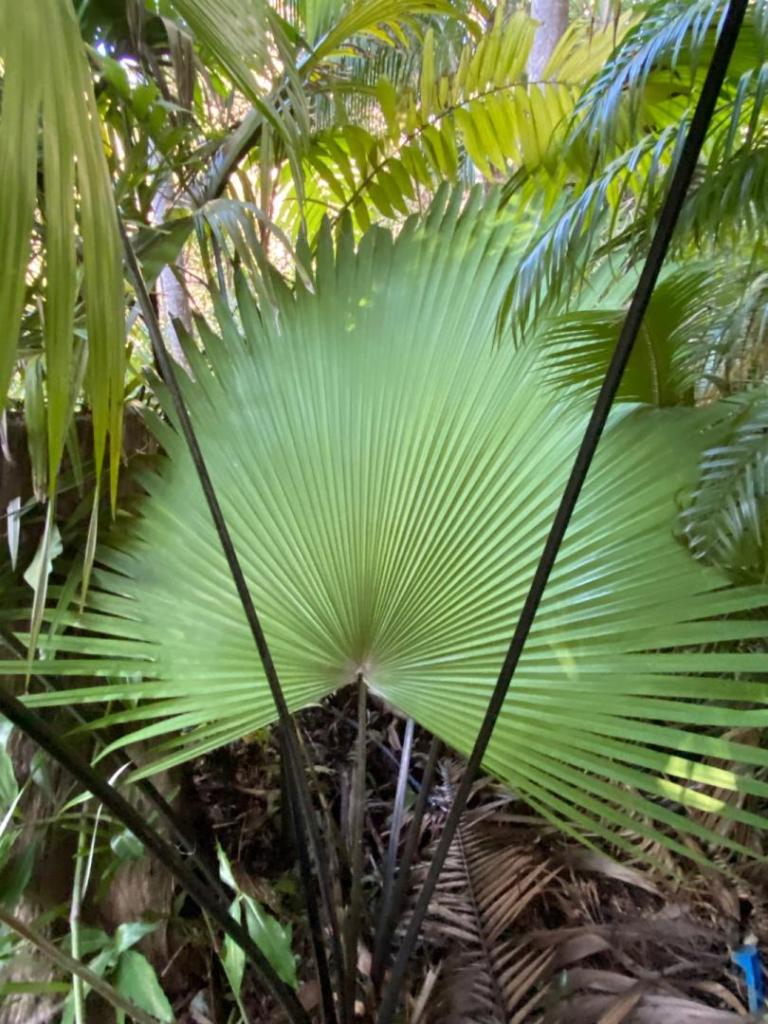
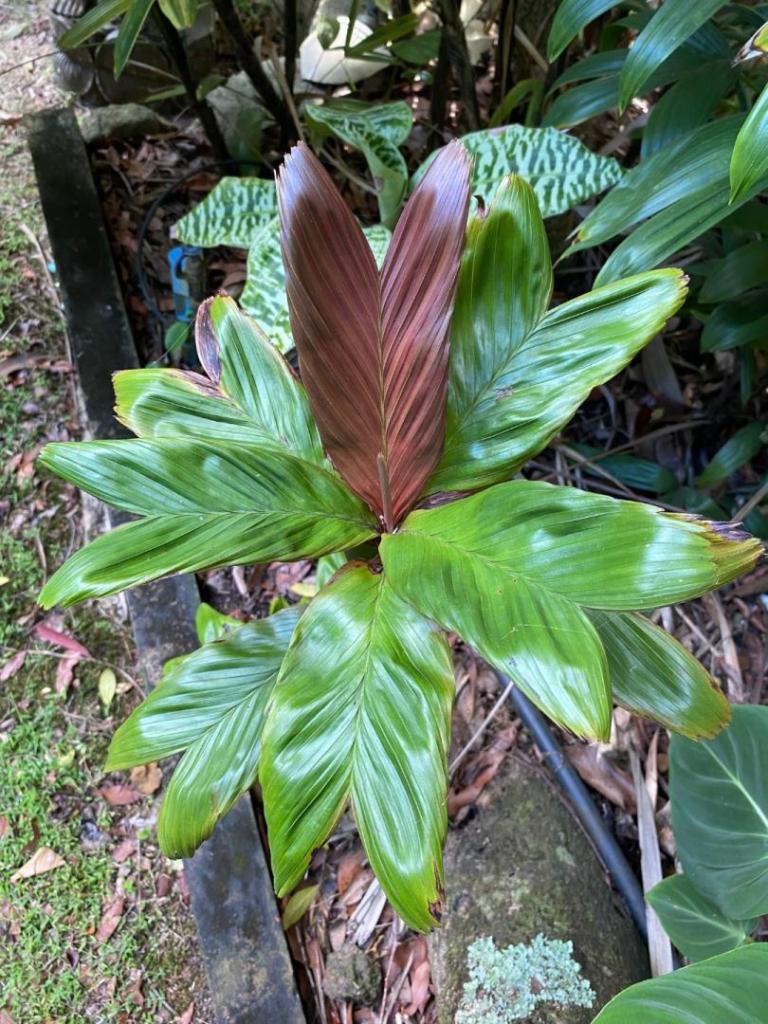
2 pointsLacospadix, kerriodoxa and a nice little dypsis lantzeana all seem to get my attention!

 2 points
 -
2 pointsHighly unlikely for Greece in particular, because this system focuses on what can or can not be cultivated in a certain region or area. In other words it uses canaries. But the cultivation of non commercial tropicals in Greece is very limited. You know how it goes, everything that can be eaten is to be preserved and the rest to be dumped. Long story short, there are not enough canaries in Greece for a reliable application. If you create a new topic prompting experienced US growers to assert the special Sunset Zone for your garden, you may get some very considerate replies. Although even those highly experienced people may underestimate the negative importance of poor quality of soil and water for marginal tropical, as almost all of them have in their gardens a quite generous top soil layer and have larger estates, where they can bring in truck loads of compost easily. Now try doing that in a small lot in a slope...2 points
-
2 pointsI guess V Joannis is a 9b plant but only if we consider zones the way you suggested: if we're in Europe we must reduce it by half or one. So if theoretically my garden is 9b/10a, in reality I'm 9a..2 points
-
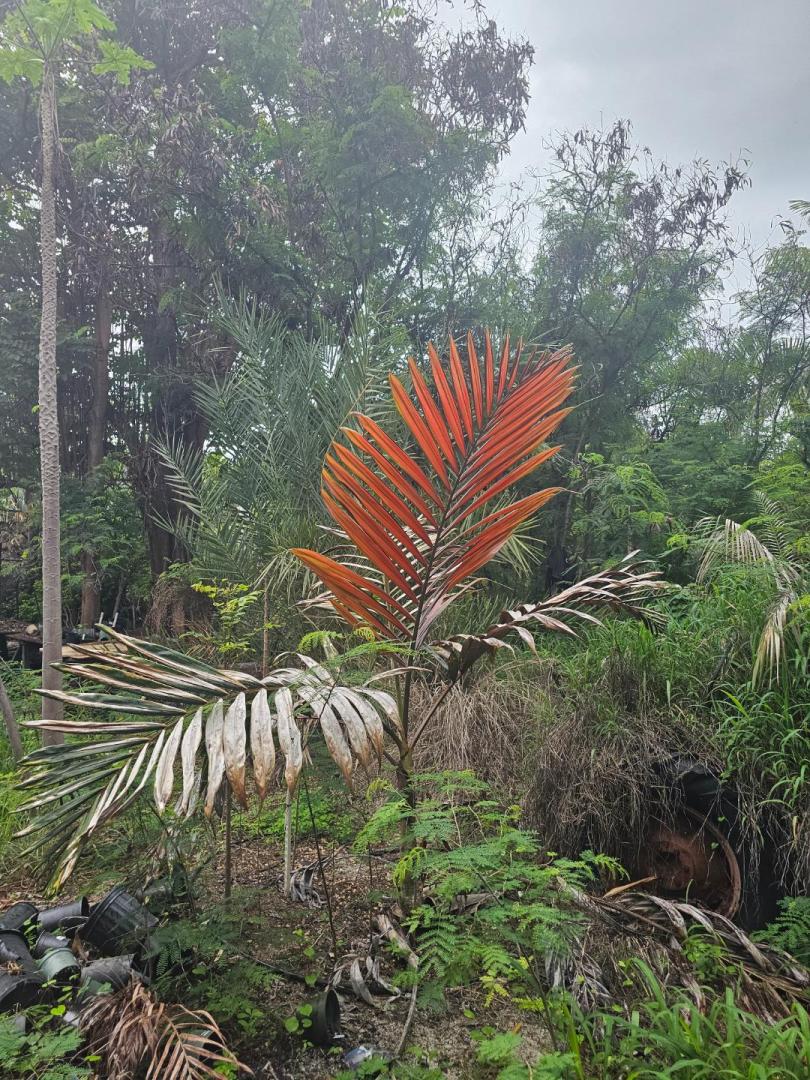
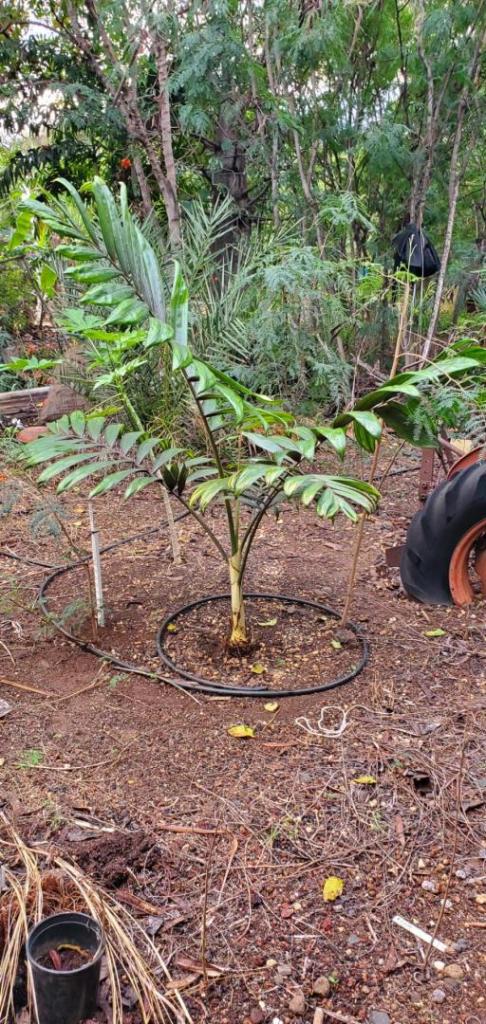
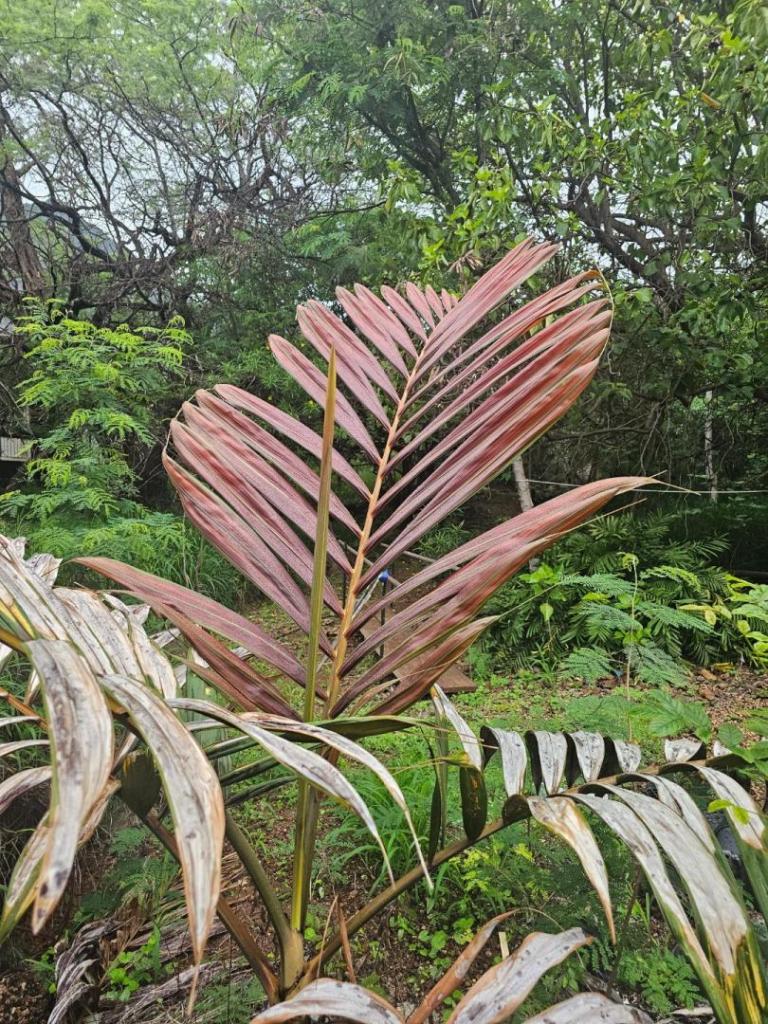
 Planted a 1 gallon pot from FB in November of 2021. It's growing nicely. BUT this summer all the fronds got fried. Just spotted a new bright red today. Had it under shade cloth at planting Took the shade cloth down in February of '23. Looked ok for a few years. Then this summer I noticed the fronds getting "toasted". But it's still pumping new RED fronds. This summer was VERY DRY. From June to Sept. only had 1.48" of rain. Irrigation twice a week at night for 40 minutes each session. Might have to do some weeding and increase length of watering. But I think it was just TO HOT in the full sun this summer.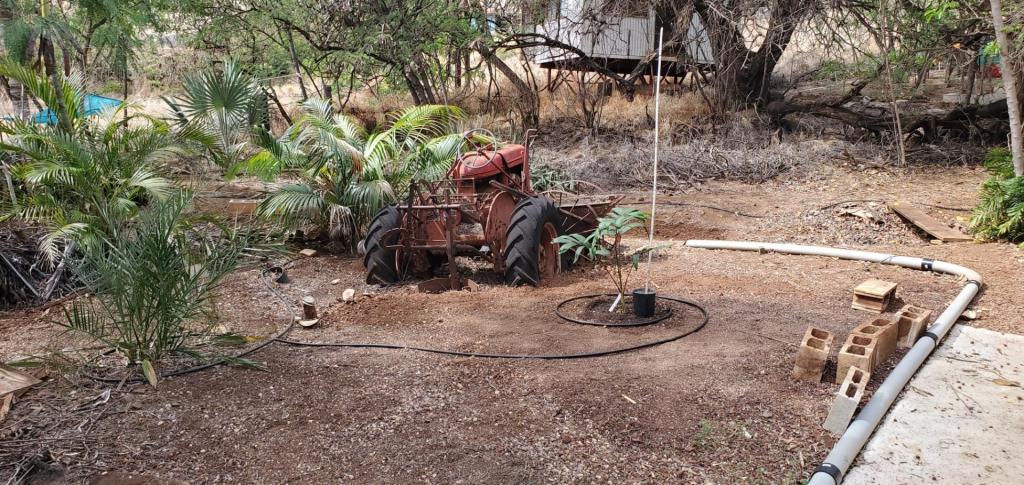


 2 points
 -
 My Chambeyronia Macrcarpa emerged into the sun 5 or so years ago. It was growing well beneath some other palms . Once it emerged the fronds would burn badly not long after opening . I doubled the amount of water and started a light organic fertilizer . The burning has been reduced dramatically. I’m not sure how large they have to get until they can handle full sun but it seems to be getting better . It now has about five feet of trunk below the crown shaft. Harry2 points
 -
 Awful news, but thank you for sharing. The disease seems to have traversed I-75 as fast as it did I-4.2 points
 -
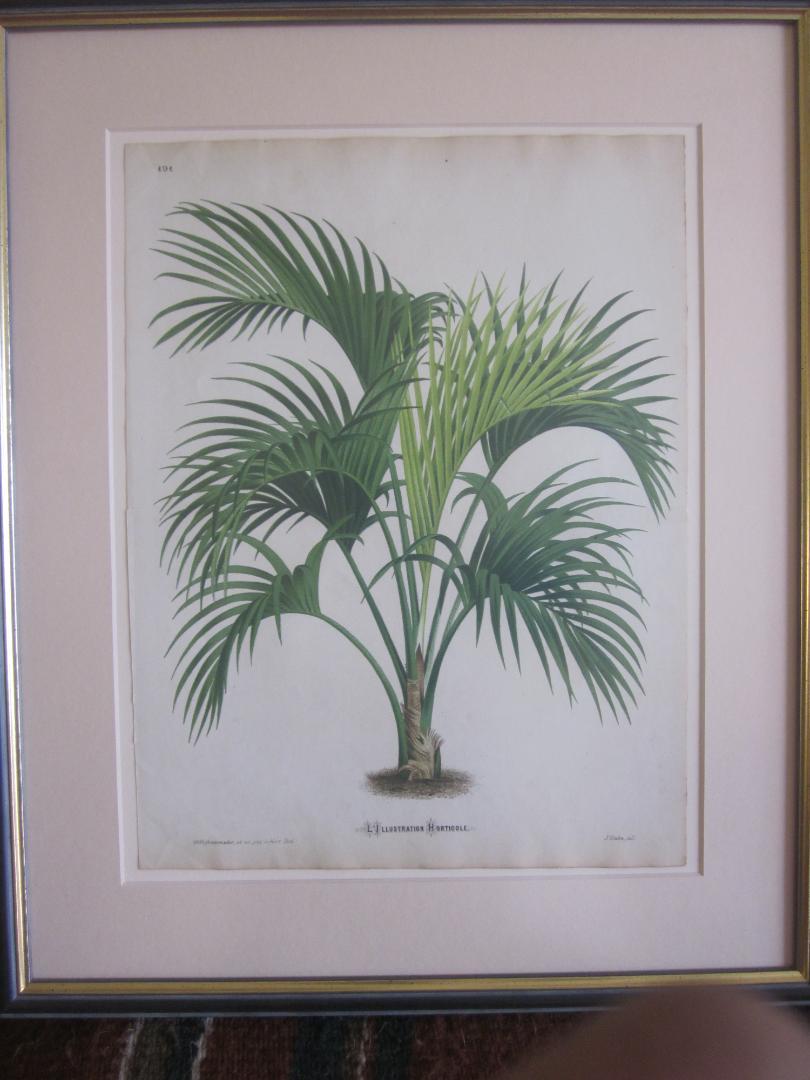
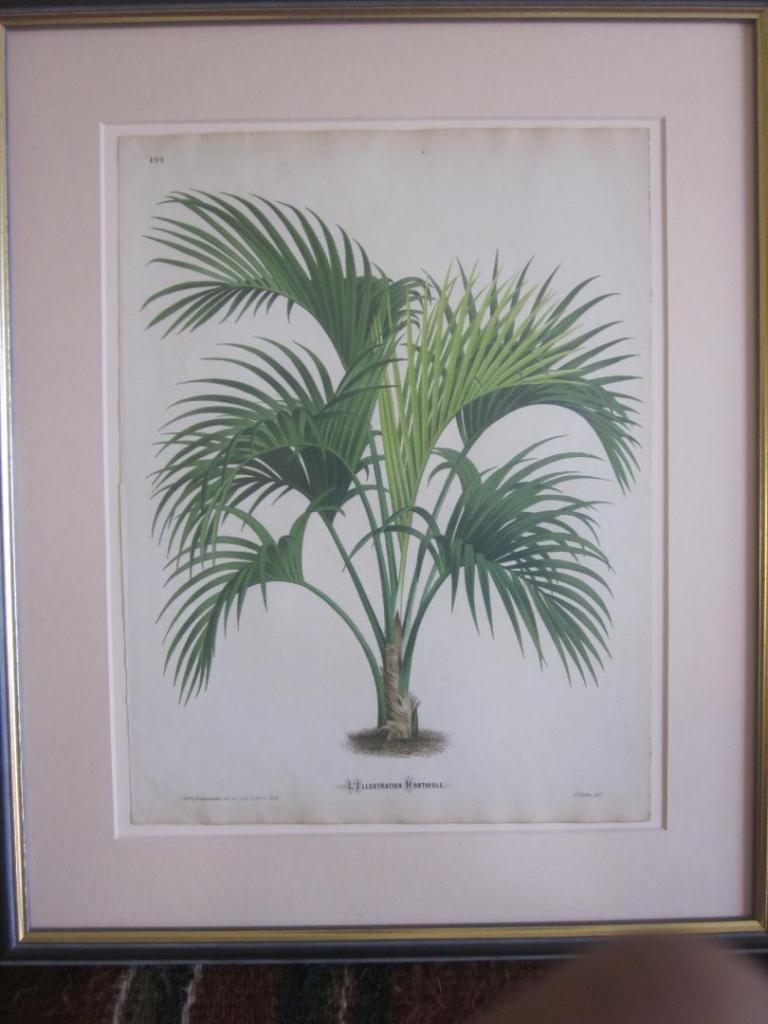
 I acquired this lithograph at the Paris flea market, L'Illustration Horticole, circa 1880, It is not labeled but almost certainly is Howea belmoreana.
 2 points
 -
 2 pointsHappy New Year to everyone here and continued joy, health, happiness, success, and love in 2026☀️ Best regards from Lake Constance from the two of us2 points
 -
 2 points
 -
 2 pointsWell, here’s an update on mine. The good news, it’s still growing very nicely. The bad news, as if it didn’t have enough room already, we installed rain gutters a couple years back, which extended the eaves of the house out another 8 inches. So, it’s doing its best to bend like a pretzel and conform. Nonetheless, it seems to be healthy and has been flowering for a number of years, even producing a few seeds that are in the process of ripening. I would attempt to dig it up, but I’m wagering that I would kill it if I tried it. So there’s a choice between almost definitely killing it or letting it live a reasonably good life as best it can. Been a great grower for me though…
 2 points
 -
2 pointsOnce you get hooked on palms there’s no turning back the only therapy you can get is buying and planting more palms it seems to work for me2 points
-
.jpg.0cf735c7525858af1582442942bc68e8.thumb.jpg.894f59a749fff01eb286c1fe4a50ab62.jpg) 2 pointsWelcome to the palm addict support group. Looks like you are off to a great start for a new garden and it will soon be fabulous. Plumeria will survive a bad freeze. About 15 years we had a freak event and it went down to -5c overnight. The whole city was a dead wasteland but many things I thought were goners came back in time. Keep up the good work, you are on a winning streak already. Peachy2 points
2 pointsWelcome to the palm addict support group. Looks like you are off to a great start for a new garden and it will soon be fabulous. Plumeria will survive a bad freeze. About 15 years we had a freak event and it went down to -5c overnight. The whole city was a dead wasteland but many things I thought were goners came back in time. Keep up the good work, you are on a winning streak already. Peachy2 points -
This is what I would do. No clue if it’s the correct thing or not. -dale1 point
-
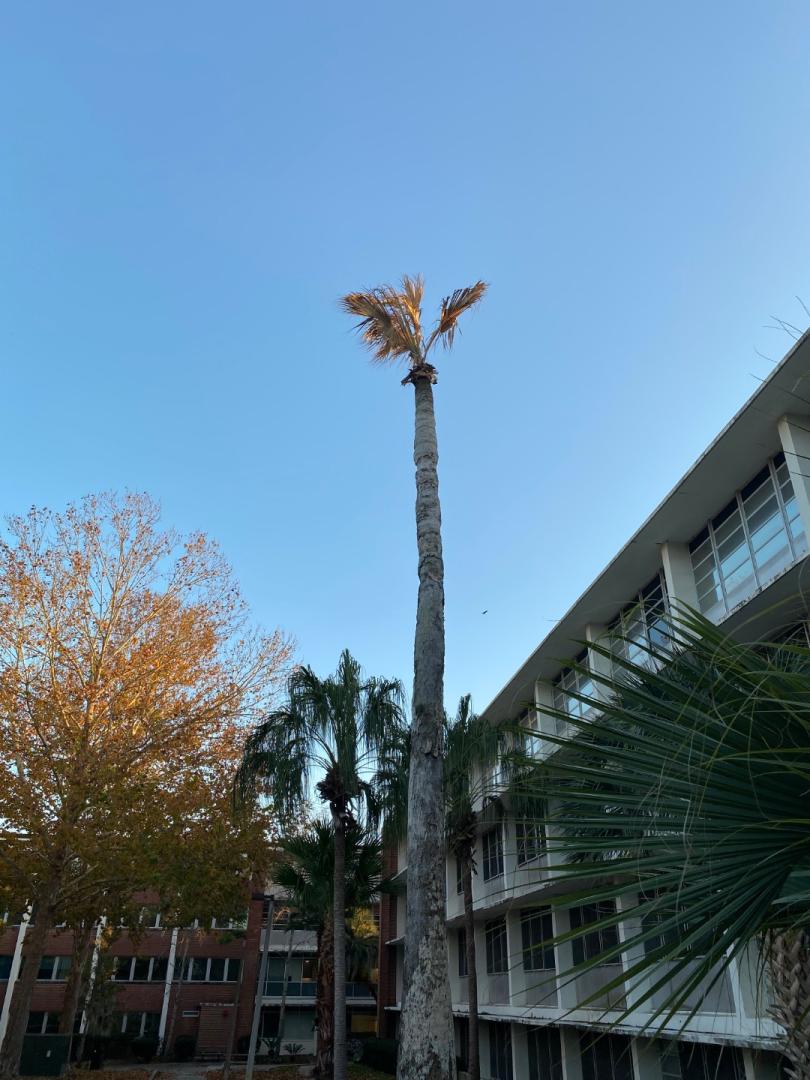
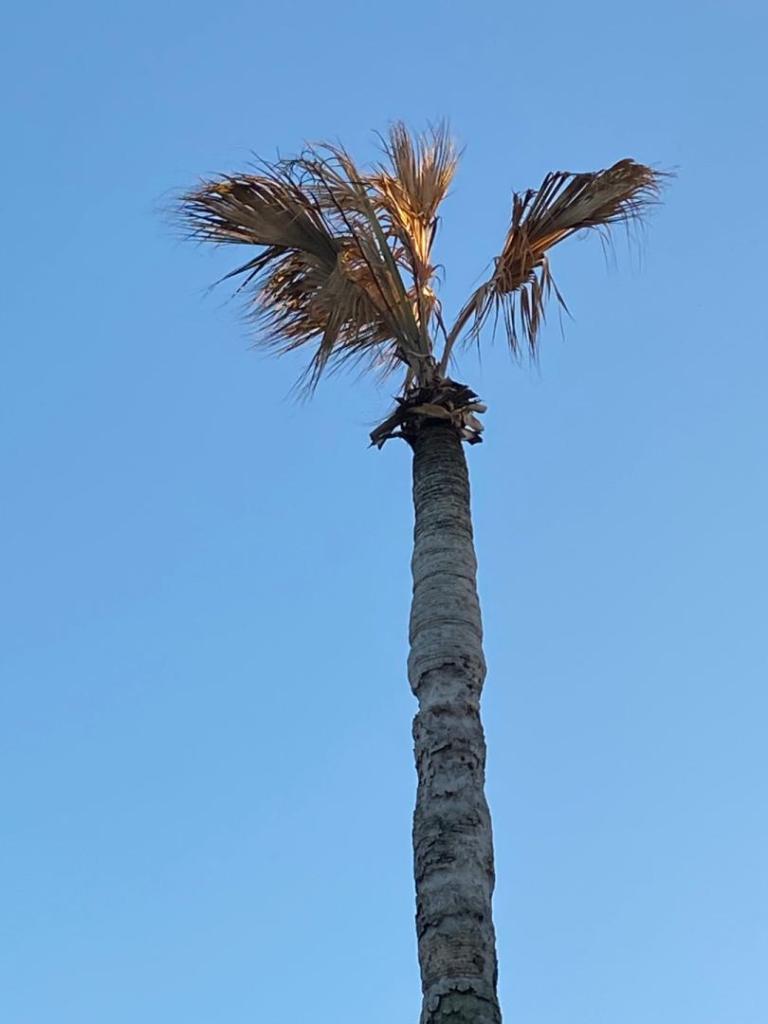
 I was pretty sure earlier this summer that it had Lethal Bronzing Disease, and this seems to confirm it. Of course, only testing would actually confirm it, but it certainly appears that way. I think this palm was around 60 years old or older. Gainesville has been hit very hard with LBD, unfortunately.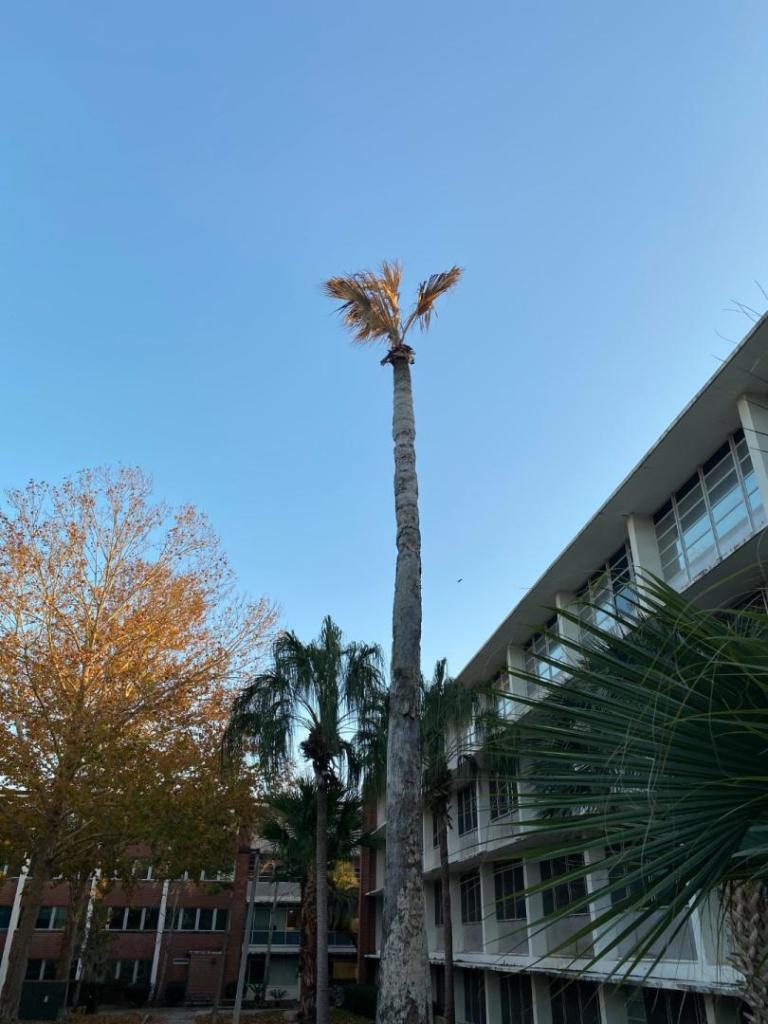
 1 point
 -
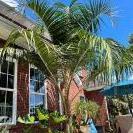 1 pointFor transplanting Sabal palms: Use a long shovel to sever the roots on approximately one-third to one-half of the circumference of the plant. Leave the remaining roots intact on the opposite side so they can continue to support the palm. This staged approach allows new roots to regenerate and extend several inches from the root initiation zone before the palm is fully dug. Because Sabal roots die back completely when cut, this advance root pruning gives the palm a critical head start and greatly improves transplant success. Why Sabal roots die back when severed Palm roots do not branch or heal like woody plant roots. Each root grows from the trunk’s root-initiation zone and extends outward as a single, unbranched structure. All growth occurs at the root tip. When a Sabal root is cut, the growing tip is destroyed, and that root can no longer elongate or regenerate. The entire cut root becomes nonfunctional. Unlike oaks or maples, palms cannot produce lateral roots behind the cut; the severed root simply dies back. New roots must be grown from the trunk, not the cut root. Sabals respond by initiating entirely new roots from the base of the trunk, which takes time and energy. Why this matters for transplanting If all roots are cut at once, the palm temporarily has no functional root system, leading to severe stress or failure. Staged root pruning works because uncut roots continue water and nutrient uptake while new roots are forming from the trunk. Giving Sabal palms time to generate new roots before full digging dramatically improves survival, especially for small un-trunked specimens with less than 6' of trunk.1 point
 -
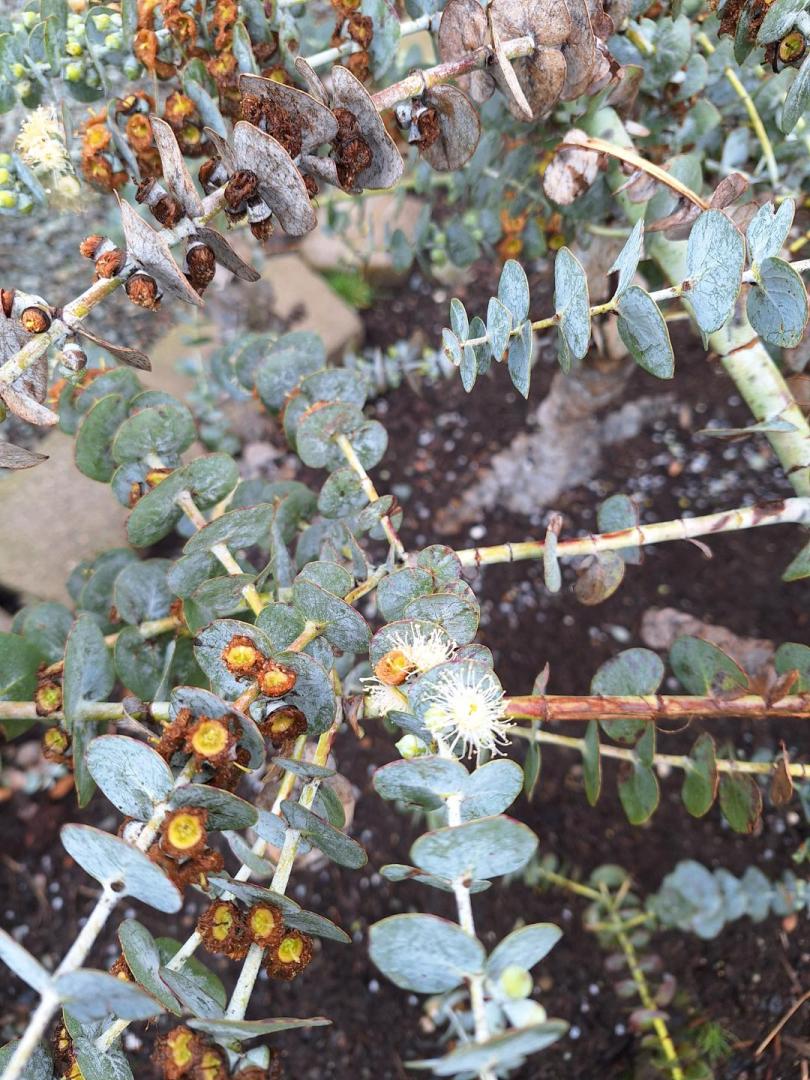
 1 pointWow! I cannot ID eucalyptus #3 with the multi-stemmed mallee habit. Pics of fruit and flowers would also go a long way to help ID if you ever go out collecting! I spotted this little Eucalyptus cinerea (pretty sure) when the kids and I went for a bike ride to a friend's house this weekend. It was in flower, in early January (after a very warm December). This is in Anacortes, Washington. The scent was full-on Vapo-Rub, just from being close to the plant. I tried to see if it was the flowers putting put so much of the scent, but I couldn't tell because there was so much SMELL. We moved recently and I planted some Eucalyptus seeds, too. I was going to try to sell the starts but they EXPLODED. The ones with the really nice, full round leaves with red venation and lacing are Eucalyptus kitsoniana - the 'Gippsland Mallee' or 'bog gum.' It is endemic to Victoria AUS (wombat country!) and is, I just discovered, critically endangered. The teeny ones to the lower right are Eucalyptus pulchella, the Tasmanian white peppermint. This species grows at medium altitudes in Tasmania (surprise) and is a real tree, to 20 meters or more with white bark. The seedlings have small, falcate leaves (like a mature tree). Then I have just a couple of Eucalyptus gregsoniana (previously E. pauciflora var nana), the Wolgan dwarf snow gum; a snow gum mallee (short tree, open habit, multiple stems) from the Blue Mountains near Wallerawang NSW. Also has large, falcate leaves even as a juvenile. And finally, the species I was actually trying to get seeds from (some of the others were gifts!) - Eucalyptus rodwayi, the Tasmanian swamp peppermint (not related to other Eucalyptus known as peppermints, to add confusion). E. rodwayi grows in heavy, wet soils in frost pockets at 'high' altitutes. E. rodwayi was the species I was trying hardest to get seed for, as it can grow at a) high altitudes, in b) pockets of prolonged frost where it can be exposed to c) winds too. Up here in Anacortes, we are in one of the few areas of the world that are getting *colder winter temps* as weather patterns get more energetic. Basically, it comes down to "squamish" winds - very cold, dry air being pushed or sucked over the high mountains that normally keep our weather in the PNW pretty mild. These winds come howling out of the Fraser Canyon and can blast us with severe cold to the single digits F for short periods. Anyhow, I've got all these trees now and I only wanted 2 (1 rodwayi and 1 gregsoniana). Lordy!

 1 point
 -
 Üdvözlet minden pálmafa-rajongó társamnak, Szeretném bemutatni mediterrán kertünket, amelyet 2008 óta építünk és szépítünk. Télen a pálmafákat lefedjük és fűtjük, kivéve a kint az utcán álló Trachycarpus fortunei-t. Gyula, Délkelet-Magyarország. Normális esetben USDA 7b zóna, de az elmúlt 8 évben 8b lett.
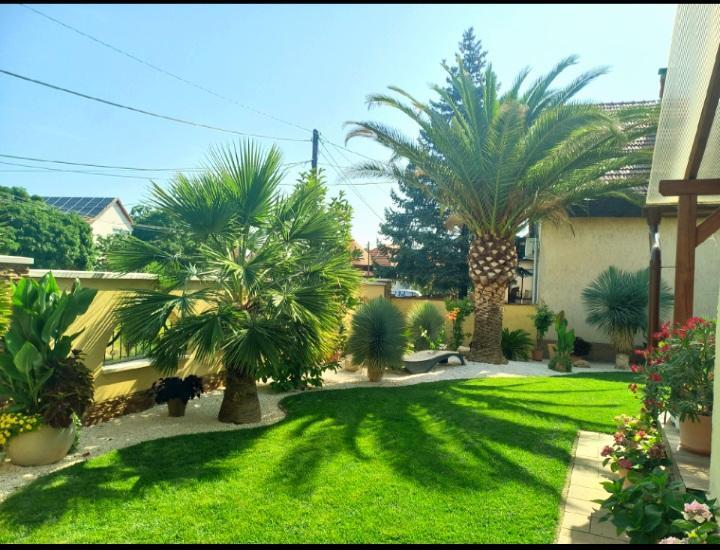
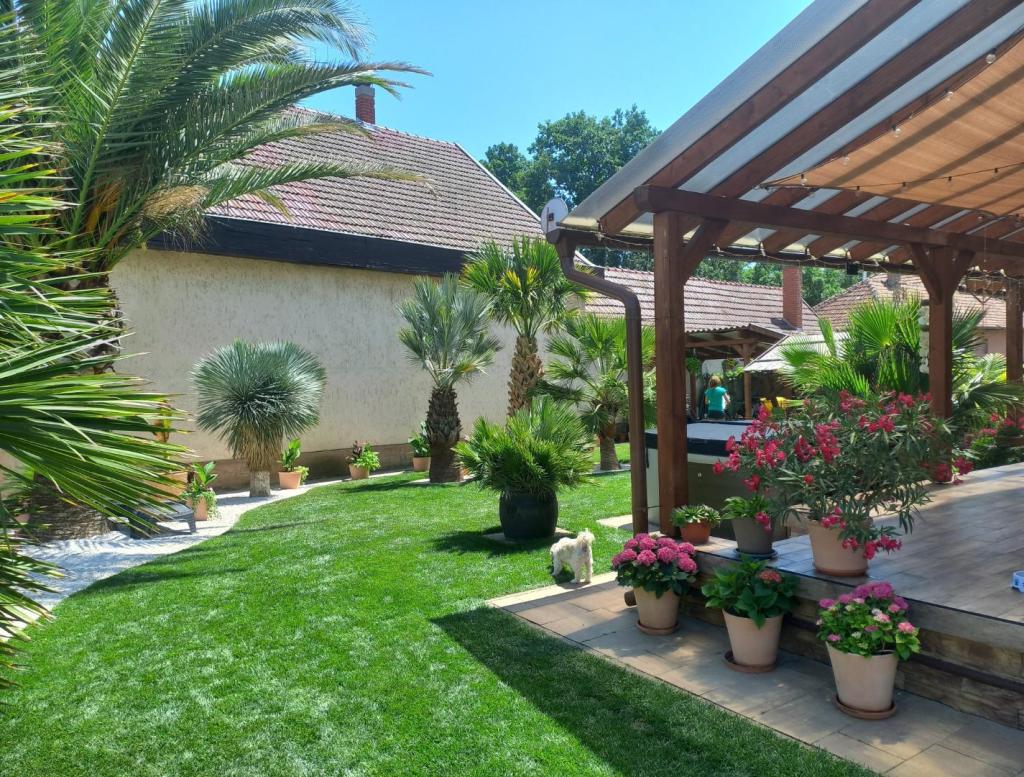

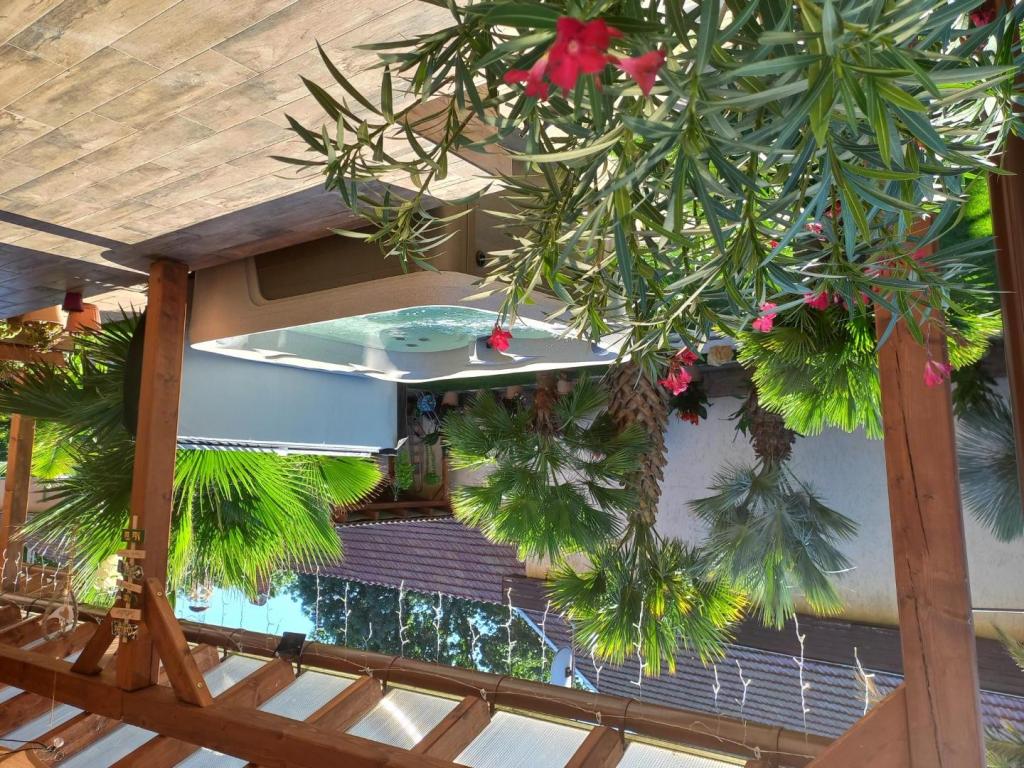
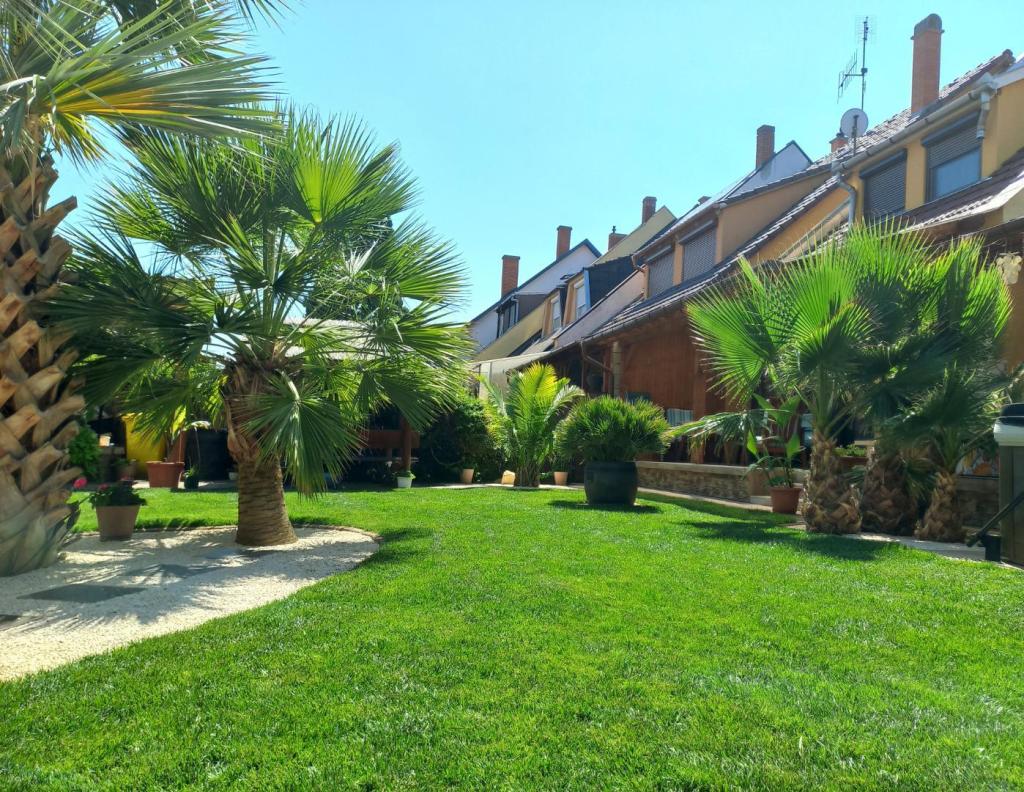

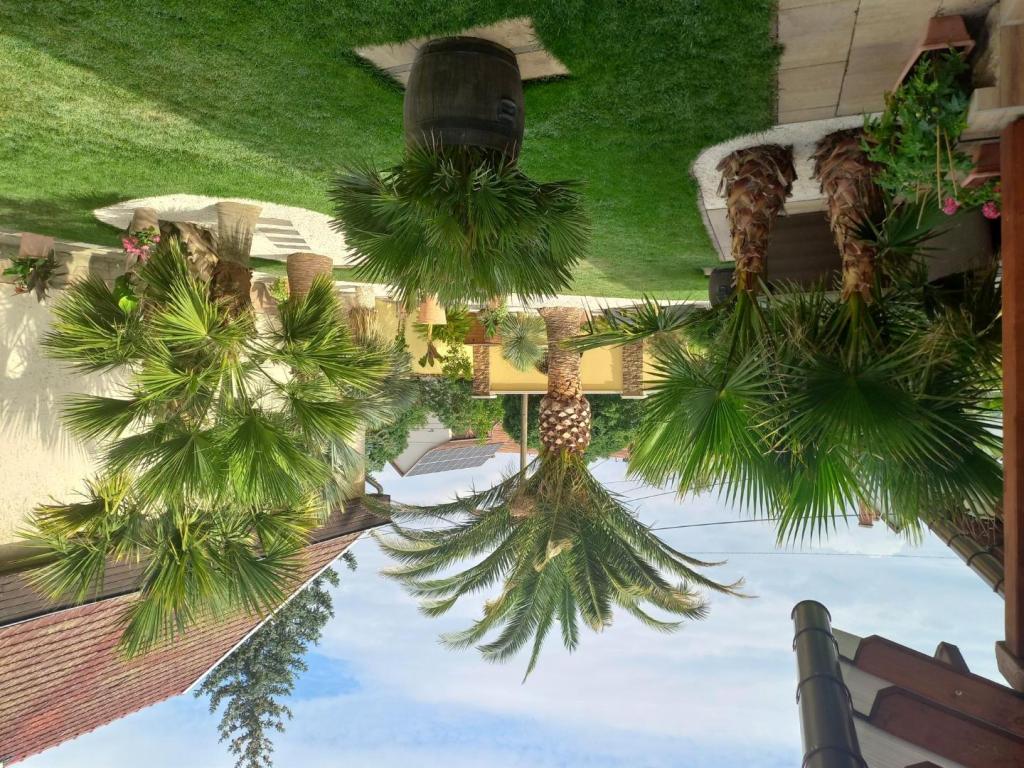


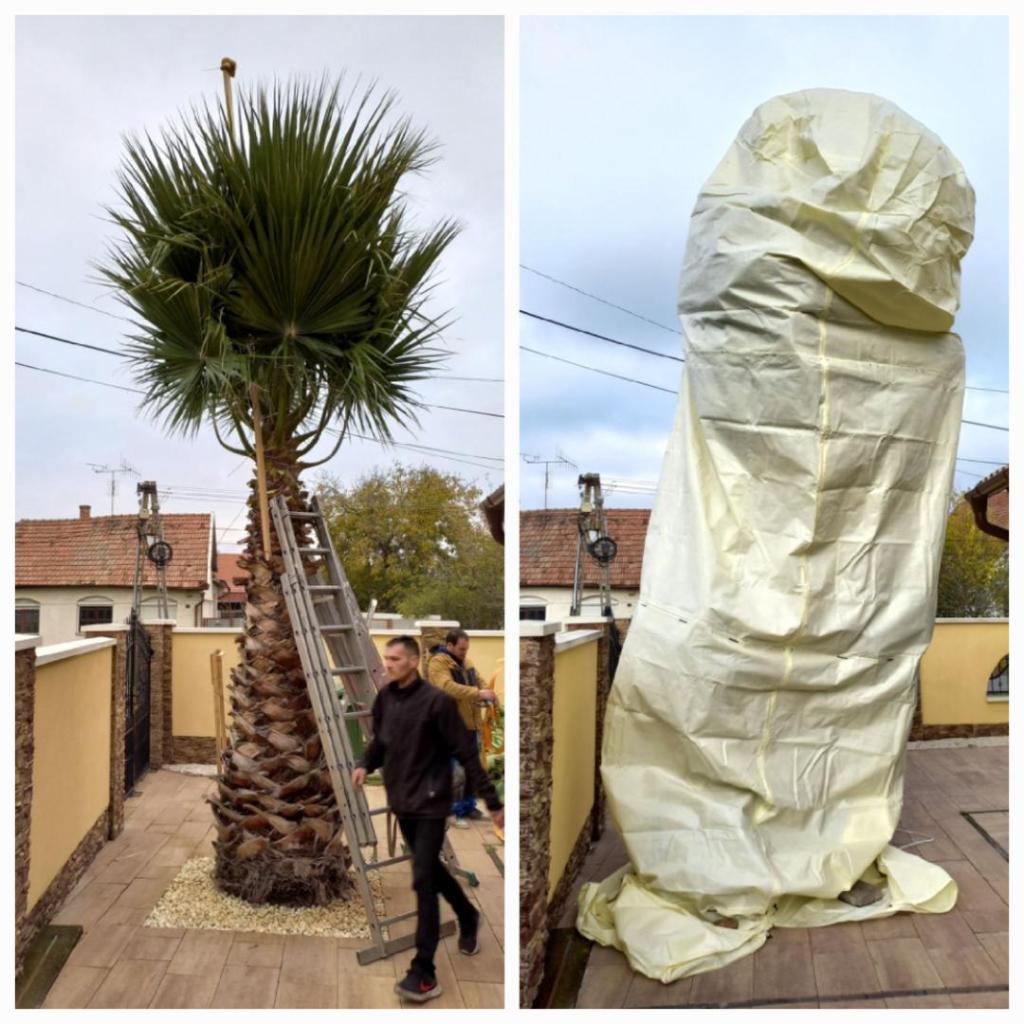
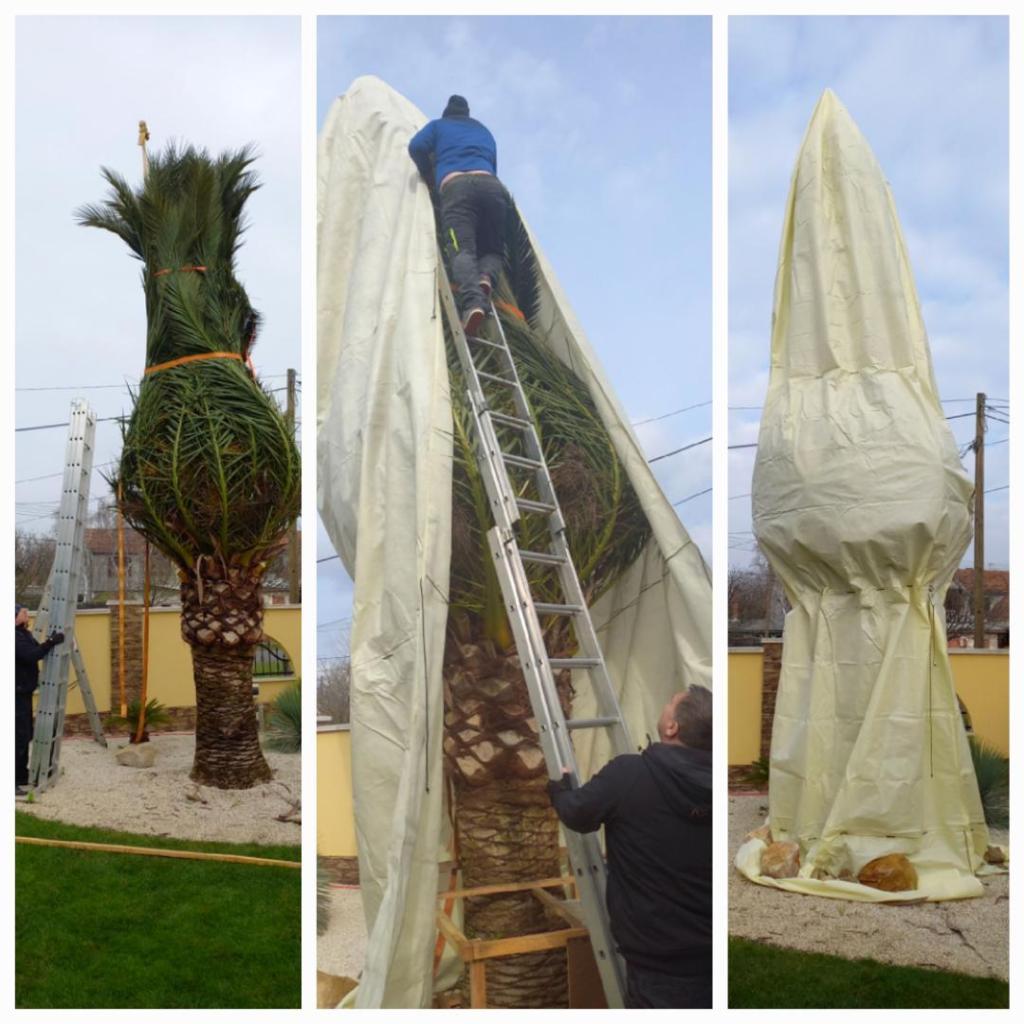 1 point
 -
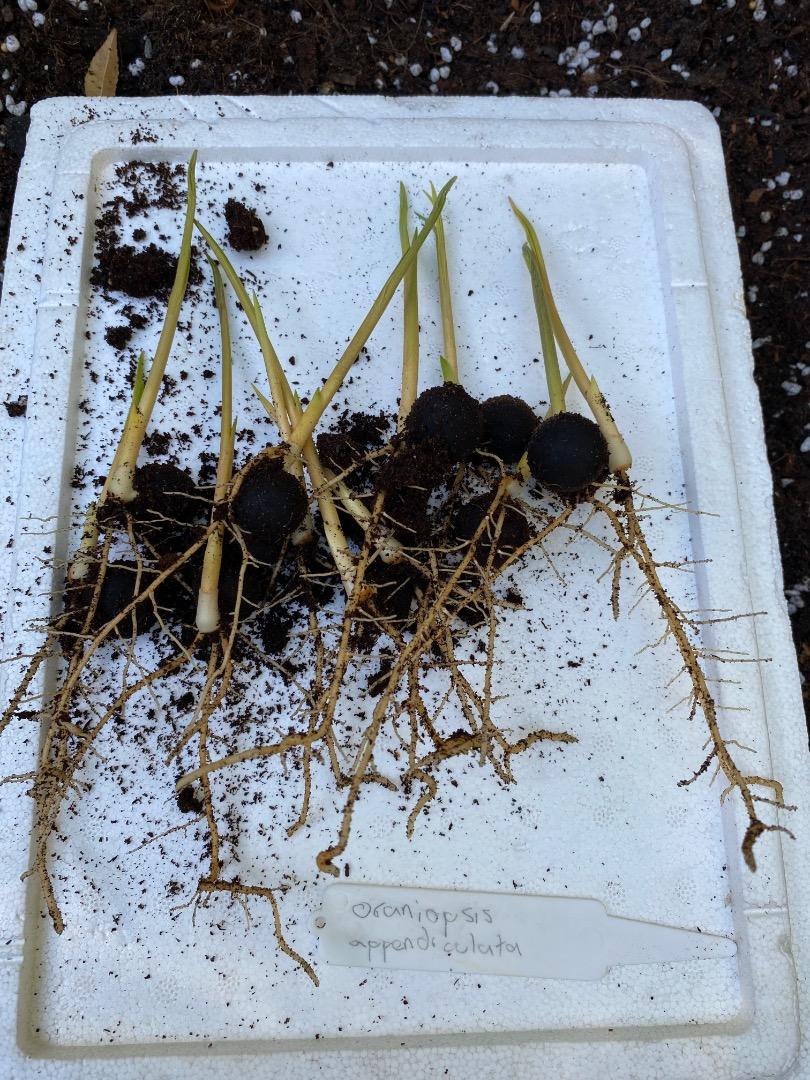
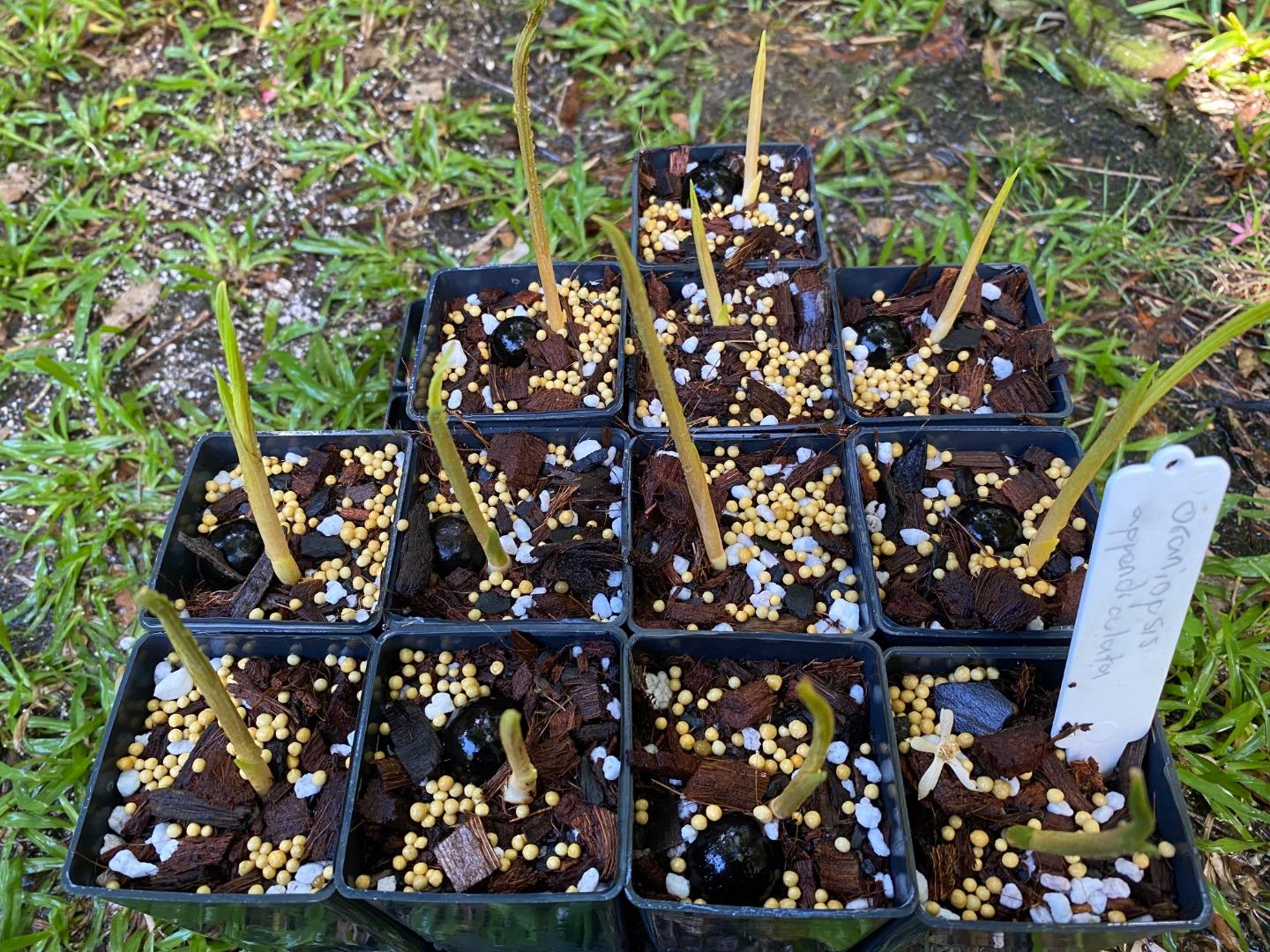
 It happens sometimes. Not really sure what causes it but unfortunately in every experience I’ve had it’s been terminal. For some reason the seedling pits all energy into a terminal inflorescence and stops producing new fronds. I have a Jubaeopsis that did it last year and while it hasn’t completely died yet, it has stopped growing completely.1 point
 -
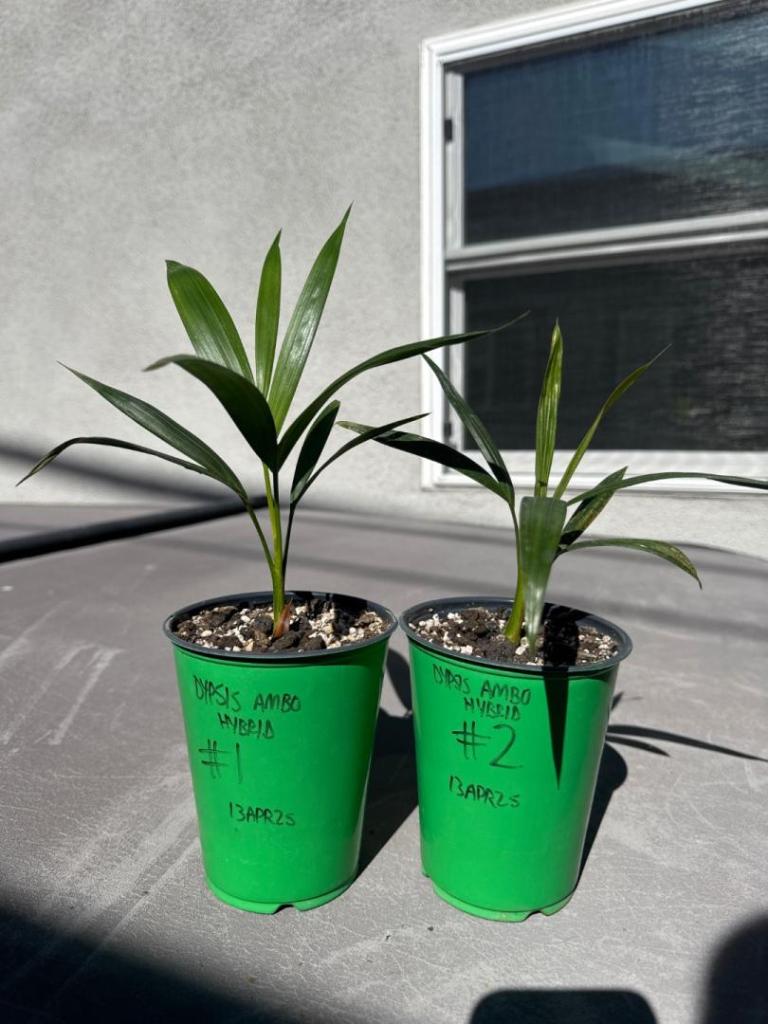
 1 pointKeep an eye out for these idenity markers on Cycas debaoensis - extra long secondary petioles, median leaflet that are about the same size as the basal ones. This will be visable even on younger plants.1 point
 -
1 pointThanks @Merlyn for the information. It’s good to see you have done your research well, greatly appreciate the information, it kinda solves the problem. Iam not to worried about the fact I have hybrid plants. I would be more concerned if it was palms. Cycas species are a favourite of mine but it’s palms where my heart lies!1 point
-
 Comeon down i4 lilbit towards Tampa! Ive gotta 15gal sitting in my driveway rightnow I can meet somewhere along i4 if need be1 point
 -
@Hilo Jason Here’s my update. As previously mentioned, they seem to like heat so did well this summer. Definitely picked up speed. Really need to ground one of these. -dale IMG_5812.mov
 1 point
 -
 I was in google maps some weeks ago and found what seems to be the only Sabal yapa specimen (Besides the ones that I have and the ones I have gifted to locals) living in the state of Nuevo León in northeastern Mexico. Apparently it survived the 2021 freeze. The smaller palms beside this one are Thrinax radiata, so I assume that they brought these palms directly from the Yucatan peninsula and they weren't bought in a nursery, I've never seen nurseries here selling Sabal yapa but they do sell Thrinax radiata very often. In the 2021 freeze it should have faced around -2°C to -4°C. Many people in the forum say this is a tender species but a lot of people don't know how to difference Sabal yapa and Sabal mauritiiformis and I assume that brings more confusion. My Sabal yapa that I sprouted from seed and brought them from Quintana Roo don't seem to be bothered by the cold, never seen cold damage on them. In 2023 they stayed in the 3rd floor of my house completely exposed and it was around 3°C that day but they never got damaged and they kept growing. I also gifted two of my Sabal yapa's; one was given to a gardener that I've known all my life and the gardener sold it to a lady and the lady planted it in a park, he said that the palm had doubled in size very quickly and was no longer struggling to grow due to lack of space. The other one was gifted to a lady that is a friend of my mom and she says it's doing fine though she hasn't planted it in the ground yet. Here is the palm in question: https://www.google.com/maps/@25.7345024,-100.3925779,3a,24.4y,349.21h,85.27t/data=!3m7!1e1!3m5!1sLTct5hEOaOeN9Lb9eZC_jw!2e0!6shttps:%2F%2Fstreetviewpixels-pa.googleapis.com%2Fv1%2Fthumbnail%3Fcb_client%3Dmaps_sv.tactile%26w%3D900%26h%3D600%26pitch%3D4.729849313079853%26panoid%3DLTct5hEOaOeN9Lb9eZC_jw%26yaw%3D349.2129568770232!7i16384!8i8192?entry=ttu&g_ep=EgoyMDI0MTIxMS4wIKXMDSoASAFQAw%3D%3D1 point
 -
 1 pointSeems to me the only point of contention is the possible existence of a third species, "washingtonia sonorae" which people confuse for filibusta. So far I've only heard that from Richard. Could be, but then could also be that in the Sonora, there are intermediate hybrids between pure filifera and pure robusta (once known as "gacilis"). It's an interesting question either way that can only be answered accurately with genetics. Getting back to Keith's question, without seeing the rest of the palm, can't tell, but the thorns make me vote 100% robusta.1 point
 -
.thumb.jpg.aa9848c04f00d26dfb36ab4dd68a22ad.jpg) There are so many tropical plants that are native to the Florida Keys and the very southern edges of Florida above the Keys. However, many are too tender to grow in the northern Florida/Atlantic coast up to Charleston SC/southern portions of the Gulf states/and Texas north of Corpus Christi. Others will do fine in these borderline regions, but we don't bother trying because they are either unavailable or we assume that they won't survive. Here are some of my experiments in chilly northern Florida (below), but please add to the list with your own experiments: SEAGRAPE: - We have had a lot of chilly weather here since the new year (Polar Vortex, etc) and my seagrape is totally undamaged. I was told that this beautiful tree would not grow north of Orlando, but this appears to be false. There isn't a single leaf that has browned or fallen off. Of course, Seagrape isn't just native to the Florida Keys. It is native all the way up to St. Petersburg, FL and perhaps even further north in saltwater coastal areas. SILVER BUTTONWOOD: - I had great hopes for this gorgeous Florida Keys native, but it has lost most of its leaves since our chilly weather began. It isn't looking very healthy right now, but it is going to pull through because it is staying alive. Unlike here, Silver Buttonwood stays gorgeous all year round in the perma-summer regions of extreme southern Florida. THRINAX MORRISII, aka. LEUCOTHRINAX MORRISII: - wow -- zero damage. I can't believe how bulletproof this Keys native is. It's a georgeous tropical palm and has been unaffected by our dreadful cold snaps this year. I haven't tried the other thrinax palms which are native to the Florida Keys, i.e. Thrinax Radiata and Thrinax Argentata. PSEUDOPHOENIX SARGENTII: - I have heard mixed reviews of how this Keys palm survives in our borderline regions. Any knowledge? It is expensive, so I don't want to experiment if it is simply going to die up here. ROYSTONIA REGIA: - This palm native to wilderness/swamp areas just north of Marco Island (e.g. Fakahatchee Strand- Royal Palm Hammock zone; Collier-Seminole State Park) does not appear to survive up in the north of Florida, although I have heard that the Atlantic coast may be the exception. After a cold night a few years ago, I noticed that two in Gainesville were looking rather dead or severely damaged. A couple of years later, the home owner had removed them. ACOELORRAPHE WRIGHTII: - I have heard that this, the suckering "everglades palm", does survive up on much colder regions than its native turf down in the Florida Everglades ****************************** Please add your comments about other Florida natives that are worth trying outside of their native range. Any native orchids worthy trying? Others?1 point
There are so many tropical plants that are native to the Florida Keys and the very southern edges of Florida above the Keys. However, many are too tender to grow in the northern Florida/Atlantic coast up to Charleston SC/southern portions of the Gulf states/and Texas north of Corpus Christi. Others will do fine in these borderline regions, but we don't bother trying because they are either unavailable or we assume that they won't survive. Here are some of my experiments in chilly northern Florida (below), but please add to the list with your own experiments: SEAGRAPE: - We have had a lot of chilly weather here since the new year (Polar Vortex, etc) and my seagrape is totally undamaged. I was told that this beautiful tree would not grow north of Orlando, but this appears to be false. There isn't a single leaf that has browned or fallen off. Of course, Seagrape isn't just native to the Florida Keys. It is native all the way up to St. Petersburg, FL and perhaps even further north in saltwater coastal areas. SILVER BUTTONWOOD: - I had great hopes for this gorgeous Florida Keys native, but it has lost most of its leaves since our chilly weather began. It isn't looking very healthy right now, but it is going to pull through because it is staying alive. Unlike here, Silver Buttonwood stays gorgeous all year round in the perma-summer regions of extreme southern Florida. THRINAX MORRISII, aka. LEUCOTHRINAX MORRISII: - wow -- zero damage. I can't believe how bulletproof this Keys native is. It's a georgeous tropical palm and has been unaffected by our dreadful cold snaps this year. I haven't tried the other thrinax palms which are native to the Florida Keys, i.e. Thrinax Radiata and Thrinax Argentata. PSEUDOPHOENIX SARGENTII: - I have heard mixed reviews of how this Keys palm survives in our borderline regions. Any knowledge? It is expensive, so I don't want to experiment if it is simply going to die up here. ROYSTONIA REGIA: - This palm native to wilderness/swamp areas just north of Marco Island (e.g. Fakahatchee Strand- Royal Palm Hammock zone; Collier-Seminole State Park) does not appear to survive up in the north of Florida, although I have heard that the Atlantic coast may be the exception. After a cold night a few years ago, I noticed that two in Gainesville were looking rather dead or severely damaged. A couple of years later, the home owner had removed them. ACOELORRAPHE WRIGHTII: - I have heard that this, the suckering "everglades palm", does survive up on much colder regions than its native turf down in the Florida Everglades ****************************** Please add your comments about other Florida natives that are worth trying outside of their native range. Any native orchids worthy trying? Others?1 point -
 Myricanthes fragrans, aka Simpson's Stopper. It's an attractive shrub/small tree native to coastal tropical hardwood forests and is possibly hardy to zone 8. Per Woodlander's nursery: "Simpson Stopper is a neat evergreen small tree or shrub with small leaves, white flowers, orange fruit, and nice exfoliating bark. Native to central and southern Florida. It has surprisied us by being perfectly hardy here in Aiken, SC. It can be planted in rich moist soil in shady or semi-shady sites but is also adaptable to full sun. A great plant that is becoming more widely appreciated as a landscape subject in Florida where it is native. The name "stopper" may refer to use of the berries as an anti-diarrheal remedy but this is anectdotal. " For zone 9 you could try coco plum (Chrysobalanus icaco). Also for 9B look into Gumbo Limbo (bursera simarubra) and strangler fig (ficus aurea). Both of those have a native distribution that extends into zone 9 but I'm not sure how hardy they are1 point
 -
 I forgot 2; Conocarpus erectus, Green Buttonwood had no damage and C. erectus var. sericeus, Silver Buttonwood, was partially defoliated but has leafed back out.1 point
 -
 1 pointI can't tell you much about buttonwood's cold tolerance but I can tell you a few other things about it. There are two main forms, the "silver" and the "green". The silver leaves are actually green, but have tiny silver hairs on them, the green shows through a little when they are wet. There are gradations between the wild silver and green forms, they just don't make it into the trade much. As a rule, the silver is more "rangey" and spread out and the green more upright. The green usually makes a larger tree. Most of the driftwood you find on beaches in SoFla and the Keys are buttonwood. "Momba" with larger, darker green leaves and "Card Sound" with unusual narrow leaves are two varieties of the green form. I have seen a silver variety called "Silver Sheen" advertised. While the silver demands full sun (and will thin out badly without a few hours daily) the green is more able to handle light shade. They make decent hedges running North and South (in full sun) but can get leggy if their tops are wider than their bottoms. East , West hedges can thin out on the North side, especially the bottoms. They are very salt tolerant and have a pair of glands at the base of their leaves that will exude excess salt in their system. These same glands are responsible for the sooty mold forming noticably on the silver form. They can tolerate wet feet but don't like persistant flooded conditions. (Think of daily tidal flows, not swamp land) They are relatively drought tolerant when established. They thrive in almost any SoFla soil; marl, rocky, sandy, muck etc. The growth rate in good conditions in SoFla is very fast. The wood is very hard and was actually used for making buttons. Old trees are very picturesque because of their knarly growth habit and ropey trunk. Dead wood is often used for mounting bromos and for large bird perches. Jerry1 point