Jump to content
  • WELCOME GUEST

    It looks as if you are viewing PalmTalk as an unregistered Guest.

    Please consider registering so as to take better advantage of our vast knowledge base and friendly community.  By registering you will gain access to many features - among them are our powerful Search feature, the ability to Private Message other Users, and be able to post and/or answer questions from all over the world. It is completely free, no “catches,” and you will have complete control over how you wish to use this site.

    PalmTalk is sponsored by the International Palm Society. - an organization dedicated to learning everything about and enjoying palm trees (and their companion plants) while conserving endangered palm species and habitat worldwide. Please take the time to know us all better and register.

    guest Renda04.jpg

Recommended Posts

Posted

Just picked up a 7 gallon, 8 foot tall (seedling😄) Colvillea racemosa tree to plant as a commemorative birthday gift. (makes it easier to remember when planted) We already have 2 Royal Poinciana trees that flower every year, so this Madagascar cousin should also be a winner in time, in the Arizona desert... Don't know of any others planted in Arizona, although they are known to grow well in our neighboring California, (but with sporadic flowering) which is the whole point of growing this species. The fall flowers literally will stop people and hummingbirds in their tracks; they are so bright orange! 🤯


aztropic 

Mesa, Arizona 

IMG_20260423_124646206_HDR.jpg

IMG_20221110_090742542_HDR.jpg

IMG_20221110_090807864_HDR.jpg

  • Like 5

Mesa, Arizona


Temps between 29F and 115F each year

Posted

This is photo of one taken in February, when it is briefly deciduous. Looking forward to it's blooms this fall:IMG_2080.thumb.jpeg.13602bc6c0ccb34325baeafab4e07217.jpeg

  • Like 3
  • Upvote 1

What you look for is what is looking

Posted

IMG_2081.thumb.jpeg.a5f1b38bd16ca815b2303687f419abce.jpeg

  • Like 2

What you look for is what is looking

Posted
12 hours ago, aztropic said:

Just picked up a 7 gallon, 8 foot tall (seedling😄) Colvillea racemosa tree to plant as a commemorative birthday gift. (makes it easier to remember when planted) We already have 2 Royal Poinciana trees that flower every year, so this Madagascar cousin should also be a winner in time, in the Arizona desert... Don't know of any others planted in Arizona, although they are known to grow well in our neighboring California, (but with sporadic flowering) which is the whole point of growing this species. The fall flowers literally will stop people and hummingbirds in their tracks; they are so bright orange! 🤯


aztropic 

Mesa, Arizona 

IMG_20221110_090807864_HDR.jpg

Congratulations, Scott (and Happy Birthday if it's yours that is being commemorated!). This tree really seduced me when I saw it in full glory while I lived in Honolulu back in the late '80s..."wow" is the word for this tree when it's doing its thing. I have grown several from seed and have them either planted or in pots here in the Palm Springs area, an easy grow from seed and pretty quick at first, then slows down a bit, at least for me...I feel they are definitely tougher than Delonix regia, certainly when young. And they have a better-enforced winter dormancy and probably a few degrees more cold-hardy. Mine haven't yet bloomed but I'm sure they're not old enough. It is a good tree for higher canopy because it tends to go up, up, up where the Poinciana wants to go out, out, out. Less invasive in the root department, needless to say. It has a neat reddish trunk, gorgeous leaves and of course those marvelous flowers. I also grew this in  the Florida Keys where it seemed very much at home but I never got it big enough to bloom, though I have seen it blooming in Miami. I don't know why it isn't more widely used in SoFla and in the Keys, as I had one come through Irma (160+mph winds and 4' of seawater/muck for 24 hrs) with no problems. So it is really a strong tree. I believe I read that Gary Levine had one near Escondido and apparently flowered it, though I don't think he posted any pics here. Apparently the one or two trees at the San Diego Zoo have never flowered, likely due to the chilly springs and relatively cool summers. I wonder if they have planted any at the Wild Animal Park (now I think called Safari Park?) in San Pasqual, which would seem a more appropriate place to trial it.

And just to sidetrack to Delonix regia for a moment, you say you have them blooming consistently...Most of the specimens here from Palm Springs to La Quinta grow beautifully (though without the extreme tropical horizontal form), stay evergreen, and barely bloom, which is what my trees did in the Keys, and which I attributed to the high freshwater water-table on our island: always green with a smattering of flowers over many months.  (BTW they flower like crazy on Key Largo, which has no water-table.) I believe that behavior here in the Coachella Valley cities is because they're planted at country-club entrances or along grassy parkways with lots of H2O year-round. From pictures posted here, it seems y'all get better flowers on Delonix in the Phoenix area. You say yours bloom consistently...do you enforce a January-to-June drought on them, or do anything specific with fertilizers, etc.? I suspect Colvillea will prove much easier to flower in the low desert climate once it attains reproductive age, partially because it blooms with the fall growth-flushes rather than at the break of winter dormancy...not sure if that hypothesis will hold up, but I keep my fingers crossed. In any event, both of these Madagascan beauties grow well in the low desert as long as strong freezes can be avoided, make beautiful trees even without their flowers, and obviously love the heat...the remaining question is just about flowering behavior on Colvillea.

  • Like 3
  • Upvote 1

Michael Norell

Rancho Mirage, California | 33°44' N 116°25' W | 287 ft | z10a | avg Jan 43/70F | Jul 78/108F avg | Weather Station KCARANCH310

previously Big Pine Key, Florida | 24°40' N 81°21' W | 4.5 ft. | z12a | Calcareous substrate | avg annual min. approx 52F | avg Jan 65/75F | Jul 83/90 | extreme min approx 41F

previously Natchez, Mississippi | 31°33' N 91°24' W | 220 ft.| z9a | Downtown/river-adjacent | Loess substrate | avg annual min. 23F | Jan 43/61F | Jul 73/93F | extreme min 2.5F (1899); previously Los Angeles, California (multiple locations)

Posted
54 minutes ago, mnorell said:

Congratulations, Scott (and Happy Birthday if it's yours that is being commemorated!). This tree really seduced me when I saw it in full glory while I lived in Honolulu back in the late '80s..."wow" is the word for this tree when it's doing its thing. I have grown several from seed and have them either planted or in pots here in the Palm Springs area, an easy grow from seed and pretty quick at first, then slows down a bit, at least for me...I feel they are definitely tougher than Delonix regia, certainly when young. And they have a better-enforced winter dormancy and probably a few degrees more cold-hardy. Mine haven't yet bloomed but I'm sure they're not old enough. It is a good tree for higher canopy because it tends to go up, up, up where the Poinciana wants to go out, out, out. Less invasive in the root department, needless to say. It has a neat reddish trunk, gorgeous leaves and of course those marvelous flowers. I also grew this in  the Florida Keys where it seemed very much at home but I never got it big enough to bloom, though I have seen it blooming in Miami. I don't know why it isn't more widely used in SoFla and in the Keys, as I had one come through Irma (160+mph winds and 4' of seawater/muck for 24 hrs) with no problems. So it is really a strong tree. I believe I read that Gary Levine had one near Escondido and apparently flowered it, though I don't think he posted any pics here. Apparently the one or two trees at the San Diego Zoo have never flowered, likely due to the chilly springs and relatively cool summers. I wonder if they have planted any at the Wild Animal Park (now I think called Safari Park?) in San Pasqual, which would seem a more appropriate place to trial it.

And just to sidetrack to Delonix regia for a moment, you say you have them blooming consistently...Most of the specimens here from Palm Springs to La Quinta grow beautifully (though without the extreme tropical horizontal form), stay evergreen, and barely bloom, which is what my trees did in the Keys, and which I attributed to the high freshwater water-table on our island: always green with a smattering of flowers over many months.  (BTW they flower like crazy on Key Largo, which has no water-table.) I believe that behavior here in the Coachella Valley cities is because they're planted at country-club entrances or along grassy parkways with lots of H2O year-round. From pictures posted here, it seems y'all get better flowers on Delonix in the Phoenix area. You say yours bloom consistently...do you enforce a January-to-June drought on them, or do anything specific with fertilizers, etc.? I suspect Colvillea will prove much easier to flower in the low desert climate once it attains reproductive age, partially because it blooms with the fall growth-flushes rather than at the break of winter dormancy...not sure if that hypothesis will hold up, but I keep my fingers crossed. In any event, both of these Madagascan beauties grow well in the low desert as long as strong freezes can be avoided, make beautiful trees even without their flowers, and obviously love the heat...the remaining question is just about flowering behavior on Colvillea.

I've never seen or even heard about a single example of this tree in the Phoenix area, so my experience will probably be the first documented. Looks like I picked a promising tree for a new opening I just created.😄

As with palms, I was the guinea pig trialing many different subtropicals to figure out which ones could survive our extremes. Turns out, species native to the Caribbean or Mexico are the best adapted to our hot deserts. Species like Copernicia, Coccothrinax, Hemithrinax, and Pseudophoenix just keep plugging along,year after year. I love to grow palms from seed, just to watch them grow. I'm probably responsible for getting some of these species into Phoenix gardens, as I have sold many plants over the last 30 years. Pseudophoenix has always been one of my favorites, so I am always starting new batches of those.👍

IMG_20260425_063041324_HDR.jpg

  • Like 3

Mesa, Arizona


Temps between 29F and 115F each year

Posted

Hey Scott- where did you pick that up?  Shamus’?  That’s a pretty nice specimen.  I’d considered growing it from seed, but that’s a pretty good headstart.

  • Like 3
  • Upvote 1
Posted

Yes, it came from GreenLife nursery. Finally took a drive out there to see if he had imported anything interesting this spring, when I stumbled across this tree name I recognized. Also, I had just removed a couple palms from the yard, so had some open space to work with. I guess we'll all see together how well they can adapt to the Arizona extremes. 🤞


aztropic 

Mesa, Arizona 

  • Like 3

Mesa, Arizona


Temps between 29F and 115F each year

Posted

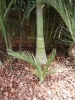
A before and after showing what once was, and hopefully what will be, its permanent replacement. If the Colvillea freezes this coming winter, I will have to find something else to replace it with. I am already considering a spanish lime, or maybe a chico sapote if it comes down to that... 😄


aztropic 

Mesa, Arizona 

IMG_20260427_181758.jpg

IMG_20260427_133700108_HDR.jpg

  • Like 2

Mesa, Arizona


Temps between 29F and 115F each year

Posted

Nice you're lucky. This plant has a massive wow factor! Mine is in the ground and probably dead. If I scratch the trunk it's green but it's end of April and no leaves yet... 

  • Like 2

Zone 9b: if you love it, cover it.

Posted
2 hours ago, Than said:

Nice you're lucky. This plant has a massive wow factor! Mine is in the ground and probably dead. If I scratch the trunk it's green but it's end of April and no leaves yet... 

Sometimes Colvillea is late to leaf out. I have seen some variability also between specimens here in my landscape. I have two younger trees, one in the ground, one in a container, that leafed out about a month ago, but the larger one in the ground is just starting to break dormancy. Think about the natural rhythm for the trees in their native habitat, many monsoonal trees (many flowering trees fit that situation) don't even lose their leaves until February-March-April (Colvillea drops them sooner in my experience). Often these monsoonal trees, like Delonix regia, use this drier period to flower (Colvillea being a bit of an odd exception) and then they re-leaf once the rains start (or are about to start), pretty much at the onset of summer when moisture will be more regularly available. 

Colvillea looks to have a primary distribution in the dry deciduous forests of western Madagascar from roughly the central area (more or less the Bemaraha plateau region) to the northern tip of the island, with apparently scattered distribution further southward, in areas that receive some rain, but north of the spiny forest area in the extreme south/southwest, from about Toliara northward. Kew has a collection made by Missouri Botanical Garden in 1988 made around the Beza Mahafaly Reserve, which is at nearly 24 degrees South. Sources I consulted show that this drier southern distribution receives about 35-45cm (14-18") of rain annually, and the dry season can be 7-8 months.

This species also does well in the Florida Keys (about 35" of rain), where I grew it previously, and in Miami (60" of rain), where I saw it in flower, but it's worth remembering that those areas of Florida are on porous limestone and so drainage is generally excellent, and the spring season is usually hot and bone-dry until rains really get going in July. So be patient. But I think the good drainage and seasonal and relatively light rainfall in habitat should be considered when planting. Many years ago I rotted one of these in heavy soil and have kept that in mind since. (They can take plenty of irrigation or heavy rain during the hot season, though.) They love heat and sun and definitely want to move into dormancy in the winter, in my casual observations and experience they are much less likely than Delonix regia to hold any good foliage through winter.

Hopefully your area of Greece doesn't see too much below about 27F, that's where I saw damage occur when I attempted to grow the tree as a die-back in southern Mississippi years ago. I think if the tree can get into dormancy and any frosts/freezes occur after it does so, perhaps you can get a bit of extra cold-tolerance. But I would definitely mulch the base of the trunk if a hard freeze is forecast, as this tree can probably regenerate from the lower trunk if frozen back and the soil kept dry.

  • Like 4
  • Upvote 1

Michael Norell

Rancho Mirage, California | 33°44' N 116°25' W | 287 ft | z10a | avg Jan 43/70F | Jul 78/108F avg | Weather Station KCARANCH310

previously Big Pine Key, Florida | 24°40' N 81°21' W | 4.5 ft. | z12a | Calcareous substrate | avg annual min. approx 52F | avg Jan 65/75F | Jul 83/90 | extreme min approx 41F

previously Natchez, Mississippi | 31°33' N 91°24' W | 220 ft.| z9a | Downtown/river-adjacent | Loess substrate | avg annual min. 23F | Jan 43/61F | Jul 73/93F | extreme min 2.5F (1899); previously Los Angeles, California (multiple locations)

Posted

Vivo en España y el mío se le secan las ramas verdes todos los inviernos (los 3 inviernos que lo tengo ) y hace una semana que empezó a brotar , el año pasado brotó un mes antes  

  • Like 3
Posted
1 hour ago, Navarro said:

Vivo en España y el mío se le secan las ramas verdes todos los inviernos (los 3 inviernos que lo tengo ) y hace una semana que empezó a brotar , el año pasado brotó un mes antes  

Translation: I live in Spain, and mine loses its green branches every winter (it has done so for the three winters I’ve had it); it started sprouting a week ago—last year, it sprouted a month earlier.

  • Like 2

Mesa, Arizona


Temps between 29F and 115F each year

Posted
2 hours ago, mnorell said:

Sometimes Colvillea is late to leaf out. I have seen some variability also between specimens here in my landscape. I have two younger trees, one in the ground, one in a container, that leafed out about a month ago, but the larger one in the ground is just starting to break dormancy. Think about the natural rhythm for the trees in their native habitat, many monsoonal trees (many flowering trees fit that situation) don't even lose their leaves until February-March-April (Colvillea drops them sooner in my experience). Often these monsoonal trees, like Delonix regia, use this drier period to flower (Colvillea being a bit of an odd exception) and then they re-leaf once the rains start (or are about to start), pretty much at the onset of summer when moisture will be more regularly available. 

Colvillea looks to have a primary distribution in the dry deciduous forests of western Madagascar from roughly the central area (more or less the Bemaraha plateau region) to the northern tip of the island, with apparently scattered distribution further southward, in areas that receive some rain, but north of the spiny forest area in the extreme south/southwest, from about Toliara northward. Kew has a collection made by Missouri Botanical Garden in 1988 made around the Beza Mahafaly Reserve, which is at nearly 24 degrees South. Sources I consulted show that this drier southern distribution receives about 35-45cm (14-18") of rain annually, and the dry season can be 7-8 months.

This species also does well in the Florida Keys (about 35" of rain), where I grew it previously, and in Miami (60" of rain), where I saw it in flower, but it's worth remembering that those areas of Florida are on porous limestone and so drainage is generally excellent, and the spring season is usually hot and bone-dry until rains really get going in July. So be patient. But I think the good drainage and seasonal and relatively light rainfall in habitat should be considered when planting. Many years ago I rotted one of these in heavy soil and have kept that in mind since. (They can take plenty of irrigation or heavy rain during the hot season, though.) They love heat and sun and definitely want to move into dormancy in the winter, in my casual observations and experience they are much less likely than Delonix regia to hold any good foliage through winter.

Hopefully your area of Greece doesn't see too much below about 27F, that's where I saw damage occur when I attempted to grow the tree as a die-back in southern Mississippi years ago. I think if the tree can get into dormancy and any frosts/freezes occur after it does so, perhaps you can get a bit of extra cold-tolerance. But I would definitely mulch the base of the trunk if a hard freeze is forecast, as this tree can probably regenerate from the lower trunk if frozen back and the soil kept dry.

Excellent presentation Michael! I only had one night of 29 F and one more of around 30F; all other nights this past winter temperature did not fall below 36F and most nights it was above 40F. On those two cold nights I covered it with a fleece and some hot water bottles around the trunk. I believe that as you said it's the poor drainage that might have killed it. Topsoil is sandy with great drainage but just 3 inches below surface, heavy alkaline soil begins. 

It looks black-ish with pink-orange calluses and dry so I don't have much hope.


c3d93daa-372a-4820-ad41-ba752da87c58.jpg

  • Like 3

Zone 9b: if you love it, cover it.

Posted
6 hours ago, Than said:

Excellent presentation Michael! I only had one night of 29 F and one more of around 30F; all other nights this past winter temperature did not fall below 36F and most nights it was above 40F. On those two cold nights I covered it with a fleece and some hot water bottles around the trunk. I believe that as you said it's the poor drainage that might have killed it. Topsoil is sandy with great drainage but just 3 inches below surface, heavy alkaline soil begins. 

It looks black-ish with pink-orange calluses and dry so I don't have much hope.


c3d93daa-372a-4820-ad41-ba752da87c58.jpg

Ouch. It looks like that one went bye-bye, trunk of course should not be black (should be a mostly reddish color...have you dug down and checked the very bottom of the trunk, or looked at the root-area? If it's gone, and you get a replacement, or start one from seed, have you thought about making a berm of that nice sandy stuff and planting it high? I think that would give it a "choice" of where it wants to spread its roots, and hopefully will stay fairly high where it has that nice highly draining soil, so it can stay out of the bad stuff below. Good luck with whatever you decide to do.

  • Like 2

Michael Norell

Rancho Mirage, California | 33°44' N 116°25' W | 287 ft | z10a | avg Jan 43/70F | Jul 78/108F avg | Weather Station KCARANCH310

previously Big Pine Key, Florida | 24°40' N 81°21' W | 4.5 ft. | z12a | Calcareous substrate | avg annual min. approx 52F | avg Jan 65/75F | Jul 83/90 | extreme min approx 41F

previously Natchez, Mississippi | 31°33' N 91°24' W | 220 ft.| z9a | Downtown/river-adjacent | Loess substrate | avg annual min. 23F | Jan 43/61F | Jul 73/93F | extreme min 2.5F (1899); previously Los Angeles, California (multiple locations)

Posted
5 hours ago, mnorell said:

Ouch. It looks like that one went bye-bye, trunk of course should not be black (should be a mostly reddish color...have you dug down and checked the very bottom of the trunk, or looked at the root-area? If it's gone, and you get a replacement, or start one from seed, have you thought about making a berm of that nice sandy stuff and planting it high? I think that would give it a "choice" of where it wants to spread its roots, and hopefully will stay fairly high where it has that nice highly draining soil, so it can stay out of the bad stuff below. Good luck with whatever you decide to do.

I think so too, it's a goner.

Yes, next time (if there is one) I will do that probably. I have realized, a bit too late, that anything tropical-esque needs to be planted on a raised bed. I am doing that now but didn't do it in the beginning when I first moved to this property. It's hard job, lots of digging and I hate that but it's a must. 

  • Like 1

Zone 9b: if you love it, cover it.

Posted

I just scratched the trunk with a knife and it is green inside! Who knows..

Delonix regia and ficus lyrata on the other hand are bone dry.

  • Like 1

Zone 9b: if you love it, cover it.

Posted

Nice tree I like it! 

Posted
23 hours ago, Navarro said:

Vivo en España y el mío se le le secan las ramas verdes todos los inviernos (los 3 inviernos que lo tengo) y hace una semana que empezó a brotar, el año pasado brotó un mes antes  

Probablemente llegamos a 0 grados este invierno ,cuando lo plante en la tierra espero que aguante mejor y no se sequen las ramas o nunca florecerá .

Hablo en español por qué mi inglés no es muy bueno y mi navegador automáticamente me traduce al español , espero que el vuestro también 

PXL_20260429_150934588.jpg

  • Like 1

Create an account or sign in to comment

You need to be a member in order to leave a comment

Create an account

Sign up for a new account in our community. It's easy!

Register a new account

Sign in

Already have an account? Sign in here.

Sign In Now


  • Recently Browsing

    • No registered users viewing this page.
×
×
  • Create New...