Skip to content
View in the app

A better way to browse. Learn more.

PalmTalk

A full-screen app on your home screen with push notifications, badges and more.

To install this app on iOS and iPadOS
  1. Tap the Share icon in Safari
  2. Scroll the menu and tap Add to Home Screen.
  3. Tap Add in the top-right corner.
To install this app on Android
  1. Tap the 3-dot menu (⋮) in the top-right corner of the browser.
  2. Tap Add to Home screen or Install app.
  3. Confirm by tapping Install.

WELCOME GUEST

It looks as if you are viewing PalmTalk as an unregistered Guest.

Please consider registering so as to take better advantage of our vast knowledge base and friendly community.  By registering you will gain access to many features - among them are our powerful Search feature, the ability to Private Message other Users, and be able to post and/or answer questions from all over the world. It is completely free, no “catches,” and you will have complete control over how you wish to use this site.

PalmTalk is sponsored by the International Palm Society. - an organization dedicated to learning everything about and enjoying palm trees (and their companion plants) while conserving endangered palm species and habitat worldwide. Please take the time to know us all better and register.

guest Renda04.jpg

Featured Replies

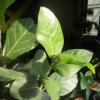
Hi everyone, I started this Ficus plant from cutting few months ago. I thought that it is variety of Ficus elastica with longer and less wide leaves. And it looks a lot like some other species from Asia that have similar leaves and leaf nervature as F.elastica But, because i dont have enough experience with different Ficus species, as they are very rare here, i am asking you to help me with this one.

05%252520-%25252027.8.15%252520%25252833

Thanx, Alex

I don't have experience with ficus, but yours it is like the Ficus macrophylla that i see in the spanish gardens.

The last guess was pretty close. I believe your ficus is a species called Ficus watkinsiana, its a form of Ficus macrophylla from Australia.

Rock Ridge Ranch

South Escondido

5 miles ENE Rancho Bernardo

33.06N 117W, Elevation 971 Feet

I've got F. elastica and F. macrophylla growing side by side, and also F. watkinsiana nearby. I would say your fig is a form of F. elastica. It does not look like either macrophylla or watkinsiana to me. Elastica has a lot of variation between different forms. As you say, it might be something completely different, but if the original cutting came from a cultivated plant the chances are that it is a more common species, and elastica is about the most common there is. The stem on RHS of pot looks classic elastica to me, and quite different form macrophylla or watkinsiana. What is the ficus in the pot behind?

Waimarama New Zealand (39.5S, 177E)

Oceanic temperate

summer 25C/15C

winter 15C/6C

No frost, no heat

  • Author

To me it looks like F.elastica just with different leaf shape. Again, plant have the same leaf nervation as elastica. Behind are rooted cuttings of F.benghalensis, F.cyathistipula, and F.elastica.

Alex

Well, when it comes to ficus it is always tough, but I still say watkinsiana. I have watkinsiana and that is very close, I have just not seen elastica with a leaf like that.

Gary

Rock Ridge Ranch

South Escondido

5 miles ENE Rancho Bernardo

33.06N 117W, Elevation 971 Feet

Gary,

In the 1950s, this plant had a very different look and lots of people landscaped with F. elastica with narrow leaves (in SoCal, anyway. I grew up in Bellflower)....I'll look in my archives to find a photo of one. I would actually like to have one myself!

John Case

Brentwood CA

Owner and curator of Hana Keu Garden

USDA Zone 9b more or less, Sunset Zone 14 in winter 9 in summer

"Its always exciting the first time you save the world. Its a real thrill!"

Well, when it comes to ficus it is always tough, but I still say watkinsiana. I have watkinsiana and that is very close, I have just not seen elastica with a leaf like that.

Gary

Gary, any chance you could post a picture of your watkinsiana foliage? It is a variable species too, possibly the populations I am familiar with in the NE NSW rainforests are not the dominant leaf form type.

A couple years back I was walking through subtropical rainforest under some mature watkinsiana with ripe fruit about ankle deep. I didn´t collect any, I was proud of myself. Maybe the collector disease is curable after all....

Waimarama New Zealand (39.5S, 177E)

Oceanic temperate

summer 25C/15C

winter 15C/6C

No frost, no heat

Create an account or sign in to comment

Account

Navigation

Configure browser push notifications

Chrome (Android)
  1. Tap the lock icon next to the address bar.
  2. Tap Permissions → Notifications.
  3. Adjust your preference.
Chrome (Desktop)
  1. Click the padlock icon in the address bar.
  2. Select Site settings.
  3. Find Notifications and adjust your preference.