Jump to content
  • WELCOME GUEST

    It looks as if you are viewing PalmTalk as an unregistered Guest.

    Please consider registering so as to take better advantage of our vast knowledge base and friendly community.  By registering you will gain access to many features - among them are our powerful Search feature, the ability to Private Message other Users, and be able to post and/or answer questions from all over the world. It is completely free, no “catches,” and you will have complete control over how you wish to use this site.

    PalmTalk is sponsored by the International Palm Society. - an organization dedicated to learning everything about and enjoying palm trees (and their companion plants) while conserving endangered palm species and habitat worldwide. Please take the time to know us all better and register.

    guest Renda04.jpg

Recommended Posts

Posted

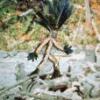
Hi all. I have had this E. trispinosus for about a year and a half. When I bought it, this is how it looked.

l_959dc3a47f55592c0b8a720993b26d36.jpg

And it still looks the same today. It has always had that dingy color to the leaves. It has never flushed. It feels solid and there is growth in the coraloid roots so I know it's alive. I am contemplating giving it a haircut to induce a flush. Does this work with Encephalartos? It's in full sun and does not get too much water. Any suggestions?

What is the longest anyone has had a cycad go without flushing?

Thank you,

Matt

Matt in Temecula, CA

Hot and dry in the summer, cold with light frost in the winter. Halfway between the desert and ocean

Posted
Hi all. I have had this E. trispinosus for about a year and a half. When I bought it, this is how it looked.

And it still looks the same today. It has always had that dingy color to the leaves. It has never flushed. It feels solid and there is growth in the coraloid roots so I know it's alive. I am contemplating giving it a haircut to induce a flush. Does this work with Encephalartos? It's in full sun and does not get too much water. Any suggestions?

What is the longest anyone has had a cycad go without flushing?

Thank you,

Matt

Matt, how often does the plant get watered? It looks like it is lacking water. Encephalartos, in particular, can go a very long time without flushing -- several years, in fact. Trimming the lower leaves may very well induce it to flush, and that probably is not a bad idea. I would recommend giving it some fast-acting fertilizer (like Tom Broome's "Cycad Special") a month or so before you cut the leaves and then make sure that it is watered sufficiently when it does flush.

Jody

Posted
Hi all. I have had this E. trispinosus for about a year and a half. When I bought it, this is how it looked.

And it still looks the same today. It has always had that dingy color to the leaves. It has never flushed. It feels solid and there is growth in the coraloid roots so I know it's alive. I am contemplating giving it a haircut to induce a flush. Does this work with Encephalartos? It's in full sun and does not get too much water. Any suggestions?

What is the longest anyone has had a cycad go without flushing?

Thank you,

Matt

Matt, how often does the plant get watered? It looks like it is lacking water. Encephalartos, in particular, can go a very long time without flushing -- several years, in fact. Trimming the lower leaves may very well induce it to flush, and that probably is not a bad idea. I would recommend giving it some fast-acting fertilizer (like Tom Broome's "Cycad Special") a month or so before you cut the leaves and then make sure that it is watered sufficiently when it does flush.

Jody

Hi Jody,

I think that sometimes I tend to underwater my cycads for fear of rotting them. This one in particular is pumping out a lot of coraloid roots. Is that a good or bad sign? Should I leave the new coraloid roots uncovered or should I put mulch over them. I have been leaving them exposed because I figure the plant knows what it is doing pushing them up into the full sun and air. I remember reeding that these roots are capable of extracting nitrogen from the air for soils that are lacking. That's pretty cool.

Thank you for the help,

Matt

Matt in Temecula, CA

Hot and dry in the summer, cold with light frost in the winter. Halfway between the desert and ocean

Posted

Hi Matt, In southern Africa where alot of encephalartos come from it rains in the summer and not in the winter. In the summer water frequently, for windy Corona that could be twice a week. I use a hydrometer to determine when to water. In the winter I rarely water. If you start watering twice a week and it flushes you'll know what was wrong! Also some encephalartos don't take well to having thier leaves cut off early. Talk to Jody to make sure yours can. Regards, Randy :greenthumb:

test

Posted
Hi Jody,

I think that sometimes I tend to underwater my cycads for fear of rotting them. This one in particular is pumping out a lot of coraloid roots. Is that a good or bad sign? Should I leave the new coraloid roots uncovered or should I put mulch over them. I have been leaving them exposed because I figure the plant knows what it is doing pushing them up into the full sun and air. I remember reeding that these roots are capable of extracting nitrogen from the air for soils that are lacking. That's pretty cool.

Thank you for the help,

Matt

I, too, used to underwater many of my cycads -- particularly the South African blue species -- for the very same reason... and I must admit that I have lost my fair share as a result. I have since learned that plants can get stressed from lack of water, and that stress can lead to rot as well. If your soil is well-drained, I would not worry about watering it too much. Randy's suggestions regarding watering frequency seem fine to me, but I will have to defer to him regarding anything to do with the climate in CA, because I know nothing about it.

As for cutting off leaves, I would not encourage you to cut them all off, just the older ones that are the most dried out... and only if you are watering the plant more frequently. I actually just cut off half of the only remaining leaf (I actually received the plant with one leaf) on an E. horridus plant that had not flushed since I got it around 2 years ago. Within 2 weeks after removing half of the leaf, a new leaf began to emerge, and I am now hopeful that the plant will return to its normal growth cycle.

Regarding the corraloid roots, I would not cover them up. Your gut feeling is correct, in my opinion, and what you have read about their ability to extract N from the air and convert it into a useable (nutrient) form is also correct (actually, it is the symbiotic cyanobacteria in the corraloid roots that does the deed).

Please keep us posted on what you decide to do and how the plant responds.

Jody

Posted

Well I decided to take baby steps and removed two of the oldest leaves.I also talked very nice to it :D Thank you for your help.

Matt

Matt in Temecula, CA

Hot and dry in the summer, cold with light frost in the winter. Halfway between the desert and ocean

Posted

Matt.....

a general rule of thumb for encephalartos i follow is: if it's nice and hot outside for weeks on end, and the plant is well established either in a pot or in the ground, watering twice or week or more depending on how fast your soil drains should not be a problem.

When a cycad rots out from too much water, the offense is usually the fact that it's too cold and too wet, IMO.

I also have become a firm believer in covering at least 75% of the caudex in encephalartos that are under hardball size. They just seem to grow better for me that way, especially in a pot.

Posted
Matt.....

a general rule of thumb for encephalartos i follow is: if it's nice and hot outside for weeks on end, and the plant is well established either in a pot or in the ground, watering twice or week or more depending on how fast your soil drains should not be a problem.

When a cycad rots out from too much water, the offense is usually the fact that it's too cold and too wet, IMO.

I also have become a firm believer in covering at least 75% of the caudex in encephalartos that are under hardball size. They just seem to grow better for me that way, especially in a pot.

I had heard that Burt. I tend to plant to high beacause I want to see all the caudex. Do you think it would be beneficial to mound up around it?

Thank you for you advice,

Matt

Matt in Temecula, CA

Hot and dry in the summer, cold with light frost in the winter. Halfway between the desert and ocean

Posted

Hi Matt, Burt is right about covering the caudex for maximum growth! My 11" caudex E. munchii I planted a year ago I covered 3" + of the caudex with soil and mulch mix is now 12 1/2" :drool: Maurice of cycads.com covers the issue on his website. Remember almost no water in the winter for encephalartos. Good luck, Randy

test

Posted

Thank you Randy, I am going to build some good soil and mulch around them. That's fast growth, 1.5" in diameter in a year. I'd love to see a picture of that munchii. I only have one with a .5" caudex and 2 leaves. Here's a pic....

l_b6457ad45e66387305b6dffea4692e90.jpg

Matt in Temecula, CA

Hot and dry in the summer, cold with light frost in the winter. Halfway between the desert and ocean

Create an account or sign in to comment

You need to be a member in order to leave a comment

Create an account

Sign up for a new account in our community. It's easy!

Register a new account

Sign in

Already have an account? Sign in here.

Sign In Now


  • Recently Browsing

    • No registered users viewing this page.
×
×
  • Create New...